


Temperature Controlled Packaging Supplier Selection Guide
Temperature Controlled Packaging Supplier Selection Guide

Temperature Controlled Packaging Supplier Selection Guide
The right temperature controlled packaging supplier provides more than containers and coolant. The supplier should help convert a defined distribution requirement into a controlled packout, document how that packout was tested, reproduce the approved configuration at scale, and manage changes throughout its life.
Buyers often compare catalog size, unit price, and claimed duration first. Those data are easy to collect but difficult to interpret without context. A more reliable selection process evaluates the chain from shipment requirements to thermal evidence, production controls, warehouse execution, and ongoing support.
Give every supplier the same shipment brief
Comparable proposals begin with comparable inputs. Issue a user requirement specification or a structured RFQ appendix that identifies:
- required product-temperature limits and excursion rules;
- payload dimensions, mass, starting condition, and load range;
- secondary packaging and orientation constraints;
- route, transport modes, custody transfers, and dwell points;
- expected seasonal exposures and credible delays;
- total door-to-door duration rather than scheduled transit alone;
- monitoring, labeling, security, and mechanical-protection needs;
- single-use or reusable workflow;
- qualification and documentation expectations;
- annual volume, order pattern, delivery location, and launch date.
Ask bidders to list assumptions and exclusions. If route data or payload conditions are incomplete, the proposal should identify the information gap rather than hide it behind a standard model number.
The discovery process is itself evidence. A supplier that does not ask about minimum load, conditioning, route, or acceptance criteria may be treating a system claim as universal.
Read thermal claims as conditional statements
A duration claim has meaning only with its conditions. The same insulated shipper can produce different results when the payload, coolant, ambient profile, starting temperature, or sensor placement changes.
Request a full report or controlled technical summary that identifies:
- tested part numbers and configuration version;
- insulation and container construction;
- coolant type, quantity, placement, and conditioning;
- payload or simulant properties and load arrangement;
- programmed and actual chamber profile;
- test duration, repetitions, and acceptance criteria;
- sensor map, logger information, and calibration status;
- individual time-series results, deviations, and conclusions.
The strongest supplier will explain the boundary of the evidence. A test can support the tested configuration under the applied conditions. It does not automatically cover a different lane, a larger payload, another gel pack, or a buyer-defined worst case.
Distinguish standardized profiles from lane evidence
ISTA Standard 7E provides heat and cold profiles for evaluating thermal transport packaging used in parcel delivery. ISTA states that the profiles were developed from characterized real-world transport data and represent annual seasonal extremes. This offers a common benchmark for comparing designs.
ISTA also describes the 7E and Standard 20 approach as not being customized lane data or a customized worst-case qualification. If the intended shipment uses ocean freight, specialized air handling, long customs holds, direct courier service, or unusual climates, ask how the supplier will connect standardized test evidence to those conditions.
Verify the supplier understands qualification boundaries
For pharmaceutical shipping containers, WHO guidance describes design qualification, operational qualification, and performance qualification. It also requires an approved user requirement specification before testing and emphasizes risk assessment of environmental conditions and distribution lanes.
A supplier may provide a prequalified design or an operational qualification package. The buyer still needs to decide whether the supplied documentation meets the end user's requirements and what performance qualification or route verification remains necessary. A component certificate, a chamber test, and a qualified shipping system are not equivalent.
Regulatory and guidance language should be handled carefully. EU GDP guidance for medicinal products calls for a risk-based transportation approach and, where relevant, validated temperature-control systems. It does not make every catalog shipper compliant for every pharmaceutical route. Ask the supplier to state which document, configuration, and use condition supports each compliance-related claim.
Audit the link from tested sample to delivered product
Thermal evidence is only as reliable as configuration control. The supplier should map the tested bill of materials to controlled production part numbers. Review specifications and inspection methods for characteristics that can affect performance, such as dimensions, wall or panel integrity, lid fit, coolant formulation and fill mass, pouch seals, liner construction, spacers, and carton configuration.
Ask how the supplier manages incoming materials, approved vendors, nonconforming output, lot traceability, equipment calibration, complaints, and corrective action. The level of review should reflect product and shipment risk.
Change control deserves specific contract language. Define which material, process, tooling, production-site, and sub-supplier changes require advance notice. Require an impact assessment and agree how the parties decide between documentary review, bridging tests, and requalification.
Without this link, the buyer may be qualifying a prototype while purchasing a moving target.
Test the packout with normal operators
A system that performs in a chamber can fail operationally if it is assembled inconsistently. Conduct a trial with the warehouse team that will condition coolant, stage parts, pack the payload, place the monitor, close the shipper, and apply labels.
Observe whether:
- coolant states are unmistakable;
- components have clear orientation and identifiers;
- seasonal packouts are separated;
- minimum and maximum loads have defined dunnage;
- instructions work without verbal coaching;
- closure and tamper controls are practical;
- the packed unit meets carrier size and weight constraints;
- the facility has adequate conditioning and staging capacity.
EU GDP guidance notes the need to train staff on insulated-box assembly and seasonal configurations and to control cool-pack reuse. These controls are useful beyond pharmaceuticals because they address common execution errors.
Compare proposals with a risk-weighted scorecard
| Category | Strong evidence | Follow-up question |
|---|---|---|
| Requirement fit | Written mapping from shipment brief to configuration | Which requirement is not covered by existing evidence? |
| Thermal performance | Transparent conditions and detailed data | What changes would invalidate this result? |
| Production quality | Controlled specifications and traceability | How is the tested sample linked to each supplied lot? |
| Change management | Advance notice and documented impact review | Which changes can occur without buyer approval? |
| Operational usability | Successful operator trial and clear instructions | What is the most common assembly error? |
| Supply continuity | Capacity and critical-component risk plan | What is the approved response to a shortage? |
| Technical support | Named ownership and escalation path | Who reviews new routes and deviations? |
| Commercial fit | Complete scope and lifecycle cost model | Which costs sit outside the unit price? |
Weight the scorecard. For a high-value pharmaceutical payload, evidence and change control may outweigh small price differences. For a short food-delivery route, simple assembly and local supply may carry more weight. The method should reflect consequence, not habit.
Evaluate total operating cost
Unit price excludes several material costs: freight weight, usable payload volume, coolant-conditioning energy and equipment, warehouse labor, storage space, disposal, returns, damage, and requalification after change. Model cost per successful shipment under realistic load and return assumptions.
For reusable systems, examine the entire loop: asset purchase or rental, tracking, collection, return freight, cleaning, inspection, refurbishment, loss, inventory imbalance, and retirement. Reusability is an operating model, not a material label. A durable shipper that cannot be recovered reliably may deliver little reuse value.
Request price breaks, tooling terms, sample charges, minimum quantities, lead-time assumptions, and delivery terms in writing. Do not treat unverified MOQ or lead-time statements as fixed capabilities.
Plan scale-up, deviations, and route changes
Use a staged approval process: technical proposal, prototype, controlled test evidence, operator trial, pilot shipment, production approval, and routine review. Identify the documents and decision owners for each stage.
Before launch, establish how temperature alarms, damaged components, coolant leaks, incorrect assembly, and late deliveries will be handled. A packaging supplier can investigate the system and provide evidence, but product disposition should remain with the product owner and authorized quality function.
New routes, carriers, origins, payloads, or service levels should trigger documented review. Some changes may remain within the accepted evidence; others may require additional testing. The supplier should be able to explain the assessment path without promising universal coverage.
Select a supplier that can keep the system true
A temperature controlled packaging supplier should make performance claims traceable, limitations visible, and production changes manageable. The selection decision should connect the shipment brief, tested configuration, supplied product, packout instructions, and lifecycle support.
For a useful quotation, provide potential suppliers with payload data, temperature requirements, routes, durations, volume, monitoring needs, and evidence expectations. Then compare the quality of the proposed system and controls before negotiating the final unit price.
ISTA 7E Thermal Testing: Scope, Plan, and Evidence

ISTA 7E Thermal Testing Scope Plan and Evidence
ISTA 7E thermal testing uses standardized heat and cold profiles to evaluate thermal transport packaging used in parcel-delivery shipments. ISTA explains that the profile set was developed from real-world transport data and is designed to represent annual seasonal maxima and minima. This common challenge helps laboratories, packaging developers, and buyers compare thermal designs on a more consistent basis.
The standard does not turn an insulated box into a universally qualified shipper. The result applies to the tested configuration, payload, preparation, profile, duration, sensor plan, and acceptance criteria. Understanding those boundaries is the difference between useful evidence and an unsupported marketing claim.
What ISTA 7E is designed to do
ISTA lists 7E among its development tests and describes it as a testing standard for thermal transport packaging used in parcel delivery system shipment. The profiles evaluate the effects of external temperature exposure on an individual packaged product. ISTA also states that 7E can be used as a standalone profile or in conjunction with a process standard such as ISTA Standard 20.
The standardized profile offers three practical benefits:
- Candidate designs can face the same ambient challenge.
- Test results are easier to compare than results generated with unrelated proprietary profiles.
- The profile can become a defined element in a broader design and qualification process.
ISTA's thermal guidance also states what the approach is not: customized shipping-lane data or a customized worst-case shipping qualification. A 7E result should not be extended automatically to every parcel network, route, climate, delay, or transport mode.
Start with the question the test must answer
Before selecting a profile or booking a chamber, define the intended use. A user requirement specification or equivalent protocol basis should identify:
- product-temperature limits and excursion rules;
- payload dimensions, mass, geometry, and starting condition;
- minimum and maximum load configurations;
- complete packout and coolant-conditioning process;
- expected distribution mode and route characteristics;
- required duration and credible delay;
- seasonal challenges;
- monitoring and mechanical-protection needs;
- acceptance criteria and decision ownership.
For pharmaceutical shipping containers, WHO guidance requires an approved user requirement specification before qualification testing and recommends a risk assessment of environmental conditions and distribution lanes. This prevents the test method from defining the business requirement backward.
A profile is appropriate only when its scope answers the shipment question. If the route uses a specialized courier, long customs storage, ocean freight, active air equipment, or a climate not represented by the selected challenge, the protocol should identify additional evidence.
Freeze the packout before testing
Thermal performance belongs to a system, not to the outer box alone. The test article includes the insulation, coolant, spacers, liners, payload or simulant, secondary packaging, closure, and assembly procedure.
Use controlled identifiers for every component and record the configuration version. The protocol should describe:
- container dimensions and construction;
- insulation type and geometry;
- coolant formulation or identifier, quantity, fill mass, and placement;
- conditioning equipment and method;
- payload or simulant properties;
- load arrangement and dunnage;
- assembly sequence, orientation, and closure;
- allowed staging time before the chamber run.
Photographs are useful for confirming layers and orientation, but they do not replace dimensions, part numbers, and written instructions.
Minimum and maximum payload cases need deliberate treatment. A full conditioned load may add thermal mass, while a minimum load can create more air space and different local gradients. A single test load should not be claimed to cover a broad range without a justified bracketing strategy.
Design the sensor plan around risk
One sensor in the center of a payload cannot characterize every warm and cold location. The sensor map should include positions expected to experience boundary heat gain, coolant proximity, corners, lid effects, and representative payload interiors. Preliminary mapping or engineering analysis can help identify those points.
Each logger should have a unique identifier and current calibration appropriate to the use. Confirm that its range, accuracy, resolution, and sampling interval support the acceptance limits. When the allowable range is narrow, measurement uncertainty may affect conclusions near a limit.
Define how sensors are attached so they measure the intended object or location. A sensor suspended in air and a sensor in contact with a product simulant may report different conditions. The report should state what each sensor represents.
Time synchronization, start and stop rules, missing data, and excluded records should be specified before testing. These controls prevent selective interpretation after results are known.
Control the ambient challenge
The test report should include the selected 7E profile, the programmed chamber cycle, and actual chamber data. Define acceptable chamber variation and how an out-of-tolerance segment will be assessed.
Heat and cold challenges answer different risk questions. If the intended system uses seasonal packouts, each configuration should be clearly linked to its applicable profile. Avoid combining configurations under one generic system name when component placement or conditioning differs.
The test duration must match the selected method and protocol objective. A quoted duration should never be separated from the profile and load. “Maintained temperature for 72 hours” is incomplete unless the reader also knows the ambient challenge, packout, payload, sensor locations, and acceptance criteria.
Establish acceptance criteria before the run
The product owner should define temperature limits from product requirements and applicable stability information. The laboratory applies the protocol; it should not invent the product's allowable excursion after seeing the data.
Acceptance rules should address:
- whether every product sensor must remain within limits;
- treatment of preconditioning or stabilization periods;
- brief excursions and who may assess them;
- measurement uncertainty near a limit;
- missing or malfunctioning sensors;
- chamber deviations;
- failed runs, investigations, and retests;
- required repetitions.
Average temperature is rarely enough. Averages can hide a short excursion or a single vulnerable location. Evaluate each defined sensor trace across time and preserve enough data for independent review.
Read the final report as an evidence package
| Evidence element | What a reviewer should be able to determine |
|---|---|
| Purpose and scope | Which shipment question and configuration were evaluated |
| Protocol | Requirements, profile, load cases, repetitions, and criteria |
| Test articles | Exact parts, materials, dimensions, and assembly version |
| Preparation | Payload and coolant conditioning plus staging controls |
| Measurement | Sensor map, logger details, calibration, and data interval |
| Chamber control | Programmed profile, actual ambient data, and deviations |
| Results | Individual time histories and clear pass or fail assessment |
| Exceptions | Anomalies, investigations, excluded data, and retests |
| Conclusion | What the evidence supports and which boundaries remain |
A certificate or summary can be useful for screening, but the buyer should have access to enough controlled evidence to confirm applicability. The wording should distinguish “tested using an ISTA 7E profile,” an internal pass conclusion, and any formal certification route. Those statements are not automatically interchangeable.
Place ISTA 7E inside the qualification lifecycle
WHO guidance describes three sequential stages for pharmaceutical shipping containers: design qualification, operational qualification, and performance qualification. Design qualification confirms that the proposed solution is suitable for the requirement. Operational qualification challenges the defined system under controlled conditions. Performance qualification evaluates the system in its intended operation.
An ISTA 7E chamber test can support development or operational qualification, depending on the protocol and quality framework. It does not by itself replace route assessment, performance qualification, monitoring strategy, or product-specific quality review.
ISTA Standard 20 provides a broader design and qualification process for insulated shipping containers and includes the 7E thermal profiles. Organizations seeking a standardized certification pathway should verify the current ISTA requirements, laboratory status, and exact wording permitted for claims rather than using “ISTA certified” loosely.
Know when additional evidence is necessary
Route-specific thermal evidence
Add lane data or a risk-based ambient profile when the intended network contains credible conditions outside the standardized parcel challenge. Examples include unusual border dwell, controlled hubs, direct courier routes, extended ground segments, or other transport modes.
Mechanical distribution testing
Thermal exposure does not demonstrate resistance to parcel drops, vibration, compression, moisture, or rough handling. Use appropriate mechanical testing when package integrity or product protection depends on those hazards.
Field performance qualification or verification
Routine use introduces people, equipment, timing, and handovers not present in the chamber. A controlled field protocol can confirm assembly, conditioning, monitoring, and route assumptions under representative operation.
Change assessment
Changes to insulation, coolant, payload, spacers, carton, conditioning, assembly, route, or duration can affect applicability. Use documented change control to decide whether review, bridging work, or retesting is required.
Use the standard for a precise claim
ISTA 7E thermal testing is valuable because it provides a recognized parcel-delivery thermal benchmark. Its credibility depends on disciplined planning and transparent reporting.
Before accepting a result, confirm the test objective, exact packout, load case, preparation, sensor map, chamber performance, acceptance criteria, deviations, and evidence boundaries. When those elements are aligned with the intended shipment, 7E can provide strong comparative and qualification support. When they are not aligned, the correct response is to add relevant evidence, not to broaden the claim.
Custom Cold Chain Packaging: From Requirements to Release

Custom Cold Chain Packaging From Requirements to Release
Custom cold chain packaging is a controlled shipping system built for a defined product, payload, route, duration, and temperature requirement. It is not simply an insulated box with extra coolant. A useful custom design converts distribution risks into a repeatable packout, then supports that packout with evidence, specifications, work instructions, and change control.
For buyers, the central question is not, “How long does this box last?” It is, “Under which tested conditions does this complete configuration protect our payload, and do those conditions match our operation?”
Start with a user requirement specification
The first design document should describe the shipment rather than prescribe a material. In pharmaceutical distribution, WHO guidance uses the user requirement specification as the basis for qualification. The same discipline is valuable for food, diagnostics, laboratory materials, and other temperature-sensitive goods.
A workable specification covers:
- required product-temperature limits and how excursions are evaluated;
- minimum, typical, and maximum payload dimensions and mass;
- payload starting condition and secondary packaging;
- origin, destination, transport modes, handovers, and likely dwell points;
- planned duration plus a justified delay scenario;
- seasonal or climate exposures;
- mechanical, contamination, security, and labeling needs;
- monitoring and receiving procedures;
- single-use or reusable operation;
- documentation and approval requirements.
Avoid defining a hold-time target without its conditions. Time alone says nothing about the ambient profile, payload, coolant arrangement, or acceptance limits. A clear requirement lets suppliers make comparable proposals and exposes missing information before samples are built.
Design the system, not isolated components
Every thermal packout combines heat resistance, thermal capacity, geometry, and operating controls. Insulation slows heat entering or leaving the package. Coolants absorb or release energy. The payload contributes thermal mass. Spacers and dividers manage contact and air paths. The carton and closure keep the geometry intact.
These functions interact. A high-performance panel can be undermined by a damaged edge or a poor lid seal. A deeply frozen gel pack may create a local freezing risk for a refrigerated product. More coolant may extend duration while reducing usable payload volume and increasing freight weight. Customization should make these trade-offs explicit.
The design review should distinguish among common entities:
- A coolant or phase change pack is one thermal component.
- An insulated container reduces heat flow but does not prove temperature control.
- A data logger measures conditions but does not protect the product.
- A qualified shipping system is a defined configuration supported by documented testing and operational controls.
This language prevents a component claim from being mistaken for system performance.
Translate the route into a test challenge
Scheduled transit time is usually shorter than total exposure. The package may wait before pickup, sit at a parcel hub, remain on an airport ramp, clear customs, miss a delivery window, or wait at the receiving dock. Route mapping should identify which events drive heat exposure, cold exposure, or duration.
EU GDP guidance for medicinal products states that container selection should consider the product's storage and transport requirements, space needed for the medicines, anticipated external temperature extremes, estimated maximum transport time including transit storage at customs, and the validation status of the packaging. This is a strong buyer checklist even when the shipment falls outside the direct scope of EU pharmaceutical GDP.
An ambient profile should have a documented rationale. Possible sources include measured lane data, a risk-based profile, or a recognized standard. ISTA Standard 7E supplies heat and cold profiles developed for parcel-delivery thermal testing. ISTA describes those profiles as representing seasonal maxima and minima based on characterized transport data. They provide a common benchmark, but ISTA also states that the approach is not customized lane data or a customized worst-case qualification.
Use a standard profile when it answers the distribution question. Add lane-specific or exceptional-condition work when the actual network creates risks that the standard profile does not represent.
Build evidence around the exact packout
A report should allow another trained team to reconstruct the test. At minimum, it should identify the container and component versions, insulation, coolant type and quantity, conditioning method, payload or simulant, load arrangement, sensor map, ambient profile, duration, acceptance criteria, chamber data, deviations, and results.
Ask what the evidence proves and what it does not prove. A chamber result can show performance of the tested configuration under the applied profile. It does not automatically establish performance for another payload, a different coolant, a changed carton, a longer route, or every geographic lane.
For temperature-sensitive pharmaceutical products, WHO guidance describes design qualification, operational qualification, and performance qualification. Design qualification addresses whether the proposed design meets the requirements. Operational qualification challenges the defined system under controlled conditions. Performance qualification provides evidence under the intended operation. Supplier documentation may reduce duplicated work, but the end user remains responsible for confirming that the evidence fits the intended use and quality system.
Choose sensor locations deliberately
Temperature is rarely uniform throughout a passive container. Sensors should include likely warm and cold locations and representative payload positions. Their calibrated range, accuracy, sampling interval, and measurement uncertainty should be suitable for the acceptance limits.
Do not accept an average temperature as the only conclusion. A short local excursion may be hidden by averaging. Review the time history for each location and ensure that any excluded result or deviation is documented.
Design for correct assembly
A packout that depends on expert judgment at every shipment is difficult to scale. Reduce ambiguity through distinct part labels, controlled coolant states, fixed component positions, clear diagrams, and a verification step before closure. If seasonal packouts are necessary, separate and identify them so components cannot be mixed.
The conditioning process deserves the same precision as the box drawing. Define equipment, set point, duration or readiness criteria, loading pattern, allowable time out of conditioning, and how frozen, chilled, or equilibrated packs are distinguished. EU GDP guidance specifically warns against direct contact between cool packs and products when freezing could result, and it calls for staff training and control of cool-pack reuse.
Trial assemblies should involve the people who will perform the work. Their feedback often reveals orientation errors, difficult closures, unclear labels, or steps that are unrealistic during peak volume.
Compare supplier proposals on controlled evidence
Price comparisons are meaningful only after technical scope is aligned. Use the RFQ to make proposals comparable.
| Evaluation area | What to request | Why it matters |
|---|---|---|
| Configuration | Drawings, bill of materials, internal usable space | Prevents nominal dimensions from hiding payload constraints |
| Thermal evidence | Full conditions, sensor map, repetitions, raw or detailed data | Shows whether the claim matches the intended use |
| Production controls | Critical tolerances, inspection methods, lot traceability | Connects tested samples to bulk production |
| Change control | Notification and assessment process | Protects qualification after material or process changes |
| Packout execution | Conditioning and assembly instructions | Reduces operator-dependent variation |
| Scale-up | Sample plan, pilot quantity, production approval | Detects differences before a full order |
| Reuse, if applicable | Cleaning, inspection, refurbishment, retirement criteria | Prevents damaged assets from remaining in service |
Ask the supplier to mark assumptions and exclusions. Unknown route data, payload variability, test ownership, and qualification responsibilities should not remain hidden in quotation notes.
Control the sample-to-production transition
A successful prototype does not by itself establish production consistency. Define the characteristics that matter to thermal and operational performance: internal and external dimensions, wall or panel integrity, lid fit, coolant pack mass and seal quality, liner construction, spacers, labels, and carton configuration. Agree on tolerances only after their effect is understood.
The approved design should have controlled identifiers for each component and document. Supplier substitutions require review. A risk-based change assessment may conclude that documentary review is sufficient, that partial testing is needed, or that requalification is necessary. The decision should be recorded rather than assumed.
Receiving inspection should confirm identity and critical features, not merely appearance. Keep inspection proportional to risk and supplier performance, and retain traceability to lots or batches when required by the quality system.
Plan monitoring, deviations, and release before launch
Shipment monitoring is most useful when the decision process is defined in advance. Specify logger placement, activation, download responsibility, alarm thresholds, and data retention. Define who can release product after an alarm and what product stability information is needed for an excursion assessment.
A logger is evidence from a measurement location, not proof that every item experienced the same temperature. The monitoring strategy should reflect gradients found during qualification and the value or risk of the payload.
Contingency procedures should cover non-delivery, damaged packaging, missed connections, and delays beyond the qualified duration. A recoverable design may permit controlled replenishment or transfer, but only if the procedure has been assessed and staff have the necessary materials and authority.
Release a configuration that can stay controlled
Before routine use, confirm that the final bill of materials, drawings, packout instructions, conditioning process, test evidence, training, monitoring plan, and receiving procedure all refer to the same version. Conduct a pilot under representative conditions and resolve deviations before scale-up.
Custom cold chain packaging creates value when it removes ambiguity from the shipment. A fit-for-purpose system is one that can be assembled consistently, challenged against relevant conditions, inspected in production, and maintained through change. To request a meaningful proposal, send suppliers the payload, route, temperature limits, duration, monitoring needs, and evidence expectations first; the material selection should follow from those requirements.
Ultra Cold Shipping Packaging Selection and Evidence
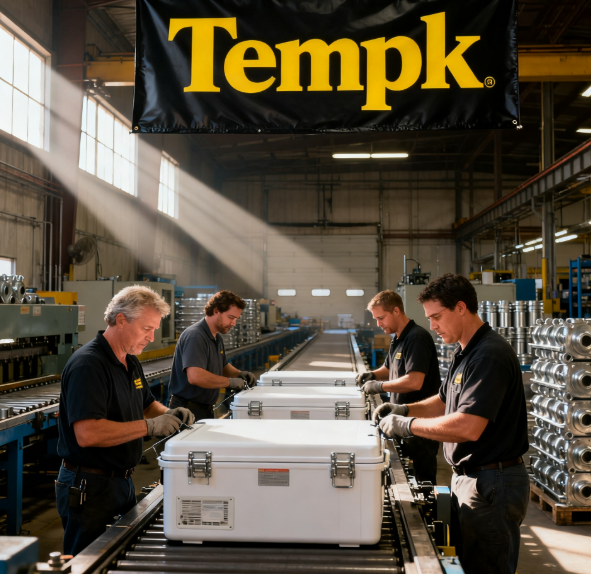
Ultra Cold Shipping Packaging Selection and Evidence
Ultra cold shipping packaging is a complete temperature-protection arrangement for a product with defined low-temperature transport requirements. Its suitability depends on the refrigerant, insulation, payload, preparation process and conditions encountered before the product reaches destination storage. The phrase ultra cold alone is not a specification. Buyers need the product's actual limits and evidence showing that the proposed arrangement can meet them.
The most useful selection process works backwards from product acceptance and forwards through the shipment. That approach reveals incompatibilities before a quotation becomes an order: a refrigerant that is too cold for the product container, a nominal payload volume that excludes cooling components, or a long-duration package that cannot be prepared at the dispatch site.
Define the product requirement before choosing the cold source
Ask the product owner to specify approved transport conditions and starting temperature. Record whether the criterion is a bounded range, a maximum temperature or another defined limit. Include any relevant restrictions on warming, excessive cooling, physical handling and time outside controlled storage. A storage freezer setpoint should not silently become a transport acceptance rule.
Frozen, ultra cold and cryogenic are terms used in different contexts. Do not use them as substitutes for the product specification. Two products described as frozen may require different protection, and two nominally similar products may have different primary containers or closures. The shipping system must fit the product being supplied, including the packaging in direct contact with it.
Separate routine transport conditions from any justified excursion allowance. An allowance belongs to the product's approved stability and quality assessment. It is not an extra operating margin that a packaging supplier can invent. Similarly, a supplier's test limit may differ from the product's limit; the quality team must assess the relationship before accepting the test as relevant.
Identify the acceptance owner at the beginning. Procurement can collect documents and compare cost, but the product owner or responsible quality function should decide whether the temperature criteria and evidence support use. This prevents a performance phrase in a quotation from becoming the only basis for a release decision.
Select a cooling mechanism the operating network can support
A passive shipping system combines stored cooling capacity with insulation. Dry ice and suitable phase change materials are possible cold sources, depending on the product requirement and demonstrated system behavior. A powered refrigeration system adds different dependencies, including its specified operating range, power arrangements and service support. Verify those dependencies for the selected equipment rather than assume that any active container can provide ultra cold conditions.
Dry ice is solid carbon dioxide. Some products sold under names such as dry ice pack instead contain a phase change material, or PCM. The sales name does not establish composition, temperature behavior or transport classification. Request the material identity, technical specification and relevant safety information. A PCM product should be evaluated on its own evidence; it should not inherit dry ice performance claims from its name.
A liquid nitrogen dry vapor shipper belongs to a separate cryogenic approach. Cryoport's public description of its standard cryogenic system illustrates this distinction by identifying liquid nitrogen dry vapor as the cooling technology. That is a description of a manufacturer's system, not a universal instruction for cryogenic transport. Preparation, charging verification, payload arrangement and handling must follow the selected system's instructions.
Avoid shortlisting an option solely because its refrigerant can become very cold. Product temperature depends on the complete arrangement. The buyer must also consider whether the dispatch site can prepare the system consistently and whether an intermediate facility can support any proposed intervention. A technically suitable mechanism can still be operationally unsuitable.
| Approach | Decision that must be resolved | Evidence to request |
|---|---|---|
| Dry ice passive system | Can the product and route support solid CO2 handling? | Complete packout report and applicable shipping instructions |
| PCM passive system | Does the selected material deliver the required product conditions? | Material identity, conditioning method and system temperature data |
| Powered refrigeration | Can the selected equipment and network maintain the specified conditions? | Operating range, service controls and intended-use evidence |
| Liquid nitrogen dry vapor system | Does the product require and tolerate this cryogenic approach? | System preparation, payload and handling instructions |
This comparison identifies questions that determine feasibility before price. There is no single preferred mechanism for all products described as ultra cold. The appropriate choice is the one supported by both the product requirement and the available operating controls.
Compare the assembled packout rather than insulation labels
Insulation reduces heat transfer into the container. The refrigerant supplies cooling capacity, while protective components locate and separate the payload. The complete arrangement of those components is the packout. A data logger measures conditions; it does not provide thermal protection.
EPS, polyurethane and vacuum insulation panel designs can be considered where the specific system is suitable. Material names alone do not rank finished shippers. Lid fit, joints, closure, external protection and component arrangement also affect performance. Ask the supplier to identify the exact shipper and the configuration tested rather than provide only a material brochure.
Determine usable payload space with the cooling and protective components installed. A nominal internal volume can include space that the approved packout reserves for refrigerant, separators or clearance. Request a loading drawing using the product's secondary packaging. Confirm orientation, removal access and the space needed for monitoring devices.
Payload mass is another incomplete shortcut. Products with similar weight can respond differently because of material, geometry, starting temperature and packaging. Where a surrogate is used for testing, ask which thermal and geometric features it represents. A container filled with an unrelated material may be useful for development without establishing the behavior of the intended product.
Consider low and high payload configurations through a risk assessment. A lightly loaded shipper may have less thermal mass and a different internal arrangement. A full load may create other challenges, including blocked access or product near a boundary. Evidence for one arrangement should not automatically be extended to every order size.
Read a hold time claim as a conditional test result
A stated duration is useful only with its conditions. Request the ambient time-temperature profile, payload configuration, starting conditions, refrigerant specification, conditioning process, acceptance limits and measurement positions. Confirm when the test clock starts and which event defines the end of protection.
WHO's shipping-container guidance links qualification to the intended product and transport conditions. Apply that fit-for-purpose principle when reviewing evidence. A supplier's report may be valuable, but the buyer still needs to establish that the report's scope matches the proposed use.
Distinguish constant-temperature development tests from tests that use changing exposures. Both can answer useful questions. Neither should be presented as proof of every actual shipment. A profile suitable for parcel benchmarking may omit a particular customs dwell or inspection event; those gaps need assessment.
ISTA identifies Standard 20 as a design and qualification process for insulated shipping containers, and 7E as thermal profiles associated with parcel delivery. Ask which document, revision and process a supplier used. ISTA also distinguishes standardized qualification tools from customized lane data. A mention of ISTA in a brochure therefore needs a precise explanation of what was tested or certified.
Read the individual temperature histories, not just a pass statement or an averaged curve. Look for positions close to a limit, early warming, unexpected shifts and incomplete records. If the intended product has both upper and lower limits, review both. A passing center measurement does not establish that every relevant product position remained acceptable.
Measurement suitability matters especially at low temperatures. Verify sensor range and calibration for the conditions being measured, along with sampling, memory and battery capability. Identify whether the sensor measures air, a surrogate or the product. A display with many decimal places does not demonstrate measurement accuracy.
Account for the time consumed outside the advertised transit leg
Build the protection requirement from the actual operating sequence. The package may be prepared before pickup, wait through a transfer, remain in customs and sit in receiving before being opened. Those periods matter even when the carrier's airport-to-airport or door-to-door target is met.
Define the relevant clock boundaries for the selected system. Refrigerant preparation and staging can affect the state at closure, while the period from closure to destination storage governs another part of the thermal mission. Record enough timestamps to distinguish those intervals. Otherwise, a shipment described as on time may have consumed more package life than the qualification assessment assumed.
Use credible delay scenarios rather than add an arbitrary duration to every lane. Identify likely missed connections, clearance holds, weekend restrictions and appointment delays. Then determine whether the package can cover them or whether a service change is needed. A passive package cannot solve unlimited delay.
For example, a buyer may have a destination broker who can clear the shipment but cannot replenish refrigerant or provide suitable storage. This illustrative constraint changes the recovery plan. The buyer should evaluate a supported intermediate facility, a different carrier service or a route with fewer uncontrolled handoffs before relying on replenishment.
If opening is a foreseeable event, document how it will be handled. Thermal evidence for a sealed package does not prove performance after inspection and informal reassembly. An intervention needs an approved procedure, competent personnel, suitable components and records of what changed.
Make safety and recovery executable
For US air transport of solid carbon dioxide, current 49 CFR 173.217 addresses release of carbon dioxide gas from the packaging. A thermally suitable dry ice shipper must still be prepared for the applicable transport conditions. Confirm current regulatory provisions, carrier requirements and the classification of the contents with trained personnel. Passenger baggage guidance should not be used as the specification for cargo.
Do not modify a venting arrangement to improve insulation without an approved assessment. The safety function and the thermal design have to coexist. Handle the chosen refrigerant using its safety information and the site's procedures, including provisions for contact hazards and accumulation of gas where applicable.
Temperature visibility also needs an operating response. Identify who receives alerts, who has authority to intervene and which facility can actually perform the action. A transmitting logger provides little recovery value if the only contact is unavailable or the shipment is at an inaccessible location. Establish communication across the shipper, carrier, broker and receiving site before dispatch.
Set intervention triggers early enough for the approved response. The trigger might involve elapsed time, a missed milestone or a temperature trend. It should not be confused with the product acceptance limit. Waiting for the acceptance limit to be crossed can leave no time to preserve the shipment.
Receiving instructions should cover identification, safe unpacking, transfer to suitable storage and data review. Define how the recipient segregates a shipment with missing or questionable evidence. Arrival within limits is a useful observation, but it does not replace the full temperature history or an authorized quality disposition.
Purchase a reproducible system with controlled changes
Turn sample approval into a controlled purchasing specification. Identify the shipper, lid, outer carton, refrigerant, separators, loading arrangement and closure instructions. Retain the report and approved version with the order record. Ask how component or material changes are communicated before production substitutions occur.
Qualification support and formal report ownership should be defined commercially. Determine what documentation is included, what additional testing would cost and whether the buyer can access the underlying evidence needed for review. A report summary may support early screening but be insufficient for the quality function's approval.
For reusable systems, establish return responsibility and release criteria for subsequent use. Include cleaning, inspection, preparation, retrieval time and unavailable assets in the cost assessment. Do not equate a durable outer shell with indefinite thermal performance. Reuse claims and environmental benefits need an assessment that reflects the actual program.
Tempk's public packaging resources include a Route Risk Checker and guidance on validation and packout planning. Those resources can help structure an inquiry, while the required testing scope and documentation should be confirmed for the proposed application.
Send the product limits, payload drawing, complete route timeline and recovery constraints when discussing ultra cold shipping packaging. Ask for the configuration-specific evidence needed to decide whether the proposed system can be approved for your shipment.
Thermal Packaging Qualification Protocol and Report Review
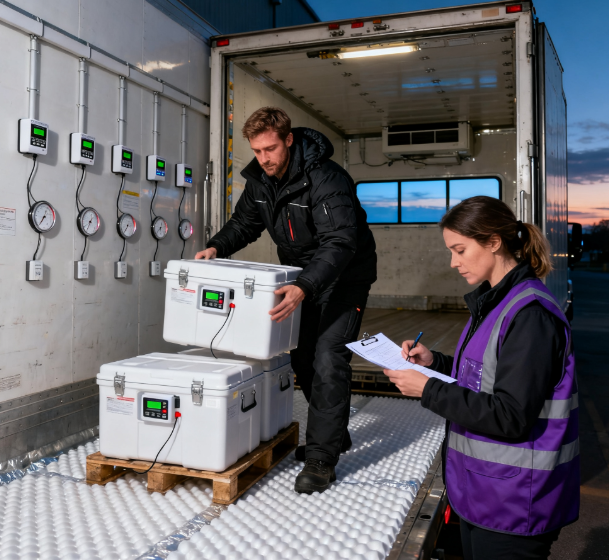
Thermal Packaging Qualification Protocol and Report Review
Thermal packaging qualification provides documented evidence that a specified shipping configuration can meet defined temperature requirements under the conditions assessed. The qualified object is the complete packout, including insulation, refrigerant, payload arrangement and preparation. The conclusion is bounded by the test scope. A passing report for one configuration does not establish suitability for every payload, route or operating method.
For quality reviewers and technical buyers, the task is to connect requirements to measurements and then to routine use. The report should make that connection visible. If a reviewer cannot identify the tested configuration, relevant limits or basis for the exposure, a hold time statement is insufficient for the intended approval decision.
Start the review with the decision the report supports
Determine whether the work is development testing, formal qualification or field confirmation. Development may compare designs or locate a failure mechanism. Qualification assesses an identified configuration against preapproved criteria. Field evidence addresses how the arrangement behaves in represented operating conditions. Each activity can be useful without being interchangeable.
Locate the requirements document and protocol. They should identify the product conditions, payload boundaries, starting temperature, protection interval and important handling constraints. Confirm that the acceptance criteria were approved before testing. Criteria introduced after results are known can weaken the basis for the conclusion.
WHO's shipping-container guidance describes design, operational and performance qualification as distinct stages. Its fit-for-purpose approach is useful for structuring review. Terminology should also follow the organization's quality system and applicable requirements; informal sample tests should not acquire formal approval labels merely through presentation.
Ask whether existing supplier evidence can support part of the assessment. The answer may be yes when its scope and configuration match the intended use. Repeating work automatically can waste resources, while accepting a report without comparing its scope can leave an important gap. Document the comparison and the remaining evidence needs.
Establish who owns the final approval. A supplier may provide laboratory evidence and technical recommendations, while the product owner determines acceptance for its application. Procurement and operations should contribute their requirements without replacing that quality decision.
Identify the packout so another team can reproduce it
The report should specify the shipper model, lid, external carton, insulation components, refrigerant, separators, payload arrangement and closure. Include component identity and revision where relevant. A photograph is helpful, but it may not reveal material grade, dimensions, refrigerant formulation or preparation state.
Document conditioning separately from component storage. An equipment setpoint alone does not prove that components reached the intended state. The procedure should identify the preparation method, verification approach and handling sequence that operators need to reproduce. Where staging affects performance, capture it in the specification.
Define the product zone and usable payload dimensions after cooling and protective components are installed. Nominal volume is an incomplete specification. The qualified arrangement may reserve space for refrigerant, separators and monitoring, and may allow only certain loading patterns.
Describe payload starting conditions and orientation. Small changes in placement can put a product near a warmer boundary or a colder refrigerant interface. A loading diagram should identify the permitted arrangement, including any required clearance and void-management material. Do not leave operators to infer the arrangement from an empty container drawing.
Examine changes made during the study. A substituted pack, extra separator or revised closure belongs in the deviation record. If the final configuration differs from the one originally planned, the conclusion must clearly identify which arrangement is supported by the evidence.
Check whether the exposure answers the intended question
Thermal performance is conditional on the external time-temperature exposure. Review the profile used, how it was selected and how it relates to intended distribution. A constant exposure can answer a development question. A changing profile can represent other conditions. Neither deserves a universal performance claim.
ISTA identifies Standard 20 as a design and qualification process for insulated shipping containers and 7E as thermal profiles for parcel delivery systems. The documents have related but distinct roles. Check the precise standard or procedure, revision, profile and claimed certification basis rather than accept an unexplained ISTA reference.
Standardized profiles support a consistent test basis. They are not automatically customized worst-case data for a specific lane. If the actual route includes an unusually long clearance interval, an unsupported receiving delay or a different transport mode, assess whether the standard profile is an adequate challenge for that use.
The report should separate environmental challenge from shipping duration. Two exposures of the same duration can produce different results. Preserve time sequence and profile details when comparing reports. A longer claimed duration under a less demanding exposure may not be the better option for the proposed application.
Consider intended interventions. Opening, coolant replenishment or transfer into another container can change system behavior. Include an approved version of the event in the assessment if it is part of routine use. Otherwise, state the restriction clearly. Evidence for a sealed packout should not be described as evidence for an uncontrolled inspection.
Evaluate payload boundaries and measurement relevance together
Identify the product or surrogate used. A surrogate should represent the thermal and geometric characteristics relevant to the study. Similar mass alone does not establish equivalence. Its shape, packaging, starting temperature and position can affect the relationship between the measured response and the intended product.
Review the rationale for selecting payload configurations. Low and high loads can present different risks, and order variation may alter internal space and contact with components. Where only one arrangement is tested, assess whether the application should be restricted or whether further evidence is necessary.
Temperature mapping examines differences across relevant positions. Check whether the selected locations can resolve the product risks under the chosen configuration. A sensor at the geometric center may be useful but insufficient for a boundary product near the lid or refrigerant. Mapping and qualification measurements should be connected through an explicit rationale.
Determine what is actually measured: air, product, surrogate or a nearby surface. Those records can serve different purposes. A sensor directly adjacent to coolant should not be silently treated as the temperature of every payload item. The report needs a placement drawing and an explanation of the measurement role.
Measurement equipment should have an appropriate range and calibration for the study conditions. Review sampling, response behavior, battery capability, memory and data recovery. Resolution is the displayed increment, not proof of accuracy. A logger suitable for chilled shipping may not be suitable for a much lower-temperature application.
Use a defined decision rule when measurements approach a limit. Consider relevant measurement uncertainty through the approved quality process. Do not improve the result by rounding inward or by changing alarm settings after the study. An operational alarm and a product acceptance criterion have different purposes.
Review individual runs and deviations before the summary
Start with the temperature histories, not the supplier's pass statement. Examine relevant positions against both upper and lower limits where both apply. Identify when a position first approaches a limit and whether the pattern repeats. A center curve or average can hide a failed position.
Replication should follow the applicable protocol, standards or guidance and the project's risk rationale. A single successful run may be useful development evidence without establishing repeatable qualified performance. If the report relies on replication, the individual results must remain available for review.
Check the actual environmental record as well as the programmed profile. A chamber setpoint describes the intended command, while the exposure record helps establish what the test article experienced. Unexplained differences, interruptions or missing intervals need assessment before accepting the result.
| Report finding | Interpretation to investigate | Reviewer action |
|---|---|---|
| One position differs from the center | Product-zone variation or placement issue | Review mapping and position relevance |
| A run fails while the mean passes | Averaging conceals variability | Assess the individual failure |
| Temperature shifts after opening | Intervention changes the thermal mission | Check the approved intervention scope |
| Data stop before the endpoint | Protection through the full interval is unproven | Assess the missing evidence |
| Components differ from the protocol | Results may support another configuration | Review the deviation and configuration identity |
These findings are prompts for investigation rather than automatic diagnoses. A sensor issue, preparation error and design limitation require different corrections. The report should show how the team reached its explanation and what evidence supports the revised conclusion.
Retain unsuccessful tests and exceptional conditions in the record. A successful retest does not erase them. Determine whether a correction changes the system, the protocol or the allowable use. The final approval should describe the configuration and controls that actually produced the accepted evidence.
Distinguish package performance from route and product approval
A laboratory qualification report establishes performance within its test scope. Route assessment connects that scope to actual service, transfers, delay conditions and receiving. These are related steps, and a package report should not claim to have evaluated handoffs that were never part of the study.
Product disposition is another boundary. Temperature evidence supports a quality decision, but a packaging supplier does not create product stability allowances. Where an excursion occurs, the product owner should assess it using authorized information and procedures. A later return to acceptable temperature does not by itself resolve the earlier exposure.
Similarly, material, safety and transport documents serve their own purposes. A food-contact statement does not demonstrate hold time. A thermal profile result does not establish dangerous-goods acceptance. A laboratory certification does not extend the report to untested configurations. Review each claim against the document that can support it.
Ask a supplier using the term prequalified to define its meaning. Determine the configuration, requirements, profiles and conditions covered, and whether certification is claimed. The term may refer to valuable existing evidence, but the buyer needs that evidence rather than only the label.
Where the proposed application differs from the report, document the gap. Possible responses include restricting use, obtaining additional evidence or selecting another system. The aim is an explicit decision based on the difference, not a broad assurance that the package should work because it worked elsewhere.
Transfer the evidence into a reproducible packing process
Convert the approved configuration into clear operating instructions. Include preparation, component identification, loading, closure, monitoring and dispatch timing. Give staff a diagram that matches the tested arrangement and explain how to recognize the correct version.
Verify that the packing site can perform the process. Conditioning equipment, staging space, workload and training can affect whether laboratory instructions are deployable. An illustrative site may have enough equipment for sample preparation but insufficient capacity during peak dispatch. Resolve that constraint before adopting the process at scale.
Define actions for delayed collection, damaged components and orders outside the payload boundary. The operator needs a decision path rather than an instruction to keep the product cold. Repacking or alternate components may require review because they can change the configuration supported by the report.
Routine monitoring can provide feedback on performance and execution. Review repeated near-limit results, missing records and preparation deviations. These observations may reveal a process issue before an out-of-limit shipment occurs. Monitoring supplements the approved system; a logger does not provide cooling capacity.
Receiving instructions should support safe transfer to suitable storage, data retrieval and exception handling. Link product acceptance to the authorized review process. A package that feels cold on arrival is not a substitute for the required temperature record.
Keep the qualified configuration linked to purchasing and changes
The purchasing specification should reference the approved component set. Define how changes to dimensions, lid, material, coolant, closure, payload or preparation are assessed. A replacement with the same nominal weight or a similar appearance can still affect behavior.
For reusable systems, establish inspection and release criteria aligned with supplier instructions and the approved performance scope. Cleaning, storage and component replacement need control. Do not interpret a reusable designation as unlimited life or assume that an intact shell confirms the condition of every thermal component.
Specify report ownership, evidence access and the commercial scope of additional testing. Some suppliers provide summaries for screening and fuller documentation under agreed conditions. Resolve access before approval is required so that the review is not blocked at the end of procurement.
Tempk's public validation and packout-testing resources can help organize product conditions, route assumptions and preparation details for a technical discussion. Confirm the project-specific testing scope, deliverables and responsibilities rather than infer them from a general service page.
Use thermal packaging qualification to approve a defined system that can be reproduced and maintained. Take the product requirements, payload configurations and report gaps into the supplier review, then record the supported use and any further evidence needed before routine release.
Cold Chain Route Qualification From Profiling to Approval

Cold Chain Route Qualification From Profiling to Approval
Cold chain route qualification establishes documented confidence that a defined transport arrangement can protect the intended temperature-sensitive product under the conditions represented by the assessment. The arrangement includes the carrier service, packaging or transport equipment, preparation, handoffs, monitoring and receiving controls. An origin and destination do not define enough of that arrangement to support a useful qualification conclusion.
The essential decision is whether the proposed lane is ready for routine use, ready only within restrictions, or still missing evidence. Answering it requires a connection between actual exposure, product-zone performance and operating capability. A temperature trace is part of that evidence. The trace becomes much more useful when it is linked to the events and responsibilities that produced it.
Decide what the route study must prove
Begin with the product's approved transport conditions, the intended payload and the planned operating arrangement. Identify who will approve the study and who owns product disposition. The logistics team should not have to interpret product stability limits after the field shipments are complete.
Separate three activities that are often combined in conversation. Risk assessment identifies hazards and assumptions. Ambient route profiling characterizes the external exposure encountered in distribution. Field performance assessment evaluates the selected shipping arrangement in the represented operating environment. They inform each other, but their conclusions answer different questions.
WHO's transport-route profiling supplement explains that actual distribution temperature data can support representative ambient profiles. That makes profiling an input to shipping-system assessment. It does not make an ambient record evidence that the product remained protected. Product-zone measurements and the relevant operating records are needed for that separate question.
An early route study may be necessary before a final package is selected. In that case, describe it as profiling or risk characterization and use it to develop the packaging requirements. Later evidence can assess the selected system. Avoid a broad qualification label that hides unfinished work.
Define the lane through the final storage handoff
Map the sequence from preparation through destination storage. Include dispatch staging, carrier collection, origin depot, transfers, border clearance, destination depot, last mile and receiving. Record whether each segment has temperature control, how long it normally takes and which credible disruptions can extend it.
Identify the carrier service rather than only the carrier name. Express and standard services may use different networks. The same route can also change with dispatch day, seasonal scheduling or subcontracted delivery. Evidence for one service should not silently authorize another.
Specify the study's time boundaries. Closure, collection and departure are different events. At the destination, delivery scan, unpacking and placement in suitable storage are also different events. The relevant protection interval should correspond to the product and shipping-system requirements, with preparation conditions captured where they influence performance.
Include information that changes the receiving plan: working hours, appointment requirements, freezer or refrigerator availability, access restrictions and the person authorized to accept the shipment. A lane that is satisfactory during ordinary receiving hours may need restrictions around weekends or holidays.
| Segment | Evidence gap to investigate | Control to assign |
|---|---|---|
| Dispatch queue | How much time passes after preparation? | Release timing and missed-pickup response |
| Transfer facility | Is storage controlled during connection delays? | Storage access and escalation owner |
| Customs | Can clearance or inspection extend exposure? | Document readiness and approved intervention |
| Last mile | Does routine service differ from the trial? | Service specification and local carrier instructions |
| Receiving | What happens after the delivery scan? | Storage transfer, data retrieval and acceptance review |
The table helps locate where additional evidence is needed. It is not a substitute for a route map or an operating agreement. The study should use the actual sequence, including any segment that the transport quotation omits.
Collect exposure and product response as separate evidence
An ambient monitor characterizes the conditions outside the temperature-protection system. A product-zone monitor assesses conditions relevant to the payload. Positioning a sensor inside an insulated box and labeling its reading ambient would blur those roles. Document each placement and the question it answers.
Where both types of measurement are collected, link them to a common shipment identifier and consistent timestamps. The difference between external exposure and internal response can explain why a package remains within limits through one event but approaches a limit through another. Neither record should be interpreted without its position and starting conditions.
Choose devices with suitable measurement ranges and calibration for the conditions recorded. Set the logging interval so it can resolve events material to the study, while allowing sufficient memory and battery life for delays. Define start, stop and recovery procedures. Check that the chosen placement does not disrupt the packout or give a misleading view of a product boundary.
For transmitting monitors, distinguish a communications gap from a measurement gap. A device may continue local recording while connectivity is unavailable. Confirm how those records are recovered and how the absence of live data affects the response plan. Do not treat a successful upload as evidence of correct placement or calibration.
Collect event information alongside temperature. Relevant records include preparation, closure, pickup, departure, transfer, clearance, opening, delivery and storage. Carrier and broker timestamps can use different time zones; normalize them carefully and retain the original records. This prevents an apparent temperature event from being matched to the wrong handoff.
Represent variation rather than repeat convenient shipments
The sampling plan should reflect the conditions that can change the decision. Consider service level, dispatch day, transfer path, season, origin and destination facilities, payload arrangement and receiving constraints. Include credible adverse conditions through a justified study design or a complementary controlled assessment.
Do not equate dataset size with representativeness. Many trips through a favorable season can leave a winter risk unanswered. Repeated trials handled by a special project team may fail to represent routine dispatch. The report should explain what the collected data cover and what they cannot establish.
There is no universal shipment count that automatically qualifies every lane. Determine the study size and replication through the applicable protocol, quality system, guidance and risk rationale. A restricted conclusion may be appropriate when data are limited. Broader use needs evidence or a documented justification for extending the scope.
Consider route families where this can reduce unnecessary duplication. A family should be based on meaningful equivalence in service structure, exposure, duration, handoffs and controls. Shared destination country or similar distance is insufficient by itself. Record the justification and identify conditions that would require an individual lane assessment.
Planning should also distinguish routine use from foreseeable disruption. A missed connection or clearance delay may need separate consideration even if it does not occur during the sampled trips. The absence of an adverse event in a small field dataset does not establish that it is irrelevant.
Establish decision rules before the field work
Approve the product criteria, study scope, data review rules and treatment of deviations before the trials. Identify the exact packaging version or transport equipment, payload boundaries and preparation procedure. Determine what constitutes a valid run and what evidence is needed for the intended approval.
Set rules for missing measurements, lost devices, delayed starts and sensor movement. These events may leave a result inconclusive even when the available trace looks acceptable. An inconclusive result should not be converted into a pass by assuming that the unrecorded interval resembled the recorded one.
Consider measurement uncertainty where readings approach a limit. The decision rule should follow the approved quality process and the capabilities of the measurement system. Rounding a borderline value inward is not a defensible substitute for that rule.
Separate product acceptance from operational triggers. A missed milestone may require intervention before temperature reaches a limit. A temperature alarm may be set to provide time for an approved response. These controls can support the lane, but their triggers should not be presented as the product's stability limits.
Define how deviations will be investigated and who can authorize changes. Retesting after a corrective action can demonstrate the revised process, while the original failure remains part of the record. A trial with changed packaging or service must be identified as evidence for that changed arrangement.
Make recovery actions part of the assessed arrangement
Map responsibility wherever a shipment can wait. A carrier, broker and receiver may each have a clear internal procedure while the temperature-control responsibility between them remains uncertain. The lane plan should name the owner of each relevant handoff and the person who can authorize intervention.
Test the communication path across time zones and nonworking hours. Identify backup contacts, the information they receive and the action they can take. A real-time alert cannot create access to a secure cargo area or make a receiving freezer available. Confirm the physical capability behind the escalation instruction.
For example, a destination broker may be able to clear an illustrative shipment but unable to provide product-compatible storage. A plan that says contact the broker during delay is then incomplete. The response needs a supported facility, another service or a dispatch restriction that prevents the unsupported condition.
Refrigerant replenishment and repacking require particular care. They can alter the approved packout and expose the product during handling. Identify trained personnel, material availability, suitable working conditions and records of the action. The recovery procedure should explain the resulting scope of protection rather than assume that the thermal clock restarts.
If inspection is foreseeable, assess opening and restoration. A package qualified while sealed has not automatically been demonstrated through an inspection. Determine whether the system has an approved intervention method or whether inspection requires escalation to the product owner.
Convert the findings into a bounded approval
Review each shipment's full temperature history with its event record. Investigate whether a recurring approach to a limit begins at a particular depot, customs interval or receiving queue. A process correction may be more effective than adding insulation, particularly when the main problem is uncontrolled waiting.
Retain the individual results. Average temperature can conceal excursions, while an endpoint observation can miss earlier exposure. Where different measurement positions are used, examine differences rather than combine them into a single reassuring curve. State which measurements support the product assessment and which characterize exposure.
The report should identify the approved service, season or exposure scope, payload, package version, preparation, monitoring and receiving conditions. Describe deviations, restrictions and unresolved questions. The conclusion should say what is supported: routine use within the defined scope, restricted use with stated controls, or additional work before approval.
A successful qualification run does not guarantee every future shipment. Routine controls remain necessary. Establish who reviews monitoring records, how exceptions are escalated and how a shipment with questionable evidence is held for product disposition. Carrier delivery confirmation should not replace that quality decision.
Reassess when the operating assumptions change
Define changes that need review, including carrier service, transfer hub, transit schedule, packaging, coolant, payload, preparation and receiving arrangements. A change review may justify continued use, focused additional evidence or a new assessment. The response should follow risk and evidence rather than automatically repeat every study or assume that none is needed.
Use routine information to detect drift. Longer queues, repeated late clearance, missed data retrieval and increasing near-limit results can indicate that the original assumptions no longer describe the lane. Review the causes even when individual shipments remain acceptable.
Include evidence access in the ongoing agreement with service providers. A route review can be delayed if depot events, intervention records or subcontractor details are unavailable. Specify the records needed, the responsible provider and how they will be supplied. This turns a general commitment to cooperate into a practical basis for investigating changes and maintaining the approved scope.
Maintain the approval record with the operating version it covers. Staff should be able to identify the permitted service and packout without reconstructing the project from emails. Training, records and change control make the study usable in daily work.
Tempk's public Route Risk Checker can help organize an initial lane screen, and it explicitly distinguishes that screen from certified lane qualification. Use the result to prepare the route discussion and identify gaps, while confirming the actual study and documentation scope separately.
Begin cold chain route qualification with a complete lane map and product criteria. Take the exposure data, operating records and proposed recovery controls to the responsible quality team so that approval reflects the arrangement that will actually be used.
Frozen Shipping Packaging Built Around Arrival Requirements
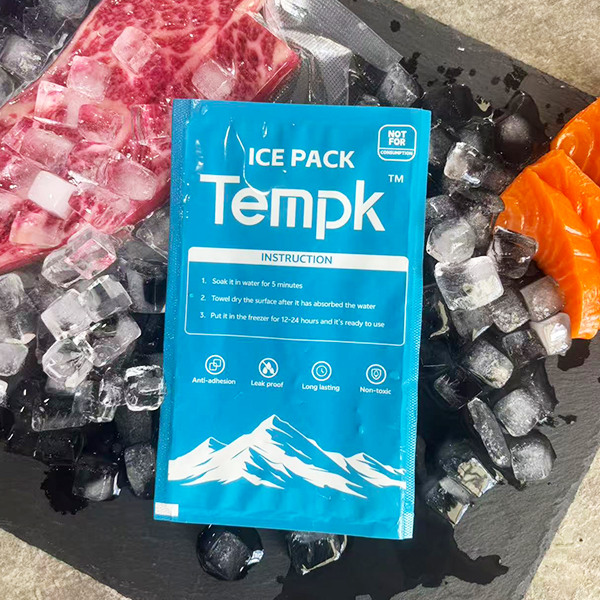
Frozen Shipping Packaging Built Around Arrival Requirements
An order arriving in a cold carton can still miss its frozen specification. Frozen shipping packaging should be selected around the required product condition and the entire period from packing to receiving storage. That requires a compatible coolant, an insulated enclosure, physical and moisture protection, and evidence for the complete assembly. For food and seafood buyers, the most useful starting point is a measurable arrival requirement followed by a trial of the actual payload, route and packing process.
Set a receiving standard that can be tested
Replace instructions such as keep frozen with a product-specific requirement. Identify the temperature limit, permitted variation, quality checks and method used to assess receipt. The limit should come from the product owner and applicable market requirements. A packaging supplier can help design protection around it, but should not invent the product's acceptance standard.
For quick-frozen foods within its scope, Codex describes maintenance at −18°C or colder, subject to permitted tolerances. The code excludes edible ices, ice cream and milk. Do not apply that reference without checking product scope or treat it as a universal law for every destination. Frozen pharmaceutical material, food and laboratory samples can have different requirements.
Record the starting condition alongside the receiving requirement. Product that enters the shipper warmer than intended creates a different thermal load. Packaging designed to maintain frozen goods should not be relied upon to complete a freezing process during transport unless that use has been specifically evaluated and accepted.
Define how the receiving decision will use measurements. A carton air reading, product surface reading and product core measurement answer different questions. Select the method appropriate to the product and approved procedure. Appearance, remaining coolant and an arrival spot reading can contribute to inspection, but do not by themselves establish the complete temperature history.
Agree the endpoint of protection. Delivery to a loading dock or doorstep may precede movement into suitable storage. If packaging is expected to bridge that interval, include it in the design and trial. If the recipient assumes responsibility earlier, make the handling requirement explicit and verify that the arrangement is practical.
Choose coolant by its function and constraints
Water-based ice packs, subzero phase change materials and dry ice should be compared as different options. The decision depends on the required product condition, exposure, compatibility, preparation process and carrier acceptance. A generic description such as frozen gel pack does not identify the temperature behavior needed for the shipment.
Water ice melting near 0°C cannot provide the same phase-change buffering as a material selected for a lower frozen temperature. A deeply frozen water pack can absorb energy while warming, but that initial reserve is finite. It does not justify a general claim that ordinary ice packs maintain any frozen requirement for a stated journey.
A subzero PCM may be suitable when its documented behavior and the complete system support the application. Request the relevant data and preparation instructions. Check which freezer or conditioning equipment is needed, how readiness is established and how long prepared components can remain staged before use. A nominal phase point is not a substitute for payload performance evidence.
Dry ice offers another approach for compatible applications. It becomes carbon dioxide gas, creating requirements for gas release and safe handling. The FAA's guidance for US air shipments states that dry ice packaging must allow the gas to escape, and carrier-specific arrangements must also be addressed. Confirm the transport modes, acceptance and applicable preparation obligations before choosing the packout.
| Coolant approach | Decision it may support | Limitation to resolve |
|---|---|---|
| Ordinary water-based ice pack | Applications supported by its actual temperature behavior | No automatic sustained control at a lower frozen limit |
| Subzero PCM | Defined frozen range in an assessed passive system | Formulation, conditioning and packout evidence must match |
| Dry ice | Compatible frozen or colder transport requirements | Carrier acceptance, gas release, handling and product compatibility |
| Temperature controlled transport with protective packaging | Routes supported by suitable controlled infrastructure | Transfer exposure and service contingencies remain relevant |
Shortlist feasible approaches before asking which is cheapest. A coolant barred by the transport arrangement cannot become a workable choice through better insulation. Conversely, a permitted coolant still needs to demonstrate protection in the proposed box with the actual load.
Design the enclosure around the loaded shipment
Compare usable product space after placing coolant, panels, separators and containment. Nominal volume is a poor purchasing measure when thermal components occupy part of the enclosure. Provide packed product dimensions and check the completed layout physically before approving a drawing.
Include product mass and shape. A heavy load can stress the base and outer carton; irregular packs can interfere with the lid or create difficult contact points. Thin product portions and dense bulk packs can respond differently to heat. The packaging brief should identify those differences rather than average them into an unrepresentative order.
Evaluate the offered insulation assembly rather than judging the material name alone. A carton with an insulated liner, a rigid foam box and a protected vacuum-panel shipper can each be appropriate under supported conditions. Wall construction, lid fit, joints, closure and handling durability contribute to the result. Ask what evidence applies to the actual proposed structure.
Reflective foil is one feature within an enclosure, not proof of thermal duration or leak resistance. Confirm the liner's full construction, seams and closure in the sample. If a supplier changes the liner to meet a price target, assess the effect instead of assuming that a similar-looking surface preserves the original performance.
Keep product movement under control. Partitions, separators and void management should protect primary packs and maintain the intended arrangement during handling. Excessive compression can damage a bag or prevent correct closure. Empty spaces should be handled according to the evaluated design rather than filled with whatever material is available on the line.
Give seafood containment a separate job
Seafood packaging needs to consider sealed product packs, sharp shell edges, glazing, abrasion and possible fluid release. Define which layer contains the product and which protects the carton. An insulated liner, absorbent pad and sealed primary bag perform different functions and should not be treated as interchangeable.
Inspect primary packs after representative loading and handling. Vacuum packs or bags that fit at rest can be punctured by movement, corners or an adjacent frozen component. Adjust the protection or arrangement based on observed risks, then reassess the complete configuration if the change affects the thermal design.
Specify secondary containment and absorbent material where the product and hazard assessment call for them. Keep leakage away from the outer carton and neighboring goods. Wet packaging can create handling and strength problems even when the thermal result is acceptable. Moisture management should be evaluated during the same practical trial, not added as an afterthought.
For a dry ice system, ensure that product containment does not trap evolving gas in a sealed compartment. Thermal retention, leak control and gas release need to work together in the approved assembly. Use the applicable packing instructions and supplier design assessment rather than improvising a sealed inner bag around all contents.
Food-contact suitability should also be checked for the relevant materials and intended contact conditions. Request applicable documentation instead of assuming that all thermal components are suitable for direct contact. The packout should preserve food safety controls as well as temperature and appearance.
Trial the order patterns that could fail differently
Consider a hypothetical frozen seafood program with small replenishment orders and larger cartons on the same parcel service. The smaller load may have less cold product mass; the larger load may crowd coolant space or complicate closure. Neither pattern should be approved solely from a trial of the other.
Define the relevant order envelope, including product formats and starting conditions. Select representative and challenging configurations through a risk review. If a surrogate payload is used, explain how it represents the properties and arrangement important to the result. Convenient test contents are not automatically representative contents.
Apply an external exposure appropriate to the intended use and record it. Standardized parcel thermal profiles can provide a documented reference, but the specific procedure and relationship to the lane should be clear. Add route trials or further assessment where the intended conditions remain unsupported. A box tested under one exposure does not carry a universal duration for all shipping programs.
Place sensors to investigate likely vulnerable product areas. Explain whether each records air, a surface or an internal location, and confirm the equipment is suitable for the frozen temperatures encountered. Review calibration, logging interval and measurement uncertainty as part of the method. Do not place a sensor against coolant and then describe that record as every product unit's temperature.
Inspect physical condition as well as thermal results. Record leakage, bag damage, movement, lid fit, carton wetting and ease of handling at receipt. A satisfactory temperature trace cannot compensate for failed primary containment. The trial should answer whether the finished shipment meets the agreed acceptance criteria as a whole.
Make the packing line capable of repeating the result
Translate the assessed design into instructions that identify components, preparation, loading order, separators, closure and monitor placement. Use a bill of materials and revision code that purchasing and fulfillment can both recognize. Photographs or drawings of the approved arrangement can help staff identify departures without relying on memory.
Verify conditioning readiness before loading. A freezer setpoint alone does not prove that a crowded stack of PCM packs has reached its required state. The procedure should define preparation and readiness checks for the actual equipment and component load. Match conditioning capacity to the order schedule so that urgent dispatch does not encourage premature use.
Manage product staging between frozen storage and box closure. Prepare available materials before releasing the order where practical, and measure the real process during a pilot. When a missing component, delayed label or interrupted line changes the starting condition, staff need an escalation route and an approved action.
Set a missed-pickup procedure. A completed carton waiting for another collection has already experienced part of its planned history. Reprinting its label does not reset the thermal reserve. Decide how the product is held, reviewed and repacked when needed under the product-specific process.
Control substitutions. Another coolant pack of similar size may have different thermal behavior; a replacement liner may have different seams or thickness. Even additional coolant can alter payload fit, contact and weight. Require assessment of relevant changes instead of treating any colder or heavier arrangement as automatically better.
Compare cost only after the scope is equivalent
Ask each supplier to quote the full assembly and identify exclusions. Include coolant, separators, containment, labels, outer carton and preparation resources in the comparison. A low box price can conceal costs that are necessary to deliver the supported configuration.
Use external dimensions and actual packed weight with the chosen carrier's current charging rules. Evaluate labor, conditioning space, replenishment, damaged components and returns where applicable. These operating costs can change the purchasing decision even when two samples have similar thermal results.
For reusable packaging, confirm who returns, cleans, inspects and prepares the system. A return program needs enough usable equipment available at dispatch, not merely enough units purchased. Environmental claims should reflect the real return and reuse process and the relevant evidence, rather than an assumption that every reusable enclosure is automatically preferable.
Send a quotation brief that includes the product requirement, starting condition, load envelope, route, service, delay exposure, receiving arrangement, leakage risks, quantity and sample deadline. Ask suppliers to confirm commercial terms and the proposed evidence scope. Separate what is available now from what would require development or testing.
Tempk's published frozen food and seafood offering describes configuration discussions covering insulated shipper formats, coolant layouts and seafood containment. These options provide a starting point for a sample inquiry. The performance of an individual order still needs support from the identified configuration and its evaluation; a public service description does not establish a universal hold time.
Frozen shipping packaging is ready for operational use when the arrival requirement, loaded design and dispatch process have a defensible connection. Approve the configurations that the evidence supports, define how exceptions are handled and preserve the assembly through repeat orders.
Prepare your product limit, payload dimensions, route and receiving requirements, then request a complete sample packout. Use the trial to confirm temperature protection, containment and repeatable packing before releasing the production specification.
15–25°C Shipping Packaging and CRT Selection
15–25°C Shipping Packaging and Controlled Room Temperature Selection
15–25°C shipping packaging is appropriate when the product's approved transport requirement calls for that range and the complete packout supports the expected journey. Controlled room temperature packaging should be selected against a written product requirement, rather than a supplier's category name. For a buyer, the decisive evidence connects the payload, thermal stabilizer, insulated enclosure, preparation method and external exposure. Use those connections to determine whether a proposed system fits the shipment and whether your team can operate it reliably.
Convert the product requirement into a shipment specification
Begin with the product owner. Obtain the permitted temperature range, starting condition, relevant stability information and instructions for handling excursions. Distinguish normal operating limits from permissions that apply only after an excursion assessment. A permitted exception should not become the default design target merely because it makes packaging less expensive.
The terminology needs care. Public USP material describes controlled room temperature around 20–25°C with conditional excursions; that concept should not be flattened into an unconditional 15–25°C transport rule. Different references and commercial portfolios can use room temperature terms differently. Confirm the applicable official standard and product labeling with the quality team before finalizing the specification.
For a product with an explicitly approved 15–25°C shipping requirement, record that range as the acceptance criterion. State what is being measured and over which interval. A limit for the product throughout transport is different from a reading taken in the carton at delivery. A report using one criterion cannot silently support the other.
Describe the load as an envelope of permitted configurations. Include product pack dimensions, quantity, packed mass, starting temperature and the space available after thermal components are installed. If your business ships both small replenishment orders and full cartons, make both situations visible. The supplier needs enough information to propose configurations that can be evaluated meaningfully.
Also identify the endpoint of protection. The carrier's delivery confirmation may precede receiving inspection or placement into controlled storage. Packaging and service arrangements should bridge the period for which protection is actually required. Assign responsibility for any interval outside that period so that the plan has no undefined handover.
Diagnose where the shipment can move toward either limit
Build an exposure map from packing to receiving. Consider the packing bench, pickup queue, transport vehicle, transfer hub, customs process, destination dock and receiving storage. Mark which stages have verified temperature control and which rely on the package. Use route records where possible; outdoor weather alone does not describe all these environments.
For a range with a lower and upper limit, assess both warming and cooling. Summer heat is an obvious concern, but winter exposure and overcold components can also take the payload outside its specification. A shipper's success under a warm profile does not answer the cold exposure question.
The preparation stage deserves particular attention. If the product enters the box outside its approved starting condition, the system may spend part of its reserve correcting that condition. If a thermal panel is prepared incorrectly, the panel itself can introduce unwanted exposure. Those risks require preparation controls, not simply a stronger exterior carton.
Map time as carefully as temperature. Start the proposed protection window at the documented point used in the evaluation, then add the actual collection and receiving intervals. Establish a delay allowance based on the route's credible failure modes. Avoid choosing an arbitrary percentage that has no relationship to the shipping process.
When uncertain stages dominate the journey, consider changing the service or schedule before increasing the packout. An attended receiving arrangement, a different dispatch day or verified controlled storage at a hub may address the cause of the exposure. Packaging is one part of the route design, and additional material cannot make every delay acceptable.
Select a system your dispatch operation can reproduce
An insulated enclosure reduces heat exchange; a thermal stabilizer provides a defined capacity to absorb or release energy. A passive shipping system combines those components with a specified loading arrangement. An active container uses powered regulation and requires its own operational support. A logger supplies a record of conditions and should be treated separately from the protection system.
For a passive CRT design, ask why the proposed stabilizer is suited to the requirement. A PCM transition temperature is useful technical information, but it is not a payload hold time. The amount, initial state, arrangement and enclosure determine how the material contributes in the assembled shipper. Check the relevant system evidence instead of ranking products by phase point alone.
Ordinary frozen gel packs require particular caution. Substituting them into a CRT packout can create cold contact zones, even when the wider cavity remains within range. Use only a coolant and preparation method supported for the design. If the supplier proposes an alternative pack, obtain a documented assessment before treating it as interchangeable.
Compare architectures against the dispatch operation. A carton and liner can suit an established parcel workflow if the tested assembly meets the exposure. A rigid reusable shipper can fit a managed return loop but requires recovery, inspection and reconditioning. Vacuum insulated panels may help with space constraints, while introducing a need to protect panels and define rejection criteria. An active solution may suit certain controlled logistics services, provided the infrastructure and contingencies are available.
Have warehouse staff pack a representative order before commercial approval. Observe identification, stabilizer preparation, product loading, closure, labeling and monitor placement. A trial that requires expert intervention at every step exposes a deployment problem, even if the engineering design is sound. The selected configuration should be usable by trained staff with the resources available on normal dispatch days.
Ask what the performance report actually covers
Request the report for the exact offered assembly and revision. The evidence should reveal the external exposure, payload, component preparation, sensor positions, acceptance limits and duration. Review the complete traces and exceptions rather than a headline pass statement. Check whether the purchased configuration matches the one pictured and described in the report.
| Question for the supplier | Evidence needed for the decision |
|---|---|
| Which assembly was evaluated? | Component identifiers, drawing, closure and revision |
| Which product loads were represented? | Load envelope, dimensions and starting condition |
| What external conditions were applied? | Named profile or documented exposure with duration |
| What temperatures were recorded? | Sensor purpose, position, calibration and full traces |
| How were components prepared? | Conditioning procedure and initial-state records |
| What happened outside normal conditions? | Deviations, failures and reviewed limitations |
Use the table to identify specific evidence gaps. For example, a report covering only a full load does not tell you whether a small order is within scope. A reference to the same box family does not establish that a different size performs equivalently. Ask for the missing assessment or narrow the proposed application to the supported configuration.
WHO qualification guidance distinguishes the intended requirements, controlled evaluation and performance in the operating environment. ISTA's Standard 20 addresses a design and qualification process, while 7E provides parcel thermal profiles. These are useful evidence frameworks; neither a standard name nor a supplier's prequalified label removes the need to establish applicability to your product and route.
Define the measurement question before reviewing graphs. A probe in cavity air, at the product surface or inside a simulant measures different things. Development testing may need several positions to locate vulnerable areas. The routine monitor should then be positioned according to the approved strategy, with a clear explanation of what its record represents.
Consider instrumentation when setting acceptance and alarm rules. Review the monitor's working range, calibration evidence, sampling interval and relevant uncertainty. Avoid interpreting an unqualified device reading as a precise product history. Conversely, an absence of alarms is uninformative if the alarm settings do not match the shipment requirement.
Control preparation and substitution as carefully as the design
Conditioning is a production step with an outcome to verify. Equipment settings alone do not show that the components have reached their required temperature and phase state. Ask for instructions that address load arrangement, preparation duration, readiness checks and the allowed period before use. Confirm that the conditioning capacity matches the planned dispatch volume.
Establish what happens when a component is late, damaged or uncertain. Staff need a defined stop decision and access to an approved alternative. An urgent shipment should not lead to improvised stabilizer substitution, removal of separators or a changed product layout without assessment. Those actions can change the basis for the performance claim.
Create an approved bill of materials and packout instruction with a revision identifier. Tie purchasing codes to the assembly so that a reorder supplies the intended components. Ask the supplier to notify you of changes affecting materials, dimensions, panel construction, stabilizer formulation or operating instructions. The quality team can then decide whether the existing evidence remains applicable.
For a reusable program, define recovery and inspection responsibilities before deployment. Include missing components, cleaning, damaged surfaces, unsuitable storage and retirement decisions. Track the available pool separately from the total number purchased; units in transit or awaiting preparation cannot support today's dispatch. A reusable system only delivers its intended operating benefits when that loop works.
Maintain preparation and shipment records at a level proportionate to the product and quality system. They should enable an investigation to reconstruct the assembly, component state, order arrangement and actual timeline. Traceability is most useful when it explains what happened, rather than adding fields that nobody checks.
Use a staged decision for mixed order sizes and routes
Consider a hypothetical distributor whose approved product requirement is 15–25°C. The distributor sends small replenishment orders and larger consignments, with seasonal exposure at an intermediate hub. The purchasing decision should separate the load configurations and the seasonal route conditions before requesting a single system for the entire program.
First, establish the load and exposure envelopes. Next, compare supplier evidence against each envelope. Where the evidence fits, conduct the required implementation review and controlled trial. Where it does not, select an assessed alternative or limit use until further evaluation is complete. This makes the remaining uncertainty visible instead of spreading one successful result across unsupported shipments.
A production trial should examine more than the temperature trace. Record preparation capacity, pack time, material identification, closure fit, shipment timestamps and receiving behavior. If the thermal design works but the line cannot prepare it consistently, revise the operating process or reconsider the architecture. Adding inventory can help a capacity constraint, but it will not correct unclear instructions.
Compare total operating cost after the supported options have been identified. Include the enclosure, stabilizers, conditioning resources, labor, freight, return arrangements and component losses. Use the carrier's actual commercial rules for external dimensions and packed weight. Keep sustainability claims specific: a returnable box needs real return and reuse records before broad environmental benefits can be asserted.
Release the program in defined stages. Approve the initial destinations and load configurations, review the pilot records, then decide which extensions need additional evidence. This prevents a commercial rollout from expanding faster than the supported operating envelope. Keep a register of approved configurations that staff can consult when a new order or route does not match the established pattern.
Make the receiving decision part of the specification
Send receiving instructions that identify the expected storage condition, inspection steps, monitor retrieval and escalation contact. Agree how product is held pending review if records are missing or outside limits. The person unloading the carton should not have to invent a disposition decision.
An acceptable arrival reading does not prove the earlier history was acceptable. Likewise, a temperature excursion record does not by itself establish the effect on the product. The responsible quality team should review the history against product-specific evidence and the approved procedure. Mean kinetic temperature, where applicable, should be used within the relevant framework; it does not automatically excuse freezing or every out-of-range event.
For 15–25°C shipping packaging, the strongest purchase decision connects a precise requirement to a repeatable assembly and a supported operating envelope. Finalize those links before ordering at scale, then preserve them through preparation, dispatch, receiving and change control.
Send your supplier the approved temperature requirement, payload envelope, route exposures and conditioning resources. Request an identified packout and the evidence needed to evaluate its use on your shipping program.
Vaccine Cold Chain Packaging: Freeze-Safe Design and Route Proof
Vaccine Cold Chain Packaging: From Vaccine Label to Receiving Decision
The hardest part of vaccine cold chain packaging is often preventing a package from becoming too cold while keeping it cold enough for the entire route. A frozen refrigerant positioned near a freeze-sensitive vaccine can be as serious a risk as a delayed delivery in summer. That is why a credible vaccine shipper is not simply an insulated box, and why a supplier’s advertised hold time is not sufficient evidence for using it.
A complete vaccine shipping system includes the insulated enclosure, thermal media, defined payload, freeze-protection layers, handling instructions and monitoring process. Its suitability can only be judged against the specific vaccine requirements and the route on which it will be used. This guide explains how to turn those requirements into a packout that can be tested, purchased and repeatedly operated without confusing materials, device certifications and shipment qualification.
Start with the vaccine’s authorized condition—not a universal temperature claim
Many commonly used refrigerated vaccines are stored in the range of +2°C to +8°C, but not every vaccine travels under that condition. Some products require frozen or ultra-low-temperature handling; others have product-specific thawed-use periods, light-protection requirements or rules concerning diluents. The authorized product information and applicable immunization program determine the acceptance limits. A label temperature requirement is not something the packaging supplier may replace with a generic “vaccine-grade” specification.
For United States vaccine providers, the CDC Vaccine Storage and Handling Toolkit updated on July 14, 2026, directs users to the manufacturer package insert for FDA-approved products and the relevant provider fact sheet for products authorized under an emergency-use pathway. WHO’s seventh edition of Guidelines for the International Packaging and Shipping of Vaccines, published in July 2025, provides guidance for a different context: international shipping, predominantly by air. These sources are complementary within their intended scopes, not interchangeable substitutes for the particular vaccine’s instructions.
A buyer’s first step is to issue a product-condition record with the exact vaccine name and presentation, approved transport conditions, freeze sensitivity, light considerations, diluent handling, temperature-monitoring requirements and receiving-release authority. If a distributor ships several vaccines together, its quality team must determine whether their requirements genuinely permit a shared load. Similar-looking vials do not establish compatible temperature or handling needs.
Why freeze prevention deserves its own line in the specification
CDC’s clinical guidance identifies that liquid vaccines containing aluminum adjuvants can permanently lose potency after freezing. A refrigerated shipment cannot be declared safe simply because its central logger never recorded a warm excursion. Cold spots can exist near coolant faces, corners and closely fitted cartons. The relevant question is whether the vaccine product is protected from temperatures outside its permitted range, including at the coldest plausible payload location.
Using additional frozen coolant may improve resistance to summer heat but can increase freeze risk. Reducing coolant may prevent deep cooling yet shorten protection during delay. Engineering has to manage the two failure modes together; a single headline temperature or more ice is not an adequate solution.
Treat the shipper as a six-part controlled system
The insulated container, thermal mass and monitoring device do different jobs. Keeping their roles separate makes quotations and test results more meaningful.
1. Insulated shell. EPS, EPP, insulated cartons and vacuum-insulated-panel assemblies limit the rate of heat transfer. Their usable performance depends on walls, corners, lid joints, closures and damage state—not solely on a material datasheet. A VIP system may improve insulation in a suitable architecture but increases the need to control panel integrity and handling.
2. Thermal medium. Frozen or conditioned water packs, gel packs, rigid ice bricks and selected phase change materials absorb or release heat. A PCM is chosen for its defined phase-change behavior; a generic gel ice pack should not be assumed to behave like a specific PCM. Refrigerant performance is conditional on its formulation, mass, geometry and starting thermal state.
3. Freeze-protection structure. Spacers, a well-designed payload compartment or an engineered barrier can reduce direct exposure to frozen packs. A makeshift barrier without evidence is not proof that vaccine vials remain above their lower permitted temperature.
4. Real payload. Vaccine carton dimensions, quantity, mass and stacking arrangement influence the thermal field. A nominal “10 L” or other volume statement does not tell a buyer how much vaccine fits after coolant, dividers, logger and protective layers are installed.
5. Monitoring equipment. A temperature data logger records conditions at its probe location. It cannot cool or heat the product and cannot independently decide if a vaccine remains fit for use. Sensor position, calibration evidence, alarms and data retrieval need to be defined.
6. Controlled procedure. A packout instruction defines coolant conditioning, assembly order, permissible open time, load configuration, closure, labeling and receiving checks. Without repeatable execution, a successful chamber test may not represent routine production shipments.
The WHO IMD-PQS E004 category provides an important distinction for public immunization buyers. It concerns cold boxes, vaccine carriers and other passive devices used in vaccine transport. For a model claiming WHO prequalification, verify the exact model and applicable category, not a similar-looking design. A custom medical cooler should not inherit a PQS claim from another product.
Choose a coolant strategy by the risk at both temperature limits
The relevant question is not whether a coolant can get cold; it is whether the complete packed system protects the specific vaccine throughout the expected exposure. WHO’s vaccine cold-chain device guidance distinguishes frozen water packs, properly conditioned ice packs, cool water packs and specialized freeze-preventive carriers. The correct combination depends on the program, product and exact carrier instructions.
Freeze-preventive vaccine carriers include a designed barrier between the storage compartment and frozen packs. WHO guidance explains that compatible frozen water packs can be loaded without the conventional conditioning step in specified freeze-preventive designs. This operational advantage does not carry over to conventional carriers. Barrier geometry may also reduce usable storage volume. Follow the verified loading instructions of the particular carrier rather than using a technique borrowed from another model.
For a custom pharmaceutical shipper, procurement should ask the supplier to define each conditioning step: starting location and temperature, readiness check, allowed staging time, pack orientation, separation requirement and changeover control. The phrase “use pre-frozen packs” is too vague to serve as a regulated packout instruction.
| Shipping situation | Dominant technical concern | Design or verification question |
| Refrigerated, freeze-sensitive vaccine in a short parcel route | Cold contact close to frozen media | Are the coldest loaded positions protected under the approved packing SOP? |
| Refrigerated vaccine through a long warm handoff | Heat ingress and depleted thermal reserve | Does the ambient challenge include the dwell and credible delay? |
| Refrigerated shipment in a cold winter lane | Ambient overcooling and coolant starting state | Was a cold seasonal profile tested, not only a summer one? |
| Field immunization with repeated access | Warm gain during openings and possible direct pack contact | Is the device intended and evaluated for an outreach use cycle? |
| Product requiring frozen or ultra-low handling | Incompatible temperature architecture | Has the product-specific shipper and transport mode been separately evaluated? |
This table is a decision map, not a universal packing recipe. Temperature conditions and acceptable methods must come from the actual vaccine and responsible program.
Define the exposure window from final packout closure to controlled receiving storage
A route is more than travel time. For an international air shipment, the protected interval can include assembly, pickup, export warehouse dwell, loading, flights, transfer airports, customs and the receiving facility. For a regional clinic delivery, it includes vehicle staging, unsuccessful delivery attempts and the minutes before placement into approved storage. The most serious exposure may occur during a brief uncontrolled handoff rather than the longest leg.
WHO’s 2025 international vaccine shipping guidance explicitly discusses the challenges of size, weight, receiving checks and maintaining temperatures during air freight and related ground movements. The EU Good Distribution Practice guidelines for medicinal products similarly emphasize risk-based transport, product-defined temperature conditions, foreseeable ambient extremes, transit storage and investigation of deviations within their EU distribution scope.
Before selecting a shipper, draw a handoff map that names each responsible party and controlled facility. Record when the package may leave protected storage, the longest credible transit duration, weekend closures, expected hot and cold ambient exposures, and action contacts when a route fails. Qualification duration should be supported by a defined challenge and explicit margin, not merely by subtracting departure from arrival time in a best-case schedule.
Consider a hypothetical distributor serving several regional vaccination sites. One facility receives packages immediately; another accepts deliveries only during limited business hours. The same vehicle distance does not create the same protected window. For the second destination, the right change might be a controlled handoff arrangement or a delivery schedule adjustment, not a heavier gel pack. Packaging is one part of route risk control.
When passive packaging is not the only answer
Passive systems are attractive when exposure duration and handling can be bounded and the packout can be conditioned and repeated reliably. They do not actively replenish thermal energy after departure. Long, uncertain routes, high-variability storage conditions or large shipments may require refrigerated vehicles, controlled cargo spaces, powered containers or more reliable transfer points. An active container is not automatically superior; it brings equipment, power, maintenance and custody dependencies that also require management.
Dry ice is especially easy to misunderstand. Appropriate ultra-low-temperature vaccine air freight may use dry ice when supported by the approved product instruction and applicable airline and dangerous-goods rules. That is a distinct case from routine refrigerated clinic transport. The CDC’s 2026 provider toolkit specifically warns against dry ice in its non-emergency vaccine transport guidance. Do not transfer rules between these different operations.
Read qualification evidence as a set of conditions, not a certificate of universal performance
A useful thermal report answers a narrow question: did an identified packout keep a specified representative payload within stated acceptance limits during a defined ambient challenge under controlled starting conditions? It does not automatically prove all seasons, vaccine types, box sizes or packing variations. The decision boundary should be visible in the report.
A technical approval package should include the bill of materials and revisions, a dimensioned loaded packout, the chosen coolant and conditioning procedure, initial temperatures, payload simulation rationale, sensor positions, ambient test profile, time-temperature records, acceptance criteria and observations. If a report says “72-hour protection” without these conditions, treat the duration as an unverified marketing claim until the supporting evidence is reviewed.
ISTA Standard 20 describes a process for designing and qualifying insulated shipping containers, and ISTA 7E provides thermal exposure profiles for parcel shipping tests. These are tools for evaluation; a test using an ISTA profile does not by itself approve a vaccine for distribution or establish that a particular product remained potent after an excursion. A WHO PQS device listing and an organization’s transport qualification are likewise different decisions.
Different load states also matter. A fully packed shipper has a different thermal mass and air distribution from a near-empty one. A revised carton height can change the gap to the lid or bring vials closer to a coolant surface. A change of coolant supplier or gel formulation can alter the starting state and thermal behavior. Quality personnel should define which modifications can be bridged with justified evidence and which require new testing.
An operational design review should also question the coldest part of a box. Mapping only the warmest central point may miss a local freezing hazard. During development, multiple sensors can help identify thermal extremes and establish a justified position for routine shipment monitoring. The final monitoring plan should accurately describe what the field logger represents and what it does not.
Plan receipt and excursion handling before buying the first box
The final step in the temperature-controlled chain is acceptance by a trained recipient. A good receiving procedure specifies what to inspect before opening, where to find the logger, how to review its time trace, how quickly the vaccine must move to approved storage, and what records are retained. The procedure should cover damaged seals, wet labels, missing sensors, unexpected coolant contact and late shipments.
An out-of-range reading must trigger the agreed quality and program process rather than a quick decision based on whether the vials still look acceptable. CDC guidance cautions against using vaccines exposed to conditions outside recommended temperatures until suitability is established through appropriate authority or manufacturer input. The packaging seller cannot make a vaccine potency determination from a box model or gel pack specification.
Reusable packaging brings additional controls: component inspection, cleaning, seal checks, coolant identification, return handling and retirement criteria. A shipper may be economical over repeated cycles only if reverse logistics, damage and maintenance are considered. The strongest repeat-use claim is one supported by controlled inspection and performance evidence within the defined service life.
Build an RFQ that forces comparable answers
To compare offers fairly, provide the following information in a single controlled specification:
- Product condition: exact vaccine, labeled temperature limits, freeze sensitivity, special light or diluent instructions, and release authority.
- Load envelope: minimum and maximum cartons, real dimensions, mass, presentation and acceptable orientation.
- Transport envelope: door-to-door duration, all handoffs, hot and cold seasonal exposures, delay risk and receiving operating hours.
- System architecture: acceptable outer dimensions, insulation formats, coolant options, barriers, logger integration and reuse needs.
- Evidence requirement: required thermal profile, representative payload, worst-case positions, report format and applicable quality review.
- Production controls: bill of materials, tolerance criteria, component traceability, change notification, sampling and handling SOP.
Request that every quote identify the exact tested configuration, usable vaccine capacity, operational conditioning burden, known limitations and what is excluded. Price comparison should include freight cube, coolant conditioning space, packing labor, monitoring, damage replacements and returns where applicable. The least expensive empty shell may be the costliest controlled route.
Tempk’s public product range includes gel and phase-change cooling media, ice bricks, insulated bags and medical EPP/VIP packaging, along with packout-planning support. These are candidate building blocks, not a claim that any particular assembly is automatically WHO-prequalified or qualified for every vaccine. A useful supplier discussion begins with the vaccine requirement, route handoff map, representative cartons and the test evidence your quality team needs.
The decision that matters
Good vaccine cold chain packaging is product-specific, freeze-aware, route-qualified and repeatable. It must prevent unacceptable warming without creating unacceptable cold spots, and it must leave the receiver with the evidence and process needed to decide what happens next. Select the full system and its operating limits before committing to a box or coolant type. To develop a candidate packout with Tempk, share the product conditions, payload drawing, route exposure assumptions and planned qualification approach; then evaluate the resulting sample against those stated conditions.
Temperature Controlled Shipping Solutions: A Selection Framework
Temperature Controlled Shipping Solutions: Choose the Control Before the Container
The best temperature controlled shipping solutions do not begin with a cooler box. They begin by identifying where the product could leave its approved condition, which part of the transport chain can prevent that exposure, and what evidence the receiver needs. An insulated parcel, a refrigerated truck, a powered air-cargo container and a thermal pallet cover may all be useful—but they solve different portions of the problem.
A shipment can pass a laboratory thermal test and fail operationally because a package waits at customs, a warehouse has not conditioned the coolant correctly, or the receiving site cannot accept the goods. A solution therefore includes equipment, packaging, route design, monitoring, procedures and an exception plan. Buyers should select the minimum set of controls that can be demonstrated to work together for the real product and distribution network.
Define the product-condition contract before choosing technology
Temperature control is always product-specific. Many refrigerated vaccines and some pharmaceuticals use the +2°C to +8°C range, but there are also controlled-room-temperature, frozen and ultra-low-temperature products, along with foods and cosmetics that have very different tolerances. The approved product labeling, stability information, quality agreement or applicable handling specification defines what is acceptable. The shipping-solution vendor cannot replace that source with a universal range.
Begin with a requirement record containing the product and presentation, temperature boundaries, any time-and-exposure allowances approved by the product owner, protection against freezing or light where relevant, payload size, loading temperature, destination and acceptance rule. For mixed loads, verify whether the contents can share a temperature condition and whether physical separation or orientation constraints create other conflicts.
A good specification also identifies what counts as successful delivery. Arrival within a planned number of hours is not enough if the receiving facility cannot access temperature data, the payload is damaged, or the product is outside its approved condition. Define who can release a shipment and what happens after an alarm. In healthcare distribution, this authority is normally held within the relevant quality, clinical or program arrangements rather than by the packaging seller.
The route clock should continue until the product returns to appropriate storage or controlled use. It must not stop at the customer’s loading dock just because the courier’s tracking system marks the package delivered.
Map the route into controlled, buffered and exposed stages
Draw the actual shipment as a sequence of stages: origin inventory, preparation, assembly, staging, collection, sortation or consolidation, line haul, transfers, customs if applicable, last-mile distribution and receiving. Mark each stage controlled if active refrigeration or suitable managed storage protects the product, buffered if the payload relies on its packaging reserve, or exposed if no adequate control is established.
The risk frequently concentrates at interfaces. A long refrigerated road journey may be predictable while unloading at a warm cross-dock is not. A well-packaged air parcel may wait far longer than anticipated at import clearance. A temperature-monitoring alert that no one is authorized to act upon does not solve either problem.
Assign an owner and a contingency to each exposed stage. Can the transfer be shortened? Can the cargo enter a conditioned room? Could departure be moved to avoid a weekend closure? Is a more reliable courier class available? Packaging redesign is appropriate when the exposed interval remains necessary; process improvement may be better when the exposure is avoidable.
For medicinal distribution in the European Union, the EU Good Distribution Practice guidelines emphasize a risk-based approach to transportation, product-defined storage conditions, suitable containers and controls for deviations. They call attention to unloading, reloading and intermediate storage. This is a sector-specific quality framework, not a universal legal requirement for all foods, cosmetics and packages. It nevertheless illustrates why a real shipping solution must have named operational responsibilities.
Choose the architecture by what must be controlled
Four main architectures cover many business cases. They should be compared as operating systems rather than catalog items.
Passive parcel packaging uses insulation and preconditioned coolant, such as gel packs, ice bricks or a specified PCM, to buffer an individual shipment without on-board powered refrigeration. It can suit bounded courier routes or controlled last-mile transfers when the packout is qualified for its payload and exposure. Its finite thermal reserve, conditioning workload and limited usable volume must be considered.
Refrigerated vehicles and storage facilities control the environment around many items. They can be the backbone of pallet and distribution-center movements, but they still require appropriate loading, airflow, door-opening management, monitoring and contingency. The presence of a refrigeration unit does not prove uniform cargo temperature at every position.
Active temperature-controlled containers use powered heating or cooling equipment and can address selected high-value or challenging freight lanes. They add equipment booking, energy, maintenance, service coverage, custody and potential return obligations. Without reliable infrastructure, an active solution can introduce a different failure mode rather than eliminate risk.
Thermal pallet covers, blankets and liners reduce or delay environmental influence on freight during specified stages, such as ground handling or a controlled transfer. A pallet cover is not an autonomous refrigerator or a complete proof that all cartons remained within their accepted band. Its role should be defined by an exposure study and the rest of the transport process.
| Shipment challenge | Likely control strategy | Key proof to ask for |
| Individual parcels through a standard courier network | Qualified passive packout with controlled conditioning | Payload-specific thermal profile, SOP and receiving evidence |
| Consolidated pallets between managed depots | Refrigerated transport and controlled staging | Equipment suitability, cargo temperature coverage and handoff plan |
| Demanding air freight with uncertain transfer times | Suitable passive or powered cargo solution plus hub controls | Complete itinerary, ambient assumptions, equipment or packout evidence |
| Brief exposure during pallet transfer | Process improvement and, where justified, thermal pallet protection | Demonstrated exposure reduction and clear protection limits |
| Variable route with frequent exceptions | Service redesign, contingency storage and layered protection | Documented decision tree and ability to execute interventions |
A layered system is often stronger than choosing one technology to do everything. For example, a refrigerated trunk route can carry passive last-mile cartons so those cartons remain buffered after departure from a controlled depot. The correct boundary of each technology should be stated in the route plan.
Product category changes what “good” looks like
Pharmaceuticals and biologics may require strict protection against warming, freezing or both, along with documented history and a formal excursion-review process. EU GDP provides one relevant distribution framework; requirements vary by product and jurisdiction. Monitoring systems support traceability and investigation, not automatic medical product release.
Vaccines have additional program- and product-specific constraints. The WHO Guidelines for the International Packaging and Shipping of Vaccines, seventh edition published in 2025, addresses the complexity of international shipments, including ultra-low-temperature cases. CDC’s Vaccine Storage and Handling Toolkit was updated in July 2026 for United States provider contexts and directs users toward manufacturer-specific product information. It also distinguishes routine provider transport from emergency transport. A dry-ice solution appropriate for a specified ultra-low vaccine shipment must not be generalized to ordinary refrigerated clinic shipments.
Fresh, chilled and frozen foods have diverse temperature, hygiene, moisture and shelf-life needs. A frozen seafood export load and a chilled meal kit should not share a generic refrigerant recommendation. Some hazards are reduced by correct storage and handling; others require suitable insulation and thermal media. Requirements must be verified against the product and applicable food regulations, not inferred from a marketing range.
Clinical samples, diagnostics and research materials can require special safety packaging, secondary containment, traceability and transport classification in addition to temperature control. A thermal shipper alone does not resolve dangerous-goods or biological-substance packing requirements where they apply.
Cosmetics and specialty materials may be sensitive to both excessive heat and freezing, without necessarily requiring continuous refrigeration. For these shipments, the design should target actual permitted exposure and product behavior. Adding deeply frozen packs to a heat-sensitive formulation may create an unnecessary low-temperature problem.
Evaluate qualification evidence at the correct level
There are several different questions behind a statement that a shipment is “validated.” The first is whether the product condition is defined by an authorized source. The second is whether a component has known characteristics. The third is whether the complete loaded system meets a particular thermal challenge. The fourth is whether the real operating process can reproduce that result. The fifth is whether actual shipment records support a receiving decision.
For a passive parcel, request the exact enclosure, coolant identity and mass, conditioning steps, payload minimum and maximum, drawing, thermal profile, measurement positions, equipment status, acceptance criteria and test records. For an active container, evaluate the controlled operating mode, loaded distribution, service arrangements and contingency if energy or equipment becomes unavailable. For a refrigerated vehicle, review the relevant cargo conditions, loading pattern, handling of doors and monitoring strategy.
ISTA Standard 20 gives a process framework for insulated shipping-container design and qualification; ISTA 7E supplies standardized parcel thermal exposure profiles. Their applicability depends on the shipment and the approved test program. A successful standard-profile test is not proof of universal performance, an individual product’s post-excursion usability or legal approval across jurisdictions.
An environmental profile describes what the package experienced outside. A payload logger records what a sensor measured inside or next to the load. Neither graph should be mislabeled. During development, multiple positions may help identify the hottest and coldest areas; routine monitoring locations should follow an explicit rationale. An electronic logger is an evidence tool, not a temperature-control component.
A qualification has boundaries. New carton dimensions, changed gel formulation, additional coolant, a revised operator sequence, different seasonal lanes or a newly outsourced hub may require assessment. Define a change-control process instead of silently extending old test results to new arrangements.
Turn monitoring into an action plan
A temperature record has value only if someone knows what to do with it. The monitoring plan should name the responsible party, instrument status, probe location, how readings are collected, how alarms are escalated, and who makes the product disposition decision. For connected telemetry, specify availability of communications and the feasible actions during transport. A notification from an aircraft or a sealed container that cannot be accessed may have a different operational role from an alarm on a refrigerated truck whose driver can take corrective action.
At receipt, staff should check package integrity, identity, logger condition, recorded temperatures, any signs of leaking or damaged coolant, and prompt transfer to accepted storage. Suspected excursions should follow the product-specific quality or safety process. Do not treat lack of a logger alarm or the remaining cold feel of a pack as universal proof of product safety.
For shipments across multiple contractors, include operational conditions in the transport agreement: permitted handling sites, storage environment during delays, documentation transfer, reporting timelines and disposition authority. This prevents a temperature problem from turning into an ownership dispute.
Compare total operating cost, not equipment price
A passive box may have a low purchase cost but require significant freezer space, conditioning labor, coolant inventory and freight volume. An active freight unit may cost more upfront yet reduce consumables in a particular route, while adding equipment rental, power and service obligations. Refrigerated distribution can benefit from consolidation, but fixed vehicle schedules and empty running affect its economics. Pallet covers and reusable containers add cleaning, recovery, damage and inspection questions where appropriate.
Use cost per shipment accepted under the required condition as an organizing metric rather than assuming the least expensive package is the most economical. This does not require inventing an industry failure rate. It requires accounting for the actual packaging spend, transport, labor, exceptions and losses within the company’s own records.
Consider a hypothetical two-stage pharmaceutical distribution network. A central depot sends consolidated cartons on a refrigerated vehicle to regional facilities, which then deliver small orders through parcel couriers. A one-size-fits-all powered solution may not be practical for last-mile parcels, while unprotected cartons could fail during doorstep delays. A qualified passive packout for the last stage, paired with controlled upstream storage and trained receiving staff, can create clearer boundaries and fewer handoff assumptions. Its suitability still depends on product and route evidence.
Write an RFQ that creates comparable proposals
Request one common response format from suppliers and carriers. It should document the product condition, route map, anticipated worst-case exposure, quantity and payload shape, architecture, components or equipment model, operational procedure, thermal or equipment qualification evidence, monitoring strategy, scope limitations, contingency plan, production or maintenance changes and total operating-cost assumptions.
Separate established capability from proposed development. A manufacturer’s catalog component can be a candidate without being a qualified system for your route. A courier’s advertised refrigerated service can be useful without demonstrating that every handoff is controlled. A reputable proposal should show which elements are already supported by evidence and which need a pilot or validation plan.
Tempk publicly describes gel ice packs, PCM media, insulated bags, EPP/VIP medical coolers and pallet thermal protection, with packout-planning support. These are potential pieces of a temperature controlled shipping solution; their applicability depends on the product requirement and the rest of the route. A focused next step is to provide a complete shipment brief and ask for an architecture, sample configuration and test-evidence plan rather than a universal shipping-duration promise.
The commercial decision
Select the shipping control that addresses the least controlled stage of the actual route, then verify the complete chain from preparation to receiving. A trustworthy solution defines what is protected, for how long and under which conditions, who performs each operation and what happens when those conditions change. That is more useful than buying a sophisticated container while leaving transfer, monitoring and exception decisions unresolved.