


How to Choose an Insulated Insulated EPP Box
How to Choose an Insulated Insulated EPP Box
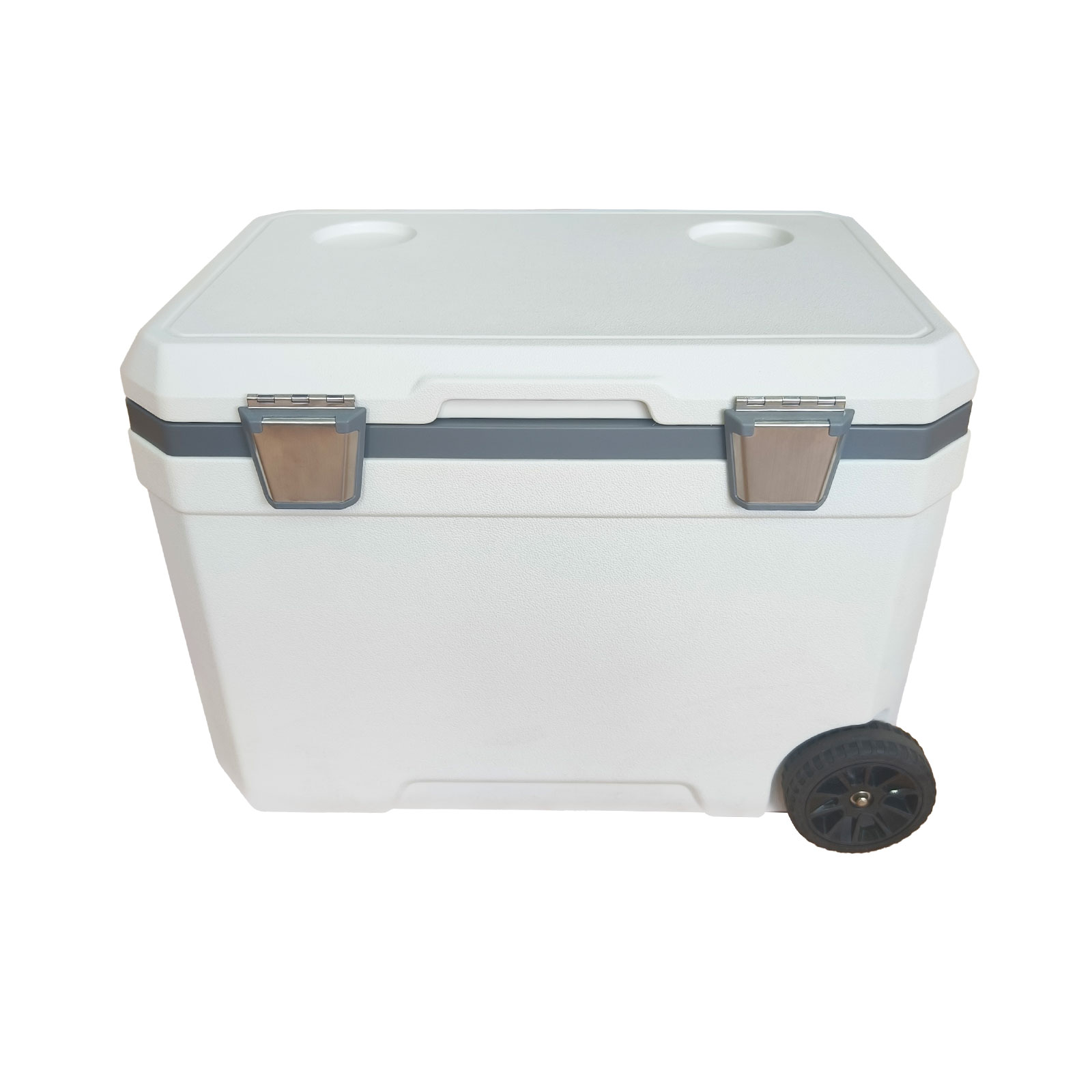
A strong insulated insulated EPP box combines the best points of buyer logic, material performance, and real operating needs. You need the box to protect product quality, hold temperature with less guesswork, and make daily work easier for packers, drivers, kitchen staff, or warehouse teams. In 2026, the best-performing options are the ones designed around real routes, realistic wash routines, and measurable handling risks rather than generic claims.
Before you compare quotes, decide what success looks like in your own operation. For one buyer it may mean lower damage. For another it may mean cleaner delivery presentation, better thermal consistency, or faster daily packing. When the target is clear, it becomes much easier to judge whether a insulated insulated EPP box is genuinely stronger or simply described more confidently.
This article will help you answer:
- how insulated insulated EPP box fits temperature-sensitive meals and other B2B shipping needs
- which design details matter most for thicker walls, tighter lid geometry, coolant layout, and route-specific thermal tuning
- how to compare reusable EPP packaging against one-way formats
- what 2026 buying trends mean for your next packaging decision
- which checklist helps you qualify a supplier faster
What makes a insulated insulated EPP box worth buying in 2026?
A insulated insulated EPP box is worth buying when it improves delivered condition, packing consistency, and operational repeatability at the same time. In practice, that means the box must do more than hold temperature. It should reduce unnecessary movement, fit the payload cleanly, remain easy to handle, and stay practical across repeat cycles. When those pieces align, the box stops being a packaging expense and starts acting like a process tool.
The strongest solutions combine the core EPP advantages of low weight, resilience, and insulation with smart application-specific design. You see this in features such as better lid paths, more accurate internal geometry, route-sized footprints, or easier cleaning surfaces. The point is not to load the box with features. It is to remove the points where the real workflow usually breaks.
What separates a good sample from a scalable solution?
Buyers should also remember that product condition is shaped by timing as much as by materials. A good box helps create a wider safety margin when dispatch is delayed, when a driver restacks loads, or when the receiver opens the pack later than planned. That wider margin is one of the most practical reasons to invest in a better design.
| <strong>Performance area</strong> | <strong>What to look for</strong> | <strong>Good sign</strong> | <strong>Why it matters to you</strong> |
| Thermal control | Lid fit, wall build, coolant layout | Stable product condition across delays | Protects delivered quality |
| Handling protection | Insert guidance and impact zones | Less internal movement | Cuts breakage and complaints |
| Usability | Weight, grip, and opening logic | Staff use it correctly without reminders | Improves workflow speed |
| Durability | Surface wear and shape retention | Box stays useful across cycles | Supports total cost value |
Practical tips you can use
- Start with one clear success target, such as fewer damages, faster packing, or better thermal consistency.
- If staff pack in a hurry, reduce choices. Fewer inserts and clearer orientation points usually improve consistency.
- Pilot the box on a bad day as well as a normal day. Delay, restacking, and rushed handoff reveal the real weak points.
A distributor moving chilled items on mixed urban and suburban routes found that better lid fit and pack layout mattered as much as adding more coolant. The revised EPP design held product temperature more evenly across route changes. The lesson was that better fit and better handling logic often create a larger benefit than simply adding more packing material.
How should you design and specify a insulated insulated EPP box?
The right specification for a insulated insulated EPP box starts with route and product logic, then moves into material and geometry choices. You should define what you ship, how fragile it is, the expected temperature band, the longest dwell time, the likely shock points, and the cleaning or return routine. Once those variables are clear, decisions about density, wall build, inserts, and branding become far easier.
A development program should ask three simple questions. First, where does the product fail now? Second, which design lever can remove that failure? Third, how will we prove it under realistic conditions? This sounds obvious, but many projects skip directly to pricing or tooling and then spend weeks correcting avoidable mistakes. The better path is disciplined specification before optimization.
Which details most often get missed during development?
The most commonly missed details are lid fit, internal movement allowance, pack-out instructions, and wash or return handling. Those are not minor details. They are the places where a technically good box can still create operational confusion. When suppliers address these points early, qualification is faster and the final box is easier for teams to adopt.
| <strong>Specification area</strong> | <strong>Question to answer</strong> | <strong>Useful output</strong> | <strong>Why it matters to you</strong> |
| Payload | What exactly must fit inside? | Cavity map and insert logic | Stops oversizing |
| Route | What is the longest realistic dwell? | Thermal test target | Prevents false assumptions |
| Handling | Where are the roughest touchpoints? | Drop and stack conditions | Links design to risk |
| Maintenance | How will the box be cleaned or returned? | Operating SOP | Makes reuse practical |
Practical tips you can use
- Write route temperature, dwell time, and staging conditions into the project brief before you ask for pricing.
- Keep the specification sheet simple enough that both operations and procurement can use it.
- Validate cleaning and cosmetic wear early if the box will be reused in front of customers or branch staff.
A distributor moving chilled items on mixed urban and suburban routes found that better lid fit and pack layout mattered as much as adding more coolant. The revised EPP design held product temperature more evenly across route changes. The lesson was that a reusable container only performs well when the maintenance routine is as clear as the transport routine.
Which real-world use cases fit a insulated insulated EPP box best?
Real-world fit determines whether a insulated insulated EPP box becomes a scalable packaging standard or just a promising sample. The best use cases are the ones where product value is meaningful, handling risk is real, and route repetition is frequent enough to reward a disciplined format. That is why EPP boxes are often strongest in food delivery, chilled B2B transport, fragile item handling, internal shuttle loops, and premium presentation-sensitive programs.
Launch planning matters too. A new box should be introduced with a clear packing guide, a defined cleaning routine where relevant, and a simple return rule if the system is reusable. Without those basics, staff create workarounds and buyers end up blaming the box for problems caused by process drift. A strong rollout makes the packaging feel obvious to use from the first week.
How do you launch the box without adding friction?
Once the box is in use, the fastest learning comes from watching real handling. Look at how it is picked up, how it is stacked, what gets dirty first, and where product movement still appears. Those observations often reveal the next design improvement faster than another long debate about theoretical specs.
| <strong>Use case</strong> | <strong>Why EPP can fit</strong> | <strong>What to watch</strong> | <strong>Why it matters to you</strong> |
| Food delivery | Fast pack-out and light handling | Route variation and hygiene | Keeps service quality stable |
| Cold chain shuttle | Repeat use and thermal buffer | Return discipline | Supports operational consistency |
| Fragile premium goods | Impact control plus presentation | Cavity accuracy | Protects margin and brand |
| Wet or outdoor routes | Moisture tolerance and easy wipe-down | Lid cleanliness and grip | Improves daily usability |
Practical tips you can use
- Compare labor time, damage reduction, and presentation gains together instead of judging only the piece price.
- Use a simple return or collection rule from day one if the box is reusable.
- Review live handling videos or photos after launch to spot the next improvement quickly.
A distributor moving chilled items on mixed urban and suburban routes found that better lid fit and pack layout mattered as much as adding more coolant. The revised EPP design held product temperature more evenly across route changes. The lesson was that standardization creates hidden value because every team member starts handling the box in the same way.
2026 developments and trends for insulated insulated EPP box
In 2026, the discussion around the insulated insulated EPP box is broader than material choice alone. Buyers are connecting insulation, handling quality, sanitary workflow, reuse economics, and end-of-life planning into one decision. Current FDA transport guidance keeps attention on clean equipment, procedures, records, and trained handling for food loads, while recent reusable packaging guidance keeps reminding teams that return distance, cleaning effort, and loop efficiency decide whether a reuse model works in practice. For EPP specifically, current industry references still emphasize the combination of low weight, repeated impact resilience, insulation, and recyclability in the PP stream.
Latest developments at a glance
- Route-based design: Buyers want packaging sized for real dwell time, loading style, and handoff conditions rather than generic volume targets.
- Smarter reuse programs: More teams are pairing reusable boxes with simple cleaning, return, and identification rules so the container stays operationally easy.
- Better fit over more filler: Development is shifting toward cavity accuracy, lid quality, and pack-out discipline instead of solving every problem with extra coolant.
The market direction is practical rather than theoretical. Buyers are rewarding packaging that lowers daily friction, protects delivered quality, and scales without constant workarounds. That is why suppliers who can connect design advice with live operating logic are gaining ground. For you, this means a better buying process: focus on route truth, payload behavior, cleaning reality, and return discipline, and the right insulated insulated EPP box becomes much easier to identify.
Frequently asked questions
Is a insulated insulated EPP box only useful for cold chain shipping?
No. Many buyers choose it for hot-hold, ambient protection, fragile item control, or internal shuttle use. The key is whether you need light weight, repeatable handling protection, and a more controlled pack-out method.
How long can a insulated insulated EPP box hold temperature?
There is no honest single answer. Hold time depends on wall design, lid fit, payload mass, coolant layout, start temperature, and route conditions. Always test with your real pack-out and actual dwell profile.
Can a insulated insulated EPP box be reused many times?
Usually yes, if the design matches the route and the operating team uses a clear cleaning and return routine. Reuse performance is shaped as much by process discipline as by the material itself.
What should you ask a supplier before ordering a insulated insulated EPP box?
Ask how the design matches your route, payload, shock risk, cleaning method, and expected cycle count. A supplier that only discusses size and price is usually not giving you enough decision support.
When does a insulated insulated EPP box make financial sense?
It makes sense when reduced damage, faster packing, better delivered condition, or repeat-use efficiency outweigh the higher starting price. Compare total operating value, not only unit cost.
Summary and recommendations
A well-chosen insulated insulated EPP box helps you in practical ways: it improves temperature stability, reduces handling risk, makes pack-out more repeatable, and creates a stronger base for reuse when the workflow is defined clearly. The best design is not the one with the loudest claim. It is the one that fits your product, route, cleaning method, and team behavior with the least daily friction.
If you are comparing options now, start with a simple three-step plan. First, define the real route and pack-out. Second, identify the main failure point you want to remove. Third, pilot the insulated insulated EPP box under ordinary operating conditions instead of ideal ones. That approach will help you choose faster and with fewer revisions.
About Tempk
At Tempk, we work on temperature-control packaging with a practical B2B mindset. We focus on insulated boxes, ice packs, and related cold chain packaging solutions that must perform in real transport environments, not just in a brochure. We can support development around fit, durability, handling, and repeat-use logic so your packaging decision is easier to scale. Our goal is to help you move from sample approval to dependable daily use with less trial and error.
How do you choose the best high-density EPP storage container in 2026?

high-density EPP storage container is worth serious attention in 2026 when you need a box that protects temperature-sensitive product, survives real handling, and supports a cleaner sourcing story than fragile disposable packaging. The strongest solutions do not win because of one buzzword. They win because material science, route design, compliance, and workflow all line up in one usable package.
If you are choosing between options now, focus on the complete system. Look at density and wall design, but also study packout fit, coolant layout, closure stability, cleaning, return efficiency, and the proof behind the intended use. That integrated view is what separates a good-looking insulated box from a box that actually performs in the field.
What you will learn
- why high-density EPP storage container is receiving more serious buyer attention in 2026
- how material data and route design should be combined in one decision
- how to write a buying specification that survives real operations
- how to connect compliance, validation, and sustainability without greenwashing
- what step-by-step buying plan gives the safest result
Why is high-density EPP storage container getting more attention right now?
Three forces are pushing buyers toward high-density EPP storage container. First, cold chain volumes are growing across food, healthcare, and direct-to-consumer delivery. Second, reusable packaging programs are expanding because teams want lower damage and a better waste profile. Third, packaging rules and customer expectations are putting more weight on recyclability, clearer labeling, and credible sustainability claims. When those forces meet, EPP becomes attractive because it can be insulated, durable, light, and reusable at the same time.
The appeal becomes stronger when the route is hard on packaging. Wall crush, lid distortion, and unstable stacking under load is rarely caused by a single factor. It comes from bumps, moisture, lid opening, hot docks, rushed labor, and weak packouts all working together. A well-designed EPP system gives you more protection against that messy reality. It is not perfect by default, but it gives engineers and buyers more useful design levers than many disposable alternatives.
The best reason to buy high-density EPP storage container is operational balance
Some packages are cheap but fragile. Others are strong but heavy. Others look sustainable but are hard to recover in practice. EPP often earns its place because it balances those competing needs better than most options. You can tune density, geometry, inserts, and handling features to the route instead of accepting one blunt compromise. That flexibility is a major reason the category keeps moving up procurement shortlists.
| <strong>Current pressure</strong> | <strong>What it means for packaging</strong> | <strong>How EPP can respond</strong> | <strong>Why it matters to you</strong> |
| Cold chain growth | More routes and more temperature-sensitive product | Reusable insulated box designs scale across several lane types | You need packaging decisions that stay workable as volume grows |
| Higher quality expectations | Damage and temperature failures are more visible | Better impact recovery and route tuning | You protect margin and customer trust |
| Sustainability pressure | Waste and recyclability are under closer review | Reuse plus recyclable material pathways | Your sourcing story becomes easier to defend |
| Stricter buying scrutiny | Procurement wants proof, not claims | Data, samples, and validation can be built into the decision | Approval becomes faster and less risky |
Practical tips for you
- Use the business problem to define the box, not the other way around.
- Use route segmentation if one package clearly does not suit every lane in your network.
- Use real product value and service expectations when deciding how much durability is justified.
Case example: a mixed chilled-food network moved away from a single disposable format after repeated complaints about damage and waste. An EPP-based design did not solve every route in the same way, but it gave the team a stronger reusable base to tune by lane.
How do material science and route design work together in high-density EPP storage container?
The material properties of high-density EPP storage container matter most when they are translated into route outcomes. Standard molded EPP grades often sit around 20 to 60 g/L, and common technical data shows compressive strength at 10 percent deflection rising from roughly 9 psi to 40 psi across that range. Water absorption is commonly listed below 5 percent by volume, which helps the box stay predictable after condensation or wet handling. Those numbers are useful because they explain why EPP can stay light, insulate well, and still tolerate repeated abuse.
But route design finishes the job. The same material can work beautifully in one packout and poorly in another. Wall thickness, lid seal, headspace, coolant position, opening frequency, and stacking pattern all shape the final temperature result. That is why smart teams test the whole system instead of worshipping one data point. Material science gives you the tool. Route design tells you whether the tool is being used correctly.
Turn the science behind high-density EPP storage container into simple buying logic
If the route is short and light, you may prioritize empty-box weight and packing speed. If the route is rough or stacked high, you may move toward denser walls or stronger geometry. If the product is regulated or premium, validation depth becomes non-negotiable. That sequence lets you use technical data in a practical way instead of treating it as background noise.
| <strong>Technical lever</strong> | <strong>What it changes</strong> | <strong>When it matters most</strong> | <strong>Buying takeaway</strong> |
| Density | Rigidity, empty weight, and durability | Stacking, repeated handling, heavy payloads | Choose it based on route stress, not prestige |
| Wall geometry | Strength and insulation distribution | Impact zones, lid fit, and cavity stability | Smart design often beats brute-force material use |
| Closed-cell structure | Moisture behavior and cleaning ease | Wet docks, seafood, washdown, condensation | Useful for maintaining repeat-use consistency |
| Packout layout | Thermal performance in the real shipment | Long routes and varied ambient exposure | Validate the full system, not the box alone |
Practical tips for you
- Use logger data and physical box inspection together during testing.
- Use the same loading method in validation that the warehouse will use in production.
- Use the lightest design that still meets the structural and thermal target.
Case example: a buyer improved route performance without changing the material grade by tightening the cavity layout and rebalancing coolant placement. The lesson was clear: system design can unlock material value.
How do you build a buying specification for high-density EPP storage container that survives real operations?
A strong specification for high-density EPP storage container covers more than outer size and color. It should define payload type, target temperature range, route duration, ambient profile, coolant format, acceptable stack load, cleaning method, expected reuse model, and the documents needed for approval. When those items are vague, suppliers fill in the blanks differently and price comparisons stop being fair. A clear spec protects both quality and procurement.
You should also write the specification in operator language, not only engineer language. How fast must the box be packed? Can one person lift it safely? Does it need barcode space, tamper seals, or partition options? Is the return flow nested, rigid, or fold-flat? These questions matter because operational friction quietly becomes cost. A box that looks correct on paper but annoys the team every day is not a good purchase.
A practical decision tool for high-density EPP storage container buyers
When you review samples, ask four simple questions. Does the box fit the product? Does it hold temperature in the real lane? Can the team use and clean it easily? Can the supplier prove what they claim? If any answer is weak, the project is not ready for scale. This framework sounds basic, but it catches most expensive mistakes before they spread across the network.
| <strong>Specification item</strong> | <strong>Question to ask</strong> | <strong>Good answer</strong> | <strong>Risk if it is unclear</strong> |
| Route definition | What is the worst credible lane? | Ambient profile, duration, and handling events are named | Validation becomes generic and misleading |
| Packout logic | How is the product loaded and cooled? | Payload, coolant, and headspace are defined | Thermal results vary trip to trip |
| Operational fit | How will staff pack, clean, and return it? | Workflow is simple and tested | Labor cost and user error rise |
| Approval documents | What proof is required for release? | Material, validation, and traceability are listed | Projects stall during review |
Practical tips for you
- Use the same template for every supplier quote so the comparison stays controlled.
- Use cross-functional review with operations, quality, and procurement before approving tooling or volume.
- Use pilot runs to test the specification under real staffing and timing pressure.
Case example: a buyer avoided an expensive redesign by catching an operator issue during sample trials. The box met thermal targets, but the label area failed after condensation and fast relabeling. Updating the spec early prevented a bigger rollout problem.
How do compliance, validation, and sustainability fit together for high-density EPP storage container?
The best projects treat compliance, validation, and sustainability as one conversation. For food-contact uses, buyers often review intended-use support under 21 CFR 177.1520 in the United States or the EU framework under Regulation (EC) No 1935/2004 and GMP under Regulation (EC) No 2023/2006. For food transport, sanitary transportation expectations around equipment, operations, records, and training also shape how the box is approved and used. These are not side issues. They are part of what makes the packaging trustworthy.
Sustainability becomes more credible when validation is strong. If you want to claim a reusable or lower-waste solution, you need realistic reuse cycles, workable returns, and an end-of-life path that exists in the target market. In Europe, packaging policy is reinforcing this direction by keeping attention on recyclable design and clearer labeling. EPP fits well when the program can support reuse and recovery, but the claim must be operationally true, not only theoretically true.
Credible proof makes high-density EPP storage container easier to approve and easier to defend
Think of documentation as a bridge between departments. Quality teams want evidence. Procurement wants comparability. Sustainability teams want a claim they can defend. Operations wants something that works every day. When a supplier provides clear material support, route-based validation, and honest reuse logic, that bridge gets much easier to build. That is what serious buyers should reward.
| <strong>Approval pillar</strong> | <strong>What good looks like</strong> | <strong>Why it matters</strong> | <strong>What goes wrong without it</strong> |
| Regulatory support | Clear intended-use documentation | Quality review moves faster | Approval becomes slow and uncertain |
| Thermal validation | Route-based testing with defined packout | Performance claims stay believable | Field results drift from lab claims |
| Reuse model | Realistic cycle and return assumptions | Sustainability claims gain substance | Green claims remain superficial |
| End-of-life path | Recovery or recycling logic in target market | Waste planning is stronger | Reusable packaging may still become waste |
Practical tips for you
- Use compliance and sustainability reviews early, not after tooling is fixed.
- Use pilot data to check both temperature performance and box condition after repeated cycles.
- Use honest recovery assumptions before calculating any environmental or cost benefit.
Case example: a reusable program passed internal sustainability review only after the team added a recovery pathway and documented expected cycle life. The material was recyclable from the start, but the program needed operational proof.
What is the smartest 2026 buying plan for high-density EPP storage container?
The smartest buying plan for high-density EPP storage container is staged, evidence-based, and route-specific. Start by defining the most difficult realistic lane, the product risk, and the operational model. Then shortlist only suppliers who can explain design logic, provide relevant documentation, and support testing. After that, run sample trials under real workflow conditions before you commit to volume.
This process may feel slower at the beginning, but it usually speeds up the final decision because the team is arguing with better information. It also helps prevent two expensive mistakes: overbuying a premium box you do not need or underbuying a weak box that fails once volume grows. In 2026, the best buyers are not the fastest clickers. They are the teams that connect material performance, route fit, and business logic with discipline. That is exactly the right way to buy EPP packaging.
Five-step action plan for high-density EPP storage container
Define the lane. Freeze the packout. Screen supplier proof. Pilot in the real operation. Scale only after the results are clear. Those five steps sound simple because they are. Most packaging mistakes happen when one of them is skipped. If you follow them carefully, your odds of making a strong choice rise sharply.
| <strong>Step</strong> | <strong>What to do</strong> | <strong>What success looks like</strong> | <strong>Why it saves time later</strong> |
| 1. Define the lane | Map the harshest realistic route | Everyone agrees on the test target | You avoid vague design debates |
| 2. Freeze the packout | Set product, coolant, and load method | Samples are tested fairly | Results become comparable |
| 3. Screen suppliers | Review data, docs, and responsiveness | Weak options fall out early | You focus on serious candidates |
| 4. Pilot the box | Run thermal and workflow trials | The team sees real performance | Surprises appear before scale-up |
| 5. Scale with discipline | Approve only after evidence is clear | Production follows a proven specification | Launch risk drops significantly |
Practical tips for you
- Use a written go or no-go checklist before volume approval.
- Use a pilot long enough to expose cleaning, labeling, and return issues, not only temperature behavior.
- Use post-pilot review to refine the design before the box becomes a standard item.
Case example: a team that followed a staged approval process took slightly longer to launch, but avoided a full-season packaging failure because the pilot exposed a lid-handling issue before scale. The delay was minor. The avoided disruption was major.
2026 developments and trends for high-density EPP storage container
The direction of travel for high-density EPP storage container is becoming easier to read. Markets want stronger temperature protection, more reusable packaging, more evidence, and less wasteful design. That combination rewards EPP when it is specified honestly and validated well. It also punishes lazy claims, because buyers are getting better at asking hard questions about route fit, regulatory support, and lifecycle logic.
Latest developments at a glance
- Route-specific testing is becoming more important than generic marketing hold-time promises.
- Recyclability and lower-waste design are now part of the buying conversation, especially under European policy pressure.
- Operational fit such as packing speed, cleaning, and return efficiency is increasingly used as a final tie-breaker between similar products.
For you, the market message is positive. A thoughtful buyer can now separate good suppliers from weak ones much faster by asking for system-level proof. That makes it easier to invest in a box that truly supports quality, cost control, and a more credible sustainability position.
Frequently asked questions
How long can high-density EPP storage container hold temperature?
It depends on product start temperature, coolant mass, wall design, ambient profile, and how often the lid is opened. Ask for route-specific testing instead of relying on a single headline number.
Is high-density EPP storage container better than EPS for repeat use?
In many reusable flows, yes. EPP is usually tougher under repeated impact and easier to keep in service, while EPS is often chosen for low-cost one-way use.
Can high-density EPP storage container be used for food applications?
It can be suitable when the resin system, additives, and process controls support the intended use. Request food-contact documentation and any needed declarations before approval.
How do you clean high-density EPP storage container properly?
Follow the supplier’s cleaning guidance, but in general a closed-cell EPP surface is easier to wipe and dry than absorbent materials. Validate your cleaning method for the real application.
Is high-density EPP storage container recyclable?
EPP is recyclable as a polypropylene-based foam, but real recycling depends on local collection and recovery options. Reuse first, then confirm end-of-life handling in your market.
What should I compare first when I shortlist suppliers for high-density EPP storage container?
Compare route-fit, documentation, sample quality, and operational ease before you compare price alone. A cheap box that fails in the lane is never the lowest-cost option.
Summary and recommendation
The key takeaway is simple. High-density EPP storage container makes sense when you need insulation, repeat durability, and a route-ready design that works in the real world. The best result comes from matching density, geometry, coolant layout, and handling details to your actual use case rather than buying a box by headline claims alone.
The best path forward is to make your buying process as strong as the box. Your next step should be practical. Define the lane, confirm the packout, request the right documentation, and pilot the box under real operating conditions. Use density as a design lever, not a buzzword. A careful start usually saves far more money than a rushed purchase.
About Tempk
At Tempk, we focus on cold-chain packaging with an operations-first mindset. We look at insulation performance, material choice, packout logic, and handling reality together so a box is not only technically sound but also workable for everyday teams. For you, that means the conversation stays grounded in route fit, documentation, and useful design support instead of empty buzzwords.
How do you choose the best heat-insulating customizable EPP cooler box in 2026?

heat-insulating customizable EPP cooler box is worth serious attention in 2026 when you need a box that protects temperature-sensitive product, survives real handling, and supports a cleaner sourcing story than fragile disposable packaging. The strongest solutions do not win because of one buzzword. They win because material science, route design, compliance, and workflow all line up in one usable package.
If you are choosing between options now, focus on the complete system. Look at density and wall design, but also study packout fit, coolant layout, closure stability, cleaning, return efficiency, and the proof behind the intended use. That integrated view is what separates a good-looking insulated box from a box that actually performs in the field.
What you will learn
- why heat-insulating customizable EPP cooler box is receiving more serious buyer attention in 2026
- how material data and route design should be combined in one decision
- how to write a buying specification that survives real operations
- how to connect compliance, validation, and sustainability without greenwashing
- what step-by-step buying plan gives the safest result
Why is heat-insulating customizable EPP cooler box getting more attention right now?
Three forces are pushing buyers toward heat-insulating customizable EPP cooler box. First, cold chain volumes are growing across food, healthcare, and direct-to-consumer delivery. Second, reusable packaging programs are expanding because teams want lower damage and a better waste profile. Third, packaging rules and customer expectations are putting more weight on recyclability, clearer labeling, and credible sustainability claims. When those forces meet, EPP becomes attractive because it can be insulated, durable, light, and reusable at the same time.
The appeal becomes stronger when the route is hard on packaging. Generic boxes that waste space or fail to fit the product and coolant layout is rarely caused by a single factor. It comes from bumps, moisture, lid opening, hot docks, rushed labor, and weak packouts all working together. A well-designed EPP system gives you more protection against that messy reality. It is not perfect by default, but it gives engineers and buyers more useful design levers than many disposable alternatives.
The best reason to buy heat-insulating customizable EPP cooler box is operational balance
Some packages are cheap but fragile. Others are strong but heavy. Others look sustainable but are hard to recover in practice. EPP often earns its place because it balances those competing needs better than most options. You can tune density, geometry, inserts, and handling features to the route instead of accepting one blunt compromise. That flexibility is a major reason the category keeps moving up procurement shortlists.
| <strong>Current pressure</strong> | <strong>What it means for packaging</strong> | <strong>How EPP can respond</strong> | <strong>Why it matters to you</strong> |
| Cold chain growth | More routes and more temperature-sensitive product | Reusable insulated box designs scale across several lane types | You need packaging decisions that stay workable as volume grows |
| Higher quality expectations | Damage and temperature failures are more visible | Better impact recovery and route tuning | You protect margin and customer trust |
| Sustainability pressure | Waste and recyclability are under closer review | Reuse plus recyclable material pathways | Your sourcing story becomes easier to defend |
| Stricter buying scrutiny | Procurement wants proof, not claims | Data, samples, and validation can be built into the decision | Approval becomes faster and less risky |
Practical tips for you
- Use the business problem to define the box, not the other way around.
- Use route segmentation if one package clearly does not suit every lane in your network.
- Use real product value and service expectations when deciding how much durability is justified.
Case example: a mixed chilled-food network moved away from a single disposable format after repeated complaints about damage and waste. An EPP-based design did not solve every route in the same way, but it gave the team a stronger reusable base to tune by lane.
How do material science and route design work together in heat-insulating customizable EPP cooler box?
The material properties of heat-insulating customizable EPP cooler box matter most when they are translated into route outcomes. Standard molded EPP grades often sit around 20 to 60 g/L, and common technical data shows compressive strength at 10 percent deflection rising from roughly 9 psi to 40 psi across that range. Water absorption is commonly listed below 5 percent by volume, which helps the box stay predictable after condensation or wet handling. Those numbers are useful because they explain why EPP can stay light, insulate well, and still tolerate repeated abuse.
But route design finishes the job. The same material can work beautifully in one packout and poorly in another. Wall thickness, lid seal, headspace, coolant position, opening frequency, and stacking pattern all shape the final temperature result. That is why smart teams test the whole system instead of worshipping one data point. Material science gives you the tool. Route design tells you whether the tool is being used correctly.
Turn the science behind heat-insulating customizable EPP cooler box into simple buying logic
If the route is short and light, you may prioritize empty-box weight and packing speed. If the route is rough or stacked high, you may move toward denser walls or stronger geometry. If the product is regulated or premium, validation depth becomes non-negotiable. That sequence lets you use technical data in a practical way instead of treating it as background noise.
| <strong>Technical lever</strong> | <strong>What it changes</strong> | <strong>When it matters most</strong> | <strong>Buying takeaway</strong> |
| Density | Rigidity, empty weight, and durability | Stacking, repeated handling, heavy payloads | Choose it based on route stress, not prestige |
| Wall geometry | Strength and insulation distribution | Impact zones, lid fit, and cavity stability | Smart design often beats brute-force material use |
| Closed-cell structure | Moisture behavior and cleaning ease | Wet docks, seafood, washdown, condensation | Useful for maintaining repeat-use consistency |
| Packout layout | Thermal performance in the real shipment | Long routes and varied ambient exposure | Validate the full system, not the box alone |
Practical tips for you
- Use logger data and physical box inspection together during testing.
- Use the same loading method in validation that the warehouse will use in production.
- Use the lightest design that still meets the structural and thermal target.
Case example: a buyer improved route performance without changing the material grade by tightening the cavity layout and rebalancing coolant placement. The lesson was clear: system design can unlock material value.
How do you build a buying specification for heat-insulating customizable EPP cooler box that survives real operations?
A strong specification for heat-insulating customizable EPP cooler box covers more than outer size and color. It should define payload type, target temperature range, route duration, ambient profile, coolant format, acceptable stack load, cleaning method, expected reuse model, and the documents needed for approval. When those items are vague, suppliers fill in the blanks differently and price comparisons stop being fair. A clear spec protects both quality and procurement.
You should also write the specification in operator language, not only engineer language. How fast must the box be packed? Can one person lift it safely? Does it need barcode space, tamper seals, or partition options? Is the return flow nested, rigid, or fold-flat? These questions matter because operational friction quietly becomes cost. A box that looks correct on paper but annoys the team every day is not a good purchase.
A practical decision tool for heat-insulating customizable EPP cooler box buyers
When you review samples, ask four simple questions. Does the box fit the product? Does it hold temperature in the real lane? Can the team use and clean it easily? Can the supplier prove what they claim? If any answer is weak, the project is not ready for scale. This framework sounds basic, but it catches most expensive mistakes before they spread across the network.
| <strong>Specification item</strong> | <strong>Question to ask</strong> | <strong>Good answer</strong> | <strong>Risk if it is unclear</strong> |
| Route definition | What is the worst credible lane? | Ambient profile, duration, and handling events are named | Validation becomes generic and misleading |
| Packout logic | How is the product loaded and cooled? | Payload, coolant, and headspace are defined | Thermal results vary trip to trip |
| Operational fit | How will staff pack, clean, and return it? | Workflow is simple and tested | Labor cost and user error rise |
| Approval documents | What proof is required for release? | Material, validation, and traceability are listed | Projects stall during review |
Practical tips for you
- Use the same template for every supplier quote so the comparison stays controlled.
- Use cross-functional review with operations, quality, and procurement before approving tooling or volume.
- Use pilot runs to test the specification under real staffing and timing pressure.
Case example: a buyer avoided an expensive redesign by catching an operator issue during sample trials. The box met thermal targets, but the label area failed after condensation and fast relabeling. Updating the spec early prevented a bigger rollout problem.
How do compliance, validation, and sustainability fit together for heat-insulating customizable EPP cooler box?
The best projects treat compliance, validation, and sustainability as one conversation. For food-contact uses, buyers often review intended-use support under 21 CFR 177.1520 in the United States or the EU framework under Regulation (EC) No 1935/2004 and GMP under Regulation (EC) No 2023/2006. For food transport, sanitary transportation expectations around equipment, operations, records, and training also shape how the box is approved and used. These are not side issues. They are part of what makes the packaging trustworthy.
Sustainability becomes more credible when validation is strong. If you want to claim a reusable or lower-waste solution, you need realistic reuse cycles, workable returns, and an end-of-life path that exists in the target market. In Europe, packaging policy is reinforcing this direction by keeping attention on recyclable design and clearer labeling. EPP fits well when the program can support reuse and recovery, but the claim must be operationally true, not only theoretically true.
Credible proof makes heat-insulating customizable EPP cooler box easier to approve and easier to defend
Think of documentation as a bridge between departments. Quality teams want evidence. Procurement wants comparability. Sustainability teams want a claim they can defend. Operations wants something that works every day. When a supplier provides clear material support, route-based validation, and honest reuse logic, that bridge gets much easier to build. That is what serious buyers should reward.
| <strong>Approval pillar</strong> | <strong>What good looks like</strong> | <strong>Why it matters</strong> | <strong>What goes wrong without it</strong> |
| Regulatory support | Clear intended-use documentation | Quality review moves faster | Approval becomes slow and uncertain |
| Thermal validation | Route-based testing with defined packout | Performance claims stay believable | Field results drift from lab claims |
| Reuse model | Realistic cycle and return assumptions | Sustainability claims gain substance | Green claims remain superficial |
| End-of-life path | Recovery or recycling logic in target market | Waste planning is stronger | Reusable packaging may still become waste |
Practical tips for you
- Use compliance and sustainability reviews early, not after tooling is fixed.
- Use pilot data to check both temperature performance and box condition after repeated cycles.
- Use honest recovery assumptions before calculating any environmental or cost benefit.
Case example: a reusable program passed internal sustainability review only after the team added a recovery pathway and documented expected cycle life. The material was recyclable from the start, but the program needed operational proof.
What is the smartest 2026 buying plan for heat-insulating customizable EPP cooler box?
The smartest buying plan for heat-insulating customizable EPP cooler box is staged, evidence-based, and route-specific. Start by defining the most difficult realistic lane, the product risk, and the operational model. Then shortlist only suppliers who can explain design logic, provide relevant documentation, and support testing. After that, run sample trials under real workflow conditions before you commit to volume.
This process may feel slower at the beginning, but it usually speeds up the final decision because the team is arguing with better information. It also helps prevent two expensive mistakes: overbuying a premium box you do not need or underbuying a weak box that fails once volume grows. In 2026, the best buyers are not the fastest clickers. They are the teams that connect material performance, route fit, and business logic with discipline. That is exactly the right way to buy EPP packaging.
Five-step action plan for heat-insulating customizable EPP cooler box
Define the lane. Freeze the packout. Screen supplier proof. Pilot in the real operation. Scale only after the results are clear. Those five steps sound simple because they are. Most packaging mistakes happen when one of them is skipped. If you follow them carefully, your odds of making a strong choice rise sharply.
| <strong>Step</strong> | <strong>What to do</strong> | <strong>What success looks like</strong> | <strong>Why it saves time later</strong> |
| 1. Define the lane | Map the harshest realistic route | Everyone agrees on the test target | You avoid vague design debates |
| 2. Freeze the packout | Set product, coolant, and load method | Samples are tested fairly | Results become comparable |
| 3. Screen suppliers | Review data, docs, and responsiveness | Weak options fall out early | You focus on serious candidates |
| 4. Pilot the box | Run thermal and workflow trials | The team sees real performance | Surprises appear before scale-up |
| 5. Scale with discipline | Approve only after evidence is clear | Production follows a proven specification | Launch risk drops significantly |
Practical tips for you
- Use a written go or no-go checklist before volume approval.
- Use a pilot long enough to expose cleaning, labeling, and return issues, not only temperature behavior.
- Use post-pilot review to refine the design before the box becomes a standard item.
Case example: a team that followed a staged approval process took slightly longer to launch, but avoided a full-season packaging failure because the pilot exposed a lid-handling issue before scale. The delay was minor. The avoided disruption was major.
2026 developments and trends for heat-insulating customizable EPP cooler box
The direction of travel for heat-insulating customizable EPP cooler box is becoming easier to read. Markets want stronger temperature protection, more reusable packaging, more evidence, and less wasteful design. That combination rewards EPP when it is specified honestly and validated well. It also punishes lazy claims, because buyers are getting better at asking hard questions about route fit, regulatory support, and lifecycle logic.
Latest developments at a glance
- Route-specific testing is becoming more important than generic marketing hold-time promises.
- Recyclability and lower-waste design are now part of the buying conversation, especially under European policy pressure.
- Operational fit such as packing speed, cleaning, and return efficiency is increasingly used as a final tie-breaker between similar products.
For you, the market message is positive. A thoughtful buyer can now separate good suppliers from weak ones much faster by asking for system-level proof. That makes it easier to invest in a box that truly supports quality, cost control, and a more credible sustainability position.
Frequently asked questions
How long can heat-insulating customizable EPP cooler box hold temperature?
It depends on product start temperature, coolant mass, wall design, ambient profile, and how often the lid is opened. Ask for route-specific testing instead of relying on a single headline number.
Is heat-insulating customizable EPP cooler box better than EPS for repeat use?
In many reusable flows, yes. EPP is usually tougher under repeated impact and easier to keep in service, while EPS is often chosen for low-cost one-way use.
Can heat-insulating customizable EPP cooler box be used for food applications?
It can be suitable when the resin system, additives, and process controls support the intended use. Request food-contact documentation and any needed declarations before approval.
How do you clean heat-insulating customizable EPP cooler box properly?
Follow the supplier’s cleaning guidance, but in general a closed-cell EPP surface is easier to wipe and dry than absorbent materials. Validate your cleaning method for the real application.
Is heat-insulating customizable EPP cooler box recyclable?
EPP is recyclable as a polypropylene-based foam, but real recycling depends on local collection and recovery options. Reuse first, then confirm end-of-life handling in your market.
What should I compare first when I shortlist suppliers for heat-insulating customizable EPP cooler box?
Compare route-fit, documentation, sample quality, and operational ease before you compare price alone. A cheap box that fails in the lane is never the lowest-cost option.
Summary and recommendation
The key takeaway is simple. Heat-insulating customizable EPP cooler box makes sense when you need insulation, repeat durability, and a route-ready design that works in the real world. The best result comes from matching density, geometry, coolant layout, and handling details to your actual use case rather than buying a box by headline claims alone.
The best path forward is to make your buying process as strong as the box. Your next step should be practical. Define the lane, confirm the packout, request the right documentation, and pilot the box under real operating conditions. Start with route data and product dimensions before you talk about color, logo, or surface finish. A careful start usually saves far more money than a rushed purchase.
About Tempk
At Tempk, we focus on cold-chain packaging with an operations-first mindset. We look at insulation performance, material choice, packout logic, and handling reality together so a box is not only technically sound but also workable for everyday teams. For you, that means the conversation stays grounded in route fit, documentation, and useful design support instead of empty buzzwords.
How do you choose the best food-grade moisture-resistant EPP box in 2026?
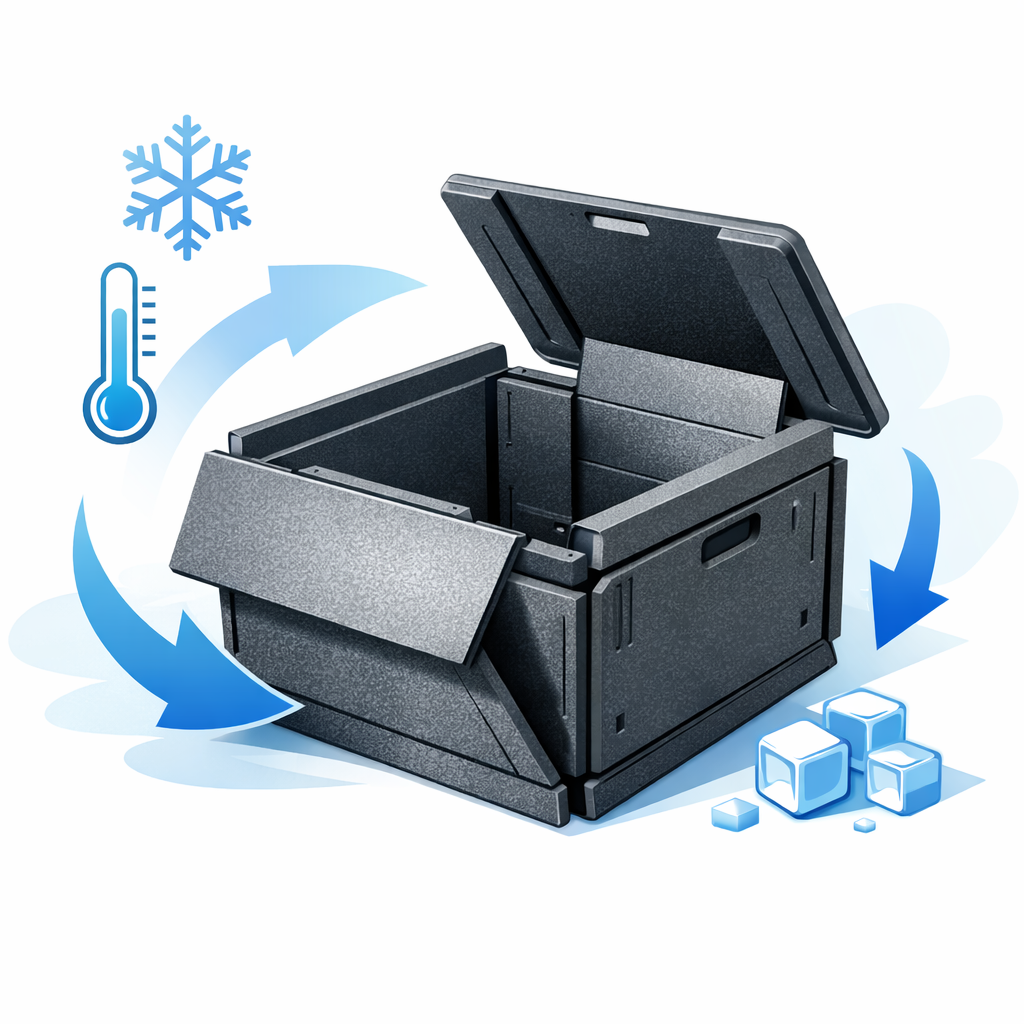
food-grade moisture-resistant EPP box is worth serious attention in 2026 when you need a box that protects temperature-sensitive product, survives real handling, and supports a cleaner sourcing story than fragile disposable packaging. The strongest solutions do not win because of one buzzword. They win because material science, route design, compliance, and workflow all line up in one usable package.
If you are choosing between options now, focus on the complete system. Look at density and wall design, but also study packout fit, coolant layout, closure stability, cleaning, return efficiency, and the proof behind the intended use. That integrated view is what separates a good-looking insulated box from a box that actually performs in the field.
What you will learn
- why food-grade moisture-resistant EPP box is receiving more serious buyer attention in 2026
- how material data and route design should be combined in one decision
- how to write a buying specification that survives real operations
- how to connect compliance, validation, and sustainability without greenwashing
- what step-by-step buying plan gives the safest result
Why is food-grade moisture-resistant EPP box getting more attention right now?
Three forces are pushing buyers toward food-grade moisture-resistant EPP box. First, cold chain volumes are growing across food, healthcare, and direct-to-consumer delivery. Second, reusable packaging programs are expanding because teams want lower damage and a better waste profile. Third, packaging rules and customer expectations are putting more weight on recyclability, clearer labeling, and credible sustainability claims. When those forces meet, EPP becomes attractive because it can be insulated, durable, light, and reusable at the same time.
The appeal becomes stronger when the route is hard on packaging. Condensation, hygiene risk, and uncertainty around food-contact documentation is rarely caused by a single factor. It comes from bumps, moisture, lid opening, hot docks, rushed labor, and weak packouts all working together. A well-designed EPP system gives you more protection against that messy reality. It is not perfect by default, but it gives engineers and buyers more useful design levers than many disposable alternatives.
The best reason to buy food-grade moisture-resistant EPP box is operational balance
Some packages are cheap but fragile. Others are strong but heavy. Others look sustainable but are hard to recover in practice. EPP often earns its place because it balances those competing needs better than most options. You can tune density, geometry, inserts, and handling features to the route instead of accepting one blunt compromise. That flexibility is a major reason the category keeps moving up procurement shortlists.
| <strong>Current pressure</strong> | <strong>What it means for packaging</strong> | <strong>How EPP can respond</strong> | <strong>Why it matters to you</strong> |
| Cold chain growth | More routes and more temperature-sensitive product | Reusable insulated box designs scale across several lane types | You need packaging decisions that stay workable as volume grows |
| Higher quality expectations | Damage and temperature failures are more visible | Better impact recovery and route tuning | You protect margin and customer trust |
| Sustainability pressure | Waste and recyclability are under closer review | Reuse plus recyclable material pathways | Your sourcing story becomes easier to defend |
| Stricter buying scrutiny | Procurement wants proof, not claims | Data, samples, and validation can be built into the decision | Approval becomes faster and less risky |
Practical tips for you
- Use the business problem to define the box, not the other way around.
- Use route segmentation if one package clearly does not suit every lane in your network.
- Use real product value and service expectations when deciding how much durability is justified.
Case example: a mixed chilled-food network moved away from a single disposable format after repeated complaints about damage and waste. An EPP-based design did not solve every route in the same way, but it gave the team a stronger reusable base to tune by lane.
How do material science and route design work together in food-grade moisture-resistant EPP box?
The material properties of food-grade moisture-resistant EPP box matter most when they are translated into route outcomes. Standard molded EPP grades often sit around 20 to 60 g/L, and common technical data shows compressive strength at 10 percent deflection rising from roughly 9 psi to 40 psi across that range. Water absorption is commonly listed below 5 percent by volume, which helps the box stay predictable after condensation or wet handling. Those numbers are useful because they explain why EPP can stay light, insulate well, and still tolerate repeated abuse.
But route design finishes the job. The same material can work beautifully in one packout and poorly in another. Wall thickness, lid seal, headspace, coolant position, opening frequency, and stacking pattern all shape the final temperature result. That is why smart teams test the whole system instead of worshipping one data point. Material science gives you the tool. Route design tells you whether the tool is being used correctly.
Turn the science behind food-grade moisture-resistant EPP box into simple buying logic
If the route is short and light, you may prioritize empty-box weight and packing speed. If the route is rough or stacked high, you may move toward denser walls or stronger geometry. If the product is regulated or premium, validation depth becomes non-negotiable. That sequence lets you use technical data in a practical way instead of treating it as background noise.
| <strong>Technical lever</strong> | <strong>What it changes</strong> | <strong>When it matters most</strong> | <strong>Buying takeaway</strong> |
| Density | Rigidity, empty weight, and durability | Stacking, repeated handling, heavy payloads | Choose it based on route stress, not prestige |
| Wall geometry | Strength and insulation distribution | Impact zones, lid fit, and cavity stability | Smart design often beats brute-force material use |
| Closed-cell structure | Moisture behavior and cleaning ease | Wet docks, seafood, washdown, condensation | Useful for maintaining repeat-use consistency |
| Packout layout | Thermal performance in the real shipment | Long routes and varied ambient exposure | Validate the full system, not the box alone |
Practical tips for you
- Use logger data and physical box inspection together during testing.
- Use the same loading method in validation that the warehouse will use in production.
- Use the lightest design that still meets the structural and thermal target.
Case example: a buyer improved route performance without changing the material grade by tightening the cavity layout and rebalancing coolant placement. The lesson was clear: system design can unlock material value.
How do you build a buying specification for food-grade moisture-resistant EPP box that survives real operations?
A strong specification for food-grade moisture-resistant EPP box covers more than outer size and color. It should define payload type, target temperature range, route duration, ambient profile, coolant format, acceptable stack load, cleaning method, expected reuse model, and the documents needed for approval. When those items are vague, suppliers fill in the blanks differently and price comparisons stop being fair. A clear spec protects both quality and procurement.
You should also write the specification in operator language, not only engineer language. How fast must the box be packed? Can one person lift it safely? Does it need barcode space, tamper seals, or partition options? Is the return flow nested, rigid, or fold-flat? These questions matter because operational friction quietly becomes cost. A box that looks correct on paper but annoys the team every day is not a good purchase.
A practical decision tool for food-grade moisture-resistant EPP box buyers
When you review samples, ask four simple questions. Does the box fit the product? Does it hold temperature in the real lane? Can the team use and clean it easily? Can the supplier prove what they claim? If any answer is weak, the project is not ready for scale. This framework sounds basic, but it catches most expensive mistakes before they spread across the network.
| <strong>Specification item</strong> | <strong>Question to ask</strong> | <strong>Good answer</strong> | <strong>Risk if it is unclear</strong> |
| Route definition | What is the worst credible lane? | Ambient profile, duration, and handling events are named | Validation becomes generic and misleading |
| Packout logic | How is the product loaded and cooled? | Payload, coolant, and headspace are defined | Thermal results vary trip to trip |
| Operational fit | How will staff pack, clean, and return it? | Workflow is simple and tested | Labor cost and user error rise |
| Approval documents | What proof is required for release? | Material, validation, and traceability are listed | Projects stall during review |
Practical tips for you
- Use the same template for every supplier quote so the comparison stays controlled.
- Use cross-functional review with operations, quality, and procurement before approving tooling or volume.
- Use pilot runs to test the specification under real staffing and timing pressure.
Case example: a buyer avoided an expensive redesign by catching an operator issue during sample trials. The box met thermal targets, but the label area failed after condensation and fast relabeling. Updating the spec early prevented a bigger rollout problem.
How do compliance, validation, and sustainability fit together for food-grade moisture-resistant EPP box?
The best projects treat compliance, validation, and sustainability as one conversation. For food-contact uses, buyers often review intended-use support under 21 CFR 177.1520 in the United States or the EU framework under Regulation (EC) No 1935/2004 and GMP under Regulation (EC) No 2023/2006. For food transport, sanitary transportation expectations around equipment, operations, records, and training also shape how the box is approved and used. These are not side issues. They are part of what makes the packaging trustworthy.
Sustainability becomes more credible when validation is strong. If you want to claim a reusable or lower-waste solution, you need realistic reuse cycles, workable returns, and an end-of-life path that exists in the target market. In Europe, packaging policy is reinforcing this direction by keeping attention on recyclable design and clearer labeling. EPP fits well when the program can support reuse and recovery, but the claim must be operationally true, not only theoretically true.
Credible proof makes food-grade moisture-resistant EPP box easier to approve and easier to defend
Think of documentation as a bridge between departments. Quality teams want evidence. Procurement wants comparability. Sustainability teams want a claim they can defend. Operations wants something that works every day. When a supplier provides clear material support, route-based validation, and honest reuse logic, that bridge gets much easier to build. That is what serious buyers should reward.
| <strong>Approval pillar</strong> | <strong>What good looks like</strong> | <strong>Why it matters</strong> | <strong>What goes wrong without it</strong> |
| Regulatory support | Clear intended-use documentation | Quality review moves faster | Approval becomes slow and uncertain |
| Thermal validation | Route-based testing with defined packout | Performance claims stay believable | Field results drift from lab claims |
| Reuse model | Realistic cycle and return assumptions | Sustainability claims gain substance | Green claims remain superficial |
| End-of-life path | Recovery or recycling logic in target market | Waste planning is stronger | Reusable packaging may still become waste |
Practical tips for you
- Use compliance and sustainability reviews early, not after tooling is fixed.
- Use pilot data to check both temperature performance and box condition after repeated cycles.
- Use honest recovery assumptions before calculating any environmental or cost benefit.
Case example: a reusable program passed internal sustainability review only after the team added a recovery pathway and documented expected cycle life. The material was recyclable from the start, but the program needed operational proof.
What is the smartest 2026 buying plan for food-grade moisture-resistant EPP box?
The smartest buying plan for food-grade moisture-resistant EPP box is staged, evidence-based, and route-specific. Start by defining the most difficult realistic lane, the product risk, and the operational model. Then shortlist only suppliers who can explain design logic, provide relevant documentation, and support testing. After that, run sample trials under real workflow conditions before you commit to volume.
This process may feel slower at the beginning, but it usually speeds up the final decision because the team is arguing with better information. It also helps prevent two expensive mistakes: overbuying a premium box you do not need or underbuying a weak box that fails once volume grows. In 2026, the best buyers are not the fastest clickers. They are the teams that connect material performance, route fit, and business logic with discipline. That is exactly the right way to buy EPP packaging.
Five-step action plan for food-grade moisture-resistant EPP box
Define the lane. Freeze the packout. Screen supplier proof. Pilot in the real operation. Scale only after the results are clear. Those five steps sound simple because they are. Most packaging mistakes happen when one of them is skipped. If you follow them carefully, your odds of making a strong choice rise sharply.
| <strong>Step</strong> | <strong>What to do</strong> | <strong>What success looks like</strong> | <strong>Why it saves time later</strong> |
| 1. Define the lane | Map the harshest realistic route | Everyone agrees on the test target | You avoid vague design debates |
| 2. Freeze the packout | Set product, coolant, and load method | Samples are tested fairly | Results become comparable |
| 3. Screen suppliers | Review data, docs, and responsiveness | Weak options fall out early | You focus on serious candidates |
| 4. Pilot the box | Run thermal and workflow trials | The team sees real performance | Surprises appear before scale-up |
| 5. Scale with discipline | Approve only after evidence is clear | Production follows a proven specification | Launch risk drops significantly |
Practical tips for you
- Use a written go or no-go checklist before volume approval.
- Use a pilot long enough to expose cleaning, labeling, and return issues, not only temperature behavior.
- Use post-pilot review to refine the design before the box becomes a standard item.
Case example: a team that followed a staged approval process took slightly longer to launch, but avoided a full-season packaging failure because the pilot exposed a lid-handling issue before scale. The delay was minor. The avoided disruption was major.
2026 developments and trends for food-grade moisture-resistant EPP box
The direction of travel for food-grade moisture-resistant EPP box is becoming easier to read. Markets want stronger temperature protection, more reusable packaging, more evidence, and less wasteful design. That combination rewards EPP when it is specified honestly and validated well. It also punishes lazy claims, because buyers are getting better at asking hard questions about route fit, regulatory support, and lifecycle logic.
Latest developments at a glance
- Route-specific testing is becoming more important than generic marketing hold-time promises.
- Recyclability and lower-waste design are now part of the buying conversation, especially under European policy pressure.
- Operational fit such as packing speed, cleaning, and return efficiency is increasingly used as a final tie-breaker between similar products.
For you, the market message is positive. A thoughtful buyer can now separate good suppliers from weak ones much faster by asking for system-level proof. That makes it easier to invest in a box that truly supports quality, cost control, and a more credible sustainability position.
Frequently asked questions
How long can food-grade moisture-resistant EPP box hold temperature?
It depends on product start temperature, coolant mass, wall design, ambient profile, and how often the lid is opened. Ask for route-specific testing instead of relying on a single headline number.
Is food-grade moisture-resistant EPP box better than EPS for repeat use?
In many reusable flows, yes. EPP is usually tougher under repeated impact and easier to keep in service, while EPS is often chosen for low-cost one-way use.
Can food-grade moisture-resistant EPP box be used for food applications?
It can be suitable when the resin system, additives, and process controls support the intended use. Request food-contact documentation and any needed declarations before approval.
How do you clean food-grade moisture-resistant EPP box properly?
Follow the supplier’s cleaning guidance, but in general a closed-cell EPP surface is easier to wipe and dry than absorbent materials. Validate your cleaning method for the real application.
Is food-grade moisture-resistant EPP box recyclable?
EPP is recyclable as a polypropylene-based foam, but real recycling depends on local collection and recovery options. Reuse first, then confirm end-of-life handling in your market.
What should I compare first when I shortlist suppliers for food-grade moisture-resistant EPP box?
Compare route-fit, documentation, sample quality, and operational ease before you compare price alone. A cheap box that fails in the lane is never the lowest-cost option.
Summary and recommendation
The key takeaway is simple. Food-grade moisture-resistant EPP box makes sense when you need insulation, repeat durability, and a route-ready design that works in the real world. The best result comes from matching density, geometry, coolant layout, and handling details to your actual use case rather than buying a box by headline claims alone.
The best path forward is to make your buying process as strong as the box. Your next step should be practical. Define the lane, confirm the packout, request the right documentation, and pilot the box under real operating conditions. Always ask for food-contact declarations, migration support where relevant, and cleaning guidance. A careful start usually saves far more money than a rushed purchase.
About Tempk
At Tempk, we focus on cold-chain packaging with an operations-first mindset. We look at insulation performance, material choice, packout logic, and handling reality together so a box is not only technically sound but also workable for everyday teams. For you, that means the conversation stays grounded in route fit, documentation, and useful design support instead of empty buzzwords.
How do you choose the best EPP transport box perishables shipping in 2026?

EPP transport box perishables shipping is worth serious attention in 2026 when you need a box that protects temperature-sensitive product, survives real handling, and supports a cleaner sourcing story than fragile disposable packaging. The strongest solutions do not win because of one buzzword. They win because material science, route design, compliance, and workflow all line up in one usable package.
If you are choosing between options now, focus on the complete system. Look at density and wall design, but also study packout fit, coolant layout, closure stability, cleaning, return efficiency, and the proof behind the intended use. That integrated view is what separates a good-looking insulated box from a box that actually performs in the field.
What you will learn
- why EPP transport box perishables shipping is receiving more serious buyer attention in 2026
- how material data and route design should be combined in one decision
- how to write a buying specification that survives real operations
- how to connect compliance, validation, and sustainability without greenwashing
- what step-by-step buying plan gives the safest result
Why is EPP transport box perishables shipping getting more attention right now?
Three forces are pushing buyers toward EPP transport box perishables shipping. First, cold chain volumes are growing across food, healthcare, and direct-to-consumer delivery. Second, reusable packaging programs are expanding because teams want lower damage and a better waste profile. Third, packaging rules and customer expectations are putting more weight on recyclability, clearer labeling, and credible sustainability claims. When those forces meet, EPP becomes attractive because it can be insulated, durable, light, and reusable at the same time.
The appeal becomes stronger when the route is hard on packaging. Temperature drift and product loss during shipping is rarely caused by a single factor. It comes from bumps, moisture, lid opening, hot docks, rushed labor, and weak packouts all working together. A well-designed EPP system gives you more protection against that messy reality. It is not perfect by default, but it gives engineers and buyers more useful design levers than many disposable alternatives.
The best reason to buy EPP transport box perishables shipping is operational balance
Some packages are cheap but fragile. Others are strong but heavy. Others look sustainable but are hard to recover in practice. EPP often earns its place because it balances those competing needs better than most options. You can tune density, geometry, inserts, and handling features to the route instead of accepting one blunt compromise. That flexibility is a major reason the category keeps moving up procurement shortlists.
| <strong>Current pressure</strong> | <strong>What it means for packaging</strong> | <strong>How EPP can respond</strong> | <strong>Why it matters to you</strong> |
| Cold chain growth | More routes and more temperature-sensitive product | Reusable insulated box designs scale across several lane types | You need packaging decisions that stay workable as volume grows |
| Higher quality expectations | Damage and temperature failures are more visible | Better impact recovery and route tuning | You protect margin and customer trust |
| Sustainability pressure | Waste and recyclability are under closer review | Reuse plus recyclable material pathways | Your sourcing story becomes easier to defend |
| Stricter buying scrutiny | Procurement wants proof, not claims | Data, samples, and validation can be built into the decision | Approval becomes faster and less risky |
Practical tips for you
- Use the business problem to define the box, not the other way around.
- Use route segmentation if one package clearly does not suit every lane in your network.
- Use real product value and service expectations when deciding how much durability is justified.
Case example: a mixed chilled-food network moved away from a single disposable format after repeated complaints about damage and waste. An EPP-based design did not solve every route in the same way, but it gave the team a stronger reusable base to tune by lane.
How do material science and route design work together in EPP transport box perishables shipping?
The material properties of EPP transport box perishables shipping matter most when they are translated into route outcomes. Standard molded EPP grades often sit around 20 to 60 g/L, and common technical data shows compressive strength at 10 percent deflection rising from roughly 9 psi to 40 psi across that range. Water absorption is commonly listed below 5 percent by volume, which helps the box stay predictable after condensation or wet handling. Those numbers are useful because they explain why EPP can stay light, insulate well, and still tolerate repeated abuse.
But route design finishes the job. The same material can work beautifully in one packout and poorly in another. Wall thickness, lid seal, headspace, coolant position, opening frequency, and stacking pattern all shape the final temperature result. That is why smart teams test the whole system instead of worshipping one data point. Material science gives you the tool. Route design tells you whether the tool is being used correctly.
Turn the science behind EPP transport box perishables shipping into simple buying logic
If the route is short and light, you may prioritize empty-box weight and packing speed. If the route is rough or stacked high, you may move toward denser walls or stronger geometry. If the product is regulated or premium, validation depth becomes non-negotiable. That sequence lets you use technical data in a practical way instead of treating it as background noise.
| <strong>Technical lever</strong> | <strong>What it changes</strong> | <strong>When it matters most</strong> | <strong>Buying takeaway</strong> |
| Density | Rigidity, empty weight, and durability | Stacking, repeated handling, heavy payloads | Choose it based on route stress, not prestige |
| Wall geometry | Strength and insulation distribution | Impact zones, lid fit, and cavity stability | Smart design often beats brute-force material use |
| Closed-cell structure | Moisture behavior and cleaning ease | Wet docks, seafood, washdown, condensation | Useful for maintaining repeat-use consistency |
| Packout layout | Thermal performance in the real shipment | Long routes and varied ambient exposure | Validate the full system, not the box alone |
Practical tips for you
- Use logger data and physical box inspection together during testing.
- Use the same loading method in validation that the warehouse will use in production.
- Use the lightest design that still meets the structural and thermal target.
Case example: a buyer improved route performance without changing the material grade by tightening the cavity layout and rebalancing coolant placement. The lesson was clear: system design can unlock material value.
How do you build a buying specification for EPP transport box perishables shipping that survives real operations?
A strong specification for EPP transport box perishables shipping covers more than outer size and color. It should define payload type, target temperature range, route duration, ambient profile, coolant format, acceptable stack load, cleaning method, expected reuse model, and the documents needed for approval. When those items are vague, suppliers fill in the blanks differently and price comparisons stop being fair. A clear spec protects both quality and procurement.
You should also write the specification in operator language, not only engineer language. How fast must the box be packed? Can one person lift it safely? Does it need barcode space, tamper seals, or partition options? Is the return flow nested, rigid, or fold-flat? These questions matter because operational friction quietly becomes cost. A box that looks correct on paper but annoys the team every day is not a good purchase.
A practical decision tool for EPP transport box perishables shipping buyers
When you review samples, ask four simple questions. Does the box fit the product? Does it hold temperature in the real lane? Can the team use and clean it easily? Can the supplier prove what they claim? If any answer is weak, the project is not ready for scale. This framework sounds basic, but it catches most expensive mistakes before they spread across the network.
| <strong>Specification item</strong> | <strong>Question to ask</strong> | <strong>Good answer</strong> | <strong>Risk if it is unclear</strong> |
| Route definition | What is the worst credible lane? | Ambient profile, duration, and handling events are named | Validation becomes generic and misleading |
| Packout logic | How is the product loaded and cooled? | Payload, coolant, and headspace are defined | Thermal results vary trip to trip |
| Operational fit | How will staff pack, clean, and return it? | Workflow is simple and tested | Labor cost and user error rise |
| Approval documents | What proof is required for release? | Material, validation, and traceability are listed | Projects stall during review |
Practical tips for you
- Use the same template for every supplier quote so the comparison stays controlled.
- Use cross-functional review with operations, quality, and procurement before approving tooling or volume.
- Use pilot runs to test the specification under real staffing and timing pressure.
Case example: a buyer avoided an expensive redesign by catching an operator issue during sample trials. The box met thermal targets, but the label area failed after condensation and fast relabeling. Updating the spec early prevented a bigger rollout problem.
How do compliance, validation, and sustainability fit together for EPP transport box perishables shipping?
The best projects treat compliance, validation, and sustainability as one conversation. For food-contact uses, buyers often review intended-use support under 21 CFR 177.1520 in the United States or the EU framework under Regulation (EC) No 1935/2004 and GMP under Regulation (EC) No 2023/2006. For food transport, sanitary transportation expectations around equipment, operations, records, and training also shape how the box is approved and used. These are not side issues. They are part of what makes the packaging trustworthy.
Sustainability becomes more credible when validation is strong. If you want to claim a reusable or lower-waste solution, you need realistic reuse cycles, workable returns, and an end-of-life path that exists in the target market. In Europe, packaging policy is reinforcing this direction by keeping attention on recyclable design and clearer labeling. EPP fits well when the program can support reuse and recovery, but the claim must be operationally true, not only theoretically true.
Credible proof makes EPP transport box perishables shipping easier to approve and easier to defend
Think of documentation as a bridge between departments. Quality teams want evidence. Procurement wants comparability. Sustainability teams want a claim they can defend. Operations wants something that works every day. When a supplier provides clear material support, route-based validation, and honest reuse logic, that bridge gets much easier to build. That is what serious buyers should reward.
| <strong>Approval pillar</strong> | <strong>What good looks like</strong> | <strong>Why it matters</strong> | <strong>What goes wrong without it</strong> |
| Regulatory support | Clear intended-use documentation | Quality review moves faster | Approval becomes slow and uncertain |
| Thermal validation | Route-based testing with defined packout | Performance claims stay believable | Field results drift from lab claims |
| Reuse model | Realistic cycle and return assumptions | Sustainability claims gain substance | Green claims remain superficial |
| End-of-life path | Recovery or recycling logic in target market | Waste planning is stronger | Reusable packaging may still become waste |
Practical tips for you
- Use compliance and sustainability reviews early, not after tooling is fixed.
- Use pilot data to check both temperature performance and box condition after repeated cycles.
- Use honest recovery assumptions before calculating any environmental or cost benefit.
Case example: a reusable program passed internal sustainability review only after the team added a recovery pathway and documented expected cycle life. The material was recyclable from the start, but the program needed operational proof.
What is the smartest 2026 buying plan for EPP transport box perishables shipping?
The smartest buying plan for EPP transport box perishables shipping is staged, evidence-based, and route-specific. Start by defining the most difficult realistic lane, the product risk, and the operational model. Then shortlist only suppliers who can explain design logic, provide relevant documentation, and support testing. After that, run sample trials under real workflow conditions before you commit to volume.
This process may feel slower at the beginning, but it usually speeds up the final decision because the team is arguing with better information. It also helps prevent two expensive mistakes: overbuying a premium box you do not need or underbuying a weak box that fails once volume grows. In 2026, the best buyers are not the fastest clickers. They are the teams that connect material performance, route fit, and business logic with discipline. That is exactly the right way to buy EPP packaging.
Five-step action plan for EPP transport box perishables shipping
Define the lane. Freeze the packout. Screen supplier proof. Pilot in the real operation. Scale only after the results are clear. Those five steps sound simple because they are. Most packaging mistakes happen when one of them is skipped. If you follow them carefully, your odds of making a strong choice rise sharply.
| <strong>Step</strong> | <strong>What to do</strong> | <strong>What success looks like</strong> | <strong>Why it saves time later</strong> |
| 1. Define the lane | Map the harshest realistic route | Everyone agrees on the test target | You avoid vague design debates |
| 2. Freeze the packout | Set product, coolant, and load method | Samples are tested fairly | Results become comparable |
| 3. Screen suppliers | Review data, docs, and responsiveness | Weak options fall out early | You focus on serious candidates |
| 4. Pilot the box | Run thermal and workflow trials | The team sees real performance | Surprises appear before scale-up |
| 5. Scale with discipline | Approve only after evidence is clear | Production follows a proven specification | Launch risk drops significantly |
Practical tips for you
- Use a written go or no-go checklist before volume approval.
- Use a pilot long enough to expose cleaning, labeling, and return issues, not only temperature behavior.
- Use post-pilot review to refine the design before the box becomes a standard item.
Case example: a team that followed a staged approval process took slightly longer to launch, but avoided a full-season packaging failure because the pilot exposed a lid-handling issue before scale. The delay was minor. The avoided disruption was major.
2026 developments and trends for EPP transport box perishables shipping
The direction of travel for EPP transport box perishables shipping is becoming easier to read. Markets want stronger temperature protection, more reusable packaging, more evidence, and less wasteful design. That combination rewards EPP when it is specified honestly and validated well. It also punishes lazy claims, because buyers are getting better at asking hard questions about route fit, regulatory support, and lifecycle logic.
Latest developments at a glance
- Route-specific testing is becoming more important than generic marketing hold-time promises.
- Recyclability and lower-waste design are now part of the buying conversation, especially under European policy pressure.
- Operational fit such as packing speed, cleaning, and return efficiency is increasingly used as a final tie-breaker between similar products.
For you, the market message is positive. A thoughtful buyer can now separate good suppliers from weak ones much faster by asking for system-level proof. That makes it easier to invest in a box that truly supports quality, cost control, and a more credible sustainability position.
Frequently asked questions
How long can EPP transport box perishables shipping hold temperature?
It depends on product start temperature, coolant mass, wall design, ambient profile, and how often the lid is opened. Ask for route-specific testing instead of relying on a single headline number.
Is EPP transport box perishables shipping better than EPS for repeat use?
In many reusable flows, yes. EPP is usually tougher under repeated impact and easier to keep in service, while EPS is often chosen for low-cost one-way use.
Can EPP transport box perishables shipping be used for food applications?
It can be suitable when the resin system, additives, and process controls support the intended use. Request food-contact documentation and any needed declarations before approval.
How do you clean EPP transport box perishables shipping properly?
Follow the supplier’s cleaning guidance, but in general a closed-cell EPP surface is easier to wipe and dry than absorbent materials. Validate your cleaning method for the real application.
Is EPP transport box perishables shipping recyclable?
EPP is recyclable as a polypropylene-based foam, but real recycling depends on local collection and recovery options. Reuse first, then confirm end-of-life handling in your market.
What should I compare first when I shortlist suppliers for EPP transport box perishables shipping?
Compare route-fit, documentation, sample quality, and operational ease before you compare price alone. A cheap box that fails in the lane is never the lowest-cost option.
Summary and recommendation
The key takeaway is simple. EPP transport box perishables shipping makes sense when you need insulation, repeat durability, and a route-ready design that works in the real world. The best result comes from matching density, geometry, coolant layout, and handling details to your actual use case rather than buying a box by headline claims alone.
The best path forward is to make your buying process as strong as the box. Your next step should be practical. Define the lane, confirm the packout, request the right documentation, and pilot the box under real operating conditions. Match the box to the real shipping lane, not just the ideal lab condition. A careful start usually saves far more money than a rushed purchase.
About Tempk
At Tempk, we focus on cold-chain packaging with an operations-first mindset. We look at insulation performance, material choice, packout logic, and handling reality together so a box is not only technically sound but also workable for everyday teams. For you, that means the conversation stays grounded in route fit, documentation, and useful design support instead of empty buzzwords.
How do you choose the best EPP storage container near me in 2026?

EPP storage container near me is worth serious attention in 2026 when you need a box that protects temperature-sensitive product, survives real handling, and supports a cleaner sourcing story than fragile disposable packaging. The strongest solutions do not win because of one buzzword. They win because material science, route design, compliance, and workflow all line up in one usable package.
If you are choosing between options now, focus on the complete system. Look at density and wall design, but also study packout fit, coolant layout, closure stability, cleaning, return efficiency, and the proof behind the intended use. That integrated view is what separates a good-looking insulated box from a box that actually performs in the field.
What you will learn
- why EPP storage container near me is receiving more serious buyer attention in 2026
- how material data and route design should be combined in one decision
- how to write a buying specification that survives real operations
- how to connect compliance, validation, and sustainability without greenwashing
- what step-by-step buying plan gives the safest result
Why is EPP storage container near me getting more attention right now?
Three forces are pushing buyers toward EPP storage container near me. First, cold chain volumes are growing across food, healthcare, and direct-to-consumer delivery. Second, reusable packaging programs are expanding because teams want lower damage and a better waste profile. Third, packaging rules and customer expectations are putting more weight on recyclability, clearer labeling, and credible sustainability claims. When those forces meet, EPP becomes attractive because it can be insulated, durable, light, and reusable at the same time.
The appeal becomes stronger when the route is hard on packaging. Slow sample turnaround and uncertain local availability is rarely caused by a single factor. It comes from bumps, moisture, lid opening, hot docks, rushed labor, and weak packouts all working together. A well-designed EPP system gives you more protection against that messy reality. It is not perfect by default, but it gives engineers and buyers more useful design levers than many disposable alternatives.
The best reason to buy EPP storage container near me is operational balance
Some packages are cheap but fragile. Others are strong but heavy. Others look sustainable but are hard to recover in practice. EPP often earns its place because it balances those competing needs better than most options. You can tune density, geometry, inserts, and handling features to the route instead of accepting one blunt compromise. That flexibility is a major reason the category keeps moving up procurement shortlists.
| <strong>Current pressure</strong> | <strong>What it means for packaging</strong> | <strong>How EPP can respond</strong> | <strong>Why it matters to you</strong> |
| Cold chain growth | More routes and more temperature-sensitive product | Reusable insulated box designs scale across several lane types | You need packaging decisions that stay workable as volume grows |
| Higher quality expectations | Damage and temperature failures are more visible | Better impact recovery and route tuning | You protect margin and customer trust |
| Sustainability pressure | Waste and recyclability are under closer review | Reuse plus recyclable material pathways | Your sourcing story becomes easier to defend |
| Stricter buying scrutiny | Procurement wants proof, not claims | Data, samples, and validation can be built into the decision | Approval becomes faster and less risky |
Practical tips for you
- Use the business problem to define the box, not the other way around.
- Use route segmentation if one package clearly does not suit every lane in your network.
- Use real product value and service expectations when deciding how much durability is justified.
Case example: a mixed chilled-food network moved away from a single disposable format after repeated complaints about damage and waste. An EPP-based design did not solve every route in the same way, but it gave the team a stronger reusable base to tune by lane.
How do material science and route design work together in EPP storage container near me?
The material properties of EPP storage container near me matter most when they are translated into route outcomes. Standard molded EPP grades often sit around 20 to 60 g/L, and common technical data shows compressive strength at 10 percent deflection rising from roughly 9 psi to 40 psi across that range. Water absorption is commonly listed below 5 percent by volume, which helps the box stay predictable after condensation or wet handling. Those numbers are useful because they explain why EPP can stay light, insulate well, and still tolerate repeated abuse.
But route design finishes the job. The same material can work beautifully in one packout and poorly in another. Wall thickness, lid seal, headspace, coolant position, opening frequency, and stacking pattern all shape the final temperature result. That is why smart teams test the whole system instead of worshipping one data point. Material science gives you the tool. Route design tells you whether the tool is being used correctly.
Turn the science behind EPP storage container near me into simple buying logic
If the route is short and light, you may prioritize empty-box weight and packing speed. If the route is rough or stacked high, you may move toward denser walls or stronger geometry. If the product is regulated or premium, validation depth becomes non-negotiable. That sequence lets you use technical data in a practical way instead of treating it as background noise.
| <strong>Technical lever</strong> | <strong>What it changes</strong> | <strong>When it matters most</strong> | <strong>Buying takeaway</strong> |
| Density | Rigidity, empty weight, and durability | Stacking, repeated handling, heavy payloads | Choose it based on route stress, not prestige |
| Wall geometry | Strength and insulation distribution | Impact zones, lid fit, and cavity stability | Smart design often beats brute-force material use |
| Closed-cell structure | Moisture behavior and cleaning ease | Wet docks, seafood, washdown, condensation | Useful for maintaining repeat-use consistency |
| Packout layout | Thermal performance in the real shipment | Long routes and varied ambient exposure | Validate the full system, not the box alone |
Practical tips for you
- Use logger data and physical box inspection together during testing.
- Use the same loading method in validation that the warehouse will use in production.
- Use the lightest design that still meets the structural and thermal target.
Case example: a buyer improved route performance without changing the material grade by tightening the cavity layout and rebalancing coolant placement. The lesson was clear: system design can unlock material value.
How do you build a buying specification for EPP storage container near me that survives real operations?
A strong specification for EPP storage container near me covers more than outer size and color. It should define payload type, target temperature range, route duration, ambient profile, coolant format, acceptable stack load, cleaning method, expected reuse model, and the documents needed for approval. When those items are vague, suppliers fill in the blanks differently and price comparisons stop being fair. A clear spec protects both quality and procurement.
You should also write the specification in operator language, not only engineer language. How fast must the box be packed? Can one person lift it safely? Does it need barcode space, tamper seals, or partition options? Is the return flow nested, rigid, or fold-flat? These questions matter because operational friction quietly becomes cost. A box that looks correct on paper but annoys the team every day is not a good purchase.
A practical decision tool for EPP storage container near me buyers
When you review samples, ask four simple questions. Does the box fit the product? Does it hold temperature in the real lane? Can the team use and clean it easily? Can the supplier prove what they claim? If any answer is weak, the project is not ready for scale. This framework sounds basic, but it catches most expensive mistakes before they spread across the network.
| <strong>Specification item</strong> | <strong>Question to ask</strong> | <strong>Good answer</strong> | <strong>Risk if it is unclear</strong> |
| Route definition | What is the worst credible lane? | Ambient profile, duration, and handling events are named | Validation becomes generic and misleading |
| Packout logic | How is the product loaded and cooled? | Payload, coolant, and headspace are defined | Thermal results vary trip to trip |
| Operational fit | How will staff pack, clean, and return it? | Workflow is simple and tested | Labor cost and user error rise |
| Approval documents | What proof is required for release? | Material, validation, and traceability are listed | Projects stall during review |
Practical tips for you
- Use the same template for every supplier quote so the comparison stays controlled.
- Use cross-functional review with operations, quality, and procurement before approving tooling or volume.
- Use pilot runs to test the specification under real staffing and timing pressure.
Case example: a buyer avoided an expensive redesign by catching an operator issue during sample trials. The box met thermal targets, but the label area failed after condensation and fast relabeling. Updating the spec early prevented a bigger rollout problem.
How do compliance, validation, and sustainability fit together for EPP storage container near me?
The best projects treat compliance, validation, and sustainability as one conversation. For food-contact uses, buyers often review intended-use support under 21 CFR 177.1520 in the United States or the EU framework under Regulation (EC) No 1935/2004 and GMP under Regulation (EC) No 2023/2006. For food transport, sanitary transportation expectations around equipment, operations, records, and training also shape how the box is approved and used. These are not side issues. They are part of what makes the packaging trustworthy.
Sustainability becomes more credible when validation is strong. If you want to claim a reusable or lower-waste solution, you need realistic reuse cycles, workable returns, and an end-of-life path that exists in the target market. In Europe, packaging policy is reinforcing this direction by keeping attention on recyclable design and clearer labeling. EPP fits well when the program can support reuse and recovery, but the claim must be operationally true, not only theoretically true.
Credible proof makes EPP storage container near me easier to approve and easier to defend
Think of documentation as a bridge between departments. Quality teams want evidence. Procurement wants comparability. Sustainability teams want a claim they can defend. Operations wants something that works every day. When a supplier provides clear material support, route-based validation, and honest reuse logic, that bridge gets much easier to build. That is what serious buyers should reward.
| <strong>Approval pillar</strong> | <strong>What good looks like</strong> | <strong>Why it matters</strong> | <strong>What goes wrong without it</strong> |
| Regulatory support | Clear intended-use documentation | Quality review moves faster | Approval becomes slow and uncertain |
| Thermal validation | Route-based testing with defined packout | Performance claims stay believable | Field results drift from lab claims |
| Reuse model | Realistic cycle and return assumptions | Sustainability claims gain substance | Green claims remain superficial |
| End-of-life path | Recovery or recycling logic in target market | Waste planning is stronger | Reusable packaging may still become waste |
Practical tips for you
- Use compliance and sustainability reviews early, not after tooling is fixed.
- Use pilot data to check both temperature performance and box condition after repeated cycles.
- Use honest recovery assumptions before calculating any environmental or cost benefit.
Case example: a reusable program passed internal sustainability review only after the team added a recovery pathway and documented expected cycle life. The material was recyclable from the start, but the program needed operational proof.
What is the smartest 2026 buying plan for EPP storage container near me?
The smartest buying plan for EPP storage container near me is staged, evidence-based, and route-specific. Start by defining the most difficult realistic lane, the product risk, and the operational model. Then shortlist only suppliers who can explain design logic, provide relevant documentation, and support testing. After that, run sample trials under real workflow conditions before you commit to volume.
This process may feel slower at the beginning, but it usually speeds up the final decision because the team is arguing with better information. It also helps prevent two expensive mistakes: overbuying a premium box you do not need or underbuying a weak box that fails once volume grows. In 2026, the best buyers are not the fastest clickers. They are the teams that connect material performance, route fit, and business logic with discipline. That is exactly the right way to buy EPP packaging.
Five-step action plan for EPP storage container near me
Define the lane. Freeze the packout. Screen supplier proof. Pilot in the real operation. Scale only after the results are clear. Those five steps sound simple because they are. Most packaging mistakes happen when one of them is skipped. If you follow them carefully, your odds of making a strong choice rise sharply.
| <strong>Step</strong> | <strong>What to do</strong> | <strong>What success looks like</strong> | <strong>Why it saves time later</strong> |
| 1. Define the lane | Map the harshest realistic route | Everyone agrees on the test target | You avoid vague design debates |
| 2. Freeze the packout | Set product, coolant, and load method | Samples are tested fairly | Results become comparable |
| 3. Screen suppliers | Review data, docs, and responsiveness | Weak options fall out early | You focus on serious candidates |
| 4. Pilot the box | Run thermal and workflow trials | The team sees real performance | Surprises appear before scale-up |
| 5. Scale with discipline | Approve only after evidence is clear | Production follows a proven specification | Launch risk drops significantly |
Practical tips for you
- Use a written go or no-go checklist before volume approval.
- Use a pilot long enough to expose cleaning, labeling, and return issues, not only temperature behavior.
- Use post-pilot review to refine the design before the box becomes a standard item.
Case example: a team that followed a staged approval process took slightly longer to launch, but avoided a full-season packaging failure because the pilot exposed a lid-handling issue before scale. The delay was minor. The avoided disruption was major.
2026 developments and trends for EPP storage container near me
The direction of travel for EPP storage container near me is becoming easier to read. Markets want stronger temperature protection, more reusable packaging, more evidence, and less wasteful design. That combination rewards EPP when it is specified honestly and validated well. It also punishes lazy claims, because buyers are getting better at asking hard questions about route fit, regulatory support, and lifecycle logic.
Latest developments at a glance
- Route-specific testing is becoming more important than generic marketing hold-time promises.
- Recyclability and lower-waste design are now part of the buying conversation, especially under European policy pressure.
- Operational fit such as packing speed, cleaning, and return efficiency is increasingly used as a final tie-breaker between similar products.
For you, the market message is positive. A thoughtful buyer can now separate good suppliers from weak ones much faster by asking for system-level proof. That makes it easier to invest in a box that truly supports quality, cost control, and a more credible sustainability position.
Frequently asked questions
How long can EPP storage container near me hold temperature?
It depends on product start temperature, coolant mass, wall design, ambient profile, and how often the lid is opened. Ask for route-specific testing instead of relying on a single headline number.
Is EPP storage container near me better than EPS for repeat use?
In many reusable flows, yes. EPP is usually tougher under repeated impact and easier to keep in service, while EPS is often chosen for low-cost one-way use.
Can EPP storage container near me be used for food applications?
It can be suitable when the resin system, additives, and process controls support the intended use. Request food-contact documentation and any needed declarations before approval.
How do you clean EPP storage container near me properly?
Follow the supplier’s cleaning guidance, but in general a closed-cell EPP surface is easier to wipe and dry than absorbent materials. Validate your cleaning method for the real application.
Is EPP storage container near me recyclable?
EPP is recyclable as a polypropylene-based foam, but real recycling depends on local collection and recovery options. Reuse first, then confirm end-of-life handling in your market.
How do I find the right EPP storage container near me supplier quickly?
Look at local stock depth, sample speed, pickup options, technical support, and the supplier’s ability to explain route fit. The closest warehouse is not always the best answer.
Summary and recommendation
The key takeaway is simple. EPP storage container near me makes sense when you need insulation, repeat durability, and a route-ready design that works in the real world. The best result comes from matching density, geometry, coolant layout, and handling details to your actual use case rather than buying a box by headline claims alone.
The best path forward is to make your buying process as strong as the box. Your next step should be practical. Define the lane, confirm the packout, request the right documentation, and pilot the box under real operating conditions. Check local stock depth, sample turnaround, pickup options, and technical support before you decide. A careful start usually saves far more money than a rushed purchase.
About Tempk
At Tempk, we focus on cold-chain packaging with an operations-first mindset. We look at insulation performance, material choice, packout logic, and handling reality together so a box is not only technically sound but also workable for everyday teams. For you, that means the conversation stays grounded in route fit, documentation, and useful design support instead of empty buzzwords.
Why Use an EPP Cooler Box for Food Delivery?
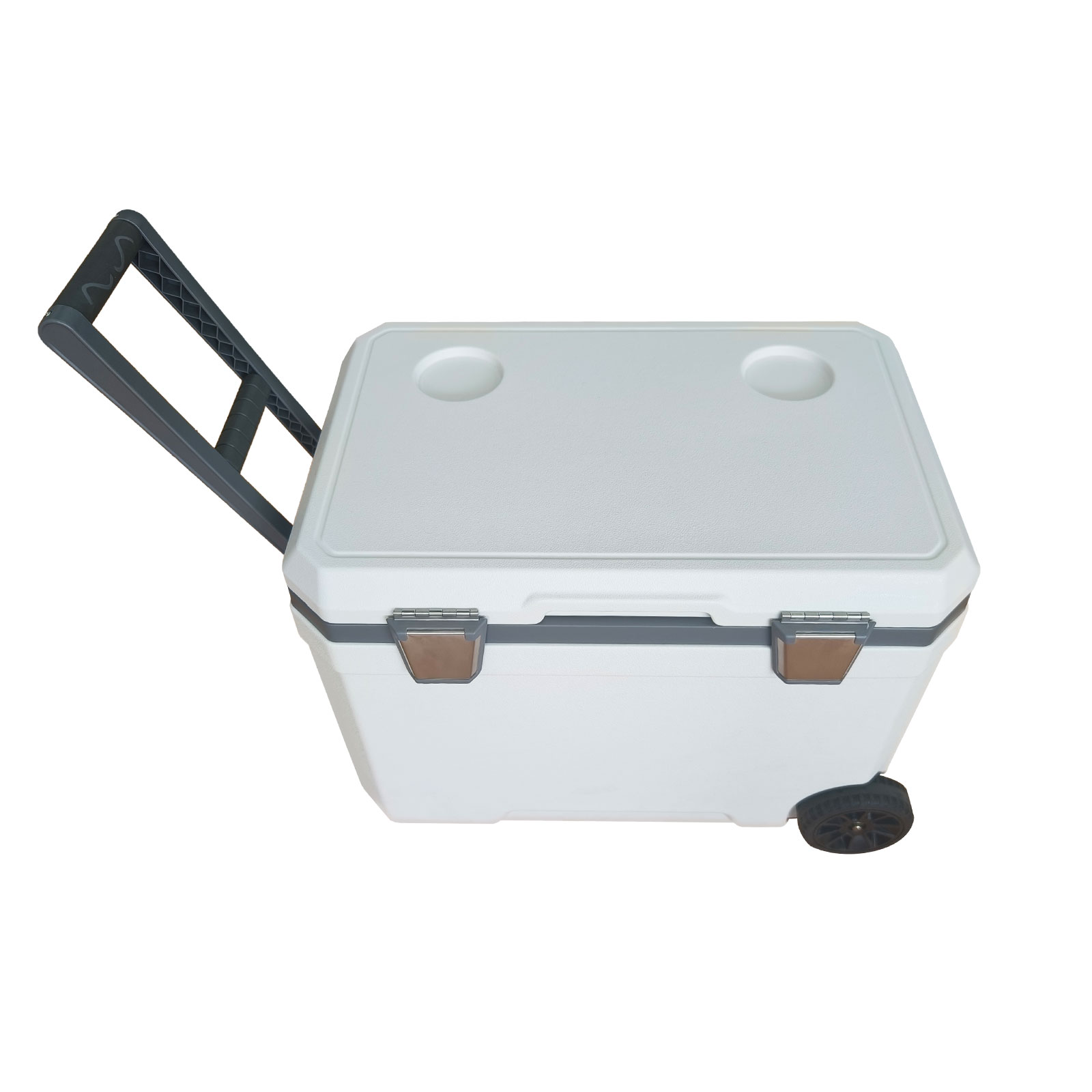
A strong EPP cooler box food delivery combines the best points of buyer logic, material performance, and real operating needs. You need the box to protect product quality, hold temperature with less guesswork, and make daily work easier for packers, drivers, kitchen staff, or warehouse teams. In 2026, the best-performing options are the ones designed around real routes, realistic wash routines, and measurable handling risks rather than generic claims.
Before you compare quotes, decide what success looks like in your own operation. For one buyer it may mean lower damage. For another it may mean cleaner delivery presentation, better thermal consistency, or faster daily packing. When the target is clear, it becomes much easier to judge whether a EPP cooler box food delivery is genuinely stronger or simply described more confidently.
This article will help you answer:
- how EPP cooler box food delivery fits grocery delivery and other B2B shipping needs
- which design details matter most for route timing, handoff speed, lid closure, and pack-out consistency for riders
- how to compare reusable EPP packaging against one-way formats
- what 2026 buying trends mean for your next packaging decision
- which checklist helps you qualify a supplier faster
What makes a EPP cooler box food delivery worth buying in 2026?
A EPP cooler box food delivery is worth buying when it improves delivered condition, packing consistency, and operational repeatability at the same time. In practice, that means the box must do more than hold temperature. It should reduce unnecessary movement, fit the payload cleanly, remain easy to handle, and stay practical across repeat cycles. When those pieces align, the box stops being a packaging expense and starts acting like a process tool.
The strongest solutions combine the core EPP advantages of low weight, resilience, and insulation with smart application-specific design. You see this in features such as better lid paths, more accurate internal geometry, route-sized footprints, or easier cleaning surfaces. The point is not to load the box with features. It is to remove the points where the real workflow usually breaks.
What separates a good sample from a scalable solution?
Buyers should also remember that product condition is shaped by timing as much as by materials. A good box helps create a wider safety margin when dispatch is delayed, when a driver restacks loads, or when the receiver opens the pack later than planned. That wider margin is one of the most practical reasons to invest in a better design.
| <strong>Performance area</strong> | <strong>What to look for</strong> | <strong>Good sign</strong> | <strong>Why it matters to you</strong> |
| Thermal control | Lid fit, wall build, coolant layout | Stable product condition across delays | Protects delivered quality |
| Handling protection | Insert guidance and impact zones | Less internal movement | Cuts breakage and complaints |
| Usability | Weight, grip, and opening logic | Staff use it correctly without reminders | Improves workflow speed |
| Durability | Surface wear and shape retention | Box stays useful across cycles | Supports total cost value |
Practical tips you can use
- Start with one clear success target, such as fewer damages, faster packing, or better thermal consistency.
- If staff pack in a hurry, reduce choices. Fewer inserts and clearer orientation points usually improve consistency.
- Pilot the box on a bad day as well as a normal day. Delay, restacking, and rushed handoff reveal the real weak points.
A chilled grocery program replaced mixed bag-and-carton packing with an EPP cooler box for dense city routes. Drivers loaded faster because each order format was more consistent, and doorstep handoff became cleaner. The lesson was that better fit and better handling logic often create a larger benefit than simply adding more packing material.
How should you design and specify a EPP cooler box food delivery?
The right specification for a EPP cooler box food delivery starts with route and product logic, then moves into material and geometry choices. You should define what you ship, how fragile it is, the expected temperature band, the longest dwell time, the likely shock points, and the cleaning or return routine. Once those variables are clear, decisions about density, wall build, inserts, and branding become far easier.
A development program should ask three simple questions. First, where does the product fail now? Second, which design lever can remove that failure? Third, how will we prove it under realistic conditions? This sounds obvious, but many projects skip directly to pricing or tooling and then spend weeks correcting avoidable mistakes. The better path is disciplined specification before optimization.
Which details most often get missed during development?
The most commonly missed details are lid fit, internal movement allowance, pack-out instructions, and wash or return handling. Those are not minor details. They are the places where a technically good box can still create operational confusion. When suppliers address these points early, qualification is faster and the final box is easier for teams to adopt.
| <strong>Specification area</strong> | <strong>Question to answer</strong> | <strong>Useful output</strong> | <strong>Why it matters to you</strong> |
| Payload | What exactly must fit inside? | Cavity map and insert logic | Stops oversizing |
| Route | What is the longest realistic dwell? | Thermal test target | Prevents false assumptions |
| Handling | Where are the roughest touchpoints? | Drop and stack conditions | Links design to risk |
| Maintenance | How will the box be cleaned or returned? | Operating SOP | Makes reuse practical |
Practical tips you can use
- Write route temperature, dwell time, and staging conditions into the project brief before you ask for pricing.
- Keep the specification sheet simple enough that both operations and procurement can use it.
- Validate cleaning and cosmetic wear early if the box will be reused in front of customers or branch staff.
A chilled grocery program replaced mixed bag-and-carton packing with an EPP cooler box for dense city routes. Drivers loaded faster because each order format was more consistent, and doorstep handoff became cleaner. The lesson was that a reusable container only performs well when the maintenance routine is as clear as the transport routine.
Which real-world use cases fit a EPP cooler box food delivery best?
Real-world fit determines whether a EPP cooler box food delivery becomes a scalable packaging standard or just a promising sample. The best use cases are the ones where product value is meaningful, handling risk is real, and route repetition is frequent enough to reward a disciplined format. That is why EPP boxes are often strongest in food delivery, chilled B2B transport, fragile item handling, internal shuttle loops, and premium presentation-sensitive programs.
Launch planning matters too. A new box should be introduced with a clear packing guide, a defined cleaning routine where relevant, and a simple return rule if the system is reusable. Without those basics, staff create workarounds and buyers end up blaming the box for problems caused by process drift. A strong rollout makes the packaging feel obvious to use from the first week.
How do you launch the box without adding friction?
Once the box is in use, the fastest learning comes from watching real handling. Look at how it is picked up, how it is stacked, what gets dirty first, and where product movement still appears. Those observations often reveal the next design improvement faster than another long debate about theoretical specs.
| <strong>Use case</strong> | <strong>Why EPP can fit</strong> | <strong>What to watch</strong> | <strong>Why it matters to you</strong> |
| Food delivery | Fast pack-out and light handling | Route variation and hygiene | Keeps service quality stable |
| Cold chain shuttle | Repeat use and thermal buffer | Return discipline | Supports operational consistency |
| Fragile premium goods | Impact control plus presentation | Cavity accuracy | Protects margin and brand |
| Wet or outdoor routes | Moisture tolerance and easy wipe-down | Lid cleanliness and grip | Improves daily usability |
Practical tips you can use
- Compare labor time, damage reduction, and presentation gains together instead of judging only the piece price.
- Use a simple return or collection rule from day one if the box is reusable.
- Review live handling videos or photos after launch to spot the next improvement quickly.
A chilled grocery program replaced mixed bag-and-carton packing with an EPP cooler box for dense city routes. Drivers loaded faster because each order format was more consistent, and doorstep handoff became cleaner. The lesson was that standardization creates hidden value because every team member starts handling the box in the same way.
2026 developments and trends for EPP cooler box food delivery
In 2026, the discussion around the EPP cooler box food delivery is broader than material choice alone. Buyers are connecting insulation, handling quality, sanitary workflow, reuse economics, and end-of-life planning into one decision. Current FDA transport guidance keeps attention on clean equipment, procedures, records, and trained handling for food loads, while recent reusable packaging guidance keeps reminding teams that return distance, cleaning effort, and loop efficiency decide whether a reuse model works in practice. For EPP specifically, current industry references still emphasize the combination of low weight, repeated impact resilience, insulation, and recyclability in the PP stream.
Latest developments at a glance
- Service-quality packaging: Food operations want boxes that support delivery speed, cleaner presentation, and more stable product quality at handoff.
- Smarter reuse programs: More teams are pairing reusable boxes with simple cleaning, return, and identification rules so the container stays operationally easy.
- Better fit over more filler: Development is shifting toward cavity accuracy, lid quality, and pack-out discipline instead of solving every problem with extra coolant.
The market direction is practical rather than theoretical. Buyers are rewarding packaging that lowers daily friction, protects delivered quality, and scales without constant workarounds. That is why suppliers who can connect design advice with live operating logic are gaining ground. For you, this means a better buying process: focus on route truth, payload behavior, cleaning reality, and return discipline, and the right EPP cooler box food delivery becomes much easier to identify.
Frequently asked questions
Is a EPP cooler box food delivery suitable for takeaway and delivery food?
Yes, when the box matches your menu format, route timing, and hygiene routine. The best results come when food containers fit cleanly and staff can load and unload the box quickly.
How long can a EPP cooler box food delivery hold temperature?
There is no honest single answer. Hold time depends on wall design, lid fit, payload mass, coolant layout, start temperature, and route conditions. Always test with your real pack-out and actual dwell profile.
Can a EPP cooler box food delivery be reused many times?
Usually yes, if the design matches the route and the operating team uses a clear cleaning and return routine. Reuse performance is shaped as much by process discipline as by the material itself.
What should you ask a supplier before ordering a EPP cooler box food delivery?
Ask how the design matches your route, payload, shock risk, cleaning method, and expected cycle count. A supplier that only discusses size and price is usually not giving you enough decision support.
When does a EPP cooler box food delivery make financial sense?
It makes sense when reduced damage, faster packing, better delivered condition, or repeat-use efficiency outweigh the higher starting price. Compare total operating value, not only unit cost.
Summary and recommendations
A well-chosen EPP cooler box food delivery helps you in practical ways: it improves temperature stability, reduces handling risk, makes pack-out more repeatable, and creates a stronger base for reuse when the workflow is defined clearly. The best design is not the one with the loudest claim. It is the one that fits your product, route, cleaning method, and team behavior with the least daily friction.
If you are comparing options now, start with a simple three-step plan. First, define the real route and pack-out. Second, identify the main failure point you want to remove. Third, pilot the EPP cooler box food delivery under ordinary operating conditions instead of ideal ones. That approach will help you choose faster and with fewer revisions.
About Tempk
At Tempk, we work on temperature-control packaging with a practical B2B mindset. We focus on insulated boxes, ice packs, and related cold chain packaging solutions that must perform in real transport environments, not just in a brochure. We can support development around fit, durability, handling, and repeat-use logic so your packaging decision is easier to scale. Our goal is to help you move from sample approval to dependable daily use with less trial and error.
Why Use an EPP Box for Restaurant Takeaway?
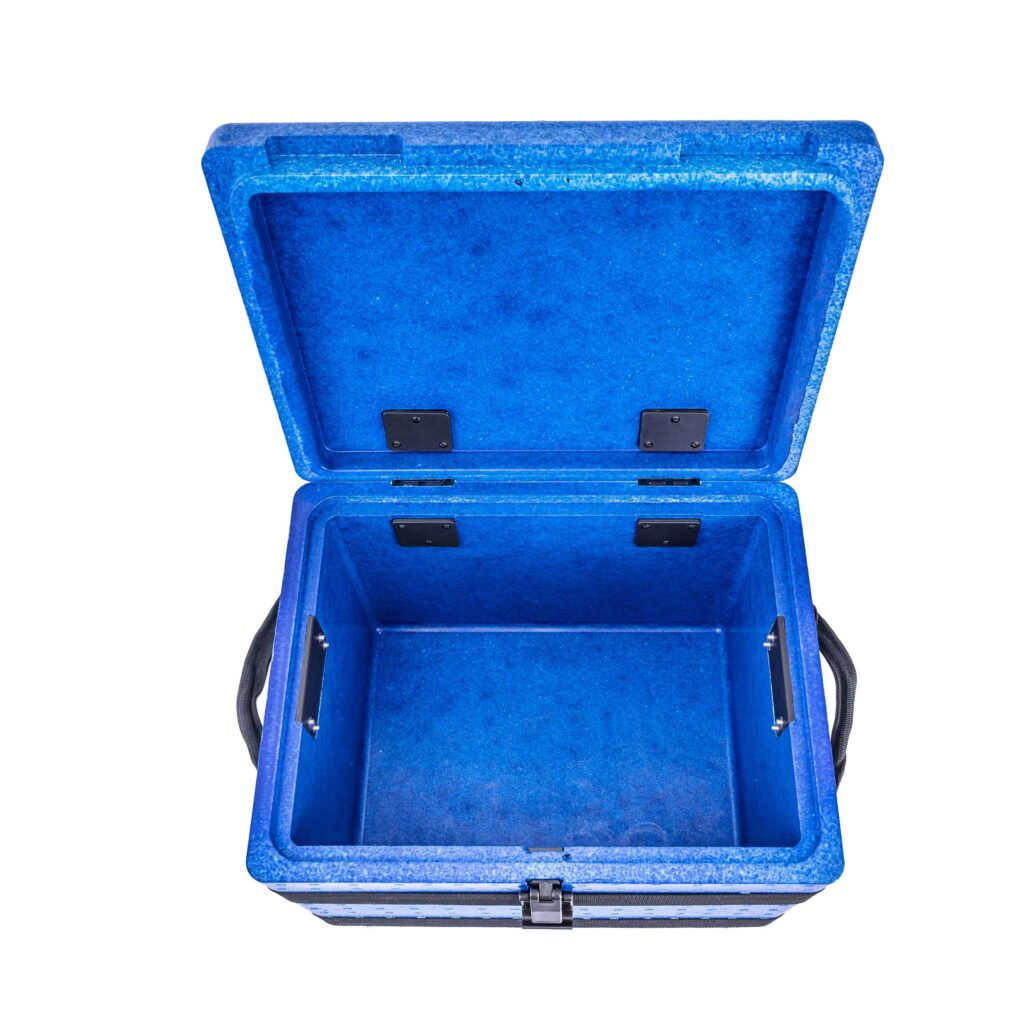
A strong EPP box restaurant takeaway combines the best points of buyer logic, material performance, and real operating needs. You need the box to protect product quality, hold temperature with less guesswork, and make daily work easier for packers, drivers, kitchen staff, or warehouse teams. In 2026, the best-performing options are the ones designed around real routes, realistic wash routines, and measurable handling risks rather than generic claims.
Before you compare quotes, decide what success looks like in your own operation. For one buyer it may mean lower damage. For another it may mean cleaner delivery presentation, better thermal consistency, or faster daily packing. When the target is clear, it becomes much easier to judge whether a EPP box restaurant takeaway is genuinely stronger or simply described more confidently.
This article will help you answer:
- how EPP box restaurant takeaway fits takeaway meals and other B2B shipping needs
- which design details matter most for portion fit, easy cleaning, rider handling, and separation of hot and cold items
- how to compare reusable EPP packaging against one-way formats
- what 2026 buying trends mean for your next packaging decision
- which checklist helps you qualify a supplier faster
What makes a EPP box restaurant takeaway worth buying in 2026?
A EPP box restaurant takeaway is worth buying when it improves delivered condition, packing consistency, and operational repeatability at the same time. In practice, that means the box must do more than hold temperature. It should reduce unnecessary movement, fit the payload cleanly, remain easy to handle, and stay practical across repeat cycles. When those pieces align, the box stops being a packaging expense and starts acting like a process tool.
The strongest solutions combine the core EPP advantages of low weight, resilience, and insulation with smart application-specific design. You see this in features such as better lid paths, more accurate internal geometry, route-sized footprints, or easier cleaning surfaces. The point is not to load the box with features. It is to remove the points where the real workflow usually breaks.
What separates a good sample from a scalable solution?
Buyers should also remember that product condition is shaped by timing as much as by materials. A good box helps create a wider safety margin when dispatch is delayed, when a driver restacks loads, or when the receiver opens the pack later than planned. That wider margin is one of the most practical reasons to invest in a better design.
| <strong>Performance area</strong> | <strong>What to look for</strong> | <strong>Good sign</strong> | <strong>Why it matters to you</strong> |
| Thermal control | Lid fit, wall build, coolant layout | Stable product condition across delays | Protects delivered quality |
| Handling protection | Insert guidance and impact zones | Less internal movement | Cuts breakage and complaints |
| Usability | Weight, grip, and opening logic | Staff use it correctly without reminders | Improves workflow speed |
| Durability | Surface wear and shape retention | Box stays useful across cycles | Supports total cost value |
Practical tips you can use
- Start with one clear success target, such as fewer damages, faster packing, or better thermal consistency.
- If staff pack in a hurry, reduce choices. Fewer inserts and clearer orientation points usually improve consistency.
- Pilot the box on a bad day as well as a normal day. Delay, restacking, and rushed handoff reveal the real weak points.
A multi-site restaurant used EPP boxes for lunch rush transfers from a central kitchen. The team standardized box footprints, stacked them on dollies, and spent less time rebuilding mixed orders at each branch. The lesson was that better fit and better handling logic often create a larger benefit than simply adding more packing material.
How should you design and specify a EPP box restaurant takeaway?
The right specification for a EPP box restaurant takeaway starts with route and product logic, then moves into material and geometry choices. You should define what you ship, how fragile it is, the expected temperature band, the longest dwell time, the likely shock points, and the cleaning or return routine. Once those variables are clear, decisions about density, wall build, inserts, and branding become far easier.
A development program should ask three simple questions. First, where does the product fail now? Second, which design lever can remove that failure? Third, how will we prove it under realistic conditions? This sounds obvious, but many projects skip directly to pricing or tooling and then spend weeks correcting avoidable mistakes. The better path is disciplined specification before optimization.
Which details most often get missed during development?
The most commonly missed details are lid fit, internal movement allowance, pack-out instructions, and wash or return handling. Those are not minor details. They are the places where a technically good box can still create operational confusion. When suppliers address these points early, qualification is faster and the final box is easier for teams to adopt.
| <strong>Specification area</strong> | <strong>Question to answer</strong> | <strong>Useful output</strong> | <strong>Why it matters to you</strong> |
| Payload | What exactly must fit inside? | Cavity map and insert logic | Stops oversizing |
| Route | What is the longest realistic dwell? | Thermal test target | Prevents false assumptions |
| Handling | Where are the roughest touchpoints? | Drop and stack conditions | Links design to risk |
| Maintenance | How will the box be cleaned or returned? | Operating SOP | Makes reuse practical |
Practical tips you can use
- Write route temperature, dwell time, and staging conditions into the project brief before you ask for pricing.
- Keep the specification sheet simple enough that both operations and procurement can use it.
- Validate cleaning and cosmetic wear early if the box will be reused in front of customers or branch staff.
A multi-site restaurant used EPP boxes for lunch rush transfers from a central kitchen. The team standardized box footprints, stacked them on dollies, and spent less time rebuilding mixed orders at each branch. The lesson was that a reusable container only performs well when the maintenance routine is as clear as the transport routine.
Which real-world use cases fit a EPP box restaurant takeaway best?
Real-world fit determines whether a EPP box restaurant takeaway becomes a scalable packaging standard or just a promising sample. The best use cases are the ones where product value is meaningful, handling risk is real, and route repetition is frequent enough to reward a disciplined format. That is why EPP boxes are often strongest in food delivery, chilled B2B transport, fragile item handling, internal shuttle loops, and premium presentation-sensitive programs.
Launch planning matters too. A new box should be introduced with a clear packing guide, a defined cleaning routine where relevant, and a simple return rule if the system is reusable. Without those basics, staff create workarounds and buyers end up blaming the box for problems caused by process drift. A strong rollout makes the packaging feel obvious to use from the first week.
How do you launch the box without adding friction?
Once the box is in use, the fastest learning comes from watching real handling. Look at how it is picked up, how it is stacked, what gets dirty first, and where product movement still appears. Those observations often reveal the next design improvement faster than another long debate about theoretical specs.
| <strong>Use case</strong> | <strong>Why EPP can fit</strong> | <strong>What to watch</strong> | <strong>Why it matters to you</strong> |
| Food delivery | Fast pack-out and light handling | Route variation and hygiene | Keeps service quality stable |
| Cold chain shuttle | Repeat use and thermal buffer | Return discipline | Supports operational consistency |
| Fragile premium goods | Impact control plus presentation | Cavity accuracy | Protects margin and brand |
| Wet or outdoor routes | Moisture tolerance and easy wipe-down | Lid cleanliness and grip | Improves daily usability |
Practical tips you can use
- Compare labor time, damage reduction, and presentation gains together instead of judging only the piece price.
- Use a simple return or collection rule from day one if the box is reusable.
- Review live handling videos or photos after launch to spot the next improvement quickly.
A multi-site restaurant used EPP boxes for lunch rush transfers from a central kitchen. The team standardized box footprints, stacked them on dollies, and spent less time rebuilding mixed orders at each branch. The lesson was that standardization creates hidden value because every team member starts handling the box in the same way.
2026 developments and trends for EPP box restaurant takeaway
In 2026, the discussion around the EPP box restaurant takeaway is broader than material choice alone. Buyers are connecting insulation, handling quality, sanitary workflow, reuse economics, and end-of-life planning into one decision. Current FDA transport guidance keeps attention on clean equipment, procedures, records, and trained handling for food loads, while recent reusable packaging guidance keeps reminding teams that return distance, cleaning effort, and loop efficiency decide whether a reuse model works in practice. For EPP specifically, current industry references still emphasize the combination of low weight, repeated impact resilience, insulation, and recyclability in the PP stream.
Latest developments at a glance
- Service-quality packaging: Food operations want boxes that support delivery speed, cleaner presentation, and more stable product quality at handoff.
- Smarter reuse programs: More teams are pairing reusable boxes with simple cleaning, return, and identification rules so the container stays operationally easy.
- Better fit over more filler: Development is shifting toward cavity accuracy, lid quality, and pack-out discipline instead of solving every problem with extra coolant.
The market direction is practical rather than theoretical. Buyers are rewarding packaging that lowers daily friction, protects delivered quality, and scales without constant workarounds. That is why suppliers who can connect design advice with live operating logic are gaining ground. For you, this means a better buying process: focus on route truth, payload behavior, cleaning reality, and return discipline, and the right EPP box restaurant takeaway becomes much easier to identify.
Frequently asked questions
Is a EPP box restaurant takeaway suitable for takeaway and delivery food?
Yes, when the box matches your menu format, route timing, and hygiene routine. The best results come when food containers fit cleanly and staff can load and unload the box quickly.
How long can a EPP box restaurant takeaway hold temperature?
There is no honest single answer. Hold time depends on wall design, lid fit, payload mass, coolant layout, start temperature, and route conditions. Always test with your real pack-out and actual dwell profile.
Can a EPP box restaurant takeaway be reused many times?
Usually yes, if the design matches the route and the operating team uses a clear cleaning and return routine. Reuse performance is shaped as much by process discipline as by the material itself.
What should you ask a supplier before ordering a EPP box restaurant takeaway?
Ask how the design matches your route, payload, shock risk, cleaning method, and expected cycle count. A supplier that only discusses size and price is usually not giving you enough decision support.
When does a EPP box restaurant takeaway make financial sense?
It makes sense when reduced damage, faster packing, better delivered condition, or repeat-use efficiency outweigh the higher starting price. Compare total operating value, not only unit cost.
Summary and recommendations
A well-chosen EPP box restaurant takeaway helps you in practical ways: it improves temperature stability, reduces handling risk, makes pack-out more repeatable, and creates a stronger base for reuse when the workflow is defined clearly. The best design is not the one with the loudest claim. It is the one that fits your product, route, cleaning method, and team behavior with the least daily friction.
If you are comparing options now, start with a simple three-step plan. First, define the real route and pack-out. Second, identify the main failure point you want to remove. Third, pilot the EPP box restaurant takeaway under ordinary operating conditions instead of ideal ones. That approach will help you choose faster and with fewer revisions.
About Tempk
At Tempk, we work on temperature-control packaging with a practical B2B mindset. We focus on insulated boxes, ice packs, and related cold chain packaging solutions that must perform in real transport environments, not just in a brochure. We can support development around fit, durability, handling, and repeat-use logic so your packaging decision is easier to scale. Our goal is to help you move from sample approval to dependable daily use with less trial and error.
How to Choose a Custom Eco-Friendly EPP Insulation Box
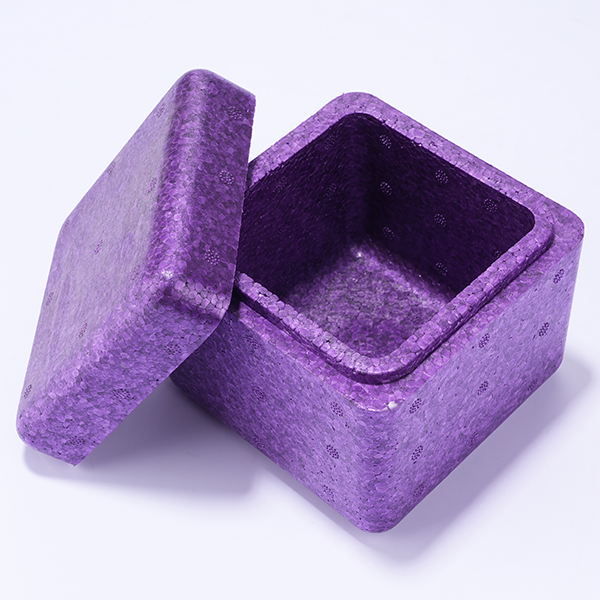
A strong eco-friendly EPP insulation box custom combines the best points of buyer logic, material performance, and real operating needs. You need the box to protect product quality, hold temperature with less guesswork, and make daily work easier for packers, drivers, kitchen staff, or warehouse teams. In 2026, the best-performing options are the ones designed around real routes, realistic wash routines, and measurable handling risks rather than generic claims.
Before you compare quotes, decide what success looks like in your own operation. For one buyer it may mean lower damage. For another it may mean cleaner delivery presentation, better thermal consistency, or faster daily packing. When the target is clear, it becomes much easier to judge whether a eco-friendly EPP insulation box custom is genuinely stronger or simply described more confidently.
This article will help you answer:
- how eco-friendly EPP insulation box custom fits meal subscription loops and other B2B shipping needs
- which design details matter most for custom sizing to cut void space, return logistics, wash routines, and end-of-life planning
- how to compare reusable EPP packaging against one-way formats
- what 2026 buying trends mean for your next packaging decision
- which checklist helps you qualify a supplier faster
What makes a eco-friendly EPP insulation box custom worth buying in 2026?
A eco-friendly EPP insulation box custom is worth buying when it improves delivered condition, packing consistency, and operational repeatability at the same time. In practice, that means the box must do more than hold temperature. It should reduce unnecessary movement, fit the payload cleanly, remain easy to handle, and stay practical across repeat cycles. When those pieces align, the box stops being a packaging expense and starts acting like a process tool.
The strongest solutions combine the core EPP advantages of low weight, resilience, and insulation with smart application-specific design. You see this in features such as better lid paths, more accurate internal geometry, route-sized footprints, or easier cleaning surfaces. The point is not to load the box with features. It is to remove the points where the real workflow usually breaks.
What separates a good sample from a scalable solution?
Buyers should also remember that product condition is shaped by timing as much as by materials. A good box helps create a wider safety margin when dispatch is delayed, when a driver restacks loads, or when the receiver opens the pack later than planned. That wider margin is one of the most practical reasons to invest in a better design.
| <strong>Performance area</strong> | <strong>What to look for</strong> | <strong>Good sign</strong> | <strong>Why it matters to you</strong> |
| Thermal control | Lid fit, wall build, coolant layout | Stable product condition across delays | Protects delivered quality |
| Handling protection | Insert guidance and impact zones | Less internal movement | Cuts breakage and complaints |
| Usability | Weight, grip, and opening logic | Staff use it correctly without reminders | Improves workflow speed |
| Durability | Surface wear and shape retention | Box stays useful across cycles | Supports total cost value |
Practical tips you can use
- Start with one clear success target, such as fewer damages, faster packing, or better thermal consistency.
- If staff pack in a hurry, reduce choices. Fewer inserts and clearer orientation points usually improve consistency.
- Pilot the box on a bad day as well as a normal day. Delay, restacking, and rushed handoff reveal the real weak points.
A grocery brand tested a custom EPP box with a deposit return model. The custom size reduced filler, the box lasted across repeated turns, and the marketing team could explain the sustainability logic in a simple way. The lesson was that better fit and better handling logic often create a larger benefit than simply adding more packing material.
How should you design and specify a eco-friendly EPP insulation box custom?
The right specification for a eco-friendly EPP insulation box custom starts with route and product logic, then moves into material and geometry choices. You should define what you ship, how fragile it is, the expected temperature band, the longest dwell time, the likely shock points, and the cleaning or return routine. Once those variables are clear, decisions about density, wall build, inserts, and branding become far easier.
A development program should ask three simple questions. First, where does the product fail now? Second, which design lever can remove that failure? Third, how will we prove it under realistic conditions? This sounds obvious, but many projects skip directly to pricing or tooling and then spend weeks correcting avoidable mistakes. The better path is disciplined specification before optimization.
Which details most often get missed during development?
The most commonly missed details are lid fit, internal movement allowance, pack-out instructions, and wash or return handling. Those are not minor details. They are the places where a technically good box can still create operational confusion. When suppliers address these points early, qualification is faster and the final box is easier for teams to adopt.
| <strong>Specification area</strong> | <strong>Question to answer</strong> | <strong>Useful output</strong> | <strong>Why it matters to you</strong> |
| Payload | What exactly must fit inside? | Cavity map and insert logic | Stops oversizing |
| Route | What is the longest realistic dwell? | Thermal test target | Prevents false assumptions |
| Handling | Where are the roughest touchpoints? | Drop and stack conditions | Links design to risk |
| Maintenance | How will the box be cleaned or returned? | Operating SOP | Makes reuse practical |
Practical tips you can use
- Write route temperature, dwell time, and staging conditions into the project brief before you ask for pricing.
- Keep the specification sheet simple enough that both operations and procurement can use it.
- Validate cleaning and cosmetic wear early if the box will be reused in front of customers or branch staff.
A grocery brand tested a custom EPP box with a deposit return model. The custom size reduced filler, the box lasted across repeated turns, and the marketing team could explain the sustainability logic in a simple way. The lesson was that a reusable container only performs well when the maintenance routine is as clear as the transport routine.
Which real-world use cases fit a eco-friendly EPP insulation box custom best?
Real-world fit determines whether a eco-friendly EPP insulation box custom becomes a scalable packaging standard or just a promising sample. The best use cases are the ones where product value is meaningful, handling risk is real, and route repetition is frequent enough to reward a disciplined format. That is why EPP boxes are often strongest in food delivery, chilled B2B transport, fragile item handling, internal shuttle loops, and premium presentation-sensitive programs.
Launch planning matters too. A new box should be introduced with a clear packing guide, a defined cleaning routine where relevant, and a simple return rule if the system is reusable. Without those basics, staff create workarounds and buyers end up blaming the box for problems caused by process drift. A strong rollout makes the packaging feel obvious to use from the first week.
How do you launch the box without adding friction?
Once the box is in use, the fastest learning comes from watching real handling. Look at how it is picked up, how it is stacked, what gets dirty first, and where product movement still appears. Those observations often reveal the next design improvement faster than another long debate about theoretical specs.
| <strong>Use case</strong> | <strong>Why EPP can fit</strong> | <strong>What to watch</strong> | <strong>Why it matters to you</strong> |
| Food delivery | Fast pack-out and light handling | Route variation and hygiene | Keeps service quality stable |
| Cold chain shuttle | Repeat use and thermal buffer | Return discipline | Supports operational consistency |
| Fragile premium goods | Impact control plus presentation | Cavity accuracy | Protects margin and brand |
| Wet or outdoor routes | Moisture tolerance and easy wipe-down | Lid cleanliness and grip | Improves daily usability |
Practical tips you can use
- Compare labor time, damage reduction, and presentation gains together instead of judging only the piece price.
- Use a simple return or collection rule from day one if the box is reusable.
- Review live handling videos or photos after launch to spot the next improvement quickly.
A grocery brand tested a custom EPP box with a deposit return model. The custom size reduced filler, the box lasted across repeated turns, and the marketing team could explain the sustainability logic in a simple way. The lesson was that standardization creates hidden value because every team member starts handling the box in the same way.
2026 developments and trends for eco-friendly EPP insulation box custom
In 2026, the discussion around the eco-friendly EPP insulation box custom is broader than material choice alone. Buyers are connecting insulation, handling quality, sanitary workflow, reuse economics, and end-of-life planning into one decision. Current FDA transport guidance keeps attention on clean equipment, procedures, records, and trained handling for food loads, while recent reusable packaging guidance keeps reminding teams that return distance, cleaning effort, and loop efficiency decide whether a reuse model works in practice. For EPP specifically, current industry references still emphasize the combination of low weight, repeated impact resilience, insulation, and recyclability in the PP stream.
Latest developments at a glance
- Route-based design: Buyers want packaging sized for real dwell time, loading style, and handoff conditions rather than generic volume targets.
- Reuse with proof: Buyers increasingly ask how the box will be returned, cleaned, and eventually recycled instead of accepting a vague sustainability claim.
- Better fit over more filler: Development is shifting toward cavity accuracy, lid quality, and pack-out discipline instead of solving every problem with extra coolant.
The market direction is practical rather than theoretical. Buyers are rewarding packaging that lowers daily friction, protects delivered quality, and scales without constant workarounds. That is why suppliers who can connect design advice with live operating logic are gaining ground. For you, this means a better buying process: focus on route truth, payload behavior, cleaning reality, and return discipline, and the right eco-friendly EPP insulation box custom becomes much easier to identify.
Frequently asked questions
Is a eco-friendly EPP insulation box custom only useful for cold chain shipping?
No. Many buyers choose it for hot-hold, ambient protection, fragile item control, or internal shuttle use. The key is whether you need light weight, repeatable handling protection, and a more controlled pack-out method.
How long can a eco-friendly EPP insulation box custom hold temperature?
There is no honest single answer. Hold time depends on wall design, lid fit, payload mass, coolant layout, start temperature, and route conditions. Always test with your real pack-out and actual dwell profile.
Can a eco-friendly EPP insulation box custom be reused many times?
Usually yes, if the design matches the route and the operating team uses a clear cleaning and return routine. Reuse performance is shaped as much by process discipline as by the material itself.
What should you ask a supplier before ordering a eco-friendly EPP insulation box custom?
Ask how the design matches your route, payload, shock risk, cleaning method, and expected cycle count. A supplier that only discusses size and price is usually not giving you enough decision support.
When does a eco-friendly EPP insulation box custom make financial sense?
It makes sense when reduced damage, faster packing, better delivered condition, or repeat-use efficiency outweigh the higher starting price. Compare total operating value, not only unit cost.
Summary and recommendations
A well-chosen eco-friendly EPP insulation box custom helps you in practical ways: it improves temperature stability, reduces handling risk, makes pack-out more repeatable, and creates a stronger base for reuse when the workflow is defined clearly. The best design is not the one with the loudest claim. It is the one that fits your product, route, cleaning method, and team behavior with the least daily friction.
If you are comparing options now, start with a simple three-step plan. First, define the real route and pack-out. Second, identify the main failure point you want to remove. Third, pilot the eco-friendly EPP insulation box custom under ordinary operating conditions instead of ideal ones. That approach will help you choose faster and with fewer revisions.
About Tempk
At Tempk, we work on temperature-control packaging with a practical B2B mindset. We focus on insulated boxes, ice packs, and related cold chain packaging solutions that must perform in real transport environments, not just in a brochure. We can support development around fit, durability, handling, and repeat-use logic so your packaging decision is easier to scale. Our goal is to help you move from sample approval to dependable daily use with less trial and error.
How do you choose the best eco-friendly EPP cooler box in 2026?

eco-friendly EPP cooler box is worth serious attention in 2026 when you need a box that protects temperature-sensitive product, survives real handling, and supports a cleaner sourcing story than fragile disposable packaging. The strongest solutions do not win because of one buzzword. They win because material science, route design, compliance, and workflow all line up in one usable package.
If you are choosing between options now, focus on the complete system. Look at density and wall design, but also study packout fit, coolant layout, closure stability, cleaning, return efficiency, and the proof behind the intended use. That integrated view is what separates a good-looking insulated box from a box that actually performs in the field.
What you will learn
- why eco-friendly EPP cooler box is receiving more serious buyer attention in 2026
- how material data and route design should be combined in one decision
- how to write a buying specification that survives real operations
- how to connect compliance, validation, and sustainability without greenwashing
- what step-by-step buying plan gives the safest result
Why is eco-friendly EPP cooler box getting more attention right now?
Three forces are pushing buyers toward eco-friendly EPP cooler box. First, cold chain volumes are growing across food, healthcare, and direct-to-consumer delivery. Second, reusable packaging programs are expanding because teams want lower damage and a better waste profile. Third, packaging rules and customer expectations are putting more weight on recyclability, clearer labeling, and credible sustainability claims. When those forces meet, EPP becomes attractive because it can be insulated, durable, light, and reusable at the same time.
The appeal becomes stronger when the route is hard on packaging. Single-use waste and rising packaging replacement cost is rarely caused by a single factor. It comes from bumps, moisture, lid opening, hot docks, rushed labor, and weak packouts all working together. A well-designed EPP system gives you more protection against that messy reality. It is not perfect by default, but it gives engineers and buyers more useful design levers than many disposable alternatives.
The best reason to buy eco-friendly EPP cooler box is operational balance
Some packages are cheap but fragile. Others are strong but heavy. Others look sustainable but are hard to recover in practice. EPP often earns its place because it balances those competing needs better than most options. You can tune density, geometry, inserts, and handling features to the route instead of accepting one blunt compromise. That flexibility is a major reason the category keeps moving up procurement shortlists.
| <strong>Current pressure</strong> | <strong>What it means for packaging</strong> | <strong>How EPP can respond</strong> | <strong>Why it matters to you</strong> |
| Cold chain growth | More routes and more temperature-sensitive product | Reusable insulated box designs scale across several lane types | You need packaging decisions that stay workable as volume grows |
| Higher quality expectations | Damage and temperature failures are more visible | Better impact recovery and route tuning | You protect margin and customer trust |
| Sustainability pressure | Waste and recyclability are under closer review | Reuse plus recyclable material pathways | Your sourcing story becomes easier to defend |
| Stricter buying scrutiny | Procurement wants proof, not claims | Data, samples, and validation can be built into the decision | Approval becomes faster and less risky |
Practical tips for you
- Use the business problem to define the box, not the other way around.
- Use route segmentation if one package clearly does not suit every lane in your network.
- Use real product value and service expectations when deciding how much durability is justified.
Case example: a mixed chilled-food network moved away from a single disposable format after repeated complaints about damage and waste. An EPP-based design did not solve every route in the same way, but it gave the team a stronger reusable base to tune by lane.
How do material science and route design work together in eco-friendly EPP cooler box?
The material properties of eco-friendly EPP cooler box matter most when they are translated into route outcomes. Standard molded EPP grades often sit around 20 to 60 g/L, and common technical data shows compressive strength at 10 percent deflection rising from roughly 9 psi to 40 psi across that range. Water absorption is commonly listed below 5 percent by volume, which helps the box stay predictable after condensation or wet handling. Those numbers are useful because they explain why EPP can stay light, insulate well, and still tolerate repeated abuse.
But route design finishes the job. The same material can work beautifully in one packout and poorly in another. Wall thickness, lid seal, headspace, coolant position, opening frequency, and stacking pattern all shape the final temperature result. That is why smart teams test the whole system instead of worshipping one data point. Material science gives you the tool. Route design tells you whether the tool is being used correctly.
Turn the science behind eco-friendly EPP cooler box into simple buying logic
If the route is short and light, you may prioritize empty-box weight and packing speed. If the route is rough or stacked high, you may move toward denser walls or stronger geometry. If the product is regulated or premium, validation depth becomes non-negotiable. That sequence lets you use technical data in a practical way instead of treating it as background noise.
| <strong>Technical lever</strong> | <strong>What it changes</strong> | <strong>When it matters most</strong> | <strong>Buying takeaway</strong> |
| Density | Rigidity, empty weight, and durability | Stacking, repeated handling, heavy payloads | Choose it based on route stress, not prestige |
| Wall geometry | Strength and insulation distribution | Impact zones, lid fit, and cavity stability | Smart design often beats brute-force material use |
| Closed-cell structure | Moisture behavior and cleaning ease | Wet docks, seafood, washdown, condensation | Useful for maintaining repeat-use consistency |
| Packout layout | Thermal performance in the real shipment | Long routes and varied ambient exposure | Validate the full system, not the box alone |
Practical tips for you
- Use logger data and physical box inspection together during testing.
- Use the same loading method in validation that the warehouse will use in production.
- Use the lightest design that still meets the structural and thermal target.
Case example: a buyer improved route performance without changing the material grade by tightening the cavity layout and rebalancing coolant placement. The lesson was clear: system design can unlock material value.
How do you build a buying specification for eco-friendly EPP cooler box that survives real operations?
A strong specification for eco-friendly EPP cooler box covers more than outer size and color. It should define payload type, target temperature range, route duration, ambient profile, coolant format, acceptable stack load, cleaning method, expected reuse model, and the documents needed for approval. When those items are vague, suppliers fill in the blanks differently and price comparisons stop being fair. A clear spec protects both quality and procurement.
You should also write the specification in operator language, not only engineer language. How fast must the box be packed? Can one person lift it safely? Does it need barcode space, tamper seals, or partition options? Is the return flow nested, rigid, or fold-flat? These questions matter because operational friction quietly becomes cost. A box that looks correct on paper but annoys the team every day is not a good purchase.
A practical decision tool for eco-friendly EPP cooler box buyers
When you review samples, ask four simple questions. Does the box fit the product? Does it hold temperature in the real lane? Can the team use and clean it easily? Can the supplier prove what they claim? If any answer is weak, the project is not ready for scale. This framework sounds basic, but it catches most expensive mistakes before they spread across the network.
| <strong>Specification item</strong> | <strong>Question to ask</strong> | <strong>Good answer</strong> | <strong>Risk if it is unclear</strong> |
| Route definition | What is the worst credible lane? | Ambient profile, duration, and handling events are named | Validation becomes generic and misleading |
| Packout logic | How is the product loaded and cooled? | Payload, coolant, and headspace are defined | Thermal results vary trip to trip |
| Operational fit | How will staff pack, clean, and return it? | Workflow is simple and tested | Labor cost and user error rise |
| Approval documents | What proof is required for release? | Material, validation, and traceability are listed | Projects stall during review |
Practical tips for you
- Use the same template for every supplier quote so the comparison stays controlled.
- Use cross-functional review with operations, quality, and procurement before approving tooling or volume.
- Use pilot runs to test the specification under real staffing and timing pressure.
Case example: a buyer avoided an expensive redesign by catching an operator issue during sample trials. The box met thermal targets, but the label area failed after condensation and fast relabeling. Updating the spec early prevented a bigger rollout problem.
How do compliance, validation, and sustainability fit together for eco-friendly EPP cooler box?
The best projects treat compliance, validation, and sustainability as one conversation. For food-contact uses, buyers often review intended-use support under 21 CFR 177.1520 in the United States or the EU framework under Regulation (EC) No 1935/2004 and GMP under Regulation (EC) No 2023/2006. For food transport, sanitary transportation expectations around equipment, operations, records, and training also shape how the box is approved and used. These are not side issues. They are part of what makes the packaging trustworthy.
Sustainability becomes more credible when validation is strong. If you want to claim a reusable or lower-waste solution, you need realistic reuse cycles, workable returns, and an end-of-life path that exists in the target market. In Europe, packaging policy is reinforcing this direction by keeping attention on recyclable design and clearer labeling. EPP fits well when the program can support reuse and recovery, but the claim must be operationally true, not only theoretically true.
Credible proof makes eco-friendly EPP cooler box easier to approve and easier to defend
Think of documentation as a bridge between departments. Quality teams want evidence. Procurement wants comparability. Sustainability teams want a claim they can defend. Operations wants something that works every day. When a supplier provides clear material support, route-based validation, and honest reuse logic, that bridge gets much easier to build. That is what serious buyers should reward.
| <strong>Approval pillar</strong> | <strong>What good looks like</strong> | <strong>Why it matters</strong> | <strong>What goes wrong without it</strong> |
| Regulatory support | Clear intended-use documentation | Quality review moves faster | Approval becomes slow and uncertain |
| Thermal validation | Route-based testing with defined packout | Performance claims stay believable | Field results drift from lab claims |
| Reuse model | Realistic cycle and return assumptions | Sustainability claims gain substance | Green claims remain superficial |
| End-of-life path | Recovery or recycling logic in target market | Waste planning is stronger | Reusable packaging may still become waste |
Practical tips for you
- Use compliance and sustainability reviews early, not after tooling is fixed.
- Use pilot data to check both temperature performance and box condition after repeated cycles.
- Use honest recovery assumptions before calculating any environmental or cost benefit.
Case example: a reusable program passed internal sustainability review only after the team added a recovery pathway and documented expected cycle life. The material was recyclable from the start, but the program needed operational proof.
What is the smartest 2026 buying plan for eco-friendly EPP cooler box?
The smartest buying plan for eco-friendly EPP cooler box is staged, evidence-based, and route-specific. Start by defining the most difficult realistic lane, the product risk, and the operational model. Then shortlist only suppliers who can explain design logic, provide relevant documentation, and support testing. After that, run sample trials under real workflow conditions before you commit to volume.
This process may feel slower at the beginning, but it usually speeds up the final decision because the team is arguing with better information. It also helps prevent two expensive mistakes: overbuying a premium box you do not need or underbuying a weak box that fails once volume grows. In 2026, the best buyers are not the fastest clickers. They are the teams that connect material performance, route fit, and business logic with discipline. That is exactly the right way to buy EPP packaging.
Five-step action plan for eco-friendly EPP cooler box
Define the lane. Freeze the packout. Screen supplier proof. Pilot in the real operation. Scale only after the results are clear. Those five steps sound simple because they are. Most packaging mistakes happen when one of them is skipped. If you follow them carefully, your odds of making a strong choice rise sharply.
| <strong>Step</strong> | <strong>What to do</strong> | <strong>What success looks like</strong> | <strong>Why it saves time later</strong> |
| 1. Define the lane | Map the harshest realistic route | Everyone agrees on the test target | You avoid vague design debates |
| 2. Freeze the packout | Set product, coolant, and load method | Samples are tested fairly | Results become comparable |
| 3. Screen suppliers | Review data, docs, and responsiveness | Weak options fall out early | You focus on serious candidates |
| 4. Pilot the box | Run thermal and workflow trials | The team sees real performance | Surprises appear before scale-up |
| 5. Scale with discipline | Approve only after evidence is clear | Production follows a proven specification | Launch risk drops significantly |
Practical tips for you
- Use a written go or no-go checklist before volume approval.
- Use a pilot long enough to expose cleaning, labeling, and return issues, not only temperature behavior.
- Use post-pilot review to refine the design before the box becomes a standard item.
Case example: a team that followed a staged approval process took slightly longer to launch, but avoided a full-season packaging failure because the pilot exposed a lid-handling issue before scale. The delay was minor. The avoided disruption was major.
2026 developments and trends for eco-friendly EPP cooler box
The direction of travel for eco-friendly EPP cooler box is becoming easier to read. Markets want stronger temperature protection, more reusable packaging, more evidence, and less wasteful design. That combination rewards EPP when it is specified honestly and validated well. It also punishes lazy claims, because buyers are getting better at asking hard questions about route fit, regulatory support, and lifecycle logic.
Latest developments at a glance
- Route-specific testing is becoming more important than generic marketing hold-time promises.
- Recyclability and lower-waste design are now part of the buying conversation, especially under European policy pressure.
- Operational fit such as packing speed, cleaning, and return efficiency is increasingly used as a final tie-breaker between similar products.
For you, the market message is positive. A thoughtful buyer can now separate good suppliers from weak ones much faster by asking for system-level proof. That makes it easier to invest in a box that truly supports quality, cost control, and a more credible sustainability position.
Frequently asked questions
How long can eco-friendly EPP cooler box hold temperature?
It depends on product start temperature, coolant mass, wall design, ambient profile, and how often the lid is opened. Ask for route-specific testing instead of relying on a single headline number.
Is eco-friendly EPP cooler box better than EPS for repeat use?
In many reusable flows, yes. EPP is usually tougher under repeated impact and easier to keep in service, while EPS is often chosen for low-cost one-way use.
Can eco-friendly EPP cooler box be used for food applications?
It can be suitable when the resin system, additives, and process controls support the intended use. Request food-contact documentation and any needed declarations before approval.
How do you clean eco-friendly EPP cooler box properly?
Follow the supplier’s cleaning guidance, but in general a closed-cell EPP surface is easier to wipe and dry than absorbent materials. Validate your cleaning method for the real application.
Is eco-friendly EPP cooler box recyclable?
EPP is recyclable as a polypropylene-based foam, but real recycling depends on local collection and recovery options. Reuse first, then confirm end-of-life handling in your market.
What should I compare first when I shortlist suppliers for eco-friendly EPP cooler box?
Compare route-fit, documentation, sample quality, and operational ease before you compare price alone. A cheap box that fails in the lane is never the lowest-cost option.
Summary and recommendation
The key takeaway is simple. Eco-friendly EPP cooler box makes sense when you need insulation, repeat durability, and a route-ready design that works in the real world. The best result comes from matching density, geometry, coolant layout, and handling details to your actual use case rather than buying a box by headline claims alone.
The best path forward is to make your buying process as strong as the box. Your next step should be practical. Define the lane, confirm the packout, request the right documentation, and pilot the box under real operating conditions. Ask for reuse assumptions, recycling options, and lane-specific thermal results before you scale. A careful start usually saves far more money than a rushed purchase.
About Tempk
At Tempk, we focus on cold-chain packaging with an operations-first mindset. We look at insulation performance, material choice, packout logic, and handling reality together so a box is not only technically sound but also workable for everyday teams. For you, that means the conversation stays grounded in route fit, documentation, and useful design support instead of empty buzzwords.