


Vaccine Ice Box Vaccine Transport Supplier: From Specification to Scale
Vaccine Ice Box Vaccine Transport Supplier: From Specification to Scale
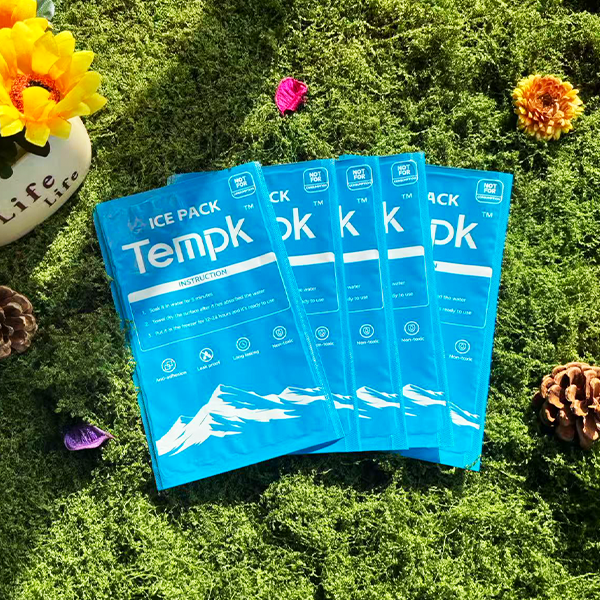
Vaccine Ice Box Vaccine Transport Supplier: From Specification to Scale
A sound decision on vaccine ice box vaccine transport supplier can be reduced to five linked questions: what must be protected, on which route, with what loaded configuration, under whose operating control, and with what evidence.
The result is an integrated selection framework. It combines product education, engineering judgment, route risk, supplier qualification, total cost, and sustainability so that a buyer can issue a clearer request, run a meaningful trial, and approve a configuration with fewer surprises.
Use five decisions to control the purchase
A complete vaccine transport ice box project can be governed through five decisions. First, define the protected product and acceptance condition. Second, characterize the lane and its handovers. Third, design the loaded packout, including coolant, barriers, monitoring, and usable space. Fourth, qualify the supplier and evidence. Fifth, prove that operations can reproduce, clean, return, and maintain the configuration.
The sequence matters. Teams create rework when they choose a box, then attempt to fit the product and route into it. Starting with the product and lane allows several architectures to be compared on equal terms. It also makes cost negotiation more useful, because the quotation describes a defined job rather than a generic container.
The central tradeoff is a preconfigured kit can reduce packing variability, while a modular system can fit more routes; modularity needs stronger instructions and configuration control. The framework does not remove tradeoffs; it makes them explicit. Procurement can decide which consequences are acceptable, engineering can document the technical basis, quality or food safety can set evidence, and operations can test whether the method is repeatable.
Decision 1 and 2: connect product requirements to the lane
Write a one-page use-case brief for vaccines, diluents, and monitoring equipment managed under product-specific instructions. Include the current product instruction, starting condition, quantity, carton or tray dimensions, sensitivity to freezing, overheating, light, contamination, impact, or delay, and the disposition process for an excursion. Avoid importing a common industry range into a product that has different instructions.
Then map dispatch, vehicle transport, temporary staging, handover, and receipt under a written vaccine transport procedure. Record elapsed time, seasonal external conditions, staging, vehicle environment, door opening, stop count, transfer surfaces, custody changes, and receiving storage. Add a normal scenario and a realistic challenge. The challenge may be a warm dock, late receiver, partial load, repeated opening, or outdoor handoff. It should represent a credible operating day, not an artificial worst case with no defined probability or response.
Assign each risk to packaging, procedure, equipment, or escalation. Insulation and coolant can buffer environmental exposure. A route schedule can reduce dwell. A portable active unit may be more appropriate for some high-risk movements. A receiver appointment can remove an uncontrolled handover. This allocation prevents the passive box from being asked to compensate for every process weakness.
Decision 3: approve a loaded configuration, not a nominal box
The loaded design must resolve this capacity issue: the supplier should state both internal dimensions and the usable payload arrangement after coolant, barriers, original cartons, and monitoring devices are included. Create a drawing and physical mock-up showing product orientation, coolant, barriers, monitoring, dividers, tolerances, and closure clearance. Calculate or measure the expected packed weight. Confirm vehicle, shelf, pallet, trolley, and door fit with the handles and lid in their operating positions.
Control local temperatures by defining coolant condition and placement. The design should avoid unintended direct contact, uncontrolled air gaps, and components that can shift. Development work may need several sensors to map the load, but routine monitoring should use a fixed location that represents the required product decision. Partial loads need an approved alternative rather than an improvised version of the full packout.
Construction should support repeatable packout geometry, insulation, closure, coolant retainers, product barriers, label areas, and controlled components are more important than a generic cooler appearance. Review the lid joint, thermal bridges, high-load hardware, cleanability, component replacement, and compatibility with sunlight or chemicals where relevant. Material names are inputs, not conclusions. The approved specification should define the construction in enough detail to preserve function through production.
Decision 4: qualify the supplier and the evidence together
Establish who owns the design and who controls the factory. The commercial party may be a manufacturer, exporter, distributor, or integrator, but the buyer needs a clear route to drawings, material controls, inspection, defects, and change notification. Ask which components are critical and how production units are compared with the approved sample.
The request for quotation should cover container, coolant, barriers, dividers, monitoring compatibility, packout SOP, cleaning, labels, evidence, training material, replacement parts, and change control. Normalize the included bill of materials and delivery terms before comparing prices. Separate hardware, coolant, monitoring, customization, tooling, testing, documentation, packing, freight, and spare parts. This makes cost drivers visible and prevents a low empty-box price from being compared with a process-ready kit.
Request current drawings, component list, packout and conditioning instructions, test documentation, calibration expectations for monitoring, cleaning guidance, and written change notification. Read test reports for conditions, not headlines. Check payload, starting temperature, coolant, ambient profile, duration, openings, sensor positions, acceptance criteria, and whether the sample represented production. Record the gaps between that evidence and the intended lane so the team can decide what further work is proportionate.
| Approval gate | Minimum output | Reason the gate exists |
|---|---|---|
| Product and lane | Use-case brief with payload, condition, route, exposure, and handovers | Prevents the box from being selected before the job is defined |
| Loaded configuration | Drawing, component list, coolant, barriers, sensor, weight, and fit | Converts nominal capacity into a reproducible packout |
| Supplier and evidence | Controlled specification, samples, reports, and change rules | Connects commercial supply to the approved design |
| Operating readiness | SOP, training, cleaning, receiving, return, and exceptions | Shows that people can repeat and maintain the method |
| Scale and lifecycle | First-lot check, route rollout, cost model, asset tracking, review triggers | Protects performance and value after launch |
The approval gates prevent a project from moving directly from an attractive sample to a bulk order. Each gate creates a tangible output and closes a different risk: unclear use case, nonreproducible packout, uncontrolled supply, weak operations, or an unproven lifecycle model.
Use regulatory and technical guidance without overclaiming
Authoritative guidance helps define control expectations, but it does not turn a generic box into an approved system. Product instructions and applicable local rules remain decisive. A technical file should state why each reference is relevant and where route-specific testing or quality review is still required.
For vaccines, current CDC guidance emphasizes product-specific storage and transport information, preferred portable vaccine refrigerators or qualified packouts for non-emergency transport, continuous monitoring, minimized ambient exposure, and trained procedures. It also rejects the implication that CDC or VFC has validated a vendor product through compliance-style marketing terms.
For medicinal products, EU GDP guidance expects required storage conditions to be maintained during transportation through risk-based selection, suitable equipment, monitoring, route assessment, and qualification where needed. Air transport may add IATA time- and temperature-sensitive cargo procedures. These frameworks guide evidence and responsibility; they do not create universal suitability.
The approval decision should identify the tested operating envelope and the conditions that require escalation. When evidence is incomplete, convert the unknown into a verification question or an operational limit rather than filling the gap with a confident marketing claim.
Decision 5: prove the organization can repeat the method
Run a pilot with the actual packers, drivers, receivers, cleaning staff, and quality or food-safety reviewers. Observe component identification, coolant preparation, loading, monitor placement, closure, staging, lifting, restraint, opening, handover, return, wash, drying, and inspection. Record workarounds; they are evidence that the design or instruction needs correction.
The return process must implement this hygiene requirement: reuse requires inspection, drying, and cleaning instructions that do not damage insulation, seals, labels, or packaging. Separate dirty, clean, repair, quarantine, and retired status. Define objective release criteria and control removable parts. Measure cleaning turnaround and storage space so fleet quantity reflects assets that are genuinely available, not only boxes purchased.
Prepare exception paths before launch. Staff need to know what to do when a coolant component is missing, the monitor fails, a lid will not close, a box is damaged, a vehicle is delayed, the receiver is absent, or the product trace shows an excursion. A short escalation path protects the approved process under time pressure.
Judge cost and sustainability across the same operating cycle
Build total cost from the approved configuration: hardware, tooling, samples, coolant, monitoring, labels, packing, freight, duties, labor, vehicle cube, return, washing, drying, storage, repair, loss, replacement, and evidence maintenance. Report cost per successful trip by route cohort. This avoids both a narrow unit-price decision and an unsupported claim that reuse always saves money.
The sustainability question is supplier support for component replacement, asset identification, and repeatable cleaning can be as important as the base material when building a reusable vaccine transport program. Track circulation, return distance, loss, repair, wash resources, utilization, and end-of-life handling. A reusable system creates value when the network can keep it in controlled service. Right-sizing, repairable components, and efficient return stacking can matter as much as the base material.
Commercial approval can include a sensitivity review. Examine how the result changes when return falls, damage rises, demand shifts, or a route needs a different size. This does not require invented market data. It uses the organization's own operating assumptions to identify where the proposal is robust and where a different packaging model should be retained.
Scale through controlled gates and change triggers
Gate 1 approves the use-case brief and loaded drawing. Gate 2 approves production-intent samples and supplier documents. Gate 3 approves relevant thermal, mechanical, cleaning, and route evidence. Gate 4 approves the SOP, training, exception process, and return loop. Gate 5 releases production after first-lot verification. Each gate has an owner and recorded acceptance criteria.
Expand by similar route cohorts. Start with a representative lane and a credible challenge, correct problems, then add sites that share payload and exposure. Do not assume one successful pilot covers a different vehicle, climate, stop pattern, product, or wash process. Use a documented comparison to decide whether the existing evidence can be extended.
Maintain a change register after launch. Product cartons, coolant, payload mass, sensor, route time, cleaning chemistry, supplier material, seal, hardware, or factory changes can affect the baseline. Assign review levels so minor administrative updates do not trigger unnecessary work while functional changes receive appropriate comparison or requalification.
Keep the main non-assumptions visible
Do not assume that nominal capacity equals payload capacity, that insulation creates the required product temperature, that a logger provides protection, or that a test under different conditions proves the lane. Do not assume that durability equals food or pharmaceutical suitability, or that one program's approval transfers to another. The specific risk here is accepting claims such as CDC-compliant, universal vaccine cooler, or guaranteed duration without product, packout, and test context.
Turn each non-assumption into a control. Use a loaded drawing for capacity, a defined coolant plan for thermal control, a fixed sensor position for evidence, a route comparison for transferability, a cleaning and segregation process for hygiene, and a controlled specification for production consistency. This makes the article's principles actionable in an RFQ and pilot.
Finally, preserve uncertainty honestly. When a parameter is not supported by product instructions, a reliable technical source, supplier documentation, or testing, ask the supplier to confirm it or plan a verification. Removing an unsupported number is better engineering and better procurement than presenting precision that the evidence cannot carry.
Integrated Procurement Questions
What information should be sent to a supplier first?
Send the product type and required condition, carton or payload dimensions, quantity, route duration, seasonal exposure, stop and opening pattern, vehicle or shelf constraints, coolant preference, monitoring need, cleaning method, reuse plan, customization, and order volume. Mark any unknowns so they become project questions rather than assumptions.
How do I know whether the proposed box is too large or too small?
Build the complete packout and compare usable payload count, loaded weight, outside cube, vehicle fit, partial-load behavior, and handling. A large box may waste coolant and space; a small one may force compression or extra trips. Use real order profiles and approve load bands.
What evidence is most important before production?
The evidence should match the dominant risks. At minimum, control dimensions, materials, components, loaded fit, handling, cleaning, and relevant thermal assumptions. Higher-risk healthcare or food routes may also need qualification, calibrated monitoring, route studies, formal records, and quality or food-safety approval.
How should cost quotations be compared?
Compare the same bill of materials, dimensions, accessories, coolant, monitoring, customization, testing, packing, order quantity, delivery terms, freight assumptions, spare parts, and change-control scope. Then model labor, return, cleaning, loss, repair, and successful trips. An empty-shell unit price is not a complete comparison.
What should trigger requalification or reassessment?
Changes to product instructions, payload, carton, coolant, sensor, route, ambient exposure, stop pattern, cleaning, material, seal, hardware, process, or factory can matter. Set risk-based triggers for document review, sample comparison, targeted testing, route work, or full requalification.
Final Decision
Treat vaccine ice box vaccine transport supplier as a controlled system decision. Define the product and lane, approve the loaded packout, qualify supplier controls and evidence, prove the operating process, and model cost and reuse across successful trips. Scale only after production-intent samples and route cohorts are reviewed. This approach preserves the useful information from product education, engineering, compliance, operations, and sustainability without relying on universal claims.
About Tempk
Tempk is the cold-chain packaging brand of Shanghai Tempk Industrial Co., Ltd. Its public portfolio includes gel packs, ice bricks, insulated bags and liners, EPP and other insulated boxes, medical ice boxes, pallet covers, and custom packaging for food and healthcare logistics. Buyers can provide product geometry, target condition, route, coolant, monitoring, handling, cleaning, identification, and commercial requirements so Tempk can propose a configuration for sample review, testing, and sample-to-production discussion.
Project Next Step
Ask Tempk to review your vaccine transport ice box suppliers project using the actual payload, route, packout, operating controls, and sourcing assumptions before a bulk quotation is finalized.
Vaccine Ice Box Food Industry Distribution Manufacturer: From Specification to Scale
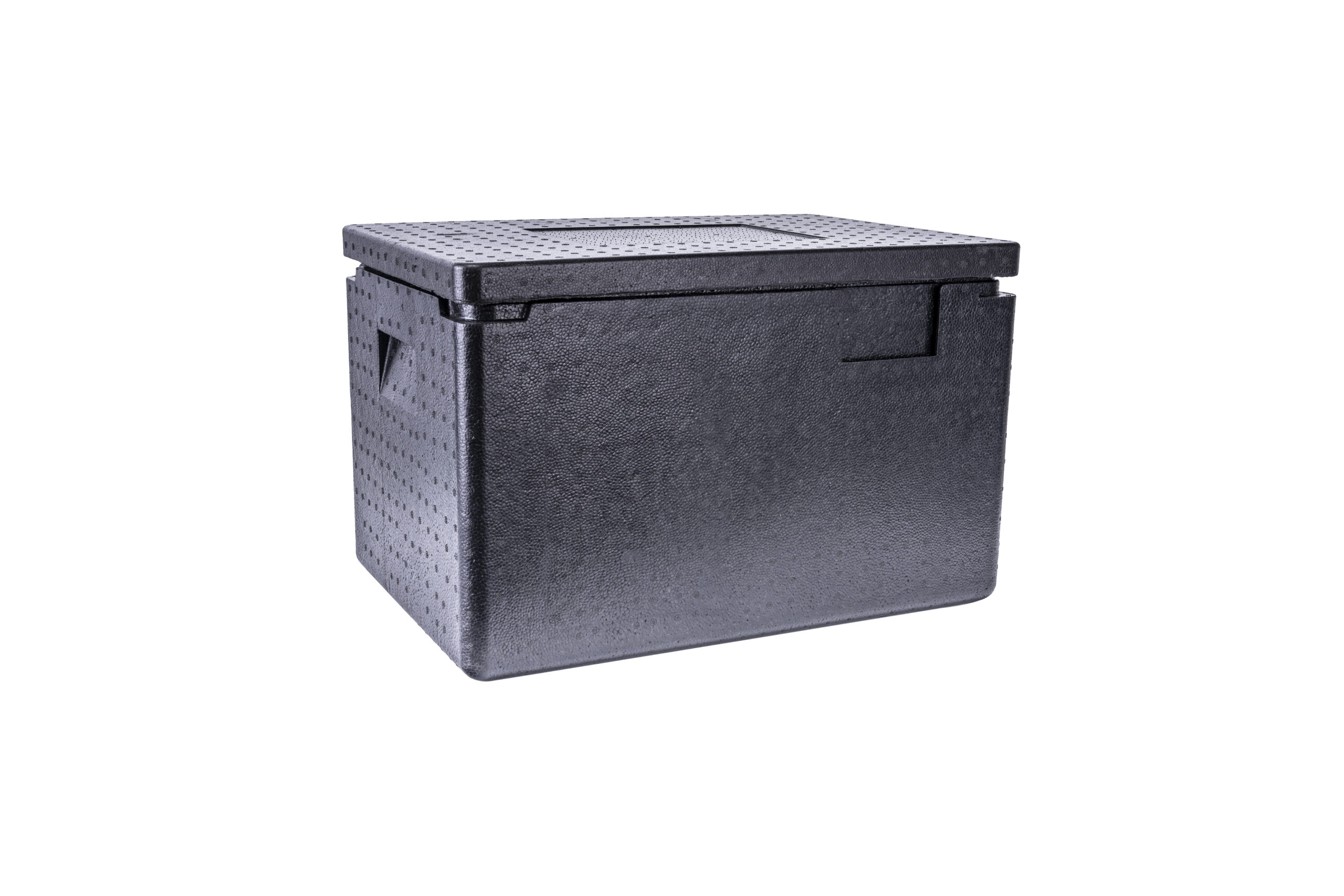
Vaccine Ice Box Food Industry Distribution Manufacturer: From Specification to Scale
A sound decision on vaccine ice box food industry distribution manufacturer can be reduced to five linked questions: what must be protected, on which route, with what loaded configuration, under whose operating control, and with what evidence.
The result is an integrated selection framework. It combines product education, engineering judgment, route risk, supplier qualification, total cost, and sustainability so that a buyer can issue a clearer request, run a meaningful trial, and approve a configuration with fewer surprises.
Use five decisions to control the purchase
A complete insulated distribution ice box platform project can be governed through five decisions. First, define the protected product and acceptance condition. Second, characterize the lane and its handovers. Third, design the loaded packout, including coolant, barriers, monitoring, and usable space. Fourth, qualify the supplier and evidence. Fifth, prove that operations can reproduce, clean, return, and maintain the configuration.
The sequence matters. Teams create rework when they choose a box, then attempt to fit the product and route into it. Starting with the product and lane allows several architectures to be compared on equal terms. It also makes cost negotiation more useful, because the quotation describes a defined job rather than a generic container.
The central tradeoff is common hardware can improve scale and spare-part management, but dedicated colors, inserts, packout instructions, evidence, and cleaning controls increase program integrity. The framework does not remove tradeoffs; it makes them explicit. Procurement can decide which consequences are acceptable, engineering can document the technical basis, quality or food safety can set evidence, and operations can test whether the method is repeatable.
Decision 1 and 2: connect product requirements to the lane
Write a one-page use-case brief for vaccines and diluents on one program, and chilled or frozen food on another. Include the current product instruction, starting condition, quantity, carton or tray dimensions, sensitivity to freezing, overheating, light, contamination, impact, or delay, and the disposition process for an excursion. Avoid importing a common industry range into a product that has different instructions.
Then map multi-site distribution with distinct packing rooms, vehicles, handovers, receiving checks, and cleaning requirements. Record elapsed time, seasonal external conditions, staging, vehicle environment, door opening, stop count, transfer surfaces, custody changes, and receiving storage. Add a normal scenario and a realistic challenge. The challenge may be a warm dock, late receiver, partial load, repeated opening, or outdoor handoff. It should represent a credible operating day, not an artificial worst case with no defined probability or response.
Assign each risk to packaging, procedure, equipment, or escalation. Insulation and coolant can buffer environmental exposure. A route schedule can reduce dwell. A portable active unit may be more appropriate for some high-risk movements. A receiver appointment can remove an uncontrolled handover. This allocation prevents the passive box from being asked to compensate for every process weakness.
Decision 3: approve a loaded configuration, not a nominal box
The loaded design must resolve this capacity issue: the same nominal box can have very different usable payload space because vaccine barriers, conditioned coolant, original cartons, food segregation, or spill control change the internal layout. Create a drawing and physical mock-up showing product orientation, coolant, barriers, monitoring, dividers, tolerances, and closure clearance. Calculate or measure the expected packed weight. Confirm vehicle, shelf, pallet, trolley, and door fit with the handles and lid in their operating positions.
Control local temperatures by defining coolant condition and placement. The design should avoid unintended direct contact, uncontrolled air gaps, and components that can shift. Development work may need several sensors to map the load, but routine monitoring should use a fixed location that represents the required product decision. Partial loads need an approved alternative rather than an improvised version of the full packout.
Construction should support a modular shell and insulation platform can support multiple programs if inserts, labels, seals, coolant retainers, and controlled bills of materials are clearly separated. Review the lid joint, thermal bridges, high-load hardware, cleanability, component replacement, and compatibility with sunlight or chemicals where relevant. Material names are inputs, not conclusions. The approved specification should define the construction in enough detail to preserve function through production.
Decision 4: qualify the supplier and the evidence together
Establish who owns the design and who controls the factory. The commercial party may be a manufacturer, exporter, distributor, or integrator, but the buyer needs a clear route to drawings, material controls, inspection, defects, and change notification. Ask which components are critical and how production units are compared with the approved sample.
The request for quotation should cover base platform, program-specific inserts and labels, coolant, cleaning, samples, drawings, test scope, segregation controls, production change rules, and separate approval records. Normalize the included bill of materials and delivery terms before comparing prices. Separate hardware, coolant, monitoring, customization, tooling, testing, documentation, packing, freight, and spare parts. This makes cost drivers visible and prevents a low empty-box price from being compared with a process-ready kit.
Request separate controlled specifications, component segregation, color and label controls, cleaning guidance, packout instructions, evidence by program, and documented change communication. Read test reports for conditions, not headlines. Check payload, starting temperature, coolant, ambient profile, duration, openings, sensor positions, acceptance criteria, and whether the sample represented production. Record the gaps between that evidence and the intended lane so the team can decide what further work is proportionate.
| Approval gate | Minimum output | Reason the gate exists |
|---|---|---|
| Product and lane | Use-case brief with payload, condition, route, exposure, and handovers | Prevents the box from being selected before the job is defined |
| Loaded configuration | Drawing, component list, coolant, barriers, sensor, weight, and fit | Converts nominal capacity into a reproducible packout |
| Supplier and evidence | Controlled specification, samples, reports, and change rules | Connects commercial supply to the approved design |
| Operating readiness | SOP, training, cleaning, receiving, return, and exceptions | Shows that people can repeat and maintain the method |
| Scale and lifecycle | First-lot check, route rollout, cost model, asset tracking, review triggers | Protects performance and value after launch |
The approval gates prevent a project from moving directly from an attractive sample to a bulk order. Each gate creates a tangible output and closes a different risk: unclear use case, nonreproducible packout, uncontrolled supply, weak operations, or an unproven lifecycle model.
Use regulatory and technical guidance without overclaiming
Authoritative guidance helps define control expectations, but it does not turn a generic box into an approved system. Product instructions and applicable local rules remain decisive. A technical file should state why each reference is relevant and where route-specific testing or quality review is still required.
For vaccines, current CDC guidance emphasizes product-specific storage and transport information, preferred portable vaccine refrigerators or qualified packouts for non-emergency transport, continuous monitoring, minimized ambient exposure, and trained procedures. It also rejects the implication that CDC or VFC has validated a vendor product through compliance-style marketing terms.
For food distribution, FDA sanitary transportation principles connect equipment design with necessary temperature control, cleanability, and prevention of contamination. The box should therefore be reviewed within the complete food-safety operation, including product separation, loading, vehicle conditions, receiving, cleaning, and records.
For medicinal products, EU GDP guidance expects required storage conditions to be maintained during transportation through risk-based selection, suitable equipment, monitoring, route assessment, and qualification where needed. Air transport may add IATA time- and temperature-sensitive cargo procedures. These frameworks guide evidence and responsibility; they do not create universal suitability.
The approval decision should identify the tested operating envelope and the conditions that require escalation. When evidence is incomplete, convert the unknown into a verification question or an operational limit rather than filling the gap with a confident marketing claim.
Decision 5: prove the organization can repeat the method
Run a pilot with the actual packers, drivers, receivers, cleaning staff, and quality or food-safety reviewers. Observe component identification, coolant preparation, loading, monitor placement, closure, staging, lifting, restraint, opening, handover, return, wash, drying, and inspection. Record workarounds; they are evidence that the design or instruction needs correction.
The return process must implement this hygiene requirement: shared manufacturing does not justify shared fleet use; color coding, asset IDs, cleaning validation, and dedicated program ownership may be needed to prevent mix-ups and contamination. Separate dirty, clean, repair, quarantine, and retired status. Define objective release criteria and control removable parts. Measure cleaning turnaround and storage space so fleet quantity reflects assets that are genuinely available, not only boxes purchased.
Prepare exception paths before launch. Staff need to know what to do when a coolant component is missing, the monitor fails, a lid will not close, a box is damaged, a vehicle is delayed, the receiver is absent, or the product trace shows an excursion. A short escalation path protects the approved process under time pressure.
Judge cost and sustainability across the same operating cycle
Build total cost from the approved configuration: hardware, tooling, samples, coolant, monitoring, labels, packing, freight, duties, labor, vehicle cube, return, washing, drying, storage, repair, loss, replacement, and evidence maintenance. Report cost per successful trip by route cohort. This avoids both a narrow unit-price decision and an unsupported claim that reuse always saves money.
The sustainability question is platform commonality can simplify maintenance and end-of-life sorting, while dedicated identifiers and controlled reuse prevent the environmental goal from creating quality risk. Track circulation, return distance, loss, repair, wash resources, utilization, and end-of-life handling. A reusable system creates value when the network can keep it in controlled service. Right-sizing, repairable components, and efficient return stacking can matter as much as the base material.
Commercial approval can include a sensitivity review. Examine how the result changes when return falls, damage rises, demand shifts, or a route needs a different size. This does not require invented market data. It uses the organization's own operating assumptions to identify where the proposal is robust and where a different packaging model should be retained.
Scale through controlled gates and change triggers
Gate 1 approves the use-case brief and loaded drawing. Gate 2 approves production-intent samples and supplier documents. Gate 3 approves relevant thermal, mechanical, cleaning, and route evidence. Gate 4 approves the SOP, training, exception process, and return loop. Gate 5 releases production after first-lot verification. Each gate has an owner and recorded acceptance criteria.
Expand by similar route cohorts. Start with a representative lane and a credible challenge, correct problems, then add sites that share payload and exposure. Do not assume one successful pilot covers a different vehicle, climate, stop pattern, product, or wash process. Use a documented comparison to decide whether the existing evidence can be extended.
Maintain a change register after launch. Product cartons, coolant, payload mass, sensor, route time, cleaning chemistry, supplier material, seal, hardware, or factory changes can affect the baseline. Assign review levels so minor administrative updates do not trigger unnecessary work while functional changes receive appropriate comparison or requalification.
Keep the main non-assumptions visible
Do not assume that nominal capacity equals payload capacity, that insulation creates the required product temperature, that a logger provides protection, or that a test under different conditions proves the lane. Do not assume that durability equals food or pharmaceutical suitability, or that one program's approval transfers to another. The specific risk here is using one universal specification to reduce SKUs and accidentally weakening vaccine control or food hygiene.
Turn each non-assumption into a control. Use a loaded drawing for capacity, a defined coolant plan for thermal control, a fixed sensor position for evidence, a route comparison for transferability, a cleaning and segregation process for hygiene, and a controlled specification for production consistency. This makes the article's principles actionable in an RFQ and pilot.
Finally, preserve uncertainty honestly. When a parameter is not supported by product instructions, a reliable technical source, supplier documentation, or testing, ask the supplier to confirm it or plan a verification. Removing an unsupported number is better engineering and better procurement than presenting precision that the evidence cannot carry.
Integrated Procurement Questions
What information should be sent to a supplier first?
Send the product type and required condition, carton or payload dimensions, quantity, route duration, seasonal exposure, stop and opening pattern, vehicle or shelf constraints, coolant preference, monitoring need, cleaning method, reuse plan, customization, and order volume. Mark any unknowns so they become project questions rather than assumptions.
How do I know whether the proposed box is too large or too small?
Build the complete packout and compare usable payload count, loaded weight, outside cube, vehicle fit, partial-load behavior, and handling. A large box may waste coolant and space; a small one may force compression or extra trips. Use real order profiles and approve load bands.
What evidence is most important before production?
The evidence should match the dominant risks. At minimum, control dimensions, materials, components, loaded fit, handling, cleaning, and relevant thermal assumptions. Higher-risk healthcare or food routes may also need qualification, calibrated monitoring, route studies, formal records, and quality or food-safety approval.
How should cost quotations be compared?
Compare the same bill of materials, dimensions, accessories, coolant, monitoring, customization, testing, packing, order quantity, delivery terms, freight assumptions, spare parts, and change-control scope. Then model labor, return, cleaning, loss, repair, and successful trips. An empty-shell unit price is not a complete comparison.
What should trigger requalification or reassessment?
Changes to product instructions, payload, carton, coolant, sensor, route, ambient exposure, stop pattern, cleaning, material, seal, hardware, process, or factory can matter. Set risk-based triggers for document review, sample comparison, targeted testing, route work, or full requalification.
Final Decision
Treat vaccine ice box food industry distribution manufacturer as a controlled system decision. Define the product and lane, approve the loaded packout, qualify supplier controls and evidence, prove the operating process, and model cost and reuse across successful trips. Scale only after production-intent samples and route cohorts are reviewed. This approach preserves the useful information from product education, engineering, compliance, operations, and sustainability without relying on universal claims.
About Tempk
Tempk is the cold-chain packaging brand of Shanghai Tempk Industrial Co., Ltd. Its public portfolio includes gel packs, ice bricks, insulated bags and liners, EPP and other insulated boxes, medical ice boxes, pallet covers, and custom packaging for food and healthcare logistics. Buyers can provide product geometry, target condition, route, coolant, monitoring, handling, cleaning, identification, and commercial requirements so Tempk can propose a configuration for sample review, testing, and sample-to-production discussion.
Project Next Step
Ask Tempk to review your vaccine and food distribution ice box manufacturing project using the actual payload, route, packout, operating controls, and sourcing assumptions before a bulk quotation is finalized.
Vaccine Ice Box Cold Chain Logistics: A Route-Based Framework
Vaccine Ice Box Cold Chain Logistics: A Route-Based Framework
The best vaccine ice box cold chain logistics decision is rarely the box with the highest claimed performance or the lowest price. It is the system that fits the payload, route, operators, documentation needs, and return model with the fewest uncontrolled assumptions.
The result is an integrated selection framework. It combines product education, engineering judgment, route risk, supplier qualification, total cost, and sustainability so that a buyer can issue a clearer request, run a meaningful trial, and approve a configuration with fewer surprises.
Use five decisions to control the purchase
A complete vaccine ice box project can be governed through five decisions. First, define the protected product and acceptance condition. Second, characterize the lane and its handovers. Third, design the loaded packout, including coolant, barriers, monitoring, and usable space. Fourth, qualify the supplier and evidence. Fifth, prove that operations can reproduce, clean, return, and maintain the configuration.
The sequence matters. Teams create rework when they choose a box, then attempt to fit the product and route into it. Starting with the product and lane allows several architectures to be compared on equal terms. It also makes cost negotiation more useful, because the quotation describes a defined job rather than a generic container.
The central tradeoff is a compact packout can be easier to handle, but insufficient spacing or poorly placed coolant can create local hot or cold zones; more coolant is not automatically safer. The framework does not remove tradeoffs; it makes them explicit. Procurement can decide which consequences are acceptable, engineering can document the technical basis, quality or food safety can set evidence, and operations can test whether the method is repeatable.
Decision 1 and 2: connect product requirements to the lane
Write a one-page use-case brief for vaccines and associated diluents with product-specific storage and transport instructions. Include the current product instruction, starting condition, quantity, carton or tray dimensions, sensitivity to freezing, overheating, light, contamination, impact, or delay, and the disposition process for an excursion. Avoid importing a common industry range into a product that has different instructions.
Then map a controlled route that includes packing, dispatch, vehicle exposure, handovers, receipt, and immediate return to appropriate storage. Record elapsed time, seasonal external conditions, staging, vehicle environment, door opening, stop count, transfer surfaces, custody changes, and receiving storage. Add a normal scenario and a realistic challenge. The challenge may be a warm dock, late receiver, partial load, repeated opening, or outdoor handoff. It should represent a credible operating day, not an artificial worst case with no defined probability or response.
Assign each risk to packaging, procedure, equipment, or escalation. Insulation and coolant can buffer environmental exposure. A route schedule can reduce dwell. A portable active unit may be more appropriate for some high-risk movements. A receiver appointment can remove an uncontrolled handover. This allocation prevents the passive box from being asked to compensate for every process weakness.
Decision 3: approve a loaded configuration, not a nominal box
The loaded design must resolve this capacity issue: usable space must be calculated after conditioned coolant, barriers, temperature monitoring equipment, and packaging are installed, with vaccines kept in their original packaging when required. Create a drawing and physical mock-up showing product orientation, coolant, barriers, monitoring, dividers, tolerances, and closure clearance. Calculate or measure the expected packed weight. Confirm vehicle, shelf, pallet, trolley, and door fit with the handles and lid in their operating positions.
Control local temperatures by defining coolant condition and placement. The design should avoid unintended direct contact, uncontrolled air gaps, and components that can shift. Development work may need several sensors to map the load, but routine monitoring should use a fixed location that represents the required product decision. Partial loads need an approved alternative rather than an improvised version of the full packout.
Construction should support insulation continuity, secure closure, repeatable coolant positions, barriers that prevent damaging direct contact, and a layout that keeps the monitoring probe with the vaccine payload. Review the lid joint, thermal bridges, high-load hardware, cleanability, component replacement, and compatibility with sunlight or chemicals where relevant. Material names are inputs, not conclusions. The approved specification should define the construction in enough detail to preserve function through production.
Decision 4: qualify the supplier and the evidence together
Establish who owns the design and who controls the factory. The commercial party may be a manufacturer, exporter, distributor, or integrator, but the buyer needs a clear route to drawings, material controls, inspection, defects, and change notification. Ask which components are critical and how production units are compared with the approved sample.
The request for quotation should cover approved container type, internal layout, coolant specification, barriers, logger compatibility, packout instructions, cleaning, identification, evidence package, and staff training materials. Normalize the included bill of materials and delivery terms before comparing prices. Separate hardware, coolant, monitoring, customization, tooling, testing, documentation, packing, freight, and spare parts. This makes cost drivers visible and prevents a low empty-box price from being compared with a process-ready kit.
Request packout instructions, component list, drawings, coolant conditioning guidance, cleaning instructions, logger placement, test or qualification documentation, and controlled production specifications. Read test reports for conditions, not headlines. Check payload, starting temperature, coolant, ambient profile, duration, openings, sensor positions, acceptance criteria, and whether the sample represented production. Record the gaps between that evidence and the intended lane so the team can decide what further work is proportionate.
| Approval gate | Minimum output | Reason the gate exists |
|---|---|---|
| Product and lane | Use-case brief with payload, condition, route, exposure, and handovers | Prevents the box from being selected before the job is defined |
| Loaded configuration | Drawing, component list, coolant, barriers, sensor, weight, and fit | Converts nominal capacity into a reproducible packout |
| Supplier and evidence | Controlled specification, samples, reports, and change rules | Connects commercial supply to the approved design |
| Operating readiness | SOP, training, cleaning, receiving, return, and exceptions | Shows that people can repeat and maintain the method |
| Scale and lifecycle | First-lot check, route rollout, cost model, asset tracking, review triggers | Protects performance and value after launch |
The approval gates prevent a project from moving directly from an attractive sample to a bulk order. Each gate creates a tangible output and closes a different risk: unclear use case, nonreproducible packout, uncontrolled supply, weak operations, or an unproven lifecycle model.
Use regulatory and technical guidance without overclaiming
Authoritative guidance helps define control expectations, but it does not turn a generic box into an approved system. Product instructions and applicable local rules remain decisive. A technical file should state why each reference is relevant and where route-specific testing or quality review is still required.
For vaccines, current CDC guidance emphasizes product-specific storage and transport information, preferred portable vaccine refrigerators or qualified packouts for non-emergency transport, continuous monitoring, minimized ambient exposure, and trained procedures. It also rejects the implication that CDC or VFC has validated a vendor product through compliance-style marketing terms.
For medicinal products, EU GDP guidance expects required storage conditions to be maintained during transportation through risk-based selection, suitable equipment, monitoring, route assessment, and qualification where needed. Air transport may add IATA time- and temperature-sensitive cargo procedures. These frameworks guide evidence and responsibility; they do not create universal suitability.
The approval decision should identify the tested operating envelope and the conditions that require escalation. When evidence is incomplete, convert the unknown into a verification question or an operational limit rather than filling the gap with a confident marketing claim.
Decision 5: prove the organization can repeat the method
Run a pilot with the actual packers, drivers, receivers, cleaning staff, and quality or food-safety reviewers. Observe component identification, coolant preparation, loading, monitor placement, closure, staging, lifting, restraint, opening, handover, return, wash, drying, and inspection. Record workarounds; they are evidence that the design or instruction needs correction.
The return process must implement this hygiene requirement: cleaning and inspection procedures should protect packaging integrity without leaving residues or moisture that could affect labels, cartons, or future use. Separate dirty, clean, repair, quarantine, and retired status. Define objective release criteria and control removable parts. Measure cleaning turnaround and storage space so fleet quantity reflects assets that are genuinely available, not only boxes purchased.
Prepare exception paths before launch. Staff need to know what to do when a coolant component is missing, the monitor fails, a lid will not close, a box is damaged, a vehicle is delayed, the receiver is absent, or the product trace shows an excursion. A short escalation path protects the approved process under time pressure.
Judge cost and sustainability across the same operating cycle
Build total cost from the approved configuration: hardware, tooling, samples, coolant, monitoring, labels, packing, freight, duties, labor, vehicle cube, return, washing, drying, storage, repair, loss, replacement, and evidence maintenance. Report cost per successful trip by route cohort. This avoids both a narrow unit-price decision and an unsupported claim that reuse always saves money.
The sustainability question is reusable vaccine containers can reduce material waste on managed loops, but only when inspection, cleaning, packout control, asset return, and removal of damaged units are reliable. Track circulation, return distance, loss, repair, wash resources, utilization, and end-of-life handling. A reusable system creates value when the network can keep it in controlled service. Right-sizing, repairable components, and efficient return stacking can matter as much as the base material.
Commercial approval can include a sensitivity review. Examine how the result changes when return falls, damage rises, demand shifts, or a route needs a different size. This does not require invented market data. It uses the organization's own operating assumptions to identify where the proposal is robust and where a different packaging model should be retained.
Scale through controlled gates and change triggers
Gate 1 approves the use-case brief and loaded drawing. Gate 2 approves production-intent samples and supplier documents. Gate 3 approves relevant thermal, mechanical, cleaning, and route evidence. Gate 4 approves the SOP, training, exception process, and return loop. Gate 5 releases production after first-lot verification. Each gate has an owner and recorded acceptance criteria.
Expand by similar route cohorts. Start with a representative lane and a credible challenge, correct problems, then add sites that share payload and exposure. Do not assume one successful pilot covers a different vehicle, climate, stop pattern, product, or wash process. Use a documented comparison to decide whether the existing evidence can be extended.
Maintain a change register after launch. Product cartons, coolant, payload mass, sensor, route time, cleaning chemistry, supplier material, seal, hardware, or factory changes can affect the baseline. Assign review levels so minor administrative updates do not trigger unnecessary work while functional changes receive appropriate comparison or requalification.
Keep the main non-assumptions visible
Do not assume that nominal capacity equals payload capacity, that insulation creates the required product temperature, that a logger provides protection, or that a test under different conditions proves the lane. Do not assume that durability equals food or pharmaceutical suitability, or that one program's approval transfers to another. The specific risk here is using an ordinary food or beverage cooler, uncontrolled frozen packs, or a generic hold-time claim for a product-sensitive vaccine route.
Turn each non-assumption into a control. Use a loaded drawing for capacity, a defined coolant plan for thermal control, a fixed sensor position for evidence, a route comparison for transferability, a cleaning and segregation process for hygiene, and a controlled specification for production consistency. This makes the article's principles actionable in an RFQ and pilot.
Finally, preserve uncertainty honestly. When a parameter is not supported by product instructions, a reliable technical source, supplier documentation, or testing, ask the supplier to confirm it or plan a verification. Removing an unsupported number is better engineering and better procurement than presenting precision that the evidence cannot carry.
Integrated Procurement Questions
What information should be sent to a supplier first?
Send the product type and required condition, carton or payload dimensions, quantity, route duration, seasonal exposure, stop and opening pattern, vehicle or shelf constraints, coolant preference, monitoring need, cleaning method, reuse plan, customization, and order volume. Mark any unknowns so they become project questions rather than assumptions.
How do I know whether the proposed box is too large or too small?
Build the complete packout and compare usable payload count, loaded weight, outside cube, vehicle fit, partial-load behavior, and handling. A large box may waste coolant and space; a small one may force compression or extra trips. Use real order profiles and approve load bands.
What evidence is most important before production?
The evidence should match the dominant risks. At minimum, control dimensions, materials, components, loaded fit, handling, cleaning, and relevant thermal assumptions. Higher-risk healthcare or food routes may also need qualification, calibrated monitoring, route studies, formal records, and quality or food-safety approval.
How should cost quotations be compared?
Compare the same bill of materials, dimensions, accessories, coolant, monitoring, customization, testing, packing, order quantity, delivery terms, freight assumptions, spare parts, and change-control scope. Then model labor, return, cleaning, loss, repair, and successful trips. An empty-shell unit price is not a complete comparison.
What should trigger requalification or reassessment?
Changes to product instructions, payload, carton, coolant, sensor, route, ambient exposure, stop pattern, cleaning, material, seal, hardware, process, or factory can matter. Set risk-based triggers for document review, sample comparison, targeted testing, route work, or full requalification.
Final Decision
Treat vaccine ice box cold chain logistics as a controlled system decision. Define the product and lane, approve the loaded packout, qualify supplier controls and evidence, prove the operating process, and model cost and reuse across successful trips. Scale only after production-intent samples and route cohorts are reviewed. This approach preserves the useful information from product education, engineering, compliance, operations, and sustainability without relying on universal claims.
About Tempk
Tempk is the cold-chain packaging brand of Shanghai Tempk Industrial Co., Ltd. Its public portfolio includes gel packs, ice bricks, insulated bags and liners, EPP and other insulated boxes, medical ice boxes, pallet covers, and custom packaging for food and healthcare logistics. Buyers can provide product geometry, target condition, route, coolant, monitoring, handling, cleaning, identification, and commercial requirements so Tempk can propose a configuration for sample review, testing, and sample-to-production discussion.
Project Next Step
Ask Tempk to review your vaccine ice boxes in cold-chain logistics project using the actual payload, route, packout, operating controls, and sourcing assumptions before a bulk quotation is finalized.
UV Resistant Pharmaceutical Ice Box Supplier: From Specification to Scale

UV Resistant Pharmaceutical Ice Box Supplier: From Specification to Scale
The best UV resistant pharmaceutical ice box supplier decision is rarely the box with the highest claimed performance or the lowest price. It is the system that fits the payload, route, operators, documentation needs, and return model with the fewest uncontrolled assumptions.
The result is an integrated selection framework. It combines product education, engineering judgment, route risk, supplier qualification, total cost, and sustainability so that a buyer can issue a clearer request, run a meaningful trial, and approve a configuration with fewer surprises.
Use five decisions to control the purchase
A complete UV-resistant pharmaceutical ice box project can be governed through five decisions. First, define the protected product and acceptance condition. Second, characterize the lane and its handovers. Third, design the loaded packout, including coolant, barriers, monitoring, and usable space. Fourth, qualify the supplier and evidence. Fifth, prove that operations can reproduce, clean, return, and maintain the configuration.
The sequence matters. Teams create rework when they choose a box, then attempt to fit the product and route into it. Starting with the product and lane allows several architectures to be compared on equal terms. It also makes cost negotiation more useful, because the quotation describes a defined job rather than a generic container.
The central tradeoff is UV stabilizers and darker pigments may improve weathering resistance, but color, thermal absorption, recyclability, appearance, and material compatibility must be balanced. The framework does not remove tradeoffs; it makes them explicit. Procurement can decide which consequences are acceptable, engineering can document the technical basis, quality or food safety can set evidence, and operations can test whether the method is repeatable.
Decision 1 and 2: connect product requirements to the lane
Write a one-page use-case brief for medicines, diagnostics, clinical materials, or other products with defined temperature and light-protection requirements. Include the current product instruction, starting condition, quantity, carton or tray dimensions, sensitivity to freezing, overheating, light, contamination, impact, or delay, and the disposition process for an excursion. Avoid importing a common industry range into a product that has different instructions.
Then map indoor storage, outdoor handoff, vehicle transport, receiving, cleaning, inspection, and controlled reuse. Record elapsed time, seasonal external conditions, staging, vehicle environment, door opening, stop count, transfer surfaces, custody changes, and receiving storage. Add a normal scenario and a realistic challenge. The challenge may be a warm dock, late receiver, partial load, repeated opening, or outdoor handoff. It should represent a credible operating day, not an artificial worst case with no defined probability or response.
Assign each risk to packaging, procedure, equipment, or escalation. Insulation and coolant can buffer environmental exposure. A route schedule can reduce dwell. A portable active unit may be more appropriate for some high-risk movements. A receiver appointment can remove an uncontrolled handover. This allocation prevents the passive box from being asked to compensate for every process weakness.
Decision 3: approve a loaded configuration, not a nominal box
The loaded design must resolve this capacity issue: gross liters and external dimensions must be reviewed with the insulation, coolant, payload packaging, and any light-protective secondary layers. Create a drawing and physical mock-up showing product orientation, coolant, barriers, monitoring, dividers, tolerances, and closure clearance. Calculate or measure the expected packed weight. Confirm vehicle, shelf, pallet, trolley, and door fit with the handles and lid in their operating positions.
Control local temperatures by defining coolant condition and placement. The design should avoid unintended direct contact, uncontrolled air gaps, and components that can shift. Development work may need several sensors to map the load, but routine monitoring should use a fixed location that represents the required product decision. Partial loads need an approved alternative rather than an improvised version of the full packout.
Construction should support UV-stabilized resin or coating, pigment system, antioxidants, shell thickness, seal and latch materials, insulation protection, and component compatibility under weathering. Review the lid joint, thermal bridges, high-load hardware, cleanability, component replacement, and compatibility with sunlight or chemicals where relevant. Material names are inputs, not conclusions. The approved specification should define the construction in enough detail to preserve function through production.
Decision 4: qualify the supplier and the evidence together
Establish who owns the design and who controls the factory. The commercial party may be a manufacturer, exporter, distributor, or integrator, but the buyer needs a clear route to drawings, material controls, inspection, defects, and change notification. Ask which components are critical and how production units are compared with the approved sample.
The request for quotation should cover resin or coating specification, weathering test method, color and gloss criteria, mechanical-property retention, component materials, sample age, cleaning compatibility, and change control. Normalize the included bill of materials and delivery terms before comparing prices. Separate hardware, coolant, monitoring, customization, tooling, testing, documentation, packing, freight, and spare parts. This makes cost drivers visible and prevents a low empty-box price from being compared with a process-ready kit.
Request material declarations, recognized weathering test reports, retention criteria for color and mechanical properties, component-level review, cleaning compatibility, and controlled resin or additive changes. Read test reports for conditions, not headlines. Check payload, starting temperature, coolant, ambient profile, duration, openings, sensor positions, acceptance criteria, and whether the sample represented production. Record the gaps between that evidence and the intended lane so the team can decide what further work is proportionate.
| Approval gate | Minimum output | Reason the gate exists |
|---|---|---|
| Product and lane | Use-case brief with payload, condition, route, exposure, and handovers | Prevents the box from being selected before the job is defined |
| Loaded configuration | Drawing, component list, coolant, barriers, sensor, weight, and fit | Converts nominal capacity into a reproducible packout |
| Supplier and evidence | Controlled specification, samples, reports, and change rules | Connects commercial supply to the approved design |
| Operating readiness | SOP, training, cleaning, receiving, return, and exceptions | Shows that people can repeat and maintain the method |
| Scale and lifecycle | First-lot check, route rollout, cost model, asset tracking, review triggers | Protects performance and value after launch |
The approval gates prevent a project from moving directly from an attractive sample to a bulk order. Each gate creates a tangible output and closes a different risk: unclear use case, nonreproducible packout, uncontrolled supply, weak operations, or an unproven lifecycle model.
Use regulatory and technical guidance without overclaiming
Authoritative guidance helps define control expectations, but it does not turn a generic box into an approved system. Product instructions and applicable local rules remain decisive. A technical file should state why each reference is relevant and where route-specific testing or quality review is still required.
For medicinal products, EU GDP guidance expects required storage conditions to be maintained during transportation through risk-based selection, suitable equipment, monitoring, route assessment, and qualification where needed. Air transport may add IATA time- and temperature-sensitive cargo procedures. These frameworks guide evidence and responsibility; they do not create universal suitability.
The approval decision should identify the tested operating envelope and the conditions that require escalation. When evidence is incomplete, convert the unknown into a verification question or an operational limit rather than filling the gap with a confident marketing claim.
Decision 5: prove the organization can repeat the method
Run a pilot with the actual packers, drivers, receivers, cleaning staff, and quality or food-safety reviewers. Observe component identification, coolant preparation, loading, monitor placement, closure, staging, lifting, restraint, opening, handover, return, wash, drying, and inspection. Record workarounds; they are evidence that the design or instruction needs correction.
The return process must implement this hygiene requirement: UV additives do not determine cleanability; the wash process, disinfectant compatibility, surface damage, and inspection criteria remain separate requirements. Separate dirty, clean, repair, quarantine, and retired status. Define objective release criteria and control removable parts. Measure cleaning turnaround and storage space so fleet quantity reflects assets that are genuinely available, not only boxes purchased.
Prepare exception paths before launch. Staff need to know what to do when a coolant component is missing, the monitor fails, a lid will not close, a box is damaged, a vehicle is delayed, the receiver is absent, or the product trace shows an excursion. A short escalation path protects the approved process under time pressure.
Judge cost and sustainability across the same operating cycle
Build total cost from the approved configuration: hardware, tooling, samples, coolant, monitoring, labels, packing, freight, duties, labor, vehicle cube, return, washing, drying, storage, repair, loss, replacement, and evidence maintenance. Report cost per successful trip by route cohort. This avoids both a narrow unit-price decision and an unsupported claim that reuse always saves money.
The sustainability question is weather-resistant components may extend service life, but the environmental value depends on repairability, return rate, cleaning, and whether aging criteria remove boxes before performance becomes uncertain. Track circulation, return distance, loss, repair, wash resources, utilization, and end-of-life handling. A reusable system creates value when the network can keep it in controlled service. Right-sizing, repairable components, and efficient return stacking can matter as much as the base material.
Commercial approval can include a sensitivity review. Examine how the result changes when return falls, damage rises, demand shifts, or a route needs a different size. This does not require invented market data. It uses the organization's own operating assumptions to identify where the proposal is robust and where a different packaging model should be retained.
Scale through controlled gates and change triggers
Gate 1 approves the use-case brief and loaded drawing. Gate 2 approves production-intent samples and supplier documents. Gate 3 approves relevant thermal, mechanical, cleaning, and route evidence. Gate 4 approves the SOP, training, exception process, and return loop. Gate 5 releases production after first-lot verification. Each gate has an owner and recorded acceptance criteria.
Expand by similar route cohorts. Start with a representative lane and a credible challenge, correct problems, then add sites that share payload and exposure. Do not assume one successful pilot covers a different vehicle, climate, stop pattern, product, or wash process. Use a documented comparison to decide whether the existing evidence can be extended.
Maintain a change register after launch. Product cartons, coolant, payload mass, sensor, route time, cleaning chemistry, supplier material, seal, hardware, or factory changes can affect the baseline. Assign review levels so minor administrative updates do not trigger unnecessary work while functional changes receive appropriate comparison or requalification.
Keep the main non-assumptions visible
Do not assume that nominal capacity equals payload capacity, that insulation creates the required product temperature, that a logger provides protection, or that a test under different conditions proves the lane. Do not assume that durability equals food or pharmaceutical suitability, or that one program's approval transfers to another. The specific risk here is treating UV resistance as a universal lifetime claim or assuming that an opaque shell automatically satisfies a medicine’s light-protection requirement.
Turn each non-assumption into a control. Use a loaded drawing for capacity, a defined coolant plan for thermal control, a fixed sensor position for evidence, a route comparison for transferability, a cleaning and segregation process for hygiene, and a controlled specification for production consistency. This makes the article's principles actionable in an RFQ and pilot.
Finally, preserve uncertainty honestly. When a parameter is not supported by product instructions, a reliable technical source, supplier documentation, or testing, ask the supplier to confirm it or plan a verification. Removing an unsupported number is better engineering and better procurement than presenting precision that the evidence cannot carry.
Integrated Procurement Questions
What information should be sent to a supplier first?
Send the product type and required condition, carton or payload dimensions, quantity, route duration, seasonal exposure, stop and opening pattern, vehicle or shelf constraints, coolant preference, monitoring need, cleaning method, reuse plan, customization, and order volume. Mark any unknowns so they become project questions rather than assumptions.
How do I know whether the proposed box is too large or too small?
Build the complete packout and compare usable payload count, loaded weight, outside cube, vehicle fit, partial-load behavior, and handling. A large box may waste coolant and space; a small one may force compression or extra trips. Use real order profiles and approve load bands.
What evidence is most important before production?
The evidence should match the dominant risks. At minimum, control dimensions, materials, components, loaded fit, handling, cleaning, and relevant thermal assumptions. Higher-risk healthcare or food routes may also need qualification, calibrated monitoring, route studies, formal records, and quality or food-safety approval.
How should cost quotations be compared?
Compare the same bill of materials, dimensions, accessories, coolant, monitoring, customization, testing, packing, order quantity, delivery terms, freight assumptions, spare parts, and change-control scope. Then model labor, return, cleaning, loss, repair, and successful trips. An empty-shell unit price is not a complete comparison.
What should trigger requalification or reassessment?
Changes to product instructions, payload, carton, coolant, sensor, route, ambient exposure, stop pattern, cleaning, material, seal, hardware, process, or factory can matter. Set risk-based triggers for document review, sample comparison, targeted testing, route work, or full requalification.
Final Decision
Treat UV resistant pharmaceutical ice box supplier as a controlled system decision. Define the product and lane, approve the loaded packout, qualify supplier controls and evidence, prove the operating process, and model cost and reuse across successful trips. Scale only after production-intent samples and route cohorts are reviewed. This approach preserves the useful information from product education, engineering, compliance, operations, and sustainability without relying on universal claims.
About Tempk
Tempk is the cold-chain packaging brand of Shanghai Tempk Industrial Co., Ltd. Its public portfolio includes gel packs, ice bricks, insulated bags and liners, EPP and other insulated boxes, medical ice boxes, pallet covers, and custom packaging for food and healthcare logistics. Buyers can provide product geometry, target condition, route, coolant, monitoring, handling, cleaning, identification, and commercial requirements so Tempk can propose a configuration for sample review, testing, and sample-to-production discussion.
Project Next Step
Ask Tempk to review your UV-resistant pharmaceutical ice boxes project using the actual payload, route, packout, operating controls, and sourcing assumptions before a bulk quotation is finalized.
Medical Ice Box Food Industry Distribution Manufacturer: A Route-Based Framework
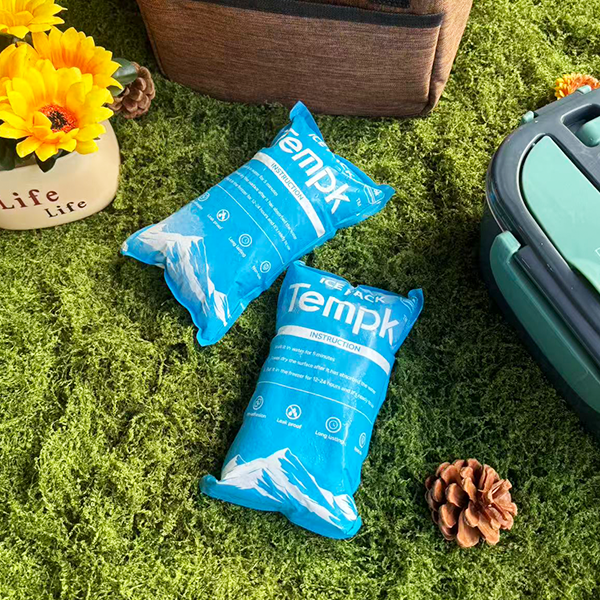
Medical Ice Box Food Industry Distribution Manufacturer: A Route-Based Framework
The best medical ice box food industry distribution manufacturer decision is rarely the box with the highest claimed performance or the lowest price. It is the system that fits the payload, route, operators, documentation needs, and return model with the fewest uncontrolled assumptions.
The result is an integrated selection framework. It combines product education, engineering judgment, route risk, supplier qualification, total cost, and sustainability so that a buyer can issue a clearer request, run a meaningful trial, and approve a configuration with fewer surprises.
Use five decisions to control the purchase
A complete medical-style insulated ice box project can be governed through five decisions. First, define the protected product and acceptance condition. Second, characterize the lane and its handovers. Third, design the loaded packout, including coolant, barriers, monitoring, and usable space. Fourth, qualify the supplier and evidence. Fifth, prove that operations can reproduce, clean, return, and maintain the configuration.
The sequence matters. Teams create rework when they choose a box, then attempt to fit the product and route into it. Starting with the product and lane allows several architectures to be compared on equal terms. It also makes cost negotiation more useful, because the quotation describes a defined job rather than a generic container.
The central tradeoff is platform standardization can simplify purchasing, but over-standardization can hide important differences in hygiene, coolant, labeling, and documentation. The framework does not remove tradeoffs; it makes them explicit. Procurement can decide which consequences are acceptable, engineering can document the technical basis, quality or food safety can set evidence, and operations can test whether the method is repeatable.
Decision 1 and 2: connect product requirements to the lane
Write a one-page use-case brief for medical kits, diagnostic materials, chilled ingredients, prepared food, or other route-specific payloads. Include the current product instruction, starting condition, quantity, carton or tray dimensions, sensitivity to freezing, overheating, light, contamination, impact, or delay, and the disposition process for an excursion. Avoid importing a common industry range into a product that has different instructions.
Then map multi-stop distribution from a packing site to clinics, kitchens, retail points, or local depots. Record elapsed time, seasonal external conditions, staging, vehicle environment, door opening, stop count, transfer surfaces, custody changes, and receiving storage. Add a normal scenario and a realistic challenge. The challenge may be a warm dock, late receiver, partial load, repeated opening, or outdoor handoff. It should represent a credible operating day, not an artificial worst case with no defined probability or response.
Assign each risk to packaging, procedure, equipment, or escalation. Insulation and coolant can buffer environmental exposure. A route schedule can reduce dwell. A portable active unit may be more appropriate for some high-risk movements. A receiver appointment can remove an uncontrolled handover. This allocation prevents the passive box from being asked to compensate for every process weakness.
Decision 3: approve a loaded configuration, not a nominal box
The loaded design must resolve this capacity issue: the stated box volume must be separated from the usable payload space left after coolant, dividers, monitoring devices, and protective dunnage are installed. Create a drawing and physical mock-up showing product orientation, coolant, barriers, monitoring, dividers, tolerances, and closure clearance. Calculate or measure the expected packed weight. Confirm vehicle, shelf, pallet, trolley, and door fit with the handles and lid in their operating positions.
Control local temperatures by defining coolant condition and placement. The design should avoid unintended direct contact, uncontrolled air gaps, and components that can shift. Development work may need several sensors to map the load, but routine monitoring should use a fixed location that represents the required product decision. Partial loads need an approved alternative rather than an improvised version of the full packout.
Construction should support a cleanable hard shell, an insulation system matched to the route, secure closures, replaceable high-wear parts where practical, and geometry that supports repeatable loading. Review the lid joint, thermal bridges, high-load hardware, cleanability, component replacement, and compatibility with sunlight or chemicals where relevant. Material names are inputs, not conclusions. The approved specification should define the construction in enough detail to preserve function through production.
Decision 4: qualify the supplier and the evidence together
Establish who owns the design and who controls the factory. The commercial party may be a manufacturer, exporter, distributor, or integrator, but the buyer needs a clear route to drawings, material controls, inspection, defects, and change notification. Ask which components are critical and how production units are compared with the approved sample.
The request for quotation should cover separate configurations, color coding, internal dimensions, insulation structure, closure type, accessories, coolant plan, cleaning method, sample quantities, and production change control. Normalize the included bill of materials and delivery terms before comparing prices. Separate hardware, coolant, monitoring, customization, tooling, testing, documentation, packing, freight, and spare parts. This makes cost drivers visible and prevents a low empty-box price from being compared with a process-ready kit.
Request drawings, material declarations where relevant, sample-to-production controls, cleaning guidance, assembly instructions, and test information for the proposed loaded configuration. Read test reports for conditions, not headlines. Check payload, starting temperature, coolant, ambient profile, duration, openings, sensor positions, acceptance criteria, and whether the sample represented production. Record the gaps between that evidence and the intended lane so the team can decide what further work is proportionate.
| Approval gate | Minimum output | Reason the gate exists |
|---|---|---|
| Product and lane | Use-case brief with payload, condition, route, exposure, and handovers | Prevents the box from being selected before the job is defined |
| Loaded configuration | Drawing, component list, coolant, barriers, sensor, weight, and fit | Converts nominal capacity into a reproducible packout |
| Supplier and evidence | Controlled specification, samples, reports, and change rules | Connects commercial supply to the approved design |
| Operating readiness | SOP, training, cleaning, receiving, return, and exceptions | Shows that people can repeat and maintain the method |
| Scale and lifecycle | First-lot check, route rollout, cost model, asset tracking, review triggers | Protects performance and value after launch |
The approval gates prevent a project from moving directly from an attractive sample to a bulk order. Each gate creates a tangible output and closes a different risk: unclear use case, nonreproducible packout, uncontrolled supply, weak operations, or an unproven lifecycle model.
Use regulatory and technical guidance without overclaiming
Authoritative guidance helps define control expectations, but it does not turn a generic box into an approved system. Product instructions and applicable local rules remain decisive. A technical file should state why each reference is relevant and where route-specific testing or quality review is still required.
For food distribution, FDA sanitary transportation principles connect equipment design with necessary temperature control, cleanability, and prevention of contamination. The box should therefore be reviewed within the complete food-safety operation, including product separation, loading, vehicle conditions, receiving, cleaning, and records.
For medicinal products, EU GDP guidance expects required storage conditions to be maintained during transportation through risk-based selection, suitable equipment, monitoring, route assessment, and qualification where needed. Air transport may add IATA time- and temperature-sensitive cargo procedures. These frameworks guide evidence and responsibility; they do not create universal suitability.
The approval decision should identify the tested operating envelope and the conditions that require escalation. When evidence is incomplete, convert the unknown into a verification question or an operational limit rather than filling the gap with a confident marketing claim.
Decision 5: prove the organization can repeat the method
Run a pilot with the actual packers, drivers, receivers, cleaning staff, and quality or food-safety reviewers. Observe component identification, coolant preparation, loading, monitor placement, closure, staging, lifting, restraint, opening, handover, return, wash, drying, and inspection. Record workarounds; they are evidence that the design or instruction needs correction.
The return process must implement this hygiene requirement: medical and food programs should have separate cleaning rules, labeling, packout instructions, and contamination controls even when the same basic container platform is considered. Separate dirty, clean, repair, quarantine, and retired status. Define objective release criteria and control removable parts. Measure cleaning turnaround and storage space so fleet quantity reflects assets that are genuinely available, not only boxes purchased.
Prepare exception paths before launch. Staff need to know what to do when a coolant component is missing, the monitor fails, a lid will not close, a box is damaged, a vehicle is delayed, the receiver is absent, or the product trace shows an excursion. A short escalation path protects the approved process under time pressure.
Judge cost and sustainability across the same operating cycle
Build total cost from the approved configuration: hardware, tooling, samples, coolant, monitoring, labels, packing, freight, duties, labor, vehicle cube, return, washing, drying, storage, repair, loss, replacement, and evidence maintenance. Report cost per successful trip by route cohort. This avoids both a narrow unit-price decision and an unsupported claim that reuse always saves money.
The sustainability question is a shared container platform may reduce part variety, but only if the business keeps medical and food processes appropriately separated and can recover, inspect, clean, and redeploy units. Track circulation, return distance, loss, repair, wash resources, utilization, and end-of-life handling. A reusable system creates value when the network can keep it in controlled service. Right-sizing, repairable components, and efficient return stacking can matter as much as the base material.
Commercial approval can include a sensitivity review. Examine how the result changes when return falls, damage rises, demand shifts, or a route needs a different size. This does not require invented market data. It uses the organization's own operating assumptions to identify where the proposal is robust and where a different packaging model should be retained.
Scale through controlled gates and change triggers
Gate 1 approves the use-case brief and loaded drawing. Gate 2 approves production-intent samples and supplier documents. Gate 3 approves relevant thermal, mechanical, cleaning, and route evidence. Gate 4 approves the SOP, training, exception process, and return loop. Gate 5 releases production after first-lot verification. Each gate has an owner and recorded acceptance criteria.
Expand by similar route cohorts. Start with a representative lane and a credible challenge, correct problems, then add sites that share payload and exposure. Do not assume one successful pilot covers a different vehicle, climate, stop pattern, product, or wash process. Use a documented comparison to decide whether the existing evidence can be extended.
Maintain a change register after launch. Product cartons, coolant, payload mass, sensor, route time, cleaning chemistry, supplier material, seal, hardware, or factory changes can affect the baseline. Assign review levels so minor administrative updates do not trigger unnecessary work while functional changes receive appropriate comparison or requalification.
Keep the main non-assumptions visible
Do not assume that nominal capacity equals payload capacity, that insulation creates the required product temperature, that a logger provides protection, or that a test under different conditions proves the lane. Do not assume that durability equals food or pharmaceutical suitability, or that one program's approval transfers to another. The specific risk here is assuming that a box accepted for one industry is automatically suitable for the other.
Turn each non-assumption into a control. Use a loaded drawing for capacity, a defined coolant plan for thermal control, a fixed sensor position for evidence, a route comparison for transferability, a cleaning and segregation process for hygiene, and a controlled specification for production consistency. This makes the article's principles actionable in an RFQ and pilot.
Finally, preserve uncertainty honestly. When a parameter is not supported by product instructions, a reliable technical source, supplier documentation, or testing, ask the supplier to confirm it or plan a verification. Removing an unsupported number is better engineering and better procurement than presenting precision that the evidence cannot carry.
Integrated Procurement Questions
What information should be sent to a supplier first?
Send the product type and required condition, carton or payload dimensions, quantity, route duration, seasonal exposure, stop and opening pattern, vehicle or shelf constraints, coolant preference, monitoring need, cleaning method, reuse plan, customization, and order volume. Mark any unknowns so they become project questions rather than assumptions.
How do I know whether the proposed box is too large or too small?
Build the complete packout and compare usable payload count, loaded weight, outside cube, vehicle fit, partial-load behavior, and handling. A large box may waste coolant and space; a small one may force compression or extra trips. Use real order profiles and approve load bands.
What evidence is most important before production?
The evidence should match the dominant risks. At minimum, control dimensions, materials, components, loaded fit, handling, cleaning, and relevant thermal assumptions. Higher-risk healthcare or food routes may also need qualification, calibrated monitoring, route studies, formal records, and quality or food-safety approval.
How should cost quotations be compared?
Compare the same bill of materials, dimensions, accessories, coolant, monitoring, customization, testing, packing, order quantity, delivery terms, freight assumptions, spare parts, and change-control scope. Then model labor, return, cleaning, loss, repair, and successful trips. An empty-shell unit price is not a complete comparison.
What should trigger requalification or reassessment?
Changes to product instructions, payload, carton, coolant, sensor, route, ambient exposure, stop pattern, cleaning, material, seal, hardware, process, or factory can matter. Set risk-based triggers for document review, sample comparison, targeted testing, route work, or full requalification.
Final Decision
Treat medical ice box food industry distribution manufacturer as a controlled system decision. Define the product and lane, approve the loaded packout, qualify supplier controls and evidence, prove the operating process, and model cost and reuse across successful trips. Scale only after production-intent samples and route cohorts are reviewed. This approach preserves the useful information from product education, engineering, compliance, operations, and sustainability without relying on universal claims.
About Tempk
Tempk is the cold-chain packaging brand of Shanghai Tempk Industrial Co., Ltd. Its public portfolio includes gel packs, ice bricks, insulated bags and liners, EPP and other insulated boxes, medical ice boxes, pallet covers, and custom packaging for food and healthcare logistics. Buyers can provide product geometry, target condition, route, coolant, monitoring, handling, cleaning, identification, and commercial requirements so Tempk can propose a configuration for sample review, testing, and sample-to-production discussion.
Project Next Step
Ask Tempk to review your cross-sector medical and food distribution ice boxes project using the actual payload, route, packout, operating controls, and sourcing assumptions before a bulk quotation is finalized.
Ice Chest Last Mile Delivery: Procurement and Packout Strategy
Ice Chest Last Mile Delivery: Procurement and Packout Strategy
A sound decision on ice chest last mile delivery can be reduced to five linked questions: what must be protected, on which route, with what loaded configuration, under whose operating control, and with what evidence.
The result is an integrated selection framework. It combines product education, engineering judgment, route risk, supplier qualification, total cost, and sustainability so that a buyer can issue a clearer request, run a meaningful trial, and approve a configuration with fewer surprises.
Use five decisions to control the purchase
A complete last-mile ice chest project can be governed through five decisions. First, define the protected product and acceptance condition. Second, characterize the lane and its handovers. Third, design the loaded packout, including coolant, barriers, monitoring, and usable space. Fourth, qualify the supplier and evidence. Fifth, prove that operations can reproduce, clean, return, and maintain the configuration.
The sequence matters. Teams create rework when they choose a box, then attempt to fit the product and route into it. Starting with the product and lane allows several architectures to be compared on equal terms. It also makes cost negotiation more useful, because the quotation describes a defined job rather than a generic container.
The central tradeoff is quick access improves delivery speed but increases thermal exchange; stronger compartmentalization can control exposure but adds parts and cleaning work. The framework does not remove tradeoffs; it makes them explicit. Procurement can decide which consequences are acceptable, engineering can document the technical basis, quality or food safety can set evidence, and operations can test whether the method is repeatable.
Decision 1 and 2: connect product requirements to the lane
Write a one-page use-case brief for chilled, frozen, or temperature-sensitive orders packed for individual destinations. Include the current product instruction, starting condition, quantity, carton or tray dimensions, sensitivity to freezing, overheating, light, contamination, impact, or delay, and the disposition process for an excursion. Avoid importing a common industry range into a product that has different instructions.
Then map dispatch through a multi-stop vehicle route, hand carry to the recipient, proof of delivery, return, and cleaning. Record elapsed time, seasonal external conditions, staging, vehicle environment, door opening, stop count, transfer surfaces, custody changes, and receiving storage. Add a normal scenario and a realistic challenge. The challenge may be a warm dock, late receiver, partial load, repeated opening, or outdoor handoff. It should represent a credible operating day, not an artificial worst case with no defined probability or response.
Assign each risk to packaging, procedure, equipment, or escalation. Insulation and coolant can buffer environmental exposure. A route schedule can reduce dwell. A portable active unit may be more appropriate for some high-risk movements. A receiver appointment can remove an uncontrolled handover. This allocation prevents the passive box from being asked to compensate for every process weakness.
Decision 3: approve a loaded configuration, not a nominal box
The loaded design must resolve this capacity issue: the right size depends on order profile and stop sequence; oversized chests create empty air and handling problems, while undersized units force overpacking or mixed orders. Create a drawing and physical mock-up showing product orientation, coolant, barriers, monitoring, dividers, tolerances, and closure clearance. Calculate or measure the expected packed weight. Confirm vehicle, shelf, pallet, trolley, and door fit with the handles and lid in their operating positions.
Control local temperatures by defining coolant condition and placement. The design should avoid unintended direct contact, uncontrolled air gaps, and components that can shift. Development work may need several sensors to map the load, but routine monitoring should use a fixed location that represents the required product decision. Partial loads need an approved alternative rather than an improvised version of the full packout.
Construction should support insulation, closure, rapid-access organization, order dividers, handles, wheels or trolley fit, stacking, labels, and interior surfaces should support the stop pattern. Review the lid joint, thermal bridges, high-load hardware, cleanability, component replacement, and compatibility with sunlight or chemicals where relevant. Material names are inputs, not conclusions. The approved specification should define the construction in enough detail to preserve function through production.
Decision 4: qualify the supplier and the evidence together
Establish who owns the design and who controls the factory. The commercial party may be a manufacturer, exporter, distributor, or integrator, but the buyer needs a clear route to drawings, material controls, inspection, defects, and change notification. Ask which components are critical and how production units are compared with the approved sample.
The request for quotation should cover order capacity, divider system, opening method, handles or wheels, seals, labels, logger location, cleaning, return stacking, replacement parts, and route test assumptions. Normalize the included bill of materials and delivery terms before comparing prices. Separate hardware, coolant, monitoring, customization, tooling, testing, documentation, packing, freight, and spare parts. This makes cost drivers visible and prevents a low empty-box price from being compared with a process-ready kit.
Request loaded route test assumptions, access and divider drawings, handle and wheel details, cleaning guidance, identification options, return stacking, and sample-to-production controls. Read test reports for conditions, not headlines. Check payload, starting temperature, coolant, ambient profile, duration, openings, sensor positions, acceptance criteria, and whether the sample represented production. Record the gaps between that evidence and the intended lane so the team can decide what further work is proportionate.
| Approval gate | Minimum output | Reason the gate exists |
|---|---|---|
| Product and lane | Use-case brief with payload, condition, route, exposure, and handovers | Prevents the box from being selected before the job is defined |
| Loaded configuration | Drawing, component list, coolant, barriers, sensor, weight, and fit | Converts nominal capacity into a reproducible packout |
| Supplier and evidence | Controlled specification, samples, reports, and change rules | Connects commercial supply to the approved design |
| Operating readiness | SOP, training, cleaning, receiving, return, and exceptions | Shows that people can repeat and maintain the method |
| Scale and lifecycle | First-lot check, route rollout, cost model, asset tracking, review triggers | Protects performance and value after launch |
The approval gates prevent a project from moving directly from an attractive sample to a bulk order. Each gate creates a tangible output and closes a different risk: unclear use case, nonreproducible packout, uncontrolled supply, weak operations, or an unproven lifecycle model.
Use regulatory and technical guidance without overclaiming
Authoritative guidance helps define control expectations, but it does not turn a generic box into an approved system. Product instructions and applicable local rules remain decisive. A technical file should state why each reference is relevant and where route-specific testing or quality review is still required.
For food distribution, FDA sanitary transportation principles connect equipment design with necessary temperature control, cleanability, and prevention of contamination. The box should therefore be reviewed within the complete food-safety operation, including product separation, loading, vehicle conditions, receiving, cleaning, and records.
The approval decision should identify the tested operating envelope and the conditions that require escalation. When evidence is incomplete, convert the unknown into a verification question or an operational limit rather than filling the gap with a confident marketing claim.
Decision 5: prove the organization can repeat the method
Run a pilot with the actual packers, drivers, receivers, cleaning staff, and quality or food-safety reviewers. Observe component identification, coolant preparation, loading, monitor placement, closure, staging, lifting, restraint, opening, handover, return, wash, drying, and inspection. Record workarounds; they are evidence that the design or instruction needs correction.
The return process must implement this hygiene requirement: returned containers need a defined inspection, cleaning, drying, and quarantine process before they re-enter the route. Separate dirty, clean, repair, quarantine, and retired status. Define objective release criteria and control removable parts. Measure cleaning turnaround and storage space so fleet quantity reflects assets that are genuinely available, not only boxes purchased.
Prepare exception paths before launch. Staff need to know what to do when a coolant component is missing, the monitor fails, a lid will not close, a box is damaged, a vehicle is delayed, the receiver is absent, or the product trace shows an excursion. A short escalation path protects the approved process under time pressure.
Judge cost and sustainability across the same operating cycle
Build total cost from the approved configuration: hardware, tooling, samples, coolant, monitoring, labels, packing, freight, duties, labor, vehicle cube, return, washing, drying, storage, repair, loss, replacement, and evidence maintenance. Report cost per successful trip by route cohort. This avoids both a narrow unit-price decision and an unsupported claim that reuse always saves money.
The sustainability question is reusable last-mile chests can reduce single-use waste, but losses, failed returns, reverse-mile emissions, washing, and storage must be controlled to realize the benefit. Track circulation, return distance, loss, repair, wash resources, utilization, and end-of-life handling. A reusable system creates value when the network can keep it in controlled service. Right-sizing, repairable components, and efficient return stacking can matter as much as the base material.
Commercial approval can include a sensitivity review. Examine how the result changes when return falls, damage rises, demand shifts, or a route needs a different size. This does not require invented market data. It uses the organization's own operating assumptions to identify where the proposal is robust and where a different packaging model should be retained.
Scale through controlled gates and change triggers
Gate 1 approves the use-case brief and loaded drawing. Gate 2 approves production-intent samples and supplier documents. Gate 3 approves relevant thermal, mechanical, cleaning, and route evidence. Gate 4 approves the SOP, training, exception process, and return loop. Gate 5 releases production after first-lot verification. Each gate has an owner and recorded acceptance criteria.
Expand by similar route cohorts. Start with a representative lane and a credible challenge, correct problems, then add sites that share payload and exposure. Do not assume one successful pilot covers a different vehicle, climate, stop pattern, product, or wash process. Use a documented comparison to decide whether the existing evidence can be extended.
Maintain a change register after launch. Product cartons, coolant, payload mass, sensor, route time, cleaning chemistry, supplier material, seal, hardware, or factory changes can affect the baseline. Assign review levels so minor administrative updates do not trigger unnecessary work while functional changes receive appropriate comparison or requalification.
Keep the main non-assumptions visible
Do not assume that nominal capacity equals payload capacity, that insulation creates the required product temperature, that a logger provides protection, or that a test under different conditions proves the lane. Do not assume that durability equals food or pharmaceutical suitability, or that one program's approval transfers to another. The specific risk here is qualifying a closed, fully loaded chest in a chamber and assuming the same performance on a stop-and-open route.
Turn each non-assumption into a control. Use a loaded drawing for capacity, a defined coolant plan for thermal control, a fixed sensor position for evidence, a route comparison for transferability, a cleaning and segregation process for hygiene, and a controlled specification for production consistency. This makes the article's principles actionable in an RFQ and pilot.
Finally, preserve uncertainty honestly. When a parameter is not supported by product instructions, a reliable technical source, supplier documentation, or testing, ask the supplier to confirm it or plan a verification. Removing an unsupported number is better engineering and better procurement than presenting precision that the evidence cannot carry.
Integrated Procurement Questions
What information should be sent to a supplier first?
Send the product type and required condition, carton or payload dimensions, quantity, route duration, seasonal exposure, stop and opening pattern, vehicle or shelf constraints, coolant preference, monitoring need, cleaning method, reuse plan, customization, and order volume. Mark any unknowns so they become project questions rather than assumptions.
How do I know whether the proposed box is too large or too small?
Build the complete packout and compare usable payload count, loaded weight, outside cube, vehicle fit, partial-load behavior, and handling. A large box may waste coolant and space; a small one may force compression or extra trips. Use real order profiles and approve load bands.
What evidence is most important before production?
The evidence should match the dominant risks. At minimum, control dimensions, materials, components, loaded fit, handling, cleaning, and relevant thermal assumptions. Higher-risk healthcare or food routes may also need qualification, calibrated monitoring, route studies, formal records, and quality or food-safety approval.
How should cost quotations be compared?
Compare the same bill of materials, dimensions, accessories, coolant, monitoring, customization, testing, packing, order quantity, delivery terms, freight assumptions, spare parts, and change-control scope. Then model labor, return, cleaning, loss, repair, and successful trips. An empty-shell unit price is not a complete comparison.
What should trigger requalification or reassessment?
Changes to product instructions, payload, carton, coolant, sensor, route, ambient exposure, stop pattern, cleaning, material, seal, hardware, process, or factory can matter. Set risk-based triggers for document review, sample comparison, targeted testing, route work, or full requalification.
Final Decision
Treat ice chest last mile delivery as a controlled system decision. Define the product and lane, approve the loaded packout, qualify supplier controls and evidence, prove the operating process, and model cost and reuse across successful trips. Scale only after production-intent samples and route cohorts are reviewed. This approach preserves the useful information from product education, engineering, compliance, operations, and sustainability without relying on universal claims.
About Tempk
Tempk is the cold-chain packaging brand of Shanghai Tempk Industrial Co., Ltd. Its public portfolio includes gel packs, ice bricks, insulated bags and liners, EPP and other insulated boxes, medical ice boxes, pallet covers, and custom packaging for food and healthcare logistics. Buyers can provide product geometry, target condition, route, coolant, monitoring, handling, cleaning, identification, and commercial requirements so Tempk can propose a configuration for sample review, testing, and sample-to-production discussion.
Project Next Step
Ask Tempk to review your ice chests for last-mile delivery project using the actual payload, route, packout, operating controls, and sourcing assumptions before a bulk quotation is finalized.
Heavy Duty Ice Chest Manufacturer: Procurement and Packout Strategy

Heavy Duty Ice Chest Manufacturer: Procurement and Packout Strategy
Buyers can avoid most cold-chain packaging errors by defining the loaded use case before selecting the container. For heavy duty ice chest manufacturer, that means connecting product requirements, route exposure, packout design, handling, monitoring, supplier controls, and cost.
The result is an integrated selection framework. It combines product education, engineering judgment, route risk, supplier qualification, total cost, and sustainability so that a buyer can issue a clearer request, run a meaningful trial, and approve a configuration with fewer surprises.
Use five decisions to control the purchase
A complete heavy-duty ice chest project can be governed through five decisions. First, define the protected product and acceptance condition. Second, characterize the lane and its handovers. Third, design the loaded packout, including coolant, barriers, monitoring, and usable space. Fourth, qualify the supplier and evidence. Fifth, prove that operations can reproduce, clean, return, and maintain the configuration.
The sequence matters. Teams create rework when they choose a box, then attempt to fit the product and route into it. Starting with the product and lane allows several architectures to be compared on equal terms. It also makes cost negotiation more useful, because the quotation describes a defined job rather than a generic container.
The central tradeoff is reinforcement can extend life but adds mass, freight cube, lifting risk, and material; the best design is strong where the route actually applies force. The framework does not remove tradeoffs; it makes them explicit. Procurement can decide which consequences are acceptable, engineering can document the technical basis, quality or food safety can set evidence, and operations can test whether the method is repeatable.
Decision 1 and 2: connect product requirements to the lane
Write a one-page use-case brief for food, drinks, samples, tools with temperature limits, or cold-chain packs that need durable secondary protection. Include the current product instruction, starting condition, quantity, carton or tray dimensions, sensitivity to freezing, overheating, light, contamination, impact, or delay, and the disposition process for an excursion. Avoid importing a common industry range into a product that has different instructions.
Then map warehouse, vehicle, job site, event, vessel, or remote-location handling with limited control over surfaces and stacking. Record elapsed time, seasonal external conditions, staging, vehicle environment, door opening, stop count, transfer surfaces, custody changes, and receiving storage. Add a normal scenario and a realistic challenge. The challenge may be a warm dock, late receiver, partial load, repeated opening, or outdoor handoff. It should represent a credible operating day, not an artificial worst case with no defined probability or response.
Assign each risk to packaging, procedure, equipment, or escalation. Insulation and coolant can buffer environmental exposure. A route schedule can reduce dwell. A portable active unit may be more appropriate for some high-risk movements. A receiver appointment can remove an uncontrolled handover. This allocation prevents the passive box from being asked to compensate for every process weakness.
Decision 3: approve a loaded configuration, not a nominal box
The loaded design must resolve this capacity issue: capacity must be evaluated together with empty weight, loaded lift, footprint, wall thickness, and the space lost to reinforced features. Create a drawing and physical mock-up showing product orientation, coolant, barriers, monitoring, dividers, tolerances, and closure clearance. Calculate or measure the expected packed weight. Confirm vehicle, shelf, pallet, trolley, and door fit with the handles and lid in their operating positions.
Control local temperatures by defining coolant condition and placement. The design should avoid unintended direct contact, uncontrolled air gaps, and components that can shift. Development work may need several sensors to map the load, but routine monitoring should use a fixed location that represents the required product decision. Partial loads need an approved alternative rather than an improvised version of the full packout.
Construction should support shell process, corner radii, hinge geometry, latch protection, handle load paths, seal compression, drain design, feet, skid areas, and replaceable hardware. Review the lid joint, thermal bridges, high-load hardware, cleanability, component replacement, and compatibility with sunlight or chemicals where relevant. Material names are inputs, not conclusions. The approved specification should define the construction in enough detail to preserve function through production.
Decision 4: qualify the supplier and the evidence together
Establish who owns the design and who controls the factory. The commercial party may be a manufacturer, exporter, distributor, or integrator, but the buyer needs a clear route to drawings, material controls, inspection, defects, and change notification. Ask which components are critical and how production units are compared with the approved sample.
The request for quotation should cover construction process, resin, insulation, hardware, replacement parts, handle and tie-down limits, seal, drain, stack design, test methods, warranty scope, and production inspection. Normalize the included bill of materials and delivery terms before comparing prices. Separate hardware, coolant, monitoring, customization, tooling, testing, documentation, packing, freight, and spare parts. This makes cost drivers visible and prevents a low empty-box price from being compared with a process-ready kit.
Request component drawings, material specifications, hardware sources, structural test descriptions, replaceability, quality checkpoints, and clear exclusions for misuse. Read test reports for conditions, not headlines. Check payload, starting temperature, coolant, ambient profile, duration, openings, sensor positions, acceptance criteria, and whether the sample represented production. Record the gaps between that evidence and the intended lane so the team can decide what further work is proportionate.
| Approval gate | Minimum output | Reason the gate exists |
|---|---|---|
| Product and lane | Use-case brief with payload, condition, route, exposure, and handovers | Prevents the box from being selected before the job is defined |
| Loaded configuration | Drawing, component list, coolant, barriers, sensor, weight, and fit | Converts nominal capacity into a reproducible packout |
| Supplier and evidence | Controlled specification, samples, reports, and change rules | Connects commercial supply to the approved design |
| Operating readiness | SOP, training, cleaning, receiving, return, and exceptions | Shows that people can repeat and maintain the method |
| Scale and lifecycle | First-lot check, route rollout, cost model, asset tracking, review triggers | Protects performance and value after launch |
The approval gates prevent a project from moving directly from an attractive sample to a bulk order. Each gate creates a tangible output and closes a different risk: unclear use case, nonreproducible packout, uncontrolled supply, weak operations, or an unproven lifecycle model.
Use regulatory and technical guidance without overclaiming
Authoritative guidance helps define control expectations, but it does not turn a generic box into an approved system. Product instructions and applicable local rules remain decisive. A technical file should state why each reference is relevant and where route-specific testing or quality review is still required.
For food distribution, FDA sanitary transportation principles connect equipment design with necessary temperature control, cleanability, and prevention of contamination. The box should therefore be reviewed within the complete food-safety operation, including product separation, loading, vehicle conditions, receiving, cleaning, and records.
The approval decision should identify the tested operating envelope and the conditions that require escalation. When evidence is incomplete, convert the unknown into a verification question or an operational limit rather than filling the gap with a confident marketing claim.
Decision 5: prove the organization can repeat the method
Run a pilot with the actual packers, drivers, receivers, cleaning staff, and quality or food-safety reviewers. Observe component identification, coolant preparation, loading, monitor placement, closure, staging, lifting, restraint, opening, handover, return, wash, drying, and inspection. Record workarounds; they are evidence that the design or instruction needs correction.
The return process must implement this hygiene requirement: durability does not excuse difficult cleaning; deep recesses, exposed fasteners, damaged seals, and retained water can create operational problems. Separate dirty, clean, repair, quarantine, and retired status. Define objective release criteria and control removable parts. Measure cleaning turnaround and storage space so fleet quantity reflects assets that are genuinely available, not only boxes purchased.
Prepare exception paths before launch. Staff need to know what to do when a coolant component is missing, the monitor fails, a lid will not close, a box is damaged, a vehicle is delayed, the receiver is absent, or the product trace shows an excursion. A short escalation path protects the approved process under time pressure.
Judge cost and sustainability across the same operating cycle
Build total cost from the approved configuration: hardware, tooling, samples, coolant, monitoring, labels, packing, freight, duties, labor, vehicle cube, return, washing, drying, storage, repair, loss, replacement, and evidence maintenance. Report cost per successful trip by route cohort. This avoids both a narrow unit-price decision and an unsupported claim that reuse always saves money.
The sustainability question is a repairable chest with replaceable latches, hinges, handles, and seals can stay in service longer than a permanently assembled unit, provided the return and maintenance program exists. Track circulation, return distance, loss, repair, wash resources, utilization, and end-of-life handling. A reusable system creates value when the network can keep it in controlled service. Right-sizing, repairable components, and efficient return stacking can matter as much as the base material.
Commercial approval can include a sensitivity review. Examine how the result changes when return falls, damage rises, demand shifts, or a route needs a different size. This does not require invented market data. It uses the organization's own operating assumptions to identify where the proposal is robust and where a different packaging model should be retained.
Scale through controlled gates and change triggers
Gate 1 approves the use-case brief and loaded drawing. Gate 2 approves production-intent samples and supplier documents. Gate 3 approves relevant thermal, mechanical, cleaning, and route evidence. Gate 4 approves the SOP, training, exception process, and return loop. Gate 5 releases production after first-lot verification. Each gate has an owner and recorded acceptance criteria.
Expand by similar route cohorts. Start with a representative lane and a credible challenge, correct problems, then add sites that share payload and exposure. Do not assume one successful pilot covers a different vehicle, climate, stop pattern, product, or wash process. Use a documented comparison to decide whether the existing evidence can be extended.
Maintain a change register after launch. Product cartons, coolant, payload mass, sensor, route time, cleaning chemistry, supplier material, seal, hardware, or factory changes can affect the baseline. Assign review levels so minor administrative updates do not trigger unnecessary work while functional changes receive appropriate comparison or requalification.
Keep the main non-assumptions visible
Do not assume that nominal capacity equals payload capacity, that insulation creates the required product temperature, that a logger provides protection, or that a test under different conditions proves the lane. Do not assume that durability equals food or pharmaceutical suitability, or that one program's approval transfers to another. The specific risk here is treating thickness, weight, or an aggressive appearance as proof of durability without knowing how critical parts are loaded and tested.
Turn each non-assumption into a control. Use a loaded drawing for capacity, a defined coolant plan for thermal control, a fixed sensor position for evidence, a route comparison for transferability, a cleaning and segregation process for hygiene, and a controlled specification for production consistency. This makes the article's principles actionable in an RFQ and pilot.
Finally, preserve uncertainty honestly. When a parameter is not supported by product instructions, a reliable technical source, supplier documentation, or testing, ask the supplier to confirm it or plan a verification. Removing an unsupported number is better engineering and better procurement than presenting precision that the evidence cannot carry.
Integrated Procurement Questions
What information should be sent to a supplier first?
Send the product type and required condition, carton or payload dimensions, quantity, route duration, seasonal exposure, stop and opening pattern, vehicle or shelf constraints, coolant preference, monitoring need, cleaning method, reuse plan, customization, and order volume. Mark any unknowns so they become project questions rather than assumptions.
How do I know whether the proposed box is too large or too small?
Build the complete packout and compare usable payload count, loaded weight, outside cube, vehicle fit, partial-load behavior, and handling. A large box may waste coolant and space; a small one may force compression or extra trips. Use real order profiles and approve load bands.
What evidence is most important before production?
The evidence should match the dominant risks. At minimum, control dimensions, materials, components, loaded fit, handling, cleaning, and relevant thermal assumptions. Higher-risk healthcare or food routes may also need qualification, calibrated monitoring, route studies, formal records, and quality or food-safety approval.
How should cost quotations be compared?
Compare the same bill of materials, dimensions, accessories, coolant, monitoring, customization, testing, packing, order quantity, delivery terms, freight assumptions, spare parts, and change-control scope. Then model labor, return, cleaning, loss, repair, and successful trips. An empty-shell unit price is not a complete comparison.
What should trigger requalification or reassessment?
Changes to product instructions, payload, carton, coolant, sensor, route, ambient exposure, stop pattern, cleaning, material, seal, hardware, process, or factory can matter. Set risk-based triggers for document review, sample comparison, targeted testing, route work, or full requalification.
Final Decision
Treat heavy duty ice chest manufacturer as a controlled system decision. Define the product and lane, approve the loaded packout, qualify supplier controls and evidence, prove the operating process, and model cost and reuse across successful trips. Scale only after production-intent samples and route cohorts are reviewed. This approach preserves the useful information from product education, engineering, compliance, operations, and sustainability without relying on universal claims.
About Tempk
Tempk is the cold-chain packaging brand of Shanghai Tempk Industrial Co., Ltd. Its public portfolio includes gel packs, ice bricks, insulated bags and liners, EPP and other insulated boxes, medical ice boxes, pallet covers, and custom packaging for food and healthcare logistics. Buyers can provide product geometry, target condition, route, coolant, monitoring, handling, cleaning, identification, and commercial requirements so Tempk can propose a configuration for sample review, testing, and sample-to-production discussion.
Project Next Step
Ask Tempk to review your heavy-duty ice chests project using the actual payload, route, packout, operating controls, and sourcing assumptions before a bulk quotation is finalized.
Cool Box Vendor: Procurement and Packout Strategy

Cool Box Vendor: Procurement and Packout Strategy
Buyers can avoid most cold-chain packaging errors by defining the loaded use case before selecting the container. For cool box vendor, that means connecting product requirements, route exposure, packout design, handling, monitoring, supplier controls, and cost.
The result is an integrated selection framework. It combines product education, engineering judgment, route risk, supplier qualification, total cost, and sustainability so that a buyer can issue a clearer request, run a meaningful trial, and approve a configuration with fewer surprises.
Use five decisions to control the purchase
A complete commercial cool box project can be governed through five decisions. First, define the protected product and acceptance condition. Second, characterize the lane and its handovers. Third, design the loaded packout, including coolant, barriers, monitoring, and usable space. Fourth, qualify the supplier and evidence. Fifth, prove that operations can reproduce, clean, return, and maintain the configuration.
The sequence matters. Teams create rework when they choose a box, then attempt to fit the product and route into it. Starting with the product and lane allows several architectures to be compared on equal terms. It also makes cost negotiation more useful, because the quotation describes a defined job rather than a generic container.
The central tradeoff is a trading vendor may provide broad choice and consolidation, while a manufacturer may offer deeper customization; either model can work if responsibility and evidence are clear. The framework does not remove tradeoffs; it makes them explicit. Procurement can decide which consequences are acceptable, engineering can document the technical basis, quality or food safety can set evidence, and operations can test whether the method is repeatable.
Decision 1 and 2: connect product requirements to the lane
Write a one-page use-case brief for products whose temperature, protection, hygiene, and handling needs are defined by the route. Include the current product instruction, starting condition, quantity, carton or tray dimensions, sensitivity to freezing, overheating, light, contamination, impact, or delay, and the disposition process for an excursion. Avoid importing a common industry range into a product that has different instructions.
Then map domestic or export supply with sampling, production approval, packing, shipment, and replenishment. Record elapsed time, seasonal external conditions, staging, vehicle environment, door opening, stop count, transfer surfaces, custody changes, and receiving storage. Add a normal scenario and a realistic challenge. The challenge may be a warm dock, late receiver, partial load, repeated opening, or outdoor handoff. It should represent a credible operating day, not an artificial worst case with no defined probability or response.
Assign each risk to packaging, procedure, equipment, or escalation. Insulation and coolant can buffer environmental exposure. A route schedule can reduce dwell. A portable active unit may be more appropriate for some high-risk movements. A receiver appointment can remove an uncontrolled handover. This allocation prevents the passive box from being asked to compensate for every process weakness.
Decision 3: approve a loaded configuration, not a nominal box
The loaded design must resolve this capacity issue: a vendor should explain internal dimensions and loaded usable space instead of relying only on nominal liters or an outside product photograph. Create a drawing and physical mock-up showing product orientation, coolant, barriers, monitoring, dividers, tolerances, and closure clearance. Calculate or measure the expected packed weight. Confirm vehicle, shelf, pallet, trolley, and door fit with the handles and lid in their operating positions.
Control local temperatures by defining coolant condition and placement. The design should avoid unintended direct contact, uncontrolled air gaps, and components that can shift. Development work may need several sensors to map the load, but routine monitoring should use a fixed location that represents the required product decision. Partial loads need an approved alternative rather than an improvised version of the full packout.
Construction should support shell, insulation, lid interface, seal, hinges, latches, handles, feet, stacking features, and optional inserts should be described as a system. Review the lid joint, thermal bridges, high-load hardware, cleanability, component replacement, and compatibility with sunlight or chemicals where relevant. Material names are inputs, not conclusions. The approved specification should define the construction in enough detail to preserve function through production.
Decision 4: qualify the supplier and the evidence together
Establish who owns the design and who controls the factory. The commercial party may be a manufacturer, exporter, distributor, or integrator, but the buyer needs a clear route to drawings, material controls, inspection, defects, and change notification. Ask which components are critical and how production units are compared with the approved sample.
The request for quotation should cover vendor role, factory source, specification control, MOQ, lead time, sample terms, customization, quality inspection, packaging, warranty process, and change notification. Normalize the included bill of materials and delivery terms before comparing prices. Separate hardware, coolant, monitoring, customization, tooling, testing, documentation, packing, freight, and spare parts. This makes cost drivers visible and prevents a low empty-box price from being compared with a process-ready kit.
Request factory identity, controlled drawings, incoming and final inspection points, sample approval records, material traceability where needed, and written change-notification procedures. Read test reports for conditions, not headlines. Check payload, starting temperature, coolant, ambient profile, duration, openings, sensor positions, acceptance criteria, and whether the sample represented production. Record the gaps between that evidence and the intended lane so the team can decide what further work is proportionate.
| Approval gate | Minimum output | Reason the gate exists |
|---|---|---|
| Product and lane | Use-case brief with payload, condition, route, exposure, and handovers | Prevents the box from being selected before the job is defined |
| Loaded configuration | Drawing, component list, coolant, barriers, sensor, weight, and fit | Converts nominal capacity into a reproducible packout |
| Supplier and evidence | Controlled specification, samples, reports, and change rules | Connects commercial supply to the approved design |
| Operating readiness | SOP, training, cleaning, receiving, return, and exceptions | Shows that people can repeat and maintain the method |
| Scale and lifecycle | First-lot check, route rollout, cost model, asset tracking, review triggers | Protects performance and value after launch |
The approval gates prevent a project from moving directly from an attractive sample to a bulk order. Each gate creates a tangible output and closes a different risk: unclear use case, nonreproducible packout, uncontrolled supply, weak operations, or an unproven lifecycle model.
Use regulatory and technical guidance without overclaiming
Authoritative guidance helps define control expectations, but it does not turn a generic box into an approved system. Product instructions and applicable local rules remain decisive. A technical file should state why each reference is relevant and where route-specific testing or quality review is still required.
The approval decision should identify the tested operating envelope and the conditions that require escalation. When evidence is incomplete, convert the unknown into a verification question or an operational limit rather than filling the gap with a confident marketing claim.
Decision 5: prove the organization can repeat the method
Run a pilot with the actual packers, drivers, receivers, cleaning staff, and quality or food-safety reviewers. Observe component identification, coolant preparation, loading, monitor placement, closure, staging, lifting, restraint, opening, handover, return, wash, drying, and inspection. Record workarounds; they are evidence that the design or instruction needs correction.
The return process must implement this hygiene requirement: buyers should ask how surfaces, seals, drains, removable parts, and labels respond to the intended wash and disinfection process. Separate dirty, clean, repair, quarantine, and retired status. Define objective release criteria and control removable parts. Measure cleaning turnaround and storage space so fleet quantity reflects assets that are genuinely available, not only boxes purchased.
Prepare exception paths before launch. Staff need to know what to do when a coolant component is missing, the monitor fails, a lid will not close, a box is damaged, a vehicle is delayed, the receiver is absent, or the product trace shows an excursion. A short escalation path protects the approved process under time pressure.
Judge cost and sustainability across the same operating cycle
Build total cost from the approved configuration: hardware, tooling, samples, coolant, monitoring, labels, packing, freight, duties, labor, vehicle cube, return, washing, drying, storage, repair, loss, replacement, and evidence maintenance. Report cost per successful trip by route cohort. This avoids both a narrow unit-price decision and an unsupported claim that reuse always saves money.
The sustainability question is vendor sustainability claims should be translated into material choices, repair options, packaging reduction, expected reuse workflow, and end-of-life handling rather than vague labels. Track circulation, return distance, loss, repair, wash resources, utilization, and end-of-life handling. A reusable system creates value when the network can keep it in controlled service. Right-sizing, repairable components, and efficient return stacking can matter as much as the base material.
Commercial approval can include a sensitivity review. Examine how the result changes when return falls, damage rises, demand shifts, or a route needs a different size. This does not require invented market data. It uses the organization's own operating assumptions to identify where the proposal is robust and where a different packaging model should be retained.
Scale through controlled gates and change triggers
Gate 1 approves the use-case brief and loaded drawing. Gate 2 approves production-intent samples and supplier documents. Gate 3 approves relevant thermal, mechanical, cleaning, and route evidence. Gate 4 approves the SOP, training, exception process, and return loop. Gate 5 releases production after first-lot verification. Each gate has an owner and recorded acceptance criteria.
Expand by similar route cohorts. Start with a representative lane and a credible challenge, correct problems, then add sites that share payload and exposure. Do not assume one successful pilot covers a different vehicle, climate, stop pattern, product, or wash process. Use a documented comparison to decide whether the existing evidence can be extended.
Maintain a change register after launch. Product cartons, coolant, payload mass, sensor, route time, cleaning chemistry, supplier material, seal, hardware, or factory changes can affect the baseline. Assign review levels so minor administrative updates do not trigger unnecessary work while functional changes receive appropriate comparison or requalification.
Keep the main non-assumptions visible
Do not assume that nominal capacity equals payload capacity, that insulation creates the required product temperature, that a logger provides protection, or that a test under different conditions proves the lane. Do not assume that durability equals food or pharmaceutical suitability, or that one program's approval transfers to another. The specific risk here is selecting a vendor from photos and price while leaving drawings, materials, tolerances, sample approval, and change control undefined.
Turn each non-assumption into a control. Use a loaded drawing for capacity, a defined coolant plan for thermal control, a fixed sensor position for evidence, a route comparison for transferability, a cleaning and segregation process for hygiene, and a controlled specification for production consistency. This makes the article's principles actionable in an RFQ and pilot.
Finally, preserve uncertainty honestly. When a parameter is not supported by product instructions, a reliable technical source, supplier documentation, or testing, ask the supplier to confirm it or plan a verification. Removing an unsupported number is better engineering and better procurement than presenting precision that the evidence cannot carry.
Integrated Procurement Questions
What information should be sent to a supplier first?
Send the product type and required condition, carton or payload dimensions, quantity, route duration, seasonal exposure, stop and opening pattern, vehicle or shelf constraints, coolant preference, monitoring need, cleaning method, reuse plan, customization, and order volume. Mark any unknowns so they become project questions rather than assumptions.
How do I know whether the proposed box is too large or too small?
Build the complete packout and compare usable payload count, loaded weight, outside cube, vehicle fit, partial-load behavior, and handling. A large box may waste coolant and space; a small one may force compression or extra trips. Use real order profiles and approve load bands.
What evidence is most important before production?
The evidence should match the dominant risks. At minimum, control dimensions, materials, components, loaded fit, handling, cleaning, and relevant thermal assumptions. Higher-risk healthcare or food routes may also need qualification, calibrated monitoring, route studies, formal records, and quality or food-safety approval.
How should cost quotations be compared?
Compare the same bill of materials, dimensions, accessories, coolant, monitoring, customization, testing, packing, order quantity, delivery terms, freight assumptions, spare parts, and change-control scope. Then model labor, return, cleaning, loss, repair, and successful trips. An empty-shell unit price is not a complete comparison.
What should trigger requalification or reassessment?
Changes to product instructions, payload, carton, coolant, sensor, route, ambient exposure, stop pattern, cleaning, material, seal, hardware, process, or factory can matter. Set risk-based triggers for document review, sample comparison, targeted testing, route work, or full requalification.
Final Decision
Treat cool box vendor as a controlled system decision. Define the product and lane, approve the loaded packout, qualify supplier controls and evidence, prove the operating process, and model cost and reuse across successful trips. Scale only after production-intent samples and route cohorts are reviewed. This approach preserves the useful information from product education, engineering, compliance, operations, and sustainability without relying on universal claims.
About Tempk
Tempk is the cold-chain packaging brand of Shanghai Tempk Industrial Co., Ltd. Its public portfolio includes gel packs, ice bricks, insulated bags and liners, EPP and other insulated boxes, medical ice boxes, pallet covers, and custom packaging for food and healthcare logistics. Buyers can provide product geometry, target condition, route, coolant, monitoring, handling, cleaning, identification, and commercial requirements so Tempk can propose a configuration for sample review, testing, and sample-to-production discussion.
Project Next Step
Ask Tempk to review your commercial cool box vendors project using the actual payload, route, packout, operating controls, and sourcing assumptions before a bulk quotation is finalized.
Cool Box Cost: From Specification to Scale
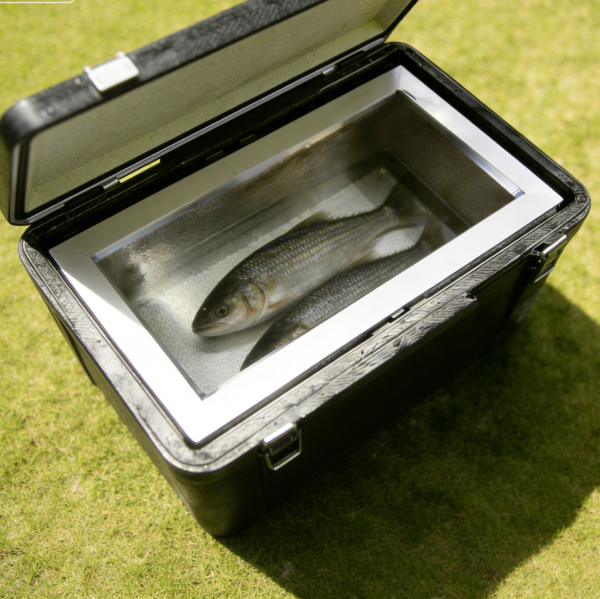
Cool Box Cost: From Specification to Scale
A sound decision on cool box cost can be reduced to five linked questions: what must be protected, on which route, with what loaded configuration, under whose operating control, and with what evidence.
The result is an integrated selection framework. It combines product education, engineering judgment, route risk, supplier qualification, total cost, and sustainability so that a buyer can issue a clearer request, run a meaningful trial, and approve a configuration with fewer surprises.
Use five decisions to control the purchase
A complete commercial cool box project can be governed through five decisions. First, define the protected product and acceptance condition. Second, characterize the lane and its handovers. Third, design the loaded packout, including coolant, barriers, monitoring, and usable space. Fourth, qualify the supplier and evidence. Fifth, prove that operations can reproduce, clean, return, and maintain the configuration.
The sequence matters. Teams create rework when they choose a box, then attempt to fit the product and route into it. Starting with the product and lane allows several architectures to be compared on equal terms. It also makes cost negotiation more useful, because the quotation describes a defined job rather than a generic container.
The central tradeoff is a low-cost disposable or basic reusable option may be correct for open one-way routes, while a durable premium system needs enough successful reuse cycles to justify itself. The framework does not remove tradeoffs; it makes them explicit. Procurement can decide which consequences are acceptable, engineering can document the technical basis, quality or food safety can set evidence, and operations can test whether the method is repeatable.
Decision 1 and 2: connect product requirements to the lane
Write a one-page use-case brief for route-specific temperature-sensitive goods and the coolant, dividers, monitoring, and labels required to move them. Include the current product instruction, starting condition, quantity, carton or tray dimensions, sensitivity to freezing, overheating, light, contamination, impact, or delay, and the disposition process for an excursion. Avoid importing a common industry range into a product that has different instructions.
Then map initial sampling, production purchase, outbound distribution, return, cleaning, storage, repair, and replacement. Record elapsed time, seasonal external conditions, staging, vehicle environment, door opening, stop count, transfer surfaces, custody changes, and receiving storage. Add a normal scenario and a realistic challenge. The challenge may be a warm dock, late receiver, partial load, repeated opening, or outdoor handoff. It should represent a credible operating day, not an artificial worst case with no defined probability or response.
Assign each risk to packaging, procedure, equipment, or escalation. Insulation and coolant can buffer environmental exposure. A route schedule can reduce dwell. A portable active unit may be more appropriate for some high-risk movements. A receiver appointment can remove an uncontrolled handover. This allocation prevents the passive box from being asked to compensate for every process weakness.
Decision 3: approve a loaded configuration, not a nominal box
The loaded design must resolve this capacity issue: cost per liter is misleading unless nominal capacity, usable payload, outside cube, loaded weight, and shipping efficiency are normalized. Create a drawing and physical mock-up showing product orientation, coolant, barriers, monitoring, dividers, tolerances, and closure clearance. Calculate or measure the expected packed weight. Confirm vehicle, shelf, pallet, trolley, and door fit with the handles and lid in their operating positions.
Control local temperatures by defining coolant condition and placement. The design should avoid unintended direct contact, uncontrolled air gaps, and components that can shift. Development work may need several sensors to map the load, but routine monitoring should use a fixed location that represents the required product decision. Partial loads need an approved alternative rather than an improvised version of the full packout.
Construction should support material, molding process, insulation, hardware, seals, inserts, finish, customization, tooling, and quality-control requirements shape manufacturing cost. Review the lid joint, thermal bridges, high-load hardware, cleanability, component replacement, and compatibility with sunlight or chemicals where relevant. Material names are inputs, not conclusions. The approved specification should define the construction in enough detail to preserve function through production.
Decision 4: qualify the supplier and the evidence together
Establish who owns the design and who controls the factory. The commercial party may be a manufacturer, exporter, distributor, or integrator, but the buyer needs a clear route to drawings, material controls, inspection, defects, and change notification. Ask which components are critical and how production units are compared with the approved sample.
The request for quotation should cover unit price, tooling, samples, accessories, coolant, custom print, packaging, freight, duties, testing, documentation, spare parts, warranty, and payment terms. Normalize the included bill of materials and delivery terms before comparing prices. Separate hardware, coolant, monitoring, customization, tooling, testing, documentation, packing, freight, and spare parts. This makes cost drivers visible and prevents a low empty-box price from being compared with a process-ready kit.
Request a complete commercial quotation, specification, bill of included components, packaging method, sample plan, performance evidence assumptions, and change-control terms. Read test reports for conditions, not headlines. Check payload, starting temperature, coolant, ambient profile, duration, openings, sensor positions, acceptance criteria, and whether the sample represented production. Record the gaps between that evidence and the intended lane so the team can decide what further work is proportionate.
| Approval gate | Minimum output | Reason the gate exists |
|---|---|---|
| Product and lane | Use-case brief with payload, condition, route, exposure, and handovers | Prevents the box from being selected before the job is defined |
| Loaded configuration | Drawing, component list, coolant, barriers, sensor, weight, and fit | Converts nominal capacity into a reproducible packout |
| Supplier and evidence | Controlled specification, samples, reports, and change rules | Connects commercial supply to the approved design |
| Operating readiness | SOP, training, cleaning, receiving, return, and exceptions | Shows that people can repeat and maintain the method |
| Scale and lifecycle | First-lot check, route rollout, cost model, asset tracking, review triggers | Protects performance and value after launch |
The approval gates prevent a project from moving directly from an attractive sample to a bulk order. Each gate creates a tangible output and closes a different risk: unclear use case, nonreproducible packout, uncontrolled supply, weak operations, or an unproven lifecycle model.
Use regulatory and technical guidance without overclaiming
Authoritative guidance helps define control expectations, but it does not turn a generic box into an approved system. Product instructions and applicable local rules remain decisive. A technical file should state why each reference is relevant and where route-specific testing or quality review is still required.
The approval decision should identify the tested operating envelope and the conditions that require escalation. When evidence is incomplete, convert the unknown into a verification question or an operational limit rather than filling the gap with a confident marketing claim.
Decision 5: prove the organization can repeat the method
Run a pilot with the actual packers, drivers, receivers, cleaning staff, and quality or food-safety reviewers. Observe component identification, coolant preparation, loading, monitor placement, closure, staging, lifting, restraint, opening, handover, return, wash, drying, and inspection. Record workarounds; they are evidence that the design or instruction needs correction.
The return process must implement this hygiene requirement: cleaning chemicals, wash time, drying space, seal replacement, and the treatment of damaged units belong in the budget. Separate dirty, clean, repair, quarantine, and retired status. Define objective release criteria and control removable parts. Measure cleaning turnaround and storage space so fleet quantity reflects assets that are genuinely available, not only boxes purchased.
Prepare exception paths before launch. Staff need to know what to do when a coolant component is missing, the monitor fails, a lid will not close, a box is damaged, a vehicle is delayed, the receiver is absent, or the product trace shows an excursion. A short escalation path protects the approved process under time pressure.
Judge cost and sustainability across the same operating cycle
Build total cost from the approved configuration: hardware, tooling, samples, coolant, monitoring, labels, packing, freight, duties, labor, vehicle cube, return, washing, drying, storage, repair, loss, replacement, and evidence maintenance. Report cost per successful trip by route cohort. This avoids both a narrow unit-price decision and an unsupported claim that reuse always saves money.
The sustainability question is cost and sustainability meet at utilization: a reusable box that circulates reliably can spread its material and purchase cost across trips, while a lost or idle asset cannot. Track circulation, return distance, loss, repair, wash resources, utilization, and end-of-life handling. A reusable system creates value when the network can keep it in controlled service. Right-sizing, repairable components, and efficient return stacking can matter as much as the base material.
Commercial approval can include a sensitivity review. Examine how the result changes when return falls, damage rises, demand shifts, or a route needs a different size. This does not require invented market data. It uses the organization's own operating assumptions to identify where the proposal is robust and where a different packaging model should be retained.
Scale through controlled gates and change triggers
Gate 1 approves the use-case brief and loaded drawing. Gate 2 approves production-intent samples and supplier documents. Gate 3 approves relevant thermal, mechanical, cleaning, and route evidence. Gate 4 approves the SOP, training, exception process, and return loop. Gate 5 releases production after first-lot verification. Each gate has an owner and recorded acceptance criteria.
Expand by similar route cohorts. Start with a representative lane and a credible challenge, correct problems, then add sites that share payload and exposure. Do not assume one successful pilot covers a different vehicle, climate, stop pattern, product, or wash process. Use a documented comparison to decide whether the existing evidence can be extended.
Maintain a change register after launch. Product cartons, coolant, payload mass, sensor, route time, cleaning chemistry, supplier material, seal, hardware, or factory changes can affect the baseline. Assign review levels so minor administrative updates do not trigger unnecessary work while functional changes receive appropriate comparison or requalification.
Keep the main non-assumptions visible
Do not assume that nominal capacity equals payload capacity, that insulation creates the required product temperature, that a logger provides protection, or that a test under different conditions proves the lane. Do not assume that durability equals food or pharmaceutical suitability, or that one program's approval transfers to another. The specific risk here is asking for the cheapest box before defining what the box must do and how often it will be reused.
Turn each non-assumption into a control. Use a loaded drawing for capacity, a defined coolant plan for thermal control, a fixed sensor position for evidence, a route comparison for transferability, a cleaning and segregation process for hygiene, and a controlled specification for production consistency. This makes the article's principles actionable in an RFQ and pilot.
Finally, preserve uncertainty honestly. When a parameter is not supported by product instructions, a reliable technical source, supplier documentation, or testing, ask the supplier to confirm it or plan a verification. Removing an unsupported number is better engineering and better procurement than presenting precision that the evidence cannot carry.
Integrated Procurement Questions
What information should be sent to a supplier first?
Send the product type and required condition, carton or payload dimensions, quantity, route duration, seasonal exposure, stop and opening pattern, vehicle or shelf constraints, coolant preference, monitoring need, cleaning method, reuse plan, customization, and order volume. Mark any unknowns so they become project questions rather than assumptions.
How do I know whether the proposed box is too large or too small?
Build the complete packout and compare usable payload count, loaded weight, outside cube, vehicle fit, partial-load behavior, and handling. A large box may waste coolant and space; a small one may force compression or extra trips. Use real order profiles and approve load bands.
What evidence is most important before production?
The evidence should match the dominant risks. At minimum, control dimensions, materials, components, loaded fit, handling, cleaning, and relevant thermal assumptions. Higher-risk healthcare or food routes may also need qualification, calibrated monitoring, route studies, formal records, and quality or food-safety approval.
How should cost quotations be compared?
Compare the same bill of materials, dimensions, accessories, coolant, monitoring, customization, testing, packing, order quantity, delivery terms, freight assumptions, spare parts, and change-control scope. Then model labor, return, cleaning, loss, repair, and successful trips. An empty-shell unit price is not a complete comparison.
What should trigger requalification or reassessment?
Changes to product instructions, payload, carton, coolant, sensor, route, ambient exposure, stop pattern, cleaning, material, seal, hardware, process, or factory can matter. Set risk-based triggers for document review, sample comparison, targeted testing, route work, or full requalification.
Final Decision
Treat cool box cost as a controlled system decision. Define the product and lane, approve the loaded packout, qualify supplier controls and evidence, prove the operating process, and model cost and reuse across successful trips. Scale only after production-intent samples and route cohorts are reviewed. This approach preserves the useful information from product education, engineering, compliance, operations, and sustainability without relying on universal claims.
About Tempk
Tempk is the cold-chain packaging brand of Shanghai Tempk Industrial Co., Ltd. Its public portfolio includes gel packs, ice bricks, insulated bags and liners, EPP and other insulated boxes, medical ice boxes, pallet covers, and custom packaging for food and healthcare logistics. Buyers can provide product geometry, target condition, route, coolant, monitoring, handling, cleaning, identification, and commercial requirements so Tempk can propose a configuration for sample review, testing, and sample-to-production discussion.
Project Next Step
Ask Tempk to review your commercial cool box cost project using the actual payload, route, packout, operating controls, and sourcing assumptions before a bulk quotation is finalized.
Commercial Ice Box Meat Delivery Supplier: A Route-Based Framework
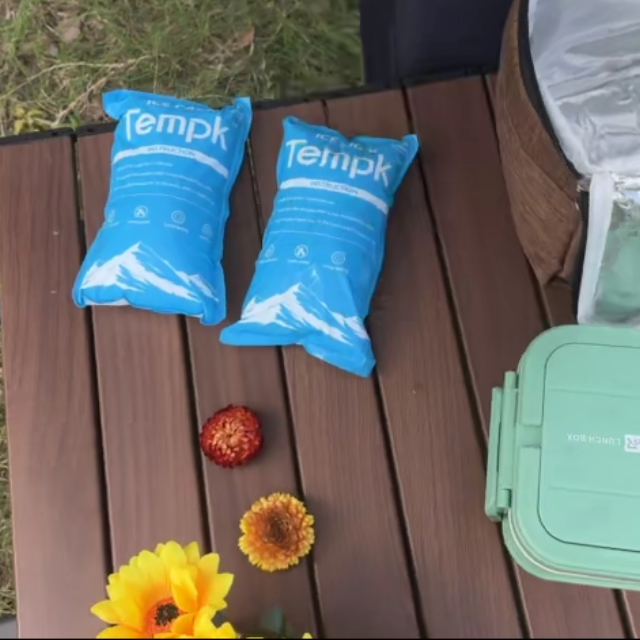
Commercial Ice Box Meat Delivery Supplier: A Route-Based Framework
The best commercial ice box meat delivery supplier decision is rarely the box with the highest claimed performance or the lowest price. It is the system that fits the payload, route, operators, documentation needs, and return model with the fewest uncontrolled assumptions.
The result is an integrated selection framework. It combines product education, engineering judgment, route risk, supplier qualification, total cost, and sustainability so that a buyer can issue a clearer request, run a meaningful trial, and approve a configuration with fewer surprises.
Use five decisions to control the purchase
A complete commercial meat delivery ice box project can be governed through five decisions. First, define the protected product and acceptance condition. Second, characterize the lane and its handovers. Third, design the loaded packout, including coolant, barriers, monitoring, and usable space. Fourth, qualify the supplier and evidence. Fifth, prove that operations can reproduce, clean, return, and maintain the configuration.
The sequence matters. Teams create rework when they choose a box, then attempt to fit the product and route into it. Starting with the product and lane allows several architectures to be compared on equal terms. It also makes cost negotiation more useful, because the quotation describes a defined job rather than a generic container.
The central tradeoff is a tighter seal and thicker insulation may support temperature control, while a design that is too heavy, slow to clean, or difficult to open can undermine route operations. The framework does not remove tradeoffs; it makes them explicit. Procurement can decide which consequences are acceptable, engineering can document the technical basis, quality or food safety can set evidence, and operations can test whether the method is repeatable.
Decision 1 and 2: connect product requirements to the lane
Write a one-page use-case brief for sealed cuts, trays, vacuum packs, cartons, prepared meat items, or frozen products under a defined food-safety plan. Include the current product instruction, starting condition, quantity, carton or tray dimensions, sensitivity to freezing, overheating, light, contamination, impact, or delay, and the disposition process for an excursion. Avoid importing a common industry range into a product that has different instructions.
Then map cold-room dispatch through loading, vehicle travel, multiple stops, receiving, return, cleaning, and drying. Record elapsed time, seasonal external conditions, staging, vehicle environment, door opening, stop count, transfer surfaces, custody changes, and receiving storage. Add a normal scenario and a realistic challenge. The challenge may be a warm dock, late receiver, partial load, repeated opening, or outdoor handoff. It should represent a credible operating day, not an artificial worst case with no defined probability or response.
Assign each risk to packaging, procedure, equipment, or escalation. Insulation and coolant can buffer environmental exposure. A route schedule can reduce dwell. A portable active unit may be more appropriate for some high-risk movements. A receiver appointment can remove an uncontrolled handover. This allocation prevents the passive box from being asked to compensate for every process weakness.
Decision 3: approve a loaded configuration, not a nominal box
The loaded design must resolve this capacity issue: usable capacity depends on product carton dimensions, coolant, absorbent or separation materials, and the need to keep raw products away from ready-to-eat items. Create a drawing and physical mock-up showing product orientation, coolant, barriers, monitoring, dividers, tolerances, and closure clearance. Calculate or measure the expected packed weight. Confirm vehicle, shelf, pallet, trolley, and door fit with the handles and lid in their operating positions.
Control local temperatures by defining coolant condition and placement. The design should avoid unintended direct contact, uncontrolled air gaps, and components that can shift. Development work may need several sensors to map the load, but routine monitoring should use a fixed location that represents the required product decision. Partial loads need an approved alternative rather than an improvised version of the full packout.
Construction should support cleanable interior surfaces, lid sealing, spill containment, robust handles, stack stability, drainage decisions, and insulation that remains intact after washing and impact. Review the lid joint, thermal bridges, high-load hardware, cleanability, component replacement, and compatibility with sunlight or chemicals where relevant. Material names are inputs, not conclusions. The approved specification should define the construction in enough detail to preserve function through production.
Decision 4: qualify the supplier and the evidence together
Establish who owns the design and who controls the factory. The commercial party may be a manufacturer, exporter, distributor, or integrator, but the buyer needs a clear route to drawings, material controls, inspection, defects, and change notification. Ask which components are critical and how production units are compared with the approved sample.
The request for quotation should cover food-contact and material information where relevant, dimensions, loaded weight, cleaning method, drain and seal design, stack pattern, coolant, labels, color coding, and spare components. Normalize the included bill of materials and delivery terms before comparing prices. Separate hardware, coolant, monitoring, customization, tooling, testing, documentation, packing, freight, and spare parts. This makes cost drivers visible and prevents a low empty-box price from being compared with a process-ready kit.
Request cleaning instructions, material information, seal and drain details, loaded handling guidance, sample consistency, packout test conditions, and replacement-part availability. Read test reports for conditions, not headlines. Check payload, starting temperature, coolant, ambient profile, duration, openings, sensor positions, acceptance criteria, and whether the sample represented production. Record the gaps between that evidence and the intended lane so the team can decide what further work is proportionate.
| Approval gate | Minimum output | Reason the gate exists |
|---|---|---|
| Product and lane | Use-case brief with payload, condition, route, exposure, and handovers | Prevents the box from being selected before the job is defined |
| Loaded configuration | Drawing, component list, coolant, barriers, sensor, weight, and fit | Converts nominal capacity into a reproducible packout |
| Supplier and evidence | Controlled specification, samples, reports, and change rules | Connects commercial supply to the approved design |
| Operating readiness | SOP, training, cleaning, receiving, return, and exceptions | Shows that people can repeat and maintain the method |
| Scale and lifecycle | First-lot check, route rollout, cost model, asset tracking, review triggers | Protects performance and value after launch |
The approval gates prevent a project from moving directly from an attractive sample to a bulk order. Each gate creates a tangible output and closes a different risk: unclear use case, nonreproducible packout, uncontrolled supply, weak operations, or an unproven lifecycle model.
Use regulatory and technical guidance without overclaiming
Authoritative guidance helps define control expectations, but it does not turn a generic box into an approved system. Product instructions and applicable local rules remain decisive. A technical file should state why each reference is relevant and where route-specific testing or quality review is still required.
For food distribution, FDA sanitary transportation principles connect equipment design with necessary temperature control, cleanability, and prevention of contamination. The box should therefore be reviewed within the complete food-safety operation, including product separation, loading, vehicle conditions, receiving, cleaning, and records.
The approval decision should identify the tested operating envelope and the conditions that require escalation. When evidence is incomplete, convert the unknown into a verification question or an operational limit rather than filling the gap with a confident marketing claim.
Decision 5: prove the organization can repeat the method
Run a pilot with the actual packers, drivers, receivers, cleaning staff, and quality or food-safety reviewers. Observe component identification, coolant preparation, loading, monitor placement, closure, staging, lifting, restraint, opening, handover, return, wash, drying, and inspection. Record workarounds; they are evidence that the design or instruction needs correction.
The return process must implement this hygiene requirement: cleanability, separation, drying, odor control, visible inspection, and procedures between loads are central purchasing criteria, not after-sales details. Separate dirty, clean, repair, quarantine, and retired status. Define objective release criteria and control removable parts. Measure cleaning turnaround and storage space so fleet quantity reflects assets that are genuinely available, not only boxes purchased.
Prepare exception paths before launch. Staff need to know what to do when a coolant component is missing, the monitor fails, a lid will not close, a box is damaged, a vehicle is delayed, the receiver is absent, or the product trace shows an excursion. A short escalation path protects the approved process under time pressure.
Judge cost and sustainability across the same operating cycle
Build total cost from the approved configuration: hardware, tooling, samples, coolant, monitoring, labels, packing, freight, duties, labor, vehicle cube, return, washing, drying, storage, repair, loss, replacement, and evidence maintenance. Report cost per successful trip by route cohort. This avoids both a narrow unit-price decision and an unsupported claim that reuse always saves money.
The sustainability question is reusable meat boxes can reduce disposable packaging on closed routes, but the wash process, water and energy use, return transport, damage, and loss must be included in the assessment. Track circulation, return distance, loss, repair, wash resources, utilization, and end-of-life handling. A reusable system creates value when the network can keep it in controlled service. Right-sizing, repairable components, and efficient return stacking can matter as much as the base material.
Commercial approval can include a sensitivity review. Examine how the result changes when return falls, damage rises, demand shifts, or a route needs a different size. This does not require invented market data. It uses the organization's own operating assumptions to identify where the proposal is robust and where a different packaging model should be retained.
Scale through controlled gates and change triggers
Gate 1 approves the use-case brief and loaded drawing. Gate 2 approves production-intent samples and supplier documents. Gate 3 approves relevant thermal, mechanical, cleaning, and route evidence. Gate 4 approves the SOP, training, exception process, and return loop. Gate 5 releases production after first-lot verification. Each gate has an owner and recorded acceptance criteria.
Expand by similar route cohorts. Start with a representative lane and a credible challenge, correct problems, then add sites that share payload and exposure. Do not assume one successful pilot covers a different vehicle, climate, stop pattern, product, or wash process. Use a documented comparison to decide whether the existing evidence can be extended.
Maintain a change register after launch. Product cartons, coolant, payload mass, sensor, route time, cleaning chemistry, supplier material, seal, hardware, or factory changes can affect the baseline. Assign review levels so minor administrative updates do not trigger unnecessary work while functional changes receive appropriate comparison or requalification.
Keep the main non-assumptions visible
Do not assume that nominal capacity equals payload capacity, that insulation creates the required product temperature, that a logger provides protection, or that a test under different conditions proves the lane. Do not assume that durability equals food or pharmaceutical suitability, or that one program's approval transfers to another. The specific risk here is using a box that holds cold air but cannot be cleaned, drained, segregated, or handled safely under real meat-delivery conditions.
Turn each non-assumption into a control. Use a loaded drawing for capacity, a defined coolant plan for thermal control, a fixed sensor position for evidence, a route comparison for transferability, a cleaning and segregation process for hygiene, and a controlled specification for production consistency. This makes the article's principles actionable in an RFQ and pilot.
Finally, preserve uncertainty honestly. When a parameter is not supported by product instructions, a reliable technical source, supplier documentation, or testing, ask the supplier to confirm it or plan a verification. Removing an unsupported number is better engineering and better procurement than presenting precision that the evidence cannot carry.
Integrated Procurement Questions
What information should be sent to a supplier first?
Send the product type and required condition, carton or payload dimensions, quantity, route duration, seasonal exposure, stop and opening pattern, vehicle or shelf constraints, coolant preference, monitoring need, cleaning method, reuse plan, customization, and order volume. Mark any unknowns so they become project questions rather than assumptions.
How do I know whether the proposed box is too large or too small?
Build the complete packout and compare usable payload count, loaded weight, outside cube, vehicle fit, partial-load behavior, and handling. A large box may waste coolant and space; a small one may force compression or extra trips. Use real order profiles and approve load bands.
What evidence is most important before production?
The evidence should match the dominant risks. At minimum, control dimensions, materials, components, loaded fit, handling, cleaning, and relevant thermal assumptions. Higher-risk healthcare or food routes may also need qualification, calibrated monitoring, route studies, formal records, and quality or food-safety approval.
How should cost quotations be compared?
Compare the same bill of materials, dimensions, accessories, coolant, monitoring, customization, testing, packing, order quantity, delivery terms, freight assumptions, spare parts, and change-control scope. Then model labor, return, cleaning, loss, repair, and successful trips. An empty-shell unit price is not a complete comparison.
What should trigger requalification or reassessment?
Changes to product instructions, payload, carton, coolant, sensor, route, ambient exposure, stop pattern, cleaning, material, seal, hardware, process, or factory can matter. Set risk-based triggers for document review, sample comparison, targeted testing, route work, or full requalification.
Final Decision
Treat commercial ice box meat delivery supplier as a controlled system decision. Define the product and lane, approve the loaded packout, qualify supplier controls and evidence, prove the operating process, and model cost and reuse across successful trips. Scale only after production-intent samples and route cohorts are reviewed. This approach preserves the useful information from product education, engineering, compliance, operations, and sustainability without relying on universal claims.
About Tempk
Tempk is the cold-chain packaging brand of Shanghai Tempk Industrial Co., Ltd. Its public portfolio includes gel packs, ice bricks, insulated bags and liners, EPP and other insulated boxes, medical ice boxes, pallet covers, and custom packaging for food and healthcare logistics. Buyers can provide product geometry, target condition, route, coolant, monitoring, handling, cleaning, identification, and commercial requirements so Tempk can propose a configuration for sample review, testing, and sample-to-production discussion.
Project Next Step
Ask Tempk to review your commercial ice boxes for meat delivery project using the actual payload, route, packout, operating controls, and sourcing assumptions before a bulk quotation is finalized.