


40 Liter Ice Chest Manufacturer: Specification Guide
40 Liter Ice Chest Manufacturer: Specification Guide

Selecting a 40 Liter Ice Chest Manufacturer: A Requirement-to-Evidence Guide
The most useful way to select a 40 liter ice chest manufacturer is to move through a requirement-to-evidence sequence. First define the product and temperature need. Then model payload and coolant space, map the route and handling risks, select construction, and decide what testing or documentation must support approval. This sequence keeps commercial discussions anchored to the application rather than to broad claims about liters, insulation, duration, or price.
For food service, field operations, mobile catering, and general cold-chain handling, procurement, operations, engineering, and quality teams should work from the same controlled brief. The chest is an insulated component. Its result depends on the coolant, packout, payload, ambient exposure, opening pattern, and route. The sections below combine buyer, engineering, operational, and supplier-control perspectives into one decision path, ending with implementation checks that help the approved sample remain representative of production and real use.
| Decision answer: Select the commercial ice chest only after confirming the payload, usable geometry, temperature requirement, route, coolant, handling, evidence, and production controls. The chest is an insulated component. Its result depends on the coolant, packout, payload, ambient exposure, opening pattern, and route. |
|---|
Use a Requirement-to-Evidence Decision Path
A controlled decision can be organized into four gates. Gate one defines the product and required condition. Gate two confirms that payload, coolant, internal geometry, handling, and route fit the proposed box. Gate three evaluates evidence, including drawings, material data, test reports, manufacturing controls, and application limits. Gate four approves implementation, including instructions, monitoring, receiving, change control, and supplier responsibilities. A project should not move forward merely because one gate looks strong while another remains undefined.
The gates also create useful ownership. Operations can define the route and work method; engineering can review geometry, materials, and failure modes; quality can set evidence and deviation rules; procurement can compare scope and commercial terms. For procurement managers, distributors, food-service operators, and private-label buyers, this shared structure reduces repeated clarification and makes quotations comparable. It also exposes when a request is still a concept rather than a purchase-ready specification. The final approval record should show what was confirmed, by whom, using which evidence, and for which application boundary.
- Gate 1 – Product, temperature condition, sensitivity, and consequence of failure
- Gate 2 – Payload envelope, coolant, route, handling, hygiene, and user fit
- Gate 3 – Materials, drawings, tests, quality controls, and stated limitations
- Gate 4 – Pilot, instructions, monitoring, receiving, change control, and launch approval
Write the Requirement in Operational Language
Write a user requirement that another team could apply without hearing the original sales discussion. Identify the payload, packaging, initial condition, required temperature condition, maximum time, delay allowance, ambient exposure, openings, vehicle or carrier, handling, cleaning, and receiving decision. For food service, field operations, mobile catering, and general cold-chain handling, also state the consequence of a failure and whether the shipment can be replaced, quarantined, or investigated without major disruption.
Turn the primary objective – provide a manageable mid-size insulated container that protects chilled payloads through the actual handling route – into measurable acceptance points. Separate functions supplied by the physical container from those supplied by coolant, monitoring, work instructions, the carrier, and receiving. Then assign owners for unresolved assumptions. A controlled user requirement prevents the final approval from depending on vague phrases such as durable, medical, food grade, leakproof, long lasting, or suitable for cold chain.
- Defined payload, packaging, quantity, mass, and temperature condition
- Normal lane plus delay, seasonal, opening, and handover assumptions
- Packout components, conditioning, placement, and loaded configuration
- Handling, restraint, hygiene, labels, monitoring, and receiving decisions
- Required drawings, test evidence, production controls, and change ownership
Turn the Unique Risks Into Approval Criteria
The approval record should resolve the project-specific risks before commercial release: confusing gross volume with usable payload space, overlooking lid leakage, and accepting a quoted hold time without its test conditions. It should also state how the proposed configuration will provide a manageable mid-size insulated container that protects chilled payloads through the actual handling route. These are not background comments; they are requirements that need an owner, evidence, and an acceptance decision. Where a condition cannot yet be proven, the record should identify the remaining test, pilot, or quality action.
Use an application matrix that connects outer-shell toughness, insulation continuity, lid stiffness, hinge durability, and resistance to common cleaning agents with the route, handling, hygiene, monitoring, and supplier controls. Include the three decisive points: Model usable space after coolant and dividers are installed rather than relying on the nominal forty-liter label. Confirm that the loaded mass, handle position, and center of gravity are acceptable for the people who will move the chest. Check whether the lid, seal, hinges, and restraint points remain functional after repeated commercial handling. The final choice should be explainable to procurement, quality, operations, and the supplier without relying on a sales presentation or personal memory.
Capacity Must Be Proven With a Packout
Convert the catalog description into a controlled payload envelope. Request clear internal length, width, and height at the points where the payload actually sits, then place the intended coolant, separators, racks, monitor, and product in a drawing or physical trial. A 40-liter rating describes nominal space; it does not state how many saleable units, vaccine cartons, specimens, or dairy packs can be loaded without disturbing the approved arrangement.
Approval should cover external footprint and loaded mass as well as internal fit. The proposed container has to enter the vehicle, pass through doors, sit securely, allow the lid to close without compression, and remain manageable at delivery. Where summer and winter packouts differ, document both. The accepted specification should state the usable payload for the defined configuration and identify any dimensional tolerance that could change packing, restraint, or thermal performance.
| Decision gate | Project-specific confirmation | Acceptable evidence | Owner |
|---|---|---|---|
| Product requirement | Provide a manageable mid-size insulated container that protects chilled payloads through the actual handling route | Approved user requirement and product information | Product and quality teams |
| Physical and operating fit | 40-liter; two-person or single-person lifting depending on loaded weight, vehicle restraint, stacking, and repeated lid operation | Packout drawing, sample trial, route observation, and cleaning review | Engineering and operations |
| Performance boundary | The chest is an insulated component. Its result depends on the coolant, packout, payload, ambient exposure, opening pattern, and route. | Traceable thermal, mechanical, monitoring, and application evidence | Engineering and quality |
| Supplier control | Dimensioned drawings, material declarations, sample inspection records, thermal test conditions, and production quality checks | Control plan, records, audit evidence, and change agreement | Procurement and quality |
| Implementation | Confirm that the loaded mass, handle position, and center of gravity are acceptable for the people who will move the chest. | Approved pilot, instructions, training, receiving, and escalation plan | Operations and quality |
| Lifecycle decision | unit price, freight cube, damage rate, replacement parts, cleaning labor, and the cost of unusable internal space; long service life, repairability, right-sized packouts, efficient return logistics, and reduced damage rather than unsupported green claims | Comparable business case and periodic performance review | Procurement and operations |
Making Forty Liters Work in the Real Route
The approval record should close three application-specific gaps before the project moves to production or launch.
- Approval requirement: Model usable space after coolant and dividers are installed rather than relying on the nominal forty-liter label.
- Approval requirement: Confirm that the loaded mass, handle position, and center of gravity are acceptable for the people who will move the chest.
- Approval requirement: Check whether the lid, seal, hinges, and restraint points remain functional after repeated commercial handling.
Assign an owner and supporting evidence to each requirement. If one remains uncertain, keep it as an open approval item rather than hiding the uncertainty inside a broad supplier claim.
Define Temperature Performance With Conditions Attached
Convert thermal claims into approval statements with conditions attached. The specification should identify the required product range, packout revision, payload range, coolant and conditioning, ambient profile, duration and delay margin, openings, sensor plan, and acceptance criterion. Where different seasons use different packouts, approve each configuration explicitly rather than treating them as informal operator adjustments.
Create an evidence ladder. Start with design calculations or development comparison, move to representative laboratory testing, add lane qualification when the risk requires it, and use operational monitoring to verify controlled use. Each step answers a different question. Approval should be based on the level that matches product value, sensitivity, regulatory context, recoverability, and route variability, not on the most impressive certificate name in a proposal.
Procurement Should Test the Supplier’s Process
Evaluate the proposed manufacturer against the approved requirement, not against a generic supplier questionnaire. Confirm whether the offer covers the box only or a wider scope that includes coolant, inserts, packout drawings, testing, qualification support, monitoring, labels, spare parts, training, and deviation assistance. Request dimensioned drawings, material declarations, sample inspection records, thermal test conditions, and production quality checks. Every important claim should point to a controlled document, sample, test condition, or production control.
Complete commercial and quality due diligence together. Review approved material sources, critical processes, inspection records, calibration, tooling maintenance, nonconformance, corrective action, subcontracted components, and engineering change notification. Agree who owns drawings, molds, product revisions, records, and retesting decisions. A supplier is ready for approval when it can recreate the accepted configuration and explain how changes will be evaluated before they reach a shipment.
- Scope of supply, documentation, testing, qualification, and support
- Controlled specification, approved sample, bill of materials, and revision link
- Critical processes, inspections, records, calibration, and corrective action
- Subcontractor control, tooling maintenance, substitutions, and change notification
- Commercial responsibility for defects, rework, spare parts, and future orders
Create an Evidence Ladder for the Decision
Organize approval evidence by the decision it supports. Drawings and material records establish what the product is. Mechanical tests address handling and restraint. Thermal development tests compare designs. Qualification tests a defined packout against an approved requirement. Route monitoring shows how the controlled method behaves under operational variability. The approval record should identify which level is required and why, rather than accepting a collection of unrelated reports.
Before relying on any report, compare the tested version, payload, coolant, conditioning, initial temperatures, ambient profile, duration, openings, orientation, sensors, acceptance criteria, and deviations with the planned use. Record gaps and decide whether they are acceptable, require analysis, or require additional testing. A report name or pass statement is not enough. The supported conclusion must remain traceable to the configuration that procurement and production will actually purchase.
Pilot, Approve, Launch, and Review
Implementation should move from representative sample to controlled pilot before full production or route launch. Confirm the exact bill of materials, drawings, colors, markings, accessories, packaging, and instructions. Use the pilot to test packing time, user errors, loaded ergonomics, vehicle fit, restraint, cleaning, monitoring, and receiving. For a temperature-controlled application, verify that the pilot follows the intended coolant and payload configuration rather than an easier demonstration setup.
After approval, freeze the critical specification and define change control. Train packers, drivers, couriers, cleaners, and receivers on the parts of the process they own. Establish a first-production review and monitor early shipments for recurring issues. A launch should include escalation contacts and a method for segregating suspect boxes or components. Periodic review can use damage, deviation, return, cleaning, and temperature data to refine the system without weakening the qualified or approved boundary.
Build a Cost Model Around Risk and Utilization
Build a risk-adjusted business case with one-time, recurring, and failure costs separated. One-time items may include design, tooling, samples, validation, and launch. Recurring items can include units, coolant, monitoring, labor, cleaning, freight, inspection, storage, and replacement. Failure costs may include product hold, reshipment, deviation investigation, customer disruption, and lost route capacity. Use project data or clearly identified assumptions rather than a generic savings percentage.
Compare alternatives on the same approved scope. A lower unit price is not lower cost if usable space is poor, freight cube is high, packout labor is slow, or quality escapes are frequent. A technically stronger design is not automatically better if it adds cost without addressing a route risk. The approval team should document the trade-off it is accepting and the operating measure that will show whether the expected value is achieved.
Applying the Decision Path to a Typical Project
Apply the full decision path to a typical project. A regional food-service distributor needs one size for vehicle delivery and short holding, but the loaded chest must still fit the route, lifting rules, and cleaning process. The cross-functional team first approves the user requirement, then confirms payload and coolant fit with a physical sample. It records loaded handling, route exposure, hygiene, monitoring, and receiving needs before selecting the evidence level and commercial scope.
The chosen manufacturer supplies controlled drawings, materials, test reports, and a pilot batch. Procurement compares the quotation against the approved scope; quality checks change control and acceptance criteria; operations runs the pilot with normal users. Launch occurs only after unresolved gaps have owners and dates. The final record links the requirement, configuration, evidence, instructions, and production version so future changes can be assessed coherently.
Final Procurement Questions
What must be approved before the purchase order is released?
Approve the user requirement, product revision, internal and external dimensions, materials, packout components, test or qualification basis, critical inspection criteria, labels, packaging, documentation, commercial scope, and change-control responsibilities. For temperature-sensitive use, also approve the payload, coolant conditioning, ambient and duration assumptions, sensor plan, operating instructions, receiving criteria, and unresolved limitations.
How is an approved sample kept consistent with production?
Link the sample to controlled drawings, bill of materials, approved material sources, process settings, critical dimensions, inspection methods, and a pilot batch. Retain a reference sample where useful, but do not rely on appearance alone. The supplier should notify the buyer before changes to tooling, resin, insulation, hardware, seal, insert, coolant, subcontractor, process, or packaging that could affect function.
Who owns qualification and compliance decisions?
Responsibility should be allocated in the project agreement. The supplier can provide accurate product data, samples, reports, and technical support; the buyer normally defines the product limits, lane, acceptance criteria, quality system, and applicable market obligations. A contract manufacturer or testing laboratory may perform work, but that does not remove the need for the product owner and quality team to approve suitability.
When is a custom design justified?
Customization is justified when a standard product cannot meet critical payload geometry, usable capacity, restraint, cleaning, branding, route, accessory, or operating needs. Compare the value with tooling, development time, MOQ, change risk, test requirements, spare parts, and future revisions. A custom shape should solve a documented requirement rather than add complexity that can be handled with an insert or process change.
What is the most important limitation of a commercial ice chest?
The chest is an insulated component. Its result depends on the coolant, packout, payload, ambient exposure, opening pattern, and route. The buyer should therefore avoid treating a capacity label, material name, or generic duration as a complete performance statement. Confirm the payload, coolant, route, openings, ambient exposure, handling, monitoring, test conditions, and receiving decision that define the intended use.
Conclusion: Approve a System You Can Explain and Repeat
A suitable 40 liter ice chest manufacturer is the result of disciplined specification rather than a single feature. The most reliable decision connects payload, temperature condition, route, usable space, construction, coolant, handling, hygiene, evidence, production control, and operating ownership. When those elements are explicit, procurement can compare offers fairly and operations can repeat the approved method without relying on memory or broad sales language.
- Start with the product and lane, then confirm physical fit and packout.
- Match the required evidence to the risk and application boundary.
- Approve supplier controls, implementation, monitoring, and change management together.
- Maintain one traceable link from requirement to evidence to operating instruction.
About Tempk
Tempk is a Shanghai-based cold-chain packaging company established in 2011. Its publicly presented range includes gel and water-based ice packs, EPP and plastic insulated boxes, vacuum-insulated solutions, insulated bags and liners, pallet covers, and temperature-monitoring products. For a project, Tempk can review the product type, required temperature condition, payload, route, season, handling, and receiving process before discussing a standard or customized configuration. Final suitability still depends on the buyer’s application review, testing, qualification, and operating controls.
Project Discussion
For a more useful quotation, provide Tempk with the packout dimensions, operating lane, handling conditions, documentation needs, and customization priorities.
30 Liter Vaccine Ice Box Supplier: Specification Guide
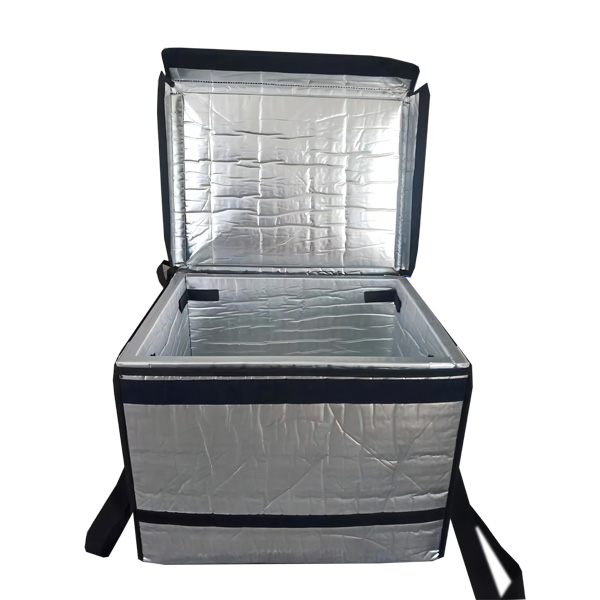
Selecting a 30 Liter Vaccine Ice Box Supplier: A Requirement-to-Evidence Guide
The most useful way to select a 30 liter vaccine ice box supplier is to move through a requirement-to-evidence sequence. First define the product and temperature need. Then model payload and coolant space, map the route and handling risks, select construction, and decide what testing or documentation must support approval. This sequence keeps commercial discussions anchored to the application rather than to broad claims about liters, insulation, duration, or price.
For routine vaccine transport, outreach sessions, depot transfers, and controlled last-mile distribution, procurement, operations, engineering, and quality teams should work from the same controlled brief. A vaccine ice box is not automatically suitable for every vaccine. The approved storage or transport condition, product stability information, program guidance, route, and packout must be confirmed. The sections below combine buyer, engineering, operational, and supplier-control perspectives into one decision path, ending with implementation checks that help the approved sample remain representative of production and real use.
| Decision answer: Select the vaccine ice box only after confirming the payload, usable geometry, temperature requirement, route, coolant, handling, evidence, and production controls. A vaccine ice box is not automatically suitable for every vaccine. The approved storage or transport condition, product stability information, program guidance, route, and packout must be confirmed. |
|---|
Move From Need to Evidence in a Controlled Sequence
A controlled decision can be organized into four gates. Gate one defines the product and required condition. Gate two confirms that payload, coolant, internal geometry, handling, and route fit the proposed box. Gate three evaluates evidence, including drawings, material data, test reports, manufacturing controls, and application limits. Gate four approves implementation, including instructions, monitoring, receiving, change control, and supplier responsibilities. A project should not move forward merely because one gate looks strong while another remains undefined.
The gates also create useful ownership. Operations can define the route and work method; engineering can review geometry, materials, and failure modes; quality can set evidence and deviation rules; procurement can compare scope and commercial terms. For immunization program teams, healthcare procurement, quality staff, and medical logistics buyers, this shared structure reduces repeated clarification and makes quotations comparable. It also exposes when a request is still a concept rather than a purchase-ready specification. The final approval record should show what was confirmed, by whom, using which evidence, and for which application boundary.
- Gate 1 – Product, temperature condition, sensitivity, and consequence of failure
- Gate 2 – Payload envelope, coolant, route, handling, hygiene, and user fit
- Gate 3 – Materials, drawings, tests, quality controls, and stated limitations
- Gate 4 – Pilot, instructions, monitoring, receiving, change control, and launch approval
A Useful Specification Starts With the Job
Write a user requirement that another team could apply without hearing the original sales discussion. Identify the payload, packaging, initial condition, required temperature condition, maximum time, delay allowance, ambient exposure, openings, vehicle or carrier, handling, cleaning, and receiving decision. For routine vaccine transport, outreach sessions, depot transfers, and controlled last-mile distribution, also state the consequence of a failure and whether the shipment can be replaced, quarantined, or investigated without major disruption.
Turn the primary objective – support the required vaccine temperature condition without exposing freeze-sensitive products to uncontrolled contact with frozen coolant – into measurable acceptance points. Separate functions supplied by the physical container from those supplied by coolant, monitoring, work instructions, the carrier, and receiving. Then assign owners for unresolved assumptions. A controlled user requirement prevents the final approval from depending on vague phrases such as durable, medical, food grade, leakproof, long lasting, or suitable for cold chain.
- Defined payload, packaging, quantity, mass, and temperature condition
- Normal lane plus delay, seasonal, opening, and handover assumptions
- Packout components, conditioning, placement, and loaded configuration
- Handling, restraint, hygiene, labels, monitoring, and receiving decisions
- Required drawings, test evidence, production controls, and change ownership
Close the Application-Specific Approval Gaps
The approval record should resolve the project-specific risks before commercial release: using an ordinary food cooler, treating thirty liters as usable vaccine volume, direct contact with frozen packs, and omitting monitoring or transport records. It should also state how the proposed configuration will support the required vaccine temperature condition without exposing freeze-sensitive products to uncontrolled contact with frozen coolant. These are not background comments; they are requirements that need an owner, evidence, and an acceptance decision. Where a condition cannot yet be proven, the record should identify the remaining test, pilot, or quality action.
Use an application matrix that connects insulation continuity, coolant separation, lid sealing, internal geometry, cleanable surfaces, and durability under outreach handling with the route, handling, hygiene, monitoring, and supplier controls. Include the three decisive points: Many refrigerated vaccines are managed around 2°C to 8°C, but the correct condition must be confirmed for each product and program. Use the qualified packing method and keep frozen coolant from uncontrolled direct contact with freeze-sensitive vaccine containers. Provide a digital data logger or other monitoring approach required by the program, and retain the transport record. The final choice should be explainable to procurement, quality, operations, and the supplier without relying on a sales presentation or personal memory.
Freeze Protection Matters as Much as Cooling
The approval record should close three application-specific gaps before the project moves to production or launch.
- Approval requirement: Many refrigerated vaccines are managed around 2°C to 8°C, but the correct condition must be confirmed for each product and program.
- Approval requirement: Use the qualified packing method and keep frozen coolant from uncontrolled direct contact with freeze-sensitive vaccine containers.
- Approval requirement: Provide a digital data logger or other monitoring approach required by the program, and retain the transport record.
Assign an owner and supporting evidence to each requirement. If one remains uncertain, keep it as an open approval item rather than hiding the uncertainty inside a broad supplier claim.
| Decision gate | Project-specific confirmation | Acceptable evidence | Owner |
|---|---|---|---|
| Product requirement | Support the required vaccine temperature condition without exposing freeze-sensitive products to uncontrolled contact with frozen coolant | Approved user requirement and product information | Product and quality teams |
| Physical and operating fit | 30-liter; secure closure, upright transport where required, clear labeling, stable packout, protected monitoring device, and controlled opening | Packout drawing, sample trial, route observation, and cleaning review | Engineering and operations |
| Performance boundary | A vaccine ice box is not automatically suitable for every vaccine. The approved storage or transport condition, product stability information, program guidance, route, and packout must be confirmed. | Traceable thermal, mechanical, monitoring, and application evidence | Engineering and quality |
| Supplier control | Qualified container or packout information, thermal test conditions, loading diagrams, instructions, monitoring provisions, and change-control documentation | Control plan, records, audit evidence, and change agreement | Procurement and quality |
| Implementation | Use the qualified packing method and keep frozen coolant from uncontrolled direct contact with freeze-sensitive vaccine containers. | Approved pilot, instructions, training, receiving, and escalation plan | Operations and quality |
| Lifecycle decision | usable vaccine capacity, coolant preparation labor, monitoring, training, replacement risk, route reliability, and documentation effort; reusable containers and coolant only when cleaning, inspection, reconditioning, and return control are dependable | Comparable business case and periodic performance review | Procurement and operations |
Define Temperature Performance With Conditions Attached
Convert thermal claims into approval statements with conditions attached. The specification should identify the required product range, packout revision, payload range, coolant and conditioning, ambient profile, duration and delay margin, openings, sensor plan, and acceptance criterion. Where different seasons use different packouts, approve each configuration explicitly rather than treating them as informal operator adjustments.
Create an evidence ladder. Start with design calculations or development comparison, move to representative laboratory testing, add lane qualification when the risk requires it, and use operational monitoring to verify controlled use. Each step answers a different question. Approval should be based on the level that matches product value, sensitivity, regulatory context, recoverability, and route variability, not on the most impressive certificate name in a proposal.
Confirm the Real Payload Envelope
Convert the catalog description into a controlled payload envelope. Request clear internal length, width, and height at the points where the payload actually sits, then place the intended coolant, separators, racks, monitor, and product in a drawing or physical trial. A 30-liter rating describes nominal space; it does not state how many saleable units, vaccine cartons, specimens, or dairy packs can be loaded without disturbing the approved arrangement.
Approval should cover external footprint and loaded mass as well as internal fit. The proposed container has to enter the vehicle, pass through doors, sit securely, allow the lid to close without compression, and remain manageable at delivery. Where summer and winter packouts differ, document both. The accepted specification should state the usable payload for the defined configuration and identify any dimensional tolerance that could change packing, restraint, or thermal performance.
Create an Evidence Ladder for the Decision
Organize approval evidence by the decision it supports. Drawings and material records establish what the product is. Mechanical tests address handling and restraint. Thermal development tests compare designs. Qualification tests a defined packout against an approved requirement. Route monitoring shows how the controlled method behaves under operational variability. The approval record should identify which level is required and why, rather than accepting a collection of unrelated reports.
Before relying on any report, compare the tested version, payload, coolant, conditioning, initial temperatures, ambient profile, duration, openings, orientation, sensors, acceptance criteria, and deviations with the planned use. Record gaps and decide whether they are acceptable, require analysis, or require additional testing. A report name or pass statement is not enough. The supported conclusion must remain traceable to the configuration that procurement and production will actually purchase.
Select the Supplier and the Control System Together
Evaluate the proposed manufacturer against the approved requirement, not against a generic supplier questionnaire. Confirm whether the offer covers the box only or a wider scope that includes coolant, inserts, packout drawings, testing, qualification support, monitoring, labels, spare parts, training, and deviation assistance. Request qualified container or packout information, thermal test conditions, loading diagrams, instructions, monitoring provisions, and change-control documentation. Every important claim should point to a controlled document, sample, test condition, or production control.
Complete commercial and quality due diligence together. Review approved material sources, critical processes, inspection records, calibration, tooling maintenance, nonconformance, corrective action, subcontracted components, and engineering change notification. Agree who owns drawings, molds, product revisions, records, and retesting decisions. A supplier is ready for approval when it can recreate the accepted configuration and explain how changes will be evaluated before they reach a shipment.
- Scope of supply, documentation, testing, qualification, and support
- Controlled specification, approved sample, bill of materials, and revision link
- Critical processes, inspections, records, calibration, and corrective action
- Subcontractor control, tooling maintenance, substitutions, and change notification
- Commercial responsibility for defects, rework, spare parts, and future orders
Pilot, Approve, Launch, and Review
Implementation should move from representative sample to controlled pilot before full production or route launch. Confirm the exact bill of materials, drawings, colors, markings, accessories, packaging, and instructions. Use the pilot to test packing time, user errors, loaded ergonomics, vehicle fit, restraint, cleaning, monitoring, and receiving. For a temperature-controlled application, verify that the pilot follows the intended coolant and payload configuration rather than an easier demonstration setup.
After approval, freeze the critical specification and define change control. Train packers, drivers, couriers, cleaners, and receivers on the parts of the process they own. Establish a first-production review and monitor early shipments for recurring issues. A launch should include escalation contacts and a method for segregating suspect boxes or components. Periodic review can use damage, deviation, return, cleaning, and temperature data to refine the system without weakening the qualified or approved boundary.
Build a Cost Model Around Risk and Utilization
Build a risk-adjusted business case with one-time, recurring, and failure costs separated. One-time items may include design, tooling, samples, validation, and launch. Recurring items can include units, coolant, monitoring, labor, cleaning, freight, inspection, storage, and replacement. Failure costs may include product hold, reshipment, deviation investigation, customer disruption, and lost route capacity. Use project data or clearly identified assumptions rather than a generic savings percentage.
Compare alternatives on the same approved scope. A lower unit price is not lower cost if usable space is poor, freight cube is high, packout labor is slow, or quality escapes are frequent. A technically stronger design is not automatically better if it adds cost without addressing a route risk. The approval team should document the trade-off it is accepting and the operating measure that will show whether the expected value is achieved.
Applying the Decision Path to a Typical Project
Apply the full decision path to a typical project. An outreach team plans a same-day route with several handovers. The nominal box volume appears sufficient, but coolant, spacers, monitor placement, and access discipline reduce the usable vaccine space. The cross-functional team first approves the user requirement, then confirms payload and coolant fit with a physical sample. It records loaded handling, route exposure, hygiene, monitoring, and receiving needs before selecting the evidence level and commercial scope.
The chosen manufacturer supplies controlled drawings, materials, test reports, and a pilot batch. Procurement compares the quotation against the approved scope; quality checks change control and acceptance criteria; operations runs the pilot with normal users. Launch occurs only after unresolved gaps have owners and dates. The final record links the requirement, configuration, evidence, instructions, and production version so future changes can be assessed coherently.
Final Procurement Questions
What must be approved before the purchase order is released?
Approve the user requirement, product revision, internal and external dimensions, materials, packout components, test or qualification basis, critical inspection criteria, labels, packaging, documentation, commercial scope, and change-control responsibilities. For temperature-sensitive use, also approve the payload, coolant conditioning, ambient and duration assumptions, sensor plan, operating instructions, receiving criteria, and unresolved limitations.
How is an approved sample kept consistent with production?
Link the sample to controlled drawings, bill of materials, approved material sources, process settings, critical dimensions, inspection methods, and a pilot batch. Retain a reference sample where useful, but do not rely on appearance alone. The supplier should notify the buyer before changes to tooling, resin, insulation, hardware, seal, insert, coolant, subcontractor, process, or packaging that could affect function.
Who owns qualification and compliance decisions?
Responsibility should be allocated in the project agreement. The supplier can provide accurate product data, samples, reports, and technical support; the buyer normally defines the product limits, lane, acceptance criteria, quality system, and applicable market obligations. A contract manufacturer or testing laboratory may perform work, but that does not remove the need for the product owner and quality team to approve suitability.
When is a custom design justified?
Customization is justified when a standard product cannot meet critical payload geometry, usable capacity, restraint, cleaning, branding, route, accessory, or operating needs. Compare the value with tooling, development time, MOQ, change risk, test requirements, spare parts, and future revisions. A custom shape should solve a documented requirement rather than add complexity that can be handled with an insert or process change.
Why can frozen coolant be risky for vaccine transport?
Some refrigerated vaccines are freeze-sensitive. Direct or poorly controlled contact with frozen packs can expose local cartons or vials to temperatures below the approved condition even while the rest of the box appears cold. Follow the vaccine product information and immunization-program packing method, use the required barriers or conditioned coolant, position the monitor correctly, and retain the transport record.
Conclusion: Approve a System You Can Explain and Repeat
A suitable 30 liter vaccine ice box supplier is the result of disciplined specification rather than a single feature. The most reliable decision connects payload, temperature condition, route, usable space, construction, coolant, handling, hygiene, evidence, production control, and operating ownership. When those elements are explicit, procurement can compare offers fairly and operations can repeat the approved method without relying on memory or broad sales language.
- Start with the product and lane, then confirm physical fit and packout.
- Match the required evidence to the risk and application boundary.
- Approve supplier controls, implementation, monitoring, and change management together.
- Maintain one traceable link from requirement to evidence to operating instruction.
About Tempk
Tempk is a Shanghai-based cold-chain packaging company established in 2011. Its publicly presented range includes gel and water-based ice packs, EPP and plastic insulated boxes, vacuum-insulated solutions, insulated bags and liners, pallet covers, and temperature-monitoring products. For a project, Tempk can review the product type, required temperature condition, payload, route, season, handling, and receiving process before discussing a standard or customized configuration. Final suitability still depends on the buyer’s application review, testing, qualification, and operating controls.
Project Discussion
For a more useful quotation, provide Tempk with the packout dimensions, operating lane, handling conditions, documentation needs, and customization priorities.
30 Liter Industrial Ice Box Manufacturer: Specification Guide
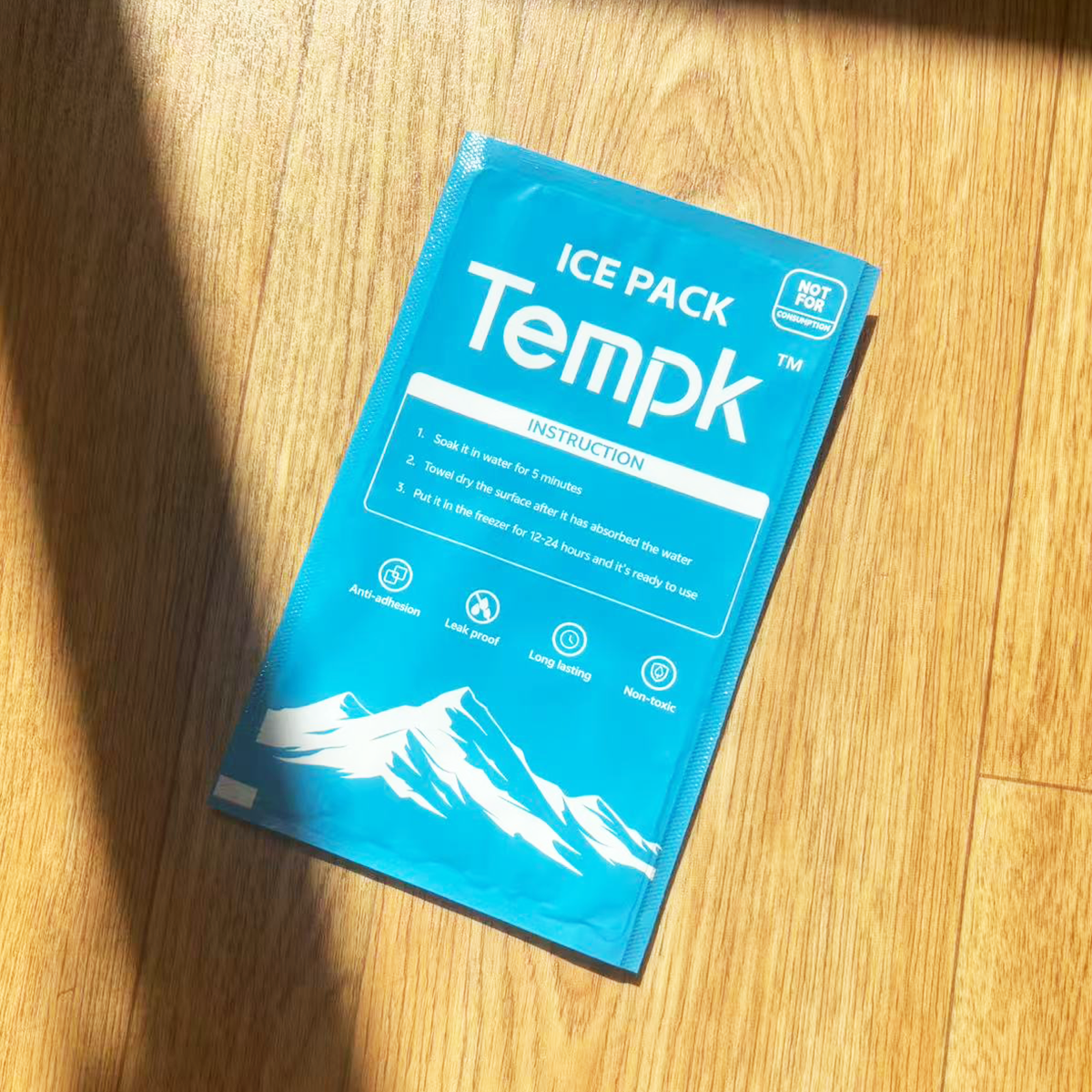
Selecting a 30 Liter Industrial Ice Box Manufacturer: A Requirement-to-Evidence Guide
The most useful way to select a 30 liter industrial ice box manufacturer is to move through a requirement-to-evidence sequence. First define the product and temperature need. Then model payload and coolant space, map the route and handling risks, select construction, and decide what testing or documentation must support approval. This sequence keeps commercial discussions anchored to the application rather than to broad claims about liters, insulation, duration, or price.
For industrial service, samples, food support, laboratory logistics, field work, and regional delivery, procurement, operations, engineering, and quality teams should work from the same controlled brief. A thirty-liter industrial box is a platform. The required packout, temperature range, monitoring, and qualification depend on the payload and route. The sections below combine buyer, engineering, operational, and supplier-control perspectives into one decision path, ending with implementation checks that help the approved sample remain representative of production and real use.
| Decision answer: Select the industrial ice box only after confirming the payload, usable geometry, temperature requirement, route, coolant, handling, evidence, and production controls. A thirty-liter industrial box is a platform. The required packout, temperature range, monitoring, and qualification depend on the payload and route. |
|---|
Move From Need to Evidence in a Controlled Sequence
A controlled decision can be organized into four gates. Gate one defines the product and required condition. Gate two confirms that payload, coolant, internal geometry, handling, and route fit the proposed box. Gate three evaluates evidence, including drawings, material data, test reports, manufacturing controls, and application limits. Gate four approves implementation, including instructions, monitoring, receiving, change control, and supplier responsibilities. A project should not move forward merely because one gate looks strong while another remains undefined.
The gates also create useful ownership. Operations can define the route and work method; engineering can review geometry, materials, and failure modes; quality can set evidence and deviation rules; procurement can compare scope and commercial terms. For operations teams, industrial distributors, procurement managers, and OEM buyers, this shared structure reduces repeated clarification and makes quotations comparable. It also exposes when a request is still a concept rather than a purchase-ready specification. The final approval record should show what was confirmed, by whom, using which evidence, and for which application boundary.
- Gate 1 – Product, temperature condition, sensitivity, and consequence of failure
- Gate 2 – Payload envelope, coolant, route, handling, hygiene, and user fit
- Gate 3 – Materials, drawings, tests, quality controls, and stated limitations
- Gate 4 – Pilot, instructions, monitoring, receiving, change control, and launch approval
A Useful Specification Starts With the Job
Write a user requirement that another team could apply without hearing the original sales discussion. Identify the payload, packaging, initial condition, required temperature condition, maximum time, delay allowance, ambient exposure, openings, vehicle or carrier, handling, cleaning, and receiving decision. For industrial service, samples, food support, laboratory logistics, field work, and regional delivery, also state the consequence of a failure and whether the shipment can be replaced, quarantined, or investigated without major disruption.
Turn the primary objective – provide a versatile mid-size insulated box that remains consistent under repeated industrial handling – into measurable acceptance points. Separate functions supplied by the physical container from those supplied by coolant, monitoring, work instructions, the carrier, and receiving. Then assign owners for unresolved assumptions. A controlled user requirement prevents the final approval from depending on vague phrases such as durable, medical, food grade, leakproof, long lasting, or suitable for cold chain.
- Defined payload, packaging, quantity, mass, and temperature condition
- Normal lane plus delay, seasonal, opening, and handover assumptions
- Packout components, conditioning, placement, and loaded configuration
- Handling, restraint, hygiene, labels, monitoring, and receiving decisions
- Required drawings, test evidence, production controls, and change ownership
Close the Application-Specific Approval Gaps
The approval record should resolve the project-specific risks before commercial release: selecting a catalog size without payload modeling, weak handle or hinge design, inconsistent insulation, and unclear application limits. It should also state how the proposed configuration will provide a versatile mid-size insulated box that remains consistent under repeated industrial handling. These are not background comments; they are requirements that need an owner, evidence, and an acceptance decision. Where a condition cannot yet be proven, the record should identify the remaining test, pilot, or quality action.
Use an application matrix that connects impact resistance, insulation consistency, lid and seal fit, hinge attachment, handle load path, and corner durability with the route, handling, hygiene, monitoring, and supplier controls. Include the three decisive points: Define the approved payload families and do not assume one packout fits every product. Measure the internal envelope after insulation, coolant, racks, and dividers are included. Inspect the handle, hinge, lid, and stack surfaces because industrial damage often begins at interfaces. The final choice should be explainable to procurement, quality, operations, and the supplier without relying on a sales presentation or personal memory.
Capacity Must Be Proven With a Packout
Convert the catalog description into a controlled payload envelope. Request clear internal length, width, and height at the points where the payload actually sits, then place the intended coolant, separators, racks, monitor, and product in a drawing or physical trial. A 30-liter rating describes nominal space; it does not state how many saleable units, vaccine cartons, specimens, or dairy packs can be loaded without disturbing the approved arrangement.
Approval should cover external footprint and loaded mass as well as internal fit. The proposed container has to enter the vehicle, pass through doors, sit securely, allow the lid to close without compression, and remain manageable at delivery. Where summer and winter packouts differ, document both. The accepted specification should state the usable payload for the defined configuration and identify any dimensional tolerance that could change packing, restraint, or thermal performance.
| Decision gate | Project-specific confirmation | Acceptable evidence | Owner |
|---|---|---|---|
| Product requirement | Provide a versatile mid-size insulated box that remains consistent under repeated industrial handling | Approved user requirement and product information | Product and quality teams |
| Physical and operating fit | 30-liter; balanced lifting, stable stacking, closure security, abrasion resistance, restraint, and accessible loading | Packout drawing, sample trial, route observation, and cleaning review | Engineering and operations |
| Performance boundary | A thirty-liter industrial box is a platform. The required packout, temperature range, monitoring, and qualification depend on the payload and route. | Traceable thermal, mechanical, monitoring, and application evidence | Engineering and quality |
| Supplier control | Drawings, materials, manufacturing controls, functional test methods, thermal conditions, and production records | Control plan, records, audit evidence, and change agreement | Procurement and quality |
| Implementation | Measure the internal envelope after insulation, coolant, racks, and dividers are included. | Approved pilot, instructions, training, receiving, and escalation plan | Operations and quality |
| Lifecycle decision | capacity utilization, handling labor, accessories, freight, defect control, replacement, and test support; durable repeated use, common replaceable accessories, efficient transport cube, and controlled cleaning | Comparable business case and periodic performance review | Procurement and operations |
Versatility Requires Clear Application Boundaries
The approval record should close three application-specific gaps before the project moves to production or launch.
- Approval requirement: Define the approved payload families and do not assume one packout fits every product.
- Approval requirement: Measure the internal envelope after insulation, coolant, racks, and dividers are included.
- Approval requirement: Inspect the handle, hinge, lid, and stack surfaces because industrial damage often begins at interfaces.
Assign an owner and supporting evidence to each requirement. If one remains uncertain, keep it as an open approval item rather than hiding the uncertainty inside a broad supplier claim.
Define Temperature Performance With Conditions Attached
Convert thermal claims into approval statements with conditions attached. The specification should identify the required product range, packout revision, payload range, coolant and conditioning, ambient profile, duration and delay margin, openings, sensor plan, and acceptance criterion. Where different seasons use different packouts, approve each configuration explicitly rather than treating them as informal operator adjustments.
Create an evidence ladder. Start with design calculations or development comparison, move to representative laboratory testing, add lane qualification when the risk requires it, and use operational monitoring to verify controlled use. Each step answers a different question. Approval should be based on the level that matches product value, sensitivity, regulatory context, recoverability, and route variability, not on the most impressive certificate name in a proposal.
Procurement Should Test the Supplier’s Process
Evaluate the proposed manufacturer against the approved requirement, not against a generic supplier questionnaire. Confirm whether the offer covers the box only or a wider scope that includes coolant, inserts, packout drawings, testing, qualification support, monitoring, labels, spare parts, training, and deviation assistance. Request drawings, materials, manufacturing controls, functional test methods, thermal conditions, and production records. Every important claim should point to a controlled document, sample, test condition, or production control.
Complete commercial and quality due diligence together. Review approved material sources, critical processes, inspection records, calibration, tooling maintenance, nonconformance, corrective action, subcontracted components, and engineering change notification. Agree who owns drawings, molds, product revisions, records, and retesting decisions. A supplier is ready for approval when it can recreate the accepted configuration and explain how changes will be evaluated before they reach a shipment.
- Scope of supply, documentation, testing, qualification, and support
- Controlled specification, approved sample, bill of materials, and revision link
- Critical processes, inspections, records, calibration, and corrective action
- Subcontractor control, tooling maintenance, substitutions, and change notification
- Commercial responsibility for defects, rework, spare parts, and future orders
Create an Evidence Ladder for the Decision
Organize approval evidence by the decision it supports. Drawings and material records establish what the product is. Mechanical tests address handling and restraint. Thermal development tests compare designs. Qualification tests a defined packout against an approved requirement. Route monitoring shows how the controlled method behaves under operational variability. The approval record should identify which level is required and why, rather than accepting a collection of unrelated reports.
Before relying on any report, compare the tested version, payload, coolant, conditioning, initial temperatures, ambient profile, duration, openings, orientation, sensors, acceptance criteria, and deviations with the planned use. Record gaps and decide whether they are acceptable, require analysis, or require additional testing. A report name or pass statement is not enough. The supported conclusion must remain traceable to the configuration that procurement and production will actually purchase.
Pilot, Approve, Launch, and Review
Implementation should move from representative sample to controlled pilot before full production or route launch. Confirm the exact bill of materials, drawings, colors, markings, accessories, packaging, and instructions. Use the pilot to test packing time, user errors, loaded ergonomics, vehicle fit, restraint, cleaning, monitoring, and receiving. For a temperature-controlled application, verify that the pilot follows the intended coolant and payload configuration rather than an easier demonstration setup.
After approval, freeze the critical specification and define change control. Train packers, drivers, couriers, cleaners, and receivers on the parts of the process they own. Establish a first-production review and monitor early shipments for recurring issues. A launch should include escalation contacts and a method for segregating suspect boxes or components. Periodic review can use damage, deviation, return, cleaning, and temperature data to refine the system without weakening the qualified or approved boundary.
Build a Cost Model Around Risk and Utilization
Build a risk-adjusted business case with one-time, recurring, and failure costs separated. One-time items may include design, tooling, samples, validation, and launch. Recurring items can include units, coolant, monitoring, labor, cleaning, freight, inspection, storage, and replacement. Failure costs may include product hold, reshipment, deviation investigation, customer disruption, and lost route capacity. Use project data or clearly identified assumptions rather than a generic savings percentage.
Compare alternatives on the same approved scope. A lower unit price is not lower cost if usable space is poor, freight cube is high, packout labor is slow, or quality escapes are frequent. A technically stronger design is not automatically better if it adds cost without addressing a route risk. The approval team should document the trade-off it is accepting and the operating measure that will show whether the expected value is achieved.
Applying the Decision Path to a Typical Project
Apply the full decision path to a typical project. A field-service buyer wants one box for both chilled consumables and technical samples. The shared outer format is possible, but internal accessories and operating instructions must remain application-specific. The cross-functional team first approves the user requirement, then confirms payload and coolant fit with a physical sample. It records loaded handling, route exposure, hygiene, monitoring, and receiving needs before selecting the evidence level and commercial scope.
The chosen manufacturer supplies controlled drawings, materials, test reports, and a pilot batch. Procurement compares the quotation against the approved scope; quality checks change control and acceptance criteria; operations runs the pilot with normal users. Launch occurs only after unresolved gaps have owners and dates. The final record links the requirement, configuration, evidence, instructions, and production version so future changes can be assessed coherently.
Final Procurement Questions
What must be approved before the purchase order is released?
Approve the user requirement, product revision, internal and external dimensions, materials, packout components, test or qualification basis, critical inspection criteria, labels, packaging, documentation, commercial scope, and change-control responsibilities. For temperature-sensitive use, also approve the payload, coolant conditioning, ambient and duration assumptions, sensor plan, operating instructions, receiving criteria, and unresolved limitations.
How is an approved sample kept consistent with production?
Link the sample to controlled drawings, bill of materials, approved material sources, process settings, critical dimensions, inspection methods, and a pilot batch. Retain a reference sample where useful, but do not rely on appearance alone. The supplier should notify the buyer before changes to tooling, resin, insulation, hardware, seal, insert, coolant, subcontractor, process, or packaging that could affect function.
Who owns qualification and compliance decisions?
Responsibility should be allocated in the project agreement. The supplier can provide accurate product data, samples, reports, and technical support; the buyer normally defines the product limits, lane, acceptance criteria, quality system, and applicable market obligations. A contract manufacturer or testing laboratory may perform work, but that does not remove the need for the product owner and quality team to approve suitability.
When is a custom design justified?
Customization is justified when a standard product cannot meet critical payload geometry, usable capacity, restraint, cleaning, branding, route, accessory, or operating needs. Compare the value with tooling, development time, MOQ, change risk, test requirements, spare parts, and future revisions. A custom shape should solve a documented requirement rather than add complexity that can be handled with an insert or process change.
What is the most important limitation of a industrial ice box?
A thirty-liter industrial box is a platform. The required packout, temperature range, monitoring, and qualification depend on the payload and route. The buyer should therefore avoid treating a capacity label, material name, or generic duration as a complete performance statement. Confirm the payload, coolant, route, openings, ambient exposure, handling, monitoring, test conditions, and receiving decision that define the intended use.
Conclusion: Approve a System You Can Explain and Repeat
A suitable 30 liter industrial ice box manufacturer is the result of disciplined specification rather than a single feature. The most reliable decision connects payload, temperature condition, route, usable space, construction, coolant, handling, hygiene, evidence, production control, and operating ownership. When those elements are explicit, procurement can compare offers fairly and operations can repeat the approved method without relying on memory or broad sales language.
- Start with the product and lane, then confirm physical fit and packout.
- Match the required evidence to the risk and application boundary.
- Approve supplier controls, implementation, monitoring, and change management together.
- Maintain one traceable link from requirement to evidence to operating instruction.
About Tempk
Tempk is a Shanghai-based cold-chain packaging company established in 2011. Its publicly presented range includes gel and water-based ice packs, EPP and plastic insulated boxes, vacuum-insulated solutions, insulated bags and liners, pallet covers, and temperature-monitoring products. For a project, Tempk can review the product type, required temperature condition, payload, route, season, handling, and receiving process before discussing a standard or customized configuration. Final suitability still depends on the buyer’s application review, testing, qualification, and operating controls.
Next Step
For a more useful quotation, provide Tempk with the packout dimensions, operating lane, handling conditions, documentation needs, and customization priorities.
25 Liter Industrial Ice Box Manufacturer: Specification Guide
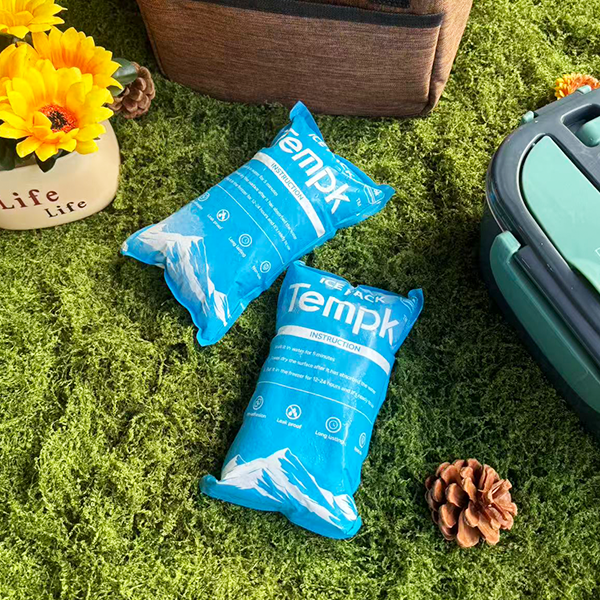
Selecting a 25 Liter Industrial Ice Box Manufacturer: A Requirement-to-Evidence Guide
The most useful way to select a 25 liter industrial ice box manufacturer is to move through a requirement-to-evidence sequence. First define the product and temperature need. Then model payload and coolant space, map the route and handling risks, select construction, and decide what testing or documentation must support approval. This sequence keeps commercial discussions anchored to the application rather than to broad claims about liters, insulation, duration, or price.
For technical service, industrial samples, mobile maintenance, food operations, and controlled short-route logistics, procurement, operations, engineering, and quality teams should work from the same controlled brief. An industrial ice box protects against heat transfer; it does not establish a validated temperature condition without a defined coolant and packing system. The sections below combine buyer, engineering, operational, and supplier-control perspectives into one decision path, ending with implementation checks that help the approved sample remain representative of production and real use.
| Decision answer: Select the industrial ice box only after confirming the payload, usable geometry, temperature requirement, route, coolant, handling, evidence, and production controls. An industrial ice box protects against heat transfer; it does not establish a validated temperature condition without a defined coolant and packing system. |
|---|
Move From Need to Evidence in a Controlled Sequence
A controlled decision can be organized into four gates. Gate one defines the product and required condition. Gate two confirms that payload, coolant, internal geometry, handling, and route fit the proposed box. Gate three evaluates evidence, including drawings, material data, test reports, manufacturing controls, and application limits. Gate four approves implementation, including instructions, monitoring, receiving, change control, and supplier responsibilities. A project should not move forward merely because one gate looks strong while another remains undefined.
The gates also create useful ownership. Operations can define the route and work method; engineering can review geometry, materials, and failure modes; quality can set evidence and deviation rules; procurement can compare scope and commercial terms. For industrial buyers, distributors, operations managers, and OEM sourcing teams, this shared structure reduces repeated clarification and makes quotations comparable. It also exposes when a request is still a concept rather than a purchase-ready specification. The final approval record should show what was confirmed, by whom, using which evidence, and for which application boundary.
- Gate 1 – Product, temperature condition, sensitivity, and consequence of failure
- Gate 2 – Payload envelope, coolant, route, handling, hygiene, and user fit
- Gate 3 – Materials, drawings, tests, quality controls, and stated limitations
- Gate 4 – Pilot, instructions, monitoring, receiving, change control, and launch approval
Begin With a Clear User Requirement
Write a user requirement that another team could apply without hearing the original sales discussion. Identify the payload, packaging, initial condition, required temperature condition, maximum time, delay allowance, ambient exposure, openings, vehicle or carrier, handling, cleaning, and receiving decision. For technical service, industrial samples, mobile maintenance, food operations, and controlled short-route logistics, also state the consequence of a failure and whether the shipment can be replaced, quarantined, or investigated without major disruption.
Turn the primary objective – deliver a compact but robust insulated container with predictable geometry and repeatable production quality – into measurable acceptance points. Separate functions supplied by the physical container from those supplied by coolant, monitoring, work instructions, the carrier, and receiving. Then assign owners for unresolved assumptions. A controlled user requirement prevents the final approval from depending on vague phrases such as durable, medical, food grade, leakproof, long lasting, or suitable for cold chain.
- Defined payload, packaging, quantity, mass, and temperature condition
- Normal lane plus delay, seasonal, opening, and handover assumptions
- Packout components, conditioning, placement, and loaded configuration
- Handling, restraint, hygiene, labels, monitoring, and receiving decisions
- Required drawings, test evidence, production controls, and change ownership
Close the Application-Specific Approval Gaps
The approval record should resolve the project-specific risks before commercial release: buying by nominal liters, underestimating loaded weight, selecting brittle construction, and accepting inconsistent production walls or seals. It should also state how the proposed configuration will deliver a compact but robust insulated container with predictable geometry and repeatable production quality. These are not background comments; they are requirements that need an owner, evidence, and an acceptance decision. Where a condition cannot yet be proven, the record should identify the remaining test, pilot, or quality action.
Use an application matrix that connects impact behavior, foam density control, molded-wall consistency, lid fit, hinge design, and thermal bridge management with the route, handling, hygiene, monitoring, and supplier controls. Include the three decisive points: Check the loaded lifting posture and handle clearance in the actual vehicle and workplace. Inspect corner thickness, hinge attachment, lid alignment, and seal compression on production samples. Define whether the box is for general chilled handling or a documented temperature-controlled application. The final choice should be explainable to procurement, quality, operations, and the supplier without relying on a sales presentation or personal memory.
Convert Nominal Volume Into Usable Space
Convert the catalog description into a controlled payload envelope. Request clear internal length, width, and height at the points where the payload actually sits, then place the intended coolant, separators, racks, monitor, and product in a drawing or physical trial. A 25-liter rating describes nominal space; it does not state how many saleable units, vaccine cartons, specimens, or dairy packs can be loaded without disturbing the approved arrangement.
Approval should cover external footprint and loaded mass as well as internal fit. The proposed container has to enter the vehicle, pass through doors, sit securely, allow the lid to close without compression, and remain manageable at delivery. Where summer and winter packouts differ, document both. The accepted specification should state the usable payload for the defined configuration and identify any dimensional tolerance that could change packing, restraint, or thermal performance.
| Decision gate | Project-specific confirmation | Acceptable evidence | Owner |
|---|---|---|---|
| Product requirement | Deliver a compact but robust insulated container with predictable geometry and repeatable production quality | Approved user requirement and product information | Product and quality teams |
| Physical and operating fit | 25-liter; ergonomic carrying, stable footprint, closure security, abrasion resistance, and optional vehicle restraint | Packout drawing, sample trial, route observation, and cleaning review | Engineering and operations |
| Performance boundary | An industrial ice box protects against heat transfer; it does not establish a validated temperature condition without a defined coolant and packing system. | Traceable thermal, mechanical, monitoring, and application evidence | Engineering and quality |
| Supplier control | Drawings, resin and insulation specifications, dimensional samples, drop or handling test methods, and lot inspection records | Control plan, records, audit evidence, and change agreement | Procurement and quality |
| Implementation | Inspect corner thickness, hinge attachment, lid alignment, and seal compression on production samples. | Approved pilot, instructions, training, receiving, and escalation plan | Operations and quality |
| Lifecycle decision | tooling allocation, materials, order quantity, freight efficiency, damage replacement, and operational fit; durable construction, replaceable hardware, efficient nesting or stacking, and avoiding oversized coolant loads | Comparable business case and periodic performance review | Procurement and operations |
Compact Size Does Not Remove Industrial Demands
The approval record should close three application-specific gaps before the project moves to production or launch.
- Approval requirement: Check the loaded lifting posture and handle clearance in the actual vehicle and workplace.
- Approval requirement: Inspect corner thickness, hinge attachment, lid alignment, and seal compression on production samples.
- Approval requirement: Define whether the box is for general chilled handling or a documented temperature-controlled application.
Assign an owner and supporting evidence to each requirement. If one remains uncertain, keep it as an open approval item rather than hiding the uncertainty inside a broad supplier claim.
Define Temperature Performance With Conditions Attached
Convert thermal claims into approval statements with conditions attached. The specification should identify the required product range, packout revision, payload range, coolant and conditioning, ambient profile, duration and delay margin, openings, sensor plan, and acceptance criterion. Where different seasons use different packouts, approve each configuration explicitly rather than treating them as informal operator adjustments.
Create an evidence ladder. Start with design calculations or development comparison, move to representative laboratory testing, add lane qualification when the risk requires it, and use operational monitoring to verify controlled use. Each step answers a different question. Approval should be based on the level that matches product value, sensitivity, regulatory context, recoverability, and route variability, not on the most impressive certificate name in a proposal.
Procurement Should Test the Supplier’s Process
Evaluate the proposed manufacturer against the approved requirement, not against a generic supplier questionnaire. Confirm whether the offer covers the box only or a wider scope that includes coolant, inserts, packout drawings, testing, qualification support, monitoring, labels, spare parts, training, and deviation assistance. Request drawings, resin and insulation specifications, dimensional samples, drop or handling test methods, and lot inspection records. Every important claim should point to a controlled document, sample, test condition, or production control.
Complete commercial and quality due diligence together. Review approved material sources, critical processes, inspection records, calibration, tooling maintenance, nonconformance, corrective action, subcontracted components, and engineering change notification. Agree who owns drawings, molds, product revisions, records, and retesting decisions. A supplier is ready for approval when it can recreate the accepted configuration and explain how changes will be evaluated before they reach a shipment.
- Scope of supply, documentation, testing, qualification, and support
- Controlled specification, approved sample, bill of materials, and revision link
- Critical processes, inspections, records, calibration, and corrective action
- Subcontractor control, tooling maintenance, substitutions, and change notification
- Commercial responsibility for defects, rework, spare parts, and future orders
Create an Evidence Ladder for the Decision
Organize approval evidence by the decision it supports. Drawings and material records establish what the product is. Mechanical tests address handling and restraint. Thermal development tests compare designs. Qualification tests a defined packout against an approved requirement. Route monitoring shows how the controlled method behaves under operational variability. The approval record should identify which level is required and why, rather than accepting a collection of unrelated reports.
Before relying on any report, compare the tested version, payload, coolant, conditioning, initial temperatures, ambient profile, duration, openings, orientation, sensors, acceptance criteria, and deviations with the planned use. Record gaps and decide whether they are acceptable, require analysis, or require additional testing. A report name or pass statement is not enough. The supported conclusion must remain traceable to the configuration that procurement and production will actually purchase.
Pilot, Approve, Launch, and Review
Implementation should move from representative sample to controlled pilot before full production or route launch. Confirm the exact bill of materials, drawings, colors, markings, accessories, packaging, and instructions. Use the pilot to test packing time, user errors, loaded ergonomics, vehicle fit, restraint, cleaning, monitoring, and receiving. For a temperature-controlled application, verify that the pilot follows the intended coolant and payload configuration rather than an easier demonstration setup.
After approval, freeze the critical specification and define change control. Train packers, drivers, couriers, cleaners, and receivers on the parts of the process they own. Establish a first-production review and monitor early shipments for recurring issues. A launch should include escalation contacts and a method for segregating suspect boxes or components. Periodic review can use damage, deviation, return, cleaning, and temperature data to refine the system without weakening the qualified or approved boundary.
Build a Cost Model Around Risk and Utilization
Build a risk-adjusted business case with one-time, recurring, and failure costs separated. One-time items may include design, tooling, samples, validation, and launch. Recurring items can include units, coolant, monitoring, labor, cleaning, freight, inspection, storage, and replacement. Failure costs may include product hold, reshipment, deviation investigation, customer disruption, and lost route capacity. Use project data or clearly identified assumptions rather than a generic savings percentage.
Compare alternatives on the same approved scope. A lower unit price is not lower cost if usable space is poor, freight cube is high, packout labor is slow, or quality escapes are frequent. A technically stronger design is not automatically better if it adds cost without addressing a route risk. The approval team should document the trade-off it is accepting and the operating measure that will show whether the expected value is achieved.
Applying the Decision Path to a Typical Project
Apply the full decision path to a typical project. A service organization wants a twenty-five-liter box that fits behind a vehicle seat and can be carried through a plant, yet the payload shape and ice-pack arrangement leave less usable room than expected. The cross-functional team first approves the user requirement, then confirms payload and coolant fit with a physical sample. It records loaded handling, route exposure, hygiene, monitoring, and receiving needs before selecting the evidence level and commercial scope.
The chosen manufacturer supplies controlled drawings, materials, test reports, and a pilot batch. Procurement compares the quotation against the approved scope; quality checks change control and acceptance criteria; operations runs the pilot with normal users. Launch occurs only after unresolved gaps have owners and dates. The final record links the requirement, configuration, evidence, instructions, and production version so future changes can be assessed coherently.
Final Procurement Questions
What must be approved before the purchase order is released?
Approve the user requirement, product revision, internal and external dimensions, materials, packout components, test or qualification basis, critical inspection criteria, labels, packaging, documentation, commercial scope, and change-control responsibilities. For temperature-sensitive use, also approve the payload, coolant conditioning, ambient and duration assumptions, sensor plan, operating instructions, receiving criteria, and unresolved limitations.
How is an approved sample kept consistent with production?
Link the sample to controlled drawings, bill of materials, approved material sources, process settings, critical dimensions, inspection methods, and a pilot batch. Retain a reference sample where useful, but do not rely on appearance alone. The supplier should notify the buyer before changes to tooling, resin, insulation, hardware, seal, insert, coolant, subcontractor, process, or packaging that could affect function.
Who owns qualification and compliance decisions?
Responsibility should be allocated in the project agreement. The supplier can provide accurate product data, samples, reports, and technical support; the buyer normally defines the product limits, lane, acceptance criteria, quality system, and applicable market obligations. A contract manufacturer or testing laboratory may perform work, but that does not remove the need for the product owner and quality team to approve suitability.
When is a custom design justified?
Customization is justified when a standard product cannot meet critical payload geometry, usable capacity, restraint, cleaning, branding, route, accessory, or operating needs. Compare the value with tooling, development time, MOQ, change risk, test requirements, spare parts, and future revisions. A custom shape should solve a documented requirement rather than add complexity that can be handled with an insert or process change.
What is the most important limitation of a industrial ice box?
An industrial ice box protects against heat transfer; it does not establish a validated temperature condition without a defined coolant and packing system. The buyer should therefore avoid treating a capacity label, material name, or generic duration as a complete performance statement. Confirm the payload, coolant, route, openings, ambient exposure, handling, monitoring, test conditions, and receiving decision that define the intended use.
Conclusion: Approve a System You Can Explain and Repeat
A suitable 25 liter industrial ice box manufacturer is the result of disciplined specification rather than a single feature. The most reliable decision connects payload, temperature condition, route, usable space, construction, coolant, handling, hygiene, evidence, production control, and operating ownership. When those elements are explicit, procurement can compare offers fairly and operations can repeat the approved method without relying on memory or broad sales language.
- Start with the product and lane, then confirm physical fit and packout.
- Match the required evidence to the risk and application boundary.
- Approve supplier controls, implementation, monitoring, and change management together.
- Maintain one traceable link from requirement to evidence to operating instruction.
About Tempk
Tempk is a Shanghai-based cold-chain packaging company established in 2011. Its publicly presented range includes gel and water-based ice packs, EPP and plastic insulated boxes, vacuum-insulated solutions, insulated bags and liners, pallet covers, and temperature-monitoring products. For a project, Tempk can review the product type, required temperature condition, payload, route, season, handling, and receiving process before discussing a standard or customized configuration. Final suitability still depends on the buyer’s application review, testing, qualification, and operating controls.
Preparing a Useful Inquiry
Discuss the planned product, coolant, route, season, monitoring, and receiving process with Tempk before moving from sample to production.
20 Liter Commercial Ice Box Supplier: Specification Guide

Selecting a 20 Liter Commercial Ice Box Supplier: A Requirement-to-Evidence Guide
The most useful way to select a 20 liter commercial ice box supplier is to move through a requirement-to-evidence sequence. First define the product and temperature need. Then model payload and coolant space, map the route and handling risks, select construction, and decide what testing or documentation must support approval. This sequence keeps commercial discussions anchored to the application rather than to broad claims about liters, insulation, duration, or price.
For last-mile delivery, pharmacy support, small catering runs, sampling, route sales, and field operations, procurement, operations, engineering, and quality teams should work from the same controlled brief. Compact size improves mobility but does not remove the need to define temperature, duration, coolant, opening behavior, and monitoring. The sections below combine buyer, engineering, operational, and supplier-control perspectives into one decision path, ending with implementation checks that help the approved sample remain representative of production and real use.
| Decision answer: Select the compact commercial ice box only after confirming the payload, usable geometry, temperature requirement, route, coolant, handling, evidence, and production controls. Compact size improves mobility but does not remove the need to define temperature, duration, coolant, opening behavior, and monitoring. |
|---|
Use a Requirement-to-Evidence Decision Path
A controlled decision can be organized into four gates. Gate one defines the product and required condition. Gate two confirms that payload, coolant, internal geometry, handling, and route fit the proposed box. Gate three evaluates evidence, including drawings, material data, test reports, manufacturing controls, and application limits. Gate four approves implementation, including instructions, monitoring, receiving, change control, and supplier responsibilities. A project should not move forward merely because one gate looks strong while another remains undefined.
The gates also create useful ownership. Operations can define the route and work method; engineering can review geometry, materials, and failure modes; quality can set evidence and deviation rules; procurement can compare scope and commercial terms. For small-route operators, commercial buyers, distributors, and procurement teams, this shared structure reduces repeated clarification and makes quotations comparable. It also exposes when a request is still a concept rather than a purchase-ready specification. The final approval record should show what was confirmed, by whom, using which evidence, and for which application boundary.
- Gate 1 – Product, temperature condition, sensitivity, and consequence of failure
- Gate 2 – Payload envelope, coolant, route, handling, hygiene, and user fit
- Gate 3 – Materials, drawings, tests, quality controls, and stated limitations
- Gate 4 – Pilot, instructions, monitoring, receiving, change control, and launch approval
Begin With a Clear User Requirement
Write a user requirement that another team could apply without hearing the original sales discussion. Identify the payload, packaging, initial condition, required temperature condition, maximum time, delay allowance, ambient exposure, openings, vehicle or carrier, handling, cleaning, and receiving decision. For last-mile delivery, pharmacy support, small catering runs, sampling, route sales, and field operations, also state the consequence of a failure and whether the shipment can be replaced, quarantined, or investigated without major disruption.
Turn the primary objective – provide a compact insulated container that is easy to carry and fits constrained vehicles while preserving enough usable payload space – into measurable acceptance points. Separate functions supplied by the physical container from those supplied by coolant, monitoring, work instructions, the carrier, and receiving. Then assign owners for unresolved assumptions. A controlled user requirement prevents the final approval from depending on vague phrases such as durable, medical, food grade, leakproof, long lasting, or suitable for cold chain.
- Defined payload, packaging, quantity, mass, and temperature condition
- Normal lane plus delay, seasonal, opening, and handover assumptions
- Packout components, conditioning, placement, and loaded configuration
- Handling, restraint, hygiene, labels, monitoring, and receiving decisions
- Required drawings, test evidence, production controls, and change ownership
Turn the Unique Risks Into Approval Criteria
The approval record should resolve the project-specific risks before commercial release: assuming twenty liters equals twenty liters of sellable payload, overloading the handle, choosing an unstable tall shape, and neglecting coolant displacement. It should also state how the proposed configuration will provide a compact insulated container that is easy to carry and fits constrained vehicles while preserving enough usable payload space. These are not background comments; they are requirements that need an owner, evidence, and an acceptance decision. Where a condition cannot yet be proven, the record should identify the remaining test, pilot, or quality action.
Use an application matrix that connects low-mass but durable shell, insulation continuity, handle attachment, lid alignment, and wear resistance with the route, handling, hygiene, monitoring, and supplier controls. Include the three decisive points: Measure the payload and coolant together, including the space needed to avoid crushing products or blocking the lid. Test the loaded carry in the actual vehicle, doorway, stair, and handover process. Balance insulation thickness with internal space instead of maximizing either one in isolation. The final choice should be explainable to procurement, quality, operations, and the supplier without relying on a sales presentation or personal memory.
Capacity Must Be Proven With a Packout
Convert the catalog description into a controlled payload envelope. Request clear internal length, width, and height at the points where the payload actually sits, then place the intended coolant, separators, racks, monitor, and product in a drawing or physical trial. A 20-liter rating describes nominal space; it does not state how many saleable units, vaccine cartons, specimens, or dairy packs can be loaded without disturbing the approved arrangement.
Approval should cover external footprint and loaded mass as well as internal fit. The proposed container has to enter the vehicle, pass through doors, sit securely, allow the lid to close without compression, and remain manageable at delivery. Where summer and winter packouts differ, document both. The accepted specification should state the usable payload for the defined configuration and identify any dimensional tolerance that could change packing, restraint, or thermal performance.
| Decision gate | Project-specific confirmation | Acceptable evidence | Owner |
|---|---|---|---|
| Product requirement | Provide a compact insulated container that is easy to carry and fits constrained vehicles while preserving enough usable payload space | Approved user requirement and product information | Product and quality teams |
| Physical and operating fit | 20-liter; one-person lift, comfortable grip, secure lid, stable base, easy access, and optional tie-down or shoulder-carry compatibility | Packout drawing, sample trial, route observation, and cleaning review | Engineering and operations |
| Performance boundary | Compact size improves mobility but does not remove the need to define temperature, duration, coolant, opening behavior, and monitoring. | Traceable thermal, mechanical, monitoring, and application evidence | Engineering and quality |
| Supplier control | Internal dimensions, loaded-weight guidance, handle and closure tests, sample measurements, and thermal test conditions | Control plan, records, audit evidence, and change agreement | Procurement and quality |
| Implementation | Test the loaded carry in the actual vehicle, doorway, stair, and handover process. | Approved pilot, instructions, training, receiving, and escalation plan | Operations and quality |
| Lifecycle decision | driver time, usable payload per trip, freight, damage, handle life, cleaning, and replacement frequency; right-sized routes, reduced empty cube, durable high-use construction, and efficient return to the packing point | Comparable business case and periodic performance review | Procurement and operations |
Mobility Is the Main Design Constraint
The approval record should close three application-specific gaps before the project moves to production or launch.
- Approval requirement: Measure the payload and coolant together, including the space needed to avoid crushing products or blocking the lid.
- Approval requirement: Test the loaded carry in the actual vehicle, doorway, stair, and handover process.
- Approval requirement: Balance insulation thickness with internal space instead of maximizing either one in isolation.
Assign an owner and supporting evidence to each requirement. If one remains uncertain, keep it as an open approval item rather than hiding the uncertainty inside a broad supplier claim.
Define Temperature Performance With Conditions Attached
Convert thermal claims into approval statements with conditions attached. The specification should identify the required product range, packout revision, payload range, coolant and conditioning, ambient profile, duration and delay margin, openings, sensor plan, and acceptance criterion. Where different seasons use different packouts, approve each configuration explicitly rather than treating them as informal operator adjustments.
Create an evidence ladder. Start with design calculations or development comparison, move to representative laboratory testing, add lane qualification when the risk requires it, and use operational monitoring to verify controlled use. Each step answers a different question. Approval should be based on the level that matches product value, sensitivity, regulatory context, recoverability, and route variability, not on the most impressive certificate name in a proposal.
Select the Supplier and the Control System Together
Evaluate the proposed manufacturer against the approved requirement, not against a generic supplier questionnaire. Confirm whether the offer covers the box only or a wider scope that includes coolant, inserts, packout drawings, testing, qualification support, monitoring, labels, spare parts, training, and deviation assistance. Request internal dimensions, loaded-weight guidance, handle and closure tests, sample measurements, and thermal test conditions. Every important claim should point to a controlled document, sample, test condition, or production control.
Complete commercial and quality due diligence together. Review approved material sources, critical processes, inspection records, calibration, tooling maintenance, nonconformance, corrective action, subcontracted components, and engineering change notification. Agree who owns drawings, molds, product revisions, records, and retesting decisions. A supplier is ready for approval when it can recreate the accepted configuration and explain how changes will be evaluated before they reach a shipment.
- Scope of supply, documentation, testing, qualification, and support
- Controlled specification, approved sample, bill of materials, and revision link
- Critical processes, inspections, records, calibration, and corrective action
- Subcontractor control, tooling maintenance, substitutions, and change notification
- Commercial responsibility for defects, rework, spare parts, and future orders
Create an Evidence Ladder for the Decision
Organize approval evidence by the decision it supports. Drawings and material records establish what the product is. Mechanical tests address handling and restraint. Thermal development tests compare designs. Qualification tests a defined packout against an approved requirement. Route monitoring shows how the controlled method behaves under operational variability. The approval record should identify which level is required and why, rather than accepting a collection of unrelated reports.
Before relying on any report, compare the tested version, payload, coolant, conditioning, initial temperatures, ambient profile, duration, openings, orientation, sensors, acceptance criteria, and deviations with the planned use. Record gaps and decide whether they are acceptable, require analysis, or require additional testing. A report name or pass statement is not enough. The supported conclusion must remain traceable to the configuration that procurement and production will actually purchase.
A Controlled Rollout Prevents Expensive Surprises
Implementation should move from representative sample to controlled pilot before full production or route launch. Confirm the exact bill of materials, drawings, colors, markings, accessories, packaging, and instructions. Use the pilot to test packing time, user errors, loaded ergonomics, vehicle fit, restraint, cleaning, monitoring, and receiving. For a temperature-controlled application, verify that the pilot follows the intended coolant and payload configuration rather than an easier demonstration setup.
After approval, freeze the critical specification and define change control. Train packers, drivers, couriers, cleaners, and receivers on the parts of the process they own. Establish a first-production review and monitor early shipments for recurring issues. A launch should include escalation contacts and a method for segregating suspect boxes or components. Periodic review can use damage, deviation, return, cleaning, and temperature data to refine the system without weakening the qualified or approved boundary.
Build a Cost Model Around Risk and Utilization
Build a risk-adjusted business case with one-time, recurring, and failure costs separated. One-time items may include design, tooling, samples, validation, and launch. Recurring items can include units, coolant, monitoring, labor, cleaning, freight, inspection, storage, and replacement. Failure costs may include product hold, reshipment, deviation investigation, customer disruption, and lost route capacity. Use project data or clearly identified assumptions rather than a generic savings percentage.
Compare alternatives on the same approved scope. A lower unit price is not lower cost if usable space is poor, freight cube is high, packout labor is slow, or quality escapes are frequent. A technically stronger design is not automatically better if it adds cost without addressing a route risk. The approval team should document the trade-off it is accepting and the operating measure that will show whether the expected value is achieved.
Applying the Decision Path to a Typical Project
Apply the full decision path to a typical project. A last-mile operator chooses a twenty-liter box to improve driver mobility, then discovers that the coolant and divider reduce payload capacity more than the catalog image suggested. The cross-functional team first approves the user requirement, then confirms payload and coolant fit with a physical sample. It records loaded handling, route exposure, hygiene, monitoring, and receiving needs before selecting the evidence level and commercial scope.
The chosen manufacturer supplies controlled drawings, materials, test reports, and a pilot batch. Procurement compares the quotation against the approved scope; quality checks change control and acceptance criteria; operations runs the pilot with normal users. Launch occurs only after unresolved gaps have owners and dates. The final record links the requirement, configuration, evidence, instructions, and production version so future changes can be assessed coherently.
Final Procurement Questions
What must be approved before the purchase order is released?
Approve the user requirement, product revision, internal and external dimensions, materials, packout components, test or qualification basis, critical inspection criteria, labels, packaging, documentation, commercial scope, and change-control responsibilities. For temperature-sensitive use, also approve the payload, coolant conditioning, ambient and duration assumptions, sensor plan, operating instructions, receiving criteria, and unresolved limitations.
How is an approved sample kept consistent with production?
Link the sample to controlled drawings, bill of materials, approved material sources, process settings, critical dimensions, inspection methods, and a pilot batch. Retain a reference sample where useful, but do not rely on appearance alone. The supplier should notify the buyer before changes to tooling, resin, insulation, hardware, seal, insert, coolant, subcontractor, process, or packaging that could affect function.
Who owns qualification and compliance decisions?
Responsibility should be allocated in the project agreement. The supplier can provide accurate product data, samples, reports, and technical support; the buyer normally defines the product limits, lane, acceptance criteria, quality system, and applicable market obligations. A contract manufacturer or testing laboratory may perform work, but that does not remove the need for the product owner and quality team to approve suitability.
When is a custom design justified?
Customization is justified when a standard product cannot meet critical payload geometry, usable capacity, restraint, cleaning, branding, route, accessory, or operating needs. Compare the value with tooling, development time, MOQ, change risk, test requirements, spare parts, and future revisions. A custom shape should solve a documented requirement rather than add complexity that can be handled with an insert or process change.
What is the most important limitation of a compact commercial ice box?
Compact size improves mobility but does not remove the need to define temperature, duration, coolant, opening behavior, and monitoring. The buyer should therefore avoid treating a capacity label, material name, or generic duration as a complete performance statement. Confirm the payload, coolant, route, openings, ambient exposure, handling, monitoring, test conditions, and receiving decision that define the intended use.
Conclusion: Approve a System You Can Explain and Repeat
A suitable 20 liter commercial ice box supplier is the result of disciplined specification rather than a single feature. The most reliable decision connects payload, temperature condition, route, usable space, construction, coolant, handling, hygiene, evidence, production control, and operating ownership. When those elements are explicit, procurement can compare offers fairly and operations can repeat the approved method without relying on memory or broad sales language.
- Start with the product and lane, then confirm physical fit and packout.
- Match the required evidence to the risk and application boundary.
- Approve supplier controls, implementation, monitoring, and change management together.
- Maintain one traceable link from requirement to evidence to operating instruction.
About Tempk
Tempk is a Shanghai-based cold-chain packaging company established in 2011. Its publicly presented range includes gel and water-based ice packs, EPP and plastic insulated boxes, vacuum-insulated solutions, insulated bags and liners, pallet covers, and temperature-monitoring products. For a project, Tempk can review the product type, required temperature condition, payload, route, season, handling, and receiving process before discussing a standard or customized configuration. Final suitability still depends on the buyer’s application review, testing, qualification, and operating controls.
Next Step
For a more useful quotation, provide Tempk with the packout dimensions, operating lane, handling conditions, documentation needs, and customization priorities.
Medical Ice Box Pharmaceutical Shipping Manufacturer Selection Framework

Selecting a Medical Ice Box Pharmaceutical Shipping Manufacturer
A reliable decision starts with a controlled use case, not a catalog capacity. A search for a medical ice box pharmaceutical shipping manufacturer usually combines several questions: Will the complete load fit, can the configuration protect it on the route, can production reproduce the tested construction, and can staff use the system consistently? Sizing should use the complete qualified packout because gross internal space is not the same as net payload capacity.
For final review of a mixed-product medical shipper, the following framework turns those questions into decision gates. It keeps technical evidence, procurement terms, and field execution connected without treating the box as the only source of temperature control.
Gate One: Freeze the Product and Lane Brief
Before controlled scale-up of a mixed-product medical shipper, name the contents, presentation, quantity, shipping origin and destination, seasonal exposure, custody changes, planned openings, credible delays, and receiving process. The approved product label and responsible quality unit must define the allowable temperature range and any excursion policy. A 2°C to 8°C plan is common for many refrigerated products, but it is not a universal rule. Freeze-sensitive products require explicit lower-limit protection.
At release of a mixed-product medical shipper, convert the brief into acceptance criteria that can be inspected or tested. Examples include internal geometry, packed weight, closure, label area, cleaning compatibility, temperature evidence, documentation, and change notice. Assign an owner to each criterion. Procurement can own commercial terms, but quality or technical staff should own requirements that affect product protection.
For final review of a mixed-product medical shipper, if the lane is new, mark assumptions openly. A stated maximum journey time is different from an observed distribution profile. Planning for uncertainty is useful; hiding it inside an unexplained “safety margin” makes future review difficult.
Gate Two: Turn the Capacity Label Into a Packout
At release of a mixed-product medical shipper, start with a dimensional drawing of the actual payload. Add every coolant unit, divider, barrier, monitor, spacer, and protective component. Show narrow points, wall taper, rounded corners, handle intrusions, and lid recess. Calculate gross cavity and net payload separately, then weigh the assembled load.
Before controlled scale-up of a mixed-product medical shipper, an efficient arrangement is not simply the one with the least empty space. Operators need room to load components in the correct order and retrieve contents without damaging cartons. The logger needs a defined position, and coolant should not shift during handling. Review whether the packed container remains practical for one or two people according to the buyer’s safety rules.
Before controlled scale-up of a mixed-product medical shipper, create a configuration code for the packout. If payload count, coolant, or season changes, give the alternative a separate identity until evidence supports combining it with an existing configuration.
A Single Decision Record
| Review gate | Evidence placed in the record | Decision owner |
|---|---|---|
| Product and lane | Approved limits, payload, route map, delay assumptions | Quality and logistics |
| Capacity and handling | Internal drawing, load map, packed weight, dry run | Packaging and operations |
| Performance | Protocol, thermal data, physical checks, deviations | Technical or quality |
| Production | Released specification, inspection plan, revision status | Supplier quality and procurement |
| Deployment | Pack, monitor, receive, clean, and exception instructions | Operations and quality |
| Economics | Landed cost, labor, return, loss, repair, and retirement assumptions | Procurement and program owner |
For final review of a mixed-product medical shipper, one record does not mean one person makes every decision. It provides a common index so a quotation, sample, test, specification, and work instruction cannot drift into separate versions.
Make the Supplier Shortlist Comparable
Before controlled scale-up of a mixed-product medical shipper, use questions that produce evidence. Instead of asking whether a box is durable, request the relevant construction definition and test method. Instead of asking whether the factory has good quality, ask how critical dimensions, hidden insulation, closure fit, and nonconforming units are controlled. A conditional answer with clear limits is more useful than a broad promise.
Before controlled scale-up of a mixed-product medical shipper, score unresolved items separately from confirmed weaknesses. A missing report may be obtainable, while a geometry that cannot fit the packout is a design problem. This distinction prevents early uncertainty from being treated as proof and prevents attractive pricing from hiding work that still belongs to the buyer.
Gate Three: Prototype the Operating Sequence
Before controlled scale-up of a mixed-product medical shipper, use representative components and have the intended operators perform the packout. Time coolant preparation, loading, logger activation, closure, labeling, transfer, opening, and unloading. Observe ambiguity: a component that can be installed two ways will eventually be installed both ways unless the design or instruction prevents it.
In cross-functional review of a mixed-product medical shipper, include approved coolant conditioning, freeze-prevention measures, payload orientation, a justified logger position, and instructions for an excursion. A monitor supplies evidence; it does not cool the product or make an unsuitable packout acceptable.
For final review of a mixed-product medical shipper, photograph the approved sequence and define allowable substitutions. A smaller payload, alternate carton, or different coolant size can alter thermal mass and temperature distribution. Do not rely on “equivalent” unless the equivalence has a documented technical basis.
Gate Four: Build Evidence in Layers
For final review of a mixed-product medical shipper, development testing helps select geometry and coolant. Formal qualification challenges the final configuration against a preapproved protocol. Physical testing examines shocks, vibration, compression, closure, and package integrity. Field verification checks assumptions during real movement. Ongoing monitoring helps detect variation after launch.
Before controlled scale-up of a mixed-product medical shipper, recognized thermal profiles can support laboratory work, yet the responsible organization must compare them with the actual lane and product. Package qualification, monitoring, procedures, training, receiving review, and deviation handling collectively support control; the empty box cannot be declared universally compliant.
At release of a mixed-product medical shipper, read reports beyond the headline duration. Confirm box revision, payload, coolant and conditioning, starting temperatures, ambient profile, sensor map, equipment status, sample count, deviations, raw data, and pass criteria. Results apply to the stated conditions. If the report cannot be reproduced from its description, it is weak support for a controlled work instruction.
Gate Five: Make Production Match the Evidence
At release of a mixed-product medical shipper, release a specification that identifies shell, insulation, hardware, gasket, critical dimensions, assembled weight, finish, labels, and packaging. Link it to the tested bill of materials and model revision. Agree how incoming materials, molding or assembly, hidden insulation features, closure fit, and final function are inspected.
At release of a mixed-product medical shipper, approve pilot production rather than assuming the engineering sample represents steady output. Check units from relevant tooling cavities, observe assembly, and compare critical measurements. Define how nonconforming product is segregated and how corrective action is communicated.
At release of a mixed-product medical shipper, change control protects this chain. A new resin source, foam formulation, latch, gasket, mold, or subcontractor can be legitimate, but it requires notification and risk review. The same applies when the buyer changes payload, coolant, logger position, route, or work instruction.
Gate Six: Release the Destination, Not Just the Box
Before controlled scale-up of a mixed-product medical shipper, prepare the receiver with shipment identification, storage or unloading space, a monitor-reading method where used, and a named escalation contact. Define checks for damage, seals, closure, delay, and records. At receipt, link the logger record to the shipment, verify condition, and follow the approved escalation path. An alarm normally calls for quarantine and authorized assessment using product information; it is not, by itself, a final disposition decision.
At release of a mixed-product medical shipper, the destination also starts the next cycle. Inspect shell, lid, gasket, hardware, insulation boundaries, odor, labels, and water entry. Assign a status such as awaiting inspection, clean, released, quarantined, or retired. Keep damaged or dirty containers away from released stock.
In cross-functional review of a mixed-product medical shipper, route feedback should distinguish design, packing, handling, delay, and receiving causes. Repeated problems at one hub may need a scheduling or staging fix rather than more insulation.
Challenge Exceptions Before Approval
For final review of a mixed-product medical shipper, routine success does not show how the system behaves when operations deviate. During design review, walk through a late pickup, missed connection, winter exposure, lid opening, partially loaded box, damaged latch, logger failure, absent receiver, or unavailable controlled storage. Select scenarios that are credible for the route rather than inventing dramatic events that the program will never face.
For final review of a mixed-product medical shipper, for each exception, define detection, immediate containment, communication, authority, documentation, and recovery. Some risks are best reduced by packaging margin; others need carrier instructions, backup storage, appointment control, spare monitors, or a quarantine process. This exercise prevents the thermal box from becoming the default answer to operational problems it cannot control.
At release of a mixed-product medical shipper, exceptions also reveal which information must travel with the shipment. A destination may need product identity, pack time, monitor instructions, an escalation contact, storage conditions, and a decision on whether the lid may be opened. Keep the visible instruction short, with detailed procedures maintained in the controlled system.
Gate Seven: Compare Lifecycle Value
Before controlled scale-up of a mixed-product medical shipper, combine unit price with inbound freight, outbound freight, coolant preparation, packing labor, monitoring, cleaning, storage, return, repair, loss, documentation, and retirement. Use route-specific assumptions and show several recovery rates for a reusable program. Do not turn an optimistic scenario into a universal savings claim.
For final review of a mixed-product medical shipper, a closed loop may justify a rugged repairable box, while an open network may prioritize availability, empty-box cube, and local end-of-life options. Sustainability analysis follows the same logic. Completed trips, recovery distance, wash process, damage, and disposal route are measurable; the word “reusable” alone is not an environmental result.
Maintain Control After Launch
For final review of a mixed-product medical shipper, establish a review rhythm for shipment data, route time, damage, packing errors, receiving delays, returns, cleaning rejects, and supplier deviations. Trend information by configuration and lane so an issue in one season or hub does not produce an unnecessary global change. Define thresholds that trigger investigation, retraining, supplier action, protocol review, or requalification.
Before controlled scale-up of a mixed-product medical shipper, traceability should be proportional to risk and usable in practice. Model revision, production lot or date, coolant identity, logger identifier, packer, shipment reference, and receiver may all be relevant. Choose the fields needed to reconstruct an event and make them easy to capture. A complicated record with frequent blanks is weaker than a focused record that teams complete reliably.
For final review of a mixed-product medical shipper, schedule a cross-functional post-launch review. Confirm that the selected box is available, the packout is repeatable, records are retrievable, exceptions are handled, and lifecycle assumptions remain credible. A released design is a controlled starting point, not the end of stewardship.
Practical example: closing the gates
Frequently Asked Questions
What information should be sent to the manufacturer first?
For final review of a mixed-product medical shipper, provide product and carton dimensions, approved temperature conditions, payload quantity, route duration and seasons, handovers, expected delays, monitoring needs, reuse plan, order volume, and required records. Also state what remains undecided. This brief lets the supplier recommend a configuration without pretending that a model number alone answers product-specific questions.
Why must gross and usable volume be separated?
For final review of a mixed-product medical shipper, gross volume describes an empty cavity. Usable volume reflects the space remaining for saleable payload after coolant, barriers, monitors, dunnage, rounded corners, and lid intrusion. Procurement needs both, plus a load drawing and packed weight. The nominal category is useful for searching, but it is not a reliable shipment-capacity calculation.
Can a successful sample shipment replace qualification?
No. A successful trial can provide helpful field information, but it may not challenge seasonal extremes or show repeatability. A risk-based qualification protocol defines configuration, profile, sensors, duration, and acceptance criteria in advance. Field verification and ongoing monitoring can then confirm whether operating assumptions remain sound. This boundary is especially important for final review of a mixed-product medical shipper.
What should happen when production materials change?
For final review of a mixed-product medical shipper, the supplier should notify the buyer according to an agreed matrix. Quality and technical owners assess the effect on fit, thermal behavior, durability, records, and previous qualification. The response may range from document review to comparison testing or requalification. Changes should be evaluated, not automatically rejected or silently accepted.
Conclusion
Before controlled scale-up of a mixed-product medical shipper, select the system in a controlled order: define the product and lane, prove usable fit, prototype the process, build appropriate evidence, control production, prepare receiving, and compare lifecycle value. Keep the nominal category, gross volume, and usable payload distinct. Most importantly, link every performance statement to the exact configuration and conditions that support it.
About Tempk
At release of a mixed-product medical shipper, Tempk, associated with Shanghai Tempk, supplies medical cooler boxes, EPP boxes, VIP insulated boxes, plastic cold-chain boxes, and matching coolant options. A review can begin with payload geometry, required conditions, route, packout, handling, and order plan. Buyers remain responsible for assessing and qualifying the final configuration for their specific product, operating procedures, and distribution environment.
Next step: Send Tempk your load drawing, operating limits, lane assumptions, and expected quantity to compare practical box and coolant configurations. Apply this request for final review of a mixed-product medical shipper.
Industrial Ice Box Vaccine Transport Manufacturer Selection Framework
How to Evaluate an Industrial Ice Box Vaccine Transport Manufacturer
A reliable decision starts with a controlled use case, not a catalog capacity. A search for an industrial ice box vaccine transport manufacturer usually combines several questions: Will the complete load fit, can the configuration protect it on the route, can production reproduce the tested construction, and can staff use the system consistently? Capacity should follow the proposed payload and coolant arrangement rather than an exterior-size label.
For final review of an industrial vaccine-box program, the following framework turns those questions into decision gates. It keeps technical evidence, procurement terms, and field execution connected without treating the box as the only source of temperature control.
Gate One: Freeze the Product and Lane Brief
Before controlled scale-up of an industrial vaccine-box program, name the contents, presentation, quantity, shipping origin and destination, seasonal exposure, custody changes, planned openings, credible delays, and receiving process. The approved product label and responsible quality unit must define the allowable temperature range and any excursion policy. A 2°C to 8°C plan is common for many refrigerated products, but it is not a universal rule. Freeze-sensitive products require explicit lower-limit protection.
At release of an industrial vaccine-box program, convert the brief into acceptance criteria that can be inspected or tested. Examples include internal geometry, packed weight, closure, label area, cleaning compatibility, temperature evidence, documentation, and change notice. Assign an owner to each criterion. Procurement can own commercial terms, but quality or technical staff should own requirements that affect product protection.
For final review of an industrial vaccine-box program, if the lane is new, mark assumptions openly. A stated maximum journey time is different from an observed distribution profile. Planning for uncertainty is useful; hiding it inside an unexplained “safety margin” makes future review difficult.
Gate Two: Turn the Capacity Label Into a Packout
At release of an industrial vaccine-box program, start with a dimensional drawing of the actual payload. Add every coolant unit, divider, barrier, monitor, spacer, and protective component. Show narrow points, wall taper, rounded corners, handle intrusions, and lid recess. Calculate gross cavity and net payload separately, then weigh the assembled load.
Before controlled scale-up of an industrial vaccine-box program, an efficient arrangement is not simply the one with the least empty space. Operators need room to load components in the correct order and retrieve contents without damaging cartons. The logger needs a defined position, and coolant should not shift during handling. Review whether the packed container remains practical for one or two people according to the buyer’s safety rules.
Before controlled scale-up of an industrial vaccine-box program, create a configuration code for the packout. If payload count, coolant, or season changes, give the alternative a separate identity until evidence supports combining it with an existing configuration.
A Single Decision Record
| Review gate | Evidence placed in the record | Decision owner |
|---|---|---|
| Product and lane | Approved limits, payload, route map, delay assumptions | Quality and logistics |
| Capacity and handling | Internal drawing, load map, packed weight, dry run | Packaging and operations |
| Performance | Protocol, thermal data, physical checks, deviations | Technical or quality |
| Production | Released specification, inspection plan, revision status | Supplier quality and procurement |
| Deployment | Pack, monitor, receive, clean, and exception instructions | Operations and quality |
| Economics | Landed cost, labor, return, loss, repair, and retirement assumptions | Procurement and program owner |
For final review of an industrial vaccine-box program, one record does not mean one person makes every decision. It provides a common index so a quotation, sample, test, specification, and work instruction cannot drift into separate versions.
Make the Supplier Shortlist Comparable
Before controlled scale-up of an industrial vaccine-box program, use questions that produce evidence. Instead of asking whether a box is durable, request the relevant construction definition and test method. Instead of asking whether the factory has good quality, ask how critical dimensions, hidden insulation, closure fit, and nonconforming units are controlled. A conditional answer with clear limits is more useful than a broad promise.
Before controlled scale-up of an industrial vaccine-box program, score unresolved items separately from confirmed weaknesses. A missing report may be obtainable, while a geometry that cannot fit the packout is a design problem. This distinction prevents early uncertainty from being treated as proof and prevents attractive pricing from hiding work that still belongs to the buyer.
Gate Three: Prototype the Operating Sequence
Before controlled scale-up of an industrial vaccine-box program, use representative components and have the intended operators perform the packout. Time coolant preparation, loading, logger activation, closure, labeling, transfer, opening, and unloading. Observe ambiguity: a component that can be installed two ways will eventually be installed both ways unless the design or instruction prevents it.
In cross-functional review of an industrial vaccine-box program, include approved coolant conditioning, freeze-prevention measures, payload orientation, a justified logger position, and instructions for an excursion. A monitor supplies evidence; it does not cool the product or make an unsuitable packout acceptable.
For final review of an industrial vaccine-box program, photograph the approved sequence and define allowable substitutions. A smaller payload, alternate carton, or different coolant size can alter thermal mass and temperature distribution. Do not rely on “equivalent” unless the equivalence has a documented technical basis.
Gate Four: Build Evidence in Layers
For final review of an industrial vaccine-box program, development testing helps select geometry and coolant. Formal qualification challenges the final configuration against a preapproved protocol. Physical testing examines shocks, vibration, compression, closure, and package integrity. Field verification checks assumptions during real movement. Ongoing monitoring helps detect variation after launch.
Before controlled scale-up of an industrial vaccine-box program, recognized thermal profiles can support laboratory work, yet the responsible organization must compare them with the actual lane and product. Package qualification, monitoring, procedures, training, receiving review, and deviation handling collectively support control; the empty box cannot be declared universally compliant.
At release of an industrial vaccine-box program, read reports beyond the headline duration. Confirm box revision, payload, coolant and conditioning, starting temperatures, ambient profile, sensor map, equipment status, sample count, deviations, raw data, and pass criteria. Results apply to the stated conditions. If the report cannot be reproduced from its description, it is weak support for a controlled work instruction.
Gate Five: Make Production Match the Evidence
At release of an industrial vaccine-box program, release a specification that identifies shell, insulation, hardware, gasket, critical dimensions, assembled weight, finish, labels, and packaging. Link it to the tested bill of materials and model revision. Agree how incoming materials, molding or assembly, hidden insulation features, closure fit, and final function are inspected.
At release of an industrial vaccine-box program, approve pilot production rather than assuming the engineering sample represents steady output. Check units from relevant tooling cavities, observe assembly, and compare critical measurements. Define how nonconforming product is segregated and how corrective action is communicated.
At release of an industrial vaccine-box program, change control protects this chain. A new resin source, foam formulation, latch, gasket, mold, or subcontractor can be legitimate, but it requires notification and risk review. The same applies when the buyer changes payload, coolant, logger position, route, or work instruction.
Gate Six: Release the Destination, Not Just the Box
Before controlled scale-up of an industrial vaccine-box program, prepare the receiver with shipment identification, storage or unloading space, a monitor-reading method where used, and a named escalation contact. Define checks for damage, seals, closure, delay, and records. At receipt, link the logger record to the shipment, verify condition, and follow the approved escalation path. An alarm normally calls for quarantine and authorized assessment using product information; it is not, by itself, a final disposition decision.
At release of an industrial vaccine-box program, the destination also starts the next cycle. Inspect shell, lid, gasket, hardware, insulation boundaries, odor, labels, and water entry. Assign a status such as awaiting inspection, clean, released, quarantined, or retired. Keep damaged or dirty containers away from released stock.
In cross-functional review of an industrial vaccine-box program, route feedback should distinguish design, packing, handling, delay, and receiving causes. Repeated problems at one hub may need a scheduling or staging fix rather than more insulation.
Challenge Exceptions Before Approval
For final review of an industrial vaccine-box program, routine success does not show how the system behaves when operations deviate. During design review, walk through a late pickup, missed connection, winter exposure, lid opening, partially loaded box, damaged latch, logger failure, absent receiver, or unavailable controlled storage. Select scenarios that are credible for the route rather than inventing dramatic events that the program will never face.
For final review of an industrial vaccine-box program, for each exception, define detection, immediate containment, communication, authority, documentation, and recovery. Some risks are best reduced by packaging margin; others need carrier instructions, backup storage, appointment control, spare monitors, or a quarantine process. This exercise prevents the thermal box from becoming the default answer to operational problems it cannot control.
At release of an industrial vaccine-box program, exceptions also reveal which information must travel with the shipment. A destination may need product identity, pack time, monitor instructions, an escalation contact, storage conditions, and a decision on whether the lid may be opened. Keep the visible instruction short, with detailed procedures maintained in the controlled system.
Gate Seven: Compare Lifecycle Value
Before controlled scale-up of an industrial vaccine-box program, combine unit price with inbound freight, outbound freight, coolant preparation, packing labor, monitoring, cleaning, storage, return, repair, loss, documentation, and retirement. Use route-specific assumptions and show several recovery rates for a reusable program. Do not turn an optimistic scenario into a universal savings claim.
For final review of an industrial vaccine-box program, a closed loop may justify a rugged repairable box, while an open network may prioritize availability, empty-box cube, and local end-of-life options. Sustainability analysis follows the same logic. Completed trips, recovery distance, wash process, damage, and disposal route are measurable; the word “reusable” alone is not an environmental result.
Maintain Control After Launch
For final review of an industrial vaccine-box program, establish a review rhythm for shipment data, route time, damage, packing errors, receiving delays, returns, cleaning rejects, and supplier deviations. Trend information by configuration and lane so an issue in one season or hub does not produce an unnecessary global change. Define thresholds that trigger investigation, retraining, supplier action, protocol review, or requalification.
Before controlled scale-up of an industrial vaccine-box program, traceability should be proportional to risk and usable in practice. Model revision, production lot or date, coolant identity, logger identifier, packer, shipment reference, and receiver may all be relevant. Choose the fields needed to reconstruct an event and make them easy to capture. A complicated record with frequent blanks is weaker than a focused record that teams complete reliably.
For final review of an industrial vaccine-box program, schedule a cross-functional post-launch review. Confirm that the selected box is available, the packout is repeatable, records are retrievable, exceptions are handled, and lifecycle assumptions remain credible. A released design is a controlled starting point, not the end of stewardship.
Practical example: closing the gates
Frequently Asked Questions
What information should be sent to the manufacturer first?
For final review of an industrial vaccine-box program, provide product and carton dimensions, approved temperature conditions, payload quantity, route duration and seasons, handovers, expected delays, monitoring needs, reuse plan, order volume, and required records. Also state what remains undecided. This brief lets the supplier recommend a configuration without pretending that a model number alone answers product-specific questions.
Why must gross and usable volume be separated?
For final review of an industrial vaccine-box program, gross volume describes an empty cavity. Usable volume reflects the space remaining for saleable payload after coolant, barriers, monitors, dunnage, rounded corners, and lid intrusion. Procurement needs both, plus a load drawing and packed weight. The nominal category is useful for searching, but it is not a reliable shipment-capacity calculation.
Can a successful sample shipment replace qualification?
No. A successful trial can provide helpful field information, but it may not challenge seasonal extremes or show repeatability. A risk-based qualification protocol defines configuration, profile, sensors, duration, and acceptance criteria in advance. Field verification and ongoing monitoring can then confirm whether operating assumptions remain sound. This boundary is especially important for final review of an industrial vaccine-box program.
What should happen when production materials change?
For final review of an industrial vaccine-box program, the supplier should notify the buyer according to an agreed matrix. Quality and technical owners assess the effect on fit, thermal behavior, durability, records, and previous qualification. The response may range from document review to comparison testing or requalification. Changes should be evaluated, not automatically rejected or silently accepted.
Conclusion
Before controlled scale-up of an industrial vaccine-box program, select the system in a controlled order: define the product and lane, prove usable fit, prototype the process, build appropriate evidence, control production, prepare receiving, and compare lifecycle value. Keep the nominal category, gross volume, and usable payload distinct. Most importantly, link every performance statement to the exact configuration and conditions that support it.
About Tempk
At release of an industrial vaccine-box program, Tempk, associated with Shanghai Tempk, supplies medical cooler boxes, EPP boxes, VIP insulated boxes, plastic cold-chain boxes, and matching coolant options. A review can begin with payload geometry, required conditions, route, packout, handling, and order plan. Buyers remain responsible for assessing and qualifying the final configuration for their specific product, operating procedures, and distribution environment.
Next step: Send Tempk your load drawing, operating limits, lane assumptions, and expected quantity to compare practical box and coolant configurations. Apply this request for final review of an industrial vaccine-box program.
Ice Chest Supplier Price: Build an Auditable Quote
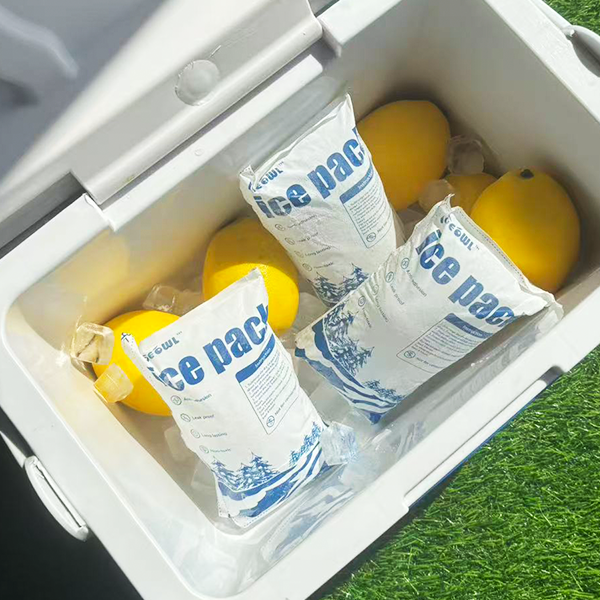
Ice Chest Supplier Price: A Five-Gate Method for an Auditable Purchase
The safest way to evaluate an ice chest supplier price is to make the quotation pass five gates: application fit, product definition, evidence, delivered economics, and production control. Price comparison begins only after an offer passes the requirements that protect the payload and the operating workflow. This method works for wholesale coolers, delivery fleets, private-label products, and passive cold-chain packaging because it exposes assumptions instead of hiding them in a unit figure. It also gives procurement, operations, engineering, quality, and logistics one shared record of what the supplier has actually offered.
Gate 1: Define the job before naming the product
Start with a one-paragraph operating statement. Describe the payload, handling route, user, cleaning method, shipment mode, destination, expected order pattern, and whether the chest is single-use, casually reused, or managed as a returnable asset. If the contents are temperature-sensitive, add the product-specific temperature requirement, route duration, likely ambient exposure, cold source, monitoring approach, and consequence of an excursion.
This step prevents category confusion. “Ice chest” might describe a beverage cooler, a robust transport box, a molded foam container, or part of a qualified thermal shipper. A consumer cooler can be well made without being suitable for a pharmaceutical lane. A durable plastic box can protect against impact without controlling temperature. An insulated wall slows heat flow but does not cool a warm payload. The job statement decides which claims matter.
Separate mandatory requirements from preferences. Mandatory items can include minimum usable dimensions, loaded carrying method, vehicle or rack footprint, cleaning compatibility, closure function, and an acceptable evidence level. Preferences can include a particular shade, decorative surface, or optional accessory. When every request is treated as mandatory, suppliers either overprice the product or silently assume which items can be ignored.
For a nominal size, verify both external and internal dimensions. Then draw or model the payload with coolant, partitions, baskets, and clearance. Gross internal volume, stated liters, and usable payload space are not interchangeable. A box that meets the volume label but fails the packout should not proceed to price comparison.
Gate 2: Freeze a quoteable product definition
The second gate turns the operating statement into a controlled product. The minimum definition normally includes a drawing, construction description, shell and liner materials, insulation type, lid and sealing arrangement, handles, hinges, latches, drain or penetrations, color, branding, accessories, and packing.
Material language must be specific enough to support the risk. “Plastic,” “HDPE,” or “high-density foam” may be useful category labels, but they do not define the finished unit. Resin grade, foam family, density or controlled property where relevant, thickness, molding process, and assembly affect behavior. More material is not always better. A thicker wall can increase freight volume and reduce payload space, while a poorly controlled lid can undermine an otherwise strong wall.
Ask the supplier to identify which elements are standard and which are customized. Standard tooling may reduce cost and lead time. Custom geometry can improve payload efficiency, brand identity, or handling, but it may add tooling, prototypes, approval steps, and retesting. A color or logo change may be cosmetic; an internal-dimension, gasket, insulation, or wall change may affect function.
The quotation should reference a drawing and revision. Product photos are useful for orientation but are not a specification. If the offer changes after negotiation, update the revision rather than relying on email fragments. This simple practice prevents the final price from being attached to an earlier, more expensive construction.
Make inclusions visible
List every component in the offer. Does the price include the lid, gasket, drain plug, basket, divider, coolant, straps, labels, individual packaging, master carton, and pallet? Are spare latches available? Is artwork setup included? Does the sample use production materials? When components are not listed, different suppliers can appear to quote the same product while offering different assemblies.
Gate 3: Match evidence to the consequence of failure
Evidence should be proportional. A promotional cooler may need sample approval, dimensional checks, and basic functional testing. A daily delivery fleet may add loaded handling, cleanability, hardware cycling, and repair trials. A temperature-sensitive distribution program may need a defined thermal protocol, monitoring, packout instructions, qualification review, and change control.
Thermal evidence requires special care. A claimed duration has meaning only with its conditions: box version, payload, coolant quantity and placement, starting temperatures, conditioning, ambient profile, sensors, lid openings, duration, and acceptance limits. Results from an empty box, another size, or a favorable constant ambient condition cannot be automatically transferred to the buyer’s route. Standard profiles can support comparative or qualification work, but the responsible quality team should decide whether additional lane-specific work is necessary.
Mechanical evidence also needs a defined method. “Drop tested” is incomplete without the loaded mass, orientation, height, conditioning, number of samples, and acceptance criteria. The same principle applies to stacking, leakage, handle load, and closure cycles. The goal is not to demand every possible test. It is to avoid paying for an unsupported claim.
| Evidence level | Appropriate starting point | Important limitation |
|---|---|---|
| Approved sample | Appearance, fit, hardware, packing, basic handling | One sample does not prove production consistency |
| Supplier inspection records | Dimensions, weight, workmanship, component function | Records are useful only when criteria and sampling are defined |
| Product-specific test report | Defined mechanical or thermal evaluation | Applies to the tested configuration and conditions |
| Route or program qualification | High-risk temperature-sensitive distribution | Requires control of packout, instructions, monitoring, and changes |
The table is a ladder, not a claim that every purchase needs the top level. Buyers should climb only as high as the application requires. However, a supplier should not charge for the language of a higher level while providing evidence from a lower one.
Gate 4: Normalize the full commercial offer
Once the product and evidence are aligned, convert each quote to the same scope. Keep recurring cost, one-time cost, logistics, and operating cost separate.
Recurring cost includes the chest, hardware, included accessories, routine printing, and standard packing. One-time cost includes tooling, prototypes, artwork plates, engineering, and qualification. Logistics includes origin transport, freight, insurance, destination handling, duties, brokerage, storage, and final delivery according to the selected Incoterm. Operating cost can include incoming inspection, conditioning, cleaning, tracking, reverse logistics, repair, loss, and disposal.
Request confirmed master-carton dimensions and weight. Insulated chests can be volume-intensive, so packing design may change landed economics more than a small unit-price difference. Check whether lids or components nest safely, whether cartons need protective inserts, how many cartons fit a pallet, and whether the quoted packing has been physically trialed. Do not use an optimistic container calculation as a supplier promise.
For quantity breaks, record the assumptions. A price for one color in one full production run is not the same as the same annual quantity split among several colors and monthly releases. A mixed-model container can create packing and inventory work. A forecast is not a purchase commitment unless the agreement says so.
Compare the correct unit of value
Use landed cost per saleable unit for wholesale. Use cost per successful route or completed reuse for a fleet. Use full packout cost per protected shipment for cold-chain operations. Use cost per retail sale including returns and packaging for consumer products. The factory unit number remains visible, but it no longer controls a decision for which it is incomplete.
If reuse is claimed, create a separate model. Include recovery, cleaning, inspection, drying, storage, tracking, repair, and lost units. Test several realistic return and loss assumptions. Do not assume a reuse count solely from the material. Field process, user behavior, and retirement criteria determine actual use.
Gate 5: Connect the approved sample to mass production
The final gate asks whether the supplier can reproduce the product that earned approval. Create a reference record with the signed drawing, sample photographs, dimensions, weight, material or component descriptions, color, logo position, hardware function, workmanship criteria, packing, and test status.
Translate subjective expectations into inspectable language. Instead of “strong handle,” define the required loaded-use evaluation. Instead of “good seal,” define lid alignment, closure engagement, gasket condition, and any relevant leak or thermal check. Instead of “perfect surface,” define which blemishes are unacceptable in visible and nonvisible areas.
Agree on an inspection plan for incoming materials, molding, assembly, and final packing. The depth can vary by order risk, but the buyer should know who checks critical characteristics and how nonconforming units are handled. For an initial run, consider enhanced inspection until the process is stable.
Change notification is essential. A new resin grade, foam formulation, wall thickness, gasket, hardware source, adhesive, molding parameter, or packing method may affect quality, fit, or thermal behavior. The supplier should identify proposed changes before shipment so the buyer can decide whether sample approval or testing must be repeated. In a controlled cold-chain program, change assessment belongs with the appropriate technical and quality owners.
Run a pilot that measures the real bottleneck
A pilot is most valuable when it tests operations, not just the appearance of the chest. Select a small production-representative batch. Pack it with the real payload and accessories. Move it through the vehicle, rack, parcel network, or handover sequence. Observe loading time, lifting, label adhesion, lid closure, leakage, cleaning, drying, stacking, and empty return.
For temperature-sensitive contents, follow an approved protocol and use suitable monitoring. Do not improvise product-temperature acceptance from a general ice-retention observation. Confirm product-specific requirements and involve the quality team in deviations.
Record failures and near misses. A lid that closes only when pressed at one corner, a handle that interferes with stacking, or a carton that collapses under pallet load can be corrected before scale. Update the specification and quote after the pilot. This maintains commercial transparency: the production price corresponds to the product that actually works.
Imagine a distributor comparing two offers. The first is cheaper but consumes more freight volume and uses nonserviceable latches. The second costs more at the factory, packs more efficiently, and supports replacement hardware. A pilot shows that both protect the payload, but the first creates greater storage and downtime. The higher unit quote can then be chosen for documented operational reasons rather than preference. In another program with one-way sales, the outcome could reverse.
Use sustainability claims with the same audit discipline
Environmental decisions benefit from clear boundaries. A recyclable material is not necessarily recycled in the destination. A reusable chest is not necessarily returned. A lightweight design may save outbound freight but fail sooner. A durable design may support many uses but require energy and transport for recovery and cleaning.
Ask what the claim covers: resin content, product manufacture, packing, use, recovery, or end of life. Request supporting documentation where a claim will appear in marketing or procurement reporting. Avoid broad terms that cannot be verified. The practical improvement may be specific, such as reducing empty-return volume, replacing a damaged latch instead of discarding the chest, eliminating an unnecessary inner carton, or consolidating shipments through better packing.
Sustainability should not weaken payload protection. Product loss can carry far greater economic and environmental consequences than the packaging itself, especially for food or healthcare goods. Evaluate packaging reduction only after functional requirements remain satisfied.
Frequently asked questions
What is the minimum information needed for an ice chest quote?
Provide use case, target internal dimensions or payload drawing, external limits, construction preference, hardware, color, branding, packing, quantity, destination, and delivery term. For temperature-sensitive use, add the required range, duration, ambient conditions, coolant, payload, monitoring, and evidence expectations.
How do I know whether two quoted chests are equivalent?
Check the referenced drawing, internal and external dimensions, materials, insulation, lid, hardware, included accessories, weight, packing, test scope, and Incoterm. If any item differs, document the difference and decide whether it affects fit, risk, or cost before comparing unit prices.
Should tooling be amortized into the unit price?
You can calculate an amortized view for business planning, but keep tooling visible as a one-time line in the supplier comparison. Otherwise, a custom offer can appear artificially expensive at low volume or deceptively cheap when projected volume is uncertain. Confirm ownership and maintenance terms.
What makes a thermal claim credible?
A credible claim identifies the exact configuration and test conditions, including payload, coolant, starting temperatures, ambient profile, sensors, duration, and acceptance criteria. The buyer must still judge whether those conditions represent the intended product and route.
How often should supplier prices be reviewed?
Review timing depends on the contract, market, and program. Establish a quotation validity period and a transparent process for changes in materials, packaging, freight, currency, or specification. Do not compare a current offer with an expired quote built on a different revision.
The decision record is as important as the selected price
An auditable purchase links the business need to the specification, evidence, commercial model, and production controls. The five gates prevent a low number from bypassing a technical requirement and prevent premium features from being purchased without a use case. They also make later negotiations cleaner because both sides can see which scope change created the price change.
Approve the chest only when usable space, handling, construction, evidence, delivered economics, and change control are understood. The preferred ice chest supplier price is then the best-supported cost for a defined operating result, not the smallest unqualified figure.
About Tempk
Tempk is the cold-chain packaging brand of Shanghai Tempk Industrial Co., Ltd. Available categories include medical cooler boxes, EPP foam boxes, VIP insulated formats, plastic cold-chain boxes, and compatible coolant options. We support buyer discussions about payload fit, packout, bulk supply, customization, handling, and the level of verification appropriate to a route. Specific performance must be confirmed for the selected configuration and conditions.
Send Tempk a defined use statement, payload drawing, quantity plan, destination, and evidence needs to build a quote that can be compared gate by gate.
How to Compare Ice Chest Factory Price Quotes
How to Compare an Ice Chest Factory Price Quote
The best way to compare an ice chest factory price is to remove every undefined assumption. Give bidders one product brief, require a configuration-level response, and calculate landed cost for a saleable or operationally usable unit. The recurring price should be separated from tooling, development, testing, customization, inspection, and freight. Only then can procurement distinguish genuine manufacturing efficiency from a lighter specification, missing component, optimistic load plan, or quality risk that will appear after the order.
Step 1: Name the Product You Need
Begin with use, not appearance. Is the chest a recreational consumer product, a promotional container, a foodservice handling box, or part of a temperature-controlled shipping system? State what goes inside, who handles it, where it travels, how it is cleaned, whether it returns, and what failure would matter.
Define target external dimensions and the usable internal envelope. Capacity labels vary, and rounded or tapered interiors may not fit rectangular loads efficiently. Specify expected loaded mass, lid access, drain, handles, wheels, latches, gasket, dividers, and replacement parts. Separate essential functions from preferences.
If unpackaged food can contact the interior, identify the destination markets and intended conditions. Ask for documentation on the exact resin, additives, colorants, recycled content, and manufacturing use. A general HDPE or PP description is insufficient. If products remain in sealed packaging, describe that accurately so requirements stay relevant.
A three-level specification
Use three categories to keep the project economical:
- Critical: safety, fit, closure, load, required material status, and essential performance
- Commercial: appearance, branding, packaging presentation, and channel features
- Optional: enhancements that can be priced separately or introduced later
This hierarchy helps the factory suggest savings without weakening critical functions.
Step 2: Force the Quotation Into the Same Shape
Provide a response table so every supplier states the same items. Require model or drawing revision, construction, material specification, product weight, insulation method, hardware, included accessories, logo process, color, unit packaging, carton size, quantity tiers, lead time, commercial term, and quote validity.
| Quote item | Why it must be explicit | Common comparison error |
|---|---|---|
| Product revision | Connects price to an approved design | Comparing a stock model with a custom proposal |
| Material and part weight | Reveals construction basis | Treating all HDPE or PP products as equal |
| Insulation system | Determines process and thermal role | Comparing an empty shell with an insulated chest |
| Included hardware | Affects assembly and service | Discovering latches or drains are optional later |
| Quantity basis | Governs setup and purchasing | Using a high-volume tier for a small first order |
| Packing and load plan | Drives damage and freight | Comparing unit price before packed cube |
| Trade term | Defines included logistics cost | Mixing ex-factory and delivered numbers |
Ask suppliers to flag deviations rather than burying them in notes. A deliberate alternative can be valuable, but it should be priced alongside the requested base so the buyer understands the trade-off.
Step 3: Separate Tooling From Production
Tooling economics depend on process. Injection molds, rotational molds, blow molds, EPP tools, fixtures, and printing equipment carry different costs and capabilities. The quotation should state scope, ownership, storage, maintenance, trials, texture, inserts, engineering changes, and transfer conditions.
Model tooling over conservative volume cases. A custom mold may deliver lower recurring cost or unique features, yet a standard mold with custom graphics may be preferable for market validation. Include the cost of tool corrections and design changes in the development plan rather than assuming first-pass perfection.
Use approval gates: design review, prototype or engineering sample, tool trial, corrective loop, and preproduction sample. Each gate should have deliverables and authorization. Mass production should not start from an informal photo approval.
Step 4: Understand the Recurring Cost Drivers
Material consumption is visible, but cycle time and complexity can be equally important. Thick walls extend cooling in injection molding and use more resin. Rotomolding uses long heating and cooling cycles. Foam filling adds material, fixtures, and process control. EPP molding depends on bead processing, density, fusion, and drying. VIP assembly adds high-value components and careful placement.
Hardware creates both purchased-part cost and assembly labor. A chest with replaceable hinges, latches, handles, drains, gaskets, and wheels may cost more to build but offer service benefits. Decide which interfaces need replacement and which can be integral.
Tolerances and cosmetic standards affect inspection and yield. Apply tight tolerance to functional interfaces, not every dimension. Define acceptable appearance by zone and viewing condition. A vague request for “perfect finish” either creates disputes or encourages a supplier to add risk cost.
Color and branding also recur. Special resin colors may carry batch minimums and purge losses. Printing needs setup and may require surface treatment. Retail cartons create printing plates, minimums, handwork, and larger freight cube. Price these as distinct choices.
Step 5: Tie Quality Control to Intended Use
Create a control plan around failure modes. For a retail cooler, lid fit, latch function, handle load, drain leakage, cosmetic finish, packaging, and label accuracy may dominate. For a cold-chain box, insulation assembly, coolant fit, closure, packout, and configuration-specific thermal evidence also matter.
Testing must define sample condition, method, load, duration, environment, and acceptance. Statements such as heavy duty, leakproof, food grade, or long ice retention are not precise enough for production approval. Translate only necessary claims into measurable criteria.
Approve a golden sample, bill of materials, drawings, artwork, and packing specification. Agree on defect classification, sampling, inspection records, and nonconformance response. If a third-party inspection is planned, share the checklist early so the factory can prepare the same evidence.
Change control preserves the bargain. A lower-cost resin, reduced wall weight, different foam, substitute latch, new colorant, thinner carton, transferred tool, or alternate factory can change the product. Require notification and appropriate sample or technical review before implementation.
Step 6: Convert Factory Price to Landed Cost
Ask for verified packed dimensions, gross weight, units per carton, pallet plan, and container-loading assumptions. Ice chests ship significant air, so nestability and protruding hardware can dominate cost. Validate load plans with a packing trial where volume matters.
Add costs using one logistics basis: export packing, inland origin movement, customs, international freight, insurance, duty, destination handling, inspection, and final delivery. State currency and exchange-rate assumption. Include financing and warehouse cost if they materially affect the decision.
Transit damage belongs in landed cost but should not be disguised as an invented defect percentage. Use pilot data, supplier history that you can verify, or scenario ranges. Improve carton protection, component position, and stacking when damage risk is observed.
A practical example: Supplier A is cheaper at the factory but ships non-nested retail cartons. Supplier B costs more per unit yet loads substantially more units in the same freight volume. Depending on the destination and channel, Supplier B can produce the lower landed cost. The answer should come from verified packed data, not a general rule.
Step 7: Choose an Order Strategy
Quantity discounts arise from setup allocation, material buying, color batching, hardware minimums, and production scheduling. They are not free money. Balance them against demand uncertainty, warehousing, cash, artwork changes, and obsolescence.
Use a pilot to validate product, packaging, and user response. Then establish quantity breaks tied to forecasts and call-off schedules. A framework order may improve planning while limiting destination inventory, but responsibilities for storage, payment, and material commitments must be explicit.
Review lead time by component. A chest may mold quickly while a custom gasket, wheel, color masterbatch, or printed carton controls the schedule. During peak production periods, reserve capacity with a realistic forecast rather than relying on an average lead-time statement.
Step 8: Evaluate Lifecycle and End-of-Life Cost
For reusable business use, unit price should be translated into cost per successful cycle. Count return freight, cleaning, inspection, storage, tracking, missing units, repairs, and replacement. Establish retirement criteria and collect real fleet data before making a specific reuse claim.
For consumer sales, consider warranty, spare parts, returns, disposal, and brand impact. A replaceable drain plug or latch can reduce replacement of the entire chest. Conversely, excessive component complexity can create service inventory.
Environmental decisions need defined boundaries. A lower resin weight, recycled content, reusable construction, reduced carton, or improved loading density may each offer benefits. Verify material and regulatory context, measure what can be measured, and avoid broad terms such as sustainable or fully recyclable without evidence about the full product and actual recovery system.
Use a costed change process after launch
Once sales or operations begin, requests accumulate: a stronger handle, revised graphic, different carton, added drain, new color, or lighter wall. Treat each request as a small business case. The factory should quote tooling, recurring cost, lead-time effect, remaining inventory, test impact, and the date when the new revision can enter production. The buyer should state the reason and success measure.
Do not mix old and new revisions without an identification plan. Retail images, spare parts, instructions, cartons, and replacement policies may need updating. For operational fleets, mixed latches or drains can complicate repair. For cold-chain configurations, a construction change may affect the evidence supporting the packout.
A disciplined change log often produces better savings than repeated price pressure. It shows which features users value, which packaging changes reduce damage, and which cosmetic operations can be removed safely. It also preserves the original baseline, making it possible to reverse an unsuccessful change rather than arguing from memory.
A Final Bid-Comparison Scorecard
Score suppliers on more than price:
Specification match and transparent deviations
Sample quality and production-representative construction
Tooling and engineering capability
Material and component traceability
Quality plan and test relevance
Packed-cube and delivery economics
Schedule and capacity credibility
Change-control discipline
Communication and corrective-action process
Total landed and lifecycle cost
Weight the factors according to channel risk. A promotional item with a fixed event date may prioritize schedule and color consistency; a reusable operational chest may prioritize durability, service parts, and lifecycle controls.
Frequently Asked Questions
What information produces the fastest accurate factory quote?
Provide intended use, dimensions, usable capacity, construction, hardware, color, branding, packaging, quantity tiers, destination, trade term, quality expectations, and a reference drawing or sample. Identify open decisions. A clear brief reduces the factory’s need to assume and shortens the correction cycle.
How much should tooling add to each unit?
There is no fixed answer. Divide total development and tooling cost across conservative expected production, while considering maintenance, changes, and the possibility that demand differs from forecast. Keep tooling visible as capital or amortization instead of hiding it inside a unit price that becomes difficult to audit.
Can price be reduced by lowering wall weight?
Possibly, but only after checking stiffness, impact behavior, warpage, closure, hardware support, and the insulation architecture. Geometry improvements may reduce material more safely than uniform thinning. Approve revised samples and repeat relevant tests before accepting the saving.
What is the biggest hidden cost in imported ice chests?
There is no single answer, but freight volume, inventory, transit damage, and missing accessories are common candidates. Obtain verified packing data, model realistic order quantities, specify included components, and use a pilot to identify the dominant cost for your channel.
Should the cheapest supplier remain as a backup?
Only if that supplier can meet the approved specification, quality controls, and delivery requirements. A backup source needs sample and document approval before an emergency. An unqualified low quote is not real supply continuity because switching during disruption introduces new product and quality risk.
Conclusion
Comparing ice chest factory price quotes is a sequence: define use, normalize scope, separate tooling, understand recurring cost, control quality, calculate landed cost, choose an order strategy, and assess lifecycle economics. Make deviations visible and connect every quote to a product revision. This approach supports productive negotiation while preventing price reductions from quietly changing the chest you approved.
Keep the comparison sheet with the purchase record so future reorders use the same baseline, assumptions, and approved commercial boundaries.
About Tempk
Tempk, associated with Shanghai Tempk, supplies plastic boxes and other cold-chain packaging categories, including EPP formats, medical cooler boxes, VIP-related insulated options, and coolant choices. Different constructions create different tooling, material, packing, and performance considerations. A quotation can be developed around the buyer’s intended use, dimensions, components, branding, order plan, and destination, with claims limited to the evidence available for the chosen configuration.
Send Tempk one standardized RFQ package to compare construction options, recurring price, customization, packing, and development costs on the same basis.
Compare Ice Chest Exporter Price Correctly
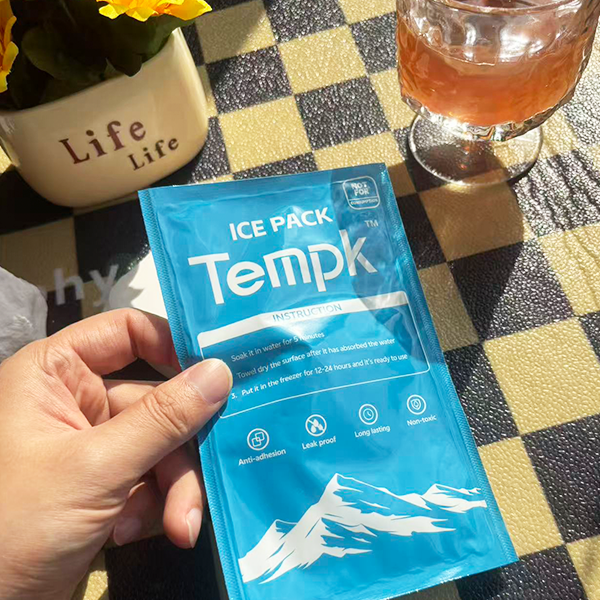
Compare Ice Chest Exporter Price Correctly
The correct ice chest exporter price has an origin, destination, trade term, shipment plan, and product revision. Without those references, an importer cannot tell whether the offer includes export cartons, pallets, inspection, documents, coolant, or delivery responsibility. Comparing only the unit line shifts uncertainty into freight, customs, receiving, and field support.
A sound exporter comparison uses one RFQ, a landed-cost sheet, evidence appropriate to the end use, a pre-shipment quality plan, and repeat-order controls. It avoids made-up market averages and makes each commercial assumption visible.
Define one export comparison unit
Define the comparison unit as “one usable delivered system,” not “one box.” List the exact body, lid, gasket, handles, drain, dividers, coolant packs, baskets, labels, instructions, and shipping packaging. State whether a temperature logger is included or purchased separately.
Then define use. Provide payload dimensions and mass, quantity, required condition, initial state, route, longest credible time, ambient exposures, openings, vehicle, handling, cleaning, and return. For medicines and vaccines, requirements must come from product and program documentation. A general range should not be imposed because it is familiar.
Ask for internal dimensions and packout drawings. A stated 25-liter capacity may not provide 25 liters of usable payload after coolant and barriers. Loaded mass and center of gravity influence handles and ergonomics. External dimensions influence freight and vehicle cube.
Every supplier should complete the same matrix:
| Quote field | Required response |
|---|---|
| Model and revision | Exact identifier and drawing reference |
| Included components | Quantity and specification of every part |
| Price tiers | Quantity, unit scope, currency, validity |
| One-time charges | Tooling, artwork, development, testing |
| MOQ drivers | Box, pigment, print, coolant, packaging |
| Evidence included | Report identity and configuration relevance |
| Packing | Carton, pallet, nesting, dimensions, weight |
| Delivery basis | Trade term, destination, exclusions |
| Repeat support | Lead time, spares, warranty process |
| Change control | Notification and buyer review process |
This turns a price request into a comparable offer. Missing entries become questions rather than surprises.
Use an evidence ladder
Not every project needs the same evidence. Create levels that match consequence.
Level 1: product identity. Drawings, materials, dimensions, components, workmanship, and samples establish what is being purchased.
Level 2: functional evidence. Closure, lifting, leakage under a defined method, cleaning compatibility, stacking, and transport-pack checks support ordinary operation.
Level 3: application evidence. Food-contact documentation, thermal tests, coolant compatibility, and monitoring methods address the intended use.
Level 4: controlled qualification. Approved protocols, calibrated instruments, representative samples, repeat runs, defined acceptance criteria, traceable reports, and change control support high-consequence temperature-sensitive distribution.
Supplier cost rises as project-specific evidence increases. That is not automatically waste. It becomes waste when a certificate does not answer a decision, or when the buyer demands a test unrelated to the route.
ISTA 7E provides thermal profiles for transport packaging used in parcel delivery. WHO guidance describes qualification and monitoring concepts for time- and temperature-sensitive medicinal products. IATA's Temperature Control Regulations address relevant air-cargo practices. Use applicable frameworks with qualified personnel, while keeping the product, route, and jurisdiction in view.
A duration claim should identify ambient profile, payload, coolant, conditioning, sensor positions, acceptance criteria, and exact configuration. “Keeps cold for days” cannot support a cost-benefit calculation.
Convert the export offer into landed cost
Start with the itemized offer. Add accessories, tooling, inspection, export packing, freight, insurance, duties, brokerage, port or terminal charges where applicable, domestic haulage, and receiving. Use current quotes from appropriate providers rather than a generic percentage.
Keep physical and financial inputs separate. Physical inputs include packed dimensions, pallet count, nesting, and gross weight. Financial inputs include freight rate, currency, duty, and handling charges. This makes updates easier when rates change.
Compare at the same trade term or adjust responsibility explicitly. Confirm whether pallets, origin documentation, and delivery appointments are included. Record quote validity and exchange-rate assumptions. A delivered offer is not necessarily more expensive; it simply places coordination differently.
Review MOQ alongside landed cost. A high quantity can lower product and freight per unit while increasing inventory, storage, cash, and obsolescence. A smaller pilot can carry higher unit cost but purchase valuable information. Show both effects in the approval memo.
If a new mold is proposed, separate it from the unit price. Define ownership, maintenance, sample stages, storage, and exit rights. Amortize it over a conservative volume scenario. The tool should not disappear into the quote where its risk cannot be reviewed.
Add operating cost without false certainty
For a single-use route, include pack assembly, coolant preparation, monitoring, dimensional freight, destination handling, and disposal. For a reusable loop, add asset identification, reverse logistics, washing, drying, inspection, repair, loss, repositioning, and safety stock.
Calculate cost per successful delivered trip. A box sent but not recovered has delivered once, not completed a reuse cycle. A returned box awaiting drying is not available inventory. A damaged unit may consume inspection and repair before its next use.
Use scenarios rather than one optimistic figure:
- Conservative: lower recovery, shorter useful life, higher repair and return cost.
- Expected: assumptions supported by pilot results.
- Improved: better recovery after controls are proven.
Identify the variables that change the decision. If empty return cube dominates, compare nesting or regional pooling. If loss dominates, improve ownership and scan controls. If coolant conditioning labor dominates, review workflow and compatible coolant options. If outbound freight dominates, reconsider external size and payload ratio.
Avoid assigning unsupported savings or environmental benefits. Reuse, recycled content, lightweighting, and recyclability are separate attributes. Actual trips, transport, washing, repair, and local end-of-life routes determine the program outcome.
Pilot both the product and the assumptions
Samples should represent production construction. Test actual payload fit, loading time, closure, loaded lifting, vehicle stacking, openings, unloading, washing, drying, labels, and empty return. Include operators from different shifts.
For critical temperature control, run an approved protocol with appropriate monitoring and realistic conditions. Control box revision, payload, coolant, conditioning, arrangement, sensors, and acceptance. Assess freeze as well as heat risk when relevant. The box alone is not the qualified system.
The pilot also validates costs. Count labor steps, space, damage, and returns. Record whether accessories go missing. Verify shipping-pack dimensions and inspect for pallet compression. Replace estimates with observed values.
Imagine a design that saves factory cost by using a nonreplaceable latch. During the pilot, latches show wear while the body remains serviceable. The lower unit price could cause early retirement. A replaceable component may improve lifecycle economics, but only if parts, tools, training, and inspection are practical.
Use pilot findings to revise the bid, specification, and internal model. If the configuration changes materially, repeat the necessary evaluation before scale.
Protect the approved economics through quality control
Production drift can erase cost assumptions. Define critical materials, dimensions, lid fit, insulation, coolant, hardware, odor, color, labels, and packing. Establish defect classes and inspection methods. Require lot identification and a response for nonconforming product.
Supplier change notification should cover resin grade, recycled content, pigment, foam, VIP, gasket, adhesive, hardware, coolant, molding, assembly, component source, and site. The buyer then determines the impact. A document update may be enough for a minor change; a functional check or thermal requalification may be required for another.
Warranty must be translated into process. What defects are covered? What evidence is needed? Who pays freight? Are spare parts supplied? How quickly are claims reviewed? A long warranty statement with difficult exclusions has limited economic value.
Continuity planning covers repeat-order lead time, component availability, tool maintenance, approved alternatives, and communication. High-risk programs may need safety stock or a second configuration. The chosen control should reflect consequence, not a generic rule.
Review supplier performance with defect, delivery, response, and change metrics. Do not reduce the scorecard to price variance. A stable supplier that prevents deviations can support lower total cost.
Stress-test the commercial assumptions
Before award, hold a cross-functional review in which each function challenges part of the cost model. Logistics verifies carton and pallet dimensions. Operations checks loading, coolant preparation, washing, and staffing. Quality reviews evidence and change control. Finance tests currency, volume, and payment assumptions. Procurement confirms that scope and terms are comparable.
Run sensitivities instead of relying on one total. Increase freight, reduce return, shorten useful life, or add a qualification run. Identify the variable that can reverse the supplier ranking, then negotiate or pilot it. If freight cube is decisive, witness the export pack. If return is decisive, delay fleet scale until recovery is measured. If a thermal claim is decisive, review the protocol and data.
Document exclusions in the approval. A price may omit destination taxes, local storage, qualification after a lane change, replacement coolant, or customer-specific labels. Exclusions are not automatically unfavorable, but the business must own them. The decision remains auditable when assumptions, evidence gaps, and contingency are visible.
Set a post-launch review date. Compare actual landed cost, defects, labor, recovery, and deviations with the approved model. Use the differences to improve reorder quantities, route controls, and the next supplier negotiation.
Record export packing performance and destination handling feedback during that review as well.
Compare offers under one delivery responsibility
Two quotes should not be ranked until the buyer maps which party controls origin pickup, export clearance, main carriage, insurance, destination clearance, duties, terminal charges, and final delivery. Use the named trade term and named place shown in the offer, and obtain current logistics input for any segment the buyer must add.
Do not treat a term as a complete cost guarantee. Surcharges, demurrage, storage, inspection, delivery appointments, and tax treatment can depend on events and local rules. Record the rate date and assumptions. When a supplier offers several delivery bases, compare transparency, control, and risk as well as the total.
Currency and payment schedule also affect the importer. Deposit timing, balance trigger, bank fees, exchange exposure, and remedies for a failed inspection belong in the commercial comparison. These items do not change thermal performance, but they can materially change cash requirement and recourse. A decision memo should present the product price and delivery-risk allocation together.
Decision memo: what management should see
The final recommendation should show more than three unit prices. Present:
application and controlled configuration;
suppliers and scope differences;
evidence level and remaining gaps;
landed cost at stated quantity and terms;
operating scenarios and sensitive assumptions;
pilot results and unresolved risks;
tooling, customization, and inventory exposure;
quality and change-control commitments;
recommended next step and approval conditions.
This format makes uncertainty visible. Management can see whether the decision depends on recovery rate, freight, qualification, or volume. Procurement can negotiate the real driver rather than pressing every supplier for the same arbitrary percentage.
A “no award yet” decision can be appropriate when scope or evidence is incomplete. Requesting one additional sample run or logistics quote may be cheaper than committing to a large order under false precision.
Frequently Asked Questions
What should be included in an export ice chest unit quote?
At minimum, identify the body, lid, insulation, gasket, hardware, and packaging. Add coolant, inserts, labels, documents, and other required accessories as explicit lines. State model revision, quantity, currency, trade term, destination, validity, and exclusions so suppliers can be compared fairly.
Can an existing thermal report reduce project cost?
Yes, if it applies to the offered model, materials, payload, coolant, conditioning, ambient profile, sensor map, and acceptance criteria. When differences exist, use an impact assessment to decide whether the report is informative or whether additional testing is required.
Why does external size matter as much as capacity?
External size drives export freight, warehouse footprint, vehicle cube, and empty returns. Internal capacity must be large enough for the controlled packout, but excess wall or unused geometry can make logistics expensive. Compare usable payload per packed and transported cube.
How can buyers avoid overpaying for compliance claims?
Ask which requirement applies, which exact document supports it, and which ordered component it covers. Avoid broad claims such as “globally compliant.” Pay for evidence and controls that answer the product, market, route, and quality-system needs.
When should a buyer choose customization?
Choose it when existing models cannot meet payload, handling, control, or essential brand needs and when expected volume supports development. Separate cosmetic from functional changes. Include tooling, samples, testing, approval, lead time, and obsolete-stock risk in the decision.
Conclusion
A defensible supplier-cost comparison starts with one controlled configuration. Set the evidence level, calculate landed and operating cost under visible assumptions, test the product and the business model, and protect the approved result through quality and change control. This approach replaces an unreliable market price with a decision that finance, operations, and quality can all examine.
About Tempk
Tempk, associated with Shanghai Tempk, supplies cold-chain packaging categories that include medical cooler boxes, plastic and EPP insulated boxes, VIP-related insulation options, and coolant choices. Those categories can be quoted as standard or application-focused configurations depending on the request. Buyers should provide payload, route, quantity, destination, and evidence needs so the commercial scope reflects the intended use.
CTA: Request a Tempk export proposal that separates the box, coolant, customization, evidence, master-carton packing, palletization, and stated delivery basis.