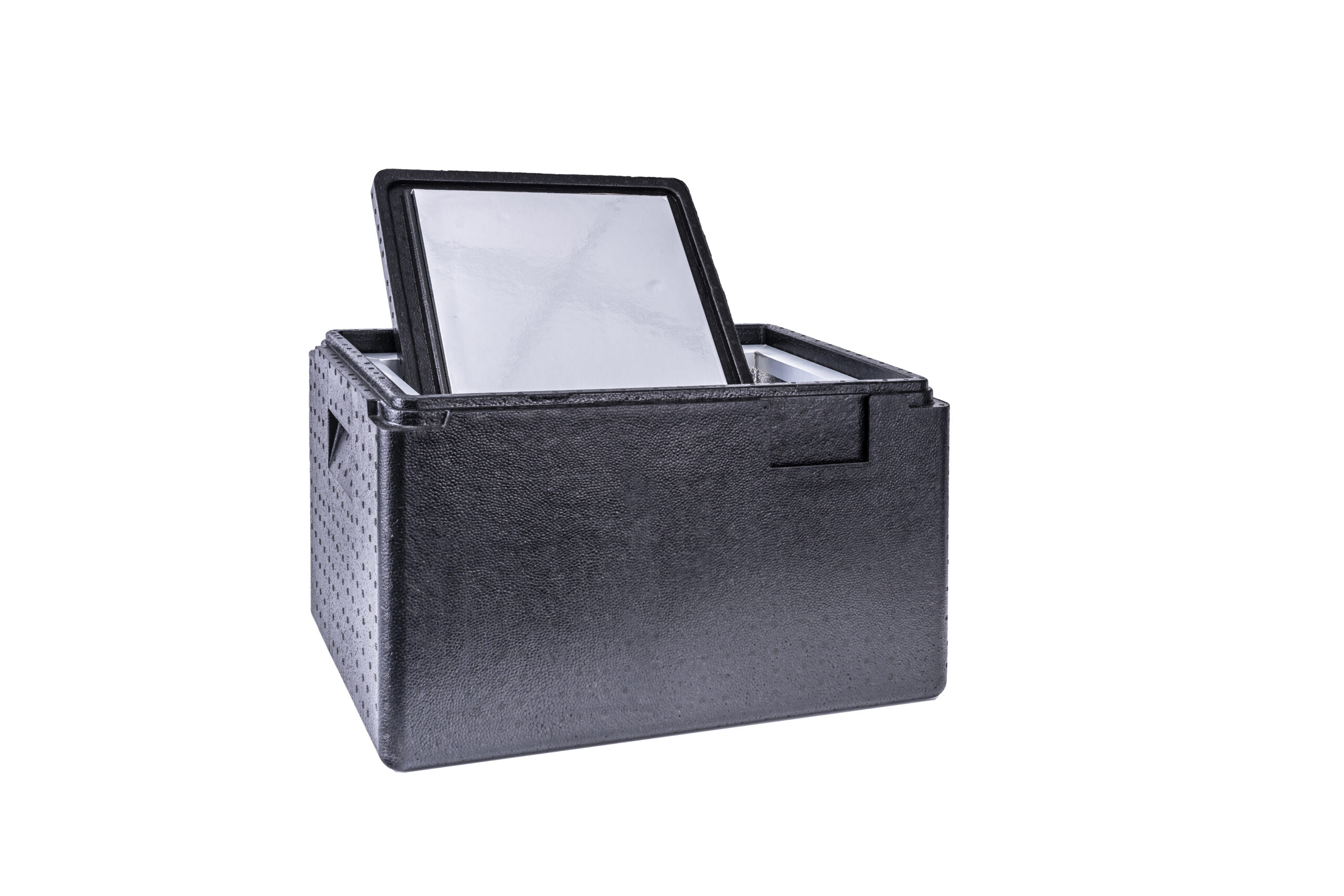
Refrigerant Gel Pack Pharmaceutical Manufacturer?

Refrigerant Gel Pack Pharmaceutical Manufacturer?

Refrigerant Gel Pack Pharmaceutical Manufacturer?

Last Updated: January 19, 2026

If you are choosing a refrigerant gel pack pharmaceutical manufacturer, you are protecting product integrity, audit confidence, and patient trust. In 2026, teams expect tighter documentation, fewer temperature-excursion investigations, and fewer leakage events that force quarantine. The right refrigerant gel pack pharmaceutical manufacturer helps you qualify faster, ship with fewer surprises, and scale without “silent changes.”

This article will help you:

  • Qualify a refrigerant gel pack pharmaceutical manufacturer using repeatable proof, not sales language
  • Build a document set that supports audits, deviations, and supplier reviews
  • Choose validation tests that lower excursion risk in real lanes
  • Reduce leakage events with packaging and seal decisions that match transit stress
  • Run OEM safely with a refrigerant gel pack pharmaceutical manufacturer and avoid spec drift

Why does your refrigerant gel pack pharmaceutical manufacturer choice decide excursion risk?

Your refrigerant gel pack pharmaceutical manufacturer choice decides how repeatable your cold chain really is—because gel packs are a controlled component inside a system. When performance drifts, you do not just get “warmer boxes.” You get deviation reports, investigation time, and rework. A refrigerant gel pack pharmaceutical manufacturer reduces this risk by controlling formulation consistency, sealing discipline, and traceable records.

You can think of pharma gel packs in three simple layers. Each layer solves one type of headache. When all three are stable, your program becomes easier to operate.

Thermal engine, safety shell, defense file

A refrigerant gel pack pharmaceutical manufacturer should help you stabilize these three layers:

Layer What it is What can go wrong What it means for you
Thermal engine Gel behavior over time uneven hold time lane variability
Safety shell Film + seal strength leaks and punctures quarantine + rework
Defense file Records + traceability slow investigations longer deviations

Practical tips and recommendations

  • If you ship high value: require fast record retrieval within 24–48 hours.
  • If you ship direct-to-patient: treat packaging as parcel-ready, not pallet-only.
  • If you run clinical trials: lock conditioning and pack-out photos as build standards.

What should a refrigerant gel pack pharmaceutical manufacturer prove first?

Before you scale, a refrigerant gel pack pharmaceutical manufacturer should prove three things: consistent thermal performance, durable seals, and traceable documentation. You do not need long presentations. You need evidence you can store and reuse in supplier files.

You should also demand clarity on what the manufacturer will not change without approval. “Silent changes” are one of the fastest ways to create lane failures. A strong refrigerant gel pack pharmaceutical manufacturer treats change control like a real discipline.

Proof-first checklist you can reuse

Proof area What to request What good looks like Red flag
Change control change log sample documented and approved “We change as needed”
Traceability lot code logic materials link to lots no lot linkage
Validation test plan sample clear criteria and outcomes only “passed” claims

Which documents should a refrigerant gel pack pharmaceutical manufacturer provide?

A refrigerant gel pack pharmaceutical manufacturer should provide a small, controlled document set that supports audits, deviations, and supplier qualification. You do not need a mountain of files. You need the right files, in consistent format, with revision control.

In 2026, “audit-ready” means documents are dated, traceable, and easy to reproduce quickly. A refrigerant gel pack pharmaceutical manufacturer that can respond in 24–48 hours saves your QA team real time.

The audit-ready starter pack (buyer-friendly)

Document What it proves When it saves you Your ask (simple)
Spec sheet measurable expectations disputes “Include tolerances”
Batch record sample traceability deviations “Redacted is fine”
QC plan checks and sampling audits “Show defect categories”
Change control summary prevents silent drift long contracts “Approval flow required”
Complaint workflow how issues are logged corrective action “Response time target”

How do you audit a refrigerant gel pack pharmaceutical manufacturer without traveling?

You can audit a refrigerant gel pack pharmaceutical manufacturer remotely by checking process proof, not factory size. Remote audits work when you request the right evidence in the right order. Start with live walkthrough of filling and sealing. Then confirm records and defect handling. Finally, verify packaging and labeling control.

Remote audit steps (10-minute live walk)

Step What you ask to see What good looks like What it protects
Filling station metering + weights measured, recorded checks thermal consistency
Sealing station settings + inspection settings logged, checks shown leak prevention
Defect handling reject bins + logs clear separation, documented quality control
Packaging area labeling + lot coding controlled and traceable traceability

Summary and recommendations

A refrigerant gel pack pharmaceutical manufacturer should protect your program with repeatable thermal output, strong seals, and traceable records. The best approach in 2026 is proof-based qualification, gated OEM development, and lane-matched validation. Use the document starter pack, lock measurable specs, and require change control to prevent drift.

Next step (CTA): Shortlist two manufacturers, request the audit-ready starter pack, run a pilot batch in your final pack-out, and scale only after repeatable results.

How to Choose a Gel Ice Insert Grocery Manufacturer?

How to Choose a Gel Ice Insert Grocery Manufacturer?

Last updated: January 19, 2026

Choosing a gel ice insert grocery manufacturer is not just buying “cold packs.” You’re trying to keep groceries cold, keep cartons dry, and keep costs predictable—at the same time.

Many food-safety materials describe a temperature “danger zone” (often cited around 41°F–135°F, with some guidance using 40°F–140°F).

Your goal is stable, repeatable cold performance that survives delays, stacking, and rough handling.

This article will help you:

  • Compare any gel ice insert grocery manufacturer using a proof-based scorecard (not marketing)
  • Choose custom gel ice insert sizes that reduce warm corners and packing errors
  • Build a leak-proof gel ice insert system using a simple “Dry Carton” method
  • Validate grocery pack-outs using carton-level testing (ISTA 3A + ASTM D4169 thinking)
  • Write OEM specs that prevent “spec drift” after you scale
  • Understand 2026 trends: documentation pressure, right-sizing, and traceability

What does a gel ice insert grocery manufacturer deliver?

Direct answer: A gel ice insert grocery manufacturer should deliver inserts that behave the same on every reorder—consistent fill weight, consistent sealing, consistent freezing behavior, and consistent dimensions—so your pack-out stays repeatable at scale.

You are buying predictability as much as you are buying cold.

Expanded explanation: Think of your insulated box as a raincoat and the gel insert as an umbrella. The raincoat slows heat, but the umbrella does the work of absorbing heat. If inserts vary batch to batch, your “cold time” becomes random. If seals are weak, one puncture can turn into a soggy carton and a refund.

Which gel ice insert formats should your grocery manufacturer offer?

A strong gel ice insert grocery manufacturer typically supports multiple formats because grocery boxes and payloads vary.

Insert format Best grocery use Strength Watch-out Practical meaning for you
Flat gel ice insert meal kits, multi-item grocery easy to stack can create cold “walls” fast packing, needs placement discipline
Bottle/brick insert dairy, beverages, dense packs stable position less flexible layout consistent cooling around heavy items
Liner-style insert fresh food bundles large surface contact moisture management needed reduces hot spots if designed well

Practical tips and recommendations

If you ship mixed groceries: start with flat inserts and a fixed placement map to reduce packing mistakes.

If you ship heavy dairy: brick inserts often stay put and cool predictably.

If you ship high-humidity lanes: prioritize moisture control planning early.

Practical case: Many programs reduce “wet box” refunds when they treat inserts as a controlled system—design, placement, conditioning, and QC—rather than buying “more ice.”

How cold should your grocery shipments be in real life?

Direct answer: Your “cold enough” target depends on grocery category, but the practical rule is to minimize time in unsafe temperature ranges during real delivery conditions.

A reliable gel ice insert grocery manufacturer helps you design for your worst realistic day, not your average day.

Expanded explanation: Grocery delivery is not a lab. It includes loading docks, warm vans, porch waits, and route changes.

If you build for average conditions, your failure rate spikes on hot or delayed days. If you overcool, you can freeze sensitive items (leafy greens, certain dairy textures, fresh prepared foods).

Lane Profile Builder (interactive tool)

Fill this out once. Share it with every gel ice insert grocery manufacturer before you compare quotes.

  • Delivery promise: same-day / 24h / 48h / 72h+
  • Worst exposure: hot truck time, porch time, weekend delay risk
  • Box sizes: internal dimensions + typical payload weight
  • Freeze sensitivity: none / some / many items
  • Failure history: warm, wet, crushed, mislabeled
Lane factor Low risk Medium risk High risk What it changes for you
Transit time same-day 24–48h 48h+ longer hold time planning
Summer exposure mild mixed hot right-sizing matters more
Freeze sensitivity none some many avoid cold walls and direct contact

Practical tips and recommendations

If you ship to apartments: plan for delayed pickup and hallway heat.

If one corner runs warm: adjust placement first, not insert chemistry.

If cartons feel soft: add a moisture barrier before adding more inserts.

Practical case: One retailer reduced wet-box incidents by standardizing a barrier liner and tighter seal checks, not by adding extra coolant.

Gel ice inserts vs PCM: what should your manufacturer recommend?

Direct answer: A gel ice insert grocery manufacturer should recommend standard gel or PCM-style inserts based on freeze risk and temperature stability. Standard gel is cost-effective but can over-freeze sensitive foods if placed incorrectly. PCM-style inserts can support a tighter “refrigerated” behavior when you must avoid freezing.

Expanded explanation: You don’t need to become a thermal engineer. You need a supplier who explains options like you’re training a new warehouse teammate.

The best recommendation is lane-based: how many inserts, where to place them, and how to condition them so results are repeatable.

Freeze-Risk Self-Test (quick decision tool)

Answer these in under a minute:

  • Do any items get damaged by freezing? (yes/no)
  • Is your delivery promise 24h / 48h / 72h+?
  • Is summer exposure low / medium / high?
  • Is the box small / medium / large?
  • Do you allow returns or reuse? (yes/no)

If you answered “yes” to freezing risk, your text recommends asking about a controlled-melt option (often described as a PCM approach).

Option When it fits grocery What you gain What you trade off Practical meaning
Standard gel ice insert most chilled grocery kits simple, low cost freeze risk if misused needs placement discipline
PCM-style insert freeze-sensitive items stable temperature band higher cost fewer “frozen salad” complaints

Practical tips and recommendations

If you ship produce-heavy boxes: prioritize spacing so inserts don’t touch sensitive items.

If you ship high-value kits: consider stability first, then optimize unit cost later.

How do you prevent wet boxes with your gel ice insert grocery manufacturer?

Direct answer: Prevent wet boxes by demanding measurable leak resistance and building a moisture-aware pack-out. Customers don’t separate condensation from leaks—they see a wet box and blame you.

The fix is a system: stronger films, better seals, and carton-level handling tests.

Expanded explanation: Wet corrugate loses strength and corners collapse faster. The insert itself matters, but pack-out matters more: barrier, spacing, and structure.

A dependable gel ice insert grocery manufacturer will discuss seal checks, failure rates, and traceability—because silent changes can create sudden spikes.

The “Dry Carton” model (trainable in one shift)

  • Barrier: keep moisture off corrugate
  • Spacing: prevent rubbing punctures and direct contact
  • Structure: keep corners strong under compression
Wet-box trigger What causes it Fast fix What to request from the manufacturer
Micro leaks weak seals / pinholes stronger film + seal checks lot-based leak screening
Punctures rubbing on corners dividers or sleeves corner reinforcement option
Carton softening condensation soak barrier liner moisture barrier recommendation
Collapsed corners stacking loads stronger structure compression-aware packaging

Practical tips and recommendations

Heavy items (milk, drinks): prioritize puncture resistance and corner reinforcement.

High humidity: add a moisture barrier layer before you add “more ice.”

Random failures: ask for lot traceability and change control.

Practical case: Many grocery shippers reduce wet-box refunds more by improving seal quality and adding a barrier liner than by adding extra coolant.

Which tests should a gel ice insert grocery manufacturer support?

Direct answer: A qualified gel ice insert grocery manufacturer should support carton-level testing that mirrors real distribution hazards. ASTM D4169 is a structured practice for evaluating shipping units at levels representative of actual distribution, and ISTA 3A is a common parcel-system approach (150 lb / 70 kg or less).

Expanded explanation: Testing inserts alone is not enough. Failures often happen after packing—when cartons are stacked, dropped, vibrated, and compressed.

The best tests are simple pass/fail gates tied to your real risks: leaks, corner collapse, and performance drift.

Minimum carton-level test set (pilot-friendly)

Test What it catches Simple pass rule Why it matters
Leak screening pinholes, weak seals no visible leaks prevents soggy cartons
Drop + vibration handling shocks no rupture in packed carton matches parcel reality
Compression stacked loads no seal failure under load prevents corner collapse
Weight tolerance checks fill drift within tolerance window stabilizes cold hold
Pack-out audit human variance matches approved photo reduces mispacks

Practical tips and recommendations

Test the packed carton, not the insert alone.

Retest after any change: film, gel formula, insert size, or box size.

Keep acceptance rules simple: pass/fail beats confusing lab language.

Practical case: Grocery programs often cut incident rates after adding a compression step that reflects stacked van loads, not just drop tests.

How to right-size inserts with a gel ice insert grocery manufacturer?

Direct answer: Right-sizing with a gel ice insert grocery manufacturer means designing for coverage and consistency, not just “more gel.” Sizing based on box geometry and surface coverage is recommended, because smaller inserts can reduce hot corners while oversized inserts can create cold walls and freeze-sensitive damage.

Expanded explanation: Think of heat like sunlight. If you shade only one spot, the rest still heats up. Inserts should “shade” the payload from multiple directions.

Standardizing by box size also reduces packing mistakes and makes performance repeatable across shifts.

Placement rules that reduce grocery failures

  • Avoid “all inserts on top.”
  • Avoid direct contact with freeze-sensitive produce; use a spacer or divider.
  • Surround the payload when possible; side placement reduces hot spots.
  • Use a pack-out photo standard: one photo per box size, posted at the line.
Box type Insert strategy Risk if done wrong Practical benefit
Small grocery box 2 side inserts warm bottom corner fewer warm claims
Medium mixed kit 2 sides + 1 top cold wall effect stable temperature
Large box distributed inserts uneven corners consistent results

Practical tips and recommendations

Use more smaller inserts in high-risk lanes; it reduces corner hotspots.

Keep inserts off labels; condensation can ruin scanning and returns.

Standardize by box size; fewer layouts means fewer packing mistakes.

Practical case: Teams often cut warm-corner complaints after switching to distributed inserts rather than a single large insert.

How to qualify a gel ice insert grocery manufacturer in 30 minutes?

Direct answer: Qualify a gel ice insert grocery manufacturer with proof-based questions that force clarity: tolerances, QC sampling, change control, and pilot support. If answers are vague, risk is high. If answers include measurable limits and records, risk drops.

Expanded explanation: Samples can mislead because they are made under “best attention.” Your real risk starts at scale, when new film lots arrive or line speed changes.

A reliable gel ice insert grocery manufacturer expects you to ask for evidence and should be ready with simple documentation.

Supplier scorecard (interactive self-test)

Score each item: Yes = 2, Partial = 1, No = 0.

  • Provides weight and dimension tolerances
  • Explains seal checks (how often, how measured)
  • Tracks lots and can trace defects quickly
  • Has written change-control rules
  • Supports a pilot batch before scaling
  • Provides a placement guide per box size
  • Supports carton-level handling validation
  • Can scale lead times for peak demand
Total score Risk level What you do next What it protects
13–16 Low pilot → lock spec → scale stable delivery KPIs
9–12 Medium tighter acceptance + more tests refund control
0–8 High avoid scaling time and cash flow

Practical tips and recommendations

Ask for one recent failure story; it reveals corrective action speed.

Ask who approves material changes; it reveals whether change control is real.

Ask what they measure daily; it reveals what they truly control.

Practical case: Programs stabilize faster when the supplier can show lot records and seal sampling.

How to compare total cost from a gel ice insert grocery manufacturer?

Direct answer: Compare total cost and total risk, not unit price. A cheaper insert that leaks or underperforms often costs more after refunds, reships, support time, and churn.

A strong gel ice insert grocery manufacturer helps you reduce incident rates, not just line-item pricing.

Expanded explanation: Grocery economics are simple: small failure rates become large monthly losses at scale.

Your best move is to reduce failures first (wet, warm, crushed), then optimize cost. Use a basic ROI model so decisions are defendable across procurement, ops, and customer service.

Refund ROI calculator (interactive)

Fill in your numbers:

  • Monthly shipments: ___
  • Failure rate (warm/wet/damaged): ___%
  • Cost per failure (refund + reship + labor): ___
  • Extra packaging cost per shipment for better inserts: ___

If (shipments × failure rate × cost per failure) is larger than (shipments × extra cost), the safer option usually wins.

Quote item What to compare Why it matters What it means for you
Insert sizes available number of size options impacts placement consistency fewer hot corners
Seal/film plan seal type + durability approach predicts leak risk fewer wet boxes
QC evidence sampling + records predicts repeatability fewer disputes
Test support carton-level validation willingness predicts real-world survival fewer surprises
Change control written rules prevents spec drift stable KPIs

Practical tips and recommendations

Separate complaint types (warm vs wet vs crushed).

Fix one category at a time so you know what worked.

Ask for two pack-out options: “standard” and “high-risk lane.”

Practical case: Many teams reduce incident rates after they stop mixing “warm” and “wet” complaints into one bucket.

2026 latest developments and trends for grocery gel inserts

Trend overview: 2026 is a “documentation and waste” year: more pressure to right-size packaging, reduce waste, and improve traceability.

It also highlights regulatory momentum (PPWR timing in the EU and packaging EPR growth in the U.S.) that pushes more reporting and packaging discipline.

What’s new in 2026 (and what it means for you)

  • Right-sizing replaces overpacking: fewer inserts, smarter placement, same results.
  • Traceability becomes standard: lot coding is no longer “nice to have.”
  • Moisture control becomes normal: dry-carton systems become everyday SOP.
  • Audit readiness increases: compliance summaries and GMP-style discipline are asked more often.

Market insight: “Consistent and documented” beats “maximum cold.” The best gel ice insert grocery manufacturer makes your program easier to run, not harder to manage.

Frequently Asked Questions

Question 1: What should I check first when choosing a gel ice insert grocery manufacturer?
Start with tolerances, seal checks, lot traceability, and written change control. Price comes second.

Question 2: Why do cartons arrive wet even without visible leaks?
Condensation can soak corrugate. Use a barrier layer and spacing before adding more inserts.

Question 3: Should I use one large insert or several smaller inserts?
Several smaller inserts often reduce hot corners and improve coverage in mixed grocery boxes.

Question 4: What tests best match parcel grocery delivery risks?
ISTA 3A is commonly referenced for parcel delivery thinking, and carton-level testing reveals real failure modes.

Question 5: How do I stop “random leak” incidents?
Treat leaks as friction + seal problems. Add spacing, strengthen seals, and require lot-based sampling.

Question 6: What temperature guidance should I use for grocery safety messaging?
Many references cite 41°F–135°F or 40°F–140°F. Use conservative limits and minimize time in the danger zone.

Summary and recommendations

A gel ice insert grocery manufacturer should protect your grocery deliveries with repeatability, not promises. Lock tolerances, seal integrity, traceability, and change control so performance does not drift at scale.

Build a Dry Carton system (barrier, spacing, structure) to reduce wet boxes, then validate with carton-level handling tests tied to real distribution risks.

Next step (CTA): Shortlist two suppliers, run a pilot with your real box and payload, lock your insert spec and placement guide, and scale only after results stay consistent.

Cold Gel Compress China Manufacturer Checklist 2026

Cold Gel Compress China Manufacturer Checklist 2026

If you are choosing a cold gel compress China manufacturer, your real risk is not the quote. It is what happens after you scale. A small leak rate can turn into hundreds of returns once you ship nationwide. In 2026, buyers expect stable cooling feel, clean packaging, and consistent batches. This guide helps you evaluate any cold gel compress China manufacturer with evidence, not promises.

In this guide, you will learn:

How to score a cold gel compress China manufacturer in 15 minutes

What a medical cold gel compress factory must control for safety and consistency

Which QC tests predict leaks, weak seals, and uneven gel performance

How to run OEM safely with a cold gel compress OEM supplier

How to import cold gel products with fewer delays and fewer surprises

How do you score a cold gel compress China manufacturer fast?

The fastest way to qualify a cold gel compress China manufacturer is to score process proof: traceability, seal control, and repeatable QC. You do not need a factory tour to start. You need structured evidence: short videos, sample QC records, and a clear defect definition. If the supplier cannot provide these basics, scaling will be painful.

Think of it like hiring. A good resume is nice, but you need references and a work sample. A cold gel compress China manufacturer should show you real production outputs, not only polished brochures. Your payoff is fewer supply shocks and fewer quality disputes.

Cold gel compress OEM supplier scorecard (interactive self-test)

Give each item a score: Yes = 2, Partial = 1, No = 0.

The cold gel compress China manufacturer provides a written QC plan.

The cold gel compress China manufacturer uses batch/lot codes you can trace.

The cold gel compress China manufacturer can show seal checks during production.

The cold gel compress China manufacturer runs leak screening every lot.

The cold gel compress China manufacturer supports a pilot batch before scale.

The cold gel compress China manufacturer controls label versions and approvals.

The cold gel compress China manufacturer has a clear complaint-handling process.

The cold gel compress China manufacturer can commit to lead time under peak demand.

Score meaning (max 16):

13–16: Strong partner for long-term supply

9–12: Trial orders only, tighten your quality agreement

0–8: High risk, do not scale without major changes

Score Range Risk Level Your next move What it protects
13–16 Low Samples → pilot → scale Brand stability
9–12 Medium Pilot with stricter QC Return rate control
0–8 High Avoid scaling Cash flow safety

Practical tips you can use immediately

If you sell online: require “as-packed” carton testing, not only single-unit checks.

If you sell medical channels: request batch records and training logs for operators.

If you sell premium SKUs: ask for fill-weight tolerance and seal-strength targets.

Practical case: A buyer reduced leakage complaints by switching from “visual checks only” to lot-based leak screening with documented results.

What materials should a cold gel compress China manufacturer use?

A reliable cold gel compress China manufacturer must control two core materials: the gel formulation and the outer film. If either one is unstable, you will see stiff packs, uneven cooling, odor issues, or leaks. Your customers will notice quickly, especially after repeated freezing.

A simple mental model helps. The gel is the “battery” that stores cold. The film is the “jacket” that keeps the battery safe. A cold gel compress China manufacturer that upgrades only one side often still fails in real shipping.

Medical cold gel compress factory material basics

A medical cold gel compress factory typically prioritizes:

Low odor and clean feel

Stable flexibility after freezing

Strong, consistent seals

Clear material traceability for compliance needs

Material Area Basic Option Better Option What it means for you
Gel stability Simple water-based Stabilized gel blend More consistent feel
Flexibility Stiff after freeze Flexible after freeze Better user comfort
Outer film Single-layer film Multi-layer barrier film Fewer punctures
Seal design Single edge seal Reinforced edges/corners Lower leak rate

Practical tips and recommendations

If your product is refrozen often: prioritize flexibility after multiple freeze cycles.

If your product ships long distance: prioritize reinforced corners and thicker film.

If your product targets sensitive users: ask for odor checks and material declarations.

Real-world outcome: Many “leak problems” start as micro-cracks at corners, not large seal failures. Corner reinforcement is often a high-ROI upgrade.

Which QC tests should a cold gel compress China manufacturer show you?

A strong cold gel compress China manufacturer shares a short, repeatable test set that predicts real-world failures: leaks, weak seals, and unstable gel performance. Testing is not about impressing you. It is about preventing expensive surprises after launch.

If your supplier only says “we check quality,” you still do not know what they check. In 2026, the buyers who win are the ones who lock clear pass/fail rules before mass production.

Leak-proof cold gel compress packaging tests that matter

Test What it detects Simple pass rule Why you care
Leak screening Pinholes, poor seals No leaks under pressure Fewer returns
Seal strength check Weak seal edges Seal holds under pull Less transit failure
Fill-weight audit Underfill/overfill Within tolerance Consistent cooling time
Freeze-thaw cycle Cracking, stiffness No cracks, stays flexible Better repeat use
Carton drop simulation Pack-out weakness No damage/leak after drops Fewer carrier claims

Practical tips and recommendations

Scenario: e-commerce parcels → use stronger cartons and inner bag containment.

Scenario: bulk retail → use dividers to reduce friction and puncture risk.

Scenario: premium branding → require documented weight and seal checks per lot.

Practical case: A brand cut customer complaints after adding carton-level drop simulation for every new packaging revision.

How does OEM work with a cold gel compress China manufacturer?

OEM succeeds when you turn “quality” into measurable specs and a controlled sample path. A cold gel compress China manufacturer can build almost anything once. The question is whether they can build it the same way every month.

Your OEM plan should have three gates: sample approval, pilot batch validation, and mass production lock. This reduces arguments, reduces delays, and protects your cash flow.

Custom cold gel compress bulk order spec builder (interactive)

Fill this in before you request a final quote:

Use case: pain relief / sports recovery / first aid / travel

Size and target weight: with tolerance (example: ±3–5%)

Cooling feel target: flexible after freezing / soft gel / firm gel

Outer film expectation: puncture resistance / comfort feel / transparency

Seal design: standard / reinforced corners / double edge

Packaging: individual bag / retail box / divider carton

Label rules: warnings, language, batch code position

QC rules: critical defects and sampling plan

Spec Item Your target Supplier confirmation Risk if missing
Fill weight tolerance ___ ___ Uneven cooling
Seal design ___ ___ Leaks in transit
Freeze-thaw cycles ___ ___ Cracking complaints
Packaging pack-out ___ ___ Carton failure
Label content ___ ___ Compliance issues

OEM risk areas and how to protect yourself

OEM customization Why it’s tempting Where it can fail How to protect yourself
Oversized packs More cooling coverage Seal stress, weight drift Reinforce seals, tighter weight audit
Complex shapes Better fit Corner weak points Pilot batch + corner testing
New gel texture Premium feel Freeze rigidity, odor Freeze-thaw + odor checks

How do you validate packaging from a cold gel compress China manufacturer?

Packaging validation protects you from preventable returns. Even a perfect gel pack can fail if the carton collapses or the inner bag tears. A cold gel compress China manufacturer should help you test “as-shipped” conditions, not just single-unit performance.

In 2026, parcel carriers handle packages roughly. Drops, compression, and vibration are normal. If you do not test for these, you are guessing.

Packaging validation checklist

Primary containment: Does the gel pack itself resist leaks?

Secondary containment: If a leak happens, does an inner bag contain it?

Outer protection: Does the carton resist compression and corner impacts?

Label survival: Do labels remain readable after humidity and handling?

Packaging option Best for Pros Watch-outs
Individual polybag + carton E-commerce Cleaner unboxing, containment Needs good bag sealing
Divider cartons Bulk retail Less rubbing and puncture Slightly higher cost
Shrink bundle + master carton Promotions Faster packing Higher corner crush risk

Practical tips to reduce leakage claims

Ask your cold gel compress China manufacturer to test “as-shipped” cartons, not single units.

Treat gel products as “liquids/semi-liquids” for packaging stress planning, especially in heat.

If you use ISTA 3A-style testing, confirm your ship method matches the procedure’s scope.

Real-world win: Many returns come from packaging, not product. Testing your final packout often saves more money than negotiating unit price.

What compliance should a cold gel compress China manufacturer support?

Compliance requirements depend on your market and use case. A cold gel compress China manufacturer should explain which certifications apply to your product and how they maintain them. If they cannot explain, that is a risk.

In 2026, compliance is not just about certificates. It is about traceability, complaint handling, and label control. Regulators and platforms increasingly check these systems.

Compliance match table

Your use case Typical expectation Why you care What to request
Hospital / clinic ISO 13485 Patient safety systems Scope + audit summary
Retail pain relief ISO 9001 Stable output QC plan + defect logs
EU-focused sales Material compliance Market access Material declarations
Large marketplaces Label accuracy Listing protection Label review checklist

Practical compliance advice

Ask whether the cold gel compress China manufacturer can provide batch records for at least 12 months.

Confirm whether they can print required warnings in your target language.

Request a “change control” explanation: what happens if film or gel raw materials change.

Practical reminder: A medical cold gel compress factory should be comfortable explaining how they handle nonconforming product.

How do lead time, MOQ, and pricing work in 2026?

In 2026, the best pricing usually goes to buyers with predictable forecasts, simple SKUs, and stable packaging. A cold gel compress China manufacturer prices around your risk profile. More customization and more documentation often mean more cost.

Instead of chasing the lowest quote, compare “total risk-adjusted cost.” That includes defect rates, packaging claims, and the time your team spends managing issues.

A practical “total cost” breakdown

Cost driver What changes it What you can do
Materials Film thickness, gel additives Standardize early
Labor Manual vs automated lines Choose stable processes
Quality documentation Extra reports and testing Define only what you need
Packaging Dividers, inner bags, retail boxes Match to channel risk

Smart negotiation points that protect you

Ask the cold gel compress China manufacturer for tiered pricing by volume.

Confirm whether tooling or printing plates are one-time or recurring.

Request a clear lead-time plan for peak seasons.

Buyer mindset: Paying slightly more for stability can save you more than it costs, especially in e-commerce return environments.

Decision tool: Is this cold gel compress China manufacturer ready for your market?

Use this quick “traffic light” tool to evaluate a cold gel compress China manufacturer without overthinking it. You will score the supplier using evidence. You can also share the score internally to align procurement, quality, and sales.

Step 1: Answer these 10 questions (Yes / Some / No)

Give points: Yes = 2, Some = 1, No = 0.

The cold gel compress China manufacturer provides a written QC plan.

The cold gel compress China manufacturer uses lot codes tied to materials.

The cold gel compress China manufacturer can show leak test evidence.

The cold gel compress China manufacturer records seal settings per SKU.

The cold gel compress China manufacturer supports a pilot batch.

The cold gel compress China manufacturer reviews packaging for transit risks.

The cold gel compress China manufacturer controls label versions.

The cold gel compress China manufacturer handles complaints with records.

The cold gel compress China manufacturer explains compliance scope clearly.

The cold gel compress China manufacturer can commit to lead-time targets.

Step 2: Read your result

16–20 (Green): Strong candidate for scaling

11–15 (Yellow): Trial orders only, tighten your quality agreement

0–10 (Red): High risk, do not scale without major changes

Step 3: Your next action (based on score)

Green: Request final samples + lock a quality agreement.

Yellow: Require extra packaging validation (ISTA-style) and more testing evidence.

Red: Walk away or treat as an experiment supplier only.

2026 trends: What is changing for cold gel compress manufacturing?

In 2026, buyers expect more transparency and fewer defects, especially for products that behave like liquids under heat. Packaging validation is becoming a normal expectation, not a premium add-on. Procedures like ISTA 3A emphasize drops, vibration, and conditioning as common parcel-network stresses.

Regulatory language and expectations around quality system exemptions also continue to receive attention, with ongoing technical updates to device-related rules and references to recordkeeping and complaint files. For you, this means a cold gel compress China manufacturer that maintains good records and complaint handling is a safer long-term partner.

What you should ask in 2026 supplier reviews

“Show me your defect trend over the last three months.”

“How do you control label updates and prevent mix-ups?”

“What packaging test do you recommend for parcel shipping?”

Market reality you can use

Product comfort and safety messaging matter because guidance warns against over-icing and recommends a barrier.

Packaging validation matters because liquids/semi-liquids can leak under heat and transit stress.

Frequently Asked Questions

Q1: What is the most common failure in a cold gel compress China manufacturer supply chain?
Leakage caused by weak seals and weak pack-out design is the most common. Fixing packaging often reduces issues fast.

Q2: How do I evaluate a medical cold gel compress factory quickly?
Ask for batch traceability proof, QC plan documentation, and a clear complaint-handling workflow. Evidence matters more than claims.

Q3: What is the safest first order size for a cold gel compress China manufacturer?
Start with a pilot batch that matches your real packaging and shipping method. Scale only after it passes repeat freezing and transit checks.

Q4: Which OEM customization is riskiest?
Oversized packs and complex shapes can stress seals and corners. Require reinforced seals and pilot validation before scaling.

Q5: How can I reduce returns without raising cost too much?
Upgrade corners and packaging first. Small material upgrades often cost less than handling returns and refunds.

Summary and recommendations

A cold gel compress China manufacturer is a strong fit when they can prove consistent gel behavior, strong seals, and clear batch traceability. In 2026, packaging validation is a key differentiator because it protects you from preventable returns. Use the scorecard to compare suppliers fairly, then protect your first order with a one-page spec and a pilot batch. This approach saves time, protects your brand, and supports stable scaling.

CTA: Shortlist two suppliers, request their QC plan and test evidence, then run a pilot order with your final packaging before committing to volume.

Medical Ice Box Exporter: How Do You Choose in 2026?

Medical Ice Box Exporter: How Do You Choose in 2026?

Medical Ice Box Exporter: How Do You Choose in 2026?

If you’re evaluating a medical ice box exporter, you’re really choosing a risk-control partner for regulated shipments. Many vaccines must stay within 2–8°C (36–46°F), and some are harmed by freezing, not just heat. (Immunize.org) If you ship ultra-cold goods, dry ice packages need venting plus correct UN1845 marking and a Class 9 label to avoid rejection. (fedex.com) This guide gives you a lane-based checklist, so you can buy with evidence instead of hope.

This article will help you choose a medical ice box exporter:

Compare a medical ice box exporter using proof, not marketing claims

Reduce freeze risk in 2–8°C pack-outs with repeatable methods

Avoid UN1845 dry ice mistakes that cause carrier rejection

Request audit-ready documentation aligned with GDP expectations

Calculate landed cost (box + freight + failure risk), not unit price

What does a medical ice box exporter actually deliver?

Direct answer: A medical ice box exporter should deliver a complete shipping system—validated insulation, coolant strategy, pack-out instructions, and export documentation—not just a container.

A consumer cooler can “feel cold,” but regulated shipping needs a defined temperature band and proof it stays there. A strong medical ice box exporter also helps you standardize packing so different staff get the same result. That repeatability is what reduces temperature excursions and audit friction.

Medical ice box exporter systems vs standard coolers (what changes for you)

What you’re buying Medical ice box exporter system Standard cooler What this means for you
Temperature control Defined band (e.g., 2–8°C) + duration “Keeps cold” claim Fewer surprises and fewer claims
Evidence Test summary + pack-out method Rarely documented Easier audits and faster approvals
Pack-out SOP with photos and quantities “Add ice” Lower operator error
Export readiness Labels, markings, documents Basic invoice Smoother customs handoffs

Practical tips for choosing a medical ice box exporter

If your product is freeze-sensitive: demand a pack-out that prevents direct contact with frozen packs. (全球卫生组织)

If your lane is unpredictable: design for planned transit plus a realistic delay window.

If you scale shipments: ask for a “single-worker SOP” your newest operator can follow.

Example scenario: A buyer switched from “add more ice” packing to a photo-based SOP with conditioning rules, and freeze alarms dropped immediately.

How do you evaluate a medical ice box exporter’s performance?

Direct answer: You evaluate a medical ice box exporter by hold time under defined conditions, repeatability of pack-out, and evidence tied to your payload—not by wall thickness or box size.

Two shippers with the same internal volume can perform very differently in the same lane. What matters is the tested ambient profile, the payload mass, and the exact coolant configuration. Thermal standards like ISTA procedures exist because “hours” without conditions can mislead buyers. (国际安全运输协会)

Performance proof to request from a medical ice box exporter

Performance item Strong medical ice box exporter Weak exporter Your impact
Hold time definition Range + duration + pass/fail rule “Up to 96h” Predictable acceptance criteria
Test reference ISTA thermal approach or equivalent Internal only Higher trust and comparability
Payload assumptions Min/max payload stated Not defined Avoids “best-case” marketing
Repeatability Pack-out photos + version control Verbal guidance Less dependence on “experienced staff”

Practical tips for benchmarking a medical ice box exporter

Ask: “Where is the warmest-point sensor placed?” Averages hide risk.

Ask for one-page test summaries before you sign a long contract.

Pilot your riskiest lane first (hot summer lane or longest transit).

Which compliance signals matter most for a medical ice box exporter?

Direct answer: The most useful compliance signals from a medical ice box exporter are a documented quality system, clear change control, and evidence that the shipping process stays within your labeled range.

EU GDP guidance treats distribution as a controlled part of the supply chain, which increases the need for consistent processes and documented control. (EUR-Lex)Even if your shipment isn’t a medicine, your customers may still demand GDP-style discipline.

Medical ice box exporter compliance checklist (ask for these)

Quality system basics: incoming inspection, traceability, and corrective actions

Change control: what happens if foam, coolant, or tooling changes

Thermal evidence: test summary tied to your range and pack-out

Labeling examples: real photos of export cartons (not mockups)

Work instructions: versioned SOPs with photos and quantities

Medical ice box exporter maturity signals (plain language)

They can explain freeze-risk prevention without technical jargon. (全球卫生组织)

They provide documents that make audits boring (that’s good).

They talk about lane risk (delays, dwell times) more than perfection.

How should a medical ice box exporter design for 2–8°C without freezing your payload?

Direct answer: A good medical ice box exporter designs 2–8°C pack-outs to control both heat gain and freeze exposure, using conditioned packs, buffering, and clear placement rules.

Many vaccines are stored at 2–8°C (36–46°F), and certain vaccines are stored frozen at -50 to -15°C, so you must match the shipper to the product label range. (Immunize.org)If your payload is freeze-sensitive, “more ice” can be the wrong answer.

2–8°C pack-out logic your medical ice box exporter should document

Conditioning: let ice packs warm slightly before packing to reduce freeze risk. (全球卫生组织)

Buffering: keep payload away from the coldest surfaces. (护送机构)

Void control: avoid air channels that speed heat transfer.

Opening discipline: repeated lid openings shorten hold time fast.

Pack-out element What your exporter should specify What it does for you
Ice pack state frozen vs conditioned vs PCM Reduces accidental freezing
Placement sides/top/bottom layout Stabilizes payload zone
Payload limits min/max payload mass Prevents invalid “best-case” tests
Close-out method seal/tape/tamper step Reduces openings and errors

Practical tips to prevent freezing with a medical ice box exporter

If you ship to clinics, require a pack-out that works without specialist training.

If you ship winter lanes, ask how the design avoids sub-zero dips near the walls.

If you ship mixed SKUs, request a “worst-case” pack-out option.

Example scenario: A distributor added a thin buffer layer between ice packs and vials and saw fewer freeze alarms.

What test standards should a medical ice box exporter use to prove performance?

Direct answer: A trustworthy medical ice box exporter can explain how they test (or qualify) an insulated shipper using recognized thermal standards or structured profiles, and how those tests map to your lane.

ISTA publishes thermal standards and process standards for insulated shipping containers. Standard 20 is described as a design and qualification process for insulated shipping containers, and ISTA 7D is used to compare package performance under temperature cycles. (国际安全运输协会)You don’t need to be a lab expert—you just need evidence that matches your reality.

Medical ice box exporter validation checklist (copy-and-paste)

Define payload profile: range, mass, freeze sensitivity

Define lane reality: transit time + dwell time + weekend risk

Select coolant strategy: gel packs, PCM, dry ice (if needed)

Test the full system: shipper + pack-out + payload + logger placement

Lock the SOP: photos + quantities + conditioning steps

Set acceptance rules: what “pass” looks like, and what triggers deviation

Evidence item Ask the medical ice box exporter for Your benefit
Thermal test summary profile + pass criteria + duration Faster supplier comparison
Pack-out SOP steps + photos + quantities Lower operator variation
Logger guidance placement + calibration expectations Stronger audit defense
Change-control note what changes require retest Fewer surprises mid-contract

Practical tips to validate with a medical ice box exporter

If the test profile is unclear, treat the claim as unverified.

Validate the exact pack-out you will actually ship, not a demo setup.

Keep one pack-out per lane until you have stable performance data.

Can a medical ice box exporter support dry ice shipments (UN1845) safely?

Direct answer: If you ship with dry ice, your medical ice box exporter must support venting design, correct UN1845 marking, net dry ice weight marking, and the required labels—because dry ice compliance is a system, not a sticker.

Dry ice sublimates into CO₂ gas, so packages must allow gas to vent. Carrier job aids and dry ice acceptance checklists emphasize correct marking and labeling, including a Class 9 label and dry ice details. (fedex.com)

Medical ice box exporter UN1845 dry ice quick-scan checklist

Package is not sealed airtight (venting is preserved). (fedex.com)

Outer package shows UN1845 and the proper shipping name (“Dry ice” / “Carbon dioxide, solid”). (国际航空运输协会)

Net weight of dry ice is shown and legible. (fedex.com)

Class 9 label is applied and visible. (fedex.com)

If using an overpack, required marks are visible or reproduced outside the overpack. (国际航空运输协会)

Requirement Why it matters How a good exporter helps you
Venting design Prevents pressure build-up Vent features + SOP
Markings + labels Avoids rejection and fines Pre-printed label kit
Net weight control Safety + compliance Simple weigh-and-record step
Delay buffer Dry ice sublimates nonstop Lane-based quantity planning

Practical tips for UN1845 dry ice with a medical ice box exporter

Never let staff “tape-seal everything.” Venting must remain open.

Standardize label placement so handlers can spot it instantly.

Build a delay buffer, because dry ice loss continues during delays.

How does a medical ice box exporter reduce your total landed cost?

Direct answer: A good medical ice box exporter reduces landed cost by lowering failure risk, reducing coolant overuse, and cutting packing labor—not by offering the lowest unit price.

Unit price is visible, but failure costs are brutal: reshipments, product loss, investigation time, and customer trust. EU GDP frameworks also increase the cost of deviations, because you must document and investigate them. (EUR-Lex)

Medical ice box exporter landed-cost model (simple and buyer-friendly)

Cost bucket What drives it What to ask your exporter Practical benefit
Unit cost shipper + coolant + accessories “Quote with required coolant per lane” Avoids surprise add-ons
Freight cost dimensional weight + handling “Outer dimensions by SKU” Reduces air-freight pain
Labor cost pack-out time + training “How many steps? Any photos?” Faster scale-up
Failure cost excursions + rework + claims “Expected risk controls” Real ROI visibility

Practical tips to lower landed cost with a medical ice box exporter

Compare cost per successful delivery, not cost per box.

Ask for a lane-right-sized shipper for your top two lanes first.

Track pack-out time (3 minutes vs 12 minutes matters at scale).

Example scenario: One buyer paid slightly more per shipper but reduced exceptions, so total monthly cost dropped.

Interactive decision tool: Is this medical ice box exporter a good fit?

Use this 10-minute self-test to score any medical ice box exporter. Give each item 0–2 points (0 = no, 1 = partial, 2 = yes). Total / 20.

The medical ice box exporter provides a lane-based recommendation (not a generic SKU).

They share a pack-out SOP with photos and clear quantities.

They explain freeze-risk prevention in plain language.

They provide a test summary tied to your payload and temperature band.

They show real export labeling/marking examples (not mockups).

They have a documented change-control process.

They include a clear temperature monitoring plan (TMD/logger placement).

They can support dry ice workflows (UN1845) when needed.

They can scale supply with traceability and consistent quality checks.

They give a clear lead time plus a peak-season contingency plan.

How to interpret your score

16–20: strong medical ice box exporter for long-term supply

11–15: workable, but tighten specs and validate carefully

0–10: high risk; expect avoidable surprises

Quick fixes if a medical ice box exporter scores low

Low “evidence” score → ask for a test summary with pass criteria and pack-out.

Low “SOP” score → require photos and version control before the next order.

Low “lane” score → request a proposal for your worst lane, not average.

2026 trends that change medical ice box exporter selection

In 2026, buyers are pushing medical ice box exporter partners toward more proof, less hype, and more lane-specific qualification. Three shifts are practical right now:

Freeze prevention is treated as a first-class risk, not a minor edge case. Guidance warns that freeze-sensitive vaccines should not touch ice packs directly. (全球卫生组织)

Documentation pressure keeps rising, driven by GDP-style expectations and customer audits. (EUR-Lex)

Thermal standards and structured qualification are becoming the common language for comparing suppliers. (国际安全运输协会)

Latest progress you can benefit from

Better SOP design: more exporters provide photo pack-outs and training-ready documents.

Faster dry ice compliance: carriers publish clearer job aids for marking and labeling. (fedex.com)

More realistic lane thinking: “delay buffers” are now part of performance conversations.

Medical ice box exporter FAQs

Q1: What temperature should a medical ice box hold for vaccines?Many vaccines are stored at 2–8°C (36–46°F). Always match the shipper to the product label range, and manage freeze risk. (Immunize.org)

Q2: How long should a 2–8°C shipper last in real life?Start with planned transit time plus a realistic delay buffer, then validate using your pack-out and monitoring plan.

Q3: What is the biggest hidden risk when choosing a medical ice box exporter?Assuming “thicker equals safer.” Freeze damage, wrong pack-outs, and unvalidated lanes create most failures.

Q4: Do I need special markings if I ship with dry ice?Yes. Dry ice air shipments require correct markings and labels, including UN1845 details and a Class 9 label. (fedex.com)

Q5: What does EU GDP mean for packaging and documentation?EU GDP guidance expects controlled distribution practices and evidence that quality is maintained through distribution. (EUR-Lex)

Q6: Do I really need temperature monitoring devices (TMDs)?If you need defensible proof, you need monitoring. CDC guidance emphasizes maintaining cold chain control and planning for transport risks. (疾病控制与预防中心)

Medical ice box exporter summary and practical recommendations

Choosing a medical ice box exporter is a risk-management decision. Focus on what you can verify: lane-based recommendations, pack-out SOPs, test evidence tied to your payload, and audit-ready documentation. If you ship 2–8°C products, treat freeze prevention as seriously as heat protection. (全球卫生组织)

What you should do next (simple plan)

Define your payload range, mass, and freeze sensitivity.

Ask two exporters for a lane-based proposal and a “proof package.”

Score them using the Fit Score self-test.

Pilot your riskiest lane, then expand with a small shipper portfolio.

About Tempk (Medical Ice Box Exporter)

We design and export medical ice boxes for vaccine, pharmaceutical, and biologic cold chain transport. We focus on validated thermal performance, pack-outs that are easy to repeat, and export-ready documentation that reduces audit friction.

Next step: Share your temperature range, payload weight, and top two shipping lanes. We’ll recommend a right-sized medical ice box configuration and a buyer-ready checklist you can reuse.

Insulated Ice Box Vendor: How Do You Choose in 2026?

Insulated Ice Box Vendor: How Do You Choose in 2026?

Insulated Ice Box Vendor: How Do You Choose in 2026?

You are not just buying a box. You are choosing an insulated ice box vendor who controls temperature risk, lead time, and failure cost. In 2026, “lowest quote” often becomes the most expensive decision after claims and replacements. One practical benchmark: a 20–50 shipment pilot can reveal weak lids, packing errors, and route delays fast. Another: teams have cut replacements by about 60% after switching to vendors with reuse testing and stable materials.

This article will help you answer:

How to use an insulated ice box vendor qualification checklist without jargon

How to run an insulated ice box vendor sample testing guide that matches real routes

How to audit and compare an insulated ice box vendor beyond unit price

How to plan insulated ice box vendor MOQ and lead time strategy with fewer surprises

How to avoid landed-cost traps using insulated ice box vendor EXW vs FOB vs DDP thinking

What makes an insulated ice box vendor “qualified” in 2026?

A qualified insulated ice box vendor proves repeatable temperature control, consistent builds, and documented performance. You want proof that production matches samples, not promises that disappear after your first order. In simple terms, your vendor must show control over materials, molding, assembly, and packaging. If they cannot explain control clearly, they usually cannot control it consistently.

A box is like a seatbelt. It matters most on your worst day. Your insulated ice box vendor should be strongest when routes are delayed, stacked, and handled fast.

What you should request from every insulated ice box vendor

What you ask for What “good” looks like What it means for you
Specification sheet Tolerances + version control Fewer wrong deliveries
Performance evidence Test profile + temperature curves Fewer excursion disputes
Quality plan Incoming + in-process checks Lower defect rates
Traceability basics Batch or lot identifiers Faster root-cause fixes
Packaging standard Pallet pattern + protection Less transit damage

Practical tips you can use today

Ask for three samples, not one, from the same build lot.

Request batch-to-batch notes, not only a “perfect” demo sample.

Look at corners and lids first. Most failures start there.

Real scenario: Two vendors looked identical in photos. The one with tighter lid fit and better packaging caused fewer breakages in week one.

How do you brief an insulated ice box vendor for accurate quotes?

Your insulated ice box vendor can only quote accurately when your route reality is clear. Most quote delays come from unclear specs, not slow vendors. A clean RFQ reduces back-and-forth and prevents vendors from “guessing” your lane assumptions. When assumptions differ, quotes become meaningless.

Think of it like ordering a tailored suit. If you only say “medium,” you will get five different fits. You need measurements and use-case details.

A one-sentence “temperature promise” template

Use this line in every RFQ to your insulated ice box vendor:

Range: ___ (example: 2–8°C)

Hold time: ___ hours at ___°C ambient

Payload: ___ kg / ___ L + shape list

Lane: origin → destination + mode (air/parcel/ocean)

Handling: openings, stacking, drops, returns

The 12-point RFQ brief for an insulated ice box vendor

Product use case (food, meal kits, seafood, pharma, lab samples)

Target temperature range (chilled, frozen, controlled ambient)

Door-to-door duration (include handoffs and waiting time)

Ambient extremes (summer and winter worst case)

Payload size and shape (what must fit, not just liters)

Opening frequency (how often the box is opened in the route)

Reuse cycles (single-use or expected number of turns)

Cleaning method (wipe, wash, chemical exposure)

Accessories (gel packs, dry ice, dividers, loggers)

Branding (color, label plate, logo method)

Documentation expectations (audits, declarations, change rules)

Delivery expectation (lead time target + packaging standard)

RFQ item Your target Acceptable range What it changes
Hold time 72 hours 60–80 hours Insulation + coolant mass
Payload fit 12 L kits Must fit SKU list Packing speed + compliance
Reuse cycles 30 turns 20–40 turns Real cost per shipment

Practical tips and suggestions

Separate box vs coolant: ask box-only specs first, then coolant pairing.

State your failure cost: vendors behave differently when risk is explicit.

Freeze the spec early: price moves from spec drift are not real savings.

How can an insulated ice box vendor prove thermal performance on real routes?

A credible insulated ice box vendor shows route-like testing, not just a “pass” claim. Lab tests can help, but field conditions decide outcomes. You need evidence that matches door openings, uneven loading, vibration, and delays. The best vendors show temperature curves, packing diagrams, and a repeatable SOP.

A temperature system is like a recipe. If the recipe is vague, results change with every cook. Your insulated ice box vendor should provide a recipe your team can repeat.

Insulated ice box vendor sample testing guide you can run quickly

Run two layers:

Bench checks: fast sealing, drop, and basic thermal checks

Route pilot: small run on your hardest lane with real handlers

Test How to run it What “pass” looks like What it means for you
Lid seal check Paper strip or light test Even compression all around Fewer warm corners
Drop simulation Controlled edge drops No crack, latch stays closed Lower parcel damage
Thermal soak trend Hot ambient then cold load Stable curve, no spikes Better delay tolerance
Reuse cycling Open/close + handling cycles No warpage or gasket slip Longer service life

What evidence to request from an insulated ice box vendor

Test profile summary (summer + winter, duration, ambient extremes)

Internal temperature curves (not just screenshots)

Packing diagram (coolant placement + air gap rules)

Sensor plan (where loggers were placed and why)

Sensitivity notes (what packing mistakes cause failures)

Practical tips and suggestions

Test your worst lane first. One hard lane teaches more than ten easy lanes.

Include door-open events. Many systems fail during repeated openings.

Require a draft packing SOP. If they cannot write it, they cannot control it.

Real scenario: A shipper “passed” in a controlled setup, then failed in cross-dock delays. The missing piece was a repeatable packing method.

Which materials should your insulated ice box vendor offer?

Your insulated ice box vendor should recommend materials based on lane pain, not catalog habit. Insulation affects temperature stability, durability, and reuse life. You do not need deep physics to choose well. You only need to understand tradeoffs in thickness, toughness, and total cost.

A simple analogy helps: EPS is like disposable cutlery. EPP is like stainless tools. Both can work, but not for the same job.

Plain-English insulation options your insulated ice box vendor should explain

Material Typical strength Best-fit use What it means for you
EPS Low cost, low durability One-way shipments Cheap now, replace often
PU Balanced insulation General cold chain Solid value and tooling
EPP Tough + reusable Closed-loop reuse Longer life, fewer cracks
VIP Highest efficiency Long holds, tight space Less coolant weight, higher cost

Three questions to ask your insulated ice box vendor

How does material choice change payload volume?

How does it change coolant weight and freight cost?

In reuse, what fails first: seal, latch, or wall integrity?

Practical tips and suggestions

Choose by delay risk, not marketing buzz.

Ask for weight per shipper, not just dimensions.

Request spare parts pricing if you plan reuse.

A smart insulated ice box vendor comparison uses lifecycle cost and matched specs. Two boxes can look identical and behave very differently in the field. Small differences in density, lid fit, and packaging create large differences in failures. Your goal is “cost per successful shipment,” not “cost per box.”

Unit price is the sticker. Total cost is the monthly bill.

Insulated ice box vendor quote comparison checklist

Material and density (with tolerance)

Wall thickness tolerance and lid fit notes

Reuse lifespan estimate (with assumptions)

Packaging and pallet method (export-ready details)

Lead time stability (normal vs peak season)

Warranty scope and replacement process

A simple total-cost view you can share internally

Cost bucket What to track Typical driver What it means for you
Product cost Box + accessories Material + hardware Visible cost, not the whole story
Failure cost Claims + refunds Weak QC or packaging Often bigger than expected
Labor cost Packing + receiving time Usability issues Quiet cost that grows fast
Compliance cost Audits + documents Missing declarations Risk for regulated lanes

Simple decision rule: if two vendors are close on price, pick the insulated ice box vendor with better repeatability and documentation. You will feel the savings within one quarter.

What contract and logistics details keep an insulated ice box vendor reliable?

Your insulated ice box vendor becomes “reliable” only when acceptance rules and change control are clear. Contracts matter because failures happen under stress. Clear terms reduce disputes and speed recovery. Logistics details also matter, because many damages happen before first use.

Insulated ice box vendor EXW vs FOB vs DDP in buyer-friendly terms

EXW: vendor hands goods at their site; you manage most logistics

FOB: vendor handles export to port; you handle main freight

DDP: vendor delivers to your door; simpler ops, less transparency

Key point: compare vendors using one term first. Then negotiate options.

Clauses that protect you (and the vendor)

Specification lock (what is included and how changes are priced)

Acceptance criteria (what counts as a defect and how it’s measured)

Warranty scope (what failures are covered and for how long)

Replacement process (timeline, proof needed, shipping responsibility)

Confidentiality (protect your branding and design plans)

Insulated ice box vendor change control checklist

Change type Example Approval needed What it means for you
Cosmetic color shade Email approval Branding consistency
Functional latch design Engineering sign-off Usability and safety
Material foam density Formal revision Thermal performance protection

Practical tips and suggestions

Require carton strength and pallet pattern upfront.

Define label durability for moisture and friction.

Plan spare parts if reuse is real (latches, gaskets, handles).

Interactive: Your insulated ice box vendor self-test and scorecard

This is a fast tool to shortlist an insulated ice box vendor without being a technical buyer. Answer honestly. Then use the score to decide who earns a pilot.

Step 1: Vendor fit self-test (score 0–2 each)

Route stability: are lanes stable for 6–12 months?

Temperature strictness: is a small excursion unacceptable?

Reuse reality: will boxes return reliably for reuse?

Handling intensity: drops, stacking, mixed handling?

Audit pressure: will customers request documentation?

Scoring guide

0–3: Start with standard products and fast-fulfillment vendors.

4–7: Choose a balanced insulated ice box vendor with testing support.

8–10: Choose a high-control insulated ice box vendor with traceability depth.

Step 2: Vendor shortlist scorecard (run on 3 candidates)

Category Score (1–5) What you are measuring What it means for you
Spec clarity Speed + precision Less project drag
Sample consistency Repeatability across 3 units Lower scale risk
Test support Route-like validation Fewer disputes
Packaging robustness Transit protection Less damage
Corrective action Fix speed + ownership Faster recovery

Decision rule: choose the highest score, then negotiate from clarity. If a vendor refuses measurement, that is the measurement.

Step 3: A “pilot in a box” plan

Pilot size: 20–50 shipments on your hardest lane

Measurements: temperature trend + damage rate + handler feedback

Acceptance: pass rate + improvement path defined in writing

Rollout: scale only after stable results

2026 trends shaping insulated ice box vendor selection

In 2026, buyers demand proof, not promises. That pushes more route-based qualification and more focus on usability. Reuse programs also face higher expectations for cleaning and tracking. Packaging compliance pressure is rising in multiple markets, so documentation readiness matters more every quarter.

Latest progress snapshot (what it means for you)

Reusable-first designs: lower lifecycle cost when returns are reliable

Modular inserts: fewer SKUs and faster packing workflows

Human-factor upgrades: better grips, clearer labels, fewer packing mistakes

Documentation readiness: clearer specs, revision control, batch records

Market insight you can act on now

The biggest advantage is not one extra hour of hold time. It is fewer failures across thousands of routine shipments. That comes from consistency, packaging, and repeatable packing rules. Choose an insulated ice box vendor who talks about repeatability first.

Internal links you can add on your site

Reusable insulated ice box options and specs

Medical insulated shipper for vaccine cold chain shipments

Thermal validation and test methods for cold chain packaging

How to audit an insulated ice box vendor factory checklist

Ice box cost breakdown for 2026 sourcing decisions

Frequently Asked Questions

Q1: What is the fastest way to shortlist an insulated ice box vendor?Write a one-sentence temperature promise, then score three vendors on evidence and consistency. Pilot only the top two.

Q2: What should an insulated ice box vendor provide for documentation?At minimum: a versioned spec sheet, packaging standard, inspection criteria, traceability basics, and a corrective action process.

Q3: How do I avoid “great sample, bad production” with an insulated ice box vendor?Use the three-sample rule and score consistency. Then lock acceptance criteria and change control in the contract.

Q4: Are reusable systems always better than single-use from an insulated ice box vendor?Not always. Reuse wins when returns are reliable and cleaning is practical. One-way lanes may favor simpler designs.

Q5: How do Incoterms change insulated ice box vendor comparisons?They change who pays and who controls logistics risk. Compare vendors on one Incoterm first, then negotiate options.

Q6: What is the best insulated ice box vendor material for hot summer lanes?It depends on hold time and space limits. Higher-efficiency insulation can reduce coolant weight, but costs more.

Summary and recommendations

Choosing an insulated ice box vendor is a risk decision wrapped in a product decision. In 2026, the safest approach is measurable and route-based. Focus on evidence, repeatability, and packaging discipline. Then compare offers using total cost per successful shipment, not unit price. When you lock change control and acceptance criteria, your outcomes become predictable.

Your next steps (CTA)

Write your temperature promise and your hardest lane details today.

Send the 12-point RFQ brief to three insulated ice box vendor candidates.

Request three samples each and score consistency without bias.

Run a 20–50 shipment pilot before scaling.

Contract with acceptance rules + change control + spare parts if reuse is planned.

About Tempk

We design and manufacture cold chain packaging for real operational lanes. We focus on durable builds, clear specifications, and validation-friendly documentation that supports repeatable shipments. Our insulated solutions cover reusable and single-use workflows across food and medical distribution. If you share your route duration, temperature target, and payload shape list, we can recommend a practical configuration.

Next step: Send your temperature range, hold time, and lane, and we will help you turn this guide into a ready-to-send RFQ, scorecard, and pilot plan for your next insulated ice box vendor.

Insulated Ice Box Provider: How to Choose in 2026?

Insulated Ice Box Provider: How to Choose in 2026?

Insulated Ice Box Provider: How to Choose in 2026?

This article will help you answer:

How an insulated ice box provider for cold chain shipping reduces real-world failures

What proof to demand: thermal test curves, acceptance criteria, and QC records

How to compare insulated ice box wholesale quotes without hidden scope gaps

How to qualify an insulated ice box for medical transport provider with monitoring discipline

Whether a reusable insulated ice box provider program makes sense for your routes

What does an insulated ice box provider actually deliver?

A true insulated ice box provider delivers a working cold-chain system, not just a container. That means insulation, sealing, structure, testing, and documentation work together. When one element fails, temperature stability drops fast. If your provider only ships products, you end up owning the risk.

Think of a provider like a “kitchen designer,” not a cabinet seller. You don’t want material. You want outcomes that repeat.

Provider vs. factory vs. reseller: why it matters

Supplier type What you typically get What you might not get What it means for you
Factory-only A box that matches a drawing Lane validation support You carry performance risk
Reseller/trader Fast sourcing options Process control Quality can vary by batch
Insulated ice box provider System + QC + support Higher expectations Fewer surprises at scale

Why expertise matters more than box thickness

Many buyers compare boxes by wall thickness. That misses the point. Seal integrity, uniform insulation density, and structure often matter more.

Provider capability Basic supplier Professional provider What this means for you
Insulation consistency Variable Controlled and recorded More predictable hold time
Lid seal design Simple overlap Compression-tested seal Fewer temperature leaks
Structure Minimal support Reinforced panels/corners Safer stacking and handling
Testing Optional or one-off Standardized reports Lower shipment risk

Practical tips you can use now

Ask “Who owns performance?” A real insulated ice box provider answers clearly.

Request a written test plan for your lane, not a brochure.

Look for repeatability, not a “perfect sample.”

Real example: A pharma distributor reduced excursion incidents by ~22% after switching to a provider that validated lid seals under vibration-style handling.

How do you match an insulated ice box provider to your shipping lane?

The best insulated ice box provider is the one that fits your lane conditions. Your lane is defined by transit time, ambient heat, handling, and how often the box is opened. Tough lanes need proof under realistic assumptions, not ideal lab demos.

If your route includes hot ramps, multiple handoffs, or last-mile delays, packaging must “buy time” when plans slip. A strong provider designs for that messy middle.

A quick “Lane Fit Score” (self-check tool)

Give the provider 1 point for each “Yes”:

Do they ask about your lane and payload before quoting?

Do they offer a pilot batch with written acceptance criteria?

Do they explain how seal + insulation + coolant work together?

Do they provide QC checkpoints and batch traceability?

Do they have drop/damage experience for e-commerce handling?

Do they provide documentation packs for your market needs?

Score guide

0–2: High risk. You will manage most problems yourself.

3–4: Medium risk. OK for standard lanes with strict SOPs.

5–6: Strong fit. Better for strict cold-chain programs.

A simple hold-time planner you can use today

Use this checklist when speaking with any insulated ice box provider:

Target hold time: 24 / 48 / 72 hours

Ambient heat risk: low / medium / high

Box openings: none / occasional / frequent

Payload sensitivity: stable / sensitive / highly sensitive

Damage risk: low / medium / high

If you pick “high” in two or more, require:

A stricter seal check method

A pilot run with repeatable test results

Stronger corner and stack protection for rough handling

Lane condition Packaging focus What to ask the provider Your practical benefit
Short (≤24h) Efficiency + cost MOQ + fast lead time Lower landed cost
Medium (24–48h) Balance Hold-time verification Fewer warm arrivals
Long (48–72h) Reliability Pilot tests + traceability Lower claim risk
Hot ambient Seal + insulation Seal test method + setup photos Better stability in summer

Real example: A seafood shipper improved performance after the provider redesigned the packing order and reduced lid leak paths.

What proof should an insulated ice box provider show before you scale?

A serious insulated ice box provider shows proof of control, not just confidence. You want evidence that seal fit, dimensions, insulation consistency, and packaging protection stay stable across batches. If they cannot explain how they prevent variation, expect variation.

Simple rule: If you can’t verify it, you can’t scale it.

The “minimum acceptable thermal report” checklist

Require these sections from your insulated ice box provider:

Test objective (temperature band + duration)

Ambient profile (summer/winter or lane-based)

Payload details (mass, starting temp, arrangement)

Coolant details (type, mass, placement)

Sensors (type, accuracy, placement map)

Results (curves + time in/out of range)

Evidence photos of the setup (so it can be repeated)

A simple table to spot weak QC fast

QC checkpoint What you want to hear Red flag answer What it means for you
Incoming materials Defined specs + checks “We trust suppliers” Drift risk
Seal control Measured fit method “Looks fine” Leak risk
In-process checks Recorded results “Final check only” Late defect discovery
Traceability Batch codes + logs “Not needed” Hard investigations
Packaging protection Drop/corner strategy “Standard carton” Refund and damage risk

Practical tips and suggestions

Ask for sample photos of QC records (with sensitive data removed).

Define critical defects that trigger rework or rejection.

Require a pilot defect report, not only pass/fail.

Real example: A brand reduced repeat defects after requiring per-batch seal checks with recorded results.

Which insulation and box designs should your provider support?

A capable insulated ice box provider offers more than one insulation path. Different options trade off weight, strength, and cost. Your goal is not “the thickest wall.” Your goal is stable performance that matches your service promise.

If you’ve ever worn a warm jacket that leaked at the zipper, you already understand the key point: insulation must work with the seal.

Insulation decision table (buyer-friendly)

Insulation approach Best fit What can go wrong Practical meaning for you
PU foam Long holds, compact size Voids if process is weak Needs strict QC consistency
EPS foam Cost-driven lanes Bulkier for same hold Larger box, more refrigerant mass
EPP / bead-based systems Reuse programs, distribution Impact limits vary by grade Great when handling is controlled
VIP hybrid zones Premium lanes, tight space Panel damage risk High performance when protected
Heavy-duty returnable shells High-cycle reuse Higher upfront cost Lower cost per trip over time

Practical tips you can use immediately

Ask how consistency is controlled, not only what the material is.

Request extra checks at corners and lid/rim areas.

Match insulation to handling reality: rough lanes need stronger shells.

Real example: A lab shipper reduced box size after switching from “thicker walls” to “better seal + consistent insulation fill.”

How do costs really work with an insulated ice box provider?

The lowest unit price rarely produces the lowest total cost. A professional insulated ice box provider helps you optimize cost per use, not just purchase price. Cheap boxes often fail early, drift in performance, or create hidden labor and claim costs.

Cost-per-use (simple decision tool)

Use this quick comparison:

Cost per trip ≈ (Unit price + average replacement cost) ÷ expected reuse cycles

Then add your “failure cost” estimate: one spoiled shipment can erase months of unit savings.

Apples-to-apples quote checklist (copy/paste)

Ask every insulated ice box provider to quote the same scope:

Internal volume and dimensions

Seal type + latch/closure quality level

Insulation approach + target thickness/consistency

Packaging method (bulk vs. e-commerce carton + inserts)

Accessories included (dividers, trays, straps, labels)

QC scope and documentation pack

Pilot batch terms and lead time milestones

Quote line item Ask for clarity on Typical hidden trap What it means for you
Unit price Included accessories “Optional” parts later Budget surprises
Packaging Carton strength + inserts Damage claims Refund risk
QC scope Acceptance criteria Vague sampling Batch inconsistency
Lead time Tooling vs. stock Delays Missed launch windows
Support Defect handling SLA Slow response Longer downtime

Practical tips

Request two versions: standard vs upgraded seal + packaging.

Lock a spec sheet before deposits or mass production.

Compare total uses, not only purchase price.

Real example: A distributor chose a slightly higher-priced provider because stronger packaging cut damage refunds.

What changes when you ship food or medical products?

Different industries stress insulated ice boxes in different ways. A strong insulated ice box provider helps you select designs aligned with your risks, then backs them with the right documentation and SOPs.

How do you qualify an insulated ice box provider for food shipping?

Food lanes often fail because of real handling: repeated opening, dock dwell, or skipped pre-chill. Your provider should define assumptions in writing and test with them.

Food shipping factor Common reality What to demand from provider What it means for you
Lid openings Frequent access Tests with openings Prevents warm spikes
Dock dwell 30–120 minutes Include dwell time Reduces surprise failures
Pre-chill Sometimes skipped Define starting temp Improves repeatability
Meltwater/condensation Often messy Liner + hygiene guidance Cleaner operations

How do you qualify an insulated ice box provider for medical transport?

For insulated ice box for medical transport, the biggest failures are often operational:

Packing method changes between shifts

Lid not fully closed in a hurry

Coolant quantity drifting during peak season

No traceability when a complaint happens

A provider should supply:

Packing SOP with photos

Guidance on logger placement and setup (if you use monitoring)

Traceability and controlled change management

Clear acceptance criteria aligned to your audit needs

Real example: A clinic supply shipper lowered excursions after the provider standardized coolant placement and closure checks.

Should you run a reusable insulated ice box provider program in 2026?

Reuse can cut waste and stabilize operating costs, but only if reverse logistics is realistic. In 2026, many buyers also want clearer recyclability plans and stronger material disclosures. Your reusable insulated ice box provider program should be built like a system, not a wish.

Reuse program decision tool (fast self-test)

Answer Yes/No:

Can you collect boxes reliably from customers?

Do you have space to store returns?

Can you clean/sanitize at scale?

Can you track assets (IDs, cycles, loss rate)?

Do you have stable routes (predictable lanes)?

If you have 3+ Yes, a reusable pilot is worth testing.

Reuse lever What you need What provider should supply Practical meaning for you
Trackability IDs + records Serial labels + specs Lower loss and disputes
Cleanability Wash process Smooth liners + guidance Better hygiene outcomes
Repairability Spare parts Hinges, gaskets, latches Longer life per unit
Predictability Stable SOPs Standard packing + closure checks Fewer operator-driven failures

Practical tips

Start with one predictable lane and pilot for 4–8 weeks.

Define end-of-life rules (repair, recycle, retire).

Treat documentation as part of the product, not paperwork.

2026 trends you should expect from top insulated ice box providers

In 2026, the best insulated ice box provider looks more like a cold-chain partner than a commodity vendor. Buyers want measurable proof, tighter documentation, and scale readiness.

Latest progress at a glance

Seal-first design thinking: better lid fit and gasket consistency to reduce “mystery failures.”

Data-driven validation: repeatable protocols and curves, not one-off demos.

E-commerce damage protection: more focus on corners and stack strength to cut refunds.

Documentation as a “proof pack”: one repeatable bundle per SKU family.

Reuse-ready designs: longer lifecycle, clearer repair and tracking options.

Market insight: Your customers rarely praise insulation material names. They praise outcomes: fewer warm arrivals, fewer broken boxes, and fewer support tickets.

Frequently Asked Questions

Q1: How do I shortlist an insulated ice box provider quickly?Use the Lane Fit Score. Prioritize providers who ask about your lane, offer pilots, and prove repeatability.

Q2: What’s the difference between an insulated ice box provider and a factory?A factory makes products. A provider helps you choose, verify, document, and scale performance.

Q3: Is thicker insulation always better?No. Seal quality, insulation consistency, structure, and packing SOPs often matter more than thickness.

Q4: What matters most for insulated ice box for medical transport?Repeatable packing SOPs, seal reliability, traceability, and clear acceptance criteria.

Q5: How do I compare insulated ice box wholesale quotes fairly?Standardize scope: insulation, seal, accessories, packaging, QC, and documentation. Then compare risk, not only unit price.

Q6: What’s the biggest cause of poor hold time in real shipments?Often it’s seal leaks or inconsistent packing, not the insulation material itself.

Summary and recommendations

Choosing an insulated ice box provider in 2026 is about predictable outcomes. Focus on seal reliability, consistent insulation, realistic test reports, and documented QC. Match the provider to your shipping lane, then lock a packing SOP so results don’t drift during peak season.

Your next steps (simple plan)

Define your lane: hold time, ambient risk, handling risk, and payload sensitivity.

Request a proof pack: protocol, curves, photos, QC flow, traceability method.

Compare quotes apples-to-apples using the same scope checklist.

Run a pilot batch with written acceptance criteria.

Scale with forecast planning and recorded QC, not rushed reorders.

About Tempk

At Tempk, we work as an insulated ice box provider focused on real cold-chain performance. We design solutions around measurable hold time, repeatable build quality, and documentation your team can use in real operations. We support food, medical, and industrial lanes with clear QC checkpoints and packing guidance that reduces preventable failures.

Next step: Share your target temperature band, hold time, and lane details. We’ll recommend a packaging approach and a qualification checklist you can use immediately.

Industrial Ice Boxes Exporter: 2026 Buyer’s Guide

Industrial Ice Boxes Exporter: 2026 Buyer’s Guide

Industrial Ice Boxes Exporter: 2026 Buyer’s Guide

How an industrial ice box exporter for cold chain shipping protects you in real delays

Which specs and reports predict performance (not marketing photos)

How to compare insulation materials without overpaying

What export compliance paperwork matters most in 2026

A fast industrial ice box exporter Fit Score to shortlist suppliers

How to avoid the most common industrial ice box exporter quote traps

What does an industrial ice box exporter really deliver?

An industrial ice box exporter should deliver a system, not a single product. That system includes the container, the closure (lid + gasket), a packing method (coolant + void control), and export execution (labels, cartons, pallets, documents). If any one piece is weak, your cold chain fails in transit.

Think of it like this: you’re buying a “portable cold room” that must survive forklift hits and still keep temperature stable.

Industrial ice box exporter view: cooler vs. export loads

Decision point Typical “cooler” Industrial ice box What it means for you
Handling cycles Low High (reuse planning) Fewer cracks and returns
Lid sealing Basic Engineered fit + gasket Less temperature drift
Insulation approach General Lane-specific More predictable hold time
Documentation Minimal Export-ready pack Faster clearance, fewer disputes

Practical tips you can use today

Ask the exporter to describe your “worst hour.” Tarmac heat? Customs hold? Last-mile delay?

Request the packing SOP, not just the box spec.

Demand repeatability evidence. A strong industrial ice box exporter can show stable QC results.

Example scenario: Your pallet sits 6 hours at a warm cross-dock. A better lid seal can save more temperature than thicker walls.

How do you verify an industrial ice box exporter in 30 minutes?

You don’t need to be a factory engineer. You need a proof-based checklist that forces the industrial ice box exporter to show process, not marketing.

The “3 proofs” to request from an industrial ice box exporter

Proof you request What you should see What it prevents Why it matters to you
Spec sheet Dimensions, materials, tolerances, load rating Pallet fit problems Less rework and fewer delays
Test method Conditions + sensor map + pass/fail band “Hold time” disputes You buy performance, not hype
Export packing plan Carton strength + pallet pattern + marks Transit damage claims Lower replacements and returns

A fast, remote-friendly industrial ice box exporter QA check

Ask the industrial ice box exporter to answer with photos, short videos, and one-page logs:

Lot traceability: Can they trace resin/foam to finished batches?

Measurement data: Can they share 10-unit measurements (not just “OK”)?

Nonconformance handling: Do they log defects and corrective actions?

Packaging inspection: Do they inspect cartons and pallets before shipping?

Example scenario: Lid gaps often come from mold wear. A simple “lid gap photo” series can catch it early.

Which designs and materials travel best in 2026?

A capable industrial ice box exporter recommends design based on the lane—sea, air, or road—not just a catalog SKU. Your best design depends on shock, stacking, condensation, and freight cost.

Industrial ice box exporter insulation options (and what they mean for you)

Insulation type Typical strength Typical hold-time potential What it means for you
EPP (expanded polypropylene) Impact resilient, light Good Easier handling, lower freight cost
PU foam + rigid shell Strong structure Very good Better hold on longer routes
Composite / layered builds Tunable performance Varies Custom profiles for complex lanes

Lane-based buyer guidance with an industrial ice box exporter

Air freight: Weight efficiency matters. Ask for a “freight-optimized” option.

Sea freight: Moisture resistance matters. Condensation is a hidden enemy.

Road + last mile: Impact resistance matters. Corners and lids fail first.

A quick design selector (60 seconds)

Choose the statement that fits your lane:

“My lane is short (24–48h) and cost-sensitive.”Start with lighter insulation + better sealing.

“My lane is long (48–96h) with delay risk.”Prioritize validated hold-time testing + robust packing SOP.

“My lane is rough handling or returns-heavy.”Prioritize durability + replaceable parts (gaskets, latches).

How should an industrial ice box exporter prove thermal performance?

Thermal performance is not a single number. A trustworthy industrial ice box exporter thermal performance test matches your lane assumptions and shows the “hot spots,” not just the best sensor.

Industrial ice box exporter test report: what to look for

Test detail Weak evidence Strong evidence What it means for you
Ambient profile One constant temp Day/night cycle or lane profile More realistic prediction
Sensors One sensor Multi-zone map (center + corners + lid) Finds hot spots early
Payload simulation Empty box Realistic thermal mass + packaging Less “lab-only” bias
Criteria Vague Clear band + duration pass/fail Easier supplier comparison

Industrial ice box exporter Lane Target Builder you can send today

Copy/paste this to any industrial ice box exporter:

Lane ambient: ___ °C (steady or cycling)

Duration target: ___ hours + ___ hours delay buffer

Product start temp: ___ °C

Payload: ___ kg, ___ L (how packed?)

Temperature band: chilled / frozen / controlled room temp

Coolant allowed: gel packs / PCM / dry ice (if permitted)

Pass/fail: stay within band for the full duration

Industrial ice box exporter hold-time tips without extra cost

Fix the seal before you add thickness. Leaks are silent “heat doors.”

Control voids. Air gaps behave like tiny heaters over time.

Ask for two options: standard vs. freight-optimized, with clear differences.

Example scenario: Many programs gain hours by improving sealing and void control, not by adding more foam.

What compliance and paperwork should an industrial ice box exporter provide?

Paperwork is not bureaucracy. It’s risk control. A prepared industrial ice box exporter provides consistent documents that match the physical shipment—so customs, auditors, and customers see the same story.

Industrial ice box exporter export-ready document pack

Commercial invoice + packing list (consistent counts and weights)

Product spec sheet + material declaration (what is it made of?)

Pallet/carton marks aligned with your PO

QC/traceability evidence (batch-level if needed)

Food-contact and pharma use: keep it simple

If your container touches food or food packaging, many buyers ask for proof aligned to destination rules. In the EU, Regulation (EC) No 1935/2004 sets a framework for food contact materials, and Regulation (EU) No 10/2011 is a key plastics measure.

Industrial ice box exporter dry ice shipments (UN 1845): don’t “guess”

If you ship with dry ice, your industrial ice box exporter must design for safe venting and correct labeling. IATA provides a 2026 “Acceptance Checklist for Dry Ice” to support proper acceptance checks.

Industrial ice box exporter pallets: ISPM 15 can block imports

If you use solid wood pallets or crates, ISPM 15 compliance is a common failure point. USDA APHIS notes that wood packaging material entering the U.S. must be treated, debarked, and marked with an ISPM 15 logo; noncompliant WPM may be refused.

Compliance topic What you ask the exporter for What it means for you
Food-contact basis Material declaration + compliance statement Lower import and recall risk
Dry ice readiness Venting design + labeling SOP Fewer airline rejections
Pallet compliance ISPM 15 plan (wood vs plastic) Fewer border delays
Traceability Lot tracking and QC records Faster root-cause fixes

How do Incoterms change risk with an industrial ice box exporter?

Incoterms decide who pays for what—and when risk transfers. If you don’t align Incoterms with your workflow, you can “win the price” and still lose the shipment.

The U.S. International Trade Administration describes Incoterms as internationally recognized rules defining buyer and seller responsibilities in export transactions.

Industrial ice box exporter Incoterms shortcut (no memorization)

Ask two questions:

Who controls the main carriage booking?

When does risk transfer from seller to buyer?

Then choose a term that matches your internal control points (freight booking, insurance, customs broker, warehouse receiving). This is where an industrial ice box exporter either reduces confusion—or creates it.

Practical tips

Put Incoterms on the PO and invoice with the named place (no ambiguity).

Ask for a “document pack preview” before the first shipment ships.

Require matching carton/pallet counts across invoice, packing list, and labels.

Example scenario: Many “customs delays” are actually document mismatches. Fixing naming and counts prevents repeats.

How do you compare total landed cost from an industrial ice box exporter?

Unit price is not your real cost. Your real cost is landed cost + risk cost. A transparent industrial ice box exporter breaks the quote into parts you can control.

The 7 cost buckets your quote should show

Unit price (by size and configuration)

MOQ and price breaks

Tooling/customization fees (if any)

Packaging method costs (inner + carton + pallet)

QC/testing costs (if separate)

Sample cost + freight

Spare parts / service plan (for reusable programs)

Hidden-cost warning list (common traps)

Carton spec is vague (damage later)

Pallet plan is missing (warehouse surprises)

No spare gasket/latch plan (reuse stalls)

Tolerances unclear (fit issues increase labor)

Interactive mini calculator: cost per use (reusable programs)

Use this simple model to compare “cheap single-use” vs. “slightly higher reusable.”

Cost per protected shipment =

(Unit price + Return freight + Cleaning/repair) / Expected uses

Rule of thumb: If you can reuse a box reliably, cost-per-use often matters more than unit price.

Interactive decision tool: Industrial Ice Box Exporter Fit Score

Score any industrial ice box exporter from 0 to 2 per item:

0 = missing, 1 = partial, 2 = clear and verifiable

Fit Score checklist (20 points total)

Spec sheet includes materials, tolerances, load rating

Thermal test method documented (conditions + sensor map + pass/fail)

Photos show packing layers and pallet pattern

Material traceability exists (batch to finished goods)

Clear defect handling and corrective action process

Carton spec defined (strength + stacking plan)

Pallet compliance plan exists (wood vs plastic, ISPM 15 awareness)

Incoterms and document set explained clearly

Lead time broken down by steps (not one number)

Spare parts/service plan exists for reuse models

How to interpret your score

16–20: Proceed to sampling and a pilot order

11–15: Pilot only with tighter acceptance criteria

0–10: High risk—require an audit or switch suppliers

HowTo: request a pilot order that you can verify

Define lane targets (ambient, duration, payload, coolant)

Request two spec options (standard vs. freight-optimized)

Lock the packing plan (carton + pallet + labels)

Run one easy lane + one worst-case lane

Scale only after pass/fail is repeatable

2026 trends that will reshape every industrial ice box exporter

In 2026, exporter selection is getting more “regulation-aware” and more lane-specific. If your supplier can’t discuss these trends, you may feel pain later.

Trend 1: EU packaging rules become a procurement input

The EU’s Packaging and Packaging Waste Regulation applies from August 12, 2026. That pushes buyers to demand clearer material identification, lower packaging waste, and more defendable sustainability claims.

Why this matters: The European Commission notes that 40% of plastics used in the EU are for packaging, and packaging waste reached 186.5 kg per person in 2022.

Trend 2: Shipping carbon costs become more visible

For maritime transport under the EU ETS, surrendering obligations phase in from 40% (2024) to 70% (2025) and reach 100% by 2026 for ship types under scope. Even if you’re not shipping into Europe, similar surcharge behaviors can show up in carrier pricing.

Trend 3: Buyers demand lane-based testing, not generic claims

Cold chain trade is expanding fast, and 2025 market size estimates cluster around the $361B–$382B range depending on methodology. More volume attracts more suppliers—some excellent, some untested. Your advantage is process: verify, pilot, standardize.

Frequently asked questions

Q1: How long can an industrial ice box exporter’s packaging hold temperature? Most validated systems target 24–120+ hours, but performance depends on lane ambient, payload, coolant, and sealing quality.

Q2: Should you prioritize thicker insulation or better sealing? Start with sealing. A better lid gasket and fit can improve real-world hold time without adding weight.

Q3: What documents should an industrial ice box exporter provide for export? At minimum: invoice, packing list, spec sheet, packing SOP, and a clear pallet/carton marking plan.

Q4: Do dry ice shipments change what you need from an industrial ice box exporter? Yes. You need safe venting, correct labels, and acceptance-check readiness for air shipments.

Q5: Do you need ISPM 15 pallets for shipping industrial ice boxes? If you use wood packaging material for U.S.-bound shipments, it must be treated and marked per ISPM 15 to avoid refusal.

Q6: How many box sizes should you standardize first? Start with 2–4 sizes that cover most orders. Lock the packing SOP before adding variants.

Summary and practical next steps

Choosing the right industrial ice box exporter is about predictable outcomes: stable temperature, fewer damages, and smoother clearance. Focus on proof, not promises.

Demand the 3 proofs: spec sheet, test method, packing plan

Compare suppliers by test transparency, not headline numbers

Treat paperwork and pallets as risk control, not admin

Run a two-lane pilot, then standardize and scale

Your next step (CTA)

Send one lane profile (ambient risk + duration + payload + temperature band). We’ll map it to two spec options—standard and freight-optimized—plus a pilot plan with clear pass/fail criteria from a buyer-ready packaging perspective.

About Tempk

At Tempk, we support your program like an industrial ice box exporter should—building export-ready insulated containers designed for real handling, not just lab tests. We focus on repeatable specs, practical thermal testing, and packing discipline so you ship with fewer temperature excursions and fewer surprises.

Next step: Share your lane duration, ambient risk, payload size, and temperature band. We’ll recommend a packaging approach you can verify quickly.

Industrial Ice Box Vendor: How to Choose in 2026?

Industrial Ice Box Vendor: How to Choose in 2026?

Industrial Ice Box Vendor: How to Choose in 2026?

If you’re picking an industrial ice box vendor, you’re not just buying a box. You’re buying repeatable temperature control when weather, handling, and delays get messy. In 2026, the safest approach is simple: demand proof, lock the pack-out, and score vendors with clear pass/fail rules. A good rule of thumb is to plan a time buffer of ~20% beyond your normal lane duration, so one surprise delay doesn’t become a total loss.

This article will help you answer:

How an industrial ice box vendor for cold chain shipping reduces risk beyond the product itself

What proof matters most in an industrial ice box vendor thermal performance test

How to compare industrial ice box vendor bulk pricing and MOQ without hidden costs

Which industrial ice box vendor compliance documents protect you in audits and exports

How to use a simple scorecard to choose faster, with fewer internal debates

What does an industrial ice box vendor really deliver?

A strong answer is: they deliver a predictable shipping outcome, not a container. An experienced industrial ice box vendor connects your lane reality to measurable targets like hold time, handling durability, and documentation readiness.

Think of it like buying a refrigerator for a moving truck. A shiny fridge fails if the door seal leaks. Your packaging fails the same way if the lid fit, corners, or pack-out are weak.

Vendor responsibility What they do What it means for you
Design validation Tests real lane-style scenarios Fewer surprises during delays
Material control Controls inputs + tolerances More consistent shipments
Quality control Checks critical points every batch Fewer claims and rework
Pack-out guidance Standardizes coolant placement Lower excursion risk
Documentation support Provides reports + traceability Faster audits and approvals

Practical tips you can use today

Ask for repeatability, not “best-case” charts. One perfect test run means little.

Request a one-page spec sheet (materials, tolerances, target use case).

Treat the vendor as a risk partner, because failure costs more than savings.

Example scenario (illustrative): A buyer improved outcomes after switching to tighter lid tolerances and a standardized pack-out SOP.

How do you define “industrial” when choosing an industrial ice box vendor?

“Industrial” should mean one thing: repeatable performance under repeated stress. A true industrial ice box vendor can explain what their box survives in plain language.

You want consistency from shipment #1 to shipment #1,000. That consistency usually depends on four practical specs.

The 4 specs that matter most (and how to ask)

Temperature band: chilled vs frozen vs controlled ambient

Duration target: door-to-door time plus buffer

Coolant compatibility: gel packs, PCM, or dry ice

Closure integrity: lid fit + gasket + latch alignment

A simple question that exposes weak vendors

Ask: “Where is the hottest point inside the box during a summer delay?”A strong industrial ice box vendor answers with sensor zones and test logic. A weak one answers with marketing words.

What proof should you demand from an industrial ice box vendor?

Proof beats promises. You don’t need a lab. You need a test method that mirrors your lane and produces results you can compare across vendors.

A meaningful industrial ice box vendor thermal performance test should show:

Ambient profile (steady or cycling)

Coolant type and net mass

Payload simulation (mass + position)

Sensor placement (center + corners + lid zone)

Pass/fail criteria (your band + duration)

Proof request table you can reuse in an RFQ

Proof area What to request What “good” looks like Why you care
Thermal hold Test summary + sensor map Multiple zones + clear limits Predictable temperature
Pack-out SOP + pack-out photos Fixed coolant mass + placement Fewer excursions
Closure Seal design + inspection points Measured gap control Less heat leakage
Handling Drop/stack logic Reinforced corners + stability Fewer returns
Repeatability Multi-batch evidence Similar results across runs Trustworthy scale-up

Practical tips and advice

Match the test to your lane, not a “lab-perfect” scenario.

Request two profiles: hot-season worst normal + cold-season worst normal.

Require pack-out photos so shipments are packed the same every time.

Which industrial ice box vendor compliance documents should you ask for?

Compliance starts with packaging. In 2026, buyers and auditors often ask for documented performance, traceability, and material clarity. A prepared industrial ice box vendor reduces your paperwork risk.

Core documentation checklist (simple and practical)

Material declaration (liner, insulation, gasket)

Lot/batch traceability approach

QC checklist used before shipment

Cleaning guidance (if reusable)

Lane validation summary (if regulated goods)

If you ship with dry ice

Dry ice adds acceptance and safety details. Your industrial ice box vendor should support:

Venting-safe design (pressure release)

Label/marking workflow aligned with your carrier needs

Dry ice pack-out SOP (net weight + placement rules)

If you export on wood pallets

If wood packaging is used, confirm ISPM 15 treatment/marking alignment. Missing this can cause delays even when temperature is perfect.

Practical reminder: Many “unexpected delays” are paperwork or pallet issues, not insulation failures.

How do MOQ and lead time affect your industrial ice box vendor risk?

MOQ and lead time are not just numbers. They shape your cash exposure and your launch speed. A mature industrial ice box vendor should give you three lead times:

Sample lead time

First production lead time

Repeat-order lead time

They should also explain what changes those numbers: seasonality, materials, tooling, and QC throughput.

The quality control checklist that prevents common failures

Lid misalignment (seal gaps)

Latch cracking or loosening

Corner deformation from stacking

Insulation voids or uneven fill

Documentation mistakes (labels, cartons, packs)

Practical tips and advice

Ask for pilot MOQ + scale MOQ tiers. Don’t start with a huge bet.

Request a QC photo log for pilot shipments. It’s a fast honesty test.

Track defect rate by batch and demand corrective action when repeated.

How do you compare industrial ice box vendor quotes fairly?

Unit price is not the decision. Total delivered performance cost is the decision. Two vendors can quote the same size box, yet your real cost differs because of damage, defects, labor, and replacements.

Interactive mini-tool: Total Cost of Ownership (TCO) per shipment

Use the same assumptions for every industrial ice box vendor:

TCO per shipment = (box cost + packing cost + expected replacements) / expected uses

expected replacements = (damage rate + defect rate) × box cost

You don’t need perfect inputs. You need consistent inputs. This exposes the “cheap box, expensive problems” trap.

Quote item Vendor A Vendor B What it means for you
Unit cost (tier) Baseline spend
Carton + pallet Damage-risk control
Warranty terms Downtime protection
Defect handling speed Replacement reality
Spare parts cost Reuse program health

Practical tips and advice

Ask for two quote options: lowest unit cost vs lowest damage.

Require carton strength details if you ship long distance.

Treat replacement speed as a cost factor, not “service.”

How should you test samples from an industrial ice box vendor?

Sample testing is where trust is earned. You don’t need perfect science. You need repeatable steps that reflect your lane.

A simple 3-part sample test plan (copy-ready)

Fit + handling test: packing time, lid closure, stack stability

Temperature retention test: your coolant plan + payload mass

Damage resistance test: corner knocks + stacking simulation

Temperature retention test for your shipping lane

Test element Option 1 Option 2 What it means for you
Coolant type gel packs dry ice / PCM Cost vs performance
Payload mass light heavy Heat-load difference
Duration target time target + buffer Safety margin

Practical tips and advice

Run at least two repeats. One run can be luck.

Record timestamps and simple start/end logs.

Check condensation patterns to spot lid-zone leaks.

Example scenario (illustrative): Many teams discover the lid seal causes more swing than wall thickness.

How do you judge industrial ice box vendor quality without factory jargon?

You’re not asking for perfection. You’re asking for consistency and accountability. A reliable industrial ice box vendor can explain QC in simple steps.

The “Five Photos” quality request

Ask every vendor for these photos on the sampled SKU:

Inner cavity + wall view

Lid seal close-up

Latch/hinge detail

Carton label + markings

Pallet pattern view

Photo type What you check Red flag Your benefit
Lid seal even contact visible gaps fewer leaks
Latch detail alignment stress marks longer life
Pallet pattern stability overhang less damage

Practical tips and advice

Require change control for materials and hardware substitutions.

Request a simple defect target range for pilots.

Confirm drawing/spec revision control before scaling.

How can an industrial ice box vendor reduce damage, claims, and returns?

Sometimes you cut damage without changing the box. Packing, palletization, and handling rules often decide the outcome. A mature industrial ice box vendor treats packing as part of the product.

Ask your vendor to define:

Carton strength and stacking rules

Corner protection approach for long transit

Pallet pattern that prevents overhang

Wrap method that locks the load

Handling icons for your warehouse SOP

Damage-proof packing choices that don’t feel expensive

Packing choice Helps with If you skip it What it means for you
Corner guards edge crush cosmetic disputes fewer claims
No-overhang pallet forklift bumps cracked corners fewer returns
Tight wrap pattern vibration shifting cartons fewer delays

Practical tips and advice

Request a packing spec sheet with photos for your SOP.

Add pallet ID labels to simplify receiving and claims.

Standardize one pallet pattern before peak season.

How do you build a reuse program with an industrial ice box vendor?

Reuse only works when durability, service parts, and consistency are supported. Reuse is like running a small car fleet. If parts aren’t available, the fleet shrinks fast.

Start by defining:

Expected number of trips per box

Cleaning and drying process

Tracking method (labels or QR)

Repair plan (gaskets, latches, hinges)

Interactive mini-tool: cost per trip estimator

Cost per trip = (box price + expected repairs) / expected trips

expected repairs = (repair rate per trip × average repair cost × trips)

Practical tips and advice

Pilot reuse on one lane first. Keep it simple.

Ask for replaceable parts. Sealed designs increase waste.

Use a quick inspection tag before each trip.

Vendor Match Index: Is this industrial ice box vendor right for you?

This turns opinions into numbers and speeds decisions.

Score each item 0–20 = missing, 1 = partial, 2 = clear and verifiable

Vendor Match Index (20 points)

Clear spec sheet (materials + tolerances)

Lane-style testing with pass/fail criteria

Pack-out SOP with fixed coolant mass

Change control policy (no unapproved substitutions)

Defect workflow + replacement speed defined

Lead times by stage (sample/first/reorder)

Spare parts plan (if reusable)

Label/carton marking standard

Support response time defined (service SLA)

Improvement history (what changed and why)

How to interpret your score

16–20: Proceed to pilot + scale plan

11–15: Pilot, but tighten specs and packing rules

0–10: High risk—request an audit or shortlist others

2026 industrial ice box vendor trends you should know

In 2026, vendor selection is moving from product-first to system-first. Buyers want packaging that fits warehouse workflows, reduces waste, and produces predictable replenishment.

Latest progress snapshot

More buyers demand proof-based tests, not general claims.

More programs push reuse-ready designs with service parts.

More teams prefer stable SKUs over endless customization.

Market reality: the best industrial ice box vendor often offers a small set of “core platforms” that cover most lanes. That keeps operations simple and scale-friendly.

Frequently Asked Questions

Q1: How long can an industrial ice box vendor solution hold temperature?Many passive systems target 24–120+ hours, depending on lane conditions and pack-out. Always validate with your own lane-style test.

Q2: What matters more: thicker walls or a better lid seal?A better lid seal often delivers bigger real-world gains, because it reduces silent heat leaks at the hottest zone.

Q3: What’s the fastest way to qualify an industrial ice box vendor?Run a two-lane pilot (easy lane + worst lane), lock a pack-out SOP, and score results with a simple vendor index.

Q4: What should you put in the PO to reduce disputes?Add acceptance criteria, packing rules, defect handling speed, and change control requirements in writing.

Q5: Should you choose a local vendor or high-volume supplier?Choose based on your risk. Local can be faster. High-volume can be more consistent. Proof matters most.

Summary and recommendations

A dependable industrial ice box vendor helps you control temperature risk and damage risk at the same time. Focus on proof, not promises: lane-style tests, fixed pack-out rules, closure QC, and clean documentation. Compare quotes with total cost, not unit price. Then scale only after results are repeatable across batches.

What to do next (CTA)

Write your lane targets: payload, ambient risk, duration, handling intensity.

Request two options: standard design and freight-optimized design.

Run the same sample tests across vendors, then score them.

Place a pilot order with acceptance rules and packing specs inside the PO.

Industrial Ice Box Exporter: Buy Safely in 2026?

Industrial Ice Box Exporter: Buy Safely in 2026?

Industrial Ice Box Exporter: Buy Safely in 2026?

Choosing an industrial ice box exporter is no longer just about a low quote. In 2026, paperwork gaps and packaging rules can delay you for weeks. The EU’s PPWR timeline also puts extra pressure on packaging documentation from August 12, 2026. (Environment) Freight adds more uncertainty, with Drewry’s World Container Index at $2,445 per 40ft on January 15, 2026. (德鲁利) You want repeatable quality, repeatable packing, and repeatable documents—so your cold chain stays predictable.

This guide will help you:

Shortlist an industrial ice box exporter for cold chain logistics without guessing

Build an industrial ice box exporter export documents checklist that clears customs faster

Pick industrial ice box exporter Incoterms DDP vs DAP based on your control needs

Avoid packaging traps, including industrial ice box exporter ISPM 15 wood packaging

Compare quotes with a simple industrial ice box exporter landed cost calculator

How do you shortlist an industrial ice box exporter for cold chain logistics?

A strong industrial ice box exporter proves repeatability with evidence, not promises. If they cannot show stable specs, stable packing, and clean document samples, you inherit risk. Your goal is to buy predictability, not a “best price” screenshot. This is where many buyers lose money, because the cheapest exporter is often the least controlled.

Think of your exporter like an airline pilot. You do not judge them by ticket price alone. You judge them by checklists, discipline, and on-time performance.

Exporter Fit Finder (2-minute interactive tool)

Answer each question with A or B:

Your shipment frequency: A) occasional B) monthly/weekly

Destination complexity: A) one country B) multi-country imports

Damage tolerance: A) low consequence B) returns are expensive

Compliance pressure: A) basic B) audited or regulated

Lead time: A) flexible B) strict cut-off dates

Mostly A: choose an industrial ice box exporter with strong consolidation and simple SKUs.Mostly B: choose an industrial ice box exporter with audits, traceability, and documented SOPs.

What evidence should you request before you shortlist?

What you request What “good” looks like Why it matters to you
Spec sheet + version control revision history, stable BOM fewer surprises mid-order
Packing plan photos + pallet map lower damage rates
Document sample set invoice + packing list + labels fewer customs holds
QA flow IQC/IPQC/OQC checkpoints fewer defects at scale
Capacity proof similar shipments + lead-time data predictable delivery dates

Practical tips you can use today

Ask for a “one-pack” evidence folder before you pay any deposit.

Request packing photos from past exports to your region, not generic images.

Run a pilot shipment before you scale across lanes.

Real case: A buyer avoided a two-week customs hold by pre-checking carton labels and invoice descriptions before shipping.

What should an industrial ice box exporter build for industrial use?

An industrial ice box exporter should build for forklifts, pallets, and repeated handling—not picnic trips. Industrial routes create corner impacts, lid shear, and seal fatigue. If the box survives local deliveries but fails on export, you pay twice. Your spec must match real abuse, not brochure claims.

Industrial use cases that change the product spec:

cross-docks with frequent transfers

seafood, meat, dairy lanes with wash-down routines

pharma lanes needing stable temperature profiles

reuse programs with many open-close cycles

Which materials and insulation types fit export-grade use?

Export-grade designs need durable shells and stable insulation. Common choices include HDPE shells, PU insulation for long holds, and EPP for reusable systems.

Material choice Durability Thermal stability What it means for you
Basic plastic shell low–medium basic best for short, low-risk routes
Reinforced polymer shell medium–high moderate better stacking and fewer cracks
PU insulation high high safer long-haul temperature control
EPP system very high very high strong for reuse and return loops

Practical tips you can use today

Ask how the lid seal behaves after 50 open-close cycles.

Ask what breaks first (latch, hinge, corner) and how it is repaired.

Request a “golden sample” you can keep as a physical reference.

Real case: A cold chain operator cut replacements by switching to boxes with reinforced corners and replaceable latches.

How are industrial ice box exporter costs structured in 2026?

Industrial ice box exporter pricing is a bundle of product + compliance + packing + readiness. The lowest quote often excludes the expensive parts of exporting. That is why “cheap” can become “costly” after claims and delays.

In many programs, choosing the wrong exporter can push losses above 20% once spoilage, returns, and rework are counted.

Cost component Typical share What it changes for you
Manufacturing 45–60% insulation consistency and fit
Export packaging 8–15% transit damage and claims
Compliance handling 5–10% customs speed and rejection risk
Quality inspection 5–8% defect rate at scale
Logistics coordination variable lead time reliability

Practical tips you can use today

Ask what is included in the exporter’s price, line by line.

Treat packing as insurance, not an optional add-on.

Request a landed-cost comparison, not just unit price.

What documents should your industrial ice box exporter prepare for customs clearance?

Your industrial ice box exporter must treat documents like part of the product. A perfect box can still fail at the border. Document mismatches trigger holds, storage fees, and missed delivery windows. You want a checklist process plus a second-person review before shipment.

Industrial ice box exporter export documents checklist (baseline)

commercial invoice (stable wording and values)

packing list (counts, weights, carton dimensions)

shipping marks and carton labels (must match documents)

bill of lading / airway bill (from the forwarder)

certificate of origin (when required)

insurance or claim instructions (aligned to Incoterms)

pre-shipment photo pack (labels + pallets + condition)

Document type Ocean freight Air freight What it means for you
Commercial invoice Yes Yes supports valuation and clearance
Packing list Yes Yes speeds inspection and receiving
B/L or AWB Yes Yes controls release and delivery
Certificate of origin Often Often helps tariff claims where applicable
Pre-shipment photo pack Recommended Recommended reduces claim disputes

Document alignment rules that prevent delays

Keep one product name across invoice, labels, and packing list.

Match carton count, net weight, and gross weight everywhere.

Standardize HS description wording for at least one full quarter.

Which Incoterms reduce risk: DDP vs DAP and beyond?

Incoterms are short trade terms that define who pays, who controls, and when risk transfers. Incoterms® 2020 is the current ruleset from the International Chamber of Commerce.

Plain-English Incoterms framing

EXW: you handle most logistics and risk early

CIF/CIP: exporter arranges main carriage, risk rules differ

DAP/DDP: exporter carries more responsibility toward your door

Industrial ice box exporter Incoterms DDP vs DAP (quick decision tool)

Choose DDP if:

you want one delivered price and have low import expertise

you accept the exporter’s broker choices and margin structure

Choose DAP if:

you want control of import clearance and duties

you have a trusted broker and want transparent taxes

Term Who controls main carrier Who handles import What it means for you
EXW you you maximum control, maximum workload
FCA/FOB mixed you clearer handover, balanced control
DAP exporter to your site you fewer surprises on duties
DDP exporter exporter simplest workflow, least visibility

Practical tips you can use today

If you are new to imports, start with DAP for better duty visibility.

Put the named place in writing (warehouse address beats “city”).

Clarify insurance and claims steps before you ship high-value cargo.

How do packaging and pallets affect an industrial ice box exporter in 2026?

Packaging is not decoration—it is your export survival gear. Poor palletization increases damage and claims. Export packaging must also meet market rules, especially in strict destinations.

2026 packaging timing that can change your buying timeline

The European Commission’s packaging timeline lists PPWR entering into force on February 11, 2025, with a general application date of August 12, 2026. If you ship into the EU (or to EU-driven customers), packaging documentation may be requested earlier than you expect.

The pallet topic many exporters still mishandle: ISPM 15

If you use wood packaging material, many lanes require ISPM 15 treatment and marking. USDA APHIS states wood packaging entering or transiting the U.S. must be pest-free, treated, and properly marked.

Export packing checklist you can copy into your PO

carton strength matched to stacking height

corner protectors or edge boards where needed

stretch wrap pattern that prevents pallet “walking”

ISPM 15 proof if wood pallets are used

clear labels: product, qty, gross weight, origin, batch code

Packaging choice Failure mode What a good exporter does What it means for you
weak cartons crushed corners stronger board spec fewer returns
poor wrap pallet shift wrap SOP + photos fewer claims
missing marks customs hold label checklist faster clearance
noncompliant pallets refusal/rework ISPM 15 proof avoids rework fees

How do you validate quality with an industrial ice box exporter before scaling?

A reliable industrial ice box exporter validates performance before mass production. You do not need complicated lab language. You need a clear test plan and a readable pass/fail summary. Your biggest risks are corner damage, seal drift, and weak packing evidence.

Simple QC flow (buyer-friendly)

IQC (incoming): verify resin/foam lot, hardware, key dimensions

IPQC (in-process): check lid seal fit and assembly consistency

OQC (outgoing): verify appearance, function, labels, pack density

Validation: confirm distribution and thermal performance for your route

Which tests should your exporter run?

Test goal Common approach What you receive What it means for you
Distribution abuse ASTM D4169-style sequence damage + fit results fewer cracked boxes
Thermal exposure ISTA STD-7E profiles temperature history predictable hold time
Seal integrity simple leak checks pass/fail evidence lower spoilage risk
Stack strength compression testing load guidance safer pallet stacking

Practical tips you can use today

Demand a one-page summary so non-technical teams can approve quickly.

Tie tests to your route: ocean pallets and parcel drops are different worlds.

Keep a golden sample so disputes are solved with reality, not opinions.

How do you calculate landed cost with an industrial ice box exporter?

Landed cost is the only fair way to compare an industrial ice box exporter. Ice boxes are bulky, so cube-based freight can dominate. You should model cost per delivered unit, not cost per factory unit.

Freight moves fast. Drewry’s World Container Index was $2,445 per 40ft on January 15, 2026. That is why packing density can beat small unit-price discounts.

Landed-cost mini calculator (fill in your numbers)

Landed cost per delivered unit =(unit price) + (export packing) + (origin charges) + (main freight) + (destination charges) + (duties/taxes) + (claims reserve)

Cost line What to enter Typical driver What it means for you
Unit price exporter quote material + labor baseline spend
Carton & pallet per unit cube + protection damage control
Main freight per unit volume, season volatility exposure
Import fees per unit country rules clearance speed
Claims reserve % of value lane risk true margin

Practical tips to lower landed cost quickly

Ask for carton dimensions early; cube often decides the winner.

Run two scenarios: normal freight and peak-season freight.

Set a small claims reserve so your margin planning stays honest.

2026 trends shaping the industrial ice box exporter market

In 2026, the best industrial ice box exporter is “compliance-ready and freight-smart.” Packaging scrutiny rises as PPWR’s general application date approaches August 12, 2026. Buyers also demand cleaner documentation and more proof. At the same time, freight volatility keeps landed cost under pressure.

Latest developments you can act on

Packaging documentation moves earlier in the buying cycle as rules tighten.

ISPM 15 proof becomes non-negotiable when wood packaging is used in strict lanes.

Thermal validation becomes a default expectation, not a “nice to have.”

Reusable systems gain ground because they reduce damage and long-term replacement cost.

Compliance note for food and pharma lanes (plain English)

If your ice boxes touch food, you may need food-contact evidence. In the EU, Regulation (EC) No 1935/2004 sets the framework principles for food-contact materials. In the U.S., FDA maintains an inventory of substances authorized in Title 21 CFR for food-contact uses.

Frequently Asked Questions

Q1: What makes a good industrial ice box exporter in 2026?A good industrial ice box exporter proves repeatability with controlled specs, packing SOPs, and clean document samples. If they cannot show evidence, scale will hurt you.

Q2: Are export-grade ice boxes more expensive?Often yes upfront, but they reduce returns, delays, and spoilage risk. Over time, they usually lower total landed cost.

Q3: Which Incoterm is safest when buying from an industrial ice box exporter?It depends on your import capability. Many buyers prefer DAP for duty visibility and control, while still using Incoterms® 2020 rules.

Q4: What documents should my industrial ice box exporter provide?At minimum: commercial invoice, packing list, shipping marks, and B/L or AWB. Add certificates of origin or compliance statements if your destination requires them.

Q5: Do pallets need special treatment for exports?Often yes when wood packaging material is used. Many lanes require ISPM 15 treatment and proper marking, or shipments risk rework.

Q6: What tests help validate export durability and thermal performance?ASTM D4169 is commonly used for distribution hazard testing concepts. ISTA STD-7E provides thermal profile testing for insulated transport packaging.

Q7: How do I avoid landed-cost surprises?Ask for pack density, carton dimensions, loading plans, and document accuracy. Then compare quotes using delivered cost per unit, not factory price.

Q8: Is reusable better for export?In many cases, yes. Reusable systems often perform better and reduce long-term cost, especially when returns are organized.

Summary and recommendations

A dependable industrial ice box exporter controls three things: product repeatability, packaging repeatability, and document repeatability. Export-ready design protects your cargo and reputation, while clean paperwork protects your lead time. In 2026, compare exporters using landed cost and proof packs, not unit price alone.

Your next steps (simple plan)

Define your route, handling severity, and minimum performance target.

Request one evidence pack: spec sheet, packing plan, document samples, QA flow, and test summaries.

Choose Incoterms that match your control level, then lock responsibilities in writing.

Confirm packaging rules, including ISPM 15 proof when wood pallets are used.

Run a pilot shipment, review results, then scale with confidence.

About Tempk

At Tempk, we build industrial ice box programs for global export lanes. We focus on stable thermal performance, rugged structure, and export-ready documentation from the first design stage. We support you with testing options, packaging optimization, and practical shipping workflows, so your deliveries stay predictable.

Next step: Share your destination country, shipping mode, and target volume, and we will map a proof-based exporter evaluation plan you can reuse in 2026.

Industrial Ice Box Export: Avoid Costly Delays?

Industrial Ice Box Export: Avoid Costly Delays?

Industrial Ice Box Export: Avoid Costly Delays?

If you’re planning industrial ice box export, your biggest risk isn’t the unit price. It’s the hot day, the missed connection, and the rough forklift move that pushes a shipment out of range. This guide turns industrial ice box export into a repeatable system: lane-based specs, holdover proof, packing SOPs, and compliance checks you can reuse across markets.

What you’ll get in this guide:

How industrial ice box export works in real B2B operations (not brochure claims)

A simple way to set holdover time validation by lane and season

A buyer-friendly industrial ice box export compliance checklist (HS, ISPM 15, Incoterms, dry ice readiness)

A copy-ready industrial ice box export packing SOP template to reduce packing mistakes

A practical industrial ice box export landed cost calculator so you compare “success cost,” not box price

What is industrial ice box export in real operations?

Direct answer: Industrial ice box export means shipping export-grade insulated containers that must protect a defined temperature band while surviving stacking, vibration, humidity, and repeated handling. It’s “packaging as equipment,” not “packaging as a one-time box.”

Export lanes add more handoffs than domestic routes. That means more chances for delays, temperature spikes, and physical damage. A reliable industrial ice box export setup is designed for the worst day, not the average day.

Industrial ice box export = a “mobile cold room”

Think of your system like a small, passive cold room on wheels. It works only if three parts match:

The box (insulation + seal + structure)

The coolant strategy (gel/PCM/dry ice depending on the band)

The pack-out SOP (the “recipe” that makes results repeatable)

What defines “industrial”? Consumer cooler Industrial ice box What it means for you
Handling Light use Forklift + hub handling Fewer cracks and claims
Holdover Short Long + predictable More delay tolerance
Reuse Low High cycles Lower cost per trip
Export readiness Minimal Documents + labels + QC Faster receiving and reorders

Practical tips you can use today

Start with one lane: pilot one route before scaling your full industrial ice box export program.

Define “industrial” with use cases: stacking height, openings, dock waits, and cleaning routines.

Write the temperature band: don’t say “keep cold.” Say “2–8°C” or “0–10°C,” with pass/fail rules.

Real example: A buyer reduced box damage after export handling by switching to reinforced corners and a tighter lid seal—without changing the coolant.

How do you set the right temperature band for industrial ice box export?

Direct answer: Your industrial ice box export temperature band should match the product’s tolerance, not a generic label. “Colder” can be worse if it causes freeze damage, texture changes, or condensation problems.

When teams skip this step, they often overpack with coolant. That creates cold contact points and unstable payload zones. A better approach is simple: define the safe band, then design the pack-out to protect it.

The “band first” rule (no jargon)

Chilled goods: often 2–8°C or 0–10°C

Controlled ambient: often 15–25°C (heat-spike protection)

Frozen: define your frozen threshold and your handling limits

Industrial ice box export holdover time validation: the lane method

Holdover time is not a marketing number. It depends on your lane and your packing behavior:

Ambient profile (hot dock + tarmac + warehouse)

Payload mass and layout

Coolant type and starting condition

Lid openings and dwell time

Holdover variable Best practice Common mistake What it means for you
Ambient Plan worst-case Assume “room temp” Summer failures appear
Payload Define min/max Undefined payload Tests don’t apply
Coolant Match the band “More ice = safer” Freeze risk grows
Openings Control behavior Frequent checking Holdover collapses

Practical tips and suggestions

Add a delay buffer: target holdover = transit time + realistic buffer (often 25–50% if delays are common).

Use seasonal pack-outs: one for hot months, one for cool months.

Separate payload from cold contact: a buffer layer often prevents cold burns and hotspots.

Real example: A shipper improved industrial ice box export reliability by approving two pack-outs: “summer” and “winter,” instead of one compromise recipe.

How do you validate industrial ice box export performance without guessing?

Direct answer: You validate industrial ice box export by testing the exact lane, season, payload range, and pack-out steps you will actually use—then logging temperature with a pass/fail rule.

You don’t need a perfect lab graph to be confident. You need repeatable performance when different people pack the same way. That’s what stops surprise excursions.

Lane matrix: the fastest way to stop guessing

Lane factor Low risk Medium risk High risk What it means for you
Transit time Same-day 24–48 hrs 48–96+ hrs Drives insulation + coolant
Climate Mild Seasonal Hot/humid Needs seasonal pack-outs
Handling Direct 1–2 hubs Multiple hubs Delay risk rises
Openings None 1–2 Frequent Holdover drops fast

A simple validation plan you can run

Define your temperature band + pass/fail rule

Lock one box size + one pack-out SOP

Run a 30-day pilot on one lane with logging

Add one stress condition (hotter day, delay, extra opening)

Standardize, then repeat on a second lane

Practical tips and suggestions

Pilot in the hardest month: the difficult season teaches you faster.

Test with a new worker: SOPs must work for beginners.

Write your endpoint clearly: “within 2–8°C for X hours” beats “keeps cold long.”

Real example: A team reduced excursions after adding one “hot-lane” configuration for summer exports.

What construction features make industrial ice box export more durable?

Direct answer: Industrial ice box export durability comes from protecting the seal and structure: rigid shell strength, reinforced corners, consistent lid geometry, quality hardware, and stacking guidance.

If the box warps, the seal leaks warm air. If the lid cracks, insulation performance becomes unpredictable. That’s why durability is not “nice to have.” It’s a temperature-control feature.

Materials you’ll see in industrial ice box export (buyer-friendly)

Build approach Durability Thermal stability Best for you when…
Lightweight insulated shipper Medium High Stable handling, cost-sensitive lanes
Rigid industrial shell + insulation High High Rough handling, stacking, reuse
Hybrid shell + insulation High High Variable abuse across markets
EPP-based reusable systems High Medium–High Pooling programs and return loops

Practical tips and suggestions

Inspect lid fit: great walls don’t matter if the lid leaks.

Check handles under load: handles fail when teams rush.

Real example: Breakage dropped after switching to reinforced corners and a tighter lid seat—without increasing wall thickness.

What compliance issues can slow industrial ice box export?

Direct answer: Industrial ice box export compliance is a bundle: product classification (HS/HTS), wood packaging rules (ISPM 15), Incoterms responsibility, destination material rules (food-contact), and dry ice readiness (UN1845) when applicable.

You don’t need to overwhelm buyers with legal language. You do need a “proof package” that reduces customs and receiving friction.

Industrial ice box export compliance checklist (copy-ready)

Use case Compliance focus What to prepare What it means for you
Food distribution Food-contact documentation Declaration + traceability notes Faster buyer approval
Pharma-style lanes Route control expectations SOP + monitoring plan Higher trust and fewer disputes
Wood pallets/crates ISPM 15 Treated wood + visible marks Fewer border delays
Dry ice workflows UN1845 Label zones + checklist template Fewer carrier rejections
Classification risk HS/HTS variation Product file + broker notes Fewer duty surprises

Practical tips and suggestions

Avoid “FDA approved” phrasing: use accurate “regulatory status for intended use” language.

Don’t promise one HS code globally: confirm per SKU and destination.

Make labels visible after wrap: receiving teams hate hidden information.

Real example: A distributor’s purchase stalled until a clear food-contact document pack was provided. Once shared, procurement moved quickly.

How do you evaluate an industrial ice box export supplier (beyond price)?

Direct answer: You evaluate industrial ice box export suppliers by proof, repeatability, and export support: thermal data, durability testing, documentation quality, stock stability, and after-sales capability.

A low quote can become expensive if the first shipment causes claims, rework, or a rejected lane. The supplier you want is the one who reduces surprises.

Industrial ice box export RFQ scorecard

Criteria Strong supplier Risky supplier Impact on you
Thermal proof Defined test assumptions Vague “hours” claims Predictability
Structural durability Drop/stack guidance No limits stated Lower damage rate
Export documentation Consistent and complete “We’ll send later” Faster clearance
QC traceability Batch/mold ID + basic records No traceability Easier root-cause
Support Pack-out diagrams + SOP help Product-only Faster scale

Practical tips and suggestions

Ask for test assumptions: ambient profile, payload mass, endpoint rule.

Request a packing diagram: performance depends on pack-out, not just walls.

Check spare parts planning: latches, plugs, hinges reduce downtime.

Real example: A buyer avoided repeat reshipments by choosing a supplier who could show documented durability limits and a repeatable pack-out SOP.

How do you calculate landed cost for industrial ice box export?

Direct answer: Industrial ice box export landed cost is the total cost to deliver a successful, in-spec shipment—not the box price. It includes labor time, freight impact, and failure risk.

A simple way to think about it: a cheap tool that breaks is expensive. A slightly higher-cost tool that works every day is cheaper over time.

Industrial ice box export landed cost calculator (copy/paste)

Cost per successful shipment =(Box + coolant + accessories)

freight impact

(packing minutes × labor rate per minute)

(failure probability × failure cost)

(return + cleaning cost per cycle, if reusable)

Cost driver What to measure Why it matters What it means for you
Packing time Minutes per pack-out Labor + errors Scaling becomes easier
Freight size Dimensional volume Express costs jump Fewer cost surprises
Failure risk Excursion rate estimate One failure is expensive Reduces hidden cost
Reuse cycles Cycles per box Spreads unit cost Better ROI

Practical tips and suggestions

Time a new worker packing: that’s your real baseline cost.

Estimate failure cost honestly: include customer impact and rework.

Compare “success cost”: industrial ice box export is about delivered quality.

Real example: A company lowered total cost by reducing packing time and rework—without negotiating the box price down.

How do you build a repeatable packing SOP for industrial ice box export?

Direct answer: A repeatable industrial ice box export SOP turns packing into a checklist anyone can follow. It reduces mistakes on busy days and makes performance consistent across shifts.

Most mistakes happen in three places: coolant condition, payload separation, and close-out checks. If you fix these, results improve fast.

Industrial ice box export packing SOP template

A) Preparation

Confirm payload weight is within min/max

Confirm coolant type and starting condition

Stage liners, seals, labels, and logger (if used)

B) Pack-out

Place bottom coolant + buffer layer

Place payload in the defined payload zone

Add side/top coolant per diagram

Add void fill to prevent shifting

Place the logger in the defined location

C) Close-out

Close lid fully and confirm seat

Apply seal (if used) and record ID

Apply labels and verify visibility

Take one photo for traceability (optional)

SOP checkpoint Pass criteria Common error What it means for you
Coolant condition Matches SOP Too cold/too warm Range drift increases
Payload separation Buffer present Direct contact Freeze/hot spots
Void control Stable fit Shifting payload Damage and drift
Lid seat Fully closed Lid gap Warm air leaks
Labeling Visible + complete Hidden labels Receiving delays

Practical tips and suggestions

Use a one-page packing card: include it in every industrial ice box export shipment.

Add “never do” warnings: they prevent well-meaning mistakes.

Standardize consumables: fewer options reduce variability.

Real example: Consistency improved after a simple 20-second “lid-seat check” was added before sealing.

How do you scale industrial ice box export with reusable workflows?

Direct answer: Reusable industrial ice box export works when returns are simple and predictable. If returns are chaotic, “reusable” becomes “shortage.”

Treat packaging like equipment: check-in, inspection, clean, and “ready” status. That’s how you protect performance across cycles.

Reusable workflow map (simple and scalable)

Step What happens Owner What it means for you
Return trigger Receiver initiates return Receiver + distributor Higher recovery rate
Check-in Scan and inspect Operations Fewer missing assets
Clean and dry Standard process Operations Stable performance
Ready status Pass inspection QC Reliable next use

Practical tips and suggestions

Define “ready” clearly: clean, dry, lid seat OK, no cracks.

Track cycles: some parts wear faster than others.

Plan spare parts: latches, seals, plugs reduce downtime.

Real example: A distributor avoided shortages by adding a simple “ready” check before restocking.

What market trends are shaping industrial ice box export in 2026?

Direct answer: Industrial ice box export is moving toward more documentation, more traceability, and more total-cost thinking. Buyers want proof, not promises.

The trend is clear: “trust but verify” is becoming “verify, then trust.”

Key shifts you should know

More buyers asking for thermal test data with assumptions

More compliance documentation required at receiving

More interest in reusable systems with controlled returns

More total-cost thinking: “success cost” beats “unit price” in procurement decisions

Market insight you can use

If your export lanes vary widely, build a small portfolio:

One core configuration for routine lanes

One long-duration configuration for remote lanes

One hot-season variant for summer risk

That improves industrial ice box export reliability without creating a SKU explosion.

Interactive tools to make industrial ice box export decisions faster

  • Export readiness self-test (0–24)

Give yourself 0, 1, or 2 points each:

You have 2–3 stable SKUs for export

You have a one-page spec sheet per SKU

You have an HS/HTS notes file per destination

You can prove ISPM 15 compliance when using wood packaging

You quote with Incoterms written clearly

You have a visual packing SOP + label placement rules

You photograph pallets before loading

You have a spare-parts plan (latches, plugs, hinges)

You have a dry ice readiness guide if buyers use UN1845

You track complaints and corrective actions

Score guide

18–24: export-ready program

10–17: solid base, fix docs + SOP gaps

0–9: high risk; build foundations first

  • 90-second configuration chooser

Pick your temperature band (e.g., 2–8°C, 0–10°C, frozen)

Classify lane risk (low/medium/high using the lane matrix)

Set holdover target (transit + realistic delay buffer)

Choose build type (lightweight vs rigid vs hybrid)

Lock the pack-out recipe (diagram + SOP + training)

Common questions about industrial ice box export

Q1: How long can an industrial ice box maintain temperature?It depends on insulation, ambient profile, payload, and pack-out. For industrial ice box export, use lane-based testing and add a delay buffer so you’re not relying on best-case conditions.

Q2: Is reusable industrial ice box export always cheaper?Not always. Reuse wins when returns, inspection, and cleaning are controlled. If recovery is inconsistent, shortages and emergency buys can erase the savings.

Q3: Is colder always safer for industrial ice box export?No. Overcooling can damage products and create condensation issues. Match coolant and pack-out to your safe temperature band, not a “colder is better” mindset.

Q4: What’s the fastest way to compare two supplier quotes?Compare cost per successful shipment, not unit price. Include packing time, freight impact, expected failure cost, and reuse cycles if applicable.

Q5: What compliance items cause the most export delays?In practice: mismatched paperwork vs carton counts, unclear Incoterms responsibility, labeling hidden by wrap, and wood packaging that lacks required treatment marks.

Q6: How do you reduce damage claims in industrial ice box export?Standardize pallet patterns, protect corners, state stacking limits, and document loading photos. Packaging discipline often beats “stronger plastic” fixes.

Summary and practical recommendations

Industrial ice box export works best when you sell (and buy) a system, not a box. Define your temperature band, choose holdover time with a real delay buffer, and standardize a pack-out SOP that works on busy days. Validate by lane and season, then compare suppliers using landed cost per successful shipment—not unit price.

What you should do next

Build your lane matrix (time, climate, handling, openings)

Choose one industrial ice box export configuration and run a 30-day pilot

Standardize two seasonal pack-outs if you ship year-round

Scale with kit-ready materials and simple training tools

Internal link suggestions (your site)

Industrial cold chain packaging basics

How to choose ice packs for industrial shipments

Temperature logger placement and review

How to validate holdover time for new lanes

Dry ice labeling checklist (UN1845)

About Tempk

At Tempk, we support industrial ice box export with an operations-first approach: durable builds, repeatable pack-out design, and buyer-friendly documentation that reduces delays and disputes. We focus on stable SKUs, practical SOPs, and configuration planning so your shipments arrive in-spec with fewer claims and less rework.

Next step (CTA): Share your temperature band, payload range, top 3 destinations, and your “worst-case delay buffer.” We’ll suggest a scalable industrial ice box export configuration plan you can standardize and reuse.

Get a Quote