


Insulated Pouch Trade Guide for 2026 Sourcing
Insulated Pouch Trade Guide for 2026 Sourcing
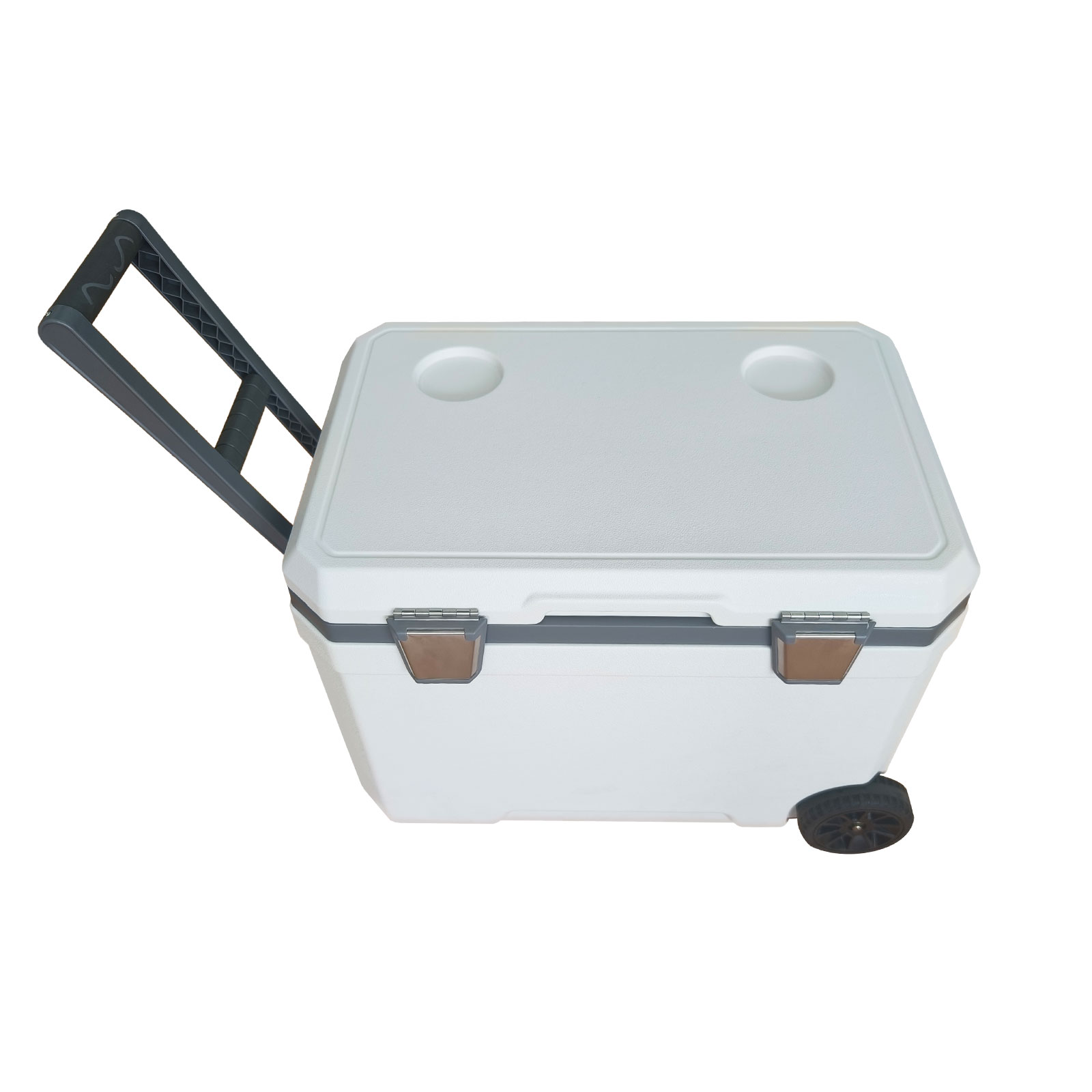
Insulated pouch trade in 2026 rewards disciplined buyers. The days of buying by category photo and chasing the lowest quote are fading. Today, better buyers want a pouch that is easier to sell, easier to repeat, and easier to defend on quality and sustainability.
This article will help you answer:
- How to source insulated pouches with better margin protection
- Which construction details matter most in trade buying
- How compliance and sustainability now shape the brief
- What trade volatility means for supply planning
- How to choose suppliers that support repeat success
Why does insulated pouch trade require more discipline now?
Because the pouch has become more than a utility item. In retail, it affects perception. In private label, it reflects your brand. In food-related programs, it sits close to practical safety expectations. Buyers therefore need more clarity on material, liner, closure, print, and packing than before.
Public food-safety guidance reinforces the point. USDA recommends using at least two cold sources in an insulated bag for perishables, and FDA and CDC continue to emphasize cold-holding discipline and avoiding prolonged time in the danger zone. Even if your trade program is not a direct food-contact product, these expectations influence what end users and customers see as a credible insulated product. (美国农业部)
- What should every serious trade buyer define first?
Exact size and tolerance
- Material stack
- Closure type
- Printing method
- Packing method
- Use case
- Target market
- QA standard
- If you do not define these early, you will compare unlike quotes and create avoidable margin risk.
- Better buyer scorecard
- Which cost areas hide the biggest risk?
- The most common hidden risks are:
- too-thin insulation,
- weak closures,
- fragile print,
- poor carton planning,
- and weak liner durability.
These do not always show up in a showroom sample. They appear later in use, in warehousing, or in customer feedback.
How should sustainability change the buying brief?
Sustainability should make your product stronger, not just better sounding. Textile Exchange reported that polyester remained 59% of total fiber output in 2024. Recycled polyester grew in absolute volume but held only a 12% share, and less than 1% of total global fiber came from recycled textiles. So a meaningful trade brief should ask not only for recycled content, but also for verification and expected product life. GRS remains useful because it requires at least 50% recycled content and adds chain-of-custody, environmental, and social criteria. (Textile Exchange)
EU rules reinforce the durability and chemistry side of this conversation. Regulation (EU) 2025/40 sets sustainability and labeling requirements across the packaging life cycle, supports reuse systems, and states that food-contact packaging with PFAS above stated limits cannot be placed on the EU market from 12 August 2026. That pushes trade buyers toward more durable, better-documented, and more transparent pouch programs. (EUR-Lex)
How do trade conditions affect sourcing plans?
The WTO’s October 2025 update raised 2025 merchandise trade growth to 2.4% but cut the 2026 outlook to 0.5%. That weaker forward signal makes supply planning more important. Better insulated pouch trade programs now use tighter lead-time review, smarter reorder timing, and less dependence on one fragile supply path. (世贸组织)
A practical sourcing plan
- Build one master specification pack
- Test one economy and one better-value version
- Review sustainability claims before launch
- Confirm the carton and label logic
- Keep a backup trim or material route ready
- 2026 latest developments and trends
- The market is moving toward:
- more reusable designs,
- stronger traceable recycled-content claims,
- stricter chemistry awareness,
- and more careful global supply planning.
- That is good news for disciplined buyers because stronger briefs now create a clearer advantage.
Frequently Asked Questions
What is the best way to protect margin in insulated pouch trade?
Define the specification early and compare quotes only after the build is aligned.
Should I ask for testing even on mass-market pouches?
Yes, at least enough validation to support the intended use and expected quality level.
Why are buyers asking more about PFAS?
Because EU packaging rules now make chemistry more visible, especially for food-contact uses. (EUR-Lex)
Summary and recommendation
Insulated pouch trade in 2026 favors buyers who combine spec control, quality discipline, sustainability proof, and supply planning. That approach protects margin better than chasing the lowest quoted unit cost.
About Tempk
Tempk helps teams source insulated packaging with a practical balance of product function, documentation clarity, and manufacturing repeatability. We focus on making trade decisions easier to compare and easier to scale.
How to Build a Better Insulated Pouch Industrial Program?
insulated pouch industrial should be treated as a controlled packaging system, not a generic bag. The best solution protects temperature-sensitive products, survives daily factory handling, supports procurement with stable specifications, and helps quality teams defend the approval decision. In 2026, that choice is shaped by stronger expectations around temperature control, documented monitoring, food-contact compliance, parcel-relevant validation, and packaging efficiency. FDA sanitary transportation rules, WHO and CDC temperature-monitoring guidance, EU food-contact rules, GDP expectations, ISTA 7E thermal testing, and the EU’s packaging regulation all point in the same direction: buyers now need evidence, not promises. (U.S. Food and Drug Administration)
This guide will help you answer
- How to define a stronger insulated pouch industrial requirement
- How to choose structure, coolant, and pack-out logic
- How to balance performance, cost, and daily usability
- How to prepare a compliance-ready document file
- How to respond to 2026 sustainability and market pressure
Why does insulated pouch industrial matter more now?
Because the market expects proof. Buyers want to know that the pouch fits the actual route, not that it merely looks thick or premium. Industrial teams also need a pack that tolerates repeated handling, staged loading, and real operator variation.
For many industrial programs, the strongest design is the one that combines thermal stability with rugged daily use. You want a pack that survives benches, carts, dock traffic, and repeated manual handling without turning every shipment into a special exception.
Step 1: define the requirement before you ask for quotes
- Start with five points:
- target temperature range
- route duration
- payload starting temperature
- outer box size
- packing method
Without that, most pricing comparisons are weak. You should also decide whether the requirement is a short shuttle, a parcel-exposed route, or a higher-risk lane that needs stronger mechanical protection.
Industrial decision table
Step 2: choose materials by system behavior
Choose by tested outcome, not by thickness alone. Bubble laminates can work for short, lower-risk lanes. Foam laminates are often a better industrial default. Premium thin-wall systems become useful when payload space is limited and performance pressure is higher.
DOE resources help explain why high-R-per-inch materials keep attracting attention, but packaging still has to convert, seal, and survive daily use. (The Department of Energy’s Energy.gov)
Material matrix
Step 3: control coolant and pack-out
A pouch manages heat flow, but the coolant carries the thermal burden. Standardize conditioning time, coolant location, and headspace. That matters more than many buyers expect.
WHO and CDC guidance continue to reinforce recorded temperature control and data logging rather than assumption-based cold-chain handling. (CDC)
Pack-out rules
- use fixed coolant placement
- reduce empty air
- train closure steps in one order
- record early-launch temperatures
- Step 4: validate the route
Validation should match the real route. Ask for payload temperature, ambient profile, coolant type, duration, and pass/fail rule. For parcel-style exposure, ISTA 7E remains a strong comparison framework because it uses real-world seasonal thermal profiles for parcel systems. (International Safe Transit Association)
Also request:
- seal review
- dimensional tolerance
- lot consistency
- change-control process
- Step 5: review compliance early
For food programs, FDA transportation expectations and EU food-contact rules matter. For healthcare-adjacent programs, GDP-style monitoring discipline matters too, including regular calibration of transport monitoring equipment. (U.S. Food and Drug Administration)
Compliance checklist
- application statement
- food-contact support where needed
- thermal test summary
- change-control language
- lot traceability
- 2026 developments and trends
The strongest trend is efficiency with proof. Buyers want lighter, smarter, better-documented systems. The EU PPWR keeps pushing material efficiency and better packaging design, while FAO continues to connect packaging and temperature management to lower food loss and lower cold-chain impact. (Environment)
FAQ
- What is the best first move?
- Define the route and pass/fail limit before requesting samples.
- Should I use one pouch for every lane?
- Usually no. Two or three approved route bands work better.
What makes a supplier strong in 2026?
Clean specs, route-based evidence, change control, and realistic technical support.
Summary and recommendation
The best insulated pouch industrial program is built on route definition, tested material choice, repeatable pack-out, and controlled documentation. That combination reduces risk, simplifies buying, and improves reorders.
About Tempk
Tempk helps customers compare industrial cold-chain packaging by route, structure, document quality, and daily operating fit. We focus on practical validation, stable specifications, and packaging choices that hold up in real work.
ASTM D3103 and ISTA 7E overview
Recycled RPET packaging options
- OEM sampling and pilot-order process
- Insulated Pouch Company Guide for Smart Buyers
A great insulated pouch company should help you solve three problems at once: keep temperature-sensitive contents safer, make your brand look stronger, and give your team a sourcing process that scales without surprises. That is the real standard in 2026. If a supplier only talks about low price or “good quality,” you are still missing the information that matters.
This article will help you answer:
- How to choose an insulated pouch company for food, retail, gifting, or cold-chain use
- Which specifications actually affect hold time, comfort, and repeat use
- How to evaluate a custom insulated pouch manufacturer with less risk
- Which compliance and sustainability questions matter most in 2026
- How to build a smarter sourcing plan before you place volume
Why does choosing the right insulated pouch company matter?
Because the pouch sits where brand promise meets real-world use. A weak build becomes obvious fast. Handles pull. Zippers gap. Condensation appears. Print fades. Liner surfaces stain. And if the pouch is used for food or chilled items, performance mistakes can become safety and trust issues, not just aesthetic issues.
Public guidance from USDA, FDA, and CDC makes the operating reality clear: cold foods should stay at or below 40°F, hot foods should stay at or above 140°F, and perishables should not remain in the danger zone for long. USDA also recommends using at least two cold sources in an insulated bag for perishables. So when you compare suppliers, the right question is not “Which pouch is cheapest?” It is “Which insulated pouch company understands the full carrying system?” That includes start temperature, coolant count, route time, ambient heat, and user behavior. (美国农业部)
- What should an insulated pouch company ask you before quoting?
A reliable supplier should ask for:
- Product use case
- Target hold-time goal
- Temperature range
- Carry weight
- Target user
- Order volume
- Decoration method
- Destination market
- Compliance needs
- Packaging and carton preference
If they do not ask these questions, you are probably getting a generic quote, not a smart recommendation.
Fast decision tool: score your supplier from 1 to 5
- A supplier scoring under 15 is usually risky for a serious program.
- Which specifications matter most?
- You do not need the most complex build. You need the right build.
- 1. Outer material
This shapes the feel, print quality, and abrasion resistance. Nonwoven works for value-driven projects. Polyester or RPET works better for stronger brand perception and longer service life.
2. Insulation layer
This is the main thermal lever. Thickness matters, but consistency matters more. Uneven foam creates performance drift.
3. Inner liner
This affects cleaning, moisture control, and food-use confidence. A pouch used once a week and a pouch used every day need different liner expectations.
4. Closure
The closure is often the hidden weak point. A better zipper or better alignment can improve field performance more than buyers expect.
5. Carry design
Handle reinforcement, gusset shape, and opening width change how real users treat the pouch.
How do you verify performance instead of trusting marketing?
A serious insulated pouch company should discuss test logic, not just slogans. Ask for:
starting product temperature,
- ambient profile,
- coolant setup,
- pass range,
- sample count,
- and whether the pouch was opened during testing.
ASTM D3103 is used to evaluate thermal insulation performance of distribution packages. ISTA explains that its 7E thermal standard uses heat and cold profiles developed from real-world parcel data, which helps create more meaningful comparisons between packaging systems. That approach matters even when your pouch is used for lunch, retail, or seasonal chilled transport. Realistic conditions beat generic claims every time. (International Safe Transit Association)
Quick red flags
- “Keeps cold for 8 hours” with no test context
- No explanation of foam thickness tolerance
- No mention of closure leakage
- No sample approval document
- No packaging photos or carton specification
Which compliance topics should be on your checklist?
If the pouch supports food transport or touches food-contact surfaces, ask how the supplier manages intended-use declarations and material compliance. FDA defines food-contact substances as components of materials used in manufacturing, packing, packaging, transporting, or holding food, and says safety must be shown under the intended conditions of use, including refrigerated and frozen storage categories. In the EU, food-contact materials sit under a framework structure and related measures. This is why your supplier should understand more than just the outer fabric. (U.S. Food and Drug Administration)
Chemistry is also becoming a bigger issue. Regulation (EU) 2025/40 sets packaging sustainability and labeling requirements across the life cycle. The EUR-Lex summary says 40% of transport packaging must be reusable by 2030, and the law also states that, from 12 August 2026, food-contact packaging with PFAS above stated limits cannot be placed on the EU market. If your supplier cannot answer PFAS, restricted-substance, or coating questions, that is no longer a small gap. (EUR-Lex)
How should sustainability change your sourcing brief?
Many buyers now ask for RPET or recycled-content stories. That is a useful start, but it is not enough by itself. Textile Exchange reported that polyester made up 59% of global fiber output in 2024. Recycled polyester reached about 9.3 million tonnes, yet its share slipped to 12% because virgin production grew faster. Less than 1% of global fiber came from recycled textiles. So the smart question is not only “Is it recycled?” It is also “How is it verified, and will the pouch last long enough to matter?” GRS remains important because it requires at least 50% recycled content and adds environmental and social criteria. (Textile Exchange)
What sustainable buying should look like
- Choose longer-life construction for repeat-use programs
- Ask for traceable recycled content
- Review chemistry declarations early
- Balance reuse value against freight and storage bulk
- Avoid weak “eco” language without documentation
How do trade conditions affect your buying plan?
Trade stability is not guaranteed. In its October 2025 update, the WTO raised 2025 merchandise trade growth to 2.4% but cut the 2026 outlook to 0.5%. For buyers, that means shorter confidence windows, more sensitivity to lane shifts, and a stronger case for backup planning. A solid insulated pouch company should be able to discuss material sourcing concentration, alternate trims, and staggered production scheduling. (世贸组织)
Practical sourcing strategy for 2026
- Lock your intended use and spec sheet first.
- Pilot-test two constructions, not one.
- Run a small field validation with real pack-out conditions.
- Review compliance documents before mass production.
- Keep at least one material or supplier backup path.
Practical example: A regional chilled-food brand moved from a generic promo pouch to a spec-controlled reusable pouch program. The unit cost increased, but the new program improved repeat-use life, reduced support complaints, and made future RFQs easier because every supplier was quoting against the same documented structure.
2026 latest developments and trends
The best insulated pouch company in 2026 looks less like a simple bag vendor and more like a packaging partner. Buyers want stronger reusable construction, cleaner compliance answers, clearer recycled-material proof, and more realistic thermal validation. Those expectations are not temporary. They are becoming standard buying behavior.
Latest developments at a glance
- Proof-based thermal claims
- Traceable recycled content
- PFAS and chemistry screening
- More reusable, less disposable thinking
- Backup planning for global sourcing risk
Frequently Asked Questions
What is the most important thing to compare first?
Compare the full build specification and intended use. Price means very little until the construction is aligned.
Can one insulated pouch company serve both retail and food programs?
Yes, if it has enough range in material, compliance support, and QA discipline. Not every supplier can do both well.
What documents should I request before final approval?
A spec sheet, approved sample record, carton plan, compliance declarations where relevant, and any available test summaries.
How do I know a recycled claim is credible?
Ask what standard supports it, how content is verified, and whether the claim applies to the final product or only to one component. (Textile Exchange)
Should I prioritize thickness or better engineering?
Better engineering. Thickness alone cannot fix weak closures, poor seams, or unstable material quality.
Summary and recommendation
The right insulated pouch company gives you much more than a custom bag. It gives you usable thermal thinking, clearer compliance, stronger repeatability, and better long-term cost control. Define your use case first. Compare full specs second. Validate performance third. Then scale with a supplier that can document what it builds and repeat it cleanly.
About Tempk
Tempk develops insulated packaging with a practical cold-chain mindset. We look at performance, user handling, and manufacturability together so buyers can make clearer decisions earlier. Our focus is on helping teams move from vague requirements to better-tested, better-documented packaging programs.
A strong next step is to send your target size, quantity, temperature goal, and destination market for a spec-based review.
How to Build a Smarter Insulated Pouch Bulk Program?
insulated pouch bulk decisions are really about scale control. You are choosing a thermal format that must work across thousands of units, multiple shifts, seasonal peaks, and repeat reorders. The best program balances thermal performance, packing speed, warehouse efficiency, and documentation discipline. In 2026, buyers are under more pressure to explain temperature control, packaging efficiency, and supplier consistency. FDA transport expectations, WHO and CDC monitoring guidance, ISTA 7E thermal validation, EU food-contact rules, and the EU’s packaging regulation all make a clearer, evidence-based sourcing process more valuable. (U.S. Food and Drug Administration)
This guide will help you answer
- How to define a bulk thermal packaging brief
- How to balance MOQ, unit price, and total operating cost
- How to choose structures that scale through warehousing and packing
- How to protect repeat supply with stronger document control
Why does bulk sourcing need a different method?
Because volume magnifies every small weakness. A slightly oversized pouch increases storage and freight. A slightly awkward closure slows labor. A silent material change creates complaints at scale.
For bulk programs, optimization means controlling three things at once: unit cost, operating simplicity, and reorder reliability. The ideal design is not just one that passes a test. It is one that scales through warehousing, picking, packing, and replenishment without creating confusion.
Step 1: define the bulk requirement
- Before RFQ, define:
- target temperature range
- route duration
- outer box size
- payload mass
- daily or monthly forecast
- stock versus custom path
- Bulk decision table
- Step 2: choose a structure that scales
Bubble laminates may work for short, high-volume chilled routes. Foam laminates often fit broader daily programs. Premium options belong where route risk or margin justifies them.
DOE insulation references remain useful because they show why wall efficiency matters when you need better thermal performance in limited space. (The Department of Energy’s Energy.gov)
Step 3: review total operating cost
- Do not stop at unit price. Also review:
- storage cube
- packing speed
- coolant use
- complaint risk
- replacement cost
- Step 4: validate and document
- Ask for:
- route-based thermal test
- dimensional tolerance
- seal review
- lot consistency
- change-control statement
If parcel exposure matters, use ISTA 7E as a comparison benchmark. (International Safe Transit Association)
For food-contact applications, request market-relevant declarations early. EU food-contact rules remain important, and policy attention to substances is still active. (Food Safety)
Step 5: optimize for 2026 pressure
The strongest bulk buyers now simplify assortments, reduce unnecessary custom SKUs, and ask suppliers for cleaner document control. The EU PPWR is increasing attention on material efficiency, while FAO’s work continues to show the value of packaging and temperature management in reducing food loss. (Environment)
FAQ
- What is the best first move in bulk sourcing?
- Define route bands and core SKU families before requesting quotes.
- Should I standardize sizes?
- Yes. Fewer better-tested sizes usually improve cost and control.
- What makes a supplier stronger in bulk?
- Stable specs, clean change control, realistic MOQ logic, and usable test data.
Summary and recommendation
The best insulated pouch bulk program is built on scale logic: a clear brief, route-fit materials, total-cost review, and strong documentation. That approach reduces complexity and makes repeat supply much easier.
About Tempk
Tempk supports bulk cold-chain packaging programs with practical route review, clearer specification logic, and thermal packaging options designed to scale.
How to Build a Stronger Insulated Pouch B2B Program?
insulated pouch b2b should be managed as both a packaging decision and a supplier-governance decision. The right pouch must fit the route, but the right supplier must also support specification stability, compliance review, realistic lead times, and repeat-order control. In 2026, that combined requirement matters more because buyers are under stronger pressure to justify temperature-control performance, document material suitability, and simplify packaging choices under sustainability and audit expectations. FDA transport rules, WHO and CDC monitoring guidance, EU food-contact rules, GDP discipline, and packaging-efficiency pressure all support the same direction: a stronger B2B program now needs proof, control, and better communication. (U.S. Food and Drug Administration)
This guide will help you answer
- How to create a stronger insulated pouch b2b RFQ
- How to compare suppliers by more than price
- How to combine technical fit with document control
- How to reduce sourcing risk in repeat thermal packaging programs
Why does B2B sourcing need a stricter method?
Because recurring supply magnifies every weak assumption. A vague RFQ leads to mixed quotes. A silent material change leads to unexpected failures. A weak change-control process leads to slower corrective action and weaker trust.
For B2B programs, the best design decision is inseparable from the best supplier decision. A good pouch with weak document control can still become a bad business choice.
Step 1: build a better RFQ
- Before quoting, define:
- product temperature target
- route duration
- payload mass
- outer pack size
- application market
- documentation level required
- B2B RFQ table
- Step 2: compare suppliers properly
- Ask every supplier for:
- specification sheet
- route-based test summary
- MOQ and lead time
- food-contact or application support
- change-control statement
- lot traceability process
If parcel exposure matters, ISTA 7E remains a useful common validation language. (International Safe Transit Association)
Step 3: evaluate total B2B value
- Do not compare only piece price. Also compare:
- document quality
- response speed
- corrective-action discipline
- scalability
- packaging efficiency
A supplier who answers clearly the first time usually saves more cost later than a cheaper supplier who creates approval friction.
Step 4: review compliance early
FDA food-transport expectations matter in relevant food routes. EU food-contact rules matter where applicable. GDP-style monitoring discipline matters in higher-risk healthcare and diagnostics contexts. EU GDP guidance also emphasizes regular maintenance and calibration of transport monitoring equipment. (U.S. Food and Drug Administration)
Step 5: adapt to 2026 pressure
The strongest B2B buyers now simplify assortments, tighten version control, and ask suppliers for cleaner sustainability logic. The EU PPWR keeps packaging efficiency visible, while broader food-loss and monitoring discussions make route-fit claims more important. (Environment)
FAQ
- What is the best first move?
- Write a tighter RFQ with route and document assumptions clearly defined.
- What makes one supplier stronger?
- Stable specs, usable validation, fast answers, and change-control discipline.
- Should technical and sourcing teams work together?
- Yes. B2B approval works best when both review the same requirement sheet.
Summary and recommendation
The best insulated pouch b2b program is built on clear requirements, route-based validation, controlled documentation, and supplier governance that supports repeat supply. That is what turns a quote into a stable business program.
About Tempk
Tempk helps B2B customers compare thermal packaging by route fit, specification quality, compliance logic, and sourcing practicality so approvals move faster and reorders stay stable.
How to Improve Insulated Backpack Procurement in 2026?
Insulated backpack procurement works best when you define what the backpack must do before you ask suppliers to quote. That sounds obvious, but many teams still start with pictures and price. The result is a product that looks acceptable on arrival and performs poorly once users load it, carry it, and reuse it.
In this article, you will learn:
- What an insulated backpack specification should include
- Which technical and sourcing checks matter most
- How compliance and market trends affect procurement
- A practical procurement checklist you can use now
- Start with a functional specification
An insulated backpack is part carry system and part temperature-control product. Your specification should therefore include capacity, payload weight, desired temperature-control level, carry duration, access style, closure type, cleaning expectation, and expected reuse cycle.
This immediately improves supplier selection because it filters out generic backpacks that do not match the use case. It also makes sample comparisons much easier.
Core specification items
Why loaded sample testing is essential
An empty insulated backpack tells only part of the story. Procurement teams should test the backpack when full and carried. This reveals balance, strap comfort, zipper closure under load, shape retention, and whether the bag sits naturally on the back.
It also reveals weak points fast. Many failures appear first at the strap anchors, base corners, zipper route, or liner seams. Those are the exact points that need better attention before volume approval.
What technical questions should procurement raise?
Ask how the insulation is built and how performance was evaluated. ISTA explains that Standard 20 provides a design and qualification path for insulated shipping containers, while 7E thermal profiles are based on real-world transport conditions. Even if your backpack is not a regulated shipper, that mindset is valuable: always compare defined systems, not undefined claims. (国际安全运输协会)
If unpackaged food may touch the inside layer, ask about food-contact suitability. FDA explains that relevant packaging components can be food contact substances, and EU rules for applicable plastic food-contact materials set migration limits. This matters for grocery, prepared-food, and retail food-carry backpack programs. (U.S. Food and Drug Administration)
If the product supports food transport, remember that bag design is only one part of cold-chain control. U.S. sanitary transport rules require adequate preparation and pre-cooling where necessary for temperature-controlled food shipments. Procurement should therefore think about process and product together. (电子联邦法规)
How are 2026 trends reshaping procurement?
Backpack demand remains strong, and insulated formats benefit from the desire for portable multifunctional products. Market reporting shows continued growth in both backpack and cooler bag segments, which supports more interest in hybrid insulated backpack products that can serve everyday carry as well as cooling needs. (商业研究公司)
Sustainability pressure is also shaping decisions. Regulation (EU) 2025/40 promotes reuse, recycling, and lower unnecessary packaging across the packaging life cycle. For procurement teams, this reinforces the value of buying better-built, longer-lasting products instead of short-life items that need quick replacement. (EUR-Lex)
A practical procurement checklist
- Define the user and the route.
- Set the payload size and weight.
- Write the thermal requirement clearly.
- Review one or two candidate structures.
- Test samples when full and carried.
- Check food-contact needs where relevant.
- Review shipping cartons and shape retention.
- Pilot before full volume.
- Track field feedback after launch.
- Improve the next order based on real use.
- Internal link suggestions
- Cooler backpack design and sourcing guide
- Food-contact liner review checklist
- Reusable insulated bag buying framework
- Insulated bag maker evaluation guide
Frequently Asked Questions
- What is the most important review step in insulated backpack procurement?
Testing loaded samples under real carrying conditions.
- Should I prioritize a lower quote?
- Not before checking durability, comfort, and likely replacement cost.
- Can one insulated backpack serve every market?
- Usually no. Function and user scene still matter.
What makes procurement easier over time?
A clear specification, stable sample approval process, and measured field feedback.
Summary and advice
Insulated backpack procurement improves when you buy from defined need, not from generic pictures. Write a stronger brief, test loaded samples, and focus on long-term service value. That gives you better product fit and fewer avoidable sourcing problems.
About Tempk
At Tempk, we help buyers turn practical carry and cooling requirements into better insulated backpack procurement decisions. Our approach combines usability, structure, and sourcing clarity so the final backpack is easier to approve and easier to scale.
How to Choose the Right Insulated Bag Maker in 2026?
Choosing an insulated bag maker is really choosing a production system. You need a supplier that can translate your bag’s use case into the right materials, assembly method, branding finish, and quality control process. If the maker is weak in any of those areas, the bag may look fine in a first sample and still fail after launch.
In this article, you will learn:
- What a capable insulated bag maker should do well
- Which technical and sourcing questions matter most
- How compliance and validation affect factory choice
- Why 2026 buyers want leaner, smarter bag designs
What should the best insulated bag maker deliver?
The best insulated bag maker delivers three things at once: correct structure, repeatable production, and practical communication. Structure means the bag fits its use case. Repeatable production means bulk orders match approved samples. Practical communication means your revisions are understood and documented before production begins.
That is why you should judge a maker by the quality of its questions. A serious supplier asks about payload, temperature range, duration, reuse, print, cleaning, and handling. A weak supplier moves too quickly to quoting.
- Which factory capabilities matter most?
1. Material control
The maker should explain each layer clearly: outer shell, insulation, liner, reinforcement, and closure. They should know how those parts affect durability, cleanability, and thermal behavior.
2. Sample development
A good insulated bag maker can revise dimensions, closures, handles, and print placements without losing control of the bag structure.
3. Assembly quality
Base seams, corner stress points, zipper alignment, and handle anchors matter more than glossy marketing photos.
4. Documentation
The factory should support specification sheets, material references, inspection points, and where needed, food-contact or regulated-use documentation.
Why do thermal and validation questions matter, even for a soft bag?
Many buyers still ask only, “How many hours can it keep cold?” That question is too simple. Performance depends on pack-out, coolant mass, ambient exposure, and empty space inside the bag. ISTA notes that Standard 20 provides a design and qualification path for insulated shipping containers and that 7E uses real-world thermal profiles. The practical lesson is simple: compare defined systems, not loose claims. (国际安全运输协会)
If you are using the bag in a pharmaceutical chain, EU GDP guidance strengthens that requirement by calling for validated temperature-control systems where relevant and temperature data when requested. That is why a strong insulated bag maker should discuss logger placement, seasonal loading, and direct-contact freezing risk, not only foam thickness. (Public Health)
What compliance questions should you raise early?
If the inner layer may touch food, raise food-contact questions at the RFQ stage. FDA explains that packaging and its components can be food contact substances, and EU rules for plastic food-contact materials set migration limits for relevant materials. That means liner choice, adhesives, and print placement all matter. (U.S. Food and Drug Administration)
If the bag is part of a food transport workflow, remember that packaging is not the whole system. U.S. sanitary transport rules require refrigerated compartments to be adequately prepared and pre-cooled when needed. Your bag design and your loading process should support each other. (电子联邦法规)
How is market pressure changing the role of an insulated bag maker?
The cold-chain packaging market keeps growing, and that growth raises expectations across the supplier base. Grand View Research estimated the market at USD 33.73 billion in 2025 with strong growth projected through 2033. In practical terms, buyers now expect more customization, faster development cycles, and fewer quality surprises from every insulated bag maker they shortlist. (Grand View Research)
At the same time, sustainability now shapes sourcing conversations. Regulation (EU) 2025/40 entered into force in February 2025 and promotes reuse, refill, recycling, and the reduction of unnecessary packaging. So buyers increasingly ask whether a bag is oversized, whether the structure is simpler than before, and whether reuse claims are backed by an actual return model. (EUR-Lex)
A practical scorecard for choosing an insulated bag maker
- Internal link suggestions
- Custom insulated bag manufacturing guide
- Food delivery thermal bag materials explained
- Reusable cold-chain packaging decision guide
- Cooler backpack design and sourcing tips
Frequently Asked Questions
What is the biggest mistake when choosing an insulated bag maker?
Selecting by price before checking sample consistency, technical understanding, and revision control.
Do I need a specialist maker?
Usually yes, especially when insulation, durability, or route-specific performance matters.
Can a good maker reduce total cost even with a higher unit price?
Yes. Better quality and better fit can lower coolant use, complaints, and replacement rates.
What should I approve before mass production?
Dimensions, materials, print references, closure details, handle load expectations, and inspection points.
Summary and advice
The right insulated bag maker is the one that can build your bag repeatedly, explain why the structure fits your route, and support quality as volume grows. Ask deeper questions early and you will buy better, faster, and with less risk.
About Tempk
At Tempk, we combine cold-chain thinking with practical bag manufacturing. We help customers turn performance targets, customization needs, and production reality into insulated bag programs that are easier to approve and easier to scale.
==============================
KEYWORD: thermal bag personalized
Insulated Backpack Exporter Guide for Global Brands
A high-quality insulated backpack exporter should help you balance four priorities at once: thermal function, carry comfort, product durability, and reliable export execution. That combination is what turns a backpack from a simple soft bag into a useful business tool for delivery, retail, gifting, and field programs.
This article will help you answer:
- How to choose the best insulated backpack exporter in 2026
- Which engineering details affect real-world performance
- How to evaluate sustainability and compliance claims
- What trade conditions mean for sourcing strategy
- Which approval process reduces risk before volume orders
Why is the exporter decision more complex for insulated backpacks?
Because the product has two jobs. It must protect contents and carry well. A poor tote can still function. A poor backpack feels bad on the body, shifts under load, and gets abandoned. That is why the exporter must think about back-panel comfort, strap geometry, opening access, and cavity stability, not only about insulation thickness.
For food and chilled-use scenarios, the same operating logic still applies. USDA recommends at least two cold sources in an insulated bag for perishables, and FDA and CDC guidance continue to stress temperature control and danger-zone avoidance. A serious insulated backpack exporter should therefore ask about route duration, pack-out setup, and load weight before suggesting a construction. (美国农业部)
- What should you check first?
1. Use case
- Is the backpack for food delivery, commuting, event gifting, or outdoor retail?
- 2. Load profile
- How heavy is it when fully packed?
- 3. Thermal objective
- Is it for short chilled carry, daily lunch use, or more structured temperature control?
- 4. User expectation
- Should it feel like promo merchandise or like retail gear?
- Which features matter most?
How should you judge technical credibility?
An exporter should be able to explain the build clearly and discuss realistic testing. ASTM D3103 evaluates thermal insulation performance of distribution packages, while ISTA states that 7E uses heat and cold profiles derived from real-world parcel lanes. That mindset is useful here because it encourages realistic pass conditions instead of vague marketing promises. (International Safe Transit Association)
Ask the exporter:
- What was the test profile?
- What coolant was used?
- What was the starting internal temperature?
- What weight was carried?
- How was strap durability checked?
How should sustainability affect the purchase?
Material storytelling is important, but product life matters just as much. Textile Exchange reported that polyester remained 59% of total fiber output in 2024, while recycled polyester reached about 9.3 million tonnes but still held only a 12% share. Less than 1% of global fiber came from recycled textiles. That means buyers should value verified claims and longer-life builds, not just recycled language. GRS remains useful because it requires at least 50% recycled content and includes chain-of-custody plus environmental and social requirements. (Textile Exchange)
Which compliance and market-access questions matter?
If the backpack supports food transport or food-related programs, ask about liner materials and intended-use declarations. FDA defines food-contact substances as components used in packaging, transporting, or holding food and says safety must be shown under intended conditions of use, including refrigerated and frozen storage. EU packaging rules also matter more now because Regulation (EU) 2025/40 increases sustainability and labeling pressure and restricts certain PFAS levels in food-contact packaging from 12 August 2026. (U.S. Food and Drug Administration)
How do trade conditions affect exporter strategy?
The WTO’s October 2025 update raised 2025 merchandise trade growth to 2.4% but cut the 2026 outlook to 0.5%. That softer outlook is a reminder to avoid fragile sourcing setups. A good insulated backpack exporter should be able to discuss alternate materials, trim substitution paths, and timing buffers. (世贸组织)
Safer sourcing process
- Define the use case and load first
- Compare two construction levels
- Field-test the backpack with real packing
- Review compliance and material documents
- Lock the approved spec and carton plan
- 2026 latest developments and trends
The insulated backpack market is moving toward products that look more like real retail equipment and less like generic insulated merchandise. Better comfort, stronger verified recycled-content stories, and smarter sourcing discipline are the clear winners.
Frequently Asked Questions
What matters most: insulation or comfort?
Both, but comfort decides whether people keep using the backpack. A product that performs thermally but feels bad to wear still fails.
- Is RPET enough to make the product sustainable?
Not by itself. Durability, verification, and actual reuse all matter too.
How do I spot a weak exporter early?
Look for vague specs, generic hour claims, and weak answers on material or compliance documentation.
Summary and recommendation
The best insulated backpack exporter in 2026 combines thermal knowledge, backpack engineering, sustainability proof, and export discipline. If you evaluate all four areas together, you will make a much better buying decision than if you focus on price alone.
About Tempk
Tempk works on insulated carry systems with attention to thermal logic, user comfort, compliance fit, and manufacturing clarity. We help buyers turn broad ideas into better-defined backpack programs that are easier to source and easier to scale.
What Makes a Great Cooler Bag OEM in 2026?
A great cooler bag OEM helps you launch a product that is brand-right, use-right, and production-right. That is the standard now. In 2026, brand owners are no longer satisfied with attractive samples alone. They want a custom cooler bag that performs well, scales cleanly, ships efficiently, and passes internal review faster.
That is why the right cooler bag OEM matters so much. Your supplier influences not just manufacturing cost, but also user experience, launch speed, defect rate, and reorder stability. A stronger OEM partner reduces uncertainty from the first sketch to the final container.
This article will help you:
- define what a serious cooler bag OEM should deliver
- understand how design and materials affect user experience and performance
- build a stronger sample-to-production approval process
- review compliance and chemical disclosure with more confidence
- choose an OEM partner that is ready for 2026 market conditions
What should your cooler bag OEM deliver beyond manufacturing?
Your OEM should bring product judgment. That means helping you decide what features actually improve the bag and what features only add cost, labor, or risk. A strong partner asks the right questions before quoting: who uses the bag, how often, for how long, in what conditions, and at what target price.
This is important because OEM projects involve trade-offs. A stiffer build may improve shape but reduce carton efficiency. A premium fabric may improve feel but complicate branding. More internal organization may improve user function but increase sewing time and failure points. The right OEM makes these trade-offs visible early.
You should also expect process transparency. That includes a structured BOM, clear sample coding, approved artwork references, and written change control. If those basics are missing, the project will feel harder at every step.
OEM decision tool
How do materials and construction shape a custom cooler bag?
The thermal result and the brand result must work together. The shell creates first impression, but the insulation layer, liner, zipper path, and reinforcement structure decide whether the bag remains useful after repeated use.
In practice, the best cooler bag OEM builds from the inside out. First define the job: short retail carry, route delivery, daily lunch use, or specialty transport. Then choose the material stack that supports that job. The outer look comes after the function is protected, not before.
Technical validation matters here. ISTA identifies 7E as the current thermal transport testing standard for parcel delivery system shipment. For more sensitive temperature handling, NIST says continuous monitoring is critical because excursions can degrade quality, and CDC highlights digital data loggers and proper probe selection. That does not mean every bag needs laboratory complexity, but it does mean a good OEM should link thermal claims to real test conditions. (International Safe Transit Association)
A better cooler bag OEM also thinks about how users behave. If the bag is opened often, closure design becomes more important. If it is carried under heavy load, handle reinforcement becomes more important. If it is cleaned frequently, liner bonding becomes more important. Good OEM development connects engineering decisions with real behavior.
Practical approval checks
- open and close the zipper at least 20 times
- test the bag under real target weight
- inspect corners after cleaning
- compare carton pack efficiency before approval
- keep one signed reference sample for every SKU
Which compliance and sustainability issues should OEM buyers review?
Compliance is strongest when reviewed at component level. If the project involves food-related use, coatings, liners, adhesives, or treated surfaces, ask exactly which parts need supporting documentation. The FDA says food contact notifications are specific to the company and intended use. In Europe, food-contact materials placed on the market must comply with Regulation (EC) No 1935/2004, and plastic food-contact rules remain relevant where plastic layers are involved. ISO 9001 and ISO 22000 can also help show management discipline for quality and food-related process control. (U.S. Food and Drug Administration)
Chemical review matters too. For EU projects, ask for declarations covering the whole bill of materials, because SVHC-related obligations can reach beyond the main body fabric. Suppliers of articles containing Candidate List substances above 0.1% w/w can face information or SCIP-related duties. FDA also says 35 PFAS-related food contact notifications are no longer effective as of January 2025, which makes treatment and coating questions more relevant. (欧洲化学品管理局)
Sustainability now enters OEM briefs earlier than before. The European Commission says PPWR entered into force in February 2025 and begins applying from mid-2026. EPA notes that more efficient and lightweight packaging can save money while reducing waste, and OECD points to sustainable packaging and route optimization as carbon-reducing supply-chain practices. (Environment)
Why are 2026 buyers choosing more disciplined OEM partners?
Cold-chain-related demand remains broad and active, but the approval environment around custom products is tougher. Buyers care about launch timing, internal sign-off, compliance review, and long-term product stability. That means the best cooler bag OEM is often the one that removes friction.
The winning supplier in 2026 usually does three things better:
- simplifies product decisions with honest technical guidance
- documents the project clearly enough for internal approval
- keeps production stable enough for confident reorders
- Latest developments
- Cleaner BOM control is becoming a buying advantage.
- Sustainability now affects concept design, not just final marketing.
- Documentation speed is influencing supplier selection more often.
Frequently Asked Questions
Q1: What is the first thing I should send an OEM supplier?
A short product brief: target user, dimensions, capacity, price goal, insulation expectation, branding method, and market destination.
Q2: How do I keep my approved sample from changing in bulk?
Lock the BOM, sample code, tolerance sheet, logo file, and carton spec into the purchase file before mass production begins.
Q3: Is the most creative supplier usually the best OEM partner?
Not always. Creativity helps, but disciplined execution usually matters more once the project scales.
Q4: Should I ask for sustainability details even on a small launch?
Yes. Small launches often grow into repeat orders, and early disclosure saves time later.
Q5: What is the clearest sign of a weak OEM partner?
Vague answers about materials, changes, and tolerances. That usually predicts future confusion.
Summary and recommendations
The best cooler bag OEM in 2026 is not simply the supplier that can customize the most details. It is the supplier that can balance design, performance, compliance, and execution in one clean process. That makes launches faster and reorders safer.
Your next move should be to build one OEM briefing template and one approval template. Use them with every supplier. When the process is clear, stronger partners stand out quickly.
About Tempk
Tempk supports custom thermal packaging projects with practical design thinking, material clarity, and repeatable manufacturing control. We help brands and B2B buyers move from concept to production with fewer unknowns and better fit for real use. If you are choosing a cooler bag OEM for 2026, we focus on the product’s job, the buyer’s process, and the supplier controls needed to keep both aligned.
How to Choose a Cooler Bag Exporter in 2026?
A strong cooler bag exporter helps you protect temperature, protect margins, and protect your brand. That is the real buying goal. You are not simply importing bags. You are importing a mix of materials, thermal performance, quality systems, shipping discipline, and market compliance. When one of those pieces is weak, the whole project becomes expensive.
In 2026, buyer expectations are higher because the market is harder. Cold chain demand remains strong, sustainability rules are becoming more practical, and procurement teams want more proof before approving a supplier. If you choose the right cooler bag exporter, you get smoother reorders, fewer complaints, and a more scalable supply plan.
This article will help you:
- identify the traits that separate a dependable cooler bag exporter from a low-control supplier
- understand how material structure affects thermal performance and product life
- compare quotations using real value instead of surface-level price
- review compliance, food-contact, and chemical disclosure more confidently
- build a 2026-ready sourcing process with less risk and better repeatability
What should you expect from a professional cooler bag exporter?
You should expect process control, not just production capacity. A real cooler bag exporter can explain what the bag is made from, how the layers are assembled, what tolerances are allowed, how defects are caught, and how finished cartons are prepared for export. This sounds basic, but many supplier problems begin because these details were never fixed clearly.
A professional exporter also understands that different buyers need different bag logic. A retail tote, a meal-delivery bag, and a healthcare carry bag may all be called “cooler bags,” but their priorities are different. One may need better shelf appeal. Another needs repeated loading and cleaning. Another needs stronger temperature discipline. The exporter should ask about your end use before making performance promises.
The best suppliers think in systems. They do not sell “cold for 8 hours” as a slogan. They ask what coolant you use, what the start temperature is, how often the bag will be opened, and how far it will travel. That approach saves you from buying a product that looks right but performs badly in the real world.
Quick buyer scorecard
- Practical tips
- Use one approval sample code: Tie mass production to one written sample reference.
- Ask about substitutions early: Do not let “similar material” stay undefined.
- Review carton efficiency: Freight cost often hides inside packaging choices.
Case example: A buyer approved a beautiful pre-production sample but forgot to define foam density tolerance and zipper model. The first shipment was acceptable. The second shipment felt softer, sagged more under load, and had weaker closure performance. After moving to a cooler bag exporter with locked BOM control and sample-revision coding, performance became more stable and the buyer stopped wasting time on post-shipment arguments.
How does material science affect your buying result?
Thermal performance depends on the whole structure, not on one magic fabric. The outer shell supports durability and brand appearance. The foam slows heat flow. The liner affects cleanup, leakage control, and sometimes food-related suitability. The closure controls air exchange. Seams, corners, and handle anchor points decide whether the bag keeps working after repeated use.
That is why two bags with the same size and similar look can behave very differently. A supplier may save cost by thinning the foam, simplifying the liner build, weakening the top overlap, or using less stable reinforcement. The price goes down a little, but temperature retention, comfort, and product life fall much more.
Technical validation helps here. ISTA identifies 7E as the key thermal transport testing standard for parcel delivery conditions, built from real heat and cold profiles. For more sensitive handling, logged monitoring is essential: NIST says continuous temperature monitoring is critical because excursions can damage product quality, and CDC guidance highlights digital data loggers and appropriate probes. (International Safe Transit Association)
You do not need to turn every purchase into a research project. You simply need to ask the exporter for test conditions in writing and make sure your sample comparisons use the same payload, coolant, ambient temperature, and opening pattern.
Material and structure checklist
- shell fabric weight and coating type
- insulation type and nominal thickness
- liner material and sealing logic
- zipper model or closure design
- bottom support board and removability
- strap reinforcement method
- cleaning method after condensation or spill
Which compliance and market issues matter most in 2026?
Compliance matters when it is linked to use, market, and materials. Broad labels like “eco,” “food grade,” or “export standard” are not enough. A stronger cooler bag exporter can show you which parts of the product are relevant to food contact, which chemical declarations are available, and which system certificates support process control.
On the food side, the FDA states that food contact notifications are specific to the company and intended use, which means one claim cannot be copied blindly across projects. In Europe, food-contact materials placed on the market must comply with Regulation (EC) No 1935/2004, and plastic food-contact rules under Regulation (EU) No 10/2011 remain important when plastic layers are involved. ISO says ISO 22000 can be used across the food chain to manage food safety hazards, while ISO 9001 remains a strong base for quality management. (U.S. Food and Drug Administration)
Chemical transparency is also rising. For EU projects, ask for declarations that cover ink, coatings, foam, labels, webbings, and hardware. Suppliers of articles containing Candidate List SVHCs above 0.1% w/w can face duties tied to EU rules and the SCIP system, so partial disclosure is not enough. In the U.S., FDA says 35 PFAS-related food contact notifications are no longer effective as of January 2025, which makes PFAS-related claims around coated contact materials more sensitive. (欧洲化学品管理局)
Why are market trends changing exporter selection?
The market is no longer rewarding cheap supply alone. The U.S. Department of Commerce says cold chain-dependent food and pharmaceutical trade remains large and has seen steady growth since 2020. FAO links transport-side food-loss reduction to packaging, temperature management, and airflow, while UNIDO notes that poor storage and transport can still drive major losses in vulnerable regions. This keeps demand for practical thermal packaging strong. (贸易局)
At the same time, packaging regulation and procurement are changing buyer behavior. The European Commission says PPWR entered into force on 11 February 2025 and begins applying from mid-2026. EPA says efficient and lightweight packaging can save money and reduce waste. OECD notes that sustainable packaging and route optimization can lower supply chain carbon footprint, and its green procurement work shows that 92% of OECD countries had adopted a national GPP strategy. (Environment)
This is why the best cooler bag exporter in 2026 usually wins by combining four things:
stable technical quality
- clearer material disclosure
- better shipping efficiency
- stronger support for buyer-side approval
- Latest developments
- Thermal proof is replacing slogan-based hold-time claims.
- Documentation is becoming a sales advantage, not an admin task.
- Reuse and packaging efficiency are shaping new RFQs.
Frequently Asked Questions
Q1: How many times should the keyword model be tested before approval?
At least under one controlled bench test and one practical-use test. If the project is sensitive, add route simulation or logged monitoring.
Q2: What is the best sign that an exporter is reliable?
Clear answers with fixed tolerances and written revision control. Reliable suppliers do not hide behind vague terms.
Q3: Should I ask for certifications first or samples first?
Ask for both early. Samples show execution. Certifications and declarations show system control. You need both to judge risk well.
Q4: What is the biggest hidden cost in cooler bag imports?
Instability. If batch two differs from batch one, you lose time, freight efficiency, customer trust, and internal approval confidence.
Q5: How do I make reorders easier?
Lock the BOM, sample code, carton spec, artwork version, and defect standard in one order file. Reorder discipline starts before order one ships.
Summary and recommendations
Choosing a cooler bag exporter in 2026 is about more than price and appearance. You need a supplier that understands thermal structure, export execution, material disclosure, and repeat-order control. The strongest exporters help you reduce risk before goods ship, not after claims appear.
Use one detailed specification sheet, one supplier scorecard, and one approval file for every model. Test samples under the same conditions, ask for intended-use documentation, and choose the exporter that makes quality easier to repeat.
About Tempk
Tempk develops reusable thermal packaging for cold chain, delivery, retail, and temperature-sensitive transport needs. We focus on practical engineering, clearer material communication, and scalable production discipline. If you need a cooler bag exporter approach that balances performance, compliance, and procurement speed, we build the project around your real use conditions.