


Passive Temperature Controlled Packaging: Design and Selection
Passive Temperature Controlled Packaging: Design and Selection
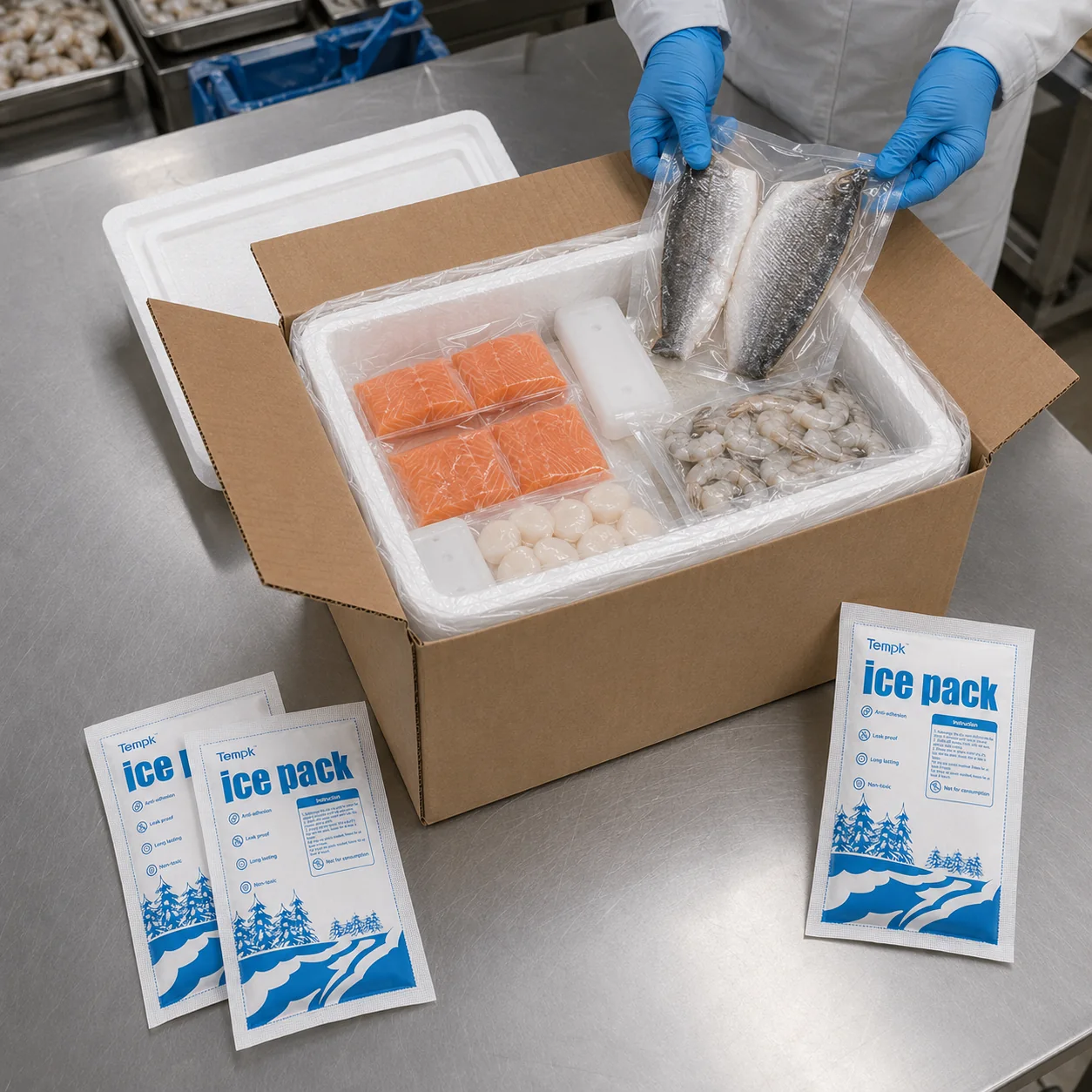
Passive Temperature Controlled Packaging: How to Select a Verifiable Shipping System
Passive temperature controlled packaging protects a product for a defined period without relying on an electric cooling or heating unit inside the shipping package. It uses insulation to slow heat transfer and preconditioned thermal media to absorb or release heat. That simple principle supports many parcel, pharmaceutical, diagnostic and food shipments. It does not mean the empty box is temperature controlled, that the coolant automatically selects the correct temperature, or that a declared number of hours applies to every route.
The most useful way to choose a passive shipper is to evaluate three linked questions: What heat or cold exposure will the route impose? What complete loaded packout can resist that exposure? What evidence shows people can reproduce its performance? The answers determine insulation choice, thermal media, usable capacity, qualification and operating cost more reliably than a catalog comparison of materials.
Decide whether a passive system fits the distribution process
A passive system carries a finite amount of thermal energy prepared before dispatch. It is usually a strong candidate when transport exposure is bounded, the payload is compatible with a standardized loading pattern, and the warehouse can control coolant conditioning. Parcels that move through carrier networks without a continuous power supply are an obvious use case, but passive solutions are not limited to short distances. Properly designed and qualified passive shippers can be considered for longer routes within their documented operating conditions.
Active temperature-control equipment uses powered refrigeration or heating. It may be preferable when payload volumes are large, journey duration is highly uncertain or the necessary passive coolant mass is impractical. Active systems introduce requirements for energy supply, maintenance, equipment custody and servicing. A refrigerated truck carrying insulated passive packages is a combination of environmental control and local thermal buffering; it does not make every insulated box an active system.
A pallet thermal cover is another separate entity. It can reduce heat gain or exposure during certain handling intervals, but a cover alone cannot demonstrate that every carton on a pallet remains in a specified temperature band. Monitoring devices are separate again: they produce evidence at measurement points but do not add cooling capacity. Distinguishing these controls prevents RFQs that request one component and expect the performance of an entire transport operation.
Match insulation architecture to shipping geometry and return logistics
Insulation slows heat movement through the enclosure, but the heat path includes the walls, lid, seams, corners, joints and openings. A material datasheet cannot characterize all those paths. The outer footprint, internal usable space, payload weight and box handling also affect which architecture is practical.
EPS foam is a familiar rigid insulated container material that may suit one-way distribution where the chosen design and material handling process fit the application. Its selection should consider durability in the shipping lane, breakage risk, closure quality and the destination’s recovery options. EPP is used in durable molded containers and can suit returnable operations when cleaning, inspection and reverse logistics are actually available. Its structural durability does not mean the same packout automatically remains thermally qualified forever.
Vacuum insulated panels (VIPs) can reduce heat transfer through well-integrated panel areas. However, edges, joints and structural protection remain relevant, and panel damage can compromise expected performance. A VIP-enhanced shipper often presents a different balance among thermal protection, usable volume, cost and inspection requirements. A buyer should not compare the published thermal conductivity of a VIP with the whole-box performance of an EPS system and conclude the relative shipment duration directly.
Insulated bags and liners can be easier to integrate into certain distribution formats or return streams. Their flexible geometry, fold lines, closure method and support structure can cause different thermal behavior from a rigid molded box. They still need complete-system testing for the proposed payload and route.
| Packaging architecture | Decision strength | Boundary to verify |
| EPS insulated carton | Straightforward rigid one-way packaging | Mechanical damage, waste handling and complete-packout test results |
| EPP insulated box | Durable format for a controlled reuse network | Collection, cleaning, closure condition and inspection after cycles |
| VIP-enhanced shipper | Reduced heat transfer through suitable panel regions | Panel protection, edge losses, integrity checks and cost |
| Insulated bag or liner | Flexible integration and compact logistics where appropriate | Shape control, seam and closure performance, loaded thermal profile |
| Active or controlled transport alternative | Managed temperature supply for selected demanding lanes | Power, handling, servicing, custody and contingency process |
Architecture selection is an optimization problem. A heavier, better-insulated wall can increase freight cost and reduce internal capacity; a reusable format can save packaging purchases yet add significant reverse-logistics expense. Evaluate the cost and operability of the loaded shipment, not just the purchased enclosure.
Choose thermal media by the product limits, not the word “cold”
The thermal medium creates another important distinction. Gel ice packs, water-based bricks and other refrigerant formats provide useful thermal mass, but their behavior depends on formulation, conditioning and placement. Phase change materials (PCMs) are chosen for their behavior while changing phase within a particular operating region. Not every gel formulation is a PCM designed for a tightly defined band, and a nominal PCM phase point does not equal the temperature at every product location.
The product specification establishes both upper and lower limits. A cooled pharmaceutical may be vulnerable to freezing, while a frozen food payload has different physical and quality objectives. Some cosmetic products are harmed by excess heat and by freezing. Accordingly, selecting a thermal medium solely by maximum cooling duration can increase a different failure risk.
A correct comparison should consider the coolant’s energy capacity in the relevant state, actual starting condition, mass, surface area, position, contact barriers and relation to the loaded payload. More frozen mass may improve resistance to warm exposure but increase local cold risk. A formulated PCM may simplify a particular temperature strategy yet require tighter sourcing and conditioning controls. Neither decision can be confirmed without testing the complete intended configuration.
Conditioning is a manufacturing step, not a vague instruction
Passive systems depend on energy loaded into the media before shipping. That requires infrastructure and a reproducible procedure. Define where packs are conditioned, their ready-state criterion, how long they may sit in a staging area, how they are identified and what happens if a batch is prepared incorrectly. “Freeze overnight” is not a controlled specification because equipment, pack geometry and loading can vary.
The shipper and payload also have starting temperatures. A preconditioned coolant placed in a hot box around warm cartons may follow a different initial trajectory from the same coolant used with the specified chilled components. The allowed assembly time and lid-open exposure should therefore appear in the operating work instruction, not only in the laboratory notebook.
At scale, conditioning capacity becomes a major purchasing parameter. A warehouse may need enough refrigerator or freezer space, circulation, staging locations and staff time to prepare daily volume. The lowest-price coolant option may cost more in energy, labor and rejected shipments if its preparation is difficult to control.
Design around the real usable load and its hot and cold spots
The nominal volume of an empty insulated container is not the usable shipping capacity after coolant, tray, separators, monitor and cushioning are installed. Suppliers should provide drawings of the complete loaded assembly, with external footprint, internal clearances and practical carton count. Weight constraints and access requirements also matter for manual handling and parcel-carrier acceptance.
A full box and a sparse box can behave differently. Payload mass changes the system’s thermal response; air spaces alter heat movement; contact area with cooling media shifts; and an internal divider can move a sensitive carton closer to a lid or side wall. If order sizes vary, qualification should consider justified minimum and maximum configurations. In some operations, a small number of standardized shipper sizes gives more control than repeatedly improvising filler materials in one oversized box.
Hot and cold locations do not necessarily coincide. A lid corner might reach the upper limit first in a warm challenge, while a carton beside a frozen brick might reach the lower limit first at startup. An engineering study may use several probes to identify those locations and then determine where routine monitoring offers meaningful evidence. A single central temperature trace cannot establish that every interface in the box had the same temperature.
This distinction is particularly important for freeze-sensitive medical goods. An insulated wall may slow external heating very well while direct contact with an overly cold refrigerant creates a local cold excursion. Better insulation does not automatically cure incorrect coolant choice or geometry.
Translate the transportation lane into a defensible test profile
Start the route clock when the shipment becomes dependent on its protective packout, usually after assembly and closure, and stop it when the payload enters suitable controlled storage. Include origin staging, vehicle collection, sortation, transfer hubs, customs when relevant, missed deliveries and receiving delay. A route described as “next-day” may impose a substantially different exposure window from the nominal time in motion.
Warm and cold ambient challenges should be considered separately. A summer lane tests cooling reserve and resistance to heat ingress; a winter lane can challenge minimum temperatures, especially when refrigerants begin colder than the product. For mixed seasonal networks, one packaging recipe may need a documented seasonal variant. A temperature trace recorded at the container wall or in the chamber is the ambient challenge, not necessarily the product temperature.
ISTA Standard 20 establishes a framework for insulated shipper qualification, and ISTA Standard 7E provides standard thermal profiles developed for parcel-delivery exposures. These are tools for testing a defined shipping system. They do not provide a universal safe duration for every product or route, nor do they establish an individual pharmaceutical product’s acceptability after a deviation. A route-specific profile may also be justified if the organization has credible lane evidence and a controlled test method.
A meaningful performance claim therefore sounds conditional: the specified shipper, coolant, payload and packing instruction met a stated product condition during a stated thermal challenge. The phrase “maintains temperature for 72 hours” without test conditions is incomplete, even if a graph looks reassuring.
Review evidence from component to operation
Supplier evaluation should distinguish several kinds of documents that are commonly blended in marketing descriptions.
A material datasheet can describe foam, film, gel or panel characteristics. A component test can establish properties of an individual pack or panel. A complete-packout thermal test demonstrates a particular assembly under a particular challenge. A qualification package may include the rationale for design selection and representative test coverage. A shipment logger record shows measured temperatures at its instrument locations in routine distribution. A process or quality record shows whether operators followed an approved procedure and what happened when they did not.
None of those artifacts substitutes completely for the others. For regulated medicine distribution, the European Union’s GDP guidelines require risk-aware transport management and careful attention to product-defined temperatures, suitable packaging, route extremes and excursions within the relevant EU scope. A generic “GDP approved box” claim without an identified evaluation and quality-system context should be challenged.
A useful evidence request contains the configuration revision, bill of materials, loaded-fit drawing, coolant specification, conditioning SOP, thermal profile, sensor placement rationale, measured results, acceptance criteria and scope limitations. Buyers should ask what changes would trigger review: new foam density, changed PCM supplier, revised carton height, different gel mass, altered pack orientation or an additional distribution center can each affect the approved design.
Account for the true cost of running the system
Cost per empty box is seldom cost per accepted shipment. Add coolant purchase or replenishment, conditioning energy, storage space, packing labor, payload capacity lost to insulation, outbound freight weight and cube, temperature instrumentation, inspection and likely exception handling. For reusable packaging, include return freight, cleaning, storage, loss, damage and the number of successful cycles actually achieved.
Environmental decisions also need a full system boundary. A returnable container may reduce disposal in a dense closed network; the same container can incur unnecessary return transport when retrieval is difficult. “Recyclable” requires local access to appropriate recovery infrastructure, while “reusable” requires a practical collection and inspection loop. Avoid claiming universal carbon savings without a scope and supporting assessment.
Consider two hypothetical distribution models. The first sends individual refrigerated parcels to many unrelated customers. It may favor a compact single-use solution that can be packed consistently. The second delivers repeatedly between the same depots and has assured returns. It might justify an EPP returnable system even if its purchase price is higher. Both still need thermal evidence for their payloads; the difference is the operating model, not a universal materials ranking.
Turn the specification into a controlled purchase
For a useful quotation, provide the exact product limits, payload dimensions and mass, minimum and maximum fill states, transit timeline with delays, seasonal ambient exposure, destination acceptance process and target reuse model. Ask each supplier to return a loaded packout drawing, stated conditioning procedure and the test envelope supporting its claim. Require disclosure of what has not been evaluated.
Supplier controls should address material revisions, dimensional inspection, coolant identity, traceability, sample-to-production consistency, agreed substitutes and change notification. A design that passed during a highly supervised trial may be unsuitable for a high-volume warehouse if the procedure is too easy to misread. Select an arrangement staff can actually execute without relying on undocumented judgment.
Tempk publicly offers insulated bags, EPP/VIP medical boxes, gel ice packs, ice bricks, PCM-related media and custom packout-planning support. These are possible building blocks; they are not a guarantee that every combination meets a product’s temperature condition or formal qualification requirements. Share your shipment specification and seek a sample and evidence plan tied to the actual route.
The passive-system decision in one sentence
The right passive temperature controlled packaging is the lowest-complexity complete packout that demonstrably protects the defined product through the defined exposure window and can be repeated under controlled instructions. When the necessary thermal mass, usable space, uncertainty or handling burden becomes unreasonable, improve the route controls or compare active alternatives instead of simply adding more ice or insulation.
Cold Chain Packout Design: From Geometry to Packing SOP
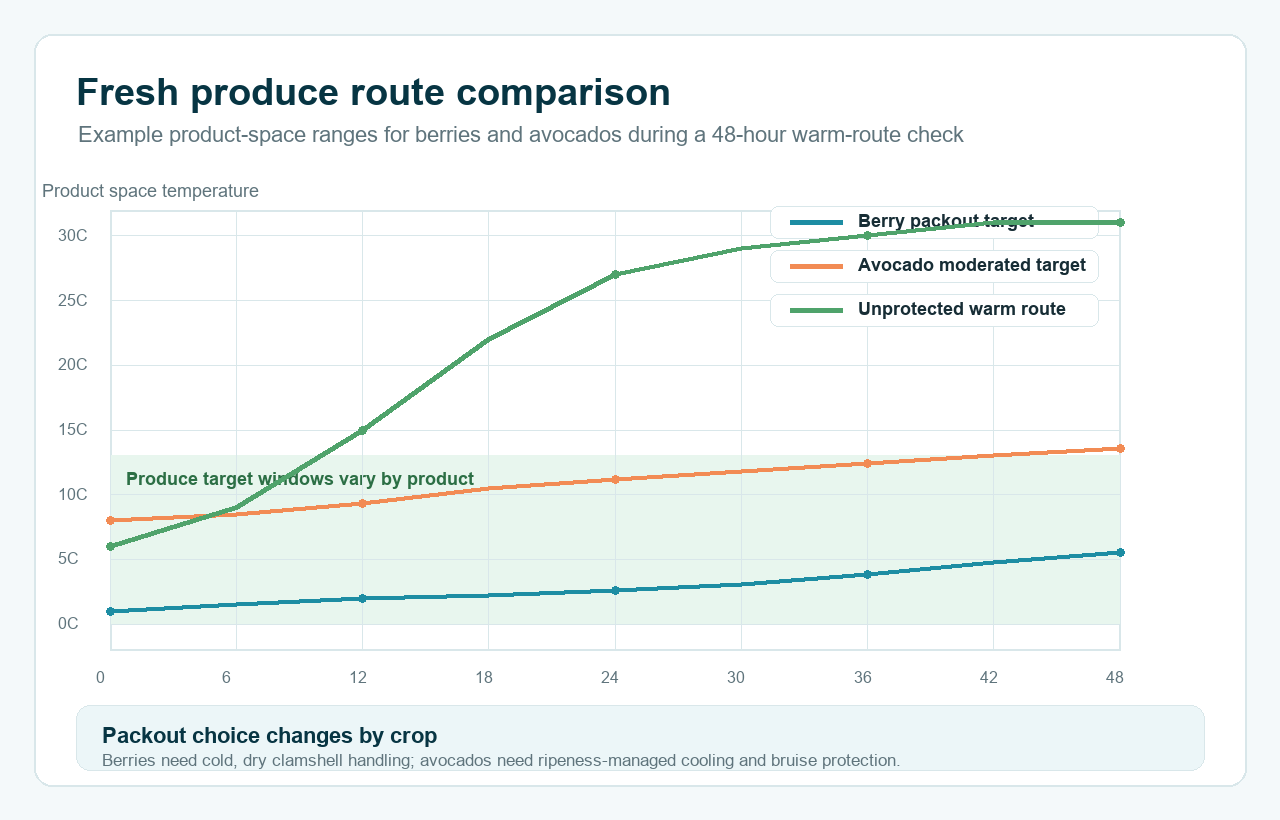
Cold Chain Packout Design: From Geometry to Packing SOP
Cold chain packout design defines how product, coolant, insulation, protective parts and monitoring equipment form one reproducible shipping assembly. It also defines the preparation and working sequence needed to put that assembly into its intended starting condition.
The finished design is therefore more than a layout. It is a connected set of specifications, drawings, instructions and supporting evidence. A useful design process works from the product interface outward, checks the limits of ordinary production and packing, and releases only the configurations that the operation can identify and reproduce.
Draw three boundaries around the proposed shipment
The first boundary is thermal. Establish the product’s required temperature conditions, condition at packing and intended protection interval. Include the relevant external exposure and handling assumptions. These inputs come from the product and distribution requirements; they should not be inferred from a generic description such as medical cooler.
The second boundary is spatial. Describe the actual product presentation, orientation, shipping quantities and protective packaging. Identify usable product space after coolant, barriers, retainers and monitoring equipment are installed. Nominal internal volume is not the same as usable payload capacity.
The third boundary is operational. Identify preparation equipment, available staging, packing sequence, operator tasks and receiving arrangements. A design that depends on a process the dispatch site cannot perform is not a suitable candidate, even when its laboratory concept is promising.
Assess these boundaries together. A compact layout may leave too little tolerance for production variation. A thermal solution may require preparation capacity the warehouse does not have. A simple assembly may not preserve the separation needed by a sensitive product. The relevant trade-off is between the complete alternatives, not isolated component advantages.
Record assumptions that are still unresolved. An uncertain route exposure, unconfirmed product presentation or undefined preparation capability should remain an open design input. Assign an owner and a closure method rather than allowing an optimistic assumption to become a hidden performance claim.
Also define what the design does not cover. A closed parcel configuration should not be treated as suitable for repeated opening, another temperature category or an unrestricted range of loads without assessment. Explicit boundaries help the ordering system reject unsupported combinations before they reach the packing bench.
Build the physical definition from the product interface outward
Begin with the product location and the relationships that must be preserved. Identify the surfaces the product may contact, the orientation it must maintain and the movement that needs to be prevented. Then define the parts that establish those relationships.
Where separation from coolant is necessary, specify how that separation is achieved and retained. A barrier’s material, geometry and position can matter; a generic instruction to add protective packaging leaves those variables uncontrolled. Do not prescribe a universal barrier thickness or coolant placement without evidence for the particular system.
Choose restraint that serves the actual load arrangement. The smallest shipment may need a different locating feature from the largest. Loose filler should not be used as an informal substitute for a defined arrangement, especially where movement can create new product-to-coolant contact.
Locate coolant according to the intended thermal function and available evidence. Equal coolant mass does not make two arrangements equivalent: shape, contact area, distance and preparation state can differ. More coolant is not automatically safer where excessive local cooling is a relevant risk.
Continue outward through the insulation, joints, lid and external protection. Check how internal parts affect closure. A folded liner, over-height insert or instrument cable can prevent the intended lid engagement. The design should define a normal closing condition rather than depend on operators forcing the package shut.
Review dimensional variation across the assembled stack. Components individually within their purchasing tolerances can still combine into an assembly that has insufficient clearance or excessive compression. Identify the important combinations and verify the resulting fit using representative parts or a justified dimensional analysis.
A hypothetical low-fill order illustrates the design decision. Removing several cartons from an approved full-load arrangement creates free space and changes restraint. The response is to define and evaluate the smaller arrangement, not to assume that fewer cartons make the original design automatically suitable. The example identifies a question; it does not claim a tested outcome.
Use a bill of materials that reaches the functional accessories. A spacer or locator should not disappear from configuration control because it costs less than the enclosure. Its role in maintaining an important interface determines the control it needs.
Specify the starting state as carefully as the drawing
A layout describes where components go; preparation determines the thermal state in which they arrive. Both belong to the packout definition. The same physical assembly can behave differently when product or coolant enters it under different conditions.
Request the preparation method associated with the candidate system. Identify relevant equipment capability, loading arrangement, release criteria and handling after release. Exact temperatures, times and coolant quantities should come from the applicable system specification and evaluation, not from an unrelated example.
Distinguish the coolant’s material identity from its readiness. The correct part number can still be unsuitable for immediate use when its preparation is incomplete or its history is uncertain. Conversely, a prepared-looking pack with the wrong formulation is not an acceptable substitution merely because it fits the designated space.
Review whether routine preparation batches represent the process considered during development. Loading more material into equipment, changing separation between packs or introducing another transfer step can affect the starting condition. Assess meaningful differences rather than treating equipment setpoint as a complete description of the process.
Define the status flow between preparation and assembly. Unprepared, in-process, ready and uncertain components should remain distinguishable as they move. The packing team needs a reliable acceptance check, and the preparation team needs a record of what it released.
Include pauses and unused material in the method. State how a delayed assembly, interrupted preparation cycle or returned coolant batch is handled. Do not assume that placing material back into a conditioning area instantly restores the required state or restarts an allowed period.
Product preparation deserves equivalent attention. Picking, staging and loading should preserve the intended starting condition. A packout designed to maintain a product condition should not be presumed capable of correcting a product that begins outside that condition.
Remove dependence on memory, judgment and invisible corrections
Build candidate assemblies with the people who will use the instruction. Observe where they hesitate, rotate a component repeatedly, press a lid into place or ask a specialist to confirm a choice. These observations identify design questions that a finished photograph may conceal.
Prefer physical location and clear identification where they can replace repeated judgment. A shaped retainer can establish position; distinct component identifiers can prevent confusing similar coolants; a visible closure feature can make incomplete seating easier to detect. Any retained feature needs to be included in the assessed configuration.
Define checks at the moment the relevant feature is still visible. A bottom barrier should be verified before it is covered. A logger should be identified and mounted before the lid blocks access. End-of-line inspection alone cannot reliably establish every hidden assembly detail.
Design the instruction for ordinary working conditions. Consider gloves, condensation, limited bench space and the need to read labels. Use clear views and identifiers rather than depending only on color or an angle that conceals the difference between parts.
Test exception recognition as well as normal assembly. Present controlled training examples of a missing insert, an unsupported quantity or an uncertain preparation status. The operator should know when to stop and which decision owner to contact, rather than being expected to invent a technical correction.
Keep development observations honest. A successful assembly that required repeated undocumented expert intervention has not yet demonstrated that the instruction is sufficient. Revise the design or procedure, then observe the revised version under representative conditions.
Consider receiving usability before freezing the candidate. The opening sequence should allow product removal and access to monitoring information without avoidable disturbance. For reusable systems, identify which components return and how their identities remain recognizable after unpacking.
Ask the prototype evidence to answer specific design questions
Separate fit demonstrations, thermal development, handling evaluation and formal qualification. Each has a different purpose. A successful fit check does not establish temperature protection, and a favorable temperature trace does not independently establish repeatable assembly or resistance to relevant handling.
Use development tests to challenge the proposed mechanisms. Examine vulnerable product positions, relevant payload arrangements, initial conditions and the exposure sequence. Include the possibility that handling changes an interface. Select the required scope with the technical and quality teams and any adopted method.
Identify what the measurement system actually measures. External exposure, internal air, product surface and a representative product surrogate are different quantities. Select locations and device characteristics to answer the design question, then document their physical meaning.
Ensure instrumentation does not create a better or worse package than the intended one without recognition. A cable can open a closure path; a large logger can displace a carton; a probe fixture can accidentally restrain the load. Record and assess unavoidable differences between instrumented and ordinary assemblies.
Preserve unsuccessful observations. A local cold response or displaced insert can reveal why a design relationship needs stronger control. Such observations are investigation leads, not automatic diagnoses. Verify the preparation, setup and records before deciding which change addresses the mechanism.
When the design is ready for formal assessment, freeze the relevant revisions. WHO’s container-qualification guidance connects evaluation with the specified assembly. The practical design requirement is that the configuration in the report, the components ordered and the instruction at the bench can be shown to correspond.
Do not extend the evidence beyond its supported use. A changed load, substituted coolant or revised preparation process may need further assessment. The appropriate response depends on the affected relationship and applicable requirements, not simply on whether the outer shell looks unchanged.
Release one connected design package, not separate files that disagree
The design handover should let another qualified team understand what to purchase, prepare, assemble, inspect and assess. It should also let an operator identify the applicable configuration without interpreting an engineering report at the packing bench.
| Controlled deliverable | What it should make unambiguous | Connection to preserve |
| Intended-use definition | Product, operation and limits covered by the design | Requirements and approval scope |
| Bill of materials | Identity and specification of functional components | Purchasing and incoming inspection |
| Assembly drawings | Position, orientation, interfaces and closure | Approved component and drawing revisions |
| Permitted-load guide | Product arrangements, quantity boundaries and filler | Order selection and evaluated configurations |
| Preparation instruction | Required starting state and how it is established | Equipment process and release records |
| Packing SOP | Sequence, checks, identification and stop conditions | Operator execution and shipment record |
| Monitoring instruction | Device purpose, location, activation and retrieval | Measurement evidence and receiving workflow |
| Supporting assessment | What was evaluated and which restrictions remain | Released design and change-control record |
These documents may be combined where that improves usability. The important point is consistency, not file count. A single controlled instruction can be better than several disconnected documents, provided it contains the necessary definitions and links to the supporting record.
Check the release package against a physical build. Use the specified production-representative components and the permitted load arrangement. Record discrepancies between the drawing, written steps, material list and actual assembly, then resolve them before release.
Define configuration identification at shipment level. A broad commercial box name is insufficient where several internal arrangements share the enclosure. The record should allow a later reviewer to establish which design revision and permitted arrangement were actually used.
Agree supplier change notification and incoming acceptance criteria. Control should reach the features that maintain important relationships, including relevant dimensions, materials, retention and preparation characteristics. A supplier’s claim that an alternative is equivalent should be assessed where it affects those features.
Review later changes through the relationships they could disturb
When a change is proposed, identify its path through the design. A new product carton may alter clearance and thermal response. A revised coolant pouch may affect fit and contact. Another preparation site may change the starting-state process. These mechanisms are more informative than labeling a change minor or major without explanation.
Retain evidence that remains applicable and identify what needs additional work. Depending on the requirements and uncertainty, the response may involve document review, targeted evaluation, revised instructions or a new configuration. Record the rationale and release an identifiable revision when the design changes.
For reusable systems, include condition and repair in this review. Approved replacement parts, inspection criteria and handling of uncertain components help preserve the evaluated arrangement. Do not let repeated returns gradually introduce mixed versions or undocumented repairs.
Can the same shell support several packouts?
Yes, potentially, but each permitted internal configuration needs a clear identity, selection rule and appropriate supporting assessment. Shared external dimensions do not make the internal arrangements interchangeable. The inventory benefit should be weighed against the added selection and training burden.
Should a delayed shipment receive extra coolant?
Only through a specifically assessed and authorized procedure where appropriate. Adding coolant changes the configuration and may change local temperature risks. Use the approved delay response and product-quality process instead of treating extra coolant as a universal recovery method.
Cold chain packout design is ready for implementation when geometry, preparation, instructions and evidence describe the same system. Provide Tempk with the actual product presentation, load variations and packing-site capabilities to discuss a candidate configuration, then confirm its permitted use through the responsible technical and quality review.
Cold Chain Packaging Validation: Evidence to Approved Use

Cold Chain Packaging Validation: Evidence to Approved Use
The question behind cold chain packaging validation is not simply whether a package passed a test. It is whether the available evidence supports a defined shipping operation, and whether that operation can continue to reproduce the conditions on which the evidence depends.
A useful validation package connects product requirements, a specified assembly, justified challenges, reliable measurements and an authorized scope of use. When one connection is missing, the answer may be additional documentation, targeted evaluation or redesign. Buying another test without identifying the missing connection can add cost while leaving the original uncertainty unresolved.
Decide exactly what the organization needs to approve
Begin with the proposed use rather than the supplier’s claim. Identify the product presentation, required temperature conditions, quantity range, dispatch sites, distribution services and receiving process. State when packaging protection is expected to begin and end. Also identify handling outside that interval that requires separate control.
Separate the complete shipping assembly from its parts. An insulation specification concerns an enclosure material or construction. A coolant datasheet concerns a thermal component. Evidence for the assembled system must connect those parts with the payload, preparation, restraint, closure and monitoring arrangement used in the assessment.
Use qualification and validation terminology consistently within the applicable quality system. WHO’s shipping-container guidance describes a staged qualification framework; terminology alone does not establish the scope or adequacy of a particular supplier’s evidence. Ask what the work demonstrated, not just which abbreviation appears on its cover.
Translate the intended use into acceptance criteria before formal execution. The product owner should establish the relevant temperature requirement and any justified product-specific allowances. Physical protection, data availability and operational restrictions may also affect approval. Avoid allowing the test provider to infer these requirements from a generic request for pharmaceutical packaging.
Define the approval boundary in practical language. For example, the decision might concern a specified packout revision used at identified sites with permitted product arrangements and a defined preparation method. It should not imply that every load fitting inside the same shell is covered.
A useful boundary also states exclusions. Repeated opening, another coolant formulation or an unreviewed carrier service may be outside the proposed use. Clear exclusions are preferable to a broad approval that leaves warehouse staff to guess where the evidence stops.
Sort existing evidence into acceptance, additional work or redesign
Review existing reports before commissioning a new program. Supplier studies, material information, development observations and operational records may each contribute something different. The task is to determine which question each item answers and whether it applies to the configuration under consideration.
Do not treat prequalification as permission to skip applicability review. Equally, do not assume that evidence produced elsewhere has no value. Obtain enough information to identify the tested system, method, measured results, exceptions and restrictions, then compare that scope with the proposed use.
| Decision path | When the path may be appropriate | What the review should produce |
| Accept relevant existing work | Configuration and study scope demonstrably address the intended requirement | A documented applicability decision and remaining user responsibilities |
| Obtain missing documentation | The underlying work appears relevant, but identity or method details are incomplete | Traceable records that close the specific uncertainty |
| Perform targeted evaluation | A defined load, process or operating difference is not covered | An approved plan addressing that difference and its interactions |
| Redesign before qualification | The proposed configuration or procedure cannot meet a necessary operating condition | A revised design or process suitable for formal evaluation |
| Restrict intended use | Evidence supports a narrower application than originally proposed | Explicit limits that operations can enforce |
These are review outcomes, not automatic exemptions from an adopted standard or quality requirement. The responsible team should document its rationale and determine the necessary level of additional work. Commercial similarity alone is not evidence of technical equivalence.
Use a gap statement that can be answered. “More testing is needed” is too vague. “The proposed smallest load uses a different restraint arrangement from the evaluated configuration” identifies a specific applicability question. It also makes the proposed closure method easier to review and approve.
Resolve document-access limitations early. A summary certificate may identify a successful result without revealing whether the payload, preparation or measurement positions were relevant. Agree on access to the necessary evidence before purchase commitments depend on a claim the user cannot adequately examine.
Choose challenges that expose the relevant failure mechanisms
After identifying the unresolved questions, build the test strategy around them. Consider how the system could fail through internal overcooling, external heat or cold, excessive duration, component movement, incomplete preparation or incorrect assembly. The selected conditions should connect to those mechanisms.
Payload boundaries require more than a percentage-fill label. Define the actual arrangements and explain how they represent thermal mass, geometry and product position. A small load can be sensitive to a nearby cold surface; a large load can create a closure or spacing problem. An intermediate presentation may introduce a different geometry that deserves separate assessment.
Define initial conditions for the product and relevant packaging components. Starting conditions are part of the evaluated system, not background information. A permitted preparation range should be assessed where its variation could change the conclusion. Do not rely on a conditioning-equipment setpoint as the only evidence of component readiness.
Choose an external exposure with an explicit basis. Route data, an applicable standardized profile or another justified approach can inform the challenge. ISTA describes Standard 7E as a parcel-delivery thermal exposure standard; its scope should not be silently extended to every transport mode or operating pattern.
Physical and thermal protection can interact. Handling may move a barrier, loosen a closure or damage an enclosure. Determine the relevant mechanical evaluation and sequence using the product, distribution hazards and adopted methods. An undisturbed thermal test does not independently establish performance after every handling event.
Set repetition and sampling requirements through the approved protocol and applicable methodology. Repetition helps characterize consistency only when the conditions and measurements are meaningful. Repeating an unrepresentative load does not expand the range of products the evidence supports.
Keep exploratory work visibly separate from formal qualification. Development experiments can identify influential variables and improve a prototype. Once formal testing starts, the configuration, procedures and treatment of deviations should be controlled. A series of successful iterations is not the same as repeatable performance of one frozen design.
Make the measurements capable of supporting the decision
Before selecting devices, specify what must be measured. Distinguish external exposure, internal air, product surface and a justified representation of product temperature. The measurement objective should determine sensor location and mounting, rather than convenience or the easiest place to insert a cable.
Use thermal reasoning and development observations to identify vulnerable locations. A centrally placed probe may not reveal behavior close to a cold source or a weak closure. Where multiple measurements are needed, record their identities and positions so that each trace has an interpretable meaning.
The instrument specification should support the intended assessment. Consider calibration information, response behavior, resolution, recording interval and data capacity. These characteristics are not interchangeable. Fine displayed increments do not eliminate measurement uncertainty, and frequent logging does not make a slow sensor respond instantly.
Predefine the decision rule for readings near an acceptance boundary. The rule may need to address uncertainty, corrections or other conditions within the quality system. Do not introduce favorable rounding or averaging after a result is known. The basis for interpreting a borderline result should be as reviewable as the temperature data itself.
Preserve the actual challenge record alongside the package measurements. A chamber program states what equipment was instructed to do; the recorded surrounding conditions show what exposure occurred. Link both to assembly, transfer and handling events through a consistent time reference.
Plan for incomplete or questionable data. A failed sensor, unexplained clock offset or missing critical interval creates an evidence problem that needs a documented disposition. Other measurements may help explain the event, but their availability does not automatically turn the missing observation into a passing result.
Review the report without confusing three different decisions
The first decision is whether the study was executed and interpreted acceptably. Review configuration identity, instrument records, actual exposure, deviations and the application of predefined criteria. Preserve unsuccessful or interrupted runs with their explanations rather than presenting only the favorable portion of the history.
The second decision is whether the results support the proposed packaging use. A technically valid study can be insufficient for a different product arrangement or operation. The approval conclusion should identify the supported configuration and restrictions, including any unresolved gap that prevents broader use.
The third decision concerns an individual shipment or product after an event. Packaging approval does not authorize release of temperature-exposed medicine. Product disposition depends on appropriate product information and authorized quality assessment. Keeping these decisions separate prevents a thermal performance claim from being used beyond its proper role.
Consider a hypothetical purchasing review in which a supplier provides a successful study for a closely related load. The proposed product uses another protective tray, and the dispatch site follows a different preparation process. No failure is assumed. The review should identify which relationships changed and which additional evidence would establish applicability.
The resulting decision could be to retain relevant supplier work while evaluating the tray and preparation differences. It could also be to change the proposed operation so that it matches the supported conditions. Neither automatic acceptance nor complete repetition is justified merely by the existence of a similar report.
Make the conclusion traceable. A reviewer should be able to move from an approved operating limit to the requirement and evidence supporting it. Where an engineering assessment bridges a difference, record the assumptions and scope of that assessment rather than leaving the reasoning in an email exchange.
Convert approval into controls the dispatch team can use
An approved operating range becomes useful only when ordinary shipments can remain within it. Transfer the configuration into a controlled bill of materials, packing instruction, preparation procedure and permitted-payload guide. Keep their revision identifiers connected to the supporting evidence.
Define visible stop conditions. Staff need to know what to do when coolant readiness is uncertain, a required insert is unavailable, the product does not fit the approved arrangement or the planned collection changes. An instruction to maintain quality is not an actionable response to a specific packing exception.
Check the receiving process before routine dispatch. The consignee should be able to identify the shipment, inspect its condition, transfer product appropriately and retrieve or communicate monitoring information. Arrival at an address and transfer into suitable storage are distinct operational events.
Observe implementation at the intended sites. Review whether operators need undocumented assistance, whether prepared components remain identifiable and whether the available equipment supports the approved process at normal workload. A procedure that works only under specialist supervision needs further development before it can support routine use.
Retain shipment-level traceability to the configuration actually used. This is particularly important when several packouts share a shell, when seasonal variants exist or when reusable components circulate between sites. A later investigation should not have to infer the assembly from a generic product-family name.
Define who maintains each control after project completion. Procurement, warehouse operations, technical staff and quality may own different parts of the system. Assigning ownership prevents a supplier component change from reaching operations without the people responsible for the approval being informed.
Reassess applicability when the basis of approval changes
Change control should ask whether the new condition remains within the supported use. Relevant changes can concern product presentation, component specification, load geometry, preparation equipment, dispatch site, carrier operation or receiving arrangements. Evaluate the mechanism affected rather than relying on the commercial size of the change.
Use routine observations to identify when an apparently unchanged process is drifting. Longer transport times, more frequent packing interventions or recurring missing data may justify review even before an individual result crosses a critical boundary. The response should reflect the significance and reliability of the observations.
For reusable systems, define how inspection, repair and replacement preserve the evaluated configuration. Appearance alone may not establish the condition of every component. Specify what is inspected, what may be repaired and when an uncertain unit is withheld from use.
Do not assign an invented universal expiry period to the validation file. Follow applicable requirements and the organization’s review program, taking account of changes and continued evidence applicability. Calendar-based review can be part of that program, but a date alone does not establish that the system remains suitable.
Is a validation certificate enough for supplier approval?
It can be part of the record, but its usefulness depends on the information it contains and the decision being made. Request the details needed to establish scope, configuration identity and applicability. Supplier approval also involves responsibilities beyond the performance of one shipping assembly.
Can a change be approved without repeating the whole program?
Potentially, when the applicable requirements permit it and a documented assessment establishes that retained evidence plus any targeted work is sufficient. The assessment must address the affected relationships and uncertainty. Calling a replacement equivalent without that basis is not a change-control decision.
Useful validation connects evidence with an operation that can reproduce it. Discuss the proposed loads and operating constraints with Tempk; retain configuration approval and product-disposition decisions with the responsible quality team.
2-8°C Shipping Packaging: Match the System to the Shipment

2-8°C Shipping Packaging: Match the System to the Shipment
Choose 2-8°C shipping packaging by the conditions it can demonstrably support, not by the largest duration printed on a specification sheet. The purchasing unit is the complete shipping configuration: enclosure, coolant, preparation method, payload arrangement, protective components and operating instructions. Changing one of these can change what the evidence supports.
The decision has two parts. First, establish whether a candidate system fits the product and intended distribution exposure. Then establish whether the people using it can reproduce the required preparation and assembly. A package that passes the first review but fails the second is not ready for routine deployment.
Define the boundaries that a candidate must satisfy
Begin with an approved product requirement. Use the manufacturer’s applicable product information and the quality team’s transport specification to confirm the acceptable conditions. The phrase “refrigerated medicine” is not enough to establish a universal temperature rule, and a packaging supplier should not determine product-specific excursion allowances.
For a shipment requiring 2-8°C, define what is being protected and for which interval. Record the product presentation, permitted orientation, minimum and maximum order sizes, expected starting condition and any additional physical protection. The temperature range belongs with those details, not on a detached line in a quotation request.
Next, define the distribution exposure. Identify the ordinary route, plausible delay scenarios and the point at which the product reaches suitable destination storage. Distinguish time before package closure, time inside the sealed shipper and handling after opening. Each interval needs a control, even when only one is covered by the thermal packaging test.
Describe the available preparation process with equal precision. List the conditioning equipment and working practices the site can actually sustain. Ask whether the necessary materials can be prepared at peak demand, not just for a single demonstration sample.
A useful boundary statement reads like an operating description: this configuration is intended for these product presentations and order sizes, prepared by this process, exposed to these conditions, and received through this procedure. Unknown elements should remain visible as gaps to resolve. They should not silently become optimistic assumptions in a supplier comparison.
This approach also creates a practical rejection rule. Remove a candidate from the shortlist when its required preparation cannot be supported, its usable cavity cannot hold the protected product presentation, or its evidence excludes a normal shipment condition. There is little value in comparing prices for a configuration that cannot meet the intended use.
Select an architecture without confusing components with systems
An insulated enclosure slows heat exchange. A coolant provides a prepared thermal resource. Restraints keep components in the intended locations. Monitoring supplies information about conditions. These roles are complementary; none should be presented as a substitute for the others.
Passive packaging operates with finite prepared thermal capacity. Powered equipment uses active control but depends on appropriate power, settings, handling and contingency arrangements. The choice should reflect the complete operation rather than a preference for a particular technology label.
Within passive packaging, assess the enclosure and coolant together. A vacuum-insulated construction, molded foam box or lined carton can only be evaluated meaningfully when its configuration and intended use are known. Material descriptions alone do not establish payload protection or permitted transport duration.
| Selection priority | What to compare | What should not substitute for evidence |
| Product fit | Protected payload space with every required component installed | Empty-box volume or outside dimensions |
| Thermal suitability | Tested configuration under relevant challenges | Coolant mass or insulation type alone |
| Preparation feasibility | A repeatable conditioning and assembly process | A freezer setpoint without readiness criteria |
| Handling resilience | Closure, retention and physical protection in the intended distribution mode | An undamaged sample displayed in a showroom |
| Repeat-use feasibility | Return, inspection and reconditioning arrangements | A reusable label without lifecycle controls |
| Powered-system suitability | Operating limits and continuity of control at handoffs | A nominal equipment setpoint |
Use these comparisons to identify what the proposed architecture actually solves. A more compact system may be valuable when shipping volume is constrained, but only after its preparation and handling requirements are understood. A simpler configuration may be valuable when several sites must use the same instructions, but only within its demonstrated scope.
The selected architecture should leave a credible operating path, not merely an attractive component list. Ask the supplier to show how the offered parts become an identifiable assembly that can be ordered, inspected and reproduced.
Assess excessive cooling before adding a heat-protection margin
Refrigerated products can be exposed to an unsuitable low temperature as well as an unsuitable high temperature. The lower limit therefore deserves its own design review. Extra frozen packs are not an unrestricted safety measure for a delayed shipment.
Consider the beginning of the journey. Cold coolant and a preconditioned product exchange heat after assembly. A product close to a cold surface can behave differently from a product near the center, even before external heat becomes the dominant challenge. Barriers and spacing may help manage that relationship, but their design and placement need supporting evidence.
A PCM’s nominal transition temperature is not the same as its condition at packing. Ask which material is used, how it is prepared and how readiness is confirmed. The supplier’s working instructions should match the preparation used for the reported thermal results.
Also review cold external exposure. Insulation reduces exchange but does not make a package immune to a prolonged cold environment. The configuration needs to address the relevant direction of heat flow, not simply demonstrate resistance to a hot chamber.
For vaccine operations, maintain a separate application boundary. CDC’s Vaccine Storage and Handling Toolkit gives specific instructions for routine provider transport, including a warning against repacking refrigerated vaccines with frozen gel packs. Commercial shipping designs and provider packing procedures should not be interchanged without the responsible product and program review.
The practical rule is to ask for the mechanism behind every proposed safety margin. More coolant, a thicker spacer and more insulation change different relationships. Select changes that address an identified risk, then assess the revised assembly rather than assuming that every addition is protective.
Make competing reports answer the same question
Before comparing hold-time claims, normalize the basis of comparison. Establish the same product limits, a relevant payload envelope, a defined external challenge, known starting conditions and an equivalent endpoint. A longer result under a different set of conditions is not automatically a better candidate.
Request configuration identity first. The report should connect the tested enclosure, coolant, inserts and packing instructions to the items being quoted. Where revisions differ, ask for an explanation of how applicability was assessed.
Then examine the measurements. Identify what each sensor represented, where it was placed and how potentially vulnerable product locations were selected. A plot from one convenient position is not a map of the whole payload. Ask whether the evidence addresses both early overcooling and later warming.
Check the challenge rather than relying on a standard’s name. ISTA identifies 7E with thermal exposure in parcel-delivery distribution. A report using that profile still needs an applicability review for the proposed route, payload and operating conditions; the label is not a route-independent approval.
WHO’s Qualification of Shipping Containers, Technical Supplement 13, separates design, operational and performance qualification. That distinction helps explain why supplier laboratory evidence and evidence from the intended operation serve different purposes. Define what work can be accepted and what remains to be demonstrated.
A hypothetical quotation comparison
Suppose a buyer receives two proposals for the same refrigerated product. One proposal advertises a longer duration but provides only an average-load chart. The other provides a shorter stated duration with clear load limits, preparation instructions and measurements at relevant payload locations.
There is not enough information to declare either proposal the winner. The first needs a more complete evidence package; the second needs confirmation that its demonstrated conditions cover the required exposure. The correct next step is to close those specific gaps, not choose the larger number or equate more documentation with sufficient thermal capability.
After the gaps are resolved, compare the candidates under the agreed boundary statement. Record any restrictions, such as permitted load arrangements or dispatch conditions. This turns a sales comparison into a reviewable selection decision without inventing performance results.
Check whether the configuration survives ordinary packing work
A laboratory technician can assemble a complicated prototype carefully. Routine fulfillment introduces shift changes, inventory substitutions, equipment loading and time pressure. Review whether the proposed instructions remain unambiguous under those conditions before committing to volume purchasing.
Test the instructions with the people who will use them. Observe component selection, orientation, preparation checks, product restraint, logger activation and closure. Questions raised during this exercise reveal where the procedure relies on unstated knowledge.
Make the smallest shipment a deliberate part of that review. If a low-fill order requires additional dunnage, specify the approved material and arrangement. Do not let operators invent filler patterns to make an order appear secure. Review the largest load as well, especially when it changes clearances or makes closure difficult.
A supported packing process should make a wrong assembly detectable. Distinct component identification, a clear drawing and a defined stop condition can be more useful than another paragraph telling staff to “pack carefully.” Do not set an improvised visual criterion where a technical preparation criterion is needed.
Include dispatch interruptions. Decide what happens when conditioned materials are waiting, assembly is paused or the carrier misses collection. A sealed package placed back into refrigeration is not automatically restored to its qualified starting state. Recovery or rebuilding needs an approved process.
For reusable equipment, follow a returned unit through inspection and preparation. Confirm that it cannot re-enter dispatch stock with an unidentified lid, coolant or insert. The reusable system is the controlled loop, not only the durable outer shell.
Evaluate delivered cost together with configuration control
Compare the resources needed to operate each acceptable candidate. Include assembled size and mass, freight, storage, conditioning capacity, packing time, consumables, monitoring work and return handling where applicable. Use the intended order pattern and network rather than a generic percentage-saving claim.
Consider the cost of variation. Several configurations can improve fit across a wide order range, but they also require more identification, inventory and training. A single arrangement can simplify work, but it must genuinely support the loads and exposure conditions assigned to it. The objective is manageable coverage, not the fewest part numbers at any cost.
Supplier controls influence this comparison. Confirm how component specifications are maintained, how incoming parts can be identified and how changes are communicated. A lower-cost substitution is not equivalent merely because it has the same outside dimensions or arrives under the same commercial product name.
Request sample-to-production continuity. The drawing, approved component list and purchase specification should describe what was reviewed. Ask which characteristics the supplier checks and which inspections the receiving operation must perform. Keep responsibilities explicit so critical features do not fall between organizations.
Do not treat procurement approval as product-release authority. The packaging decision establishes an approved tool and operating scope. Decisions about a particular medicine after an excursion belong to the designated quality process using the relevant product information.
Launch with a receiving process, not just a dispatch instruction
Before routine shipments begin, establish how the destination will handle them. Confirm receiving hours, storage readiness, monitoring-data access and the person responsible for a temperature or damage concern. A package can arrive at the right address without completing the intended storage handoff.
Define which events must accompany the temperature record. Package closure, dispatch, delivery, opening and transfer into storage can help explain a trace. Choose the events relevant to the operation and avoid data fields that nobody can reliably record.
An acceptable arrival reading does not reconstruct the previous journey. Preserve the required monitoring record and investigate alarms or data gaps through the approved process. Do not use the packaging’s advertised duration to dismiss contradictory evidence from an actual shipment.
Review early operation against the assumptions used for selection. Look for unexpected waiting, assembly difficulties, load combinations or receiving behavior. A concern should lead to an identified decision: improve instructions, revise the route, gather more evidence or evaluate a different configuration.
Keep the approved use current when something changes. A new consolidation point, a different product presentation or a revised coolant can alter the original basis for selection. Assess the mechanism affected before deciding whether the existing evidence remains sufficient.
Questions that remain after shortlisting
Can the shipper cool product down into the specified range?
Only when that function has been explicitly designed and supported for the intended load. A system intended to maintain a prepared refrigerated payload should not be assigned a pull-down task merely because it contains frozen coolant. Specify the product’s starting condition separately.
Is one universal seasonal configuration always preferable?
No. A single arrangement can reduce selection errors, while separate configurations may address different exposures. Compare the thermal evidence and the ability to control configuration selection. “Universal” should describe demonstrated scope, not unlimited suitability.
Can existing supplier qualification replace all user testing?
Existing evidence can support parts of the assessment when its scope matches the intended use. The user’s quality team should document applicability and determine what additional operational or route evidence is needed. Neither automatic acceptance nor automatic repetition is a sound default.
The right 2-8°C shipping packaging is a configuration whose limits are understood and whose preparation can be repeated. Send Tempk your product presentation, order range, route and conditioning constraints to begin a packaging review based on those conditions.
Gel Pack vs PCM Pack: How to Choose

WHICH IS BETTER: GEL PACK OR PCM PACK?
Neither gel packs nor PCM packs is automatically the right choice for every temperature-controlled shipment. The better choice depends on the target temperature, payload sensitivity, route exposure, conditioning process, insulation system, loading layout, and validation requirement. A gel pack may be practical for one shipment profile, while a PCM pack may provide a more suitable control concept for another. The correct question is not “Which coolant is best?” but “Which thermal-control approach can be specified, conditioned, loaded, and validated for this shipment?”

A useful comparison starts with five decisions:
- What temperature range must the payload stay within?
- Is the payload sensitive to freezing or overheating?
- What route and ambient exposure must the package tolerate?
- Can the conditioning and loading procedure be repeated reliably?
- What evidence is required before the configuration is approved?
The coolant is only one part of the system. The box, insulation, payload, barriers, air space, coolant placement, conditioning state, handling sequence, and sensor plan all affect the result. Tempk’s [Cold Chain Tools](https://www.tempcontrolpack.com/cold-chain-tools/) and [Packaging Selector](https://www.tempcontrolpack.com/cold-chain-tools/packaging-selector/) can help organize the early selection discussion, but the final decision should be tied to a project-specific packout review.
## Gel Packs and PCM Packs: What the Comparison Is Really About
The words “gel pack” and “PCM pack” describe different aspects of thermal-control design. A gel pack generally refers to a flexible or semi-flexible package containing a gel formulation that is conditioned before use. A PCM pack refers to a package containing a phase-change material selected around a target transition behavior. In practice, product construction, fill formulation, enclosure, dimensions, and conditioning instructions vary by supplier and product family.
This means the label alone does not provide enough information for a shipment decision. Two products called gel packs may have different flexibility, fill behavior, surface construction, conditioning requirements, or use limitations. Two PCM products may also differ in transition point, form factor, enclosure, capacity, and packout role. The selection record should therefore identify the actual product or configuration being considered rather than relying on a category name.
| Selection factor | Gel pack | PCM pack | What must be confirmed |
| — | — | — | — |
| Thermal-control concept | Gel formulation conditioned for the intended use | Phase-change formulation selected for the project temperature objective | Actual product data and intended application |
| Flexibility | Often available in flexible formats, depending on construction | May be flexible, rigid, or supplied in another form | Fit, handling, and contact requirements |
| Conditioning | Must follow the approved conditioning procedure | Must follow the approved conditioning procedure for the selected PCM | Equipment, time, starting state, and confirmation method |
| Placement | May be arranged around or beside the payload | May require defined placement and separation | Packout drawing and loading instruction |
| Payload risk | Contact and local temperature effects must be reviewed | Transition behavior and contact effects must be reviewed | Freeze sensitivity and allowable excursions |
| Validation need | Complete configuration must be tested | Complete configuration must be tested | Scope, acceptance criteria, and repeatability |
The table is a framework, not a product-performance ranking. It is intentionally written without unsupported temperature, hold-time, or capacity values.
## Start With the Target Temperature and Payload
The target temperature should be defined before selecting the coolant. Record the approved range, excursion rules, product sensitivity, payload mass, package dimensions, starting condition, and the required shipment duration. The phrase “cold chain” is too broad to determine a coolant choice by itself.
Freeze sensitivity deserves special attention. A payload may need to remain refrigerated but must not be exposed to a frozen surface or an excessively cold local zone. In that situation, the design may require barriers, spacers, a different coolant arrangement, a different conditioning process, or a different thermal-control concept. The selection should be based on the payload environment, not just the nominal temperature label of the coolant.
Use a payload brief such as this:
| Payload question | Record before selection |
| — | — |
| What is being shipped? | Product category and packaging layers |
| What temperature range applies? | Approved minimum, maximum, and excursion rule |
| Is freezing a concern? | Yes, no, or conditions requiring separation |
| What is the payload size and mass? | Quantity, dimensions, arrangement, and total mass |
| What is the starting condition? | Ambient, refrigerated, or another controlled state |
| What is the shipment target? | Planned transit and design exposure |
| What handling risks exist? | Handoffs, delays, vehicle exposure, customs, or doorstep waiting |
| What evidence is required? | Internal design review, customer review, or formal validation |
A product selection made without this information is a preliminary option, not an approved packout design.
## How Route Risk Changes the Choice
Route risk can change the amount of control, separation, and validation needed. A predictable route with controlled handoffs is different from a route with high ambient exposure, uncertain delays, or multiple transfers. The coolant should be selected in the context of that route rather than evaluated as an isolated component.
Consider these route questions:
- Is the shipment kept in controlled storage from origin to destination?
- How long can it remain on a dock or in a vehicle?
- Could it experience high ambient temperature or seasonal variation?
- Are weekends, holidays, customs, or delivery exceptions in scope?
- Could the box be opened or repacked during handling?
- Does the route require monitoring or a contingency plan?
For a variable route, the packout may need more explicit loading instructions, stronger separation, a defined monitoring plan, or additional validation profiles. Neither gel nor PCM should be described as a universal solution simply because it has worked in a different route or box.
A route-risk review also helps prevent an incorrect use of “hold time.” A duration stated for one configuration and exposure should not be transferred to another payload, season, or carrier without evidence. The article can explain how to make the decision, but it should not invent a general performance number.
## Conditioning Is Part of the Product Choice
Conditioning is not a minor operating detail. It affects the starting state of the thermal-control component and therefore affects the behavior of the complete packout. The selection record should explain how the chosen gel or PCM product is conditioned, how the condition is confirmed, how long the component remains outside controlled storage before loading, and how the operator is expected to place it.
Compare the two options through the operational questions below:
| Conditioning question | Why it matters |
| — | — |
| What equipment or environment is used? | The starting state may vary between facilities |
| What is the conditioning start and end record? | Supports repeatability and traceability |
| How is readiness confirmed? | Prevents loading by guesswork |
| How long is the handling window? | Limits uncontrolled change before closure |
| Is the loading sequence documented? | Prevents incorrect placement or missing barriers |
| What happens after a deviation? | Defines whether to correct, repeat, or hold the shipment |
A selection that looks attractive in a product comparison may be difficult to operate consistently. Conversely, a product that fits an existing conditioning and loading process may reduce operational variation. The selection should therefore include the people who will actually condition and pack the shipment.
Do not publish a fixed conditioning temperature, duration, fill weight, or handling instruction unless it is supported by an approved product or project record. When the value is not confirmed, describe the field that must be recorded instead.
## Freeze Sensitivity and Contact Management
Freeze sensitivity should be treated as a packout design issue. A coolant component can create local contact conditions that differ from the average temperature in the box. Direct contact, insufficient spacing, uneven loading, or an incorrectly positioned barrier may create a risk even when the overall packout appears well insulated.
The design review should decide:
- Whether direct coolant-to-payload contact is allowed;
- Which barriers or spacers are required;
- Whether the payload should be centered or separated from a cold surface;
- Which sensor location represents the contact-risk area;
- How the operator verifies the barrier is present;
- What acceptance criterion addresses the risk;
- Whether the risk changes with payload size or arrangement.
Gel and PCM should be compared using these actual design questions. Avoid vague statements such as “PCM is safer” or “gel is always more flexible.” The relevant question is whether the selected construction, conditioning state, placement, and separation are suitable for the defined payload and route.
If a product is sensitive to freezing, a project review should include an explicit contact-risk assessment. The result should be recorded in the packout drawing and loading instruction, not left as an informal operator preference.
## Packout Fit, Handling, and Repeatability
A coolant that performs well in isolation may not fit the required packout. Review the usable internal volume, coolant dimensions, payload footprint, lid clearance, barrier thickness, loading sequence, and final closure. A design that cannot be packed consistently is not a reliable design, regardless of the coolant category.
Compare practical handling factors:
| Handling factor | Questions for the design team |
| — | — |
| Fit | Does the component fit without forcing the payload or insulation out of position? |
| Orientation | Can the operator identify the correct direction and location? |
| Quantity | Can the required quantity be checked before closure? |
| Separation | Are barriers and spacers visible and repeatable? |
| Training | Can a trained operator reproduce the layout from the instruction? |
| Inspection | Is there a final visual or procedural check? |
| Change control | What happens if the size, material, or supplier changes? |
Document the chosen layout with a versioned drawing or photograph. If a component is substituted, assign a new configuration review unless the change has been assessed and shown not to affect the approved scope.
Repeatability is especially important when the same product will be packed at more than one location. The design should identify which steps are critical and how each site will confirm them. This is often more useful than comparing categories using generic claims.
## Build a Selection Decision Before Testing
A selection decision should explain why the chosen option fits the shipment requirement and what still needs to be tested. Use a decision matrix rather than a simple winner statement.
| Decision question | Gel pack decision | PCM pack decision | Evidence still needed |
| — | — | — | — |
| Does the option fit the payload layout? | Confirm dimensions and placement | Confirm dimensions and placement | Packout drawing |
| Does it address freeze sensitivity? | Confirm contact and barrier strategy | Confirm transition and contact strategy | Risk review and sensor plan |
| Can conditioning be repeated? | Confirm work instruction and readiness check | Confirm work instruction and readiness check | Conditioning record |
| Is the route profile covered? | Define exposure and validation scope | Define exposure and validation scope | Route-risk profile |
| Can operators load it consistently? | Confirm quantity, orientation, and separation | Confirm quantity, orientation, and separation | Operator check |
| What claim can be published? | Only the confirmed scope | Only the confirmed scope | Approved source and review |
The matrix should end with one of four outcomes: proceed to testing, revise the design, collect missing product information, or stop the selection. “Selected” should not be treated as equivalent to “validated.”
## Validate the Complete Configuration
After the preliminary choice, validate the complete configuration against the defined shipment profile. Record the payload, box, insulation, coolant type, quantity, placement, conditioning, route exposure, sensor positions, sampling details, acceptance criteria, deviations, raw data, and final decision.
A comparison article should make this point clear: there is no meaningful universal ranking between gel packs and PCM packs without a common payload, common packout, common conditioning procedure, common exposure, and common acceptance criteria. If those conditions are not available, the responsible output is a selection framework, not a fabricated head-to-head test.
For project requirements, Tempk’s [Custom Cold Chain Packaging](https://www.tempcontrolpack.com/custom-cold-chain-packaging/) pathway can connect the shipment profile with concept review, sample preparation, conditioning, and thermal testing. Any project result should be reported only within its tested scope.
## Common Selection Mistakes
Avoid these mistakes when comparing gel packs and PCM packs:
- Choosing by product label without defining the payload;
- Treating a nominal temperature as a complete performance claim;
- Assuming more coolant automatically improves the packout;
- Ignoring freeze sensitivity and direct-contact risk;
- Using a conditioning instruction from a different product or facility;
- Comparing products in different boxes or with different payloads;
- Calling a design option validated before testing it;
- Publishing a hold-time figure without a matching test record;
- Treating a supplier change or size change as automatically equivalent;
- Writing a product-category comparison that does not help the operator make a decision.
The better approach is to define the shipment, compare the actual options, document the operational requirements, and test the configuration that will really be used.
## Final Selection Checklist
Before choosing a gel pack or PCM pack for a temperature-controlled shipment, confirm:
- The payload and approved temperature range are documented.
- Freeze sensitivity and contact restrictions are identified.
- The route and design exposure are defined.
- The insulation and usable packout volume are known.
- Conditioning and loading can be repeated.
- Coolant placement, quantity, barriers, and orientation are documented.
- Sensor positions and acceptance criteria address the main risks.
- Any published specification is supported by an approved source.
- The selection is clearly separated from validation approval.
- The final result is limited to the tested configuration and conditions.
Gel packs and PCM packs should be selected by shipment requirement, not by category preference. A credible choice explains the target temperature, payload sensitivity, route risk, conditioning process, packout fit, operator controls, and validation plan. When the shipment profile is defined, Tempk can help move from a preliminary comparison to a project-specific cold chain packaging configuration
Cold Chain Packout Test Documentation Guide
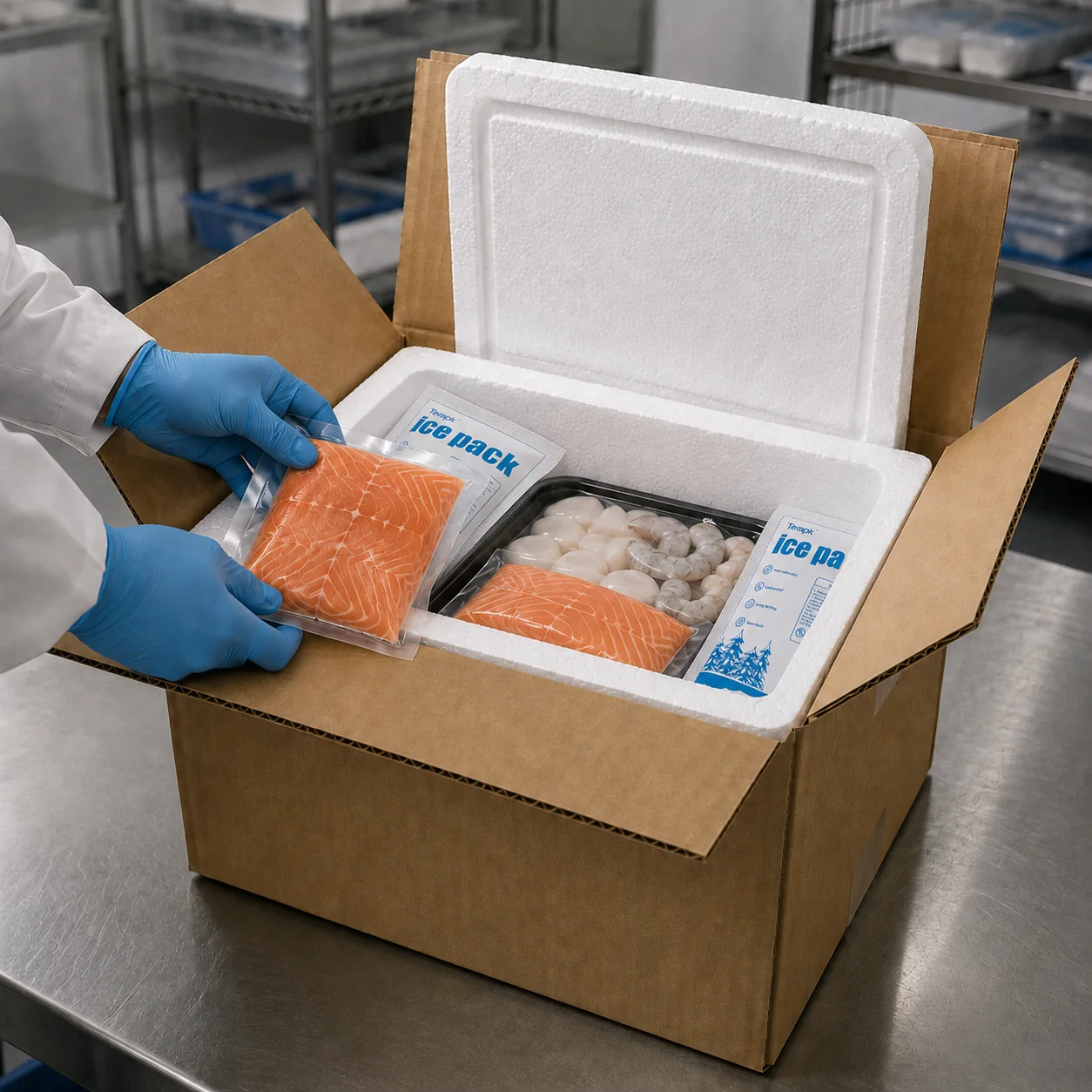
WHY COLD CHAIN PACKOUT TEST DOCUMENTATION MATTERS
A cold chain packout test is only useful when another qualified person can understand what was tested, how it was configured, what conditions were applied, and why the result was accepted or rejected. A temperature curve without its payload, coolant arrangement, sensor locations, conditioning record, and environmental profile is not enough to reproduce or approve a shipment configuration.
The purpose of packout validation is not simply to produce a graph. It is to determine whether a defined packaging configuration can support a defined shipment requirement under defined conditions. The result applies to the tested configuration and scope. It should not automatically be extended to another payload, box size, coolant quantity, route, season, or handling process.
A complete validation record connects six elements:
- Shipment requirement;
- Packout configuration;
- Conditioning and loading procedure;
- Test environment and handling profile;
- Sensor data and analysis;
- Decision, limitations, and approval.
This approach is particularly important for temperature-sensitive products because an apparently successful result can be misleading if the test does not represent the intended shipment. Tempk’s [Cold Chain Tools](https://www.tempcontrolpack.com/cold-chain-tools/) and [Packaging Selector](https://www.tempcontrolpack.com/cold-chain-tools/packaging-selector/) can support early configuration thinking, while a project-specific review is needed before a packout is approved for use.
Start With a Test Brief, Not a Test Curve
Before building the packout, prepare a test brief that states the question the test is intended to answer. A clear test question might be whether a specified payload and packout configuration can maintain the project-approved temperature range during a defined route exposure. It should not be written as a broad question such as “Can this box keep products cold?” because the answer would depend on too many undefined variables.
The test brief should include:
| Field | What to record | Why it matters |
| — | — | — |
| Test objective | The specific design or shipment question | Prevents testing without a decision purpose |
| Payload | Product type, quantity, mass, dimensions, and packaging | Defines the thermal load |
| Temperature requirement | Approved target range and excursion rules | Defines the acceptance basis |
| Planned exposure | Transit window, ambient profile, delays, and handling events | Makes the test relevant to the intended use |
| Packout version | Box, insulation, coolant, barriers, and loading layout | Allows the result to be traced to one configuration |
| Test owner | Person responsible for the record and coordination | Establishes accountability |
| Approval path | Engineering, quality, customer, or other review | Defines who can release the decision |
If the test is exploratory rather than a formal approval test, label it that way. Exploratory data can guide later design decisions, but it should not be presented as a completed validation result without a defined acceptance basis.
The test brief should also identify what the test does not answer. For example, a controlled thermal test may not represent every transport carrier, seasonal condition, customs delay, or delivery scenario. Recording those exclusions at the beginning prevents the final report from making claims outside the test scope.
Record the Complete Packout Configuration
The packout must be recorded as a complete system. Listing only the insulation type or coolant family is not enough. Small changes in payload arrangement, coolant placement, barriers, conditioning state, or closure method can change the thermal behavior.
Record at least the following:
- Outer carton or shipper format;
- Internal dimensions;
- Insulation material, structure, and relevant dimensions;
- Gel pack, PCM, dry ice, or other thermal-control component;
- Product or coolant model identifier, if applicable;
- Number, dimensions, and fill information of thermal-control components;
- Payload quantity, mass, dimensions, and arrangement;
- Separators, liners, trays, absorbent materials, or protective barriers;
- Placement of the payload relative to the thermal-control components;
- Lid, closure, tape, label, or sealing method;
- Packout configuration drawing or photographs;
- Configuration revision or version number.
A configuration drawing should show the orientation and relative position of the main components. If the layout is too complex for a single view, use a top view, side view, and cross-section. Each drawing should carry a revision identifier that matches the test record.
Photographs are useful when they show the actual tested arrangement. A generic product photograph or a conceptual diagram should be labelled as illustrative and should not be presented as proof that the configuration was tested. If a photograph includes customer information, shipment labels, or internal details, remove or anonymize those elements only in the publishable copy while retaining the original file in the controlled record.
Define Conditioning and Loading Before the Test
Conditioning is one of the most important variables in a cold chain packout test. A coolant component may behave differently depending on the conditioning equipment, starting state, duration, handling time, and loading sequence. These details must be recorded rather than summarized as “conditioned according to standard practice.”
The conditioning record should state:
- Which components were conditioned;
- Conditioning equipment or storage environment;
- Start date and time;
- End date and time;
- Starting and ending conditions, where measured;
- Time between removal from conditioning and packout closure;
- Handling conditions during that interval;
- Any deviation from the written procedure;
- Person responsible for confirming the conditioned state.
The loading record should explain the sequence from the first component placed to final closure. It should identify whether the payload was preconditioned, whether the product was loaded at a controlled temperature, and how direct contact with thermal-control components was prevented when required.
A repeatable loading instruction should allow another trained operator to build the same configuration without relying on memory. It should specify orientation, position, quantity, spacing, barriers, and closure checks. If the test is intended to represent a manual packing process, the report should record the actual process rather than replacing it with an idealized diagram.
No conditioning temperature, timing, fill weight, or operating value should be added to the public article unless the company has an approved source for that value. The method article can explain what must be recorded without inventing a universal instruction.
Define the Route and Environmental Exposure
A packout test should reflect the conditions it is meant to represent. A nominal transit duration is only one part of the exposure. The record should identify ambient conditions, controlled-storage segments, handoffs, loading or unloading delays, vehicle exposure, air transport, customs or warehouse waiting, and possible delivery exceptions.
Build the exposure profile around the shipment question:
- What is the planned transit duration?
- What additional delay is reasonably possible?
- Is the parcel exposed to high or low ambient conditions?
- Which steps are temperature controlled?
- Where could the package remain stationary?
- Could the parcel be opened, repacked, or handled outside the expected sequence?
- Which seasonal or regional conditions are in scope?
- Which conditions are explicitly outside the test scope?
The record should distinguish between an environmental chamber profile and a real-route simulation. A controlled chamber may provide a repeatable exposure, but it is not automatically identical to every field shipment. Likewise, a field shipment may reveal real handling variation but may be harder to reproduce. The chosen method should be documented with its purpose and limitations.
When route risk is uncertain, use a conservative and transparent description rather than an unsupported claim. The goal is to show which risks were evaluated and which still require project-specific review.
Plan Sensor Placement and Data Collection
Sensor placement should answer the design question. The number and location of sensors depend on the payload, packout geometry, likely thermal gradients, and risk assessment. A sensor placed only in the box air space may not represent the product environment. A sensor near a coolant component may show a local cold condition that does not describe the payload center.
Potential locations include:
- Payload center;
- Payload edge;
- Location most exposed to a coolant component;
- Location farthest from the coolant;
- Internal air space;
- Between payload and insulation;
- Outside the package for ambient reference;
- Other locations justified by the test plan.
The sensor plan should identify:
- Sensor model or device ID;
- Calibration or verification status, when applicable;
- Sensor location and orientation;
- Sampling interval;
- Start and stop times;
- Time zone;
- Data logger or software used;
- File name of the original data export;
- Method used to review and summarize the data.
The sensor position should be shown in the packout drawing or photograph. If a sensor is moved after loading, disconnected, or found to be outside its intended position, record the event and its effect on interpretation. Do not silently edit the data or redraw the configuration to match the result.
Keep the original data export, not only a screenshot or manually edited chart. The chart used in an article should show units, time axis, sensor labels, and enough context for a reader to understand what is being displayed. A public chart should not reveal confidential customer information, but it should not remove the conditions needed to interpret the result.
Set Acceptance Criteria Before Reviewing Results
Acceptance criteria should be approved before the test result is reviewed. The decision rule should define the temperature window, evaluation period, sensors included, treatment of excursions, and conditions for pass, conditional approval, repeat testing, or failure.
A clear acceptance section includes:
| Acceptance field | Question to answer |
| — | — |
| Temperature limits | What minimum and maximum values apply? |
| Evaluation period | Which part of the test is included in the decision? |
| Sensor basis | Which sensor locations are used? |
| Excursion treatment | How are short excursions or sensor noise treated? |
| Repeat requirement | When is a repeat test required? |
| Deviation rule | What happens if conditioning or loading differs from plan? |
| Configuration scope | Which payload and packout version does the result cover? |
| Approval authority | Who makes the final technical or quality decision? |
Do not change the acceptance criteria simply because the curve is inconvenient. If the criteria are found to be unsuitable, close the current test record, document the reason for revision, and define a new test or analysis path. This preserves the difference between an observed result and a post-hoc decision.
The acceptance criteria should also state whether the result is suitable for design iteration, internal approval, customer review, or shipment release. These are different decisions. A result that supports a design direction may not support a general performance statement or production release.
Analyze the Test Without Overstating the Result
Analysis should begin with data integrity and scope. Confirm that the raw file is complete, sensor labels match the test plan, the time axis is correct, and deviations are recorded. Then compare each relevant sensor with the approved acceptance criteria.
The report should summarize:
- Minimum and maximum readings by sensor, where relevant;
- Time spent inside or outside the defined window, if that metric is approved;
- Differences between sensor locations;
- Start and end conditions;
- Environmental exposure;
- Deviations from the planned configuration;
- Missing or questionable data;
- Repeat-test requirements;
- Decision and technical rationale.
Avoid presenting a single minimum or maximum as the complete story. A local reading near a coolant component may not represent the payload. Conversely, a payload-center sensor may not identify a boundary risk. The report must explain which readings matter for the acceptance decision and why.
Use project-specific language when the evidence is project-specific. Appropriate wording includes “The tested configuration remained within the defined evaluation window under the recorded conditions” only when the record supports that statement. It is not appropriate to convert the same result into “This packout protects all pharmaceutical shipments for 48 hours.”
A public article without a real test record should explain the analysis method and reporting fields rather than display invented values. This M21 article is therefore a documentation guide, not a substitute for an actual validation report.
Document Deviations, Anomalies, and Repeat Tests
A professional validation record does not hide deviations. It explains them. Examples include an incorrect conditioning duration, a sensor placed outside the planned position, a delayed closure, an opened package, a logger interruption, an unexpected ambient change, or a component substitution.
For each deviation, record:
- What happened;
- When it happened;
- Which component or measurement was affected;
- Whether the deviation was corrected;
- Whether the test remained interpretable;
- Who reviewed the deviation;
- Whether a repeat test is required.
A repeat test should not be described as a failure merely because the first test was inconclusive. The report should distinguish among failed acceptance, invalid or incomplete data, conditional result, and design iteration. Those categories lead to different next actions.
If a configuration is changed after a test, assign a new revision or explain why the change does not affect the validated scope. Changes to payload mass, insulation, coolant quantity, placement, conditioning, closure, or loading sequence may require a new review. A new photograph alone does not establish that a changed configuration has the same result.
What a Publishable Validation Summary Should Include
When a real test is approved for public use, the publishable summary should contain enough context to be useful without exposing confidential information. It should identify the project scope, configuration, conditions, measurement plan, result type, and limitations.
A publishable summary may include:
- Anonymous project or application description;
- Target temperature range;
- Payload category and non-confidential load description;
- Packout configuration image or diagram;
- Conditioning and sensor-position summary;
- Test date or period, when publishable;
- Environmental or route profile;
- High-level result within its defined scope;
- Technical limitation and non-extrapolation statement;
- Related Tempk solution, tool, validation, or custom-packaging link.
It should not include a customer name, product identifier, route, image, chart, or result without permission. A redacted case is still a real case only when the underlying record exists and the approved public summary can be traced back to it.
If no approved test exists, publish a method article like this one instead. Do not create a fictional project, synthetic temperature curve, sample pass result, or placeholder testimonial to make the page look more authoritative.
Cold Chain Packout Validation Checklist
Use this checklist before closing a test record:
- The test objective is written in one specific sentence.
- The payload type, mass, dimensions, packaging, and starting condition are recorded.
- The approved temperature range and excursion rule are documented.
- The packout configuration has a version number.
- The insulation, thermal-control components, placement, and barriers are recorded.
- Conditioning equipment, timing, starting state, and loading sequence are documented.
- The route or environmental exposure is defined.
- Sensor IDs, locations, sampling interval, and time zone are recorded.
- Original data files are retained.
- Acceptance criteria were established before result review.
- Deviations, anomalies, and data gaps are documented.
- The conclusion is limited to the tested configuration and conditions.
- A qualified reviewer has approved the result or next action.
- Public-use permission is recorded for any photo, chart, project detail, or quotation.
Final Takeaway
A cold chain packout test becomes useful when it is traceable, repeatable, and limited to what the evidence actually supports. The most important record is not the chart alone. It is the connection between the shipment requirement, payload, complete configuration, conditioning method, environmental exposure, sensor plan, acceptance criteria, raw data, deviations, and approval decision.
For Tempk, this documentation approach supports the broader path from shipment profile to packout concept, sample review, conditioning, thermal testing, and project-specific confirmation. It also keeps technical content honest: a method can be published without pretending that the company has tested every route or achieved a universal hold-time. When a real project becomes available and publication is authorized, its evidence can be added as a separate case-specific page with its own scope and limitations.
For a project that needs help defining the shipment profile, documenting the packout, preparing a validation plan, or reviewing a custom configuration, visit Tempk’s [Custom Cold Chain Packaging](https://www.tempcontrolpack.com/custom-cold-chain-packaging/) pathway.
2–8°C Pharmaceutical Packout Design Guide

WHAT A 2–8°C PHARMACEUTICAL PACKOUT MUST DO
A 2–8°C pharmaceutical packout is not defined by the coolant alone. It is a complete thermal system that must keep the payload within its required temperature range while accounting for the product, insulation, coolant, conditioning procedure, transport duration, ambient exposure, handling events, and sensor placement. For a 48-hour shipping target, the correct starting point is therefore not “How many ice packs should we use?” It is “What shipment profile must the complete packout be designed and validated against?”
This distinction matters because the same coolant can behave differently in different boxes, with different payload masses, conditioning states, ambient profiles, and loading patterns. A configuration that is appropriate for one shipment may be unsuitable for another. The design should be treated as a documented engineering decision followed by a controlled validation plan, not as a fixed recipe copied from a general product description.
The practical workflow is:
- Define the payload and temperature requirement.
- Map the route and expected environmental risks.
- Select the insulation and thermal-control concept.
- Define coolant type, quantity, placement, and conditioning.
- Specify sensor positions and acceptance criteria.
- Test the complete configuration and document its limits.
For planning tools and configuration inputs, Tempk’s Cold Chain Tools (https://www.tempcontrolpack.com/cold-chain-tools/) and Packaging Selector (https://www.tempcontrolpack.com/cold-chain-tools/packaging-selector/) can support the early decision stage. The final configuration still needs project-specific confirmation.
STEP 1: DEFINE THE PAYLOAD BEFORE SELECTING THE COOLANT
The payload is the thermal load that the packout must protect. It should be documented before selecting a box, gel pack, PCM component, or other thermal-control material. At minimum, record the payload type, quantity, mass, dimensions, packaging, initial temperature, target temperature range, and any freeze-sensitivity or temperature-excursion limits.
A useful payload brief answers these questions:
| Design input | What to record | Why it matters |
| Product type | Pharmaceutical, diagnostic, biological, or other temperature-sensitive payload | Different products may have different allowable excursions |
| Target range | 2–8°C or the project-approved range | Defines the acceptance window |
| Payload mass | Total mass and unit arrangement | Affects thermal inertia and internal airflow |
| Payload dimensions | Overall footprint, height, and spacing | Determines usable packout volume and coolant placement |
| Starting condition | Ambient, refrigerated, or another controlled state | Changes the initial thermal load |
| Freeze sensitivity | Whether contact with frozen coolant is restricted | Influences barriers, placement, and conditioning |
| Packaging around the product | Primary and secondary packaging | Affects heat transfer and protection from direct contact |
Do not treat the phrase “pharmaceutical shipment” as a complete design specification. A small payload and a dense payload can require different thermal layouts. A product that must remain refrigerated but must not contact a frozen surface may need a different arrangement from one that tolerates a wider internal gradient. If the product’s allowable excursion limits are defined in a customer, regulatory, or product document, that source should be identified in the design record.
The payload brief should also identify what the shipment is expected to experience before testing begins. For example, the package may leave a refrigerated facility, wait during handoff, spend time in a vehicle, pass through an air hub, or remain exposed to high ambient temperature before final delivery. These events are part of the thermal design problem rather than details to be added after the packout is built.
STEP 2: CONVERT THE 48-HOUR TARGET INTO A SHIPMENT PROFILE
“48-hour shipping” is a planning target, not a standalone test condition. The design record should translate it into a time-and-environment profile. That profile may include the planned transit window, expected delays, seasonal conditions, handoff points, and the amount of time the parcel could remain outside controlled storage.
A route-risk review should consider:
- Origin and destination conditions;
- Season and expected ambient exposure;
- Pickup and delivery timing;
- Weekend, holiday, or customs delays;
- Air, ground, or mixed transport;
- Time on a loading dock or in a vehicle;
- Temperature-controlled handoffs;
- Doorstep or recipient delays;
- Exception handling when delivery is not completed;
- Whether the shipment may be opened or repacked.
The route profile should distinguish between the planned transit time and the design exposure. If the planned route is 48 hours but the package may experience additional waiting at origin or destination, the validation plan should say how that additional exposure is handled. It is better to identify a route assumption explicitly than to present a simple duration as if it described every real shipment.
A route-risk decision can be organized into three levels:
| Risk level | Typical question | Design response |
| Controlled | Is the parcel kept in known temperature-controlled steps? | Validate the planned configuration and handling instructions |
| Variable | Are there uncertain handoffs, ambient exposure, or seasonal changes? | Add conservative route assumptions and test relevant profiles |
| High consequence | Could a delay materially affect the product or release decision? | Define escalation, monitoring, contingency, and project approval requirements |
The purpose of this step is not to predict the exact temperature history of every parcel. It is to identify the conditions the packout must be evaluated against and to make the assumptions visible to the people approving the shipment.
STEP 3: SELECT THE INSULATION AND THERMAL-CONTROL CONCEPT
The insulation, coolant, payload, and internal arrangement work as one system. A thicker insulation wall does not automatically create a suitable packout, and a larger amount of coolant does not automatically improve protection. Excess coolant can increase the risk of overcooling or unwanted contact with a temperature-sensitive payload, while insufficient separation can create local hot or cold zones.
The design review should compare:
- Insulation format: box, liner, panel, or another project-specific structure.
- Thermal-control medium: gel pack, PCM component, or another approved option.
- Thermal transition behavior: whether the selected medium matches the target range and conditioning method.
- Placement: top, bottom, sides, or a defined combination around the payload.
- Separation: barriers or spacers needed to avoid direct contact or uneven loading.
- Usable volume: whether the arrangement leaves enough space for the payload and protective packaging.
- Operational repeatability: whether a packing operator can reproduce the layout consistently.
The design should separate confirmed product information from project assumptions. A product page can describe available formats or configuration options, but final thermal performance depends on the complete packout. Where a selection depends on the shipment profile, the page should direct the reader to a configuration review rather than imply that one product works for every 2–8°C shipment.
For project-level requirements, Tempk’s Custom Cold Chain Packaging pathway (https://www.tempcontrolpack.com/custom-cold-chain-packaging/) can be used to organize the sequence from shipment profile and concept review through sample, conditioning, and thermal testing. The purpose of that pathway is to connect the product choice with the actual shipment requirement.
STEP 4: DEFINE CONDITIONING AND LOADING INSTRUCTIONS
Conditioning is part of the packout design. The same coolant can produce different results when it is conditioned in different equipment, for different durations, or from different starting temperatures. A repeatable work instruction should therefore identify the conditioning method, equipment or storage environment, start and end conditions, handling time, and loading sequence.
The loading instruction should answer:
- Which components are conditioned before packing?
- How is the conditioned state confirmed?
- How long may components remain outside controlled storage before loading?
- Which component is placed first?
- Where does the payload sit relative to the coolant?
- Which barriers or spacers must remain in place?
- How is the lid or closure installed?
- What visual or procedural check confirms the packout is complete?
For temperature-sensitive pharmaceutical payloads, the instruction should also address the difference between a design configuration and an operator shortcut. A packout is only repeatable when the written sequence prevents accidental substitution of coolant, omission of a barrier, incorrect orientation, or inconsistent payload placement.
If a conditioning value, fill weight, temperature, or timing is not supported by an approved project record, it should remain a field for confirmation rather than a published promise. This protects the article from turning a design example into an unsupported operating specification.
STEP 5: PLACE SENSORS WHERE THEY ANSWER THE DESIGN QUESTION
Sensor placement should be decided before the test begins. A single sensor in an easy-to-reach location may not show the coldest or warmest part of the payload environment. The location should reflect the risk being evaluated and should be documented in the test record and configuration diagram.
Potential measurement locations include:
- Near the center of the payload;
- Near the edge of the payload;
- Between the payload and insulation;
- Near a coolant component;
- In the internal air space;
- Outside the packout to record ambient exposure;
- At another location justified by the project risk assessment.
The test record should identify the sensor model or identifier, calibration status if applicable, sampling interval, start time, end time, time zone, and physical position. If more than one sensor is used, the configuration diagram should make the locations unambiguous. A curve without sensor context is difficult to interpret and should not be presented as proof of a complete packout result.
The measurement plan should also define how missing readings, sensor movement, logger interruption, or unexpected opening of the package will be handled. These events do not automatically invalidate a test, but they must be documented before the result is used for a decision.
STEP 6: SET ACCEPTANCE CRITERIA BEFORE TESTING
Acceptance criteria should be written before the test results are reviewed. Otherwise, it is easy to change the decision rule after seeing the curve. The criteria should state the required temperature window, the evaluation period, the relevant sensor locations, allowable excursions if any, and the treatment of test anomalies.
A practical acceptance record includes:
Field | Requirement to define
Temperature window | The approved minimum and maximum limits
Evaluation period | The start and end points used for the decision
Sensor basis | Which sensors determine pass, conditional, or fail
Excursion rule | How short or long excursions are handled
Repeatability | Whether repeat tests are required
Anomaly rule | How openings, logger errors, or conditioning deviations are treated
Scope | The exact payload, packout, route profile, and season covered
Approval | Person or function responsible for the decision
The result should be described as applying to the tested configuration and conditions. It should not automatically be extended to different payload masses, box sizes, coolant quantities, seasons, routes, or handling procedures. A validation result is useful because its scope is clear, not because it makes a broader claim than the data can support.
A PRACTICAL VALIDATION RECORD FOR THE COMPLETE PACKOUT
A complete validation record should connect the shipment requirement, configuration, test conditions, raw data, analysis, and decision. Keep the original data file with the report rather than storing only a manually edited chart. The record should include the configuration version so that later changes to the box, coolant, payload, or loading sequence trigger a review.
Use this sequence:
- Approve the shipment profile and payload brief.
- Record the insulation, thermal-control components, placement, and loading sequence.
- Confirm conditioning instructions and starting conditions.
- Install and identify sensors according to the measurement plan.
- Run the test under the defined environmental and handling profile.
- Preserve the raw readings and record any deviation.
- Compare results with the pre-defined acceptance criteria.
- Repeat or revise the design when the result is conditional, inconclusive, or outside the required window.
- Document the approved scope, limitations, and next review trigger.
The final report should make it possible for another qualified person to understand what was tested without guessing which components were used or where the sensors were placed. That traceability is more valuable than a polished chart without conditions.
COMMON DESIGN ERRORS TO AVOID
The most common errors are usually process errors rather than a lack of thermal materials. One is selecting a coolant quantity before defining the payload and route. Another is testing a convenient laboratory condition that does not represent the intended shipping profile. A third is placing sensors only where they are easy to install. Other failures occur when conditioning instructions are vague, operator loading is not repeatable, or acceptance criteria are decided after the curve is visible.
Avoid these shortcuts:
- Treating 48 hours as a universal hold-time claim;
- Copying a packout recipe between different payloads;
- Mixing gel-pack and PCM assumptions without documenting the selection logic;
- Omitting ambient or handoff conditions from the design profile;
- Publishing a sample diagram as if it were a tested project configuration;
- Reporting a temperature curve without sensor positions and test conditions;
- Using one successful test to claim performance for every route;
- Publishing fixed specifications, MOQ, lead time, or performance values without confirmation.
A safer approach is to publish the method openly, keep project-specific results in controlled records, and link the reader to a configuration review when the shipment cannot be evaluated from general information alone.
FINAL CHECKLIST FOR A 2–8°C PACKOUT DESIGN
Before approving a packout for a pharmaceutical shipping program, confirm the following:
- The target temperature range and product limits are documented.
- Payload mass, dimensions, packaging, and starting condition are recorded.
- The 48-hour target is converted into a route and environmental profile.
- Insulation, thermal-control medium, placement, and separation are documented.
- Conditioning and loading instructions are repeatable.
- Sensor positions, identifiers, sampling interval, and test times are recorded.
- Acceptance criteria were defined before reviewing the results.
- Raw data, configuration diagrams, deviations, and analysis are retained.
- The result is limited to the tested configuration and conditions.
- A project-specific review is completed before shipment approval.
A 2–8°C packout should be designed as a shipment-specific thermal system, not selected from a coolant count alone. When the payload, route, conditioning, sensor plan, and acceptance criteria are documented together, the design becomes easier to review, reproduce, improve, and communicate honestly. For a project that needs a defined shipment profile, packout concept, sample review, or thermal testing plan, the next step is to submit the shipment requirements through Tempk’s custom packaging pathway (https://www.tempcontrolpack.com/custom-cold-chain-packaging/).
Temperature Controlled Packaging: How to Design, Test and Buy the Right System
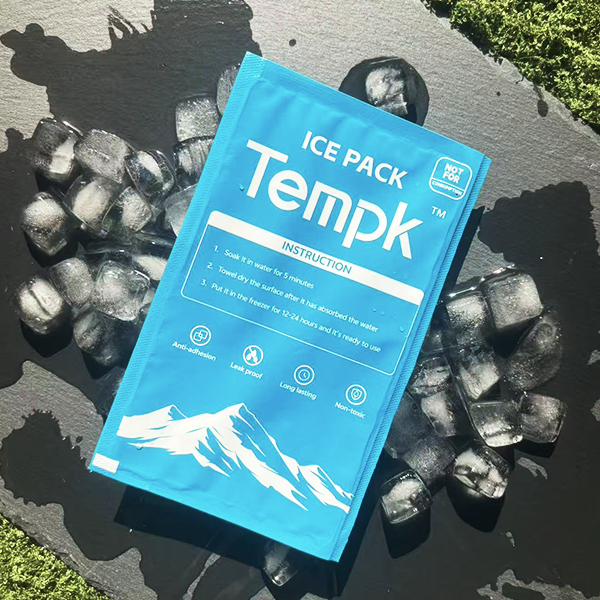
Temperature Controlled Packaging: How to Design, Test and Buy the Right System
Temperature controlled packaging should be treated as a controlled shipment system rather than a box selected by duration. The correct design starts with a product requirement, converts route exposure into thermal risks, uses insulation and thermal energy storage to manage those risks, and then proves the packout under defined test conditions. Procurement has a second job: make sure the configuration tested during development can be reproduced in routine production and packing.
This framework is more useful than comparing “48-hour” or “72-hour” products because those labels hide the variables that actually determine performance. Payload mass, coolant conditioning, insulation, ambient profile, sensor location and packing method can all change the outcome.
1. Write the requirement before choosing the package
A packaging project is easier to control when the requirement is specific enough to test. The requirement should describe the product and route, not the preferred packaging material.
Start with the product condition:
- Required storage or transport temperature range, or another defined condition.
- Sensitivity to freezing, thawing or high temperature.
- Loading temperature.
- Product quantity and acceptable payload configurations.
- Dimensions and mass.
- Any orientation, moisture or mechanical constraints.
Then define the logistics condition:
- Planned transit time.
- Reasonable delay allowance.
- Origin and destination.
- Parcel, courier, truck, air or multimodal transport.
- Hot- and cold-season exposure.
- Uncontrolled handoffs such as docks, customs, tarmac or last mile.
- Receiving hours and what happens after failed delivery.
For pharmaceuticals, the target condition should be grounded in the product’s approved or controlled requirements and the applicable quality system. FDA current good manufacturing practice requires appropriate storage conditions for drug products. CDC’s current vaccine guidance directs users to product-specific manufacturer information for FDA-approved vaccines. Those sources reinforce a basic engineering rule: packaging requirements come from the product, not from a generic category label.
A supplier can only design intelligently after these inputs are known.
2. Choose an architecture that matches the control problem
Temperature-controlled transport can use passive packaging, active equipment, controlled vehicles, or combinations of these controls. The package is one layer in the distribution system.
A passive system uses insulation plus thermal mass. Gel packs, frozen water packs, PCM packs, ice bricks and dry ice can provide cooling or buffering depending on the application. Passive systems are common in parcel shipping because they can travel through standard courier networks without continuous external power.
An active system uses powered cooling and/or heating. It can be suitable for large payloads, long routes, highly controlled products or lanes that support equipment management. Active equipment adds power, maintenance, qualification and return-logistics requirements.
A thermal pallet cover can reduce exposure of palletized freight during staging or transfer but does not turn an uncontrolled route into an active temperature-controlled route.
A data logger measures temperature; it is not a temperature-control component.
Keeping those entities separate prevents a common specification error: buying one useful component and assuming the complete shipment is therefore “temperature controlled.”
When passive packaging is a strong fit
Passive systems are often effective when the route duration is bounded, the payload is compatible with a repeatable packout, and preconditioning can be controlled. They can support anything from short local deliveries to qualified multiday pharmaceutical shipments when the design and evidence are appropriate.
The operational burden should still be counted. Freezer or refrigerator capacity, coolant conditioning, staging time, assembly labor, freight weight and seasonal configurations can materially affect total cost.
When to escalate beyond a passive packout
A harder route does not always justify adding more coolant. If transit duration is highly uncertain, ambient conditions are extreme, the payload is very large, or the coolant mass begins to dominate freight and usable space, the better control may be an active container, refrigerated vehicle, controlled handoff location or different service level.
The goal is to control the route, not to maximize packaging complexity.
3. Translate component specifications into practical meaning
A technical datasheet is useful only when the buyer knows which decision it supports.
| Specification or claim | Practical meaning | What still needs verification |
| Insulation material/property | Helps estimate resistance to heat transfer | Wall thickness, seams, geometry, condition and full-packout performance |
| PCM phase-change range | Describes thermal behavior of the PCM under stated conditions | Actual payload temperature, PCM quantity, conditioning and placement |
| Gel-pack or ice-brick dimensions | Helps with fit and coolant surface area | Fill mass, conditioning, placement and freeze risk |
| Internal dimensions | Indicates nominal payload envelope | Usable space after coolant and separators |
| “72-hour” performance | May describe a specific thermal test | Ambient profile, payload, coolant, sensors and acceptance criteria |
| Reusable construction | Indicates intended multiple use | Inspection, cleaning, damage limits and retirement criteria |
| Logger accuracy | Describes measurement capability under stated specification | Calibration, location, logging interval and disposition procedure |
The most important distinction is between material behavior and system performance. Insulation slows heat flow, but it does not create a complete duration claim. PCM stores thermal energy, but its phase-change temperature does not guarantee payload temperature. A logger records conditions, but it does not protect the product.
4. Control the starting state of a passive packout
Thermal performance begins with preconditioning. The temperatures of the coolant, payload and packaging at assembly establish the system’s initial energy state.
For water-based frozen packs, the surface can be significantly colder than 0°C immediately after removal from a freezer. That can be problematic for freeze-sensitive payloads. EU Good Distribution Practice guidance for medicinal products states that cool-packs in insulated boxes should be positioned so the product does not come into direct contact with them. The broader engineering lesson is to manage local cold spots, not only average internal temperature.
A repeatable operating instruction should define, as applicable:
1. Coolant storage or conditioning range.
2. Minimum conditioning time or required state.
3. Payload loading condition.
4. Maximum staging time before closure.
5. Exact coolant positions and orientation.
6. Required separators or spacers.
7. Packing sequence.
8. Closure and sealing method.
If staff can interpret the instruction in multiple ways, qualification evidence will be difficult to transfer to daily operations.
5. Test the configuration, not the marketing category
Thermal testing should answer a defined question. The protocol needs a configuration, an environment and acceptance criteria.
At minimum, preserve these conditions with every performance claim:
- Shipper model and construction.
- Payload or surrogate, mass and arrangement.
- Coolant type, amount and conditioning.
- Ambient test profile.
- Sensor locations and instrumentation status.
- Packing procedure.
- Acceptance range.
- Test duration and result.
ISTA Standard 20 provides a structured process for the design and qualification of insulated shipping containers, and ISTA Standard 7E provides standardized thermal profiles used in parcel-distribution testing. These tools can improve repeatability and comparability. They are not, by themselves, universal regulatory mandates for all temperature-controlled shipments.
A company can also use route data or lane studies to determine whether a standardized profile adequately represents actual exposure. The key is traceability: the test profile should have a reason.
What a chamber test proves
A chamber test can show that a defined packout met defined acceptance criteria under the applied profile. It does not automatically prove performance on every route, with every payload, in every season.
This is why the “hold time” should never be separated from its conditions. A buyer comparing two suppliers should compare the whole evidence package rather than the largest duration number on a brochure.
6. Build season and route risk into the qualification logic
Routes change over the year. The thermal challenge in winter can be the reverse of the challenge in summer. A package designed primarily to prevent overheating can expose a freeze-sensitive product to cold ambient conditions or excessively cold coolant.
EU GDP guidance specifically identifies seasonal variations as a consideration for temperature-controlled transport of medicinal products. WHO distribution guidance likewise treats storage and distribution of time- and temperature-sensitive products as a controlled quality activity rather than an isolated packaging choice.
For any industry, route mapping should identify the uncontrolled segments:
- Packing and pre-carrier staging.
- Vehicle dwell.
- Courier hubs and cross-docks.
- Air-freight staging and tarmac transfer.
- Customs or border delay.
- Warehouse transfer.
- Last-mile delivery.
- Receiver delay.
Then ask which segments dominate the thermal profile. A long route with controlled facilities may be less severe than a shorter route with uncontrolled outdoor exposure. Duration matters, but exposure pattern matters too.
7. Separate qualification evidence from routine monitoring
Qualification asks whether a design is capable under defined conditions. Routine monitoring records what happened on a shipment or route. They are related but not interchangeable.
A data logger plan should define:
- Measurement location.
- Calibration expectations.
- Logging interval.
- Start and stop procedure.
- Alarm settings if used.
- Download and review responsibility.
- Excursion review and product-disposition process.
The sensor location should match the question. A logger next to coolant may be useful for identifying a cold spot but may not represent payload-core temperature. A logger near an outer wall can be useful for warm-point risk but may respond differently from the product.
For regulated products, disposition after an excursion belongs to the organization’s quality process and product-specific stability information. A packaging supplier should not make a universal release decision from a generic temperature trace.
8. Make the tested packout reproducible in production
The bridge between development and purchasing is change control.
A supplier may produce a visually similar package after changing foam grade, panel source, film, coolant formulation, fill mass, separator thickness or carton. Some changes may be harmless; others may alter thermal behavior. The buyer needs an agreed process for deciding which changes require notification, review or retesting.
Identify critical-to-performance features in the approved specification. Depending on the design, these may include:
- Insulation material and thickness.
- Internal/external dimensions.
- Lid or closure fit.
- VIP panel configuration and protection.
- Coolant formulation and fill mass.
- Coolant pouch construction.
- Separator material and thickness.
- Number and position of coolant units.
- Carton construction.
- Assembly sequence.
Production inspection should check the features that can reasonably be controlled without repeating a chamber test on every unit.
For reusable systems, add condition criteria. Cleaning, inspection, panel damage, zipper or lid wear, missing coolant and contamination must be managed before reuse.
9. Compare suppliers through evidence, not adjectives
A temperature controlled packaging RFQ should make suppliers answer the same questions. That allows procurement to compare evidence and operational fit rather than different marketing claims.
Ask each supplier to provide:
- Proposed packout drawing or configuration.
- Usable payload dimensions.
- Coolant type and conditioning method.
- Required storage equipment for coolant.
- Assembly instructions and expected labor steps.
- Test basis and the conditions behind any duration claim.
- Production-controlled specifications.
- Change-control approach.
- Packaging/carton configuration for bulk supply.
- Reuse inspection process if applicable.
- Which route or seasonal assumptions still require customer qualification.
Unknown values should remain questions. A supplier should not invent a fixed lead time, universal performance duration or “compliance” statement before the scope is defined.
10. Evaluate total operating cost, not only shipper price
Packaging cost can be a small part of the program. Coolant weight affects freight. Freezer capacity affects facility investment and energy use. Complex conditioning increases labor. Large EPS shippers consume storage volume. Reusable boxes need reverse logistics and cleaning. Active systems require equipment management.
A useful total-cost comparison includes:
- Packaging components.
- Coolant preparation and storage.
- Assembly labor.
- Freight weight and dimensional volume.
- Failure and excursion investigation burden.
- Disposal or recycling.
- Return freight and loss rate for reusable assets.
- Cleaning, inspection and maintenance.
- Inventory space.
A more expensive packaging component can be operationally cheaper if it reduces coolant, freight or labor. The opposite can also occur. The calculation is lane-specific.
The best system is one whose assumptions are visible
Good temperature controlled packaging makes its logic auditable. The product requirement is defined. The route risks are documented. The selected architecture has a clear role. Test evidence names its conditions. Production controls preserve the approved design. Operators can repeat the packing process, and receiving teams know what to do with monitoring data.
That standard is more demanding than choosing the thickest box or the longest claimed duration, but it creates a program that can survive supplier changes, seasonal review and operational handover.
Tempk supplies passive temperature-control components including gel packs, PCM and ice bricks, insulated bags and liners, EPP/VIP boxes and thermal pallet covers, with packout planning support around payload, route and temperature requirements. To evaluate a configuration, provide the target condition, payload dimensions and mass, transit window, route exposures, seasonal risks and the evidence your quality or operations team needs. The next useful step is a packout that can be sampled, tested and repeated.
Pharmaceutical Cold Chain Packaging: How QA and Procurement Should Qualify a Packout
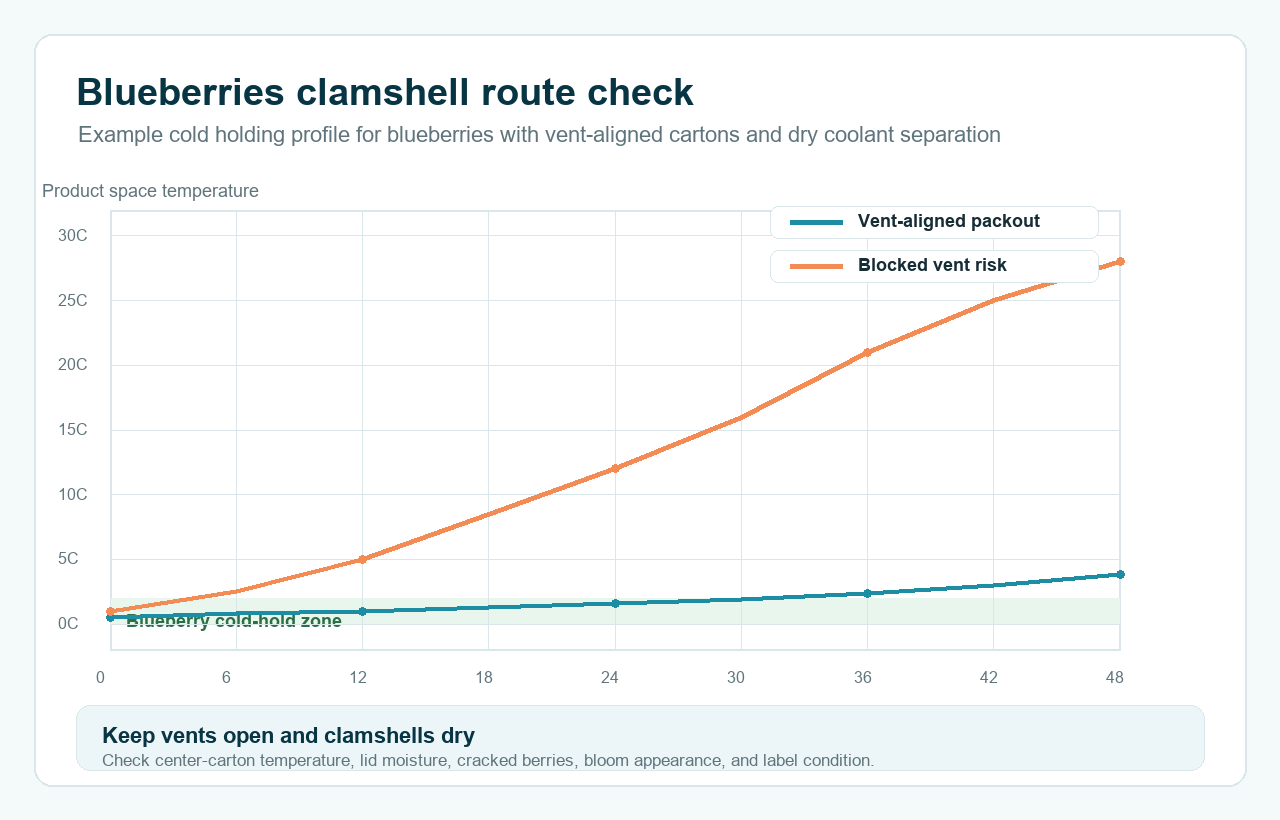
Pharmaceutical Cold Chain Packaging: How QA and Procurement Should Qualify a Packout
Pharmaceutical cold chain packaging is credible only when the packout, test evidence and operating process describe the same system. A supplier can provide excellent insulation and coolants, but quality assurance still needs to know which product condition is being protected, which route risks were represented, how coolant was conditioned, what payload was tested, where sensors were placed, and which changes would invalidate the conclusion.
This makes cold-chain sourcing a joint QA, logistics and procurement task. Procurement controls the commercial specification and supplier relationship. Logistics understands route exposure and operating constraints. QA defines the evidence needed to support use. Packaging engineering connects those requirements to a repeatable thermal system.
The goal is not a box described as “pharma compliant.” The goal is a controlled configuration with a clear operating envelope.
Establish the claim boundary before requesting a quotation
The first step is to define what the packaging project must prove.
A pharmaceutical shipper does not need to prove that the drug itself is stable; that belongs to the product’s stability and regulatory file. It does need evidence that the proposed shipment system can maintain the required conditions under the scope defined by the company’s quality process.
The required product condition should therefore come from approved labeling, product stability knowledge, marketing-authorization requirements where applicable, internal procedures and the responsible quality unit.
FDA current good manufacturing practice requires finished drug products to be stored under appropriate conditions of temperature, humidity and light so that their identity, strength, quality and purity are not affected. EU Good Distribution Practice requires medicinal products to be transported under conditions that protect quality and integrity. WHO model guidance provides principles for storage and distribution of time- and temperature-sensitive pharmaceutical products while making clear that national requirements take precedence.
These sources establish quality expectations; they do not define one universal cold-chain temperature range for every pharmaceutical product.
Before contacting suppliers, QA and procurement should agree on:
- Product temperature or condition requirement.
- Relevant upper and lower limits.
- Freeze sensitivity.
- Permitted payload range.
- Transit-duration target and delay margin.
- Intended routes and seasons.
- Monitoring expectations.
- Qualification approach.
- Reuse requirements if applicable.
- Any customer-specific or market-specific obligations.
This prevents the supplier from filling gaps with generic assumptions.
Convert the route into a thermal risk map
The route is a sequence of thermal events, not a single duration.
Map the shipment from final packout through receipt. Include warehouse staging, carrier pickup, vehicle transport, sorting hubs, air or ocean interfaces where relevant, customs, cross-docking, last-mile delivery and receiving delay.
For each segment, ask:
1. Is the environment controlled or uncontrolled?
2. What hot and cold extremes are plausible?
3. How long can the exposure last?
4. What delays are common or credible?
5. Is the package ever opened?
6. What happens after a failed delivery attempt?
7. Does the shipment move through different climate zones?
8. Can the product be exposed to freezing even if summer heat is the main concern?
This risk map determines what the thermal profile needs to challenge.
For international air cargo, IATA’s Temperature Control Regulations address handling, packaging, documentation and labeling for time- and temperature-sensitive healthcare products. If dry ice is used, dangerous-goods requirements can also apply. Those transport obligations should be reviewed separately from the thermal qualification of the passive shipper.
Design the packout around both warm-side and cold-side failure
A passive pharmaceutical packout is an energy-management system. Insulation reduces heat flow. Coolants absorb or release energy. The payload adds thermal mass. Separators and spacing influence local temperatures.
Warm-side protection is usually intuitive: the design needs enough insulation and thermal reserve to delay heat ingress.
Cold-side protection requires equal attention. A fully frozen water-based pack can have a surface temperature well below the lower limit for a freeze-sensitive product. EU GDP guidance states that cool-packs in insulated boxes should be placed so the medicinal product does not come into direct contact with them. It also highlights the need to control seasonal configurations.
The design options can include:
- Physical separation between product and frozen coolant.
- Buffer layers.
- Controlled coolant conditioning.
- Engineered PCM selected for the application.
- Seasonal coolant configurations.
- Different insulation or geometry.
The correct option depends on the product and route. The important rule is that freeze prevention should be demonstrated in the actual packout, not assumed from average air temperature.
Do not confuse PCM temperature with payload temperature
PCM can buffer a system around its phase transition, but its nominal transition point is not a guarantee of product temperature. The actual payload responds to the complete thermal resistance network and the amount and location of PCM.
QA should therefore review the PCM datasheet as component evidence and the packout test report as system evidence. Both are useful; they prove different things.
Make the test protocol answer a specific distribution question
A thermal qualification protocol should state why the selected profile, payload and duration are relevant.
Common approaches include standardized thermal profiles, company-defined seasonal profiles and profiles derived from lane data. ISTA Standard 20 provides a process framework for insulated-shipping-container design and qualification. ISTA Standard 7E provides standardized thermal profiles for parcel-delivery testing. They can support a well-structured study, but neither should be described as a universal regulatory requirement for every pharmaceutical shipment.
A defensible protocol identifies:
- Exact shipper configuration and bill of materials.
- Payload or surrogate and its mass.
- Payload starting condition.
- Coolant quantity and conditioning.
- Packing sequence.
- Ambient profile and its rationale.
- Sensor map.
- Instrument calibration status.
- Acceptance criteria.
- Duration requirement.
- Number of runs or challenge configurations.
- Deviations and predefined handling of failures.
The protocol should also define the claimed scope after a pass. If the test uses one payload size and one season, the conclusion should not silently expand to every payload and route.
Treat payload range as a qualification variable
Commercial pharmaceutical distribution rarely ships the exact same payload every time. Order quantities change, presentations differ and void space varies.
That variation can alter thermal performance. A low-mass payload may change temperature faster. A high-mass payload can restrict internal air paths. Different carton geometry can move the product closer to coolant or a thermal bridge.
A program can address this by:
- Qualifying clearly defined minimum and maximum payloads.
- Using fixed inserts to maintain geometry.
- Creating approved packout variants.
- Limiting the shipper to one standardized payload.
- Providing evidence that a selected worst case represents the intended range.
The chosen approach should be explicit. Operators should never improvise unqualified void-fill or coolant placement simply because the order is smaller than usual.
Build the sensor plan around what QA needs to know
Temperature is not uniform inside a shipper. Sensor placement can determine whether a qualification appears to pass or fail.
The protocol should distinguish ambient sensors, internal-air sensors, product-simulating media and sensors positioned at expected warm or cold points. The measurement type must match the acceptance criterion.
For example, an internal-air sensor placed beside a frozen coolant pack may record a brief low temperature that does not exactly match the product core. That does not mean the low reading is irrelevant; it means QA needs to know what was measured and how it relates to product risk.
The same principle applies in routine shipping. A data logger is only informative when the organization knows why it is placed in that location and how the record will be used.
Calibration status, accuracy, logging interval and timing should be appropriate to the decision. A qualification file should preserve those details so the graph can be interpreted later.
Separate chamber qualification, lane evidence and routine shipment monitoring
These three evidence types are often mixed together.
Chamber qualification provides controlled, repeatable evidence under a defined thermal profile.
Lane data show exposure observed in actual distribution and can help characterize seasonal or route-specific conditions.
Routine shipment monitoring records conditions on individual shipments or confirms that a lane remains consistent with assumptions.
One does not automatically replace the others. A strong program may use lane data to justify a chamber profile, chamber testing to qualify the packout, and routine monitoring to support ongoing control.
If route data later show more severe conditions than the qualification profile, the response should be an engineering and quality review, not a reinterpretation of the old report.
Define excursion handling before the first commercial shipment
An excursion process should exist before a logger alarm occurs.
The procedure can define:
- Who receives the shipment.
- Who reviews the logger data.
- What triggers quarantine or escalation.
- Which product-specific stability information is consulted.
- When the manufacturer or relevant authority is contacted.
- How the event is documented.
- How route or packaging CAPA is initiated if needed.
For vaccines, CDC’s current guidance emphasizes product-specific manufacturer information and appropriate response when products have been stored outside recommended conditions. This reinforces an important boundary: the packaging supplier provides thermal-system evidence, while the product owner or responsible quality unit determines product disposition.
A generic statement such as “the product is safe because the excursion was short” is not appropriate without product-specific evidence.
Use an evidence ladder when comparing suppliers
Procurement can reduce ambiguity by separating component evidence from system evidence.
| Evidence level | Typical document | What QA can reasonably learn |
| Component identity | Material certificate or supplier specification | What material or coolant was supplied |
| Component performance | Insulation or PCM technical data | How the component behaves under stated test conditions |
| Packout performance | Thermal chamber report | How a defined shipper/payload/coolant configuration performed under a defined profile |
| Route relevance | Lane study or route-risk rationale | How the selected test relates to intended distribution |
| Routine control | SOPs, inspection records, logger data | Whether the approved system is being executed and monitored |
| Change control | Supplier and customer change procedure | How qualification relevance is protected when components or processes change |
This ladder makes supplier claims easier to challenge. A material certificate should not be used as proof of a 72-hour packout. A successful chamber test should not be described as proof for every global lane. A routine logger trace should not be treated as a qualification protocol.
Lock the qualified design into purchasing and production controls
Qualification is only valuable if routine units match the tested configuration.
The approved technical specification should identify critical-to-performance attributes, which can include:
- Insulation material, density or grade.
- Wall or panel thickness.
- Panel location and protection in VIP systems.
- Shipper dimensions and closure.
- Coolant formulation and fill mass.
- Coolant pouch or bottle construction.
- Separator material and geometry.
- Number and placement of coolant units.
- Outer carton.
- Packing sequence.
Procurement should also agree how supplier changes are communicated. A change in source, material, dimension or coolant formulation may require no action, a documented assessment or requalification depending on risk. The important point is that the decision is deliberate.
For reusable shippers, the same principle applies to returned condition. Cleaning, inspection and retirement criteria preserve the state assumed by the qualification.
Control the sample-to-production transition
A prototype program can hide variability. Samples are often packed carefully by technical staff. Commercial shipments are packed by warehouse teams under time pressure.
Before release, run an operational transfer review:
- Can operators distinguish coolant states correctly?
- Are packing instructions visual and unambiguous?
- Are all parts uniquely identified?
- Are the required freezers or refrigerators available?
- Is staging time controlled?
- Can a wrong-season configuration be selected by mistake?
- Are checks built into the work instruction?
- Does bulk packaging protect components before use?
The thermal system should be designed for the people who will operate it, not only for the chamber technician who built the qualification samples.
Review total cost through the quality-risk lens
A pharmaceutical packaging decision has more cost layers than unit price.
A lower-cost EPS shipper may require more storage volume and disposal. A reusable EPP or VIP system may reduce packaging consumption but add reverse logistics, cleaning and loss risk. More frozen coolant can improve warm-side duration while increasing freight weight, freezer capacity and cold-side risk. Active containers can reduce passive-packout complexity but add equipment rental, handling and infrastructure requirements.
The useful comparison includes:
- Packaging and coolant cost.
- Conditioning infrastructure.
- Warehouse labor.
- Freight mass and cube.
- Requalification burden.
- Excursion investigation risk.
- Disposal or return logistics.
- Cleaning and inspection.
- Supplier change-control maturity.
QA should not select the most expensive option “for safety,” and procurement should not select the cheapest component “for savings.” The correct system is the one whose risk, evidence and operating cost fit the route.
End qualification with a controlled operating envelope
A pharmaceutical cold-chain program is easiest to manage when its boundaries are explicit. The approved operating envelope should state:
1. Which shipper and components are approved.
2. Which payload range is covered.
3. How coolant is conditioned.
4. How the packout is assembled.
5. Which seasonal configurations apply.
6. Which route or ambient-profile assumptions were used.
7. Which duration is supported by the evidence.
8. How shipment monitoring is performed.
9. How receiving and excursions are handled.
10. Which changes trigger review.
This transforms a thermal test from a one-time report into a usable control strategy.
Tempk supplies passive pharmaceutical cold-chain components including gel packs, PCM and ice bricks, insulated bags and liners, EPP/VIP boxes and thermal pallet covers, and can support packout planning around route, payload and temperature requirements. For a qualification-focused comparison, provide the product condition, payload envelope, transit window, route exposures, seasonal risks and the evidence your QA team expects. The useful deliverable is a configuration and test scope that can be reviewed, approved and reproduced—not a blanket claim of compliance.
Cold Chain Packaging Solutions: How to Select a Packout That Can Be Tested and Repeated

Cold Chain Packaging Solutions: How to Select a Packout That Can Be Tested and Repeated
Cold chain packaging solutions are most reliable when buyers stop treating them as a choice between boxes and start treating them as controlled packouts. A complete packout connects the product’s allowable condition to insulation, cooling media, payload arrangement, route exposure, assembly instructions, monitoring and test evidence. If one of those elements changes, the shipment can behave differently even when the outer package looks the same.
This article uses a buyer decision framework rather than a product catalog. The goal is to help procurement, logistics and quality teams decide what must be specified, what evidence is meaningful and when a standard configuration should be escalated to route-specific testing or qualification.
First define what failure looks like
The fastest way to narrow a cold chain packaging choice is to define the failure that matters most. “Temperature-sensitive” is too broad. A shipment can fail because it becomes too warm, freezes, thaws, experiences a short critical excursion, arrives wet, leaks, loses structural protection or reaches the receiver without usable temperature evidence.
Different failures call for different controls. A refrigerated pharmaceutical payload may require strong freeze protection around the product even while the package has enough cooling reserve for hot weather. Frozen food may tolerate a wider temperature behavior than a biologic but have strict expectations for texture and arrival condition. A pallet of temperature-sensitive freight may need protection mainly during airport or dock exposure rather than full passive control for the entire route.
Before discussing materials, write down four things:
1. Product condition: the labeled, specified or operational temperature requirement and any limits on freezing, thawing, moisture or light.
2. Route exposure: planned transit time, likely delay, season, transport mode and uncontrolled handoffs.
3. Payload definition: dimensions, mass, thermal state, unit count and usable-space requirement.
4. Evidence requirement: simple sample comparison, chamber test, formal qualification, route confirmation or regulated documentation.
This converts a vague sourcing request into an engineering and procurement problem that can be tested.
Use six variables to build the packout
A practical cold chain packout can be reviewed through six variables: insulation, coolant, payload, separation, route and process.
1. Insulation controls heat-flow rate
EPS, EPP, insulated liners, thermal bags and VIP-based shippers all reduce heat transfer in different ways. Material properties matter, but system geometry matters too. Wall thickness, seams, closures, corners, lids and thermal bridges can materially affect performance.
This is why a material datasheet should not be used as a substitute for a packout report. The datasheet explains the component; the test evaluates the assembled system.
2. Coolant provides thermal reserve
Gel packs, water-based ice packs, ice bricks and phase change materials absorb or release energy as the system moves toward equilibrium with the environment. Dry ice supports much colder applications but introduces different handling and transport requirements.
A coolant’s nominal temperature or phase-change point does not equal payload temperature. The outcome depends on coolant mass, surface area, conditioning, insulation, payload and ambient profile.
For freeze-sensitive medicinal products, coolant contact is a major design issue. EU Good Distribution Practice states that cool-packs used in insulated boxes should be located so medicinal products do not directly contact them. The same principle is useful more broadly: a cold source should be arranged to protect the target range, not simply maximize local coldness.
3. Payload changes the energy balance
A heavy, preconditioned payload can provide more thermal mass than a light one. Payload geometry changes airflow and contact area. Empty space changes internal convection. A surrogate payload used in testing may be appropriate, but the report should explain why it represents the commercial load.
Usable internal volume therefore deserves as much attention as external box size. Adding insulation or coolant can improve thermal reserve while reducing payload efficiency and increasing freight volume.
4. Separation manages local hot and cold spots
Buffers, dividers, absorbent layers and product supports are not decorative extras. They can control direct coolant contact, stabilize geometry, manage condensation and maintain predictable spacing.
If the packout relies on a specific separator, its material and thickness should be part of the controlled configuration. Replacing it with “something similar” can invalidate the assumptions behind the test.
5. Route exposure defines the challenge
A route is a sequence of environments. Pickup staging, sortation, cross-dock, airport ramp, customs, warehouse dwell and last-mile delivery can each introduce different temperatures and delays.
The planned transit time is therefore only one input. A useful route profile also considers the most credible uncontrolled dwell, hot- and cold-season conditions, whether the package is opened, and how quickly the receiver moves the product into controlled storage.
6. Process determines repeatability
A packout only works operationally if people can assemble it the same way every time. Coolant conditioning, pack orientation, loading order, tape or closure method, maximum assembly time, logger position and staging rules should be clear enough for routine operations.
The strongest laboratory design can still fail if the warehouse process is ambiguous.
Select the packaging family by the job it must do
| Packaging family | Typical role | Best questions to ask before approval |
| Insulated carton liner | Space-efficient parcel insulation | How is the liner closed, and how sensitive is performance to gaps or carton condition? |
| EPS shipper | Passive chilled or frozen parcel system | What density, thickness, lid fit and tested configuration are supplied? |
| EPP reusable box | Durable, returnable distribution | What is the return, cleaning and damage-inspection process? |
| VIP medical shipper | Lower heat-transfer design for demanding payloads | How are panels protected, and what happens if a panel is damaged? |
| Thermal bag | Flexible last-mile or short-route protection | How are zipper, seam and opening losses controlled? |
| Thermal pallet cover | Protection during pallet staging and handoffs | Is the need short-term exposure reduction or continuous temperature control? |
This comparison should be used as a shortlist, not a final selection rule. A package family only becomes a solution after the coolant, payload and route are defined.
Ask for evidence in layers
Cold chain evidence is easier to judge when it is separated into layers instead of summarized as one claim.
Component evidence includes insulation specifications, coolant technical information, dimensions and construction details. It helps confirm what the system is made from.
Packout evidence includes chamber tests or structured thermal studies that show how a defined configuration behaves under a defined ambient profile.
Qualification evidence connects the test method, acceptance criteria, test profile, payload and controlled configuration to an approval decision. ISTA Standard 20 and Test Standard 7E are examples of recognized industry frameworks for structured insulated shipping container qualification and standardized thermal profiles. They are useful methods, but they are not automatically required for every shipment or market.
Route evidence comes from actual distribution or lane characterization. It helps confirm whether assumptions about dwell, ambient exposure and handling match real operations.
These layers should not be collapsed. A good material does not prove hold time. A chamber test does not prove every route. A logger record from one successful shipment does not prove performance after the packout changes.
Read hold-time claims as conditional statements
A statement such as “maintains temperature for 72 hours” should trigger questions, not immediate acceptance.
A defensible hold-time claim should identify the ambient profile, payload, coolant configuration, conditioning method, sensor locations and acceptance range. If any of those details are missing, the claim may still be useful as an early comparison, but it should not be treated as universal route performance.
For procurement teams, a simple rule works well:
Hold time = result + conditions.
Without the conditions, the number is incomplete.
This matters particularly when comparing suppliers. One supplier may test at a constant ambient temperature, another with a dynamic profile, and a third with a different payload. The longest published number is not necessarily the strongest evidence.
Decide when standard testing is enough and when the lane needs more
Not every shipment needs the same level of qualification. The evidence should match product risk, route variability and business consequence.
A low-risk, short, stable route may begin with a supplier-supported configuration and sample test. A high-value pharmaceutical payload, long cross-border lane or route with severe seasonal exposure may require more formal qualification and ongoing monitoring.
Escalate the evidence requirement when:
- The product has a narrow or asymmetric allowable range.
- Freezing is as damaging as overheating.
- The route includes uncontrolled airport or customs dwell.
- The payload is high value or difficult to replace.
- The shipper will be reused many times.
- The program is moving from samples to high-volume distribution.
- Customer or quality-system approval requires documented qualification.
- The packout, route or carrier has changed materially.
WHO’s model guidance for time- and temperature-sensitive pharmaceutical products sets out principal requirements for safe storage and distribution while noting that local laws and regulations take precedence. In the EU, GDP guidance requires a risk-based approach to transportation and states that temperature-sensitive products should use qualified equipment where needed to maintain the correct transport conditions. These are useful boundaries: qualification supports the intended use; it is not a universal certificate that makes one package suitable everywhere.
Monitoring supports decisions; it does not create protection
Temperature loggers are essential in many cold chain programs, but they serve an evidence function. They record exposure at the measurement point.
The monitoring plan should define why the logger is present, where it is placed, how it is calibrated, what interval it records, who reviews the data and what action follows an excursion. A sensor placed next to coolant can answer a different question from a sensor at the payload center.
For pharmaceutical and vaccine programs, receiving procedures also matter. FDA current good manufacturing practice requires finished drug products to be stored under appropriate temperature, humidity and light conditions so that product identity, strength, quality and purity are not affected. CDC’s 2026 Vaccine Storage and Handling Toolkit directs providers to product-specific manufacturer information for FDA-approved vaccines and emphasizes proper storage, handling and response to excursions. Packaging evidence must therefore connect to the product’s own approved or specified requirements.
Make sample approval transferable to bulk production
The step from a successful sample to a repeatable production program is where many packaging projects become fragile.
The buyer should identify which features are critical to thermal performance and lock them into the production specification. Depending on the system, this can include:
- Insulation material, grade or density.
- Wall or panel thickness.
- Internal and external dimensions.
- Coolant formulation and fill mass.
- Film or pouch construction.
- Separator material and thickness.
- Lid, zipper or closure method.
- Coolant quantity and position.
- Carton specification.
- Packing sequence and orientation.
The supplier should also explain change control. If a material, dimension or coolant changes, who reviews the effect? Does the buyer receive notice? Does the change require testing?
For reusable systems, add inspection criteria. Reuse is only safe when damage that can affect performance is detected and managed.
Put the right questions into the RFQ
A good RFQ reduces the risk of comparing incomparable quotations. Include the shipment requirement and ask suppliers to respond to the same evidence questions.
At minimum, specify:
- Product and target temperature or condition.
- Freeze or thaw sensitivity.
- Payload dimensions, mass and quantity.
- Required transit time and delay margin.
- Route, season and transport mode.
- Preferred disposable or reusable format.
- Monitoring requirement.
- Required test or qualification evidence.
- Usable internal-space requirement.
- Labeling, OEM or custom-size needs.
- Forecast and bulk order expectations.
Then ask the supplier to state the exact packout, conditioning process, test basis, production-controlled features and any assumptions that remain open.
A simple decision example
Consider a distributor that needs to ship a refrigerated product on two lanes. Lane A is a predictable regional parcel route with staffed receiving. Lane B crosses a border, includes customs uncertainty and can experience both hot and cold seasons.
Using the same packout on both lanes may simplify purchasing, but it can create unnecessary cost on Lane A or insufficient margin on Lane B. A better approach is to define one controlled platform and test whether seasonal or route-specific coolant configurations are justified. That preserves operational consistency while acknowledging that the routes are not thermally identical.
This is also where total cost matters. A higher-performance shipper may reduce coolant mass, freight weight or failure risk, while a lower-cost box may require more coolant and warehouse freezer capacity. Unit price alone does not show the system cost.
The best cold chain solution is explainable
A cold chain packaging solution should be explainable in one chain of logic: the product has a defined requirement; the route creates defined risks; the packout addresses those risks; testing represents the intended conditions; production controls preserve the tested configuration; and monitoring or receiving procedures confirm what happened in distribution.
That is a stronger buying standard than “the box is insulated” or “the supplier says 72 hours.” It also makes future changes easier to manage because the team knows which assumptions matter.
Tempk supplies passive cold-chain components including gel packs, PCM and ice bricks, insulated bags and liners, EPP/VIP boxes, thermal pallet covers and packout planning support. To compare options, share the target temperature, payload, route duration, seasonal exposure, preferred packaging format and evidence requirement. The useful output is a defined configuration that your team can sample, test, approve and repeat.