


Selecting a Waterproof Plastic Tote Distributor for Meat Shipping: A Practical Framework
Selecting a Waterproof Plastic Tote Distributor for Meat Shipping: A Practical Framework
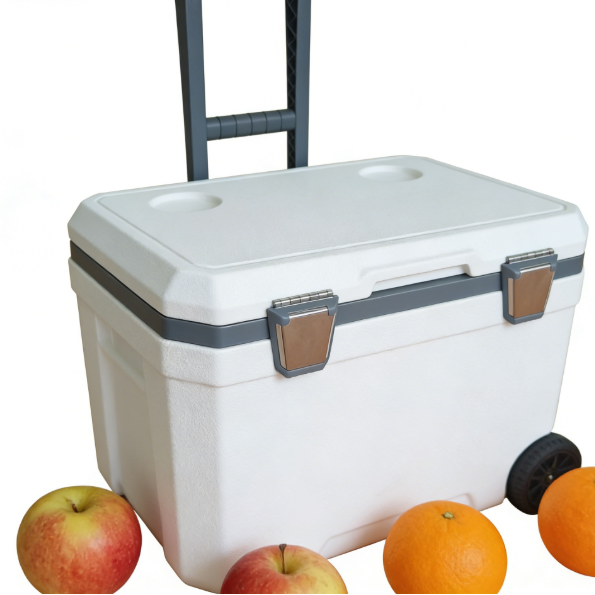
A Practical Framework for Choosing a Waterproof Plastic Tote Distributor for Meat Shipping
The right waterproof plastic tote is not the model with the longest feature list. It is the model whose limits are visible and manageable. Waterproof is not a complete specification. Buyers need to define whether they require resistance to rain, wash spray, liquid leakage, lid seepage, or full immersion, and must not confuse any of those properties with temperature control. The framework below combines design, procurement, validation, and operational controls into one decision path.
Define the Job, Consequences, and Red Lines
Write the job of the waterproof plastic tote in one sentence: protect and organize sealed meat packs, lined primal cuts, boxed protein, prepared meat products, and secondary-packaged ingredients while moving through processing-room dispatch, cold storage, loading, refrigerated transport, receiving, tote segregation, washing, sanitizing, drying, and reuse. Then write what it must not be assumed to do. Depending on the route, that may include sterility, food-contact approval, leak containment, dangerous-goods packaging, or temperature control. This two-line boundary prevents the project from collecting incompatible expectations under one product name.
Rank the credible consequences for contained movement of packaged or protected meat through chilled distribution. Consider product damage, contamination, unstable stacking, worker injury, missing traceability, delayed receiving, thermal excursion, route rejection, and loss of the reusable asset. The highest consequence is not always the most frequent event. A practical specification gives priority to the combination of severity, likelihood, and detectability rather than the feature that is easiest to quote.
Set red lines before comparing suppliers. A red line might be an unsupported thermal duration, no material traceability, an uncleanable joint, no production change notice, an unstable mixed-load stack, or a design that cannot be returned economically. Red lines speed the shortlist because they separate disqualifying uncertainty from features that can be optimized later. For contained movement of packaged or protected meat through chilled distribution, decide what control addresses the failure mode 'trapping wash water'.
Writing the Waterproof Plastic Tote Brief for Meat Shipping
Build the specification in five blocks: payload, geometry, environment, operation, and evidence. Payload covers dimensions, weight, fragility, contact, and temperature sensitivity. Geometry covers usable space, closure, stack, handling, and interfaces. Environment covers time, temperature, moisture, chemicals, and UV. Operation covers packing, transport, cleaning, return, and retirement. Evidence covers drawings, declarations, tests, inspection, and change control. The controlled specification should also make replacement gasket or lid visible.
Translate the design discussion into the features that matter here: solid-wall containment, lid overlap or gasket, corner sealing, drain plug design if used, stable stacking, and handholds that do not channel liquid. For each feature, record the intended benefit and a possible side effect. A vent may improve airflow but reduce containment. A taper may improve nesting but reduce volume. A gasket may control seepage but add cleaning and replacement. An insulated insert may improve thermal performance but reduce payload and complicate loading. Apply the requirement to the actual contained movement of packaged or protected meat through chilled distribution workflow.
Keep material questions equally specific: food-contact status, low-temperature impact, fat and detergent compatibility, odor retention, color coding, and surface finish. Ask for the finished-product evidence that matches the claim. A resin name supports material identification; it does not prove a handhold, hinge, weld, edge seal, label, or assembled lid. Likewise, a dimensional drawing supports fit; it does not establish stack life, leakage, cleanability, or a temperature profile. Document how the design addresses the listed failure mode: treating a tote as a substitute for refrigeration.
Keep Product Claims Inside Their Evidence Boundary
The waterproof plastic tote should be described by function, not by adjectives. Its verified functions may include carrying, stacking, nesting or folding, resisting defined handling, supporting labels, accepting inserts, and presenting surfaces for cleaning. Claims such as waterproof, medical, food grade, pharmaceutical, thermal, or temperature controlled require additional definitions and evidence. The term should never be allowed to imply a broader system approval than the supplier can demonstrate.
Food applications require evidence for the intended contact and transport condition. U.S. sanitary-transportation rules address practices by parties in the transport chain, and EU food-contact controls address plastic composition and migration for applicable articles. Buyers still need to confirm the finished construction, additives, cleaning method, food type, temperature, and destination requirements. For this meat shipping project, record the related acceptance condition on the approved waterproof plastic tote.
Use standards as tools inside the evidence plan. Compression, stacking, vibration, drop, and thermal profiles can make supplier results comparable when the sample, payload, conditioning, and acceptance criteria are the same. A standard name on a brochure is not enough, and a passing result does not guarantee a different route. The buyer's quality or engineering team should decide how the test supports the intended use. Connect the requirement to handholds that do not channel liquid and a representative payload.
| Gate | Approval question | Minimum output | Owner |
|---|---|---|---|
| 1. Use case | What job and boundary are defined? | Approved requirement brief | Operations and quality |
| 2. Design | Does the sample fit and handle the payload? | Drawing and sample review | Engineering |
| 3. Evidence | Are claims tied to test conditions? | Reports and material documents | Quality |
| 4. Pilot | Does it work in the actual loop? | Pilot record and open-issue list | Operations |
| 5. Production | Does production match the approved sample? | Inspection plan and change control | Procurement and supplier |
| 6. Lifecycle | How are cleaning, repair, loss, and retirement controlled? | Fleet SOP and metrics | Program owner |
Treat each gate for contained movement of packaged or protected meat through chilled distribution as a decision record. Progress only when the owner, evidence, and unresolved risks are visible to the cross-functional team.
Make a Separate Thermal-Control Decision
First decide whether temperature control belongs to the crate project. If the vehicle or room already provides reliable control and the payload is protected through every handover, the crate may need only airflow and mechanical compatibility. If gaps exist, an insulated liner, cooler, pallet cover, conditioned gel pack, PCM pack, dry ice system, or active solution may be required. The answer should follow the product specification and lane risk. For contained movement of packaged or protected meat through chilled distribution, verify refrigerated vehicle dependence under the stated payload and ambient profile.
If passive protection is required, define refrigerated vehicle dependence, pre-chilled payload, optional insulation, coolant separation, temperature logger location, and door-opening exposure before selecting components. The design must account for payload starting temperature, empty space, insulation bridges, coolant conditioning, product separation, ambient exposure, and opening. Any change in those variables can alter performance. A supplier's tested configuration is useful only when the proposed packout is genuinely comparable. Keep the claim conditional until the tested configuration covers door-opening exposure.
Qualification and routine monitoring serve different purposes. Development testing establishes whether a controlled packout can meet the acceptance criterion under a defined profile. Route monitoring checks what happened in use. A logger can support release or investigation, but it cannot compensate for a missing coolant pack, a warm payload, an open lid, or an unqualified route. Receiving instructions must connect the data to a clear decision process. The operating instruction should make temperature logger location clear to packers and receivers.
Supplier Controls for Meat Shipping Procurement
Shortlist the distributor by the quality of its evidence. Request an approved drawing, material declaration, critical-dimension report, production-intent sample, relevant test reports, cleaning or packout instructions, batch identification, and change-control terms. For this application, also review written definition of waterproof claim, test method and acceptance criteria, replacement gasket or lid, food-contact documentation, batch traceability, and change control. Documents should identify the configuration and conditions, not simply repeat a marketing claim. Treat change control as part of the evidence package, not a verbal assurance.
Use an evidence hierarchy. A verbal statement is lowest. A generic datasheet is better but may not match the assembly. A supplier test on the proposed configuration is stronger. An independent or accredited-laboratory report may add confidence when the method and sample are relevant. The highest practical evidence is a controlled pilot in the buyer's route, supported by traceable production units and a plan for ongoing inspection. The supplier review should define how batch traceability remains controlled after scale-up.
Challenge the failure modes directly: assuming a snap lid is leakproof, using damaged rims, trapping wash water, mixing raw-meat totes with clean zones, and treating a tote as a substitute for refrigeration. Ask what design feature prevents each event, how that feature was tested, and how production checks preserve it. If the supplier cannot answer, convert the uncertainty into a sample test or remove the claim from the specification. This keeps the commercial negotiation tied to risk rather than feature count. The procurement file should make food-contact documentation traceable.
Four Approval Gates from Fit to Lifecycle
Use four approval gates. Gate one is fit: the payload loads, closes, unloads, and remains identifiable. Gate two is controlled testing: mechanical, cleaning, leakage, or thermal trials address the defined risks. Gate three is an operational pilot: normal staff use the production-intent units through the full loop. Gate four is production release: incoming inspection and change control show that scaled units match the approved design. The pilot should track return logistics as a lifecycle variable.
The pilot record should include exceptions, not only averages. Note the heaviest and lightest loads, difficult openings, wet returns, delayed handovers, mixed stacks, missing accessories, damage, rewash, and any temperature excursion. Exceptions reveal design margin and training gaps. A program that records only successful trips can scale a hidden weakness. For this meat shipping program, include damage inspection in the operating model.
After launch, manage the container as an asset. Assign IDs where appropriate, record damage reasons, separate repairable components, define wash and inspection status, maintain replacement stock, and retire unsafe units. Review field data before approving supplier or component changes. Lifecycle control is the step that turns a reusable idea into a dependable program. The fleet review should show how wash-water demand affects cost and reliability.
Replace Five Expensive Assumptions with Proof
Assumption one: the stated volume equals payload space. It may not after taper, lids, dividers, insulation, and coolant. Assumption two: a material name proves performance. It does not prove the finished geometry. Assumption three: a stack rating covers every duration and temperature. It may come from a different test. Each assumption should be replaced by a drawing, sample, and relevant test condition. For contained movement of packaged or protected meat through chilled distribution, decide what control addresses the failure mode 'trapping wash water'.
Assumption four: a reusable format is automatically sustainable. The return distance, loss, cleaning, repair, and retirement route determine the outcome. Assumption five: a thermal label proves temperature control. The complete system, starting conditions, ambient profile, packout, and operating discipline determine the result. These assumptions are expensive because they usually fail after tooling or fleet purchase. Do not close the review until evidence or a process control addresses the failure mode 'mixing raw-meat totes with clean zones'.
The project-specific warning signs are assuming a snap lid is leakproof, using damaged rims, trapping wash water, mixing raw-meat totes with clean zones, and treating a tote as a substitute for refrigeration. Put them on the sample-review checklist. A cross-functional team is more likely to catch them because operations, quality, engineering, sanitation, and logistics see different parts of the risk. The checklist should be short, owned, and tied to a disposition: accept, revise, test, quarantine, or reject. The supplier discussion should connect the failure mode 'treating a tote as a substitute for refrigeration' to a feature, test, and disposition.
A Meat Shipping Scenario: Normal Flow and Credible Deviation
A cross-functional workshop for contained movement of packaged or protected meat through chilled distribution can be completed around one production-intent sample. Place the representative payload, labels, dunnage, thermal components if needed, and handling tools on the table. Ask operations to pack it, logistics to move and stack it, quality to inspect the evidence, and sanitation to clean and dry it. Record where the process depends on judgment or workaround.
Then simulate a credible deviation: a delayed handover, partial load, wet return, cold impact, missing lid, or unexpected inspection. The team should decide whether the design contains the event, whether the condition is detectable, and what instruction follows. This exercise often exposes a more useful requirement than another generic durability claim. During the exercise, watch specifically for the listed failure mode: assuming a snap lid is leakproof.
Close the workshop with named actions, revised drawing points, tests, owners, and acceptance dates. The supplier receives a controlled list rather than conflicting comments from different departments. When the next sample arrives, the same team can verify the changes and decide whether the design is ready for a route pilot. Use the scenario to decide how the team will respond to the failure mode 'using damaged rims'.
Frequently Asked Questions
What is the first document to prepare before contacting a waterproof plastic tote distributor for meat shipping?
Prepare a concise use-case brief covering payload, usable dimensions, maximum load, route, environmental exposure, handling, cleaning, return, identification, and any temperature requirement. Add the claims that must be supported and the conditions that would disqualify a design. This gives suppliers a common basis for quotation. For this project, keep food-contact documentation traceable to the approved sample.
How do I separate a crate requirement from a cold-chain requirement?
Assign mechanical handling, stacking, closure, hygiene, and identification to the crate. Assign insulation, refrigerant, active cooling, packout, preconditioning, monitoring, and thermal qualification to the temperature-control system. They must interface correctly, but one should not be used as evidence for the other. For this meat shipping project, confirm the answer on a production-intent sample rather than assuming catalog equivalence.
Which supplier evidence should carry the most weight?
Give more weight to configuration-specific drawings, material documents, production-intent samples, test reports with full conditions, and a successful route pilot than to generic brochures. Independent testing can add confidence when the method and sample are relevant. Change control is essential so the evidence remains connected to production. For this project, keep change control traceable to the approved sample.
How many samples are needed before a fleet purchase?
There is no universal number. Use enough samples to check fit, production variation, handling, cleaning, and the credible failure modes. A pilot should include production-intent units and normal operators. The sample plan should be risk based and agreed by engineering or quality rather than chosen only for convenience. Base the decision on tilt and leak tests with the intended closure under the intended route and load.
What should happen after the container enters service?
Control identification, cleaning status, inspection, repair, accessory replacement, damage coding, loss, and retirement. Review field data and supplier changes periodically. Reusable packaging remains reliable only when the operating system preserves the condition and configuration that were originally approved. For this meat shipping project, confirm the answer on a production-intent sample rather than assuming catalog equivalence.
Final Decision
Select a waterproof plastic tote distributor for meat shipping through a controlled sequence: define the job and red lines, verify usable geometry and material evidence, decide whether thermal control is needed, test the relevant failure modes, pilot the full operating loop, and preserve the approved design through inspection and change control. Keep every claim tied to its conditions and owner.
About Tempk
Tempk supplies cold-chain packaging components such as gel packs, ice bricks, PCM packs, insulated liners and bags, EPP and other insulated boxes, cold shipping boxes, and thermal pallet covers. Here, the practical focus is combining meat-shipping totes with insulated liners, gel packs, ice bricks, EPP boxes, or thermal covers where the route needs added passive cooling. Product-specific requirements, route qualification, and customer quality review remain the basis for any final selection.
Request a Practical Review
For an integrated container-and-cold-chain review, define the leakage condition, meat packaging format, wash process, route temperature, and stack load before comparing cold-chain accessories.
Selecting a Thermal Plastic Crate Maker for Laboratory Import: A Practical Framework

A Practical Framework for Choosing a Thermal Plastic Crate Maker for Laboratory Import
Before comparing quotes, define what success looks like at packing, transport, receipt, cleaning, and reuse. The word thermal does not prove a temperature range or hold time. A plastic crate becomes part of a thermal system only when insulation, coolant, payload, closure, ambient profile, and packout instructions are defined and tested together. The framework below combines design, procurement, validation, and operational controls into one decision path.
Start with Risk Rather Than Features
Write the job of the thermal plastic crate in one sentence: protect and organize reagents, controls, diagnostic consumables, sealed samples, instruments, and laboratory kits while moving through supplier packing, export staging, customs handover, air or ocean transfer, import clearance, local distribution, and laboratory receipt. Then write what it must not be assumed to do. Depending on the route, that may include sterility, food-contact approval, leak containment, dangerous-goods packaging, or temperature control. This two-line boundary prevents the project from collecting incompatible expectations under one product name.
Rank the credible consequences for international import of laboratory materials and temperature-sensitive supplies. Consider product damage, contamination, unstable stacking, worker injury, missing traceability, delayed receiving, thermal excursion, route rejection, and loss of the reusable asset. The highest consequence is not always the most frequent event. A practical specification gives priority to the combination of severity, likelihood, and detectability rather than the feature that is easiest to quote.
Set red lines before comparing suppliers. A red line might be an unsupported thermal duration, no material traceability, an uncleanable joint, no production change notice, an unstable mixed-load stack, or a design that cannot be returned economically. Red lines speed the shortlist because they separate disqualifying uncertainty from features that can be optimized later. Apply this trade-off to tamper evidence on the production-intent sample.
What the Container Can and Cannot Prove
The thermal plastic crate should be described by function, not by adjectives. Its verified functions may include carrying, stacking, nesting or folding, resisting defined handling, supporting labels, accepting inserts, and presenting surfaces for cleaning. Claims such as waterproof, medical, food grade, pharmaceutical, thermal, or temperature controlled require additional definitions and evidence. The term should never be allowed to imply a broader system approval than the supplier can demonstrate.
For laboratory or biotech use, ordinary reusable handling must be separated from the rules for infectious or diagnostic materials. Risk assessment determines containment, decontamination, and transport precautions. When regulated specimens are present, prescribed primary, secondary, and outer packaging functions may apply; a general crate should be treated only as the role it has actually been designed and documented to perform.
Use standards as tools inside the evidence plan. Compression, stacking, vibration, drop, and thermal profiles can make supplier results comparable when the sample, payload, conditioning, and acceptance criteria are the same. A standard name on a brochure is not enough, and a passing result does not guarantee a different route. The buyer's quality or engineering team should decide how the test supports the intended use. Confirm the recommendation on a production-intent sample.
Material Evidence for the Finished Thermal Plastic Crate
Build the specification in five blocks: payload, geometry, environment, operation, and evidence. Payload covers dimensions, weight, fragility, contact, and temperature sensitivity. Geometry covers usable space, closure, stack, handling, and interfaces. Environment covers time, temperature, moisture, chemicals, and UV. Operation covers packing, transport, cleaning, return, and retirement. Evidence covers drawings, declarations, tests, inspection, and change control. Confirm chemical resistance after manufacturing and environmental conditioning.
Translate the design discussion into the features that matter here: lid engagement, insulation retention, customs-access strategy, tamper evidence, document pouch placement, and forklift or manual handling interfaces. For each feature, record the intended benefit and a possible side effect. A vent may improve airflow but reduce containment. A taper may improve nesting but reduce volume. A gasket may control seepage but add cleaning and replacement. An insulated insert may improve thermal performance but reduce payload and complicate loading. A production sample should show how liner film or tray material affects use in laboratory operations.
Keep material questions equally specific: outer-shell resin, insulation type, liner film or tray material, chemical resistance, cold-impact behavior, and odor and extractables concerns for sensitive environments. Ask for the finished-product evidence that matches the claim. A resin name supports material identification; it does not prove a handhold, hinge, weld, edge seal, label, or assembled lid. Likewise, a dimensional drawing supports fit; it does not establish stack life, leakage, cleanability, or a temperature profile. Keep the claim conditional until evidence for insulation type matches the proposed construction.
| Gate | Approval question | Minimum output | Owner |
|---|---|---|---|
| 1. Use case | What job and boundary are defined? | Approved requirement brief | Operations and quality |
| 2. Design | Does the sample fit and handle the payload? | Drawing and sample review | Engineering |
| 3. Evidence | Are claims tied to test conditions? | Reports and material documents | Quality |
| 4. Pilot | Does it work in the actual loop? | Pilot record and open-issue list | Operations |
| 5. Production | Does production match the approved sample? | Inspection plan and change control | Procurement and supplier |
| 6. Lifecycle | How are cleaning, repair, loss, and retirement controlled? | Fleet SOP and metrics | Program owner |
Treat each gate for international import of laboratory materials and temperature-sensitive supplies as a decision record. Progress only when the owner, evidence, and unresolved risks are visible to the cross-functional team.
Choose the Temperature-Control Layer Deliberately
First decide whether temperature control belongs to the crate project. If the vehicle or room already provides reliable control and the payload is protected through every handover, the crate may need only airflow and mechanical compatibility. If gaps exist, an insulated liner, cooler, pallet cover, conditioned gel pack, PCM pack, dry ice system, or active solution may be required. The answer should follow the product specification and lane risk. Use the qualification review to confirm refrigerant type and preconditioning at the system level.
If passive protection is required, define target product range, expected transit and customs delay, refrigerant type and preconditioning, payload-to-coolant ratio, logger location, and door-opening or inspection risk before selecting components. The design must account for payload starting temperature, empty space, insulation bridges, coolant conditioning, product separation, ambient exposure, and opening. Any change in those variables can alter performance. A supplier's tested configuration is useful only when the proposed packout is genuinely comparable. The thermal file should therefore document expected transit and customs delay for the selected packout.
Qualification and routine monitoring serve different purposes. Development testing establishes whether a controlled packout can meet the acceptance criterion under a defined profile. Route monitoring checks what happened in use. A logger can support release or investigation, but it cannot compensate for a missing coolant pack, a warm payload, an open lid, or an unqualified route. Receiving instructions must connect the data to a clear decision process. For international import of laboratory materials and temperature-sensitive supplies, verify target product range under the stated payload and ambient profile.
Pilot the Process Before Buying the Fleet
Use four approval gates. Gate one is fit: the payload loads, closes, unloads, and remains identifiable. Gate two is controlled testing: mechanical, cleaning, leakage, or thermal trials address the defined risks. Gate three is an operational pilot: normal staff use the production-intent units through the full loop. Gate four is production release: incoming inspection and change control show that scaled units match the approved design. For this laboratory program, include nested or knock-down storage in the operating model.
The pilot record should include exceptions, not only averages. Note the heaviest and lightest loads, difficult openings, wet returns, delayed handovers, mixed stacks, missing accessories, damage, rewash, and any temperature excursion. Exceptions reveal design margin and training gaps. A program that records only successful trips can scale a hidden weakness. The fleet review should show how wash and dry energy affects cost and reliability.
After launch, manage the container as an asset. Assign IDs where appropriate, record damage reasons, separate repairable components, define wash and inspection status, maintain replacement stock, and retire unsafe units. Review field data before approving supplier or component changes. Lifecycle control is the step that turns a reusable idea into a dependable program. Before scale-up, assign ownership for insulation replacement.
Supplier Controls for Laboratory Procurement
Shortlist the maker by the quality of its evidence. Request an approved drawing, material declaration, critical-dimension report, production-intent sample, relevant test reports, cleaning or packout instructions, batch identification, and change-control terms. For this application, also review export packing list, material declarations, drawings in agreed units, spare component availability, change-control notice, and training packout instructions. Documents should identify the configuration and conditions, not simply repeat a marketing claim. Treat export packing list as part of the evidence package, not a verbal assurance.
Use an evidence hierarchy. A verbal statement is lowest. A generic datasheet is better but may not match the assembly. A supplier test on the proposed configuration is stronger. An independent or accredited-laboratory report may add confidence when the method and sample are relevant. The highest practical evidence is a controlled pilot in the buyer's route, supported by traceable production units and a plan for ongoing inspection.
Challenge the failure modes directly: buying on wall thickness alone, confusing gross volume with usable payload, placing frozen packs against freeze-sensitive reagents, ignoring customs delays, and accepting an unsupported hold-time claim. Ask what design feature prevents each event, how that feature was tested, and how production checks preserve it. If the supplier cannot answer, convert the uncertainty into a sample test or remove the claim from the specification. This keeps the commercial negotiation tied to risk rather than feature count. The procurement file should make change-control notice traceable.
The Assumptions Most Likely to Fail After Purchase
Assumption one: the stated volume equals payload space. It may not after taper, lids, dividers, insulation, and coolant. Assumption two: a material name proves performance. It does not prove the finished geometry. Assumption three: a stack rating covers every duration and temperature. It may come from a different test. Each assumption should be replaced by a drawing, sample, and relevant test condition. The review should explicitly include the listed risk: buying on wall thickness alone.
Assumption four: a reusable format is automatically sustainable. The return distance, loss, cleaning, repair, and retirement route determine the outcome. Assumption five: a thermal label proves temperature control. The complete system, starting conditions, ambient profile, packout, and operating discipline determine the result. These assumptions are expensive because they usually fail after tooling or fleet purchase. Convert the failure mode 'confusing gross volume with usable payload' into an owned verification item.
The project-specific warning signs are buying on wall thickness alone, confusing gross volume with usable payload, placing frozen packs against freeze-sensitive reagents, ignoring customs delays, and accepting an unsupported hold-time claim. Put them on the sample-review checklist. A cross-functional team is more likely to catch them because operations, quality, engineering, sanitation, and logistics see different parts of the risk. The checklist should be short, owned, and tied to a disposition: accept, revise, test, quarantine, or reject. For international import of laboratory materials and temperature-sensitive supplies, decide what control addresses the failure mode 'placing frozen packs against freeze-sensitive reagents'.
One Sample Can Align Operations, Quality, and Engineering
A cross-functional workshop for international import of laboratory materials and temperature-sensitive supplies can be completed around one production-intent sample. Place the representative payload, labels, dunnage, thermal components if needed, and handling tools on the table. Ask operations to pack it, logistics to move and stack it, quality to inspect the evidence, and sanitation to clean and dry it. Record where the process depends on judgment or workaround.
Then simulate a credible deviation: a delayed handover, partial load, wet return, cold impact, missing lid, or unexpected inspection. The team should decide whether the design contains the event, whether the condition is detectable, and what instruction follows. This exercise often exposes a more useful requirement than another generic durability claim. Keep the result traceable through spare component availability.
Close the workshop with named actions, revised drawing points, tests, owners, and acceptance dates. The supplier receives a controlled list rather than conflicting comments from different departments. When the next sample arrives, the same team can verify the changes and decide whether the design is ready for a route pilot. Use receiving trial at the destination laboratory if it represents the intended operating risk.
Frequently Asked Questions
What is the first document to prepare before contacting a thermal plastic crate maker for laboratory import?
Prepare a concise use-case brief covering payload, usable dimensions, maximum load, route, environmental exposure, handling, cleaning, return, identification, and any temperature requirement. Add the claims that must be supported and the conditions that would disqualify a design. This gives suppliers a common basis for quotation. For international import of laboratory materials and temperature-sensitive supplies, verify expected transit and customs delay in the tested configuration.
How do I separate a crate requirement from a cold-chain requirement?
Assign mechanical handling, stacking, closure, hygiene, and identification to the crate. Assign insulation, refrigerant, active cooling, packout, preconditioning, monitoring, and thermal qualification to the temperature-control system. They must interface correctly, but one should not be used as evidence for the other. For this laboratory project, confirm the answer on a production-intent sample rather than assuming catalog equivalence.
Which supplier evidence should carry the most weight?
Give more weight to configuration-specific drawings, material documents, production-intent samples, test reports with full conditions, and a successful route pilot than to generic brochures. Independent testing can add confidence when the method and sample are relevant. Change control is essential so the evidence remains connected to production. For this project, keep spare component availability traceable to the approved sample.
How many samples are needed before a fleet purchase?
There is no universal number. Use enough samples to check fit, production variation, handling, cleaning, and the credible failure modes. A pilot should include production-intent units and normal operators. The sample plan should be risk based and agreed by engineering or quality rather than chosen only for convenience. Base the decision on dimensional inspection under the intended route and load.
What should happen after the container enters service?
Control identification, cleaning status, inspection, repair, accessory replacement, damage coding, loss, and retirement. Review field data and supplier changes periodically. Reusable packaging remains reliable only when the operating system preserves the condition and configuration that were originally approved. For this laboratory project, confirm the answer on a production-intent sample rather than assuming catalog equivalence.
Final Decision
Select a thermal plastic crate maker for laboratory import through a controlled sequence: define the job and red lines, verify usable geometry and material evidence, decide whether thermal control is needed, test the relevant failure modes, pilot the full operating loop, and preserve the approved design through inspection and change control. Keep every claim tied to its conditions and owner.
About Tempk
Tempk supplies cold-chain packaging components such as gel packs, ice bricks, PCM packs, insulated liners and bags, EPP and other insulated boxes, cold shipping boxes, and thermal pallet covers. Here, the practical focus is supplying cold-chain components such as insulated boxes, gel packs, PCM packs, liners, and temperature monitoring support for laboratory import projects. Product-specific requirements, route qualification, and customer quality review remain the basis for any final selection.
Request a Practical Review
For an integrated container-and-cold-chain review, provide the product temperature specification, route, clearance risk, payload dimensions, and receiving process to discuss a practical thermal packaging approach.
Selecting a Thermal Plastic Cooler Box Maker for Frozen Food Delivery: A Practical Framework
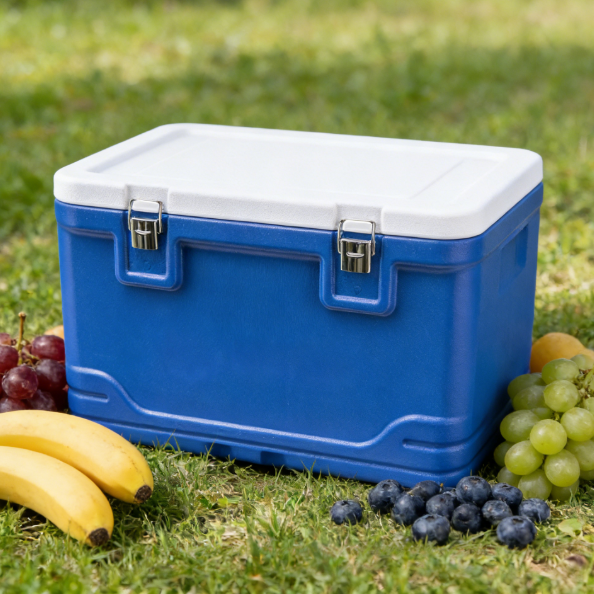
A Practical Framework for Choosing a Thermal Plastic Cooler Box Maker for Frozen Food Delivery
The safest way to shortlist a maker is to start with the operating risk, then work backward to geometry, materials, testing, and quality controls. A cooler box can slow heat gain, but it cannot guarantee frozen delivery without a defined product condition, insulation, coolant or active refrigeration, route profile, operating procedure, and verification plan. The framework below combines design, procurement, validation, and operational controls into one decision path.
Start with Risk Rather Than Features
Write the job of the thermal plastic cooler box in one sentence: protect and organize frozen meals, meat, seafood, desserts, bakery products, and grocery packs while moving through freezer loading, coolant placement, dispatch staging, vehicle delivery, repeated opening, customer handover, return, cleaning, and reconditioning. Then write what it must not be assumed to do. Depending on the route, that may include sterility, food-contact approval, leak containment, dangerous-goods packaging, or temperature control. This two-line boundary prevents the project from collecting incompatible expectations under one product name.
Rank the credible consequences for last-mile and regional delivery of packaged frozen foods using passive or hybrid cooling. Consider product damage, contamination, unstable stacking, worker injury, missing traceability, delayed receiving, thermal excursion, route rejection, and loss of the reusable asset. The highest consequence is not always the most frequent event. A practical specification gives priority to the combination of severity, likelihood, and detectability rather than the feature that is easiest to quote.
Set red lines before comparing suppliers. A red line might be an unsupported thermal duration, no material traceability, an uncleanable joint, no production change notice, an unstable mixed-load stack, or a design that cannot be returned economically. Red lines speed the shortlist because they separate disqualifying uncertainty from features that can be optimized later. For last-mile and regional delivery of packaged frozen foods using passive or hybrid cooling, check the point with the intended load and handling sequence.
Convert Geometry and Material into Verifiable Requirements
Build the specification in five blocks: payload, geometry, environment, operation, and evidence. Payload covers dimensions, weight, fragility, contact, and temperature sensitivity. Geometry covers usable space, closure, stack, handling, and interfaces. Environment covers time, temperature, moisture, chemicals, and UV. Operation covers packing, transport, cleaning, return, and retirement. Evidence covers drawings, declarations, tests, inspection, and change control. The material file should connect food-contact separation to the approved thermal plastic cooler box.
Translate the design discussion into the features that matter here: insulated wall continuity, lid gasket or overlap, latch usability, handle and wheel options, stacking, and drain and cleaning access. For each feature, record the intended benefit and a possible side effect. A vent may improve airflow but reduce containment. A taper may improve nesting but reduce volume. A gasket may control seepage but add cleaning and replacement. An insulated insert may improve thermal performance but reduce payload and complicate loading. Confirm low-temperature impact after manufacturing and environmental conditioning.
Keep material questions equally specific: outer shell, insulation core, inner liner, low-temperature impact, food-contact separation, and gasket material. Ask for the finished-product evidence that matches the claim. A resin name supports material identification; it does not prove a handhold, hinge, weld, edge seal, label, or assembled lid. Likewise, a dimensional drawing supports fit; it does not establish stack life, leakage, cleanability, or a temperature profile. A production sample should show how inner liner affects use in frozen food delivery operations.
A Practical Decision Point for Last-mile and Regional Delivery of Packaged Frozen Foods Using Passive or Hybrid Cooling
The thermal plastic cooler box should be described by function, not by adjectives. Its verified functions may include carrying, stacking, nesting or folding, resisting defined handling, supporting labels, accepting inserts, and presenting surfaces for cleaning. Claims such as waterproof, medical, food grade, pharmaceutical, thermal, or temperature controlled require additional definitions and evidence. The term should never be allowed to imply a broader system approval than the supplier can demonstrate.
Food applications require evidence for the intended contact and transport condition. U.S. sanitary-transportation rules address practices by parties in the transport chain, and EU food-contact controls address plastic composition and migration for applicable articles. Buyers still need to confirm the finished construction, additives, cleaning method, food type, temperature, and destination requirements. Use cold drop if it represents the intended operating risk.
Use standards as tools inside the evidence plan. Compression, stacking, vibration, drop, and thermal profiles can make supplier results comparable when the sample, payload, conditioning, and acceptance criteria are the same. A standard name on a brochure is not enough, and a passing result does not guarantee a different route. The buyer's quality or engineering team should decide how the test supports the intended use. Apply the point to the approved thermal plastic cooler box in last-mile and regional delivery of packaged frozen foods using passive or hybrid cooling.
| Gate | Approval question | Minimum output | Owner |
|---|---|---|---|
| 1. Use case | What job and boundary are defined? | Approved requirement brief | Operations and quality |
| 2. Design | Does the sample fit and handle the payload? | Drawing and sample review | Engineering |
| 3. Evidence | Are claims tied to test conditions? | Reports and material documents | Quality |
| 4. Pilot | Does it work in the actual loop? | Pilot record and open-issue list | Operations |
| 5. Production | Does production match the approved sample? | Inspection plan and change control | Procurement and supplier |
| 6. Lifecycle | How are cleaning, repair, loss, and retirement controlled? | Fleet SOP and metrics | Program owner |
Treat each gate for last-mile and regional delivery of packaged frozen foods using passive or hybrid cooling as a decision record. Progress only when the owner, evidence, and unresolved risks are visible to the cross-functional team.
Choose the Temperature-Control Layer Deliberately
First decide whether temperature control belongs to the crate project. If the vehicle or room already provides reliable control and the payload is protected through every handover, the crate may need only airflow and mechanical compatibility. If gaps exist, an insulated liner, cooler, pallet cover, conditioned gel pack, PCM pack, dry ice system, or active solution may be required. The answer should follow the product specification and lane risk. The thermal file should therefore document number of openings for the selected packout.
If passive protection is required, define frozen product starting condition, route duration, number of openings, coolant or dry ice compatibility, product separation, and logger placement before selecting components. The design must account for payload starting temperature, empty space, insulation bridges, coolant conditioning, product separation, ambient exposure, and opening. Any change in those variables can alter performance. A supplier's tested configuration is useful only when the proposed packout is genuinely comparable. For last-mile and regional delivery of packaged frozen foods using passive or hybrid cooling, verify route duration under the stated payload and ambient profile.
Qualification and routine monitoring serve different purposes. Development testing establishes whether a controlled packout can meet the acceptance criterion under a defined profile. Route monitoring checks what happened in use. A logger can support release or investigation, but it cannot compensate for a missing coolant pack, a warm payload, an open lid, or an unqualified route. Receiving instructions must connect the data to a clear decision process. Keep the claim conditional until the tested configuration covers frozen product starting condition.
Evidence to Request Before Commercial Approval
Shortlist the maker by the quality of its evidence. Request an approved drawing, material declaration, critical-dimension report, production-intent sample, relevant test reports, cleaning or packout instructions, batch identification, and change-control terms. For this application, also review thermal report conditions, coolant packout diagram, replacement gasket, sample consistency, custom inserts, and change control. Documents should identify the configuration and conditions, not simply repeat a marketing claim. For this project, connect coolant packout diagram to the approved drawing and sample.
Use an evidence hierarchy. A verbal statement is lowest. A generic datasheet is better but may not match the assembly. A supplier test on the proposed configuration is stronger. An independent or accredited-laboratory report may add confidence when the method and sample are relevant. The highest practical evidence is a controlled pilot in the buyer's route, supported by traceable production units and a plan for ongoing inspection. Treat thermal report conditions as part of the evidence package, not a verbal assurance.
Challenge the failure modes directly: testing a closed box but operating with frequent stops, loading warm product, using dry ice without suitable venting and carrier review, overpacking until the lid leaks heat, and quoting hold time without payload detail. Ask what design feature prevents each event, how that feature was tested, and how production checks preserve it. If the supplier cannot answer, convert the uncertainty into a sample test or remove the claim from the specification. This keeps the commercial negotiation tied to risk rather than feature count. The supplier review should define how change control remains controlled after scale-up.
Return and Fleet Control for the Thermal Plastic Cooler Box
Use four approval gates. Gate one is fit: the payload loads, closes, unloads, and remains identifiable. Gate two is controlled testing: mechanical, cleaning, leakage, or thermal trials address the defined risks. Gate three is an operational pilot: normal staff use the production-intent units through the full loop. Gate four is production release: incoming inspection and change control show that scaled units match the approved design. Use field records to verify whether route density supports the business case.
The pilot record should include exceptions, not only averages. Note the heaviest and lightest loads, difficult openings, wet returns, delayed handovers, mixed stacks, missing accessories, damage, rewash, and any temperature excursion. Exceptions reveal design margin and training gaps. A program that records only successful trips can scale a hidden weakness. The pilot should track right-sized fleet as a lifecycle variable.
After launch, manage the container as an asset. Assign IDs where appropriate, record damage reasons, separate repairable components, define wash and inspection status, maintain replacement stock, and retire unsafe units. Review field data before approving supplier or component changes. Lifecycle control is the step that turns a reusable idea into a dependable program. For this frozen food delivery program, include box loss in the operating model.
The Assumptions Most Likely to Fail After Purchase
Assumption one: the stated volume equals payload space. It may not after taper, lids, dividers, insulation, and coolant. Assumption two: a material name proves performance. It does not prove the finished geometry. Assumption three: a stack rating covers every duration and temperature. It may come from a different test. Each assumption should be replaced by a drawing, sample, and relevant test condition. Convert the failure mode 'loading warm product' into an owned verification item.
Assumption four: a reusable format is automatically sustainable. The return distance, loss, cleaning, repair, and retirement route determine the outcome. Assumption five: a thermal label proves temperature control. The complete system, starting conditions, ambient profile, packout, and operating discipline determine the result. These assumptions are expensive because they usually fail after tooling or fleet purchase. For last-mile and regional delivery of packaged frozen foods using passive or hybrid cooling, decide what control addresses the failure mode 'using dry ice without suitable venting and carrier review'.
The project-specific warning signs are testing a closed box but operating with frequent stops, loading warm product, using dry ice without suitable venting and carrier review, overpacking until the lid leaks heat, and quoting hold time without payload detail. Put them on the sample-review checklist. A cross-functional team is more likely to catch them because operations, quality, engineering, sanitation, and logistics see different parts of the risk. The checklist should be short, owned, and tied to a disposition: accept, revise, test, quarantine, or reject. Do not close the review until evidence or a process control addresses the failure mode 'overpacking until the lid leaks heat'.
One Sample Can Align Operations, Quality, and Engineering
A cross-functional workshop for last-mile and regional delivery of packaged frozen foods using passive or hybrid cooling can be completed around one production-intent sample. Place the representative payload, labels, dunnage, thermal components if needed, and handling tools on the table. Ask operations to pack it, logistics to move and stack it, quality to inspect the evidence, and sanitation to clean and dry it. Record where the process depends on judgment or workaround.
Then simulate a credible deviation: a delayed handover, partial load, wet return, cold impact, missing lid, or unexpected inspection. The team should decide whether the design contains the event, whether the condition is detectable, and what instruction follows. This exercise often exposes a more useful requirement than another generic durability claim. Use stack and vehicle restraint if it represents the intended operating risk.
Close the workshop with named actions, revised drawing points, tests, owners, and acceptance dates. The supplier receives a controlled list rather than conflicting comments from different departments. When the next sample arrives, the same team can verify the changes and decide whether the design is ready for a route pilot. Apply the point to the approved thermal plastic cooler box in last-mile and regional delivery of packaged frozen foods using passive or hybrid cooling.
Frequently Asked Questions
What is the first document to prepare before contacting a thermal plastic cooler box maker for frozen food delivery?
Prepare a concise use-case brief covering payload, usable dimensions, maximum load, route, environmental exposure, handling, cleaning, return, identification, and any temperature requirement. Add the claims that must be supported and the conditions that would disqualify a design. This gives suppliers a common basis for quotation. For last-mile and regional delivery of packaged frozen foods using passive or hybrid cooling, verify route duration in the tested configuration.
How do I separate a crate requirement from a cold-chain requirement?
Assign mechanical handling, stacking, closure, hygiene, and identification to the crate. Assign insulation, refrigerant, active cooling, packout, preconditioning, monitoring, and thermal qualification to the temperature-control system. They must interface correctly, but one should not be used as evidence for the other. For this frozen food delivery project, confirm the answer on a production-intent sample rather than assuming catalog equivalence.
Which supplier evidence should carry the most weight?
Give more weight to configuration-specific drawings, material documents, production-intent samples, test reports with full conditions, and a successful route pilot than to generic brochures. Independent testing can add confidence when the method and sample are relevant. Change control is essential so the evidence remains connected to production. For this project, keep sample consistency traceable to the approved sample.
How many samples are needed before a fleet purchase?
There is no universal number. Use enough samples to check fit, production variation, handling, cleaning, and the credible failure modes. A pilot should include production-intent units and normal operators. The sample plan should be risk based and agreed by engineering or quality rather than chosen only for convenience. Base the decision on leak and drain test under the intended route and load.
What should happen after the container enters service?
Control identification, cleaning status, inspection, repair, accessory replacement, damage coding, loss, and retirement. Review field data and supplier changes periodically. Reusable packaging remains reliable only when the operating system preserves the condition and configuration that were originally approved. For this frozen food delivery project, confirm the answer on a production-intent sample rather than assuming catalog equivalence.
Final Decision
Select a thermal plastic cooler box maker for frozen food delivery through a controlled sequence: define the job and red lines, verify usable geometry and material evidence, decide whether thermal control is needed, test the relevant failure modes, pilot the full operating loop, and preserve the approved design through inspection and change control. Keep every claim tied to its conditions and owner.
About Tempk
Tempk supplies cold-chain packaging components such as gel packs, ice bricks, PCM packs, insulated liners and bags, EPP and other insulated boxes, cold shipping boxes, and thermal pallet covers. Here, the practical focus is supplying ice bricks, gel packs, hydrate coolant packs, insulated boxes, liners, and thermal bags for frozen-food delivery programs. Product-specific requirements, route qualification, and customer quality review remain the basis for any final selection.
Request a Practical Review
For an integrated container-and-cold-chain review, share the product temperature, route time, number of stops, payload, and cleaning process to discuss a realistic packout.
Selecting a Thermal Corrugated Plastic Crate Manufacturer for Seafood Transport: A Practical Framework
A Practical Framework for Choosing a Thermal Corrugated Plastic Crate Manufacturer for Seafood Transport
The safest way to shortlist a manufacturer is to start with the operating risk, then work backward to geometry, materials, testing, and quality controls. Corrugated plastic can form a light, moisture-tolerant outer crate, but the fluted sheet alone provides limited thermal protection. A thermal claim must be tied to insulation, closure, refrigerant, payload, and test conditions. The framework below combines design, procurement, validation, and operational controls into one decision path.
Start with Risk Rather Than Features
Write the job of the thermal corrugated plastic crate in one sentence: protect and organize sealed fish fillets, shellfish packs, frozen seafood cartons, chilled trays, and insulated inner packs while moving through processing, icing or coolant loading, cold storage, dispatch, export or domestic transport, receiving, crate cleaning, and return or recycling. Then write what it must not be assumed to do. Depending on the route, that may include sterility, food-contact approval, leak containment, dangerous-goods packaging, or temperature control. This two-line boundary prevents the project from collecting incompatible expectations under one product name.
Rank the credible consequences for wet, chilled, or frozen seafood distribution using a lightweight reusable or limited-reuse outer crate. Consider product damage, contamination, unstable stacking, worker injury, missing traceability, delayed receiving, thermal excursion, route rejection, and loss of the reusable asset. The highest consequence is not always the most frequent event. A practical specification gives priority to the combination of severity, likelihood, and detectability rather than the feature that is easiest to quote.
Set red lines before comparing suppliers. A red line might be an unsupported thermal duration, no material traceability, an uncleanable joint, no production change notice, an unstable mixed-load stack, or a design that cannot be returned economically. Red lines speed the shortlist because they separate disqualifying uncertainty from features that can be optimized later. For wet, chilled, or frozen seafood distribution using a lightweight reusable or limited-reuse outer crate, check the point with the intended load and handling sequence.
Material Evidence for the Finished Thermal Corrugated Plastic Crate
Build the specification in five blocks: payload, geometry, environment, operation, and evidence. Payload covers dimensions, weight, fragility, contact, and temperature sensitivity. Geometry covers usable space, closure, stack, handling, and interfaces. Environment covers time, temperature, moisture, chemicals, and UV. Operation covers packing, transport, cleaning, return, and retirement. Evidence covers drawings, declarations, tests, inspection, and change control. The material file should connect odor retention to the approved thermal corrugated plastic crate.
Translate the design discussion into the features that matter here: flute direction, edge sealing, corner joints, lid closure, wet-strength of fasteners, and stack support and handholds. For each feature, record the intended benefit and a possible side effect. A vent may improve airflow but reduce containment. A taper may improve nesting but reduce volume. A gasket may control seepage but add cleaning and replacement. An insulated insert may improve thermal performance but reduce payload and complicate loading. Confirm cold flexing after manufacturing and environmental conditioning.
Keep material questions equally specific: corrugated sheet resin, panel thickness and flute geometry, insulation liner, water and detergent exposure, cold flexing, and odor retention. Ask for the finished-product evidence that matches the claim. A resin name supports material identification; it does not prove a handhold, hinge, weld, edge seal, label, or assembled lid. Likewise, a dimensional drawing supports fit; it does not establish stack life, leakage, cleanability, or a temperature profile. A production sample should show how water and detergent exposure affects use in seafood transport operations.
What the Container Can and Cannot Prove
The thermal corrugated plastic crate should be described by function, not by adjectives. Its verified functions may include carrying, stacking, nesting or folding, resisting defined handling, supporting labels, accepting inserts, and presenting surfaces for cleaning. Claims such as waterproof, medical, food grade, pharmaceutical, thermal, or temperature controlled require additional definitions and evidence. The term should never be allowed to imply a broader system approval than the supplier can demonstrate.
Food applications require evidence for the intended contact and transport condition. U.S. sanitary-transportation rules address practices by parties in the transport chain, and EU food-contact controls address plastic composition and migration for applicable articles. Buyers still need to confirm the finished construction, additives, cleaning method, food type, temperature, and destination requirements. Use closure leak trial if it represents the intended operating risk.
Use standards as tools inside the evidence plan. Compression, stacking, vibration, drop, and thermal profiles can make supplier results comparable when the sample, payload, conditioning, and acceptance criteria are the same. A standard name on a brochure is not enough, and a passing result does not guarantee a different route. The buyer's quality or engineering team should decide how the test supports the intended use. Apply the point to the approved thermal corrugated plastic crate in wet, chilled, or frozen seafood distribution using a lightweight reusable or limited-reuse outer crate.
| Gate | Approval question | Minimum output | Owner |
|---|---|---|---|
| 1. Use case | What job and boundary are defined? | Approved requirement brief | Operations and quality |
| 2. Design | Does the sample fit and handle the payload? | Drawing and sample review | Engineering |
| 3. Evidence | Are claims tied to test conditions? | Reports and material documents | Quality |
| 4. Pilot | Does it work in the actual loop? | Pilot record and open-issue list | Operations |
| 5. Production | Does production match the approved sample? | Inspection plan and change control | Procurement and supplier |
| 6. Lifecycle | How are cleaning, repair, loss, and retirement controlled? | Fleet SOP and metrics | Program owner |
Treat each gate for wet, chilled, or frozen seafood distribution using a lightweight reusable or limited-reuse outer crate as a decision record. Progress only when the owner, evidence, and unresolved risks are visible to the cross-functional team.
Choose the Temperature-Control Layer Deliberately
First decide whether temperature control belongs to the crate project. If the vehicle or room already provides reliable control and the payload is protected through every handover, the crate may need only airflow and mechanical compatibility. If gaps exist, an insulated liner, cooler, pallet cover, conditioned gel pack, PCM pack, dry ice system, or active solution may be required. The answer should follow the product specification and lane risk. The thermal file should therefore document meltwater management for the selected packout.
If passive protection is required, define target seafood condition, ice, gel pack, PCM, or dry-ice compatibility, insulation continuity, meltwater management, logger placement, and door and tarmac exposure before selecting components. The design must account for payload starting temperature, empty space, insulation bridges, coolant conditioning, product separation, ambient exposure, and opening. Any change in those variables can alter performance. A supplier's tested configuration is useful only when the proposed packout is genuinely comparable. For wet, chilled, or frozen seafood distribution using a lightweight reusable or limited-reuse outer crate, verify insulation continuity under the stated payload and ambient profile.
Qualification and routine monitoring serve different purposes. Development testing establishes whether a controlled packout can meet the acceptance criterion under a defined profile. Route monitoring checks what happened in use. A logger can support release or investigation, but it cannot compensate for a missing coolant pack, a warm payload, an open lid, or an unqualified route. Receiving instructions must connect the data to a clear decision process. Keep the claim conditional until the tested configuration covers ice, gel pack, PCM, or dry-ice compatibility.
Supplier Controls for Seafood Transport Procurement
Shortlist the manufacturer by the quality of its evidence. Request an approved drawing, material declaration, critical-dimension report, production-intent sample, relevant test reports, cleaning or packout instructions, batch identification, and change-control terms. For this application, also review panel and joint specification, liner sourcing, thermal test report scope, assembly instructions, production tolerance, and replacement panels. Documents should identify the configuration and conditions, not simply repeat a marketing claim. For this project, connect thermal test report scope to the approved drawing and sample.
Use an evidence hierarchy. A verbal statement is lowest. A generic datasheet is better but may not match the assembly. A supplier test on the proposed configuration is stronger. An independent or accredited-laboratory report may add confidence when the method and sample are relevant. The highest practical evidence is a controlled pilot in the buyer's route, supported by traceable production units and a plan for ongoing inspection. Treat liner sourcing as part of the evidence package, not a verbal assurance.
Challenge the failure modes directly: unsealed flute edges absorbing residue, insulation gaps at corners, meltwater reaching labels, stack collapse when wet, and assuming corrugated plastic is inherently insulated. Ask what design feature prevents each event, how that feature was tested, and how production checks preserve it. If the supplier cannot answer, convert the uncertainty into a sample test or remove the claim from the specification. This keeps the commercial negotiation tied to risk rather than feature count. The supplier review should define how panel and joint specification remains controlled after scale-up.
Pilot the Process Before Buying the Fleet
Use four approval gates. Gate one is fit: the payload loads, closes, unloads, and remains identifiable. Gate two is controlled testing: mechanical, cleaning, leakage, or thermal trials address the defined risks. Gate three is an operational pilot: normal staff use the production-intent units through the full loop. Gate four is production release: incoming inspection and change control show that scaled units match the approved design. Use field records to verify whether mono-material design where practical supports the business case.
The pilot record should include exceptions, not only averages. Note the heaviest and lightest loads, difficult openings, wet returns, delayed handovers, mixed stacks, missing accessories, damage, rewash, and any temperature excursion. Exceptions reveal design margin and training gaps. A program that records only successful trips can scale a hidden weakness. The pilot should track replaceable panels as a lifecycle variable.
After launch, manage the container as an asset. Assign IDs where appropriate, record damage reasons, separate repairable components, define wash and inspection status, maintain replacement stock, and retire unsafe units. Review field data before approving supplier or component changes. Lifecycle control is the step that turns a reusable idea into a dependable program. For this seafood transport program, include recycling outlet in the operating model.
The Assumptions Most Likely to Fail After Purchase
Assumption one: the stated volume equals payload space. It may not after taper, lids, dividers, insulation, and coolant. Assumption two: a material name proves performance. It does not prove the finished geometry. Assumption three: a stack rating covers every duration and temperature. It may come from a different test. Each assumption should be replaced by a drawing, sample, and relevant test condition. Convert the failure mode 'insulation gaps at corners' into an owned verification item.
Assumption four: a reusable format is automatically sustainable. The return distance, loss, cleaning, repair, and retirement route determine the outcome. Assumption five: a thermal label proves temperature control. The complete system, starting conditions, ambient profile, packout, and operating discipline determine the result. These assumptions are expensive because they usually fail after tooling or fleet purchase. For wet, chilled, or frozen seafood distribution using a lightweight reusable or limited-reuse outer crate, decide what control addresses the failure mode 'meltwater reaching labels'.
The project-specific warning signs are unsealed flute edges absorbing residue, insulation gaps at corners, meltwater reaching labels, stack collapse when wet, and assuming corrugated plastic is inherently insulated. Put them on the sample-review checklist. A cross-functional team is more likely to catch them because operations, quality, engineering, sanitation, and logistics see different parts of the risk. The checklist should be short, owned, and tied to a disposition: accept, revise, test, quarantine, or reject. Do not close the review until evidence or a process control addresses the failure mode 'stack collapse when wet'.
A Practical Decision Point for Wet, Chilled, or Frozen Seafood Distribution Using a Lightweight Reusable or Limited-reuse Outer Crate
A cross-functional workshop for wet, chilled, or frozen seafood distribution using a lightweight reusable or limited-reuse outer crate can be completed around one production-intent sample. Place the representative payload, labels, dunnage, thermal components if needed, and handling tools on the table. Ask operations to pack it, logistics to move and stack it, quality to inspect the evidence, and sanitation to clean and dry it. Record where the process depends on judgment or workaround.
Then simulate a credible deviation: a delayed handover, partial load, wet return, cold impact, missing lid, or unexpected inspection. The team should decide whether the design contains the event, whether the condition is detectable, and what instruction follows. This exercise often exposes a more useful requirement than another generic durability claim. Use stack test if it represents the intended operating risk.
Close the workshop with named actions, revised drawing points, tests, owners, and acceptance dates. The supplier receives a controlled list rather than conflicting comments from different departments. When the next sample arrives, the same team can verify the changes and decide whether the design is ready for a route pilot. Apply the point to the approved thermal corrugated plastic crate in wet, chilled, or frozen seafood distribution using a lightweight reusable or limited-reuse outer crate.
Frequently Asked Questions
What is the first document to prepare before contacting a thermal corrugated plastic crate manufacturer for seafood transport?
Prepare a concise use-case brief covering payload, usable dimensions, maximum load, route, environmental exposure, handling, cleaning, return, identification, and any temperature requirement. Add the claims that must be supported and the conditions that would disqualify a design. This gives suppliers a common basis for quotation. For wet, chilled, or frozen seafood distribution using a lightweight reusable or limited-reuse outer crate, verify target seafood condition in the tested configuration.
How do I separate a crate requirement from a cold-chain requirement?
Assign mechanical handling, stacking, closure, hygiene, and identification to the crate. Assign insulation, refrigerant, active cooling, packout, preconditioning, monitoring, and thermal qualification to the temperature-control system. They must interface correctly, but one should not be used as evidence for the other. For this seafood transport project, confirm the answer on a production-intent sample rather than assuming catalog equivalence.
Which supplier evidence should carry the most weight?
Give more weight to configuration-specific drawings, material documents, production-intent samples, test reports with full conditions, and a successful route pilot than to generic brochures. Independent testing can add confidence when the method and sample are relevant. Change control is essential so the evidence remains connected to production. For this project, keep thermal test report scope traceable to the approved sample.
How many samples are needed before a fleet purchase?
There is no universal number. Use enough samples to check fit, production variation, handling, cleaning, and the credible failure modes. A pilot should include production-intent units and normal operators. The sample plan should be risk based and agreed by engineering or quality rather than chosen only for convenience. Base the decision on closure leak trial under the intended route and load.
What should happen after the container enters service?
Control identification, cleaning status, inspection, repair, accessory replacement, damage coding, loss, and retirement. Review field data and supplier changes periodically. Reusable packaging remains reliable only when the operating system preserves the condition and configuration that were originally approved. For this seafood transport project, confirm the answer on a production-intent sample rather than assuming catalog equivalence.
Final Decision
Select a thermal corrugated plastic crate manufacturer for seafood transport through a controlled sequence: define the job and red lines, verify usable geometry and material evidence, decide whether thermal control is needed, test the relevant failure modes, pilot the full operating loop, and preserve the approved design through inspection and change control. Keep every claim tied to its conditions and owner.
About Tempk
Tempk supplies cold-chain packaging components such as gel packs, ice bricks, PCM packs, insulated liners and bags, EPP and other insulated boxes, cold shipping boxes, and thermal pallet covers. Here, the practical focus is supplying gel packs, ice bricks, hydrate coolant packs, insulated liners, EPP boxes, and pallet covers that can be evaluated with seafood transport crates. Product-specific requirements, route qualification, and customer quality review remain the basis for any final selection.
Request a Practical Review
For an integrated container-and-cold-chain review, provide the seafood form, target condition, route, handling exposure, and packout dimensions to discuss an appropriate thermal layer.
Selecting a Temperature-controlled Corrugated Plastic Crate Company for Vaccine Design: A Practical Framework

A Practical Framework for Choosing a Temperature-controlled Corrugated Plastic Crate Company for Vaccine Design
A crate project fails when one team buys a feature while another team inherits the consequences. A corrugated plastic crate is not a vaccine shipper by itself. Vaccine transport requires product-specific temperature instructions, appropriate insulation and refrigerant, protection from freezing where relevant, monitoring, handling controls, and qualification for the intended route. The framework below combines design, procurement, validation, and operational controls into one decision path.
Create the Decision Boundary Before the Shortlist
Write the job of the temperature-controlled corrugated plastic crate in one sentence: protect and organize vaccine cartons, diluents, ancillary supplies, temperature monitors, and protected secondary packs while moving through refrigerated storage, refrigerant conditioning, packout, dispatch, air or ground handover, delivery, temperature review, quarantine decision if needed, and component return. Then write what it must not be assumed to do. Depending on the route, that may include sterility, food-contact approval, leak containment, dangerous-goods packaging, or temperature control. This two-line boundary prevents the project from collecting incompatible expectations under one product name.
Rank the credible consequences for development of a passive vaccine transport system using a corrugated plastic outer crate, insulation, conditioned refrigerant, and monitoring. Consider product damage, contamination, unstable stacking, worker injury, missing traceability, delayed receiving, thermal excursion, route rejection, and loss of the reusable asset. The highest consequence is not always the most frequent event. A practical specification gives priority to the combination of severity, likelihood, and detectability rather than the feature that is easiest to quote.
Set red lines before comparing suppliers. A red line might be an unsupported thermal duration, no material traceability, an uncleanable joint, no production change notice, an unstable mixed-load stack, or a design that cannot be returned economically. Red lines speed the shortlist because they separate disqualifying uncertainty from features that can be optimized later. The supplier review should define how change notification remains controlled after scale-up.
Verification Evidence for the Production-Intent Temperature-controlled Corrugated Plastic Crate
The temperature-controlled corrugated plastic crate should be described by function, not by adjectives. Its verified functions may include carrying, stacking, nesting or folding, resisting defined handling, supporting labels, accepting inserts, and presenting surfaces for cleaning. Claims such as waterproof, medical, food grade, pharmaceutical, thermal, or temperature controlled require additional definitions and evidence. The term should never be allowed to imply a broader system approval than the supplier can demonstrate.
For vaccine programs, begin with the manufacturer's approved storage and transport instructions. A 2°C to 8°C condition is common for many refrigerated vaccines, but it is not universal, and freeze exposure can be damaging for certain products. WHO, CDC, GDP, and IATA materials can guide the quality and handling framework; the proposed packout still needs product- and lane-specific assessment. Use opening and handover trial where it represents the intended route, load, and failure mode.
Use standards as tools inside the evidence plan. Compression, stacking, vibration, drop, and thermal profiles can make supplier results comparable when the sample, payload, conditioning, and acceptance criteria are the same. A standard name on a brochure is not enough, and a passing result does not guarantee a different route. The buyer's quality or engineering team should decide how the test supports the intended use. The report should connect packout repeatability to a written acceptance rule.
A Specification That Links Benefits to Side Effects
Build the specification in five blocks: payload, geometry, environment, operation, and evidence. Payload covers dimensions, weight, fragility, contact, and temperature sensitivity. Geometry covers usable space, closure, stack, handling, and interfaces. Environment covers time, temperature, moisture, chemicals, and UV. Operation covers packing, transport, cleaning, return, and retirement. Evidence covers drawings, declarations, tests, inspection, and change control. Connect the requirement to tamper evidence and a representative payload.
Translate the design discussion into the features that matter here: outer-shell stiffness, sealed edges, insulated panel retention, vial-carton support, tamper evidence, and document and logger access. For each feature, record the intended benefit and a possible side effect. A vent may improve airflow but reduce containment. A taper may improve nesting but reduce volume. A gasket may control seepage but add cleaning and replacement. An insulated insert may improve thermal performance but reduce payload and complicate loading. The controlled specification should also make coolant batch traceability visible.
Keep material questions equally specific: corrugated sheet construction, insulation material, PCM or gel-pack enclosure, cleanable liner, cold-impact behavior, and print and label durability. Ask for the finished-product evidence that matches the claim. A resin name supports material identification; it does not prove a handhold, hinge, weld, edge seal, label, or assembled lid. Likewise, a dimensional drawing supports fit; it does not establish stack life, leakage, cleanability, or a temperature profile. Apply the requirement to the actual development of a passive vaccine transport system using a corrugated plastic outer crate, insulation, conditioned refrigerant, and monitoring workflow.
| Gate | Approval question | Minimum output | Owner |
|---|---|---|---|
| 1. Use case | What job and boundary are defined? | Approved requirement brief | Operations and quality |
| 2. Design | Does the sample fit and handle the payload? | Drawing and sample review | Engineering |
| 3. Evidence | Are claims tied to test conditions? | Reports and material documents | Quality |
| 4. Pilot | Does it work in the actual loop? | Pilot record and open-issue list | Operations |
| 5. Production | Does production match the approved sample? | Inspection plan and change control | Procurement and supplier |
| 6. Lifecycle | How are cleaning, repair, loss, and retirement controlled? | Fleet SOP and metrics | Program owner |
Treat each gate for development of a passive vaccine transport system using a corrugated plastic outer crate, insulation, conditioned refrigerant, and monitoring as a decision record. Progress only when the owner, evidence, and unresolved risks are visible to the cross-functional team.
When the Route Needs More Than a Handling Crate
First decide whether temperature control belongs to the crate project. If the vehicle or room already provides reliable control and the payload is protected through every handover, the crate may need only airflow and mechanical compatibility. If gaps exist, an insulated liner, cooler, pallet cover, conditioned gel pack, PCM pack, dry ice system, or active solution may be required. The answer should follow the product specification and lane risk. Keep the result traceable through coolant batch traceability.
If passive protection is required, define manufacturer-defined vaccine range, freeze sensitivity, refrigerant conditioning, payload configuration, hot and cold ambient profiles, and logger placement and alarm review before selecting components. The design must account for payload starting temperature, empty space, insulation bridges, coolant conditioning, product separation, ambient exposure, and opening. Any change in those variables can alter performance. A supplier's tested configuration is useful only when the proposed packout is genuinely comparable. Use drop and vibration if it represents the intended operating risk.
Qualification and routine monitoring serve different purposes. Development testing establishes whether a controlled packout can meet the acceptance criterion under a defined profile. Route monitoring checks what happened in use. A logger can support release or investigation, but it cannot compensate for a missing coolant pack, a warm payload, an open lid, or an unqualified route. Receiving instructions must connect the data to a clear decision process. Apply the point to the approved temperature-controlled corrugated plastic crate in development of a passive vaccine transport system using a corrugated plastic outer crate, insulation, conditioned refrigerant, and monitoring.
Failure Modes That Matter in Development of a Passive Vaccine Transport System Using a Corrugated Plastic Outer Crate, Insulation, Conditioned Refrigerant, and Monitoring
Shortlist the company by the quality of its evidence. Request an approved drawing, material declaration, critical-dimension report, production-intent sample, relevant test reports, cleaning or packout instructions, batch identification, and change-control terms. For this application, also review qualification protocol and report, packout instructions, material and drawing control, coolant batch traceability, change notification, and training support. Documents should identify the configuration and conditions, not simply repeat a marketing claim. The review should explicitly include the listed risk: treating 2°C to 8°C as universal for every vaccine.
Use an evidence hierarchy. A verbal statement is lowest. A generic datasheet is better but may not match the assembly. A supplier test on the proposed configuration is stronger. An independent or accredited-laboratory report may add confidence when the method and sample are relevant. The highest practical evidence is a controlled pilot in the buyer's route, supported by traceable production units and a plan for ongoing inspection. Convert the failure mode 'placing frozen packs beside freeze-sensitive cartons' into an owned verification item.
Challenge the failure modes directly: treating 2°C to 8°C as universal for every vaccine, placing frozen packs beside freeze-sensitive cartons, using a logger as if it prevents excursions, changing payload without reassessment, and assuming an ISTA test guarantees every lane. Ask what design feature prevents each event, how that feature was tested, and how production checks preserve it. If the supplier cannot answer, convert the uncertainty into a sample test or remove the claim from the specification. This keeps the commercial negotiation tied to risk rather than feature count. For development of a passive vaccine transport system using a corrugated plastic outer crate, insulation, conditioned refrigerant, and monitoring, decide what control addresses the failure mode 'using a logger as if it prevents excursions'.
From Sample to Controlled Service
Use four approval gates. Gate one is fit: the payload loads, closes, unloads, and remains identifiable. Gate two is controlled testing: mechanical, cleaning, leakage, or thermal trials address the defined risks. Gate three is an operational pilot: normal staff use the production-intent units through the full loop. Gate four is production release: incoming inspection and change control show that scaled units match the approved design. The fleet review should show how component inspection affects cost and reliability.
The pilot record should include exceptions, not only averages. Note the heaviest and lightest loads, difficult openings, wet returns, delayed handovers, mixed stacks, missing accessories, damage, rewash, and any temperature excursion. Exceptions reveal design margin and training gaps. A program that records only successful trips can scale a hidden weakness. Before scale-up, assign ownership for controlled reuse.
After launch, manage the container as an asset. Assign IDs where appropriate, record damage reasons, separate repairable components, define wash and inspection status, maintain replacement stock, and retire unsafe units. Review field data before approving supplier or component changes. Lifecycle control is the step that turns a reusable idea into a dependable program. Use field records to verify whether documented retirement supports the business case.
Turn Warning Signs into Review Items
Assumption one: the stated volume equals payload space. It may not after taper, lids, dividers, insulation, and coolant. Assumption two: a material name proves performance. It does not prove the finished geometry. Assumption three: a stack rating covers every duration and temperature. It may come from a different test. Each assumption should be replaced by a drawing, sample, and relevant test condition. The supplier discussion should connect the failure mode 'assuming an ISTA test guarantees every lane' to a feature, test, and disposition.
Assumption four: a reusable format is automatically sustainable. The return distance, loss, cleaning, repair, and retirement route determine the outcome. Assumption five: a thermal label proves temperature control. The complete system, starting conditions, ambient profile, packout, and operating discipline determine the result. These assumptions are expensive because they usually fail after tooling or fleet purchase. The review should explicitly include the listed risk: treating 2°C to 8°C as universal for every vaccine.
The project-specific warning signs are treating 2°C to 8°C as universal for every vaccine, placing frozen packs beside freeze-sensitive cartons, using a logger as if it prevents excursions, changing payload without reassessment, and assuming an ISTA test guarantees every lane. Put them on the sample-review checklist. A cross-functional team is more likely to catch them because operations, quality, engineering, sanitation, and logistics see different parts of the risk. The checklist should be short, owned, and tied to a disposition: accept, revise, test, quarantine, or reject. Convert the failure mode 'placing frozen packs beside freeze-sensitive cartons' into an owned verification item.
Verification Evidence for the Production-Intent Temperature-controlled Corrugated Plastic Crate
A cross-functional workshop for development of a passive vaccine transport system using a corrugated plastic outer crate, insulation, conditioned refrigerant, and monitoring can be completed around one production-intent sample. Place the representative payload, labels, dunnage, thermal components if needed, and handling tools on the table. Ask operations to pack it, logistics to move and stack it, quality to inspect the evidence, and sanitation to clean and dry it. Record where the process depends on judgment or workaround.
Then simulate a credible deviation: a delayed handover, partial load, wet return, cold impact, missing lid, or unexpected inspection. The team should decide whether the design contains the event, whether the condition is detectable, and what instruction follows. This exercise often exposes a more useful requirement than another generic durability claim. For this temperature-controlled corrugated plastic crate, keep the conditions for opening and handover trial traceable to the approved sample.
Close the workshop with named actions, revised drawing points, tests, owners, and acceptance dates. The supplier receives a controlled list rather than conflicting comments from different departments. When the next sample arrives, the same team can verify the changes and decide whether the design is ready for a route pilot. The verification matrix should show who reviews the result of packout repeatability.
Frequently Asked Questions
What is the first document to prepare before contacting a temperature-controlled corrugated plastic crate company for vaccine design?
Prepare a concise use-case brief covering payload, usable dimensions, maximum load, route, environmental exposure, handling, cleaning, return, identification, and any temperature requirement. Add the claims that must be supported and the conditions that would disqualify a design. This gives suppliers a common basis for quotation. For development of a passive vaccine transport system using a corrugated plastic outer crate, insulation, conditioned refrigerant, and monitoring, verify manufacturer-defined vaccine range in the tested configuration.
How do I separate a crate requirement from a cold-chain requirement?
Assign mechanical handling, stacking, closure, hygiene, and identification to the crate. Assign insulation, refrigerant, active cooling, packout, preconditioning, monitoring, and thermal qualification to the temperature-control system. They must interface correctly, but one should not be used as evidence for the other. For this vaccine design project, confirm the answer on a production-intent sample rather than assuming catalog equivalence.
Which supplier evidence should carry the most weight?
Give more weight to configuration-specific drawings, material documents, production-intent samples, test reports with full conditions, and a successful route pilot than to generic brochures. Independent testing can add confidence when the method and sample are relevant. Change control is essential so the evidence remains connected to production. For this project, keep material and drawing control traceable to the approved sample.
How many samples are needed before a fleet purchase?
There is no universal number. Use enough samples to check fit, production variation, handling, cleaning, and the credible failure modes. A pilot should include production-intent units and normal operators. The sample plan should be risk based and agreed by engineering or quality rather than chosen only for convenience. Base the decision on packout repeatability under the intended route and load.
What should happen after the container enters service?
Control identification, cleaning status, inspection, repair, accessory replacement, damage coding, loss, and retirement. Review field data and supplier changes periodically. Reusable packaging remains reliable only when the operating system preserves the condition and configuration that were originally approved. For this vaccine design project, confirm the answer on a production-intent sample rather than assuming catalog equivalence.
Final Decision
Select a temperature-controlled corrugated plastic crate company for vaccine design through a controlled sequence: define the job and red lines, verify usable geometry and material evidence, decide whether thermal control is needed, test the relevant failure modes, pilot the full operating loop, and preserve the approved design through inspection and change control. Keep every claim tied to its conditions and owner.
About Tempk
Tempk supplies cold-chain packaging components such as gel packs, ice bricks, PCM packs, insulated liners and bags, EPP and other insulated boxes, cold shipping boxes, and thermal pallet covers. Here, the practical focus is supporting vaccine and pharmaceutical packaging with gel packs, PCM packs, insulated boxes, VIP and EPP solutions, liners, and temperature monitoring components. Product-specific requirements, route qualification, and customer quality review remain the basis for any final selection.
Request a Practical Review
For an integrated container-and-cold-chain review, share the vaccine manufacturer’s storage instructions, payload, route, ambient risks, and qualification expectations to discuss an appropriate system design.
Selecting a Stackable Plastic Tote Maker for Frozen Food Transport: A Practical Framework
A Practical Framework for Choosing a Stackable Plastic Tote Maker for Frozen Food Transport
A crate project fails when one team buys a feature while another team inherits the consequences. A stackable tote organizes and protects frozen products but does not create frozen conditions. The vehicle, freezer, insulated packaging, coolant, route time, and operating discipline determine temperature performance. The framework below combines design, procurement, validation, and operational controls into one decision path.
Supplier Controls for Frozen Food Transport Procurement
Write the job of the stackable plastic tote in one sentence: protect and organize frozen meals, seafood packs, meat products, desserts, bakery items, and sealed ingredient packs while moving through blast or static freezing, freezer staging, picking, loading, refrigerated transport, delivery, empty return, washing, and reuse. Then write what it must not be assumed to do. Depending on the route, that may include sterility, food-contact approval, leak containment, dangerous-goods packaging, or temperature control. This two-line boundary prevents the project from collecting incompatible expectations under one product name.
Rank the credible consequences for freezer storage, refrigerated distribution, and repeated handling of packaged frozen foods. Consider product damage, contamination, unstable stacking, worker injury, missing traceability, delayed receiving, thermal excursion, route rejection, and loss of the reusable asset. The highest consequence is not always the most frequent event. A practical specification gives priority to the combination of severity, likelihood, and detectability rather than the feature that is easiest to quote.
Set red lines before comparing suppliers. A red line might be an unsupported thermal duration, no material traceability, an uncleanable joint, no production change notice, an unstable mixed-load stack, or a design that cannot be returned economically. Red lines speed the shortlist because they separate disqualifying uncertainty from features that can be optimized later. The supplier review should define how change control remains controlled after scale-up.
Standards Support Decisions; They Do Not Replace Them
The stackable plastic tote should be described by function, not by adjectives. Its verified functions may include carrying, stacking, nesting or folding, resisting defined handling, supporting labels, accepting inserts, and presenting surfaces for cleaning. Claims such as waterproof, medical, food grade, pharmaceutical, thermal, or temperature controlled require additional definitions and evidence. The term should never be allowed to imply a broader system approval than the supplier can demonstrate.
Food applications require evidence for the intended contact and transport condition. U.S. sanitary-transportation rules address practices by parties in the transport chain, and EU food-contact controls address plastic composition and migration for applicable articles. Buyers still need to confirm the finished construction, additives, cleaning method, food type, temperature, and destination requirements. Use wash-cycle evaluation where it represents the intended route, load, and failure mode.
Use standards as tools inside the evidence plan. Compression, stacking, vibration, drop, and thermal profiles can make supplier results comparable when the sample, payload, conditioning, and acceptance criteria are the same. A standard name on a brochure is not enough, and a passing result does not guarantee a different route. The buyer's quality or engineering team should decide how the test supports the intended use. The report should connect thermal contingency trial to a written acceptance rule.
A Specification That Links Benefits to Side Effects
Build the specification in five blocks: payload, geometry, environment, operation, and evidence. Payload covers dimensions, weight, fragility, contact, and temperature sensitivity. Geometry covers usable space, closure, stack, handling, and interfaces. Environment covers time, temperature, moisture, chemicals, and UV. Operation covers packing, transport, cleaning, return, and retirement. Evidence covers drawings, declarations, tests, inspection, and change control. Connect the requirement to barcode recesses and a representative payload.
Translate the design discussion into the features that matter here: load-bearing corners, lid or open-top stack interface, anti-slip features, handholds usable with gloves, conveyor compatibility, and barcode recesses. For each feature, record the intended benefit and a possible side effect. A vent may improve airflow but reduce containment. A taper may improve nesting but reduce volume. A gasket may control seepage but add cleaning and replacement. An insulated insert may improve thermal performance but reduce payload and complicate loading. The controlled specification should also make replacement parts visible.
Keep material questions equally specific: impact at operating temperature, stress cracking, resin lot consistency, detergent compatibility, color and brittleness inspection, and UV exposure during staging. Ask for the finished-product evidence that matches the claim. A resin name supports material identification; it does not prove a handhold, hinge, weld, edge seal, label, or assembled lid. Likewise, a dimensional drawing supports fit; it does not establish stack life, leakage, cleanability, or a temperature profile. Apply the requirement to the actual freezer storage, refrigerated distribution, and repeated handling of packaged frozen foods workflow.
| Gate | Approval question | Minimum output | Owner |
|---|---|---|---|
| 1. Use case | What job and boundary are defined? | Approved requirement brief | Operations and quality |
| 2. Design | Does the sample fit and handle the payload? | Drawing and sample review | Engineering |
| 3. Evidence | Are claims tied to test conditions? | Reports and material documents | Quality |
| 4. Pilot | Does it work in the actual loop? | Pilot record and open-issue list | Operations |
| 5. Production | Does production match the approved sample? | Inspection plan and change control | Procurement and supplier |
| 6. Lifecycle | How are cleaning, repair, loss, and retirement controlled? | Fleet SOP and metrics | Program owner |
Treat each gate for freezer storage, refrigerated distribution, and repeated handling of packaged frozen foods as a decision record. Progress only when the owner, evidence, and unresolved risks are visible to the cross-functional team.
A Practical Decision Point for Freezer Storage, Refrigerated Distribution, and Repeated Handling of Packaged Frozen Foods
First decide whether temperature control belongs to the crate project. If the vehicle or room already provides reliable control and the payload is protected through every handover, the crate may need only airflow and mechanical compatibility. If gaps exist, an insulated liner, cooler, pallet cover, conditioned gel pack, PCM pack, dry ice system, or active solution may be required. The answer should follow the product specification and lane risk. Keep the result traceable through replacement parts.
If passive protection is required, define freezer and vehicle setpoint verification, pre-frozen payload, insulated liner or lid option, backup coolant, door-opening frequency, and temperature data before selecting components. The design must account for payload starting temperature, empty space, insulation bridges, coolant conditioning, product separation, ambient exposure, and opening. Any change in those variables can alter performance. A supplier's tested configuration is useful only when the proposed packout is genuinely comparable. Use lid retention if it represents the intended operating risk.
Qualification and routine monitoring serve different purposes. Development testing establishes whether a controlled packout can meet the acceptance criterion under a defined profile. Route monitoring checks what happened in use. A logger can support release or investigation, but it cannot compensate for a missing coolant pack, a warm payload, an open lid, or an unqualified route. Receiving instructions must connect the data to a clear decision process. Apply the point to the approved stackable plastic tote in freezer storage, refrigerated distribution, and repeated handling of packaged frozen foods.
Challenge the Failure Modes, Not the Feature List
Shortlist the maker by the quality of its evidence. Request an approved drawing, material declaration, critical-dimension report, production-intent sample, relevant test reports, cleaning or packout instructions, batch identification, and change-control terms. For this application, also review cold-impact evidence, load definition, sample production, lid interchangeability, replacement parts, and change control. Documents should identify the configuration and conditions, not simply repeat a marketing claim. The review should explicitly include the listed risk: testing only at room temperature.
Use an evidence hierarchy. A verbal statement is lowest. A generic datasheet is better but may not match the assembly. A supplier test on the proposed configuration is stronger. An independent or accredited-laboratory report may add confidence when the method and sample are relevant. The highest practical evidence is a controlled pilot in the buyer's route, supported by traceable production units and a plan for ongoing inspection. Convert the failure mode 'overloading the bottom tote' into an owned verification item.
Challenge the failure modes directly: testing only at room temperature, overloading the bottom tote, ice buildup in nesting or stacking features, blocked airflow, and assuming the tote protects against vehicle failure. Ask what design feature prevents each event, how that feature was tested, and how production checks preserve it. If the supplier cannot answer, convert the uncertainty into a sample test or remove the claim from the specification. This keeps the commercial negotiation tied to risk rather than feature count. For freezer storage, refrigerated distribution, and repeated handling of packaged frozen foods, decide what control addresses the failure mode 'ice buildup in nesting or stacking features'.
From Sample to Controlled Service
Use four approval gates. Gate one is fit: the payload loads, closes, unloads, and remains identifiable. Gate two is controlled testing: mechanical, cleaning, leakage, or thermal trials address the defined risks. Gate three is an operational pilot: normal staff use the production-intent units through the full loop. Gate four is production release: incoming inspection and change control show that scaled units match the approved design. The fleet review should show how repair and lid replacement affects cost and reliability.
The pilot record should include exceptions, not only averages. Note the heaviest and lightest loads, difficult openings, wet returns, delayed handovers, mixed stacks, missing accessories, damage, rewash, and any temperature excursion. Exceptions reveal design margin and training gaps. A program that records only successful trips can scale a hidden weakness. Before scale-up, assign ownership for return distance.
After launch, manage the container as an asset. Assign IDs where appropriate, record damage reasons, separate repairable components, define wash and inspection status, maintain replacement stock, and retire unsafe units. Review field data before approving supplier or component changes. Lifecycle control is the step that turns a reusable idea into a dependable program. Use field records to verify whether fleet utilization supports the business case.
Failure Modes That Matter in Freezer Storage, Refrigerated Distribution, and Repeated Handling of Packaged Frozen Foods
Assumption one: the stated volume equals payload space. It may not after taper, lids, dividers, insulation, and coolant. Assumption two: a material name proves performance. It does not prove the finished geometry. Assumption three: a stack rating covers every duration and temperature. It may come from a different test. Each assumption should be replaced by a drawing, sample, and relevant test condition. The supplier discussion should connect the failure mode 'assuming the tote protects against vehicle failure' to a feature, test, and disposition.
Assumption four: a reusable format is automatically sustainable. The return distance, loss, cleaning, repair, and retirement route determine the outcome. Assumption five: a thermal label proves temperature control. The complete system, starting conditions, ambient profile, packout, and operating discipline determine the result. These assumptions are expensive because they usually fail after tooling or fleet purchase. The review should explicitly include the listed risk: testing only at room temperature.
The project-specific warning signs are testing only at room temperature, overloading the bottom tote, ice buildup in nesting or stacking features, blocked airflow, and assuming the tote protects against vehicle failure. Put them on the sample-review checklist. A cross-functional team is more likely to catch them because operations, quality, engineering, sanitation, and logistics see different parts of the risk. The checklist should be short, owned, and tied to a disposition: accept, revise, test, quarantine, or reject. Convert the failure mode 'overloading the bottom tote' into an owned verification item.
Use a Credible Deviation to Test the Decision
A cross-functional workshop for freezer storage, refrigerated distribution, and repeated handling of packaged frozen foods can be completed around one production-intent sample. Place the representative payload, labels, dunnage, thermal components if needed, and handling tools on the table. Ask operations to pack it, logistics to move and stack it, quality to inspect the evidence, and sanitation to clean and dry it. Record where the process depends on judgment or workaround.
Then simulate a credible deviation: a delayed handover, partial load, wet return, cold impact, missing lid, or unexpected inspection. The team should decide whether the design contains the event, whether the condition is detectable, and what instruction follows. This exercise often exposes a more useful requirement than another generic durability claim. For this stackable plastic tote, keep the conditions for wash-cycle evaluation traceable to the approved sample.
Close the workshop with named actions, revised drawing points, tests, owners, and acceptance dates. The supplier receives a controlled list rather than conflicting comments from different departments. When the next sample arrives, the same team can verify the changes and decide whether the design is ready for a route pilot. The verification matrix should show who reviews the result of thermal contingency trial.
Frequently Asked Questions
What is the first document to prepare before contacting a stackable plastic tote maker for frozen food transport?
Prepare a concise use-case brief covering payload, usable dimensions, maximum load, route, environmental exposure, handling, cleaning, return, identification, and any temperature requirement. Add the claims that must be supported and the conditions that would disqualify a design. This gives suppliers a common basis for quotation. For this project, keep change control traceable to the approved sample.
How do I separate a crate requirement from a cold-chain requirement?
Assign mechanical handling, stacking, closure, hygiene, and identification to the crate. Assign insulation, refrigerant, active cooling, packout, preconditioning, monitoring, and thermal qualification to the temperature-control system. They must interface correctly, but one should not be used as evidence for the other. For this frozen food transport project, confirm the answer on a production-intent sample rather than assuming catalog equivalence.
Which supplier evidence should carry the most weight?
Give more weight to configuration-specific drawings, material documents, production-intent samples, test reports with full conditions, and a successful route pilot than to generic brochures. Independent testing can add confidence when the method and sample are relevant. Change control is essential so the evidence remains connected to production. For this project, keep load definition traceable to the approved sample.
How many samples are needed before a fleet purchase?
There is no universal number. Use enough samples to check fit, production variation, handling, cleaning, and the credible failure modes. A pilot should include production-intent units and normal operators. The sample plan should be risk based and agreed by engineering or quality rather than chosen only for convenience. Base the decision on vibration with frozen payload under the intended route and load.
What should happen after the container enters service?
Control identification, cleaning status, inspection, repair, accessory replacement, damage coding, loss, and retirement. Review field data and supplier changes periodically. Reusable packaging remains reliable only when the operating system preserves the condition and configuration that were originally approved. For this frozen food transport project, confirm the answer on a production-intent sample rather than assuming catalog equivalence.
Final Decision
Select a stackable plastic tote maker for frozen food transport through a controlled sequence: define the job and red lines, verify usable geometry and material evidence, decide whether thermal control is needed, test the relevant failure modes, pilot the full operating loop, and preserve the approved design through inspection and change control. Keep every claim tied to its conditions and owner.
About Tempk
Tempk supplies cold-chain packaging components such as gel packs, ice bricks, PCM packs, insulated liners and bags, EPP and other insulated boxes, cold shipping boxes, and thermal pallet covers. Here, the practical focus is providing insulated liners, ice bricks, gel packs, EPP boxes, and thermal covers for frozen-food routes that need passive backup or last-mile protection. Product-specific requirements, route qualification, and customer quality review remain the basis for any final selection.
Request a Practical Review
For an integrated container-and-cold-chain review, share the frozen product, route duration, vehicle conditions, tote load, and contingency needs to compare suitable thermal components.
Selecting a Stackable Plastic Box Exporter for Medical Storage: A Practical Framework
A Practical Framework for Choosing a Stackable Plastic Box Exporter for Medical Storage
A reliable decision on a stackable plastic box exporter for medical storage requires one integrated answer: the container must fit the payload, the process, the evidence standard, and the return model. A stackable plastic box can improve storage discipline for packaged medical items, but it is not primary sterile-barrier packaging and does not make its contents temperature controlled or compliant by itself. The framework below combines design, procurement, validation, and operational controls into one decision path.
Define the Job, Consequences, and Red Lines
Write the job of the stackable plastic box in one sentence: protect and organize packaged devices, procedure kits, PPE, sealed consumables, accessories, and non-sterile components while moving through factory packing, export consolidation, customs clearance, distribution-center storage, hospital or clinic replenishment, and empty-container handling. Then write what it must not be assumed to do. Depending on the route, that may include sterility, food-contact approval, leak containment, dangerous-goods packaging, or temperature control. This two-line boundary prevents the project from collecting incompatible expectations under one product name.
Rank the credible consequences for organized storage and international supply of medical devices, consumables, and sealed healthcare materials. Consider product damage, contamination, unstable stacking, worker injury, missing traceability, delayed receiving, thermal excursion, route rejection, and loss of the reusable asset. The highest consequence is not always the most frequent event. A practical specification gives priority to the combination of severity, likelihood, and detectability rather than the feature that is easiest to quote.
Set red lines before comparing suppliers. A red line might be an unsupported thermal duration, no material traceability, an uncleanable joint, no production change notice, an unstable mixed-load stack, or a design that cannot be returned economically. Red lines speed the shortlist because they separate disqualifying uncertainty from features that can be optimized later. Do not close the review until evidence or a process control addresses the failure mode 'dirty boxes entering clean storage'.
Writing the Stackable Plastic Box Brief for Medical Storage
The stackable plastic box should be described by function, not by adjectives. Its verified functions may include carrying, stacking, nesting or folding, resisting defined handling, supporting labels, accepting inserts, and presenting surfaces for cleaning. Claims such as waterproof, medical, food grade, pharmaceutical, thermal, or temperature controlled require additional definitions and evidence. The term should never be allowed to imply a broader system approval than the supplier can demonstrate.
Packaging standards are most useful when they are tied to a defined distribution risk. Compression, stacking, vibration, impact, and drop methods can support a decision, but the filled configuration, conditioning, duration, load direction, and acceptance rule determine what the result actually proves. Document how the design addresses the listed failure mode: confusing a storage tote with sterile packaging.
Use standards as tools inside the evidence plan. Compression, stacking, vibration, drop, and thermal profiles can make supplier results comparable when the sample, payload, conditioning, and acceptance criteria are the same. A standard name on a brochure is not enough, and a passing result does not guarantee a different route. The buyer's quality or engineering team should decide how the test supports the intended use. For this medical storage project, record the related acceptance condition on the approved stackable plastic box.
Build a Five-Block Requirement Specification
Build the specification in five blocks: payload, geometry, environment, operation, and evidence. Payload covers dimensions, weight, fragility, contact, and temperature sensitivity. Geometry covers usable space, closure, stack, handling, and interfaces. Environment covers time, temperature, moisture, chemicals, and UV. Operation covers packing, transport, cleaning, return, and retirement. Evidence covers drawings, declarations, tests, inspection, and change control. For this medical storage project, record the related acceptance condition on the approved stackable plastic box.
Translate the design discussion into the features that matter here: stack rim geometry, lid load transfer, wall deflection, rack compatibility, handhold strength, and barcode and status-card locations. For each feature, record the intended benefit and a possible side effect. A vent may improve airflow but reduce containment. A taper may improve nesting but reduce volume. A gasket may control seepage but add cleaning and replacement. An insulated insert may improve thermal performance but reduce payload and complicate loading. Connect the requirement to rack compatibility and a representative payload.
Keep material questions equally specific: resin grade, color masterbatch control, cleaning-agent compatibility, UV exposure during outdoor staging, and cold-room impact if applicable. Ask for the finished-product evidence that matches the claim. A resin name supports material identification; it does not prove a handhold, hinge, weld, edge seal, label, or assembled lid. Likewise, a dimensional drawing supports fit; it does not establish stack life, leakage, cleanability, or a temperature profile. The controlled specification should also make production inspection records visible.
| Gate | Approval question | Minimum output | Owner |
|---|---|---|---|
| 1. Use case | What job and boundary are defined? | Approved requirement brief | Operations and quality |
| 2. Design | Does the sample fit and handle the payload? | Drawing and sample review | Engineering |
| 3. Evidence | Are claims tied to test conditions? | Reports and material documents | Quality |
| 4. Pilot | Does it work in the actual loop? | Pilot record and open-issue list | Operations |
| 5. Production | Does production match the approved sample? | Inspection plan and change control | Procurement and supplier |
| 6. Lifecycle | How are cleaning, repair, loss, and retirement controlled? | Fleet SOP and metrics | Program owner |
Treat each gate for organized storage and international supply of medical devices, consumables, and sealed healthcare materials as a decision record. Progress only when the owner, evidence, and unresolved risks are visible to the cross-functional team.
Make a Separate Thermal-Control Decision
First decide whether temperature control belongs to the crate project. If the vehicle or room already provides reliable control and the payload is protected through every handover, the crate may need only airflow and mechanical compatibility. If gaps exist, an insulated liner, cooler, pallet cover, conditioned gel pack, PCM pack, dry ice system, or active solution may be required. The answer should follow the product specification and lane risk. Keep the claim conditional until the tested configuration covers space for a monitor.
If passive protection is required, define compatibility with insulated inserts for selected products, space for a monitor, avoidance of false temperature-control claims, and separation of coolant from device packaging before selecting components. The design must account for payload starting temperature, empty space, insulation bridges, coolant conditioning, product separation, ambient exposure, and opening. Any change in those variables can alter performance. A supplier's tested configuration is useful only when the proposed packout is genuinely comparable. The operating instruction should make compatibility with insulated inserts for selected products clear to packers and receivers.
Qualification and routine monitoring serve different purposes. Development testing establishes whether a controlled packout can meet the acceptance criterion under a defined profile. Route monitoring checks what happened in use. A logger can support release or investigation, but it cannot compensate for a missing coolant pack, a warm payload, an open lid, or an unqualified route. Receiving instructions must connect the data to a clear decision process. Use the qualification review to confirm separation of coolant from device packaging at the system level.
Supplier Controls for Medical Storage Procurement
Shortlist the exporter by the quality of its evidence. Request an approved drawing, material declaration, critical-dimension report, production-intent sample, relevant test reports, cleaning or packout instructions, batch identification, and change-control terms. For this application, also review export carton and pallet plan, declaration of materials, production inspection records, sample approval, batch identification, and change notification. Documents should identify the configuration and conditions, not simply repeat a marketing claim. The supplier review should define how production inspection records remains controlled after scale-up.
Use an evidence hierarchy. A verbal statement is lowest. A generic datasheet is better but may not match the assembly. A supplier test on the proposed configuration is stronger. An independent or accredited-laboratory report may add confidence when the method and sample are relevant. The highest practical evidence is a controlled pilot in the buyer's route, supported by traceable production units and a plan for ongoing inspection. The procurement file should make declaration of materials traceable.
Challenge the failure modes directly: unstable mixed-height stacks, lid bowing, blocked labels, dirty boxes entering clean storage, and confusing a storage tote with sterile packaging. Ask what design feature prevents each event, how that feature was tested, and how production checks preserve it. If the supplier cannot answer, convert the uncertainty into a sample test or remove the claim from the specification. This keeps the commercial negotiation tied to risk rather than feature count. Ask the exporter to document export carton and pallet plan before commercial approval.
Four Approval Gates from Fit to Lifecycle
Use four approval gates. Gate one is fit: the payload loads, closes, unloads, and remains identifiable. Gate two is controlled testing: mechanical, cleaning, leakage, or thermal trials address the defined risks. Gate three is an operational pilot: normal staff use the production-intent units through the full loop. Gate four is production release: incoming inspection and change control show that scaled units match the approved design. For this medical storage program, include repair or replacement of lids in the operating model.
The pilot record should include exceptions, not only averages. Note the heaviest and lightest loads, difficult openings, wet returns, delayed handovers, mixed stacks, missing accessories, damage, rewash, and any temperature excursion. Exceptions reveal design margin and training gaps. A program that records only successful trips can scale a hidden weakness. The fleet review should show how return logistics affects cost and reliability.
After launch, manage the container as an asset. Assign IDs where appropriate, record damage reasons, separate repairable components, define wash and inspection status, maintain replacement stock, and retire unsafe units. Review field data before approving supplier or component changes. Lifecycle control is the step that turns a reusable idea into a dependable program. Before scale-up, assign ownership for controlled reuse.
Replace Five Expensive Assumptions with Proof
Assumption one: the stated volume equals payload space. It may not after taper, lids, dividers, insulation, and coolant. Assumption two: a material name proves performance. It does not prove the finished geometry. Assumption three: a stack rating covers every duration and temperature. It may come from a different test. Each assumption should be replaced by a drawing, sample, and relevant test condition. Do not close the review until evidence or a process control addresses the failure mode 'dirty boxes entering clean storage'.
Assumption four: a reusable format is automatically sustainable. The return distance, loss, cleaning, repair, and retirement route determine the outcome. Assumption five: a thermal label proves temperature control. The complete system, starting conditions, ambient profile, packout, and operating discipline determine the result. These assumptions are expensive because they usually fail after tooling or fleet purchase. The supplier discussion should connect the failure mode 'confusing a storage tote with sterile packaging' to a feature, test, and disposition.
The project-specific warning signs are unstable mixed-height stacks, lid bowing, blocked labels, dirty boxes entering clean storage, and confusing a storage tote with sterile packaging. Put them on the sample-review checklist. A cross-functional team is more likely to catch them because operations, quality, engineering, sanitation, and logistics see different parts of the risk. The checklist should be short, owned, and tied to a disposition: accept, revise, test, quarantine, or reject. The review should explicitly include the listed risk: unstable mixed-height stacks.
A Medical Storage Scenario: Normal Flow and Credible Deviation
A cross-functional workshop for organized storage and international supply of medical devices, consumables, and sealed healthcare materials can be completed around one production-intent sample. Place the representative payload, labels, dunnage, thermal components if needed, and handling tools on the table. Ask operations to pack it, logistics to move and stack it, quality to inspect the evidence, and sanitation to clean and dry it. Record where the process depends on judgment or workaround.
Then simulate a credible deviation: a delayed handover, partial load, wet return, cold impact, missing lid, or unexpected inspection. The team should decide whether the design contains the event, whether the condition is detectable, and what instruction follows. This exercise often exposes a more useful requirement than another generic durability claim. Use the scenario to decide how the team will respond to the failure mode 'lid bowing'.
Close the workshop with named actions, revised drawing points, tests, owners, and acceptance dates. The supplier receives a controlled list rather than conflicting comments from different departments. When the next sample arrives, the same team can verify the changes and decide whether the design is ready for a route pilot. For organized storage and international supply of medical devices, consumables, and sealed healthcare materials, record any workaround related to the failure mode 'blocked labels'.
Frequently Asked Questions
What is the first document to prepare before contacting a stackable plastic box exporter for medical storage?
Prepare a concise use-case brief covering payload, usable dimensions, maximum load, route, environmental exposure, handling, cleaning, return, identification, and any temperature requirement. Add the claims that must be supported and the conditions that would disqualify a design. This gives suppliers a common basis for quotation. For this project, keep export carton and pallet plan traceable to the approved sample.
How do I separate a crate requirement from a cold-chain requirement?
Assign mechanical handling, stacking, closure, hygiene, and identification to the crate. Assign insulation, refrigerant, active cooling, packout, preconditioning, monitoring, and thermal qualification to the temperature-control system. They must interface correctly, but one should not be used as evidence for the other. For this medical storage project, confirm the answer on a production-intent sample rather than assuming catalog equivalence.
Which supplier evidence should carry the most weight?
Give more weight to configuration-specific drawings, material documents, production-intent samples, test reports with full conditions, and a successful route pilot than to generic brochures. Independent testing can add confidence when the method and sample are relevant. Change control is essential so the evidence remains connected to production. For this project, keep production inspection records traceable to the approved sample.
How many samples are needed before a fleet purchase?
There is no universal number. Use enough samples to check fit, production variation, handling, cleaning, and the credible failure modes. A pilot should include production-intent units and normal operators. The sample plan should be risk based and agreed by engineering or quality rather than chosen only for convenience. Base the decision on lid retention under the intended route and load.
What should happen after the container enters service?
Control identification, cleaning status, inspection, repair, accessory replacement, damage coding, loss, and retirement. Review field data and supplier changes periodically. Reusable packaging remains reliable only when the operating system preserves the condition and configuration that were originally approved. For this medical storage project, confirm the answer on a production-intent sample rather than assuming catalog equivalence.
Final Decision
Select a stackable plastic box exporter for medical storage through a controlled sequence: define the job and red lines, verify usable geometry and material evidence, decide whether thermal control is needed, test the relevant failure modes, pilot the full operating loop, and preserve the approved design through inspection and change control. Keep every claim tied to its conditions and owner.
About Tempk
Tempk supplies cold-chain packaging components such as gel packs, ice bricks, PCM packs, insulated liners and bags, EPP and other insulated boxes, cold shipping boxes, and thermal pallet covers. Here, the practical focus is helping medical logistics teams pair protective handling boxes with appropriate insulated packaging and coolant systems when selected products also require temperature control. Product-specific requirements, route qualification, and customer quality review remain the basis for any final selection.
Request a Practical Review
For an integrated container-and-cold-chain review, share your packaged-product dimensions, storage layout, stack conditions, and any thermal requirement to compare suitable supporting cold-chain options.
Selecting a Stackable Corrugated Plastic Container Manufacturer for Industrial Supply Storage: A Practical Framework

A Practical Framework for Choosing a Stackable Corrugated Plastic Container Manufacturer for Industrial Supply Storage
A reliable decision on a stackable corrugated plastic container manufacturer for industrial supply storage requires one integrated answer: the container must fit the payload, the process, the evidence standard, and the return model. A corrugated plastic container can be lightweight and configurable, but stackability depends on panel orientation, joints, edge reinforcement, load distribution, and the complete container design rather than sheet thickness alone. The framework below combines design, procurement, validation, and operational controls into one decision path.
Failure Modes That Matter in Organized Storage and Movement of Parts, Kits, Consumables, and Line-side Supplies
Write the job of the stackable corrugated plastic container in one sentence: protect and organize fasteners, service parts, production kits, maintenance supplies, packaged electronics, and general industrial components while moving through supplier packing, inbound storage, kitting, line-side delivery, work-cell return, consolidation, and reuse. Then write what it must not be assumed to do. Depending on the route, that may include sterility, food-contact approval, leak containment, dangerous-goods packaging, or temperature control. This two-line boundary prevents the project from collecting incompatible expectations under one product name.
Rank the credible consequences for organized storage and movement of parts, kits, consumables, and line-side supplies. Consider product damage, contamination, unstable stacking, worker injury, missing traceability, delayed receiving, thermal excursion, route rejection, and loss of the reusable asset. The highest consequence is not always the most frequent event. A practical specification gives priority to the combination of severity, likelihood, and detectability rather than the feature that is easiest to quote.
Set red lines before comparing suppliers. A red line might be an unsupported thermal duration, no material traceability, an uncleanable joint, no production change notice, an unstable mixed-load stack, or a design that cannot be returned economically. Red lines speed the shortlist because they separate disqualifying uncertainty from features that can be optimized later. Do not close the review until evidence or a process control addresses the failure mode 'dividers collapsing'.
Keep Product Claims Inside Their Evidence Boundary
The stackable corrugated plastic container should be described by function, not by adjectives. Its verified functions may include carrying, stacking, nesting or folding, resisting defined handling, supporting labels, accepting inserts, and presenting surfaces for cleaning. Claims such as waterproof, medical, food grade, pharmaceutical, thermal, or temperature controlled require additional definitions and evidence. The term should never be allowed to imply a broader system approval than the supplier can demonstrate.
Packaging standards are most useful when they are tied to a defined distribution risk. Compression, stacking, vibration, impact, and drop methods can support a decision, but the filled configuration, conditioning, duration, load direction, and acceptance rule determine what the result actually proves. Document how the design addresses the listed failure mode: specifying ESD without a measurable requirement.
Use standards as tools inside the evidence plan. Compression, stacking, vibration, drop, and thermal profiles can make supplier results comparable when the sample, payload, conditioning, and acceptance criteria are the same. A standard name on a brochure is not enough, and a passing result does not guarantee a different route. The buyer's quality or engineering team should decide how the test supports the intended use. For this industrial supply storage project, record the related acceptance condition on the approved stackable corrugated plastic container.
Build a Five-Block Requirement Specification
Build the specification in five blocks: payload, geometry, environment, operation, and evidence. Payload covers dimensions, weight, fragility, contact, and temperature sensitivity. Geometry covers usable space, closure, stack, handling, and interfaces. Environment covers time, temperature, moisture, chemicals, and UV. Operation covers packing, transport, cleaning, return, and retirement. Evidence covers drawings, declarations, tests, inspection, and change control. For this industrial supply storage project, record the related acceptance condition on the approved stackable corrugated plastic container.
Translate the design discussion into the features that matter here: flute orientation, corner construction, top-edge reinforcement, divider interface, hand holes, and stacking rails or lids. For each feature, record the intended benefit and a possible side effect. A vent may improve airflow but reduce containment. A taper may improve nesting but reduce volume. A gasket may control seepage but add cleaning and replacement. An insulated insert may improve thermal performance but reduce payload and complicate loading. Connect the requirement to corner construction and a representative payload.
Keep material questions equally specific: sheet resin, flute geometry, surface treatment for labels or printing, chemical splash resistance, ESD properties only if specified, and UV exposure. Ask for the finished-product evidence that matches the claim. A resin name supports material identification; it does not prove a handhold, hinge, weld, edge seal, label, or assembled lid. Likewise, a dimensional drawing supports fit; it does not establish stack life, leakage, cleanability, or a temperature profile. The controlled specification should also make CAD drawing control visible.
| Gate | Approval question | Minimum output | Owner |
|---|---|---|---|
| 1. Use case | What job and boundary are defined? | Approved requirement brief | Operations and quality |
| 2. Design | Does the sample fit and handle the payload? | Drawing and sample review | Engineering |
| 3. Evidence | Are claims tied to test conditions? | Reports and material documents | Quality |
| 4. Pilot | Does it work in the actual loop? | Pilot record and open-issue list | Operations |
| 5. Production | Does production match the approved sample? | Inspection plan and change control | Procurement and supplier |
| 6. Lifecycle | How are cleaning, repair, loss, and retirement controlled? | Fleet SOP and metrics | Program owner |
Treat each gate for organized storage and movement of parts, kits, consumables, and line-side supplies as a decision record. Progress only when the owner, evidence, and unresolved risks are visible to the cross-functional team.
Thermal System Boundaries for Organized Storage and Movement of Parts, Kits, Consumables, and Line-side Supplies
First decide whether temperature control belongs to the crate project. If the vehicle or room already provides reliable control and the payload is protected through every handover, the crate may need only airflow and mechanical compatibility. If gaps exist, an insulated liner, cooler, pallet cover, conditioned gel pack, PCM pack, dry ice system, or active solution may be required. The answer should follow the product specification and lane risk. Keep the claim conditional until the tested configuration covers temperature exposure of adhesives and labels.
If passive protection is required, define optional insulated inserts for temperature-sensitive parts, avoidance of generic thermal claims, monitor placement when required, and temperature exposure of adhesives and labels before selecting components. The design must account for payload starting temperature, empty space, insulation bridges, coolant conditioning, product separation, ambient exposure, and opening. Any change in those variables can alter performance. A supplier's tested configuration is useful only when the proposed packout is genuinely comparable. The operating instruction should make monitor placement when required clear to packers and receivers.
Qualification and routine monitoring serve different purposes. Development testing establishes whether a controlled packout can meet the acceptance criterion under a defined profile. Route monitoring checks what happened in use. A logger can support release or investigation, but it cannot compensate for a missing coolant pack, a warm payload, an open lid, or an unqualified route. Receiving instructions must connect the data to a clear decision process. Use the qualification review to confirm avoidance of generic thermal claims at the system level.
Use an Evidence Hierarchy to Shortlist Suppliers
Shortlist the manufacturer by the quality of its evidence. Request an approved drawing, material declaration, critical-dimension report, production-intent sample, relevant test reports, cleaning or packout instructions, batch identification, and change-control terms. For this application, also review CAD drawing control, print and label durability, prototype iteration, die-cut consistency, replacement panel supply, and change notice. Documents should identify the configuration and conditions, not simply repeat a marketing claim. The supplier review should define how CAD drawing control remains controlled after scale-up.
Use an evidence hierarchy. A verbal statement is lowest. A generic datasheet is better but may not match the assembly. A supplier test on the proposed configuration is stronger. An independent or accredited-laboratory report may add confidence when the method and sample are relevant. The highest practical evidence is a controlled pilot in the buyer's route, supported by traceable production units and a plan for ongoing inspection. The procurement file should make change notice traceable.
Challenge the failure modes directly: flutes oriented against the main load, unreinforced hand holes tearing, mixed container heights destabilizing stacks, dividers collapsing, and specifying ESD without a measurable requirement. Ask what design feature prevents each event, how that feature was tested, and how production checks preserve it. If the supplier cannot answer, convert the uncertainty into a sample test or remove the claim from the specification. This keeps the commercial negotiation tied to risk rather than feature count. Ask the manufacturer to document replacement panel supply before commercial approval.
Four Approval Gates from Fit to Lifecycle
Use four approval gates. Gate one is fit: the payload loads, closes, unloads, and remains identifiable. Gate two is controlled testing: mechanical, cleaning, leakage, or thermal trials address the defined risks. Gate three is an operational pilot: normal staff use the production-intent units through the full loop. Gate four is production release: incoming inspection and change control show that scaled units match the approved design. For this industrial supply storage program, include avoidance of unnecessary overdesign in the operating model.
The pilot record should include exceptions, not only averages. Note the heaviest and lightest loads, difficult openings, wet returns, delayed handovers, mixed stacks, missing accessories, damage, rewash, and any temperature excursion. Exceptions reveal design margin and training gaps. A program that records only successful trips can scale a hidden weakness. The fleet review should show how local recycling affects cost and reliability.
After launch, manage the container as an asset. Assign IDs where appropriate, record damage reasons, separate repairable components, define wash and inspection status, maintain replacement stock, and retire unsafe units. Review field data before approving supplier or component changes. Lifecycle control is the step that turns a reusable idea into a dependable program. Before scale-up, assign ownership for reuse loop.
Failure Modes That Matter in Organized Storage and Movement of Parts, Kits, Consumables, and Line-side Supplies
Assumption one: the stated volume equals payload space. It may not after taper, lids, dividers, insulation, and coolant. Assumption two: a material name proves performance. It does not prove the finished geometry. Assumption three: a stack rating covers every duration and temperature. It may come from a different test. Each assumption should be replaced by a drawing, sample, and relevant test condition. Do not close the review until evidence or a process control addresses the failure mode 'dividers collapsing'.
Assumption four: a reusable format is automatically sustainable. The return distance, loss, cleaning, repair, and retirement route determine the outcome. Assumption five: a thermal label proves temperature control. The complete system, starting conditions, ambient profile, packout, and operating discipline determine the result. These assumptions are expensive because they usually fail after tooling or fleet purchase. The supplier discussion should connect the failure mode 'specifying ESD without a measurable requirement' to a feature, test, and disposition.
The project-specific warning signs are flutes oriented against the main load, unreinforced hand holes tearing, mixed container heights destabilizing stacks, dividers collapsing, and specifying ESD without a measurable requirement. Put them on the sample-review checklist. A cross-functional team is more likely to catch them because operations, quality, engineering, sanitation, and logistics see different parts of the risk. The checklist should be short, owned, and tied to a disposition: accept, revise, test, quarantine, or reject. The review should explicitly include the listed risk: flutes oriented against the main load.
Run a Cross-Functional Sample Workshop
A cross-functional workshop for organized storage and movement of parts, kits, consumables, and line-side supplies can be completed around one production-intent sample. Place the representative payload, labels, dunnage, thermal components if needed, and handling tools on the table. Ask operations to pack it, logistics to move and stack it, quality to inspect the evidence, and sanitation to clean and dry it. Record where the process depends on judgment or workaround.
Then simulate a credible deviation: a delayed handover, partial load, wet return, cold impact, missing lid, or unexpected inspection. The team should decide whether the design contains the event, whether the condition is detectable, and what instruction follows. This exercise often exposes a more useful requirement than another generic durability claim. Use the scenario to decide how the team will respond to the failure mode 'unreinforced hand holes tearing'.
Close the workshop with named actions, revised drawing points, tests, owners, and acceptance dates. The supplier receives a controlled list rather than conflicting comments from different departments. When the next sample arrives, the same team can verify the changes and decide whether the design is ready for a route pilot. For organized storage and movement of parts, kits, consumables, and line-side supplies, record any workaround related to the failure mode 'mixed container heights destabilizing stacks'.
Frequently Asked Questions
What is the first document to prepare before contacting a stackable corrugated plastic container manufacturer for industrial supply storage?
Prepare a concise use-case brief covering payload, usable dimensions, maximum load, route, environmental exposure, handling, cleaning, return, identification, and any temperature requirement. Add the claims that must be supported and the conditions that would disqualify a design. This gives suppliers a common basis for quotation. For this project, keep prototype iteration traceable to the approved sample.
How do I separate a crate requirement from a cold-chain requirement?
Assign mechanical handling, stacking, closure, hygiene, and identification to the crate. Assign insulation, refrigerant, active cooling, packout, preconditioning, monitoring, and thermal qualification to the temperature-control system. They must interface correctly, but one should not be used as evidence for the other. For this industrial supply storage project, confirm the answer on a production-intent sample rather than assuming catalog equivalence.
Which supplier evidence should carry the most weight?
Give more weight to configuration-specific drawings, material documents, production-intent samples, test reports with full conditions, and a successful route pilot than to generic brochures. Independent testing can add confidence when the method and sample are relevant. Change control is essential so the evidence remains connected to production. For this project, keep replacement panel supply traceable to the approved sample.
How many samples are needed before a fleet purchase?
There is no universal number. Use enough samples to check fit, production variation, handling, cleaning, and the credible failure modes. A pilot should include production-intent units and normal operators. The sample plan should be risk based and agreed by engineering or quality rather than chosen only for convenience. Base the decision on production-line pilot under the intended route and load.
What should happen after the container enters service?
Control identification, cleaning status, inspection, repair, accessory replacement, damage coding, loss, and retirement. Review field data and supplier changes periodically. Reusable packaging remains reliable only when the operating system preserves the condition and configuration that were originally approved. For this industrial supply storage project, confirm the answer on a production-intent sample rather than assuming catalog equivalence.
Final Decision
Select a stackable corrugated plastic container manufacturer for industrial supply storage through a controlled sequence: define the job and red lines, verify usable geometry and material evidence, decide whether thermal control is needed, test the relevant failure modes, pilot the full operating loop, and preserve the approved design through inspection and change control. Keep every claim tied to its conditions and owner.
About Tempk
Tempk supplies cold-chain packaging components such as gel packs, ice bricks, PCM packs, insulated liners and bags, EPP and other insulated boxes, cold shipping boxes, and thermal pallet covers. Here, the practical focus is providing thermal liners, gel packs, and insulated packaging for the smaller subset of industrial supplies that may be temperature sensitive. Product-specific requirements, route qualification, and customer quality review remain the basis for any final selection.
Request a Practical Review
For an integrated container-and-cold-chain review, share the part weights, divider layout, stack environment, handling method, and any temperature-sensitive items to refine the packaging brief.
Selecting a Phase Change Corrugated Plastic Container Provider for Meat Packaging: A Practical Framework
A Practical Framework for Choosing a Phase Change Corrugated Plastic Container Provider for Meat Packaging
The right phase change corrugated plastic container is not the model with the longest feature list. It is the model whose limits are visible and manageable. A corrugated plastic shell and a phase change material are separate parts of a passive system. The container is not temperature controlled until the complete packout has been defined, tested, monitored, and operated correctly. The framework below combines design, procurement, validation, and operational controls into one decision path.
Define the Job, Consequences, and Red Lines
Write the job of the phase change corrugated plastic container in one sentence: protect and organize sealed fresh meat, chilled processed meat, frozen meat packs, test samples, and secondary-packaged protein products while moving through product chilling, PCM conditioning, packout assembly, cold-room staging, transport, receiving, data review, cleaning, and PCM reconditioning. Then write what it must not be assumed to do. Depending on the route, that may include sterility, food-contact approval, leak containment, dangerous-goods packaging, or temperature control. This two-line boundary prevents the project from collecting incompatible expectations under one product name.
Rank the credible consequences for passive temperature-managed movement of sealed meat products using a corrugated plastic shell and PCM-based packout. Consider product damage, contamination, unstable stacking, worker injury, missing traceability, delayed receiving, thermal excursion, route rejection, and loss of the reusable asset. The highest consequence is not always the most frequent event. A practical specification gives priority to the combination of severity, likelihood, and detectability rather than the feature that is easiest to quote.
Set red lines before comparing suppliers. A red line might be an unsupported thermal duration, no material traceability, an uncleanable joint, no production change notice, an unstable mixed-load stack, or a design that cannot be returned economically. Red lines speed the shortlist because they separate disqualifying uncertainty from features that can be optimized later. For passive temperature-managed movement of sealed meat products using a corrugated plastic shell and PCM-based packout, decide what control addresses the failure mode 'placing very cold packs against chilled meat'.
Build a Five-Block Requirement Specification
Build the specification in five blocks: payload, geometry, environment, operation, and evidence. Payload covers dimensions, weight, fragility, contact, and temperature sensitivity. Geometry covers usable space, closure, stack, handling, and interfaces. Environment covers time, temperature, moisture, chemicals, and UV. Operation covers packing, transport, cleaning, return, and retirement. Evidence covers drawings, declarations, tests, inspection, and change control. The controlled specification should also make conditioning instructions visible.
Translate the design discussion into the features that matter here: panel stiffness, corner joint integrity, liner retention, PCM pocket design, lid compression, and stack support. For each feature, record the intended benefit and a possible side effect. A vent may improve airflow but reduce containment. A taper may improve nesting but reduce volume. A gasket may control seepage but add cleaning and replacement. An insulated insert may improve thermal performance but reduce payload and complicate loading. Apply the requirement to the actual passive temperature-managed movement of sealed meat products using a corrugated plastic shell and PCM-based packout workflow.
Keep material questions equally specific: corrugated shell resin, insulation, PCM formulation documentation, PCM enclosure film or shell, cold and wet durability, and food-contact separation. Ask for the finished-product evidence that matches the claim. A resin name supports material identification; it does not prove a handhold, hinge, weld, edge seal, label, or assembled lid. Likewise, a dimensional drawing supports fit; it does not establish stack life, leakage, cleanability, or a temperature profile. Document how the design addresses the listed failure mode: quoting hold time without test conditions.
Writing the Phase Change Corrugated Plastic Container Brief for Meat Packaging
The phase change corrugated plastic container should be described by function, not by adjectives. Its verified functions may include carrying, stacking, nesting or folding, resisting defined handling, supporting labels, accepting inserts, and presenting surfaces for cleaning. Claims such as waterproof, medical, food grade, pharmaceutical, thermal, or temperature controlled require additional definitions and evidence. The term should never be allowed to imply a broader system approval than the supplier can demonstrate.
Food applications require evidence for the intended contact and transport condition. U.S. sanitary-transportation rules address practices by parties in the transport chain, and EU food-contact controls address plastic composition and migration for applicable articles. Buyers still need to confirm the finished construction, additives, cleaning method, food type, temperature, and destination requirements. For this meat packaging project, record the related acceptance condition on the approved phase change corrugated plastic container.
Use standards as tools inside the evidence plan. Compression, stacking, vibration, drop, and thermal profiles can make supplier results comparable when the sample, payload, conditioning, and acceptance criteria are the same. A standard name on a brochure is not enough, and a passing result does not guarantee a different route. The buyer's quality or engineering team should decide how the test supports the intended use. Connect the requirement to lid compression and a representative payload.
| Gate | Approval question | Minimum output | Owner |
|---|---|---|---|
| 1. Use case | What job and boundary are defined? | Approved requirement brief | Operations and quality |
| 2. Design | Does the sample fit and handle the payload? | Drawing and sample review | Engineering |
| 3. Evidence | Are claims tied to test conditions? | Reports and material documents | Quality |
| 4. Pilot | Does it work in the actual loop? | Pilot record and open-issue list | Operations |
| 5. Production | Does production match the approved sample? | Inspection plan and change control | Procurement and supplier |
| 6. Lifecycle | How are cleaning, repair, loss, and retirement controlled? | Fleet SOP and metrics | Program owner |
Treat each gate for passive temperature-managed movement of sealed meat products using a corrugated plastic shell and PCM-based packout as a decision record. Progress only when the owner, evidence, and unresolved risks are visible to the cross-functional team.
Make a Separate Thermal-Control Decision
First decide whether temperature control belongs to the crate project. If the vehicle or room already provides reliable control and the payload is protected through every handover, the crate may need only airflow and mechanical compatibility. If gaps exist, an insulated liner, cooler, pallet cover, conditioned gel pack, PCM pack, dry ice system, or active solution may be required. The answer should follow the product specification and lane risk. For passive temperature-managed movement of sealed meat products using a corrugated plastic shell and PCM-based packout, verify ambient profile and logger location under the stated payload and ambient profile.
If passive protection is required, define product-specific range, PCM transition point, conditioning protocol, PCM mass and placement, insulation continuity, and ambient profile and logger location before selecting components. The design must account for payload starting temperature, empty space, insulation bridges, coolant conditioning, product separation, ambient exposure, and opening. Any change in those variables can alter performance. A supplier's tested configuration is useful only when the proposed packout is genuinely comparable. Keep the claim conditional until the tested configuration covers insulation continuity.
Qualification and routine monitoring serve different purposes. Development testing establishes whether a controlled packout can meet the acceptance criterion under a defined profile. Route monitoring checks what happened in use. A logger can support release or investigation, but it cannot compensate for a missing coolant pack, a warm payload, an open lid, or an unqualified route. Receiving instructions must connect the data to a clear decision process. The operating instruction should make PCM mass and placement clear to packers and receivers.
Use an Evidence Hierarchy to Shortlist Suppliers
Shortlist the provider by the quality of its evidence. Request an approved drawing, material declaration, critical-dimension report, production-intent sample, relevant test reports, cleaning or packout instructions, batch identification, and change-control terms. For this application, also review PCM technical documentation, conditioning instructions, packout drawing, test report conditions, batch traceability, and change notification. Documents should identify the configuration and conditions, not simply repeat a marketing claim. Treat batch traceability as part of the evidence package, not a verbal assurance.
Use an evidence hierarchy. A verbal statement is lowest. A generic datasheet is better but may not match the assembly. A supplier test on the proposed configuration is stronger. An independent or accredited-laboratory report may add confidence when the method and sample are relevant. The highest practical evidence is a controlled pilot in the buyer's route, supported by traceable production units and a plan for ongoing inspection. The supplier review should define how test report conditions remains controlled after scale-up.
Challenge the failure modes directly: choosing PCM by color or name, using unconditioned packs, placing very cold packs against chilled meat, ignoring payload variation, and quoting hold time without test conditions. Ask what design feature prevents each event, how that feature was tested, and how production checks preserve it. If the supplier cannot answer, convert the uncertainty into a sample test or remove the claim from the specification. This keeps the commercial negotiation tied to risk rather than feature count. The procurement file should make packout drawing traceable.
Return and Fleet Control for the Phase Change Corrugated Plastic Container
Use four approval gates. Gate one is fit: the payload loads, closes, unloads, and remains identifiable. Gate two is controlled testing: mechanical, cleaning, leakage, or thermal trials address the defined risks. Gate three is an operational pilot: normal staff use the production-intent units through the full loop. Gate four is production release: incoming inspection and change control show that scaled units match the approved design. The pilot should track damaged-pack disposal as a lifecycle variable.
The pilot record should include exceptions, not only averages. Note the heaviest and lightest loads, difficult openings, wet returns, delayed handovers, mixed stacks, missing accessories, damage, rewash, and any temperature excursion. Exceptions reveal design margin and training gaps. A program that records only successful trips can scale a hidden weakness. For this meat packaging program, include conditioning energy in the operating model.
After launch, manage the container as an asset. Assign IDs where appropriate, record damage reasons, separate repairable components, define wash and inspection status, maintain replacement stock, and retire unsafe units. Review field data before approving supplier or component changes. Lifecycle control is the step that turns a reusable idea into a dependable program. The fleet review should show how shell and liner separation affects cost and reliability.
Replace Five Expensive Assumptions with Proof
Assumption one: the stated volume equals payload space. It may not after taper, lids, dividers, insulation, and coolant. Assumption two: a material name proves performance. It does not prove the finished geometry. Assumption three: a stack rating covers every duration and temperature. It may come from a different test. Each assumption should be replaced by a drawing, sample, and relevant test condition. For passive temperature-managed movement of sealed meat products using a corrugated plastic shell and PCM-based packout, decide what control addresses the failure mode 'placing very cold packs against chilled meat'.
Assumption four: a reusable format is automatically sustainable. The return distance, loss, cleaning, repair, and retirement route determine the outcome. Assumption five: a thermal label proves temperature control. The complete system, starting conditions, ambient profile, packout, and operating discipline determine the result. These assumptions are expensive because they usually fail after tooling or fleet purchase. Do not close the review until evidence or a process control addresses the failure mode 'ignoring payload variation'.
The project-specific warning signs are choosing PCM by color or name, using unconditioned packs, placing very cold packs against chilled meat, ignoring payload variation, and quoting hold time without test conditions. Put them on the sample-review checklist. A cross-functional team is more likely to catch them because operations, quality, engineering, sanitation, and logistics see different parts of the risk. The checklist should be short, owned, and tied to a disposition: accept, revise, test, quarantine, or reject. The supplier discussion should connect the failure mode 'quoting hold time without test conditions' to a feature, test, and disposition.
Run a Cross-Functional Sample Workshop
A cross-functional workshop for passive temperature-managed movement of sealed meat products using a corrugated plastic shell and PCM-based packout can be completed around one production-intent sample. Place the representative payload, labels, dunnage, thermal components if needed, and handling tools on the table. Ask operations to pack it, logistics to move and stack it, quality to inspect the evidence, and sanitation to clean and dry it. Record where the process depends on judgment or workaround.
Then simulate a credible deviation: a delayed handover, partial load, wet return, cold impact, missing lid, or unexpected inspection. The team should decide whether the design contains the event, whether the condition is detectable, and what instruction follows. This exercise often exposes a more useful requirement than another generic durability claim. During the exercise, watch specifically for the listed failure mode: choosing PCM by color or name.
Close the workshop with named actions, revised drawing points, tests, owners, and acceptance dates. The supplier receives a controlled list rather than conflicting comments from different departments. When the next sample arrives, the same team can verify the changes and decide whether the design is ready for a route pilot. Use the scenario to decide how the team will respond to the failure mode 'using unconditioned packs'.
Frequently Asked Questions
What is the first document to prepare before contacting a phase change corrugated plastic container provider for meat packaging?
Prepare a concise use-case brief covering payload, usable dimensions, maximum load, route, environmental exposure, handling, cleaning, return, identification, and any temperature requirement. Add the claims that must be supported and the conditions that would disqualify a design. This gives suppliers a common basis for quotation. For this project, keep batch traceability traceable to the approved sample.
How do I separate a crate requirement from a cold-chain requirement?
Assign mechanical handling, stacking, closure, hygiene, and identification to the crate. Assign insulation, refrigerant, active cooling, packout, preconditioning, monitoring, and thermal qualification to the temperature-control system. They must interface correctly, but one should not be used as evidence for the other. For this meat packaging project, confirm the answer on a production-intent sample rather than assuming catalog equivalence.
Which supplier evidence should carry the most weight?
Give more weight to configuration-specific drawings, material documents, production-intent samples, test reports with full conditions, and a successful route pilot than to generic brochures. Independent testing can add confidence when the method and sample are relevant. Change control is essential so the evidence remains connected to production. For this project, keep PCM technical documentation traceable to the approved sample.
How many samples are needed before a fleet purchase?
There is no universal number. Use enough samples to check fit, production variation, handling, cleaning, and the credible failure modes. A pilot should include production-intent units and normal operators. The sample plan should be risk based and agreed by engineering or quality rather than chosen only for convenience. Base the decision on hot and cold ambient profiles under the intended route and load.
What should happen after the container enters service?
Control identification, cleaning status, inspection, repair, accessory replacement, damage coding, loss, and retirement. Review field data and supplier changes periodically. Reusable packaging remains reliable only when the operating system preserves the condition and configuration that were originally approved. For this meat packaging project, confirm the answer on a production-intent sample rather than assuming catalog equivalence.
Final Decision
Select a phase change corrugated plastic container provider for meat packaging through a controlled sequence: define the job and red lines, verify usable geometry and material evidence, decide whether thermal control is needed, test the relevant failure modes, pilot the full operating loop, and preserve the approved design through inspection and change control. Keep every claim tied to its conditions and owner.
About Tempk
Tempk supplies cold-chain packaging components such as gel packs, ice bricks, PCM packs, insulated liners and bags, EPP and other insulated boxes, cold shipping boxes, and thermal pallet covers. Here, the practical focus is supporting PCM and gel-pack selection, insulated liners, cold shipping boxes, and packout planning for meat shipments. Product-specific requirements, route qualification, and customer quality review remain the basis for any final selection.
Request a Practical Review
For an integrated container-and-cold-chain review, share the meat format, required range, payload, route profile, and conditioning resources to discuss a testable passive packout.
Selecting a Nestable Plastic Crate Distributor for Logistics Storage: A Practical Framework
A Practical Framework for Choosing a Nestable Plastic Crate Distributor for Logistics Storage
The safest way to shortlist a distributor is to start with the operating risk, then work backward to geometry, materials, testing, and quality controls. A nestable crate saves space only when the real fleet can be nested consistently, safely, and without label or rim damage. Catalog nesting claims must be checked in the buyer’s actual workflow. The framework below combines design, procurement, validation, and operational controls into one decision path.
Geometry Decisions in High-turnover Warehousing, Distribution, Order Picking, and Empty Return
Write the job of the nestable plastic crate in one sentence: protect and organize general merchandise, packaged supplies, retail replenishment units, spare parts, and protected secondary packs while moving through inbound receiving, reserve storage, picking, sortation, dispatch, delivery, empty collection, inspection, and redeployment. Then write what it must not be assumed to do. Depending on the route, that may include sterility, food-contact approval, leak containment, dangerous-goods packaging, or temperature control. This two-line boundary prevents the project from collecting incompatible expectations under one product name.
Rank the credible consequences for high-turnover warehousing, distribution, order picking, and empty return. Consider product damage, contamination, unstable stacking, worker injury, missing traceability, delayed receiving, thermal excursion, route rejection, and loss of the reusable asset. The highest consequence is not always the most frequent event. A practical specification gives priority to the combination of severity, likelihood, and detectability rather than the feature that is easiest to quote.
Set red lines before comparing suppliers. A red line might be an unsupported thermal duration, no material traceability, an uncleanable joint, no production change notice, an unstable mixed-load stack, or a design that cannot be returned economically. Red lines speed the shortlist because they separate disqualifying uncertainty from features that can be optimized later. For high-turnover warehousing, distribution, order picking, and empty return, check the point with the intended load and handling sequence.
Convert Geometry and Material into Verifiable Requirements
Build the specification in five blocks: payload, geometry, environment, operation, and evidence. Payload covers dimensions, weight, fragility, contact, and temperature sensitivity. Geometry covers usable space, closure, stack, handling, and interfaces. Environment covers time, temperature, moisture, chemicals, and UV. Operation covers packing, transport, cleaning, return, and retirement. Evidence covers drawings, declarations, tests, inspection, and change control. The material file should connect impact behavior to the approved nestable plastic crate.
Translate the design discussion into the features that matter here: taper and nesting geometry, 180-degree stack-and-nest orientation, rim engagement, anti-jam features, handholds, and label recesses. For each feature, record the intended benefit and a possible side effect. A vent may improve airflow but reduce containment. A taper may improve nesting but reduce volume. A gasket may control seepage but add cleaning and replacement. An insulated insert may improve thermal performance but reduce payload and complicate loading. Confirm repairability after manufacturing and environmental conditioning.
Keep material questions equally specific: impact behavior, creep under long storage, UV resistance for yard exposure, color coding, recycled-content consistency, and repairability. Ask for the finished-product evidence that matches the claim. A resin name supports material identification; it does not prove a handhold, hinge, weld, edge seal, label, or assembled lid. Likewise, a dimensional drawing supports fit; it does not establish stack life, leakage, cleanability, or a temperature profile. A production sample should show how recycled-content consistency affects use in logistics storage operations.
What the Container Can and Cannot Prove
The nestable plastic crate should be described by function, not by adjectives. Its verified functions may include carrying, stacking, nesting or folding, resisting defined handling, supporting labels, accepting inserts, and presenting surfaces for cleaning. Claims such as waterproof, medical, food grade, pharmaceutical, thermal, or temperature controlled require additional definitions and evidence. The term should never be allowed to imply a broader system approval than the supplier can demonstrate.
Packaging standards are most useful when they are tied to a defined distribution risk. Compression, stacking, vibration, impact, and drop methods can support a decision, but the filled configuration, conditioning, duration, load direction, and acceptance rule determine what the result actually proves. Use label scan tests if it represents the intended operating risk.
Use standards as tools inside the evidence plan. Compression, stacking, vibration, drop, and thermal profiles can make supplier results comparable when the sample, payload, conditioning, and acceptance criteria are the same. A standard name on a brochure is not enough, and a passing result does not guarantee a different route. The buyer's quality or engineering team should decide how the test supports the intended use. Apply the point to the approved nestable plastic crate in high-turnover warehousing, distribution, order picking, and empty return.
| Gate | Approval question | Minimum output | Owner |
|---|---|---|---|
| 1. Use case | What job and boundary are defined? | Approved requirement brief | Operations and quality |
| 2. Design | Does the sample fit and handle the payload? | Drawing and sample review | Engineering |
| 3. Evidence | Are claims tied to test conditions? | Reports and material documents | Quality |
| 4. Pilot | Does it work in the actual loop? | Pilot record and open-issue list | Operations |
| 5. Production | Does production match the approved sample? | Inspection plan and change control | Procurement and supplier |
| 6. Lifecycle | How are cleaning, repair, loss, and retirement controlled? | Fleet SOP and metrics | Program owner |
Treat each gate for high-turnover warehousing, distribution, order picking, and empty return as a decision record. Progress only when the owner, evidence, and unresolved risks are visible to the cross-functional team.
Thermal System Boundaries for High-turnover Warehousing, Distribution, Order Picking, and Empty Return
First decide whether temperature control belongs to the crate project. If the vehicle or room already provides reliable control and the payload is protected through every handover, the crate may need only airflow and mechanical compatibility. If gaps exist, an insulated liner, cooler, pallet cover, conditioned gel pack, PCM pack, dry ice system, or active solution may be required. The answer should follow the product specification and lane risk. The thermal file should therefore document compatibility with removable thermal liners only where needed for the selected packout.
If passive protection is required, define compatibility with removable thermal liners only where needed, airflow around chilled goods, monitor placement for temperature-sensitive lanes, and avoidance of generic cold-chain claims before selecting components. The design must account for payload starting temperature, empty space, insulation bridges, coolant conditioning, product separation, ambient exposure, and opening. Any change in those variables can alter performance. A supplier's tested configuration is useful only when the proposed packout is genuinely comparable. For high-turnover warehousing, distribution, order picking, and empty return, verify avoidance of generic cold-chain claims under the stated payload and ambient profile.
Qualification and routine monitoring serve different purposes. Development testing establishes whether a controlled packout can meet the acceptance criterion under a defined profile. Route monitoring checks what happened in use. A logger can support release or investigation, but it cannot compensate for a missing coolant pack, a warm payload, an open lid, or an unqualified route. Receiving instructions must connect the data to a clear decision process. Keep the claim conditional until the tested configuration covers monitor placement for temperature-sensitive lanes.
Evidence to Request Before Commercial Approval
Shortlist the distributor by the quality of its evidence. Request an approved drawing, material declaration, critical-dimension report, production-intent sample, relevant test reports, cleaning or packout instructions, batch identification, and change-control terms. For this application, also review regional stock availability, color and model continuity, spare supply, quality agreement, damage-return process, and change control. Documents should identify the configuration and conditions, not simply repeat a marketing claim. For this project, connect quality agreement to the approved drawing and sample.
Use an evidence hierarchy. A verbal statement is lowest. A generic datasheet is better but may not match the assembly. A supplier test on the proposed configuration is stronger. An independent or accredited-laboratory report may add confidence when the method and sample are relevant. The highest practical evidence is a controlled pilot in the buyer's route, supported by traceable production units and a plan for ongoing inspection. Treat spare supply as part of the evidence package, not a verbal assurance.
Challenge the failure modes directly: crates jamming when nested, workers stacking them in the wrong orientation, rim wear that destabilizes stacks, unreadable fleet IDs, and buying only on unit price. Ask what design feature prevents each event, how that feature was tested, and how production checks preserve it. If the supplier cannot answer, convert the uncertainty into a sample test or remove the claim from the specification. This keeps the commercial negotiation tied to risk rather than feature count. The supplier review should define how color and model continuity remains controlled after scale-up.
Pilot the Process Before Buying the Fleet
Use four approval gates. Gate one is fit: the payload loads, closes, unloads, and remains identifiable. Gate two is controlled testing: mechanical, cleaning, leakage, or thermal trials address the defined risks. Gate three is an operational pilot: normal staff use the production-intent units through the full loop. Gate four is production release: incoming inspection and change control show that scaled units match the approved design. Use field records to verify whether loss rate supports the business case.
The pilot record should include exceptions, not only averages. Note the heaviest and lightest loads, difficult openings, wet returns, delayed handovers, mixed stacks, missing accessories, damage, rewash, and any temperature excursion. Exceptions reveal design margin and training gaps. A program that records only successful trips can scale a hidden weakness. The pilot should track trip tracking as a lifecycle variable.
After launch, manage the container as an asset. Assign IDs where appropriate, record damage reasons, separate repairable components, define wash and inspection status, maintain replacement stock, and retire unsafe units. Review field data before approving supplier or component changes. Lifecycle control is the step that turns a reusable idea into a dependable program. For this logistics storage program, include empty-return cube in the operating model.
Failure Modes That Matter in High-turnover Warehousing, Distribution, Order Picking, and Empty Return
Assumption one: the stated volume equals payload space. It may not after taper, lids, dividers, insulation, and coolant. Assumption two: a material name proves performance. It does not prove the finished geometry. Assumption three: a stack rating covers every duration and temperature. It may come from a different test. Each assumption should be replaced by a drawing, sample, and relevant test condition. Convert the failure mode 'workers stacking them in the wrong orientation' into an owned verification item.
Assumption four: a reusable format is automatically sustainable. The return distance, loss, cleaning, repair, and retirement route determine the outcome. Assumption five: a thermal label proves temperature control. The complete system, starting conditions, ambient profile, packout, and operating discipline determine the result. These assumptions are expensive because they usually fail after tooling or fleet purchase. For high-turnover warehousing, distribution, order picking, and empty return, decide what control addresses the failure mode 'rim wear that destabilizes stacks'.
The project-specific warning signs are crates jamming when nested, workers stacking them in the wrong orientation, rim wear that destabilizes stacks, unreadable fleet IDs, and buying only on unit price. Put them on the sample-review checklist. A cross-functional team is more likely to catch them because operations, quality, engineering, sanitation, and logistics see different parts of the risk. The checklist should be short, owned, and tied to a disposition: accept, revise, test, quarantine, or reject. Do not close the review until evidence or a process control addresses the failure mode 'unreadable fleet IDs'.
One Sample Can Align Operations, Quality, and Engineering
A cross-functional workshop for high-turnover warehousing, distribution, order picking, and empty return can be completed around one production-intent sample. Place the representative payload, labels, dunnage, thermal components if needed, and handling tools on the table. Ask operations to pack it, logistics to move and stack it, quality to inspect the evidence, and sanitation to clean and dry it. Record where the process depends on judgment or workaround.
Then simulate a credible deviation: a delayed handover, partial load, wet return, cold impact, missing lid, or unexpected inspection. The team should decide whether the design contains the event, whether the condition is detectable, and what instruction follows. This exercise often exposes a more useful requirement than another generic durability claim. Use fleet pilot if it represents the intended operating risk.
Close the workshop with named actions, revised drawing points, tests, owners, and acceptance dates. The supplier receives a controlled list rather than conflicting comments from different departments. When the next sample arrives, the same team can verify the changes and decide whether the design is ready for a route pilot. Apply the point to the approved nestable plastic crate in high-turnover warehousing, distribution, order picking, and empty return.
Frequently Asked Questions
What is the first document to prepare before contacting a nestable plastic crate distributor for logistics storage?
Prepare a concise use-case brief covering payload, usable dimensions, maximum load, route, environmental exposure, handling, cleaning, return, identification, and any temperature requirement. Add the claims that must be supported and the conditions that would disqualify a design. This gives suppliers a common basis for quotation. For this project, keep change control traceable to the approved sample.
How do I separate a crate requirement from a cold-chain requirement?
Assign mechanical handling, stacking, closure, hygiene, and identification to the crate. Assign insulation, refrigerant, active cooling, packout, preconditioning, monitoring, and thermal qualification to the temperature-control system. They must interface correctly, but one should not be used as evidence for the other. For this logistics storage project, confirm the answer on a production-intent sample rather than assuming catalog equivalence.
Which supplier evidence should carry the most weight?
Give more weight to configuration-specific drawings, material documents, production-intent samples, test reports with full conditions, and a successful route pilot than to generic brochures. Independent testing can add confidence when the method and sample are relevant. Change control is essential so the evidence remains connected to production. For this project, keep color and model continuity traceable to the approved sample.
How many samples are needed before a fleet purchase?
There is no universal number. Use enough samples to check fit, production variation, handling, cleaning, and the credible failure modes. A pilot should include production-intent units and normal operators. The sample plan should be risk based and agreed by engineering or quality rather than chosen only for convenience. Base the decision on conveyor and handling trials under the intended route and load.
What should happen after the container enters service?
Control identification, cleaning status, inspection, repair, accessory replacement, damage coding, loss, and retirement. Review field data and supplier changes periodically. Reusable packaging remains reliable only when the operating system preserves the condition and configuration that were originally approved. For this logistics storage project, confirm the answer on a production-intent sample rather than assuming catalog equivalence.
Final Decision
Select a nestable plastic crate distributor for logistics storage through a controlled sequence: define the job and red lines, verify usable geometry and material evidence, decide whether thermal control is needed, test the relevant failure modes, pilot the full operating loop, and preserve the approved design through inspection and change control. Keep every claim tied to its conditions and owner.
About Tempk
Tempk supplies cold-chain packaging components such as gel packs, ice bricks, PCM packs, insulated liners and bags, EPP and other insulated boxes, cold shipping boxes, and thermal pallet covers. Here, the practical focus is adding insulated liners, gel packs, PCM packs, or thermal covers to selected logistics routes without turning every general-purpose crate into a cold-chain asset. Product-specific requirements, route qualification, and customer quality review remain the basis for any final selection.
Request a Practical Review
For an integrated container-and-cold-chain review, describe the route, fleet size, handling equipment, payload, and any temperature-sensitive lanes to identify where thermal components are actually needed.