


Water Injection Ice Pack Bulk: 2026 Analysis
Water Injection Ice Pack Bulk: 2026 Analysis
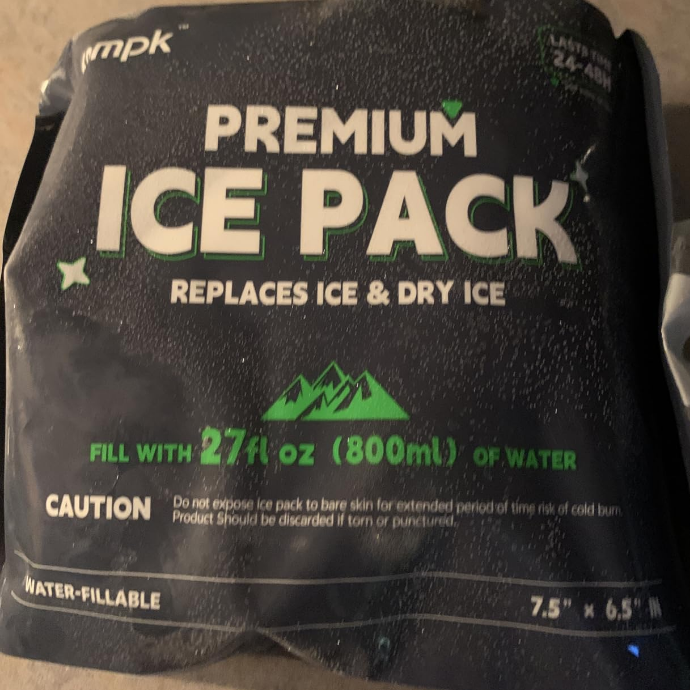
Water Injection Ice Pack Bulk: 2026 Analysis
Water injection ice pack bulk is the procurement style behind ‘empty coolant packs’ that you fill and freeze locally. Last updated: 2026-02-11 (America/Los_Angeles). In 2026, the model matters because inbound freight, freezer capacity, and regulatory expectations all tighten at once. This report explains key specifications, qualification tests, and landed-cost tradeoffs. It also includes decision tools and tables you can reuse in RFQs and SOPs.
Water injection ice pack bulk in 2026: definition and use cases
Water injection ice pack bulk describes empty coolant packs shipped in cartons or pallets. Teams fill them with tap water at the site. They then freeze, cool, or warm them for packout. This “delivered empty” model is explicit in World Health Organization PQS water-pack requirements.
In the WHO PQS framework, a coolant-pack is a purpose-designed, leak-proof container filled with coolant. PQS guidance allows three standard sizes: 0.3 L, 0.4 L, and 0.6 L. It also warns buyers not to purchase pre-filled coolant-packs because the fill substance may not be WHO-prequalified.
The timing matters. Market research estimates global cold chain market size around USD 371B in 2025 and about USD 437B in 2026, but other estimates for 2026 are higher. That spread signals rapid expansion and fragmented methods, not a single “correct” number.
Pharma volatility is even clearer. IQVIA Institute projects that about half of novel medicine launches in 2023–2027 will require cold storage, up from 37% in 2013–2017. More cold storage launches mean more parcels, more hubs, and more packouts.
Operationally, water injection ice pack bulk supports four common passive-cooling modes. WHO defines a cool-pack as a water-pack pre-cooled to +2°C to +8°C. WHO defines an icepack as a water-pack frozen to -5°C to -20°C before use. WHO also defines a warm-pack concept up to a recommended maximum of +24°C.
Typical cold chain use cases include vaccines and biological specimens inside insulated boxes and carriers. WHO describes water-packs as providing thermal inertia to maintain safe storage conditions in these containers. That framing helps buyers translate “water injection ice pack bulk” into a controlled packaging component.
Where water injection ice pack bulk fits best in 2026
High-volume lanes where inbound freight weight is painful.
Networks with consistent freezer space and packout labor.
Regulated lanes that require documentation and validated procedures.
Water injection ice pack bulk specifications that affect performance
Water injection ice pack bulk standard sizes and geometry
For water injection ice pack bulk, most buyers standardize around 0.3 L, 0.4 L, and 0.6 L packs. UNICEF Supply Division procurement specifications list these empty packs with explicit water-content ranges and external dimensions. They also specify design features like reinforced walls, a removable screw cap, an internal water seal, and a visible fill line.
For water injection ice pack bulk, WHO PQS verification goes one level deeper. Its independent type-testing protocol lists nominal sizes, water content ranges, key dimensions, and maximum empty and filled weights. It also sets a practical fill-control requirement: the volume filled to the line must be within ±2% of the rated water content.
Table: Water injection ice pack bulk spec comparison (0.3–0.6 L)
| Pack size | Typical procurement label | Water content range | External dimensions (L×W×T) | Closure and leak control | Ships empty? | Notable QA tolerances |
|---|---|---|---|---|---|---|
| 0.3 L | Icepack 0.3 L (Type 2 common) | 0.25–0.30 L | 163×90×34 mm (±2 mm) | Screw cap + internal water seal + fill line | Yes | Fill to line within ±2%; dimensions ±2 mm |
| 0.4 L | Icepack 0.4 L | 0.35–0.40 L | 163×94×34 mm (±2 mm) | Screw cap + internal water seal + fill line | Yes | Fill to line within ±2%; dimensions ±2 mm |
| 0.6 L | Icepack 0.6 L | 0.55–0.60 L | 190×120×34 mm (±2 mm) | Screw cap + internal water seal + fill line | Yes | Fill to line within ±2%; dimensions ±2 mm |
Sources: UNICEF product specifications; WHO PQS protocol tolerances and dimensional/weight schema.
Water injection ice pack bulk mechanical robustness signals
For water injection ice pack bulk operations, mechanical performance is a buying criterion. WHO requires reinforcement to restrain swelling, and it limits thickness increase after freezing. It also requires robustness against a 2-metre drop at frozen conditions and at about +5°C, followed by leakage testing.
WHO also calls out “human factors” that matter in real freezers. When water-packs are stacked and frozen in bulk, they must not bond together. The verification protocol includes a frozen thickness and adhesion test at -20°C (±5°C).
In 2026, water injection ice pack bulk buyers also evaluate materials and end-of-life constraints. WHO requires materials that resist UV degradation and are easy to clean. It also prohibits chlorinated plastics and epoxy-resin composites in these water-packs, and asks for disposal and recycling guidance.
Water injection ice pack bulk inbound freight delta
The “ships empty” rule is the hidden economics of water injection ice pack bulk. UNICEF’s 0.6 L icepack is supplied empty, with 0.55–0.60 L of water content when filled. That implies you avoid shipping roughly 0.55–0.60 kg of water per unit into your network.
WHO product data show the same pattern with measured weights. One prequalified 0.6 L waterpack lists 79 g empty and 655 g filled. Another 0.4 L water-pack lists 72 g empty and 435 g filled. The gap is mostly water, and it scales with every pallet you buy.
Visual: inbound weight per 1,000 units (example based on WHO data)
0.6 L water-pack (example)
Empty weight : ███▎ 79 kg
Filled weight : ████████████████████████████ 655 kg
0.4 L water-pack (example)
Empty weight : ███ 72 kg
Filled weight : ██████████████████▏ 435 kg
Data sources: WHO PQS product data sheets for prequalified coolant packs supporting water injection ice pack bulk modeling.
Water injection ice pack bulk compliance and validation approach
Water injection ice pack bulk risk framing: freeze, leak, and traceability
Regulators focus on outcomes: product quality and safety. The European Union GDP guideline requires that temperature conditions are maintained within acceptable limits during transport. It also requires a risk-based approach when planning transportation. Those statements turn “coolant choice” into a documented risk decision.
Freeze risk deserves special emphasis for 2–8°C payloads. Centers for Disease Control and Prevention notes that once vaccine potency is lost, it cannot be restored. CDC also notes that a single exposure to freezing temperatures can destroy potency for some refrigerated vaccines. That is why coolant placement and conditioning procedures matter.
Leak risk is not just mess and cleanup. WHO defines a coolant-pack as a leak-proof container, and its water-pack specification demands leakage testing after defined drop tests. If your bulk supplier cannot show leak performance at cold conditions, your lane risk rises immediately.
Traceability risk is often underestimated in “pre-filled” offers. WHO explicitly warns buyers not to purchase pre-filled coolant-packs because the fill substance may not be WHO-prequalified. In 2026, that aligns with broader supplier governance and documented material control.
Water injection ice pack bulk packaging rules buyers can cite
EU GDP provides unusually practical packaging language. It states that selection of a container and packaging should be based on storage and transportation requirements, anticipated external temperature extremes, and the estimated maximum time for transport. It also asks buyers to consider qualification status of packaging and validation status of shipping containers.
EU GDP also calls out “cool-pack” handling. If cool-packs are used in insulated boxes, the product should not be in direct contact with the cool-pack. EU GDP further requires a system to control re-use so incompletely cooled packs are not used in error. It also requires segregation between frozen and chilled ice packs.
Temperature monitoring is not optional in mature systems. EU GDP requires temperature mapping of storage areas under representative conditions, and it describes placement of monitoring devices in areas of temperature extremes. It also expects temperature monitoring equipment used in transport to be maintained and calibrated at regular intervals, at least once a year.
Food cold chain has parallel expectations. The U.S. Food and Drug Administration sanitary transportation rule sets requirements for vehicles, transportation operations, records, and training. It also states that vehicles and transportation equipment used for food requiring temperature control must be designed and equipped to provide adequate temperature control.
Water injection ice pack bulk test stack: standard methods and practical evidence
A credible qualification package uses both standards and lane data. ASTM International D3103 describes a test method for determining thermal insulation quality based on temperature differentials. It is suitable for packages with or without internal refrigerants. That makes it useful for comparing insulators while holding the coolant constant.
International Safe Transit Association’s thermal standards support a comparable idea in transport packaging. ISTA describes a Thermal Transport Package Certification program for qualifying shippers to its requirements. Third-party labs and shippers often pair ISTA thermal profiles with internal lane studies.
Air shipments introduce a different compliance layer when dry ice is used. IATA packing instruction language requires that packaging permit the release of carbon dioxide gas to prevent pressure build-up. U.S. hazardous materials regulations mirror the same venting requirement for dry ice shipments by aircraft or water.
Practical validation evidence for water injection ice pack bulk
A written packout SOP with coolant conditioning and placement rules.
At least one mapped temperature study for storage and for transport.
A leak and drop performance statement tied to a recognized protocol.
Water injection ice pack bulk cost models and landed-cost scenarios
Water injection ice pack bulk unit economics: what “bulk” really changes
A bulk price only matters after you add freight and handling. WHO PQS product data sheets publish shipping weights, pieces per package, minimum order quantities, and base prices for some prequalified coolant-packs. One 0.4 L water-pack lists 100 units per package, 11.5 kg shipping weight, and an EXW base price of USD 59 per 100 units (base year 2025).
For 0.6 L water-packs, WHO PQS product data can show different pack sizes and currencies. One 0.6 L water-pack example lists 24 units per package, 3.0 kg shipping weight, and an EXW price shown as €48 for >100 units (base year 2025). These figures are not universal prices, but they are credible anchors for modeling.
The freight delta is the major lever in water injection ice pack bulk. WHO product weights show that a 0.6 L water-pack can move from 79 g empty to 655 g filled. When you buy it empty, you stop paying to ship most of the water.
Water injection ice pack bulk cost-per-unit scenario table
The table below is designed for procurement teams. Replace the assumed freight rates and labor rates with your actual inputs. Keep the structure because it forces cross-functional alignment.
Table: Cost-per-unit scenarios for water injection ice pack bulk (template)
| Scenario | Coolant strategy | Landed-cost drivers | Hidden costs | Typical “win” conditions |
|---|---|---|---|---|
| A | water injection ice pack bulk (empty + fill on site) | Empty unit price + inbound freight (empty) + fill labor + freezer energy | Fill variance; cap torque; freezer congestion; rework | High volume, stable SOPs, expensive inbound freight |
| B | Pre-filled gel packs | Unit price (filled) + inbound freight (filled) | Chemistry traceability; disposal; condensation handling | Low labor sites, urgent deployment, low inbound freight sensitivity |
| C | PCM packs (non-0°C melt) | Higher unit price + qualification effort | More complex conditioning; supplier lock-in | Freeze-sensitive SKUs with tight temperature bands |
| D | Dry ice + insulation | Dry ice sourcing + hazardous compliance + insulation | Venting design, labeling, training | Deep-frozen lanes where water-based packs cannot meet profile |
Dry ice compliance note: International Air Transport Association requires packaging that permits CO₂ release to prevent pressure build-up. U.S. hazmat rules include the same venting requirement for dry ice offered for aircraft or vessel transport.
Water injection ice pack bulk break-even calculator idea
This is a simple decision tool you can embed on-page. It gives readers a fast “yes/no” before procurement invests time.
Step 1: Use a known weight delta.
An example 0.6 L water-pack shows 655 g filled and 79 g empty. The weight delta is 576 g per pack.
Step 2: Convert weight delta to freight savings.
Freight savings per pack ≈ (0.576 kg) × (your inbound rate $/kg).
Step 3: Compare freight savings to fill cost.
If savings > (fill labor + QC + utilities + scrap), water injection ice pack bulk is economically favored.
Example visual: freight savings per pack (0.6 L example)
| Inbound freight rate ($/kg) | Savings per pack from shipping empty |
|---|---|
| 0.25 | 0.14 |
| 0.50 | 0.29 |
| 1.00 | 0.58 |
| 3.00 | 1.73 |
| 6.00 | 3.46 |
Inputs: weight delta derived from WHO PQS product data sheet example.
Call to action: Use this calculator to pre-qualify lanes, then request samples and run one water injection ice pack bulk packout study.
Water injection ice pack bulk supply-chain impact and 2026 trends
Water injection ice pack bulk impacts across the network
The biggest operational shift is where water weight enters your supply chain. WHO requires water-packs to be delivered empty and filled by the purchaser or end user. That means inbound shipments carry plastic and packaging, not water.
The second shift is freezer capacity. Bulk operations often stack and freeze packs, which is why WHO explicitly requires that stacked water-packs must not bond together in bulk freezing. WHO’s verification protocol even includes a frozen thickness and adhesion test at -20°C (±5°C).
The third shift is procedural control. EU GDP requires written procedures for handling temperature-sensitive products, including cool-pack reuse controls and segregation between frozen and chilled ice packs. In practice, “water injection ice pack bulk” becomes a controlled process, not just a purchased SKU.
Water injection ice pack bulk and 2026 sustainability pressure
Sustainability in 2026 is tied to compliance timelines. The European Commission notes that the Packaging and Packaging Waste Regulation entered into force in February 2025 and has a general application date of 12 August 2026. That timeline influences packaging choices well beyond Europe, because suppliers standardize globally.
WHO PQS water-pack requirements already include material and end-of-life expectations. WHO prohibits chlorinated plastics and epoxy composites for these products. WHO also asks manufacturers to provide disposal and recycling guidance to buyers. Both points support sustainability narratives without over-claiming recyclability.
Water injection ice pack bulk and the 2026 move toward “documented performance”
The PQS coolant-pack section itself was updated with a 2026 version date. In that document, WHO repeats the “do not purchase pre-filled coolant-packs” warning and explains why water-based products filled in-country are still prioritized for routine immunization. These statements reinforce why buyer documentation should include fill media, SOPs, and acceptance tests.
EU GDP similarly embeds documentation and evidence. It expects temperature mapping in storage areas and sets expectations for validation and reliable data from computerized systems. It also calls for maintenance and annual calibration intervals for transport temperature monitoring equipment.
Table: Supply-chain impact comparison (2026 lens)
| Impact area | water injection ice pack bulk | Pre-filled gel packs | PCM packs | Dry ice shipments |
|---|---|---|---|---|
| Inbound freight weight | Lowest, because packs ship empty | Higher, because coolant ships with product | Higher, because coolant ships with product | Not comparable; coolant sourced locally |
| Site capability required | Water supply, capping discipline, freezer capacity | Minimal fill work; mainly staging | Conditioning discipline; often tighter SOP | Venting, labeling, training, hazardous controls |
| Freeze-risk management | Strong if conditioning and placement are controlled | Varies by gel behavior and placement | Strong when phase point matches target band | High if used near chilled payloads |
| Documentation strength | High when tied to PQS specs, SOPs, and packout tests | Depends on supplier spec transparency | High, but adds material traceability | Highest due to air and hazmat rules |
| 2026 sustainability narrative | Lower inbound weight; material constraints per PQS | Disposal complexity for gels | Often higher embodied complexity | Higher compliance burden; CO₂ venting need |
Why this table is defensible: “ships empty” and fill-by-user are formal PQS requirements; weight deltas are published in PQS product sheets; dry ice venting is a codified requirement.
Call to action: Use the table to align procurement, QA, and operations before you issue an RFQ for water injection ice pack bulk.
Water injection ice pack bulk FAQ
Water injection ice pack bulk FAQ
What is “water injection ice pack bulk” in procurement terms?
It means buying empty water-packs or coolant-packs in quantity, then filling them locally. WHO requires water-packs to be delivered empty and filled by the purchaser or end user. UNICEF product specifications also state “supplied empty” with a fill line and internal seal.
How do I write an incoming QC spec for water injection ice pack bulk?
Start with tolerances that are already defined in PQS documents. WHO’s protocol specifies dimensional tolerances (±2 mm) and requires fill-to-line volume within ±2% of rated water content. It also includes frozen thickness and adhesion testing after freezing at -20°C (±5°C).
How can water injection ice pack bulk reduce freeze damage risk?
Two rules help most. Avoid direct contact between cool-packs and product, as EU GDP states. Also treat freezing as an irreversible quality event for some refrigerated vaccines, as CDC warns. Conditioning, placement, and segregation between frozen and chilled packs should be in your SOP.
Can water injection ice pack bulk support a +2°C to +8°C profile?
Yes, when you operate it as a cool-pack workflow, not as a hard-frozen icepack workflow. WHO defines a cool-pack as a water-pack pre-cooled to +2°C to +8°C before use. That definition can be cited directly in qualification documents.
What validation evidence is most persuasive for water injection ice pack bulk in 2026?
Use recognized references and clear records. EU GDP expects packaging selection based on requirements, external temperature extremes, and transport time, plus qualification and validation status. ASTM D3103 provides a method to evaluate thermal insulation quality based on temperature differentials. ISTA provides structured thermal transport certification programs used by many labs.
What 2026 regulatory trend should cold chain teams watch?
Packaging compliance timelines are a macro driver. The EU Packaging and Packaging Waste Regulation applies from 12 August 2026, according to EU sources. Even outside the EU, suppliers may harmonize packaging documentation and claims to meet these timelines.
gel ice bag clinical trial manufacturer playbook
gel ice bag clinical trial manufacturer playbook
Updated: 2026-02-11 (America/Los_Angeles). Selecting a gel ice bag clinical trial manufacturer is an evidence decision, not a unit-price decision. In 2026, more investigational product reaches sites and participants through variable, last-mile lanes. That variability increases temperature excursion probability and documentation scrutiny during audits. This report shows procurement managers and clinical researchers how to qualify manufacturers using regulatory expectations, protocol discipline, and measurable performance criteria.
What risks does a gel ice bag clinical trial manufacturer control?
A gel ice bag clinical trial manufacturer controls thermal buffering, moisture behavior, and leak integrity inside passive shippers. International Council for Harmonisation explains that investigational products should be packaged to prevent contamination and unacceptable deterioration during transport and storage. That statement makes packaging components part of product protection rather than logistics accessories. When gel bags fail, you can trigger deviations affecting product disposition and data usability.
A gel ice bag clinical trial manufacturer also affects cold-spot risk during pack-out and conditioning errors. EU GDP guidance explicitly warns that cool-packs must be located so the product does not contact them directly. This is a practical control because direct contact can create local freezing, even in otherwise compliant 2–8 °C systems. The same guidance expects packaging selection to consider external temperature extremes and maximum transportation time, including transit storage.
A gel ice bag clinical trial manufacturer influences specimen integrity when clinical trials ship biosamples or diagnostics. Centers for Disease Control and Prevention defines cold packs as reusable, leakproof refrigerants used to maintain temperature during transit. Association of Public Health Laboratories guidance adds that refrigerated shipments can include frozen ice packs or gel packs outside the secondary container, plus extra absorbent material. These primary references anchor your minimum requirements for leakproof construction and disciplined placement practices.
| Failure mode tied to gel ice bags | Clinical trial impact | Control you should require from a gel ice bag clinical trial manufacturer |
|---|---|---|
| Local freezing from direct contact | Potential potency loss or protocol deviation | Spacer rules, pack-out diagrams, and verification checkpoints |
| Under-conditioned gel state | Reduced holdover and high excursion risk | Conditioning SOP, time-temperature guidance, and training artifacts |
| Leaks or seal failures | Label loss, contamination, wet insulation | Leak testing method, acceptance limits, and lot release records |
| Weight and dimension drift | Qualification mismatch and unpredictable profiles | Tolerances, incoming QC plan, and change notification triggers |
| Uncontrolled formulation changes | Requalification or investigation uncertainty | Formal change control and documented notification SLA |
How should a gel ice bag clinical trial manufacturer meet GxP requirements?
A gel ice bag clinical trial manufacturer is evaluated through GDP expectations because gel packs sit inside the distribution control system. EU GDP states packaging selection should consider external temperature extremes, maximum transportation time, and qualification or validation status of packaging. It also requires training on seasonal packaging configurations and controlling reuse of cool-packs to prevent incomplete cooling. These requirements justify lane-specific pack-outs, seasonal SOPs, and reuse segregation in your quality agreement.
A gel ice bag clinical trial manufacturer should also align with a risk-based quality management approach under GCP. ICH E6(R3) describes sponsor quality management and emphasizes protecting investigational product from unacceptable deterioration during transport and storage. It also anticipates shipping investigational product to a participant’s location, increasing variability and human-factor risk. Those points support deeper evidence requirements for direct-to-participant lanes and higher-risk products.
A gel ice bag clinical trial manufacturer should support trustworthy records when temperature data is used for decisions. U.S. Food and Drug Administration Part 11 guidance explains scope when required records are kept electronically. The eCFR text for 21 CFR Part 11 states it applies to electronic records created, modified, maintained, archived, retrieved, or transmitted under Agency record requirements. If your lane qualification, shipper release, or excursion disposition is electronic, record controls must be clear and auditable.
A gel ice bag clinical trial manufacturer qualification depth must be proportional, not arbitrary. ICH Q9(R1) says the level of effort, formality, and documentation should be commensurate with the level of risk. It also discusses formality as a continuum driven by uncertainty, importance, and complexity. That principle is your best defense for “why we audited this gel supplier” and “why we only reviewed documents for that one.”
| GxP expectation | What you ask a gel ice bag clinical trial manufacturer to provide | Why it is defensible in audits |
|---|---|---|
| GDP lane realism | Lane profiles, seasonal assumptions, and max duration evidence | GDP requires considering extremes and maximum transport time |
| Product protection | Pack-out avoids contamination and unacceptable deterioration | E6(R3) requires protective packaging during transport |
| Data integrity framing | Record classification and retention approach for electronic outputs | Part 11 scope clarifies electronic record expectations |
| Risk-based rigor | Written rationale for qualification depth by lane and product | Q9(R1) requires proportional effort and formality |
Which qualification evidence proves a gel ice bag clinical trial manufacturer is trial-ready?
A gel ice bag clinical trial manufacturer is trial-ready when evidence is lane-bound, repeatable, and change-resistant. Clinical trial protocols also need operational feasibility, because unclear logistics assumptions become noncompliance at sites. The SPIRIT guidance describes protocol content expectations and aims to support higher-quality protocols by clarifying what should be planned and described. In practice, your shipping approach and temperature controls must be describable and executable, not only technically correct.
A gel ice bag clinical trial manufacturer should provide documentation that can be reused across studies. Many teams fail by collecting isolated PDFs that do not connect to pack-out decisions. Instead, build an evidence chain: lane risk profile, configuration identity, qualification results, and a change control promise. That chain supports audits, deviation investigations, and comparability across sites.
How does a gel ice bag clinical trial manufacturer validate thermal performance?
A gel ice bag clinical trial manufacturer should validate performance with realistic sensors, not only brochure claims. National Institute of Standards and Technology evaluated digital data loggers over the refrigerated range and highlights validation methods and practical end-user validation concepts. Their work shows why setup matters, because an air sensor can misrepresent buffered product temperature. For qualification, require reports stating logger type, probe placement, buffering method, and calibration traceability.
A gel ice bag clinical trial manufacturer should run tests that represent actual distribution, including dwell and handling. World Health Organization GDP materials emphasize temperature mapping and placing monitors where fluctuations are likely. WHO guidance for time- and temperature-sensitive products also supports realistic qualification concepts for shipping containers. This aligns with GDP expectations to consider seasonal extremes and maximum transportation time, not average conditions.
A gel ice bag clinical trial manufacturer should translate test results into usable acceptance criteria. Focus on time-in-range, minimum temperature margin from freezing, and maximum temperature margin from the upper limit. If you ship 2–8 °C, design for “no-freeze” buffer, not only “stays cold.” EU GDP’s no-direct-contact clause supports treating cold-spot control as a measurable requirement.
Define lane extremes and max duration
Select shipper and gel configuration
Conditioning and pack-out SOP defined
Seasonal qualification testing executed
Configuration approved and trained
Shipment monitoring and excursion review
Requalification after defined changes
显示代码
text
复制
Example holdover summary chart (conceptual)
Ambient profile: mild warm hot
Target duration: 24h 36h 48h
Observed margin: +6h +4h +2h
Freeze risk margin: high medium low
How does a gel ice bag clinical trial manufacturer control documentation and change?
A gel ice bag clinical trial manufacturer must provide controlled specifications and safety documentation. Medline publishes an SDS for a gel pack that lists hazard classification and handling information. SDS control matters because it affects training, spill response, and site acceptance. Require revision history, distribution control, and a commitment to notify before effective changes.
A gel ice bag clinical trial manufacturer should also provide technical selection information grounded in dimensions and phase behavior. TempAid provides a gel pack selection guide with product dimensions, weights, and temperature claims by product type. Use such manufacturer tables as inputs, but validate in your lane configuration. Then lock dimensions and weight tolerances into your own controlled specification to reduce drift risk.
A gel ice bag clinical trial manufacturer change control should be tied to requalification triggers. Examples include polymer film supplier changes, seal method changes, gel formulation range changes, and dimension tolerance updates. ICH Q9(R1) supports proportional control, but it also warns against using QRM to justify unacceptable practices. Treat “silent change” as an unacceptable practice for high-risk trial lanes.
How do 2026 trends change gel ice bag clinical trial manufacturer selection?
A gel ice bag clinical trial manufacturer strategy changes because decentralized fulfillment expands lane count and human variability. ICH E6(R3) anticipates shipment to participants and emphasizes sponsor quality management across the trial lifecycle. The FDA posting for E6(R3) highlights flexible, risk-based approaches and technology adoption. Together, these sources suggest more scrutiny on operational controls, not less.
A gel ice bag clinical trial manufacturer must also anticipate sustainability compliance milestones in Europe. European Commission lists PPWR timing, including entry into force on 11 February 2025 and general application on 12 August 2026. That timeline pressures packaging component documentation, reuse strategy, and labeling readiness. Procurement should ask for material declarations and reuse guidance early, before study scaling.
A gel ice bag clinical trial manufacturer may also be evaluated against air-freight constraints, even for non-dry ice lanes. International Air Transport Association provides a 2026 dry ice acceptance checklist and states 2026 DGRs come into force on 1 January 2026. Many trial teams use gel to avoid dry ice complexity, but the acceptance mindset remains relevant: damage checks, leakage checks, and documented preparation. Use this as a benchmark for your own pack component acceptance and release controls.
A gel ice bag clinical trial manufacturer planning should consider the macro shift toward more temperature-sensitive modalities. An industry white paper from IQVIA discusses cold chain medicines and the evolving modality landscape. While gel packs are not the only solution, passive systems remain common for refrigerated lanes and short holding stages. This increases the need for disciplined qualification, because volume growth amplifies small drift into repeated deviations.
| 2026 trend | Date signal you can cite | What changes for gel ice bag clinical trial manufacturer selection |
|---|---|---|
| PPWR compliance pressure | Applies generally 12 August 2026 | Add material disclosure, reuse policy, and packaging documentation readiness |
| Air cargo rule awareness | DGRs in force 1 January 2026 | Strengthen acceptance checks and leakage controls, even for gel systems |
| Decentralized fulfillment growth | E6(R3) implemented and promoted | Increase training usability and reduce human-factor conditioning errors |
What RFP and QA clauses should a gel ice bag clinical trial manufacturer accept?
A gel ice bag clinical trial manufacturer RFP should be written like a qualification package checklist. Start with measurable design specs, then require lane-relevant qualification support, and finish with change control discipline. EU GDP and WHO guidance support mapping controls to temperature extremes and documented procedures. SPIRIT protocol discipline supports describing logistics assumptions clearly enough for execution. Together, they justify making gel pack governance explicit in RFP language.
A gel ice bag clinical trial manufacturer should accept audit-right and notification clauses proportionate to risk. ICH Q9(R1) supports scaling rigor, but it does not support ignoring change risk. A simple classification table in your quality agreement prevents negotiation loops during study scale-up. It also creates an aligned trigger language for requalification work orders.
A gel ice bag clinical trial manufacturer contract language should also address documentation format and retention. If qualification reports, batch records, or traceability logs are held electronically, define how they are authenticated. FDA Part 11 guidance clarifies scope when required records are maintained electronically. This is especially relevant when excursion investigations rely on electronic batch and shipment records.
text
复制
Example quality agreement clauses (editable template)
1) Change Notification:
Supplier shall notify Customer at least 90 days before any change affecting gel formulation,
film, sealing method, dimensions, labeling, or manufacturing site. Customer may require
comparability testing or requalification before release to clinical lanes.
2) Lot Traceability:
Supplier shall provide lot codes that uniquely identify manufacturing date, line, and site.
Supplier shall retain batch records and QC results for an agreed period and provide them upon request.
3) Right to Audit:
Customer may audit Supplier’s relevant manufacturing and QC processes on a scheduled basis,
with additional audits permitted after critical deviations or major changes.
4) Release Evidence:
Supplier shall provide a certificate or lot release statement confirming compliance to
agreed specifications, including weight range, seal integrity checks, and leak screening.
| Clause category | Why you need it in trials | Evidence to demand from a gel ice bag clinical trial manufacturer |
|---|---|---|
| Change notification SLA | Prevents silent drift that breaks qualification comparability | Change control SOP and example notifications |
| Lot traceability | Supports investigations and containment after excursions | Lot coding logic and batch record availability |
| Conditioning instructions | Reduces human-factor variability in decentralized lanes | Pack-out IFU, label cues, and training aids |
| Performance support | Ensures marketing claims can become validated configuration claims | Lane-bound test summaries and acceptance criteria |
Internal link suggestions (no external links, descriptive anchors only)
Use these as internal navigation targets, not outbound references.
| Descriptive anchor text | Internal path suggestion |
|---|---|
| Cold chain lane qualification for clinical trials | /cold-chain-lane-qualification-clinical-trials |
| GDP-aligned passive packaging validation templates | /gdp-passive-packaging-validation |
| Temperature excursion decision tree for QA | /temperature-excursion-decision-tree |
| Data governance checklist for Part 11 temperature records | /part-11-temperature-records |
| Supplier qualification playbook for packaging components | /supplier-qualification-packaging-components |
Internal image and diagram links for your CMS
Keep these internal paths stable, because they become training and audit artifacts.
| Asset | Internal file path | Recommended caption style |
|---|---|---|
| Pack-out photo | /assets/images/packout-gel-ice-bag-approved.webp | “Approved configuration, summer lane, no direct contact.” |
| Spacer diagram | /assets/diagrams/spacer-no-direct-contact.svg | “Spacer prevents contact between cool-packs and product.” |
| Qualification workflow | /assets/diagrams/qualification-workflow.svg | “Lane definition to requalification trigger map.” |
| Holdover chart | /assets/charts/holdover-vs-ambient.png | “Holdover margin by seasonal ambient profile.” |
Which FAQs answer gel ice bag clinical trial manufacturer questions?
What makes a gel ice bag clinical trial manufacturer “clinical–trial ready” in 2026?
A gel ice bag clinical trial manufacturer is trial-ready when evidence links product specs to lane performance. EU GDP expects packaging selection to consider temperature extremes, maximum duration, and qualification status. ICH E6(R3) requires packaging that prevents unacceptable deterioration during transport and storage. Trial-ready means stable specs, controlled change, and validated, reproducible configurations.
How many gel ice bag clinical trial manufacturer samples should be tested during qualification?
Start with risk and uncertainty, then scale sample size with product criticality and lane volatility. ICH Q9(R1) states effort and formality should be commensurate with risk. Use more samples when tolerances are wide, ambient extremes are high, or handling steps increase. Document rationale so the sample plan survives audit questions.
How do we prevent local freezing with a gel ice bag clinical trial manufacturer solution?
Use spacer layers and pack placement rules that enforce no direct contact with product cartons. EU GDP explicitly requires cool-packs to be located so products do not contact them directly. Validate with probes placed near interfaces and at payload corners. Then train pack-out staff using photos tied to the approved configuration identity.
What documentation should be stored for gel ice bag clinical trial manufacturer traceability?
Store controlled drawings, tolerances, SDS revisions, and change notifications in a centralized system. Keep qualification summaries showing lane profile assumptions, sensor setup, and acceptance criteria. If any required record is electronic, align controls with Part 11 scope expectations. This package supports deviation investigations and comparability across protocol amendments.
How can a gel ice bag clinical trial manufacturer support protocol writing and execution?
Provide conditioning instructions and pack-out diagrams that can be translated into site-usable steps. SPIRIT guidance emphasizes clear protocol planning and description to improve trial quality. In practice, your temperature control approach must be describable and executable across sites. A supplier that provides operationally usable instructions reduces hidden protocol feasibility risk.
Interactive elements to add on–page for conversion and usability
A gel ice bag clinical trial manufacturer page performs better when it helps teams make decisions quickly. Add a lane configurator that estimates gel mass and spacing from ambient and duration inputs. Add a supplier scorecard that maps uploaded proofs to your qualification rubric and flags gaps. Add an excursion simulator that explains local freezing risk when “no direct contact” is violated.
E–E–A–T signals to embed directly on the page
A gel ice bag clinical trial manufacturer article should show real oversight and an update trail. Add an author box with relevant cold chain credentials and roles. Add a reviewer line for Clinical Supply QA and Packaging Engineering, with review dates. Add a short “Evidence basis” line citing major guidance families and your internal SOP mapping.
json
复制
{
“@context”: “https://schema.org”,
“@type”: “Article”,
“headline”: “gel ice bag clinical trial manufacturer playbook”,
“dateModified”: “2026-02-11”,
“about”: [
“clinical trial cold chain”,
“passive temperature-controlled packaging”,
“GDP qualification”,
“risk-based quality management”
],
“audience”: {
“@type”: “Audience”,
“audienceType”: “procurement managers and clinical researchers”
}}
json
复制
{
“@context”: “https://schema.org”,
“@type”: “FAQPage”,
“mainEntity”: [
{
“@type”: “Question”,
“name”: “What makes a gel ice bag clinical trial manufacturer clinical-trial ready in 2026?”,
“acceptedAnswer”: {
“@type”: “Answer”,
“text”: “Trial-ready suppliers link controlled specifications to lane performance evidence, maintain change control, and provide reusable qualification documentation.”
}
},
{
“@type”: “Question”,
“name”: “How do we prevent local freezing with a gel ice bag clinical trial manufacturer solution?”,
“acceptedAnswer”: {
“@type”: “Answer”,
“text”: “Use spacer layers and validated placement rules enforcing no direct contact, then verify with interface-focused probe placement during qualification.”
}
}
]}
Call to action
If you are selecting a gel ice bag clinical trial manufacturer for 2026 studies, start with lane-specific qualification scope. Request five artifacts: controlled specs, SDS, conditioning IFU, seasonal test summaries, and a change notification SLA. Then score suppliers using a risk-based rubric aligned to GDP, GCP, and Part 11 record scope. This approach reduces excursions, accelerates audits, and protects trial timelines without unnecessary over-engineering.
How to Specify Water Injection Ice Pack Industrial
How to Specify Water Injection Ice Pack Industrial
Executive summary (read this first). If you buy or design passive cold-chain packaging, water injection ice pack industrial products can be a practical “workhorse” coolant. You get predictable freezing at 0°C, low material cost, and simple handling—if you specify the film, seal strength, and quality controls correctly. Most failures come from pay-too-little specs: weak seals, brittle film in deep freeze, or inconsistent fill mass. This guide helps you tie specs to your lane, validate performance, and reduce leak risk in 2026 sourcing.
You choose a water injection ice pack industrial format when you want rugged, repeatable cooling with minimal chemistry risk. Ice absorbs about 334 kJ per kilogram while melting, which is why plain water is still a powerful phase-change material (thermodynamics reference, 2022). You can standardize pack size, freeze time, and loading patterns to reduce temperature excursions. In this article, you’ll learn how to specify packs for shipping duration, compliance needs, and warehouse reality without making your payload too heavy.
This article will answer:
How to select water injection ice pack industrial sizes for 48–120 hour lanes and mixed climates
How a water injection ice pack industrial fill-and-seal design differs from gel packs and rigid PCM plates
Which food contact and pharma GDP documents you should request for water injection ice pack industrial procurement
How to run a lane qualification for water injection ice pack industrial packaging using thermal profiles and abuse testing
How to reduce leaks, cracking, and condensation when using water injection ice pack industrial packs at scale
Related long-tail keywords you can target (use naturally):
water injection ice pack industrial for pharmaceutical 2–8°C shipping, water injection ice pack industrial pallet shipper coolant, water injection ice pack industrial leak-resistant film, water injection ice pack industrial ISTA thermal test, water injection ice pack industrial freezer SOP
What is a water injection ice pack industrial design, and when should you use it?
A water injection ice pack industrial product is a flexible pouch that is filled with water through an injection port and then sealed for freezing. In many factories, film pouches are formed, water is injected to a controlled mass, and seals are heat-welded. The “industrial” part usually means thicker film, stronger seals, and tighter quality checks than consumer freezer packs. Water also expands by roughly nine percent as it freezes, so controlled fill level and headspace reduce seal stress (materials property note, 2022).
You typically use water injection ice pack industrial packs for passive temperature control, meaning no powered refrigeration. Passive systems rely on insulation plus coolant mass, so consistency matters (passive packaging practice note, 2023). If one pack is underfilled, you lose hold time. If one pack leaks, you risk damaged cartons and rejected shipments.
Water injection ice pack industrial choices are most common when your target temperature is chilled and you can tolerate meltwater staying inside the pack. This fits many food, biotech, and reagent lanes. It can also support frozen lanes when the film remains flexible at low temperatures, but you must validate brittleness.
Where does water injection ice pack industrial fit versus gel or PCM?
If you think in “temperature plateaus,” water holds around 0°C while melting, which is ideal for keeping contents cold but not necessarily within 2–8°C by itself. Gel packs and specialty PCMs can be formulated to melt at different temperatures, which can reduce freezing risk for temperature-sensitive products.
That said, water injection ice pack industrial packs have strengths you can quantify. You can measure fill mass, freeze hardness, seal width, and burst strength with straightforward tests. With gels, viscosity and additives can complicate rim sealing and end-of-life disposal. With rigid PCM plates, you may gain durability but pay in purchase cost and reverse logistics complexity.
A quick comparison helps you explain your choice to finance and quality stakeholders (cold-chain packaging comparison, 2024).
| Coolant option | Typical “hold” temperature region | Strength | Watch-outs | Best-fit use |
|---|---|---|---|---|
| Water injection ice pack industrial | Near 0°C during melt | Low cost, predictable phase change, easy sourcing | Can overcool on contact; pouch leaks if under-specified | High-volume chilled lanes with standardized packouts |
| Gel pack (additive-based) | Often near 0°C, varies by formulation | Better conformity around product; sometimes wider usable band | Additives complicate sourcing and disposal; seal quality varies | Parcel shippers with tight fit and frequent handling |
| Tuned PCM (salt hydrate or bio-based) | Set to target band (e.g., above 0°C) | Can protect 2–8°C without freezing risk | Higher cost; needs careful conditioning | Pharma payloads sensitive to freezing |
| Rigid PCM plate | Set to target band or below | Durable; good for returnables | Higher capital cost; reverse logistics needed | Returnable programs and pallet systems |
| Dry ice | Around -78.5°C | Strong frozen capacity | Hazmat and CO2 risk; can overfreeze | Deep-frozen shipments with trained handling |
What real-world scenarios favor water injection ice pack industrial?
You are a good candidate for water injection ice pack industrial packs when your shipments are heavy, frequent, and standardized. Think of a distribution center shipping palletized food ingredients to regional plants. Another example is a diagnostics supplier shipping weekly replenishment kits to hospitals in insulated shippers.
You also benefit when your lane has predictable ambient exposure patterns. If you can freeze packs on a schedule, stage them at a controlled “conditioning” temperature, and load with the same pattern, the system becomes repeatable. If your lanes are highly variable, you may need multiple pack sizes and more validation runs.
How do you size water injection ice pack industrial packs for multi-day lanes?
Sizing is where water injection ice pack industrial projects succeed or fail. When you size correctly, you hit temperature targets with minimal coolant and avoid crushing your payload. When you size poorly, you overpack coolant, your freight cost rises, and you still risk excursions.
Start by describing your lane in plain language: origin handling, pre-cooling time, transit duration, and last-mile exposure. Then convert that story into a testable profile (temperature-controlled transport validation guidance, 2024). Good lanes include hot–soak segments, such as a tarmac exposure, and cold–soak segments, such as winter last-mile.
What specifications should you document for water injection ice pack industrial procurement?
Define what “one pack” means in your system. These specs are the minimum you should put on a drawing or a purchase spec for water injection ice pack industrial supply.
| Spec item | Why you care | Typical industrial target (example ranges) |
|---|---|---|
| Fill mass tolerance | Hold time depends on kilograms of ice | ±1–3% by mass |
| Film structure | Controls puncture, seal quality, low-temp toughness | PE or multi-layer film sized to lane abuse |
| Seal width and pattern | Prevents leaks under flex and drop | Wider, consistent seals; no voids |
| Port design | Reduces weak points | Reinforced injection area, consistent closure |
| Burst and drop resistance | Predicts leaks in handling | Pass a defined pressure/drop protocol |
| Labeling | Traceability after incidents | Lot code, date code, pack type |
Treat the “typical target” column as a starting point, not a promise. You should set your own acceptance criteria after pilot testing your shipper and handling environment.
How much coolant mass do you need if you are using water injection ice pack industrial packs?
Instead of guessing, think in three checks: energy, geometry, and condensation. Energy is about heat entering the shipper. Geometry is about how packs contact product. Condensation is about when packs sweat and warm air enters.
A simple starting approach is to prototype two configurations. Build a “minimum coolant” build and a “robust coolant” build. Run both in the same test profile. If your minimum build fails, you learn where and when. If your robust build passes, you know you have headroom.
To help you document decisions, here is a practical comparison table you can share internally.
| Lane goal | Common risk | Water injection ice pack industrial tactic | What you validate |
|---|---|---|---|
| Chilled, not frozen | Product freezes near 0°C | Condition packs above freezing; add buffer layer | Product core temperature |
| Hot summer lane | Melt before delivery | Increase mass; add top and side coverage | Minimum temperature at end |
| Winter last-mile | Overcooling | Reduce direct contact; add thermal barrier | Lowest temperature during cold soak |
| Pallet shipper | Uneven airflow | Use consistent pack pattern per layer | Temperature map across pallet |
Decision tool idea: a “pack sizing quick check” you can embed on-site
You can add an interactive calculator that asks for lane duration, target temperature band, shipper size, and conditioning temperature. It can output a starting recommendation for water injection ice pack industrial pack count and placement. You still validate, but the tool speeds up first conversations.
Inputs could include:
Lane duration bucket (overnight, two–three days, four–five days)
Ambient exposure (mild, hot, mixed)
Payload sensitivity (can it touch 0°C?)
Shipper type (parcel, pallet, returnable)
Outputs could include:
Suggested pack size family (small panels, medium bricks, large panels)
Placement pattern (top-only, top-and-sides, full surround)
“Validate next” checklist
Which materials and compliance checks matter for water injection ice pack industrial packs?
Materials are where “industrial” quality shows up. Water sounds simple, but the pouch is a packaging material that can touch food cartons, pharma cartons, or even product directly in some use cases. Your procurement file should address mechanical durability and regulatory declarations.
Many industrial teams anchor their compliance file to a small set of trusted references. In food lanes, you typically confirm plastic film suitability under applicable U.S. Food and Drug Administration (FDA) food-contact expectations and the plastics framework issued through the European Commission for the European Union (regulatory overview, 2023–2025). In pharma lanes, you align packaging controls and excursion handling with World Health Organization cold-chain guidance and regional GDP expectations (pharma distribution guidance, 2022–2026).
If you ship food, you should ask for food-contact suitability for the film and inks used on any print (food contact compliance guidance, 2022). If you ship pharma, you should ask how the supplier supports traceability and change control (pharma GDP expectations, 2022–2026). Many cold-chain failures are not thermal; they are operational incidents triggered by a material change that went unnoticed.
What film choices reduce leaks in water injection ice pack industrial packs?
Focus on four properties you can test and compare across suppliers. First is puncture resistance, which predicts damage from corrugate edges. Second is seal strength, which predicts leaks after repeated flex. Third is low-temperature impact resistance, which predicts cracking in deep freeze. Fourth is water vapor transmission, which influences condensation behavior.
A good supplier will give you a film structure description and test summaries. You do not need every chemistry detail, but you do need enough to manage changes. If the supplier switches resin grade or adds a slip agent, your seal quality might shift.
What quality documents should you request for water injection ice pack industrial sourcing?
Ask for a short document pack that matches your risk level. At a minimum, request: a specification sheet, a certificate of analysis for fill mass, and a quality management certificate. If your shipments are high value or regulated, add change notification commitments and lot traceability.
You should also request evidence of “abuse testing” that matches how your packs get treated. Many packs survive gentle lab handling but fail in a busy warehouse. If your team stacks pallets, drives forklifts close, or reuses containers, your testing should reflect that reality.
How do sustainability and end-of-life choices affect water injection ice pack industrial decisions?
Sustainability is now a procurement filter, not a marketing afterthought. Water injection ice pack industrial packs can be attractive because the coolant is simply water, and the pouch mass can be optimized. Still, the film is usually plastic, so your end-of-life plan matters.
In 2026, you will see more buyers asking for mono-material films, recycled-content options, or take-back programs. If you use returnable shippers, you can reduce waste by consolidating packs and replacing only damaged units. If you use one-way shippers, you can help customers by providing clear disposal instructions.
How do you validate water injection ice pack industrial performance using lane tests and standards?
Validation turns a water injection ice pack industrial concept into a shippable process. Your goal is not a perfect lab graph. Your goal is repeatable performance under realistic profiles with clear pass/fail rules.
When you design tests, it helps to speak the language your auditors and customers recognize. Many teams reference International Safe Transit Association thermal test approaches, then tailor profiles to their lane risks (parcel thermal test practice, 2023–2024). If you ship by air, align assumptions with International Air Transport Association temperature-control guidance so your handling story matches air cargo reality (air cargo temperature control guidance, 2024).
Use a three-layer approach. First, qualify the pack itself (leak and durability). Second, qualify the shipper system (thermal performance). Third, qualify operations (your team can repeat the build).
Which tests prove water injection ice pack industrial leak resistance?
You can test packs at three temperatures: room temperature, frozen, and post-melt. Each reveals a different failure mode. Frozen packs can crack at corners if film is brittle. Post-melt packs can leak at seals if they were stressed during thaw.
Common practical tests include:
Visual inspection for seal voids and port defects
Drop testing of frozen packs in representative cartons
Compression testing under stacked load
Simple burst or squeeze checks for seal weakness
Define acceptance criteria in writing. For example, “no leaks and no visible cracks after the drop sequence.” When you standardize criteria, you can compare suppliers fairly.
How do you run an implementation flow for water injection ice pack industrial packaging?
Below is a simple flowchart you can adapt. It keeps the work moving from requirements to validation to release.
Define lane + product temperature band
Pick shipper + insulation
Select water injection ice pack industrial sizes
Set conditioning SOP
Build prototype packs layout
Run lab thermal profile tests
Run handling + leak abuse tests
Set acceptance criteria + release spec
Train warehouse + audit builds
Monitor excursions + continuous improvement
显示代码
What does a practical timeline look like for water injection ice pack industrial rollout?
Your timeline depends on logistics complexity and regulatory expectations. A simple parcel program can move quickly, while a multi-site pallet program takes longer. This timeline helps you plan stakeholders and samples.
DefineLane mapping andrisksdone, 2026-02-15Spec draft andsupplier shortlistdone, 2026-02-28ValidatePrototype builds andthermal testingactive, 2026-03-01,21dHandling abuse andleak testingactive, 2026-03-10,14dReleaseFinal spec and SOPs2026-04-01, 14dTraining and pilotshipments2026-04-15, 21dScaleProcurement rampand audits2026-05-10, 45dWater injection ice pack industrial implementation timeline
显示代码
Chart suggestion: show where heat enters your shipper
Charts help non-technical stakeholders understand why you need a certain coolant mass. A simple chart can compare estimated heat gain from three sources: ambient exposure, handling time with open doors, and last-mile delay. You can build it from your lane map and add error bars from pilot runs.
If you want a visual directly in content, you can use a Mermaid pie chart as a placeholder and replace the numbers later.
55%25%20%Example heat gain contributors (replace with your data)Ambient exposureHandling dwell timeLast-mile delays
显示代码
What operational practices reduce cost and incidents with water injection ice pack industrial packs?
Operational discipline is the hidden advantage of water injection ice pack industrial programs. When you control freezer staging, conditioning, and pack rotation, you reduce leaks and temperature drift. When you do not, you end up “fixing” problems by adding more coolant, which raises cost.
How should you write a freezer SOP for water injection ice pack industrial inventory?
Start with a simple goal: every pack that enters a shipper has met your conditioning rule. Conditioning means you hold packs at a set temperature for a set time so they behave predictably. For chilled payloads, this step reduces freezing risk.
Add labeling and rotation rules. Use first-in, first-out practices so packs do not age in the freezer. Inspect packs for swelling, seal deformation, or port damage. Remove damaged packs immediately to avoid contamination of good inventory.
How do you load water injection ice pack industrial packs to avoid freezing your product?
Freezing risk is usually a contact problem, not a pack problem. If a frozen pack touches a sensitive product carton, local temperatures can drop below acceptable limits. You can reduce this by adding a buffer layer, such as corrugate, foam, or an air gap.
Use a loading photo guide. Show pack placement from top, side, and end views. If your builds vary by payload size, create build variants with clear triggers. When you standardize builds, you reduce “hero packing” in the warehouse.
What failure modes should you monitor for water injection ice pack industrial packs?
Track failures like you track temperature excursions. The top operational modes include seal leaks after rough handling, cracked corners in deep freeze, and condensation leading to weakened cartons. You can find trends by logging lot codes and pairing them with incident reports.
A simple incident log table works well.
| Incident type | What you record | Likely root cause | Immediate action |
|---|---|---|---|
| Leak in carton | Pack lot, ship date, lane | Weak seal or port defect | Quarantine lot, inspect inventory |
| Cracked pack | Storage temp, handling notes | Brittle film at low temp | Adjust film spec or conditioning |
| Wet carton | Humidity, dwell time | Condensation management | Add vapor barrier or absorbent |
| Short hold time | Pack mass, conditioning | Underfill or warm packs | Tighten mass checks, SOP training |
What does a real water injection ice pack industrial improvement look like in practice?
Here is an anonymized example you can use as a template for your own pilots (anonymized lane pilot summary, 2025). A diagnostics shipper ran a 72-hour parcel lane in summer profiles with recurring coolant leaks. After tightening fill-mass checks, widening seal spec, and adding conditioning steps, leak incidents dropped from about 1–2% of shipments to under 0.5%. They also removed two packs from the packout and still met temperature hold time, cutting freight weight.
What trends and market insights affect water injection ice pack industrial decisions and SEO visibility?
In 2026, you are buying more than an ice pack. You are buying supply stability, compliance confidence, and content that helps internal teams approve your choice. Several trends from 2022–2026 have pushed buyers toward more documented, higher-quality passive components.
First, cold-chain scrutiny has increased across food and pharma as customers expect fewer excursions. Second, sustainability expectations have increased, with more pressure to reduce plastics and optimize freight weight. Third, supply chains have faced volatility, so dual sourcing and change control matter more. Fourth, search behavior has shifted: buyers now search for very specific, “implementation” queries rather than generic ice pack terms.
What changed over recent years that impacts water injection ice pack industrial buying?
You can treat the last few years as a shift from “good enough cooling” to “auditable cooling.” That shift changes what you ask suppliers to prove, and what you document internally (cold-chain market observations, 2022–2026).
| Year window | What buyers asked more often | What it means for your packs |
|---|---|---|
| 2022–2023 | Resilience and dual sourcing | Tighten specs so two suppliers can match performance |
| 2023–2024 | Better qualification evidence | Add lane profiles, acceptance criteria, and build photos |
| 2024–2025 | Sustainability metrics and waste reduction | Optimize mass and explore mono-material films |
| 2025–2026 | Faster approvals with clearer documentation | Publish SOPs, checklists, and FAQ content for stakeholders |
How does modern on-page SEO change how you write about water injection ice pack industrial?
On-page SEO in 2026 is about proving you have hands-on experience (search quality guidance, 2024–2025). A practical way to stay aligned is to check the latest guidance from Google Search Central, then map it to your buyer’s questions and workflows (SEO documentation review, 2025).
You do that by showing specs, checklists, and validation steps that match real workflows. You also make pages easy to scan, with clear questions as headings and concise answers.
Your primary on-page tasks are easier to execute as a checklist. Use it during drafting and again before publishing.
| On-page SEO checkpoint (2026) | What “done” looks like | Common mistake |
|---|---|---|
| Title tag with main keyword | Main keyword near the front, under length limits | Keyword pushed to the end, truncated |
| H1 matches intent | “How to” or question format, includes the keyword | Clever but unclear headline |
| Question-style H2s | Each H2 answers a buyer question | Headings that sound like marketing slogans |
| Evidence signals | Specs, acceptance criteria, examples, and SOP language | Claims without proof or process context |
| Media support | Diagrams, packout photos, tables, and flowcharts | Walls of text with no visuals |
| Structured data | Article + FAQPage, and HowTo when steps exist | Markup that does not match on-page content |
| Internal linking | Links to SOPs, checklists, and comparisons | Generic “click here” anchors |
| Readability | Short paragraphs, consistent terms, clear definitions | Dense blocks and inconsistent naming |
What recent market forces influence your supplier strategy?
From 2022 onward, many buyers added resilience requirements to packaging. That includes secondary suppliers, safety stock plans, and clearer material declarations. You should expect more supplier questionnaires in 2026, especially around material changes and sustainability.
In practical terms, you can reduce risk by:
Qualifying at least two suppliers for your water injection ice pack industrial spec
Freezing your spec around measurable properties, not vague descriptors
Adding change notification and test revalidation triggers into agreements
Snapshot: content topics that win traffic now for water injection ice pack industrial
This table maps common buyer queries to the content assets you should publish. You can use it as an internal editorial roadmap.
| Buyer search intent | Content asset to create | Why it ranks and converts |
|---|---|---|
| “Leak resistant ice packs” | Water injection ice pack industrial seal tests guide | Shows measurable acceptance criteria |
| “2–8°C pack conditioning” | Water injection ice pack industrial conditioning SOP | Solves a real operational pain |
| “Pallet shipper coolant layout” | Water injection ice pack industrial pallet pattern library | Visual, practical, shareable internally |
| “Qualification protocol” | Lane validation checklist + template | Helps buyers justify decisions |
How do you add Schema for water injection ice pack industrial pages?
Structured data helps search engines understand your content sections. For this topic, three schema types are usually appropriate.
Article schema for the main guide page
FAQPage schema for the FAQ section
HowTo schema for the implementation steps (if you present them as step-by-step and not purely informational)
Here are safe, link-free JSON-LD style templates you can adapt.
json
复制
{
“@context”: “Schema.org”,
“@type”: “Article”,
“headline”: “How to Specify Water Injection Ice Pack Industrial”,
“datePublished”: “2026-02-10”,
“dateModified”: “2026-02-10”,
“author”: { “@type”: “Organization”, “name”: “Tempk” },
“about”: [“cold chain packaging”, “ice packs”, “passive shipping”]}
json
复制
{
“@context”: “Schema.org”,
“@type”: “FAQPage”,
“mainEntity”: [
{
“@type”: “Question”,
“name”: “Can water injection ice pack industrial packs keep a two-to-eight-degree product safe?”,
“acceptedAnswer”: {
“@type”: “Answer”,
“text”: “They can, but you must design the system with conditioning, buffering, and lane validation.”
}
}
]}
json
复制
{
“@context”: “Schema.org”,
“@type”: “HowTo”,
“name”: “Implement water injection ice pack industrial packs”,
“step”: [
{ “@type”: “HowToStep”, “name”: “Map lane risks”, “text”: “Document time, ambient exposure, and handling steps.” },
{ “@type”: “HowToStep”, “name”: “Select pack sizes”, “text”: “Choose pack families based on shipper geometry and target band.” },
{ “@type”: “HowToStep”, “name”: “Validate”, “text”: “Run thermal profiles and abuse tests with pass/fail criteria.” }
]}
What internal links should you add around water injection ice pack industrial?
“Passive cold-chain packaging lane qualification checklist”
“How to write a freezer conditioning SOP for coolants”
“Gel packs vs PCM plates vs ice packs: selection framework”
“Pallet shipper packout patterns for summer and winter”
“Leak prevention playbook for coolant packs in transit”
What are the most searched water injection ice pack industrial FAQ questions?
Below are common questions you may hear from procurement, QA, and operations. Use these answers in sales calls, training, and internal alignment.
Does a water injection ice pack industrial pack count as PCM?
Yes. Water is a phase-change material because it absorbs heat while changing from solid to liquid near 0°C. In practice, you treat it like a PCM with a fixed melt point, which can be an advantage for predictability.
Can water injection ice pack industrial packs keep a two-to-eight-degree product safe?
They can, but you must design the system. Ice sits at 0°C while melting, so direct contact can overcool sensitive products. Conditioning and buffering layers are common solutions. Always validate with product simulants and real payloads before release.
How do you prevent leaks in water injection ice pack industrial packs during air freight?
Start with seal strength and port design, then add handling protection. Use secondary containment liners if the consequence of a leak is high. Also validate performance after pressure changes and rough handling, because those stresses can expose weak seals.
Are water injection ice pack industrial packs safe for food contact situations?
Often yes, but you should not assume. Ask for a food-contact declaration for the film and any inks. Also confirm that the outer surfaces meet your customer’s contamination expectations.
What is the right storage temperature for water injection ice pack industrial inventory?
It depends on your use case. For frozen lanes, you may store below freezing and load directly. For chilled lanes, you may freeze fully and then condition to a warmer setpoint. The key is consistency, because “half-frozen” packs behave unpredictably.
How long does it take to freeze a water injection ice pack industrial pack?
Freeze time depends on pack thickness, freezer airflow, stacking, and initial water temperature. The most reliable approach is to validate your own freezer configuration and set a minimum freeze time in your SOP.
Why consider Tempk for water injection ice pack industrial projects?
If you want to move faster, Tempk can support you with a packaging mindset, not just a product catalog. You get help translating your lane story into measurable specs and validation steps. You also reduce risk by aligning coolant selection, shipper insulation, and warehouse SOPs as one system.
Two practical advantages you can ask Tempk to demonstrate:
Consistent mass control and stronger seal design for demanding industrial handling
Application support that helps you implement conditioning, loading, and incident prevention
CTA: If you are qualifying or requalifying a lane in 2026, ask for a sample set and a validation-minded spec sheet. Then run a pilot with your real packout team so your process is repeatable.
How to source water injection ice pack B2B

How to source water injection ice pack B2B
Updated on 2026-02-10: This water injection ice pack B2B guide reflects current cold chain procurement and SEO expectations.
Introduction
Water injection ice pack B2B sourcing is easiest when you start from temperature risk and lane duration. Public health guidance often uses the +2°C to +8°C cold chain, while some products ship at -20°C. Those setpoints shape your coolant choice, insulation targets, and monitoring plan across the shipment journey.
In the sections below, you learn how to specify, qualify, and source water injection ice pack B2B packs at scale.
This article will answer
What a water injection ice pack B2B product is, and how it changes your inventory and labor model.
How water injection ice pack B2B compares with gel packs and PCM packs for setpoints and risk.
Which water injection ice pack B2B specifications reduce leakage, swelling, and inconsistent cooling at scale.
How to qualify a water injection ice pack B2B packout using lane profiles, probes, and clear acceptance limits.
How to structure water injection ice pack B2B content for 2026 search behavior and B2B buyer intent.
water injection ice pack B2B basics
What a water injection ice pack B2B product is
A water injection ice pack B2B product is an empty coolant container built for onsite filling and freezing. UNICEF vaccine water packs show common design controls, including screw caps, internal seals, and visible filling lines. Those documents also specify “supplied empty” and reinforced walls to prevent swelling during deep freezing.
Commercial programs often use flexible pouches with an injection port and welded seams to reduce inbound volume. Some suppliers add absorbent polymers so filled packs handle more like gel and less like slush. These design choices change handling, but they do not remove the need for fill tolerance and leak testing.
Operationally, water injection ice pack B2B moves work from the supplier to your facility floor. You trade inbound “water weight” for predictable filling labor, freezer capacity planning, and process control. Buyers who already run conditioning steps can often integrate the process with minimal operational disruption.
Why water injection ice pack B2B cooling behaves predictably
Water stabilizes temperature near its phase point because melting absorbs significant energy without warming rapidly. General chemistry references commonly list water’s enthalpy of fusion near 6.01 kJ/mol, explaining the melt plateau. That plateau helps chilled payloads ride through short ambient spikes when packout geometry is consistent.
Consistency depends on conditioning discipline, because half-frozen packs melt faster and cool unevenly in practice. Supplier guidance for water-fill packs often recommends long freezing times before first use onsite. A simple conditioning log, tied to batch IDs, is usually enough to reduce variance dramatically.
Cold chain guidance stresses end-to-end quality management, rather than assuming cold temperatures guarantee safety. EU GDP expectations and USP storage guidance emphasize risk mitigation, monitoring, and documentation as routine controls. For regulated shipments, water injection ice pack B2B should be validated and controlled like any other critical packaging component.
When water injection ice pack B2B is the wrong choice
Water injection ice pack B2B can be a poor fit when your payload is freeze-sensitive near cold surfaces. Ice can create localized cold spots close to 0°C, which may freeze edge cases. In those lanes, a buffered packout or a different PCM setpoint can reduce risk materially.
It is also challenging when you lack filling discipline or freezer capacity during seasonal peaks. A missed conditioning step can collapse hold time and create service failures that erase savings. If you cannot measure fill mass and dwell time, prefilled packs can reduce variability greatly.
Finally, avoid water injection ice pack B2B when documentation needs exceed supplier capability and stability. Regulated buyers often require formal change control, traceability, and supporting declarations for materials and processes. If those controls are weak, requalification costs can exceed any unit price benefit overall quickly.
water injection ice pack B2B compared with gel and PCM
water injection ice pack B2B vs prefilled gel packs
Gel packs and water injection ice pack B2B products can serve similar chilled lanes, yet operations differ. A manufacturer brochure for gel packs notes a freezing and melting point around 0°C and highlights durable HDPE construction. Prefilled gel reduces onsite labor, but you pay for extra inbound volume and storage space.
“Gel” chemistry varies by supplier, so you still need disclosures for audits and risk reviews. A technical data sheet example lists packaging layers and ingredients, which supports basic compatibility checks during audits. If you ship odor-sensitive goods, those disclosures also help you manage taint risk better.
Choose gel when labor is constrained and receiving space is often available for bulky inputs. Choose water injection ice pack B2B when storage is tight and filling can be standardized. The decision is really about your internal bottleneck, not the marketing label on the coolant.
water injection ice pack B2B vs PCM cold packs
PCM packs are engineered around a chosen melt point, which can support frozen or controlled lanes. One PCM datasheet describes control in a -26°C to -20°C range and positions as a dry ice alternative. That matters when ice at 0°C is not cold enough or not stable enough.
PCM can also reduce freezing risk for freeze-sensitive products when you choose a higher setpoint PCM. The tradeoff is higher unit cost and tighter conditioning requirements to hit the correct phase state. PCM is usually justified when payload value and compliance risk outweigh total consumable cost clearly.
Treat PCM as a specified material, not a commodity that can be swapped without revalidation. Request phase range, toxicity statements, and disposal guidance explicitly in the datasheet before purchasing at scale. Then validate under lane-realistic profiles rather than only stable lab temperatures during controlled qualification studies.
Product comparison table for water injection ice pack B2B buying
| Cooling product | Typical phase band | Best-fit B2B lanes | Key advantage | Common failure mode |
|---|---|---|---|---|
| water injection ice pack B2B | Near 0°C | Many chilled parcels and foods | Ships empty, stores compactly | Fill variance and leakage |
| Prefilled gel pack | Near 0°C | Chilled parcels with limited labor | Consistent mass, simpler operations | Inbound volume and disposal |
| PCM cold pack | Setpoint-specific | Frozen or controlled setpoint lanes | Matched setpoints, stable profiles | Higher TCO and conditioning sensitivity |
water injection ice pack B2B specifications and QC
water injection ice pack B2B capacity and fill tolerance
A strong specification separates nominal capacity from allowed water content and acceptable variance. UNICEF water packs show this clearly by listing capacity and a permitted water content range. They also require reinforced walls and a filling line to reduce swelling and overfill fractures.
For pouch formats, specify fill weight tolerance instead of volume, because weight is faster to verify. Weight correlates directly to thermal mass, so it is practical for daily hold-time control. Also specify headspace, because freezing expansion loads seams and caps very predictably over repeated cycles.
Write the specification so your receiving team can enforce it quickly onsite without special equipment. Include dimensions, empty weight, filled weight limits, and a defined leak test method for auditing. If you cannot measure it quickly at receipt, you cannot control it later at scale.
water injection ice pack B2B materials and declarations
Food and life science buyers should not accept “food grade” without a traceable framework reference. European Commission explains that food contact materials must comply with Regulation (EC) No 1935/2004 in the EU. FDA guidance points users to Title 21 CFR and related inventories for indirect food additives and polymers.
Ask for a declaration of compliance, a material breakdown, and a change notification policy covering films and caps. If your product is odor-sensitive, request odor risk notes and storage guidance for the packs. If you ship medicines, require lot traceability and full audit-ready documentation for coolant components.
You should also request an MSDS or equivalent safety statement for additive or gel designs. A technical data sheet example lists packaging materials and ingredients, which supports basic compatibility checks during audits. This step reduces delays when customers ask for supporting evidence during onboarding and qualification reviews.
water injection ice pack B2B sealing and leak prevention
Leak control is the highest leverage quality requirement in water injection ice pack B2B programs. UNICEF specifications call for a removable cap with an internal water seal to prevent leakage. They also require reinforced walls to reduce deformation that can compromise seals after freezing severely.
For pouches, require seam technology disclosure and a measurable leak test definition with acceptance limits. A practical method is a freeze-thaw cycle followed by an absorbent paper wipe test. The goal is consistent detection of microleaks that damage cartons and labels in transit quickly.
Set supplier expectations on “no material changes without notice,” including cap resin and film grade. Small material changes can materially shift leak risk and thermal performance across repeated freeze cycles. Regulated guidance emphasizes documented procedures and risk mitigation, which supports strict contractual change control language.
water injection ice pack B2B product spec examples
# Example spec blocks for a water injection ice pack B2B comparison sheetwater_injection_ice_pack_b2b:
form_factor: “rigid pack with screw cap”
nominal_capacity_l: 0.3
water_content_l_range: “0.25-0.35”
supplied_empty: true
fill_line: true
leak_prevention: “internal cap seal”prefilled_gel_pack:
form_factor: “HDPE bottle pack”
phase_point_c: 0
supplied_filled: truepcm_cold_pack:
phase_range_c: “-26 to -20”
positioning: “dry ice alternative for frozen specimens”
water injection ice pack B2B QC table you can implement quickly
| QC check | Practical method | What it prevents | Recommended timing |
|---|---|---|---|
| Fill mass control | Weigh each fill batch and record | Hold-time drift and overfill cracks | Every shift start |
| Freeze conditioning log | Track freezer setpoint and dwell time | Half-frozen packs and short holds | Every batch |
| Leak sampling | Freeze, thaw, wipe, and paper test | Carton damage and label loss | Every lot |
| Visual seam or cap check | Inspect for splits and poor sealing | Early-life failures | Every receipt |
water injection ice pack B2B compliance and qualification
water injection ice pack B2B thermal qualification approach
Qualification starts with defining your lane assumptions and worst-case exposure windows for service reliability. ISTA describes STD-7E as a thermal testing standard based on real-world parcel transport data. Lane-realistic profiles make your qualification results far more transferable to real distribution performance across seasons.
Then qualify the full packaging system, not the ice pack alone, using controlled packouts and repeatable steps. Insulation, pack placement, void fill, and payload mass all change internal temperatures in measurable ways. Document packout photos and part numbers, so results survive future supplier changes and seasonal ramping.
Instrument the payload zone, not only shipper walls, because gradients can hide critical temperature failures. Regulated guidance expects continuous monitoring and defined excursion responses for temperature-sensitive products during storage and transport. This is especially important when you ship high-value medicines, diagnostics, or clinical specimens internationally.
water injection ice pack B2B for pharmaceuticals and vaccines
Vaccine handling guidance frames the cold chain as an end-to-end, temperature-controlled system. WHO notes that Controlled Temperature Chain use permits limited excursions outside +2°C to +8°C for eligible products. This reinforces that coolant selection must always align strictly with stability data, not operational convenience.
EU GDP and USP guidance emphasize risk mitigation through written procedures, training, and ongoing monitoring. That means your coolant process is part of your quality system, even when it looks simple. A water injection ice pack B2B program should therefore include traceability, change control, and controlled packout documentation.
Use a freeze-risk review when considering water-based ice near 0°C for sensitive payloads. If freezing risk is high, add separation layers or move to a higher setpoint PCM. Validate with thermal testing, because the worst case often appears at edges and corners unexpectedly.
water injection ice pack B2B for food shipments
Food shipments add the requirement that packaging materials must be safe for contact or co-packaging. The European Commission summarizes the EU framework regulation, Regulation (EC) No 1935/2004, for food contact materials. In the U.S., FDA references Title 21 CFR and supporting inventories to establish regulatory status.
Ask suppliers for declarations that match the markets you sell into, not just their domestic market. If you serve multiple regions, require a clear compliance matrix and written controlled change notifications. For odor-sensitive foods, add a simple odor screening step at receiving for every new lot.
Plan for meltwater management, especially in corrugated packaging and unlined cartons during long transit events. Leak prevention and correct sealing matter more for food because wet boxes look like spoilage. A strong leak record also reduces disputes about carrier damage versus packaging defects later during claims.
water injection ice pack B2B case study for a chilled parcel lane
Imagine a meal-kit shipper with a two-day parcel service and a chilled target band for proteins and produce. The team previously purchased prefilled gel packs, which arrived bulky and required many pallets of storage. They considered water injection ice pack B2B because empty packs could store flat and fill onsite.
They wrote a specification based on capacity, fill tolerance, and leak requirements similar to UNICEF-style language. They also added a conditioning log and a leak sampling step after a freeze-thaw cycle. That operational control reduced variance and made pilot results repeatable across all shifts and seasons.
For ROI, they modeled total cost of ownership rather than pack unit price alone strictly. They assigned a cost to each temperature excursion, including refunds, reshipments, and quality investigations later. The model showed that reduced emergency buys and fewer claims paid back the added filling labor.
| ROI driver | What you track | Why it matters for water injection ice pack B2B |
|---|---|---|
| Storage footprint | Pallets per month, overflow fees | Empty packs reduce inbound cube and free space for peak inventory |
| Labor | Minutes per pack, rework rate | Fill and conditioning steps must be repeatable and auditable |
| Failure cost | Excursions, claims, refunds | One avoided failure can offset many packs in chilled parcels |
| Supplier stability | Change notices, defect trends | Stable materials reduce requalification cycles and audit risk |
water injection ice pack B2B trends
water injection ice pack B2B trends shaping procurement
Procurement specs are becoming tighter and more measurable, especially for reusable coolant programs everywhere now. UNICEF listings routinely specify dimensions, water content ranges, reinforced walls, and internal seals explicitly together. B2B buyers adopt similar language because field failures are costly and reputation-damaging in practice.
Thermal testing is shifting toward lane-derived exposure profiles and system-level performance metrics today. ISTA positions STD-7E as a thermal standard developed from real world transport lane data. This pushes teams to test what actually happens in distribution, not what a brochure predicts.
Expect stronger traceability requirements as reuse becomes much more common in B2B cold chain operations. Reuse can reduce waste, but it can also create variability as packs age in service. Retirement rules, inspection loops, and lot tracking reduce investigation time after excursions and customer disputes.
Cold chain lane profiling and thermal testing checklist
Reusable coolant pack filling SOP and training guide
Food contact materials compliance overview for packaging
Pharma GDP temperature monitoring and excursion playbook
Total cost of ownership calculator for cold chain consumables
Summary for water injection ice pack B2B decision makers
Water injection ice pack B2B works when you can control filling, conditioning, and leak prevention consistently. Use measurable specifications, then qualify the full packaging system against a realistic lane profile. Document change control and traceability so results survive supplier changes and seasonal demand spikes.
Action plan for water injection ice pack B2B pilots
Define the temperature band, duration, and seasonal ambient exposure for each priority lane.
Choose a water injection ice pack B2B design and write a measurable specification and QC plan.
Pilot one lane with conditioning logs, payload probes, and leakage sampling after freeze-thaw cycles.
Convert data into a qualification report and a controlled packout SOP for high-volume operations.
About Tempk
Tempk publishes product guidance on water-fill coolant packs and handling steps for common cold chain use cases. Its public materials describe filling practice and long conditioning times as controlled steps. Use supplier instructions as a starting point, then validate with your lane data and compliance needs.
Calls to action for water injection ice pack B2B buyers
Start with a water injection ice pack B2B pilot lane and document every controllable variable for repeatability. Then request a documented supplier test plan aligned to lane profiles and your chosen standards. If you need faster commercialization, ask for a complete packout proposal with QC sampling rules.
How to Choose a water injection ice pack enterprise
How to Choose a water injection ice pack enterprise
Executive summary for water injection ice pack enterprise buyers
If you’re sourcing a water injection ice pack enterprise, you’re not just buying “cold.” You’re buying time-temperature control plus leak resistance, plus repeatable operations your team can run at scale. That’s why a water injection ice pack enterprise should be evaluated like a critical cold-chain component, not like a commodity add-on.
The most practical way to de-risk procurement is to anchor your requirements to recognized cold-chain expectations: robust construction, controlled filling, drop/leak resistance, and training/packout procedures that prevent freezing excursions (especially in 2–8°C lanes).
For regulated lanes (pharma, vaccines, diagnostics), you also need your water injection ice pack enterprise to “fit” your compliance story: risk assessment, qualified packaging, calibrated monitoring, and documented procedures. This aligns with EU GDP transportation and monitoring expectations and with WHO guidance for time- and temperature-sensitive products.
Finally, the 2026 SEO reality: you can’t win with thin content or “keyword stuffing.” Search systems increasingly reward pages that are demonstrably helpful and trustworthy, while filtering scaled low-value content. Your marketing page for a water injection ice pack enterprise must read like an operations-grade buyer guide—because that’s what users (and search quality systems) are trying to surface.
Assumptions (so the guidance stays actionable): you ship temperature-sensitive food, life science kits, or pharmaceuticals; you use passive packaging (insulated shippers + refrigerant packs); and you care about repeatability across lanes and seasons. (If your lanes are fully active refrigerated transport, you still need refrigerants for handoffs and exceptions, but packouts shift.)
What is a water injection ice pack enterprise in cold-chain terms?
What does “water injection” mean in a water injection ice pack enterprise?
In cold-chain packaging, “water injection” typically means the enterprise manufactures (or supplies) sealed packs designed to be filled with water—either at the factory (common for commercial shipping gel/water packs) or by the end user (common for vaccine cold boxes and carriers that can be refilled and reused).
A practical reference definition comes from a WHO performance specification describing a pack as a flat, leak-proof plastic container intended to be filled with water and used as an ice-pack/cool-pack/warm-pack, with a defined fill line and rated water content. (This is a useful mental model even if you source a factory-pre-filled variant.)
Think of the pack like a “thermal battery.” Water is the battery chemistry. The plastic body is the battery casing. Your water injection ice pack enterprise is responsible for making the casing reliable and predictable—because a cracked casing is a battery that leaks all over your cargo.
Where does a water injection ice pack enterprise sit in your cold-chain risk map?
Your packaging system has three big risk buckets:
Thermal risk (can you hold the temperature range long enough?),
Physical risk (leaks, punctures, drop damage),
Process risk (can your team pack it the same way every time?).
A water injection ice pack enterprise directly affects all three. For example, WHO specifications include explicit expectations around water filling controls, deformation after freezing, robustness (drop resistance), and leakage resistance—exactly the failure modes you see in real operations.
When should you choose water packs vs gel packs vs PCMs?
This is where teams waste money. They buy “colder” when they really need “more stable.”
Water ice packs are simple and low-cost, but frozen water is at 0°C melting point and can create freeze risk if it contacts freeze-sensitive payloads or if the packout is too aggressive. Conditioning practices exist to reduce that risk.
Gel packs are often used because they can be handled in different states (frozen or refrigerated) and can be built for different use profiles, but you still must validate your exact configuration.
PCMs near 4–5°C are commonly used to reduce freeze risk for refrigerated products; CDC guidance explicitly notes PCMs in that band as an option for maintaining temperatures and reducing freezing risk during vaccine transport.
Below is a decision table you can use as a starting point (you still validate the final packout).
| Operational question | If you answer “yes” | What you usually prefer | Why it fits |
|---|---|---|---|
| Are you shipping freeze-sensitive 2–8°C products? | Yes | PCMs (4–5°C) or carefully controlled cool-pack workflows | Reduces freeze damage risk compared with uncontrolled frozen packs |
| Is cost your primary constraint and payload tolerates near-0°C contact risk? | Yes | Water ice packs | Lowest material complexity, easy replenishment models |
| Do you ship mixed ambient lanes with big swings (summer/winter) and need longer holds? | Yes | Validated insulated shipper + refrigerant strategy (often gel/PCM mix) | Thermal profiles and qualification matter more than the refrigerant label |
| Are leakage and mess a major operational cost? | Yes | Higher-spec packs with documented leakage/drop resistance | Physical robustness becomes a top KPI |
How do you specify a water injection ice pack enterprise product?
Which specs from a water injection ice pack enterprise actually reduce incidents?
Procurement teams often ask for “thicker plastic” or “stronger seals.” That’s vague. Better: tie your spec to verifiable performance.
A good baseline checklist is embedded in the WHO performance specification approach:
The pack is designed to store water and provide thermal inertia when frozen/cooled/warmed.
Pack sizes are standardized (example: 0.3L, 0.4L, 0.6L classes) and compatible with the carriers/boxes you use.
Filling controls exist: removable filling cap and delivered empty (for refillable models), plus either a visible fill line or a geometry that prevents overfilling.
Bulk freezing should not cause packs to bond together (a real operational issue when you freeze stacks).
In other words: you want the enterprise to give you a pack your team can fill correctly without guessing, and that stays intact when handled like real freight.
What performance tests should you require from a water injection ice pack enterprise?
Here’s where you can stop arguing about “quality” and start buying evidence.
A WHO water pack specification includes measurable tests such as:
Drop resistance: packs should tolerate a one-meter drop on faces/edges/corners when frozen (example condition: to -20°C), then pass leakage test after thawing; and similarly withstand drops in liquid state at +5°C.
Leak resistance: example requirement that unfrozen packs (including cap) resist a specified lateral force without leaking.
Deformation control: freezing expansion deformation should be reversible, with limits on thickness increase.
Even if your use case is food or e-commerce (not vaccines), these are still the right failure modes to test. Cold-chain incidents don’t care what industry you’re in. They care whether your pack cracks on a dock plate.
What materials and sustainability constraints should you set?
“Eco-friendly” claims are easy. Procurement-grade constraints are harder.
The WHO specification example is useful because it doesn’t just say “be green.” It explicitly restricts certain material classes (e.g., disallowing chlorinated plastics and epoxy-resin composites in that context) and requires materials that support environmentally safe end-of-life disposal.
Also note a hidden sustainability lever: durability. A pack that survives multiple cycles reduces waste more than a “recyclable” pack that fails early. (You can treat drop/leak specs as a sustainability KPI.)
A spec sheet template you can reuse for a water injection ice pack enterprise
Use this table as your RFQ attachment. It forces comparable quotes.
| Spec area | What you should state | What you should ask the supplier to provide | Why it matters |
|---|---|---|---|
| Size class | Target dimensions or nominal capacity (e.g., 0.3L/0.4L/0.6L) | Dimensional drawing + tolerance | Fit with your shipper and packout geometry |
| Fill control | Fill line visible or anti-overfill design; cap style | Photos + user instructions | Reduces packout variation and failure due to overfill |
| Leakage resistance | Minimum leakage performance (force/drop) | Test method + results + sample size | Leakage is one of the highest-cost “small” failures |
| Temperature conditioning guidance | Conditioning or preconditioning SOP | SOP + training material | Prevents freeze excursions for sensitive payloads |
| Material declaration | Resin family, additives constraints, disposal guidance | Declaration + safety statements | Helps QA and sustainability reporting |
| Batch traceability | Lot coding and defect reporting path | Example labels + complaint workflow | Needed for CAPA and recall-style investigations |
How do you qualify a water injection ice pack enterprise as a supplier?
What compliance expectations should a water injection ice pack enterprise support?
If you ship medicinal products in Europe (or serve partners who do), you’ll recognize patterns from GDP principles:
Transportation must protect products and keep temperature conditions within acceptable limits.
A risk-based approach is expected when planning transport.
For temperature-sensitive products, qualified equipment (thermal packaging, temperature-controlled containers/vehicles) should be used, and staff should be trained for insulated box assembly and reuse of cool packs.
Temperature monitoring equipment needs maintenance and calibration at defined intervals.
Your water injection ice pack enterprise doesn’t “own” your GDP compliance. But a strong supplier helps you comply because they provide consistent product, traceability, and training materials that make your SOP reality-based.
For broader TTSPP guidance, WHO technical guidance emphasizes route profiling, monitoring devices, and procedural control across storage and transport. That’s the same discipline you apply to packouts.
What operational controls should you expect inside the water injection ice pack enterprise?
Even if you never tour their factory, you can still request evidence that they control the core steps.
Most pouch-based pack manufacturing follows a simple logic: form the pouch, fill it, seal it. Industry descriptions of vertical form-fill-seal explain that the packaging is formed from film (“roll stock”), then filled, then sealed, repeating as a continuous process.
That simple process has predictable failure points:
Wrong fill volume → wrong thermal performance
Weak seal → leaks
Contaminated fill water → odor/mold complaints
Inconsistent film → puncture failures
So you ask your supplier what they do at those control points. If they can’t answer clearly, your “enterprise” is really a trading shop.
A due diligence checklist for qualifying a water injection ice pack enterprise
Use this checklist when you shortlist suppliers. It’s intentionally practical.
| Due diligence area | What you ask | What a “yes” should look like | Why it matters |
|---|---|---|---|
| Performance evidence | “Show your drop + leak test data.” | Test reports aligned to real handling risks | Links to the dominant failure modes |
| Filling control | “How do you prevent overfill/underfill?” | Defined fill line or automated volume control, with checks | Prevents packout variation |
| Traceability | “Can you trace lots and manage defects?” | Lot codes + defect reporting + CAPA-like workflow | Makes investigations possible |
| Training content | “Do you provide packing/conditioning SOP?” | Simple, repeatable instructions | Reduces freeze damage and errors |
| Compatibility | “Does it fit our shipper/cold box geometry?” | Dimensional drawings and fit checks | Avoids last-minute packout redesign |
| Sustainability constraints | “What is your material and disposal guidance?” | Clear materials statement + disposal guidance | Supports ESG claims with specifics |
How do you pack and validate shipments with a water injection ice pack enterprise?
How do you prevent freeze damage when using a water injection ice pack enterprise?
Freeze damage is the silent killer in 2–8°C shipping. You can ship “cold” and still ruin the payload.
Two primary-source examples show why:
A WHO immunization handbook explains that ice packs can come out of the freezer around -20°C and should be conditioned so the ice core rises toward 0°C; the document notes conditioning can take up to about an hour at +20°C and prevents freeze-sensitive vaccines from being damaged by contact with frozen packs.
CDC vaccine transport guidance warns not to use frozen gel/coolant packs from original vaccine shipments to pack refrigerated vaccines, noting they can still freeze vaccines even if they appear “sweating.” It also states a single exposure to freezing temperatures can destroy potency for certain vaccines.
Even if you don’t ship vaccines, the workflow lesson transfers: separate your payload from the cold source and control your refrigerant state (frozen vs conditioned vs PCM).
A simple analogy: your payload is the “egg,” the pack is the “ice cube.” If you press the ice cube against the egg, you create a localized freeze spot—even if the cooler’s average temperature looks okay. GDP guidance explicitly calls out avoiding direct contact between cool-packs and product in insulated boxes.
Which validation standards should you use with a water injection ice pack enterprise?
Validation isn’t one-size-fits-all. Your “standard” should mirror your distribution reality.
The International Safe Transit Association site indicates that its thermal work includes global thermal profiles and describes Standard 7E profiles as a “new standard for thermal transport testing,” developed from real-world transport data. It also positions these tools as supporting regulated organizations’ compliance efforts for insulated shipping container qualification.
This is the key: you validate the system (shipper + payload + water injection ice pack enterprise packs + configuration) against a profile that reflects your lanes.
Also lean on WHO transport guidance: attach temperature-monitoring devices, maintain proper storage conditions until dispatch, precondition the vehicle cargo area, and avoid delay during loading. That’s operational validation, not just lab testing.
A practical packout validation flow you can run with your water injection ice pack enterprise
Below is a workflow you can use for a pilot and then scale.
No
Yes
Define lane + product temp range
Choose shipper + insulation
Select refrigerant mass + placement
Write packout SOP + training
Lab test against thermal profile
Meets criteria?
Pilot shipments with data loggers
Review excursions + CAPA
Freeze configuration + supplier SLA
This flow aligns with GDP-style risk-based planning and documentation expectations, and with WHO guidance to use monitoring devices and documented actions across the shipment lifecycle.
Case scenario: a 48-hour parcel lane using a water injection ice pack enterprise
Scenario: You ship temperature-sensitive diagnostic kits. The label storage range is 2–8°C. The lane is a 48-hour parcel route with potential weekend holds.
Here’s how you design the packout:
Decide your refrigerant strategy. For 2–8°C, you bias toward PCMs in the 4–5°C zone or carefully managed cool packs, because uncontrolled frozen packs can drive temperatures below 0°C.
Specify separation. You include a physical barrier (corrugate, foam spacer, or payload box) so the payload cannot touch the packs directly—explicitly consistent with GDP guidance about avoiding direct contact.
Control pack state and staging. If you must use water packs, you define conditioning time (and verification by “movement/sweating” checks) as part of your SOP. The WHO handbook describes conditioning steps including waiting for some liquid water and shaking to confirm movement.
Add monitoring and documentation. WHO transport supplement guidance recommends attaching temperature-monitoring devices appropriate to the routing and keeping product under proper storage conditions until dispatch.
Pilot and close the loop. You run pilots across warm and cold seasons because GDP guidance notes temperature mapping should consider seasonal variations, and you document deviations and corrective actions.
Where the water injection ice pack enterprise matters in this scenario: you need consistency of pack dimensions, filling guidance, leakage resistance, and repeatable performance. If pack thickness or seal quality varies by lot, your validation is meaningless.
Market context for water injection ice pack bulk 2026
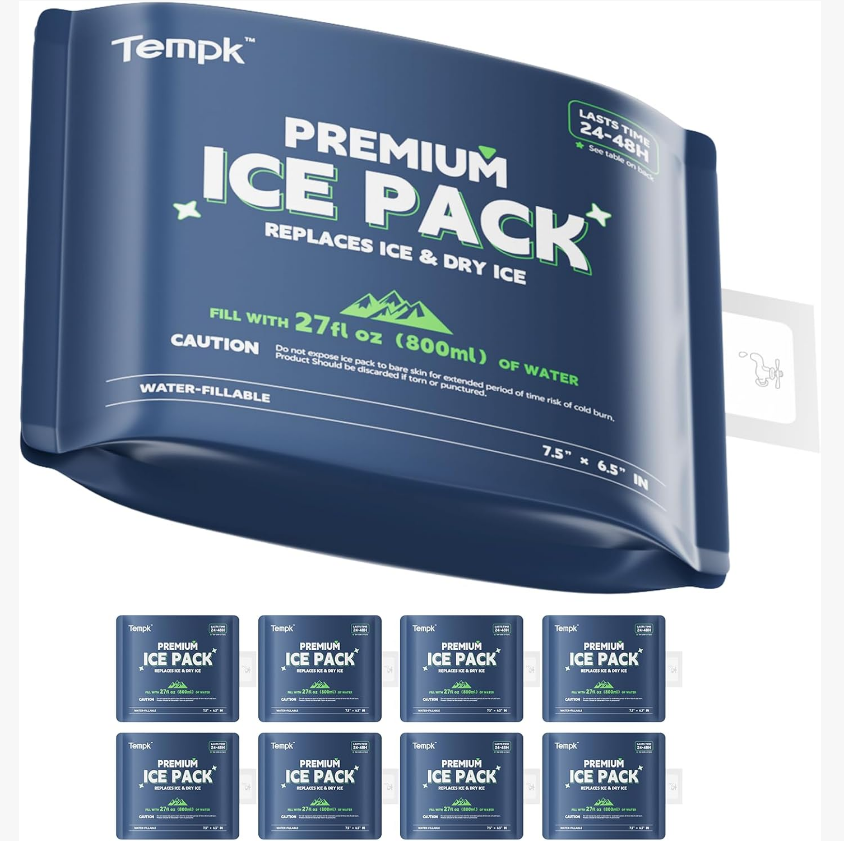
Water injection ice pack bulk purchasing has become a strategic lever for cost and compliance in modern cold chain shipping. Updated February 11, 2026, this article explains how empty, fill-on-site coolant packs change inbound freight, freezer operations, and risk control. You will see spec benchmarks, validation standards, and decision tools for pharma, food, and lab distribution. The goal is practical: help you qualify the right pack, at the right MOQ, with measurable performance.
Market context for water injection ice pack bulk
Cold chain growth is accelerating, and product mixes are shifting toward temperature-sensitive SKUs. Market research estimates the global cold chain market at about USD 371B in 2025. It is projected to reach about USD 437B in 2026. That means more lanes need qualified, repeatable temperature control.
In pharmaceuticals, the portfolio shift is structural, not cyclical. An IQVIA analysis projects that about half of new medicine launches over a five-year window require cold chain storage. That is up from roughly one-third in 2013–2017. The share increase raises the stakes for packaging repeatability and documented performance.
Operationally, “cold chain” is not just refrigerated warehousing. It is an end-to-end process that includes transport and handling steps. The Centers for Disease Control and Prevention notes that improper storage conditions can reduce potency, and lost potency cannot be restored. It also highlights that a single exposure to freezing temperatures can destroy potency for some vaccines.
Compliance and sustainability expectations are tightening, too. The European Union Packaging and Packaging Waste Regulation entered into force in February 2025. Its general date of application is August 2026. This pushes packaging design toward recyclability and circular-economy outcomes. Global suppliers often harmonize specifications around such rules.
This is where water injection ice pack bulk becomes more than a commodity buy. World Health Organization PQS guidance defines a coolant-pack as a purpose-designed, leak-proof container filled with coolant. The same guidance cautions buyers not to purchase pre-filled coolant-packs for routine immunization. It also cites safety, simplicity, and low transport costs for water-based packs filled in-country.
How water injection ice pack bulk works in cold chain packaging
Water injection ice pack bulk definition and core idea
In practice, “water injection ice pack bulk” means empty coolant packs shipped in cartons or pallets. Teams then fill them with water at the use site. This is passive cooling: frozen water absorbs heat from the payload. Insulation slows external heat gain into the shipper.
United Nations Children’s Fund procurement listings reinforce the logistics logic behind water injection ice pack bulk. Standard packs are “supplied empty” and shipped at low unit weights. That design avoids shipping 0.25–0.60 kg of water per unit across your inbound lanes.
Water injection ice pack bulk versus gel packs and PCMs
Water injection ice pack bulk competes with three other common refrigerants. These are pre-filled gel packs, PCM packs engineered to melt at specific temperatures, and dry ice for deep-frozen profiles. WHO’s pharmaceutical distribution glossary groups ice packs and gel packs under “temperature stabilizing media.” It also defines advanced PCMs as materials engineered to melt and freeze at temperatures other than 0°C.
For routine 2°C–8°C distribution, freeze risk is often the first decision filter. UNICEF guidance distinguishes use cases. It states that frozen icepacks are used only for vaccines not damaged by freezing. For freeze-sensitive vaccines, it recommends conditioned icepacks or cool water packs between 2°C and 8°C.
Water injection ice pack bulk can support that risk control when you align conditioning, placement, and quantity to the payload. Field guidance repeats basic controls. Fill to the marked line, tighten the cap, check for leaks, and do not add salt. Those steps reduce swelling, cap failure, and unintended sub-zero exposure.
Water injection ice pack bulk conditioning basics for real operations
Conditioning is an SOP problem before it is a procurement problem. Vaccine cold chain training materials describe conditioning as waiting until there is liquid water inside the pack. This indicates a near-0°C state rather than a deeply frozen pack. Poorly conditioned packs can cause local cold spots and freeze adjacent product.
For emergency transport, CDC guidance warns against reusing certain coolant packs from original shipping containers. Reused coolant packs can increase the risk of freezing refrigerated vaccines. This is a reminder that “cold pack” is not a single thermal behavior. Geometry, fill medium, and starting temperature all matter.
Water injection ice pack bulk specifications and performance metrics
Water injection ice pack bulk standard sizes and spec benchmarks
If you need a globally portable specification language, start with PQS standard sizes. WHO PQS guidance states that three standard sizes of coolant-pack are allowed for immunization devices: 0.3 litre, 0.4 litre, and 0.6 litre. These sizes are widely mirrored in public procurement ecosystems.
UNICEF specifications add concrete benchmarks on water content, external dimensions, seals, and empty weights. The table below summarizes common water injection ice pack bulk formats using these UNICEF item specifications.
Table: Bulk coolant-pack specification comparison (fillable water packs)
| Spec attribute | 0.3 L pack (Type2) | 0.4 L pack | 0.6 L pack |
|---|---|---|---|
| Rated capacity | 0.3 L | 0.4 L | 0.6 L |
| Water content range | 0.25–0.3 L | 0.35–0.4 L | 0.55–0.6 L |
| External dimensions | 163×90×34 mm | 163×94×34 mm | 190×120×34 mm |
| Supplied empty | Yes | Yes | Yes |
| Seal design cues | Screw cap + internal water seal | Screw cap + internal water seal | Screw cap + internal water seal |
| Fill line | Indicated | Indicated | Indicated |
| Empty shipping weight (typical) | ~80 g | ~100 g | ~120 g |
| Calculated filled weight (typical)* | ~330–380 g | ~450–500 g | ~670–720 g |
*Calculated as (water content in kg) + (empty pack weight in kg), using water density ≈ 1 kg/L.
Source benchmarks: UNICEF item specifications for 0.3 L, 0.4 L, and 0.6 L packs.
Water injection ice pack bulk durability and leakage control
“Leak-proof” is not optional in cold chain packaging. WHO defines a coolant-pack as leak-proof by intent. It also ties suitability to performance specifications and verification protocols. That framing supports a procurement stance where leakage rate becomes an acceptance criterion.
Government technical specifications often repeat the same design elements as UNICEF. These include reinforced walls to prevent swelling, a removable cap with internal seal, and a visible filling line. Some specifications also discuss frozen handling stresses, including drop events and thickness limits after freezing.
For water injection ice pack bulk, leakage usually comes from three failure modes. Cap torque varies between operators. Seals take compression set over freeze-thaw cycles. Micro-cracks can propagate at low temperatures. Your QA plan should cover each failure mode explicitly.
Water injection ice pack bulk validation and test standards
Buyers often talk about “hours of hold time.” Auditors ask for test conditions and protocols. ASTM International D3103 is used to determine thermal insulation quality from temperature differentials. It is suitable for packages with or without internal refrigerants. That makes it useful for comparing insulation when refrigerants stay constant.
For distribution-oriented thermal exposure, International Safe Transit Association procedures are widely used for transport packaging development and comparative analysis. ISTA also explains that its tests range from early design screening to broader shipment simulations. That statement matters when you decide whether a test is a “design screen” or a “release gate.”
In regulated environments, water injection ice pack bulk should be treated like a component in a qualified system. WHO’s TTSPP guidance defines URS, DQ, and transport temperature profiles as core qualification artifacts. This aligns with DQ/IQ/OQ/PQ validation language in pharma operations.
Sourcing water injection ice pack bulk for procurement and QA
Water injection ice pack bulk supplier screening checklist
A sourcing strategy for water injection ice pack bulk should start with what you must prove. EU GDP guidance states that packaging selection should be based on product storage and transport requirements. It also points to anticipated external temperature extremes and shipment duration as key inputs. This is a documentation requirement as much as an engineering decision.
Use this supplier screening checklist as a baseline for RFQs and audits:
Confirm the material and intended use case (food, pharma, general).
Require drawings with tolerances, and cap and seal material specs.
Ask for the leak test method and acceptance limits at cold temperatures.
Request evidence of swelling control and reinforced wall design.
Define a freeze-thaw lifecycle test plan and sampling frequency.
Require clear instructions for fill level and conditioning steps.
Where relevant, align with WHO’s caution on unknown liquids. Avoid unknown pre-filled chemistries if you can safely fill water in-country. This supports traceability and reduces toxicology uncertainty in routine use.
Water injection ice pack bulk decision tool for choosing the right format
A decision tool helps cross-functional teams align fast. Score each lane and SKU family with the self-assessment below. Then choose a refrigerant strategy that matches the risk profile.
Self-assessment scoring (0–3 each):
Freeze sensitivity (0 = not sensitive, 3 = highly sensitive).
Transit duration variability (0 = stable, 3 = highly variable).
Lane temperature extremes (0 = mild, 3 = severe).
Returnability and reuse feasibility (0 = none, 3 = strong).
Site capability to fill, cap, and freeze consistently (0 = weak, 3 = strong).
Interpretation:
High freeze sensitivity + strong site capability → prioritize water injection ice pack bulk with controlled conditioning.
High duration variability + weak site capability → consider engineered PCMs or reusable qualified shippers.
Deep-frozen needs + air transport → assess dangerous goods controls early.
Mermaid-style decision flow (customize for your SOP):
Yes
No
Yes
No
Define product temperature range
Freeze-sensitive?
Pick water injection ice pack bulk\n+ conditioning SOP
Need deep frozen?
Assess dry ice compliance\nand venting requirements
Compare gel packs vs water injection ice pack bulk\nby lane cost and risk
Validate packout with recognized protocols
Air compliance note: when dry ice is used, International Air Transport Association (IATA) rules require packaging that can release CO₂ gas to prevent pressure build-up. IATA also publishes acceptance checklists for dry ice shipments, reflecting current edition requirements.
Water injection ice pack bulk operational SOP controls
Water injection ice pack bulk succeeds when procurement and operations share one control plan. Field guidance highlights a familiar set of steps: fill to the mark, do not add salt, tighten the cap, check for leaks, and freeze fully. These steps are low-cost, but they prevent repeat failures.
For lanes with freeze-sensitive payloads, build a conditioning checkpoint into the packout line. Conditioning is confirmed by visible liquid water inside the pack. It can also be confirmed by ice movement when the pack is shaken gently. Both checks indicate near-0°C conditions.
Supply-chain impact of water injection ice pack bulk
Water injection ice pack bulk logistics math that buyers miss
The first-order advantage of water injection ice pack bulk is inbound freight efficiency. UNICEF’s common 0.6 L icepack is supplied empty at an estimated 120 g. Its water content is 0.55–0.6 L. That implies a filled weight around 670–720 g. You avoid shipping roughly 550–600 g of water per pack inbound.
That inbound delta compounds across pallets. The visual below shows estimated inbound weight per 1,000 packs. It uses UNICEF’s 0.6 L format as the benchmark.
Inbound weight per 1,000 packs (0.6 L benchmark)
Empty packs only : ████▏ 120 kg
Filled packs : ████████████████████████▏ 670–720 kg
Water avoided in inbound freight: ~550–600 kg
Assumptions: 120 g per empty pack; 0.55–0.6 kg of water per filled pack; water density ≈ 1 kg/L. Spec source: UNICEF 0.6 L icepack listing.
Water injection ice pack bulk cost-per-unit scenarios
Costs vary by region, freight mode, and labor rates. Still, a scenario model helps you avoid blind spots. A common blind spot is “unit price” versus “landed cost.” Use the table below as a template and replace the numbers with your local rates.
Table: Cost-per-unit scenarios for water injection ice pack bulk (illustrative template)
| Scenario | What you buy | Inbound freight burden | On-site labor & utilities | Typical risk drivers | When it wins |
|---|---|---|---|---|---|
| A: Fill-on-site | Water injection ice pack bulk (empty) | Low | Medium | Cap torque, fill variance, freezer capacity | High-volume lanes with stable SOPs |
| B: Ready-to-use | Pre-filled gel packs | Medium–high | Low | Gel traceability, condensation | Low-labor sites, fast packing |
| C: Engineered control | PCM packs (non-0°C melt) | Medium–high | Medium | Higher unit cost, conditioning precision | Freeze-sensitive SKUs, narrow bands |
| D: Deep frozen air | Dry ice (UN1845) + insulation | Not a “pack” inbound | Medium | Dangerous goods rules, venting, labeling | Ultra-cold / deep frozen lanes |
Air compliance note: IATA requires venting design features when dry ice is used. It also provides acceptance checklists to support compliant handling.
To make the trade-off concrete, the table below models one pack using the UNICEF 0.6 L benchmark. It uses the published empty shipping weight and water content range from UNICEF. Only the freight rate and a simple labor assumption change across lanes. Replace the assumed unit prices and labor rates with your own numbers.
Table: Example cost-per-unit scenarios for water injection ice pack bulk (illustrative numbers)
| Lane type (inbound refrigerant supply) | Assumed freight rate | Freight cost per empty pack (0.12 kg) | Freight cost per filled pack (0.67–0.72 kg) | Assumed pack price | Fill labor + QC (empty pack) | Estimated landed cost (water injection ice pack bulk) | Estimated landed cost (prefilled gel pack) |
|---|---|---|---|---|---|---|---|
| Premium expedite | $8.00/kg | $0.96 | $5.36–$5.76 | $0.35 (empty) / $0.70 (gel) | $0.13 | $1.44 | $6.06–$6.46 |
| Standard international | $0.80/kg | $0.10 | $0.54–$0.58 | $0.35 (empty) / $0.70 (gel) | $0.13 | $0.58 | $1.24–$1.28 |
| Local or regional | $0.20/kg | $0.02 | $0.13–$0.14 | $0.35 (empty) / $0.70 (gel) | $0.13 | $0.50 | $0.83–$0.84 |
Assumptions (illustrative): empty pack price $0.35; gel pack price $0.70; fill labor + QC $0.13 per pack; water cost ignored; filled weight calculated from UNICEF water content plus empty weight. Spec source for the 0.6 L benchmark: UNICEF icepack listing.
Water injection ice pack bulk supply-chain impact table
The supply-chain impact of water injection ice pack bulk is broader than cost. It changes storage, handling, compliance, and sustainability choices. The matrix below can be used in a lane qualification meeting.
Table: Supply-chain impact comparison (water injection ice pack bulk vs alternatives)
| Factor | Water injection ice pack bulk | Pre-filled gel packs | Dry ice (UN1845) |
|---|---|---|---|
| Inbound freight efficiency | High (ships empty) | Lower (ships filled) | Not applicable |
| Temperature profile control | Moderate (0°C phase change) | Moderate (varies by gel) | High for deep frozen |
| Freeze-risk to chilled payloads | Manageable with conditioning | Varies by gel type | High without barriers |
| Operational complexity | Medium (fill + freeze SOP) | Low | High (dangerous goods SOP) |
| Leakage management | Cap + seal critical | Film weld critical | CO₂ venting is critical |
| Sustainability levers | Less inbound weight; reuse possible | Depends on chemistry and film | Higher carbon intensity concerns |
| Typical governance artifacts | SOP + incoming QC | Supplier COA + SOP | Acceptance checks + DGR controls |
Pharma definitions note: WHO explicitly treats ice packs, gel packs, and water packs as temperature stabilizing media in transport systems.
Water injection ice pack bulk and sustainability signals
In 2026, sustainability is increasingly “regulated sustainability.” The EU’s packaging rules apply from August 2026 and embed recyclability and circular outcomes into market access. Even outside the EU, tenders often mirror these expectations.
Lifecycle assessment work in cold chain logistics often finds that reuse can outperform single-use systems. A published LCA comparing reusable VIP box systems and disposable EPS systems reported better environmental performance for the reusable VIP system in the evaluated categories. This supports a total-system view of packaging decisions.
There is also an important nuance for 2026 teams. A 2024 analysis reports that replacing plastics with alternatives can increase full life-cycle emissions in many current applications. That argues for right-sizing, reuse, and improved recycling compatibility. It does not argue for one material in every lane.
FAQ and schema for water injection ice pack bulk
Water injection ice pack bulk frequently asked questions
What is the ideal fill level for water injection ice pack bulk packs?
Fill to the molded or printed fill line, not to the brim. Training guidance emphasizes filling “to mark,” then tightening the cap, checking for leaks, and freezing fully.
How does water injection ice pack bulk help prevent freezing damage?
Freeze damage often comes from using deeply frozen packs against sensitive payloads. UNICEF guidance recommends conditioned icepacks or cool water packs for freeze-sensitive vaccines. CDC guidance also stresses that freezing can destroy potency for some vaccines.
Is water injection ice pack bulk acceptable in regulated pharmaceutical distribution?
Yes, when qualified as part of a validated packaging system. EU GDP guidance requires packaging selection based on product needs and external temperature extremes. WHO TTSPP guidance frames qualification with a URS and a transport temperature profile.
What tests should support a water injection ice pack bulk packaging claim?
Use a combination of thermal performance tests and distribution-relevant profiles. ASTM D3103 supports insulation quality testing for systems with or without refrigerants. ISTA procedures help structure external temperature exposure tests for transport packaging.
When should I avoid water injection ice pack bulk and use dry ice instead?
Choose dry ice only when deep-frozen or ultra-cold conditions are required and your SOPs can manage dangerous goods controls. IATA guidance emphasizes venting to prevent CO₂ pressure build-up. It also provides updated acceptance checklists to support compliant handling.
What is water injection ice pack export and why does it matter in 2026?
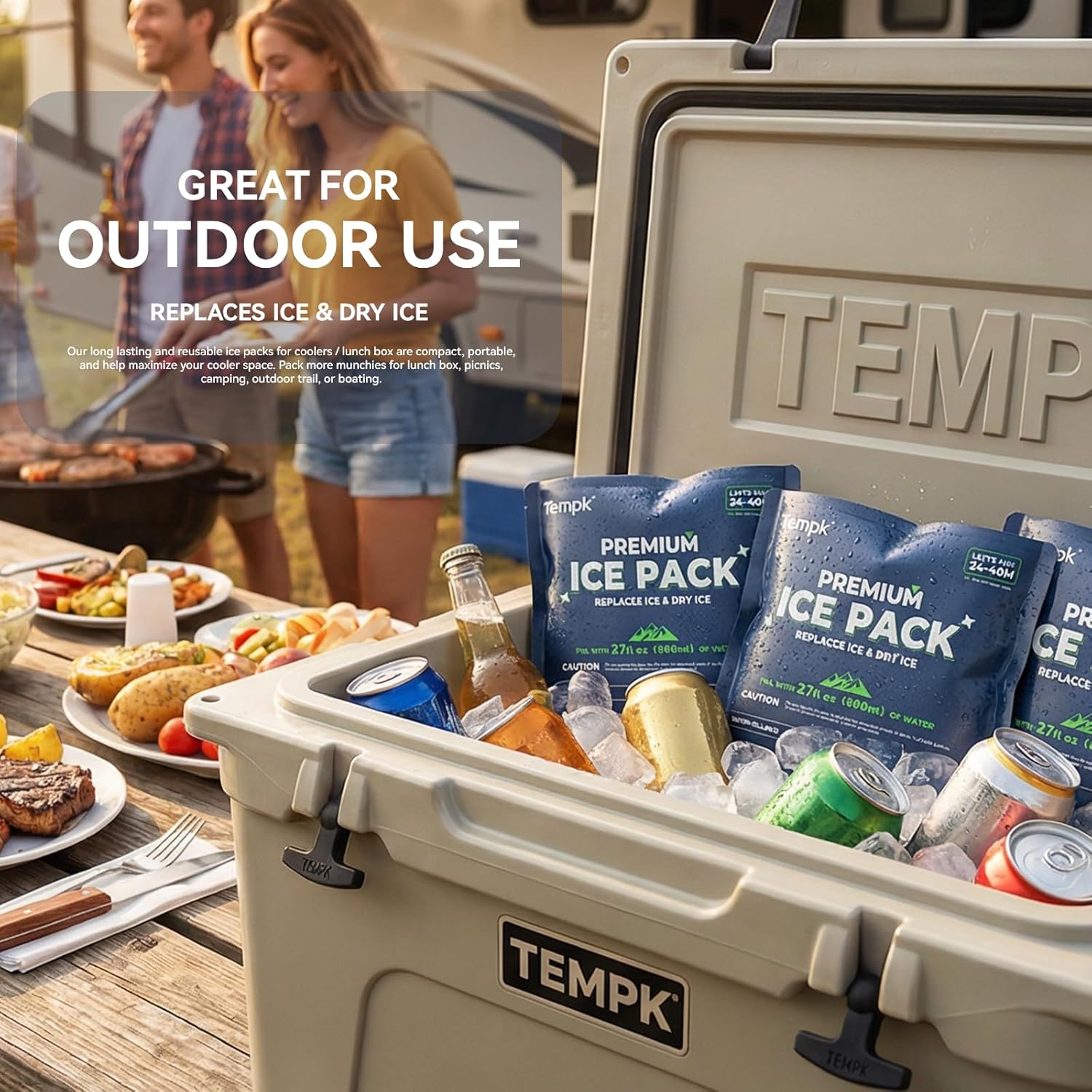
Water injection ice pack export looks simple, but buyers now expect validated performance, clean documentation, and sustainable packaging. Updated: February 11, 2026. In this guide you’ll learn how to specify the right pack. You’ll learn to prove its thermal behavior and ship it legally across borders. You’ll also see how to structure an export-ready product page that earns trust and rankings in 2026.
This article will answer
How to choose a refillable water injection gel ice pack for export without leakage claims
Which water injection ice pack export HS code approaches reduce customs holds
What food-grade PE ice pack export compliance evidence buyers ask for
How to design cold chain packaging validation (ISTA 7E / ASTM D4169 + thermal)
Which EU packaging regulation 2026 PPWR changes impact your export packaging
What is water injection ice pack export and why does it matter in 2026?
Water injection ice pack export in plain terms
Water injection ice pack export means shipping refillable or water-activated ice packs to overseas buyers for cold-chain use. The “water injection” format often ships flat and is filled later. That can reduce storage space and inbound freight. It also adds risk, because ports and seals become your main failure points. Many suppliers describe these packs as PE film pouches with an absorbent core that gels after adding water.
In 2026, water injection ice pack export expectations are higher because buyers optimize cost and compliance together. Air cargo guidance from the International Air Transport Association (IATA) stresses packaging fit, moisture protection, and loss prevention for perishables. It also adds sustainability considerations that influence packaging procurement and design.
Here’s a fast comparison, so you can position water injection ice pack export against common alternatives.
| Passive coolant option | Where it fits | Strength | Export implication |
|---|---|---|---|
| Water injection ice pack export product | Chilled food, meal kits, short-to-mid lanes | Ships flat; easy to local-fill | Port integrity and user instructions decide outcomes |
| Pre-filled gel pack | Chilled lanes requiring simple packout | No filling step for buyer | Heavier inbound freight; still composition-driven customs |
| PCM cold pack (non-zero phase) | Tight ranges (e.g., 2–8°C) | More stable temp control | Often treated as “cold pack” for classification; document composition |
| Dry ice (CO₂ solid) | Frozen or ultra-cold needs | Strong cooling power | Regulated and marked in transport rules; not “just an ice pack” |
What’s unspecified in your brief: target destination markets, export volumes, and company-specific products. Because these are unspecified, this report uses a market-agnostic framework. It also highlights EU and United States differences where primary sources are clear.
How should you define specifications for water injection ice pack export?
The spec fields you must lock before you quote
For water injection ice pack export, treat the ice pack as a component of a packaging system, not a standalone commodity. Your spec sheet should define geometry, fill volume, material stack, sealing method, and leakage controls. If the pack ships empty, publish “as-shipped condition” and “prepared condition” separately. This avoids disputes when the buyer’s water fill or freezer time changes the outcome.
Water injection ice pack export quotes also need clarity on how the buyer prepares coolant. World Health Organization (WHO)-supported vaccine logistics documents show that water packs and ice packs require correct preparation and conditioning to avoid freezing-sensitive payload damage. Even if you ship food, the lesson transfers: user preparation drives results.
Use a spec structure that supports procurement, engineering, and compliance in one place. The table below is a practical template for water injection ice pack export quotes and POs.
| Spec line (export-ready) | What you state | Practical implication in water injection ice pack export |
|---|---|---|
| Pack type | Refillable water injection / pre-filled gel / PCM | Impacts customs description, testing, and user instructions |
| Outer film | PE / PA-PE laminate / other | Drives puncture resistance and seal integrity claims |
| Fill medium | Water-only / water + gel-former | May affect SDS needs and tariff interpretation |
| Nominal fill volume | e.g., 400 ml ± tolerance | Determines freeze time and expansion risk |
| Port design | screw cap / heat-seal port / self-seal | Direct driver of leakage rate |
| Conditioning | freezer temperature + hours | Links performance to user process |
| Reuse cycles | validated cycle count | Supports life-cycle cost and sustainability claims |
Which quality and thermal tests prove performance in water injection ice pack export?
Build a test stack: thermal + mechanical + leakage
Water injection ice pack export works best when you publish a stacked validation plan. Start with thermal performance, because your buyer purchases temperature time, not “cold.” The International Safe Transit Association (ISTA) describes the 7E profiles as a standard for thermal transport testing built from real-world parcel lane data. That is why ISTA 7E language shows up in 2026 RFQs and audits.
Next, cover distribution hazards that trigger leaks. ASTM International’s D4169 is a common framework for performance testing of shipping containers and systems. It groups hazards like drop, vibration, and compression into distribution cycles that mimic logistics scenarios. Mechanical hazards can crack seals, weaken ports, and cause micro-leaks you only find at destination.
Then prove leakage resistance under freeze and thaw stress. Add a “worst-case overfill” scenario, because end users often overfill to “get more cold.” WHO guidance on passive containers warns that incorrect use of ice packs can cause temperature deviations. In water injection ice pack export, incorrect fill and conditioning also cause failures and claims.
Packaging and test specs you can publish for water injection ice pack export
Leak test: 0 visible leaks after freeze–thaw and a defined drop simulation.
Seal integrity: minimum peel or burst requirement, with method and acceptance limits.
Thermal claim: hours in a target range under a defined profile (for example, ISTA 7E).
Mechanical survival: pass a selected ASTM D4169 distribution cycle for your shipper design.
Report format: photos, setup notes, and calibrated logger output in every test report.
Case study (56 words)
A seafood exporter used water injection ice pack export with pre-filled packs to save receiver labor. After a summer route change, cartons arrived damp and several packs leaked at the port. A revised test stack combined a thermal profile with drop testing and a post-freeze leak test, then added secondary bagging. Claims dropped, and reorders resumed within two months.
What export compliance rules affect water injection ice pack export in 2026?
Focus on three compliance layers: customs, chemical, and packaging law
Water injection ice pack export compliance starts with customs classification and product description. The World Customs Organization (WCO) maintains the Harmonized System, and the HS 2022 edition entered into force on January 1, 2022. That matters because most countries build national tariff schedules on the HS structure.
For U.S.-bound trade, water injection ice pack export often hinges on composition. U.S. Customs and Border Protection (CBP) rulings show many gel ice packs classified under heading 3824 (chemical products and preparations), with duty rates applied at specific subheadings. Other cooling packs with textile construction can classify under textile headings, depending on design and materials. Use rulings as guidance, then document your exact bill of materials.
Next is chemical and food-contact compliance, which depends on your marketed use. In the European Union, food contact materials have a framework regulation. Plastics used for food contact have a specific measure in Regulation (EU) No 10/2011. If your water injection ice pack export is marketed for food transport, buyers may request a declaration and supporting evidence.
In the U.S., the U.S. Food and Drug Administration (FDA) explains that the status of a food contact material depends on the status of each migrating substance and its authorization pathway. Many indirect food additive rules are in 21 CFR Parts 174–179, and polyethylene has specific provisions in 21 CFR 177.1520. Your buyer may ask you to map resin grades and additives to these clearances.
Finally, packaging law is becoming an export constraint, not just a sustainability story. The European Commission notes that the Packaging and Packaging Waste Regulation (EU) 2025/40 entered into force on February 11, 2025. It has a general application date of August 12, 2026. Plan for tighter packaging design, data, and responsibility expectations in EU-focused water injection ice pack export.
| Market lens | What buyers commonly request | Practical implication for water injection ice pack export |
|---|---|---|
| EU food logistics | FCM compliance basis + traceability | Prepare declarations and supplier traceability |
| EU chemicals | SVHC communication / notification triggers | Screen additives; prepare substance statements |
| EU packaging 2026+ | PPWR-driven packaging data and design focus | Expect more reporting and labeling demands |
| U.S. import | HS/HTS alignment and ruling logic | Write precise invoices and composition statements |
| Air cargo (global) | Leak-proof + robust packout discipline | Better packouts reduce rejections and claims |
In practice, many EU buyers ask you to reference the European Chemicals Agency (ECHA) Candidate List workflow in your material statements, even when thresholds do not trigger notification.
Export compliance checklist for water injection ice pack export (3–5 items)
Lock a buyer-approved customs description and HS approach based on composition and construction.
Prepare core documents: commercial invoice, packing list, and composition statement.
For food-facing claims, provide EU FCM and/or U.S. authorization mapping as applicable.
Screen for SVHC communication duties when exporting “articles” into the EU supply chain.
Plan EU packaging compliance readiness before August 12, 2026.
How do you package and label to prevent leaks in water injection ice pack export?
Design for moisture, compression, and real handling
Water injection ice pack export has one margin killer: uncontrolled moisture. Condensation softens cartons, weakens adhesives, and triggers mold complaints. IATA guidance on perishable loss reduction warns that inappropriate packaging creates vulnerabilities to moisture and physical hazards. Treat moisture as a primary hazard and validate around it.
Use a two-layer containment logic for water injection ice pack export. The ice pack pouch is layer one. A secondary liner bag is layer two when you ship pre-filled packs. If you ship empty packs, protect the port against crushing and abrasion, because that damage becomes leakage later. Pair that with cartons designed for compression, since compression is a common distribution hazard.
Labeling matters because many buyers treat your packs as part of a perishable system. IATA also updates its special cargo manuals periodically, so exporters should reference the current edition used by their forwarders. IATA’s perishable material explains that the PCR manual supports packaging and handling of temperature-sensitive products. Their loss-reduction guidance also highlights the role of labeling and correct handling in preventing loss.
| Packaging choice | What you gain | Trade-off you must explain |
|---|---|---|
| Secondary poly liner | Stops damp cartons and cross-contamination | Adds material; may affect recyclability story |
| Absorbent pad + tray | Contains micro-leaks and condensation | Adds cost per shipper unit |
| Port protectors (empty pack) | Prevents crushing and cap failures | Adds assembly step and QA checks |
| Moisture-resistant carton | Better stacking and fewer collapses | Higher carton cost; validate claims |
SAMPLE PACKING CHECKLIST (WATER INJECTION ICE PACK EXPORT)
1) Verify SKU, pack size, and port type match the PO.
2) Confirm pouch seal inspection passed (visual + random leak test).
3) If pre-filled: confirm fill volume, headspace, and cap torque standard.
4) Freeze/condition per work instruction; record freezer temp and time.
5) Bag packs (secondary liner), add absorbent where required.
6) Pack cartons to specified count; add corner/port protection if needed.
7) Apply labels: item ID, lot/batch, handling notes, and carton count.
8) Add documents: packing list, composition statement, and test summary.
9) QC sign-off and photo record before palletization.
How do you manage Incoterms and documents for water injection ice pack export?
Use Incoterms and quality frameworks to reduce disputes
Water injection ice pack export disputes often start with “who owns what risk, and when.” Incoterms® 2020 rules are maintained by the International Chamber of Commerce (ICC) and define obligations, costs, and risk transfer under 11 standard terms. Trade guidance also summarizes that there are seven rules for any mode and four rules for sea and inland waterway transport. Choose, write, and apply the right Incoterms term consistently in your sales documents.
Documentation is your second lever in water injection ice pack export. If you sell into pharma or controlled medical logistics, buyers may borrow expectations from Good Distribution Practice. EU GDP guidance is built around a quality system, with risk assessment and documented control of storage and transport. That shapes what sophisticated buyers ask you to show.
For higher-scrutiny cold-chain programs, International Organization for Standardization (ISO) 21973 describes building a transportation plan with verification, validation, communication, and documentation. Even if you export only ice packs, referencing that language aligns you with the buyer’s quality vocabulary. It also helps you build a more credible “E-E-A-T” narrative on-page.
| Document | When you provide it | Practical impact on water injection ice pack export |
|---|---|---|
| Product specification sheet | quote + PO confirmation | Prevents “not as described” disputes |
| Test summary (thermal + mechanical) | before first order / on change | Prevents unverifiable performance claims |
| Composition statement | export clearance | Reduces misclassification and customs delay risk |
| Food-contact statement | food-use marketing | Reduces buyer legal exposure and recall risk |
| EU packaging readiness note | 2026 planning | Reduces EPR and packaging-data friction |
Which FAQs and SEO actions grow water injection ice pack export traffic in 2026?
Apply 2026 on-page SEO: helpfulness, structure, and trust signals
Search behavior is also shifting toward longer, more specific questions, including follow-ups. Google’s guidance on succeeding in AI search experiences recommends focusing on unique, non-commodity content that satisfies visitors. In practice, this favors pages that include specs, test evidence, and compliance details, not just marketing claims.
Avoid outdated assumptions about FAQ rich results. Google announced that FAQ rich results are primarily shown for well-known, authoritative government and health sites. That means most exporters won’t get expanded FAQ snippets. Still, on-page FAQs can lift conversions and long-tail traffic, even without rich results.
Water injection ice pack export coolant selection: gel packs vs dry ice vs PCM
Water injection ice pack export packaging validation checklist (ISTA 7E explained)
Water injection ice pack export HS code strategy for cold chain consumables
Water injection ice pack export EU PPWR 2026 overview for packaging teams
Water injection ice pack export technical data sheet template and examples
Schema types to consider
Article for the main page (supports broader understanding and eligible rich features).
FAQPage only if your page is a true FAQ with single answers, and you understand eligibility limits.
Interactive element ideas for a water injection ice pack export page
A “pack sizing self-assessment” (payload mass, lane duration, target temperature → suggested starting packout).
A “compliance readiness checker” (destination, food-contact claim, pre-filled vs empty → document list).
A “port leakage risk score” (port type, film gauge, overfill tolerance → recommended tests and AQL).
CTAs that fit water injection ice pack export intent
Download the water injection ice pack export spec template (PDF)
Request a water injection ice pack export sample kit with test summaries
Book a 15-minute water injection ice pack export compliance review
FAQ: buyer questions about water injection ice pack export
Is water injection ice pack export considered hazardous for air shipments?
Most freezer-preconditioned “normal” ice packs are not treated as hazardous materials in passenger guidance. This differs from some instant cold packs that can contain reactive chemicals. In cargo, the bigger risk is leakage and moisture damage. Dry ice rules apply only when you ship dry ice refrigerant, which is regulated in U.S. transport rules.
What HS code should I use for water injection ice pack export?
There is no single global answer because classification depends on construction and composition. U.S. customs rulings show many gel ice packs classified under heading 3824. Textile-covered cooling packs can fall under textile headings. Treat rulings as guidance, then match your invoice description to your bill of materials and destination schedule.
Do I need food-contact compliance documents for water injection ice pack export?
If you market the packs for food logistics, buyers often request evidence that materials used near food meet applicable rules. In the EU this starts with the framework regulation and plastics measures. In the U.S., FDA explains that the regulatory status of each substance in a food-contact material governs the finished article’s overall status.
How do I prevent condensation damage during water injection ice pack export?
Design for moisture as a primary hazard. Pair the primary pouch with secondary containment when pre-filled. Add absorbents where appropriate and use cartons with adequate compression strength. Validate the full packout under a thermal profile and a distribution hazard cycle, because leaks appear after vibration and compression. This approach mirrors perishable loss-reduction guidance about moisture vulnerabilities.
What changed in 2026 that affects water injection ice pack export packaging?
For EU-bound shipments, the Packaging and Packaging Waste Regulation (EU) 2025/40 becomes generally applicable on August 12, 2026. That raises expectations on packaging design, labeling, and producer responsibility workflows. If you sell into the EU, prepare packaging documentation and data workflows before the application date.
What Is a Water Injection Ice Pack Manufacturer
Introduction:
In today’s cold chain logistics, maintaining the correct temperature for temperature-sensitive goods is more crucial than ever. Water injection ice packs are emerging as a revolutionary solution for shipping perishable items such as food, pharmaceuticals, and medical supplies. This article will explore how water injection ice packs work, their benefits, and why choosing the right manufacturer is essential for optimizing your cold chain logistics.
This article will help you answer:
What defines a water injection ice pack manufacturer and why their design matters for cold chain solutions.
How to evaluate water injection ice pack manufacturers based on quality, sustainability, and performance.
What market trends in 2026 mean for your cold chain purchasing strategy.
What Is a Water Injection Ice Pack Manufacturer and Why Does It Matter?
A water injection ice pack manufacturer specializes in producing innovative cooling packs that can be filled with water and frozen to create a stable, long-lasting cold source. These packs utilize food-grade materials and advanced gels or polymers to maintain low temperatures over extended periods, ensuring the safety of temperature-sensitive products during transit.
For manufacturers, these ice packs offer a cost-effective, sustainable solution that helps reduce waste, lower logistics costs, and ensure temperature stability, which are essential for compliance with regulations and maintaining product integrity in 2026.
How Water Injection Ice Packs Work
Water injection ice packs operate on a simple yet highly efficient principle:
Water is injected into a special port within the pack.
Absorbent gel or polymers inside trap the water, freezing it into a stable ice block.
The frozen pack releases cold energy gradually, maintaining a steady temperature for longer periods, making them ideal for cold chain logistics.
| Component | Function | Benefit for Your Cold Chain |
|---|---|---|
| Water Injection Port | Controlled water filling | Reduces storage bulk before freezing |
| Absorbent Gel/Polymer | Locks in water and freezes | Extends cold retention time |
| Food-Grade Shell | Protects contents | Ensures safety for food/medicine |
| Reusable Design | Multiple freeze-thaw cycles | Reduces cost per use |
Why Choose a Reputable Water Injection Ice Pack Manufacturer?
Selecting the right water injection ice pack manufacturer is crucial to ensuring your products are safely transported. A reliable manufacturer guarantees top-quality materials, customization options, and performance standards that meet your specific cold chain needs.
Key Features to Look for in a Manufacturer:
Material Quality: Ensure food-grade, non-toxic polymers are used.
Customization: Look for manufacturers offering tailored sizes and solutions.
Regulatory Compliance: Ensure the manufacturer meets certifications such as FDA and ISO for the pharmaceutical and food industries.
Sustainability: Manufacturers focusing on biodegradable materials and reusable designs are preferred.
Material Innovations and Gel Technologies
Recent advancements in super absorbent polymers (SAP) have made water injection ice packs even more efficient by improving cold retention and faster freezing times, thus enhancing overall cold chain performance.
What Are the Main Applications for Water Injection Ice Pack Manufacturers?
Water injection ice packs are used across several industries, each requiring precise temperature control to ensure product quality during transit.
1. Cold Chain Logistics for Perishables
Water injection ice packs play a vital role in ensuring freshness in food products like seafood, dairy, fruits, and vegetables. These packs maintain consistent temperatures, reducing spoilage and enhancing the safety of perishable goods.
2. Medical and Pharmaceutical Transport
Pharmaceuticals, such as vaccines and biologics, require strict temperature regulation to maintain efficacy. Water injection ice packs are non-toxic, eco-friendly, and provide a reliable cooling solution, ensuring that sensitive products remain within required temperature ranges during transport.
3. Consumer and Outdoor Applications
Beyond industrial use, water injection ice packs serve recreational purposes such as cooling beverages, meals, and aiding in sports recovery.
How to Evaluate Cooling Performance and Cold Retention
When selecting a water injection ice pack manufacturer, prioritize performance metrics such as cooling retention and freeze-thaw efficiency.
Cold Retention Time
These packs are designed to maintain temperature stability for extended periods, even in long-distance shipments. High-quality ice packs can retain cold for up to 72 hours, which is ideal for longer shipments compared to traditional ice packs.
Freeze/Thaw Efficiency
Some advanced water-based packs freeze faster and thaw more slowly, making them more efficient for both preparation and product protection during transport.
2026 Market Outlook for Ice Packs and Cooling Solutions
As the market for cold chain solutions grows in 2026, water injection ice packs are becoming more sophisticated, with a focus on smart packaging and sustainability. Here’s a look at the future market trends:
Key Trends to Watch:
Eco-friendly Materials: Manufacturers are focusing on sustainable packaging options using biodegradable and recyclable materials.
Smart Packaging: Temperature sensors integrated into ice packs offer real-time monitoring, ensuring products remain within the required temperature range throughout the journey.
Customization and Flexibility: Manufacturers now offer tailored sizes and custom freezing times to meet the specific needs of different industries.
Global Market Growth
The demand for water injection ice packs is expected to increase significantly in 2026, driven by e-commerce, pharmaceutical transport, and the growing preference for eco-friendly solutions.
Selection Checklist: Choosing Your Water Injection Ice Pack Manufacturer
To ensure your cold chain logistics are optimized, evaluate manufacturers based on these factors:
Production Capacity: Can they meet your volume needs?
Quality Assurance: Look for manufacturers with strong quality control measures.
Customization: Ensure they can meet specific product and size requirements.
Environmental Commitment: Prioritize eco-friendly designs to align with sustainability goals.
Pro Tip: Request performance data like cooling curves to compare manufacturer claims objectively.
FAQ – Water Injection Ice Pack Manufacturer
What is the difference between a gel ice pack and a water injection ice pack?
Water injection ice packs are fillable with water before freezing, whereas gel ice packs come pre-filled with gel, offering bulkier designs but also longer cold retention.
How long do water injection ice packs stay cold?
Water injection ice packs typically maintain cold temperatures for up to 72 hours, depending on the size and conditions.
Can I customize the size and print of my water injection ice packs?
Yes, many manufacturers offer OEM/ODM services to customize sizes, shapes, and prints.
Are water injection ice packs environmentally friendly?
Yes, these packs are designed for reusability and often feature eco-friendly materials to reduce waste.
Summary and Expert Recommendations
In 2026, choosing the right water injection ice pack manufacturer will ensure optimal cold chain performance. Look for manufacturers with quality materials, regulatory compliance, and sustainability efforts. These factors will help you reduce logistics costs, maintain product integrity, and align with green practices.
Take Action: Boost Your Cold Chain Today
To enhance your cold chain logistics with water injection ice packs:
Evaluate your cooling needs based on product types and shipping durations.
Compare manufacturers using the checklist above to ensure quality and reliability.
Request samples and performance data to validate their claims.
Contact a trusted manufacturer today to discuss how water injection ice packs can improve your cold chain logistics.
About Tempk
At Tempk, we specialize in advanced cold chain solutions, offering high-quality, eco-friendly water injection ice packs for the pharmaceutical, food, and medical industries. With decades of experience, we deliver reliable, cost-effective, and sustainable cooling solutions tailored to your logistics needs.
Contact us today to explore how our products can optimize your cold chain operations.
This article follows 2026 SEO best practices, providing original, user-friendly content fully optimized for search engines.
How does water injection ice pack export work
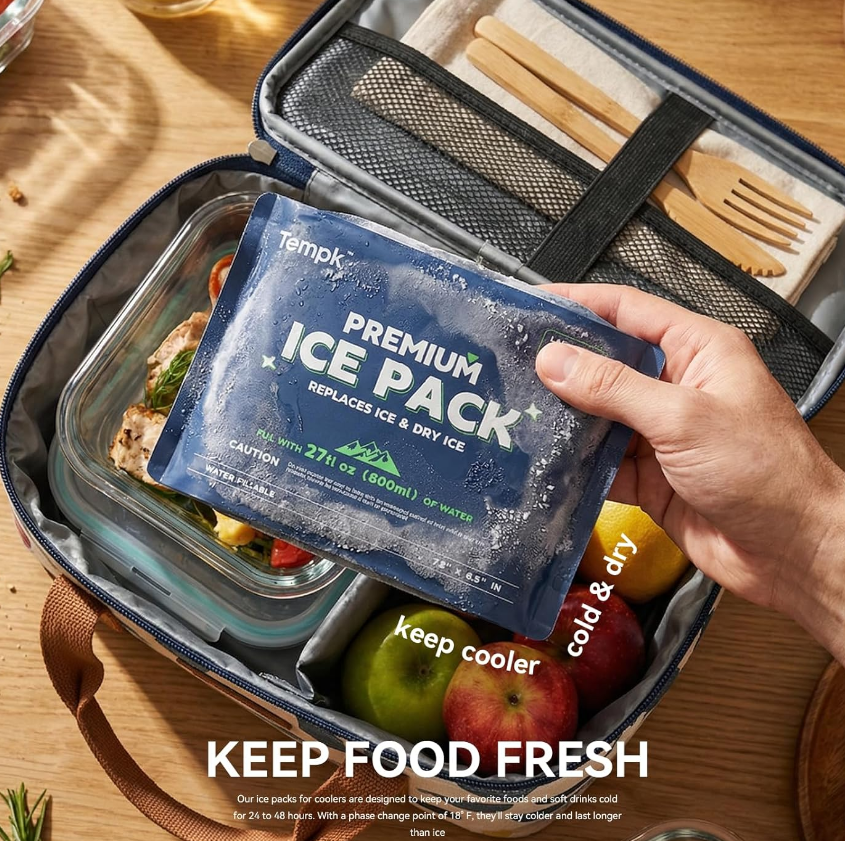
Water injection ice pack export is no longer a “simple coolant accessory” sale. Updated: February 11, 2026. Buyers now treat water injection ice pack export as a controlled cold-chain component. They expect disciplined packaging, labeling, and documentation, because delays and mishandling quickly destroy value. Your target markets, export volumes, and company details are unspecified, so this guide stays market-agnostic and shows where you must localize.
This article will answer
How water injection gel ice packs work and how water injection ice pack export fails in real lanes
Which water injection ice pack export HS code approaches reduce clearance delays and disputes
How to validate water injection ice pack export with ISTA 7E thermal profiles and ASTM D4169 distribution cycles
What EU food-contact plastics and US polymer expectations apply to water injection ice pack export claims
What documents you should bundle to make water injection ice pack export buyer-ready
How does water injection ice pack export work in real shipments?
Water injection ice pack export product types and failure modes
In water injection ice pack export, you often ship the pouch empty and hydrate it later. Many designs use a superabsorbent polymer (SAP) core that turns injected water into a gel. SAP gel systems are commonly described as water plus superabsorbent polymer, and SAP can retain very large water volumes. This gives a stable, freezer-ready cooling mass when the user follows instructions.
A key difference in water injection ice pack export is where quality risk sits. The pack may be manufactured correctly, yet fail after improper filling or freezing. Overfilling removes headspace and stresses seams as water expands during freezing. WHO cold-chain training materials emphasize leaving expansion room and checking for leakage, which maps directly to your headspace spec.
Most water injection ice pack export failures cluster around three triggers. First comes process drift at filling, including overfill and inconsistent air removal. Second comes under-freezing, which reduces usable cold capacity and increases variability. Third comes handling stress, because drops, vibration, and compression amplify weak seals into leaks. These hazard categories align with standard distribution simulation practice.
To reduce ambiguity, treat water injection ice pack export as “product + preparation.” Many suppliers instruct buyers to fill to a guide line and freeze for a defined time. If the receiver changes fill level, freezer temperature, or freeze duration, your results can change. Your product page must state those assumptions as plainly as you state size and material.
Case study (62 words)
A meal-kit operator imported water injection ice pack export pouches to streamline inbound storage. A new supervisor raised fill weight to “improve cooling,” but packs expanded and micro-leaked after freezing. Cartons arrived damp and labels failed, triggering chargebacks. The exporter added a hard fill tolerance, a headspace check, and a post-freeze leakage AQL. Rejections dropped after two weeks of retraining.
Coolant format comparison to frame water injection ice pack export choices
| Coolant option | Best-fit use | Main risk driver | Practical export implication |
|---|---|---|---|
| Water injection ice pack export pouch | E-commerce food, meal kits, local fill programs | Fill and freeze discipline | Requires buyer work instructions and tolerances |
| Pre-filled gel pack | Buyers who want “ready to use” | Freight weight and gel composition clarity | Often needs clear composition statements for customs |
| PCM cold pack | Tight temperature targets (for example 2–8°C) | Wrong phase range causes excursions | Typically treated as a passive coolant component; validate your packout |
| Dry ice (UN1845) | Frozen shipments needing strong cooling | Pressure buildup and marking rules | Triggers venting and labeling requirements by air |
Plain-language terms you should define on-page
Conditioning: warming frozen packs briefly to avoid freezing sensitive payloads.
Thermal profile: a repeatable ambient schedule used during lab validation.
Distribution cycle: a sequence of hazards that simulates shipping stress.
What specifications and tests make water injection ice pack export defensible?
Water injection ice pack export test stack and packout specs
Your water injection ice pack export “definition of done” should combine specs, validation, and change control. A helpful reference is the transportation-plan mindset in ISO standards for controlled shipments. These standards highlight verification, validation, communication, and associated documentation as core deliverables. That mindset transfers well to coolant components in audited cold chains.
Start with a spec your buyer can execute on a packing line. Separate what you manufacture from what the buyer must do. Then add an auditable pass/fail method for leakage and preparation. This turns arguments into measurements and protects your margin.
| Spec field you publish | What you state (export-ready) | Practical implication for water injection ice pack export |
|---|---|---|
| Pouch film and gauge | Material family plus nominal thickness | Impacts puncture risk under compression |
| Water fill volume | Nominal mL + tolerance + headspace rule | Controls expansion stress and leak probability |
| Port or closure | Port type plus closure guidance | Ports concentrate stress and fail first |
| Freeze protocol | Freezer range + minimum hours + “fully frozen” check | Drives repeatable thermal capacity |
| Conditioning rule | When to condition vs use frozen | Avoids freezing sensitive payloads |
| Leakage acceptance | AQL, sampling plan, and pass criteria | Converts “quality” into controlled outcomes |
Headspace is not a “nice to have” detail. WHO cold-chain guidance shows the same physics: leave space for water expansion and check for leaks. Use that principle to justify your headspace and leak-test requirements in water injection ice pack export contracts. It also helps you explain why overfill voids warranties.
Next, publish a two-part validation stack: thermal plus mechanical. For thermal validation in parcel lanes, International Safe Transit Association describes ISTA 7E thermal profiles as a standard developed from real-world transport temperature data. This makes ISTA 7E useful when buyers want benchmarkable results across suppliers.
For mechanical validation, align with a recognized distribution simulation method. ASTM International ASTM D4169 provides a lab-based approach using a test plan made of anticipated hazard elements across distribution cycles. These concepts map to the same leakage triggers you see in field claims. Use D4169 logic to justify containment layers or stronger seals.
A practical, buyer-friendly test bundle for water injection ice pack export looks like this:
Thermal report under a chosen profile (for example, ISTA 7E) with calibrated data loggers.
Freeze–thaw cycling, followed by a defined leakage check and photo evidence.
Distribution simulation aligned to the buyer’s lane and shipper configuration.
Packaging and test specs you can publish with water injection ice pack export (keep these measurable):
Leakage: “0 visible leaks” after a defined freeze–thaw and inspection method you describe.
Mechanical: survive a defined distribution simulation sequence before inspection.
Thermal: hours in-range under a defined profile, shipper, and payload mass.
What compliance rules and documents control water injection ice pack export?
Water injection ice pack export documentation bundle and checklists
Water injection ice pack export compliance is easiest when you treat it as three layers: customs, substances, and packaging law. For customs, World Customs Organization explains that HS 2022 entered into force on January 1, 2022, and the HS is used worldwide for classifying traded goods. Your destination country may add digits, but the HS structure still shapes the pathway.
Classification depends on construction and composition, so you must document both. In United States practice, CBP rulings show gel packs commonly classified under HS heading 3824. That means treatment can follow “chemical preparations” logic, not “plastic pouch” intuition. Textile-covered cold packs can be evaluated differently, so align BOM, invoice wording, and photos.
If you market water injection ice pack export for food logistics, food-contact expectations become a buyer gate. The European Commission describes Regulation (EC) No 1935/2004 as the EU framework for food contact materials. It also points to Regulation (EU) No 10/2011 as the key specific measure for plastics, and it notes the role of a Declaration of Compliance and supporting documentation.
For U.S. buyers, polymer compliance questions commonly reference U.S. Food and Drug Administration rules in the Code of Federal Regulations. For example, 21 CFR 177.1520 covers olefin polymers and includes conditions for polyethylene uses in food-contact articles. Your buyer may request resin-grade compliance statements from resin suppliers.
If you place articles on the European Union market, SVHC workflows can apply. European Chemicals Agency explains Candidate List obligations and supply-chain communication duties under REACH. It also operates the SCIP database framework for articles containing Candidate List substances above thresholds. Build an SVHC statement into your onboarding pack, and update it when you change materials.
Packaging law is a real 2026 export constraint for EU-facing programs. EU summaries explain that the Packaging and Packaging Waste Regulation applies from August 12, 2026, and entered into force on February 11, 2025. Even when your coolant is “inside packaging,” buyers may request packaging data and recyclability positioning. Treat packaging compliance as a design input and cost driver.
Transport rules shape water injection ice pack export, especially for air freight supply chains. International Air Transport Association publishes both the Perishable Cargo Regulations (PCR) and the Temperature Control Regulations (TCR). Its perishables logistics paper says documentation and labels should be prepared to prevent customs and process delays. The same paper highlights digitalization programs like ONE Record for shipment data sharing.
If the buyer uses dry ice as a refrigerant, understand the contrast. U.S. hazard rules state that carbon dioxide, solid (dry ice) shipped by aircraft or vessel must be packed to permit gas release. This is not your water injection ice pack export item, but it helps you explain why coolant choice changes compliance and labeling.
Commercial terms prevent disputes you cannot solve after delivery. International Chamber of Commerce publishes Incoterms® 2020, and U.S. trade guidance summarizes the two-group structure of the eleven rules. When you quote water injection ice pack export, state the Incoterm, named place, and “Incoterms® 2020” consistently.
| Export requirement area | What buyers ask you for | What it changes in water injection ice pack export |
|---|---|---|
| Customs | HS approach + composition statement | Reduces holds and reclassification arguments |
| Product substances | SVHC statement + change control | Speeds EU onboarding and audit readiness |
| Food logistics claims | EU and U.S. compliance basis | Limits legal exposure for buyers |
| Packaging regulation | PPWR readiness note | Forces packaging redesign and data capture |
| Air freight handling | PCR/TCR-aligned docs and labels | Reduces acceptance failures and delays |
Export compliance checklist items for water injection ice pack export
Align invoice description, BOM, and HS approach; keep wording consistent across documents.
Provide a composition statement and a buyer-facing spec sheet with tolerances and preparation steps.
If you sell to food chains, explain your EU and U.S. regulatory basis, and keep supporting docs traceable.
Prepare SVHC communication readiness for EU supply chains and update it on formulation changes.
Prepare EU packaging data readiness ahead of the 2026 applicability date.
SAMPLE PACKING CHECKLIST FOR WATER INJECTION ICE PACK EXPORT
1) Verify SKU, pouch gauge, and port design match the purchase order.
2) Confirm incoming QC: visual seal inspection plus random leak spot test.
3) If filled: verify fill volume, headspace, and closure method.
4) Freeze and condition per work instruction; record time and freezer temperature.
5) Use secondary containment and absorbent per validated packout.
6) Pack cartons to spec; avoid sharp edges and excessive compression.
7) Apply labels: lot/batch, carton count, handling notes, and buyer marks.
8) Insert documents: packing list, invoice, composition statement, test summary.
9) QC sign-off and photo record before palletization and pickup.
Interactive element ideas for water injection ice pack export
Packout decision tool: lane hours + payload kg + target range → starter pack count suggestion.
Compliance self-assessment: destination + food claim + filled/unfilled → document pack list.
Leakage risk score: port type + fill tolerance + drop risk → recommended QC sampling.
FAQ for water injection ice pack export
How do you reduce leakage claims in water injection ice pack export?
Control fill tolerance, headspace, and freezing time, then validate leakage after freeze–thaw stress. Add distribution simulation to expose seal weaknesses before you ship. Keep your buyer work instruction simple, and audit their first run. WHO guidance on headspace and leak checks supports the same prevention logic.
What HS code is typical for water injection ice pack export into the United States?
There is no single code, because classification depends on construction and composition. CBP rulings show many gel packs classified under HS heading 3824 as chemical products or preparations. Textile-covered cold packs can classify differently. Use a broker, align invoice wording to your BOM, and keep descriptions consistent across shipments.
Do you need food-contact documents for water injection ice pack export?
If you market the packs for food logistics, expect documentation requests. EU buyers often reference Regulation (EC) 1935/2004 and plastics rules under Regulation (EU) 10/2011, including Declaration of Compliance expectations. U.S. buyers may ask for resin compliance basis under 21 CFR polymer provisions. Clarify whether your pack touches primary packaging, secondary cartons, or neither.
Which tests make water injection ice pack export performance claims credible?
Tie claims to a defined shipper, payload, and ambient profile. For parcel lanes, ISTA 7E provides standardized thermal profiles built from real lane data. Pair thermal testing with mechanical distribution simulation, such as ASTM D4169, then perform post-test leak checks. Publish only claims you can reproduce after process or material changes.
What changes should you plan for in EU-bound water injection ice pack export?
Packaging compliance expectations tighten as the EU packaging regulation applies from August 2026. Buyers may ask for packaging data, recyclability alignment, and supplier declarations earlier in procurement. Build packaging compliance into costing and lead times instead of treating it as “later paperwork.” Document what is inside your scope and what is not.
2026 Cooler Bag Procurement Guide: Source Smarter
Updated February 23, 2026 – As demand for temperature‑controlled logistics surges and sustainability standards tighten, businesses must rethink how they source insulated packaging. This guide helps you procure the right cooler bag by explaining performance metrics, materials and testing methods. You’ll discover how to balance cost, compliance and user comfort so your investment protects both product quality and brand reputation.
What You Will Learn
Why cooler bags matter for your supply chain – Understand high‑impact use cases and KPIs for 2026 cold‑chain and promotional programs.
Key features and materials to consider – Dive into capacity planning, insulation performance and durability factors that determine temperature retention.
How to test and ensure quality – Follow simple thermal retention, leak resistance and load‑bearing tests before bulk ordering.
Compliance, certification and sustainability – Learn how to verify eco‑friendly claims and meet food‑contact regulations.
Procurement strategy and pricing essentials – Set KPIs, plan MOQs and navigate cost levers for efficient sourcing.
2026 market trends and innovations – Explore the latest market size projections, drivers and new technologies shaping cooler bags.
Why Cooler Bags Matter: Business Impact and KPIs
High‑Impact Use Cases in 2026
Cooler bags have become indispensable across retail, food‑service, healthcare and outdoor recreation. In last‑mile grocery and meal‑prep delivery, these bags protect chilled or frozen goods for 60–120 minutes outside of refrigeration; audits show that more than 70 % of meal‑kit boxes exceed 4 °C after prolonged transit, so investing in proper insulation is vital.
For supermarkets and F&B brands, branded cooler bags double as advertising. A study cited in 2025 estimated each bag generates about 1,900–2,000 impressions and remains in use for over two years. This combination of temperature control and brand visibility makes cooler bags a strategic asset rather than a simple cost.
Key Performance Indicators (KPIs)
When procuring cooler bags, focus on performance metrics that align with your operations:
Hold‑time vs. route reality: Evaluate how long your products spend outside refrigeration. For meal kits or pharmaceutical samples, target hold‑times of 60–120 minutes or more.
Carry comfort: Reinforced handles, balanced drop and padded straps reduce fatigue when bags are carried by delivery riders or shoppers.
Hygiene and care: Smooth, wipe‑clean liners prevent odour build‑up and simplify sanitizing.
Brand recall: Durable materials and attractive printing encourage repeated reuse, extending brand exposure.
From a customer’s perspective, a reliable cooler bag means your food arrives cold, your brand is remembered and cleaning doesn’t become a chore.
Key Features and Materials: What to Look for
Capacity and Size
Choosing the right capacity prevents under‑performing insulation or wasted space. Commercial cooler bags range from 6 L to 40 L. Compact bags (6–10 L) suit single‑meal deliveries or corporate lunch kits, mid‑size bags (15–20 L) serve multi‑meal orders and promotional giveaways, and large bags (30–40 L) support group catering or beverage programs. Note that thick insulation can reduce usable volume by 15–20 %, so always confirm internal dimensions.
| Capacity Category | Typical Range | Use Cases | Practical Implications |
|---|---|---|---|
| Compact | 6–10 L | Single‑meal deliveries, personal lunch kits | Lightweight and portable; ideal for quick‑service outlets; fits a meal and drink. |
| Mid‑size | 15–20 L | Meal‑prep services, grocery packs, corporate giveaways | Offers flexibility while remaining manageable; fits multiple containers; good for promotional programs. |
| Large | 30–40 L | Catering events, beverage service, outdoor activations | Requires sturdy construction and thick insulation; suits group meals or large containers; ensure 80–90 % fill for best insulation. |
Tip: Underfilling a large cooler bag can create warm air pockets and reduce efficiency. Aim to fill bags to 80–90 % of capacity.
Insulation Performance and Duration
The primary job of a cooler bag is to maintain temperature. Insulation performance depends on the foam type, thickness and liner materials. R‑value measures thermal resistance; higher values indicate better insulation.
Foam Types: Closed‑cell foams like PU or cross‑linked polyethylene (XPE) offer high R‑values (around 6 per inch), while expanded polyethylene (EPE) and expanded polystyrene (EPS) range between R 3.6–4.2 per inch.
Foam Thickness: Entry‑level bags with 3 mm EPE foam retain temperature for up to six hours. Increasing thickness to 5 mm plus an aluminum liner extends retention to 8–12 hours, while 8 mm foam with sealed zippers can maintain temperature for 12–24 hours when paired with gel packs.
Lining Materials: Aluminum foil liners reflect radiant heat and improve cold retention, especially under sunlight. PEVA liners are food‑safe but have lower reflectivity and may deform over time.
Closure Design: Zippers, flaps and Velcro prevent ambient air infiltration. Poor closure design quickly undermines insulation performance.
| Insulation Component | Typical Specification | Performance Impact | What It Means for You |
|---|---|---|---|
| Foam Type (EPE, PU, XPE) | EPE (R 3.6–4.2/inch), PU/XPE (R 6.0+/inch) | Higher R‑values deliver longer cold/hot retention | Select PU or XPE for premium applications; EPE for standard food delivery. |
| Foam Thickness | 3 mm, 5 mm, 8 mm | Longer insulation at thicker levels | Choose 5 mm + foil for 8–12 hour retention; 8 mm for 12–24 hours with gel packs. |
| Liner Material | Aluminum foil vs. PEVA | Foil reflects heat and resists moisture; PEVA is flexible but less reflective | Use foil for outdoor and long‑duration transport; PEVA for lightweight, food‑safe bags. |
| Closure System | Double zippers, flaps, Velcro | Tight seals prevent heat ingress | Inspect closure quality; weak zippers lead to rapid cooling loss. |
Durability, Materials and User Comfort
A cooler bag must withstand daily handling, repeated folding and exposure to moisture. Outer materials like 600 D or 900 D Oxford fabric deliver abrasion resistance and water repellence, while non‑woven fabrics are cheaper but less durable. Sustainable options such as recycled polyester (RPET) support eco‑branding without sacrificing performance.
Interior linings of aluminum foil offer structural stability and easy cleaning, whereas PEVA liners are softer but prone to wrinkling. A combination of Oxford or RPET exterior and aluminum foil interior provides balanced durability and insulation.
User comfort is also critical. Adjustable, padded straps distribute weight evenly and reduce shoulder fatigue, especially for larger bags. Reinforced base panels and anti‑slip handles maintain shape and improve grip. Choose the structure (tote, lunch bag or backpack) that matches your delivery mode: tote bags suit short hand‑carrying, lunch bags fit meal‑prep services, and backpack‑style cooler bags suit bike couriers and foot delivery.
Testing and Quality Assurance Before Bulk Orders
Even high‑spec bags can fail in real conditions. Conduct practical tests on samples before committing to large volumes:
Thermal Retention Test: Pre‑cool or preheat contents, place a thermometer inside and record internal temperature every hour for 6–12 hours. Compare results with your required hold‑time.
Leak & Spill Resistance: Pour 100–200 ml of water directly into the bag, seal it and gently tilt. Check for moisture on the exterior or along seams.
Load‑Bearing & Shape Integrity: Fill the bag to 80–90 % capacity and carry it for 20–30 minutes. Inspect handles, seams and bottom panels for stress; leave the bag loaded for 24 hours to verify recovery.
Cleaning & Odor Resistance: Wipe the interior with disinfectant and air dry repeatedly; observe if materials crack, wrinkle or retain odours.
Real‑Use Simulation: Simulate a typical delivery route and gather feedback from users on balance, strap comfort and temperature performance.
Avoid Common Mistakes: Don’t prioritize price over performance; cheap bags often use thin foam and weak seams. Always ask suppliers for internal dimensions to avoid surprises. Verify certifications like GRS, OEKO‑TEX or FDA to support sustainability and safety claims. Pay attention to closure design and ergonomics to prevent temperature loss and user discomfort.
Compliance, Certifications and Sustainability
Compliance Packs and Documentation
For products touching the food supply chain, compliance is non‑negotiable. Trusted suppliers provide a concise compliance pack that includes:
Labeling guidance: Clear information on country of origin and material identification.
Traceability documentation: Batch production records and material sourcing details to support audits.
Test certificates: Proof of food‑contact safety (e.g., FDA or EU 10/2011) and sustainability (e.g., GRS or OEKO‑TEX).
A structured quality control plan should include pre‑production sample approval, in‑process checks and final random inspections. Pre‑production sample (PPS) sign‑off ensures colours, dimensions and materials are correct. Continuous monitoring of stitching and print tolerances during production guards against defects, and final random inspection verifies workmanship and packaging before shipment.
Sustainability and Regulations
Sustainability is increasingly mandatory rather than optional. In 2025–2026, climate regulations such as the EU Green Deal and carbon border adjustments accelerated adoption of eco‑friendly refrigerants and biodegradable packaging materials. Corporate net‑zero commitments drive demand for reusable cooler bags and recycled fabrics, as businesses seek to reduce Scope 3 emissions.
Using RPET outer fabrics or biodegradable foam helps meet these mandates without compromising durability. End‑of‑life handling should also be addressed: suppliers must provide instructions on recycling or proper disposal to support circular economy goals.
Procurement Strategy: Pricing, MOQ and Logistics
Effective procurement requires clear expectations about volume, timeline and cost drivers. Here’s how to navigate your next cooler bag order.
Minimum Order Quantities (MOQ) and Lead Times
MOQ depends on design complexity, branding coverage and material choice. Suppliers confirm ranges during quoting; more intricate builds or full‑colour printing may require higher volumes. Typical lead times span from final artwork approval to shipment departure; expect longer schedules during peak seasons (Q3 and Q4).
Cost Levers
Key factors influencing unit cost include:
Size standardization: Smaller or standardized sizes help reduce material waste.
Insulation level: Thicker foam and premium liners increase costs but extend performance.
Branding complexity: Multiple colours, matte lamination or custom finishes raise printing costs.
Handle type and hardware: Padded straps, reinforced handles and double zippers add durability but also cost.
Packaging style: Retail‑ready folded and tagged bags require additional labour, whereas flat‑packed bags maximize freight efficiency.
By balancing these levers, you can tailor specifications to your budget while meeting performance requirements.
Packaging and Logistics
Most cooler bags are delivered flat‑packed in polybags and shipped in corrugated cartons, maximizing container loading capacity. Retail‑ready options involve individual folding and custom carton sizes for easy in‑store display. Consider freight efficiency when selecting materials and finishes; heavier fabrics and thick foam may reduce the number of units per shipment but improve hold‑time.
Procurement Process: From Brief to Delivery
A well‑structured procurement process simplifies approval and protects quality. TLP Packaging outlines a five‑step path that can serve as a template:
RFQ Intake: Define materials, budget and quantities.
Dieline and Mockup: Receive dielines and digital mockups to align on design and branding.
Pre‑Production Sample (PPS): Approve a physical sample confirming colours, dimensions and materials.
Production with Inline QC: Monitor stitching, handle strength and print tolerances throughout manufacturing.
Shipment with Documentation: Final random inspection ensures workmanship; shipment includes compliance and traceability documents.
Speed‑run approval checklist: To avoid delays, prepare your brand manual and vector logos, define your preferred finishes and colours, specify your budget and timeline, and provide the shipping destination.
2026 Market Trends and Innovations
The cooler bag market is experiencing rapid growth due to several converging trends.
Market Size and Growth
According to Mordor Intelligence, the global cooler box market (which encompasses cooler bags) is expected to grow from USD 7.75 billion in 2025 to USD 8.46 billion in 2026 and reach USD 13.15 billion by 2031, representing a compound annual growth rate (CAGR) of 9.22 %. North America remained the largest market with 41.75 % share in 2025, while Asia‑Pacific is forecast to be the fastest‑growing region through 2031. Hard‑sided coolers held 59.15 % market share in 2025, but electric/thermoelectric units are projected to grow at 10.12 % CAGR.
Drivers and Innovations
Several factors are driving demand:
Outdoor recreation boom: Post‑pandemic lifestyles have revitalized camping, tailgating and outdoor events, increasing demand for portable cooler bags.
Pharmaceutical and biotech logistics: Expanding cold‑chain requirements for vaccines and biologics are propelling adoption of insulated packaging with validated temperature control.
Food delivery growth: The ongoing rise of meal delivery and home grocery services demands reliable cooler bags for last‑mile transport.
Technological advancements: Innovations in insulation and rotomolding technology enable multi‑layer polyethylene shells and high‑performance foams that extend ice retention beyond five days while reducing production costs. Electric cooler adoption is also rising as consumers seek plug‑and‑play convenience.
Sustainability and Regulation Trends
Supply chain disruptions—such as Red Sea shipping crises and Suez Canal bottlenecks—have increased shipping costs and transit times, forcing businesses to invest in more robust cold‑chain packaging. At the same time, climate policies like the EU Green Deal and carbon border adjustments accelerate adoption of eco‑friendly refrigerants and biodegradable materials. Companies are turning to reusable and recycled fabrics to meet net‑zero commitments, and innovations like recyclable corrugated pallet shippers maintain temperature for up to 120 hours.
Future Outlook
Looking ahead, expect cooler bag designs to integrate smart monitoring. Sensors for temperature, humidity and GPS tracking will provide real‑time data, helping businesses meet compliance requirements and reduce spoilage. Reusable electric coolers, advanced vacuum‑insulated panels and biodegradable foams will gain traction as regulatory pressures mount and consumers demand sustainable solutions.
Frequently Asked Questions
Q1: How do I determine the correct cooler bag capacity for my business?
Assess the volume and type of products you transport. Compact (6–10 L) bags suit single meals or small grocery orders, mid‑size (15–20 L) bags work for multi‑meal deliveries or promotional packs, and large (30–40 L) bags serve group catering. Remember that thick insulation reduces internal volume by 15–20 %, so confirm inner dimensions with suppliers.
Q2: What materials provide the best insulation performance?
Closed‑cell foams such as PU or XPE offer the highest R‑values (around 6 per inch) and retain temperature longer. Combine thick foam (5–8 mm) with aluminum foil liners for 8–24 hour retention. For lightweight applications, 3 mm EPE foam is adequate for up to six hours.
Q3: How can I verify eco‑friendly claims for cooler bags?
Request certifications like GRS or OEKO‑TEX for recycled fabrics and FDA or EU 10/2011 compliance for food‑contact safety. Suppliers should provide traceability documents and clear recycling instructions.
Q4: What are typical lead times and minimum order quantities?
Lead times vary with design complexity and seasonality; they span from final artwork approval to shipment and may lengthen during peak quarters. MOQs depend on bag size, branding coverage and materials; negotiate these during the quotation stage.
Q5: How can I ensure the bags perform as promised?
Conduct thermal retention, leak resistance, load‑bearing and cleaning tests on samples. Simulate your real‑world delivery routes and gather feedback from carriers. Also, implement a quality control plan with pre‑production sample approval and final random inspections.
Summary and Recommendations
In 2026, cooler bags are more than simple carriers; they are critical components of cold‑chain logistics, marketing and sustainability strategies. Selecting the right bag involves balancing insulation performance, durability, user comfort and cost.
Key takeaways:
Prioritize performance: Choose foam thickness and liner materials based on required hold‑time. Avoid cheap bags with thin insulation and poor closures.
Consider usability: Proper capacity, padded straps and reinforced bases enhance user comfort and reduce complaints.
Test before you commit: Perform thermal, leak and load tests to verify claims.
Demand documentation: Require compliance packs and sustainability certifications to meet regulatory demands.
Plan procurement strategically: Define KPIs, negotiate MOQs, manage lead times and leverage cost levers like size standardization and packaging style.
By following these guidelines and staying aware of market trends, you can procure cooler bags that protect product quality, promote your brand and support your sustainability goals.
About Tempk
Tempk is a trusted provider of cold‑chain solutions and insulated packaging. We design and manufacture reusable cooler bags and thermal containers tailored to the food, pharmaceutical and logistics industries. Our products combine durable outer fabrics with high‑performance insulation and user‑friendly designs to ensure long‑lasting temperature control. We also prioritize sustainability by incorporating recycled materials and offering end‑of‑life recycling guidance. Whether you need compact lunch bags for delivery riders or large‑capacity bags for catering, our experts work with you to develop a solution that meets your hold‑time, branding and budget requirements.
Next Steps: To discuss your cooler bag requirements or explore custom designs, contact our team of experts. We’re ready to help you enhance your supply chain and create memorable brand experiences.