


Reusable gel pack temperature sensitive manufacturer
Reusable gel pack temperature sensitive manufacturer

If you’re choosing a reusable gel pack temperature sensitive manufacturer, you’re not buying a generic “ice pack.” You’re buying a controlled thermal component that must protect product quality, pass qualification, and stay consistent over repeated reuse. In regulated distribution, good distribution practice expects you to keep labeled storage conditions during transportation and to investigate and manage temperature excursions.
This guide is written for procurement, quality, and cold chain owners who need audit-ready evidence. It connects manufacturer selection to standards, validation profiles, and 2026 market forces that are changing packaging requirements.
Executive summary for reusable gel pack temperature sensitive manufacturer
A reusable gel pack temperature sensitive manufacturer should be judged as part of a system, not as a commodity vendor. The best suppliers behave like “thermal component manufacturers” with data, traceability, and change control. In practice, a reusable gel pack temperature sensitive manufacturer should treat every pack lot as a controlled output of a documented process. The worst suppliers sell packs that look the same but behave differently by lot.
In 2026, reusable cold chain packaging is being pushed by both regulation and logistics growth. European Union packaging rules for packaging and packaging waste apply from 12 August 2026, while policy goals emphasize waste reduction and lower virgin material use.
For temperature-sensitive healthcare cargo, International Air Transport Association sets handling expectations through its Temperature Control Regulations and requires labeling that shows the external transportation temperature range for time and temperature-sensitive shipments.
Decision shortcuts that reduce sourcing risk:
- Tie every pack discussion to a temperature band and a lane exposure profile, not “hours of hold.”
- Verify reuse controls and segregation rules, because GDP expects controlled re-use of cool-packs.
- Prefer suppliers who support standardized thermal qualification, because comparability protects you from marketing claims.
Reusable gel pack temperature sensitive manufacturer basics
A reusable gel pack temperature sensitive manufacturer usually produces sealed polymer pouches filled with a water-based gel refrigerant. If your shipper is high value, treat the reusable gel pack temperature sensitive manufacturer as a critical supplier, not a packaging afterthought. Safety data sheets for common packs describe water as the main component and sodium polyacrylate as a gelling polymer, packaged in a plastic film.
From a cold chain perspective, a gel pack is never “the solution” by itself. It works with insulation, outer shippers, and packing geometry that controls heat flow into the payload. EU GDP guidance even calls out “cool-packs” in insulated boxes and warns that product should not touch them directly.
That single line changes how you qualify suppliers. Your reusable gel pack temperature sensitive manufacturer must provide consistent dimensions, predictable conditioning behavior, and seams that do not fail after repeated cycles. If packs leak, you create both a thermal risk and a hygiene or contamination risk.
Reusable gel pack temperature sensitive manufacturer pack families
Buyers say “gel pack,” but manufacturers may offer different thermal behaviors. The goal is stable compliance within labeled limits, not maximum cold. EU GDP states that required storage conditions should be maintained during transportation within the limits described by manufacturers or outer packaging.
| Pack family | Typical fill / design | Best-fit use | Common failure mode | What to ask your manufacturer |
| Water-based gel refrigerant packs | Water + polymer thickener in a film pouch | Chilled systems when you control conditioning | Payload freezing from misconfiguration | Conditioning SOP, seam integrity tests, fill-mass tolerance |
| Rigid coolant blocks | Rigid container with refrigerant media | Reuse in totes, rugged handling | Weight and dimensional penalties | Drop durability, cleaning guidance, retirement criteria |
| Phase change packs | PCM designed to transition near setpoint | Narrow-band control near target range | Wrong PCM setpoint for the lane | Phase transition spec, lot-to-lot consistency, validation support |
Reusable gel pack temperature sensitive manufacturer and temperature bands
Start with temperature bands because they determine pack selection and conditioning. A 2025 IATA reference table lists controlled room temperature as fifteen to twenty-five degrees Celsius and refrigerated cold chain as two to eight degrees Celsius, showing how these service levels are applied operationally.
A professional engineering discussion referencing United States Pharmacopeia (USP) adds that controlled room temperature is maintained around twenty to twenty-five degrees Celsius, with allowed excursions between fifteen and thirty under mean kinetic temperature constraints.
When you brief a reusable gel pack temperature sensitive manufacturer, use this format: “Product label band + lane season + dwell time + delivery method.” It forces engineering thinking and reduces “one-size-fits-all” quotes.
Market trends shaping reusable gel pack temperature sensitive manufacturer demand
The 2026 market for reusable cold chain packaging is being shaped by three converging trends: packaging regulation, growth in temperature-sensitive logistics, and higher expectations for traceability and data.
Regulation is a visible driver. When you sell across borders, a reusable gel pack temperature sensitive manufacturer must support documentation that travels with the product and survives audits. The European Commission notes major packaging waste and highlights the scale of packaging’s material footprint, alongside policy goals to minimize packaging and reduce primary raw material use.
The legal timing matters too. Regulation (EU) 2025/40 applies from 12 August 2026, which is close enough that many 2026 tenders must already reflect new compliance expectations.
Logistics growth is the second driver. An IATA report on air cargo facilities describes rapid expansion of e-commerce and increasing investment in temperature-controlled storage and compliant handling for pharmaceutical trade and cold chain perishables.
Traceability is the third driver. That same IATA report links facility upgrades to digitalization and tracking, which raises the baseline expectation that supply chains can measure, explain, and improve thermal outcomes.
Reusable gel pack temperature sensitive manufacturer implications from packaging policy
EU packaging policy aims for recyclability, increased recycled plastics, and lower virgin materials. It also notes restrictions on certain single-use plastics and introduces substance-of-concern controls, including PFAS restrictions when thresholds are exceeded.
For a reusable gel pack temperature sensitive manufacturer, these pressures show up as buyer requirements with a compliance tone. You should expect increased requests for material declarations, documentation for “reusable” claims, and evidence that reuse is supported by a real system.
Reusable gel pack temperature sensitive manufacturer and modern SEO risk
If this page is part of your acquisition funnel, your content choices can create business risk. Google guidance says rankings aim to prioritize helpful, reliable, people-first content, and it calls out keyword stuffing as a spam practice.
That’s why ranking today is tied to utility. Decision tools, checklists, and scenario logic help users and also align with E-E-A-T qualities Google describes.
Compliance and validation for reusable gel pack temperature sensitive manufacturer programs
A reusable gel pack temperature sensitive manufacturer is evaluated through your distribution and qualification obligations. Your internal SOPs should name the reusable gel pack temperature sensitive manufacturer as a controlled vendor in your quality system. The manufacturer’s job is to provide consistent packs and the evidence you need to show control during storage and transportation.
Reusable gel pack temperature sensitive manufacturer and EU GDP expectations
European Medicines Agency describes GDP as minimum standards that help maintain medicine quality and integrity throughout the supply chain. It also states that medicines must be stored in the right conditions at all times, including during transportation.
The EU GDP guideline gets very specific for temperature-sensitive products. It requires transportation planning that keeps temperature conditions within acceptable limits, and it calls for procedures to investigate and handle temperature excursions.
For gel packs, the most load-bearing GDP text is about cool-packs in insulated boxes. It states that cool-packs must not touch product directly, staff must be trained on seasonal assembly and reuse, and there must be a system to control reuse so incompletely cooled packs are not used. It also requires segregation between frozen and chilled packs.
Reusable gel pack temperature sensitive manufacturer and standardized thermal profiles
Most shippers fail due to system interaction, not because any single component is “bad.” That is why standardized test profiles matter for defensible qualification. International Safe Transit Association describes Standard 20 as a design and qualification process for insulated shipping containers, developed by pharma experts, and it includes Standard 7E global thermal profiles.
ISTA also describes Standard 7E profiles as built from real-world shipping lane temperature data, supporting a standardized methodology for demonstrating container performance. For buyers, this reduces vendor cherry-picking and increases comparability across designs.
In manufacturer selection, ask how the supplier controls any change that affects thermal behavior. A change in fill mass, film thickness, or pouch geometry can change the thermal time constant and may trigger requalification in conservative environments.
Reusable gel pack temperature sensitive manufacturer and air cargo handling
IATA’s Temperature Control Regulations provide handling and transportation requirements for pharmaceutical products. IATA also describes a mandatory time and temperature-sensitive shipment label that indicates the external transportation temperature range and clarifies shipper responsibility for correct label application.
This affects supplier qualification because passive systems often rely on gel packs or PCM packs. If your label says “refrigerated,” excursions and mishandling become visible through monitoring and customer complaint channels.
Reusable gel pack temperature sensitive manufacturer and quality systems in 2026
Healthcare supply chains are tightening quality system expectations. A U.S. Food and Drug Administration document notes that a final rule amending 21 CFR part 820 is effective February 2, 2026 and aligns the Quality Management System Regulation with ISO 13485:2016 from the International Organization for Standardization.
Even if gel packs are “just packaging,” this trend increases audit scrutiny on packaging component suppliers. A reusable gel pack temperature sensitive manufacturer that can show disciplined quality management reduces your downstream risk and investigation burden.
How to evaluate a reusable gel pack temperature sensitive manufacturer
Evaluating a reusable gel pack temperature sensitive manufacturer is easier when you separate “proof” from “promises.” Most teams improve results when the reusable gel pack temperature sensitive manufacturer participates in pilot design reviews. You want documents that support quality claims, data that supports thermal claims, and operational controls that support reuse claims.
Reusable gel pack temperature sensitive manufacturer evidence request checklist
Use this list as an RFI, RFQ appendix, or audit pre-read. Keep answers in a controlled vendor file so you can justify selection later.
- Material and safety package:SDS for gel fill plus film and additive declarations. Many commercial gel packs identify water and sodium polyacrylate, and they describe non-hazardous status under common systems.
- Process consistency:pouch sealing method, leak test method, and acceptance criteria. Spills can create slip hazards and contaminate packaging, even when the material is non-hazardous.
- Traceability:lot coding and the ability to trace product to a production run and material lot. GDP emphasizes documented quality systems and records at the time operations are undertaken.
- Conditioning and packing SOPs:rules for chilling or freezing and seasonal assembly instructions. EU GDP explicitly expects training and procedures for seasonal configurations and reuse.
- Qualification support:evidence tied to standardized profiles or risk-based route planning, rather than “our pack lasts X hours.”
Reusable gel pack temperature sensitive manufacturer questions for refrigerated shipping
Refrigerated shipping is not about maximum cold. It is about preventing warm excursions without freezing the payload at contact points. EU GDP’s “no direct contact” expectation is the simplest high-impact control you can implement.
Ask the manufacturer:
- What tolerance controls exist for fill mass and finished dimensions?
- What conditioning targets do you recommend for refrigerated systems, and why?
- What reuse-cycle count is realistic in warehouse handling, and how do you retire packs?
- What evidence do you have for seam durability after repeated freeze-thaw events?
Reusable gel pack temperature sensitive manufacturer scorecard table
Use this scorecard to compare suppliers on evidence, not just price. It also gives you a clean audit trail for why one supplier was selected.
| Category | What “good” looks like | Evidence to request | Score (one to five) |
| Thermal performance | Predictable behavior across seasons and profiles | Configuration test results aligned to standardized profiles | |
| Material safety | Transparent composition and packaging materials | SDS, film declarations | |
| Quality system | Change control, CAPA discipline, traceability | Change control SOP, lot trace example | |
| Reuse controls | Clear conditioning rules and segregation practices | Reuse SOP, training materials | |
| Logistics support | Stable lead times and contingency capacity | Service levels and supply plan | |
| Regulatory fluency | Understands GDP and air cargo labeling needs | Validation support kit, temperature-band tracking |
Practical scenarios and case study for reusable gel pack temperature sensitive manufacturer
Scenario-driven design is the difference between a “successful pilot” and a scalable program. A reusable gel pack temperature sensitive manufacturer can only be measured fairly when the scenario matches your real lane risks. GDP requires you to keep required storage conditions during transportation and to report and investigate temperature excursions when they occur.
Reusable gel pack temperature sensitive manufacturer scenario for vaccines and biologics
Centers for Disease Control and Prevention explains that storage and handling errors can lead to wasted vaccines and financial loss, and that temperature exposure outside recommended ranges can reduce potency. It also warns that marketing claims about being “CDC-compliant” can mislead buyers because the agency does not validate private products or services for compliance.
In this scenario, select a reusable gel pack temperature sensitive manufacturer who can support conservative designs. You will want consistent packs, strict conditioning, and packing designs that keep coolant away from the payload surface.
Reusable gel pack temperature sensitive manufacturer scenario for controlled room temperature products
Many “ambient” products still have defined expectations. A professional engineering discussion referencing USP defines controlled room temperature around twenty to twenty-five degrees Celsius, with controlled excursions.
Here, your reusable gel pack temperature sensitive manufacturer may supply stabilizing packs that act as thermal mass. Validate these systems against realistic staging times and delivery exposure, because spikes can occur in last-mile custody.
Reusable gel pack temperature sensitive manufacturer scenario for perishable food and meal kits
Food shipments amplify leak perception and sanitation risk. A gel pack SDS notes that spilled gel can create slippery conditions, which is a safety and cleanup issue even outside regulated pharma.
For these lanes, prioritize seam integrity, puncture resistance, and cleaning instructions. Also consider whether your reuse program can actually control cleaning and returns at scale.
Reusable gel pack temperature sensitive manufacturer case study
Case study type: composite example based on common cold chain patterns and the cited standards.
A biologics distributor shipped refrigerated parcels using inconsistent conditioning and mixed-pack inventories. Summer deviations and occasional freezing events triggered investigations and reshipments. The team chose a reusable gel pack temperature sensitive manufacturer who provided conditioning SOPs, dimensional tolerances, and testing support aligned to standardized thermal profiles.
The program introduced segregation between frozen and chilled packs, plus assembly training for seasonal configurations. Those controls align directly with EU GDP text on cool-pack reuse and segregation.
The largest operational value came from repeatability. Fewer deviations occurred, and when issues happened, lot traceability made investigations faster and more defensible.
Reusable gel pack temperature sensitive manufacturer ROI model and chart
Use the simple model below to compare total cost per successful delivery. Replace these labels with your cost numbers and your reuse-cycle reality.
| Cost driver | Single-use coolant programs | Reusable coolant programs | Why it matters |
| Unit cost | Lower upfront, repeated purchase | Higher upfront, amortized by cycles | Controlled reuse drives break-even |
| Reverse logistics | Minimal | Higher | Cleaning and returns must be designed |
| QA workload | Higher when inconsistent | Lower when controlled | GDP requires excursion handling |
| Waste pressure | Increasing | Mitigated by reuse | EU policy direction is waste reduction |
Break-even intuition (illustrative): as reuse cycles rise, cost per delivery drops.
Relative cost efficiency by reuse-cycle level
- very low reuse: ▁
- low reuse: ▂
- moderate reuse: ▄
- high reuse: ▆
- very high reuse: ▇
This chart is intentionally simple. For serious decisions, model “cost per compliant delivery” and include deviation costs and reshipment risk.
FAQ for reusable gel pack temperature sensitive manufacturer
What should I request first from a reusable gel pack temperature sensitive manufacturer?
Request SDS, film materials, seal method, lot coding, and conditioning guidance first. Then request evidence that the pack supports validated configurations under seasonal exposure. EU GDP emphasizes procedures, training, and controlled reuse of cool-packs.
How do I avoid freezing product when using gel packs?
Prevent direct contact between coolant and payload, and control conditioning and assembly instructions. EU GDP explicitly states that cool-packs should be located so the product does not come into direct contact.
What validation approach is most defensible across suppliers?
Use standardized thermal profiles and a formal qualification process for the insulated shipping container and configuration. ISTA describes Standard 20 and Standard 7E as a structured path for design and qualification based on real-world temperature data.
Do I need to consider air cargo labeling when I buy gel packs?
If you ship healthcare cargo under time and temperature-sensitive handling, yes. IATA describes mandatory labeling that indicates the external transportation temperature range and ties it to handling processes.
How does EU packaging regulation affect gel-pack sourcing in 2026?
Regulation (EU) 2025/40 applies from 12 August 2026, and policy aims include reducing packaging waste and lowering virgin raw material use. The European Commission also notes restrictions on certain single-use plastics and PFAS when thresholds are exceeded.
How do I write this page so it ranks without spam signals?
Follow Google’s published guidance for people-first content and avoid keyword stuffing. Google’s spam policies define keyword stuffing as unnatural repetition intended to manipulate rankings. Build helpful tools like checklists and calculators that reflect real operational expertise.
Recommended schema types for this article
Google documentation covers structured data for Article and FAQPage. Use them to help search engines understand your content, but rich results are not guaranteed.
json
复制
{
“@context”: “https://schema.org”,
“@type”: “Article”,
“headline”: “Reusable gel pack temperature sensitive manufacturer”,
“dateModified”: “2026-02-11”,
“author”: {
“@type”: “Person”,
“name”: “Your Name”
},
“about”: [
“cold chain packaging”,
“reusable gel packs”,
“temperature-sensitive shipping”
]}
json
复制
{
“@context”: “https://schema.org”,
“@type”: “FAQPage”,
“mainEntity”: [
{
“@type”: “Question”,
“name”: “What should I request first from a reusable gel pack temperature sensitive manufacturer?”,
“acceptedAnswer”: {
“@type”: “Answer”,
“text”: “Request SDS, film materials, seal method, lot coding, and conditioning guidance first, then request validation evidence for your configurations.”
}
}
]}
Internal link suggestions
Use descriptive anchor text and link to your own supporting pages. This supports a reusable gel pack temperature sensitive manufacturer topical cluster. Replace these slugs with your site’s URLs.
- Gel pack conditioning and reuse SOP template→ /gel-pack-conditioning-reuse-sop
- Cold chain packaging validation playbook→ /cold-chain-packaging-validation-playbook
- Temperature excursion management workflow→ /temperature-excursion-management-workflow
- Thermal profile testing primer→ /thermal-profile-testing-primer
- Sustainable cold chain packaging roadmap→ /sustainable-cold-chain-packaging-roadmap
Interactive element ideas
Interactive components can lift conversion rates while improving user understanding:
- A “temperature band selector” that maps products to pack families and conditioning rules.
- A lane-risk intake form that outputs a test plan aligned to standardized thermal profiles.
- A total-cost calculator comparing single-use versus reusable programs by reuse cycles and returns.
Call to action
If you are vetting a reusable gel pack temperature sensitive manufacturer now, build a one-page evidence request. Share it with your reusable gel pack temperature sensitive manufacturer before you discuss pricing, so scope is clear. Ask for SDS, traceability, conditioning SOPs, and standardized profile test support. Then run a pilot in a worst realistic seasonal lane, not the easiest one.
gel ice bag clinical trial manufacturer 2026

What is a gel ice bag clinical trial manufacturer used for in trials?
A gel ice bag clinical trial manufacturer supplies reusable refrigerant packs used in insulated shippers and controlled site handling. defines a cold pack as a reusable, leakproof, gel or solid refrigerant used to maintain temperature within a shipping container during transit. That definition matches how gel ice bags support refrigerated lanes and short-duration buffering in clinical trials. It also gives procurement teams a practical minimum proof list: leakproof construction, clear conditioning behavior, and consistent thermal contribution.
A gel ice bag clinical trial manufacturer becomes critical when the payload is investigational product or regulated specimens. ICH E6(R3) says investigational products should be packaged to prevent contamination and unacceptable deterioration during transport and storage. The same guideline anticipates shipping investigational product to a participant’s location, increasing last mile variability and human factor risk. If refrigeration control fails, the consequences extend beyond logistics costs into protocol deviations and data integrity concerns.
A gel ice bag clinical trial manufacturer is also judged through distribution controls, because GDP ties packaging selection to outcomes. EU GDP says packaging selection should consider external temperature extremes, maximum transportation time, and the qualification or validation status of packaging and shipping containers. EU GDP also warns that cool-packs in insulated boxes must be positioned so the product does not contact the cool-pack directly. Those clauses turn “ice bag placement” into a validated control, not a packing preference.
Which rules govern gel ice bag clinical trial manufacturer procurement?
Start procurement with risk assessment, because GDP expects route planning to drive temperature control decisions. EU GDP requires route risk assessment to determine where temperature controls are required and expects temperature monitoring equipment used in transport to be maintained and calibrated. It also requires initial temperature mapping for storage areas and places monitors where extremes of fluctuation occur. These requirements are the backbone of lane qualification, pack-out definitions, and depot SOPs used in audits.
“If cool-packs are used in insulated boxes, they need to be located such that the product does not come in direct contact with the cool-pack.”
In the United States, distribution regulations reinforce procedural control and traceability. 21 CFR 211.150 requires written distribution procedures and a system to determine distribution of each lot, which supports recall when needed. Sponsors often extend identical traceability expectations to critical packaging components, because deviation investigations can require component-level retrieval and root-cause analysis. If you cannot connect a shipment record to a gel pack lot, you risk turning an excursion into an unresolvable documentation gap.
Clinical trial quality requirements sharpen what “qualified supplier” means for a gel ice bag clinical trial manufacturer. ICH E6(R3) requires sponsors to implement quality management across trial stages and adopt a proportionate, risk-based approach. The final version was adopted on 06 January 2025 and describes risk identification, risk control, risk communication, and risk review as ongoing trial conduct activities. In procurement terms, supplier changes that plausibly alter thermal performance become risk triggers that must be reviewed, controlled, and documented.
ICH Q9(R1) provides the rationale for how formal your supplier oversight should be. Q9(R1) states that formality is a spectrum and should be commensurate with uncertainty, importance, and complexity, rather than resources alone. It also defines risk control as decision-making to reduce or accept risk, proportional to risk significance. This language supports deeper supplier qualification for high-value biologics and direct-to-participant lanes, where uncertainty and complexity are materially higher.
Electronic evidence becomes a compliance issue when temperature data supports disposition decisions. 21 CFR Part 11 applies to electronic records created, maintained, archived, retrieved, or transmitted under FDA record requirements, and FDA guidance explains Part 11 scope when required records are maintained electronically. also announced availability of final E6(R3) guidance in September 2025, highlighting flexible, risk based approaches and trial innovation. For a gel ice bag clinical trial manufacturer program, this means trustworthy data, controlled records, and documented decisions.
Compendial guidance can add shared language for cross-functional operations teams. chapter <1079> describes good storage and distribution practices and links distribution control to quality risk management concepts. It includes definitions such as mean kinetic temperature, supporting more quantitative excursion and cumulative exposure discussions. This framing makes it easier to treat the gel ice bag clinical trial manufacturer as a controlled supplier rather than a commodity vendor.
What should an RFP ask a gel ice bag clinical trial manufacturer to document?
A strong RFP converts “cold packs” into controlled requirements with objective evidence and audit reusability. EU GDP packaging clauses and ICH E6(R3) product integrity expectations justify asking for qualification status, validation support, and configuration rules tied to lanes. For procurement managers and clinical researchers, the table below doubles as a scoring rubric for each gel ice bag clinical trial manufacturer. Use it to compare evidence completeness, not brochure claims.
| RFP requirement for a gel ice bag clinical trial manufacturer | Why it matters in trials | Evidence to request |
| Leakproof design and seal integrity verification | Prevents liquid release that can compromise labels and specimens | Seal test method, acceptance criteria, lot results |
| Material and gel composition disclosure | Supports compatibility reviews and safety training | SDS, ingredient ranges, restrictions |
| Dimensional tolerances and weight consistency | Stabilizes thermal modeling and pack-out repeatability | Drawings, inspection plan, SPC summary |
| Thermal performance characterisation | Links gel mass to hold time under lane extremes | Test report with ambient ranges and duration |
| Lot traceability and label format | Enables retrieval and root-cause investigations | Lot coding scheme and label samples |
| Change control and notification SLA | Prevents silent changes that break validation | Change SOP and notification timelines |
| Conditioning and placement instructions | Avoids mis-conditioning and cold spots | IFU, seasonal pack-out diagrams |
| Quality-system signals | Reduces supplier variability and audit burden | Quality manual excerpt, CAPA summary |
How should gel formulation and bag materials be tested by a gel ice bag clinical trial manufacturer?
Start material qualification with the Safety Data Sheet, because it drives training and incident response. One gel pack SDS describes a refrigerant gel designed to protect pharmaceuticals and medical products during transport and indicates no GHS physical or health hazards. Another gel packs SDS describes intended use as keeping items cold or frozen and provides handling guidance for exposure events. For a gel ice bag clinical trial manufacturer, stable SDS content and strong change notification are operational E E A T signals.
Then test the failure modes that actually create excursions: leaks, seal breaks, gel separation, and punctures during transit. EU GDP’s no-direct-contact warning turns gel pack geometry and placement into a safety control, not a convenience choice. Ask the gel ice bag clinical trial manufacturer to document how its dimensions and flexibility support spacing, then validate that spacing under seasonal pack-outs. Treat “no direct contact” as a measurable acceptance criterion, not a training slogan.
If your lanes include biological specimens, align pack-out rules with established Category B conventions. notes that refrigerated shipments (2–8 °C) can include frozen ice packs or gel packs outside the secondary container and recommends extra absorbent material plus clear temperature handling notes. The CDC cold pack definition reinforces requiring leakproof construction and clear conditioning instructions from the gel ice bag clinical trial manufacturer. This alignment reduces compassion-driven “extra ice” decisions that accidentally create condensation or temperature overshoot.
What quality documents should a gel ice bag clinical trial manufacturer include in the bid package?
A gel ice bag clinical trial manufacturer should deliver a bid package you can file, not rewrite later. ICH E6(R3) expects sponsors to maintain records documenting investigational product shipment, receipt, return, and retrieval processes. Therefore, require traceability statements, lot coding rules, and change notification timelines that can be referenced in trial documentation and deviation investigations. For high-risk lanes, require written commitments for expedited notification when film, gel, or sealing processes change.
Ask for seasonal pack-out instructions tied to lane extremes and duration, not generic datasheets only. EU GDP lists external temperature extremes, maximum time in transport, and transit storage as factors when selecting and qualifying packaging. SPIRIT protocol guidance emphasizes operationally feasible protocol content, and shipping manuals typically operationalize those commitments. A gel ice bag clinical trial manufacturer that provides validated configuration ranges will shorten protocol appendices and reduce site-to-site variation.
Finally, ask how the gel ice bag clinical trial manufacturer decides which changes require re-qualification and why. Q9(R1) defines risk control as proportional decision-making, and E6(R3) ties risk-based quality to trial integrity. When the supplier can show its formality rationale and supporting evidence, your own risk reviews stay consistent across programs and geographies. This is a visible E E A T signal, because readers can trace decisions back to recognized guidance and accountable roles.
How do 2026 trends redefine gel ice bag clinical trial manufacturer validation?
In 2026, validation for a gel ice bag clinical trial manufacturer is shaped by decentralised shipping, sustainability deadlines, and stronger data governance. ICH E6(R3) anticipates shipping investigational product to participants, multiplying lanes, handoffs, and human-factor variability. EU GDP expects packaging choices to reflect route extremes and maximum transportation time, making validated configurations non-negotiable. These pressures make supplier-provided evidence a competitive advantage for procurement managers and clinical researchers.
Sustainability is becoming date-driven in Europe, influencing refrigerant materials and waste planning decisions. notes the Packaging and Packaging Waste Regulation entered into force on 11 February 2025 and has a general date of application 18 months later. That application timing lands around mid August 2026, accelerating packaging redesign and waste reduction work for Europe-facing supply chains. For buyers, this means your gel ice bag clinical trial manufacturer may be asked for material declarations, reuse strategy, and end-of-life guidance earlier than expected.
Carrier constraints still matter, even when teams prefer gel-only strategies for simplicity and cost control. dry ice acceptance checklist for the 67th edition is effective 1 January 2026 and highlights UN1845 marking, “Dry ice” wording, net weight, and Class 9 labeling expectations. Understanding this “dry ice bar” helps you justify gel strategies where feasible and clarifies when gel is insufficient for frozen lanes. It also gives procurement teams a concrete compliance comparator when evaluating alternative refrigerant options.
Specimen and diagnostic shipments add a compliance layer that intersects with pack-out choices. guidance for Category B diagnostic sample packaging stresses following exact filling and closing instructions provided by the packaging manufacturer. Even if your gel pack is not the UN3373 package itself, it sits inside the system and must not compromise integrity. This reinforces why a gel ice bag clinical trial manufacturer must provide controlled assembly instructions and tolerances that work with regulated triple-pack systems.
How can a gel ice bag clinical trial manufacturer build protocol-ready validation data?
Protocol-ready validation starts with lane definition, payload sensitivity, and credible worst-case exposure assumptions. EU GDP explicitly calls out external temperature extremes and maximum transportation time as packaging selection inputs and emphasizes qualification and validation status of packaging systems. Ask the gel ice bag clinical trial manufacturer to provide thermal test reports that bracket your lane temperatures and duration, then identify configurations by controlled bills of material. Link each approved pack-out to a lane, conditioning method, and change-control rule, so requalification triggers are obvious.
Monitoring evidence must be trustworthy, because disposition decisions may depend on temperature histories. describes end-user validation and metrological traceability methods for digital data loggers used in cold chain monitoring. EU GDP expects calibrated monitoring equipment with calibration traceable to national or international measurement standards, and FDA Part 11 guidance applies when required records are maintained electronically. When a gel ice bag clinical trial manufacturer supports your thermal qualification, measurements, methods, and records governance must align.
A practical, protocol-friendly validation flow is shown below.
Define lane and payload
Risk assess extremes and duration
Select gel pack size and placement
Write pack-out SOP and training
Run thermal qualification tests
Approve configuration and change control
Monitor shipments and review excursions
显示代码
To make results digestible across teams, include a simple “hold time vs ambient” view in qualification summaries.
text
复制
Conceptual hold-time curve for a refrigerated pack-out
Holding time (hours)
48 |████████████████████
36 |████████████████
24 |████████████
12 |██████
0 +———————-
mild warm hot
ambient exposure
Media plan with internal-only image/diagram links
Use these internal paths as CMS placeholders and keep each alt text audit-friendly. Add captions that tie each visual to a control or risk statement, not marketing. Validate that photos match your own pack-outs, because mismatched photos create training errors.
| Asset type | Suggested internal file path | Suggested alt text |
| Photo | /assets/images/gel-ice-bag-packout.webp | Gel ice bag pack-out inside insulated shipper |
| Diagram | /assets/diagrams/cool-pack-no-direct-contact.svg | Cool-pack spacing to prevent direct product contact |
| Chart | /assets/charts/hold-time-vs-ambient.png | Hold time vs ambient profile for refrigerated shipment |
| Flow | /assets/diagrams/qualification-workflow.svg | Qualification workflow for gel ice bag clinical trial manufacturer |
Which FAQ answers help select a gel ice bag clinical trial manufacturer?
What makes a gel ice bag clinical trial manufacturer “clinical-trial ready”?
A gel ice bag clinical trial manufacturer is trial-ready when it supplies controlled lots, stable specifications, and validation support. EU GDP emphasizes qualified packaging and calibrated monitoring, translating into supplier evidence expectations. ICH E6(R3) adds that investigational product packaging should prevent unacceptable deterioration during transport and storage, tying directly to refrigerant performance data. Use these anchors as your “minimum viable evidence” gate before commercial negotiations.
How do you prevent gel packs from freezing the investigational product?
A gel ice bag clinical trial manufacturer should help you design spacing and placement to avoid direct-contact cold spots. EU GDP warns against direct contact between cool-packs and products in insulated boxes, so assembly diagrams must enforce separation and include verification steps. Validate with probes at payload corners and near pack interfaces, then train pack-out staff using seasonal pack-out photos and checklists. If lanes are volatile, ask the gel ice bag clinical trial manufacturer for pack geometries that improve spacing consistency and reduce edge-interface cold spots.
When should you choose dry ice instead of gel?
Choose dry ice when the payload must remain frozen below 0 °C for the full duration, or validated gel cannot hold. APHL separates refrigerated shipments using gel packs from frozen shipments using dry ice and lists precautions, including permitting carbon dioxide gas release. When you use dry ice, follow IATA expectations for UN1845 marking, net weight, and Class 9 labels. A gel ice bag clinical trial manufacturer can still help by defining when gel-only pack-outs are acceptable and when escalation to dry ice is required for protocol integrity.
What documentation should be stored in the Trial Master File?
Store the gel ice bag clinical trial manufacturer specification, SDS, and change notifications, plus approved pack-out SOPs and validation summaries. Include lane risk assessments and excursion decision trees that map to risk-based quality management. ICH E6(R3) expects a sponsor quality management approach and investigational product integrity safeguards, which these artifacts support. If records are electronic, document whether they are Part 11 records and apply controls accordingly.
How do you write acceptance criteria for a gel ice bag lot release?
Write criteria that protect repeatability: weight range, seal checks, visual defects, and legible lot coding. Apply a sampling plan proportional to lane risk, tightening for high-risk payloads and participant shipments. ICH Q9(R1) says formality and effort should scale with uncertainty and importance, and it defines risk control as proportional decision-making. When criteria follow that logic, gel ice bag clinical trial manufacturer oversight becomes defensible and consistent across depots and CROs.
Interactive elements you can add to make this page convert
- A pack-out configurator that estimates gel mass from duration, payload, and ambient assumptions.
- A supplier scorecard form that ranks each gel ice bag clinical trial manufacturer on evidence completeness.
- A downloadable audit checklist for gel ice bag clinical trial manufacturer qualification, aligned to GDP and GCP.
Internal link suggestions for your site
- Descriptive anchor text: “Cold chain qualification for clinical trial shipments” → /cold-chain-qualification-clinical-trials
- Descriptive anchor text: “Temperature excursion management playbook” → /temperature-excursion-management
- Descriptive anchor text: “GDP-aligned packaging validation templates” → /gdp-packaging-validation-templates
- Descriptive anchor text: “Part 11-ready cold chain data governance” → /part-11-cold-chain-data
- Descriptive anchor text: “Supplier qualification and quality agreements” → /supplier-qualification-quality-agreements
E-E-A-T signals to add on-page
- Add a reviewer line: “Reviewed by Clinical Supply QA” and “Reviewed by Packaging Engineer.”
- Add an evidence line: “Criteria mapped to EU GDP, ICH E6(R3), ICH Q9(R1), and Part 11 where applicable.”
- Add a change log: “Updated when supplier or regulatory expectations change; attachments are version controlled.”
Recommended Schema types
Use Article for the main page and FAQPage for the FAQ block.
json
复制
{
“@context”: “https://schema.org”,
“@type”: “Article”,
“headline”: “gel ice bag clinical trial manufacturer 2026”,
“dateModified”: “2026-02-11”,
“about”: [
“clinical trial cold chain”,
“gel refrigerants”,
“packaging qualification”,
“temperature monitoring”
]}
json
复制
{
“@context”: “https://schema.org”,
“@type”: “FAQPage”,
“mainEntity”: [
{
“@type”: “Question”,
“name”: “What makes a gel ice bag clinical trial manufacturer clinical-trial ready?”,
“acceptedAnswer”: {
“@type”: “Answer”,
“text”: “Trial-ready suppliers provide controlled lots, stable specifications, change control, and lane-specific validation support for repeatable pack-outs.”
}
},
{
“@type”: “Question”,
“name”: “When should you choose dry ice instead of gel?”,
“acceptedAnswer”: {
“@type”: “Answer”,
“text”: “Use dry ice when proven frozen conditions are required for the full duration and gel-based systems cannot maintain that state.”
}
}
]}
Call to action
If you are sourcing a gel ice bag clinical trial manufacturer this quarter, start with a lane-specific RFP and scoring rubric. Request three artifacts that prove control: an SDS, a change-control SOP, and a lane-relevant thermal test report. Run a cross-functional technical review with packaging engineering and clinical operations, then store the decision package in a controlled repository. This approach reduces excursion risk and increases audit readiness without over-engineering the supply chain.
gel cooling accumulator Germany manufacturer 2026

What is a gel cooling accumulator Germany manufacturer in cold chain terms?
A gel cooling accumulator is a sealed cold pack (flexible pouch or rigid brick) that absorbs heat as it warms, extending the time your insulated shipper stays inside a required temperature band. In a cold chain context, a gel cooling accumulator Germany manufacturer is best thought of as a component supplier for a passive shipping system, not a “standalone fix.”
Why the “system view” matters: the World Health Organization defines passive shipping systems as combinations of insulated material and temperature-stabilizing media that can keep internal contents within a specified temperature range for a predefined transport period without mechanical assistance. That is exactly how a gel cooling accumulator Germany manufacturer product creates value: it becomes the controllable heat sink inside an engineered pack-out.
Why conditioning discipline matters: WHO also warns that extended exposure to refrigerated conditions can freeze package contents. This is why “more ice” is not automatically safer for 2–8°C lanes, and why a gel cooling accumulator Germany manufacturer needs to support freeze-risk mitigation through validated pack-outs.
Here is a buyer-oriented view of what you will encounter in Germany when you compare a gel cooling accumulator Germany manufacturer list:
| What suppliers sell (common term) | What it is | Best fit lanes | Operational watch-out |
| Water coolpacks | Clear water, intended to freeze/melt around 0°C | Chilled food where brief sub-zero exposure is acceptable | Freezing risk for 2–8°C payloads if not engineered |
| Water-based gel coolpacks | Polymer-thickened water gel, often more stable in handling | Food and general cold chain where “wet ice” is undesirable | Chemistry varies; conditioning control still required |
| Reusable hard-shell accumulators | Rigid packs for longer service life and return loops | Reuse/pooling setups, foodservice, frequent dispatch | Reverse logistics and cleaning SOPs become part of cost |
| Negative-range / eutectic packs | Refrigerant formulated for sub-zero targets (e.g., around -21°C) | Frozen shipments without dry ice | Requires disciplined conditioning and lane validation |
The category signals behind that table are visible in German supplier portfolios (water packs, water-based gel packs, hard-shell reusables, and negative-range options).
How do you vet a gel cooling accumulator Germany manufacturer for compliance and risk?
If you want a gel cooling accumulator Germany manufacturer you can defend internally, you have to separate performance claims from control evidence.
Evidence for pharmaceutical lanes (GDP): EU GDP guidance expects procedures and equipment to check the storage environment and explicitly discusses temperature mapping, monitoring placement based on mapping results, calibration traceability, and alarm systems for excursions. In practice, this matters because gel cooling accumulators are often staged, stored, or delivered pre-frozen, and those steps can become critical control points.
Evidence for passive packaging design: WHO states that passive systems should only be used after the route and container has been qualified, and that passive systems have a predefined transport life. If your gel cooling accumulator Germany manufacturer cannot provide lane-relevant assumptions or validation support, you will end up rebuilding the engineering knowledge yourself.
Evidence for air interfaces: International Air Transport Association’s time- and temperature-sensitive label FAQ clarifies that the temperature range relates to the external (ambient) temperature around the package and that correct label use does not guarantee compliance. This is why gel cooling accumulator Germany manufacturer selection should be tied to worst-case ambient exposure and handling variability, not only to “nice” conditions.
Evidence for food-contact safety: the European Commission explains that Regulation (EC) No 1935/2004 sets general principles for safety and inertness for food contact materials. If your gel cooling accumulator Germany manufacturer claims food-contact approval, you should request a relevant conformity declaration aligned to your actual contact scenario.
Evidence for chemical safety and formulation control: the European Commission describes REACH as the main EU law to protect human health and the environment from risks posed by chemicals, including restricting substances of very high concern. For a gel cooling accumulator Germany manufacturer, the practical procurement equivalent is: SDS availability (where relevant), traceable formulation changes, and controlled additives.
Use this checklist as a supplier qualification template for any gel cooling accumulator Germany manufacturer:
| Checkpoint | Ask for | What it prevents |
| Product definition | Dimensions, fill weight, outer film/casing, phase-change target | “Same SKU, different behavior” across lots |
| Seal integrity | Leak/burst test description; seam design; incoming QC | Leaks, wet cartons, and rejected consignments |
| Conditioning SOP | Conditioning temp/time; stacking rules; staging limits | Under-conditioning and over-conditioning in peaks |
| Compliance documentation | Food-contact declaration (if needed); SDS; traceability | Audit gaps and customer claim disputes |
| Validation support | Thermal test conditions, pack-out recipes, profile assumptions | Buying a part that cannot be engineered into a system |
| Sustainability & disposal | Reuse capability; return-loop support; end-of-life guidance | Hidden waste cost and customer dissatisfaction |
To talk credibly about thermal testing in a gel cooling accumulator Germany manufacturer article, reference standards accurately: International Safe Transit Association (ISTA) describes Procedure 7D as a temperature test for transport packaging (a development test for external temperature exposures). Independent test-lab descriptions also emphasize that ISTA 7D focuses on thermal exposure rather than mechanical hazards such as shock or vibration.
Which gel cooling accumulator Germany manufacturer options are visible in Germany today?
Germany’s market includes manufacturers, brands, and B2B suppliers. When you research gel cooling accumulator Germany manufacturer, it helps to group suppliers by the buyer problem they solve:
- System + component suppliers (publish cooling element families and often mention testing/qualification)
- Foodservice brands (optimize for “fresh/cold/frozen” delivery use and rugged handling)
- B2B packaging suppliers (optimize for availability, samples, and documentation on request)
Below are three Germany-based options with publicly available, cold-pack-relevant details. This is not an exhaustive list; it is meant to help you start with evidence and then expand.
| Supplier visible in Germany | Public Germany reference | What they publish that is relevant | What that tells you as a buyer |
| ECOCOOL GmbH | Bremerhaven address published | Cooling element families (water, water-based gel, hard shell, foam bricks with water/PCM, absorber) and standard sizes/weights; publishes negative-range elements and customization options | Strong signal of range and engineering maturity |
| Barth GmbH – THERMO FUTURE BOX | Supplier identification in Germany published | Gel-filled cold packs positioned in multiple temperature versions; emphasizes professional handling features and use-case framing | Strong fit for foodservice and last-mile meal distribution |
| RAUSCH Packaging (MEDEWO GmbH area) | B2B shop imprint lists Augsburg, Germany | “Kühlakku” (leak-proof, non-toxic fill, reusable, food-safe docs on request) plus “Kühlkissen” (water-based, reusable) | Strong for fast B2B sourcing + documentation support |
Those are not abstract claims; they show up explicitly on the relevant pages.
The supplier signals that matter more than marketing (and that you can copy into a “selection criteria” block for SEO):
- Pre-conditioning as a service:Ecocool describes providing pre-frozen cooling elements (saving customer time, energy, and storage capacity). For high-volume shippers, this reduces variability and removes freezer capacity from the critical path.
- Deep-freeze operational maturity:an industry publication reports that Ecocool operates a deep-freeze warehouse to freeze and store cold packs from its own production and deliver them frozen. This is a real reliability lever for gel cooling accumulator Germany manufacturer sourcing.
- Negative-range solutions without dry ice:Ecocool describes deep-freeze cooling elements with melt points down to around -21°C (saltwater mixture) and states that melt points can be customized (e.g., -5°C or -10°C) for customer constraints.
- Food-safe documentation and reuse positioning:RAUSCH Packaging states that food-contact conformity declarations can be requested for its cooling accumulator products and positions them for reuse and deposit-style systems.
- Use-case-first temperature segmentation:Thermo Future Box sells gel-filled cold packs framed as multiple temperature versions aligned to “fresh/cold/frozen” use.
How do you specify gel cooling accumulator Germany manufacturer packs for your route?
This is where a gel cooling accumulator Germany manufacturer article becomes genuinely useful: specification is how you prove you understand lane reality.
A tight framing is: you are not specifying a gel pack, you are specifying a controlled outcome—X–Y°C for Z hours, under a worst-case ambient profile. WHO’s passive shipping guidance explicitly ties passive systems to predefined transport life and to route/container qualification, which reinforces why lane definition comes first.
A specification workflow you can follow (and reuse in your SOPs):
- Write the promise: “X–Y°C for Z hours under worst-case ambient.”
- Decide the failure you can’t tolerate: freezing, warming, condensation, leakage.
- Choose refrigerant family: water (0°C), water-based gel, or negative-range eutectic/PCM/salt solutions.
- Choose form factor: flexible vs rigid; consider reuse and damage risk.
- Define conditioning you can execute (your freezer capability limits your design space).
- Validate, then lock SOPs (conditioning, staging, placement, monitoring).
A diagram you can embed to improve user comprehension:
Lane: band + hours + ambient
Failure mode to avoid
Refrigerant family
Form factor + mass
Conditioning SOP
Pack-out + pilot with loggers
Lock SOP + change control
Before full thermal modeling, do a first-pass “refrigerant mass sanity check.” Published weights help: Ecocool publishes standard dimensions and weights for both water packs and water-based gel packs, which makes early sizing and pack-out iteration faster.
Practical tips that save money and reduce excursions:
- Build two pack-outs (standard vs heatwave) instead of overbuilding every shipment. This is often the highest ROI action when your gel cooling accumulator Germany manufacturer page targets e-commerce shippers.
- Respect freezing risk in 2–8°C lanes; WHO’s freezing caution is a real design constraint.
- Don’t outsource compliance to labels; IATA explicitly says labels do not guarantee temperature compliance.
- Use monitoring in pilots; an industry publication notes monitoring and data loggers as part of holistic packaging solutions and describes value in detecting routing/handling issues early enough to intervene.
Long-tail phrases you can integrate naturally (without keyword stuffing beyond the required density):
- reusable gel cooling accumulator Germany manufacturer for pharma 2–8°C
- food-grade gel cooling accumulator Germany manufacturer for meal kits
- custom eutectic gel cooling accumulator Germany manufacturer for frozen lanes (e.g., -21°C)
- GDP-ready gel cooling accumulator Germany manufacturer with validation support
- leak-proof water-based gel cooling accumulator Germany manufacturer for last-mile delivery
What trends this year are shaping gel cooling accumulator Germany manufacturer demand?
If you are publishing for 2026, your gel cooling accumulator Germany manufacturer page needs current forces, not generic cold chain phrases. Three trends are particularly visible through German supplier behavior and EU policy timelines.
Regulation-driven sustainability is becoming procurement criteria. The European Commission’s packaging waste overview describes the move to the Packaging and Packaging Waste Regulation (PPWR) and provides a timeline that includes a general application date in August 2026. Even if you “only” sell a gel cooling accumulator, buyers increasingly evaluate waste, reuse potential, and disposal friction across the full shipper system.
Water-based and simplified end-of-life designs are expanding. Ecocool positions clear-water packs as additive-free and easy to handle after use, and its blog describes customer-driven motivation to move from gel-based packs to water-based alternatives for sustainability—while acknowledging gel can be more viscous/stable in transport. The net takeaway: gel cooling accumulator Germany manufacturer competition increasingly happens on disposal friction and customer experience, not only on hold time.
Pre-conditioning and monitoring are becoming the premium baseline. Ecocool’s pre-frozen cooling-element service positions freezing as a bottleneck shippers want to outsource, and industry reporting links deep-freeze warehousing to service reliability. In parallel, an industry publication describes cargo monitoring and data loggers offered alongside packaging as part of “holistic” solutions and emphasizes monitoring’s role in detecting issues early enough to intervene.
What case study, CTA, and action plan fit a gel cooling accumulator Germany manufacturer page?
This section is meant to convert high-intent readers without hype (and it gives you a reusable structure for both Article and FAQPage schema).
Case study template (composite Germany lane): your lane details were unspecified, so treat this as a practical template. A common pattern in the German market is chilled food e-commerce shipping with a “below 8°C to delivery” promise and seasonality-driven complaint spikes. Ecocool’s own press-release framing links growth in food e-commerce with increased need for cooling packaging, and supplier publications show repeatable pack-out logic is central to success.
- Situation:you ship chilled products nationwide, summer peaks drive excursions.
- Decision:you move from “generic cold packs” to a gel cooling accumulator Germany manufacturer that can support a defined refrigerant strategy and pack-out recipe.
- Execution:you create two pack-outs (standard vs heatwave), run a pilot with loggers, then lock SOPs under change control. (The “labels don’t guarantee compliance” warning is why the pilot matters.)
Action plan:
- Days 1–3: write the lane promise and shortlist 2–3 gel cooling accumulator Germany manufacturer candidates using the checklist above.
- Days 4–7: request documentation and run a small thermal exposure test; ensure conditioning SOP feasibility.
- Days 8–14: pilot on your carrier network with loggers, then convert the winning pack-out into a one-page SOP and lock it under change control. If you are GDP-driven, keep your documentation aligned to EU GDP expectations around mapping, calibration, and procedural control.
Can Tempk support a gel cooling accumulator Germany manufacturer strategy?
If your requirement is strictly “made in Germany,” Tempk is not a gel cooling accumulator Germany manufacturer: its “About” page states it is headquartered in Shanghai and has multiple factories in China.
However, Tempk publishes gel ice pack product positioning for cold chain use, so it can be used as a global benchmark or dual-source option when your sourcing strategy is “Germany-first, global-backup.”
What are the top gel cooling accumulator Germany manufacturer FAQs?
What is the fastest way to compare gel cooling accumulator Germany manufacturer suppliers?
Compare evidence packs first: phase-change target + conditioning SOP + seal integrity + documentation (food contact, SDS where relevant). Then validate a pack-out on a realistic profile.
Can a gel cooling accumulator Germany manufacturer prevent freezing in 2–8°C shipments?
Only through qualified pack-outs. WHO explicitly warns about freezing risk under extended refrigerated exposure, so validation and placement rules matter more than gel marketing.
Do I need testing to talk credibly about gel cooling accumulator Germany manufacturer performance?
Yes. You can reference ISTA 7D as a thermal exposure framework, but you still need lane-specific validation because ISTA 7D is not a mechanical hazard test and real networks vary.
How do I make gel cooling accumulator Germany manufacturer sourcing more sustainable?
Prioritize reuse loops where feasible, and consider water-based alternatives and recyclable insulation concepts; EU policy timelines and German supplier messaging both point in this direction.
What CTA converts without reducing trust?
Offer a “lane fit” assessment: payload type, required band, duration, and summer/winter ambient. Then ask the reader to request a proposed pack-out and evidence pack from their gel cooling accumulator Germany manufacturer shortlist.
gel ice bag clinical trial manufacturer 2026

What is a gel ice bag clinical trial manufacturer used for in trials?
A gel ice bag clinical trial manufacturer supplies reusable refrigerant packs used in insulated shippers and controlled site handling. defines a cold pack as a reusable, leakproof, gel or solid refrigerant used to maintain temperature within a shipping container during transit. That definition matches how gel ice bags support refrigerated lanes and short-duration buffering in clinical trials. It also gives procurement teams a practical minimum proof list: leakproof construction, clear conditioning behavior, and consistent thermal contribution.
A gel ice bag clinical trial manufacturer becomes critical when the payload is investigational product or regulated specimens. ICH E6(R3) says investigational products should be packaged to prevent contamination and unacceptable deterioration during transport and storage. The same guideline anticipates shipping investigational product to a participant’s location, increasing last‑mile variability and human‑factor risk. If refrigeration control fails, the consequences extend beyond logistics costs into protocol deviations and data integrity concerns.
A gel ice bag clinical trial manufacturer is also judged through distribution controls, because GDP ties packaging selection to outcomes. EU GDP says packaging selection should consider external temperature extremes, maximum transportation time, and the qualification or validation status of packaging and shipping containers. EU GDP also warns that cool-packs in insulated boxes must be positioned so the product does not contact the cool-pack directly. Those clauses turn “ice bag placement” into a validated control, not a packing preference.
Which rules govern gel ice bag clinical trial manufacturer procurement?
Start procurement with risk assessment, because GDP expects route planning to drive temperature control decisions. EU GDP requires route risk assessment to determine where temperature controls are required and expects temperature monitoring equipment used in transport to be maintained and calibrated. It also requires initial temperature mapping for storage areas and places monitors where extremes of fluctuation occur. These requirements are the backbone of lane qualification, pack-out definitions, and depot SOPs used in audits.
“If cool-packs are used in insulated boxes, they need to be located such that the product does not come in direct contact with the cool-pack.”
In the United States, distribution regulations reinforce procedural control and traceability. 21 CFR 211.150 requires written distribution procedures and a system to determine distribution of each lot, which supports recall when needed. Sponsors often extend identical traceability expectations to critical packaging components, because deviation investigations can require component-level retrieval and root-cause analysis. If you cannot connect a shipment record to a gel pack lot, you risk turning an excursion into an unresolvable documentation gap.
Clinical trial quality requirements sharpen what “qualified supplier” means for a gel ice bag clinical trial manufacturer. ICH E6(R3) requires sponsors to implement quality management across trial stages and adopt a proportionate, risk-based approach. The final version was adopted on 06 January 2025 and describes risk identification, risk control, risk communication, and risk review as ongoing trial conduct activities. In procurement terms, supplier changes that plausibly alter thermal performance become risk triggers that must be reviewed, controlled, and documented.
ICH Q9(R1) provides the rationale for how formal your supplier oversight should be. Q9(R1) states that formality is a spectrum and should be commensurate with uncertainty, importance, and complexity, rather than resources alone. It also defines risk control as decision-making to reduce or accept risk, proportional to risk significance. This language supports deeper supplier qualification for high-value biologics and direct-to-participant lanes, where uncertainty and complexity are materially higher.
Electronic evidence becomes a compliance issue when temperature data supports disposition decisions. 21 CFR Part 11 applies to electronic records created, maintained, archived, retrieved, or transmitted under FDA record requirements, and FDA guidance explains Part 11 scope when required records are maintained electronically. also announced availability of final E6(R3) guidance in September 2025, highlighting flexible, risk‑based approaches and trial innovation. For a gel ice bag clinical trial manufacturer program, this means trustworthy data, controlled records, and documented decisions.
Compendial guidance can add shared language for cross-functional operations teams. chapter <1079> describes good storage and distribution practices and links distribution control to quality risk management concepts. It includes definitions such as mean kinetic temperature, supporting more quantitative excursion and cumulative exposure discussions. This framing makes it easier to treat the gel ice bag clinical trial manufacturer as a controlled supplier rather than a commodity vendor.
What should an RFP ask a gel ice bag clinical trial manufacturer to document?
A strong RFP converts “cold packs” into controlled requirements with objective evidence and audit reusability. EU GDP packaging clauses and ICH E6(R3) product integrity expectations justify asking for qualification status, validation support, and configuration rules tied to lanes. For procurement managers and clinical researchers, the table below doubles as a scoring rubric for each gel ice bag clinical trial manufacturer. Use it to compare evidence completeness, not brochure claims.
| RFP requirement for a gel ice bag clinical trial manufacturer | Why it matters in trials | Evidence to request |
|---|---|---|
| Leakproof design and seal integrity verification | Prevents liquid release that can compromise labels and specimens | Seal test method, acceptance criteria, lot results |
| Material and gel composition disclosure | Supports compatibility reviews and safety training | SDS, ingredient ranges, restrictions |
| Dimensional tolerances and weight consistency | Stabilizes thermal modeling and pack-out repeatability | Drawings, inspection plan, SPC summary |
| Thermal performance characterisation | Links gel mass to hold time under lane extremes | Test report with ambient ranges and duration |
| Lot traceability and label format | Enables retrieval and root-cause investigations | Lot coding scheme and label samples |
| Change control and notification SLA | Prevents silent changes that break validation | Change SOP and notification timelines |
| Conditioning and placement instructions | Avoids mis-conditioning and cold spots | IFU, seasonal pack-out diagrams |
| Quality-system signals | Reduces supplier variability and audit burden | Quality manual excerpt, CAPA summary |
How should gel formulation and bag materials be tested by a gel ice bag clinical trial manufacturer?
Start material qualification with the Safety Data Sheet, because it drives training and incident response. One gel pack SDS describes a refrigerant gel designed to protect pharmaceuticals and medical products during transport and indicates no GHS physical or health hazards. Another gel packs SDS describes intended use as keeping items cold or frozen and provides handling guidance for exposure events. For a gel ice bag clinical trial manufacturer, stable SDS content and strong change notification are operational E‑E‑A‑T signals.
Then test the failure modes that actually create excursions: leaks, seal breaks, gel separation, and punctures during transit. EU GDP’s no-direct-contact warning turns gel pack geometry and placement into a safety control, not a convenience choice. Ask the gel ice bag clinical trial manufacturer to document how its dimensions and flexibility support spacing, then validate that spacing under seasonal pack-outs. Treat “no direct contact” as a measurable acceptance criterion, not a training slogan.
If your lanes include biological specimens, align pack-out rules with established Category B conventions. notes that refrigerated shipments (2–8 °C) can include frozen ice packs or gel packs outside the secondary container and recommends extra absorbent material plus clear temperature handling notes. The CDC cold pack definition reinforces requiring leakproof construction and clear conditioning instructions from the gel ice bag clinical trial manufacturer. This alignment reduces compassion-driven “extra ice” decisions that accidentally create condensation or temperature overshoot.
What quality documents should a gel ice bag clinical trial manufacturer include in the bid package?
A gel ice bag clinical trial manufacturer should deliver a bid package you can file, not rewrite later. ICH E6(R3) expects sponsors to maintain records documenting investigational product shipment, receipt, return, and retrieval processes. Therefore, require traceability statements, lot coding rules, and change notification timelines that can be referenced in trial documentation and deviation investigations. For high-risk lanes, require written commitments for expedited notification when film, gel, or sealing processes change.
Ask for seasonal pack-out instructions tied to lane extremes and duration, not generic datasheets only. EU GDP lists external temperature extremes, maximum time in transport, and transit storage as factors when selecting and qualifying packaging. SPIRIT protocol guidance emphasizes operationally feasible protocol content, and shipping manuals typically operationalize those commitments. A gel ice bag clinical trial manufacturer that provides validated configuration ranges will shorten protocol appendices and reduce site-to-site variation.
Finally, ask how the gel ice bag clinical trial manufacturer decides which changes require re-qualification and why. Q9(R1) defines risk control as proportional decision-making, and E6(R3) ties risk-based quality to trial integrity. When the supplier can show its formality rationale and supporting evidence, your own risk reviews stay consistent across programs and geographies. This is a visible E‑E‑A‑T signal, because readers can trace decisions back to recognized guidance and accountable roles.
How do 2026 trends redefine gel ice bag clinical trial manufacturer validation?
In 2026, validation for a gel ice bag clinical trial manufacturer is shaped by decentralised shipping, sustainability deadlines, and stronger data governance. ICH E6(R3) anticipates shipping investigational product to participants, multiplying lanes, handoffs, and human-factor variability. EU GDP expects packaging choices to reflect route extremes and maximum transportation time, making validated configurations non-negotiable. These pressures make supplier-provided evidence a competitive advantage for procurement managers and clinical researchers.
Sustainability is becoming date-driven in Europe, influencing refrigerant materials and waste planning decisions. notes the Packaging and Packaging Waste Regulation entered into force on 11 February 2025 and has a general date of application 18 months later. That application timing lands around mid‑August 2026, accelerating packaging redesign and waste reduction work for Europe-facing supply chains. For buyers, this means your gel ice bag clinical trial manufacturer may be asked for material declarations, reuse strategy, and end-of-life guidance earlier than expected.
Carrier constraints still matter, even when teams prefer gel-only strategies for simplicity and cost control. dry ice acceptance checklist for the 67th edition is effective 1 January 2026 and highlights UN1845 marking, “Dry ice” wording, net weight, and Class 9 labeling expectations. Understanding this “dry ice bar” helps you justify gel strategies where feasible and clarifies when gel is insufficient for frozen lanes. It also gives procurement teams a concrete compliance comparator when evaluating alternative refrigerant options.
Specimen and diagnostic shipments add a compliance layer that intersects with pack-out choices. guidance for Category B diagnostic sample packaging stresses following exact filling and closing instructions provided by the packaging manufacturer. Even if your gel pack is not the UN3373 package itself, it sits inside the system and must not compromise integrity. This reinforces why a gel ice bag clinical trial manufacturer must provide controlled assembly instructions and tolerances that work with regulated triple-pack systems.
How can a gel ice bag clinical trial manufacturer build protocol-ready validation data?
Protocol-ready validation starts with lane definition, payload sensitivity, and credible worst-case exposure assumptions. EU GDP explicitly calls out external temperature extremes and maximum transportation time as packaging selection inputs and emphasizes qualification and validation status of packaging systems. Ask the gel ice bag clinical trial manufacturer to provide thermal test reports that bracket your lane temperatures and duration, then identify configurations by controlled bills of material. Link each approved pack-out to a lane, conditioning method, and change-control rule, so requalification triggers are obvious.
Monitoring evidence must be trustworthy, because disposition decisions may depend on temperature histories. describes end-user validation and metrological traceability methods for digital data loggers used in cold chain monitoring. EU GDP expects calibrated monitoring equipment with calibration traceable to national or international measurement standards, and FDA Part 11 guidance applies when required records are maintained electronically. When a gel ice bag clinical trial manufacturer supports your thermal qualification, measurements, methods, and records governance must align.
A practical, protocol-friendly validation flow is shown below.
Define lane and payload
Risk assess extremes and duration
Select gel pack size and placement
Write pack-out SOP and training
Run thermal qualification tests
Approve configuration and change control
Monitor shipments and review excursions
To make results digestible across teams, include a simple “hold time vs ambient” view in qualification summaries.
text
Conceptual hold-time curve for a refrigerated pack-out
Holding time (hours)
48 |████████████████████
36 |████████████████
24 |████████████
12 |██████
 0 +----------------------
      mild   warm   hot
        ambient exposure
Media plan with internal-only image/diagram links
Use these internal paths as CMS placeholders and keep each alt text audit-friendly. Add captions that tie each visual to a control or risk statement, not marketing. Validate that photos match your own pack-outs, because mismatched photos create training errors.
| Asset type | Suggested internal file path | Suggested alt text |
|---|---|---|
| Photo | /assets/images/gel-ice-bag-packout.webp | Gel ice bag pack-out inside insulated shipper |
| Diagram | /assets/diagrams/cool-pack-no-direct-contact.svg | Cool-pack spacing to prevent direct product contact |
| Chart | /assets/charts/hold-time-vs-ambient.png | Hold time vs ambient profile for refrigerated shipment |
| Flow | /assets/diagrams/qualification-workflow.svg | Qualification workflow for gel ice bag clinical trial manufacturer |
Which FAQ answers help select a gel ice bag clinical trial manufacturer?
What makes a gel ice bag clinical trial manufacturer “clinical-trial ready”?
A gel ice bag clinical trial manufacturer is trial-ready when it supplies controlled lots, stable specifications, and validation support. EU GDP emphasizes qualified packaging and calibrated monitoring, translating into supplier evidence expectations. ICH E6(R3) adds that investigational product packaging should prevent unacceptable deterioration during transport and storage, tying directly to refrigerant performance data. Use these anchors as your “minimum viable evidence” gate before commercial negotiations.
How do you prevent gel packs from freezing the investigational product?
A gel ice bag clinical trial manufacturer should help you design spacing and placement to avoid direct-contact cold spots. EU GDP warns against direct contact between cool-packs and products in insulated boxes, so assembly diagrams must enforce separation and include verification steps. Validate with probes at payload corners and near pack interfaces, then train pack-out staff using seasonal pack-out photos and checklists. If lanes are volatile, ask the gel ice bag clinical trial manufacturer for pack geometries that improve spacing consistency and reduce edge-interface cold spots.
When should you choose dry ice instead of gel?
Choose dry ice when the payload must remain frozen below 0 °C for the full duration, or validated gel cannot hold. APHL separates refrigerated shipments using gel packs from frozen shipments using dry ice and lists precautions, including permitting carbon dioxide gas release. When you use dry ice, follow IATA expectations for UN1845 marking, net weight, and Class 9 labels. A gel ice bag clinical trial manufacturer can still help by defining when gel-only pack-outs are acceptable and when escalation to dry ice is required for protocol integrity.
What documentation should be stored in the Trial Master File?
Store the gel ice bag clinical trial manufacturer specification, SDS, and change notifications, plus approved pack-out SOPs and validation summaries. Include lane risk assessments and excursion decision trees that map to risk-based quality management. ICH E6(R3) expects a sponsor quality management approach and investigational product integrity safeguards, which these artifacts support. If records are electronic, document whether they are Part 11 records and apply controls accordingly.
How do you write acceptance criteria for a gel ice bag lot release?
Write criteria that protect repeatability: weight range, seal checks, visual defects, and legible lot coding. Apply a sampling plan proportional to lane risk, tightening for high-risk payloads and participant shipments. ICH Q9(R1) says formality and effort should scale with uncertainty and importance, and it defines risk control as proportional decision-making. When criteria follow that logic, gel ice bag clinical trial manufacturer oversight becomes defensible and consistent across depots and CROs.
Interactive elements you can add to make this page convert
- A pack-out configurator that estimates gel mass from duration, payload, and ambient assumptions.
- A supplier scorecard form that ranks each gel ice bag clinical trial manufacturer on evidence completeness.
- A downloadable audit checklist for gel ice bag clinical trial manufacturer qualification, aligned to GDP and GCP.
Internal link suggestions for your site
- Descriptive anchor text: “Cold chain qualification for clinical trial shipments” → /cold-chain-qualification-clinical-trials
- Descriptive anchor text: “Temperature excursion management playbook” → /temperature-excursion-management
- Descriptive anchor text: “GDP-aligned packaging validation templates” → /gdp-packaging-validation-templates
- Descriptive anchor text: “Part 11-ready cold chain data governance” → /part-11-cold-chain-data
- Descriptive anchor text: “Supplier qualification and quality agreements” → /supplier-qualification-quality-agreements
E-E-A-T signals to add on-page
- Add a reviewer line: “Reviewed by Clinical Supply QA” and “Reviewed by Packaging Engineer.”
- Add an evidence line: “Criteria mapped to EU GDP, ICH E6(R3), ICH Q9(R1), and Part 11 where applicable.”
- Add a change log: “Updated when supplier or regulatory expectations change; attachments are version controlled.”
Recommended Schema types
Use Article for the main page and FAQPage for the FAQ block.
json
{
  "@context": "https://schema.org",
  "@type": "Article",
  "headline": "gel ice bag clinical trial manufacturer 2026",
  "dateModified": "2026-02-11",
  "about": [
    "clinical trial cold chain",
    "gel refrigerants",
    "packaging qualification",
    "temperature monitoring"
  ]
}
json
{
  "@context": "https://schema.org",
  "@type": "FAQPage",
  "mainEntity": [
    {
      "@type": "Question",
      "name": "What makes a gel ice bag clinical trial manufacturer clinical-trial ready?",
      "acceptedAnswer": {
        "@type": "Answer",
        "text": "Trial-ready suppliers provide controlled lots, stable specifications, change control, and lane-specific validation support for repeatable pack-outs."
      }
    },
    {
      "@type": "Question",
      "name": "When should you choose dry ice instead of gel?",
      "acceptedAnswer": {
        "@type": "Answer",
        "text": "Use dry ice when proven frozen conditions are required for the full duration and gel-based systems cannot maintain that state."
      }
    }
  ]
}
Call to action
If you are sourcing a gel ice bag clinical trial manufacturer this quarter, start with a lane-specific RFP and scoring rubric. Request three artifacts that prove control: an SDS, a change-control SOP, and a lane-relevant thermal test report. Run a cross-functional technical review with packaging engineering and clinical operations, then store the decision package in a controlled repository. This approach reduces excursion risk and increases audit readiness without over-engineering the supply chain.
gel cooling accumulator Germany manufacturer 2026

Updated 2026-02-10: When you search “gel cooling accumulator Germany manufacturer”, you are usually trying to stabilize temperature-sensitive shipments with a passive refrigerant that is easy to source, safe to handle, and repeatable at scale. This analytical report explains how you can evaluate German suppliers, what compliance evidence matters, and how you can specify and validate pack-outs for chilled, controlled room temperature, and frozen lanes.
Unspecified (as provided): target audience, funnel stage, brand voice/tone, internal URL structure, and your exact lane details (payload type, temperature band, ship time, ambient profile).
What is a gel cooling accumulator Germany manufacturer in cold chain terms?
A gel cooling accumulator is a sealed cold pack (flexible pouch or rigid brick) that absorbs heat as it warms, extending the time your insulated shipper stays inside a required temperature band. In a cold chain context, a gel cooling accumulator Germany manufacturer is best thought of as a component supplier for a passive shipping system, not a “standalone fix.”
Why the “system view” matters: the World Health Organization defines passive shipping systems as combinations of insulated material and temperature-stabilizing media that can keep internal contents within a specified temperature range for a predefined transport period without mechanical assistance. That is exactly how a gel cooling accumulator Germany manufacturer product creates value: it becomes the controllable heat sink inside an engineered pack-out.
Why conditioning discipline matters: WHO also warns that extended exposure to refrigerated conditions can freeze package contents. This is why “more ice” is not automatically safer for 2–8°C lanes, and why a gel cooling accumulator Germany manufacturer needs to support freeze-risk mitigation through validated pack-outs.
Here is a buyer-oriented view of what you will encounter in Germany when you compare a gel cooling accumulator Germany manufacturer list:
| What suppliers sell (common term) | What it is | Best fit lanes | Operational watch-out |
|---|---|---|---|
| Water coolpacks | Clear water, intended to freeze/melt around 0°C | Chilled food where brief sub-zero exposure is acceptable | Freezing risk for 2–8°C payloads if not engineered |
| Water-based gel coolpacks | Polymer-thickened water gel, often more stable in handling | Food and general cold chain where “wet ice” is undesirable | Chemistry varies; conditioning control still required |
| Reusable hard-shell accumulators | Rigid packs for longer service life and return loops | Reuse/pooling setups, foodservice, frequent dispatch | Reverse logistics and cleaning SOPs become part of cost |
| Negative-range / eutectic packs | Refrigerant formulated for sub-zero targets (e.g., around -21°C) | Frozen shipments without dry ice | Requires disciplined conditioning and lane validation |
The category signals behind that table are visible in German supplier portfolios (water packs, water-based gel packs, hard-shell reusables, and negative-range options).
How do you vet a gel cooling accumulator Germany manufacturer for compliance and risk?
If you want a gel cooling accumulator Germany manufacturer you can defend internally, you have to separate performance claims from control evidence.
Evidence for pharmaceutical lanes (GDP): EU GDP guidance expects procedures and equipment to check the storage environment and explicitly discusses temperature mapping, monitoring placement based on mapping results, calibration traceability, and alarm systems for excursions. In practice, this matters because gel cooling accumulators are often staged, stored, or delivered pre-frozen, and those steps can become critical control points.
Evidence for passive packaging design: WHO states that passive systems should only be used after the route and container has been qualified, and that passive systems have a predefined transport life. If your gel cooling accumulator Germany manufacturer cannot provide lane-relevant assumptions or validation support, you will end up rebuilding the engineering knowledge yourself.
Evidence for air interfaces: International Air Transport Association’s time- and temperature-sensitive label FAQ clarifies that the temperature range relates to the external (ambient) temperature around the package and that correct label use does not guarantee compliance. This is why gel cooling accumulator Germany manufacturer selection should be tied to worst-case ambient exposure and handling variability, not only to “nice” conditions.
Evidence for food-contact safety: the European Commission explains that Regulation (EC) No 1935/2004 sets general principles for safety and inertness for food contact materials. If your gel cooling accumulator Germany manufacturer claims food-contact approval, you should request a relevant conformity declaration aligned to your actual contact scenario.
Evidence for chemical safety and formulation control: the European Commission describes REACH as the main EU law to protect human health and the environment from risks posed by chemicals, including restricting substances of very high concern. For a gel cooling accumulator Germany manufacturer, the practical procurement equivalent is: SDS availability (where relevant), traceable formulation changes, and controlled additives.
Use this checklist as a supplier qualification template for any gel cooling accumulator Germany manufacturer:
| Checkpoint | Ask for | What it prevents |
|---|---|---|
| Product definition | Dimensions, fill weight, outer film/casing, phase-change target | “Same SKU, different behavior” across lots |
| Seal integrity | Leak/burst test description; seam design; incoming QC | Leaks, wet cartons, and rejected consignments |
| Conditioning SOP | Conditioning temp/time; stacking rules; staging limits | Under-conditioning and over-conditioning in peaks |
| Compliance documentation | Food-contact declaration (if needed); SDS; traceability | Audit gaps and customer claim disputes |
| Validation support | Thermal test conditions, pack-out recipes, profile assumptions | Buying a part that cannot be engineered into a system |
| Sustainability & disposal | Reuse capability; return-loop support; end-of-life guidance | Hidden waste cost and customer dissatisfaction |
To talk credibly about thermal testing in a gel cooling accumulator Germany manufacturer article, reference standards accurately: International Safe Transit Association (ISTA) describes Procedure 7D as a temperature test for transport packaging (a development test for external temperature exposures). Independent test-lab descriptions also emphasize that ISTA 7D focuses on thermal exposure rather than mechanical hazards such as shock or vibration.
Which gel cooling accumulator Germany manufacturer options are visible in Germany today?
Germany’s market includes manufacturers, brands, and B2B suppliers. When you research gel cooling accumulator Germany manufacturer, it helps to group suppliers by the buyer problem they solve:
- System + component suppliers (publish cooling element families and often mention testing/qualification)
- Foodservice brands (optimize for “fresh/cold/frozen” delivery use and rugged handling)
- B2B packaging suppliers (optimize for availability, samples, and documentation on request)
Below are three Germany-based options with publicly available, cold-pack-relevant details. This is not an exhaustive list; it is meant to help you start with evidence and then expand.
| Supplier visible in Germany | Public Germany reference | What they publish that is relevant | What that tells you as a buyer |
|---|---|---|---|
| ECOCOOL GmbH | Bremerhaven address published | Cooling element families (water, water-based gel, hard shell, foam bricks with water/PCM, absorber) and standard sizes/weights; publishes negative-range elements and customization options | Strong signal of range and engineering maturity |
| Barth GmbH – THERMO FUTURE BOX | Supplier identification in Germany published | Gel-filled cold packs positioned in multiple temperature versions; emphasizes professional handling features and use-case framing | Strong fit for foodservice and last-mile meal distribution |
| RAUSCH Packaging (MEDEWO GmbH area) | B2B shop imprint lists Augsburg, Germany | “Kühlakku” (leak-proof, non-toxic fill, reusable, food-safe docs on request) plus “Kühlkissen” (water-based, reusable) | Strong for fast B2B sourcing + documentation support |
Those are not abstract claims; they show up explicitly on the relevant pages.
The supplier signals that matter more than marketing (and that you can copy into a “selection criteria” block for SEO):
- Pre-conditioning as a service: Ecocool describes providing pre-frozen cooling elements (saving customer time, energy, and storage capacity). For high-volume shippers, this reduces variability and removes freezer capacity from the critical path.
- Deep-freeze operational maturity: an industry publication reports that Ecocool operates a deep-freeze warehouse to freeze and store cold packs from its own production and deliver them frozen. This is a real reliability lever for gel cooling accumulator Germany manufacturer sourcing.
- Negative-range solutions without dry ice: Ecocool describes deep-freeze cooling elements with melt points down to around -21°C (saltwater mixture) and states that melt points can be customized (e.g., -5°C or -10°C) for customer constraints.
- Food-safe documentation and reuse positioning: RAUSCH Packaging states that food-contact conformity declarations can be requested for its cooling accumulator products and positions them for reuse and deposit-style systems.
- Use-case-first temperature segmentation: Thermo Future Box sells gel-filled cold packs framed as multiple temperature versions aligned to “fresh/cold/frozen” use.
How do you specify gel cooling accumulator Germany manufacturer packs for your route?
This is where a gel cooling accumulator Germany manufacturer article becomes genuinely useful: specification is how you prove you understand lane reality.
A tight framing is: you are not specifying a gel pack, you are specifying a controlled outcome—X–Y°C for Z hours, under a worst-case ambient profile. WHO’s passive shipping guidance explicitly ties passive systems to predefined transport life and to route/container qualification, which reinforces why lane definition comes first.
A specification workflow you can follow (and reuse in your SOPs):
- Write the promise: “X–Y°C for Z hours under worst-case ambient.”
- Decide the failure you can’t tolerate: freezing, warming, condensation, leakage.
- Choose refrigerant family: water (0°C), water-based gel, or negative-range eutectic/PCM/salt solutions.
- Choose form factor: flexible vs rigid; consider reuse and damage risk.
- Define conditioning you can execute (your freezer capability limits your design space).
- Validate, then lock SOPs (conditioning, staging, placement, monitoring).
A diagram you can embed to improve user comprehension:
Lane: band + hours + ambient
Failure mode to avoid
Refrigerant family
Form factor + mass
Conditioning SOP
Pack-out + pilot with loggers
Lock SOP + change control
Before full thermal modeling, do a first-pass “refrigerant mass sanity check.” Published weights help: Ecocool publishes standard dimensions and weights for both water packs and water-based gel packs, which makes early sizing and pack-out iteration faster.
Practical tips that save money and reduce excursions:
- Build two pack-outs (standard vs heatwave) instead of overbuilding every shipment. This is often the highest ROI action when your gel cooling accumulator Germany manufacturer page targets e-commerce shippers.
- Respect freezing risk in 2–8°C lanes; WHO’s freezing caution is a real design constraint.
- Don’t outsource compliance to labels; IATA explicitly says labels do not guarantee temperature compliance.
- Use monitoring in pilots; an industry publication notes monitoring and data loggers as part of holistic packaging solutions and describes value in detecting routing/handling issues early enough to intervene.
Long-tail phrases you can integrate naturally (without keyword stuffing beyond the required density):
- reusable gel cooling accumulator Germany manufacturer for pharma 2–8°C
- food-grade gel cooling accumulator Germany manufacturer for meal kits
- custom eutectic gel cooling accumulator Germany manufacturer for frozen lanes (e.g., -21°C)
- GDP-ready gel cooling accumulator Germany manufacturer with validation support
- leak-proof water-based gel cooling accumulator Germany manufacturer for last-mile delivery
What trends this year are shaping gel cooling accumulator Germany manufacturer demand?
If you are publishing for 2026, your gel cooling accumulator Germany manufacturer page needs current forces, not generic cold chain phrases. Three trends are particularly visible through German supplier behavior and EU policy timelines.
Regulation-driven sustainability is becoming procurement criteria. The European Commission’s packaging waste overview describes the move to the Packaging and Packaging Waste Regulation (PPWR) and provides a timeline that includes a general application date in August 2026. Even if you “only” sell a gel cooling accumulator, buyers increasingly evaluate waste, reuse potential, and disposal friction across the full shipper system.
Water-based and simplified end-of-life designs are expanding. Ecocool positions clear-water packs as additive-free and easy to handle after use, and its blog describes customer-driven motivation to move from gel-based packs to water-based alternatives for sustainability—while acknowledging gel can be more viscous/stable in transport. The net takeaway: gel cooling accumulator Germany manufacturer competition increasingly happens on disposal friction and customer experience, not only on hold time.
Pre-conditioning and monitoring are becoming the premium baseline. Ecocool’s pre-frozen cooling-element service positions freezing as a bottleneck shippers want to outsource, and industry reporting links deep-freeze warehousing to service reliability. In parallel, an industry publication describes cargo monitoring and data loggers offered alongside packaging as part of “holistic” solutions and emphasizes monitoring’s role in detecting issues early enough to intervene.
What case study, CTA, and action plan fit a gel cooling accumulator Germany manufacturer page?
This section is meant to convert high-intent readers without hype (and it gives you a reusable structure for both Article and FAQPage schema).
Case study template (composite Germany lane): your lane details were unspecified, so treat this as a practical template. A common pattern in the German market is chilled food e-commerce shipping with a “below 8°C to delivery” promise and seasonality-driven complaint spikes. Ecocool’s own press-release framing links growth in food e-commerce with increased need for cooling packaging, and supplier publications show repeatable pack-out logic is central to success.
- Situation: you ship chilled products nationwide, summer peaks drive excursions.
- Decision: you move from “generic cold packs” to a gel cooling accumulator Germany manufacturer that can support a defined refrigerant strategy and pack-out recipe.
- Execution: you create two pack-outs (standard vs heatwave), run a pilot with loggers, then lock SOPs under change control. (The “labels don’t guarantee compliance” warning is why the pilot matters.)
Action plan:
- Days 1–3: write the lane promise and shortlist 2–3 gel cooling accumulator Germany manufacturer candidates using the checklist above.
- Days 4–7: request documentation and run a small thermal exposure test; ensure conditioning SOP feasibility.
- Days 8–14: pilot on your carrier network with loggers, then convert the winning pack-out into a one-page SOP and lock it under change control. If you are GDP-driven, keep your documentation aligned to EU GDP expectations around mapping, calibration, and procedural control.
Can Tempk support a gel cooling accumulator Germany manufacturer strategy?
If your requirement is strictly “made in Germany,” Tempk is not a gel cooling accumulator Germany manufacturer: its “About” page states it is headquartered in Shanghai and has multiple factories in China.
However, Tempk publishes gel ice pack product positioning for cold chain use, so it can be used as a global benchmark or dual-source option when your sourcing strategy is “Germany-first, global-backup.”
What are the top gel cooling accumulator Germany manufacturer FAQs?
What is the fastest way to compare gel cooling accumulator Germany manufacturer suppliers?
Compare evidence packs first: phase-change target + conditioning SOP + seal integrity + documentation (food contact, SDS where relevant). Then validate a pack-out on a realistic profile.
Can a gel cooling accumulator Germany manufacturer prevent freezing in 2–8°C shipments?
Only through qualified pack-outs. WHO explicitly warns about freezing risk under extended refrigerated exposure, so validation and placement rules matter more than gel marketing.
Do I need testing to talk credibly about gel cooling accumulator Germany manufacturer performance?
Yes. You can reference ISTA 7D as a thermal exposure framework, but you still need lane-specific validation because ISTA 7D is not a mechanical hazard test and real networks vary.
How do I make gel cooling accumulator Germany manufacturer sourcing more sustainable?
Prioritize reuse loops where feasible, and consider water-based alternatives and recyclable insulation concepts; EU policy timelines and German supplier messaging both point in this direction.
What CTA converts without reducing trust?
Offer a “lane fit” assessment: payload type, required band, duration, and summer/winter ambient. Then ask the reader to request a proposed pack-out and evidence pack from their gel cooling accumulator Germany manufacturer shortlist.
Internal link anchor text suggestions only (no URLs):
- How passive packaging works: insulation + refrigerant
- Prevent freezing risk in 2–8°C shipments
- Water vs gel vs eutectic refrigerants: selection guide
- ISTA thermal testing explained for cold chain packaging
- Reusable cold packs and deposit-return loops
Interactive element suggestions:
- Pack-out estimator (inputs: band, hours, ambient, payload mass; output: refrigerant mass band + validation steps)
- Supplier score calculator for gel cooling accumulator Germany manufacturer selection (weights + scoring)
- Lane risk quiz that suggests validation depth and monitoring intensity
Recommended Schema types:
- Article
- FAQPage
Summary: A gel cooling accumulator Germany manufacturer is valuable when you buy the repeatable lane outcome, not just a cold pack. Use GDP-aligned evidence (mapping, calibration, alarms), WHO-aligned lane qualification logic, and an ISTA-style thermal validation story, then lock a conditioning and pack-out SOP under change control.
CTA: If you want fewer excursions, don’t start with “which gel pack is best.” Start with “which gel cooling accumulator Germany manufacturer can prove a controlled outcome on my lane.” Collect evidence, run a pilot with loggers, lock the SOP, and only then scale.
Reusable gel pack temperature sensitive manufacturer

This guide is written for procurement, quality, and cold chain owners who need audit-ready evidence. It connects manufacturer selection to standards, validation profiles, and 2026 market forces that are changing packaging requirements.
Executive summary for reusable gel pack temperature sensitive manufacturer
A reusable gel pack temperature sensitive manufacturer should be judged as part of a system, not as a commodity vendor. The best suppliers behave like “thermal component manufacturers” with data, traceability, and change control. In practice, a reusable gel pack temperature sensitive manufacturer should treat every pack lot as a controlled output of a documented process. The worst suppliers sell packs that look the same but behave differently by lot.
In 2026, reusable cold chain packaging is being pushed by both regulation and logistics growth. European Union packaging rules for packaging and packaging waste apply from 12 August 2026, while policy goals emphasize waste reduction and lower virgin material use.
For temperature-sensitive healthcare cargo, International Air Transport Association sets handling expectations through its Temperature Control Regulations and requires labeling that shows the external transportation temperature range for time and temperature-sensitive shipments.
Decision shortcuts that reduce sourcing risk:
- Tie every pack discussion to a temperature band and a lane exposure profile, not “hours of hold.”
- Verify reuse controls and segregation rules, because GDP expects controlled re-use of cool-packs.
- Prefer suppliers who support standardized thermal qualification, because comparability protects you from marketing claims.
Reusable gel pack temperature sensitive manufacturer basics
A reusable gel pack temperature sensitive manufacturer usually produces sealed polymer pouches filled with a water-based gel refrigerant. If your shipper is high value, treat the reusable gel pack temperature sensitive manufacturer as a critical supplier, not a packaging afterthought. Safety data sheets for common packs describe water as the main component and sodium polyacrylate as a gelling polymer, packaged in a plastic film.
From a cold chain perspective, a gel pack is never “the solution” by itself. It works with insulation, outer shippers, and packing geometry that controls heat flow into the payload. EU GDP guidance even calls out “cool-packs” in insulated boxes and warns that product should not touch them directly.
That single line changes how you qualify suppliers. Your reusable gel pack temperature sensitive manufacturer must provide consistent dimensions, predictable conditioning behavior, and seams that do not fail after repeated cycles. If packs leak, you create both a thermal risk and a hygiene or contamination risk.
Reusable gel pack temperature sensitive manufacturer pack families
Buyers say “gel pack,” but manufacturers may offer different thermal behaviors. The goal is stable compliance within labeled limits, not maximum cold. EU GDP states that required storage conditions should be maintained during transportation within the limits described by manufacturers or outer packaging.
| Pack family | Typical fill / design | Best-fit use | Common failure mode | What to ask your manufacturer |
|---|---|---|---|---|
| Water-based gel refrigerant packs | Water + polymer thickener in a film pouch | Chilled systems when you control conditioning | Payload freezing from misconfiguration | Conditioning SOP, seam integrity tests, fill-mass tolerance |
| Rigid coolant blocks | Rigid container with refrigerant media | Reuse in totes, rugged handling | Weight and dimensional penalties | Drop durability, cleaning guidance, retirement criteria |
| Phase change packs | PCM designed to transition near setpoint | Narrow-band control near target range | Wrong PCM setpoint for the lane | Phase transition spec, lot-to-lot consistency, validation support |
Reusable gel pack temperature sensitive manufacturer and temperature bands
Start with temperature bands because they determine pack selection and conditioning. A 2025 IATA reference table lists controlled room temperature as fifteen to twenty-five degrees Celsius and refrigerated cold chain as two to eight degrees Celsius, showing how these service levels are applied operationally.
A professional engineering discussion referencing United States Pharmacopeia (USP) adds that controlled room temperature is maintained around twenty to twenty-five degrees Celsius, with allowed excursions between fifteen and thirty under mean kinetic temperature constraints.
When you brief a reusable gel pack temperature sensitive manufacturer, use this format: “Product label band + lane season + dwell time + delivery method.” It forces engineering thinking and reduces “one-size-fits-all” quotes.
Market trends shaping reusable gel pack temperature sensitive manufacturer demand
The 2026 market for reusable cold chain packaging is being shaped by three converging trends: packaging regulation, growth in temperature-sensitive logistics, and higher expectations for traceability and data.
Regulation is a visible driver. When you sell across borders, a reusable gel pack temperature sensitive manufacturer must support documentation that travels with the product and survives audits. The European Commission notes major packaging waste and highlights the scale of packaging’s material footprint, alongside policy goals to minimize packaging and reduce primary raw material use.
The legal timing matters too. Regulation (EU) 2025/40 applies from 12 August 2026, which is close enough that many 2026 tenders must already reflect new compliance expectations.
Logistics growth is the second driver. An IATA report on air cargo facilities describes rapid expansion of e-commerce and increasing investment in temperature-controlled storage and compliant handling for pharmaceutical trade and cold chain perishables.
Traceability is the third driver. That same IATA report links facility upgrades to digitalization and tracking, which raises the baseline expectation that supply chains can measure, explain, and improve thermal outcomes.
Reusable gel pack temperature sensitive manufacturer implications from packaging policy
EU packaging policy aims for recyclability, increased recycled plastics, and lower virgin materials. It also notes restrictions on certain single-use plastics and introduces substance-of-concern controls, including PFAS restrictions when thresholds are exceeded.
For a reusable gel pack temperature sensitive manufacturer, these pressures show up as buyer requirements with a compliance tone. You should expect increased requests for material declarations, documentation for “reusable” claims, and evidence that reuse is supported by a real system.
Reusable gel pack temperature sensitive manufacturer and modern SEO risk
If this page is part of your acquisition funnel, your content choices can create business risk. Google guidance says rankings aim to prioritize helpful, reliable, people-first content, and it calls out keyword stuffing as a spam practice.
That’s why ranking today is tied to utility. Decision tools, checklists, and scenario logic help users and also align with E-E-A-T qualities Google describes.
Compliance and validation for reusable gel pack temperature sensitive manufacturer programs
A reusable gel pack temperature sensitive manufacturer is evaluated through your distribution and qualification obligations. Your internal SOPs should name the reusable gel pack temperature sensitive manufacturer as a controlled vendor in your quality system. The manufacturer’s job is to provide consistent packs and the evidence you need to show control during storage and transportation.
Reusable gel pack temperature sensitive manufacturer and EU GDP expectations
European Medicines Agency describes GDP as minimum standards that help maintain medicine quality and integrity throughout the supply chain. It also states that medicines must be stored in the right conditions at all times, including during transportation.
The EU GDP guideline gets very specific for temperature-sensitive products. It requires transportation planning that keeps temperature conditions within acceptable limits, and it calls for procedures to investigate and handle temperature excursions.
For gel packs, the most load-bearing GDP text is about cool-packs in insulated boxes. It states that cool-packs must not touch product directly, staff must be trained on seasonal assembly and reuse, and there must be a system to control reuse so incompletely cooled packs are not used. It also requires segregation between frozen and chilled packs.
Reusable gel pack temperature sensitive manufacturer and standardized thermal profiles
Most shippers fail due to system interaction, not because any single component is “bad.” That is why standardized test profiles matter for defensible qualification. International Safe Transit Association describes Standard 20 as a design and qualification process for insulated shipping containers, developed by pharma experts, and it includes Standard 7E global thermal profiles.
ISTA also describes Standard 7E profiles as built from real-world shipping lane temperature data, supporting a standardized methodology for demonstrating container performance. For buyers, this reduces vendor cherry-picking and increases comparability across designs.
In manufacturer selection, ask how the supplier controls any change that affects thermal behavior. A change in fill mass, film thickness, or pouch geometry can change the thermal time constant and may trigger requalification in conservative environments.
Reusable gel pack temperature sensitive manufacturer and air cargo handling
IATA’s Temperature Control Regulations provide handling and transportation requirements for pharmaceutical products. IATA also describes a mandatory time and temperature-sensitive shipment label that indicates the external transportation temperature range and clarifies shipper responsibility for correct label application.
This affects supplier qualification because passive systems often rely on gel packs or PCM packs. If your label says “refrigerated,” excursions and mishandling become visible through monitoring and customer complaint channels.
Reusable gel pack temperature sensitive manufacturer and quality systems in 2026
Healthcare supply chains are tightening quality system expectations. A U.S. Food and Drug Administration document notes that a final rule amending 21 CFR part 820 is effective February 2, 2026 and aligns the Quality Management System Regulation with ISO 13485:2016 from the International Organization for Standardization.
Even if gel packs are “just packaging,” this trend increases audit scrutiny on packaging component suppliers. A reusable gel pack temperature sensitive manufacturer that can show disciplined quality management reduces your downstream risk and investigation burden.
How to evaluate a reusable gel pack temperature sensitive manufacturer
Evaluating a reusable gel pack temperature sensitive manufacturer is easier when you separate “proof” from “promises.” Most teams improve results when the reusable gel pack temperature sensitive manufacturer participates in pilot design reviews. You want documents that support quality claims, data that supports thermal claims, and operational controls that support reuse claims.
Reusable gel pack temperature sensitive manufacturer evidence request checklist
Use this list as an RFI, RFQ appendix, or audit pre-read. Keep answers in a controlled vendor file so you can justify selection later.
- Material and safety package: SDS for gel fill plus film and additive declarations. Many commercial gel packs identify water and sodium polyacrylate, and they describe non-hazardous status under common systems.
- Process consistency: pouch sealing method, leak test method, and acceptance criteria. Spills can create slip hazards and contaminate packaging, even when the material is non-hazardous.
- Traceability: lot coding and the ability to trace product to a production run and material lot. GDP emphasizes documented quality systems and records at the time operations are undertaken.
- Conditioning and packing SOPs: rules for chilling or freezing and seasonal assembly instructions. EU GDP explicitly expects training and procedures for seasonal configurations and reuse.
- Qualification support: evidence tied to standardized profiles or risk-based route planning, rather than “our pack lasts X hours.”
Reusable gel pack temperature sensitive manufacturer questions for refrigerated shipping
Refrigerated shipping is not about maximum cold. It is about preventing warm excursions without freezing the payload at contact points. EU GDP’s “no direct contact” expectation is the simplest high-impact control you can implement.
Ask the manufacturer:
- What tolerance controls exist for fill mass and finished dimensions?
- What conditioning targets do you recommend for refrigerated systems, and why?
- What reuse-cycle count is realistic in warehouse handling, and how do you retire packs?
- What evidence do you have for seam durability after repeated freeze-thaw events?
Reusable gel pack temperature sensitive manufacturer scorecard table
Use this scorecard to compare suppliers on evidence, not just price. It also gives you a clean audit trail for why one supplier was selected.
| Category | What “good” looks like | Evidence to request | Score (one to five) |
|---|---|---|---|
| Thermal performance | Predictable behavior across seasons and profiles | Configuration test results aligned to standardized profiles | |
| Material safety | Transparent composition and packaging materials | SDS, film declarations | |
| Quality system | Change control, CAPA discipline, traceability | Change control SOP, lot trace example | |
| Reuse controls | Clear conditioning rules and segregation practices | Reuse SOP, training materials | |
| Logistics support | Stable lead times and contingency capacity | Service levels and supply plan | |
| Regulatory fluency | Understands GDP and air cargo labeling needs | Validation support kit, temperature-band tracking |
Practical scenarios and case study for reusable gel pack temperature sensitive manufacturer
Scenario-driven design is the difference between a “successful pilot” and a scalable program. A reusable gel pack temperature sensitive manufacturer can only be measured fairly when the scenario matches your real lane risks. GDP requires you to keep required storage conditions during transportation and to report and investigate temperature excursions when they occur.
Reusable gel pack temperature sensitive manufacturer scenario for vaccines and biologics
Centers for Disease Control and Prevention explains that storage and handling errors can lead to wasted vaccines and financial loss, and that temperature exposure outside recommended ranges can reduce potency. It also warns that marketing claims about being “CDC-compliant” can mislead buyers because the agency does not validate private products or services for compliance.
In this scenario, select a reusable gel pack temperature sensitive manufacturer who can support conservative designs. You will want consistent packs, strict conditioning, and packing designs that keep coolant away from the payload surface.
Reusable gel pack temperature sensitive manufacturer scenario for controlled room temperature products
Many “ambient” products still have defined expectations. A professional engineering discussion referencing USP defines controlled room temperature around twenty to twenty-five degrees Celsius, with controlled excursions.
Here, your reusable gel pack temperature sensitive manufacturer may supply stabilizing packs that act as thermal mass. Validate these systems against realistic staging times and delivery exposure, because spikes can occur in last-mile custody.
Reusable gel pack temperature sensitive manufacturer scenario for perishable food and meal kits
Food shipments amplify leak perception and sanitation risk. A gel pack SDS notes that spilled gel can create slippery conditions, which is a safety and cleanup issue even outside regulated pharma.
For these lanes, prioritize seam integrity, puncture resistance, and cleaning instructions. Also consider whether your reuse program can actually control cleaning and returns at scale.
Reusable gel pack temperature sensitive manufacturer case study
Case study type: composite example based on common cold chain patterns and the cited standards.
A biologics distributor shipped refrigerated parcels using inconsistent conditioning and mixed-pack inventories. Summer deviations and occasional freezing events triggered investigations and reshipments. The team chose a reusable gel pack temperature sensitive manufacturer who provided conditioning SOPs, dimensional tolerances, and testing support aligned to standardized thermal profiles.
The program introduced segregation between frozen and chilled packs, plus assembly training for seasonal configurations. Those controls align directly with EU GDP text on cool-pack reuse and segregation.
The largest operational value came from repeatability. Fewer deviations occurred, and when issues happened, lot traceability made investigations faster and more defensible.
Reusable gel pack temperature sensitive manufacturer ROI model and chart
Use the simple model below to compare total cost per successful delivery. Replace these labels with your cost numbers and your reuse-cycle reality.
| Cost driver | Single-use coolant programs | Reusable coolant programs | Why it matters |
|---|---|---|---|
| Unit cost | Lower upfront, repeated purchase | Higher upfront, amortized by cycles | Controlled reuse drives break-even |
| Reverse logistics | Minimal | Higher | Cleaning and returns must be designed |
| QA workload | Higher when inconsistent | Lower when controlled | GDP requires excursion handling |
| Waste pressure | Increasing | Mitigated by reuse | EU policy direction is waste reduction |
Break-even intuition (illustrative): as reuse cycles rise, cost per delivery drops.
Relative cost efficiency by reuse-cycle level
- very low reuse: ▁
- low reuse: ▂
- moderate reuse: ▄
- high reuse: ▆
- very high reuse: ▇
This chart is intentionally simple. For serious decisions, model “cost per compliant delivery” and include deviation costs and reshipment risk.
FAQ for reusable gel pack temperature sensitive manufacturer
What should I request first from a reusable gel pack temperature sensitive manufacturer?
Request SDS, film materials, seal method, lot coding, and conditioning guidance first. Then request evidence that the pack supports validated configurations under seasonal exposure. EU GDP emphasizes procedures, training, and controlled reuse of cool-packs.
How do I avoid freezing product when using gel packs?
Prevent direct contact between coolant and payload, and control conditioning and assembly instructions. EU GDP explicitly states that cool-packs should be located so the product does not come into direct contact.
What validation approach is most defensible across suppliers?
Use standardized thermal profiles and a formal qualification process for the insulated shipping container and configuration. ISTA describes Standard 20 and Standard 7E as a structured path for design and qualification based on real-world temperature data.
Do I need to consider air cargo labeling when I buy gel packs?
If you ship healthcare cargo under time and temperature-sensitive handling, yes. IATA describes mandatory labeling that indicates the external transportation temperature range and ties it to handling processes.
How does EU packaging regulation affect gel-pack sourcing in 2026?
Regulation (EU) 2025/40 applies from 12 August 2026, and policy aims include reducing packaging waste and lowering virgin raw material use. The European Commission also notes restrictions on certain single-use plastics and PFAS when thresholds are exceeded.
How do I write this page so it ranks without spam signals?
Follow Google’s published guidance for people-first content and avoid keyword stuffing. Google’s spam policies define keyword stuffing as unnatural repetition intended to manipulate rankings. Build helpful tools like checklists and calculators that reflect real operational expertise.
Recommended schema types for this article
Google documentation covers structured data for Article and FAQPage. Use them to help search engines understand your content, but rich results are not guaranteed.
json
{
  "@context": "https://schema.org",
  "@type": "Article",
  "headline": "Reusable gel pack temperature sensitive manufacturer",
  "dateModified": "2026-02-11",
  "author": {
    "@type": "Person",
    "name": "Your Name"
  },
  "about": [
    "cold chain packaging",
    "reusable gel packs",
    "temperature-sensitive shipping"
  ]
}
json
{
  "@context": "https://schema.org",
  "@type": "FAQPage",
  "mainEntity": [
    {
      "@type": "Question",
      "name": "What should I request first from a reusable gel pack temperature sensitive manufacturer?",
      "acceptedAnswer": {
        "@type": "Answer",
        "text": "Request SDS, film materials, seal method, lot coding, and conditioning guidance first, then request validation evidence for your configurations."
      }
    }
  ]
}
Internal link suggestions
Use descriptive anchor text and link to your own supporting pages. This supports a reusable gel pack temperature sensitive manufacturer topical cluster. Replace these slugs with your site’s URLs.
- Gel pack conditioning and reuse SOP template →
/gel-pack-conditioning-reuse-sop - Cold chain packaging validation playbook →
/cold-chain-packaging-validation-playbook - Temperature excursion management workflow →
/temperature-excursion-management-workflow - Thermal profile testing primer →
/thermal-profile-testing-primer - Sustainable cold chain packaging roadmap →
/sustainable-cold-chain-packaging-roadmap
Interactive element ideas
Interactive components can lift conversion rates while improving user understanding:
- A “temperature band selector” that maps products to pack families and conditioning rules.
- A lane-risk intake form that outputs a test plan aligned to standardized thermal profiles.
- A total-cost calculator comparing single-use versus reusable programs by reuse cycles and returns.
Call to action
If you are vetting a reusable gel pack temperature sensitive manufacturer now, build a one-page evidence request. Share it with your reusable gel pack temperature sensitive manufacturer before you discuss pricing, so scope is clear. Ask for SDS, traceability, conditioning SOPs, and standardized profile test support. Then run a pilot in a worst realistic seasonal lane, not the easiest one.
Vaccine Ice Box Wholesale Price: What Affects the Cost and How to Choose the Right One

When it comes to transporting vaccines, ensuring they remain within their required temperature range is critical. Vaccine ice boxes are specifically designed to maintain this delicate balance during transport. However, understanding the wholesale price of these specialized containers involves several factors. This article will break down what influences the cost of vaccine ice boxes, why they are essential for the cold chain industry, and how to make the right choice when purchasing them.
What factors influence the wholesale price of vaccine ice boxes?
How can you ensure you’re getting value for your investment?
What are the latest trends in vaccine storage and transportation?
What Factors Influence the Wholesale Price of Vaccine Ice Boxes?
Materials and Insulation Technology
Vaccine ice boxes are engineered to offer top-tier temperature control, and the materials used in their construction are a major factor in determining cost. Most vaccine ice boxes are made with high-performance insulation materials like VIP (Vacuum Insulation Panels) or polyurethane foam, which are both known for their excellent thermal retention properties. The use of these materials directly impacts the price, with VIPs generally being more expensive than traditional foam due to their superior insulating capabilities.
VIPs are a more advanced option, offering reduced thickness while maintaining the same insulation efficiency, making them ideal for storing vaccines that need to be kept at extremely precise temperatures. The higher the insulation quality, the higher the price.
Temperature Control Features
Temperature stability is paramount for vaccines, and many high-quality vaccine ice boxes come with advanced features like temperature monitoring systems. These systems may include digital temperature loggers, temperature indicators, or alarm systems that alert you if the temperature goes outside the recommended range. Boxes with these features tend to have a higher price point, but they offer added assurance and compliance with global pharmaceutical regulations.
Size and Capacity
The capacity of the vaccine ice box is another significant factor in determining its price. Smaller, more portable options for personal use or small-scale distribution might be less expensive, while larger models designed to transport vaccines for mass immunization programs or bulk shipments come at a premium.
The size and volume needed for your specific use case directly affect the cost. For example, large vaccine ice boxes designed for international shipping or distribution in a cold chain system will usually cost more than smaller, locally used options.
Customization and Branding
For businesses purchasing vaccine ice boxes in bulk, customization options may be offered, including the ability to brand the boxes with company logos or adjust the interior design to suit specific vaccine types. Customization options can increase the cost, as these changes often require additional labor and materials.
However, for businesses that require specific, branded containers or unique features, the added expense may be well worth it for the improved logistics and professional image it provides.
How to Ensure You’re Getting Value for Your Investment?
Comparing Quality and Price
It’s essential to compare the quality of vaccine ice boxes to their wholesale prices. While lower-priced options may seem appealing at first glance, they may not offer the necessary temperature stability or durability required for vaccine transportation. Be sure to look for manufacturers that have a proven track record in providing temperature-controlled storage solutions for the pharmaceutical industry.
Check for Certifications and Standards
When purchasing vaccine ice boxes, especially in bulk, it is essential to check if the product meets international standards for pharmaceutical storage. Look for certifications like Good Manufacturing Practices (GMP) or ISO certifications. These certifications ensure the vaccine ice boxes are manufactured to the highest standards, ensuring temperature control reliability during transport.
Cost-Benefit Analysis
A direct cost comparison may not always highlight the true value of a vaccine ice box. It’s important to consider the long-term benefits of investing in a high-quality ice box. For instance, a box with better insulation technology can reduce the need for frequent replenishing of dry ice, which can save costs in the long run.
Make sure you assess the total cost of ownership, which includes maintenance costs, durability, and the box’s ability to maintain the correct temperature over extended periods.
What Are the Latest Trends in Vaccine Storage and Transportation?
The landscape for vaccine storage is evolving rapidly, driven by the global demand for COVID-19 vaccines and other life-saving pharmaceuticals. Several trends are shaping the future of vaccine ice box solutions.
Sustainable and Eco-Friendly Solutions
With increasing awareness about environmental concerns, many manufacturers are now focusing on producing eco-friendly vaccine ice boxes. These may include biodegradable insulation materials, recyclable components, and energy-efficient designs. As demand for sustainable products rises, eco-friendly options are expected to become more popular and, in some cases, cost-competitive with traditional options.
Smart Temperature Monitoring and IoT Integration
The Internet of Things (IoT) is playing a significant role in the future of vaccine cold chain logistics. Vaccine ice boxes are now being designed with smart features that allow for real-time temperature monitoring through connected devices. This technology provides alerts when the temperature fluctuates, offering better control and security for vaccine storage.
Advanced Predictive Analytics for Temperature Control
Predictive analytics are being applied to better understand how temperature changes over time, especially during long-haul shipments. By collecting data on external conditions, manufacturers can refine the design of ice boxes to improve their predictive temperature management, ensuring vaccines remain stable in fluctuating climates.
Remote Monitoring and Data Logging
Many modern ice boxes are equipped with remote monitoring systems that allow logistics managers to track the temperature of vaccine shipments in real-time. This is a growing trend in the pharmaceutical cold chain industry, providing greater transparency and ensuring vaccines stay within their optimal temperature range throughout their journey.
FAQ
What is the average wholesale price of vaccine ice boxes?
The average wholesale price of vaccine ice boxes can vary significantly depending on size, materials, and features. Generally, prices range from $100 to $1,000 or more for large-scale, high-performance units designed for long-distance transport. Be sure to consider the specific needs of your operation to determine the best option.
Are there any certifications to look for in vaccine ice boxes?
Yes, certifications like ISO 9001 or GMP are important indicators that a vaccine ice box meets international standards for pharmaceutical storage. These certifications ensure quality manufacturing and compliance with regulations, ensuring the box’s effectiveness in temperature control.
Can I customize my vaccine ice boxes?
Many manufacturers offer customization options for vaccine ice boxes, including branding, color, and size modifications to fit specific needs. Customization can increase the price but may provide better branding or functionality tailored to your operational needs.
Conclusion and Recommendations
The wholesale price of vaccine ice boxes is influenced by a variety of factors, from the materials used to the advanced features integrated into the design. Whether you’re a pharmaceutical distributor or a healthcare provider, investing in high-quality vaccine storage solutions will ensure the safety and efficacy of vaccines during transport.
Before making a purchase, take the time to assess your needs, compare options, and choose a manufacturer that offers the right balance of price and quality. Prioritize certifications and sustainability features that align with your long-term operational goals.
Next Steps:
If you’re ready to make a purchase or explore customization options for your vaccine ice boxes, consult with reputable manufacturers to get tailored advice. Don’t hesitate to request a quote based on your specific needs to make the most informed decision possible.
Insulated Ice Box Distributor: What You Need to Know to Choose the Right Supplier
As businesses seek to ensure the safe transport of perishable goods, choosing the right insulated ice box distributor becomes crucial. Whether you’re in the food, pharmaceutical, or logistics industry, finding a trusted distributor will ensure the integrity of your temperature-sensitive products. This article will guide you through the essential factors to consider when selecting an insulated ice box distributor.
Key Considerations When Choosing an Insulated Ice Box Distributor
Why Should You Choose a Trusted Distributor?
What Are the Different Types of Insulated Ice Boxes Available?
How to Assess the Quality and Performance of Insulated Ice Boxes?
Why Should You Choose a Trusted Insulated Ice Box Distributor?
A reliable distributor provides more than just a product. They offer expert advice, fast delivery, and customer service to ensure your needs are met. When working with temperature-sensitive goods, it’s essential to choose a supplier who offers high-quality products that perform under extreme conditions.
Working with a trusted distributor means reliable temperature control for your shipments. A good distributor will ensure your ice boxes maintain consistent temperatures throughout the entire shipping process. Whether you are transporting frozen goods, pharmaceuticals, or food items, this is critical for maintaining product quality.
How to Identify a Reliable Distributor
A trusted distributor should:
Offer a wide variety of ice box models to suit different needs.
Have quality control certifications (e.g., ISO 9001) ensuring that their products are tested and verified for performance.
Provide customer testimonials or case studies that demonstrate their experience and reliability in handling your type of product.
| Distributor | Product Range | Certifications | Customer Reviews |
| Tempk | Insulated Ice Boxes, VIP Panels, Refrigeration Units | ISO 9001, CE | 4.8/5 |
| GoodFresh | Custom Ice Boxes, Food Storage | FDA Approved | 4.5/5 |
| Haotian | Thermal Packaging Solutions | ISO 13485 | 4.7/5 |
Practical Advice for Choosing the Right Distributor
Consider the product’s insulation material: Different materials offer varying levels of thermal performance. Some are better suited for extreme cold storage, while others are ideal for maintaining stable temperatures over extended periods.
Delivery times and geographic reach: Ensure that the distributor can meet your shipping deadlines and serve your region, whether it’s local or international.
Real Case: A logistics company partnered with Tempk to supply insulated ice boxes for pharmaceutical shipments. The ice boxes kept the temperature within the required range, ensuring the integrity of sensitive medicines throughout the delivery process.
What Are the Different Types of Insulated Ice Boxes Available?
Insulated ice boxes come in various shapes and sizes, depending on their intended use. When selecting a distributor, it’s essential to understand the different types of products available.
Types of Insulated Ice Boxes
Rigid Insulated Ice Boxes: These boxes are made from hard materials such as plastic or metal, and are designed to provide excellent protection against external temperature fluctuations.
Flexible Insulated Ice Bags: Made from soft materials, these are ideal for more flexible, space-saving storage solutions and can be used in a variety of packaging sizes.
VIP (Vacuum Insulated Panels): VIP technology offers the best thermal performance, making it the ideal choice for industries where precise temperature control is paramount, such as pharmaceutical and biotech companies.
Choosing the Right Ice Box Based on Your Needs
The choice of insulated ice box depends on the size and temperature requirements of your shipment. Some industries require ice boxes that maintain sub-zero temperatures, while others need stable, moderate temperatures.
| Ice Box Type | Ideal For | Performance Benefits |
| Rigid Boxes | Food, Beverages | High durability and temperature stability |
| Flexible Bags | Small Packages, Medical | Flexible, lightweight, and easy to store |
| VIP Panels | Pharmaceuticals, Biotech | Superior insulation for long-distance transport |
How to Assess the Quality and Performance of Insulated Ice Boxes?
Quality and performance are paramount when choosing an insulated ice box distributor. To ensure your products stay within their required temperature range, it’s important to assess both the thermal performance and durability of the ice boxes.
Key Factors to Consider in Performance
Thermal Resistance: The ability of the ice box to maintain a consistent internal temperature over time is crucial. Look for ice boxes with high thermal resistance values, ensuring that they provide efficient insulation for longer periods.
Durability and Materials: Insulated ice boxes are exposed to harsh conditions during shipping, so they must be durable enough to withstand rough handling, water exposure, and temperature extremes.
Compliance with Regulations: Certain industries, such as pharmaceuticals, require temperature-sensitive transport solutions to meet specific standards (e.g., Good Distribution Practices for medicinal products).
Performance Testing
Distributors should offer performance testing reports for their products. These reports show how the ice boxes perform under varying conditions, including different ambient temperatures, transit times, and load factors.
2026 Trends in Insulated Ice Box Technology
The market for insulated ice boxes is constantly evolving. Here are some key trends and advancements to look out for in 2026:
Emerging Technologies
Smart Temperature Monitoring: Many insulated ice boxes now feature real-time temperature tracking through IoT sensors. This enables you to monitor the temperature of your shipments remotely, ensuring that the product remains within the desired range throughout the delivery process.
Eco-friendly Materials: With growing concerns about environmental impact, many distributors are now offering eco-friendly insulated boxes made from recyclable or biodegradable materials.
Market Insights
As consumer demand for fresh and temperature-sensitive goods increases, the insulated ice box market continues to grow. The rise in global e-commerce has also led to a greater emphasis on fast and reliable delivery solutions that maintain the integrity of products.
Common Questions About Insulated Ice Boxes
Question 1: How do insulated ice boxes maintain temperature during transit?
Insulated ice boxes use thermal insulation materials to keep internal temperatures stable, while coolants or ice packs inside help maintain low temperatures during long-distance transportation.
Question 2: Can insulated ice boxes be customized for my business?
Yes, many distributors offer customizable ice boxes designed to meet your specific size, temperature, and packaging requirements. Customization is ideal for businesses with unique shipping needs.
Summary and Recommendations
To ensure the safe transport of your goods, choosing the right insulated ice box distributor is critical. Look for a distributor that offers high-quality products, proven performance, and exceptional customer service. Make sure to assess the thermal performance and durability of the ice boxes, and keep up with the latest trends in insulation technologies.
Next Steps:
Review the range of ice boxes offered by distributors.
Consider customization options to fit your needs.
Consult with the distributor about performance tests and certifications to ensure your product’s safety.
About Tempk
Tempk is a leading provider of insulated ice boxes and thermal packaging solutions. Our products are designed to ensure the safe transport of perishable goods and comply with industry regulations. With decades of experience, we offer solutions tailored to your specific business needs.
Action Call: Contact Tempk today for expert advice on selecting the best insulated ice box for your business.
Insulated Ice Box Distributor: How to Choose the Best One for Your Cold Chain Needs
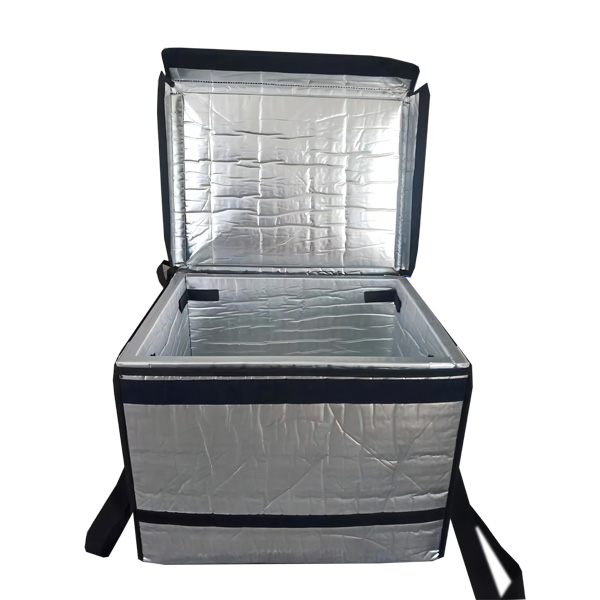
When it comes to cold chain logistics, selecting the right insulated ice box distributor is vital. Whether transporting food, pharmaceuticals, or other sensitive goods, the quality of the insulated ice box plays a crucial role in ensuring product integrity. This article will guide you through key considerations for choosing the best distributor in 2026, focusing on quality, customization, cost, and support.
Why Choosing the Right Insulated Ice Box Distributor Matters
In 2026, an insulated ice box distributor is more than a supplier. They are a critical partner in your cold chain logistics, helping ensure the safe transport of temperature-sensitive goods. The right distributor provides more than just boxes; they offer tailored solutions, reliable inventory, and robust support to maintain temperature control throughout transit.
What Does an Insulated Ice Box Distributor Do?
A distributor ensures that the ice boxes you use are not only of the highest quality but are also suited to your specific needs. This includes offering guidance on pack-out procedures, maintaining regional stock, and providing critical temperature validation. Their role extends beyond supplying boxes—they are involved in risk management and ensuring that your cold chain operations run smoothly.
Key Factors to Consider When Choosing an Insulated Ice Box Distributor
1. Reputation and Reliability
A distributor’s reputation speaks volumes about their reliability. Look for distributors with a proven track record in providing high-quality products and customer satisfaction. Reading customer reviews, checking case studies, and validating certifications like ISO or FDA compliance can help ensure the distributor meets industry standards and regulatory requirements.
2. Quality of Materials and Customization Options
The insulation material is the heart of any insulated ice box. Distributors should offer products made from high-quality materials like vacuum-insulated panels (VIPs) or polyurethane foam, which provide superior thermal resistance. Furthermore, customization options—such as temperature monitoring systems, GPS tracking, or bespoke sizes—are essential to meet your specific business needs.
3. Pricing and Cost Structure
While cost is an important factor, it shouldn’t be the deciding one. Quality matters, especially when shipping temperature-sensitive goods. Look for distributors who offer transparent pricing and bulk purchasing options. Custom features like temperature monitoring and GPS tracking may add to the cost but provide added value in ensuring product safety.
How to Evaluate Distributor Performance in 2026
1. Inventory and Lead Time Reliability
A good distributor will forecast demand, maintain safety stock, and offer realistic lead times. This ensures that you have the necessary inventory on hand when needed, reducing the risk of stockouts and delays in cold chain operations. Regional warehousing can also help minimize lead times and prevent last-minute rush shipments.
2. Pack-Out Procedures and Standard Operating Procedures (SOPs)
The best distributors will have clear and standardized pack-out procedures. SOPs, pack-out diagrams, and training materials ensure consistency in packaging and minimize human errors. A distributor with robust SOPs will help your operations maintain repeatability and accuracy, which is critical for regulatory compliance.
3. Validation and Documentation
A distributor should provide documentation and validation evidence that proves the performance of their ice boxes in real-life conditions. This includes testing for ambient temperature profiles, packing durations, and any certifications that confirm the ice boxes meet regulatory standards.
Key Features of High-Quality Insulated Ice Boxes
1. Superior Insulation Materials
High-quality insulation is the key to keeping your products at the desired temperature. Vacuum-insulated panels (VIPs) are known for providing the highest level of thermal protection, ensuring goods remain within the required temperature range for longer periods. Polyurethane foam and expanded polystyrene (EPS) are also commonly used but offer slightly lower performance than VIPs.
2. Sealing Systems and Gaskets
The quality of gaskets used to seal the ice box is crucial for maintaining internal temperature. High-quality silicone or rubber gaskets ensure a tight seal, preventing heat exchange between the box’s interior and the external environment.
3. Portability Features
Insulated ice boxes should be easy to handle and transport. Look for options that feature portability features such as handles, wheels, and stackability, making it easier for your team to move and store them during transit.
4. Temperature Monitoring Systems
For sensitive goods like pharmaceuticals, temperature deviations can be catastrophic. Distributors offering ice boxes with integrated temperature monitoring systems ensure that you can track internal conditions in real time, alerting you if any temperature fluctuations occur during transportation.
How to Minimize Costs When Buying Insulated Ice Boxes
1. Bulk Purchasing
Buying in bulk can significantly lower the price per unit. Many distributors offer discounts for large orders, making it a cost-effective option for businesses that regularly need insulated ice boxes. Bulk purchases are especially beneficial when you have a consistent volume of shipments.
2. Compare Multiple Distributors
Don’t settle for the first distributor you find. Compare prices, product features, and customer service across several options. The lowest price isn’t always the best deal if the distributor doesn’t offer high-quality products or reliable delivery times.
3. Off-Season Discounts and Rentals
Look out for off-season discounts or sales periods when distributors offer lower prices. Renting insulated ice boxes can also be a cost-effective solution for short-term needs, helping you avoid the higher upfront cost of purchasing boxes.
Practical Questions to Ask Your Distributor
When evaluating potential distributors, asking the right questions can help ensure a good fit for your cold chain logistics needs:
What stock do you maintain for my core products?
What are your real lead times in normal and peak seasons?
Do you offer regional warehousing near my lanes?
Can you support validation for my temperature and duration needs?
Do you provide standardized pack-out SOPs and training?
2026 Trends Affecting Insulated Ice Box Distribution
In 2026, cold chain logistics distributors are expected to provide more than just boxes. The focus is on reliability, real-time monitoring, and robust documentation. Regional stock hubs, reusable programs, and integrated monitoring systems are changing how distributors support your operations.
Frequently Asked Questions
Q1: What is an insulated ice box distributor?
An insulated ice box distributor provides cold chain solutions, offering high-quality insulated ice boxes with support, inventory management, and temperature control features to ensure the safe transport of temperature-sensitive goods.
Q2: How can I verify distributor claims?
Request real performance evidence, ambient profiles used in testing, and lanebased validation documentation to ensure the distributor’s products meet your temperature control needs.
Q3: What features should I look for in a high-quality insulated ice box?
Look for high-performance insulation materials like VIPs, reliable sealing systems, and temperature monitoring features for sensitive goods.
Conclusion
Choosing the right insulated ice box distributor is critical for the success of your cold chain operations. By considering factors such as material quality, customization options, and distributor reputation, you can ensure that your business receives the best products at competitive prices. Evaluate distributors carefully to ensure the safety, efficiency, and cost-effectiveness of your logistics.
Next Steps for You
Define your cold chain needs—temperature range, duration, and product type.
Use the evaluation criteria above to assess potential distributors.
Run a test order to evaluate performance and service quality.
About Tempk
At Tempk, we specialize in providing customized insulated ice boxes for cold chain logistics. Our solutions include temperature monitoring, GPS tracking, and reliable delivery to meet your cold storage needs. Contact us today to find the perfect solution for your business.
Industrial Ice Box Distributor Cost: How to Get the Best Deal in 2026?
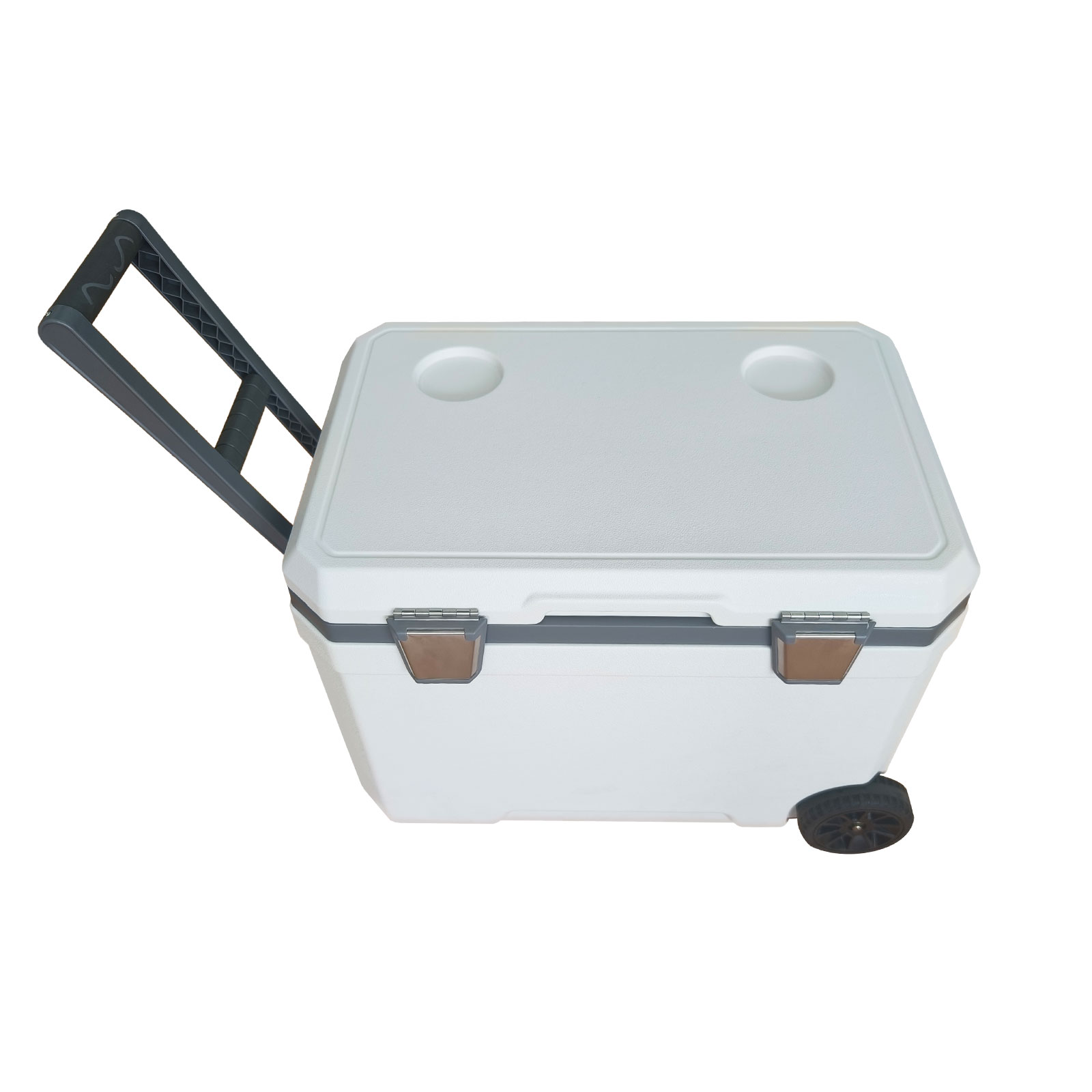
Introduction:
In 2026, understanding the costs associated with industrial ice box distribution is crucial for businesses looking to optimize their cold chain operations. The right ice box can significantly impact the efficiency and cost-effectiveness of temperature-sensitive deliveries. This article explores the factors influencing industrial ice box distributor costs, how to find the best deal, and the latest trends in the industry.
What Affects Industrial Ice Box Distributor Costs?
Material Quality: The choice of materials like high-density insulation or VIP panels can affect the cost.
Size and Capacity: Larger and higher-capacity ice boxes typically cost more.
Customization Options: Custom features, such as branding or specialized insulation, can increase the price.
Order Volume: Bulk orders often come with discounts, while smaller orders tend to be more expensive per unit.
Why Is Understanding Ice Box Distributor Cost Important for Your Business?
Key Benefits of Cost Awareness:
Optimize Your Budget: Knowing the cost helps businesses allocate funds more effectively.
Ensure ROI: A well-priced ice box can improve long-term savings by reducing energy costs.
Plan for Scaling: Understanding distributor costs is key when planning for increased inventory and distribution.
How to Evaluate Industrial Ice Box Distributor Costs?
Evaluating Distributor Costs:
When comparing industrial ice box distributors, consider the following factors:
Upfront Purchase Price: This is the initial cost per unit.
Shipping and Handling Fees: Depending on the size and weight of the ice boxes, these can add up.
Warranty and Service Costs: Look for extended warranties or service agreements that might add value.
Table: Comparing Costs of Different Ice Box Distributors
| Distributor | Unit Price | Shipping Fees | Warranty | Total Cost |
| Distributor A | $200 | $50 | 1 year | $250 |
| Distributor B | $180 | $60 | 2 years | $240 |
| Distributor C | $210 | $40 | 1 year | $250 |
How to Find the Best Deals from Ice Box Distributors?
Compare Multiple Quotes: Request quotes from several distributors to find the best price.
Look for Bulk Discounts: If your business requires multiple ice boxes, inquire about bulk pricing.
Consider Total Cost of Ownership: Factor in shipping, maintenance, and warranty in your cost comparison.
Real Case Study:
A logistics company improved its cold chain efficiency by negotiating better deals with ice box distributors, saving 15% annually on storage costs. The company was able to handle larger shipments without increasing their budget.
Key Tips for Negotiating with Ice Box Distributors
Know Your Specifications: Understand the specific requirements for your operation, whether it’s insulation type or size.
Leverage Volume: Use the potential for large orders as a negotiating tool to secure discounts.
Ask for Added Value: Negotiate for extended warranties or additional services at no extra cost.
What Are the 2026 Trends in Ice Box Distribution?
The ice box distribution industry is evolving rapidly, and several key trends are influencing costs and availability:
1. Automation and AI in Manufacturing
Trend Insight:
2026 sees increased automation in ice box manufacturing, which reduces labor costs and results in cheaper products for customers. AI-driven production lines can create more efficient, cost-effective ice boxes.
2. Sustainability and Eco-Friendly Materials
Market Insights:
Consumers and businesses alike are becoming more eco-conscious, pushing manufacturers to offer ice boxes made from recyclable or sustainable materials. These ice boxes may have a higher initial cost but often come with lower environmental and operational costs over time.
3. Advanced Insulation Technology
New Technology:
The use of vacuum insulation panels (VIP) and aerogel materials is revolutionizing ice box efficiency, making them lighter and more energy-efficient. While they are more expensive, the long-term savings from energy efficiency can make them worthwhile investments.
FAQ – Industrial Ice Box Distributor Cost
Q1: How much does a standard industrial ice box cost?
A standard industrial ice box can range from $150 to $300 per unit, depending on the size and material.
Q2: Are there any discounts for large orders?
Yes, many distributors offer bulk pricing, which can lower the per-unit cost.
Q3: What factors contribute to the overall cost?
Material quality, size, customization options, and shipping fees all influence the cost of industrial ice boxes.
Final Thoughts: How to Make the Right Choice?
In conclusion, understanding industrial ice box distributor costs involves more than just looking at the upfront price. It’s essential to factor in long-term savings from energy efficiency, durability, and customization. By carefully evaluating different distributors, negotiating terms, and considering the latest trends, you can make an informed decision that benefits your business and ensures the efficiency of your cold chain operations.
Call to Action:
Need advice on choosing the best ice boxes for your business? Contact us today for personalized recommendations!