


How to Design a 24-48 Hour Cold Chain Packout for Food Delivery and Meal Kits
How to Design a 24-48 Hour Cold Chain Packout for Food Delivery and Meal Kits
Food delivery and meal kit brands need packaging that protects food safety, product quality, and customer experience through the full delivery route. A 24-48 hour packout is not only a box with gel packs. It is a controlled system that starts with pre-chilled food, uses appropriate insulation and coolant, accounts for last-mile delay, and arrives with clean packaging, readable labels, and acceptable product temperature.
This article explains how to design a practical cold chain packout for chilled meals, meal kits, grocery products, dairy, desserts, sauces, and other temperature-sensitive foods. It uses official food safety and carrier packaging references where possible and separates source-backed parameters from design decisions that require testing.
Start with the food temperature target
FDA food safety guidance states that cold food should be kept at 40°F / 4°C or below, and that perishable food should not remain in the “Danger Zone” of 40°F to 140°F for more than 2 hours, or more than 1 hour if the temperature is above 90°F. This is a food safety reference, not a complete shipping validation protocol, but it helps define the cold chain objective for chilled food delivery.
For frozen food, FDA safe handling guidance references freezer storage at 0°F / -18°C or below. This means a chilled meal kit packout and a frozen meal packout should not be designed the same way.
Temperature and product planning table
| Product category | Practical design target | Main risk | Packaging implication |
|---|---|---|---|
| Chilled prepared meals | Keep cold, generally at or below 40°F / 4°C for food safety. | Warming during last-mile dwell, sauce leakage, tray deformation. | Gel packs, insulated liner or foam box, absorbent layer, clean carton design. |
| Dairy and fresh protein | Strong chilled protection, avoid temperature abuse. | Food safety risk and purge leakage. | Higher coolant mass, product separation, absorbent material, fast packing workflow. |
| Produce and salads | Keep cool but avoid freeze damage. | Freezing from direct gel pack contact, moisture damage. | Buffer layer, airflow control, avoid direct contact with frozen coolant. |
| Chocolate and bakery desserts | Prevent melting or deformation; often not as cold as frozen food. | Heat softening, condensation, appearance damage. | Use insulated liner, gel packs with separation, clean unboxing. |
| Frozen prepared meals | Maintain frozen arrival condition. | Thawing, refreezing, dry ice handling if used. | Strong insulation, frozen coolant strategy, possibly dry ice depending on route. |
| Meal kits with mixed ingredients | Different items may have different sensitivity. | Protein needs colder protection, produce may freeze. | Separate zones, dividers, ingredient grouping, clear packing SOP. |
Build the packout from the inside out
A food delivery packout should be designed from the payload outward.
Start with the food itself. Pack food at the correct starting temperature. Gel packs should protect the product during transit, not cool warm food down after poor warehouse handling. Then define the product arrangement. Keep fragile trays, sauces, and produce away from pressure points and direct frozen surfaces. Add a divider or buffer where freeze risk exists.
Next choose the coolant. FedEx describes gel coolants for products that need to remain between 34°F / 1°C and 50°F / 10°C. Gel packs are therefore a common choice for chilled food and meal kits. For frozen food, dry ice or a different frozen packout may be required.
Finally choose insulation. A box liner may be suitable for ecommerce meals where the brand wants flat storage and lower shipping volume. An EPS shipper may improve insulation and rigidity for longer routes. A reusable EPP box may work for local delivery loops or returnable programs.
Recommended packout layers
| Layer | Function | Design notes |
|---|---|---|
| Outer carton | Protects the shipment and carries labels. | Use enough strength for parcel compression and moisture exposure. |
| Insulated liner or foam shipper | Reduces heat gain during transit. | Choose based on hold time, storage space, cost, and sustainability goals. |
| Plastic liner | Protects carton from condensation, leaks, and product purge. | FedEx recommends plastic liners for perishable shipments. |
| Absorbent layer | Captures condensation or leakage. | Especially useful for seafood, meat, dairy, and wet products. |
| Gel packs or coolant | Absorbs heat and extends cold hold time. | Freeze or condition according to packout instruction. |
| Product chamber | Keeps food organized and prevents damage. | Use dividers or sleeves when needed. |
| Packing instruction | Controls warehouse repeatability. | Include pack order, coolant location, and close time. |
| Receiving instruction | Helps the customer judge product condition. | Include “refrigerate immediately” and cold-pack disposal guidance. |
Designing for 24 hours vs 48 hours
A 24-hour design can often use lighter insulation and less coolant than a 48-hour design, but the difference is not linear. A 48-hour parcel may pass through multiple hubs, warmer vehicles, longer dwell time, and residential delivery uncertainty. A delayed 24-hour parcel can behave like a 36-hour shipment. A Friday shipment can become a weekend problem if service fails.
For enterprise food delivery, the design target should include the service time plus a delay margin. A meal kit brand shipping in summer may need different packout versions for warm and mild seasons. A local same-day delivery route may need an insulated bag and reusable packs rather than a parcel foam shipper.
Route risk factors for meal kits and food delivery
| Risk factor | How it affects the packout | Mitigation |
|---|---|---|
| Summer last-mile heat | Increases heat gain near delivery. | More insulation, higher coolant mass, shorter delivery windows, route risk screening. |
| Doorstep dwell | Product may sit after delivery. | Add safety margin and customer instruction. |
| Weekend delay | 24-hour design may fail if delayed. | Avoid high-risk ship days or design for longer hold time. |
| Mixed ingredients | Protein, produce, and sauces have different needs. | Separate cold zones and use dividers. |
| Condensation | Wet cartons damage labels and customer experience. | Plastic liner, absorbent layer, leak-resistant packs. |
| Over-freezing | Frozen gel packs can damage produce or sauces. | Buffer layer, PCM, warmer conditioning, or indirect placement. |
Validation approach
For a new program, start with a desk design using product mass, target temperature, route duration, and insulation format. Then build a sample packout and record product and air-space temperature with data loggers. If the shipment is high volume or national, test against warm and cold profiles. ISTA 7E provides thermal transport profiles developed from real-world heat and cold data and can support more structured testing.
The validation should document product loading temperature, coolant conditioning, pack sequence, data logger location, ambient profile, and arrival condition. If the box passes only when packed by one expert, the design may fail in production. The final design should be simple enough for warehouse staff to repeat during peak demand.
Sustainability and customer experience
Food delivery brands also need to think beyond arrival temperature. Customers complain when ice packs leak, cartons arrive wet, gel disposal is confusing, or too many cold packs accumulate at home. A well-designed packout should include disposal or reuse instructions, right-sized coolant, clean liners, and packaging that does not feel excessive.
Reusable systems can work for closed-loop local delivery. Water injection ice packs can reduce inbound freight and storage volume before hydration. Recyclable liners may support sustainability goals, but they still need thermal testing. Do not replace a validated foam shipper with a lighter liner without re-testing the packout.
FAQ
Can a meal kit stay cold for 48 hours with gel packs?
It depends on payload, insulation, route, starting temperature, gel pack mass, and ambient exposure. Gel packs are commonly used for chilled shipments, but a 48-hour design should be tested under realistic conditions.
Should meal kit gel packs touch the food?
Not always. Direct contact can be useful for some chilled products but can freeze produce, sauces, or delicate foods. Use buffers or dividers when freeze risk exists.
What is the main difference between chilled and frozen meal shipping?
Chilled meals are designed to stay cold but not frozen. Frozen meals must remain frozen and may require stronger insulation, frozen PCM, or dry ice depending on the route.
How can brands reduce wet cartons?
Use leak-resistant gel packs, plastic liners, absorbent material, better coolant placement, and a carton design that keeps labels away from wet surfaces.
Final takeaway
A 24-48 hour meal kit or food delivery packout should be designed around food safety, route reality, product sensitivity, and customer experience. Start with FDA temperature references, choose a coolant and insulation system that matches the route, include moisture control, and validate the complete packout before scaling.
How Many Gel Ice Packs Do You Need for Cold Chain Shipping?
There is no universal number of gel ice packs for cold chain shipping. The correct quantity depends on the product temperature range, payload mass, carton size, insulation type, route duration, ambient exposure, gel pack size, starting temperature, and required safety margin. A small chilled meal shipment may need a different coolant-to-payload ratio than a seafood parcel, a grocery box, or a medical sample kit.
This article explains how enterprise buyers can estimate gel pack quantity before requesting samples. It does not replace thermal validation. Instead, it gives a practical framework for preparing shipment data, avoiding common under-sizing mistakes, and using a calculator or sample test more effectively.
Start with the required arrival condition
The first question is not “how many gel packs?” The first question is “what temperature must the product maintain?” A chilled food packout, a 2-8°C medical shipment, and a frozen seafood shipment require different coolant logic.
FDA food guidance states that cold food should be kept at 40°F / 4°C or below. FedEx describes gel coolants for products that should remain between 34°F / 1°C and 50°F / 10°C. For frozen food, FDA safe handling guidance references freezer storage at 0°F / -18°C or below. These source-backed values show why one gel-pack quantity cannot fit every program.
Key variables that change gel pack quantity
| Variable | Why it changes gel pack quantity | What to provide to your supplier |
|---|---|---|
| Product temperature target | Lower target temperatures usually require more coolant or stronger insulation. | Required temperature range and acceptable arrival condition. |
| Payload mass | A larger payload may hold cold longer but also requires more total heat protection. | Total product weight and product dimensions. |
| Starting temperature | Pre-chilled product needs less pull-down energy than warm product. | Product loading temperature and pre-cooling method. |
| Box size and headspace | More air space increases thermal instability and can change coolant placement. | Inner carton dimensions and product layout. |
| Insulation type | Foam box, EPP box, VIP box, or liner changes heat gain rate. | Insulation material, thickness, and whether the carton is fixed. |
| Route duration | 24-hour and 48-hour routes need different safety margins. | Door-to-door time plus possible delay. |
| Ambient exposure | Summer heat, winter freeze risk, truck dwell, airport dwell, and doorstep dwell matter. | Seasonal and lane information. |
| Gel pack size | A few large packs and many small packs can behave differently. | Pack dimensions, fill weight, and placement requirement. |
| Product sensitivity | Medicine, chocolate, produce, and salad may be damaged by direct frozen contact. | Freeze sensitivity and product separation requirement. |
A practical estimation workflow
A gel-pack estimate should be built in steps.
First, define the product target. Is the goal below 4°C, within 2-8°C, below 10°C, or simply “arrives cool”? Second, confirm the starting condition. Gel packs should not be expected to pull warm product down to safe temperature during shipping. Third, choose the insulation format. A carton liner, EPS shipper, EPP cooler, VIP box, or insulated bag will change the heat gain rate. Fourth, estimate the route time and delay margin. Fifth, select gel pack size and placement. Sixth, test the complete packout with data loggers.
The basic thermal logic is:
Required coolant capacity = heat entering through the package + heat from product and air space + handling and delay margin.
This is a planning equation, not a finished validation method. The final quantity should be confirmed with a sample packout under realistic ambient conditions.
Source-backed design references
| Reference point | Source-backed detail | How it affects gel pack planning |
|---|---|---|
| Chilled food safety | FDA says cold food should be kept at 40°F / 4°C or below. | Defines chilled food packout target and receiving acceptance checks. |
| Gel coolant use range | FedEx describes gel coolants for 34°F / 1°C to 50°F / 10°C shipments. | Helps determine whether gel packs are suitable for the requested range. |
| Foam insulation reference | FedEx recommends an insulated foam container with minimum 1.5 in / 4 cm walls for perishables. | Shows that insulation thickness can reduce the coolant burden. |
| Absorbent and liner use | FedEx recommends plastic liners and absorbent material for perishables. | Helps protect cartons from condensation and leaks. |
| Dry ice distinction | FedEx identifies dry ice for frozen shipments, not general chilled gel-pack shipments. | Prevents using gel packs where a frozen packout or dry ice design is needed. |
Gel pack placement matters as much as quantity
More gel packs do not automatically mean better performance. Placement determines how the cold source interacts with the payload and the warmest surfaces of the package. FedEx guidance for cold or frozen items recommends placing coolants on all sides and on top of the product. In practice, the best layout depends on box orientation, payload shape, and product sensitivity.
For chilled food, gel packs may be placed above and around the food to reduce heat gain from the top and sides. For medicine, a product chamber or divider may be required to prevent frozen coolant from touching the payload. For seafood, the coolant plan may prioritize direct cold contact if the product is packed to tolerate it. For chocolate or produce, buffering and separation are more important.
Example planning table for a supplier RFQ
Use the following table to prepare data before using a calculator or requesting samples. Do not use it as a validated packout specification.
| Input category | Buyer should define | Why the supplier needs it |
|---|---|---|
| Product profile | Product type, weight, loading temperature, sensitivity to freezing or moisture. | Determines coolant type and whether separation is required. |
| Temperature goal | Maximum allowed temperature at arrival and whether freeze is prohibited. | Determines gel pack temperature, quantity, and placement. |
| Shipment duration | Planned service time and realistic delay margin. | Drives total thermal capacity needed. |
| Carton and insulation | Box size, liner or foam type, wall thickness, closure style. | Determines heat gain and available space for gel packs. |
| Operating process | Warehouse freeze capacity, packout labor, pack sequence, storage before pickup. | Determines whether the design is practical at scale. |
| Acceptance method | Data logger, receiving temperature check, customer visual inspection. | Determines how performance will be verified. |
Common gel pack under-sizing mistakes
The most common mistake is designing for the carrier label time rather than the real route. A “one-day” shipment can still experience pickup delay, sorting hub dwell, hot vehicle exposure, and doorstep dwell. A second mistake is ignoring payload starting temperature. If warm product is placed into a cold box, the gel packs will be consumed cooling the product rather than protecting it through transit. A third mistake is using a thinner liner or larger carton after the original packout has already been tested.
Another common issue is freeze damage. A buyer may add extra frozen gel packs to solve summer warming, but the additional packs can freeze the product during the early hours of transit. This is especially relevant for medicine, salads, chocolate, and produce. In those cases, the packout may need PCM, a divider, a warmer gel conditioning method, or a two-stage insulation layout.
When to use a calculator and when to test
An ice pack calculator is useful for early design. It helps the buyer compare payload mass, route time, insulation format, and coolant assumptions before ordering samples. However, a calculator should not be the final acceptance method for a cold chain program. It cannot fully reproduce every carrier lane, carton orientation, warehouse process, or customer receiving condition.
Use a calculator for screening. Use sample testing for approval. Use route trials when the product is high value, regulated, perishable, or brand-sensitive.
FAQ
Can I copy the gel pack quantity used by another brand?
No. The other brand may use a different box size, product weight, insulation material, loading temperature, lane profile, or arrival requirement. Copying pack counts can create under-cooling, over-freezing, or unnecessary cost.
Should gel packs go on top or around the product?
In many parcel packouts, top exposure is important because heat can enter from the top and because packages may be handled in different orientations. FedEx recommends placing coolants on all sides and on top for cold or frozen items, but the final layout should be tested.
Do more gel packs always improve food safety?
Not always. More gel packs increase cold capacity, but they can also add weight, reduce product space, increase condensation, and freeze sensitive products. Use the minimum validated quantity with a realistic delay margin.
Can gel packs keep frozen food frozen?
Standard gel packs are often better for chilled ranges. For true frozen shipping, dry ice or a frozen PCM system may be needed depending on product, route, and insulation.
Final takeaway
The number of gel packs should be calculated from the full shipment profile: temperature target, payload mass, starting temperature, insulation, box size, route time, ambient exposure, and safety margin. Use calculators to narrow the design, then approve the final packout through sample testing or route trials. For B2B cold chain programs, the goal is repeatable in-range arrival, not simply adding the largest possible number of ice packs.
Gel Packs vs Dry Ice vs PCM Packs: How to Choose the Right Coolant for Cold Chain Shipping
Choosing a coolant is one of the most important decisions in cold chain packaging. Gel packs, dry ice, and PCM packs can all protect temperature-sensitive products, but they are not interchangeable. The right choice depends on the product temperature range, payload mass, route duration, allowable freeze risk, carrier rules, documentation needs, and customer receiving experience.
For B2B buyers, the goal is not to choose the coldest coolant. The goal is to choose the coolant that keeps the product inside its required temperature range for the required time, under realistic handling conditions, with acceptable safety, cost, compliance, and brand experience.
Quick answer
Gel packs are usually the starting point for chilled and refrigerated shipments. FedEx describes gel coolants for products that should remain between 34°F / 1°C and 50°F / 10°C. Dry ice is used when products must remain frozen, but it sublimates at -78.5°C / -109.3°F and requires venting, marking, and handling controls. PCM packs are used when the packout needs more controlled heat absorption and release around a specific phase-change range.
Source-backed coolant comparison
| Coolant type | Source-backed parameter | Best-fit cold chain use | Key risk to control |
|---|---|---|---|
| Gel pack / gel coolant | FedEx describes gel coolants for shipments that need to stay between 34°F / 1°C and 50°F / 10°C. | Chilled food, grocery, meal kits, seafood held above freezing, cosmetics, some refrigerated parcels. | Insufficient coolant mass, direct contact freeze risk, condensation, leakage, wet cartons. |
| Dry ice | USGS states dry ice sublimates at -78.5°C / -109.3°F. | Frozen food, frozen seafood, ice cream, deep-frozen materials, and lanes where gel packs cannot maintain frozen conditions. | CO2 gas pressure, ventilation, frostbite risk, over-freezing, marking, carrier acceptance. |
| PCM pack | ScienceDirect defines phase change materials as materials that absorb and release large amounts of heat during phase change, often near a stable temperature range. | 2-8°C pharma, narrow-band chilled products, controlled room-temperature programs, premium validated systems. | Incorrect phase-change temperature, poor conditioning, cost, supply specification, validation needs. |
| Water injection ice pack | Uses water or water-based coolant filled before use; final performance depends on freezing and packout design. | High-volume food and grocery programs needing lower inbound freight and easier warehouse storage before hydration. | Filling quality, seal integrity, freeze time, operator training. |
When gel packs are the right starting point
Gel packs are widely used because they are familiar, affordable, and easy to integrate with insulated bags, EPS boxes, box liners, EPP coolers, and parcel cartons. They are often the first option for chilled food, grocery delivery, prepared meals, fresh seafood, cosmetics, and refrigerated ecommerce orders.
A gel pack is appropriate when the product must stay cold but not necessarily frozen. It is also useful when the receiving customer expects a clean, non-hazardous coolant. For meal kits and grocery delivery, the end-user experience matters: the gel pack should not leak, over-wet the carton, or make disposal confusing.
However, gel packs are not a universal solution. A frozen gel pack can create local freeze points if it touches medicine, salad, chocolate, or other freeze-sensitive products. In long-distance summer parcel shipping, the gel pack mass may need to be larger than expected. In a weak insulated carton, simply adding more gel packs can make the box heavy while still failing the route.
When dry ice is still needed
Dry ice is the strongest common cold source in parcel and air shipments. It can keep products frozen where gel packs may only keep them chilled. That makes dry ice relevant for frozen seafood, ice cream, frozen meat, frozen prepared meals, and some deep-frozen lab materials.
But dry ice is not just a colder gel pack. It is solid carbon dioxide. As it sublimates, it becomes gas. Packaging must not be airtight and must allow gas release. PHMSA states that dry ice packages used as refrigerant must be designed to permit the release of gas to prevent pressure buildup and must be marked with the proper shipping name and ID number, such as “Dry ice,” UN1845, and net mass when applicable. The FAA PackSafe guidance also states that dry ice packages must not be airtight and must allow venting.
Dry ice also creates product-quality risk. It can over-freeze products, damage labels or containers by extreme cold, and create a safety issue for packers and receivers. UPS guidance for food and perishable shipments recommends keeping contents separate from dry ice and using EPS foam inside corrugated packaging.
When PCM packs are better than standard gel packs
PCM packs are useful when the customer needs better temperature control around a chosen band. A phase change material absorbs heat as it melts and releases heat as it freezes. This latent heat behavior can help reduce temperature swings when the PCM is selected and conditioned correctly.
PCM packs are often considered for 2-8°C pharmaceutical shipments, controlled chilled products, specialty biologics, and packouts where freeze damage is a major concern. They are also useful when the brand needs a documented, repeatable packout rather than a simple “add more ice” approach.
The tradeoff is that PCM packs require more precise specification. The phase-change temperature, container design, conditioning method, payload layout, and test profile must be aligned. If the PCM is conditioned incorrectly, it may not perform as intended. PCM is therefore a solution-design component, not only a commodity coolant.
Decision matrix for enterprise buyers
| Buyer question | Better starting option | Why |
|---|---|---|
| The product must arrive chilled but not frozen. | Gel pack or PCM pack | Gel packs are cost-effective; PCM may reduce freeze risk in narrower bands. |
| The product must remain hard frozen. | Dry ice or frozen PCM system | Dry ice is commonly used for frozen shipments, but requires venting and markings. |
| The shipment is a 2-8°C medicine. | PCM pack or no-freeze gel packout | The main risk is not only warming but also freezing from direct coolant contact. |
| The route is local food delivery. | Gel packs, water injection packs, insulated bags or liners | Lower regulatory complexity and better end-user handling. |
| The brand wants private-label packaging. | Gel packs, water injection packs, insulated bags | These components can support logo printing and retail-style instructions. |
| The route includes air shipment with dry ice. | Dry ice packout with compliance review | Air shipment requires venting, marking, and carrier acceptance procedures. |
| The buyer wants lower inbound freight and warehouse storage. | Water injection ice packs | Packs ship compact before filling, then are hydrated and frozen near use. |
How to think about coolant mass
Coolant mass should not be copied from a competitor’s box. The amount needed depends on product mass, starting temperature, insulation, box dimensions, ambient temperature profile, transit time, and the safety margin. A larger box with more headspace needs different coolant placement than a small insulated pouch. A refrigerated meal at 2-4°C needs a different strategy than a frozen seafood order leaving the freezer at -18°C.
For a first design, create a thermal budget using product mass, insulation type, route duration, and ambient risk. Then validate by a sample packout with a data logger. For enterprise customers, the final specification should include coolant size, quantity, conditioning time, placement, insulation format, carton size, and packing sequence.
Practical packout rules
| Rule | Application |
|---|---|
| Precondition coolant and insulation before packing. | FedEx recommends freezing gel coolants and pre-cooling the insulated container when practical. |
| Use plastic liner and absorbent material where meltwater, purge, or condensation may occur. | Helps prevent wet cartons and protects the shipping label. |
| Avoid direct contact between frozen coolant and freeze-sensitive products. | Especially important for medicine, chocolate, produce, and delicate prepared foods. |
| Allow dry ice packages to vent. | Dry ice sublimation creates gas and pressure risk. |
| Test the complete packout, not the coolant alone. | Coolant performance depends on insulation, payload, placement, and route exposure. |
FAQ
Are gel packs safer than dry ice?
For many chilled shipments, gel packs are easier to handle because they do not release carbon dioxide gas and do not require dry ice marking. However, gel packs can still leak, freeze sensitive products, or create condensation if the packout is poorly designed.
Can dry ice be used for chilled food?
It can be too cold for many chilled products. Dry ice can freeze products that should remain refrigerated. Use separation, buffering, and product-specific testing if dry ice is considered for chilled shipments.
Are PCM packs always better than gel packs?
No. PCM packs are better when their phase-change temperature and conditioning method match the shipment. For simple chilled routes, a well-tested gel pack and insulation system may be more cost-effective.
What should be tested before approval?
Test the full packout: product load, carton, insulation, coolant, placement, conditioning, route profile, and data logger location. Do not approve a coolant based only on its specification sheet.
Final takeaway
Gel packs, dry ice, and PCM packs solve different cold chain problems. Gel packs are usually best for chilled distribution, dry ice is used for frozen packouts but requires ventilation and transport controls, and PCM packs are useful when a narrower temperature band or no-freeze design is needed. The best coolant is the one that keeps the payload in range through the real route, not the one that looks coldest on paper.
Custom Cold Chain Packaging: What Information Should You Prepare Before Requesting a Quote?
Custom cold chain packaging works best when the supplier understands the shipment before recommending a box, liner, gel pack, PCM pack, dry ice system, or reusable shipper. A quote request that only says “I need an ice pack” or “I need a cold box” usually leads to repeated sampling, unclear pricing, and a higher risk of temperature failure in real distribution.
For B2B buyers, the right RFQ should describe the product risk, required temperature range, hold-time target, route profile, payload size, box size, coolant preference, regulatory needs, branding requirements, and expected monthly volume. This article gives a practical, source-backed checklist for food, pharmaceutical, frozen, grocery, meal kit, seafood, cosmetic, and laboratory sample shippers that need custom cold chain packaging.
Why a cold chain RFQ should start with the shipment, not the product
Cold chain packaging is a system. The insulation, coolant, product chamber, absorbent layer, carton strength, labeling, packing instruction, and route handling all affect the result. A gel pack that performs well in a small insulated pouch may not be enough for a larger parcel with warm last-mile dwell. A foam shipper that works for chilled food may not protect a 2-8°C medicine if the coolant touches the payload directly. A dry ice packout may keep frozen products hard, but it also requires venting and transport documentation.
When a buyer gives the supplier the correct inputs at the beginning, the supplier can narrow the design faster, estimate sample quantity, select realistic material options, and recommend a packout test path. For enterprise customers, this also creates a repeatable specification that procurement, quality, warehouse, and operations teams can approve together.
Source-backed parameters to include in your RFQ
| Parameter | Reference value or rule | Why it matters in custom packaging |
|---|---|---|
| Refrigerated food safety target | Cold food should be kept at 40°F / 4°C or below according to FDA food safety guidance. | Helps define chilled meal, dairy, meat, produce, and prepared-food packouts. |
| Frozen storage reference | FDA safe food handling guidance uses freezer storage at 0°F / -18°C or below. | Helps separate “chilled” packouts from true frozen-food packouts. |
| Gel coolant application range | FedEx describes gel coolants for products that should stay between 34°F / 1°C and 50°F / 10°C. | Helps determine when gel packs are suitable and when dry ice or a frozen PCM approach may be needed. |
| Dry ice temperature | USGS states that dry ice sublimates at -78.5°C / -109.3°F. | Explains why dry ice can freeze products and why it needs separation from sensitive payloads. |
| Vaccine refrigerated range | CDC vaccine storage guidance gives 2°C to 8°C / 36°F to 46°F for refrigerator storage. | Useful for pharma and medical cold chain RFQs, but always follow the product label. |
| Thermal test profiles | ISTA 7E provides thermal transport profiles based on real-world heat and cold exposures. | Useful when a buyer needs evidence beyond a simple sample shipment. |
| Foam shipper wall reference | FedEx recommends an insulated foam container with minimum 1.5 in / 4 cm walls for perishable shipments. | Provides a practical reference when comparing foam, liner, and reusable shipper designs. |
| Dry ice air-shipment marking | PHMSA states dry ice packages must permit gas release and show “Dry ice,” UN1845, and net mass when applicable. | Needed before quoting dry ice packouts for air or express lanes. |
RFQ checklist for custom cold chain packaging
Use the following table when preparing a request for custom gel packs, PCM packs, dry ice packs, insulated bags, insulated box liners, EPP cooler boxes, VIP medical boxes, or pallet covers.
| RFQ item | What to provide | Example of a useful answer |
|---|---|---|
| Product type | Food, pharma, seafood, frozen dessert, cosmetic, grocery, lab sample, biologic, or palletized goods. | “Prepared chilled meals in sealed trays, 1.8 kg payload per box.” |
| Required temperature range | State the temperature range and whether brief excursions are allowed. | “Maintain product below 4°C; avoid freezing the sauce cups.” |
| Product starting temperature | Chilled, frozen, room temperature, or pre-conditioned. | “Product is packed at 2-4°C after overnight refrigeration.” |
| Hold-time target | Door-to-door time plus safety margin. | “36 hours transit, design target 48 hours.” |
| Ambient risk | Summer heat, winter cold, airport dwell, weekend delay, cross-border hold, last-mile dwell. | “US summer last-mile route with potential 4-hour doorstep dwell.” |
| Payload details | Weight, dimensions, number of units, product geometry, fragile items. | “Six meal trays plus sauce cups, total 2.2 kg.” |
| Existing carton size | Inner and outer carton dimensions, if the carton is already fixed. | “Outer carton 430 x 330 x 220 mm, single-wall corrugated.” |
| Preferred insulation | Foam box, foil liner, paper liner, EPP box, VIP box, insulated bag, or no preference. | “Need flat-shipped liner to reduce warehouse space.” |
| Coolant preference | Gel pack, water injection pack, PCM pack, ice brick, dry ice, or supplier recommendation. | “Prefer gel packs, but open to PCM if freeze risk is high.” |
| Branding and OEM needs | Logo, film printing, carton printing, color coding, private-label instructions. | “Custom logo on gel pack and carton, English instruction card.” |
| Quality documentation | SDS, material declaration, temperature curve, packout instruction, arrival checklist. | “Need SDS and pilot test temperature logger curve.” |
| Volume and launch date | Sample quantity, pilot volume, monthly forecast, seasonality. | “100 samples, pilot 2,000 boxes/month, peak summer 8,000/month.” |
Temperature range should drive the packaging family
Do not choose packaging only by price or box size. The required temperature range usually decides the packaging family first.
For chilled food and grocery delivery, gel packs and insulated liners may be appropriate when the product needs to remain cold but not frozen. For frozen seafood, frozen meals, or ice cream, the design may need stronger insulation, frozen coolant mass, eutectic PCM, or dry ice depending on route length and product sensitivity. For 2-8°C medicines, the design should focus on no-freeze protection, coolant separation, logger placement, and documented packing instructions. For palletized air cargo, temperature exposure during airport dwell can be more important than the carton itself.
The route is part of the packout
Many failed cold chain shipments are not caused by a single bad product. They fail because the packout was designed for an ideal route rather than the real route. Sorting hubs, orientation changes, compression, late pickup, weekend delay, cross-border clearance, unconditioned vans, and doorstep dwell can change the thermal load.
A good RFQ should state the route type, not only the destination. For example, “48-hour parcel shipping to mixed US residential addresses in summer” is more useful than “shipping across the United States.” If the lane includes air cargo or dry ice, the RFQ should also flag the carrier rules and required markings.
What custom options can be specified
| Packaging component | Common custom options | Notes for enterprise buyers |
|---|---|---|
| Gel ice pack | Size, fill weight, film thickness, gel formula, logo printing, freezing instruction, carton packing. | Best for chilled and refrigerated packouts; test quantity by route and insulation. |
| PCM pack | Phase-change temperature, container style, fill weight, conditioning method. | Useful when the payload must stay near a narrower temperature band. |
| Water injection pack | Unfilled shipping format, hydration instruction, size, seal, carton packing. | Helps reduce inbound freight and warehouse cold-storage burden before filling. |
| Insulated box liner | Carton fit, fold style, insulation thickness, closure method, recyclable material preference. | Useful when the buyer wants to keep its existing corrugated carton. |
| EPS or EPP cooler box | Inner size, wall thickness, lid style, handle, drainage, branding, return/reuse plan. | Better when rigidity, repeated use, or higher protection is needed. |
| Thermal pallet cover | Pallet size, height, side closure, top cover, reflective layer, route exposure, reusability. | Used for air freight, warehouse dwell, and pallet-level temperature protection. |
RFQ mistakes that slow down custom projects
The first common mistake is asking for “a 48-hour solution” without stating the product mass, starting temperature, ambient profile, and acceptable arrival temperature. A second mistake is asking for the smallest possible coolant mass without acknowledging route delay. A third mistake is treating branding as a separate request after the packout has already been tested. Printed films, carton labels, and customer instructions can change how the warehouse packs and how the receiver handles the parcel.
Another mistake is requesting a quote before deciding whether the packaging is a one-way system or a reusable loop. This matters for insulation choice, durability, cleaning, warehouse storage, and return logistics. For example, a meal kit brand may prefer flat-shipped liners, while a medical logistics program may prefer reusable EPP or VIP boxes with controlled packout instructions.
FAQ
Can I request a quote without a tested packout?
Yes, but the quote will be more accurate if you provide the temperature range, payload, carton size, route duration, and expected ambient risk. For high-value pharma, frozen food, or cross-border shipments, a quote should usually be followed by sample testing.
Is a gel pack enough for 48-hour shipping?
It depends on the payload, insulation, starting temperature, ambient exposure, and acceptable arrival condition. FedEx describes gel coolants for chilled ranges, while frozen shipments may require dry ice or another frozen packout design.
What is the most important information for a 2-8°C shipment?
Provide the product label requirement, payload size, route duration, no-freeze requirement, logger requirement, and whether the coolant may touch the product. Direct contact with frozen coolant can create freeze risk.
Can custom packaging include logo printing?
Yes. Custom gel packs, insulated bags, carton labels, instruction cards, and private-label cartons can often be specified. Branding should be included before sample approval so the final packing workflow is realistic.
Do I need ISTA testing for every project?
Not every project needs full ISTA thermal testing. However, ISTA 7E and related thermal standards are useful when a customer needs a structured, evidence-based profile instead of only a trial shipment.
Final takeaway
A strong custom cold chain packaging RFQ is not a list of product names. It is a shipment profile. Before asking for samples or prices, prepare the temperature requirement, product mass, route duration, ambient risk, box size, coolant preference, insulation preference, branding needs, and documentation needs. This makes the supplier’s recommendation faster, more realistic, and easier for procurement and quality teams to approve.
How to Choose a Ultra-light EPP Insulation Box Large

How to Choose a Ultra-light EPP Insulation Box Large
If a container must protect goods more than once, buyers need a practical way to judge fit before placing a bulk order. A ultra-light EPP insulation box large should be evaluated by how it protects temperature-sensitive or damage-sensitive goods that need reusable handling, insulation support, and protective packaging, how easily teams can use it, and what evidence supports the claims made on a supplier page. For cold-chain buyers, warehouse operators, logistics managers, and B2B procurement teams, the useful question is not whether EPP sounds strong or sustainable. The useful question is whether the box fits the payload, route, handover process, cleaning routine, and purchasing plan without creating hidden work.
Quick answer: A ultra-light EPP insulation box large is worth considering when you need a light, protective, reusable packaging format for temperature-sensitive or damage-sensitive goods that need reusable handling, insulation support, and protective packaging. Before ordering, confirm usable internal space, payload fit, closure reliability, cleaning expectations, and whether stated performance is backed by relevant test or supplier documentation.
A clear definition for buyers
EPP means expanded polypropylene, a molded polypropylene foam used when buyers want low weight, impact absorption, shape recovery, and insulation support. Those properties make the material relevant to temperature-sensitive or damage-sensitive goods that need reusable handling, insulation support, and protective packaging, but material identity alone does not prove that a container is right for a shipment. Shape, wall structure, lid contact, hinges, drain or cleaning details, and payload fit all affect what the box can do in service.
In a general cold-chain or protective packaging program, the box should be matched to the product's sensitivity, the route's handling pattern, and the buyer's ability to inspect and reuse it. A practical purchase is usually based on a sample trial, a documented specification, and a clear decision about what the box is responsible for and what other parts of the packout must do.
Ultra-light boxes can reduce handling strain and return freight, but buyers still need to verify wall structure, payload fit, and thermal design.
Fit the box to the route
A route review should describe where the insulation box is packed, how long it waits before dispatch, whether it is exposed during loading, how many handovers occur, and who checks the box at receipt. If temperature control matters, the required range should come from the product owner or quality team, and any coolant, liner, data logger, or qualification step should be specified separately. A box can support the system, but it does not replace a validated packout.
Handling is where many packaging decisions succeed or fail. A box that looks strong in a sample room may be awkward when staff load it under time pressure, stack it in a van, or clean it between shifts. Grip areas, lid security, corner protection, label zones, and stacking behavior should be reviewed with the people who will touch the container every day.
The main limit is that the insulation box is not a universal answer. It cannot automatically prove food safety, pharmaceutical compliance, route qualification, or temperature stability. Those outcomes depend on product requirements, distribution lane, cleaning process, packaging accessories, monitoring method, and the documents that show how the system was tested.
What to verify before placing a bulk order
For procurement, the safest specification separates confirmed facts from assumptions. Ask for internal and external dimensions, usable payload space, closure details, material description, cleaning guidance, sample approval process, and the evidence behind any stated performance. If a supplier cannot explain the test condition behind a claim, treat that claim as a starting point for discussion rather than a purchasing guarantee.
A useful supplier conversation is specific. Instead of asking whether the box is durable, ask how durability is checked, what happens if the lid deforms, whether production units match the sample, and what documentation is available for material, dimensions, and performance claims. This gives the buyer a record that can be reviewed by operations and quality teams later.
In a general cold-chain or protective packaging program, the box should be matched to the product's sensitivity, the route's handling pattern, and the buyer's ability to inspect and reuse it. A practical purchase is usually based on a sample trial, a documented specification, and a clear decision about what the box is responsible for and what other parts of the packout must do.
Decision table for specification review
For procurement, the safest specification separates confirmed facts from assumptions. Ask for internal and external dimensions, usable payload space, closure details, material description, cleaning guidance, sample approval process, and the evidence behind any stated performance. If a supplier cannot explain the test condition behind a claim, treat that claim as a starting point for discussion rather than a purchasing guarantee.
A route review should describe where the insulation box is packed, how long it waits before dispatch, whether it is exposed during loading, how many handovers occur, and who checks the box at receipt. If temperature control matters, the required range should come from the product owner or quality team, and any coolant, liner, data logger, or qualification step should be specified separately. A box can support the system, but it does not replace a validated packout.
Handling is where many packaging decisions succeed or fail. A box that looks strong in a sample room may be awkward when staff load it under time pressure, stack it in a van, or clean it between shifts. Grip areas, lid security, corner protection, label zones, and stacking behavior should be reviewed with the people who will touch the container every day.
| Buyer question | What to check | Reason it matters |
|---|---|---|
| Will the payload actually fit? | Internal dimensions, usable space, dividers, coolant, and lid clearance. | A box that fits on paper may fail when real goods and accessories are packed. |
| Can staff handle it easily? | Grip points, lid security, stack behavior, folded size if relevant, and loaded weight. | Daily workflow determines whether the container remains practical. |
| Is the performance claim supported? | Datasheet, test report, packout condition, or supplier explanation. | Claims without conditions are hard to use in procurement or quality review. |
| Can it be reused cleanly? | Cleaning method, label removal, inspection routine, and storage after return. | Reuse depends on process control, not material alone. |
| What happens at end of life? | Local recycling route, contamination risk, take-back option, and material separation. | Recyclability only matters when recovery is possible in the buyer's system. |
The table is not a substitute for a supplier review. It is a practical way to turn vague packaging claims into questions that a buyer, quality manager, or logistics operator can verify before a purchase order is placed.
Operational risks to control
The main limit is that the insulation box is not a universal answer. It cannot automatically prove food safety, pharmaceutical compliance, route qualification, or temperature stability. Those outcomes depend on product requirements, distribution lane, cleaning process, packaging accessories, monitoring method, and the documents that show how the system was tested.
Common errors include treating gross internal volume as usable payload space, accepting a hold-time claim without the test profile, ignoring staff handling, and assuming that a clean-looking surface is enough for repeated use. Another frequent mistake is buying a foldable or portable format without checking whether the closure stays secure after repeated setup and collapse.
A route review should describe where the insulation box is packed, how long it waits before dispatch, whether it is exposed during loading, how many handovers occur, and who checks the box at receipt. If temperature control matters, the required range should come from the product owner or quality team, and any coolant, liner, data logger, or qualification step should be specified separately. A box can support the system, but it does not replace a validated packout.
When additional temperature control is needed
A route review should describe where the insulation box is packed, how long it waits before dispatch, whether it is exposed during loading, how many handovers occur, and who checks the box at receipt. If temperature control matters, the required range should come from the product owner or quality team, and any coolant, liner, data logger, or qualification step should be specified separately. A box can support the system, but it does not replace a validated packout.
Handling is where many packaging decisions succeed or fail. A box that looks strong in a sample room may be awkward when staff load it under time pressure, stack it in a van, or clean it between shifts. Grip areas, lid security, corner protection, label zones, and stacking behavior should be reviewed with the people who will touch the container every day.
The main limit is that the insulation box is not a universal answer. It cannot automatically prove food safety, pharmaceutical compliance, route qualification, or temperature stability. Those outcomes depend on product requirements, distribution lane, cleaning process, packaging accessories, monitoring method, and the documents that show how the system was tested.
Practical example
For example, a buyer may need a reusable insulated box for a repeated local delivery route. A sample looks suitable, but the real test is whether staff can pack it quickly, whether the payload leaves enough space for any coolant or divider, whether the lid stays closed after loading, and whether the box can be cleaned and returned without confusion.
From trial order to repeat use
For procurement, the safest specification separates confirmed facts from assumptions. Ask for internal and external dimensions, usable payload space, closure details, material description, cleaning guidance, sample approval process, and the evidence behind any stated performance. If a supplier cannot explain the test condition behind a claim, treat that claim as a starting point for discussion rather than a purchasing guarantee.
A route review should describe where the insulation box is packed, how long it waits before dispatch, whether it is exposed during loading, how many handovers occur, and who checks the box at receipt. If temperature control matters, the required range should come from the product owner or quality team, and any coolant, liner, data logger, or qualification step should be specified separately. A box can support the system, but it does not replace a validated packout.
Handling is where many packaging decisions succeed or fail. A box that looks strong in a sample room may be awkward when staff load it under time pressure, stack it in a van, or clean it between shifts. Grip areas, lid security, corner protection, label zones, and stacking behavior should be reviewed with the people who will touch the container every day.
Another practical check is ownership. If the insulation box is reusable, someone must own inspection, cleaning, return storage, and removal of damaged units. Without that ownership, even a strong container can become inconsistent because different teams make different decisions at different handover points.
FAQ
Is a ultra-light EPP insulation box large automatically temperature controlled?
No. It can provide insulation support, but temperature control depends on the full packout, the required product range, coolant or refrigerant choices, route exposure, closure fit, and any monitoring plan. Buyers should verify the full system instead of treating the EPP box as a standalone qualified shipper.
What should I ask a supplier before buying a ultra-light EPP insulation box large?
Ask for internal and external dimensions, usable payload space, material description, closure details, cleaning guidance, sample-to-production controls, and evidence behind any stated performance. If temperature claims are made, ask for the test profile and whether it matches your product, payload, and lane.
Can EPP packaging be reused?
EPP packaging is commonly selected for reusable handling because it is light and resilient, but reuse depends on the design and the operating process. A buyer should define cleaning, inspection, return storage, label removal, and rejection rules so damaged or contaminated units do not stay in circulation.
How should I compare EPP with disposable foam packaging?
Compare more than unit price. Consider return logistics, storage space, cleaning work, damage risk, customer presentation, waste handling, and whether the material can be recovered locally. Disposable packaging may look cheaper at first, while reusable packaging needs process discipline to create value.
When is this type of container not enough?
It is not enough when the product requires validated temperature control, regulated labeling, strict hygiene evidence, or mechanical protection that has not been tested with the real payload. In those cases, the container should be part of a broader qualified packaging and handling plan.
Conclusion
A ultra-light EPP insulation box large can be a strong choice when the material, design, and workflow all match the job. The safest decision starts with the product's sensitivity, the route, the payload, and the handling process, then moves to supplier evidence and sample review. Do not rely on broad words such as reusable, recyclable, heavy-duty, insulated, or shock resistant without asking what they mean under your conditions. If temperature protection, food safety, lab sample handling, or regulated cargo is involved, treat the insulation box as one part of a wider packaging and documentation system.
About Tempk
Tempk helps buyers discuss EPP packaging in terms that operations teams can actually use. When you evaluate a ultra-light EPP insulation box large, we can help structure the conversation around payload, route, temperature intent, handling, reuse, and supplier documentation. The goal is not to oversell a box, but to make the specification clear enough for procurement, logistics, and quality teams to review before they commit to repeat orders.
Share your payload, route, handling process, and temperature requirement with Tempk before choosing a ultra-light EPP insulation box large. A short specification review can prevent the wrong box from becoming a repeated logistics problem.
How to Choose a Shock Resistant EPP Storage Container
How to Choose a Shock Resistant EPP Storage Container
The best answer sits between material performance, route reality, and buyer discipline. A shock resistant EPP storage container should be evaluated by how it protects temperature-sensitive or damage-sensitive goods that need reusable handling, insulation support, and protective packaging, how easily teams can use it, and what evidence supports the claims made on a supplier page. For cold-chain buyers, warehouse operators, logistics managers, and B2B procurement teams, the useful question is not whether EPP sounds strong or sustainable. The useful question is whether the box fits the payload, route, handover process, cleaning routine, and purchasing plan without creating hidden work.
Quick answer: A shock resistant EPP storage container is worth considering when you need a light, protective, reusable packaging format for temperature-sensitive or damage-sensitive goods that need reusable handling, insulation support, and protective packaging. Before ordering, confirm usable internal space, payload fit, closure reliability, cleaning expectations, and whether stated performance is backed by relevant test or supplier documentation.
A clear definition for buyers
EPP means expanded polypropylene, a molded polypropylene foam used when buyers want low weight, impact absorption, shape recovery, and insulation support. Those properties make the material relevant to temperature-sensitive or damage-sensitive goods that need reusable handling, insulation support, and protective packaging, but material identity alone does not prove that a container is right for a shipment. Shape, wall structure, lid contact, hinges, drain or cleaning details, and payload fit all affect what the box can do in service.
In a general cold-chain or protective packaging program, the box should be matched to the product's sensitivity, the route's handling pattern, and the buyer's ability to inspect and reuse it. A practical purchase is usually based on a sample trial, a documented specification, and a clear decision about what the box is responsible for and what other parts of the packout must do.
Shock protection depends on geometry, closure, payload fit, drop points, stacking, and the way the container is returned.
Fit the box to the route
A route review should describe where the storage container is packed, how long it waits before dispatch, whether it is exposed during loading, how many handovers occur, and who checks the box at receipt. If temperature control matters, the required range should come from the product owner or quality team, and any coolant, liner, data logger, or qualification step should be specified separately. A box can support the system, but it does not replace a validated packout.
Handling is where many packaging decisions succeed or fail. A box that looks strong in a sample room may be awkward when staff load it under time pressure, stack it in a van, or clean it between shifts. Grip areas, lid security, corner protection, label zones, and stacking behavior should be reviewed with the people who will touch the container every day.
The main limit is that the storage container is not a universal answer. It cannot automatically prove food safety, pharmaceutical compliance, route qualification, or temperature stability. Those outcomes depend on product requirements, distribution lane, cleaning process, packaging accessories, monitoring method, and the documents that show how the system was tested.
What to verify before placing a bulk order
For procurement, the safest specification separates confirmed facts from assumptions. Ask for internal and external dimensions, usable payload space, closure details, material description, cleaning guidance, sample approval process, and the evidence behind any stated performance. If a supplier cannot explain the test condition behind a claim, treat that claim as a starting point for discussion rather than a purchasing guarantee.
A useful supplier conversation is specific. Instead of asking whether the box is durable, ask how durability is checked, what happens if the lid deforms, whether production units match the sample, and what documentation is available for material, dimensions, and performance claims. This gives the buyer a record that can be reviewed by operations and quality teams later.
In a general cold-chain or protective packaging program, the box should be matched to the product's sensitivity, the route's handling pattern, and the buyer's ability to inspect and reuse it. A practical purchase is usually based on a sample trial, a documented specification, and a clear decision about what the box is responsible for and what other parts of the packout must do.
Decision table for specification review
For procurement, the safest specification separates confirmed facts from assumptions. Ask for internal and external dimensions, usable payload space, closure details, material description, cleaning guidance, sample approval process, and the evidence behind any stated performance. If a supplier cannot explain the test condition behind a claim, treat that claim as a starting point for discussion rather than a purchasing guarantee.
A route review should describe where the storage container is packed, how long it waits before dispatch, whether it is exposed during loading, how many handovers occur, and who checks the box at receipt. If temperature control matters, the required range should come from the product owner or quality team, and any coolant, liner, data logger, or qualification step should be specified separately. A box can support the system, but it does not replace a validated packout.
Handling is where many packaging decisions succeed or fail. A box that looks strong in a sample room may be awkward when staff load it under time pressure, stack it in a van, or clean it between shifts. Grip areas, lid security, corner protection, label zones, and stacking behavior should be reviewed with the people who will touch the container every day.
| Buyer question | What to check | Reason it matters |
|---|---|---|
| Will the payload actually fit? | Internal dimensions, usable space, dividers, coolant, and lid clearance. | A box that fits on paper may fail when real goods and accessories are packed. |
| Can staff handle it easily? | Grip points, lid security, stack behavior, folded size if relevant, and loaded weight. | Daily workflow determines whether the container remains practical. |
| Is the performance claim supported? | Datasheet, test report, packout condition, or supplier explanation. | Claims without conditions are hard to use in procurement or quality review. |
| Can it be reused cleanly? | Cleaning method, label removal, inspection routine, and storage after return. | Reuse depends on process control, not material alone. |
| What happens at end of life? | Local recycling route, contamination risk, take-back option, and material separation. | Recyclability only matters when recovery is possible in the buyer's system. |
The table is not a substitute for a supplier review. It is a practical way to turn vague packaging claims into questions that a buyer, quality manager, or logistics operator can verify before a purchase order is placed.
Operational risks to control
The main limit is that the storage container is not a universal answer. It cannot automatically prove food safety, pharmaceutical compliance, route qualification, or temperature stability. Those outcomes depend on product requirements, distribution lane, cleaning process, packaging accessories, monitoring method, and the documents that show how the system was tested.
Common errors include treating gross internal volume as usable payload space, accepting a hold-time claim without the test profile, ignoring staff handling, and assuming that a clean-looking surface is enough for repeated use. Another frequent mistake is buying a foldable or portable format without checking whether the closure stays secure after repeated setup and collapse.
A route review should describe where the storage container is packed, how long it waits before dispatch, whether it is exposed during loading, how many handovers occur, and who checks the box at receipt. If temperature control matters, the required range should come from the product owner or quality team, and any coolant, liner, data logger, or qualification step should be specified separately. A box can support the system, but it does not replace a validated packout.
When additional temperature control is needed
A route review should describe where the storage container is packed, how long it waits before dispatch, whether it is exposed during loading, how many handovers occur, and who checks the box at receipt. If temperature control matters, the required range should come from the product owner or quality team, and any coolant, liner, data logger, or qualification step should be specified separately. A box can support the system, but it does not replace a validated packout.
Handling is where many packaging decisions succeed or fail. A box that looks strong in a sample room may be awkward when staff load it under time pressure, stack it in a van, or clean it between shifts. Grip areas, lid security, corner protection, label zones, and stacking behavior should be reviewed with the people who will touch the container every day.
The main limit is that the storage container is not a universal answer. It cannot automatically prove food safety, pharmaceutical compliance, route qualification, or temperature stability. Those outcomes depend on product requirements, distribution lane, cleaning process, packaging accessories, monitoring method, and the documents that show how the system was tested.
Practical example
For example, a buyer may need a reusable insulated box for a repeated local delivery route. A sample looks suitable, but the real test is whether staff can pack it quickly, whether the payload leaves enough space for any coolant or divider, whether the lid stays closed after loading, and whether the box can be cleaned and returned without confusion.
From trial order to repeat use
For procurement, the safest specification separates confirmed facts from assumptions. Ask for internal and external dimensions, usable payload space, closure details, material description, cleaning guidance, sample approval process, and the evidence behind any stated performance. If a supplier cannot explain the test condition behind a claim, treat that claim as a starting point for discussion rather than a purchasing guarantee.
A route review should describe where the storage container is packed, how long it waits before dispatch, whether it is exposed during loading, how many handovers occur, and who checks the box at receipt. If temperature control matters, the required range should come from the product owner or quality team, and any coolant, liner, data logger, or qualification step should be specified separately. A box can support the system, but it does not replace a validated packout.
Handling is where many packaging decisions succeed or fail. A box that looks strong in a sample room may be awkward when staff load it under time pressure, stack it in a van, or clean it between shifts. Grip areas, lid security, corner protection, label zones, and stacking behavior should be reviewed with the people who will touch the container every day.
Another practical check is ownership. If the storage container is reusable, someone must own inspection, cleaning, return storage, and removal of damaged units. Without that ownership, even a strong container can become inconsistent because different teams make different decisions at different handover points.
FAQ
Is a shock resistant EPP storage container automatically temperature controlled?
No. It can provide insulation support, but temperature control depends on the full packout, the required product range, coolant or refrigerant choices, route exposure, closure fit, and any monitoring plan. Buyers should verify the full system instead of treating the EPP box as a standalone qualified shipper.
What should I ask a supplier before buying a shock resistant EPP storage container?
Ask for internal and external dimensions, usable payload space, material description, closure details, cleaning guidance, sample-to-production controls, and evidence behind any stated performance. If temperature claims are made, ask for the test profile and whether it matches your product, payload, and lane.
Can EPP packaging be reused?
EPP packaging is commonly selected for reusable handling because it is light and resilient, but reuse depends on the design and the operating process. A buyer should define cleaning, inspection, return storage, label removal, and rejection rules so damaged or contaminated units do not stay in circulation.
How should I compare EPP with disposable foam packaging?
Compare more than unit price. Consider return logistics, storage space, cleaning work, damage risk, customer presentation, waste handling, and whether the material can be recovered locally. Disposable packaging may look cheaper at first, while reusable packaging needs process discipline to create value.
When is this type of container not enough?
It is not enough when the product requires validated temperature control, regulated labeling, strict hygiene evidence, or mechanical protection that has not been tested with the real payload. In those cases, the container should be part of a broader qualified packaging and handling plan.
Conclusion
A shock resistant EPP storage container can be a strong choice when the material, design, and workflow all match the job. The safest decision starts with the product's sensitivity, the route, the payload, and the handling process, then moves to supplier evidence and sample review. Do not rely on broad words such as reusable, recyclable, heavy-duty, insulated, or shock resistant without asking what they mean under your conditions. If temperature protection, food safety, lab sample handling, or regulated cargo is involved, treat the storage container as one part of a wider packaging and documentation system.
About Tempk
Tempk helps buyers discuss EPP packaging in terms that operations teams can actually use. When you evaluate a shock resistant EPP storage container, we can help structure the conversation around payload, route, temperature intent, handling, reuse, and supplier documentation. The goal is not to oversell a box, but to make the specification clear enough for procurement, logistics, and quality teams to review before they commit to repeat orders.
Share your payload, route, handling process, and temperature requirement with Tempk before choosing a shock resistant EPP storage container. A short specification review can prevent the wrong box from becoming a repeated logistics problem.
How to Choose a Reusable Insulated EPP Box Manufacturer
How to Choose a Reusable Insulated EPP Box Manufacturer
If a container must protect goods more than once, buyers need a practical way to judge fit before placing a bulk order. A reusable insulated EPP box manufacturer should be evaluated by how it protects custom or repeat-order packaging programs where buyers need design input, stable specifications, and practical communication, how easily teams can use it, and what evidence supports the claims made on a supplier page. For brand owners, importers, distributors, and sourcing teams evaluating production partners, the useful question is not whether EPP sounds strong or sustainable. The useful question is whether the box fits the payload, route, handover process, cleaning routine, and purchasing plan without creating hidden work.
Quick answer: A reusable insulated EPP box manufacturer is worth considering when you need a light, protective, reusable packaging format for custom or repeat-order packaging programs where buyers need design input, stable specifications, and practical communication. Before ordering, confirm usable internal space, payload fit, closure reliability, cleaning expectations, and whether stated performance is backed by relevant test or supplier documentation.
A clear definition for buyers
EPP means expanded polypropylene, a molded polypropylene foam used when buyers want low weight, impact absorption, shape recovery, and insulation support. Those properties make the material relevant to custom or repeat-order packaging programs where buyers need design input, stable specifications, and practical communication, but material identity alone does not prove that a container is right for a shipment. Shape, wall structure, lid contact, hinges, drain or cleaning details, and payload fit all affect what the box can do in service.
Manufacturer selection is not only a commercial question. It involves design communication, mold limitations, sample iteration, packaging drawings, batch consistency, and how changes are communicated after approval. A manufacturer should be able to discuss what can be customized and what must remain fixed for reliable performance.
A manufacturer discussion should include design constraints, tooling, specification control, packaging trials, and practical support.
Fit the box to the route
A route review should describe where the box is packed, how long it waits before dispatch, whether it is exposed during loading, how many handovers occur, and who checks the box at receipt. If temperature control matters, the required range should come from the product owner or quality team, and any coolant, liner, data logger, or qualification step should be specified separately. A box can support the system, but it does not replace a validated packout.
Handling is where many packaging decisions succeed or fail. A box that looks strong in a sample room may be awkward when staff load it under time pressure, stack it in a van, or clean it between shifts. Grip areas, lid security, corner protection, label zones, and stacking behavior should be reviewed with the people who will touch the container every day.
The main limit is that the box is not a universal answer. It cannot automatically prove food safety, pharmaceutical compliance, route qualification, or temperature stability. Those outcomes depend on product requirements, distribution lane, cleaning process, packaging accessories, monitoring method, and the documents that show how the system was tested.
What to verify before placing a bulk order
For procurement, the safest specification separates confirmed facts from assumptions. Ask for internal and external dimensions, usable payload space, closure details, material description, cleaning guidance, sample approval process, and the evidence behind any stated performance. If a supplier cannot explain the test condition behind a claim, treat that claim as a starting point for discussion rather than a purchasing guarantee.
A useful supplier conversation is specific. Instead of asking whether the box is durable, ask how durability is checked, what happens if the lid deforms, whether production units match the sample, and what documentation is available for material, dimensions, and performance claims. This gives the buyer a record that can be reviewed by operations and quality teams later.
Manufacturer selection is not only a commercial question. It involves design communication, mold limitations, sample iteration, packaging drawings, batch consistency, and how changes are communicated after approval. A manufacturer should be able to discuss what can be customized and what must remain fixed for reliable performance.
Decision table for specification review
For procurement, the safest specification separates confirmed facts from assumptions. Ask for internal and external dimensions, usable payload space, closure details, material description, cleaning guidance, sample approval process, and the evidence behind any stated performance. If a supplier cannot explain the test condition behind a claim, treat that claim as a starting point for discussion rather than a purchasing guarantee.
A route review should describe where the box is packed, how long it waits before dispatch, whether it is exposed during loading, how many handovers occur, and who checks the box at receipt. If temperature control matters, the required range should come from the product owner or quality team, and any coolant, liner, data logger, or qualification step should be specified separately. A box can support the system, but it does not replace a validated packout.
Handling is where many packaging decisions succeed or fail. A box that looks strong in a sample room may be awkward when staff load it under time pressure, stack it in a van, or clean it between shifts. Grip areas, lid security, corner protection, label zones, and stacking behavior should be reviewed with the people who will touch the container every day.
| Buyer question | What to check | Reason it matters |
|---|---|---|
| Will the payload actually fit? | Internal dimensions, usable space, dividers, coolant, and lid clearance. | A box that fits on paper may fail when real goods and accessories are packed. |
| Can staff handle it easily? | Grip points, lid security, stack behavior, folded size if relevant, and loaded weight. | Daily workflow determines whether the container remains practical. |
| Is the performance claim supported? | Datasheet, test report, packout condition, or supplier explanation. | Claims without conditions are hard to use in procurement or quality review. |
| Can it be reused cleanly? | Cleaning method, label removal, inspection routine, and storage after return. | Reuse depends on process control, not material alone. |
| What happens at end of life? | Local recycling route, contamination risk, take-back option, and material separation. | Recyclability only matters when recovery is possible in the buyer's system. |
The table is not a substitute for a supplier review. It is a practical way to turn vague packaging claims into questions that a buyer, quality manager, or logistics operator can verify before a purchase order is placed.
Operational risks to control
The main limit is that the box is not a universal answer. It cannot automatically prove food safety, pharmaceutical compliance, route qualification, or temperature stability. Those outcomes depend on product requirements, distribution lane, cleaning process, packaging accessories, monitoring method, and the documents that show how the system was tested.
Common errors include treating gross internal volume as usable payload space, accepting a hold-time claim without the test profile, ignoring staff handling, and assuming that a clean-looking surface is enough for repeated use. Another frequent mistake is buying a foldable or portable format without checking whether the closure stays secure after repeated setup and collapse.
A route review should describe where the box is packed, how long it waits before dispatch, whether it is exposed during loading, how many handovers occur, and who checks the box at receipt. If temperature control matters, the required range should come from the product owner or quality team, and any coolant, liner, data logger, or qualification step should be specified separately. A box can support the system, but it does not replace a validated packout.
When additional temperature control is needed
A route review should describe where the box is packed, how long it waits before dispatch, whether it is exposed during loading, how many handovers occur, and who checks the box at receipt. If temperature control matters, the required range should come from the product owner or quality team, and any coolant, liner, data logger, or qualification step should be specified separately. A box can support the system, but it does not replace a validated packout.
Handling is where many packaging decisions succeed or fail. A box that looks strong in a sample room may be awkward when staff load it under time pressure, stack it in a van, or clean it between shifts. Grip areas, lid security, corner protection, label zones, and stacking behavior should be reviewed with the people who will touch the container every day.
The main limit is that the box is not a universal answer. It cannot automatically prove food safety, pharmaceutical compliance, route qualification, or temperature stability. Those outcomes depend on product requirements, distribution lane, cleaning process, packaging accessories, monitoring method, and the documents that show how the system was tested.
Practical example
A sourcing team may approve a promising sample but fail to define the drawing, surface finish, packing method, or change notice process. Later, a repeat batch may still be made from the same broad concept but not behave the same in a warehouse. A stronger approval process records what the manufacturer must keep consistent and what can be adjusted.
From trial order to repeat use
For procurement, the safest specification separates confirmed facts from assumptions. Ask for internal and external dimensions, usable payload space, closure details, material description, cleaning guidance, sample approval process, and the evidence behind any stated performance. If a supplier cannot explain the test condition behind a claim, treat that claim as a starting point for discussion rather than a purchasing guarantee.
A route review should describe where the box is packed, how long it waits before dispatch, whether it is exposed during loading, how many handovers occur, and who checks the box at receipt. If temperature control matters, the required range should come from the product owner or quality team, and any coolant, liner, data logger, or qualification step should be specified separately. A box can support the system, but it does not replace a validated packout.
Handling is where many packaging decisions succeed or fail. A box that looks strong in a sample room may be awkward when staff load it under time pressure, stack it in a van, or clean it between shifts. Grip areas, lid security, corner protection, label zones, and stacking behavior should be reviewed with the people who will touch the container every day.
Another practical check is ownership. If the box is reusable, someone must own inspection, cleaning, return storage, and removal of damaged units. Without that ownership, even a strong container can become inconsistent because different teams make different decisions at different handover points.
Buyers should also review how the box will be labeled. Labels need to be readable during dispatch and receiving, but they should not make reuse difficult by leaving residue, covering inspection areas, or confusing old route information with new shipments.
FAQ
Is a reusable insulated EPP box manufacturer automatically temperature controlled?
No. It can provide insulation support, but temperature control depends on the full packout, the required product range, coolant or refrigerant choices, route exposure, closure fit, and any monitoring plan. Buyers should verify the full system instead of treating the EPP box as a standalone qualified shipper.
What should I ask a supplier before buying a reusable insulated EPP box manufacturer?
Ask for internal and external dimensions, usable payload space, material description, closure details, cleaning guidance, sample-to-production controls, and evidence behind any stated performance. If temperature claims are made, ask for the test profile and whether it matches your product, payload, and lane.
Can EPP packaging be reused?
EPP packaging is commonly selected for reusable handling because it is light and resilient, but reuse depends on the design and the operating process. A buyer should define cleaning, inspection, return storage, label removal, and rejection rules so damaged or contaminated units do not stay in circulation.
How should I compare EPP with disposable foam packaging?
Compare more than unit price. Consider return logistics, storage space, cleaning work, damage risk, customer presentation, waste handling, and whether the material can be recovered locally. Disposable packaging may look cheaper at first, while reusable packaging needs process discipline to create value.
When is this type of container not enough?
It is not enough when the product requires validated temperature control, regulated labeling, strict hygiene evidence, or mechanical protection that has not been tested with the real payload. In those cases, the container should be part of a broader qualified packaging and handling plan.
Conclusion
A reusable insulated EPP box manufacturer can be a strong choice when the material, design, and workflow all match the job. The safest decision starts with the product's sensitivity, the route, the payload, and the handling process, then moves to supplier evidence and sample review. Do not rely on broad words such as reusable, recyclable, heavy-duty, insulated, or shock resistant without asking what they mean under your conditions. If temperature protection, food safety, lab sample handling, or regulated cargo is involved, treat the box as one part of a wider packaging and documentation system.
About Tempk
Tempk helps buyers discuss EPP packaging in terms that operations teams can actually use. When you evaluate a reusable insulated EPP box manufacturer, we can help structure the conversation around payload, route, temperature intent, handling, reuse, and supplier documentation. The goal is not to oversell a box, but to make the specification clear enough for procurement, logistics, and quality teams to review before they commit to repeat orders.
Share your payload, route, handling process, and temperature requirement with Tempk before choosing a reusable insulated EPP box manufacturer. A short specification review can prevent the wrong box from becoming a repeated logistics problem.
How to Choose a Reusable EPP Foam Box
How to Choose a Reusable EPP Foam Box
If a container must protect goods more than once, buyers need a practical way to judge fit before placing a bulk order. A reusable EPP foam box should be evaluated by how it protects temperature-sensitive or damage-sensitive goods that need reusable handling, insulation support, and protective packaging, how easily teams can use it, and what evidence supports the claims made on a supplier page. For cold-chain buyers, warehouse operators, logistics managers, and B2B procurement teams, the useful question is not whether EPP sounds strong or sustainable. The useful question is whether the box fits the payload, route, handover process, cleaning routine, and purchasing plan without creating hidden work.
Quick answer: A reusable EPP foam box is worth considering when you need a light, protective, reusable packaging format for temperature-sensitive or damage-sensitive goods that need reusable handling, insulation support, and protective packaging. Before ordering, confirm usable internal space, payload fit, closure reliability, cleaning expectations, and whether stated performance is backed by relevant test or supplier documentation.
A clear definition for buyers
EPP means expanded polypropylene, a molded polypropylene foam used when buyers want low weight, impact absorption, shape recovery, and insulation support. Those properties make the material relevant to temperature-sensitive or damage-sensitive goods that need reusable handling, insulation support, and protective packaging, but material identity alone does not prove that a container is right for a shipment. Shape, wall structure, lid contact, hinges, drain or cleaning details, and payload fit all affect what the box can do in service.
In a general cold-chain or protective packaging program, the box should be matched to the product's sensitivity, the route's handling pattern, and the buyer's ability to inspect and reuse it. A practical purchase is usually based on a sample trial, a documented specification, and a clear decision about what the box is responsible for and what other parts of the packout must do.
Reusable packaging creates value when cleaning, inspection, return routing, and ownership responsibility are designed from the start.
Fit the box to the route
A route review should describe where the foam box is packed, how long it waits before dispatch, whether it is exposed during loading, how many handovers occur, and who checks the box at receipt. If temperature control matters, the required range should come from the product owner or quality team, and any coolant, liner, data logger, or qualification step should be specified separately. A box can support the system, but it does not replace a validated packout.
Handling is where many packaging decisions succeed or fail. A box that looks strong in a sample room may be awkward when staff load it under time pressure, stack it in a van, or clean it between shifts. Grip areas, lid security, corner protection, label zones, and stacking behavior should be reviewed with the people who will touch the container every day.
The main limit is that the foam box is not a universal answer. It cannot automatically prove food safety, pharmaceutical compliance, route qualification, or temperature stability. Those outcomes depend on product requirements, distribution lane, cleaning process, packaging accessories, monitoring method, and the documents that show how the system was tested.
What to verify before placing a bulk order
For procurement, the safest specification separates confirmed facts from assumptions. Ask for internal and external dimensions, usable payload space, closure details, material description, cleaning guidance, sample approval process, and the evidence behind any stated performance. If a supplier cannot explain the test condition behind a claim, treat that claim as a starting point for discussion rather than a purchasing guarantee.
A useful supplier conversation is specific. Instead of asking whether the box is durable, ask how durability is checked, what happens if the lid deforms, whether production units match the sample, and what documentation is available for material, dimensions, and performance claims. This gives the buyer a record that can be reviewed by operations and quality teams later.
In a general cold-chain or protective packaging program, the box should be matched to the product's sensitivity, the route's handling pattern, and the buyer's ability to inspect and reuse it. A practical purchase is usually based on a sample trial, a documented specification, and a clear decision about what the box is responsible for and what other parts of the packout must do.
Decision table for specification review
For procurement, the safest specification separates confirmed facts from assumptions. Ask for internal and external dimensions, usable payload space, closure details, material description, cleaning guidance, sample approval process, and the evidence behind any stated performance. If a supplier cannot explain the test condition behind a claim, treat that claim as a starting point for discussion rather than a purchasing guarantee.
A route review should describe where the foam box is packed, how long it waits before dispatch, whether it is exposed during loading, how many handovers occur, and who checks the box at receipt. If temperature control matters, the required range should come from the product owner or quality team, and any coolant, liner, data logger, or qualification step should be specified separately. A box can support the system, but it does not replace a validated packout.
Handling is where many packaging decisions succeed or fail. A box that looks strong in a sample room may be awkward when staff load it under time pressure, stack it in a van, or clean it between shifts. Grip areas, lid security, corner protection, label zones, and stacking behavior should be reviewed with the people who will touch the container every day.
| Buyer question | What to check | Reason it matters |
|---|---|---|
| Will the payload actually fit? | Internal dimensions, usable space, dividers, coolant, and lid clearance. | A box that fits on paper may fail when real goods and accessories are packed. |
| Can staff handle it easily? | Grip points, lid security, stack behavior, folded size if relevant, and loaded weight. | Daily workflow determines whether the container remains practical. |
| Is the performance claim supported? | Datasheet, test report, packout condition, or supplier explanation. | Claims without conditions are hard to use in procurement or quality review. |
| Can it be reused cleanly? | Cleaning method, label removal, inspection routine, and storage after return. | Reuse depends on process control, not material alone. |
| What happens at end of life? | Local recycling route, contamination risk, take-back option, and material separation. | Recyclability only matters when recovery is possible in the buyer's system. |
The table is not a substitute for a supplier review. It is a practical way to turn vague packaging claims into questions that a buyer, quality manager, or logistics operator can verify before a purchase order is placed.
Operational risks to control
The main limit is that the foam box is not a universal answer. It cannot automatically prove food safety, pharmaceutical compliance, route qualification, or temperature stability. Those outcomes depend on product requirements, distribution lane, cleaning process, packaging accessories, monitoring method, and the documents that show how the system was tested.
Common errors include treating gross internal volume as usable payload space, accepting a hold-time claim without the test profile, ignoring staff handling, and assuming that a clean-looking surface is enough for repeated use. Another frequent mistake is buying a foldable or portable format without checking whether the closure stays secure after repeated setup and collapse.
A route review should describe where the foam box is packed, how long it waits before dispatch, whether it is exposed during loading, how many handovers occur, and who checks the box at receipt. If temperature control matters, the required range should come from the product owner or quality team, and any coolant, liner, data logger, or qualification step should be specified separately. A box can support the system, but it does not replace a validated packout.
When additional temperature control is needed
A route review should describe where the foam box is packed, how long it waits before dispatch, whether it is exposed during loading, how many handovers occur, and who checks the box at receipt. If temperature control matters, the required range should come from the product owner or quality team, and any coolant, liner, data logger, or qualification step should be specified separately. A box can support the system, but it does not replace a validated packout.
Handling is where many packaging decisions succeed or fail. A box that looks strong in a sample room may be awkward when staff load it under time pressure, stack it in a van, or clean it between shifts. Grip areas, lid security, corner protection, label zones, and stacking behavior should be reviewed with the people who will touch the container every day.
The main limit is that the foam box is not a universal answer. It cannot automatically prove food safety, pharmaceutical compliance, route qualification, or temperature stability. Those outcomes depend on product requirements, distribution lane, cleaning process, packaging accessories, monitoring method, and the documents that show how the system was tested.
Practical example
For example, a buyer may need a reusable insulated box for a repeated local delivery route. A sample looks suitable, but the real test is whether staff can pack it quickly, whether the payload leaves enough space for any coolant or divider, whether the lid stays closed after loading, and whether the box can be cleaned and returned without confusion.
From trial order to repeat use
For procurement, the safest specification separates confirmed facts from assumptions. Ask for internal and external dimensions, usable payload space, closure details, material description, cleaning guidance, sample approval process, and the evidence behind any stated performance. If a supplier cannot explain the test condition behind a claim, treat that claim as a starting point for discussion rather than a purchasing guarantee.
A route review should describe where the foam box is packed, how long it waits before dispatch, whether it is exposed during loading, how many handovers occur, and who checks the box at receipt. If temperature control matters, the required range should come from the product owner or quality team, and any coolant, liner, data logger, or qualification step should be specified separately. A box can support the system, but it does not replace a validated packout.
Handling is where many packaging decisions succeed or fail. A box that looks strong in a sample room may be awkward when staff load it under time pressure, stack it in a van, or clean it between shifts. Grip areas, lid security, corner protection, label zones, and stacking behavior should be reviewed with the people who will touch the container every day.
Another practical check is ownership. If the foam box is reusable, someone must own inspection, cleaning, return storage, and removal of damaged units. Without that ownership, even a strong container can become inconsistent because different teams make different decisions at different handover points.
FAQ
Is a reusable EPP foam box automatically temperature controlled?
No. It can provide insulation support, but temperature control depends on the full packout, the required product range, coolant or refrigerant choices, route exposure, closure fit, and any monitoring plan. Buyers should verify the full system instead of treating the EPP box as a standalone qualified shipper.
What should I ask a supplier before buying a reusable EPP foam box?
Ask for internal and external dimensions, usable payload space, material description, closure details, cleaning guidance, sample-to-production controls, and evidence behind any stated performance. If temperature claims are made, ask for the test profile and whether it matches your product, payload, and lane.
Can EPP packaging be reused?
EPP packaging is commonly selected for reusable handling because it is light and resilient, but reuse depends on the design and the operating process. A buyer should define cleaning, inspection, return storage, label removal, and rejection rules so damaged or contaminated units do not stay in circulation.
How should I compare EPP with disposable foam packaging?
Compare more than unit price. Consider return logistics, storage space, cleaning work, damage risk, customer presentation, waste handling, and whether the material can be recovered locally. Disposable packaging may look cheaper at first, while reusable packaging needs process discipline to create value.
When is this type of container not enough?
It is not enough when the product requires validated temperature control, regulated labeling, strict hygiene evidence, or mechanical protection that has not been tested with the real payload. In those cases, the container should be part of a broader qualified packaging and handling plan.
Conclusion
A reusable EPP foam box can be a strong choice when the material, design, and workflow all match the job. The safest decision starts with the product's sensitivity, the route, the payload, and the handling process, then moves to supplier evidence and sample review. Do not rely on broad words such as reusable, recyclable, heavy-duty, insulated, or shock resistant without asking what they mean under your conditions. If temperature protection, food safety, lab sample handling, or regulated cargo is involved, treat the foam box as one part of a wider packaging and documentation system.
About Tempk
Tempk helps buyers discuss EPP packaging in terms that operations teams can actually use. When you evaluate a reusable EPP foam box, we can help structure the conversation around payload, route, temperature intent, handling, reuse, and supplier documentation. The goal is not to oversell a box, but to make the specification clear enough for procurement, logistics, and quality teams to review before they commit to repeat orders.
Share your payload, route, handling process, and temperature requirement with Tempk before choosing a reusable EPP foam box. A short specification review can prevent the wrong box from becoming a repeated logistics problem.
How to Choose a Recyclable EPP Insulation Box

How to Choose a Recyclable EPP Insulation Box
The best answer sits between material performance, route reality, and buyer discipline. A recyclable EPP insulation box should be evaluated by how it protects temperature-sensitive or damage-sensitive goods that need reusable handling, insulation support, and protective packaging, how easily teams can use it, and what evidence supports the claims made on a supplier page. For cold-chain buyers, warehouse operators, logistics managers, and B2B procurement teams, the useful question is not whether EPP sounds strong or sustainable. The useful question is whether the box fits the payload, route, handover process, cleaning routine, and purchasing plan without creating hidden work.
Quick answer: A recyclable EPP insulation box is worth considering when you need a light, protective, reusable packaging format for temperature-sensitive or damage-sensitive goods that need reusable handling, insulation support, and protective packaging. Before ordering, confirm usable internal space, payload fit, closure reliability, cleaning expectations, and whether stated performance is backed by relevant test or supplier documentation.
A clear definition for buyers
EPP means expanded polypropylene, a molded polypropylene foam used when buyers want low weight, impact absorption, shape recovery, and insulation support. Those properties make the material relevant to temperature-sensitive or damage-sensitive goods that need reusable handling, insulation support, and protective packaging, but material identity alone does not prove that a container is right for a shipment. Shape, wall structure, lid contact, hinges, drain or cleaning details, and payload fit all affect what the box can do in service.
In a general cold-chain or protective packaging program, the box should be matched to the product's sensitivity, the route's handling pattern, and the buyer's ability to inspect and reuse it. A practical purchase is usually based on a sample trial, a documented specification, and a clear decision about what the box is responsible for and what other parts of the packout must do.
Recyclability is useful only when the container remains clean enough and the local recycling or take-back route can actually accept the material.
Fit the box to the route
A route review should describe where the insulation box is packed, how long it waits before dispatch, whether it is exposed during loading, how many handovers occur, and who checks the box at receipt. If temperature control matters, the required range should come from the product owner or quality team, and any coolant, liner, data logger, or qualification step should be specified separately. A box can support the system, but it does not replace a validated packout.
Handling is where many packaging decisions succeed or fail. A box that looks strong in a sample room may be awkward when staff load it under time pressure, stack it in a van, or clean it between shifts. Grip areas, lid security, corner protection, label zones, and stacking behavior should be reviewed with the people who will touch the container every day.
The main limit is that the insulation box is not a universal answer. It cannot automatically prove food safety, pharmaceutical compliance, route qualification, or temperature stability. Those outcomes depend on product requirements, distribution lane, cleaning process, packaging accessories, monitoring method, and the documents that show how the system was tested.
What to verify before placing a bulk order
For procurement, the safest specification separates confirmed facts from assumptions. Ask for internal and external dimensions, usable payload space, closure details, material description, cleaning guidance, sample approval process, and the evidence behind any stated performance. If a supplier cannot explain the test condition behind a claim, treat that claim as a starting point for discussion rather than a purchasing guarantee.
A useful supplier conversation is specific. Instead of asking whether the box is durable, ask how durability is checked, what happens if the lid deforms, whether production units match the sample, and what documentation is available for material, dimensions, and performance claims. This gives the buyer a record that can be reviewed by operations and quality teams later.
In a general cold-chain or protective packaging program, the box should be matched to the product's sensitivity, the route's handling pattern, and the buyer's ability to inspect and reuse it. A practical purchase is usually based on a sample trial, a documented specification, and a clear decision about what the box is responsible for and what other parts of the packout must do.
Decision table for specification review
For procurement, the safest specification separates confirmed facts from assumptions. Ask for internal and external dimensions, usable payload space, closure details, material description, cleaning guidance, sample approval process, and the evidence behind any stated performance. If a supplier cannot explain the test condition behind a claim, treat that claim as a starting point for discussion rather than a purchasing guarantee.
A route review should describe where the insulation box is packed, how long it waits before dispatch, whether it is exposed during loading, how many handovers occur, and who checks the box at receipt. If temperature control matters, the required range should come from the product owner or quality team, and any coolant, liner, data logger, or qualification step should be specified separately. A box can support the system, but it does not replace a validated packout.
Handling is where many packaging decisions succeed or fail. A box that looks strong in a sample room may be awkward when staff load it under time pressure, stack it in a van, or clean it between shifts. Grip areas, lid security, corner protection, label zones, and stacking behavior should be reviewed with the people who will touch the container every day.
| Buyer question | What to check | Reason it matters |
|---|---|---|
| Will the payload actually fit? | Internal dimensions, usable space, dividers, coolant, and lid clearance. | A box that fits on paper may fail when real goods and accessories are packed. |
| Can staff handle it easily? | Grip points, lid security, stack behavior, folded size if relevant, and loaded weight. | Daily workflow determines whether the container remains practical. |
| Is the performance claim supported? | Datasheet, test report, packout condition, or supplier explanation. | Claims without conditions are hard to use in procurement or quality review. |
| Can it be reused cleanly? | Cleaning method, label removal, inspection routine, and storage after return. | Reuse depends on process control, not material alone. |
| What happens at end of life? | Local recycling route, contamination risk, take-back option, and material separation. | Recyclability only matters when recovery is possible in the buyer's system. |
The table is not a substitute for a supplier review. It is a practical way to turn vague packaging claims into questions that a buyer, quality manager, or logistics operator can verify before a purchase order is placed.
Operational risks to control
The main limit is that the insulation box is not a universal answer. It cannot automatically prove food safety, pharmaceutical compliance, route qualification, or temperature stability. Those outcomes depend on product requirements, distribution lane, cleaning process, packaging accessories, monitoring method, and the documents that show how the system was tested.
Common errors include treating gross internal volume as usable payload space, accepting a hold-time claim without the test profile, ignoring staff handling, and assuming that a clean-looking surface is enough for repeated use. Another frequent mistake is buying a foldable or portable format without checking whether the closure stays secure after repeated setup and collapse.
A route review should describe where the insulation box is packed, how long it waits before dispatch, whether it is exposed during loading, how many handovers occur, and who checks the box at receipt. If temperature control matters, the required range should come from the product owner or quality team, and any coolant, liner, data logger, or qualification step should be specified separately. A box can support the system, but it does not replace a validated packout.
When additional temperature control is needed
A route review should describe where the insulation box is packed, how long it waits before dispatch, whether it is exposed during loading, how many handovers occur, and who checks the box at receipt. If temperature control matters, the required range should come from the product owner or quality team, and any coolant, liner, data logger, or qualification step should be specified separately. A box can support the system, but it does not replace a validated packout.
Handling is where many packaging decisions succeed or fail. A box that looks strong in a sample room may be awkward when staff load it under time pressure, stack it in a van, or clean it between shifts. Grip areas, lid security, corner protection, label zones, and stacking behavior should be reviewed with the people who will touch the container every day.
The main limit is that the insulation box is not a universal answer. It cannot automatically prove food safety, pharmaceutical compliance, route qualification, or temperature stability. Those outcomes depend on product requirements, distribution lane, cleaning process, packaging accessories, monitoring method, and the documents that show how the system was tested.
Practical example
For example, a buyer may need a reusable insulated box for a repeated local delivery route. A sample looks suitable, but the real test is whether staff can pack it quickly, whether the payload leaves enough space for any coolant or divider, whether the lid stays closed after loading, and whether the box can be cleaned and returned without confusion.
From trial order to repeat use
For procurement, the safest specification separates confirmed facts from assumptions. Ask for internal and external dimensions, usable payload space, closure details, material description, cleaning guidance, sample approval process, and the evidence behind any stated performance. If a supplier cannot explain the test condition behind a claim, treat that claim as a starting point for discussion rather than a purchasing guarantee.
A route review should describe where the insulation box is packed, how long it waits before dispatch, whether it is exposed during loading, how many handovers occur, and who checks the box at receipt. If temperature control matters, the required range should come from the product owner or quality team, and any coolant, liner, data logger, or qualification step should be specified separately. A box can support the system, but it does not replace a validated packout.
Handling is where many packaging decisions succeed or fail. A box that looks strong in a sample room may be awkward when staff load it under time pressure, stack it in a van, or clean it between shifts. Grip areas, lid security, corner protection, label zones, and stacking behavior should be reviewed with the people who will touch the container every day.
Another practical check is ownership. If the insulation box is reusable, someone must own inspection, cleaning, return storage, and removal of damaged units. Without that ownership, even a strong container can become inconsistent because different teams make different decisions at different handover points.
FAQ
Is a recyclable EPP insulation box automatically temperature controlled?
No. It can provide insulation support, but temperature control depends on the full packout, the required product range, coolant or refrigerant choices, route exposure, closure fit, and any monitoring plan. Buyers should verify the full system instead of treating the EPP box as a standalone qualified shipper.
What should I ask a supplier before buying a recyclable EPP insulation box?
Ask for internal and external dimensions, usable payload space, material description, closure details, cleaning guidance, sample-to-production controls, and evidence behind any stated performance. If temperature claims are made, ask for the test profile and whether it matches your product, payload, and lane.
Can EPP packaging be reused?
EPP packaging is commonly selected for reusable handling because it is light and resilient, but reuse depends on the design and the operating process. A buyer should define cleaning, inspection, return storage, label removal, and rejection rules so damaged or contaminated units do not stay in circulation.
How should I compare EPP with disposable foam packaging?
Compare more than unit price. Consider return logistics, storage space, cleaning work, damage risk, customer presentation, waste handling, and whether the material can be recovered locally. Disposable packaging may look cheaper at first, while reusable packaging needs process discipline to create value.
When is this type of container not enough?
It is not enough when the product requires validated temperature control, regulated labeling, strict hygiene evidence, or mechanical protection that has not been tested with the real payload. In those cases, the container should be part of a broader qualified packaging and handling plan.
Conclusion
A recyclable EPP insulation box can be a strong choice when the material, design, and workflow all match the job. The safest decision starts with the product's sensitivity, the route, the payload, and the handling process, then moves to supplier evidence and sample review. Do not rely on broad words such as reusable, recyclable, heavy-duty, insulated, or shock resistant without asking what they mean under your conditions. If temperature protection, food safety, lab sample handling, or regulated cargo is involved, treat the insulation box as one part of a wider packaging and documentation system.
About Tempk
Tempk helps buyers discuss EPP packaging in terms that operations teams can actually use. When you evaluate a recyclable EPP insulation box, we can help structure the conversation around payload, route, temperature intent, handling, reuse, and supplier documentation. The goal is not to oversell a box, but to make the specification clear enough for procurement, logistics, and quality teams to review before they commit to repeat orders.
Share your payload, route, handling process, and temperature requirement with Tempk before choosing a recyclable EPP insulation box. A short specification review can prevent the wrong box from becoming a repeated logistics problem.
How to Choose a Portable EPP Foam Box
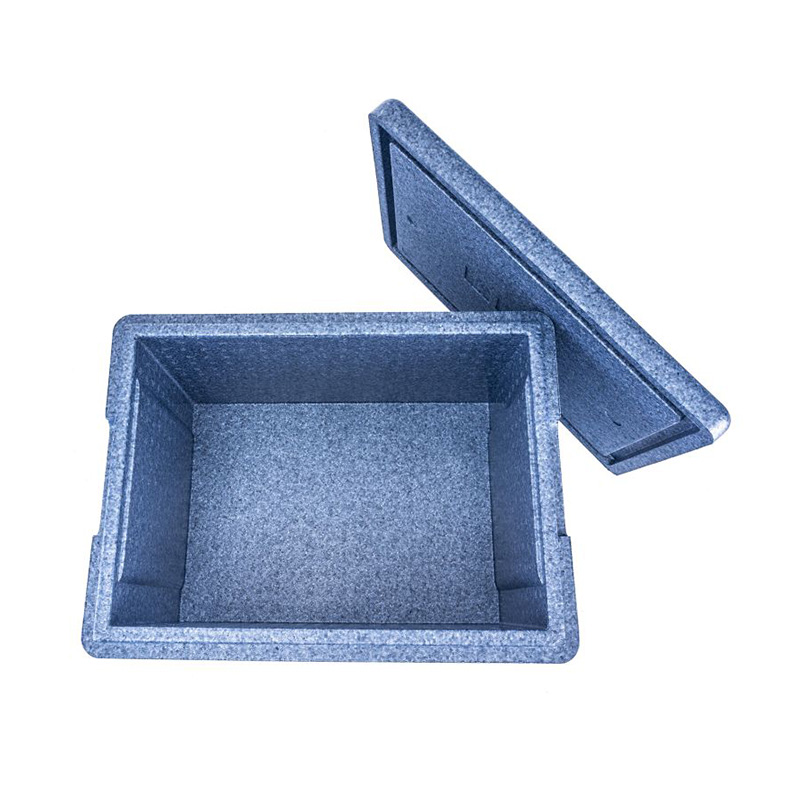
How to Choose a Portable EPP Foam Box
If a container must protect goods more than once, buyers need a practical way to judge fit before placing a bulk order. A portable EPP foam box should be evaluated by how it protects temperature-sensitive or damage-sensitive goods that need reusable handling, insulation support, and protective packaging, how easily teams can use it, and what evidence supports the claims made on a supplier page. For cold-chain buyers, warehouse operators, logistics managers, and B2B procurement teams, the useful question is not whether EPP sounds strong or sustainable. The useful question is whether the box fits the payload, route, handover process, cleaning routine, and purchasing plan without creating hidden work.
Quick answer: A portable EPP foam box is worth considering when you need a light, protective, reusable packaging format for temperature-sensitive or damage-sensitive goods that need reusable handling, insulation support, and protective packaging. Before ordering, confirm usable internal space, payload fit, closure reliability, cleaning expectations, and whether stated performance is backed by relevant test or supplier documentation.
A clear definition for buyers
EPP means expanded polypropylene, a molded polypropylene foam used when buyers want low weight, impact absorption, shape recovery, and insulation support. Those properties make the material relevant to temperature-sensitive or damage-sensitive goods that need reusable handling, insulation support, and protective packaging, but material identity alone does not prove that a container is right for a shipment. Shape, wall structure, lid contact, hinges, drain or cleaning details, and payload fit all affect what the box can do in service.
In a general cold-chain or protective packaging program, the box should be matched to the product's sensitivity, the route's handling pattern, and the buyer's ability to inspect and reuse it. A practical purchase is usually based on a sample trial, a documented specification, and a clear decision about what the box is responsible for and what other parts of the packout must do.
Portability is about carrying comfort, route length, lid security, cleaning, and whether staff can handle the box under time pressure.
Fit the box to the route
A route review should describe where the foam box is packed, how long it waits before dispatch, whether it is exposed during loading, how many handovers occur, and who checks the box at receipt. If temperature control matters, the required range should come from the product owner or quality team, and any coolant, liner, data logger, or qualification step should be specified separately. A box can support the system, but it does not replace a validated packout.
Handling is where many packaging decisions succeed or fail. A box that looks strong in a sample room may be awkward when staff load it under time pressure, stack it in a van, or clean it between shifts. Grip areas, lid security, corner protection, label zones, and stacking behavior should be reviewed with the people who will touch the container every day.
The main limit is that the foam box is not a universal answer. It cannot automatically prove food safety, pharmaceutical compliance, route qualification, or temperature stability. Those outcomes depend on product requirements, distribution lane, cleaning process, packaging accessories, monitoring method, and the documents that show how the system was tested.
What to verify before placing a bulk order
For procurement, the safest specification separates confirmed facts from assumptions. Ask for internal and external dimensions, usable payload space, closure details, material description, cleaning guidance, sample approval process, and the evidence behind any stated performance. If a supplier cannot explain the test condition behind a claim, treat that claim as a starting point for discussion rather than a purchasing guarantee.
A useful supplier conversation is specific. Instead of asking whether the box is durable, ask how durability is checked, what happens if the lid deforms, whether production units match the sample, and what documentation is available for material, dimensions, and performance claims. This gives the buyer a record that can be reviewed by operations and quality teams later.
In a general cold-chain or protective packaging program, the box should be matched to the product's sensitivity, the route's handling pattern, and the buyer's ability to inspect and reuse it. A practical purchase is usually based on a sample trial, a documented specification, and a clear decision about what the box is responsible for and what other parts of the packout must do.
Decision table for specification review
For procurement, the safest specification separates confirmed facts from assumptions. Ask for internal and external dimensions, usable payload space, closure details, material description, cleaning guidance, sample approval process, and the evidence behind any stated performance. If a supplier cannot explain the test condition behind a claim, treat that claim as a starting point for discussion rather than a purchasing guarantee.
A route review should describe where the foam box is packed, how long it waits before dispatch, whether it is exposed during loading, how many handovers occur, and who checks the box at receipt. If temperature control matters, the required range should come from the product owner or quality team, and any coolant, liner, data logger, or qualification step should be specified separately. A box can support the system, but it does not replace a validated packout.
Handling is where many packaging decisions succeed or fail. A box that looks strong in a sample room may be awkward when staff load it under time pressure, stack it in a van, or clean it between shifts. Grip areas, lid security, corner protection, label zones, and stacking behavior should be reviewed with the people who will touch the container every day.
| Buyer question | What to check | Reason it matters |
|---|---|---|
| Will the payload actually fit? | Internal dimensions, usable space, dividers, coolant, and lid clearance. | A box that fits on paper may fail when real goods and accessories are packed. |
| Can staff handle it easily? | Grip points, lid security, stack behavior, folded size if relevant, and loaded weight. | Daily workflow determines whether the container remains practical. |
| Is the performance claim supported? | Datasheet, test report, packout condition, or supplier explanation. | Claims without conditions are hard to use in procurement or quality review. |
| Can it be reused cleanly? | Cleaning method, label removal, inspection routine, and storage after return. | Reuse depends on process control, not material alone. |
| What happens at end of life? | Local recycling route, contamination risk, take-back option, and material separation. | Recyclability only matters when recovery is possible in the buyer's system. |
The table is not a substitute for a supplier review. It is a practical way to turn vague packaging claims into questions that a buyer, quality manager, or logistics operator can verify before a purchase order is placed.
Operational risks to control
The main limit is that the foam box is not a universal answer. It cannot automatically prove food safety, pharmaceutical compliance, route qualification, or temperature stability. Those outcomes depend on product requirements, distribution lane, cleaning process, packaging accessories, monitoring method, and the documents that show how the system was tested.
Common errors include treating gross internal volume as usable payload space, accepting a hold-time claim without the test profile, ignoring staff handling, and assuming that a clean-looking surface is enough for repeated use. Another frequent mistake is buying a foldable or portable format without checking whether the closure stays secure after repeated setup and collapse.
A route review should describe where the foam box is packed, how long it waits before dispatch, whether it is exposed during loading, how many handovers occur, and who checks the box at receipt. If temperature control matters, the required range should come from the product owner or quality team, and any coolant, liner, data logger, or qualification step should be specified separately. A box can support the system, but it does not replace a validated packout.
When additional temperature control is needed
A route review should describe where the foam box is packed, how long it waits before dispatch, whether it is exposed during loading, how many handovers occur, and who checks the box at receipt. If temperature control matters, the required range should come from the product owner or quality team, and any coolant, liner, data logger, or qualification step should be specified separately. A box can support the system, but it does not replace a validated packout.
Handling is where many packaging decisions succeed or fail. A box that looks strong in a sample room may be awkward when staff load it under time pressure, stack it in a van, or clean it between shifts. Grip areas, lid security, corner protection, label zones, and stacking behavior should be reviewed with the people who will touch the container every day.
The main limit is that the foam box is not a universal answer. It cannot automatically prove food safety, pharmaceutical compliance, route qualification, or temperature stability. Those outcomes depend on product requirements, distribution lane, cleaning process, packaging accessories, monitoring method, and the documents that show how the system was tested.
Practical example
For example, a buyer may need a reusable insulated box for a repeated local delivery route. A sample looks suitable, but the real test is whether staff can pack it quickly, whether the payload leaves enough space for any coolant or divider, whether the lid stays closed after loading, and whether the box can be cleaned and returned without confusion.
From trial order to repeat use
For procurement, the safest specification separates confirmed facts from assumptions. Ask for internal and external dimensions, usable payload space, closure details, material description, cleaning guidance, sample approval process, and the evidence behind any stated performance. If a supplier cannot explain the test condition behind a claim, treat that claim as a starting point for discussion rather than a purchasing guarantee.
A route review should describe where the foam box is packed, how long it waits before dispatch, whether it is exposed during loading, how many handovers occur, and who checks the box at receipt. If temperature control matters, the required range should come from the product owner or quality team, and any coolant, liner, data logger, or qualification step should be specified separately. A box can support the system, but it does not replace a validated packout.
Handling is where many packaging decisions succeed or fail. A box that looks strong in a sample room may be awkward when staff load it under time pressure, stack it in a van, or clean it between shifts. Grip areas, lid security, corner protection, label zones, and stacking behavior should be reviewed with the people who will touch the container every day.
Another practical check is ownership. If the foam box is reusable, someone must own inspection, cleaning, return storage, and removal of damaged units. Without that ownership, even a strong container can become inconsistent because different teams make different decisions at different handover points.
FAQ
Is a portable EPP foam box automatically temperature controlled?
No. It can provide insulation support, but temperature control depends on the full packout, the required product range, coolant or refrigerant choices, route exposure, closure fit, and any monitoring plan. Buyers should verify the full system instead of treating the EPP box as a standalone qualified shipper.
What should I ask a supplier before buying a portable EPP foam box?
Ask for internal and external dimensions, usable payload space, material description, closure details, cleaning guidance, sample-to-production controls, and evidence behind any stated performance. If temperature claims are made, ask for the test profile and whether it matches your product, payload, and lane.
Can EPP packaging be reused?
EPP packaging is commonly selected for reusable handling because it is light and resilient, but reuse depends on the design and the operating process. A buyer should define cleaning, inspection, return storage, label removal, and rejection rules so damaged or contaminated units do not stay in circulation.
How should I compare EPP with disposable foam packaging?
Compare more than unit price. Consider return logistics, storage space, cleaning work, damage risk, customer presentation, waste handling, and whether the material can be recovered locally. Disposable packaging may look cheaper at first, while reusable packaging needs process discipline to create value.
When is this type of container not enough?
It is not enough when the product requires validated temperature control, regulated labeling, strict hygiene evidence, or mechanical protection that has not been tested with the real payload. In those cases, the container should be part of a broader qualified packaging and handling plan.
Conclusion
A portable EPP foam box can be a strong choice when the material, design, and workflow all match the job. The safest decision starts with the product's sensitivity, the route, the payload, and the handling process, then moves to supplier evidence and sample review. Do not rely on broad words such as reusable, recyclable, heavy-duty, insulated, or shock resistant without asking what they mean under your conditions. If temperature protection, food safety, lab sample handling, or regulated cargo is involved, treat the foam box as one part of a wider packaging and documentation system.
About Tempk
Tempk helps buyers discuss EPP packaging in terms that operations teams can actually use. When you evaluate a portable EPP foam box, we can help structure the conversation around payload, route, temperature intent, handling, reuse, and supplier documentation. The goal is not to oversell a box, but to make the specification clear enough for procurement, logistics, and quality teams to review before they commit to repeat orders.
Share your payload, route, handling process, and temperature requirement with Tempk before choosing a portable EPP foam box. A short specification review can prevent the wrong box from becoming a repeated logistics problem.