


Medical Ice Box Distributor: How to Choose in 2026?
Medical Ice Box Distributor: How to Choose in 2026?
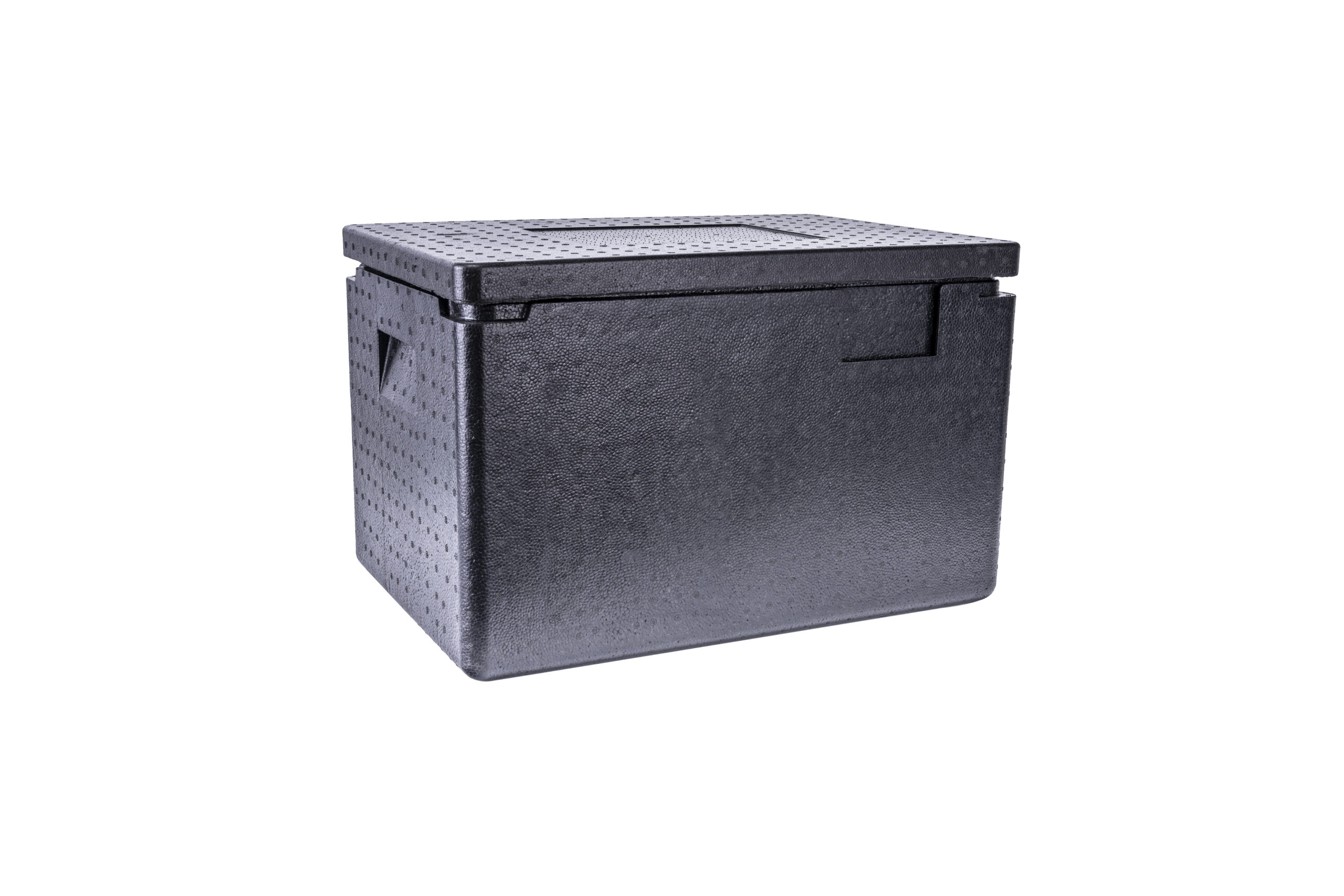
Medical Ice Box Distributor: How to Choose in 2026?
Choosing a medical ice box distributor is really choosing how often your shipments stay safe when real life happens. A short delay, a hot handoff, or rushed packing can push temperatures out of range fast—sometimes within 30–90 minutes if the system is not designed and packed correctly.
This guide shows you how to pick a medical ice box distributor using proof you can verify, not promises you hope are true.
This guide will help you:
Shortlist a medical ice box distributor for vaccines without guessing
Check medical ice box distributor temperature validation using a simple “Evidence Pack”
Request compliance-ready documents so QA and audits move faster
Compare lead time, stock, and service so you avoid emergency reorders
Use a 14-day pilot plan that catches failures before you scale
What does a medical ice box distributor actually do?
A medical ice box distributor bridges packaging hardware and day-to-day healthcare shipping. They help you match insulation, coolant, and a repeatable packing method to your lane and temperature band. They should also give you clear instructions your team can follow under pressure.
Think of your shipment like an ice cube on a warm sidewalk. The ice is not “bad.” The environment is harsh. A good medical ice box distributor builds a protection system around your product: the box, coolant, pack-out, labels, and handling rules.
Medical ice box distributor vs. manufacturer vs. solution provider
| Option | What you get | Typical trade-off | What it means for you |
|---|---|---|---|
| Manufacturer direct | Standard models or custom builds | Higher setup time, higher MOQs | Best when you scale and standardize |
| Medical ice box distributor | Stock + lane fit + support | Less customization | Best when speed and reliability matter |
| Full solution provider | Box + coolant + validation services | Higher service cost | Best when excursions are expensive |
Practical tips you can use today
If you don’t have pack-out instructions: treat it as risk, not “missing paperwork.”
If they can’t explain hold time simply: they may not understand your real lanes.
If your seasons change: require summer and winter pack-outs, not one “universal” setup.
Real example: Teams often reduce “warm arrivals” more by standardizing packing steps than by buying thicker walls.
What temperature range should your medical ice box distributor support?
Your medical ice box distributor should support the temperature range your product actually needs—not the range that sounds safest. Many healthcare lanes fall into a few common bands:
2–8°C (refrigerated): vaccines, many biologics, reagents
15–25°C (controlled room): selected diagnostics and specialty meds
-20°C (frozen): some reagents and biologics
The expensive mistake is assuming “colder is always better.” Some products are damaged by freezing. Your medical ice box distributor should help you prevent both overheating and accidental freezing.
How temperature risk happens in real life
A carton waits on a loading dock in the sun
The driver adds stops
The receiver signs late
The package sits in a warm hallway
A simple rule: design for the worst 10% of the route, not the average.
Quick match table: range → risk → feature
| Target range | Common risk | Feature to demand from a medical ice box distributor | What you gain |
|---|---|---|---|
| 2–8°C | Freezing or warming | Anti-freeze layout + stable coolant plan | Better product integrity |
| 15–25°C | Heat spikes | Strong insulation + buffering | More consistent results |
| -20°C | Melt/delay | High insulation + optimized coolant mass | Longer hold time |
Practical tips and suggestions
2–8°C lanes: ask how they prevent freezing during winter handoffs.
Mixed payloads: ask for dividers so cold packs don’t touch sensitive items.
Long routes: require a lane-based plan that includes delays, not only planned time.
Practical case: Many teams cut temperature incidents by moving from “one box for everything” to two lane-specific configurations.
How do you verify medical ice box distributor temperature validation?
For a buyer, “validation” should mean one thing: the packaging system was tested under defined conditions and kept the payload zone in your target range for a stated duration. A reliable medical ice box distributor can explain the test setup in plain language.
You do not need to be a thermal engineer. You need comparable evidence.
What “validation” should include (plain language)
The temperature band tested (2–8°C, frozen, or controlled room)
The duration (including realistic delays)
The ambient conditions (hot, mild, cold)
The payload (mass and placement)
The pack-out method (repeatable steps, not improvisation)
Repeat runs (one “best run” is not confidence)
Medical ice box distributor temperature validation checklist (RFQ-ready)
Copy/paste this into your RFQ email:
Target range: 2–8°C / 15–25°C / -20°C (choose one)
Lane duration: include buffer for delays and handoffs
Worst-case ambient: summer and winter extremes
Acceptance rule: e.g., “no more than X minutes outside range”
Evidence Pack required: temperature trace, pack-out photos, test conditions, number of runs
| Proof item | What you want to see | Common red flag | What it means for you |
|---|---|---|---|
| Temperature trace | Full curve over time | Only “holds 48 hours” | You can’t judge risk |
| Pack-out photos | Exact coolant placement | “Pack however you like” | Results won’t repeat |
| Test conditions | Ambient profile + payload | Missing details | Comparisons are unfair |
| Repeat runs | 3+ consistent runs | One run only | Hidden variability |
Practical tips for evaluation
Require at least one trace for a lane “like yours,” not a perfect lab scenario.
Ask where the probe/logger was placed and why that location matters.
Treat vague claims as unproven until you see the Evidence Pack.
Real example: A “standard gel pack” setup can work in winter and fail in summer. Seasonal pack-outs often solve this without changing box size.
Medical ice box distributor compliance support: documents and labels
In healthcare shipping, documentation is part of product quality. A strong medical ice box distributor helps you build an evidence folder that makes audits and incident reviews faster.
The document bundle you should request
Product specification sheet: dimensions, materials, intended range, payload guidance
Performance evidence: validation summary + temperature traces + pack-out photos
Pack-out instructions: step-by-step, with quantities and photos
Traceability method: lot codes and change notifications
Cleaning guidance (if reusable): approved cleaners and frequency
Complaint and replacement process: what happens when parts fail
| Document | What to check | What “good” looks like | Why it helps you |
|---|---|---|---|
| Pack-out guide | Clarity + photos | Steps your team can repeat | Less human error |
| Performance summary | Conditions + limits | Hot/mild/cold, payload notes | Predictable planning |
| Traceability | Lot tracking | Lot codes + records | Faster root-cause work |
| Change control | Notifications | Written change notice process | Protects your validation |
Do you ship specimens or dry ice?
This is where a medical ice box distributor can prevent compliance chaos.
Medical ice box distributor UN3373 specimen packaging support
If you ship clinical specimens, ask for:
A triple-packaging-ready pack-out diagram (primary, secondary, rigid outer)
Absorbent placement guidance
Label placement guidance that stays readable and scannable
A refrigerated pack-out option if you ship 2–8°C specimens
Medical ice box distributor dry ice UN1845 labeling support
If you ship frozen with dry ice, ask for:
A design that allows safe venting (CO₂ gas must not build pressure)
Clean, flat label zones so markings do not overlap
A simple “label map” your team can follow in seconds
Mini decision tree (interactive)
Answer these three questions:
Are you shipping clinical specimens? If yes, you likely need UN3373-ready pack-outs.
Are you shipping frozen with dry ice? If yes, you need UN1845/Class 9 label support.
Are you shipping 2–8°C vaccines or refrigerated specimens? If yes, require a verified 2–8°C pack-out.
If you answered “yes” to any, choose a medical ice box distributor that provides written pack-outs and label maps—not verbal advice.
Medical ice box distributor pricing checklist: compare total cost, not unit price
A cheap box that fails once can cost more than ten boxes that succeed. Compare a medical ice box distributor using cost per successful shipment, not price per empty container.
A simple total-cost model you can actually use
Total cost per shipment =
(container cost ÷ expected uses) + coolant + labor + damage rate + returns/logistics
Small changes in packing time, damage rate, and coolant mass can swing your real cost more than unit price.
What drives pricing the most
Insulation level and structure durability
Coolant type and total coolant mass per pack-out
Accessories (dividers, seals, absorbent pads)
Stock model (off-the-shelf vs reserved inventory)
Service level (training, pilot support, replacement speed)
Medical ice box distributor lead time and warranty terms
Ask for written commitments on:
Standard lead time by SKU
Emergency replenishment options
Warranty coverage for lids, seals, latches, hinges
Replacement process and ship time
| Cost/term | What to request | Common trap | What it means for you |
|---|---|---|---|
| Lead time | Written range + stock policy | “Usually two weeks” | You can’t plan |
| Warranty | Clear defect definition | “Case-by-case” | Slow resolution |
| Coolant cost | Cost per pack-out | Hidden overpacking | Higher freight weight |
| Reuse cycles | Expected lifetime range | No reuse guidance | Unclear ROI |
Practical tips to negotiate cleanly
Lock the approved configuration you validated (SKU + inserts + coolant plan).
Ask for a “pilot price” and a “scale price.”
Separate one-time setup work from recurring per-unit costs.
How to qualify a medical ice box distributor in 14 days
You do not need a six-month project to choose safely. A focused pilot catches the failures that catalogs hide.
The 14-day pilot plan (lane-based and realistic)
Define one lane: duration, ambient extremes, temperature band
Set pass/fail rules: “no more than X minutes outside range”
Fix the pack-out: one layout, one closure routine
Place a data logger: near the payload center, not against the wall
Run at least 6 shipments: mix busy days and worst delays
Track handling events: lid opens, stacking, waiting time
Review results: spikes, dips, packing time, damage rate
Repeat with a second distributor: same lane, same rules
Pilot metrics that catch real failures
| What you measure | How to measure it | What a problem looks like | What it means for you |
|---|---|---|---|
| Temperature stability | Data logger | Repeated spikes | Higher excursion risk |
| Packing time | Stopwatch | Slow or inconsistent | More labor and errors |
| Closure success | Quick audit | Lids not seated | Heat leaks and variability |
| Damage rate | Visual checks | Cracks, latch failures | Reships and downtime |
| Label readability | Scan test | Smearing/peeling | Traceability risk |
Self-test: “Medical Ice Box Distributor Fit Score”
Give each medical ice box distributor 0–2 points per item, then total your score.
Evidence: Can they show test conditions and limits in plain language?
Guidance: Do they provide a step-by-step pack-out for your lane?
Speed: Can they ship replacements quickly when something breaks?
Consistency: Do they guarantee materials stability and change notifications?
Support: Do they train your team and troubleshoot with data?
Score interpretation:
8–10: strong medical ice box distributor for scaling
5–7: pilot again on a second lane or season
0–4: high risk; you will carry too much burden
Interactive tools: pick the right medical ice box distributor faster
Decision tool: which medical ice box distributor fits your operation?
Step 1: Your shipment duration
0–12 hours
12–48 hours
48–96 hours
Step 2: Your biggest risk
Heat exposure (hot climates, summer)
Freezing risk (winter, aircraft holds)
Handling delays (handoffs, last mile)
Step 3: Your operating model
High frequency, predictable lanes
Low frequency, varied lanes
Mixed network
What your answers suggest
If you chose 12–48 + heat exposure + mixed lanes: require seasonal pack-outs and multiple box sizes.
If you chose 48–96 + handling delays: require long-hold evidence and rapid replacement support.
If you chose freezing risk: require a distributor that can explain freeze prevention clearly.
Practical “one-question” screen
Ask any medical ice box distributor:
“Show me a pack-out and a temperature trace for a lane like mine.”
If they cannot answer clearly, keep searching.
2026 medical ice box distributor trends you can use
In 2026, the best medical ice box distributor is shifting from “sell boxes” to “reduce excursions.” Buyers want repeatable outcomes, cleaner documentation, and operator-friendly packing.
Latest developments to watch
Lane-specific optimization: proof tied to your duration and ambient profile
More monitoring by default: loggers and indicators used in more pilots
Modular systems: one platform with inserts for multiple payload sizes
Operator-first design: faster closure, clearer label zones, fewer packing mistakes
Seasonal standardization: summer/winter pack-outs become a baseline expectation
Market insight (what this means for you)
Procurement is moving toward measurable outcomes:
fewer excursions
fewer deviations
fewer reships
faster packing with fewer errors
A medical ice box distributor that helps you measure and improve these outcomes becomes a long-term partner.
Frequently Asked Questions
Q1: What should I ask a medical ice box distributor before buying?
Ask for pack-out instructions, performance evidence, traceability, and a replacement plan. If answers are vague, treat that as risk.
Q2: Can one medical ice box distributor support both 2–8°C and -20°C?
Yes, but usually with different pack-outs and coolant setups. Require clear labeling and separate instructions for each band.
Q3: How do I prevent freezing in 2–8°C shipments?
Use a freeze-safe pack-out with separation layers and the right coolant placement. Ask the distributor to show a simple diagram.
Q4: How many pilot shipments are enough to decide?
Six is a practical minimum across different days and conditions. More is better if your lanes vary widely.
Q5: What is the biggest red flag with a medical ice box distributor?
Claims without evidence, no pack-out photos, and unclear warranty or replacement terms.
Summary and recommendations
A strong medical ice box distributor reduces guesswork by giving you lane-fit evidence, repeatable pack-outs, and compliance-ready documentation. Compare distributors by validation clarity, seasonal support, service response, and total cost per successful shipment. Run a 14-day pilot with the same lane rules for each option, then standardize the approved configuration.
Your next-step action plan (CTA)
Write your top three lanes (hours, season, temperature band).
Request an Evidence Pack and a summer/winter pack-out.
Pilot two distributors for 14 days with data loggers.
Standardize to the fewest SKUs your team can handle.
Train using one-page packing and labeling cards.
If you share your lane details (origin, destination, hours, season, target temperature), you can turn this into a one-page checklist your team follows every day.
About Tempk
Tempk supports healthcare cold-chain packaging designed for real-world handling and repeatable pack-outs. We focus on practical temperature control, durable insulated designs, and clear operating guidance that helps teams pack faster and ship with fewer excursions. We also help you plan lane-based pilots and standardize configurations so scaling is safer in 2026.
Next step: Ask for a lane-based recommendation and a pilot plan so your shipments stay in range more often.
Industrial Ice Box OEM: How Do You Choose Right?
Industrial Ice Box OEM: How Do You Choose the Right Partner in 2026?
You choose an industrial ice box OEM to stop small temperature problems from becoming expensive daily losses. If your lane is predictable, OEM can reduce claims, simplify packout, and stabilize operations. In 2026, many teams win by standardizing 1–2 OEM SKUs and piloting them in warm-season conditions. This guide shows you exactly what to ask, what to measure, and how to pick an OEM you can trust.
This article will answer:
How an industrial ice box OEM program works from spec to mass production
How to write measurable specs using lane, ambient profile, and handling reality
How to choose materials like EPP insulated industrial ice box OEM builds
How to plan MOQ, tooling, QC, and lead times without surprises
How to use a fast provider scorecard to compare suppliers fairly
What Is an Industrial Ice Box OEM, and When Does It Make Sense?
An industrial ice box OEM designs and manufactures insulated ice boxes to your requirements. You define internal size, insulation approach, lid sealing, inserts, branding, and packaging standards. The supplier produces to that blueprint with repeatable processes and controlled quality checks.
It makes sense when standard boxes cause daily friction. You may see cracking, lid leakage, inconsistent performance, or slow packing. A good industrial ice box OEM fixes repeat problems, not just the container shape. Think of the box as a “temperature seatbelt” for your product and workflow.
Quick “Fit Check” for OEM
You ship the same product profiles every week.
You pay for re-packs, damage, or warm arrivals.
Your team wastes time improvising packout each shift.
You want consistent performance you can test and repeat.
Practical insight: Many “coolant failures” are actually lid leakage or compressed insulation from weak structure.
How Do You Scope an Industrial Ice Box OEM Project Without Guessing?
A strong industrial ice box OEM project starts with a lane sheet, not a mood board. You are building a temperature system with real constraints. When the lane sheet is clear, quotes become comparable and testing becomes meaningful.
Start with three measurable variables:
Target temperature band: chilled, frozen, or controlled room temp.
Transit time window: typical and worst-case.
Handling intensity: drops, stacking, vibration, wash-down cycles.
Then add the human factor. Who packs the box, how fast, and with what training? Complex packouts fail more often than anyone expects. A smart industrial ice box OEM design removes steps, not adds them.
Lane Sheet Template (Copy + Use)
| Lane Sheet Item | Option A | Option B | What it means for you |
|---|---|---|---|
| Temperature band | Chilled | Frozen | Drives insulation + coolant type |
| Transit time | Typical | Worst-case | Sets hold-time target |
| Handling abuse | Low | High | Drives corner + lid design |
| Open/close events | None | 1–3 opens | Affects packout and risk |
| Reuse turns | One-way | 10–50 turns | Changes material and QC needs |
Practical tips you can apply today
Start with your top two lanes. Don’t design for every rare exception.
Design for the warmest season. If it passes summer, winter becomes easy.
Write a 5-step packout. If it cannot fit on one page, it will drift.
Which Materials Should You Choose for an Industrial Ice Box OEM?
Material choice controls durability, insulation, weight, cleanability, and lifecycle cost. The best choice is “fit for lane,” not “best on paper.” In 2026, many reuse programs favor EPP insulated industrial ice box OEM builds because they balance toughness and insulation.
Material Options Explained Simply
EPS foam: low cost, decent insulation, but brittle and chips easily.
EPP foam: tough, reusable, impact resistant, often better for reuse loops.
PU foam panels: strong insulation in compact walls, heavier and more complex.
VIP panels: very high insulation with higher cost and handling complexity.
Rotomolded shells: very durable and washable, usually heavier for freight.
| Build option | Typical strengths | Typical trade-offs | What it means for you |
|---|---|---|---|
| EPP | Durable, reusable, shock resistant | Higher upfront cost | Lower breakage, better lifecycle cost |
| EPS | Cheap, easy to source | Crumbles, disposal friction | Fine for low-risk one-way use |
| PU panels | Strong insulation per thickness | Complex BOM, harder to repair | Good for long holds in small size |
| VIP hybrid | Top insulation, lighter | Higher complexity | Premium lanes and audits |
| Rotomolded | Very durable, washable | Heavier, higher freight | Repeated rough handling routes |
Practical tips and suggestions
If you reuse, prioritize corners, lid fit, and cleanability first.
If you ship frozen, prioritize sealing and simple coolant placement.
If freight is expensive, lighter designs can beat cheaper materials on total cost.
Real example: Switching to stronger structure often cuts replacements faster than adding more coolant.
How Does an Industrial Ice Box OEM Design for Heavy-Duty Use?
An industrial environment is harder than most teams expect. Forklifts, stacking pressure, vibration, and frequent cleaning shorten life quickly. A good industrial ice box OEM designs the box as a system: walls, corners, lid seal, base ribs, and internal airflow.
Weak points usually appear at corners and lids. Industrial-grade OEMs reinforce these without making the box unnecessarily heavy. They also plan for predictable performance across many cycles.
| Design area | Common weakness | OEM improvement | What it means for you |
|---|---|---|---|
| Corners | Cracking | Reinforced geometry | Longer lifespan |
| Lid | Heat leakage | Tight seal + alignment | Better temperature stability |
| Base | Deformation | Load-distributed ribs | Safer stacking |
| Inner surface | Hard to clean | Smooth + rounded corners | Faster turnaround |
Practical tips and suggestions
Ask for stack-load targets (real numbers, not “strong”).
Ask what fails first in the field and how they prevent it.
Require a lid-fit check as a written QC step.
How Do You Make Packout Simple and Repeatable?
The best industrial ice box OEM design makes the “right way” the easy way. If packing feels like solving a puzzle, results will drift. Repeatability beats creativity, especially at scale.
Design around your real product footprint. If you ship trays, align for trays and reduce void space. If you ship pouches, prevent crush and shifting with guided inserts. A good OEM will reduce packout steps and standardize coolant placement.
Packout-Friendly Features You Can Request
| Feature | What it does | Why it matters | What it means for you |
|---|---|---|---|
| Guided insert | Locks product position | Less shifting | Fewer damages |
| Lid alignment cues | Speeds closure | Less air gap | More stable temperatures |
| Coolant pockets | Standard placement | Less guessing | Faster packing |
Cooling media options (simple)
Gel packs: easy handling for chilled lanes.
PCM packs: tighter temperature ranges with stable performance.
Dry ice: strong frozen performance, needs venting and correct labeling.
Important: If you use dry ice, your industrial ice box OEM for dry ice shipping must support safe venting. Dry ice produces CO₂ gas, so a fully airtight box can be dangerous.
“60-Second Spec Builder” (Interactive Mini Tool)
Answer these and you can write a usable spec today:
Target range: chilled / frozen / CRT
Hold time: 24 / 48 / 72 / 96 hours
Worst-case ambient: mild / hot / very hot
Handling: pallet / parcel / mixed
Reuse turns: one-way / 10 / 50
Cleaning: wipe / wash-down / sterile wipe
Rule of thumb: Longer hold time usually increases at least one of these: insulation thickness, coolant mass, or box volume.
How Do MOQ, Tooling, and Lead Time Work in Industrial Ice Box OEM?
MOQ is usually driven by tooling economics, material purchasing thresholds, and production setup. That does not mean you must gamble on massive inventory. The safest path is a phased ramp with clear decision gates.
A phased OEM ramp (recommended)
Prototype: fit, handling, and packout steps.
Pilot batch: real lane testing with temperature logging.
Production: lock the golden sample and scale supply.
| Phase | Typical goal | Your decision | What it means for you |
|---|---|---|---|
| Prototype | Fit and function | Approve geometry | Stop early if wrong |
| Pilot | Real-lane proof | Confirm packout | Validate before tooling |
| Production | Stable supply | Lock specs + QC | Predictable cost and quality |
Lead time: the two timelines you must manage
Development time: design, samples, approvals, pilot.
Production time: manufacturing, packing, shipping.
Most delays come from unclear approvals. Assign one decision owner, freeze specs early, and approve the golden sample only after lane proof.
What Quality Control Must Be Locked in Writing?
Quality control is where OEM programs succeed or quietly drift. Your first batch can look perfect, then change over months due to mold wear or material substitutions. A strong industrial ice box OEM prevents surprises with written controls.
Three controls you should require:
Golden sample: your physical reference standard.
Sampling rules: what is checked, how often, pass/fail criteria.
Change control: nothing changes without your written approval.
QC checks that catch expensive defects
| QC check | What it catches | Simple pass/fail | What it means for you |
|---|---|---|---|
| Lid fit | Air leakage | Uniform closure | Stable temperatures |
| Drop handling | Corner cracking | No structural break | Lower breakage rate |
| Stack test | Collapse risk | Meets target load | Safer warehousing |
| Dimensional | Warp/voids | Within tolerance | Fewer complaints |
Documents to request in week one
Material declarations for product-contact surfaces
In-process QC plan with measurable checkpoints
Batch IDs and traceability approach
Nonconformance process (how defects are handled)
Written change-control policy
Buyer tip: If they can’t explain QC in plain English, keep shopping.
How Do You Compare True Cost, Not Just Unit Price?
An industrial ice box OEM quote should be evaluated as cost per successful delivery. Low unit price is meaningless if breakage rises. Your real costs include labor time, storage, and failure handling.
Break your cost into four buckets:
Manufacturing cost (box + inserts)
Tooling cost (amortized)
Logistics cost (inbound freight + storage)
Failure cost (claims, spoilage, refunds, re-packs)
| Price lever | What it changes | Risk if pushed too hard | What it means for you |
|---|---|---|---|
| Wall thickness | Thermal + strength | Weight and cost rise | Balance lane needs |
| Corner reinforcement | Durability | Slight unit increase | Fewer replacements |
| Insert complexity | Pack speed | Confusion at scale | Keep it simple |
| Seal quality | Leakage risk | Small cost increase | Fewer temperature claims |
Practical tips and suggestions
Negotiate using performance, not only price. Fewer failures justify better terms.
Ask for tiered pricing tied to growth milestones.
Standardize SKUs to reduce warehouse errors and MOQ pressure.
How Do You Audit a Custom Industrial Ice Box OEM Manufacturer Remotely?
You can audit effectively without traveling if you focus on process control. Your goal is not to admire machines. Your goal is to verify repeatability and discipline.
60-Minute Remote Audit Agenda
10 min: incoming materials storage and batch labeling
15 min: production line walk (where defects appear)
10 min: QC station (what they measure and how often)
10 min: finished goods + packaging for shipment
10 min: documentation review (change control + corrective actions)
5 min: batch traceability demo + sample retention
Red flags you should take seriously
“We don’t track lot numbers.”
“We change materials when prices change.”
“QC checks only at the end.”
“No written corrective action process.”
Provider Scorecard (10-Minute Interactive Decision Tool)
Score each item from 1 to 5. Add your total and compare suppliers.
Clear spec sheet and tolerance language
Pilot pathway and real-lane mindset
Golden sample process and sample retention
Batch IDs and traceability
Documented QC checks and sampling rules
Change-control discipline
Stable lead time and replenishment plan
Defect replacement process (written)
Interpretation
≤18: high risk of drift and surprises
19–22: workable with tight controls
≥23: strong industrial ice box OEM partner
2026 Latest Industrial Ice Box OEM Developments and Trends
In 2026, buyers are moving from “box shopping” to “system buying.” They want fewer SKUs, faster packout, and less variability across batches. That pushes OEM programs toward traceability, clear documentation, and durability-first designs.
Latest progress snapshot
Lane kits: 2–3 standardized configurations replace many one-off boxes.
Traceability: batch IDs and receiving checklists are becoming normal.
Simpler packouts: guided inserts and consistent coolant placement reduce training.
Market insight you can use
When margins tighten, you win by reducing exceptions. Fewer excursions, fewer broken boxes, and fewer disputes. The best industrial ice box OEM is the one that makes outcomes predictable.
Frequently Asked Questions
Q1: What does industrial ice box OEM mean in plain terms?
It means a supplier builds insulated ice boxes to your specs, and supports repeatable quality at scale.
Q2: How do I define hold time for an industrial ice box OEM quote?
State the temperature range, payload mass, start temperature, ambient profile, and whether the box will be opened.
Q3: Is an industrial ice box OEM always more expensive than stock boxes?
Unit price may be higher, but total cost often drops through longer life and fewer failures.
Q4: What should a food-grade industrial ice box OEM provide?
Material compliance statements for product-contact surfaces plus controlled QC and traceability.
Q5: What quality checks matter most for industrial ice box OEM?
Lid fit, drop handling, stacking strength, and dimensional tolerance checks prevent costly field failures.
Q6: How long does an industrial ice box OEM project usually take?
Many programs complete prototypes and validated samples in 4–8 weeks, depending on complexity and approvals.
Q7: Can one OEM design serve multiple products?
Yes. Modular inserts and standardized coolant layouts can support multiple payload types.
Q8: How do I prevent spec drift over time?
Use a golden sample, batch IDs, sampling rules, and written change control requiring your approval.
Summary and Recommendations
Choosing an industrial ice box OEM is about controlling outcomes. Start with a measurable lane sheet, then freeze specs before you chase extra features. Pilot with real shipments, lock a golden sample, and enforce change control. When managed well, an industrial ice box OEM program reduces failures, speeds packout, and stabilizes supply.
Action plan (clear CTA)
Write one lane spec using the 60-second spec builder above.
Request samples from 2–3 industrial ice box OEM candidates.
Run a simple pilot with temperature logging in warm-season conditions.
Choose the supplier who proves consistency, not just a low quote.
Lock QC, sampling rules, and change control in writing.
About Tempk
Tempk is an industrial ice box OEM specializing in reusable insulated solutions for food, medical, and industrial cold chains. We focus on practical performance: durable structures, repeatable packouts, and program discipline that stays stable over time. We support OEM customization from materials and inserts to validation planning and scalable supply controls.
Next step: Share your target temperature range, hold time, handling type, and weekly shipment volume. We’ll recommend a simple industrial ice box OEM configuration you can validate and scale confidently.
Vaccine Ice Box Provider: How to Choose in 2026?
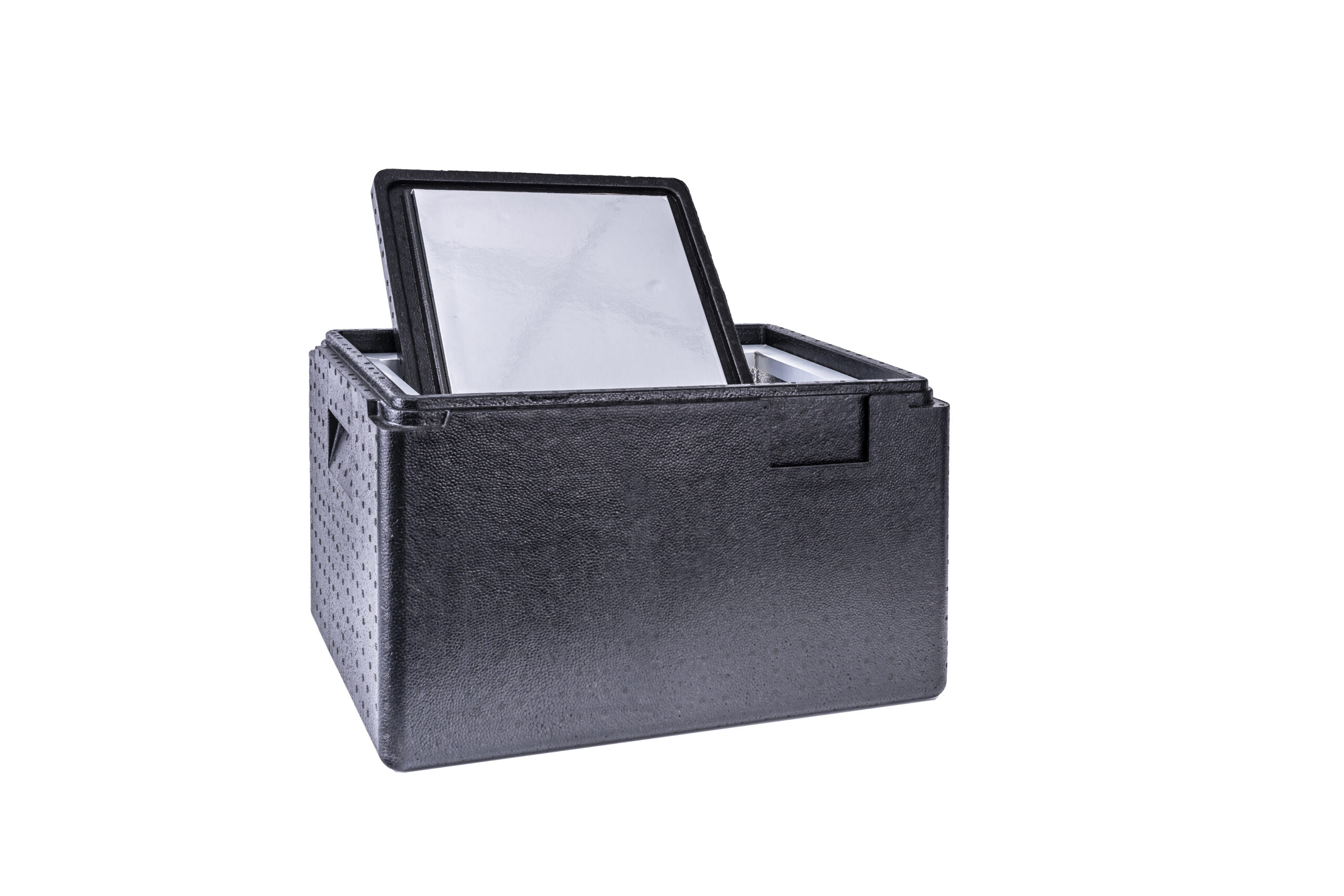
Vaccine Ice Box Provider: How to Choose in 2026?
A vaccine ice box provider is not just selling an insulated box. You are choosing the system that keeps vaccines effective when roads are rough, flights are late, and teams are tired. Most refrigerator-stored vaccines must stay between 2°C and 8°C, and some products can be damaged by freezing. In 2026, the safest approach is simple: pick a vaccine ice box provider that can prove performance in hours, not slogans.
In this guide, you’ll learn:
How a WHO PQS vaccine ice box provider differs from a generic supplier
How to use hot-ambient hold time (often tested in very warm conditions) for route planning
How to reduce freezing risk with conditioned packs and freeze-prevention options
What a vaccine ice box provider with data logger pocket should support in monitoring
A 10-minute decision tool to shortlist a vaccine ice box provider fast
Why does a vaccine ice box provider matter for potency?
A vaccine ice box provider directly affects vaccine potency and compliance. Vaccine damage is usually invisible. You may not see a problem until an audit, a complaint, or a coverage gap. That is why you should treat a vaccine ice box provider like a safety partner.
In real transport, the “perfect lane” rarely happens. Customs inspections, traffic, power outages, and repeated lid openings are normal. A qualified vaccine ice box provider designs the box, the coolant plan, and the packing steps to absorb those shocks.
What makes vaccine transport different from food logistics?
Food spoilage can be obvious. Vaccine potency loss is not. That single difference raises your risk level.
| Transport type | Temperature tolerance | Failure visibility | What it means for you |
| Fresh food | Wider | Visible | You can often spot problems |
| Frozen food | Moderate | Visible | Quality issues show quickly |
| Vaccines | Narrow | Invisible | You need proof and monitoring |
Practical tips and recommendations
If your lane includes delays: Demand extra buffer hours from your vaccine ice box provider.
If staff turnover is high: Choose packing steps that feel “hard to do wrong.”
If audits are common: Require documentation as part of the base offer.
Practical example: One regional program reduced temperature-excursion waste after switching to a provider with longer hold time and simpler loading steps.
What performance should your vaccine ice box provider prove?
In 2026, a credible vaccine ice box provider sells measurable performance. You want three things in writing: hours in range, assumptions, and repeatability. If a quote says “keeps cold for a long time,” you cannot plan routes.
Ask your vaccine ice box provider to state performance using a hot-ambient metric (for example, the hours the pack-out stays in range in high heat). Then ask the provider to list the assumptions behind that number.
The five proof items you should request in writing
Model name and configuration (box + packs + dividers)
Hold time in hours under stated ambient heat
Pack type and conditioning steps (what you must do before packing)
Opening frequency assumption (how often the lid is opened)
A monitoring workflow (min/max checks or a data logger routine)
Provider comparison table (simple, decision-ready)
| Evaluation factor | Basic offer | Qualified offer | Your real-world impact |
| Hold time | “24–36h” (unclear conditions) | “72–120h” (conditions stated) | Buffer for delays |
| Materials | Fragile foam | Durable reusable polymer | Fewer cracks, fewer leaks |
| Evidence | Marketing claims | Test assumptions + results | Audit readiness |
| Usability | Many steps | Fewer steps, clear diagram | Less human error |
| Monitoring support | “Check temp” | Defined workflow + pocket | Fewer missed excursions |
Practical tips and recommendations
If a provider avoids numbers: Pause. You need hours, not adjectives.
If two quotes look similar: Check pack assumptions. They may not match.
If your lane runs hot: Compare only hot-ambient performance.
Practical example: Two vendors offered similar prices, but only one stated hours in range and a clear conditioning method.
How to verify a WHO PQS vaccine ice box provider without stress?
If you buy for immunization programs, you will often see WHO PQS language in tenders. You do not need to become a standards expert. You only need a short checklist that forces clarity.
A strong WHO PQS vaccine ice box provider can point to the performance category that fits your use case (for example, cold boxes and carriers in the E004 family). The goal is not paperwork. The goal is consistent field performance.
“E004” in plain language
Think of E004 as a family label for vaccine carriers and cold boxes used in immunization supply systems. When a WHO PQS vaccine ice box provider references the correct category, it reduces guesswork. It also helps you compare like with like.
Verification checklist (ask, don’t assume)
| Verification step | What you ask your provider | What you should see | What it protects you from |
| Category match | “Which PQS category applies?” | A clear category reference | Vague performance claims |
| Heat performance | “Hours in range in hot ambient?” | Hours + assumptions | Overpromised duration |
| Pack-out method | “Show the packing diagram.” | Diagram + steps | Freezing and hot spots |
| Monitoring plan | “How do we document excursions?” | A simple workflow | No proof during audits |
Practical tips and recommendations
If they won’t share assumptions: Treat the offer as high risk.
If they share only lab numbers: Ask how opening frequency was handled.
If accessories are extra: Make total cost explicit before you compare.
Practical example: A team simplified route planning after choosing a provider that published hot-ambient hours with clear assumptions.
How long should a vaccine ice box provider keep 2–8°C stable?
You should buy for reality, not the shortest route on the map. Even local deliveries can face traffic or vehicle breakdowns. For most networks, these are practical targets:
Local or regional routes: plan for 48 hours minimum buffer
Remote or international routes: plan for 72–120 hours buffer
Frequent-opening outreach: plan for stability under opening stress, not only closed-lid tests
A good vaccine ice box provider will help you match hold time to your lane profile. If you over-buy, you may add weight and cost. If you under-buy, you risk potency.
Use “opening frequency” as your hidden duration driver
Every lid opening trades cold air for warm air. Two teams can use the same box and get different results. Your vaccine ice box provider should state the opening assumption so you can plan training and workflow.
| Use case | Typical need | Provider direction | What to confirm |
| Outreach session | ~6–12 hours | Vaccine carrier focus | Opening assumption + diagram |
| Last-mile delivery | ~12–48 hours | Carrier or small cold box | Hot-ambient hours + buffer |
| Depot transfer | 24–96 hours | Cold box focus | Durability + spares plan |
| Long holding | Multi-day | Long-hold class options | Procedures + monitoring |
Practical tips and recommendations
If you open often: Treat rated cold life as optimistic.
If you deliver in summer heat: Add buffer hours and reduce lid time.
If you ship internationally: Assume one overnight delay will happen.
Practical example: Two outreach teams used the same box. The team that opened less stayed in range longer.
How do materials (EPP vs EPS) change provider reliability?
Material choice is where many “cheap” solutions fail. A vaccine ice box provider can show great test data, but field damage can destroy insulation fast. If the box cracks, gaps form. Then cold life drops.
A simple rule helps: fragile materials work in calm lanes. Durable materials work in real lanes.
EPS vs EPP explained in simple terms
EPS (foam): low cost, but cracks easily and deforms under impact
EPP (expanded polypropylene): stronger, reusable, and impact-resistant
If you expect rough handling, EPP-based designs usually reduce breakage. A durable vaccine ice box provider will also design seals, hinges, and corners for repeated use.
Reuse can improve safety (not just sustainability)
Reusable systems are built for repeated stress. That often means thicker walls, better seals, and more consistent performance. In practice, that reduces surprise failures.
| Material + design | Typical durability | Typical consistency | What it means for you |
| Single-use foam | Low | Variable | Higher breakage risk |
| Reusable polymer | High | More repeatable | Lower excursion risk |
| Hybrid designs | Medium–high | Depends on build | Balance of cost and strength |
Practical tips and recommendations
If you reuse: Ask about cleaning, inspection, and replacement parts.
If you export: Ask about stacking and impact resistance.
If weight matters: Compare payload-to-performance, not only volume.
Practical example: A district reduced box damage after moving from fragile foam to reusable polymer designs.
How can a vaccine ice box provider help you prevent freezing?
Heat is not the only threat. Freezing can quietly damage freeze-sensitive vaccines. This often happens when teams use fully frozen packs “to be safe.” That instinct can backfire.
A responsible vaccine ice box provider designs for freeze prevention with three layers: the right packs, the right placement, and the right workflow.
Freeze prevention, step by step (the human-friendly version)
Condition packs so they are cold but not “rock hard.”
Separate packs from vials using dividers or air gaps.
Standardize the pack-out with a diagram you can follow fast.
Freeze-risk control table
| Freezing risk source | What your provider should deliver | What you do in the field | Your practical benefit |
| Packs too cold | Clear conditioning steps | Follow a timer-based routine | Fewer silent freeze events |
| Direct contact | Dividers + placement rules | Keep vials off pack surfaces | Less potency loss risk |
| Staff variation | Options for high-risk lanes | Use safer designs in outreach | More consistent outcomes |
Practical tips and recommendations
Outreach days: Use a repeatable conditioning routine every time.
Mixed vaccine types: Keep freeze-sensitive products away from pack edges.
Hot climates: Do not “over-freeze” packs to compensate for heat.
Practical example: A clinic reduced freeze alarms after switching from fully frozen packs to a consistent conditioning routine.
What monitoring workflow should your vaccine ice box provider support?
Monitoring is how you turn “we think it was fine” into “we can prove it.” But monitoring only works if it fits daily reality. A modern vaccine ice box provider should design monitoring into the box and the workflow.
At minimum, your vaccine ice box provider should support one of these paths:
Path A: Min/max thermometer checks with a simple paper log
Path B: A small data logger that records the full trip
Path C: Both, for high-risk lanes and audits
Keep monitoring “small enough to do every day”
If the process is too heavy, people skip it. Ask your vaccine ice box provider for a one-page routine that answers: who checks, when, and what happens if it’s out of range?
| Monitoring element | Minimum standard | Better standard | What it changes for you |
| Target range | 2°C–8°C defined | Excursion thresholds defined | Faster decisions |
| Recording | Simple form | Downloadable log | Easier audits |
| Response | “Hold and label” rule | Prewritten escalation steps | Less panic, fewer mistakes |
Practical tips and recommendations
Short trips: A min/max check can still catch issues.
High-risk routes: Use a logger so you can review the full trace.
Training: Run one mock excursion so staff feel confident.
Practical example: A team adopted a “hold and label” rule and reduced accidental use after excursions.
How to compare quotes apples-to-apples with a one-lane brief?
Most procurement mistakes come from mismatched assumptions. One vaccine ice box provider may quote a pack-out with conditioned packs. Another may assume fully frozen packs. The price and performance will not be comparable.
A one-lane brief forces fairness. It also makes your negotiation faster.
Your one-lane brief (copy this into a document)
Temperature band: 2°C–8°C (or your specific band)
Route time: ___ hours (include your delay buffer)
Ambient heat: typical and worst-case
Openings: how many times you open, and how long
Staff reality: training level, time pressure, turnover
Monitoring: min/max, logger, or both
Quote line items that must be stated
| Quote line item | Must be stated | Why it matters | Your leverage |
| Hold time | Hours + conditions | Route fit | Ask for more buffer |
| Pack assumptions | Pack type + conditioning | Freeze control | Remove hidden risk |
| Configuration | Diagram + accessories | Real usability | Prevent add-on surprises |
| Monitoring | Device + workflow | Proof in audits | Reduce paperwork load |
Practical tips and recommendations
Tenders: Require the same lane brief across bidders.
Local buys: Still demand a diagram and hours in range.
Budget 文章constraints: Improve process discipline, not only hardware.
Practical example: A buyer avoided a “cheap” option after the lane brief revealed unrealistic pack assumptions.
Decision tool: score a vaccine ice box provider in 10 minutes
Use this tool in a meeting. No spreadsheet is required. It helps you shortlist a vaccine ice box provider based on proof, not confidence.
Step 1: Pick your operating profile
Profile A (Outreach): 6–12 hours, frequent opening
Profile B (Last-mile): 12–48 hours, moderate opening
Profile C (Transfer): 24–96 hours, low opening
Profile D (Long hold): multi-day holding, low opening
Step 2: Score each vaccine ice box provider (0–2 points each)
Give 0 if missing, 1 if partial, 2 if clear and proven.
Hot-ambient hours in range are stated (hours + conditions).
Pack type and conditioning steps are documented and practical.
Freezing risk is addressed for freeze-sensitive vaccines.
Monitoring workflow is provided (min/max or logger plan).
Documentation is audit-ready (tests, assumptions, configuration).
Interpretation
8–10: Strong vaccine ice box provider shortlist
5–7: Usable, but needs clarification
0–4: High risk for real-world lanes
Self-check: are you set up to succeed with the provider?
Tick what is true:
You can condition packs the same way every time.
You can limit lid opening during transport.
You have a simple monitoring record process.
You know what to do during excursions.
If you tick 0–1, choose a vaccine ice box provider that reduces steps and adds freeze-risk protection.
2026 trends: what’s changing in vaccine ice box providers?
As of January 2026, selection is shifting from “box specs” to “system reliability.” Buyers are demanding fewer assumptions, clearer hot-ambient metrics, and workflows that work for busy teams. Reusable systems are also growing because they reduce damage and improve repeatability.
Latest developments that matter to you
Longer hold-time expectations: multi-day designs are becoming common
More freeze-risk controls: better dividers and safer pack-outs
Monitoring by default: pockets, mounts, and simple routines included
Audit-ready documentation: test assumptions packaged with the offer
Market insight (plain language)
When supply chains are imperfect, you win by building buffer. The best vaccine ice box provider sells you predictable outcomes under stress, not best-case performance in the lab.
Frequently Asked Questions
Q1: Do vaccines always need 2°C to 8°C during transport?
Most refrigerator-stored vaccines are transported at 2°C–8°C. Your vaccine ice box provider should keep you in range through delays and openings.
Q2: Can freezing really damage vaccines?
Yes. Some vaccines are freeze-sensitive. Treat freezing risk as seriously as heat risk, especially in outreach and last-mile delivery.
Q3: What does “hot-ambient hold time” actually mean?
It is the number of hours a pack-out stays in range when the outside air is very warm. It helps you plan lanes realistically.
Q4: Is a reusable vaccine ice box always better?
Often, yes. Reusable designs tend to be tougher and more repeatable. But you still need a simple pack-out and monitoring routine.
Q5: What is the fastest way to shortlist a provider?
Use the 10-minute score tool above. Focus on hours in range, pack assumptions, freeze control, and monitoring workflow.
Summary and recommendations
A vaccine ice box provider is a safety decision. Start by defining your lane and worst-case delays. Then compare providers using the same assumptions, with hours in range stated clearly. Control freezing risk with conditioned packs, correct placement, and safer designs when needed. Add a monitoring workflow that your team can follow every day.
What you should do next (CTA)
Create a one-page lane brief for your riskiest route.
Shortlist three candidates using the score tool.
Run a two-week pilot and review monitoring results.
Scale the vaccine ice box provider that delivers stable outcomes and simple training.
About Tempk
Tempk specializes in temperature-controlled packaging for vaccine and pharmaceutical transport. We design reusable vaccine ice boxes focused on stable temperature control, durable materials, and practical handling. Our approach emphasizes clear pack-out steps, monitoring-friendly features, and documentation that supports audits without slowing teams down.
Next step: Share your route duration, ambient heat, and opening pattern. We’ll help you translate that reality into a practical packaging plan.
Medical Ice Box Provider Guide: Choose in 2026
Medical Ice Box Provider: How Do You Choose in 2026?
Last updated: January 8, 2026
Choosing the right medical ice box provider is not just a packaging decision. It’s a patient-safety and audit-risk decision. If you ship 2–8°C vaccines, biologics, or lab samples, even a short drift can turn usable products into waste. Many lanes need 48–96 hours of protection once you include real delays, not perfect schedules. In this guide, you’ll learn how to pick a medical ice box provider using lane fit, proof documents, and simple pack-out execution.
This article will help you:
Shortlist a medical ice box provider for 2–8°C shipping using a lane-risk self-test
Request temperature validation reports that match your real routes and handling
Reduce freeze risk with pack-out rules and physical separators
Compare reusable vs. single-use systems with practical ROI signals
Build a GDP-ready vendor checklist that makes audits less stressful
What does a medical ice box provider actually deliver?
A medical ice box provider should deliver a controlled shipping system, not only an insulated box. That system includes the container, the coolant plan, the pack-out steps, and the proof that the configuration works under defined conditions. If a provider only sells “a box,” you will end up patching the system later with guesswork and rushed packing.
In plain terms, think of it like a seatbelt. The belt matters, but so do the anchor points and the crash test. Your medical ice box provider should give you the “crash test” for temperature: clear assumptions, clear results, and a pack-out your team can repeat without hero-level skill.
The 5 non-negotiables from a validated medical ice box provider
A validated medical ice box provider should be able to hand you five items quickly, without confusion. If any item is missing, your operational risk rises.
| What you need | What to ask for | What it means for you |
| Thermal performance proof | “Show me the temperature curve and test conditions.” | You stop buying “hours” and start buying evidence |
| Pack-out SOP (visual) | “Do you have a photo-based packing guide?” | Faster training, fewer packing errors |
| Configuration clarity | “Which coolant plan fits my lane time?” | Less overpacking, fewer surprises |
| Change control | “How do you notify material or design changes?” | No silent performance drift |
| Supply stability | “What’s your real capacity and lead time?” | Fewer stockouts during peak demand |
Practical tips you can use today
Ask for your “worst day” design target: hot weather + late pickup + missed delivery attempt.
Reject vague language: if you hear “usually” or “around,” ask for test assumptions.
Demand “sample equals production”: your pilot unit must match mass production.
Example scenario: One clinic program reduced loss after switching to a medical ice box provider that validated temperature recovery after repeated lid openings.
How do you match a medical ice box provider to your lane risk?
The best medical ice box provider is the one that fits your lane behavior, not your product name. Two vaccine shipments can be completely different if one stays local and the other crosses hubs. Start by mapping time, handoffs, and exposure—then add a delay buffer that reflects reality.
A good medical ice box provider will ask you lane questions first: transit time, dwell time, delivery windows, weekend risk, and how often boxes get opened. If they do not ask, you may be buying a box that only works in a lab-perfect world.
Lane-risk self-test (2 minutes)
Score each item 0–2. Total is 0–12.
Do you ship during peak heat or cold seasons?
Do shipments sit in a hub or warehouse over 6 hours?
Do you face missed delivery attempts or appointment delays?
Do you ship to rural or hard-to-reach facilities?
Do you ship with weekend or holiday risk?
Do you rely on pickup windows you cannot control?
How to read your score
9–12 (High risk): You need lane-specific configurations and larger buffer time.
5–8 (Medium risk): You need optimized coolant plus clear SOP discipline.
0–4 (Lower risk): You can optimize cost, but you still need proof.
Matching lane risk to packaging strategy
| Lane risk | Typical protection goal | Typical approach | What it means for you |
| Low | Transit time + 8–12h buffer | Standard gel/PCM plan | Efficient cost and speed |
| Medium | Transit time + 12–24h buffer | Strong insulation + tuned coolant | Fewer “surprise” drifts |
| High | Transit time + 24–48h buffer | Higher-grade insulation + modular coolant | Better outcomes during chaos |
Practical tips you can use today
Evaluate on your hardest lane first. If it passes there, others are easier.
Get buffer time in writing. A medical ice box provider should state the design target.
Keep pack-out simple. Complexity is a hidden failure driver.
What proof should a medical ice box provider show before you buy?
A medical ice box provider should prove performance with readable validation, not marketing claims. You want test assumptions, pack-out diagrams, and revision control. If evidence is missing, the “savings” often reappear later as re-ships, waste, and customer complaints.
Proof should be simple enough that you can explain it to operations, quality, and procurement in one meeting. If the provider’s report cannot be explained in plain language, defending it during an audit becomes harder.
Validation evidence that matters in real operations
| Evidence | What it proves | Red flags | What you should do |
| Thermal profile report | Temp vs time under defined conditions | Missing ambient range or payload | Request full conditions and duration |
| Pack-out sheet / SOP | Coolant placement and steps | No photos, unclear steps | Require a visual SOP |
| Spec sheet | Materials, dimensions, tolerances | “Equivalent material” wording | Ask for exact BOM and tolerances |
| Batch inspection record | Consistency across production | No batch IDs | Require batch traceability |
| Change notification | Controls when parts change | No written policy | Put notice rules in purchase terms |
The “5-item proof checklist” (print this)
Before you approve a medical ice box provider, confirm you have:
A configuration-specific thermal report (not generic)
A photo SOP with common mistakes listed
A spec sheet with material names and tolerances
A written change-control statement with notice timing
A re-validation trigger plan when design or materials change
Practical tips you can use today
Ask for coolant start temperatures. They can change outcomes more than people expect.
Confirm payload mass in testing. Light payloads can warm faster than heavy payloads.
Demand “conditions + curve,” not “pass/fail.” Curves reveal hidden risk.
How do you avoid freezing risk in 2–8°C shipping?
A strong medical ice box provider protects 2–8°C by controlling “too warm” and “too cold.” Freeze damage can be silent: the product looks normal, but performance is compromised. Many freeze events come from coolant placement and operator variation, not outdoor temperature.
Your medical ice box provider should design the pack-out so it is hard to make a dangerous mistake. That usually means separators, spacing rules, and a layout that prevents coolant from touching the payload.
EPP vs EPS vs PU: what matters for you
| Material | Insulation stability | Reusability | What it means for you |
| EPS foam | Moderate | Low | Often single-use, simpler but less durable |
| EPP foam | High | High | Strong balance for repeat medical deliveries |
| PU foam | Very high | Medium | Often chosen for longer-duration lanes |
Pack-out guardrails that reduce freeze risk
No direct coolant contact: use separators or defined air gaps.
Pre-set layout: make “the right way” the easiest way.
Operator-proof steps: fewer decisions during busy shifts.
Example scenario: A regional program reduced excursions after switching to a pack-out that physically prevented coolant from touching vials. The system didn’t get “colder.” It got safer.
How can a medical ice box provider cut total cost without cutting safety?
A smart medical ice box provider lowers total cost by reducing errors, re-ships, and packing time. Unit price is not the whole story. One temperature excursion can erase months of packaging savings—especially when product value is high.
Total cost lives in hidden places: labor minutes, overpacked coolant weight, emergency freight, complaint handling, and disposal. A good medical ice box provider helps you remove waste from the system while keeping your temperature guardrails intact.
Where total cost usually hides
| Hidden cost area | What causes it | What to ask your provider | What it means for you |
| Overpacking coolant | No lane logic, fear of drift | “Can you design lane-based coolant plans?” | Lower weight and freight cost |
| Slow packing labor | Too many steps, unclear SOP | “Can we simplify to 3–5 steps?” | Higher throughput in peak season |
| Re-ships | Weak buffer or inconsistent builds | “What buffer time is validated?” | Fewer emergency shipments |
| Returns & disposal | No reuse plan | “Do you offer a reusable program?” | Lower waste, clearer handling |
Reusable vs single-use: choosing what fits you
| Model | Best-fit scenario | Common risk | What it means for you |
| Single-use | Low volume, unpredictable routes | Disposal cost and waste | Simple ops, higher material flow |
| Reusable | Stable lanes, high volume | Lost assets, return delays | Lower long-run cost if managed well |
| Hybrid | Mixed lanes and volumes | Planning complexity | Use reusables only where ROI is clear |
Practical tips you can use today
Right-size first, then optimize coolant. Empty air space can raise risk and cost.
Time your pack-out. If it takes too long, errors multiply under pressure.
Pilot reusables on one loop. Start with predictable facility-to-facility routes.
How does a medical ice box provider support compliance and audits in 2026?
A medical ice box provider supports compliance through documentation, traceability, and consistent manufacturing. In audits, “we think it works” is not enough. You need evidence you can store, retrieve, and explain—especially when shipments are high-value or high-risk.
Compliance is also about repeatability. Your provider should produce the same performance every time, across batches and sites. That means material traceability, defined inspection steps, and clear operating instructions that your team can follow.
A GDP-ready documentation checklist (buyer-friendly)
Ask your medical ice box provider for:
Quality process overview: how issues, deviations, and corrective actions are handled
Traceability basics: batch IDs for critical components and finished goods
Pack-out and handling SOPs: including training format and refresh cadence
Change control statement: what triggers re-test and how notice is given
Reusable cleaning guidance (if relevant): inspection, cleaning steps, rejection rules
Practical tips you can use today
Store validation files with shipment records. Make audits faster.
Standardize models across sites. Fewer SKUs means fewer training mistakes.
Train with visuals. A photo SOP beats a long paragraph every time.
How to shortlist a medical ice box provider in 15 minutes
Use this quick decision tool to compare candidates consistently.
Step 1: Pick your scenario
Scenario A: 2–8°C vaccines and refrigerated meds
Scenario B: lab samples with frequent handoffs
Scenario C: long-duration lanes with high delay risk
Scenario D: last-mile healthcare delivery with frequent openings
Step 2: Score 7 categories (0–5 each)
Validation proof (reports + conditions + curves)
Freeze-risk control (separators + layout guardrails)
Pack-out simplicity (fast, visual, low variation)
Documentation readiness (audit-friendly, consistent)
Scalability (capacity + consistency across batches)
Change control (written notice + re-test triggers)
Recovery support (what happens after an excursion)
Step 3: Interpret your total (max 35)
30–35: Excellent medical ice box provider for scale
24–29: Good medical ice box provider (lock guardrails in writing)
18–23: Pilot only (limit exposure)
<18: High risk (keep searching)
How do you run a pilot with a medical ice box provider without wasting months?
A good pilot proves repeatability under stress, not one perfect shipment. You want a process your team can repeat across operators, shifts, and delays. A structured pilot also prevents endless debating, because you define acceptance criteria up front.
A simple 5-week pilot plan
Week 1 — Lane definition: one lane, one product, one “worst-case” assumption
Week 2 — Configuration lock: pick 1–2 pack-outs and freeze the SOP
Weeks 3–4 — Controlled trial: ship with consistent packing and monitoring
Week 5 — Review: analyze drift, root causes, and operator variation
What to measure (keep it practical)
Percent of shipments within range
Packing deviations per 10 shipments
Packing time per unit
Damage rate
Response speed when exceptions occur
Preventing silent failure: how to monitor your medical ice box provider
Silent failure is when performance drifts without anyone noticing. Materials change, suppliers change, or assembly changes—yet the box looks the same. The result can be subtle: shorter hold time, sharper swings, or more operator sensitivity.
A disciplined medical ice box provider prevents this with change control and re-validation triggers. You can protect yourself with receiving checks and lane-level excursion tracking. This is not mistrust. It is basic risk management.
Quarterly provider health-check (yes/no)
Any unexplained excursions on stable lanes?
Any late deliveries during peak weeks?
Any reported material or design changes in the last 6 months?
Any packer confusion or repeated SOP mistakes?
Any rise in minor customer complaints?
Can the provider show batch traceability for current deliveries?
If you hit “yes” twice or more, take action: request a corrective plan and a re-validation review.
Practical tips you can use today
Build a receiving checklist: dimensions, closure integrity, labeling consistency.
Track issues by lane, not only by product. Lane signals appear earlier.
Write change notice into purchase terms. It’s your early warning system.
2026 medical ice box provider trends you should plan for
In 2026, buyers are pushing for systems that are easier to operate, easier to audit, and less wasteful. A modern medical ice box provider is expected to support lane-based qualification, clearer documentation, and faster training.
Latest developments you’ll see more often
Modular coolant kits: one box supports multiple hold times with controlled adjustments
Simplified SOP design: fewer steps, more visuals, fewer operator decisions
Reusable fleet programs: strongest fit for stable healthcare networks and lab loops
Stronger change control expectations: formal notice and retest triggers become standard
Operational proof over marketing: readable reports and clear assumptions win deals
Market insight (simple and actionable)
If your organization faces more audits and more cost pressure at the same time, prioritize providers that reduce labor and re-ships. A cheaper unit price is not a win if it increases packing errors or drift risk.
Common questions (FAQ)
Q1: What should a medical ice box provider include besides the container?
A medical ice box provider should include a coolant plan, a visual pack-out SOP, validation proof, and change control—so performance is repeatable.
Q2: How do I choose a medical ice box provider for 2–8°C shipping?
Start with lane time and add delay buffer. Then require configuration-specific validation reports and a pack-out your team can repeat quickly.
Q3: How long should a medical ice box provider hold temperature?
Many systems target 24–72 hours, while higher-risk lanes often plan 48–96 hours once buffer is included. Always confirm with proof.
Q4: Is a reusable medical ice box provider always cheaper?
Not always. Reuse wins when returns are predictable, cleaning is consistent, and loss rates stay low. Otherwise, hybrid programs work better.
Q5: What is the most common reason medical ice box systems fail?
Packing mistakes and unmanaged delays are common causes. A strong medical ice box provider reduces both with SOP design and buffer planning.
Q6: How many tests should I run before scaling?
Run enough shipments to capture variation: multiple operators plus at least one “worst-case” assumption for your lane, not just mild days.
Summary and recommendations
A reliable medical ice box provider protects more than products—it protects patients, operations, and compliance. Start with lane risk, then demand readable proof documents and a simple pack-out SOP. Control freeze risk with separators and layout guardrails, not “extra cold packs.” Finally, pilot on your toughest lane and lock change control into your purchasing terms. This approach reduces re-ships, lowers stress, and keeps audits calmer.
Next step (clear CTA)
Write down three facts: temperature band, lane duration, and worst-case delay. Then ask 2–3 medical ice box provider candidates for (1) a lane-matched configuration, (2) a photo SOP, and (3) a configuration-specific thermal report. If any provider cannot supply these, remove them from the shortlist.
About Tempk
Tempk supports medical cold chain teams with insulated shipping systems designed for real healthcare workflows. We focus on repeatable outcomes: simple pack-outs, consistent materials, and lane-based performance planning. Our goal is practical—help you reduce temperature excursions while keeping operations easy to train and easy to scale.
Call to action: Share your temperature band, expected transit time, and hottest ambient exposure. We’ll recommend a packaging approach you can validate and operate with confidence.
Medical Ice Box Supplier: Choose Right in 2026
Medical Ice Box Supplier: How to Choose in 2026?
Choosing a medical ice box supplier is not a simple packaging purchase. It is a risk-control decision that protects product quality, compliance, and patient outcomes. Many refrigerated vaccines are stored at 2°C to 8°C, so your packaging must control both overheating and accidental freezing. In this guide, you will learn how to qualify a supplier using clear proof, simple tests, and practical buying rules.
This article will help you:
Choose a medical ice box supplier for vaccine transport with real performance proof
Build a simple medical ice box supplier validation protocol you can repeat
Prevent hidden freezing risk in 2–8°C shipments
Compare medical ice box supplier price using total cost, not unit cost
Lock medical ice box supplier MOQ and lead time so scaling is safe
What should a medical ice box supplier prove first?
A trustworthy medical ice box supplier should prove three things: temperature performance, documentation, and repeatable quality. Temperature performance means the box holds your target range for your real delivery time. Documentation means you can file proof for audits and internal approvals. Repeatable quality means the 200th unit performs like the sample.
You should treat missing proof as a warning, not a minor gap. In medical logistics, small packaging changes can create big temperature shifts. A supplier that cannot explain test conditions is not giving you usable evidence. That is why qualification beats marketing.
The “Proof First” document set you should request
| Document you request | What it must include | Red flag if missing | What it means for you |
| Spec sheet | Material, dimensions, payload volume | Only slogans | You cannot compare suppliers |
| Thermal test summary | Method, ambient profile, pass/fail range | No method details | Claims are not repeatable |
| Lot traceability | Lot code rules + retention | “We don’t track lots” | Complaints become chaos |
| Material declaration | Resin source + safety statement | Unclear origin | Higher contamination risk |
| Change control | How design changes are reported | Silent substitutions | Your validation becomes invalid |
Practical tips you can use today
Ask for “sample-to-mass consistency”: same material, same mold, same seal design.
Require lot codes: every unit must be traceable to a production batch.
Write one acceptance line: “Shipments must stay within X–Y for Z hours.”
Real case: One clinic avoided product discard after catching a lid-seal change before rollout. They enforced change control with their medical ice box supplier.
Which temperature range should your medical ice box supplier hold?
Your medical ice box supplier must match the real storage range of your product. Do not choose a range because it “sounds safer.” Many vaccines licensed for refrigerated storage should be kept at 2°C to 8°C, and some liquid vaccines can lose potency if they freeze. )So your box must protect you from both heat and freezing.
For blood and related materials, ranges can differ from vaccines. Transport guidance commonly references 2°–10°C for red cells and 20°–24°C for platelets as general targets in practice. (isbtweb.org) Mixing ranges in one packout can create risk unless you validate it.
A simple range map you can share with your supplier
| Use case | Typical target range | Common risk | What you should ask |
| Vaccine transport | 2°C–8°C | Accidental freezing | “How do you prevent sub-0°C cold spots?” |
| Blood (red cells) | 2°C–10°C (general transport) | Warming at handoffs | “Hold time at warm ambient?” |
| Platelets (special) | 20°C–24°C | Over-cooling | “Can you ship without cold packs?” |
| Frozen biologics | Below label limit | Dry ice workflow | “What changes by air vs road?” |
Practical tips you can use today
Do not combine chilled and room-temp items unless you confirm it with data.
Choose your worst day, not your average day when defining routes.
Ask for a packout map so every shift packs the same way.
How do you run a medical ice box supplier validation protocol?
A strong medical ice box supplier welcomes validation because it protects both sides. Your validation should confirm performance with your payload, your coolant, and your real delays. If you only test an empty box, you learn almost nothing.
Thermal testing standards can help you compare designs under defined profiles. ISTA positions 7E profiles as a standard approach for thermal transport testing in parcel delivery conditions. Use standards as a baseline, then confirm with a pilot in your actual lane.
The 4-part validation plan (simple, repeatable)
Define acceptance: example 2–8°C for 48 hours.
Pick worst-case ambient: summer hot and winter cold if relevant.
Pack like real life: same product mass, same coolant placement.
Log temperature: warm spot + cold spot + near lid.
Medical ice box supplier with temperature logger options
Logger placement is a small detail with big consequences. The warmest spot is often near a lid seam or a corner far from coolant. The coldest spot is often near frozen packs. If you only measure the center, you can miss hidden freezing.
| Logger placement | What it catches | What it misses | Your takeaway |
| Center of payload | Average stability | Edge freezing | Add a second logger |
| Near lid seam | Heat leaks | Deep cold spots | Pair with coolant-side logger |
| Next to coolant | Freeze risk | Warm corners | Helps prevent silent damage |
Practical tips you can use today
Test “doorstep time” on purpose: add a staged delay that mimics reality.
Record pre-conditioning: unstable coolant makes results meaningless.
Fail fast on samples: it is cheaper than failing after a rollout.
Real case: One lab discovered hidden freezing by adding a second sensor near the coolant. Their medical ice box supplier adjusted the packout layout, not the box.
How can a medical ice box supplier prevent 2–8°C freezing?
For many shipments, the biggest risk is not heat. It is accidental freezing. The CDC warns that some liquid vaccines can permanently lose potency after freezing exposure. (疾病控制与预防中心) If your medical ice box supplier only talks about “colder is better,” treat that as a warning sign.
Freeze prevention is a system. It includes container design, coolant choice, packing method, and training. You want a packout that is easy to repeat under pressure.
Freeze-prevention options your supplier should explain
| Option | Helps with | Requires | What it means for you |
| Conditioned ice packs | Reduces freezing shock | Training discipline | Lower freeze risk, more process control |
| PCM packs (2–8°C) | Stable chilled range | Correct selection | More consistent outcomes |
| Separator layer | Prevents cold spots | Small extra material | Cheap insurance |
| Packout map | Repeatability | Simple discipline | Faster onboarding |
Practical tips you can use today
Never let vials touch frozen packs unless your product allows it.
Use one standard packout across shifts and sites whenever possible.
Audit packouts monthly: photos + quick checklist beats long meetings.
How do you compare medical ice box supplier price fairly?
Unit price is not your real cost. Your real cost includes product loss, urgent reships, and staff time. A good medical ice box supplier helps you reduce excursions, which often pays back faster than you expect.
Interactive tool: Cost-per-successful-delivery calculator
Copy this into your procurement worksheet and fill it with your team:
Total cost per shipment =
(Box cost + coolant cost + packing labor)
+ (excursion rate × cost of loss)
+ (damage rate × replacement cost)
Now ask one simple question: What happens if excursions drop by 30% after upgrading packaging? That is usually where ROI lives.
A pricing table you can use in sourcing
| Cost bucket | What you pay | What changes it | What it means for you |
| Box unit cost | Per shipment or per cycle | Material + seal design | Too cheap can fail under stress |
| Coolant | Every shipment | Type + quantity | Often cheaper than reshipping |
| Labor time | Minutes per pack | Packout complexity | Faster packout cuts hidden cost |
| Failure cost | Claims and waste | Validation + training | Biggest lever for savings |
Practical tips you can use today
Ask for two packouts: standard lane vs high-risk lane.
Track excursion rate by lane, not “one average” for everything.
Demand stable specs: small resin changes can change results.
What must a medical ice box supplier commit to for MOQ and lead time?
In 2026, speed matters, but stability matters more. Your medical ice box supplier should commit to MOQ, lead time, and change rules in writing. If not, your program becomes fragile when demand spikes.
You also need consistent labeling and traceability. That requires controlled production, not rushed substitutions. Your goal is to scale without surprises.
What to lock in before scaling
MOQ by version: plain, printed, and custom inserts
Sample lead time: real production samples, not “prototype only”
Mass lead time: monthly delivery rhythm you can plan around
Spare parts plan: lids, latches, seals for reusable programs
Change notification window: notice before any design change
| Item to lock | Why it matters | Typical failure | What it means for you |
| MOQ tiers | Budget planning | Surprise minimums | Prevents rushed buying |
| Lead time | Service levels | Late delivery | Protects continuity |
| Change control | Validation integrity | Silent changes | Prevents re-validation emergencies |
How should a medical ice box supplier support dry ice air shipments?
If you ship frozen or ultra-cold products, dry ice changes your risk picture. Dry ice releases CO₂ gas, so packaging must be designed to permit gas release to prevent pressure buildup. (phmsa.dot.gov) In the U.S., rules also require the net mass of dry ice to be marked on the outside of the package.
For air shipments, acceptance checks can be strict. IATA provides a 2026 acceptance checklist for dry ice shipments, which reflects what carriers verify during tender.
What your supplier should provide for dry ice lanes
Venting-friendly design so pressure does not build up (phmsa.dot.gov)
Label space + process for UN1845 and net mass marking
Air-ready SOP: one-page pack + label checklist aligned to carrier checks
| Dry ice requirement | Why it exists | What can go wrong | What it means for you |
| Gas release | Prevent rupture | Bulging or failure | Safety risk + rejection |
| Net mass marking | Compliance | Refusal at acceptance | Delays that destroy product |
| Acceptance checklist | Air discipline | Last-minute hold | Loss + urgent reship |
Practical tips you can use today
Treat air mode as different from road mode.
Create a one-page SOP with photos and a “net kg” field.
Pre-check labels before pickup to avoid surprise refusals.
2026 trends: what’s changing for medical ice box suppliers?
In 2026, buyers want proof, not promises. They expect validation, traceability, and training support. They also expect clear freeze protection for 2–8°C products, because freezing can quietly destroy potency.
Thermal testing language is also becoming more standardized. ISTA highlights 7E profiles as a benchmark approach for thermal transport testing in parcel delivery systems. This pushes the market toward measurable performance and repeatable packouts.
Latest progress snapshot (what it means for you)
More lane-based validation: pilots before rollout become normal.
More documentation pressure: traceability is expected, not optional.
More operational fit: faster packing and fewer “training failures.”
More air compliance discipline: dry ice checks are sharper.
Interactive self-check: “Should you scale this supplier?”
Score each item 0–2 (0 = no proof, 2 = strong proof). Total /20.
Thermal test method is clear and repeatable
Pass/fail range matches your product label
Evidence includes worst-case ambient assumptions
Lot codes exist and are enforced
Change control is written and realistic
QC checks are defined (seal, dimensions, defects)
MOQ and lead time are stable
Packout map is simple enough for any shift
Logger guidance is practical (warm + cold spot)
Dry ice support exists (if you need it)
Score guide
0–11: Do not scale yet. Fix proof gaps first.
12–16: Pilot lane only. Improve packout and QC.
17–20: Ready to scale with controlled rollout.
Frequently Asked Questions
Q1: What temperature range should a medical ice box supplier support for vaccines?
Many refrigerated vaccines are stored at 2°C to 8°C. Validate the full lane time, not just the average day.
Q2: How do I validate a medical ice box supplier without overtesting?
Start with samples, run one real pilot lane with logging, then scale only after clear pass/fail results.
Q3: Can a medical ice box supplier help prevent freezing in 2–8°C shipments?
Yes. The right packout, separators, and coolant choice reduce freezing risk in practice.
Q4: What is one “must-have” document from a medical ice box supplier?
A thermal test summary with method, ambient profile, and pass/fail range is the fastest filter.
Q5: When do I need dry ice compliance support from a medical ice box supplier?
When shipping frozen or ultra-cold products, especially by air. Dry ice shipments require venting design and net mass marking.
Q6: What KPI should I track after choosing a medical ice box supplier?
Track excursion rate per lane and cost per successful delivery. These guide upgrades fast.
Summary and practical recommendations
A strong medical ice box supplier proves temperature performance, provides audit-ready documentation, and delivers repeatable quality at scale. Start by defining your temperature target and hold time, especially if you ship 2–8°C products. Then validate with your real payload and real delays, using two logger locations to catch hidden freezing. If you ship by air with dry ice, treat venting design and marking discipline as non-negotiable.
What you should do next (clear CTA)
Write your acceptance line: X–Y°C for Z hours.
Shortlist two suppliers and request the “Proof First” document set.
Run one pilot lane with temperature logging and a packout map.
Lock MOQ, lead time, QC checks, and change control before scaling.
About Tempk
At Tempk, we build passive cold chain packaging for medical and life-science shipments. We focus on repeatable temperature control, durable design for reuse, and documentation that supports qualification workflows. Our team helps you translate lane risk into a practical packout, so you can reduce excursions without making packing harder.
Next step: Share your target range, delivery hours, ambient risk, and shipping mode. We will recommend a validation-ready packout plan you can test immediately.
Commercial Ice Box Vendor: Choose the Right Partner
Commercial Ice Box Vendor: How to Choose in 2026?
Choosing a commercial ice box vendor in 2026 is not a “box” decision. It is a revenue and safety decision. When chilled goods drift above target temperature, you pay in spoilage, credits, and trust. In some programs, teams who move from generic containers to validated systems report up to 38% less spoilage on repeat routes. This guide turns three draft playbooks into one checklist you can use today.
This article will answer for you
How a commercial ice box vendor for restaurants should optimize speed, cleaning, and lid sealing
What a commercial ice box vendor for grocery delivery must prove for mixed baskets and delays
How to compare commercial ice box vendor bulk pricing using total cost per successful delivery
Which commercial ice box vendor with compliance documents reduces audit stress and recall risk
How to test and approve a vendor with a simple, lane-based pilot
What does a commercial ice box vendor really do?
A commercial ice box vendor supplies insulated containers built for repeated, regulated cold chain use, not weekend cooling. The right vendor helps you match the box, coolant, and packing method to your route, then proves it works. In many operations, a commercial ice box is designed to cover roughly 12–120 hours, depending on insulation and coolant strategy. That range is wide, which is why generic “48-hour” claims often disappoint.
Think of a commercial ice box like a mobile cold room that lives in the messy real world. Lids get opened, boxes get stacked, and trucks sit in the sun. A strong commercial ice box vendor designs around those moments, not around perfect lab conditions. If they can explain your failure points in plain language, they usually know how to reduce them.
Commercial ice box vendor vs regular cooler
Commercial systems are engineered for predictable outcomes, reuse cycles, and inspections. Consumer coolers are built for occasional use and vague performance claims. Use this quick comparison to align stakeholders before you request quotes.
| Feature | Consumer cooler | Commercial ice box | What it means for you |
|---|---|---|---|
| Insulation options | Basic foam | EPP / PU / VIP | Longer, more predictable hold time |
| Durability | Low | High impact resistant | Fewer replacements and less damage loss |
| Compliance readiness | None | Food and medical friendly materials | Lower audit and recall risk |
| Reuse cycles | 10–30 | 100–500+ | Lower total cost over time |
| Temperature behavior | Unstable | More repeatable | Fewer “arrived warm” incidents |
Commercial ice box vendor practical tips and quick wins
Daily shipping: Pick a vendor that talks about reuse cycles and spare parts.
Medical or biologics: Pick a commercial ice box vendor that shares temperature curves, not only “hours.”
Long-distance or air: Pick a commercial ice box vendor that offers VIP or hybrid options to cut weight.
Real case: A seafood distributor reduced rejected deliveries by improving lid sealing and pack-out layout, without changing routes.
Which specs matter most when you compare a commercial ice box vendor?
When you compare a commercial ice box vendor, ignore the long spec sheet first. Focus on the few details that change outcomes: insulation type, lid seal design, coolant-plan support, durability under stacking, and cleaning speed. A vendor that proves these five areas is usually safer than a vendor with “premium” marketing language. Price alone is not a reliable value signal.
Specs only matter when they connect to your lane. Your lane has a duration, ambient range, payload mass, and handling pattern. If the commercial ice box vendor cannot ask for those four inputs, they are guessing. Guessing is expensive in cold chain.
The 5-proof checklist for commercial ice box vendor evaluation
Answer yes or no:
Does the commercial ice box vendor provide hold-time data with a clear test profile?
Can the commercial ice box vendor recommend coolant quantity and placement, not only box size?
Can the commercial ice box vendor show how seals are checked after repeated use?
Can the commercial ice box vendor fit your labeling, scanning, and handling workflow?
Can the commercial ice box vendor explain warranty, spare parts, and defect response timing?
If you answered “no” to two or more, treat the vendor as unverified and pilot before scaling.
| What to compare | What vendors may say | What you should ask | What it means for you |
|---|---|---|---|
| Insulation | “High performance” | “Material, thickness, target hours?” | Predictable hold time on your route |
| Lid sealing | “Tight lid” | “Seal design and validation method?” | Fewer leaks and temperature spikes |
| Load handling | “Durable” | “Stacking guidance or rating?” | Less breakage in distribution centers |
| Cleaning | “Easy to clean” | “Compatible cleaners and drying time?” | Faster turnaround, fewer odors |
| Customization | “We customize” | “Tooling, MOQ, lead time, change control?” | Realistic launch plan and budget |
Commercial Ice Box Vendor Fit Score (quick tool)
Give each commercial ice box vendor a score from 1 (weak) to 5 (strong) for every line below. Add your points to get a fast, defendable shortlist.
Performance proof: Clear temperature curves and pack-out photos
Operational fit: Fast packing, fast cleaning, low mistake risk
Supply stability: Lead time clarity, consistent capacity, spare parts
Compliance readiness: Complete, updated documents and traceability
Service mindset: Quick response, clear warranty, root-cause follow-up
Score guide:
22–25: Strong candidate for scale
16–21: Pilot one more lane before committing
≤15: High risk for critical routes
How can a commercial ice box vendor prove temperature control?
A commercial ice box vendor should prove performance with tests that resemble your reality. For many food lanes, the practical goal is to keep cold products at or below 41°F (5°C) and reduce time in the common 41–135°F (5–57°C) “danger zone.” For many vaccines and biologics, a common target is 2–8°C, which needs tighter validation. Your commercial ice box vendor must validate the lane, not just the box.
The proof you want is simple: a temperature curve, a pack-out photo, and a repeatable method. You should see sensor placement, payload mass, and the ambient profile used. If you only get a one-line “72 hours” claim, you have no comparison baseline. Ask for evidence you can compare across vendors.
Cooling options your commercial ice box vendor should support
Cooling is not “more ice.” It is matching the coolant to your target band and route time. A good vendor should explain each option in plain language.
| Cooling option | Best for | What to ask | What it means for you |
|---|---|---|---|
| Gel packs | Chilled food, short routes | “Recommended pack-to-product ratio?” | Simple, repeatable packing |
| Phase change material (PCM) | Tight temperature bands | “Which phase point fits my target?” | More stable temps with less risk |
| Dry ice (when appropriate) | Frozen, longer routes | “What venting and handling rules apply?” | Longer frozen hold, more safety steps |
What to request in a commercial ice box vendor temperature validation pack
Copy and paste this checklist into your RFQ:
Test method name (lane-specific, or a recognized thermal procedure such as ISTA thermal profiles or ASTM thermal insulation methods)
Ambient profile range and duration (summer and winter worst case)
Payload mass and product type used in the test
Internal temperature graph (not only pass/fail)
Pack-out photos showing coolant placement
Number of runs (repeatability) and result variation
ISTA and ASTM are common testing frameworks that help you compare thermal claims across vendors.
A simple 7-step pilot you can run in two weeks
Use one route, one payload, and one packing layout. Change one variable at a time, or results become noise.
Pick one route and one typical day.
Set the target band (chilled, frozen, or mixed) and time window.
Standardize packing with a one-page card from the commercial ice box vendor.
Place a temperature logger at the payload center, not near the wall.
Track handling events: drops, stacking, and lid-open moments.
Compare outcomes: temperature peaks, damage rate, and labor minutes.
Decide and document results for audits and scaling.
| Pilot metric | What to measure | Target direction | What it means for you |
|---|---|---|---|
| Temperature peak | Highest internal reading | Lower and stable | Less spoilage and fewer claims |
| Packing time | Minutes per box | Lower | Lower labor cost per delivery |
| Damage rate | Cracks, warps, seal leaks | Lower | Lower replacement and returns |
| Coolant weight | Gel/ice/PCM per shipment | Lower (if stable) | Lower freight and easier handling |
Commercial ice box vendor pricing: how do you avoid hidden cost?
Comparing commercial ice box vendor bulk pricing by unit price alone is the fastest way to buy the wrong system. A cheap box that fails creates hidden costs: product loss, credits, re-delivery, and brand damage. Compare cost per successful delivery, not cost per box. That single shift changes negotiations and shortlists.
Use a consistent model across vendors:
Total cost per delivery = (box cost ÷ expected trips) + coolant + labor + damage allowance + return logistics
If a reusable box lasts 30 trips instead of 10, your economics can flip. A strong commercial ice box vendor will help you estimate realistic trip counts and loss rates. If they avoid the topic, expect surprises later.
Commercial ice box vendor bulk pricing questions that uncover the real numbers
What is your MOQ for each size, and what are price breaks by volume?
How do you nest boxes for inbound freight efficiency?
What replacement parts exist (lids, latches, gaskets), and what do they cost?
What is your change control process after launch?
Can you quote a “validated lane kit” including packing guidance and test support?
| Cost driver | Low-cost quote risk | What to request | What it means for you |
|---|---|---|---|
| Wall thickness / density | Quiet performance drop | Measured specs + tolerance | Predictable hold time |
| Lid seal design | Leaks, faster warming | Seal material + validation | Fewer temperature spikes |
| Freight efficiency | Shipping “air” | Nesting dimensions | Lower inbound cost |
| Labor minutes | Slow packing | Pack-out diagram | Lower cost per route |
| Warranty | Weak coverage | Written replacement rules | Faster recovery from defects |
Which materials should your commercial ice box vendor offer?
In 2026, leading systems commonly use EPP, PU, and VIP insulation. Each material trades off cost, weight, and hold time. A good commercial ice box vendor helps you choose the right material for your lane, not the most expensive option. For repeat local delivery, the “best” material is often the one your team can clean and reuse fast.
Material choice controls weight, lifespan, and shipping economics. Heavier boxes increase freight and handling fatigue. Lighter systems can reduce ice volume and speed loading. Your commercial ice box vendor should explain these trade-offs with lane examples you recognize.
| Material | Typical hold time | Weight | Best for you if… |
|---|---|---|---|
| EPP | 24–72 hours | Light | You run frequent reuse and want durability |
| PU panels | 48–96 hours | Medium | You ship medium-to-long routes and want strong insulation |
| VIP or hybrid | 72–120+ hours | Ultra-light | You ship long routes or air freight and need weight control |
Pick insulation by route length (a quick lane guide)
Same-day to 24 hours: EPP often works, if lid sealing is strong.
24–72 hours with delays: PU or thicker-wall designs are usually safer.
Export and air lanes: VIP or hybrid designs can cut weight and ice volume.
Real case: A shipper reduced air freight cost after switching to a lighter VIP-based configuration, while holding the same temperature band.
Can a commercial ice box vendor support compliance and audits?
A commercial ice box vendor with compliance documents makes audits routine instead of stressful. You want food-safe material declarations, repeatable performance evidence, and a simple quality control plan. In regulated lanes, documentation is as important as insulation. If paperwork is missing, the risk moves from “temperature” to “business continuity.”
Keep it simple: build one shared vendor document checklist. Ask every commercial ice box vendor to fill the same folder structure. That creates faster comparisons and faster answers when customers or auditors ask questions.
Documents to request upfront (the audit-ready list)
| Document type | Why it matters | What “good” looks like | Your benefit |
|---|---|---|---|
| Material statements | Confirms what touches product | Clear material IDs and suppliers | Lower contamination risk |
| Thermal evidence | Proves performance claims | Profile + graphs + pack-out | Fewer excursions and disputes |
| QC plan | Prevents defects | Incoming + in-process + final checks | Fewer surprises in batches |
| Traceability | Links lots to production | Lot codes and records | Faster root-cause analysis |
| Cleaning guidance | Prevents odor and mold | Compatible cleaners listed | Faster reuse cycles |
Remote audit pack (no travel required)
Ask your commercial ice box vendor for:
A short, unedited factory walkthrough video
A real QC checklist used on the line
Photos of measuring tools and seal checks
A sample batch record with customer names removed
If a vendor cannot provide this evidence, treat them as higher risk. You can still pilot, but avoid critical lanes at first.
What lead time, MOQ, and warranty should a commercial ice box vendor commit to?
A commercial ice box vendor lead time and MOQ is not just a procurement detail. It is a risk signal. Unclear timelines often mean unstable capacity or weak planning. You want a vendor that can break lead time into sampling, tooling, production, and shipping. You also need a plan for defects and spare parts, because every operation sees wear.
Bring your seasonal peaks early. A reliable commercial ice box vendor can plan buffer stock or staged deliveries if you share forecasts. That reduces emergency air freight and last-minute compromises. It also makes your packaging program easier to scale.
Questions that reveal real capability fast
What is standard lead time for repeat orders from the same mold?
How do you handle quality issues discovered after delivery?
Which spare parts exist, and how quickly can you ship them?
How do you manage capacity when multiple customers peak at once?
What is warranty coverage for seal failure, warping, and latch breaks?
Service levels that reduce your workload
A strong commercial ice box vendor can provide:
A one-page pack-out SOP for each lane type
Seasonal adjustments (“summer kit” vs “winter kit”)
Replacement rules with a clear timeline
A root-cause process for repeated failures
If they cannot explain their pack-out method, treat it as a red flag.
Reusable or one-way: which commercial ice box vendor model fits your routes?
Reusable systems often win when you control returns and cleaning. One-way systems can win when returns are expensive or loss risk is high. Your commercial ice box vendor should help you choose by lane control, not by trends. The best answer depends on your business model, not on a slogan.
Use this decision table to align operations and procurement. Then ask the commercial ice box vendor to propose a design for each lane. When vendors can support both models, you get better fit and less bias.
| Decision factor | Reusable boxes | One-way shippers | What it means for you |
|---|---|---|---|
| Return control | Needs a return plan | No return required | Complexity vs simplicity |
| Cleaning | Required every cycle | Minimal cleaning | Labor and sanitation planning |
| Loss/theft | Must be managed | Lower asset risk | Shrink budget planning |
| Branding | Long-term asset | Short-term impression | Customer experience strategy |
| Cost curve | Pays off over time | Pay per shipment | Choose by lane and volume |
Return-loop readiness self-test
If you answer “yes” to most of these, reusable is usually realistic:
Do drivers return to the same hub most days?
Do you have cleaning capacity and drying space?
Can you track assets with simple labels or scanning?
Can you tolerate a predictable loss rate and replace fast?
If most answers are “no,” ask your commercial ice box vendor for a one-way design with clear disposal guidance.
2026 trends shaping every commercial ice box vendor decision
In 2026, commercial packaging is shifting from “buy a box” to “standardize a system.” Buyers want fewer SKUs, clearer total cost, and more proof. Commercial ice box vendor competition is also moving toward labor savings, not only insulation. If your team can pack and clean faster, you lower cost and reduce mistakes.
Latest progress you should watch
More reuse programs: More companies build return loops to cut waste and control quality.
More modular design: One base box supports inserts and dividers across use cases.
More temperature visibility: Data loggers and indicators are common in pilots.
More material transparency: Buyers request clear material IDs and traceability.
More labor focus: Vendors compete on faster packing and faster cleaning cycles.
Practical takeaway: Choose a commercial ice box vendor that talks about standard work and repeatability, not only “premium insulation.”
Frequently Asked Questions
Q1: How do I choose a commercial ice box vendor for restaurants?
Pick a commercial ice box vendor that prioritizes fast packing, easy wipe-down, and a lid that seals in seconds. Pilot one dinner route with a logger, then measure packing time and temperature peak. Choose the vendor that is easiest for staff to repeat.
Q2: What should I ask about commercial ice box vendor bulk pricing?
Ask about MOQ, price breaks, nesting efficiency, and spare part costs. Then calculate cost per successful delivery using expected trips and damage allowance. A higher unit price can be cheaper if the box lasts longer.
Q3: Can one commercial ice box vendor handle mixed chilled and frozen orders?
Yes, if the system supports dividers and a repeatable pack-out layout. Ask for a lane-specific packing diagram and test with your real basket. Measure internal temperatures in both “zones” during the pilot.
Q4: What compliance documents should a commercial ice box vendor provide?
Start with material statements, thermal evidence, and a QC plan. Add traceability records and cleaning guidance for reuse programs. For regulated products, keep one standard checklist for every vendor.
Q5: How long should a commercial ice box hold temperature?
It depends on route time, ambient extremes, payload mass, and coolant choice. Define your target hours first, then test vendors against the same profile. Avoid buying on generic “48-hour” claims without curves.
Q6: Should I choose reusable insulated boxes in 2026?
Choose reusable when you control returns, cleaning, and asset tracking. Choose one-way systems when routes are unpredictable or loss risk is high. A good commercial ice box vendor can support both and help you decide by lane.
Summary and recommendations
A commercial ice box vendor is a long-term operational partner, not a catalog supplier. Focus on proof: temperature curves, pack-out photos, and repeatable QC. Compare vendors by cost per successful delivery, not unit price. Demand stable lead time, complete documents, and warranty rules that protect your lanes.
Your next step (simple plan)
List your top three lanes by hours, ambient range, and payload mass.
Ask two vendors for the same validation pack and a one-page pack-out SOP.
Run a two-week pilot with a data logger and track packing time.
Choose the commercial ice box vendor that performs best in your real workflow.
About Tempk
Tempk designs cold-chain packaging for real shipping lanes, including reusable insulated boxes and temperature-controlled shipping systems. We focus on practical details like lid sealing, durable corners, and pack-out layouts your team can repeat. We also support documentation and pilot testing, so you can choose a commercial ice box vendor with evidence, not guesses.
CTA: Share your route hours, ambient range, payload size, and target temperature band. We’ll help you turn that into a vendor-ready spec and a pilot plan.
Insulated Ice Box Wholesale: Buy Smart in 2026

Insulated Ice Box Wholesale: Buy Smart in 2026?
If you buy insulated ice box wholesale, you are not buying “boxes.” You are buying repeatable temperature control at scale. In 2026, the fastest way to cut cold chain loss is to stop guessing. Lock one lane, validate one pack-out, then reorder the same validated spec with confidence. Many teams also find that reuse (often 50–100 trips) beats one-way cost, once damage and re-ships are counted.
This insulated ice box wholesale guide will help you answer:
How insulated ice box wholesale for seafood shipping reduces leaks, crush damage, and warm arrivals
How to set insulated ice box wholesale MOQ and lead time expectations before you commit
How to build an insulated ice box wholesale quality inspection checklist that catches failures early
How to choose insulated ice box wholesale materials without overpaying for “extra insulation”
How to compare insulated ice box wholesale price using cost per successful delivery, not unit price
Recommended reads for insulated ice box wholesale buyers
EPP insulated shipping boxes for reusable lanes
VIP insulated cold chain shippers for long exposure and tight ranges
Gel ice packs for shipping for chilled lanes
Dry ice shipping basics for frozen lanes and venting rules
Temperature data loggers to validate hold time
Insulated Ice Box Wholesale: What Are You Really Buying?
Direct answer: Insulated ice box wholesale means you buy temperature-controlled containers in volume from a manufacturer or primary distributor, using a defined spec you can repeat. You get a lower unit cost, more stable supply, and better control over performance. Wholesale boxes are built for handling stress, stacking pressure, and predictable hold time, not weekend camping.
When you treat insulated ice box wholesale as a system purchase, you also standardize labor. Your team packs faster because box size, lid fit, and coolant placement do not change every day.
Expanded explanation: In real lanes, cold chain failures often start with small inconsistencies. A lid that flexes, a corner that cracks, or a wall that is thinner than expected can shorten hold time. Insulated ice box wholesale reduces those surprises when you lock one design and enforce quality checks. It also makes training easier, because your pack-out becomes a repeatable routine.
Insulated Ice Box Wholesale for Seafood Shipping: What Changes?
Seafood lanes punish packaging. You deal with moisture, odor risk, and rough handling. That means your insulated ice box wholesale spec should prioritize sealing, drainage control, and impact resistance.
| Seafood shipping risk | What changes the risk | What to specify in wholesale | What it means for you |
|---|---|---|---|
| Melt water | Poor liners or weak seams | Moisture barrier + drain plan | Fewer soggy cartons |
| Crush damage | Stacking and forklifts | Strong ribs + stack test | Fewer claims |
| Odor retention | Hard-to-clean surfaces | Washable interior surface | Easier reuse |
| Warm spikes | Long dwell time | Extra coolant buffer + seal | Fewer “arrived warm” |
Practical tips for insulated ice box wholesale today
Leak control: Use a liner and a simple drain rule, not “hope it stays dry.”
Stacking: Test three-high stacks with your real payload, then inspect lid fit.
Route honesty: Design for the worst handoff, not the average delivery.
Real case: A frozen seafood shipper reduced damage claims after switching to a tougher insulated ice box wholesale model and standardizing the liner and gel pack placement.
Insulated Ice Box Wholesale Materials: Which One Fits Your Lane?
Direct answer: The best insulated ice box wholesale material depends on your lane, abuse level, and reuse plan. EPS is often a one-way option. EPP is often chosen for reuse and rough handling. PU foam sits between cost and performance. VIP hybrids are used when you need high performance in thinner walls.
If you choose material by price alone, you usually pay later in breakage, returns, and spoilage.
Expanded explanation: Think in “cost per trip,” not “cost per unit.” A one-way lane may tolerate lower durability if it stays dry and handled gently. A return loop needs durability, washability, and stable dimensions. For regulated goods, your insulated ice box wholesale choice should also support documented testing and batch consistency.
EPP vs EPS for insulated ice box wholesale: plain-English rules
EPP behaves like a tough helmet. It bounces back after impacts. EPS behaves more like a fragile cup. It insulates, but chips and cracks more easily.
| Material option | Typical durability | Typical fit | What it means for you |
|---|---|---|---|
| EPS foam | Low–medium | One-way, short lanes | Lower unit cost, higher damage risk |
| EPP foam | High | Return loops, rough handling | Higher upfront, lower replacement rate |
| PU foam | Medium–high | Longer lanes, hotter climates | Strong insulation, heavier builds |
| VIP hybrid | Very high | High-value pharma, long exposure | Best performance, needs careful handling |
Wholesale sizing: the 3-size rule that speeds packing
If you run insulated ice box wholesale across many orders, too many sizes slow your team. Three sizes often win: small, core, and XL. You reduce pick errors, stack cartons better, and negotiate better pricing tiers.
| Size role | Typical use | Hold-time target | What it means for you |
|---|---|---|---|
| Small | samples, add-ons | 24–48h | lower coolant spend |
| Core | most orders | 24–72h | fastest packing flow |
| XL | peak season, consolidations | 48–96h | fewer split shipments |
Start with your “core” order. Choose one box that fits 60–80% of shipments.
Add small and XL. Only add more sizes if data proves you need them.
Match cartons to pallets. Better pallet density cuts freight cost quickly.
Practical tips and recommendations
One-way parcels: Start with EPS only if lanes are short and cartons stay dry.
Return loops: Choose EPP when you already recover packaging from customers.
Hot climates: Run a pilot before upgrading walls or adding premium layers.
Real case: A meal kit brand improved summer performance by keeping the same box, but switching coolant placement and sealing checks for their wholesale program.
Insulated Ice Box Wholesale Hold Time: How Do You Stop Guessing?
Direct answer: Stop guessing by defining a pass/fail range and testing one pack-out. Your insulated ice box wholesale hold time should cover your longest door-to-door hours, plus a delay buffer. Then you validate with a pilot test using a simple temperature logger.
This turns “marketing claims” into a number you can reorder.
Expanded explanation: Buyers overspend when they overspec hold time “just in case.” They also lose money when they underspec and shipments arrive warm. The smarter path is simple: define the lane, add a buffer, then test. Your insulated ice box wholesale spec becomes a repeatable SOP, not a guess.
A 2-Minute insulated ice box wholesale spec builder
Circle your answers, then choose what to test first:
Lane type: parcel / local route / export
Target duration: 24h / 48h / 72h+
Temperature goal: chilled / frozen / controlled room temp
Worst ambient: mild / hot / mixed
Dwell risk: low / medium / high
Simple rule: If you pick hot + high dwell, increase seal quality and coolant buffer first. Then test.
Quick pack-out math you can actually use
Estimate door-to-door hours for your worst lane.
Add +20% buffer for delays and doorstep time.
Choose a box size that allows coolant on multiple sides.
Run a pilot with a temperature logger and record results.
| Pack-out choice | What changes | What you should do | What it means for you |
|---|---|---|---|
| Coolant placement | Hot spots form at edges | Place coolant on 2–4 sides | More even temperature |
| Empty air gaps | Air warms fast | Fill gaps with inserts | Fewer swings |
| Oversized box | More warm air inside | Right-size to payload | Lower coolant cost |
| Weak lid seal | Warm air leaks in | Improve seal checks | Longer stability |
Coolant choices for insulated ice box wholesale: gel, PCM, or dry ice?
Your coolant choice changes both performance and workflow. Gel packs are simple for chilled lanes. PCM (phase change material) packs are more precise for narrow ranges. Dry ice is powerful for frozen lanes, but it needs venting and stricter handling.
| Coolant option | Best for | Watch-outs | What it means for you |
|---|---|---|---|
| Gel packs | chilled food, meal kits | needs pre-conditioning | simple operations |
| PCM packs | tight ranges like 2–8°C | higher unit cost | fewer freeze or warm spots |
| Dry ice | frozen goods | venting + labeling SOP | strongest freezing power |
Chilled lanes: start with gel packs, then test for 48 hours.
Tight ranges: use PCM when overcooling causes damage.
Frozen lanes: use dry ice only with a vented design and trained staff.
Practical tips you can use immediately
Do not stack all coolant on top. Side cooling reduces hot spots.
Keep product centered. Edges warm first during spikes.
Validate your real payload. “Similar weight” tests mislead you.
Real case: A grocery shipper hit a 48-hour goal by changing gel pack placement, not by changing their bulk box.
Insulated Ice Box Wholesale Suppliers: How Do You Vet MOQ, Lead Time, and QC?
Direct answer: A good insulated ice box wholesale supplier proves three things: performance data, production consistency, and change control. Price is not enough. You need repeatable materials, stable molding conditions, and a QC plan you can audit.
If your supplier cannot explain their test method in plain language, treat claims as marketing.
Expanded explanation: Most failures start in the RFQ. Vague specs create vague results. Your RFQ must describe use, lane, temperature range, and pass/fail targets. Then you validate samples and early batches with a checklist. That is how insulated ice box wholesale becomes predictable.
12 RFQ questions for insulated ice box wholesale suppliers
Ask these in writing:
What material and density are you proposing, and why?
What wall thickness options exist for this design?
How does the lid seal work, and how is it tested?
What temperature range is the design intended for?
What thermal test method can you provide (lab or lane)?
What is MOQ for no logo, 1-color, and full customization?
What is lead time for samples, then mass production?
How do you pack and palletize for export shipping?
What are the most common failures (cracks, warping, leaks)?
What QC checks happen in-process and at final inspection?
Can you provide cleaning guidance for reusable models?
How do you handle batch traceability if defects appear?
A Practical Quality Inspection Checklist
Use this on samples and early production:
Lid closes evenly and stays closed under light pressure
Seal contact line looks consistent around the full rim
Corners have no thin spots or soft zones
Walls feel uniform, not “hollow” in one area
Box stays stable when stacked with real payload
Interior has no sharp edges and no strong odor
| QC check | What to measure | Pass/fail rule | What it means for you |
|---|---|---|---|
| Lid fit | Gap size + latch force | No visible gaps | Fewer warm swings |
| Wall thickness | Corner and hinge zones | Within tolerance | Fewer cracks |
| Compression | Stack with payload | No deformation | Fewer claims |
| Surface | Edges and burrs | No sharp points | Safer handling |
Supplier scorecard (quick version)
Give each item 0–2 points:
Process control: are molding settings recorded?
Measurement: are lid fit and thickness measured each batch?
Traceability: can they trace a shipment to a lot?
Corrective action: can they show a real fix, not a promise?
Capacity: can they support peak season without shortcuts?
Score 8–10: lower risk. Score 5–7: pilot first. Score <5: expect surprises.
Real case: A distributor stopped lid-warp complaints after adding a simple lid-fit gauge to incoming checks for their wholesale batches.
Insulated Ice Box Wholesale Price: What Drives Total Cost?
Direct answer: The best insulated ice box wholesale price is the lowest cost per successful delivery. Unit price is only one line item. Real cost includes coolant, labor, damage, refunds, and disposal or return handling.
A slightly higher unit price can be cheaper if it reduces failures.
Expanded explanation: Think in five buckets: box cost, coolant cost, labor time, failure cost, and lifecycle cost. Your job is to reduce failures first, then optimize materials and sizing. When you standardize your insulated ice box wholesale SKUs, you also concentrate volume and unlock better tiers.
Insulated ice box wholesale price drivers you should watch
| Pricing driver | What changes the cost | What changes outcomes | Your practical move |
|---|---|---|---|
| Wall thickness | More material | Longer hold time | Match to lane, not habit |
| Lid seal design | Better parts | Fewer swings | Ask for seal evidence |
| Density / rigidity | Stronger structure | Less cracking | Request handling samples |
| Custom logo & color | Setup + rejects | Brand consistency | Pilot, then scale |
| Accessories | Adds unit cost | Faster packing | Add only what saves labor |
Lifecycle cost comparison (simple view)
| Cost factor | One-way boxes | Reusable wholesale boxes | What it means for you |
|---|---|---|---|
| Unit price | Lower | Medium | Not the full story |
| Trips per box | 1 | Often 50–100 | Cost per trip drops |
| Damage rate | Higher | Lower | Fewer claims |
| Waste handling | Higher | Lower | Lower disposal burden |
Practical negotiation tips
Ask for two quotes: “base” and “performance” on the same size.
Separate tooling from unit price to see payback clearly.
Tie the price to the agreed performance test result.
Real case: A shipper paid more per box but reduced refunds enough to lower total cost in their insulated ice box wholesale program.
Insulated Ice Box Wholesale Compliance: Food, Pharma, and Dry Ice Basics
Direct answer: Compliance is a document pack, not a promise. For insulated ice box wholesale programs, you should request material declarations, thermal evidence, and change notifications. If you use dry ice for frozen lanes, you also need venting and consistent labeling procedures.
This protects you during audits, customer reviews, and claims disputes.
Expanded explanation: Food lanes care about cleanliness and food-contact suitability. Pharma lanes care about temperature evidence and traceability. Dry ice lanes add safety and transport rules because CO₂ gas must vent. Your insulated ice box wholesale spec should support these needs without adding unnecessary complexity.
The simple document pack to request
Material declaration (resin type and additives)
Region-specific food-contact declarations (when relevant)
Thermal test report that matches your lane profile
QC plan (incoming, in-process, final inspection)
Change notification rule (no silent material changes)
Coolant SDS sheets (gel, PCM, or dry ice handling guidance)
Dry ice: three rules that prevent expensive mistakes
Vent the package: Dry ice releases CO₂ gas. Do not fully seal it.
Label consistently: “Dry ice” and UN1845 are commonly required in air workflows.
Control quantity: Stay within carrier and route limits, then document net weight.
Practical tips you can apply
Build a one-page SOP for pack-out and labeling, then train your team once.
Keep a version log of each insulated ice box wholesale design revision.
Treat any material change as a new validation trigger.
Real case: An ice cream shipper reduced rejects after switching to a vented insulated ice box wholesale design and tightening dry ice handling rules.
2026 Insulated Ice Box Wholesale Trends You Should Plan For
Trend overview: In January 2026, buyers are asking for proof, not promises. They want reusable options, clearer material documentation, and easier-to-run pack-outs. They also want fewer SKUs and more repeatability, so teams pack faster and make fewer mistakes.
This shifts insulated ice box wholesale from “box shopping” to “delivery outcome management.”
Latest progress snapshot
More reuse loops: Returnable packaging reduces waste and stabilizes cost per trip.
More measurement: Temperature loggers and lane tests become normal, not optional.
More standardization: Three sizes beat ten sizes for speed and accuracy.
More system thinking: Box, coolant, liner, and SOP are tested together.
Market insight: The teams that win in 2026 build one validated program, then scale it. They do not chase a new “best box” every quarter. A stable insulated ice box wholesale spec also improves supplier leverage and reduces stockouts.
Interactive self-check: are you ready to place a wholesale PO?
Score each item 0 (no), 1 (partly), or 2 (yes). Total your score.
You defined a target temperature range and the longest lane time.
You fixed a pack-out diagram (coolant placement + counts).
You wrote a pass/fail rule (example: “2–8°C for 48 hours”).
You requested a test report or ran a pilot that matches your profile.
You selected your 3 box sizes and forecast volumes by size.
You agreed on incoming QC checks (lid fit, cracks, dimensions).
You confirmed dry ice venting and labeling needs (if applicable).
You set a reorder point and safety stock rule.
Score guide
0–8: run a small pilot first.
9–12: place a limited order and track damage and temperature results.
13–16: you are ready to scale your insulated ice box wholesale program.
Frequently Asked Questions
Q1: What MOQ should I expect for insulated ice box wholesale MOQ and lead time?
MOQ depends on size and customization. Start with a pilot batch, then scale after your lane test proves results.
Q2: Is insulated ice box wholesale for seafood shipping different from meal kits?
Yes. Seafood needs leak control and rough-handling protection. Meal kits often prioritize weight and packing speed.
Q3: How do I lower insulated ice box wholesale price without losing performance?
Standardize SKUs first. Then improve carton density and negotiate tiered volume pricing on a validated spec.
Q4: Is EPP insulated ice box wholesale always better than EPS?
Not always. EPP fits reuse and abuse. EPS can work for short, one-way lanes if cartons stay dry.
Q5: What is the simplest way to improve hold time without changing the box?
Improve pack-out. Reduce air gaps, reposition coolant, and add a realistic delay buffer.
Q6: Do I need thermal test reports for insulated ice box wholesale?
If temperature matters, yes. A repeatable test and pass/fail range protect you when lanes get rough.
Summary and Practical Recommendations
Key takeaways: Insulated ice box wholesale works when you treat it as a repeatable system. Define your lane, set a temperature-and-time target, and validate one pack-out. Choose material based on reuse reality, not unit price. Protect the program with supplier questions, incoming QC, and change control. Then standardize sizes so your team packs faster and makes fewer mistakes.
What you should do next: Write your lane spec today. Order samples from 2–3 suppliers. Run a pilot with a temperature logger. Lock your QC checklist and reorder point. Then scale your insulated ice box wholesale purchase with confidence.
About Tempk
We build temperature-controlled packaging for food, medical, and industrial cold chains. We focus on durable designs, consistent manufacturing, and pack-outs you can repeat at scale. If you share your lane time, target temperature, and shipment size, we can recommend a practical insulated ice box wholesale starting spec you can validate quickly.
CTA: Send your target temperature range, longest lane time, and box size needs. We’ll help you design a pilot pack-out you can measure and reorder.
Ice Box Provider Price: What to Pay in 2026?

Ice Box Provider Price: What Should You Pay in 2026?
Ice box provider price depends on what you must protect, how long you must protect it, and how predictable your shipping lane is. In 2026, the “right” number is the one that prevents expensive failures, not the one that looks lowest on a quote. If you ship by air, the outside size can also raise costs through dimensional or chargeable weight rules. FedEx, for example, explains dimensional weight by dividing cubic inches by 139 for many shipments.
This article will help you:
Set a fair ice box provider price per unit range for your lane and payload
Spot hidden scope inside ice box provider price including cold packs
Understand when ice box provider price for bulk orders truly drops
Avoid freight surprises in ice box provider price for international shipping
Compare providers using total cost per successful delivery, not guesswork
What does ice box provider price include in 2026?
A clean ice box provider price should cover more than “a foam box with a lid.” You are usually paying for four things: insulation performance, durability, packing simplicity, and service reliability. If a quote is unusually low, it often excludes something you will still need.
Here’s the simplest way to judge ice box provider price: what failure does this price prevent? A slightly higher unit cost can be cheaper if it reduces temperature excursions, breakage, or repacking labor.
Ice box provider price including cold packs: what must be defined?
Ice box provider price including cold packs is only useful if the coolant scope is specific. You should require these details in writing:
Coolant type (gel, PCM, dry ice option) and quantity per shipment
Conditioning steps (for example, “pre-chill to X°C for Y hours”)
Pack-out layout (where each pack goes)
Allowed substitutions (what happens if a site uses a different pack)
Practical reality: If coolant is vague, your “included” price is not repeatable. You will pay again in failures.
Ice box provider price per unit: realistic ranges by use case
A realistic ice box provider price per unit can start low for basic, short-duration needs and rise sharply for regulated, long-duration, or rugged systems. What matters is the cost class you are buying into: same-day food delivery is not the same class as a 96-hour pharma lane.
| Use case | Typical 2026 range (unit) | Common build | What the range really buys you |
|---|---|---|---|
| Fresh food / groceries | $15–$40 | EPS or reusable EPP | Low-to-mid risk, short holds |
| Seafood / frozen | $30–$80 | reinforced EPP, hybrids | Moisture resistance + longer holds |
| Medical / pharma | $80–$250+ | EPP + VIP options | Proof, consistency, audit readiness |
| Industrial distribution | $60–$180 | reusable systems | Reuse cycles + handling efficiency |
Ice box provider price is best compared only after you lock these inputs: payload volume, temperature band, and worst-case duration. Otherwise, you are comparing different products with the same label.
Ice box provider price with OEM branding: when it helps
Ice box provider price with OEM branding usually rises when you add custom colors, logos, or molded features. That increase can still be worth it when branding improves reverse logistics recovery or reduces packing errors.
Branding that helps returns can lower your loss rate
Custom inserts can reduce coolant use and packing time
Too many variants can destroy bulk savings (more on that below)
Ice box provider price vs total landed cost: why you pay more than the quote
Your quoted ice box provider price is just one slice of what you actually pay. The real number is your landed cost per successful delivery, which includes freight, coolant, labor, and expected failures.
If you ship by air, you may pay by space as much as by weight. IATA describes the common air-cargo practice of dividing volume in cubic centimeters by 6000 to estimate volumetric weight and then charging based on the higher of volumetric vs actual weight.
A simple “true cost” formula you can use
Cost per successful delivery =
(box + coolant + freight + labor + expected claims) ÷ (success rate)
If Provider A has a higher ice box provider price, but a higher success rate, A can be cheaper overall.
Quick landed-cost checklist
Freight: outside dimensions + billed weight rules
Coolant: wrong sizing causes either melt risk or waste
Labor: complex pack-outs slow throughput
Failures: returns, claims, refunds, reships, chargebacks
Mini case: A brand saved $1 per unit on ice box provider price, then lost 10× that on one summer failure week.
Materials that change ice box provider price: EPS, EPP, VIP
Materials are a major driver of ice box provider price because they change durability, insulation efficiency, and usable life. Think of it like work boots: cheaper can be fine once, but expensive when you repeat the job every day.
EPS vs EPP: the reuse economics
EPS (expanded polystyrene): lowest upfront, often single-use
EPP (expanded polypropylene): higher upfront, strong reuse potential
VIP (vacuum insulated panels): premium insulation, often smaller outside size
If you reuse EPP enough times, your effective ice box provider price per unit per trip can fall dramatically.
A practical comparison table
| Build option | Upfront price | Reuse potential | Freight impact | What it means for you |
|---|---|---|---|---|
| EPS foam | Low | Low | Often bulky | Lowest quote, higher replacement risk |
| Reusable EPP | Medium | High | Moderate | Lower cost per trip after enough cycles |
| VIP-based | High | Medium-high | Often compact | Fewer excursions, can reduce billed weight |
Practical tips you can use today
Short lanes: don’t overbuy insulation you won’t use
Rough handling lanes: choose toughness first
Air lanes: compact outside size can beat a cheaper unit quote
Ice box provider price for bulk orders: when discounts are real
Many buyers expect ice box provider price for bulk orders to drop automatically. It drops only when the supplier’s costs truly scale. If your program has too many SKUs, frequent spec changes, or unstable forecasts, discounts stay limited.
Bulk order math (fast break-even check)
Break-even units = (tooling + setup fees) ÷ (savings per unit)
If you “save” $0.40 per unit but pay $4,000 in tooling, you need 10,000 units just to break even.
How to unlock bulk savings without squeezing quality
Standardize sizes and parts across lanes
Lock specs for 6–12 months
Ask for tier pricing by annual volume, not one purchase
Reduce variants before you push harder on ice box provider price
Mini case: A distributor cut box sizes from 6 to 3, and discounts improved more than any negotiation.
Ice box provider price for international shipping: dimensional and chargeable weight
International lanes punish bulky packaging. That is why ice box provider price for international shipping must include shipping reality, not just unit cost.
Two common rules dominate your freight spend:
Dimensional weight (parcels): FedEx explains dividing cubic inches by 139 for dimensional weight in many contexts.
Chargeable weight (air cargo): IATA describes dividing cubic centimeters by 6000 for volumetric weight.
Quick DIM check (2 minutes)
Measure outside L × W × H in inches
Compute DIM weight = (L × W × H) ÷ 139
Compare to actual scale weight
The higher number often drives your billed freight tier
Practical tips that lower your “real” ice box provider price
Ask for nesting ratio (how many per carton or pallet)
Eliminate void space (empty air is expensive air)
Use seasonal pack-outs instead of one oversized design all year
Pilot one pallet and measure real shipped dimensions
Ice box provider price decision tool: find your target in 5 minutes
This tool helps you turn ice box provider price into a lane-specific target range. Run it with your team, then request quotes that match your real risk.
Step 1: Choose your lane type
Local (0–24h)
Regional (24–48h)
National (48–72h)
International (72h+)
Step 2: Self-test (score your risk)
Give yourself 1–5 points for each item:
Temperature sensitivity
Product value
Delay likelihood
Handling roughness
Returns pain
Total score: 5–25
| Score | What it means | Your buying strategy |
|---|---|---|
| 5–10 | Low risk | Optimize ice box provider price per unit |
| 11–17 | Medium risk | Balance price + proven pack-out |
| 18–25 | High risk | Prioritize validated performance, then price |
Step 3: Build your “should-cost” range
Fill this in (per shipment):
Target box cost: $___
Coolant cost: $___
Added freight due to outside size: $___
Expected failure cost: $___
If Supplier A has a higher ice box provider price, but lower failure cost, A may still win.
Mini case: A team stopped “adding extra gel packs.” A standard pack-out reduced weight and reduced errors.
How to compare quotes and negotiate ice box provider price without surprises
Comparing ice box provider price is hard because suppliers may quote different scopes. The fix is simple: force every provider into the same checklist, then compare apples to apples.
A 10-point quote audit checklist (copy/paste)
Material and grade specified
Inside + outside dimensions stated
Temperature band and duration stated
Lid closure method defined
Nesting ratio documented
Accessories included (liners, seals, dividers)
Quality standard defined (and how it’s checked)
Sample policy + lead time written
Tooling/mold fees separated
Defect replacement terms included
Ethical negotiation levers that create real savings
Standardize sizes and parts
Commit to forecast windows
Improve nesting and cartons
Bundle accessories into one kit
Ask for good / better / best options, not one quote
Mini case: A “low” ice box provider price became the highest after lids and coolant were added later.
2026 trends reshaping ice box provider price
In 2026, ice box provider price is shifting from “cheap packaging” to “predictable systems.” Three forces are pushing this change: sustainability pressure, proof-driven procurement, and freight math.
Trend 1: Packaging compliance timelines are getting serious
Many teams are preparing for EU packaging changes that become broadly applicable on August 12, 2026.
If you sell into EU lanes, expect more questions about labeling, materials, and recyclability.
Trend 2: Outside dimensions matter more than ever
Dimensional and volumetric pricing makes compact designs more valuable. FedEx highlights dimensional weight methods, and IATA describes volumetric weight rules for air cargo.
That means a higher ice box provider price can be justified if it reduces outside size.
Trend 3: Medical lanes keep demanding tighter discipline
For refrigerated vaccines, CDC references maintaining 2°C to 8°C storage ranges, which drives packaging and pack-out expectations.
If your lane needs evidence, you pay for repeatability and documentation.
Frequently Asked Questions
Q1: What is a reasonable ice box provider price per unit?
A reasonable ice box provider price per unit depends on duration, insulation class, and your failure tolerance. Compare quotes with the same scope.
Q2: Why do two suppliers quote very different ice box provider price for the same size?
They may be quoting different materials, performance assumptions, QA levels, or included parts. Use the 10-point audit.
Q3: Does ice box provider price including cold packs usually save money?
Often yes, because it reduces mismatch risk and standardizes pack-out. Require coolant specs and conditioning steps in writing.
Q4: When does ice box provider price for bulk orders drop the most?
When your program is stable: fewer variants, longer spec locks, and predictable forecasts. “Bulk” with frequent changes rarely wins.
Q5: What changes ice box provider price for international shipping the most?
Outside dimensions and nesting. Dimensional and chargeable weight rules can raise freight even for light packaging.
Q6: For vaccines, what should I ask beyond ice box provider price?
Ask for a lane-based pack-out, monitoring plan, and evidence aligned with 2°C–8°C expectations for refrigerated vaccines.
Summary and recommendations
Ice box provider price in 2026 is a performance decision, not a catalog decision. Start with your lane risk, then compare providers by total cost per successful delivery. Watch outside dimensions, because billed weight can erase unit savings. Use bulk discounts only when your specs are stable and standardized.
What you should do next (simple plan)
Pick one lane and one product for a 30-day pilot.
Request 2–3 quotes using the same scope checklist.
Convert every quote into cost per successful delivery.
Measure real billed weight and real failures, then renegotiate.
About Tempk
Tempk designs temperature-controlled packaging for food, medical, and logistics lanes. We focus on reusable insulated ice boxes, practical pack-out workflows, and measurable performance under real shipping conditions. We also help you compare ice box provider price using total cost, billed weight, and reuse economics.
CTA: Share your lane (origin, destination, transit time) and temperature band, and we’ll outline a pack-out approach and the main drivers behind your ice box provider price.
Commercial Ice Box Provider: 2026 Buyer Guide

How to Choose a Commercial Ice Box Provider in 2026?
Last updated: January 8, 2026
Choosing a commercial ice box provider is not just “buying a cold box.” It is choosing how reliably your products stay cold when the kitchen is slammed, the dock is hot, or the power flickers. For many chilled foods, staying below 5°C / 41°F protects safety and quality, while many medicines require 2–8°C / 36–46°F. If your storage drifts, you lose inventory, trust, and time.
This article will answer for you
How to pick a commercial ice box provider for restaurants without overspending on capacity.
What “compliance-ready” means when your installation team is on site.
How to compare an energy-efficient provider using total cost, not sticker price.
Which service promises really matter when you need cold storage today, not next week.
What 2026 trends change your buying decision, even if your space stays the same.
What does a commercial ice box provider actually deliver?
A commercial ice box provider delivers more than a box that feels cold. You are buying a complete storage system: insulation, refrigeration, doors, safety features, and ongoing support. Think of it like buying a delivery van, not a suitcase. The van needs tires, maintenance, and a driver schedule to keep your business moving.
A good commercial ice box provider should help you match the solution to your inventory, your workflow, and your local rules. That includes site checks, load planning, and a clear scope for installation. It also includes a plan for monitoring, because “it was cold when I checked” is not enough.
Commercial ice box vs. walk-in cooler vs. freezer: what’s the difference?
A “commercial ice box” can mean different things in different industries. In food service, it often means a cold room or freezer room used to store bagged ice, frozen items, or bulk ingredients. In healthcare, it can mean a temperature-controlled cabinet or cold room protecting sensitive stock. Your commercial ice box provider should clarify the temperature band and the use case before quoting.
| Storage type | Typical temperature | Common use | What it means for you |
|---|---|---|---|
| Walk-in cooler | 0–4°C / 32–39°F | Dairy, produce, prep items | Easier access, lower energy than freezing |
| Walk-in freezer / ice room | -18°C / 0°F or lower | Bagged ice, frozen foods | Stronger insulation, higher energy, more frost control |
| Reach-in cabinet | 0–4°C or -18°C | Line service, small back rooms | Quick install, limited capacity, higher door openings |
| Passive cold box | Holds temp with packs | Short transport or backup | Great for emergencies, not a daily workhorse |
Practical tips you can use today
If you open doors often: ask your provider about strip curtains and automatic closers.
If you store bagged ice: plan for drainage and floor traction, because meltwater is a slip risk.
If you share space with people: choose anti-slip floors and easy-clean surfaces to reduce incidents.
Real-world example: A small grocery worked with a provider to convert an unused room into an ice storage freezer. After adding better door seals and a simple alarm, shrink dropped noticeably during summer peaks.
How do you size a commercial ice box provider solution without guessing?
Sizing is where most expensive mistakes happen. If your commercial ice box provider sells you an oversized box, you pay more upfront and every month. If it is undersized, you create daily chaos and temperature swings from overcrowding. The best sizing method is simple: start from your peak inventory, then add breathing room.
Your commercial ice box provider should help you translate “cases” into space. Cold storage needs air circulation, not wall-to-wall stacking. Imagine a crowded elevator: it still moves, but nobody is comfortable. Refrigeration is the same.
A simple capacity calculator you can do in 5 minutes
Use this quick tool before you request quotes from a commercial ice box provider. It helps you speak in numbers, not feelings. It also keeps different quotes comparable.
List your top 10 SKUs by volume (or your top 10 suppliers).
Estimate peak inventory in “cases” or “bags” for the busiest week.
Convert to floor space, then convert to cubic space using stacking height.
Add space for aisles, airflow, and future growth.
| Input | Typical rule of thumb | Your number | What it means for you |
|---|---|---|---|
| Peak cases/bags | Use busiest week, not average | Prevents seasonal overflow | |
| Floor space per case | 0.15–0.35 m² depending on packing | Avoids “no aisle” stacking | |
| Usable stack height | 1.5–2.2 m for safe handling | Keeps loading safe and fast | |
| Extra buffer | +15–30% | Handles promotions and delays |
Quick decision: If your buffer is below 15%, your commercial ice box provider should propose a bigger footprint or better racking.
User-focused tips and advice
Fast-moving kitchens: use racking zones so staff do not “dig” through frozen stacks.
Multi-site brands: standardize sizes across stores so you can move stock confidently.
Tight spaces: ask the vendor about modular panels and corner doors.
Real-world example: A café chain resized its cold room after mapping peak deliveries. They reduced door-open time and stopped blocking vents, improving temperature stability.
Which commercial ice box provider meets compliance and safety needs?
Compliance sounds scary, but it is really about proof. A commercial ice box provider should help you prove that your storage stayed in range. That proof can be a data logger, a dashboard, or simple daily logs, depending on your risk level. When something goes wrong, good records save you from arguments and waste.
If you handle food, you likely follow HACCP-style thinking, which means controlling critical points. HACCP is a structured way to prevent hazards, like “keep chilled foods cold.” If you handle pharmaceuticals, you may need GDP-aligned storage, which focuses on keeping medicines within label temperature.
The temperature monitoring checklist that reduces disputes
A strong commercial ice box provider will offer monitoring options that match your operations. The goal is not fancy tech. The goal is fewer surprises and faster decisions.
| Monitoring feature | What it does | Best for | What it means for you |
|---|---|---|---|
| Calibrated sensor | Measures temperature accurately | Medicine, high-risk foods | Fewer “bad sensor” disputes |
| Door-open alert | Flags long door openings | Busy kitchens | Reduces warm spikes |
| High/low alarms | Alerts when out of range | All operations | Faster response, less spoilage |
| Audit trail | Stores records for reviews | Regulated goods | Easier inspections and claims |
Practical tips and advice
If you get audited: choose a provider that can explain records in plain language.
If you have night shifts: set alarms that go to the right person, not an unused inbox.
If you outsource deliveries: require temperature proof at handoff, not after problems appear.
Real-world example: A clinic added continuous logging to a small cold room. When a breaker tripped overnight, they caught it early and saved most stock.
How do you compare a commercial ice box provider on total cost, not price?
Price is only the first line. Total cost is what you pay over years. A commercial ice box provider can look “cheap” until you add energy, maintenance, downtime, and premature replacement. Cold storage is like a roof: the cheapest roof is costly if it leaks every season.
Ask your commercial ice box provider for a simple total cost view. You want a few clear numbers: expected energy use, planned maintenance, and realistic warranty terms. You also want clarity on what is excluded, because exclusions are where budgets break.
A quick ROI test for insulation and energy efficiency
Energy efficiency is often the easiest win, especially for freezers. Better insulation and tighter doors reduce heat gain, so the compressor works less. You do not need a physics degree. You just need a comparison.
| Item | Option A | Option B | What it means for you |
|---|---|---|---|
| Panel thickness | Standard | Higher insulation | Lower monthly energy |
| Door sealing | Basic gasket | High-seal system | Less frosting, fewer repairs |
| Lighting | Fixed on | Occupancy sensor | Lower waste, safer working |
| Estimated payback | Slower | Faster | When savings beat the upgrade cost |
Simple rule: If you run 24/7, a commercial ice box provider that prioritizes insulation usually wins long-term.
Practical tips and advice
If you rent your space: prioritize upgrades with fast payback, like door seals and LEDs.
If your energy is expensive: ask your provider for a high-efficiency package.
If you expand soon: choose a design that can be extended, not rebuilt.
Real-world example: A seafood distributor upgraded door hardware and insulation. Compressor run time fell, and staff reported fewer ice build-ups near the entrance.
What service level should your commercial ice box provider commit to?
Service is where promises become reality. A commercial ice box provider should tell you how fast they respond, what parts they stock, and how they handle emergencies. If a compressor fails on Friday night, the “we’ll schedule next week” approach is not acceptable.
You also want clarity on who owns what. Some providers install and disappear. Others offer maintenance plans and remote checks. The right commercial ice box provider matches your risk tolerance and your staffing.
The five questions to ask before you sign
What is the guaranteed response time for a no-cooling event?
Do you stock common parts locally, or do you order each time?
Do you offer preventive maintenance, and what is included?
How do you handle calibration and sensor replacement?
Who do you call after hours, and what happens if they do not answer?
Practical tips and advice
If you cannot afford downtime: insist on an on-call plan from your provider.
If you have in-house techs: ask for training and documentation, not just a user manual.
If you operate in heat: request extra checks for condenser cleanliness and airflow.
Real-world example: A hotel added a quarterly maintenance visit. They caught a failing fan early and avoided a weekend shutdown.
What installation and site prep does a commercial ice box provider need?
Installation problems often look like “equipment problems,” but they start with site prep. A commercial ice box provider should confirm power, ventilation, floor strength, and drainage before the truck arrives. If your site is not ready, you lose days and pay change fees.
Think of installation like moving into a new apartment. Even a perfect sofa will not fit if the door is narrow. Your commercial ice box provider should measure and plan, not guess.
A pre-install walk-through checklist you can print
Confirm power capacity and dedicated circuits for refrigeration equipment.
Ensure ventilation for condenser airflow, especially in tight mechanical rooms.
Plan drainage and a safe route for meltwater, cleaning, and defrost.
Verify door swing and clearance for pallets, carts, and people.
Check floor slope and anti-slip surfaces to reduce accidents.
Confirm delivery path from loading dock to final location.
Practical tips and advice
Small back rooms: ask your provider about split systems to reduce heat indoors.
High traffic sites: schedule installation during low-volume hours to protect staff safety.
Older buildings: plan extra time for electrical upgrades and inspections.
Real-world example: A bakery avoided a rework by widening a doorway before delivery. The install finished on time, and the team started using it immediately.
A 10-minute commercial ice box provider fit score you can do now
You can make better choices when you score providers the same way. Use this quick self-check to compare any commercial ice box provider fairly. Give each item 0, 1, or 2 points.
Sizing support: Did they ask for peak inventory and workflow details?
Clear scope: Is the quote clear on what is included and excluded?
Energy view: Did they discuss energy and insulation, not just capacity?
Monitoring plan: Do they offer records that match your audit needs?
Service plan: Is there an after-hours process you can trust?
Parts access: Do they stock common parts or rely on shipping?
Installation readiness: Did they check power, ventilation, and drainage?
Training: Will they train your team on loading and door discipline?
References: Can they describe similar installs and outcomes?
Growth plan: Can the system scale if your demand increases?
Scoring guide:
16–20: strong fit, proceed to final negotiation.
11–15: workable, but negotiate service and monitoring details.
0–10: high risk, keep shopping for a commercial ice box provider.
2026 developments and trends for commercial ice box providers
In 2026, buyers expect cold storage to be more predictable and easier to manage. That does not mean you need complicated systems. It means your commercial ice box provider should offer options that reduce manual checks and improve energy control. Think of it like modern cars: you can still drive without using every feature, but safety and efficiency improved.
You will also see more focus on refrigerants and sustainability. Many businesses want lower-leak systems and easier reporting. A forward-looking commercial ice box provider can help you choose equipment that meets today’s needs and does not age badly.
Latest progress at a glance
Smarter monitoring: More providers include simple dashboards and better alarm routing for busy teams.
Better modular builds: Panels, doors, and racking are more configurable for tight spaces and expansions.
Energy-focused upgrades: High-efficiency compressors, better seals, and heat management are more common.
Service digitization: Maintenance scheduling and parts tracking are easier, which reduces downtime surprises.
Market insights you can act on
Many operators now choose vendors based on service reliability, not just equipment specs. Labor is expensive, so buyers prefer systems that are easier to clean, easier to load, and easier to audit. In practice, this favors a commercial ice box provider that offers training, monitoring, and clear documentation.
If you plan multi-site growth, standardization matters more in 2026 than it did a few years ago. A consistent design reduces training time and makes spare parts planning simpler. That is a hidden advantage when you compare a commercial ice box provider across regions.
Frequently asked questions
Q1: How do I find a commercial ice box provider near me without overpaying?
Start with providers who can service your area quickly, then compare total cost and response time. Ask for a clear scope and an emergency plan from each shortlisted provider.
Q2: What temperature range should a commercial ice box provider guarantee for food?
Many chilled foods target 0–4°C, and many frozen goods stay around -18°C or lower. Your commercial ice box provider should match the range to your products and workflow.
Q3: Does a commercial ice box provider with installation handle permits and inspections?
Some do, some do not. Ask your commercial ice box provider exactly who schedules inspections, who pays fees, and what documents you receive.
Q4: How often should I maintain equipment from a commercial ice box provider?
At minimum, plan regular cleaning and inspections, plus periodic professional service. Your commercial ice box provider should give a calendar that matches your usage and environment.
Q5: What features matter most for an energy efficient commercial ice box provider?
Focus on insulation, door sealing, compressor efficiency, and airflow management. A commercial ice box provider should explain these in plain terms and show expected savings.
Q6: Can a commercial ice box provider support pharmaceuticals and vaccines?
Yes, if they can support stable temperature control, calibrated monitoring, and clear records. Ask your commercial ice box provider about data logging, alarms, and calibration practices.
Q7: What is the most common mistake when choosing a commercial ice box provider?
Buying based on capacity alone is the top mistake. A commercial ice box provider must fit your workflow, service needs, and proof requirements.
Q8: Should I lease or buy from a commercial ice box provider?
Leasing can reduce upfront cost and include service, but read exclusions carefully. Buying can be cheaper long-term if your commercial ice box provider offers strong support and warranties.
Summary and recommendations
A commercial ice box provider should protect your inventory, your compliance needs, and your daily workflow. Start by sizing for peak demand and adding a practical buffer for growth. Then compare monitoring, service response, and installation readiness, because those factors prevent painful surprises. Finally, evaluate total cost, including energy and maintenance, so your “cheap” choice does not become your most expensive mistake.
Your next best steps
Run the 5-minute capacity calculator and write down your peak numbers.
Score each commercial ice box provider with the 10-minute fit score.
Shortlist 2–3 providers and request site checks with a clear scope.
Choose the commercial ice box provider who can prove stability, not just promise it.
CTA: If you want fewer temperature headaches this year, talk to a specialist and request a site-based recommendation.
About Tempk
We are Tempk, and we focus on cold chain storage solutions that are practical and easy to run. We design systems that prioritize stable temperature, efficient insulation, and clear monitoring options. We also support installation planning and ongoing service, so your operations do not depend on luck. If you need a commercial ice box provider who explains choices clearly, we can help.
Next step: Request a site-based recommendation and a sizing plan, so you can choose with confidence.
Ice Box Supplier Guide for Cold Chain Shipping (2026)

How to Pick an Ice Box Supplier in 2026?
If you’re choosing an ice box supplier, your real goal is simple: keep temperature-sensitive products safe from pickup to delivery. Most vaccines and many biologics must stay within tight ranges like 2°C to 8°C, and one bad handoff can ruin the load. A dependable ice box supplier helps you reduce temperature risk, reduce claims, and ship with confidence. Last updated: January 8, 2026.
This article will help you:
Choose a cold chain ice box supplier using a clear, repeatable checklist
Compare validated hold time claims without getting buried in lab jargon
Decide between reusable ice box supplier options and single-use shippers
Build a fast pilot plan with an insulated ice box supplier you can trust
Spot 2026 trends that change what “good” looks like for an ice box supplier
What makes an ice box supplier reliable for cold chain shipping?
A reliable ice box supplier proves performance with evidence, not promises. You want test reports, clear operating limits, and consistent quality from batch to batch. In 2026, “it worked once” is not good enough for regulated shipments. Your ice box supplier should show repeatable results across seasons, lanes, and pack-outs.
In real life, reliability means fewer surprises on Monday morning. Your shipments face delays, hot docks, and last-mile gaps. A strong ice box supplier designs around those risks with stable insulation, predictable coolant behavior, and practical packing instructions. Think of it like a good umbrella: it matters most when the weather turns.
A quick ice box supplier checklist you can score in 5 minutes
A useful ice box supplier checklist is simple: you can run it during a supplier call. You don’t need a thermal engineering degree. You just need clear evidence and clear answers.
| Supplier check | What to ask for | What “good” looks like | What it means for you |
|---|---|---|---|
| Temperature performance | Lane or profile test summary | Pass/fail criteria stated clearly | Fewer excursions and fewer claims |
| Quality consistency | Incoming QC + final inspection steps | Documented checks, not verbal promises | Less variation between shipments |
| Pack-out instructions | Packing guide with pictures | Easy steps your team can follow | Faster training and fewer mistakes |
| Change control | How changes are announced | Written notice, version control | Fewer “same model, new behavior” issues |
| Support response | Escalation path + SLA | Clear owner and response window | Faster fixes during urgent shipments |
Practical tips you can use immediately
If you ship vaccines: Ask your ice box supplier for a 2°C to 8°C pack-out that survives common delays.
If you ship samples: Use a standard “worst-day” scenario and compare suppliers on the same profile.
If your team is new: Choose an ice box supplier with simple packing steps and strong training materials.
Real-world example: A regional clinic switched to a new ice box supplier after repeated last-mile warming. By using a clearer pack-out guide and adding a small buffer of coolant, they reduced temperature alerts during summer routes and cut reshipments within one quarter.
How do you match an ice box supplier to your temperature range?
The best ice box supplier is the one that fits your exact temperature target and duration. Shipping “cold” is not one thing. It might mean 2°C to 8°C, frozen conditions near -20°C, or controlled room temperature (CRT) around 15°C to 25°C. Your ice box supplier should help you choose the right system, not push one design for everything.
Start with your product needs, then work backward. Ask what happens if the truck sits for four hours. Ask what happens if your delivery arrives early and waits in a hallway. A good ice box supplier builds a pack-out that stays stable even when your plan doesn’t.
Choosing coolant packs and payload layout for stable results
Coolant is like a battery for temperature protection. Too little “battery” and you run out. Too much “battery” and you may freeze a 2°C to 8°C product. A capable ice box supplier will explain how to avoid cold spots and how to separate coolant from payload.
| Temperature target | Typical use | Common mistake | What your ice box supplier should provide |
|---|---|---|---|
| 2°C to 8°C | Vaccines, many biologics | Coolant touching payload directly | Spacers, sleeves, or a proven layout |
| Around -20°C | Some reagents | Underestimating thaw during delays | Hold-time data and refill guidance |
| 15°C to 25°C (CRT) | Some pharma and devices | “Cold chain habits” used incorrectly | CRT-specific pack-out and limits |
Practical tips and advice
For 2°C to 8°C shipments: Use your ice box supplier to validate “no-freeze zones” inside the box.
For mixed payloads: Ask for a layout that keeps every unit within spec, not just the average.
For long routes: Use a lane-based approach instead of guessing hold time from marketing claims.
Real-world example: A lab shipped clinical samples with a “bigger is better” approach. Their new ice box supplier reduced coolant mass and added separation, which stopped accidental freezing while maintaining duration.
Which insulation and materials should you ask an ice box supplier about?
Your ice box supplier’s materials decide how long you stay in range—and how predictable that range is. Insulation is not just thickness. It’s also how the material behaves in humidity, rough handling, and repeated use. In 2026, you’ll see more hybrid designs that mix materials for better stability.
You don’t need to memorize material science. Use a simple idea: insulation is like a winter jacket. Some jackets are warm but fragile. Others are tougher but bulkier. A good ice box supplier explains the trade-offs in plain language.
EPS, EPP, PU, VIP: what matters in daily operations?
Different materials fit different workflows. Your insulated ice box supplier should recommend based on your route, handling, and reuse needs. If they only sell one type, you may not get the best fit.
| Material | Simple description | Typical strength | Typical trade-off |
|---|---|---|---|
| EPS | Lightweight foam | Low cost, common | Can chip and shed with rough use |
| EPP | Tougher foam | Better durability and reuse | Higher cost than EPS |
| PU foam | Foam-in-place insulation | Good insulation in rigid designs | Harder to repair and reuse |
| VIP panels | “Thermos-level” insulation | Strong performance in thin walls | Sensitive to damage, higher cost |
Practical tips and advice
If your boxes get dropped: Favor tougher designs from an ice box supplier who tests for abuse.
If you need longer duration: Ask whether VIP-based designs are protected against puncture risk.
If you want reuse: Ask your ice box supplier how many cycles they expect in real handling.
Real-world example: A distributor changed to EPP-based shippers from their ice box supplier after frequent foam damage. They reduced breakage, improved pack-out consistency, and simplified reverse logistics.
What documents should an ice box supplier provide for compliance?
A compliant ice box supplier provides clear documentation that matches how you actually ship. For regulated products, you’ll often need proof of performance, quality controls, and change tracking. The exact list depends on your market and product, but the idea stays the same: your paperwork should be easy to audit.
In practice, you’re looking for “show your work.” If a supplier claims a 72-hour hold time, you want the test conditions. If they change a gel pack recipe, you want a new revision and a notice. A mature ice box supplier expects these questions.
How to read a test report without being an engineer
Most test reports can be understood with a few simple checks. Look for the temperature range, duration, pass/fail rule, and probe placement. Ask whether the test used a realistic payload mass and a realistic ambient profile.
| Document type | What it should include | Red flag | Why it matters |
|---|---|---|---|
| Performance test summary | Profile, duration, pass criteria | Missing probe locations | Results may not reflect payload reality |
| Packing instruction (pack-out) | Steps, pictures, materials list | Too vague to repeat | Your team can’t reproduce results |
| Quality overview | Inspection steps, tolerances | “We check quality” only | Variation increases excursion risk |
| Change control log | Version dates and reasons | Silent material changes | Same SKU may behave differently |
Practical tips and advice
Ask your ice box supplier for a “one-page compliance pack” you can share internally.
Request version control on pack-outs so your team always uses the latest instructions.
Use one standard lane profile to compare suppliers apples-to-apples during selection.
Real-world example: A pharma shipper failed an internal audit because their ice box supplier changed a component without notice. They switched to a supplier with written change control and eliminated repeat findings.
How do you evaluate total cost from an ice box supplier, not just unit price?
A smart ice box supplier helps you lower total cost per successful delivery, not just box price. The cheapest shipper can be expensive if it causes excursions, rework, or reshipments. In 2026, many teams calculate cost the same way they evaluate insurance: you pay for stability.
Think in “cost per protected hour” and “cost per shipped unit delivered in spec.” That view makes trade-offs clearer. A higher-performance option can win if it reduces losses, reduces data logger alarms, and saves staff time.
A simple ice box supplier ROI calculator you can run today
Use this lightweight decision tool. It’s not perfect, but it prevents expensive blind spots.
Estimate your monthly shipments on the lane.
Estimate your current excursion rate (even a rough number helps).
Estimate your average loss per excursion (product + labor + delay).
Compare two ice box supplier options using the same duration target.
Choose the option with the lowest “total monthly loss + packaging cost.”
| Cost driver | What to measure | Why it changes your decision | Your practical takeaway |
|---|---|---|---|
| Reshipments | Count per month | Adds hidden freight + labor | Better packaging often pays back fast |
| Staff time | Minutes per pack-out | Slow steps create bottlenecks | Choose a simpler pack-out from your supplier |
| Returns and reverse logistics | Return rate and distance | Reuse can save cost or add cost | Ask for a real reverse plan, not a slogan |
Practical tips and advice
If you ship high-value products: Prioritize lower excursion risk over lower box price.
If you ship daily: Choose an ice box supplier with fast pack-out steps and fewer parts.
If you reuse packaging: Model return rates honestly, including missed returns and cleaning time.
Real-world example: A distributor paid more per unit with a new ice box supplier, but reduced reshipments and overtime packing. Their total monthly logistics cost dropped after two peak seasons.
How fast can an ice box supplier scale and deliver when demand spikes?
A scalable ice box supplier can protect your service levels during surges, recalls, and seasonal peaks. Many cold chain failures happen during “unusual” weeks. That includes vaccine campaigns, outbreak response, and unexpected demand changes. Your ice box supplier should show how they handle volume ramps without changing materials or quality.
Ask about lead times in plain terms. Ask what happens if you double volume next month. Ask what safety stock looks like and where it sits. A solid ice box supplier answers with a plan, not a guess.
Surge planning questions that separate strong suppliers from risky ones
Capacity is not just factory size. It’s also tooling, material availability, and shipping coordination. Your supplier should be ready to explain constraints early.
| Scenario | Question to ask | Strong answer sounds like | Benefit for you |
|---|---|---|---|
| Peak season | What’s the max weekly output? | Numbers + risk plan | You avoid stockouts |
| Emergency order | What’s the fastest ship window? | Clear escalation path | You protect patient supply |
| Design change | How long to re-qualify? | Defined process + timeline | You reduce disruption |
Practical tips and advice
Build a two-level plan: primary ice box supplier plus a validated backup option.
Pre-approve alternates: avoid switching materials without a controlled process.
Set reorder triggers: don’t wait until you’re down to a week of stock.
Real-world example: A hospital network ran short during a seasonal surge. Their new ice box supplier set a reorder threshold and held components, preventing a repeat shortage the next year.
What service extras should you expect from an ice box supplier in 2026?
In 2026, a modern ice box supplier supports the full workflow, not just the box. That includes pack-out training, optional temperature monitoring integration, and lane-based performance guidance. It also includes sustainability planning, because more shippers now track packaging waste as a KPI.
Service matters because your operation is human. People pack under time pressure. Drivers stack boxes. Receivers open shipments in warm rooms. A helpful ice box supplier designs for those realities.
Sustainability claims you can verify without getting tricked
Sustainability is real, but it’s also easy to overstate. Ask for measurable claims: reuse cycles, recyclability paths, and return program details. A credible reusable ice box supplier will explain what happens at end-of-life.
| “Green” feature | What to ask | What’s measurable | Why it matters to you |
|---|---|---|---|
| Reusability | Expected cycles in real use | Cycle range + damage assumptions | Predictable savings, less waste |
| Recyclability | Which parts recycle locally | Material labels + separation steps | Less landfill risk |
| Return program | How returns are handled | Return rate targets + process | Reuse works only with logistics |
Practical tips and advice
If you must report ESG metrics: ask your ice box supplier for reuse and waste estimates.
If receivers are busy: avoid complex disassembly that reduces real recycling rates.
If you operate multi-site: standardize one return process across locations.
Real-world example: A biotech team tried reuse but returns failed. Their ice box supplier redesigned labels and simplified returns, improving participation and reducing packaging waste.
How do you run a pilot with an ice box supplier without slowing operations?
A pilot with an ice box supplier should be small, fast, and lane-specific. You’re not trying to test every route at once. You’re trying to prove that one packaging design works reliably for one real workflow. The best pilots reduce risk while keeping your shipping team productive.
Treat the pilot like a dress rehearsal. Use real staff, real packing time, and realistic handoffs. A good ice box supplier will help you design the pilot so results are meaningful.
A 7-step pilot plan you can copy
Pick one lane and one product group.
Define pass/fail criteria in plain language.
Train packers using one simple guide.
Run 10–30 pilot shipments (based on your volume).
Log results and exceptions consistently.
Review outcomes with the supplier and your QA team.
Freeze the design version and roll out gradually.
| Pilot step | What you do | What you track | Why it prevents problems |
|---|---|---|---|
| Choose one lane | Keep scope tight | Lane distance + delays | Avoids confusing results |
| Train one method | Standardize pack-out | Packing time + errors | Reduces human variation |
| Review exceptions | Learn from failures | Where and when drift happened | Fixes root causes early |
Practical tips and advice
Use a simple scorecard: pass, warning, fail—plus notes about handling.
Don’t skip worst-day testing: include a hot week or a cold week scenario.
Lock the version: ensure the ice box supplier doesn’t change parts mid-pilot.
Real-world example: A distributor ran a 20-shipment pilot with a new ice box supplier on a high-risk summer lane. They adjusted coolant placement after early warnings and achieved stable deliveries by the end of the test set.
Interactive tool: Is this ice box supplier a good fit for you?
Use this quick self-check to reduce decision stress. Score each item as Yes (2 points), Somewhat (1 point), or No (0 points). Add your points.
The ice box supplier provided a clear test summary for your temperature range.
The pack-out instructions are simple enough for a new hire to follow.
The supplier has written change control and version tracking.
You can get the needed volume within your lead-time limits.
The supplier supports a pilot plan and post-pilot review.
Materials match your handling reality (drops, stacking, wet docks).
You have a clear plan for reuse or disposal by site.
Your team can pack within the time you actually have.
The supplier can support multiple lanes with lane-based guidance.
Your QA team is comfortable with the documentation set.
How to interpret your score:
16–20: Strong fit. Move to pilot planning with confidence.
10–15: Possible fit. Clarify gaps before committing.
0–9: High risk. Keep searching or require major fixes.
2026 trends that are reshaping what you should demand from an ice box supplier
In 2026, cold chain shipping is becoming more lane-specific and more data-driven. Shippers are less willing to accept generic “up to X hours” statements. Instead, they expect a packaging solution that matches real routes, real seasons, and real handling. That shift raises the bar for every ice box supplier.
Another 2026 trend is operational simplicity. Teams are cutting steps to reduce errors and reduce training time. That makes clear packing instructions and fewer components more valuable than ever. Finally, sustainability is moving from “nice to have” to a tracked requirement, especially for high-volume networks.
Latest developments at a glance
Lane-based qualification is the default: Your ice box supplier should support route and seasonal profiles.
Faster pilots with clearer pass/fail rules: Teams want quick decisions with clean evidence.
Reuse programs are becoming structured: A reusable ice box supplier must support returns realistically.
Market behavior in 2026 also favors standardization. Networks want fewer packaging types across more lanes, because complexity increases mistakes. That pushes suppliers to offer modular designs and consistent components. If a supplier cannot explain how they reduce complexity, they may not fit modern operations.
Frequently asked questions
Q1: How do I choose an ice box supplier for vaccines?
Choose an ice box supplier with proven 2°C to 8°C performance, clear pack-out steps, and protection against accidental freezing. Ask for test summaries that match your duration and handling. Run a small lane pilot before scaling.
Q2: What should I ask an ice box supplier about hold time claims?
Ask your ice box supplier what temperature range was tested, what ambient profile was used, and where probes were placed. “Hold time” only matters if it matches your lane conditions and payload mass. Always compare suppliers using the same profile.
Q3: Should I use a reusable ice box supplier or single-use packaging?
A reusable ice box supplier can reduce waste and stabilize performance if returns are reliable. Single-use can be simpler when return logistics are weak. Decide based on return rate, cleaning effort, and your shipment volume per lane.
Q4: Can an ice box supplier customize sizes and pack-outs?
Yes, many can. A good ice box supplier customizes responsibly by controlling changes and documenting versions. Customization is valuable when it reduces packing time or improves stability on a specific lane.
Q5: What is the biggest hidden risk when switching ice box supplier?
The biggest hidden risk is variation: new materials, unclear pack-outs, and weak change control. A new ice box supplier should provide consistent documentation and a stable version so your results remain repeatable over time.
Summary and recommendations
Choosing the right ice box supplier in 2026 is about repeatable protection, not marketing claims. Focus on verified performance for your temperature range, simple pack-out instructions, and documentation your QA team can audit. Compare total cost using reshipments, labor time, and excursion risk, not box price alone. Finally, run a lane-specific pilot and lock the design version before you scale.
Your next step (CTA)
If you want a faster, safer decision, start with a single-lane pilot and the scoring checklist above. Build a short list of two supplier candidates, compare them on the same temperature profile, then roll out step-by-step. This approach reduces risk and speeds up approvals.
About Tempk
At Tempk, we focus on cold chain insulated packaging designed for real shipping conditions. We support you with practical pack-out guidance, documented performance testing, and scalable supply planning. Our goal is to help you ship temperature-sensitive products more reliably, with fewer surprises and simpler operations.
Next step: Share your target temperature range, duration, and lane basics, and we’ll help you outline a pilot-ready packaging plan.