


Cold Chain Meat Prices: 2025 Cost Drivers & Calculator
Cold Chain Meat Prices: 2025 Cost Drivers & Calculator

Cold Chain Meat Prices: What Drives Costs in 2025?
updated 23 December 2025
Cold chain meat prices feel “messy” because the meat price is only part of the bill. Your real cost depends on refrigerated transport, cold storage time, packaging, monitoring, and the risk of refunds and rejects. When reefer rates move, your delivered price can change quickly. The goal is not perfection—it’s predictable, provable performance.
This article will answer for you:
What cold chain meat prices include beyond meat cost and why “$/mile” is not enough
The biggest 2025 drivers behind cold chain meat prices (freight, storage, shrink, proof)
A cold chain meat prices calculator to estimate delivered $/lb by lane
How to quote cold chain meat prices per mile without guessing
A decision tool + contract checklist to stabilize cold chain meat prices
What do cold chain meat prices actually mean?
Cold chain meat prices are the total cost of keeping meat within temperature and condition spec from storage to delivery. That includes packaging, refrigeration, transport, monitoring, handling, and shrink risk. It’s not one number per pound. It’s a bundle of services that protects quality and compliance.
Think of it as the total cost of keeping a promise. The meat arrives cold, clean, traceable, and sellable. If you price only “shipping,” you miss costs that show up later as credits and re-shipments. Those are still part of cold chain meat prices.
The 5 cost blocks inside cold chain meat prices
| Cost block | What it includes | Common surprise | What it means for you |
|---|---|---|---|
| Transport | Reefer rate, fuel, accessorials | Detention, re-delivery | Schedules and readiness matter |
| Cold storage | Storage + temp zone premium | In/out + pick fees | “Cheap storage” can get expensive |
| Handling | Load/unload, cross-dock | After-hours labor | Time windows drive cost |
| Packaging + monitoring | Insulation, coolant, proof | Overpacking waste | Testing beats guesswork |
| Risk | Shrink, claims, chargebacks | Weak documentation | “Proof” reduces disputes |
What are the biggest drivers of cold chain meat prices in 2025?
Cold chain meat prices move when uncertainty moves. Long transit times, hot weather, multi-stop delivery, and inconsistent dock behavior raise temperature risk. That forces stronger packaging, higher service levels, or more refunds. The result is a higher total delivered cost.
Use a practical “7-driver” view. It helps you separate market forces from execution choices. Then you can focus your effort where it pays back.
The 7 biggest drivers (simple, measurable)
Animal market pressure (base meat cost shifts)
Processing yield and rework (trim, purge, rework)
Cold storage cost inflation (labor, rent, power)
Reefer freight rates + accessorials (detention, extra stops)
Shrink and spoilage (temperature excursions, handling damage)
Monitoring and documentation (proof for disputes)
Retail and foodservice behavior (margin and service expectations)
Practical rule: You can’t control cattle cycles, but you can control shrink, dwell time, and lane discipline.
How do reefer rates translate into cold chain meat prices per pound?
Reefer freight is loud, but the per-pound impact is easy to estimate. If you know your $/mile and your loaded pounds, you can convert freight into $/lb in seconds. This gives you a clean baseline for cold chain meat prices. Then you add storage, packaging, monitoring, and risk.
Here is a simple example using a typical full-truckload weight assumption. Replace the numbers with your own lane data. The method stays the same.
Cold chain meat prices per pound: a fast freight conversion
| Distance | Rate used | Trip cost | Freight $/lb (example load) |
|---|---|---|---|
| 500 miles | $2.80/mile | $1,400 | $0.035/lb |
| 1,000 miles | $2.80/mile | $2,800 | $0.070/lb |
| 2,000 miles | $2.80/mile | $5,600 | $0.140/lb |
What usually spikes freight inside cold chain meat prices
Accessorial creep: detention, extra stops, liftgates, weekend handling
Multi-stop routes: more door-open time means more temperature swings
Practical tips you can use this week
If detention hits weekly: tighten appointments and receiving readiness first.
If multi-stop is unavoidable: deliver the most temperature-sensitive drops first.
If lanes are predictable: use contract pricing for core volume and spot for overflow.
Practical case: One distributor reduced total cost by rerouting to a nearer cross-dock and cutting miles per run.
How do cold storage and handling fees change cold chain meat prices?
Cold storage is the “silent multiplier” in cold chain meat prices. Storage compounds every day inventory sits. Fees also stack: storage, in/out, picks, and labor. If you ignore touch points, you underquote quickly.
The simplest way to manage this is to price “time and touches.” Count how long it sits and how many times it moves. Both show up directly in your bill.
Cold storage fees you should expect (and control)
| Fee type | What triggers it | How to control it | What it means for you |
|---|---|---|---|
| Storage | Inventory sits | Better forecasting | Lower “months on hand” |
| In/Out | Pallets move | Ship full pallets | Fewer touches |
| Picks | Partial-pallet orders | Consolidate orders | Less labor per order |
| Rework | Relabel/repack | Fix upstream quality | Fewer surprises |
| After-hours | Late/early requests | Schedule windows | Avoid premium labor |
Practical tips and recommendations
Measure “pallet-days” like money. Inventory time multiplies your cost.
Reduce touches. Every extra move adds labor and error risk.
Shift customers to fixed ship days when pick fees and after-hours charges creep up.
How do packaging, temperature bands, and monitoring affect cold chain meat prices?
Packaging and monitoring can either lower cold chain meat prices (fewer claims) or inflate them (overpacking). The goal is right-sized protection. That means matching packaging strength to lane risk. It also means validating your pack-out with tests, not assumptions.
A tier system keeps you consistent. Use Tier 1 for short lanes. Use Tier 2 for medium lanes. Use Tier 3 for high-risk or high-value lanes.
Chilled vs frozen: why cost and risk differ
Chilled meat often costs more to protect because you must keep it cold without freezing. Frozen meat can tolerate colder strategies. But thaw–refreeze risk rises on longer routes. Your best move is to treat chilled and frozen lanes as different products.
Packaging and monitoring choices that move cold chain meat prices
| Choice | Best for | Risk if wrong | What it means for you |
|---|---|---|---|
| Insulated liners | Case/pallet shipments | Tears/leaks | Cheaper than full shippers |
| Gel/PCM packs | Chilled lanes | Freezing edges | Use barriers + layout |
| Secondary containment | Leak-risk items | Ignored until a spill | Prevents cleanup + claims |
| Data loggers | Lane testing | Poor placement | Reveals “warm minutes” |
Monitoring: why it often saves money
Monitoring changes cold chain meat prices because it changes disputes. If a customer says “it arrived warm,” you either refund blindly or you show proof. A good rule is to monitor lanes, not every shipment. Use loggers for validation and real-time sensors for critical lanes.
Practical tips you can apply immediately
If claims repeat on one lane: run three logger tests before changing packaging.
If you see frozen edges: reduce direct pack contact and change layout.
If customers demand proof: price monitoring like an insurance premium, not an “extra.”
How do compliance and QA affect cold chain meat prices?
Compliance affects cold chain meat prices because records, sanitation, training, and exception handling require time. But strong compliance can lower total cost. It reduces disputes and repeat failures. It also helps you win business that requires audits.
Temperature targets should be written. Responsibilities should be clear. Exceptions should be handled the same way every time. That is what makes cold chain meat prices predictable.
Compliance Cost vs Benefit Table
| Compliance activity | Direct effort | Hidden benefit | What it means for you |
|---|---|---|---|
| Pack-out checklist | Small labor | Fewer mistakes | Lower claims |
| Cleaning logs | Small time | Lower contamination risk | Better acceptance |
| Exception reporting | Admin time | Faster root-cause fixes | Fewer repeat failures |
| Monitoring sampling | Device cost | Proof + improvement | Better stability |
Practical tips and recommendations
Make cleaning measurable: “done” means inspected, not assumed.
Standardize documents: one template beats ten emails.
Put responsibilities into the SLA so delays don’t become disputes.
Cold chain meat prices calculator: build your lane quote in 10 minutes
A cold chain meat prices calculator should estimate total cost per successful delivery—not just “shipping.” Start simple. Refine monthly. Your goal is a lane model that explains cost changes and guides fixes.
Direct formula (copy into your spreadsheet)
Cold chain meat prices (delivered $/lb) =
Base meat cost + Freight $/lb + Storage $/lb + Packaging/Handling $/lb + Monitoring/Admin $/lb + (Shrink% × Delivered subtotal)
Step-by-step (lane-based)
Transport cost: miles × $/mile + accessorials (detention, extra stops, liftgate)
Storage cost (if used): pallets × $/pallet/month × months held + in/out + pick labor
Packaging + monitoring: per-shipment packaging + monitored shipments × monitoring cost
Risk allowance: expected incident rate × average loss per incident
Divide by delivered pounds or cases to get $/lb or $/case
Calculator template (copy/paste)
| Line item | Formula | Your input | Total |
|---|---|---|---|
| Transport | miles × $/mile | ||
| Accessorials | detention + stops | ||
| Storage | pallets × $/pallet/mo | ||
| Handling | in/out + picks | ||
| Packaging | per shipment | ||
| Monitoring | monitored × cost | ||
| Risk allowance | incident rate × loss | ||
| Total | sum |
Decision tools to stabilize cold chain meat prices
Decision Tool 1: Service level + packaging (fast picker)
Step 1: Your product
A: Chilled fresh meat
B: Frozen meat
C: Mixed chilled + frozen
Step 2: Your route
1: Under 6 hours
2: 6–24 hours
3: 24–48 hours
4: Multi-stop (many door opens)
5: High heat exposure
Step 3: Your risk tolerance
Low: premium brand, strict expectations
Medium: standard retail
Higher: internal transfer with controlled receiving
Recommended direction
A + (4 or 5): tighten pack-out SOP and add monitoring sampling.
B + (3): focus on cooling capacity and reduce thaw–refreeze risk.
C (mixed): split shipments or use a compartment strategy. Mixed loads drive surprise cost.
Decision Tool 2: Cold chain meat prices contract checklist (score it)
Give yourself 1 point for each “yes”:
Temperature target and definition are written.
Quote includes distance, stops, and expected dwell time.
Accessorials are listed (not “surprise later”).
Monitoring proof format and timing are defined.
Claims process and timelines are written.
Seasonal retesting or review is included.
Shrink allowance or credit rule is agreed.
Storage and handling fees are clearly stated.
Score guide
0–3: expect disputes and unstable cold chain meat prices
4–6: workable, tighten proof and accessorials
7–8: strong foundation for predictable pricing
How to reduce cold chain meat prices without increasing spoilage
The cheapest shipment is the one you don’t have to resend. Cutting insulation blindly often raises indirect costs. A better approach is to cut waste: warm staging time, oversized boxes, too many handoffs, and repeat exceptions. This is how you lower total delivered cost without gambling on quality.
Practical cost-reduction moves that usually work
| Improvement | What it changes | Why it lowers cost | What it means for you |
|---|---|---|---|
| Right-size packaging | Less air space | Less drift + less coolant | Fewer claims |
| Standard pack-out | Faster sealing | Less warm exposure | More consistency |
| Route segmentation | Fewer door opens | Fewer spikes | Higher success rate |
| Reusable loop | Lower cost per trip | Less replacement | Better long-term ROI |
| Monitoring sampling | Finds root cause | Prevents repeat failures | Lower risk cost |
Shrink: the hidden “tax” you can control
Shrink is often bigger than your “rate savings.” If you cut $0.02/lb in freight but add $0.05/lb in shrink, you lose money. Track shrink by lane. Then fix the lane behaviors that create it.
Fast fix sequence
Fix docks first (doors and delays create many excursions).
Track shrink by lane, not by month.
Add monitoring + SOP fixes when shrink crosses your pain threshold.
2025 developments and trends shaping cold chain meat prices
In 2025, cold chain meat prices are increasingly shaped by reliability and proof, not only distance. Buyers want fewer surprises. They also want documentation that stands up during disputes. That pushes the industry toward more lane testing, clearer SLAs, and stronger exception processes.
Latest progress snapshot (what to plan around)
Greater demand for proof-based cold chain performance, especially on high-value lanes
More pressure to control storage time and touches, not just rates
More buyers asking for monitoring plans and standard documentation
Increased focus on shrink reduction as the fastest path to savings
Frequently asked questions
Q1: What do cold chain meat prices include beyond the meat itself?
Cold chain meat prices include storage, reefer transport, handling, packaging, monitoring, and shrink allowance. If you ignore the execution layer, you underprice lanes and pay later in credits.
Q2: How can I estimate cold chain meat prices per pound from reefer freight?
Multiply the reefer rate by miles, then divide by pounds carried. That gives freight $/lb. Then add storage, handling, packaging, monitoring, and shrink.
Q3: Why do cold chain meat prices stay high even when farm prices cool?
Because distribution costs still bite. Storage labor, rent, handling, and reefer service levels do not fall as fast. Those costs can keep delivered pricing firm.
Q4: What hidden costs should I watch for in cold chain meat prices?
Watch detention, extra stops, redelivery attempts, pick fees, packaging replacement, cleanup from leaks, and exception admin time. They repeat and compound.
Q5: Do compliance rules increase cold chain meat prices?
They can add work for sanitation checks, training, and records. But they also reduce disputes and repeat failures, which can lower total cost over time.
Q6: Do temperature monitoring programs change cold chain meat prices?
They add direct cost, but often reduce chargebacks and spoilage by providing proof. Use lane testing for learning and targeted real-time monitoring for critical lanes.
Summary and recommendations
Cold chain meat prices are the total cost of delivering meat within spec. They include transport, storage, handling, packaging, monitoring, and risk. Optimizing only freight can backfire if it increases shrink and claims. Your best 2025 approach is lane-based pricing plus disciplined execution and proof.
Action plan (simple next steps):
Classify lanes by chilled/frozen, time-in-transit, stops, and heat risk.
Build one spreadsheet using the calculator template and add a shrink reserve.
Run three logger tests on your highest-claim lane before changing packaging.
Tighten appointment discipline to cut detention and accessorial creep.
About Tempk
At Tempk, we help cold chain teams turn cost confusion into lane-level clarity. We support packaging strategy, monitoring plans, and practical SOP templates that reduce detention, prevent claims, and make records easy to retrieve. The goal is simple: help you control cold chain meat prices by cutting hidden costs caused by failures.
Call to action: Share your lane distance, shipment weight, storage days, and current shrink rate. We’ll help you map a defensible estimate and the top fixes to lower total delivered cost.
Cold Chain Meat Shipping: Protect Quality in 2025
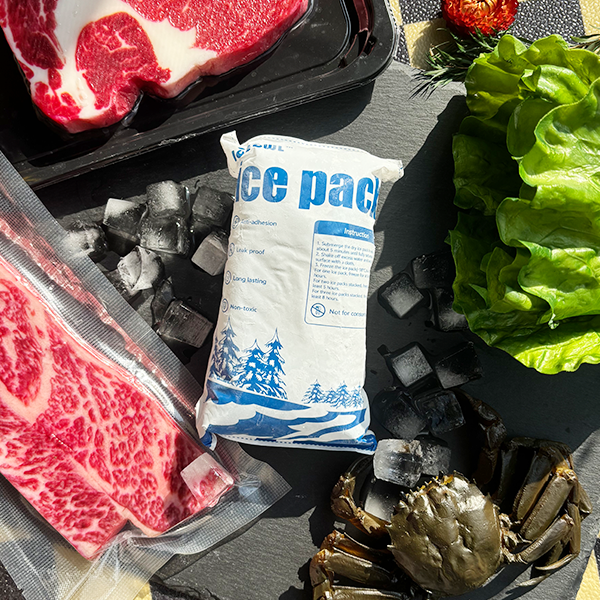
Cold chain meat shipping works when you control time, temperature, and proof as one system.
If chilled meat drifts above your safe limit or frozen meat partially thaws, you pay in refunds, chargebacks, and lost shelf life. Use a simple baseline many food-safety resources reference: keep refrigerated food at 40°F (4°C) or below and frozen food at 0°F (-18°C) or below, then design everything around avoiding “warm minutes.”
This article will help you:
Build a repeatable cold chain meat shipping SOP from pack-out to receiving
Set refrigerated meat shipping temperature requirements for chilled vs frozen lanes
Choose leakproof, handling-tough packaging that stays strong when wet
Run a last-mile cold chain meat delivery SOP that prevents doorstep warming
Use temperature monitoring for meat shipments without turning it into a tech project
Why does cold chain meat shipping fail most often?
Cold chain meat shipping fails when warm exposure stacks up during staging and handoffs.
cold chain meat shipping
Your trailer can be set correctly, yet your product still warms on the dock. The most expensive failures are usually “small” ones: a delayed pickup, doors held open, or slow put-away at receiving.
The 4 most common failure points you can fix fast
| Failure point | What you see | Why it happens | What it means for you |
|---|---|---|---|
| Warm staging | soft product, purge | dock congestion | shorter shelf life |
| Wet cartons | odor, collapse | leaks + condensation | damage claims rise |
| Handoff delays | warm spikes | missed windows | quality disputes |
| Missing proof | chargebacks | scattered records | lost revenue |
Practical tips you can use today
If your dock is busy: set a firm “time-out-of-cold” rule and enforce it.
If cartons get wet: fix leak control first, then review condensation drivers.
If disputes drag on: link temperature evidence to each shipment ID.
cold chain meat shipping
Real-world example: One shipper cut weekly claims by staging pallets only after the truck arrived and was pre-cooled. Less warm staging created more consistent arrivals.
What temperature targets should you use for cold chain meat shipping?
Cold chain meat shipping starts with one decision: chilled or frozen.
cold chain meat shipping
If you don’t choose a lane type per SKU, your packaging becomes guesswork. Your goal is not “cold sometimes.” Your goal is stable temperature with minimal warm minutes.
Chilled vs frozen targets (simple operational view)
| Lane type | Practical target | Biggest risk | What it means for you |
|---|---|---|---|
| Chilled meat | stay consistently cold (commonly ≤40°F / 4°C) | warm spikes | focus on dwell time |
| Frozen meat | stay solidly frozen (commonly ≤0°F / -18°C) | partial thaw/refreeze | focus on insulation + door discipline |
| Mixed loads | two targets in one load | drift + cross-contact | require separation and zoning |
Practical tips you can use today
Pick one target per SKU: fewer rules means fewer mistakes.
Add a time rule: define maximum minutes out of controlled cold zones.
Track “minutes above limit,” not averages: averages hide short spikes.
Real-world example: A distributor reduced “mystery thaw” complaints by pre-cooling trailers and tightening door-open discipline during loading.
How do you build leakproof packaging for cold chain meat shipping?
Meat cold chain packaging must do three jobs at once: hold temperature, prevent leaks, and survive handling. When leak control fails, cartons weaken fast and damage spreads across the pallet. If you fix one thing first, fix containment.
The 3-layer pack-out stack (easy to teach)
Primary containment: sealed inner bag, vacuum pack, or sealed tray
Secondary barrier + absorbency: second sealed bag plus absorbent pad/liner
Thermal shell: insulated liner + strong outer carton (and corner protection for pallets)
Packaging elements that drive outcomes
| Packaging element | What “good” looks like | What goes wrong | What it means for you |
|---|---|---|---|
| Inner seal | consistent, strong | micro-leaks | wet cartons |
| Absorbency | correctly sized | under-sized | odor + purge complaints |
| Carton strength | stays rigid when cold/wet | collapses when damp | crush claims |
| Pallet build | stable, protected corners | shifting, overhang | damage spreads quickly |
Practical tips and advice
Separate coolant from meat: direct contact can change texture and appearance.
Reduce air gaps: tight packing often beats adding more gel packs.
Protect corners: corner boards and good patterns stop “domino damage.”
Real-world example: A processor cut carton damage by upgrading carton grade and adding corner boards. The carrier stayed the same, but claims dropped.
Gel packs, phase-change, or dry ice for cold chain meat shipping?
Most cold chain meat shipping relies on refrigerated transport and insulation, not dry ice. Dry ice can be the right tool for frozen programs, but it adds training, marking, and package-venting requirements. Treat refrigerants like a controlled process, not a “warehouse hack.”
Cooling options in plain language
| Option | Best for | Watch-out | What it means for you |
|---|---|---|---|
| Reefer control | pallet freight | poor pre-cool | load warms early |
| Gel packs | parcels, short lanes | condensation/leaks | needs liners and layout |
| Phase-change packs | tight chilled band | wrong setpoint | requires SOP discipline |
| Dry ice | frozen delivery | marking/venting | strong freeze buffer with rules |
| Active containers | premium lanes | cost | use selectively |
Dry ice mini-checklist (keep it safe and audit-ready)
Venting: never seal dry ice in airtight packaging.
Marking: follow carrier/regulatory marking (often “Dry Ice / UN1845” + net weight).
Buffer planning: size for your timeline plus delay margin, then validate by testing.
Food contact control: keep dry ice from direct product contact to avoid quality damage.
Real-world example: A frozen program improved success by planning dry ice for an extra delay window, then validating on a pilot lane.
How do you control dwell time and handoffs in cold chain meat shipping?
Handoffs are where cold chain meat shipping breaks most often.
cold chain meat shipping
That’s when doors open and responsibility shifts between teams. Your strongest lever is a timed handoff plan with a named owner.
The “4-Clocks” method (turns chaos into data)
Track these clocks and set maximum minutes for each:
| Clock | What it measures | Why it matters | What it means for you |
|---|---|---|---|
| Pack-out clock | seal → pickup | warm starts drift | reduces early warming |
| Handoff clock | dock/terminal time | hidden exposure | prevents silent temp loss |
| Transit clock | travel time | sets buffer need | aligns promise to reality |
| Door clock | delivery attempt time | doorstep warming | lowers failed delivery losses |
A 10-minute dock SOP you can actually run
Pre-cool confirmation: truck arrived and is cold before staging.
Stage last, load fast: keep product in the cold room until loading starts.
Door discipline: reduce door-open time; close between pauses.
Receiving rule: prioritize cold-room put-away before paperwork.
Real-world example: A DC reduced warm events by stopping deliveries during shift change. Put-away speed improved immediately.
How do you monitor and prove cold chain meat shipping worked?
Proof turns cold chain meat shipping from “trust me” into “here’s the evidence.”
cold chain meat shipping
You don’t need maximum monitoring on every load. You need actionable monitoring tied to shipment IDs, especially on high-risk lanes.
Monitoring levels (pick one baseline, then upgrade selectively)
| Level | Best for | Limitation | What it means for you |
|---|---|---|---|
| Level 1: timestamps | all lanes | no temp curve | accountability improves fast |
| Level 2: data loggers | lane validation | post-trip | finds weak handoffs |
| Level 3: real-time | critical loads | needs response team | enables rescue actions |
| Level 4: integrated records | audits/recalls | setup effort | fastest investigations |
Build a simple “proof bundle” per shipment
Include:
photo of pallet condition at load
departure timestamp
logger ID + temperature summary linked to shipment ID
receiving timestamp + notes
KPI dashboard (simple, useful)
| KPI | How to measure | Good target | What it means for you |
|---|---|---|---|
| Warm exposure minutes | time outside control | trending down | better shelf-life consistency |
| On-time pickup | scan timestamps | high + stable | fewer warm starts |
| Temp compliance | logger sampling | stable in-range | stronger dispute defense |
| Leak rate | claims per 1,000 | near zero | fewer refunds |
| Rework/re-ice | ops logs | low | lower cost + fewer errors |
What compliance and labeling practices support cold chain meat shipping?
Sanitary transportation compliance for meat logistics is mostly about clean equipment, temperature control practices, training, and records. Keep it operational, not legalistic. Your goal is fewer rejections, fewer disputes, and faster corrective actions.
The “Clean, Separate, Control” rule
| Rule | What you do | Common miss | What it means for you |
|---|---|---|---|
| Clean | verify vehicle/tools | “looks clean” only | lowers contamination risk |
| Separate | raw vs ready-to-eat | mixed pallets | reduces cross-contact risk |
| Control | temperature + time | no dwell limits | prevents warm breaks |
Practical tips you can use today
Use one-page checklists with signatures: short beats perfect.
Record cleaning events: “we always clean” is not evidence.
Keep labels readable: smudged labels create receiving delays.
How do you price cold chain meat shipping without overspending?
Cold chain meat shipping feels expensive when you only track invoices. Track cost per successful delivery instead. When success rate rises, total cost often drops even if packaging costs slightly more.
Simple cost calculator (use in a spreadsheet today)
All-in cost per shipment =
Carrier fee + Packaging + Coolant + Labor + Expected claims
Cost per successful delivery =
All-in cost ÷ Success rate
| Input | Example | Why it matters | What it means for you |
|---|---|---|---|
| All-in cost | 18.00 | true spend per shipment | baseline for decisions |
| Success rate | 0.90 | in-range + on-time | reliability driver |
| Cost per success | 20.00 | real affordability metric | shows what failure costs |
Real-world example: One brand tightened delivery windows. Success rate rose, refunds fell, and total spend dropped.
2025 latest developments and trends in cold chain meat shipping
In 2025, cold chain meat shipping is shifting toward evidence-first operations. Companies measure dwell minutes, not just transit time.
cold chain meat shipping
They also tie temperature evidence to shipment IDs and lot IDs to speed disputes and recalls.
cold chain meat shipping
Latest progress snapshot (what you can apply now)
Exception-based monitoring: use loggers on high-risk lanes, not every load.
Dwell time as a KPI: docks are treated like the weakest refrigeration zone.
Better identifiers: 2D barcode readiness is rising as the GS1 “Sunrise 2027” push accelerates scanning upgrades.
cold chain meat shipping
Market insight (plain language)
Customers expect consistent shelf life, not “it was cold at pickup.”
Claims are more evidence-driven, so proof bundles matter more than opinions.
The best teams cut cost by fixing process first, not buying heavier packaging everywhere.
Frequently Asked Questions
1) What is the most important step in cold chain meat shipping?
Pre-cooling and dwell control matter most. If product warms during staging or receiving, shelf life drops quickly.
2) Do I need temperature monitoring for meat shipments on every load?
Not always. Start with lane validation and high-risk routes, then sample once performance stabilizes.
3) Why do boxes arrive wet in cold chain meat shipping?
Most wet arrivals come from small leaks or unmanaged condensation. Fix seals and absorbency before adding more coolant.
4) What causes “soft arrival” in chilled meat?
Usually warm staging, delayed handoffs, or long door-open time. Fix timing and discipline before switching carriers.
5) Can chilled and frozen meat ship together?
It can, but it’s risky. If you must mix, use zoning, physical separation, and a clear load plan.
Summary and recommendations
Cold chain meat shipping becomes reliable when you lock five basics: temperature targets, leakproof packaging, disciplined handoffs, usable proof, and simple exception rules.
cold chain meat shipping
Most failures come from warm minutes during staging and receiving, not from the road. If you standardize pack-out, control dwell time, and keep a proof bundle per shipment, you reduce spoilage, shorten disputes, and protect customer shelf life.
Action plan (clear CTA)
Today: set a firm “time-out-of-cold” limit and train the team.
Next shipment: require trailer pre-cooling and a fast load plan.
Within 14 days: create a proof bundle template (photos + timestamps + temp summary).
Within 30 days: review exceptions and fix the single worst warm point first.
About Tempk
At Tempk, we help teams make cold chain meat shipping repeatable under real warehouse pressure. We focus on temperature stability, leak control, and proof-ready routines that operators can follow without improvising. Our goal is simple: fewer warm breaks, fewer claims, and a program you can scale across seasons and lanes.
cold chain meat shipping
Next step: Share your shipment profile (chilled or frozen), typical transit time, and your top failure (wet cartons, soft arrivals, handoff delays). We’ll help you match packaging and monitoring to your lane risk and cost goals.
Cold Chain Fish Courses Solutions for 2025

Cold Chain Fish Courses Solutions for 2025?
Last updated: December 23, 2025. Cold cold chain fish courses solutions are practical training systems that teach your team how to keep fish safe and high-quality across real routes. In the first 50 words: cold chain fish courses solutions turn “keep it cold” into repeatable habits—time discipline, correct icing, tight packaging, and simple monitoring. Two anchor numbers help everyone learn fast: fresh fish aims near 0°C, and frozen targets -18°C or colder at the core.
This article will answer:
How a cold chain fish courses solutions curriculum checklist keeps training focused and fast
How dock dwell time control for fresh fish logistics cuts spoilage without new equipment
How cold chain fish courses solutions for drivers and warehouses reduce handoff mistakes
How to run a fish cold chain pack-out validation test before peak season
How a cold chain fish courses solutions KPI dashboard turns data into weekly actions
What are cold chain fish courses solutions, and who needs them?
Core answer: Cold chain fish courses solutions are training plus ready-to-use tools—SOPs, checklists, photos, and decision rules. They are not just classroom content. You need them if you touch fish at any point: receiving, packing, loading, transport, cross-dock, retail, or last-mile delivery. If quality failures feel “random,” it is usually missing repeatable steps.
Fish quality loss is rarely one dramatic mistake. It is small warm moments stacked together. A warm dock wait, a half-melted ice bed, or a leaky liner can trigger odor later. Training works when it stops those small losses early.
Cold chain fish courses solutions curriculum checklist: the minimum set
A starter curriculum should fit into one shift. Build depth later, after habits stick.
| Training block | What it teaches | Common gap | Practical meaning for you |
|---|---|---|---|
| Time discipline | staging limits + handoff timing | “just a minute” culture | fewer warm spikes |
| Temperature basics | where to measure + what to do | random checks | faster corrections |
| Pack-out discipline | sealing, barriers, absorbent, fit | “everyone packs differently” | fewer wet boxes |
| Receiving SOP | quick accept/reject checks | slow receiving | fewer disputes |
| Incident playbook | delay/excursion/leak actions | panic decisions | fewer costly reships |
Practical tips you can use today
Start with a failure map: list every handoff and how long it really takes.
Train the busiest step first: packing and loading usually drive most claims.
Use checklists, not memory: busy teams forget steps under pressure.
Real-world example: A seafood distributor cut complaints after adding a 2-minute loading checklist and a strict staging-time rule.
Which skills should cold chain fish courses solutions teach first?
Core answer: The fastest wins in cold chain fish courses solutions come from three skills: (1) fast chilling habits, (2) handoff time control, and (3) consistent pack-out. These three improve outcomes even before you buy new equipment. They also scale well across sites.
Think of fish freshness like a battery that drains faster when warm. Every warm minute spends quality budget. Training should make that “spend” visible and preventable.
The first 3 modules that usually deliver results
| Module | What “good” looks like | Field habit to teach | Practical meaning for you |
|---|---|---|---|
| Chilling and icing | fish stays near 0°C in practice | ice contact and layering | better smell and texture |
| Handoff timing | warm exposure stays inside limits | timer + signoff | fewer hidden spoilage events |
| Pack-out consistency | same pack every time | photo standard + seal check | fewer wet-box rejects |
Practical tips you can use today
Teach one habit per shift, not everything at once.
Post one pack-out photo per SKU above the packing station.
Make it visual: short posters beat long manuals every time.
Real-world example: A pack house improved consistency by posting one pack-out diagram and auditing it weekly.
How do cold chain fish courses solutions work by job role?
Core answer: Cold chain fish courses solutions succeed when training is role-based. Drivers need different skills than packers. Receivers need different checks than QA. Role-based training reduces confusion and stops “everyone guessing.” It also cuts training time because content feels relevant.
When you train by role, you also make ownership clear. Ownership is the fastest way to reduce repeat failures.
Cold chain fish courses solutions for drivers and warehouses: a role map
| Role | Biggest risk they control | What to train | Practical meaning for you |
|---|---|---|---|
| Receiving | warm dock time | fast checks + rapid put-away | fewer early failures |
| Picking/Packing | inconsistent pack-out | sealing + barrier + absorbent | fewer leaks |
| Loading | open-door time | fast loading standard | fewer spikes |
| Driver | stop sequence + door openings | “doors closed unless loading” | fewer last-mile issues |
| Customer support | delayed delivery handling | triage script + escalation | fewer unnecessary reships |
Practical tips you can use today
Give drivers a stop order: deliver highest-risk chilled items first.
Give receivers a five-minute rule: no “staged and forgotten” pallets.
Give packers photo cards: one image beats one page of text.
Real-world example: A seafood e-commerce team reduced refunds after giving drivers a two-page summer route guide.
Cold chain fish courses solutions: how do you keep fresh fish at 0–4°C in transit?
Core answer: Cold chain fish courses solutions should teach stable cold near 0°C while avoiding direct “hard-freeze contact” that can damage texture. Your goal is stable cold around the product, not extreme cold on one surface. Moisture control matters as much as temperature, because wet cartons trigger rejects and distrust.
Fresh fish ships best when you manage three zones: cold source, product stability, and moisture control. This helps packers understand why each layer exists.
How to keep fresh fish at 0–4°C: the “3-zone” pack-out
| Pack-out zone | What it does | Common mistake | Practical meaning for you |
|---|---|---|---|
| Cold source zone | absorbs incoming heat | coolant touches fish directly | uneven texture |
| Product stability zone | keeps fish in stable center | too much headspace | faster warming |
| Moisture zone | protects outer carton and labels | no liner or weak closure | wet-box claims |
Ice and coolant habits that teams remember
Ice is a “cold battery.” If contact is poor, the battery can’t reach the fish. Teach these habits using photos and quick drills.
Layer coolant and product so cold contact is spread, not top-only.
Use a barrier layer when needed to prevent direct freeze contact.
Plan for some cold capacity remaining at delivery, not “barely enough.”
Practical tips you can use today
Use a barrier layer: it reduces direct cold spots and texture damage.
Reduce headspace: empty air warms faster than fish mass.
Seal leaks twice: inner seal plus liner closure prevents messy failures.
Real-world example: A salmon shipper improved arrival quality after adding a barrier layer and better absorbent placement.
Cold chain fish courses solutions for frozen fish: what changes?
Core answer: In cold chain fish courses solutions, frozen fish training focuses on preventing thaw-and-refreeze events. These events can be invisible at delivery but show up later as drip loss and poor texture. Frozen training is mainly about insulation discipline, minimal openings, and lane-based timing control.
Frozen logistics is simpler to teach when you use one rule: protect the frozen state and avoid warm interruptions.
Frozen shipment risks and the training fixes
| Frozen risk | What causes it | Training fix | Practical meaning for you |
|---|---|---|---|
| Partial thaw | delays + weak insulation | lane-based pack-out rules | fewer hidden defects |
| Refreeze cycle | thaw then cold snap | do-not-open discipline | better texture |
| Carton collapse | moisture + rough handling | liner + stronger outer | fewer damages |
Practical tips you can use today
Load frozen last: keep it in cold storage until final moment.
Teach “one open equals one risk.” Openings are the biggest enemy.
Use lane tiers: short routes and long routes should not share one pack-out.
Real-world example: A frozen fish distributor reduced soft-edge complaints after standardizing long-lane pack-outs.
What temperature checkpoints should cold chain fish courses solutions include?
Core answer: Cold chain fish courses solutions should teach checkpoints, not random checks. A checkpoint is repeatable: same place, same method, same frequency. Repeatability turns measurements into trend control. Most operations only need three checkpoints to start: post-chill, dispatch, and receiving.
Checkpoints also protect you during claims. When you can show clean records, disputes shrink.
Checkpoint design that works under pressure
| Checkpoint | When to check | What to record | Practical meaning for you |
|---|---|---|---|
| Post-chill | before packing | time + quick temperature note | confirms starting quality |
| Dispatch | door close / before departure | temperature + timestamp | captures handoff risk |
| Receiving | on arrival | condition + photo + temp | faster claim resolution |
Practical tips you can use today
Record time out of cold room for every pallet or tote.
Use clear pass/fail triggers with one escalation step.
Avoid one-off checking: if it is not repeatable, it will not improve.
Real-world example: A 3PL reduced disputes after logging “door close time + temperature” on every seafood load.
How should cold chain fish courses solutions teach packaging and leak control?
Core answer: Cold chain fish courses solutions must treat packaging as a system: containment, barrier, absorbent, insulation, and closure. Most customer trust problems come from wet cartons and odor impressions. Packaging training prevents those issues even when temperatures are “fine.”
Your packaging module should also teach fit. Bad sizing creates dead air or crushed product. Both increase complaints.
Leak control for fresh fish: the 3-layer rule
| Packaging layer | What it does | Common mistake | Practical meaning for you |
|---|---|---|---|
| Primary containment | holds drip at the source | weak closure | mess spreads |
| Barrier liner | protects carton strength | liner left open | wet-box rejects |
| Absorbent placement | captures pooled liquid | too little or wrong spot | stains and odor |
Near-solution comparison: “good insulation” is not enough
| Approach | What you improve | What you still risk | Better combined approach |
|---|---|---|---|
| Insulation only | longer hold time | leaks and wet cartons | add liner + absorbent |
| Coolant only | colder start | direct contact damage | add barrier layer |
| Strong carton only | better handling | moisture failure | add containment system |
Practical tips you can use today
Standardize closure: one closure method reduces errors quickly.
Place absorbents in low points where liquid pools first.
Teach a 5-second seal check before closing the shipper.
Real-world example: A fish shipper reduced wet-box claims after improving liner closure discipline and moving pads to bottom corners.
Cold chain fish courses solutions monitoring: which KPIs matter?
Core answer: Monitoring in cold chain fish courses solutions should feel like coaching, not punishment. If people fear sensors, they hide problems. If people trust sensors, they fix root causes. Start with audits on high-risk lanes, then scale when you have clear actions.
You only need a few KPIs to start. More metrics often means less action.
Cold chain fish courses solutions KPI dashboard: the few numbers that matter
| KPI | What it measures | Why it matters | Practical meaning for you |
|---|---|---|---|
| Excursion rate | % shipments outside target | reveals lane risk | fewer surprises |
| Dock dwell minutes | staged time at dock | shows process gaps | faster operations |
| Wet-box rate | incidents per 1,000 | shows containment gaps | fewer claims |
| Damage rate | crushed/shifted units | shows handling issues | better yield |
| Record completeness | % lots with full logs | improves audit readiness | less disruption |
Practical tips you can use today
Tag claims by cause: warm, leak, crush, delay, or unknown.
Review weekly for 15 minutes with ops + QA + transport together.
Reward reporting: honest logs create your biggest improvements.
Real-world example: A seafood network cut losses after identifying one cross-dock as the main spike point.
Cold chain fish courses solutions incident response: what should your playbook look like?
Core answer: Cold chain fish courses solutions must include an incident playbook for delays, excursions, and leaks. Incidents are predictable. The best teams respond quickly and consistently. A short decision tree prevents expensive overreactions and unsafe underreactions.
Your playbook should be short enough to use during a crisis. If it needs a meeting, it is too long.
Incident decision tool (interactive)
Answer in order:
Was the shipment delayed beyond your lane buffer?
Did temperature exceed your limit longer than allowed?
Is packaging compromised (leaks, crushed corners, open seals)?
Then take the matching action:
| Incident type | First action | Second action | Practical meaning for you |
|---|---|---|---|
| Temperature excursion | quarantine | review trip story | prevents unsafe release |
| Leak / wet box | contain + isolate | re-pack if safe | protects brand trust |
| Crush damage | inspect + photo | adjust dunnage rule | reduces repeats |
| Delay without excursion | enhanced inspection | document and release | avoids unnecessary reships |
Practical tips you can use today
Teach “stop the bleed”: contain leaks before you debate fault.
Use one escalation channel: confusion causes slow response.
Log incidents by lane: lane fixes beat random fixes.
Real-world example: A wholesaler reduced repeat failures after adding a one-page incident tree to training.
A ready-to-use 30-day rollout plan for cold chain fish courses solutions
Core answer: The best cold chain fish courses solutions are short, practical, and repeatable. A 30-day rollout works because it builds habits, then locks them with proof. This plan uses micro-lessons, job aids, and simple audits. It also keeps training manageable during peak volume.
Week-by-week rollout
| Week | Focus | Deliverable | Practical meaning for you |
|---|---|---|---|
| Week 1 | Time discipline | timer rule + handoff checklist | fewer warm spikes |
| Week 2 | Pack-out + leak control | pack-out photos + seal check | fewer wet boxes |
| Week 3 | Temperature checkpoints | post-chill, dispatch, receiving logs | faster control |
| Week 4 | Monitoring + improvement | 10 audit trips + one fix | continuous gains |
Fish cold chain pack-out validation test: a 3-day sprint
Use this sprint before scaling a new pack-out. It is simple and repeatable.
Day 1 (Baseline): normal pack-out, normal route, inspect arrival.
Day 2 (Heat stress): simulate warm exposure window, inspect again.
Day 3 (Delay + handling): add dwell time and handling stress, inspect seals.
| Test day | What you measure | Pass signal | Practical meaning for you |
|---|---|---|---|
| Baseline | stable arrival condition | consistent quality | confidence on normal days |
| Heat stress | peak + duration | no extended excursion | fewer summer failures |
| Delay/handling | leaks + damage | carton stays clean | fewer “bad day” claims |
Practical tips you can use today
Keep sensor placement consistent by SKU type.
Photograph pack-out so training stays visual and repeatable.
Change one variable at a time to avoid confusing results.
Real-world example: A tuna shipper avoided a costly rollout after a sprint revealed a simple sealing flaw.
2025 latest developments and trends in cold chain fish courses solutions
Trend overview: In 2025, cold chain fish courses solutions are shifting from long classroom sessions to micro-training plus tools. Companies want job aids, photos, lane-based standards, and tighter proof. Buyers also push for better traceability habits and faster record retrieval. Training is becoming a competitive advantage, not a checkbox.
Latest developments you can use immediately
Microlearning: 5–8 minute lessons paired with on-station checklists
Lane-based standards: one pack-out per lane tier, not one universal method
Smarter monitoring: targeted audits on high-risk lanes with clear actions
Role-based refreshers: drivers, receivers, packers each get focused drills
Customer experience control: fewer wet boxes, cleaner unboxing, clearer handling notes
Market insight: Customers do not grade your effort. They grade the fish they receive. Cold chain fish courses solutions that reduce variability usually increase repeat purchases.
Common questions about cold chain fish courses solutions (FAQ)
Q1: What are cold chain fish courses solutions in simple terms?
They are training plus SOP tools that help your team keep fish cold, sealed, and protected across real lanes.
Q2: What is the biggest cause of fish quality loss during shipping?
Short warm exposure at handoffs. Timer rules and fast loading discipline reduce this risk quickly.
Q3: How do cold chain fish courses solutions reduce wet-box complaints fast?
Standardize secondary containment and absorbent placement. Add a 5-second seal check before closing.
Q4: Do I need expensive monitoring for cold chain fish courses solutions to work?
No. Start with process discipline and a few audit trips on high-risk lanes, then scale.
Q5: How often should I refresh cold chain fish courses solutions training?
Use weekly micro-refreshers in peak season. Use deeper refreshers quarterly or after incident patterns.
Summary and recommendations
Cold chain fish courses solutions work when they turn cold chain goals into repeatable habits. Start with time discipline, checkpoints, and consistent pack-out. Make training role-based, so each team learns what they control. Validate pack-outs before scaling, and track a few KPIs that drive weekly action. If you reduce warm minutes and wet boxes, you usually reduce complaints fast.
Next-step action plan (clear CTA)
Map your handoffs and measure dock dwell minutes for one week.
Launch Week 1–2 training: timer rule + pack-out photo standard.
Add three checkpoints and a one-page receiving SOP.
Run 10 audit trips on your highest-claim lane and fix one root cause.
Scale only the version your team can repeat on the busiest day.
About Tempk
At Tempk, we help seafood teams turn cold chain goals into daily routines people can follow under pressure. We support training design, pack-out standardization, and validation workflows that reduce warm minutes and wet-box failures. We focus on practical execution: simple SOPs, visual standards, and improvement loops that show progress.
Call to action: Share your product format (fresh or frozen), lane duration, handoff count, and top failure pattern. We can outline a pilot-ready cold chain fish courses solutions plan you can train and validate in 30 days.
Cold Chain Seafood QA Procedures (2025 Guide)
Cold Chain Seafood QA Procedures: What to Standardize?
If you want fewer rejects and calmer audits, you need cold chain seafood QA procedures that work on busy days. You are not chasing “perfect paperwork.” You are building predictable control from supplier to dock to cold room to shipment. In real programs, key HACCP functions must be handled by a trained (or otherwise qualified) individual under 21 CFR 123.10. And for shellfish traceability, common guidance explains keeping identification records for at least 90 days.
This article will help you:
- Build cold chain seafood ingredients quality assurance procedures your team can train and audit
- Standardize receiving checks using time/temperature/condition/docs
- Add shellfish controls (NSSP mindset + traceability discipline) without slowing operations
- Turn training into daily habits with cold chain shellfish equipment courses and drills
- Use simple decision tools to match procedure strength to your real risk

Why do cold chain seafood QA procedures fail in real life?
Cold chain seafood QA procedures fail when they live in binders, not in hands. Seafood moves fast, stays wet, and gets handled many times. That makes small slips add up.
Here are the usual “silent killers” you cannot see by looking:
- Dock minutes: product sits warm while people “get ready”
- Uneven cooling: air is cold, but the product core stays warmer
- Meltwater contact: ice helps, but meltwater can damage quality and spread contamination
- Weak traceability: missing lot codes or mixed lots create recall chaos
A simple metaphor that helps teams remember: your cold chain is like a seatbelt. You only notice it when you need it.
Which frameworks should cold chain seafood QA procedures align with?
Your cold chain seafood QA procedures should match references auditors and buyers recognize. You do not need to quote them in your SOPs. You need to follow their logic: hazards → controls → monitoring → records → corrective actions.
Use these anchors:
- FDA Fish and Fishery Products Hazards and Controls Guidance (hazards + appropriate controls; “current thinking”). (U.S. Food and Drug Administration)
- Seafood HACCP regulation (21 CFR Part 123) and training expectation (21 CFR 123.10).
- Codex Code of Practice for Fish and Fishery Products (handling, storage, distribution, and sale practices).
- National Shellfish Sanitation Program (NSSP) for bivalve molluscan shellfish sanitation and interstate commerce uniformity.
Practical takeaway: Choose one “house standard” and train to it. Then map buyer and state requirements onto the same workflow.
What is the 10-part blueprint for cold chain seafood QA procedures?
If you cover these ten areas, your system stays stable during peak weeks.
- Supplier approval and written specifications
- Pre-shipment requirements (temps, packaging, documents)
- Receiving inspection (time + temperature + condition + docs)
- Risk-based sampling and testing plan
- Storage zoning and rotation (FIFO)
- Sanitation + prerequisite programs (cleaning, allergen separation)
- Process controls during handling (time/temperature exposure)
- Pack-out rules (ice, insulation, staging limits)
- Monitoring and record review cadence
- Corrective actions and continuous improvement
Now let’s make each one usable.
How do cold chain seafood QA procedures start with supplier approval?
Supplier approval is the cheapest control you will ever buy. If your suppliers drift, you will inspect forever and still lose product.
Standardize supplier approval with specs, proof-of-control, and a scorecard. Your goal is simple: the supplier can keep product cold, protected, and documented—every time.
Supplier scorecard you can use
| Scorecard area | What you measure | Pass/Fail trigger | What it means for you |
|---|---|---|---|
| Temperature control | shipping temp evidence | repeated warm arrivals | fewer rejects |
| Packaging integrity | leaks, crushed cartons | frequent damage | better yield |
| Documentation | lot codes, dates, COA | missing key fields | faster audits |
| Responsiveness | corrective action speed | slow/no response | lower repeat risk |
| Consistency | lot-to-lot variation | high variation | easier planning |
Practical tips you can apply tomorrow
- If you buy high-risk species: tighten time/temperature expectations and documentation rules.
- If you buy frozen: watch for thaw/refreeze signs and weak case integrity.
- If you buy ready-to-eat (RTE): require stronger sanitation verification and handling controls.
Real-world example: One processor reduced weekly rejects by requiring a clear lot-code format and a shipping temperature record on every load. Missing record became a “hold” condition.
What should cold chain seafood QA procedures require at receiving?
Receiving is the heartbeat. If you catch problems here, you prevent downstream waste.
At receiving, check four things in this order: time, temperature, condition, documentation. Record the result, not just “OK.”
Receiving checklist (fast and repeatable)
- Time
- On-time arrival?
- How long staged at the dock before inspection?
- Temperature
- Measure using one standard method
- Record the number + location measured
- Condition
- Packaging intact?
- Leaks, odor, crushed corners, excessive drip?
- Documentation
- Lot code, dates, supplier name
- Shellfish identification paperwork when applicable (do not “file later”)
A receiving decision table (accept vs hold vs reject)
| Receiving finding | Accept | Hold for QA | Reject | What it means for you |
|---|---|---|---|---|
| Temp in spec | ✅ | — | — | normal flow |
| Slightly warm + short time | — | ✅ | — | test and decide fast |
| Warm + long delay | — | ✅ | ✅ | high spoilage risk |
| Leaks / meltwater damage | — | ✅ | ✅ | quality + contamination risk |
| Missing lot code / weak traceability | — | ✅ | ✅ | recall risk |
Practical receiving tips that save product
- Pre-stage tools: thermometer, wipes, labels, camera.
- Use a “receiving minute rule”: product should not sit “waiting for someone.”
- Train one measurement method so decisions stay consistent.
What temperature rules should cold chain seafood QA procedures train your team on?
Your team does not need to be scientists. They need repeatable habits.
Teach three temperature habits: move fast, measure consistently, and cool correctly when you cook. For cooked foods that require cooling, FDA educational materials describe a two-stage cooling path: 135°F to 70°F within 2 hours, then 70°F to 41°F or less within the next 4 hours.
Why this belongs in seafood ingredients QA
Because “ingredients” often include cooked or RTE components:
- cooked shrimp
- crab meat
- smoked seafood items
- prepared seafood mixes
If cooling is wrong, packaging cannot fix it later.
Shellfish note (plain-language)
Shellfish programs place heavy emphasis on time, temperature, and traceability, and the NSSP exists to support public health protection through uniform shellfish sanitation approaches. Your SOP should clearly define “dock-to-cold” minutes and your documentation routine.
| Situation | What you standardize | Why it matters to you |
|---|---|---|
| Busy dock | max staging minutes | prevents hidden warm periods |
| Cold holding | target range + alarm rule | reduces spoilage claims |
| Cooling cooked items | 2-stage cooling routine (U.S. Food and Drug Administration) | avoids growth risk |
| Shellfish handling | traceability discipline + rapid chilling | supports investigations |
How do cold chain seafood QA procedures design a risk-based sampling and testing plan?
Testing should verify control, not create bottlenecks.
Standardize three layers: sensory checks, temperature checks, and targeted lab testing for high-risk categories. Use your own trend data to adjust frequency.
Starter testing frequency table
| Ingredient type | Typical risk profile | Suggested verification | Practical meaning for you |
|---|---|---|---|
| Frozen raw blocks | moderate | receiving temp + package check | catches thaw/refreeze |
| Fresh chilled fillets | higher | temp + sensory + periodic micro | reduces spoilage disputes |
| Ready-to-eat seafood | high | tighter micro plan + sanitation verification | protects brand |
| Mixed seafood ingredients | variable | verify each component + mixing controls | avoids “weak link” failures |
Practical tip
Start tighter, then reduce only after you see stable trends for several cycles. Do not “relax” because you are busy.
How do cold chain seafood QA procedures control storage zones and FIFO?
Storage is where good receiving can be ruined by bad habits.
Zone by risk, protect airflow, and rotate inventory using FIFO (first in, first out). Most drift comes from door time, blocked fans, and mis-zoning.
Cold room zoning layout you can copy
| Zone | Put this here | Keep away from | What it means for you |
|---|---|---|---|
| Cold core zone | RTE / most sensitive | door area | best protection |
| Raw zone | raw fish/shellfish | RTE items | reduces cross-contact |
| Allergen/label zone | clearly identified allergen items | unlabeled items | fewer label errors |
| Quarantine zone | holds, suspect lots | production pick zone | prevents accidental use |
Practical storage tips
- Mark floor lanes so pallets do not block airflow.
- Use a “door discipline” rule: who opens, when, and how long.
- Put the oldest lot in the easiest-to-grab spot.

Which sanitation prerequisites make cold chain seafood QA procedures work?
You cannot HACCP your way out of poor sanitation.
Standardize cleaning schedules, verification, and tool separation. Keep it simple and visible.
Sanitation checklist (short and auditable)
- Clean and sanitize food-contact surfaces on a schedule
- Keep tools off the floor and stored dry
- Separate raw and RTE tools (color coding helps)
- Verify sanitizer concentration with simple test strips
- Document corrective actions when verification fails
If you use ATP testing, explain it to the team like this: “It’s a fast cleanliness check, not a magic shield.”
How do cold chain seafood QA procedures manage ice, insulation, and transfers?
If you move ingredients between sites or stage outside refrigeration, packaging becomes part of QA.
Standardize pack-out by lane: duration, ambient heat, and delay risk. Insulation slows change. It does not create cold.
Pack-out design table (simple)
| Transfer type | Insulation level | Coolant approach | What it means for you |
|---|---|---|---|
| <4 hours local | light | minimal ice + melt control | low cost, high discipline |
| 4–24 hours | medium | ice + barriers + drain control | stable day routes |
| 24–72 hours | high | higher insulation + monitoring | fewer long-lane claims |
Practical pack-out tips
- Keep product above meltwater (racks, trays, barriers).
- Prevent leaks with liner integrity checks.
- Seal fast and minimize open-lid time.
Which cold chain shellfish equipment courses make your QA stick?
Procedures fail when training is vague. Courses work when they build muscle memory.
If your operation performs key HACCP functions, regulations specify those functions must be done by a trained (or otherwise qualified) person under 21 CFR 123.10. (ecfr.gov) For bivalve shellfish, the NSSP framework supports consistent sanitation expectations across interstate commerce. (U.S. Food and Drug Administration)
Course-path planner (pick your lane)
| Your role lane | What you should learn | What changes for you |
|---|---|---|
| Operations | receiving, icing, staging, loading | fewer warm lots |
| Quality | monitoring, calibration, records | faster accept/hold calls |
| Compliance | HACCP basics, sanitation controls | calmer audits |
| Maintenance | refrigeration uptime, alarms, defrost | less downtime loss |
| Leadership | drills, reviews, corrective actions | fewer repeats |
“Proof of practice” drills (15 minutes each)
- Receiving drill: measure → log → decide (accept/hold/reject)
- Cooler loading drill: airflow-first stacking and door discipline
- Thermometer drill: verify one “gold standard” thermometer monthly
Practical case: Teams often stop excursions only after adding hands-on equipment drills. Slides alone do not change dock behavior.
How do cold chain seafood QA procedures stay audit-ready without paperwork overload?
Records should prove control, not punish people.
Use one-page logs that match work steps, then review weekly. If logs are not reviewed, they become dead paper.
Minimum record set (starter pack)
- Receiving log (time, temp, condition, lot code, decision)
- Storage temperature check (daily + exception notes)
- Sanitation verification log (what, when, verified by)
- Hold/release log (why held, what tests, who released)
- Corrective action log (what failed, what changed)
Practical tips
- Use checkboxes over long sentences.
- Add one “notes” line for exceptions only.
- Train supervisors to close loops weekly.
What corrective actions should cold chain seafood QA procedures pre-write?
Corrective actions are where QA becomes real. If you do not pre-write them, people improvise.
Pre-write corrective actions for your top failures: warm receiving, damaged packaging, missing documentation, and cooling deviations. Clear steps protect speed and consistency.
Corrective action table (copy/paste)
| Failure | Immediate action | Decision owner | Prevent recurrence |
|---|---|---|---|
| Warm at receiving | hold + test + shorten shelf life if needed | QA lead | update lane rules, supplier feedback |
| Leaking cartons | segregate + inspect cross-contact | Ops + QA | upgrade liner, retrain sealing |
| Missing lot code | hold until traceability fixed | QA | supplier requirement + reject policy |
| Cooling deviation | rapid chill + evaluate discard criteria | Food safety lead | retrain cooling, equipment check |
Interactive tools: Build your QA + training plan in 5 minutes
Tool 1: QA Procedure Strength Selector (score 0–12)
Ingredient sensitivity
- 0 = frozen stable
- 2 = chilled raw
- 4 = RTE or high-risk species
Process complexity
- 0 = receive/store only
- 2 = cutting/portioning
- 4 = cooking/cooling or mixing
Distribution exposure
- 0 = short, controlled
- 2 = mixed handling
- 4 = long routes or frequent delays
Total score: ____ / 12
Match your level
- 0–3 (Lean): strong receiving + FIFO + basic logs
- 4–7 (Standard): add risk-based testing + zoning + weekly trend review
- 8–12 (High-control): tighter verification + more frequent review + corrective action drills
Tool 2: Training Stack Roadmap (Yes/No)
Answer Yes/No:
- Do you perform HACCP plan work or record review? (ecfr.gov)
- Do you handle bivalve shellfish in regulated channels (NSSP mindset)? (U.S. Food and Drug Administration)
- Do you have repeat temperature incidents or unknown warm minutes?
- Are your thermometers verified on a schedule?
- Do new hires touch seafood within their first week?
If you answered Yes to 1–2: prioritize HACCP-aligned training + shellfish sanitation orientation. (ecfr.gov)
If you answered Yes to 3–4: add monitoring + equipment drills.
If you answered Yes to 5: build weekly micro-lessons and a 30-day onboarding path.
2025 trends shaping cold chain seafood QA procedures
In 2025, the winning systems focus on proof, not volume.
Latest developments snapshot
- More buyer pressure for “prove it” records: fewer forms, better decisions.
- More focus on hazards + controls clarity as described in FDA’s seafood hazards guidance. (U.S. Food and Drug Administration)
- More seasonal risk discipline for shellfish: Vibrio levels are higher in May through October, so summer SOPs matter.
- More standard cooling education: two-stage cooling remains a core operational skill.
Market insight (simple): Buyers do not ask, “Did you try?” They ask, “Can you show control?”
Frequently Asked Questions
Q1: What is the fastest starting point for cold chain seafood QA procedures?
Start with receiving: time, temperature, condition, and documentation. Make “hold vs accept” rules visible.
Q2: Do I need HACCP training to run seafood QA well?
If you perform key HACCP functions, 21 CFR 123.10 specifies trained or qualified individuals must perform them. (ecfr.gov)
Q3: Why do shellfish programs care so much about record retention?
FDA materials describe maintaining molluscan shellfish identification records for at least 90 days to support traceback. (U.S. Food and Drug Administration)
Q4: What temperature skill reduces the most disputes?
Consistent measurement technique. “Same spot, same depth, same timing” ends many arguments.
Q5: What’s different about May–October operations?
Vibrio levels are higher in May through October, so faster movement and tighter checks help.
Q6: How do I keep QA from slowing production?
Use one-page logs, checkboxes, and exception-only notes. Make QA steps match work steps.
Summary and recommendations
Strong cold chain seafood QA procedures come from predictable habits: approve suppliers, standardize receiving, store by zone with FIFO, verify sanitation prerequisites, and pre-write corrective actions. Align your logic to recognized guidance, but keep daily tools simple and fast. A weekly review beats a yearly scramble, because problems grow in the dark.
Action plan (7-day sprint)
- Day 1–2: finalize receiving checklist + one-page log
- Day 3–4: set cold room zones + FIFO labels
- Day 5: run a meltwater-control drill
- Day 6: write corrective actions for your top 3 failures
- Day 7: do a 10-minute weekly review and lock improvements
About Tempk
At Tempk, we help cold chain teams turn packaging, insulation, monitoring, and SOPs into repeatable QA systems. We focus on practical receiving discipline, airflow-first cold storage habits, and proof-of-control workflows that reduce rejects. We also support training-to-operations rollouts so your procedures survive turnover and peak season.
Next step: Share your ingredient types (fresh, frozen, RTE), route duration, and your top complaint (odor, leaks, temperature, documentation). We will suggest a procedure level, a drill plan, and the minimal records you need.
How to Reduce Cold Chain Express Shipping Cost (2025)
Cold chain express shipping cost can feel unpredictable, but it follows repeatable rules. Your invoice is usually driven by billable weight (often DIM), service speed, and stacked surcharges . In 2025, “silent” add-ons can add 20–40% to what you expected to pay . If you learn to measure cost the same way carriers charge it, you can cut spend without raising temperature risk.
In this guide, you’ll learn:
- How billable weight for cold chain parcels drives cold chain express shipping cost
- A simple cold chain express shipping cost calculator you can reuse for every lane
- How to reduce fuel surcharge impact on express shipping with better planning
- How packaging choices lower insulated packaging cost for cold chain without losing hold time
- Which hidden fees inflate cold chain express shipping cost, and how to avoid them
Why does cold chain express shipping cost spike so fast?
Cold chain express shipping cost spikes because you’re paying for speed, space, and temperature protection at once . Express networks price the time certainty, then charge you by actual weight or dimensional weight (DIM), whichever is higher . Cold chain packaging is often “puffy” with insulation and coolant, so DIM climbs quickly and your cost follows .
Cold chain express shipping cost is easiest to understand as a “stack,” not a single number . You start with base transport, then surcharges, then packaging and process cost. In late 2025, fuel add-ons can land around the ~20% range in some programs, and some express guides list an $8 dry ice UN1845 fee per shipment . You don’t need perfect data—just a consistent method.
Billable weight (actual vs DIM): the #1 cost lever
DIM weight is how carriers charge you for space, not just pounds . If your insulated carton is large, DIM can beat actual weight even when the product is light. That’s why right-sizing usually beats rate negotiation as a first move .
| Cost driver | What it changes | What you control | What it means for you |
|---|---|---|---|
| Billable weight (DIM vs actual) | Base rate and many add-ons | Carton size, insulation thickness, void fill | Often the biggest lever on cold chain express shipping cost |
| Service speed | Base rate | Cutoffs, lane choices, receiving windows | Faster usually costs more |
| Fuel and accessorials | Final invoice volatility | Carrier mix, address strategy, packaging geometry | “Silent” fees can dominate totals |
Practical tips you can use today
- If the box looks too big for what’s inside, DIM is likely inflating cold chain express shipping cost
- If you ship to residential or remote areas, expect accessorials to matter as much as base rate
- Treat fuel as a moving input, not a constant
Practical case: A light biotech shipment billed like a heavy parcel because the insulated carton was oversized. After resizing the carton and slimming the coolant set, cold chain express shipping cost dropped without more excursions .
How do you estimate cold chain express shipping cost before you ship?
You estimate cold chain express shipping cost by calculating billable weight first, then layering the surcharges you can predict . The goal is not “perfect pricing.” The goal is a repeatable estimator that reduces surprises and protects margin.
Start with three actions: measure the outer carton, calculate billable weight, then add surcharges and packout cost . Many operations also add labor minutes and a small “risk cost” line for reships. That turns cold chain express shipping cost into something finance and ops can both forecast.
A repeatable 7-step estimator (works for every lane)
- Measure packed carton outer dimensions (L × W × H)
- Estimate DIM weight using your contract divisor (many teams model scenarios if unsure)
- Billable weight = max(actual, DIM) (apply rounding rules)
- Choose service level (overnight vs 2-day)
- Add likely surcharges (fuel, residential, delivery area, handling, oversize)
- Add packout BOM + labor + QA steps
- Add “failure cost” (refunds/reships) as a small budgeting guardrail
A 10-minute six-line worksheet (your cost “truth table”)
A strong estimate of cold chain express shipping cost includes transport, surcharges, packaging, monitoring, labor, and risk . This is the fastest way to stop under-quoting shipping and overpaying for emergencies.
| Line | What to include | Fast way to estimate | Why it matters |
|---|---|---|---|
| 1 | Base express transport | Last 30-day average by lane | Your baseline |
| 2 | Surcharges | Current fuel + handling patterns | Your volatility driver |
| 3 | Packaging + coolant | BOM cost per packout | Your most controllable cost |
| 4 | Monitoring | Use only where needed | Proof + fewer disputes |
| 5 | Labor | Minutes × labor rate | Hidden cost at scale |
| 6 | Risk cost | Reship rate × replacement cost | Penalty for uncertainty |
Simple formula:
cold chain express shipping cost = (Line 1 + Line 2) + Line 3 + Line 4 + Line 5 + Line 6
Practical tips and advice
- Use billed weight, not scale weight, because dimensional rules often dominate
- Add a “rejection cost” line if you ship dry ice, because one rejection can cascade
- Update fuel weekly (or at least monthly) so your model matches reality
Practical case: A frozen dessert seller added a risk-cost line, then improved packouts. Refunds fell, and cold chain express shipping cost dropped more than any base-rate discount .
Which hidden fees inflate cold chain express shipping cost the most?
Fuel and accessorials are the biggest repeat offenders in cold chain express shipping cost, especially when the parcel stops being “standard” . Oversize, overweight, non-conveyable shapes, remote delivery, and residential classification can stack. That’s how “silent” add-ons reach 20–40% of invoices .
The fix is not complicated. You build a surcharge checklist, then design packaging and shipping options that avoid the triggers. This is a packaging-and-process problem more than a carrier-discount problem.
The surcharge checklist you should run before scaling
| Surcharge risk | Common trigger | How to reduce it | What it means for you |
|---|---|---|---|
| Fuel | Index-based add-on | Monitor weekly, diversify lanes | Invoice swings even if volume is flat |
| Additional handling | Long edges, heavy, odd shapes | Use compact rectangles, standard SKUs | One “weird” box can erase margin |
| Delivery area / residential | ZIP and address type | Offer pickup points, ship-to-business | Can rival the base rate |
| Oversize / large package | Threshold rules | Redesign geometry, split shipments | Sudden step-change in total cost |
| Dry ice (UN1845) | Dry ice present | Use only when required; standardize SOP | Adds fees + compliance work |
Large-package and rounding traps you must audit in 2025
In August 2025, some major carrier programs began rounding every fractional inch up to the next whole inch . That means a small design change (even 0.5 inch) can change billable weight. If you are “just over” an inch boundary, you may be paying a tax you never see.
Also watch large-package rules. Some programs define “Large Package” using length + girth > 130 inches or length > 96 inches, and they may apply a minimum billable weight plus a surcharge . Long, cooler-shaped cartons are the most common budget disaster.
| Trap | What happens | Who gets hit | What you do next |
|---|---|---|---|
| Fractional rounding up | Higher DIM weight bracket | Tight-but-not-tight boxes | Redesign dimensions with “rounding slack” |
| Large package thresholds | Minimum billable weight + surcharge | Long narrow shippers | Go shorter/squarer, or split into two boxes |
Practical tips and advice
- Build a “near-threshold” alert for any SKU close to big dimension cutoffs
- Offer a pickup option for high-surcharge ZIP clusters
- Standardize cartons so handling fees don’t appear randomly
Practical case: A seafood shipper avoided Large Package status by switching from one long box to two compact boxes. Cold chain express shipping cost became predictable again .
How can packaging cut cold chain express shipping cost safely?
Packaging is the most controllable lever in cold chain express shipping cost, because it drives both DIM and process time . The best win is “same temperature outcome, smaller cube.” That usually means less air, less void fill, and lane-specific packouts.
The risk is over-correcting. If you chase small boxes and lose hold time, you pay later through spoilage and reships. Use a “Goldilocks” rule: enough protection to meet validated hold time, with the smallest reliable outer cube.
Refrigerant strategy: gel vs PCM vs dry ice (cost + risk)
Dry ice can be necessary for frozen needs, but it often increases total cold chain express shipping cost through fees and compliance work . Gel packs are simpler for many chilled lanes. PCM (phase-change material) can improve temperature stability for narrow bands, especially when reused.
| Refrigerant option | Best for | Typical cost pressure | Practical meaning for you |
|---|---|---|---|
| Gel packs | 2–8°C lanes | Moderate weight | Often the lowest-friction option |
| PCM plates | Tight temperature bands | Higher unit cost | Strong consistency on repeat lanes |
| Dry ice (UN1845) | Frozen or ultra-cold | Fee + compliance + weight | Use only when required, then standardize the SOP |
Right-sizing without losing hold time
Right-sizing is not “make it tiny.” It is “remove wasted air while keeping thermal design intact” . When you reduce outer dimensions, you often reduce corrugate, void fill, and labor too.
| Packout lever | Typical impact | What to test | What it means for you |
|---|---|---|---|
| Smaller carton | Lower DIM | Minimum protective cube | Fastest path to lower cold chain express shipping cost |
| Better-fit insulation liner | Less void space | Fit and repeatability | More stable temps, fewer spikes |
| “Golden packout” SOP | Fewer mispacks | Photos + step list | Lower waste and fewer excursions |
Practical tips and advice
- Do a quarterly carton audit and reduce “random box” usage
- Build two seasonal packouts (mild vs hot/cold) to lower average cost
- Validate the top lanes with loggers, then simplify everything else
Practical case: A dairy shipper removed 15% empty space, lowered DIM, and cut packing time per order. Cold chain express shipping cost fell without weaker temperature performance .
Which service-level and lane choices lower cold chain express shipping cost?
The best rule is: choose the slowest service that still protects your product in that lane and season . Many teams pay overnight everywhere because it feels safe. But if your validated packout holds 48 hours with margin, two-day can be enough on stable lanes.
To make that decision safely, you need a lane scorecard. Track on-time performance, delay patterns, and last-mile exposure. Then spend on speed only where the data says risk is real.
Lane scorecard: when to pay for speed
| Decision point | Choose faster when… | Choose slower when… | What it means for you |
|---|---|---|---|
| Product sensitivity | Excursions are catastrophic | Product is tolerant | Cold chain express shipping cost should follow risk |
| Receiving window | Tight same-day receiving | Broad receiving hours | B2B drops often reduce accessorials |
| Weather + delay risk | Extreme temps + frequent delays | Stable temps + predictable lane | Don’t ship “blind” before weekends |
Consolidation strategy (when it fits)
Consolidation can reduce cold chain express shipping cost by cutting per-package accessorials. But only consolidate if you don’t trigger oversize or handling thresholds. If one consolidated box becomes “Large Package,” you lose the savings fast .
Practical tips and advice
- Segment lanes: overnight only where needed, two-day where validated
- Avoid shipping right before weekends unless you have a clear weekend plan
- Offer business delivery or pickup points to reduce residential fees
Practical case: A diagnostic lab moved from “overnight everywhere” to “overnight only where needed.” After validating two-day on stable lanes, cold chain express shipping cost dropped while service stayed reliable .
Decision tool: What should you optimize first for cold chain express shipping cost?
Use this quick tool to pick the best first move. It’s designed to reduce cold chain express shipping cost without “false savings.”
Step 1 — Pick your shipment risk level
- High risk: biologics, vaccines, high-value reagents
- Medium risk: chilled foods, specialty dairy
- Lower risk: frozen items with strong insulation and thermal mass
Step 2 — Confirm your validated hold time
- 24 hours
- 48 hours
- 72 hours
Step 3 — Follow the match (your #1 focus)
- High risk + 24h: prioritize overnight and DIM reduction
- High risk + 48h: consider two-day where lane data supports it
- Medium risk + 48h: right-size the carton before changing service
- Lower risk + 72h: standardize SKUs and consolidate carefully
Self-assessment: Are you overpaying?
Score 1 point for each “Yes”:
- We use more than 6 carton sizes for one product family
- We see frequent “additional handling” fees
- We ship to residential addresses without a pickup option
- We don’t track billable vs actual weight weekly
- We pack for 72 hours even when lanes run 24–36 hours
- Invoices swing week to week due to surcharges
0–2: You’re controlling cold chain express shipping cost well.
3–4: Clear savings opportunities.
5–6: You’re paying a DIM + surcharge tax.
2025 trends reshaping cold chain express shipping cost
In 2025, the winners are not only negotiating base rates. They’re controlling what changes quietly: DIM measurement, packaging variance, and surcharge triggers . The practical shift is measurement discipline: if you can explain every pound of billable weight, you can fix it.
Latest developments you should account for
- Tighter dimension measurement: fractional rounding up makes “half an inch” matter more
- Greater surcharge awareness: teams monitor fuel and accessorial triggers more frequently
- More lane-based planning: packaging and refrigerant recipes are being standardized by season
Market insight you can use in budgeting
Cold chain express shipping cost becomes predictable when you treat carton cube like a KPI. A small redesign that avoids Large Package thresholds can save more than a large discount. And a six-line worksheet makes savings visible to finance, not just ops .
Frequently Asked Questions
Q1: What drives cold chain express shipping cost the most?
Billable weight (often DIM), service speed, and stacked surcharges drive cold chain express shipping cost most. Start with carton cube and handling triggers .
Q2: What’s the fastest way to reduce cold chain express shipping cost this month?
Audit billable vs actual weight by box SKU, then right-size the biggest “cube offenders.” Packaging geometry usually delivers the quickest win .
Q3: Why did my cold chain express shipping cost rise even when orders stayed the same?
Fuel and accessorials can change while volume stays flat. Also, rounding and measurement rules can push DIM into a higher bracket .
Q4: Does dry ice always increase cold chain express shipping cost?
Often yes, because it can add a per-shipment fee and extra compliance steps. Use dry ice when frozen performance is required, then standardize the process .
Q5: When is two-day safe for cold chain?
Two-day can be safe when your packout is validated for the lane and season, and your hold time has margin. Use lane data, not hope.
Q6: Do I need temperature monitoring on every shipment?
Not always. Many teams use monitoring on high-risk lanes and keep a documented lane risk assessment elsewhere. That balances proof and cost .
Summary and recommendations
Cold chain express shipping cost is controllable when you manage cube, service level, and surcharges together . Start with billable weight, because DIM often decides the base rate and many add-ons. Next, eliminate avoidable surcharge triggers like “Large Package,” additional handling, and residential exposure. Finally, use a six-line worksheet so cost becomes forecastable, not reactive .
Your next steps (simple 7-day plan)
- Export invoices and calculate billable vs actual weight by box size
- Redesign the worst carton to remove wasted air and avoid thresholds
- Build “mild” and “hot” seasonal packouts for top lanes
- Add a lane worksheet: transport + surcharges + packaging + labor + risk
- Offer pickup/business delivery options in high-fee ZIP clusters
CTA: If you share your lane, carton dimensions, temperature band, and weekly volume, you can build a lane-based estimate and a prioritized savings list in one working session.
About Tempk
At Tempk, we help you reduce cold chain express shipping cost by combining practical packaging design with repeatable shipping workflows. We focus on validated packouts that hit your temperature target, then remove waste that inflates DIM and triggers avoidable surcharges . Our team supports lane-based packout recipes, carton right-sizing, and SOPs your operators can follow under express deadlines. If you want predictable cost and fewer temperature exceptions, we can help you build a clear lane plan and a reusable estimator.
Next step: Request a packout review + lane scorecard so you know exactly where to save first.
Cold Chain Express Delivery Company: 2025 Scorecard
Updated: December 23, 2025
How to Choose a Cold Chain Express Delivery Company?
A cold chain express delivery company is not “a faster courier.” It is the system that protects your product when real life happens: missed cut-offs, hub dwell time, customs holds, and last-mile surprises. Many chilled foods target 0–4°C, and many pharma lanes target 2–8°C. In 2025, speed is table stakes. What saves you is lane reliability, handling discipline, and exception control you can trigger fast.
This article will help you answer:
How to choose a cold chain express delivery company using lane risk (not marketing promises)
What a cold chain express delivery company should commit to in writing (SLA essentials)
Which cold chain express delivery company packaging checklist items prevent most failures
How real-time temperature monitoring for express deliveries should work without alert fatigue
How to compare cold chain express delivery company pricing factors using total cost per successful delivery
What “audit-ready” looks like for a GDP compliant cold chain express delivery company
What does a cold chain express delivery company actually do in 2025?
A cold chain express delivery company moves temperature-sensitive goods fast and keeps them stable through handoffs. The “express” part is only one ingredient. The cold chain part is the rules, training, storage access, and recovery actions that protect you when a lane is imperfect.
A simple way to judge any cold chain express delivery company is the 3 Controls:
| Control | Weak provider behavior | Strong provider behavior | What it means for you |
|---|---|---|---|
| Time control | “It should arrive tomorrow.” | Defines lane windows and cut-offs. | Fewer late deliveries. |
| Temperature control | Leaves packaging and handling to you. | Provides lane-specific pack-out and handling rules. | Fewer temperature excursions. |
| Exception control | Updates you after failure. | Has triggers, escalation, and recovery SOPs. | Less loss, faster fixes. |
Practical tips you can use today
If the cold chain express delivery company only sells speed: you may still lose product during delays.
If they cannot explain handoffs: you are taking the risk, not them.
If they have a delay playbook: you can plan packaging and staffing with confidence.
Practical case: A meal-kit operator reduced refunds after switching to a cold chain express delivery company that enforced pack-out cut-offs and standard last-mile handling steps.
How do you choose a cold chain express delivery company based on product risk?
Start with two truths: your product tolerance and your lane reality. Many teams pick a cold chain express delivery company on price, then discover the lane is unstable or the product is unforgiving.
Ask these first:
How long can your product survive out of range before quality drops?
What is your worst-case transit time, not the promised time?
How many handoffs happen from pickup to delivery?
The product risk ladder (simple and useful)
Use this ladder to match the right cold chain express delivery company to the right risk.
| Risk level | Typical examples | What you need from a provider | Your benefit |
|---|---|---|---|
| Level 1 (Low) | stable chilled goods | predictable delivery | fewer late deliveries |
| Level 2 (Medium) | seafood, premium dairy | strong handoff discipline | better arrival quality |
| Level 3 (High) | regulated chilled lanes | monitoring + escalation | fewer compliance issues |
| Level 4 (Critical) | patient-impacting or ultra-sensitive | strict SOP + proof + recovery | lower catastrophic loss |
Practical tips and suggestions
High risk: require monitoring and a written exception SOP from the cold chain express delivery company.
Medium risk: prioritize lane reliability and last-mile handling discipline.
Low risk: prioritize consistency and cut-off predictability.
Practical case: A seafood shipper improved hot-season arrivals after moving to a cold chain express delivery company with lane rules and defined cut-offs.
Which cold chain express delivery company model fits your shipments?
Not every cold chain express delivery company runs the same operating model. If you choose the wrong model, you will fight the system every week.
Most options fall into three “company types”:
Global integrator networks: fast parcel lanes with standardized processes
Specialty time-and-temperature couriers: tighter chain of custody and intervention capability
Forwarder/3PL-led orchestration: stronger for pallets and multi-leg freight, but more handoffs
Now add the “lane model” layer:
Last-mile / metro express: biggest risk is doorstep exposure and route variance
Regional hub express (overnight / 1–2 days): biggest risk is hub dwell time
International express: biggest risk is customs/airport handling holds
| Model | Strength | Common weakness | Best for you when |
|---|---|---|---|
| Last-mile cold chain | fast, flexible | route variability | same-day city delivery |
| Regional hub express | structured lanes | hub dwell time | predictable overnight lanes |
| International express | global reach | clearance delays | cross-border time-critical goods |
Practical tips you can use
If your lane breaks at last mile, ask how the cold chain express delivery company trains drivers and enforces scan discipline.
If your lane breaks at hubs, demand cut-off clarity and “where it waits” answers.
If your lane breaks at customs, demand document templates and escalation contacts.
What should a cold chain express delivery company commit to in writing?
A serious cold chain express delivery company commits to measurable service levels. Vague promises create slow disputes when something fails. Your SLA should make decisions fast.
What to put in writing:
Temperature band (target range + tolerance)
Excursion rule (how many minutes out of range is allowed)
Lane-based on-time target (not one global number)
Cold storage fallback (what happens on holds)
Exception escalation path (who answers in minutes, not days)
Claim response timing (how fast you get a decision)
| SLA element | Strong definition | Weak definition | What it means for you |
|---|---|---|---|
| Temperature range | range + tolerance + duration | “kept cold” | clear pass/fail decisions |
| Excursion rule | minutes above limit allowed | “we’ll review later” | faster quarantine actions |
| Lane OTIF | by lane and service tier | one global number | realistic accountability |
| Cold-hold plan | named process and contacts | “if available” | lower loss on holds |
| Exception response | minutes to first action | “within 30 days” | fewer total losses |
Practical tips and suggestions
Define “minutes out of refrigeration.” This is where many failures start.
Require an exception note within 24 hours so mistakes do not repeat.
Use one temperature statement template so every shipment is consistent.
Practical case: A shipper reduced weekly disputes by adding one rule: “Receiver must hold and notify within 30 minutes if out of range.”
Cold chain express delivery company packaging checklist: what prevents most failures?
Packaging and delivery are one system. A cold chain express delivery company cannot rescue a weak pack-out. A great pack-out cannot rescue unclear handoffs.
Your goal is alignment:
Packaging performance must match worst-case lane behavior, not best-case marketing time.
Your pack-out must be repeatable across staff and shifts.
Responsibilities must be written: what you own vs what the provider owns.
The pack-out timing rule that saves shipments
Pack as late as you can, but not so late you miss the cut-off.
Packing too early creates warm starts. Packing too late creates rushed mistakes.
| Pack-out timing | What happens | Risk | Better approach |
|---|---|---|---|
| Too early | slow drift before pickup | warmer starts | set a pack-out window |
| Too late | rushed packing | wrong layout | train one standard layout |
| Controlled window | stable starts | fewer surprises | pack close to cut-off |
Cold chain express delivery company packaging checklist (high-impact)
| Pack-out component | What to specify | Common mistake | What it means for you |
|---|---|---|---|
| Insulation | thickness + fit | oversized void space | faster warming |
| Coolant | type + quantity + conditioning | half-frozen packs | early failure |
| Barriers | product–coolant separation | freezing sensitive goods | quality complaints |
| Fill | reduce air gaps | rattling payload | damage and hot spots |
| Closure | seal method | frequent opening | temperature swings |
| Labeling | clear band + priority | small/hidden labels | mishandling risk |
Practical tips you can use
Condition coolant fully. “Kind of frozen” behaves like warm water.
Right-size the box. Empty air warms fast and costs more.
Protect freeze-sensitive goods with barriers and placement rules.
Practical case: A chilled meal brand cut refunds after standardizing a “coolant–product–coolant” layout and filling air gaps.
Real-time temperature monitoring for express deliveries: how should a cold chain express delivery company use data?
Monitoring only matters if it changes decisions. In 2025, your cold chain express delivery company should treat monitoring as an exception tool, not a vanity report.
Three monitoring levels:
Indicator: pass/fail signal for low-risk lanes
Logger: full temperature trace for high-value lanes
Logger + escalation: alerts tied to an action playbook for critical lanes
| Monitoring level | Best for | Effort | What it gives you |
|---|---|---|---|
| Indicator only | low-risk goods | low | quick acceptance check |
| Full logger | high-value goods | medium | proof + lane optimization |
| Logger + escalation | critical goods | higher | intervention opportunity |
The “See–Act–Fix” framework (interactive)
Use this with any cold chain express delivery company.
See: What signals show risk (indicator vs logger)?
Act: Who is contacted first when a delay happens?
Fix: What changes after a failure (lane, packaging, or cut-off)?
Alert model that avoids alarm fatigue
| Alert level | Trigger | Action | What it means for you |
|---|---|---|---|
| Watch | warming trend | notify ops | prevent failure early |
| Act | threshold + duration | expedite / reroute | reduce loss |
| Stop | sustained out of range | quarantine / hold | protects safety |
Practical tips you can use
Use duration thresholds. One spike is not the same as two hours.
Place sensors near product mass. Lid pockets can lie.
Every “Act” alert should create an action note you can review weekly.
Practical case: A shipper cut alerts by 60% after switching from “any spike” to “minutes above limit,” and the team started responding again.
How do you audit a cold chain express delivery company for GDP-style quality and dry ice readiness?
A strong cold chain express delivery company is auditable. Your audit is not about blame. It is about proving they have repeatable processes for training, deviation handling, and temperature protection.
If you ship healthcare, look for GDP-style behaviors (Good Distribution Practice).
If you ship food, you still benefit from the same discipline.
The audit checklist that predicts success
Ask your cold chain express delivery company for:
Handling SOPs for temperature-sensitive shipments
Hub cold storage access rules (where it waits, and how)
Training records for staff handling cold shipments
Deviation workflow: detect → contain → correct → prevent
Calibration/verification approach for temperature tools
Sanitization practices for reusable assets (if applicable)
| Audit area | What “good” looks like | Red flag | What it means for you |
|---|---|---|---|
| SOPs | current, simple, used | “we do it by experience” | inconsistent outcomes |
| Training | role-based refresh | no training logs | higher error rate |
| Deviation handling | fast and documented | blame-first culture | slow recovery |
| Cold storage | defined access | “maybe available” | higher loss on holds |
| Data handling | clear summaries | raw dumps only | harder decisions |
Dry ice readiness (UN1845): can they ship it reliably?
If you use dry ice, your cold chain express delivery company must be dangerous-goods competent. Dry ice shipments need:
Packaging that vents CO₂ gas safely
Correct documentation and labeling (including dry ice net weight)
A plan for replenishment or rescue on long, risky lanes
| Dry ice requirement | What it means | What to ask | Practical meaning for you |
|---|---|---|---|
| Venting packaging | CO₂ must escape | “Do you reject sealed packages?” | avoids safety incidents |
| DG paperwork checks | correct classification | “Who reviews before pickup?” | avoids hub rejection |
| Rescue plan | delays happen | “Do you support replenishment?” | reduces total loss |
Practical tips you can use
Do not rely on “more dry ice” as your only protection. Build a delay pathway.
Standardize a DG checklist so staff do not improvise.
For remote lanes, prioritize providers with local cold storage access.
Cold chain express delivery company pricing factors: how do you compare quotes fairly?
A cheaper cold chain express delivery company is not cheaper if it triggers refunds. Compare cost against outcomes using one metric: Total Cost per Successful Delivery.
Total cost = shipping + packaging + labor + expected failure cost
The quote comparison table you should always build
| Cost line item | How it appears | What to ask | What it means for you |
|---|---|---|---|
| Base transport | lane rate | lane-specific rate | true lane cost clarity |
| Dimensional weight | volumetric charges | divisor rules | packaging impacts price |
| Special handling | cold fee | what triggers it | predictability |
| Weekend/remote | accessorials | when applied | fewer surprises |
| Claims process | not always priced | response time | cash-flow protection |
Cost-per-success calculator (interactive)
Fill this in for one lane:
Shipments per month: _____
Average shipment value: $_____
Failure cost per failure (remake + credits + labor): $_____
Current failure rate: _____ %
Expected failure rate with a better cold chain express delivery company: _____ %
Added cost per shipment for upgraded service: $_____
Now estimate:
Monthly savings = shipments × (failure reduction) × failure cost
Monthly added cost = shipments × added cost per shipment
If savings > added cost, the upgrade is rational.
Practical tips you can use
Model reship costs. One failed express shipment can erase a month of savings.
Right-size packaging first. Smaller often lowers both cost and risk.
Use lane segmentation so you do not overpay on easy routes.
What KPIs prove your cold chain express delivery company is performing?
If you cannot measure it, you cannot improve it. Your cold chain express delivery company should move these numbers in the right direction. Review weekly, not monthly.
Track by lane and product class:
OTIF (On-Time In-Full)
Excursion minutes (time out of range)
Handoff dwell time (minutes outside controlled environments)
Claims rate (claims per 1,000 shipments)
Pack-out failures (leaks, crush, wrong coolant)
| KPI | Target direction | Why it matters | What it means for you |
|---|---|---|---|
| OTIF | up | reduces holds | better customer trust |
| Excursion minutes | down | predicts spoilage | fewer refunds |
| Dwell time | down | prevents warming | fewer “mystery” failures |
| Claims rate | down | protects margin | lower reship cost |
| Pack-out failures | down | improves quality | simpler operations |
Practical tips you can use
Separate chilled vs frozen vs controlled room temp. They behave differently.
Track by lane. Lanes are where truth lives.
Commit to one fix per week. Small fixes compound fast.
Practical case: A retailer cut claims after measuring one KPI: “minutes from dock arrival to cold storage,” then fixing scheduling.
Decision tool: which cold chain express delivery company should you choose?
Use this scorecard to compare any cold chain express delivery company in a vendor call. Score each category 1–5 (5 is best).
Step 1: Score the six categories
Lane reliability (windows and cut-offs): 1–5
Node handling discipline (staging rules): 1–5
Packaging alignment (guidance and SOP): 1–5
Monitoring support (visibility and access): 1–5
Exception management (escalation and recovery): 1–5
Last-mile execution (driver rules and proof): 1–5
Step 2: Interpret your total (max 30)
| Total score | What it means | What you do next | Your benefit |
|---|---|---|---|
| 24–30 | strong fit | scale with SOP | fewer surprises |
| 18–23 | workable | segment lanes | balanced cost |
| 12–17 | risky | pilot only | avoid big losses |
| <12 | not ready | choose another | protect quality |
Lane Risk Score (self-assessment)
Score 1 point for each “Yes”:
Product must stay in a narrow band (example: 2–8°C).
Failure cost is high (example: > $500).
Lane crosses borders and holds happen.
Shipment uses dry ice or DG rules apply.
Delivery is patient-critical or time-critical.
You need real-time tracking with interventions.
You have repeat issues at hubs or last mile.
Interpretation:
0–2: a strong standardized cold chain express delivery company may be enough.
3–5: choose a premium program with proof packs and contingency.
6–7: choose a specialty cold chain express delivery company with 24/7 control and DG expertise.
Practical tips you can use
If one provider wins reliability, use them for critical lanes.
If one provider wins cost, use them for low-risk lanes.
If a provider scores low on exceptions, you will pay for delays later.
2025 trends for cold chain express delivery companies you should plan for
In 2025, cold chain express delivery companies are judged less by “fastest” and more by “most consistent.” Buyers want fewer excuses and more proof.
Latest developments you can act on
More lane segmentation: different lanes for different risk levels.
More proof-driven shipping: monitoring is used to improve lanes, not just report.
More last-mile discipline: doorstep handling becomes part of brand experience.
Higher packaging–operations integration: packaging is treated like part of delivery design.
Reusable systems rising (where returns work): cleaning and tracking SOPs matter more.
Market insight (plain language)
The cold chain express delivery company that wins long-term contracts is the one that reduces exceptions and trains simple behavior. Proof packs and clean escalation paths are becoming the baseline.
Common questions about a cold chain express delivery company (FAQ)
Q1: What is the most important factor in choosing a cold chain express delivery company?
Lane reliability with clear cut-offs is the foundation. If the lane is unpredictable, even great packaging can fail.
Q2: Can a cold chain express delivery company guarantee temperature control?
No one can guarantee perfection. A strong provider reduces risk with handling rules, cold storage access, and fast exception actions.
Q3: Do I need monitoring for every shipment with a cold chain express delivery company?
Not always. Use indicators for low-risk lanes and full loggers for high-value or high-risk lanes, especially when data drives action.
Q4: What is the fastest way to reduce cold chain express delivery company failures?
Standardize three things: booked temperature band, pack-out method, and a written excursion response ladder.
Q5: Should I use one cold chain express delivery company for every lane?
Often no. Many teams use a premium provider for critical lanes and a standard provider for low-risk lanes to control total cost.
Summary and recommendations
A cold chain express delivery company should be chosen based on control, not promises. In 2025, the best partner proves lane reliability, enforces handling discipline at handoffs, aligns packaging to lane risk, and manages exceptions with a clear escalation path. If you do only one thing, use lane segmentation so you do not overpay on easy routes or fail on hard ones.
Action plan (CTA)
Shortlist two cold chain express delivery company options for your top lane.
Require a one-page SLA with excursion rules and escalation contacts.
Standardize one pack-out per lane class and train it.
Pilot your toughest lane for 30 days and track excursion minutes + OTIF.
Implement one fix per week based on the evidence pack.
About Tempk
At Tempk, we help you turn temperature-sensitive shipping into a repeatable operating system. We focus on lane-based packaging alignment, simple SOP design, and evidence packs that reduce disputes and exceptions in express delivery. Our work is practical: fewer temperature swings, faster team training, and clearer accountability when delays happen.
Next step: If you want a lane-based scorecard and a pilot checklist to select the right cold chain express delivery company, contact Tempk for a practical selection and SOP package.
Cold Chain Creamery Companies Canada: 2025 Guide
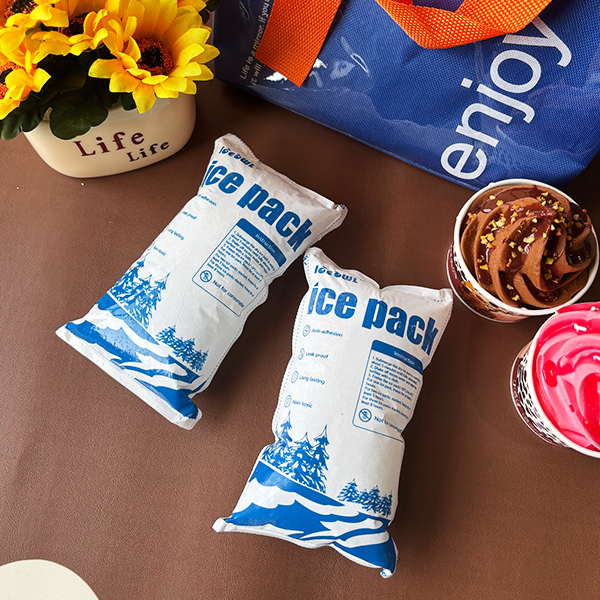
Cold Chain Creamery Companies Canada: How to Choose?
If you are searching for cold chain creamery companies Canada, you are not just hiring “a truck” or “a freezer.” You are choosing who will protect taste, texture, shelf life, and compliance when real life hits (late appointments, door openings, winter freezes, summer heat). In Canada, a practical baseline is 4°C or colder for chilled and -18°C or colder for frozen. Your job is to pick partners who can hold targets and prove it.
This article will help you answer:
How to define cold chain creamery companies Canada by role (carrier, cold storage, 3PL, last mile)
How to set clear 0-4°C transport and -18°C frozen requirements in your RFP
How to compare creamery 3PL cold storage Canada options using a scorecard
How to run a fast cold chain validation and temperature monitoring pilot
How to protect bilingual label readability and traceability during cold handling
What do “cold chain creamery companies Canada” include?
Cold chain creamery companies Canada usually means a network of partners, not one vendor. The best outcomes happen when every handoff is owned, timed, and documented. Think of your cold chain like a relay race: one sloppy handoff can ruin a perfect run.
Most creamery shippers use a mix of these partner types:
Temperature-controlled carriers (reefers for LTL/TL; sometimes parcel cold shipping)
Cold storage providers (chilled + freezer warehouses, cross-dock, case pick)
Cold chain 3PL/4PL providers (coordinate storage + transport + systems)
Food distributors with refrigerated networks (often strong for retail replenishment)
Last-mile delivery (critical for DTC and boutique retail drops)
Packaging + monitoring support (packouts, sensors, SOPs, lane validation)
Role map: who owns what in your cold chain?
| Partner role | What they handle | What you should ask | What it means for you |
|---|---|---|---|
| Cold storage 3PL | Chilled/frozen holding, picking, staging | “How do you control dwell time at docks?” | Fewer hidden warm events |
| Reefer carrier | Linehaul temperature control | “How do you prove in-range delivery?” | Less melt, fewer disputes |
| Last-mile provider | Final delivery window + doorstep time | “What is your porch-time rule?” | Protects quality at arrival |
| Packaging/monitoring | Packouts, inserts, loggers, SOPs | “Show your validation results” | Repeatable performance |
Carrier vs cold storage vs 3PL: which model fits you?
Start with your lane reality, not vendor size. A regional specialist can beat a “national” option if your handoffs stay clean and fast.
Carrier-first model (you manage storage): best for simple, direct lanes
Warehouse-first model (you manage transport): best for case pick, retail windows
Integrated 3PL model: best when you need one system across nodes (but only if governance is strong)
Practical case: A growing creamery reduced claims by splitting lanes: one partner for frozen desserts, one for chilled dairy, then integrating later.
What temperature targets should cold chain creamery companies Canada meet?
Your temperature targets must be written in plain language and tied to acceptance rules. If the target is fuzzy, disputes become emotional instead of factual.
Use a simple two-band approach:
Chilled dairy: typically 0-4°C (cold, not frozen)
Frozen desserts: typically -18°C or colder (deep frozen)
Temperature target cheat sheet you can paste into your RFP
| Product group | Target | Biggest seasonal risk | What you do about it |
|---|---|---|---|
| Milk, cream, yogurt | 0-4°C | Winter freeze damage | “Freeze-shield” loading rules |
| Fresh cheeses | 0-4°C | Warm spikes at docks | Dock time limits + staging SOP |
| Ice cream, gelato | -18°C or colder | Summer porch-time melt | Tight windows + last-mile rules |
Chilled dairy: how do you prevent “too warm” and “accidental freezing”?
Chilled dairy fails in two directions: warming and freezing. Many teams only plan for heat, then get surprised by winter texture damage.
Chilled partner checklist (0-4°C lanes):
Fast put-away into cold zones
Short door-open events during loading
Clear “max time out of cold” rule
Spill and odor protocols (dairy leaks travel fast)
Simple acceptance steps at delivery (photos + temp evidence when needed)
| Chilled control point | What good looks like | What to ask | Your practical meaning |
|---|---|---|---|
| Receiving | Put-away is fast and measured | “What is your put-away target?” | Less drift, better shelf life |
| Staging | Minimal time outside cold | “How do you track dwell time?” | Fewer hidden failures |
| Trailer loading | Doors open briefly | “What is your door-open SOP?” | Fewer spikes |
| Hygiene | Clean docks and equipment | “Show cleaning frequency” | Fewer odors, fewer rejects |
Practical tips for chilled dairy (you can implement this week)
Winter freeze-shield: keep chilled dairy away from the coldest trailer zones during extreme cold.
Dock clock: set one internal limit for “time outside cold” and train it like a safety rule.
Leak kit: require absorbent + barrier steps for known leakers (cream and yogurt are common).
Real-world example: A yogurt brand cut winter complaints by changing load placement rules, not packaging.
How do you shortlist cold chain creamery companies Canada by lane risk?
Shortlisting is easiest when you treat each lane like a product recipe. One “universal solution” creates random failures.
Interactive decision tool: pick your partner type in 90 seconds
Check every statement that is true:
You ship interprovincially or export (more documentation pressure)
You ship both chilled and frozen in the same week
You ship to grocery DCs with strict appointment windows
You ship direct-to-consumer (last-mile risk is high)
You need case pick or repack (not just pallet in/out)
Buyers ask for temperature evidence (logs, SOPs, exception reports)
Score your results:
0-2 checks: Carrier-first can work (simple lanes + tight SOPs)
3-4 checks: Add cold storage or a distributor network
5-6 checks: Strong case for integrated cold chain 3PL + standardized packouts
Partner fit scorecard (simple, fair, repeatable)
Score each category 1-5 (5 is best). Multiply by the weight. Total out of 100.
| Category | Weight | What “5” looks like | Why you care |
|---|---|---|---|
| Multi-temp capability | 20 | Separate chilled + frozen zones with SOPs | Mixed SKU control |
| Monitoring & reporting | 15 | Standard weekly reports + excursions workflow | Fewer arguments |
| Exception handling | 15 | A clear playbook with response times | Less chaos |
| Seasonal readiness | 10 | Winter + summer rules documented | Fewer surprises |
| Picking accuracy | 10 | Audit trail + error prevention | Less shrink/chargebacks |
| Last-mile controls | 10 | Doorstep rules + proof options | DTC quality protection |
| Traceability speed | 10 | Fast lot retrieval + hold/release | Recall readiness |
| Packaging support | 10 | Validated packouts by lane risk | Repeatable outcomes |
Benchmark list (examples to compare against, not endorsements)
If you want reference points while building your shortlist, many shippers benchmark operators such as:
Cold storage / integrated networks: Conestoga Cold Storage, Trenton Cold Storage, Congebec, Lineage, Groupe Robert
Transportation networks: Canada Cartage, Bell City Transport, Trappers Transport, ET Transport
Use names as starting points, then qualify based on your lanes, seasons, and required services.
What temperature evidence should cold chain creamery companies Canada provide?
You do not need “perfect data.” You need decision-grade proof. The best partners make temperature integrity provable and repeatable.
Ask for these three evidence artifacts every time:
Temperature control statement (how setpoints are chosen, monitored, verified)
Exception workflow (what happens when delays, damage, or excursions occur)
Record samples (example logs, timestamps, monitoring reports, photos)
Requirements-to-evidence table you can paste into your RFP
| Requirement | Evidence you request | Red flag | What it means for you |
|---|---|---|---|
| Chilled capability (0-4°C) | Setpoint policy + sample logs | “We don’t log” | No proof, higher risk |
| Frozen capability (-18°C) | Monitoring + defrost SOP | Frequent “soft frozen” | Texture complaints ahead |
| Dwell-time control | Time limits + tracking method | “We can’t track staging” | Hidden warm exposure |
| Calibration discipline | Recorder verification schedule | “As needed” | Bad data decisions |
| Hygiene program | Cleaning records + standards | Odors persist | Retail rejections |
| Traceability | Lot capture + retrieval time | Slow retrieval | Bigger recall costs |
How do you validate cold chain creamery companies Canada before scaling?
A short pilot protects you from scaling a weak lane. You are not testing “a vendor.” You are testing a system: people, handoffs, packaging, timing, and response behavior.
7-day lane validation plan (practical and fast)
Pick one chilled lane and one frozen lane (your highest risk)
Define pass/fail criteria (temp, time out of range, damage, leak rate)
Run one standardized packout (same box, same recipe)
Monitor a fixed percentage of shipments (start high, then sample later)
Log handoffs (pickup, cross-dock, delivery timestamps)
Score arrivals (appearance, texture, leaks, label readability)
Review results and lock improvements (or reject)
| Validation metric | What you measure | “Good” target example | What it means for you |
|---|---|---|---|
| Temperature stability | Peaks + drift | Minimal excursions | Predictable quality |
| Dwell time | Time outside cold zones | Within SOP limit | Fewer hidden failures |
| Damage/leak rate | Crush, scuffs, leaks | Near zero | Fewer claims/refunds |
| Trace retrieval speed | Time to find lot records | Fast | Recall readiness |
Self-audit: are your current partners working?
Give yourself 1 point for each “Yes”:
Summer “warm on arrival” claims are rare
Frozen items rarely arrive soft or refrozen-looking
Your team can explain targets in one sentence
Partners can show basic records when requested
You have a written exception playbook (and people follow it)
Dwell time at docks/cross-docks is controlled
Labels stay readable after condensation and handling
You tested at least one lane in peak season
Score meaning:
7-8: Strong system – optimize cost and speed
5-6: Good baseline – tighten evidence + exceptions
0-4: High risk – redesign SOP or change partners
Which KPIs should you put in your contract with cold chain creamery companies Canada?
KPIs stop arguments because they turn opinions into numbers. Your drafts already emphasized using measurable KPIs like OTIF, in-range rate, and excursion response time.
cold chain creamery companies C…
A KPI set that works for most creamery lanes
| KPI | What it tracks | Why it matters | Practical meaning for you |
|---|---|---|---|
| OTIF | On-time, in-full | Service reliability | Less churn |
| In-range rate | % shipments within target | Cold chain health | Less spoilage |
| Excursion response time | Minutes to action | Faster mitigation | Fewer losses |
| Damage/leak rate | Packaging integrity | Customer trust | Fewer refunds |
| Dwell time | Time outside controlled zones | Hidden risk control | Better consistency |
| Traceability retrieval time | Speed to find lot records | Recall readiness | Lower recall cost |
Practical SLA rules that actually change behavior
Review cadence: monthly KPI review with corrective actions
Separate targets: chilled KPIs and frozen KPIs are not the same
Trigger thresholds: if damage/leak exceeds X%, retrain and revalidate
Exception clarity: define who decides “hold vs replace” within minutes
How do labels and traceability affect cold chain creamery companies Canada?
Label compliance is also a cold chain issue. If moisture, ice, or handling smears labels, you lose clarity for customers and risk compliance problems.
If you sell consumer prepackaged foods, Canada generally expects required information to appear in English and French, with specific exceptions depending on product and context. Your cold chain partners should protect label readability and support lot controls.
cold chain creamery companies C…
Label + traceability checklist you should require
| Element | What you need | Where it fails | What to do | What it means for you |
|---|---|---|---|---|
| Lot ID | Supplier + internal lot | Repack/relabel | Standard lot workflow | Faster holds |
| Date marking | Best before/date codes | Condensation + tape | Protected label zone | Fewer disputes |
| Bilingual info | English + French | Layout/space mistakes | Controlled templates | Canada-ready labeling |
| Storage statement | Refrigerate/keep frozen | Smearing | Moisture-resistant stock | Better consumer handling |
Practical label durability tips
Separate logistics labels (carrier scans) from consumer labels (regulatory info).
Use a protected label panel so ice and tape do not touch date codes.
Train partners: “Do not tape over dates” is a simple, high-impact rule.
2025 trends: what’s changing for cold chain creamery companies Canada?
In 2025, the biggest shift is lane-based standardization. Instead of one packout for everything, teams run two or three validated packouts tied to season and lane risk.
cold chain creamery companies C…
Latest progress snapshot (what it means for you)
More validation-first partnerships: pilots before full rollout
More purposeful monitoring: sampling by lane and season, not “random logging”
More winter thinking: freeze protection is as important as heat protection for chilled dairy
More last-mile discipline: tighter delivery windows and clearer exception paths
More label discipline: moisture-resistant labels and handling rules are moving upstream
Market insight: The best partners are not the ones with the best pitch. They are the ones with the clearest playbook when things go wrong.
Frequently Asked Questions
Q1: What are cold chain creamery companies Canada, in plain terms?
They are the partners that keep your dairy and frozen desserts cold in storage, transport, and last mile, and can prove performance with records.
Q2: Is 0-4°C the right target for chilled dairy lanes?
It is a common chilled range used in practice. Always align final limits to your product specs and buyer requirements.
Q3: Why do frozen desserts fail even when the trailer is cold?
Cross-dock dwell time, door-open events, and last-mile porch time can cause partial thaw and refreeze, which shows up as texture damage.
Q4: Do I need temperature loggers on every shipment?
Not always. Start heavy on high-risk lanes, then move to sampling once results are stable and exceptions are rare.
Q5: What is the fastest way to reduce “warm on arrival” claims?
Control dwell time, standardize packouts by lane, and require a clear exception workflow. Handoffs are usually the weak link.
Q6: How do I protect chilled dairy in Canadian winter?
Add freeze-shield loading rules, avoid overcooling, and keep clear time limits for staging in extreme cold.
Q7: What KPIs matter most in a cold chain SLA?
OTIF, in-range rate, excursion response time, damage/leak rate, dwell time, and traceability retrieval time.
Summary and recommendations
Choosing cold chain creamery companies Canada is a lane-based systems decision. Start by separating chilled and frozen requirements, then score partners on monitoring, exceptions, seasonal readiness, and traceability. Run a short validation pilot before scaling, and lock KPIs into your SLA so performance stays consistent after onboarding.
Your next-step action plan (CTA)
Map lanes by risk (handoffs, time, season extremes).
Pick 3-5 candidates and run a 7-day pilot on your highest-risk lanes.
Require three evidence artifacts: temperature control statement, exception workflow, sample records.
Publish KPIs and review monthly.
Standardize one packout recipe per lane and train teams with photos.
About Tempk
At Tempk, we help dairy and creamery teams design cold chain workflows that stay stable across seasons and handoffs. We focus on lane-based packout recipes, moisture control, monitoring plans that trigger action, and partner scorecards that reduce guesswork. Our goal is simple: fewer temperature excursions, fewer leaks, and fewer customer complaints, with operations your team can actually follow.
CTA: Share your product mix (chilled vs frozen), provinces served, typical transit time, and delivery model (B2B or DTC). We will help you outline a shortlist scorecard and a lane pilot checklist you can use immediately.
Refrigerated Creamery Top Equipment: 2025 Guide

Refrigerated Creamery Top Equipment for 2025?
Last updated: December 23, 2025
If you run a creamery, your product quality is decided after the recipe is “done.” Refrigerated creamery top equipment keeps milk, cream, butter, cultured dairy, and frozen desserts safe, stable, and consistent. Two common anchors many teams design around are cold holding at or below ~40°F (4°C) and pasteurization benchmarks like 161°F (72°C) for 15 seconds (confirm your local requirements). When your cold chain is steady, you get fewer defects, fewer returns, and calmer peak weeks.
This article will help you:
Build a refrigerated creamery top equipment checklist for new facilities and expansions
Choose setpoints for cold rooms, aging tanks, and freezers without overcooling
Fix the most expensive gap: packing and staging temperature control
Size equipment for peak days, not average days
Create a simple temperature monitoring SOP your staff will actually follow
Ship by lane (same-day / next-day / multi-day) with proof-ready routines
What does refrigerated creamery top equipment include end-to-end?
Refrigerated creamery top equipment is not “a walk-in cooler.” It’s the full system that controls time, temperature, and hygiene from receiving to delivery. Think of your plant like a relay race. Every handoff is a chance to drop temperature control, texture consistency, or cleanliness.
Most creameries need five linked zones:
Receiving + rapid cooling (protect raw inputs)
Processing support (pasteurization, mixing, rapid pull-down)
Cold storage (walk-in cooler/freezer or modular cold rooms)
Packing + staging (the most overlooked zone)
Outbound shipping + monitoring (the real world)
Why “steady” beats “colder” in 2025
Going too cold can create texture issues for fat-rich products, stress packaging, and waste energy. Going too warm invites spoilage and quality drift. The win is stable control, not extremes, which is why refrigerated creamery top equipment should be selected around process fit.
| Control goal | What it protects | What usually breaks it | Your practical takeaway |
|---|---|---|---|
| Fast chill | Safety + shelf life | Slow pull-down after heat steps | Fix cooling speed before buying “bigger storage” |
| Stable hold | Flavor + texture | Door openings, warm corners, bad airflow | Stability beats “extra cold” |
| Clean transfer | Compliance + trust | Messy staging, poor sanitation routines | Design for easy cleaning, every shift |
Which refrigerated creamery top equipment is non-negotiable?
The non-negotiables are the pieces that prevent warm time and prevent hygiene shortcuts. If one link is weak, your best machine becomes an expensive decoration.
Here’s a practical core list for refrigerated creamery top equipment:
Receiving tank / cold holding for incoming dairy
Pasteurization capability (batch vat or HTST, depending on your model)
Rapid cooling (often a plate heat exchanger + chiller loop)
Cold storage buffer (walk-in or modular cold rooms sized for peaks)
Packing + staging cold zone (small room or dedicated staging cooler)
Monitoring + alarms (rooms + critical points)
Cleaning systems (CIP where needed + practical COP workflow)
A “core chain” checklist you can copy
| Equipment block | What it does | Spec you confirm | What it means for you |
|---|---|---|---|
| Receiving tank/silo | Holds incoming product cold | Cooling capacity + agitation | Fewer “mystery” spoilage issues |
| Pasteurization step | Reduces microbial risk | Verified time/temperature control | Cleaner audits and fewer recalls |
| Plate heat exchanger | Rapid heating/cooling | Pull-down speed + flow capacity | Faster turnaround, lower risk |
| Cold room (walk-in/modular) | Stabilizes the plant | Stability + airflow + defrost control | Fewer excursions during peaks |
| Staging cooler | Protects “in-between” time | Setpoint stability + access flow | Fewer late-day defects |
| Monitoring + alarms | Turns “we think” into “we know” | Sensor placement + escalation rules | Fewer surprises and disputes |
| CIP/COP workflow | Keeps surfaces sanitary | Coverage + repeatable steps | Less downtime and less rework |
How do you set refrigerated creamery top equipment targets for safety and quality?
Use simple targets your team can remember, then prove them with records. Many teams choose conservative internal targets even if regulations allow different limits in certain contexts. Your goal is repeatable control, not minimum compliance.
The “two-gate” rule (pasteurize + cool fast)
Gate 1: Pasteurize correctly (time + temperature, documented)
Gate 2: Cool quickly and hold cold steadily (no warm staging surprises)
Here are common benchmark-style targets many creameries use as planning anchors (confirm for your product type and jurisdiction):
Cold room / refrigerator: at or below 40°F (4°C)
Raw milk cooling benchmark: 45°F (7°C) within 2 hours after milking (common PMO-style benchmark)
Frozen storage anchor: 0°F (-18°C) for long-term frozen holding
Ice cream mix aging: 0–4°C (32–39°F) for 4–24 hours, depending on your recipe and workflow
Pasteurization benchmark: 161°F (72°C) for 15 seconds is a widely used HTST reference point for many milk products (verify your exact requirement)
| Control step | What you verify | Evidence you keep | Your practical takeaway |
|---|---|---|---|
| Pasteurization | Time + temperature | Automated chart/log | Proof protects you in audits |
| Cool-down | Pull-down curve | Temp checks + alarms | Cooling speed prevents regrowth |
| Cold holding | Stable setpoints | Daily log + exceptions | Stability protects texture |
| Corrective action | What you do when out-of-spec | Signed action log | Fewer repeat failures |
Practical tips you can implement this week
Use two thresholds: a warning line and a critical line.
Measure “minutes out of control,” not just setpoint.
Make logging faster than a coffee break or it will be skipped.
Real-world result: Teams often fix recurring defects without recipe changes by tightening cooling speed and staging control.
How do you size refrigerated creamery top equipment for peak days?
The biggest sizing mistake is buying for the average day. Your cold chain breaks on your worst week. Holidays, heat waves, promotions, and delayed pickups expose weak links fast.
The 5-number sizing worksheet (fill this in)
Daily finished volume: ______ (liters/gallons or units)
Peak-hour factor: ______% ships within 4 hours
Batch size: ______ (mix tank / freezer batch)
Cycle time: ______ minutes per batch end-to-end
Cold buffer: ______ hours product can sit safely (storage + staging)
If your peak-hour factor is high, prioritize bigger cold buffers and faster changeovers before adding fancy automation.
Quick decision tool: do you need redundancy?
Answer Yes/No:
Would 4 hours of downtime cause spoilage or missed deliveries?
Do you have only one chiller loop or only one hardening option?
Do you ship into strict receiving windows (retail, institutions)?
Do you see seasonal strain every summer?
If you answered Yes to 2+, add redundancy to cooling or freezing first. That’s where the expensive failures start.
| Facility stage | What’s usually true | Refrigerated creamery top equipment focus | Your practical takeaway |
|---|---|---|---|
| Small batch | Tight space, manual flow | Modular cold rooms + simple SOPs | Reduce handling errors |
| Mid-size | Mixed SKUs, busy staging | Dedicated staging cold zone + monitoring | Reduce bottlenecks |
| Scaling | Peaks + distribution | Redundancy + lane-based packing | Reduce crisis days |
Where does refrigerated creamery top equipment fail most often?
Most losses happen in the “in-between” moments—especially packing and staging. Many teams invest in storage and forget the area where product waits to be labeled, packed, and loaded.
The staging gap problem (and the simple fixes)
If your product sits at room temperature while your team packs, you create a hidden temperature spike. Fixing the staging gap is often the highest-ROI upgrade in refrigerated creamery top equipment.
| Staging control method | Effort | Cost | Quality impact | Your practical takeaway |
|---|---|---|---|---|
| Dedicated staging cooler | Medium | Medium | High | Cuts warm minutes fast |
| Strip curtains + airflow discipline | Low | Low | Medium | Stabilizes door-open swings |
| Pre-chilled cartons/pallets | Low | Low | Medium | Smoother packing pace |
| “Pack last, load last” rule | Low | Low | High | Prevents last-minute warming |
Practical tips and recommendations
Local delivery: staging discipline often matters more than “thicker insulation.”
Next-day lanes: you need staging control and validated packaging routines.
Multi-day lanes: add monitoring plus a contingency plan (backup cold capacity).
Actual case pattern: Crews reduce late-day spoilage by moving packing into a colder staging area and enforcing load-last—no recipe change needed.
What refrigerated creamery top equipment matters most for ice cream and gelato?
Frozen desserts demand stable aging, fast freezing, and fast hardening. Many “recipe problems” are really aging drift or slow hardening.
The frozen dessert equipment ladder
| Step | Refrigerated creamery top equipment | Target behavior | Your practical takeaway |
|---|---|---|---|
| Mix pull-down | Plate heat exchanger + chiller | Fast cooling after heat | Reduces microbial and texture risk |
| Mix aging | Aging tank + agitation | Stable 0–4°C for 4–24h | Improves body and mouthfeel |
| Dynamic freezing | Batch/continuous freezer | Repeatable draw | Consistent serving texture |
| Hardening | Blast freezer/hardening room | Fast pull-down | Smaller ice crystals, fewer complaints |
| Storage | Freezer at ~0°F (-18°C) | Stable inventory holding | Less shrink, less melt-refreeze damage |
Practical tips for better texture (without guessing)
If texture varies batch to batch, check aging temperature stability first.
If your freezer is the bottleneck, add hardening capacity before adding more freezer output.
Separate “production freezing” from “storage freezing.” They are different jobs.
Real-world result: Many gelato teams stop icy texture by tightening aging tank control and shortening warm transfer time.
How do you build monitoring and records that support growth?
Monitoring is refrigerated creamery top equipment because it prevents repeat failures. Sensors and alarms turn “we think it stayed cold” into “we can prove it stayed cold.”
The minimum monitoring stack (start here)
Room sensors placed at warm spots (near doors, corners)
Spot product checks at receiving and post-process
Alarm rules tied to action, not noise
Daily review of exceptions (not perfect days)
A simple corrective-action form that takes under 2 minutes
| Monitoring item | Where it goes | What it catches | Your practical takeaway |
|---|---|---|---|
| Room temp sensors | Doors + warm corners | Drift, door leaks | Prevents hidden warming |
| Product spot checks | Receiving + post-process | Warm lots | Stops bad batches early |
| Alarm escalation | Coolers/freezers | After-hours failures | Saves inventory |
| Logbook/dashboard | Daily review | Trends | Improves decisions |
| Corrective actions | When out-of-spec | Repeat issues | Builds audit confidence |
Interactive self-test: “Creamery Control Score”
Score each item 1–5:
Product mix complexity: milk only (1) → chilled + frozen + filled items (5)
Daily volume swings: steady (1) → highly seasonal (5)
Delivery exposure: pickup only (1) → long last mile (5)
Cleaning complexity: simple (1) → many SKUs + complex lines (5)
Compliance pressure: low (1) → contracts + audits (5)
Total score: ____
5–10: manual logs + basic alarms
11–18: continuous walk-in logs + staging checks
19–25: lane monitoring + formal excursion response playbook
How do you make cleaning and sanitation “human-proof”?
CIP dairy equipment and sanitation tools only work if they fit real shift behavior. If cleaning takes too long, it gets delayed. If steps are unclear, results drift.
CIP essentials (keep it simple, repeatable)
Chemical dosing control
Temperature control
Flow verification
Coverage verification
Documentation (what ran, when, key parameters)
COP workflow (small parts) that prevents chaos
Labeled racks: clean / dirty / needs inspection
One-direction movement: dirty → wash → dry → clean storage
“Dry before reassembly” rule to reduce risk
| Sanitation element | What you standardize | What you avoid | Your practical takeaway |
|---|---|---|---|
| CIP cycles | One recipe per line | Custom guessing | Repeatable hygiene |
| COP racks | Labeled zones | Mixed parts | Faster rebuild |
| Drying | Air dry fully | Reassemble wet | Less microbial risk |
| Verification | Quick visual + log | “Assume it’s fine” | Fewer surprises |
Practical case pattern: Standardizing one CIP recipe per line and creating a labeled COP rack often reduces downtime immediately.
How do you pack and ship dairy by delivery lane?
Shipping is where refrigerated creamery top equipment meets delays, traffic, and real-world handoffs. Your goal is to reduce risk during loading delays, multi-drop routes, and “customer not ready” moments.
The lane-based packing rule (copy this)
Create three shipping recipes:
Local same-day: speed + staging discipline + simple insulation
Regional next-day: stronger packaging + buffering + tighter cutoffs
Multi-day / uncertain: maximum stability + monitoring + contingency plan
| Lane | Main risk | Refrigerated creamery top equipment support | Your practical takeaway |
|---|---|---|---|
| Same-day | Handoff delays | Staging cold zone + fast loading | Fewer complaints |
| Next-day | Depot dwell | Validated shippers + buffers | Fewer losses |
| Multi-day | Variability | Monitoring + contingency | Fewer reships |
Practical tips and recommendations
Load last what must stay coldest.
Use a simple rule: “Pack last, load last.”
Add proof: a small logger or indicator per lane can reduce disputes.
2025 refrigerated creamery top equipment trends you should plan for
In 2025, the biggest shift is how buyers choose refrigerated creamery top equipment: not by catalog pages, but by process fit + proof.
Latest developments you’ll see more often
Modular cold rooms that expand faster than traditional builds
Smarter monitoring that reduces manual logging and improves response speed
More emphasis on staging controls as delivery expectations rise
More reusable packaging where reverse logistics actually works
Energy-first upgrades: airflow, door controls, defrost logic, and maintenance discipline
Market insight (plain language)
Customers expect “cold and fresh” even when delivery windows get messy. That pushes you to invest in refrigerated creamery top equipment that handles handoffs, not just storage. The winners in 2025 are the teams who deliver consistent quality on their worst week, not their best week.
Common questions (FAQ)
Q1: What is the first refrigerated creamery top equipment purchase I should make?
Start with rapid cooling and stable cold storage, then fix the staging gap. Those three protect every product you make.
Q2: Do I need separate refrigerated creamery top equipment for chilled and frozen products?
If you produce both, yes. Separate lanes or zones reduce mistakes and stabilize quality during peaks.
Q3: How often should I check temperatures?
At least twice daily (start and mid-shift). During peak packing or hot weeks, add a third check focused on staging.
Q4: Why is my ice cream texture inconsistent even with a good freezer?
Often it’s aging drift or warm transfer time. Tighten aging tank stability and reduce warm minutes first.
Q5: What’s the fastest way to reduce spoilage without big spending?
Improve door discipline, reduce warm staging time, and standardize lane-based packing recipes before buying more equipment.
Q6: How do I make records easier for my team?
Use short checklists, default values, and exception logging. If it takes more than 10 minutes, it won’t stick.
Summary and recommendations
Refrigerated creamery top equipment is a system, not a single machine. The system must control receiving, pasteurization support, rapid cooling, cold storage, packing/staging, and shipping. The biggest quality wins usually come from stabilizing “in-between” moments—especially staging—then adding lane-based packing and monitoring. If you design for peak days and human behavior, you’ll reduce waste and protect consistency all year.
Action plan (do this next)
Map your flow: receiving → chill → store → stage → ship.
Fix the staging gap: add a staging cooler or tighten staging control rules.
Standardize three shipping recipes: same-day, next-day, multi-day.
Install monitoring + escalation: alarms that trigger real actions.
Adopt a 10-minute daily checklist: short enough to complete every shift.
About Tempk
At Tempk, we support cold chain operations with practical packaging and process design that helps you keep dairy stable during staging and delivery. We focus on lane-based pack-out strategies, insulated shipping systems, and monitoring routines that are easy to run under real-world volume. Our goal is fewer temperature spikes, fewer reships, and lower total waste—because consistency is the best form of sustainability.
Next step: Share your product mix (milk/cream, butter, cultured, frozen) and your delivery lanes (local/next-day/multi-day). We’ll help you structure an equipment and packing roadmap that fits your workflow.
Cold Chain Vegetables Quality Assurance Guide 2025
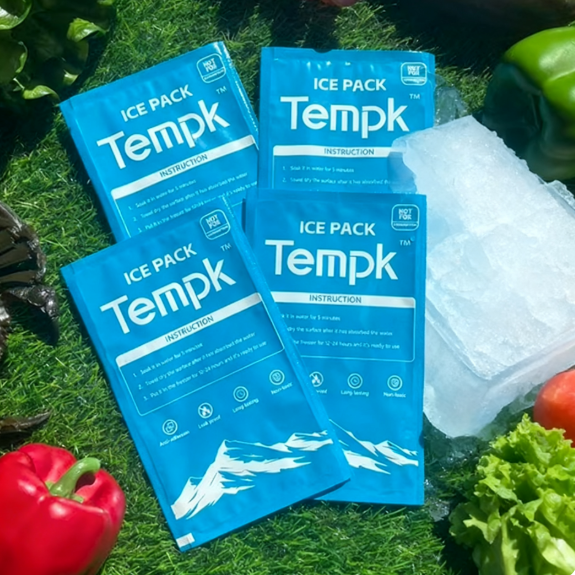
Cold Chain Vegetables Quality Assurance: Cut Shrink
If you want predictable freshness, cold chain vegetables quality assurance must protect shelf life and prove control end-to-end. For leafy greens, storage near 0°C can mean about 21 days of life, while around 5°C can drop it closer to 14 days in typical conditions. A single cooling delay can also hurt fast—one example shows a 4-hour delay increasing asparagus toughness by about 40%.
This article will answer for you:
- How cold chain vegetables quality assurance works in daily operations (not just audits)
- A lane system for produce temperature monitoring and humidity control (so you stop guessing)
- A practical cold chain vegetables quality assurance checklist for receiving that reduces disputes
- A KPI plan to track “warm minutes,” shrink, and claims by route and vegetable group
- 2025 updates: traceability timing, proof-on-demand expectations, and scalable SOP design
What Does Cold Chain Vegetables Quality Assurance Cover?
Direct answer: Cold chain vegetables quality assurance is the system of standards, checks, and corrective actions that keeps vegetables within quality targets from harvest to delivery. It typically covers temperature stability, humidity control, handling discipline, packaging performance, inspections, and documented exceptions.
Expanded explanation: Think of it like a seatbelt plus a dashboard. The seatbelt is your SOPs that prevent damage. The dashboard is monitoring that warns you early—before losses turn into claims. Your goal is simple: keep vegetables crisp and saleable, and make outcomes repeatable.
The “quality clock” you can’t rewind
Vegetables start a quality countdown at harvest. Warmth makes the clock spin faster. Cooling slows it down, but you can’t rewind it. This is why cold chain vegetables quality assurance focuses on prevention, not blame.
| QA focus | What you measure | What fails first | What it means for you |
|---|---|---|---|
| Temperature control | Pulp temp checks | Fast deterioration | Less shrink |
| Humidity control | RH + packaging moisture signs | Wilting / water loss | Better texture |
| Gentle handling | Damage score | Bruising | Better appearance |
| Hygiene control | Sanitation logs | Spread risk | Fewer incidents |
| Proof | Shipment records | Disputes / recalls | Faster decisions |
Practical tips you can use today
- Define “fresh” with photos: pass/fail examples reduce arguments across sites.
- Measure the product, not the air: pulp temperature reveals hidden drift.
- Turn complaints into a metric: track “soft/wilted/decay” by SKU and route.
Practical example: Teams cut disputes when “keep cold” becomes measurable targets plus a staging time limit.
How Do You Set Temperature and Humidity Lanes?
Direct answer: Cold chain vegetables quality assurance works best when you run lanes, not averages. Different vegetables need different temperature and humidity conditions, so a lane system prevents chilling injury, wilting, and avoidable rejects.
Expanded explanation: Most facilities don’t have “a room per SKU.” Lanes are a practical compromise that still protects outcomes. Your lane labels should be obvious enough that a new hire can follow them.
A lane map you can use immediately
| Lane | Typical targets | Examples | Biggest risk if mis-laned | What you do |
|---|---|---|---|---|
| Near-0°C high RH | ~0–2°C, very high RH | Leafy greens, many veg | Wilt/decay if too warm | Fast cooling + high RH |
| Chill-sensitive | ≥10°C (often) | Tomatoes, cucumbers | Chilling injury if too cold | Keep out of 0°C loads |
| Dry cool | Cool + lower RH | Onions/garlic types | Decay if too humid | Separate storage zone |
| Frozen | ≤-18°C product | Frozen veg | Thaw–refreeze damage | Strong monitoring |
Make lanes stick with simple visuals
- Color code lanes: green (near-0°C), orange (chill-sensitive), gray (dry), blue (frozen).
- Stop mixing tomatoes with leafy greens in the same load when possible.
- Use “compromise loads” last: they often fail both products.
Real-world example: Moving tomatoes to a warmer lane reduced “mealy tomato” complaints while greens stayed near 0°C.
Cold Chain Vegetables Quality Assurance Targets by Vegetable Group
Direct answer: Cold chain vegetables quality assurance gets easier when you group vegetables by how they fail. A “one temperature fits all” plan creates avoidable losses because sensitivity to cold, dryness, and bruising varies.
Expanded explanation: Grouping reduces training complexity and makes SOPs scalable. It also helps you standardize packaging and inspection rules.
Vegetable group QA map (operational)
| Vegetable group | Most common failure | QA priority | What it means for you |
|---|---|---|---|
| Leafy greens | Wilt + slime | Very high | Biggest shrink driver |
| Herbs | Dehydration | High | Premium loss quickly |
| Crucifers | Yellowing + odor | Medium–High | Faster shelf decline |
| Roots | Drying + bruising | Medium | Hidden losses add up |
| Fruiting veg | Cold damage/softening | Medium | Damage appears later |
Temperature and humidity targets that prevent “silent shrink”
Most vegetables prefer high humidity (often 90–95% RH) because water loss drives wilting and shrink. Some items like dry onions and garlic do better around 65–75% RH to avoid moisture damage.
If you sell leafy greens, the “close enough” gap is real. One reference notes romaine and leafy lettuce can have around 21 days near 0°C versus about 14 days at 5°C in typical conditions. Cold chain vegetables quality assurance is about protecting those days.
Practical tips you can apply today
- Label pallets and totes by vegetable group to avoid mixing mistakes.
- Keep high-humidity items away from “sweaty” items that trap moisture.
- Create 2–3 packaging standards per group, not dozens.
Practical case: Group-based acceptance criteria reduced receiving disputes versus SKU-by-SKU arguments.
Cold Chain Vegetables Quality Assurance for Temperature Stability
Direct answer: Temperature rules support cold chain vegetables quality assurance by keeping product stable and minimizing time outside controlled conditions. Stability is often more important than “extra cold.”
Expanded explanation: A shipment that swings warm-to-cold can show condensation, soft texture, and faster decay than one kept steady. If you only fix setpoints but ignore staging, you’ll keep losing “warm minutes.”
Temperature QA controls you can standardize
| QA control | Standard you set | How you verify | What it means for you |
|---|---|---|---|
| Pre-cooling | Required for sensitive groups | Pack-out checklist | Longer shelf life |
| Staging time limit | Maximum minutes | Timer + log | Less silent drift |
| Door-open discipline | Driver rule | Route SOP | Fewer spikes |
| Exception threshold | Clear trigger | Exception form | Faster decisions |
Practical tips and suggestions
- Build a ready-to-pack station so product leaves the cooler only when everything is ready.
- Pack cold items last and seal fast to reduce warm exposure.
- On hot days, shorten routes or increase thermal protection and discipline.
Real-world example: Moving pack-out earlier and limiting warm dock exposure improved leafy green outcomes.
Cold Chain Vegetables Quality Assurance for Humidity Without Slime
Direct answer: Humidity control is central to cold chain vegetables quality assurance because it prevents wilting, but it must be balanced to avoid condensation. Too dry causes dehydration. Too wet causes slime and mold risk.
Expanded explanation: Humidity is a tightrope. Condensation often comes from temperature swings, so stability is your best moisture strategy. Your packaging creates a micro-environment, so you need rules for liners, airflow, and “don’t seal warm product.”
Moisture control table (simple and practical)
| Goal | What you do | What you avoid | What it means for you |
|---|---|---|---|
| Prevent wilting | Use liners for leafy items | Open crates in dry air | Better crispness |
| Prevent slime | Stabilize temperature | Warm-to-cold shocks | Longer shelf life |
| Avoid pooling | Upright packs + drain rules | Wet cartons | Fewer rejects |
Practical tips and suggestions
- Never seal warm produce tightly: it traps moisture and accelerates decay.
- Use breathable packaging where sweating is common.
- Remove wet packaging immediately so it doesn’t spread problems.
Practical case: A short cooling step before sealing plus breathable inner packs reduced herb decay.
How Does Pre-cooling Improve Cold Chain Vegetables Quality Assurance?
Direct answer: Cold chain vegetables quality assurance improves when you start cold. Pre-cooling removes field heat quickly, lowering respiration and slowing deterioration, so shelf life lasts longer through handoffs.
Expanded explanation: Pre-cooling isn’t “nice to have” for many vegetables. It’s a measurable lever. One example shows a 4-hour delay in cooling asparagus can increase toughness by about 40%, which is a fast quality loss.
Pre-cooling method selection (fit-for-commodity)
| Method | Best for | Why it works | Watch-out | What it means for you |
|---|---|---|---|---|
| Forced-air | Boxed vegetables | Pulls cold air through vents | Non-vented packaging | Uneven cooling |
| Vacuum cooling | Leafy greens | Rapid heat removal | Moisture control | Better crispness |
| Hydrocooling | Hardy veg | Fast surface cooling | Water hygiene | Cross-contamination risk |
| Room cooling | Low-risk items | Simple setup | Too slow | Short shelf life |
A KPI that changes behavior
- Track “harvest-to-cool start minutes” per lot. It turns discipline into a measurable habit.
Pack-out “time budget” rule (quick to implement)
Define a maximum time product can be out of controlled conditions during packing. Your starting point can be conservative for leafy greens, then refined with lane tests.
Real-world example: Timing harvest-to-cool and rejecting lots that missed the window improved consistency.
Cold Chain Vegetables Quality Assurance for Handling and Packaging
Direct answer: Handling standards reduce bruising by controlling drops, vibration, stacking pressure, and pallet stability. Bruising is costly because it often shows later and triggers disputes.
Expanded explanation: Mechanical damage can happen in seconds, then decay accelerates. Treat handling like a quality control point, not “just labor.”
Handling rules you can train quickly
| Handling rule | Prevents | Why it works | What it means for you |
|---|---|---|---|
| No drops | Bruises | Stops micro-damage | Longer shelf life |
| Stack discipline | Crushing | Controls weight | Fewer claims |
| Pallet stability | Shifting | Reduces vibration | Better arrival condition |
| Route segregation | Mixed damage | Less pressure | Higher consistency |
Packaging that supports cold chain vegetables quality assurance
Packaging creates a microclimate. It decides whether vegetables dry out, sweat, or get crushed, so packaging checks belong inside cold chain vegetables quality assurance.
| Packaging type | Strength | Risk | What it means for you |
|---|---|---|---|
| Ventilated crate | Good airflow | Dehydration | Needs humidity strategy |
| Lined crate | Moisture retention | Condensation | Needs stability |
| Rigid container | Crush protection | Higher cost | Best for premium |
| Insulated shipper | Thermal buffer | Process required | Best for longer routes |
Practical tips and suggestions
- Choose packaging by route profile: short urban vs long regional needs differ.
- Avoid wet cardboard: wet cartons are a repeat failure point in cold chains.
- Use inserts or pads for bruise-prone items on long routes.
Practical case: Upgrading to more rigid packaging reduced returns on long-distance routes with unavoidable vibration.
Cold Chain Vegetables Quality Assurance Checklist for Receiving
Direct answer: Receiving inspections make cold chain vegetables quality assurance faster and fairer when they use clear criteria, consistent sampling, and simple pass/hold/fail decisions.
Expanded explanation: Receiving is where problems become visible. If checks are inconsistent, decisions become inconsistent, and arguments never end. Your receiving checklist should be fast enough to run every shift.
A “fast check” you can complete in under 3 minutes
- Identity + traceability (lot ID, supplier, dates if available)
- Packaging integrity (crushed corners, torn liners, wet cartons)
- Surface condition (slime, pooled water, decay spots)
- Texture check (crisp vs limp)
- Temperature check (consistent method and location)
- Decision: accept, accept with conditions, or hold
Pass / Hold / Fail table (reduces disputes)
| Check item | Pass | Hold | Fail | What it means for you |
|---|---|---|---|---|
| Appearance | Crisp, bright | Slightly dull | Severe wilt/yellow | Shelf life risk |
| Moisture | Dry surfaces | Light damp | Slime/pooling | High decay risk |
| Damage | Minimal | Moderate | Severe bruising | Claim risk |
| Packaging | Intact | Minor dents | Wet/crushed | Contamination risk |
Sampling plan that works in real life
You don’t need to check every carton. You need a rule staff can follow without debate.
- Small lots: check 1–2 cartons
- Medium lots: check 3 cartons across the pallet
- Large lots: expand across positions and record where you sampled (for disputes)
Practical tips and suggestions
- Use the same checklist across all locations to prevent “site-by-site” arguments.
- Photograph exceptions immediately so root cause is faster.
- Record time and condition at receiving to speed investigations.
Practical case: Requiring photos for every hold/fail reduced supplier disputes.
Interactive Decision Tool: Build Cold Chain Vegetables Quality Assurance by Route
Use this quick tool to pick controls that match real route risk.
Step 1: Choose your vegetable group
A: Leafy greens · B: Herbs · C: Crucifers · D: Roots · E: Fruiting vegetables
Step 2: Choose your route profile
1: Same-day short · 2: Same-day multi-stop · 3: Next-day regional · 4: High-heat/extreme weather
Quick QA recommendations (read the line that matches you):
- A + 2: strict staging time limit + humidity-support packaging + handling discipline
- B + 3: strong moisture control packaging + gentle handling + consistent sampling
- C + 1: stable cold + airflow-friendly packing + clear receiving checks
- D + 4: crush protection + stable loading + exception plan for delays
- E + 3: avoid over-cold exposure + stable packing + careful receiving inspection
Monitoring KPIs That Prove Cold Chain Vegetables Quality Assurance
Direct answer: Monitoring makes cold chain vegetables quality assurance defensible when it helps you measure where shelf life is being spent. A tiered approach (checks → lane tests → continuous monitoring) focuses effort where risk is highest.
Expanded explanation: You don’t need perfect data. You need data that triggers action: staging time, receiving temps, claims by SKU, and shrink trends.
KPI dashboard (simple, action-based)
| KPI | Good signal | Bad signal | What it means for you |
|---|---|---|---|
| Receiving temp pass rate | Stable | Drifting up | Supplier/transport issue |
| Pack-out time | Consistent | High variance | Workflow problem |
| Claims by SKU | Concentrated | Widespread | Systemic issue |
| Shrink | Stable | Rising | Humidity/handling failing |
Interactive tool: QA maturity score (0–10)
Give yourself 1 point for each “yes.”
- Targets by commodity group exist.
- Receiving checklist runs every shift.
- Pack-out time budget rule is enforced.
- Transport cleanliness + pre-cool checks exist.
- Logger lane tests run in hot and cool seasons.
- Claims are tracked by SKU and root cause.
- Compatibility rules exist (temp bands, ethylene/odor).
- Records are stored by shipment ID.
- Corrective actions have owners and deadlines.
- KPIs are reviewed monthly; SOPs updated quarterly.
Score meaning:
- 0–3: operating on luck
- 4–7: stable but leaving shelf life on the table
- 8–10: ready to scale premium programs
Traceability Records for Cold Chain Vegetables Quality Assurance in 2025
Direct answer: Traceability is now part of cold chain vegetables quality assurance because produce lanes face increasing expectations for shipment-level records. Late 2025 notes described a proposed extension of a traceability compliance date by 30 months to July 20, 2028, alongside a directive not to enforce before that date.
Expanded explanation: The smart move is to use the extra time to standardize simple records now. When an issue happens, “proof in hours” beats “proof in weeks.”
The minimum viable traceability pack (start small)
You don’t need a complicated platform to start. You need consistent fields.
- Product/commodity + form (fresh, fresh-cut)
- Lot/batch identifier
- Harvest/pack date (if available)
- Supplier and location identifiers
- Shipping and receiving time stamps
- Unit counts + transformations (if you re-pack)
Practical tips and suggestions
- Treat fresh-cut as higher record risk: tighten receiving and labeling discipline.
- Standardize label placement: cold rooms destroy weak labels.
- Start with leafy greens and herbs first if you need a focused pilot.
Practical case: “No lot ID, no ship” policies reduced traceback time in practice.
Exception Management and Corrective Actions
Direct answer: Exception management is part of cold chain vegetables quality assurance because delays, warm staging, and packaging damage happen in real life. The difference is whether you detect and respond quickly.
Expanded explanation: If you don’t document exceptions, you can’t improve. Your exception protocol should define triggers, decision owners, actions, and documentation.
Exception protocol table
| Exception | Trigger | Action | What it means for you |
|---|---|---|---|
| Delay | Beyond threshold | Return to cold storage or re-ice | Protects quality |
| Wet packaging | Visible pooling | Repack or isolate | Prevents slime |
| Damage | Crush/bruising | Hold and grade | Reduces disputes |
| Temperature drift | Evidence of warming | Hold and assess | Better decisions |
A corrective action method that prevents repeat failures
Use a simple “3-Why” approach, then assign one owner and deadline.
- What failed?
- Why did it fail?
- Why did that happen?
- Fix + owner + deadline + verification
Practical tips and suggestions
- Fix the biggest exception cause first—often staging time or handling.
- Review exceptions weekly and change one variable at a time.
- Train teams: exceptions are data, not blame.
2025 Developments and Trends in Cold Chain Vegetables Quality Assurance
Trend overview: In 2025, cold chain vegetables quality assurance is becoming more performance-driven and route-specific. The focus is moving away from “keep it cold” toward measurable controls like staging time limits, moisture strategies, and standardized receiving criteria.
Latest progress snapshot
- More moisture management: condensation prevention is a top KPI for leafy greens.
- More standardization: group-based QA rules reduce training complexity.
- More exception analysis: weekly reviews replace reactive blame cycles.
Market insight: Vegetable quality is a reputation business. Many can deliver produce, but fewer can deliver crisp, premium visuals week after week—QA is how you earn that trust.
FAQ
Q1: What is cold chain vegetables quality assurance in one sentence?
It’s the documented control of temperature, humidity, handling, hygiene, and proof that keeps vegetables within spec across handoffs.
Q2: Why do leafy greens need stricter cold chain vegetables quality assurance?
Because small temperature differences can cost real shelf life—around 21 days near 0°C versus about 14 days around 5°C in typical conditions.
Q3: What humidity range supports vegetables cold chain QA?
Many vegetables do well around 90–95% RH, while dry onions and garlic often do better closer to 65–75% RH to avoid moisture damage.
Q4: What’s the fastest improvement you can make this week?
Set a staging time limit, run a 3-minute receiving checklist, and measure pulp temperature consistently at receiving.
Q5: Why do shipments get slimy even when the cooler is cold?
Condensation often comes from warm-to-cold swings, not the final setpoint—stability is the best prevention.
Q6: What should you do when you see wet cartons at receiving?
Treat it as an exception: document with photos, hold if needed, and investigate temperature swings and pooling causes.
Q7: What traceability timing should you plan around in 2025?
A late-2025 note described a proposed extension to July 20, 2028 and a directive not to enforce before that date, so build simple records now.
Q8: How often should you update SOPs for cold chain vegetables quality assurance?
At least seasonally, and whenever routes, packaging, suppliers, or handling steps change.
Summary and Recommendations
Key takeaways: Cold chain vegetables quality assurance protects crispness, shelf life, and brand trust by controlling temperature stability, humidity balance, gentle handling, packaging performance, and consistent receiving checks. Your biggest losses usually come from dehydration, condensation, and bruising—often driven by staging time and handling discipline.
Action plan (start this week):
- Assign your top SKUs to 3–4 lanes and label them clearly.
- Enforce a staging time limit + door-open discipline, then track “warm minutes.”
- Implement the 3-minute receiving checklist and require photos for holds/fails.
- Run seasonal lane tests (hot and cool days) and update SOPs with what you learn.
- Standardize traceability fields by shipment ID so proof is fast when issues happen.
About Tempk
At Tempk, we support cold chain teams with practical packaging systems and operational guidance designed for real-world handling. We focus on repeatable processes—temperature stability, moisture control, and damage reduction—so vegetables arrive crisp, clean, and consistent.
Call to action: If you want stronger cold chain vegetables quality assurance, start by mapping your biggest losses (wilt, slime, bruising), standardize one high-impact SOP change this week, measure results, then scale lane by lane.
Vegetables Cold Chain Inspection Services 2025
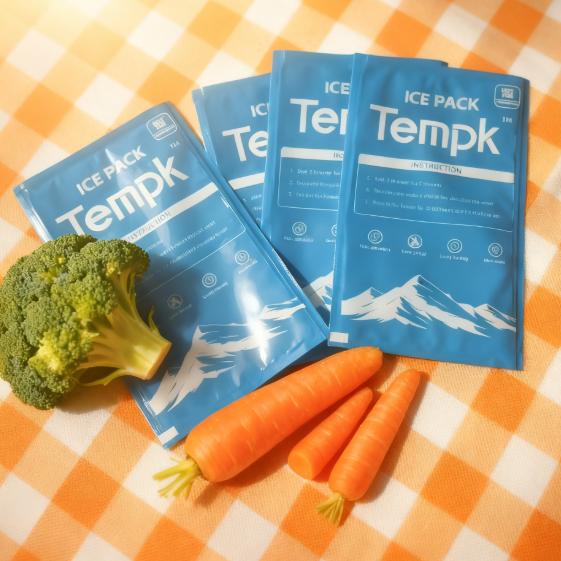
Vegetables Cold Chain Inspection Services in 2025?
Updated: December 23, 2025
Vegetables cold chain inspection services give you one thing buyers now demand in 2025: proof. You get time-stamped photos, pulp temperature checks, humidity clues, and a clear accept/hold decision tied to lot and pallet IDs. When wilt, wet cartons, or hidden decay show up, that evidence turns arguments into fast fixes. In this guide, you will learn what to inspect, where to inspect, and how to keep inspection spend under control.
This article will help you answer
How vegetables cold chain inspection services work across real handoffs (not just storage)
What a defensible produce temperature inspection checklist should include
How to use temperature and humidity inspection for vegetables to reduce waste
What belongs in a cold chain inspection report for vegetables to close disputes faster
How to choose inspection scope (basic vs standard vs advanced) with a 2025 decision tool
What are vegetables cold chain inspection services?
Vegetables cold chain inspection services are structured checks that document condition, temperature risk, and handling quality at key points in your shipment. Think of it as a “health check” for the vegetables plus a “travel diary” showing how they were treated. A strong program does not only catch problems. It shows when quality is good, pinpoints where it drops, and creates a repeatable prevention plan.
You should expect evidence you can act on the same day: photos, time stamps, pallet IDs, temperature sampling, and a clear recommendation.
The 5 checkpoints your produce cold chain audit checklist must cover
| Checkpoint | What gets checked | Evidence captured | The practical meaning for you |
|---|---|---|---|
| Pre-cooling verification for vegetables | pulp temp at pack-out, cooldown timing | readings + time stamps | prevents shipping “warm from the start” |
| Cold room discipline | door-open minutes, airflow, setpoints | logs + observations | reduces temperature swings and sweating |
| Packaging protection | vents, liners, stacking, crushed corners | photos + notes | cuts bruising, dehydration, wet cartons |
| Handoff exposure | dock/ramp dwell time, staging zones | time stamps | finds “hidden warm time” that kills shelf life |
| Hygiene basics | cleanliness, pests, condensate control | checklist + corrective actions | reduces spoilage and complaint risk |
Practical tips you can apply this week
Start at the handoff: Most failures hide in “in-between time,” not inside a closed cold room.
Demand labeled photos: “Pallet 3, corner crush, 09:14” beats 20 random images.
Treat the report as a tool: If it does not include actions, it is not worth paying for.
Real-world example: A receiver added inspections at the cold room door and found pallets waiting too long in a warm staging zone. One SOP change cut repeat spoilage.
When do vegetables cold chain inspection services pay off?
Vegetables cold chain inspection services pay off when risk and value are high—new lanes, hot seasons, premium vegetables, or repeated claims. You do not need full inspection on every shipment forever. You need the right inspection at the right moment, especially when partners change or weather shifts.
Use inspections to protect margin and reduce chargebacks when it matters most.
High-ROI situations vs “keep it lighter” lanes
| Shipment situation | Risk level | Recommended approach | The practical meaning for you |
|---|---|---|---|
| New supplier / new growing region | High | Standard or Advanced | protects your launch and reputation |
| Hot-season lanes or long dwell | High | Standard + dwell mapping | prevents wilting and wet cartons |
| Premium leafy greens, herbs | High | Pulp sampling + scoring | protects shelf life expectations |
| Multi-stop distribution / cross-dock | Medium–High | Add a mid-point spot check | catches handoff damage early |
| Stable commodity, proven lane | Lower | Spot checks + trends | controls cost without losing control |
Interactive decision tool: “Do I need inspection for this shipment?”
Score each item and add points.
Product risk (0–10)
Leafy greens or herbs: +4
Premium value per carton: +2
Shelf-life promise over 7 days: +2
Recent claims history: +2
Lane risk (0–10)
Two or more transfers: +3
Hot season or hot region: +3
Typical dwell over “a few hours”: +2
Cross-dock or mixed handling: +2
Interpretation
0–6: Spot checks or Basic inspections are usually enough
7–12: Standard vegetables cold chain inspection services recommended
13–20: Advanced vegetables cold chain inspection services until stable
Practical case: One shipper stopped “random inspections” and inspected only connection handoffs and hot-afternoon arrivals. Costs dropped, results improved.
How do vegetables cold chain inspection services verify temperature and humidity?
Vegetables cold chain inspection services verify temperature and humidity by combining measurements with time stamps and handling observations. Temperature alone is not enough. Humidity often explains limp texture (dehydration) or wet cartons (condensation). A good inspector treats temperature + humidity + time out of cold as one system.
Expect three layers of proof: product (pulp), environment (air), and event exposure (loading/staging).
Pulp vs air vs surface: what each tells you
| Measurement | What it tells you | Best use | The practical meaning for you |
|---|---|---|---|
| Pulp temperature | what the vegetables actually experienced | pre-cool + receiving checks | predicts shelf life better |
| Air temperature | what equipment is set to | cold room / truck checks | shows system performance |
| Surface temperature | quick indicator of short exposure | ramps and loading | catches brief warm spikes |
| Relative humidity | dehydration vs condensation risk | storage + packaging review | protects weight and texture |
Practical tips and advice
Define targets by commodity: One setpoint does not fit all vegetables.
Measure before delays: Check pulp temperature before long staging time changes it.
Record door-open minutes: Short door events can undo hours of refrigeration.
Real-world example: A leafy-greens program added humidity notes and carton moisture checks. Limp complaints dropped without changing transport schedules.
How do vegetables cold chain inspection services use a produce temperature inspection checklist?
A produce temperature inspection checklist turns inspection into repeatable evidence, not opinions. Your checklist should be short enough to follow under pressure, yet detailed enough to defend decisions. The goal is simple: link identity + time + place + measurement + action.
If your checklist cannot answer “what happened and when,” you will still lose disputes.
A receiving checklist you can run in minutes
Shipment ID, lot ID, pallet count, seal status
Exact inspection location (dock, staging zone, cold room door)
Arrival time, door-open time, put-away start/end time
Pulp temperature sampling: method, sample count, carton positions
Carton condition: wetness, crush, vent blockage, liner issues
Odor/decay signals: slime, mold, soft spots, abnormal smell
Decision: accept / accept with sorting / hold / reject
Immediate action + owner + verification date (closure loop)
Sampling plan you can actually follow
| Pallet count / risk | Suggested pulp samples | Where to sample | The practical meaning for you |
|---|---|---|---|
| Low risk (stable lane) | 6–10 cartons | 4 edge + 2 center | cost control with basic confidence |
| Medium risk | 10–16 cartons | edge + center across 2–3 pallets | catches hidden warm pockets |
| High risk (claims/hot season) | 16–24 cartons | edge/center + top/bottom layers | strongest defensible evidence |
Practical tips and advice
Use the same sampling rule every time: consistency beats “more samples sometimes.”
Record position: edge vs center results often explain uneven cooling.
Tie measurement to action: “out of range” without a decision wastes money.
Real-world example: A receiver sampled the same carton positions each week and finally saw patterns. They stopped blaming “bad luck.”
What are practical vegetable receiving inspection standards?
Vegetable receiving inspection standards define what “acceptable” looks like before arguments start. They reduce opinion fights at the dock. They also help your team move fast: accept, sort, or hold—without guessing.
Standards should be tighter for herbs and leafy greens than for root vegetables. Keep rules simple so they get used.
A simple 1–5 scoring model you can adopt
Score each category 1–5:
Appearance (color, freshness)
Firmness (turgor, crispness)
Moisture/condensation (free water, wet cartons)
Packaging integrity (crush, tears, vent blockage)
Odor/decay signs (slime, mold, soft spots)
Decision rule
4–5 average: accept
3 average: accept with sorting or shorter shelf-life plan
1–2 average: hold, escalate, or reject per contract
| Category | 5 (Excellent) | 3 (Mixed) | 1 (Poor) |
|---|---|---|---|
| Firmness | crisp and fresh | slight limp | limp and weak |
| Moisture | dry cartons | slight wetness | soaked cartons |
| Decay | none | minor spots | active decay |
| Packaging | intact | minor dents | crush/tears |
Practical tips and advice
Define tolerance by SKU: greens need tighter limits than hard veg.
Use photos as proof: evidence ends disputes quickly.
Avoid all-or-nothing: sorting plans often save value safely.
Real-world example: A distributor reduced rejections using “accept with sorting” rules for minor carton damage. Customer standards stayed high.
What should be inside a cold chain inspection report for vegetables?
A cold chain inspection report for vegetables should be readable in five minutes and defensible for weeks. It must answer: What arrived? Is it acceptable? What evidence proves that? What action do we take now?
A report that is slow, vague, or unlabeled is not a report. It is a story.
A one-page executive summary template (what “good” looks like)
| Report section | Strong output | Weak output | The practical meaning for you |
|---|---|---|---|
| Summary decision | clear accept/hold/reject | vague opinion | faster receiving actions |
| Temperature evidence | sample count + positions + results | “cold” only | defensible claims |
| Handling notes | dwell time + location | “warehouse delay” | root cause you can fix |
| Photos | labeled + time-stamped | random images | fewer disputes |
| Corrective actions | owner + date to verify | generic advice | issues stop repeating |
Practical tips and advice
Require photo labeling: “Pallet 2, wet cartons, 08:41.”
Store reports by shipment ID: searchable history becomes a power tool.
Ask for a closure loop: verify fixes, not just findings.
Real-world example: A buyer reduced decision time by standardizing reports. Teams stopped arguing and started following consistent hold rules.
Where should you place inspection points in a vegetables cold chain?
You do not need inspections everywhere—you need them where the cold chain is most likely to break. The highest value inspection points are usually at handoffs: dock arrival, cold room door entry, cross-dock transfer, and before final delivery for premium customers.
Think “proof at the moment risk happens.”
The practical 3-point inspection plan
| Inspection point | Best for | Cost level | The practical meaning for you |
|---|---|---|---|
| Origin release (optional) | new suppliers | Medium | prevents bad loads from shipping |
| Destination receiving (most important) | claims prevention | High value | strongest evidence and fastest action |
| Exception-based inspections | alerts/complaints | Low | targets spend where risk rises |
Practical tips and advice
If you can choose only one: choose destination receiving.
If you cross-dock: add a mid-point spot check.
If you do last mile: inspect one route per week for trend data.
Real-world example: A company learned most damage happened during cross-dock. One mid-point inspection changed pallet rules and reduced losses.
How do you choose scope and provider for vegetables cold chain inspection services?
Choose scope based on risk, and choose a provider based on method, produce experience, and corrective-action skill. A good partner does not just inspect. They help you improve and verify that improvements hold.
If you need independence for disputes, third-party cold chain inspection for fresh produce can be the difference between “he said/she said” and facts.
Basic vs standard vs advanced scope (choose with confidence)
| Scope | Includes temperature? | Includes scoring? | Best for you when… |
|---|---|---|---|
| Basic | optional | limited | risk is low and lane is stable |
| Standard | yes (pulp sampling) | yes | you need proof + clear decisions |
| Advanced | yes + logger review + dwell mapping | yes + root-cause actions | you have repeat claims or hot-season risk |
Provider scorecard (quick questions to ask)
| Category | What to ask | What “good” looks like | The practical meaning for you |
|---|---|---|---|
| Produce expertise | what vegetables they inspect most | commodity-specific guidance | fewer generic recommendations |
| Measurement method | sampling rules + tools | repeatable plan | comparable results over time |
| Reporting speed | when results arrive | same-day summary | faster corrective actions |
| Corrective action workflow | how issues get closed | owner + verify date | problems actually get fixed |
| Independence | conflict-of-interest policy | transparent boundaries | stronger dispute resolution |
Practical tips and advice
Request a sample report first: you should see photos, time stamps, and actions.
Pilot before scaling: one month reveals real value quickly.
Pay for outcomes: fewer claims, faster decisions, longer shelf life.
Real-world example: A shipper switched providers after vague reports. A new partner delivered action lists that reduced losses within one season.
How do you keep vegetables cold chain inspection services affordable?
Vegetables cold chain inspection services stay affordable when you inspect by risk, not by habit. Inspect more during launches and hot seasons, then shift stable lanes to spot checks plus remote evidence review. You also save money by shortening checklists and improving data quality, so you do not pay for repeat visits.
Affordability is not “lowest invoice.” It is lowest cost per prevented loss.
Cost drivers and cost-down levers
| Cost driver | Why it increases cost | Cost-down lever | The practical meaning for you |
|---|---|---|---|
| Too many sites | travel + scheduling | cluster by region | fewer travel fees |
| Overly long checklists | more labor per visit | focus on top 10 risks | faster visits |
| Low data quality | disputes + re-inspections | standard templates | fewer repeats |
| No closure loop | recurring issues | verify corrective actions | repeat losses drop |
| Rare inspections only | issues grow unnoticed | mix remote + spot checks | steady control at lower cost |
Practical tips and advice
Inspect more during change: new partners and packaging deserve higher frequency.
Shrink the checklist: keep “must-have evidence,” remove “nice-to-have.”
Use exception triggers: alarms, complaints, hot weather, multi-handoff days.
Real-world example: A shipper cut spend by moving stable lanes to remote log review. Spot checks stayed, and performance remained strong.
2025 latest developments and trends in vegetables cold chain inspection services
In 2025, vegetables cold chain inspection services are shifting from “manual checklists” to evidence-first workflows. Inspections still happen on-site, but proof is captured faster, labeled better, and shared sooner. Programs are also paying more attention to humidity, because dehydration and condensation can destroy quality even when temperature setpoints look correct. The winning approach is less paperwork, more usable evidence, and faster corrective actions.
Latest progress snapshot
Faster reporting: same-day summaries with clear actions are becoming the norm.
More risk-based sampling: stable lanes get fewer visits, risky lanes get more.
More integrated proof: photos + time stamps + lot IDs + temperature evidence live together.
Market insight: Buyers want predictable quality and quick resolution. Inspection history is becoming a negotiation tool for better SOPs, better packaging decisions, and clearer accountability.
Frequently Asked Questions
Q1: What is the most important part of vegetables cold chain inspection services?
A consistent receiving inspection with time stamps, labeled photos, and pulp sampling. It creates proof and prevents repeat errors.
Q2: How many cartons should I sample for pulp temperature?
Use a consistent rule based on risk. Sample across edge and center positions so you do not miss hidden warm pockets.
Q3: Can vegetables cold chain inspection services replace temperature loggers?
No. Inspections are a snapshot. Loggers show temperature history. Many programs use both for stronger evidence.
Q4: What should I do if cartons are wet on arrival?
Treat it as a condensation clue. Inspect for decay risk, check dwell time and door-open minutes, and review packaging and humidity controls.
Q5: When should I hire third-party cold chain inspection for fresh produce?
Use third-party support when you launch new lanes, face recurring claims, or need independent evidence for disputes and audits.
Q6: What should be in a corrective action report for produce cold chain issues?
Cause, immediate fix, prevention step, owner, and a verification date. Without verification, the issue returns.
Summary and recommendations
Vegetables cold chain inspection services protect freshness by documenting condition, packaging integrity, temperature risk, humidity clues, and handling quality at the moments that matter most. The highest value comes from inspections that are consistent, time-stamped, photo-supported, and tied to clear accept/hold decisions. When you standardize your checklist, inspect the right handoffs, and run a closure loop, you reduce spoilage, speed up receiving decisions, and close disputes with facts.
Action plan (clear CTA)
Next shipment: run a standard receiving inspection with labeled photos, scoring, and pulp sampling.
Next 14 days: track dwell time at your top handoff and set a “max minutes” rule.
Within 30 days: move to risk-based frequency and exception-triggered advanced inspections only where needed.
About Tempk
At Tempk, we support cold chain teams with practical packaging and process controls that make inspections easier and outcomes more stable. We focus on solutions that help you reduce temperature swings, limit condensation risk, and build repeatable handling routines across partners. The result is fewer surprises at receiving, fewer claims, and clearer evidence when you need it.
Next step: Share your vegetable type, lane steps (origin → transfers → destination), and your top complaint (wilt, wet cartons, short shelf life). We can help you build an inspection checklist and a packing/handling plan that targets the real cause.