


Selecting an Insulated Box Exporter for Ice Cream: Procurement Framework
Selecting an Insulated Box Exporter for Ice Cream: Procurement Framework
Selecting an Insulated Box Exporter for Ice Cream: Procurement Framework
The right insulated box exporter for ice cream is a supplier whose proposed packout, evidence, production controls, and operating support match the product, payload, route, season, and receiving reality. A strong procurement process therefore starts with requirements, converts them into a packout, tests the packout under defined conditions, and controls it after launch. This article combines the thermal, operational, supplier, and quality decisions needed for ice cream, gelato, frozen desserts, novelties, and other products whose texture and shape depend on a stable frozen condition without treating insulation as a universal guarantee.
Write a requirement that a supplier can actually answer
A useful requirement names the product, approved condition, payload range, route, maximum operational window, seasonal exposure, receiving process, and consequence of failure. It also states what the packaging must not be expected to do. For this application, an insulated box slows warming but cannot restore quality after melting or guarantee export performance without sufficient refrigerant, tested duration, and disciplined handling. That sentence prevents scope drift and makes missing controls visible before quotations are compared.
The requirement should distinguish fixed inputs from variables. Fixed inputs may include external-size limits, a regulated inner package, a product carton, or a destination procedure. Variables may include insulation type, coolant arrangement, payload insert, closure, outer carton, and monitoring plan. Allowing suppliers to propose alternatives can improve the design, but each alternative should be assessed against the same acceptance criteria.
The target condition should be defined by the product specification and quality limits; frozen appearance alone does not prove that texture has been protected. Record the source and owner of that product requirement. A procurement team should not create a temperature band merely to make supplier comparison easier.
- What product or product family will be shipped, and who owns the stability decision?
- What are the minimum and maximum payloads, including physical dimensions and starting condition?
- What is the full packing-to-storage duration, including contingency and receiving delay?
- What hot, cold, mechanical, moisture, hygiene, and regulatory exposures can occur?
- What evidence, operating instructions, production controls, and post-launch support are required?
Select the architecture by constraint
Start with the dominant constraint. A one-way express shipment may prioritize low mass, parcel durability, and simple packing. A reusable hospital or distributor loop may prioritize impact resistance, cleanability, replaceable components, and return efficiency. An export biotech lane may prioritize a long contingency window, documentation space, dry-ice compatibility, or high insulation efficiency within an airline size limit. The architecture follows the constraint.
Foam-lined corrugated boxes can be practical for many single-use routes. Molded EPS provides shaped insulation at relatively low mass. EPP can support repeated handling where the operating model justifies return and inspection. Panel systems can support custom dimensions. VIP-based designs can save insulation thickness but require careful edge, puncture, aging, and quality controls. No material choice removes the need to test the finished packout.
Geometry should be reviewed alongside freight. More insulation and coolant can increase external dimensions while reducing payload space. A smaller high-performance solution may lower dimensional cost, but it may add material complexity. A larger simple solution may be easier to pack but expensive to store and ship. Compare the entire program rather than an isolated unit price.
Payload, coolant, and void space form one packout
A passive system works from stored thermal energy and resistance to heat flow. Product, coolant, insulation, air space, and external exposure interact. If the product is loaded warm, the refrigerant must remove that heat before it can buffer the route. If the payload is very small, it may respond quickly to local gradients. If coolant is placed directly against a sensitive item, the package can create cold damage while successfully resisting external heat.
The packout specification should identify the exact coolant or PCM, required conditioning state, quantity, placement, barriers, payload limits, void-fill method, monitor location, and closure. Components should be restrained so parcel handling cannot rearrange the tested geometry. For dry-ice applications, gas release, material compatibility, worker safety, transport-mode rules, and destination handling need dedicated review.
Consider the complete operating capacity. Conditioning freezers, staging space, packing benches, staff time, backup coolants, and dispatch cutoff rules can limit a program even when the box performs well. A design that requires more frozen components than the site can consistently prepare is not operationally robust.
Replace generic hour claims with a documented profile
Ask for evidence tied to the proposed construction and packout. The report should identify the package version, materials, dimensions, coolant, conditioning, payload, sensor locations, ambient profile, duration, opening events if any, and acceptance criteria. A standardized parcel profile can support comparison, while lane-specific profiling can improve relevance. Neither is meaningful if the supplied production unit differs from the tested design.
Review minimum and maximum payloads and hot and cold seasonal conditions where they represent different risks. Repeated-use systems may need aging or reuse assessment. Mechanical testing may be appropriate when drops, compression, vibration, or frozen-bag fragility can change the geometry or damage the product. Thermal and mechanical evidence should reflect how the package is actually handled.
The report supports a decision; it does not make the decision by itself. The quality or product owner evaluates whether the observed profile is acceptable for ice cream, gelato, frozen desserts, novelties, and other products whose texture and shape depend on a stable frozen condition. When a deviation occurs, the team should compare actual shipment conditions with the qualified envelope and the product's approved excursion process.
Evaluate suppliers as controlled manufacturing partners
A polished prototype can hide weak production control. Ask how the supplier manages material identity, dimensions, tolerances, assembly, closure fit, printing, final inspection, nonconforming units, traceability, and changes. For custom products, approve a drawing, bill of materials, artwork, packout, and golden sample. Define which substitutions or process changes require notification and whether additional testing is needed.
Assess support for product quality limits, hard-frozen loading, dry-ice compatibility, gas venting, customs dwell, package strength at low temperature, monitoring, and complete-lane testing. The answer should show awareness of the application without crossing into unsupported product or regulatory claims. A supplier can provide construction details, samples, packout drawings, test reports, training aids, and change records. The buyer retains responsibility for product requirements, route decisions, local compliance, and quality disposition.
Commercial terms should reflect the controlled scope. Compare tooling, samples, test work, coolants, inserts, cartons, labels, minimum order expectations, lead-time assumptions, storage, replacement parts, and change management. Where a value is not yet known, state it as a question rather than inventing a number for the business case.
Ice cream quality can fail before complete melting
Ice cream is sensitive to temperature cycling. Partial softening followed by refreezing can encourage larger ice crystals, package deformation, shrinkage, and loss of the intended mouthfeel. The acceptance criterion should therefore reflect product quality, not merely a final observation that the center is frozen. Product temperature, carton strength, air space, loading pattern, and time at customs all influence the outcome.
This issue should be visible in the design review, operating procedure, and supplier evaluation. It is not a minor application note. It changes which components are acceptable, what staff must verify, and how a shipment is released or escalated.
Dry ice is often considered for frozen parcel or air shipments because it provides a very cold refrigerant source, but it introduces handling and transport requirements. Packages must permit gas release, workers need suitable procedures, and air carriers apply dangerous-goods provisions. The amount and placement should be established through testing rather than a generic rule of thumb. Mechanical separation can reduce direct contact damage and help distribute cooling more evenly.
Move from sample to operation without losing the design
A pilot should run through normal staff, equipment, cutoff times, carrier handovers, receiving locations, and data systems. Observe conditioning, picking, packing, labeling, dispatch, receipt, unpacking, monitoring, cleaning, and returns. Record confusion and workarounds. A package that only succeeds when the engineer is standing beside the operator is not ready for routine use.
Define release criteria for the pilot. These can include correct component selection, packout completion, closure integrity, scan and label quality, temperature results, package damage, receiving time, data retrieval, and staff feedback. When failures occur, separate design weakness from process deviation and route disruption before selecting a corrective action.
After launch, protect the approved state. New products, payload dimensions, suppliers, materials, coolants, artwork, carriers, destinations, seasons, or cleaning chemicals can affect performance. A change-control review decides whether documentation updates, additional testing, training, or requalification are necessary.
Failure-mode review before purchase approval
| Failure mode | Question before approval | Possible control |
|---|---|---|
| Warm excursion | Is the route longer or hotter than the evidence? | Revise profile, capacity, service, dispatch rule, or contingency. |
| Cold excursion | Can coolant or winter exposure overcool the payload? | Condition coolant, add barriers, revise placement, and test cold-season risk. |
| Insufficient payload space | Was usable volume measured with every component installed? | Approve a packout drawing and physical fit sample. |
| Process variation | Can operators confuse components or skip a critical step? | Kit parts, simplify instructions, use visual controls, and audit packing. |
| Package damage | Can drops, compression, moisture, or reuse alter the geometry? | Strengthen shell or closure, inspect units, and include mechanical testing. |
| Receiving delay | Who receives, unpacks, stores, and reviews the shipment? | Confirm hours, send alerts, define instructions, and add contingency. |
| Unsupported claim | Does the statement identify conditions and evidence? | Request the full report or rewrite the requirement as a verification point. |
The value of this review is its specificity. “Reliable packaging” is not a testable requirement, while the listed failure modes can be linked to drawings, reports, work instructions, and responsibilities. Add application-specific items where necessary, especially measuring success only by whether the product is still frozen while ignoring softening, recrystallization, deformation, refreezing, and customs delay.
The review can also prevent unnecessary overdesign. Once the dominant failure modes are controlled and evidence shows adequate margin, the team can evaluate whether excess material, coolant, freight, or process complexity can be reduced through a documented change.
A practical decision path
An ice cream exporter qualifies an airport-to-airport shipment but later sells door-to-door. Customs clearance, local delivery, and a weekend warehouse hold extend the route beyond the original evidence. Begin by verifying the product requirement and mapping every minute from packing to controlled receipt. Select a candidate architecture that fits the payload and operating constraints. Create a defined packout, test it under representative conditions, and run a pilot through the real network. Review evidence with quality, logistics, operations, and procurement before approval.
If the shipment changes, return to the affected step rather than restarting blindly. A new label may require only a document review. A larger payload, different coolant, longer route, colder winter profile, or new customs process may require additional testing. This risk-based path keeps the program controlled without treating every change as identical.
Frequently asked questions
What is the first step in evaluating an insulated box exporter for ice cream?
Confirm the product requirement and map the complete operational lane. Define payload, starting condition, maximum packing-to-storage time, seasonal exposure, handovers, receiving process, and failure consequence. Those inputs create a fair basis for comparing designs and prevent the supplier from guessing what “cold” or “long duration” means.
What is the most important evidence to request?
Request a report for the proposed construction and packout that identifies components, conditioning, payload, sensor positions, ambient profile, duration, and acceptance criteria. Pair it with drawings, a bill of materials, and production controls. Evidence is strongest when the tested unit and the supplied unit are demonstrably the same.
Should procurement choose the coolant or the supplier?
The choice should be collaborative. The product owner defines the acceptable condition; packaging specialists evaluate heat flow and gradients; operations confirms conditioning capacity and packing practicality; safety and compliance teams review transport restrictions; and the supplier proposes compatible components. No single party should decide without the others' constraints.
How do I know whether customization requires retesting?
Assess whether the change can affect heat flow, coolant capacity, payload geometry, closure, mechanical durability, monitoring, or the operating process. Artwork alone may not affect thermal performance, while a dimensional, material, lid, coolant, or payload change often deserves deeper review. Document the decision under change control.
What should be included in a purchase specification?
Include approved drawings, materials, dimensions and tolerances, usable payload space, closure, component list, packout instructions, test evidence, production inspection, labeling, packaging for delivery, change notification, nonconformance handling, and any cleaning or reuse requirements. Mark assumptions that still require confirmation instead of turning them into unsupported facts.
The purchasing decision in practice
Select an insulated box exporter for ice cream through a controlled sequence: confirm the product requirement, map the route, compare proposed architectures, review evidence, qualify production controls, pilot the operation, and protect the approved state through change control. This approach gives procurement, quality, and operations a common basis for selecting both the supplier and the packout.
About Tempk
Tempk is a cold-chain packaging brand of Shanghai Tempk Industrial Co., Ltd. Its product range includes gel packs, insulated bags and liners, EPP boxes, VIP medical cool boxes, and related passive packaging components. Depending on the selected product, buyers can discuss size, insulation structure, coolant matching, branding, carton packing, and bulk supply requirements. Any temperature or duration claim should be tied to a defined packout, payload, ambient profile, and supporting test evidence.
Next step
Share the ice cream format, product specification, export lane, customs risk, refrigerant, payload, and delivery promise with Tempk to discuss a frozen shipper configuration.
Selecting an Insulated Box Exporter for Biotech Products: Procurement Framework

Selecting an Insulated Box Exporter for Biotech Products: Procurement Framework
The right insulated box exporter for biotech products is a supplier whose proposed packout, evidence, production controls, and operating support match the product, payload, route, season, and receiving reality. A strong procurement process therefore starts with requirements, converts them into a packout, tests the packout under defined conditions, and controls it after launch. This article combines the thermal, operational, supplier, and quality decisions needed for biologics, enzymes, diagnostic reagents, cell materials, research kits, and other stability-sensitive biotech products without treating insulation as a universal guarantee.
Convert the shipping problem into a controlled specification
A useful requirement names the product, approved condition, payload range, route, maximum operational window, seasonal exposure, receiving process, and consequence of failure. It also states what the packaging must not be expected to do. For this application, an exporter can provide packaging hardware, but the shipper remains responsible for product classification, route approval, documentation, and a packout supported for the intended lane. That sentence prevents scope drift and makes missing controls visible before quotations are compared.
The requirement should distinguish fixed inputs from variables. Fixed inputs may include external-size limits, a regulated inner package, a product carton, or a destination procedure. Variables may include insulation type, coolant arrangement, payload insert, closure, outer carton, and monitoring plan. Allowing suppliers to propose alternatives can improve the design, but each alternative should be assessed against the same acceptance criteria.
Biotech products may require refrigerated, frozen, ultra-low, or controlled room-temperature conditions; the approved product or study protocol sets the target. Record the source and owner of that product requirement. A procurement team should not create a temperature band merely to make supplier comparison easier.
- What product or product family will be shipped, and who owns the stability decision?
- What are the minimum and maximum payloads, including physical dimensions and starting condition?
- What is the full packing-to-storage duration, including contingency and receiving delay?
- What hot, cold, mechanical, moisture, hygiene, and regulatory exposures can occur?
- What evidence, operating instructions, production controls, and post-launch support are required?
The best box is a balanced system, not the thickest wall
Start with the dominant constraint. A one-way express shipment may prioritize low mass, parcel durability, and simple packing. A reusable hospital or distributor loop may prioritize impact resistance, cleanability, replaceable components, and return efficiency. An export biotech lane may prioritize a long contingency window, documentation space, dry-ice compatibility, or high insulation efficiency within an airline size limit. The architecture follows the constraint.
Foam-lined corrugated boxes can be practical for many single-use routes. Molded EPS provides shaped insulation at relatively low mass. EPP can support repeated handling where the operating model justifies return and inspection. Panel systems can support custom dimensions. VIP-based designs can save insulation thickness but require careful edge, puncture, aging, and quality controls. No material choice removes the need to test the finished packout.
Geometry should be reviewed alongside freight. More insulation and coolant can increase external dimensions while reducing payload space. A smaller high-performance solution may lower dimensional cost, but it may add material complexity. A larger simple solution may be easier to pack but expensive to store and ship. Compare the entire program rather than an isolated unit price.
Build the thermal system around controlled starting conditions
A passive system works from stored thermal energy and resistance to heat flow. Product, coolant, insulation, air space, and external exposure interact. If the product is loaded warm, the refrigerant must remove that heat before it can buffer the route. If the payload is very small, it may respond quickly to local gradients. If coolant is placed directly against a sensitive item, the package can create cold damage while successfully resisting external heat.
The packout specification should identify the exact coolant or PCM, required conditioning state, quantity, placement, barriers, payload limits, void-fill method, monitor location, and closure. Components should be restrained so parcel handling cannot rearrange the tested geometry. For dry-ice applications, gas release, material compatibility, worker safety, transport-mode rules, and destination handling need dedicated review.
Consider the complete operating capacity. Conditioning freezers, staging space, packing benches, staff time, backup coolants, and dispatch cutoff rules can limit a program even when the box performs well. A design that requires more frozen components than the site can consistently prepare is not operationally robust.
Replace generic hour claims with a documented profile
Ask for evidence tied to the proposed construction and packout. The report should identify the package version, materials, dimensions, coolant, conditioning, payload, sensor locations, ambient profile, duration, opening events if any, and acceptance criteria. A standardized parcel profile can support comparison, while lane-specific profiling can improve relevance. Neither is meaningful if the supplied production unit differs from the tested design.
Review minimum and maximum payloads and hot and cold seasonal conditions where they represent different risks. Repeated-use systems may need aging or reuse assessment. Mechanical testing may be appropriate when drops, compression, vibration, or frozen-bag fragility can change the geometry or damage the product. Thermal and mechanical evidence should reflect how the package is actually handled.
The report supports a decision; it does not make the decision by itself. The quality or product owner evaluates whether the observed profile is acceptable for biologics, enzymes, diagnostic reagents, cell materials, research kits, and other stability-sensitive biotech products. When a deviation occurs, the team should compare actual shipment conditions with the qualified envelope and the product's approved excursion process.
Evaluate suppliers as controlled manufacturing partners
A polished prototype can hide weak production control. Ask how the supplier manages material identity, dimensions, tolerances, assembly, closure fit, printing, final inspection, nonconforming units, traceability, and changes. For custom products, approve a drawing, bill of materials, artwork, packout, and golden sample. Define which substitutions or process changes require notification and whether additional testing is needed.
Assess support for export dwell mapping, dry-ice or coolant compatibility, customs-opening instructions, monitor retrieval, documentation space, destination capability, and lane evidence. The answer should show awareness of the application without crossing into unsupported product or regulatory claims. A supplier can provide construction details, samples, packout drawings, test reports, training aids, and change records. The buyer retains responsibility for product requirements, route decisions, local compliance, and quality disposition.
Commercial terms should reflect the controlled scope. Compare tooling, samples, test work, coolants, inserts, cartons, labels, minimum order expectations, lead-time assumptions, storage, replacement parts, and change management. Where a value is not yet known, state it as a question rather than inventing a number for the business case.
The border is part of the thermal lane
International shipments can spend more time in export screening, airline acceptance, customs inspection, or importer storage than in the air. A robust design maps those dwell points and identifies who can intervene if the shipment is delayed. For dry-ice systems, carrier acceptance, package ventilation, markings, net dry-ice quantity, and replenishment arrangements must be addressed under the applicable rules.
This issue should be visible in the design review, operating procedure, and supplier evaluation. It is not a minor application note. It changes which components are acceptable, what staff must verify, and how a shipment is released or escalated.
Biotech exporters should also separate product stability from package performance. A box may hold a measured temperature profile under test, but the quality team must decide whether that profile is acceptable for the specific product. Excursion handling, data review, customs-opening instructions, and destination contacts should be part of the shipping plan rather than added after a delay occurs.
Pilot the people and process, not only the package
A pilot should run through normal staff, equipment, cutoff times, carrier handovers, receiving locations, and data systems. Observe conditioning, picking, packing, labeling, dispatch, receipt, unpacking, monitoring, cleaning, and returns. Record confusion and workarounds. A package that only succeeds when the engineer is standing beside the operator is not ready for routine use.
Define release criteria for the pilot. These can include correct component selection, packout completion, closure integrity, scan and label quality, temperature results, package damage, receiving time, data retrieval, and staff feedback. When failures occur, separate design weakness from process deviation and route disruption before selecting a corrective action.
After launch, protect the approved state. New products, payload dimensions, suppliers, materials, coolants, artwork, carriers, destinations, seasons, or cleaning chemicals can affect performance. A change-control review decides whether documentation updates, additional testing, training, or requalification are necessary.
Failure-mode review before purchase approval
| Failure mode | Question before approval | Possible control |
|---|---|---|
| Warm excursion | Is the route longer or hotter than the evidence? | Revise profile, capacity, service, dispatch rule, or contingency. |
| Cold excursion | Can coolant or winter exposure overcool the payload? | Condition coolant, add barriers, revise placement, and test cold-season risk. |
| Insufficient payload space | Was usable volume measured with every component installed? | Approve a packout drawing and physical fit sample. |
| Process variation | Can operators confuse components or skip a critical step? | Kit parts, simplify instructions, use visual controls, and audit packing. |
| Package damage | Can drops, compression, moisture, or reuse alter the geometry? | Strengthen shell or closure, inspect units, and include mechanical testing. |
| Receiving delay | Who receives, unpacks, stores, and reviews the shipment? | Confirm hours, send alerts, define instructions, and add contingency. |
| Unsupported claim | Does the statement identify conditions and evidence? | Request the full report or rewrite the requirement as a verification point. |
The value of this review is its specificity. “Reliable packaging” is not a testable requirement, while the listed failure modes can be linked to drawings, reports, work instructions, and responsibilities. Add application-specific items where necessary, especially optimizing the box while overlooking customs dwell, dangerous-goods classification, dry-ice replenishment limits, importer readiness, and product-specific stability.
The review can also prevent unnecessary overdesign. Once the dominant failure modes are controlled and evidence shows adequate margin, the team can evaluate whether excess material, coolant, freight, or process complexity can be reduced through a documented change.
A practical decision path
A research reagent leaves a factory on Thursday and clears customs on Monday because documents are reviewed over the weekend. The airline transit is short, but the total lane is not. Begin by verifying the product requirement and mapping every minute from packing to controlled receipt. Select a candidate architecture that fits the payload and operating constraints. Create a defined packout, test it under representative conditions, and run a pilot through the real network. Review evidence with quality, logistics, operations, and procurement before approval.
If the shipment changes, return to the affected step rather than restarting blindly. A new label may require only a document review. A larger payload, different coolant, longer route, colder winter profile, or new customs process may require additional testing. This risk-based path keeps the program controlled without treating every change as identical.
Questions procurement and quality teams often ask
What is the first step in evaluating an insulated box exporter for biotech products?
Confirm the product requirement and map the complete operational lane. Define payload, starting condition, maximum packing-to-storage time, seasonal exposure, handovers, receiving process, and failure consequence. Those inputs create a fair basis for comparing designs and prevent the supplier from guessing what “cold” or “long duration” means.
What is the most important evidence to request?
Request a report for the proposed construction and packout that identifies components, conditioning, payload, sensor positions, ambient profile, duration, and acceptance criteria. Pair it with drawings, a bill of materials, and production controls. Evidence is strongest when the tested unit and the supplied unit are demonstrably the same.
Should procurement choose the coolant or the supplier?
The choice should be collaborative. The product owner defines the acceptable condition; packaging specialists evaluate heat flow and gradients; operations confirms conditioning capacity and packing practicality; safety and compliance teams review transport restrictions; and the supplier proposes compatible components. No single party should decide without the others' constraints.
How do I know whether customization requires retesting?
Assess whether the change can affect heat flow, coolant capacity, payload geometry, closure, mechanical durability, monitoring, or the operating process. Artwork alone may not affect thermal performance, while a dimensional, material, lid, coolant, or payload change often deserves deeper review. Document the decision under change control.
What should be included in a purchase specification?
Include approved drawings, materials, dimensions and tolerances, usable payload space, closure, component list, packout instructions, test evidence, production inspection, labeling, packaging for delivery, change notification, nonconformance handling, and any cleaning or reuse requirements. Mark assumptions that still require confirmation instead of turning them into unsupported facts.
Conclusion
Select an insulated box exporter for biotech products through a controlled sequence: confirm the product requirement, map the route, compare proposed architectures, review evidence, qualify production controls, pilot the operation, and protect the approved state through change control. This approach gives procurement, quality, and operations a common basis for selecting both the supplier and the packout.
About Tempk
Tempk is a cold-chain packaging brand of Shanghai Tempk Industrial Co., Ltd. Its product range includes gel packs, insulated bags and liners, EPP boxes, VIP medical cool boxes, and related passive packaging components. Depending on the selected product, buyers can discuss size, insulation structure, coolant matching, branding, carton packing, and bulk supply requirements. Any temperature or duration claim should be tied to a defined packout, payload, ambient profile, and supporting test evidence.
Next step
Share the biotech product condition, export lane, customs risk, coolant strategy, payload, and destination workflow with Tempk to review an export packaging configuration.
Selecting an Insulated Box Distributor for Medical Supplies: Procurement Framework
Selecting an Insulated Box Distributor for Medical Supplies: Procurement Framework
The right insulated box distributor for medical supplies is a supplier whose proposed packout, evidence, production controls, and operating support match the product, payload, route, season, and receiving reality. A strong procurement process therefore starts with requirements, converts them into a packout, tests the packout under defined conditions, and controls it after launch. This article combines the thermal, operational, supplier, and quality decisions needed for temperature-sensitive diagnostics, selected medicines, reagents, biologic materials, and general medical supplies that may or may not need thermal protection without treating insulation as a universal guarantee.
Convert the shipping problem into a controlled specification
A useful requirement names the product, approved condition, payload range, route, maximum operational window, seasonal exposure, receiving process, and consequence of failure. It also states what the packaging must not be expected to do. For this application, medical use does not automatically make a product temperature-sensitive, and an insulated box does not make a product medically approved or compliant. That sentence prevents scope drift and makes missing controls visible before quotations are compared.
The requirement should distinguish fixed inputs from variables. Fixed inputs may include external-size limits, a regulated inner package, a product carton, or a destination procedure. Variables may include insulation type, coolant arrangement, payload insert, closure, outer carton, and monitoring plan. Allowing suppliers to propose alternatives can improve the design, but each alternative should be assessed against the same acceptance criteria.
The storage statement, stability information, and quality decision for each SKU should determine whether insulation and coolant are required. Record the source and owner of that product requirement. A procurement team should not create a temperature band merely to make supplier comparison easier.
- What product or product family will be shipped, and who owns the stability decision?
- What are the minimum and maximum payloads, including physical dimensions and starting condition?
- What is the full packing-to-storage duration, including contingency and receiving delay?
- What hot, cold, mechanical, moisture, hygiene, and regulatory exposures can occur?
- What evidence, operating instructions, production controls, and post-launch support are required?
Select the architecture by constraint
Start with the dominant constraint. A one-way express shipment may prioritize low mass, parcel durability, and simple packing. A reusable hospital or distributor loop may prioritize impact resistance, cleanability, replaceable components, and return efficiency. An export biotech lane may prioritize a long contingency window, documentation space, dry-ice compatibility, or high insulation efficiency within an airline size limit. The architecture follows the constraint.
Foam-lined corrugated boxes can be practical for many single-use routes. Molded EPS provides shaped insulation at relatively low mass. EPP can support repeated handling where the operating model justifies return and inspection. Panel systems can support custom dimensions. VIP-based designs can save insulation thickness but require careful edge, puncture, aging, and quality controls. No material choice removes the need to test the finished packout.
Geometry should be reviewed alongside freight. More insulation and coolant can increase external dimensions while reducing payload space. A smaller high-performance solution may lower dimensional cost, but it may add material complexity. A larger simple solution may be easier to pack but expensive to store and ship. Compare the entire program rather than an isolated unit price.
Payload, coolant, and void space form one packout
A passive system works from stored thermal energy and resistance to heat flow. Product, coolant, insulation, air space, and external exposure interact. If the product is loaded warm, the refrigerant must remove that heat before it can buffer the route. If the payload is very small, it may respond quickly to local gradients. If coolant is placed directly against a sensitive item, the package can create cold damage while successfully resisting external heat.
The packout specification should identify the exact coolant or PCM, required conditioning state, quantity, placement, barriers, payload limits, void-fill method, monitor location, and closure. Components should be restrained so parcel handling cannot rearrange the tested geometry. For dry-ice applications, gas release, material compatibility, worker safety, transport-mode rules, and destination handling need dedicated review.
Consider the complete operating capacity. Conditioning freezers, staging space, packing benches, staff time, backup coolants, and dispatch cutoff rules can limit a program even when the box performs well. A design that requires more frozen components than the site can consistently prepare is not operationally robust.
Qualification should answer the intended-use question
Ask for evidence tied to the proposed construction and packout. The report should identify the package version, materials, dimensions, coolant, conditioning, payload, sensor locations, ambient profile, duration, opening events if any, and acceptance criteria. A standardized parcel profile can support comparison, while lane-specific profiling can improve relevance. Neither is meaningful if the supplied production unit differs from the tested design.
Review minimum and maximum payloads and hot and cold seasonal conditions where they represent different risks. Repeated-use systems may need aging or reuse assessment. Mechanical testing may be appropriate when drops, compression, vibration, or frozen-bag fragility can change the geometry or damage the product. Thermal and mechanical evidence should reflect how the package is actually handled.
The report supports a decision; it does not make the decision by itself. The quality or product owner evaluates whether the observed profile is acceptable for temperature-sensitive diagnostics, selected medicines, reagents, biologic materials, and general medical supplies that may or may not need thermal protection. When a deviation occurs, the team should compare actual shipment conditions with the qualified envelope and the product's approved excursion process.
The sample is only the beginning of supplier qualification
A polished prototype can hide weak production control. Ask how the supplier manages material identity, dimensions, tolerances, assembly, closure fit, printing, final inspection, nonconforming units, traceability, and changes. For custom products, approve a drawing, bill of materials, artwork, packout, and golden sample. Define which substitutions or process changes require notification and whether additional testing is needed.
Assess support for SKU segmentation, condensation control, mixed-order decisions, cleanability, identification, emergency order workflow, and documented temperature evidence. The answer should show awareness of the application without crossing into unsupported product or regulatory claims. A supplier can provide construction details, samples, packout drawings, test reports, training aids, and change records. The buyer retains responsibility for product requirements, route decisions, local compliance, and quality disposition.
Commercial terms should reflect the controlled scope. Compare tooling, samples, test work, coolants, inserts, cartons, labels, minimum order expectations, lead-time assumptions, storage, replacement parts, and change management. Where a value is not yet known, state it as a question rather than inventing a number for the business case.
Segment the catalog before selecting packaging
A medical-supply distributor may handle sterile dressings, devices, test kits, reagents, implants, nutrition products, and medicines in the same facility. Their packaging needs differ. A useful first step is to classify SKUs by temperature requirement, sensitivity to freezing, maximum permitted exposure, hazard status, fragility, and evidence required at receipt. This prevents unnecessary coolant use while focusing controls on genuinely sensitive goods.
This issue should be visible in the design review, operating procedure, and supplier evaluation. It is not a minor application note. It changes which components are acceptable, what staff must verify, and how a shipment is released or escalated.
The distribution system should also define what happens when products are combined. A mixed order can create incompatible conditions: one item may need refrigeration while another must remain dry or cannot tolerate condensation. Splitting the order, using an internal compartment, or choosing separate packaging may be safer than forcing every SKU into the same insulated container.
Move from sample to operation without losing the design
A pilot should run through normal staff, equipment, cutoff times, carrier handovers, receiving locations, and data systems. Observe conditioning, picking, packing, labeling, dispatch, receipt, unpacking, monitoring, cleaning, and returns. Record confusion and workarounds. A package that only succeeds when the engineer is standing beside the operator is not ready for routine use.
Define release criteria for the pilot. These can include correct component selection, packout completion, closure integrity, scan and label quality, temperature results, package damage, receiving time, data retrieval, and staff feedback. When failures occur, separate design weakness from process deviation and route disruption before selecting a corrective action.
After launch, protect the approved state. New products, payload dimensions, suppliers, materials, coolants, artwork, carriers, destinations, seasons, or cleaning chemicals can affect performance. A change-control review decides whether documentation updates, additional testing, training, or requalification are necessary.
Failure-mode review before purchase approval
| Failure mode | Question before approval | Possible control |
|---|---|---|
| Warm excursion | Is the route longer or hotter than the evidence? | Revise profile, capacity, service, dispatch rule, or contingency. |
| Cold excursion | Can coolant or winter exposure overcool the payload? | Condition coolant, add barriers, revise placement, and test cold-season risk. |
| Insufficient payload space | Was usable volume measured with every component installed? | Approve a packout drawing and physical fit sample. |
| Process variation | Can operators confuse components or skip a critical step? | Kit parts, simplify instructions, use visual controls, and audit packing. |
| Package damage | Can drops, compression, moisture, or reuse alter the geometry? | Strengthen shell or closure, inspect units, and include mechanical testing. |
| Receiving delay | Who receives, unpacks, stores, and reviews the shipment? | Confirm hours, send alerts, define instructions, and add contingency. |
| Unsupported claim | Does the statement identify conditions and evidence? | Request the full report or rewrite the requirement as a verification point. |
The value of this review is its specificity. “Reliable packaging” is not a testable requirement, while the listed failure modes can be linked to drawings, reports, work instructions, and responsibilities. Add application-specific items where necessary, especially using a cold-chain packout for products that do not need it while failing to define the products that do.
The review can also prevent unnecessary overdesign. Once the dominant failure modes are controlled and evidence shows adequate margin, the team can evaluate whether excess material, coolant, freight, or process complexity can be reduced through a documented change.
A practical decision path
A healthcare distributor receives an urgent order containing room-temperature devices and a refrigerated diagnostic reagent. Combining them in one wet, chilled cavity may damage labels or packaging even if the reagent remains cold. Begin by verifying the product requirement and mapping every minute from packing to controlled receipt. Select a candidate architecture that fits the payload and operating constraints. Create a defined packout, test it under representative conditions, and run a pilot through the real network. Review evidence with quality, logistics, operations, and procurement before approval.
If the shipment changes, return to the affected step rather than restarting blindly. A new label may require only a document review. A larger payload, different coolant, longer route, colder winter profile, or new customs process may require additional testing. This risk-based path keeps the program controlled without treating every change as identical.
Buyer questions answered
What is the first step in evaluating an insulated box distributor for medical supplies?
Confirm the product requirement and map the complete operational lane. Define payload, starting condition, maximum packing-to-storage time, seasonal exposure, handovers, receiving process, and failure consequence. Those inputs create a fair basis for comparing designs and prevent the supplier from guessing what “cold” or “long duration” means.
What is the most important evidence to request?
Request a report for the proposed construction and packout that identifies components, conditioning, payload, sensor positions, ambient profile, duration, and acceptance criteria. Pair it with drawings, a bill of materials, and production controls. Evidence is strongest when the tested unit and the supplied unit are demonstrably the same.
Should procurement choose the coolant or the supplier?
The choice should be collaborative. The product owner defines the acceptable condition; packaging specialists evaluate heat flow and gradients; operations confirms conditioning capacity and packing practicality; safety and compliance teams review transport restrictions; and the supplier proposes compatible components. No single party should decide without the others' constraints.
How do I know whether customization requires retesting?
Assess whether the change can affect heat flow, coolant capacity, payload geometry, closure, mechanical durability, monitoring, or the operating process. Artwork alone may not affect thermal performance, while a dimensional, material, lid, coolant, or payload change often deserves deeper review. Document the decision under change control.
What should be included in a purchase specification?
Include approved drawings, materials, dimensions and tolerances, usable payload space, closure, component list, packout instructions, test evidence, production inspection, labeling, packaging for delivery, change notification, nonconformance handling, and any cleaning or reuse requirements. Mark assumptions that still require confirmation instead of turning them into unsupported facts.
The purchasing decision in practice
Select an insulated box distributor for medical supplies through a controlled sequence: confirm the product requirement, map the route, compare proposed architectures, review evidence, qualify production controls, pilot the operation, and protect the approved state through change control. This approach gives procurement, quality, and operations a common basis for selecting both the supplier and the packout.
About Tempk
Shanghai Tempk Industrial Co., Ltd. offers cold-chain packaging under the Tempk brand. Relevant options include gel packs, insulated liners and bags, molded EPP boxes, and VIP-based medical cool boxes. Tempk can review application inputs such as size, payload, insulation structure, coolant arrangement, and packing format. The appropriate recommendation depends on the route and should not be separated from supporting packout evidence.
Next step
Give Tempk the product categories, storage statements, order profile, route, and handling constraints to review a practical medical-supply packaging approach.
Selecting an Insulated Box Distributor for Laboratory Samples: Procurement Framework
Selecting an Insulated Box Distributor for Laboratory Samples: Procurement Framework
The right insulated box distributor for laboratory samples is a supplier whose proposed packout, evidence, production controls, and operating support match the product, payload, route, season, and receiving reality. A strong procurement process therefore starts with requirements, converts them into a packout, tests the packout under defined conditions, and controls it after launch. This article combines the thermal, operational, supplier, and quality decisions needed for diagnostic specimens, research samples, reagents, controls, and other laboratory materials without treating insulation as a universal guarantee.
Write a requirement that a supplier can actually answer
A useful requirement names the product, approved condition, payload range, route, maximum operational window, seasonal exposure, receiving process, and consequence of failure. It also states what the packaging must not be expected to do. For this application, an insulated shipper provides thermal protection. it does not replace leakproof primary and secondary containment, absorbent material, required markings, documentation, or trained handling for regulated specimens. That sentence prevents scope drift and makes missing controls visible before quotations are compared.
The requirement should distinguish fixed inputs from variables. Fixed inputs may include external-size limits, a regulated inner package, a product carton, or a destination procedure. Variables may include insulation type, coolant arrangement, payload insert, closure, outer carton, and monitoring plan. Allowing suppliers to propose alternatives can improve the design, but each alternative should be assessed against the same acceptance criteria.
The required temperature must be taken from the sample protocol, assay instructions, stability data, or laboratory SOP rather than assumed from the word “sample.” Record the source and owner of that product requirement. A procurement team should not create a temperature band merely to make supplier comparison easier.
- What product or product family will be shipped, and who owns the stability decision?
- What are the minimum and maximum payloads, including physical dimensions and starting condition?
- What is the full packing-to-storage duration, including contingency and receiving delay?
- What hot, cold, mechanical, moisture, hygiene, and regulatory exposures can occur?
- What evidence, operating instructions, production controls, and post-launch support are required?
The best box is a balanced system, not the thickest wall
Start with the dominant constraint. A one-way express shipment may prioritize low mass, parcel durability, and simple packing. A reusable hospital or distributor loop may prioritize impact resistance, cleanability, replaceable components, and return efficiency. An export biotech lane may prioritize a long contingency window, documentation space, dry-ice compatibility, or high insulation efficiency within an airline size limit. The architecture follows the constraint.
Foam-lined corrugated boxes can be practical for many single-use routes. Molded EPS provides shaped insulation at relatively low mass. EPP can support repeated handling where the operating model justifies return and inspection. Panel systems can support custom dimensions. VIP-based designs can save insulation thickness but require careful edge, puncture, aging, and quality controls. No material choice removes the need to test the finished packout.
Geometry should be reviewed alongside freight. More insulation and coolant can increase external dimensions while reducing payload space. A smaller high-performance solution may lower dimensional cost, but it may add material complexity. A larger simple solution may be easier to pack but expensive to store and ship. Compare the entire program rather than an isolated unit price.
Build the thermal system around controlled starting conditions
A passive system works from stored thermal energy and resistance to heat flow. Product, coolant, insulation, air space, and external exposure interact. If the product is loaded warm, the refrigerant must remove that heat before it can buffer the route. If the payload is very small, it may respond quickly to local gradients. If coolant is placed directly against a sensitive item, the package can create cold damage while successfully resisting external heat.
The packout specification should identify the exact coolant or PCM, required conditioning state, quantity, placement, barriers, payload limits, void-fill method, monitor location, and closure. Components should be restrained so parcel handling cannot rearrange the tested geometry. For dry-ice applications, gas release, material compatibility, worker safety, transport-mode rules, and destination handling need dedicated review.
Consider the complete operating capacity. Conditioning freezers, staging space, packing benches, staff time, backup coolants, and dispatch cutoff rules can limit a program even when the box performs well. A design that requires more frozen components than the site can consistently prepare is not operationally robust.
Replace generic hour claims with a documented profile
Ask for evidence tied to the proposed construction and packout. The report should identify the package version, materials, dimensions, coolant, conditioning, payload, sensor locations, ambient profile, duration, opening events if any, and acceptance criteria. A standardized parcel profile can support comparison, while lane-specific profiling can improve relevance. Neither is meaningful if the supplied production unit differs from the tested design.
Review minimum and maximum payloads and hot and cold seasonal conditions where they represent different risks. Repeated-use systems may need aging or reuse assessment. Mechanical testing may be appropriate when drops, compression, vibration, or frozen-bag fragility can change the geometry or damage the product. Thermal and mechanical evidence should reflect how the package is actually handled.
The report supports a decision; it does not make the decision by itself. The quality or product owner evaluates whether the observed profile is acceptable for diagnostic specimens, research samples, reagents, controls, and other laboratory materials. When a deviation occurs, the team should compare actual shipment conditions with the qualified envelope and the product's approved excursion process.
Evaluate suppliers as controlled manufacturing partners
A polished prototype can hide weak production control. Ask how the supplier manages material identity, dimensions, tolerances, assembly, closure fit, printing, final inspection, nonconforming units, traceability, and changes. For custom products, approve a drawing, bill of materials, artwork, packout, and golden sample. Define which substitutions or process changes require notification and whether additional testing is needed.
Assess support for classification-aware packaging boundaries, usable payload space, coolant separation, tamper evidence, chain-of-custody labeling, and evidence for the intended route. The answer should show awareness of the application without crossing into unsupported product or regulatory claims. A supplier can provide construction details, samples, packout drawings, test reports, training aids, and change records. The buyer retains responsibility for product requirements, route decisions, local compliance, and quality disposition.
Commercial terms should reflect the controlled scope. Compare tooling, samples, test work, coolants, inserts, cartons, labels, minimum order expectations, lead-time assumptions, storage, replacement parts, and change management. Where a value is not yet known, state it as a question rather than inventing a number for the business case.
Specimen classification comes before thermal design
Laboratory materials do not all travel under the same rules. A routine noninfectious research sample, an exempt human specimen, a Biological Substance, Category B shipment, and a culture of a high-consequence pathogen can require very different packaging, marking, documentation, and carrier acceptance. For air shipments of Category B material, UN 3373 and the current IATA Packing Instruction 650 are common reference points. The thermal box is only one layer in that system. Procurement should therefore ask the laboratory's safety or compliance lead to classify the material before selecting the shipper.
This issue should be visible in the design review, operating procedure, and supplier evaluation. It is not a minor application note. It changes which components are acceptable, what staff must verify, and how a shipment is released or escalated.
The same discipline applies to coolants. Gel packs may be appropriate for some chilled samples, while dry ice may be needed for a frozen protocol. Dry ice changes the package design because carbon dioxide gas must be able to escape and the refrigerant must not compromise primary or secondary receptacles. The distributor should be able to discuss space allocation, separator materials, orientation, and labeling areas without implying that the insulated box alone makes the shipment compliant.
Launch with a controlled pilot and change process
A pilot should run through normal staff, equipment, cutoff times, carrier handovers, receiving locations, and data systems. Observe conditioning, picking, packing, labeling, dispatch, receipt, unpacking, monitoring, cleaning, and returns. Record confusion and workarounds. A package that only succeeds when the engineer is standing beside the operator is not ready for routine use.
Define release criteria for the pilot. These can include correct component selection, packout completion, closure integrity, scan and label quality, temperature results, package damage, receiving time, data retrieval, and staff feedback. When failures occur, separate design weakness from process deviation and route disruption before selecting a corrective action.
After launch, protect the approved state. New products, payload dimensions, suppliers, materials, coolants, artwork, carriers, destinations, seasons, or cleaning chemicals can affect performance. A change-control review decides whether documentation updates, additional testing, training, or requalification are necessary.
Failure-mode review before purchase approval
| Failure mode | Question before approval | Possible control |
|---|---|---|
| Warm excursion | Is the route longer or hotter than the evidence? | Revise profile, capacity, service, dispatch rule, or contingency. |
| Cold excursion | Can coolant or winter exposure overcool the payload? | Condition coolant, add barriers, revise placement, and test cold-season risk. |
| Insufficient payload space | Was usable volume measured with every component installed? | Approve a packout drawing and physical fit sample. |
| Process variation | Can operators confuse components or skip a critical step? | Kit parts, simplify instructions, use visual controls, and audit packing. |
| Package damage | Can drops, compression, moisture, or reuse alter the geometry? | Strengthen shell or closure, inspect units, and include mechanical testing. |
| Receiving delay | Who receives, unpacks, stores, and reviews the shipment? | Confirm hours, send alerts, define instructions, and add contingency. |
| Unsupported claim | Does the statement identify conditions and evidence? | Request the full report or rewrite the requirement as a verification point. |
The value of this review is its specificity. “Reliable packaging” is not a testable requirement, while the listed failure modes can be linked to drawings, reports, work instructions, and responsibilities. Add application-specific items where necessary, especially a temperature excursion, leakage, incorrect specimen classification, delayed handover, or incomplete chain-of-custody record.
The review can also prevent unnecessary overdesign. Once the dominant failure modes are controlled and evidence shows adequate margin, the team can evaluate whether excess material, coolant, freight, or process complexity can be reduced through a documented change.
A practical decision path
A regional diagnostic network collects specimens late in the afternoon, transfers them through a parcel hub, and receives them the next morning. The package must tolerate loading delays and still leave staff enough time to unpack, inspect, and accession the samples. Begin by verifying the product requirement and mapping every minute from packing to controlled receipt. Select a candidate architecture that fits the payload and operating constraints. Create a defined packout, test it under representative conditions, and run a pilot through the real network. Review evidence with quality, logistics, operations, and procurement before approval.
If the shipment changes, return to the affected step rather than restarting blindly. A new label may require only a document review. A larger payload, different coolant, longer route, colder winter profile, or new customs process may require additional testing. This risk-based path keeps the program controlled without treating every change as identical.
Questions procurement and quality teams often ask
What is the first step in evaluating an insulated box distributor for laboratory samples?
Confirm the product requirement and map the complete operational lane. Define payload, starting condition, maximum packing-to-storage time, seasonal exposure, handovers, receiving process, and failure consequence. Those inputs create a fair basis for comparing designs and prevent the supplier from guessing what “cold” or “long duration” means.
What is the most important evidence to request?
Request a report for the proposed construction and packout that identifies components, conditioning, payload, sensor positions, ambient profile, duration, and acceptance criteria. Pair it with drawings, a bill of materials, and production controls. Evidence is strongest when the tested unit and the supplied unit are demonstrably the same.
Should procurement choose the coolant or the supplier?
The choice should be collaborative. The product owner defines the acceptable condition; packaging specialists evaluate heat flow and gradients; operations confirms conditioning capacity and packing practicality; safety and compliance teams review transport restrictions; and the supplier proposes compatible components. No single party should decide without the others' constraints.
How do I know whether customization requires retesting?
Assess whether the change can affect heat flow, coolant capacity, payload geometry, closure, mechanical durability, monitoring, or the operating process. Artwork alone may not affect thermal performance, while a dimensional, material, lid, coolant, or payload change often deserves deeper review. Document the decision under change control.
What should be included in a purchase specification?
Include approved drawings, materials, dimensions and tolerances, usable payload space, closure, component list, packout instructions, test evidence, production inspection, labeling, packaging for delivery, change notification, nonconformance handling, and any cleaning or reuse requirements. Mark assumptions that still require confirmation instead of turning them into unsupported facts.
Conclusion
Select an insulated box distributor for laboratory samples through a controlled sequence: confirm the product requirement, map the route, compare proposed architectures, review evidence, qualify production controls, pilot the operation, and protect the approved state through change control. This approach gives procurement, quality, and operations a common basis for selecting both the supplier and the packout.
About Tempk
Shanghai Tempk Industrial Co., Ltd. offers cold-chain packaging under the Tempk brand. Relevant options include gel packs, insulated liners and bags, molded EPP boxes, and VIP-based medical cool boxes. Tempk can review application inputs such as size, payload, insulation structure, coolant arrangement, and packing format. The appropriate recommendation depends on the route and should not be separated from supporting packout evidence.
Next step
Share the specimen type, required temperature condition, route, and expected handovers with Tempk to discuss an appropriate insulated packaging configuration.
Thermal Pallet Blankets For Agriculture: Selection Framework
Selecting Thermal Pallet Blankets For Agriculture by Cargo, Lane, and Evidence
The right thermal pallet blankets for agriculture are specified from the shipment backward. Begin with the condition that fresh produce, cut flowers, nursery products, seeds, and other palletized agricultural goods must maintain, identify the uncontrolled segment that threatens it, and decide whether a passive cover can reduce that risk without interfering with active equipment, handling, safety, or compliance. A blanket can slow heat gain or loss during temporary exposure, but it cannot remove field heat, create forced-air cooling, or correct a reefer set point that is wrong for the commodity. A sound purchasing process therefore combines route mapping, pallet fit, material and closure review, representative evidence, and a clear operating procedure.
Use passive insulation only where it solves a bounded problem
The strongest use case is a defined exposure between controlled steps. In agricultural and horticultural freight, that exposure may involve field heat, solar exposure, cold-room-to-dock transitions, mixed commodity requirements, and delays at consolidation points. A cover can slow the pallet’s response while the team completes loading, transfer, inspection, or receiving. It is less convincing when the route lacks suitable temperature control for a long period or when the product starts outside its required condition.
This distinction supports a simple decision. Use passive insulation to manage a bounded thermal challenge that remains after good process controls are in place. Use active refrigeration, heating, conditioned storage, or a different service when the environment must be controlled rather than merely buffered. Use monitoring when evidence of exposure is needed. These tools can complement one another, but they do not perform the same function.
The cargo requirement must be specific. Living plant products continue to respire after harvest. Their heat load, moisture behavior, sensitivity to chilling, and tolerance for restricted airflow differ by commodity and maturity. The shipper should define the acceptable starting condition, excursion policy, quality or safety concern, and receiving decision. Without that information, the supplier can offer only a generic cover, and the buyer cannot determine whether the result is suitable.
Map environments, custody, and the next controlled step
Draw the route as a sequence of environments rather than a line between cities. Mark product conditioning, pallet build, controlled storage, dock staging, loading, terminal dwell, customs or security inspection, line haul, transfer, destination staging, and receiving. For each step, record the likely ambient challenge, normal duration, credible delay, custody, and whether the cover is closed, opened, or removed.
The critical exposure may be short and intense or long and moderate. Direct sun on the top of a pallet can create a different design problem from a cold floor, wind at an airport, humidity inside a container, or a weekend delay at an LTL terminal. A single average ambient temperature hides these differences. Specification should focus on the worst plausible segment that the cover is intended to address.
Also identify the next environment. If the pallet enters active refrigeration, the cover may need to open or come off to allow airflow. If a cold pallet enters warm humid air, removal may need to be delayed or managed to limit condensation. If inspectors require access, the cover needs a repeatable opening and reclosure method. The downstream process is part of the cover design.
A purchase framework built around verifiable information
| Specification area | Information to provide | Evidence or decision needed |
|---|---|---|
| Cargo requirement | Product, package, starting condition, acceptable exposure, and consequence of deviation | Owner-approved shipping and receiving criteria |
| Loaded pallet | Finished footprint, height range, overhang, weight distribution, corners, wrap, and restraint | Physical fit check on a representative pallet |
| Route exposure | Ambient profile, solar or wind exposure, dwell, delay, floor contact, and mode changes | Normal and worst-plausible lane map |
| Cover design | Layers, finished dimensions, closure, overlap, access, windows, base and top protection | Approved sample and production tolerances |
| Performance evidence | Payload, start condition, ambient test, sensors, openings, and acceptance rule | Representative comparison, chamber study, or pilot |
| Operation and reuse | Application, removal, inspection, cleaning, drying, repair, storage, return, and retirement | SOP, training, and ownership |
This framework helps prevent purchasing by a single number. Thermal conductivity, thickness, or a stated duration can inform the decision, but none is sufficient without the test and assembly context. Procurement should be able to trace each important claim to a product drawing, material declaration, test condition, or operating rule.
Most field failures begin at fit, access, or closure
Measure the finished loaded pallet. Standard base dimensions do not capture load overhang, uneven stacking, corner boards, top caps, or height changes. The cover needs enough overlap to close consistently without dragging excessively or blocking forklift access. If multiple pallet builds are expected, decide whether one adjustable design or several dedicated sizes produces better control.
Examine the cover as a finished article. Look at seams, corners, windows, handles, flaps, zipper ends, hook-and-loop areas, and the bottom perimeter. These locations concentrate mechanical stress and can become heat-flow paths. Apply the cover with the planned straps, stretch wrap, nets, or container securing so that compression and snagging are visible before approval.
Access is another trade-off. A window can preserve barcode scanning, but it may need reinforcement and can differ thermally from the surrounding panel. A flap can support inspection, but only if handlers know how to close it. A sealed one-way cover may be simpler, while a reusable design may justify repairable closures. Select features that solve known tasks rather than adding complexity for hypothetical convenience.
Translate material claims into finished-cover behavior
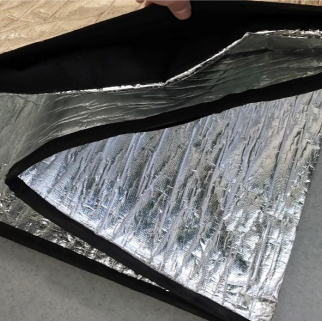
A reflective surface, foam layer, bubble structure, or heavy textile does not independently establish shipment performance. Reflective layers mainly address radiant heat under appropriate orientation and condition. Insulating layers reduce conductive heat flow but may lose effectiveness when compressed or wet. Reinforcement improves durability but can add stiffness, seams, and weight. The finished cover must balance thermal resistance with application, access, cleaning, and route safety.
Request a clear layer description and ask what may change between sample and production. Adhesives, films, foams, coatings, thread, closures, and panel dimensions can affect behavior. A change-control agreement is especially important for repeat orders or qualified applications. Incoming inspection can include dimensions, seam condition, closure function, cleanliness, odor, visible defects, and any critical material declarations.
Food shippers should align the cover with sanitation, temperature-control, traceability, and receiving procedures. Commodity requirements vary, and a cover should not block the airflow pattern of a refrigerated vehicle without an evaluated loading plan. Product-specific limits and current transport requirements should be verified by the responsible quality, regulatory, food-safety, EHS, or dangerous-goods team. The safest supplier language describes the cover’s construction and test conditions without implying universal approval.
Use evidence that matches the decision and risk
Use testing that matches the decision. A side-by-side screening study can show which cover slows temperature change more effectively under one controlled exposure. A chamber study can reproduce a defined ambient profile and delay. A monitored pilot can show whether employees apply the cover correctly and whether the route includes unplanned openings. High-risk shipments may require a more formal, documented qualification under the owner’s quality system.
Any test should document the payload, starting condition, pallet dimensions, cover sample, ambient challenge, floor contact, sensor locations, opening events, and acceptance criteria. Temperature curves without this context are hard to interpret. A stated protection time should never be separated from the conditions that produced it.
Monitoring is not a substitute for protection, and protection is not evidence of condition. Decide what the sensors are intended to show. An ambient sensor supports route analysis; a surface sensor shows the exposed edge; a center sensor may respond slowly; a product simulator can approximate thermal behavior. The disposition process should state who reviews the data and how it relates to product acceptance.
Make the approved design repeatable in daily handling
At origin, verify the product and pallet are ready for closure. Check cover identity and condition, apply it in the defined orientation, close all overlaps, keep labels and required marks visible, place monitoring devices as approved, and inspect the base and corners. Record the application when traceability or quality procedures require it.
During transport, specify whether handlers may open the cover and what they must do afterward. Provide an escalation rule for tears, wetting, contamination, leaks, missed connections, extended dwell, active-equipment failure, or a load found outside the planned environment. The instruction should direct the shipment to suitable control rather than relying on the cover beyond its evaluated use.
At destination, inspect before opening, follow any acclimation or airflow procedure, evaluate temperature or condition records, and segregate damaged or contaminated reusable covers. Clean and dry covers under an approved method, inspect closures and insulation, record repairs if needed, and retire units that cannot provide consistent fit or hygiene.
Common mistakes to remove from the purchase order
- Asking for a fixed number of protection hours without defining the payload and ambient profile.
- Specifying only the pallet base while ignoring loaded height, overhang, closure overlap, and access.
- Treating reflective appearance, thickness, or “reusable” language as proof of finished performance.
- Leaving labels, restraint, airflow, inspection, sanitation, or dangerous-goods interaction for operations to discover later.
- Approving a sample without controlling production materials, dimensions, seams, and closures.
- Running a temperature test but not recording handling events or visible condition.
- Using the cover to justify longer exposure instead of escalating the shipment when conditions exceed the plan.
A realistic application
A grower consolidates precooled berries and leafy vegetables for an export load. The pallets wait at a warm dock while documents are checked, then move into a refrigerated trailer. A well-fitted blanket may reduce the short exposure, but only if each commodity was cooled correctly and the cover is removed or configured so the reefer airflow can do its job.
This application succeeds only if the cover remains one defined control within the broader lane. The starting condition, active transport, handover timing, inspection, and escalation process continue to carry responsibility for product protection.
Buyer questions before approval
- Which commodities, varieties, maturity stages, and pack formats will be covered?
- Is the load precooled, and how is pulp temperature checked before palletizing?
- Where will pallets sit outside controlled storage, and for how long under a normal and delayed route?
- Will the cover remain on inside a reefer, or is it intended only for staging and handovers?
- How will covers be cleaned, dried, inspected, and separated from food-contact surfaces?
Frequently asked questions
Can a thermal pallet blanket replace produce precooling?
No. Precooling removes field heat from the commodity. A pallet blanket is a passive barrier that can slow later heat transfer, so it works best after the product has already reached the required shipping condition.
Should an agricultural pallet stay covered inside a refrigerated trailer?
Not automatically. A closed cover can interfere with designed airflow. The decision depends on the trailer airflow pattern, vented packaging, commodity, pallet placement, and the purpose of the cover. Evaluate the complete loading plan.
Are reflective blankets suitable for every fruit and vegetable?
No single cover solves every commodity requirement. Produce differs in chilling sensitivity, respiration, moisture release, and ventilation needs. The blanket should be selected around the actual commodity and route rather than a broad “fresh produce” label.
What evidence should an agricultural buyer request?
Ask for material construction, finished dimensions, closure details, durability information, and any relevant thermal test method. Then confirm performance through a shipment or chamber study that represents your pallet, product condition, exposure, and acceptance limits.
Conclusion
Choose thermal pallet blankets for agriculture by connecting five things: the cargo requirement, the exposed route segment, the finished pallet geometry, the operating process, and evidence that represents the intended use. A cover is most defensible when it has a narrow, explicit role and when its limitations are written into the shipment plan.
The next step is not a bulk order. It is a representative sample on the actual pallet, followed by fit and handling review and an appropriate thermal comparison or pilot. Once the team understands how the cover performs and how employees use it, procurement can scale a controlled specification rather than a marketing claim.
About Tempk
Tempk supplies cold-chain packaging and thermal pallet cover options for B2B shipping applications. For agricultural pallet protection during staging, export consolidation, and multimodal handovers, we can help organize a discussion around pallet size, material construction, closures, access, one-way or reusable use, and sample evaluation. We do not treat a passive cover as a replacement for the customer’s required transport controls or product-specific qualification.
Share your pallet build, cargo requirement, route exposure, and handling process with Tempk to compare a practical sample and define the checks needed before production.
Thermal Cargo Covers For Wine: Selection Framework
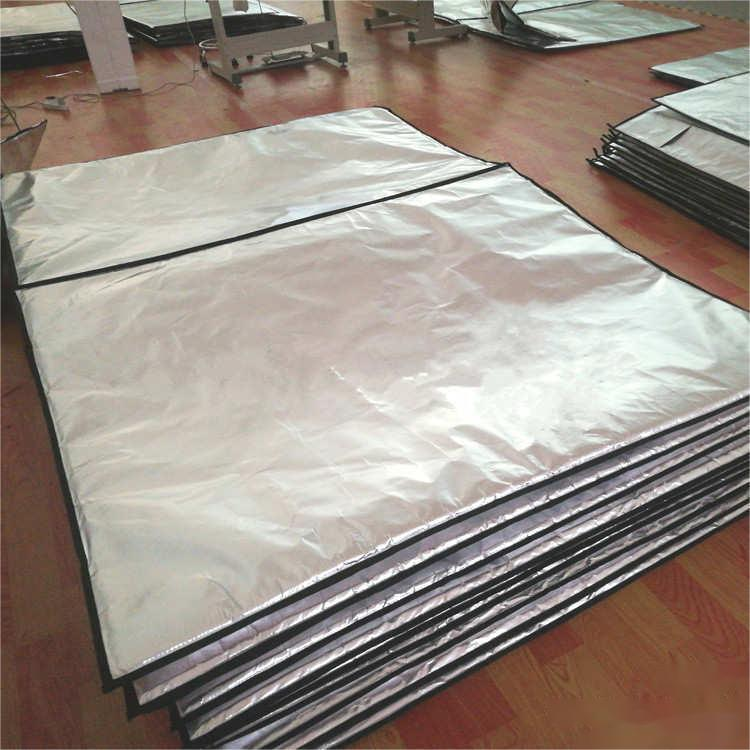
Selecting Thermal Cargo Covers For Wine by Cargo, Lane, and Evidence
The right thermal cargo covers for wine are specified from the shipment backward. Begin with the condition that bottled still, sparkling, fortified, and premium wines packed in cases on pallets must maintain, identify the uncontrolled segment that threatens it, and decide whether a passive cover can reduce that risk without interfering with active equipment, handling, safety, or compliance. A cargo cover slows temperature change around palletized cases. It does not actively cool wine, protect indefinitely during a hot delay, prevent breakage caused by poor unitization, or replace appropriate climate-controlled transport when the lane requires it. A sound purchasing process therefore combines route mapping, pallet fit, material and closure review, representative evidence, and a clear operating procedure.
Include delay, inspection, and removal in the route map
Draw the route as a sequence of environments rather than a line between cities. Mark product conditioning, pallet build, controlled storage, dock staging, loading, terminal dwell, customs or security inspection, line haul, transfer, destination staging, and receiving. For each step, record the likely ambient challenge, normal duration, credible delay, custody, and whether the cover is closed, opened, or removed.
The critical exposure may be short and intense or long and moderate. Direct sun on the top of a pallet can create a different design problem from a cold floor, wind at an airport, humidity inside a container, or a weekend delay at an LTL terminal. A single average ambient temperature hides these differences. Specification should focus on the worst plausible segment that the cover is intended to address.
Also identify the next environment. If the pallet enters active refrigeration, the cover may need to open or come off to allow airflow. If a cold pallet enters warm humid air, removal may need to be delayed or managed to limit condensation. If inspectors require access, the cover needs a repeatable opening and reclosure method. The downstream process is part of the cover design.
Approve the cover on the secured unit load
Measure the finished loaded pallet. Standard base dimensions do not capture load overhang, uneven stacking, corner boards, top caps, or height changes. The cover needs enough overlap to close consistently without dragging excessively or blocking forklift access. If multiple pallet builds are expected, decide whether one adjustable design or several dedicated sizes produces better control.
Examine the cover as a finished article. Look at seams, corners, windows, handles, flaps, zipper ends, hook-and-loop areas, and the bottom perimeter. These locations concentrate mechanical stress and can become heat-flow paths. Apply the cover with the planned straps, stretch wrap, nets, or container securing so that compression and snagging are visible before approval.
Access is another trade-off. A window can preserve barcode scanning, but it may need reinforcement and can differ thermally from the surrounding panel. A flap can support inspection, but only if handlers know how to close it. A sealed one-way cover may be simpler, while a reusable design may justify repairable closures. Select features that solve known tasks rather than adding complexity for hypothetical convenience.
Start with the function the shipment still lacks
The strongest use case is a defined exposure between controlled steps. In wine distribution and export logistics, that exposure may involve heat exposure, freezing conditions, rapid cycling, solar load, label and carton damage, bottle breakage, closure concerns, and delays at ports or fulfillment hubs. A cover can slow the pallet’s response while the team completes loading, transfer, inspection, or receiving. It is less convincing when the route lacks suitable temperature control for a long period or when the product starts outside its required condition.
This distinction supports a simple decision. Use passive insulation to manage a bounded thermal challenge that remains after good process controls are in place. Use active refrigeration, heating, conditioned storage, or a different service when the environment must be controlled rather than merely buffered. Use monitoring when evidence of exposure is needed. These tools can complement one another, but they do not perform the same function.
The cargo requirement must be specific. Wine quality is influenced by cumulative thermal history rather than a single ambient reading. Bottles have thermal mass, so the liquid changes more slowly than surrounding air, while top and edge cases can respond faster. Closures, headspace, labels, cartons, and bottle geometry add practical constraints. The shipper should define the acceptable starting condition, excursion policy, quality or safety concern, and receiving decision. Without that information, the supplier can offer only a generic cover, and the buyer cannot determine whether the result is suitable.
A practical structure for comparing offers
| Specification area | Information to provide | Evidence or decision needed |
|---|---|---|
| Cargo requirement | Product, package, starting condition, acceptable exposure, and consequence of deviation | Owner-approved shipping and receiving criteria |
| Loaded pallet | Finished footprint, height range, overhang, weight distribution, corners, wrap, and restraint | Physical fit check on a representative pallet |
| Route exposure | Ambient profile, solar or wind exposure, dwell, delay, floor contact, and mode changes | Normal and worst-plausible lane map |
| Cover design | Layers, finished dimensions, closure, overlap, access, windows, base and top protection | Approved sample and production tolerances |
| Performance evidence | Payload, start condition, ambient test, sensors, openings, and acceptance rule | Representative comparison, chamber study, or pilot |
| Operation and reuse | Application, removal, inspection, cleaning, drying, repair, storage, return, and retirement | SOP, training, and ownership |
This framework helps prevent purchasing by a single number. Thermal conductivity, thickness, or a stated duration can inform the decision, but none is sufficient without the test and assembly context. Procurement should be able to trace each important claim to a product drawing, material declaration, test condition, or operating rule.
Judge insulation together with handling and moisture
A reflective surface, foam layer, bubble structure, or heavy textile does not independently establish shipment performance. Reflective layers mainly address radiant heat under appropriate orientation and condition. Insulating layers reduce conductive heat flow but may lose effectiveness when compressed or wet. Reinforcement improves durability but can add stiffness, seams, and weight. The finished cover must balance thermal resistance with application, access, cleaning, and route safety.
Request a clear layer description and ask what may change between sample and production. Adhesives, films, foams, coatings, thread, closures, and panel dimensions can affect behavior. A change-control agreement is especially important for repeat orders or qualified applications. Incoming inspection can include dimensions, seam condition, closure function, cleanliness, odor, visible defects, and any critical material declarations.
Alcohol shipping rules, customs and tax requirements, food and beverage handling, dangerous-goods rules for any ancillary materials, carrier policies, and destination requirements must still be followed. Thermal protection should remain compatible with case labels and inspection access. Product-specific limits and current transport requirements should be verified by the responsible quality, regulatory, food-safety, EHS, or dangerous-goods team. The safest supplier language describes the cover’s construction and test conditions without implying universal approval.
Close the gap between qualification and warehouse behavior
At origin, verify the product and pallet are ready for closure. Check cover identity and condition, apply it in the defined orientation, close all overlaps, keep labels and required marks visible, place monitoring devices as approved, and inspect the base and corners. Record the application when traceability or quality procedures require it.
During transport, specify whether handlers may open the cover and what they must do afterward. Provide an escalation rule for tears, wetting, contamination, leaks, missed connections, extended dwell, active-equipment failure, or a load found outside the planned environment. The instruction should direct the shipment to suitable control rather than relying on the cover beyond its evaluated use.
At destination, inspect before opening, follow any acclimation or airflow procedure, evaluate temperature or condition records, and segregate damaged or contaminated reusable covers. Clean and dry covers under an approved method, inspect closures and insulation, record repairs if needed, and retire units that cannot provide consistent fit or hygiene.
Choose the right level of study before scale-up
Use testing that matches the decision. A side-by-side screening study can show which cover slows temperature change more effectively under one controlled exposure. A chamber study can reproduce a defined ambient profile and delay. A monitored pilot can show whether employees apply the cover correctly and whether the route includes unplanned openings. High-risk shipments may require a more formal, documented qualification under the owner’s quality system.
Any test should document the payload, starting condition, pallet dimensions, cover sample, ambient challenge, floor contact, sensor locations, opening events, and acceptance criteria. Temperature curves without this context are hard to interpret. A stated protection time should never be separated from the conditions that produced it.
Monitoring is not a substitute for protection, and protection is not evidence of condition. Decide what the sensors are intended to show. An ambient sensor supports route analysis; a surface sensor shows the exposed edge; a center sensor may respond slowly; a product simulator can approximate thermal behavior. The disposition process should state who reviews the data and how it relates to product acceptance.
Common mistakes to remove from the purchase order
- Asking for a fixed number of protection hours without defining the payload and ambient profile.
- Specifying only the pallet base while ignoring loaded height, overhang, closure overlap, and access.
- Treating reflective appearance, thickness, or “reusable” language as proof of finished performance.
- Leaving labels, restraint, airflow, inspection, sanitation, or dangerous-goods interaction for operations to discover later.
- Approving a sample without controlling production materials, dimensions, seams, and closures.
- Running a temperature test but not recording handling events or visible condition.
- Using the cover to justify longer exposure instead of escalating the shipment when conditions exceed the plan.
A realistic application
A winery exports premium cases through a summer port. Pallets leave a conditioned warehouse, wait briefly for container stuffing, and then move under a defined service. A fitted thermal cover reduces exposed transfer risk, while cutoff planning and delay escalation prevent the cover from being treated as unlimited protection.
This application succeeds only if the cover remains one defined control within the broader lane. The starting condition, active transport, handover timing, inspection, and escalation process continue to carry responsibility for product protection.
Buyer questions before approval
- What product and package quality limits does the winery specify?
- Where are the hottest, coldest, or longest uncontrolled points on the lane?
- How will the cover interact with bottle cases, corner boards, stretch wrap, and container securing?
- What is the procedure for customs opening and destination acclimation?
- What evidence supports the cover choice for the actual pallet and seasonal route?
Frequently asked questions
Can a thermal cover protect wine in a hot ocean container?
It may slow heat gain, especially during short exposed stages, but it cannot make an uncontrolled container equivalent to a climate-controlled service. Long hot routes require a broader transport decision.
Does the wine temperature equal the air temperature around the pallet?
Not immediately. The liquid and cases have thermal mass, so they respond over time. Surface and edge cases can change faster than the center, which is why sensor purpose and placement should be defined.
Will a cover prevent labels from becoming damaged?
A cover can shield against some handling and moisture exposure, but label condition also depends on condensation, case design, stretch wrap, leaks, abrasion, and destination acclimation. Presentation-quality shipments need a complete packaging plan.
Should premium wine always use a reusable cover?
Not always. Reuse makes sense when recovery, inspection, cleaning, storage, and loss control are practical. On open export lanes, a different construction may be more reliable and easier to manage.
Conclusion
Choose thermal cargo covers for wine by connecting five things: the cargo requirement, the exposed route segment, the finished pallet geometry, the operating process, and evidence that represents the intended use. A cover is most defensible when it has a narrow, explicit role and when its limitations are written into the shipment plan.
The next step is not a bulk order. It is a representative sample on the actual pallet, followed by fit and handling review and an appropriate thermal comparison or pilot. Once the team understands how the cover performs and how employees use it, procurement can scale a controlled specification rather than a marketing claim.
About Tempk
Tempk supplies cold-chain packaging and thermal pallet cover options for B2B shipping applications. For wine pallets facing port, seasonal, customs, and destination exposure while preserving case and label condition, we can help organize a discussion around pallet size, material construction, closures, access, one-way or reusable use, and sample evaluation. We do not treat a passive cover as a replacement for the customer’s required transport controls or product-specific qualification.
Share your pallet build, cargo requirement, route exposure, and handling process with Tempk to compare a practical sample and define the checks needed before production.
Thermal Cargo Covers For Shipping: Selection Framework

Selecting Thermal Cargo Covers For Shipping by Cargo, Lane, and Evidence
The right thermal cargo covers for shipping are specified from the shipment backward. Begin with the condition that palletized and unitized cargo exposed to ports, depots, container yards, trucks, aircraft, warehouses, and delivery docks must maintain, identify the uncontrolled segment that threatens it, and decide whether a passive cover can reduce that risk without interfering with active equipment, handling, safety, or compliance. A thermal cargo cover adds passive resistance to heat flow. It cannot control a container’s internal environment, manage humidity by itself, or guarantee product condition during an indefinite shipping delay. A sound purchasing process therefore combines route mapping, pallet fit, material and closure review, representative evidence, and a clear operating procedure.
A clear role prevents false confidence
The strongest use case is a defined exposure between controlled steps. In domestic and international cargo shipping, that exposure may involve temperature exposure that occurs outside the main controlled leg: port cutoffs, container loading, demurrage, customs, transloading, weather, and last-mile delivery. A cover can slow the pallet’s response while the team completes loading, transfer, inspection, or receiving. It is less convincing when the route lacks suitable temperature control for a long period or when the product starts outside its required condition.
This distinction supports a simple decision. Use passive insulation to manage a bounded thermal challenge that remains after good process controls are in place. Use active refrigeration, heating, conditioned storage, or a different service when the environment must be controlled rather than merely buffered. Use monitoring when evidence of exposure is needed. These tools can complement one another, but they do not perform the same function.
The cargo requirement must be specific. Shipping risk combines long time scales with short intense exposures. A container may experience gradual ambient change, while a pallet can receive rapid solar heating during loading. The cover must be evaluated against the relevant segment rather than an average climate. The shipper should define the acceptable starting condition, excursion policy, quality or safety concern, and receiving decision. Without that information, the supplier can offer only a generic cover, and the buyer cannot determine whether the result is suitable.
From product requirement to supplier evidence
| Specification area | Information to provide | Evidence or decision needed |
|---|---|---|
| Cargo requirement | Product, package, starting condition, acceptable exposure, and consequence of deviation | Owner-approved shipping and receiving criteria |
| Loaded pallet | Finished footprint, height range, overhang, weight distribution, corners, wrap, and restraint | Physical fit check on a representative pallet |
| Route exposure | Ambient profile, solar or wind exposure, dwell, delay, floor contact, and mode changes | Normal and worst-plausible lane map |
| Cover design | Layers, finished dimensions, closure, overlap, access, windows, base and top protection | Approved sample and production tolerances |
| Performance evidence | Payload, start condition, ambient test, sensors, openings, and acceptance rule | Representative comparison, chamber study, or pilot |
| Operation and reuse | Application, removal, inspection, cleaning, drying, repair, storage, return, and retirement | SOP, training, and ownership |
This framework helps prevent purchasing by a single number. Thermal conductivity, thickness, or a stated duration can inform the decision, but none is sufficient without the test and assembly context. Procurement should be able to trace each important claim to a product drawing, material declaration, test condition, or operating rule.
A lane is a sequence of environments, not two cities
Draw the route as a sequence of environments rather than a line between cities. Mark product conditioning, pallet build, controlled storage, dock staging, loading, terminal dwell, customs or security inspection, line haul, transfer, destination staging, and receiving. For each step, record the likely ambient challenge, normal duration, credible delay, custody, and whether the cover is closed, opened, or removed.
The critical exposure may be short and intense or long and moderate. Direct sun on the top of a pallet can create a different design problem from a cold floor, wind at an airport, humidity inside a container, or a weekend delay at an LTL terminal. A single average ambient temperature hides these differences. Specification should focus on the worst plausible segment that the cover is intended to address.
Also identify the next environment. If the pallet enters active refrigeration, the cover may need to open or come off to allow airflow. If a cold pallet enters warm humid air, removal may need to be delayed or managed to limit condensation. If inspectors require access, the cover needs a repeatable opening and reclosure method. The downstream process is part of the cover design.
Control layers, substitutions, and production consistency
A reflective surface, foam layer, bubble structure, or heavy textile does not independently establish shipment performance. Reflective layers mainly address radiant heat under appropriate orientation and condition. Insulating layers reduce conductive heat flow but may lose effectiveness when compressed or wet. Reinforcement improves durability but can add stiffness, seams, and weight. The finished cover must balance thermal resistance with application, access, cleaning, and route safety.
Request a clear layer description and ask what may change between sample and production. Adhesives, films, foams, coatings, thread, closures, and panel dimensions can affect behavior. A change-control agreement is especially important for repeat orders or qualified applications. Incoming inspection can include dimensions, seam condition, closure function, cleanliness, odor, visible defects, and any critical material declarations.
The cover should not interfere with cargo securing, container inspection, labels, customs access, dangerous-goods communication, food sanitation, or carrier requirements. Product and route obligations remain with the responsible shipping parties. Product-specific limits and current transport requirements should be verified by the responsible quality, regulatory, food-safety, EHS, or dangerous-goods team. The safest supplier language describes the cover’s construction and test conditions without implying universal approval.
Small design details control daily consistency
Measure the finished loaded pallet. Standard base dimensions do not capture load overhang, uneven stacking, corner boards, top caps, or height changes. The cover needs enough overlap to close consistently without dragging excessively or blocking forklift access. If multiple pallet builds are expected, decide whether one adjustable design or several dedicated sizes produces better control.
Examine the cover as a finished article. Look at seams, corners, windows, handles, flaps, zipper ends, hook-and-loop areas, and the bottom perimeter. These locations concentrate mechanical stress and can become heat-flow paths. Apply the cover with the planned straps, stretch wrap, nets, or container securing so that compression and snagging are visible before approval.
Access is another trade-off. A window can preserve barcode scanning, but it may need reinforcement and can differ thermally from the surrounding panel. A flap can support inspection, but only if handlers know how to close it. A sealed one-way cover may be simpler, while a reusable design may justify repairable closures. Select features that solve known tasks rather than adding complexity for hypothetical convenience.
A defensible claim stays attached to its test profile
Use testing that matches the decision. A side-by-side screening study can show which cover slows temperature change more effectively under one controlled exposure. A chamber study can reproduce a defined ambient profile and delay. A monitored pilot can show whether employees apply the cover correctly and whether the route includes unplanned openings. High-risk shipments may require a more formal, documented qualification under the owner’s quality system.
Any test should document the payload, starting condition, pallet dimensions, cover sample, ambient challenge, floor contact, sensor locations, opening events, and acceptance criteria. Temperature curves without this context are hard to interpret. A stated protection time should never be separated from the conditions that produced it.
Monitoring is not a substitute for protection, and protection is not evidence of condition. Decide what the sensors are intended to show. An ambient sensor supports route analysis; a surface sensor shows the exposed edge; a center sensor may respond slowly; a product simulator can approximate thermal behavior. The disposition process should state who reviews the data and how it relates to product acceptance.
The SOP protects the value of the tested configuration
At origin, verify the product and pallet are ready for closure. Check cover identity and condition, apply it in the defined orientation, close all overlaps, keep labels and required marks visible, place monitoring devices as approved, and inspect the base and corners. Record the application when traceability or quality procedures require it.
During transport, specify whether handlers may open the cover and what they must do afterward. Provide an escalation rule for tears, wetting, contamination, leaks, missed connections, extended dwell, active-equipment failure, or a load found outside the planned environment. The instruction should direct the shipment to suitable control rather than relying on the cover beyond its evaluated use.
At destination, inspect before opening, follow any acclimation or airflow procedure, evaluate temperature or condition records, and segregate damaged or contaminated reusable covers. Clean and dry covers under an approved method, inspect closures and insulation, record repairs if needed, and retire units that cannot provide consistent fit or hygiene.
Common mistakes to remove from the purchase order
- Asking for a fixed number of protection hours without defining the payload and ambient profile.
- Specifying only the pallet base while ignoring loaded height, overhang, closure overlap, and access.
- Treating reflective appearance, thickness, or “reusable” language as proof of finished performance.
- Leaving labels, restraint, airflow, inspection, sanitation, or dangerous-goods interaction for operations to discover later.
- Approving a sample without controlling production materials, dimensions, seams, and closures.
- Running a temperature test but not recording handling events or visible condition.
- Using the cover to justify longer exposure instead of escalating the shipment when conditions exceed the plan.
A realistic application
An exporter loads temperature-sensitive cargo into an ocean container at a port warehouse. The line-haul plan is appropriate, but pallets may wait near an open door during inspection and stuffing. Thermal covers are used for those transitions, with a documented decision about whether they remain closed inside the container.
This application succeeds only if the cover remains one defined control within the broader lane. The starting condition, active transport, handover timing, inspection, and escalation process continue to carry responsibility for product protection.
Buyer questions before approval
- Which shipping segment creates the thermal risk: origin, port, line haul, destination, or last mile?
- Will the cover remain on in the container, trailer, or aircraft, and why?
- How will customs and security teams access the cargo?
- What moisture, ventilation, and condensation conditions are expected?
- What happens if the shipment misses a cutoff or remains at the terminal longer than planned?
Frequently asked questions
Can thermal cargo covers be used in ocean containers?
They can be used when compatible with the container loading, airflow, moisture, securing, inspection, and product plan. The shipper should not assume the cover makes an ordinary container temperature controlled.
Do cargo covers control humidity?
Most thermal covers are primarily designed to reduce heat transfer. Some layers may resist moisture, but humidity control and condensation depend on the complete environment, vapor movement, product moisture, and temperature history.
How should customs access be planned?
Use a cover design and SOP that allows authorized access without destroying the assembly. Required labels and documents should remain available, and the party opening the cover should know how to inspect and reclose it.
What is the best material for international shipping?
There is no universal best material. The answer depends on exposure, durability, moisture, flame and safety requirements, return logistics, waste objectives, pallet dimensions, and the evidence available for the finished cover.
Conclusion
Choose thermal cargo covers for shipping by connecting five things: the cargo requirement, the exposed route segment, the finished pallet geometry, the operating process, and evidence that represents the intended use. A cover is most defensible when it has a narrow, explicit role and when its limitations are written into the shipment plan.
The next step is not a bulk order. It is a representative sample on the actual pallet, followed by fit and handling review and an appropriate thermal comparison or pilot. Once the team understands how the cover performs and how employees use it, procurement can scale a controlled specification rather than a marketing claim.
About Tempk
Tempk supplies cold-chain packaging and thermal pallet cover options for B2B shipping applications. For international and domestic shipping lanes with thermal exposure at ports, depots, container loading, and delivery, we can help organize a discussion around pallet size, material construction, closures, access, one-way or reusable use, and sample evaluation. We do not treat a passive cover as a replacement for the customer’s required transport controls or product-specific qualification.
Share your pallet build, cargo requirement, route exposure, and handling process with Tempk to compare a practical sample and define the checks needed before production.
Temperature Control Pallet Covers For Paint And Coatings: Selection Framework
Selecting Temperature Control Pallet Covers For Paint And Coatings by Cargo, Lane, and Evidence
The right temperature control pallet covers for paint and coatings are specified from the shipment backward. Begin with the condition that palletized waterborne, solvent-borne, powder, two-component, and specialty coating products with formulation-specific storage and transport limits must maintain, identify the uncontrolled segment that threatens it, and decide whether a passive cover can reduce that risk without interfering with active equipment, handling, safety, or compliance. A pallet cover slows heat transfer but does not actively heat or cool the product, restore a damaged formulation, or make a flammable or otherwise regulated coating safe to ship outside its authorized packaging and handling controls. A sound purchasing process therefore combines route mapping, pallet fit, material and closure review, representative evidence, and a clear operating procedure.
Include delay, inspection, and removal in the route map
Draw the route as a sequence of environments rather than a line between cities. Mark product conditioning, pallet build, controlled storage, dock staging, loading, terminal dwell, customs or security inspection, line haul, transfer, destination staging, and receiving. For each step, record the likely ambient challenge, normal duration, credible delay, custody, and whether the cover is closed, opened, or removed.
The critical exposure may be short and intense or long and moderate. Direct sun on the top of a pallet can create a different design problem from a cold floor, wind at an airport, humidity inside a container, or a weekend delay at an LTL terminal. A single average ambient temperature hides these differences. Specification should focus on the worst plausible segment that the cover is intended to address.
Also identify the next environment. If the pallet enters active refrigeration, the cover may need to open or come off to allow airflow. If a cold pallet enters warm humid air, removal may need to be delayed or managed to limit condensation. If inspectors require access, the cover needs a repeatable opening and reclosure method. The downstream process is part of the cover design.
Approve the cover on the secured unit load
Measure the finished loaded pallet. Standard base dimensions do not capture load overhang, uneven stacking, corner boards, top caps, or height changes. The cover needs enough overlap to close consistently without dragging excessively or blocking forklift access. If multiple pallet builds are expected, decide whether one adjustable design or several dedicated sizes produces better control.
Examine the cover as a finished article. Look at seams, corners, windows, handles, flaps, zipper ends, hook-and-loop areas, and the bottom perimeter. These locations concentrate mechanical stress and can become heat-flow paths. Apply the cover with the planned straps, stretch wrap, nets, or container securing so that compression and snagging are visible before approval.
Access is another trade-off. A window can preserve barcode scanning, but it may need reinforcement and can differ thermally from the surrounding panel. A flap can support inspection, but only if handlers know how to close it. A sealed one-way cover may be simpler, while a reusable design may justify repairable closures. Select features that solve known tasks rather than adding complexity for hypothetical convenience.
Start with the function the shipment still lacks
The strongest use case is a defined exposure between controlled steps. In paint, coating, adhesive, ink, and formulated chemical distribution, that exposure may involve freezing, excessive heat, repeated temperature cycling, container deformation, viscosity change, separation, cure problems, and safety hazards that differ by formulation. A cover can slow the pallet’s response while the team completes loading, transfer, inspection, or receiving. It is less convincing when the route lacks suitable temperature control for a long period or when the product starts outside its required condition.
This distinction supports a simple decision. Use passive insulation to manage a bounded thermal challenge that remains after good process controls are in place. Use active refrigeration, heating, conditioned storage, or a different service when the environment must be controlled rather than merely buffered. Use monitoring when evidence of exposure is needed. These tools can complement one another, but they do not perform the same function.
The cargo requirement must be specific. Coatings are formulated systems. Temperature can affect emulsion stability, solvent behavior, viscosity, pigment dispersion, reaction rate, package pressure, and application performance. The relevant failure mechanism and acceptable range must come from product-specific technical information. The shipper should define the acceptable starting condition, excursion policy, quality or safety concern, and receiving decision. Without that information, the supplier can offer only a generic cover, and the buyer cannot determine whether the result is suitable.
A practical structure for comparing offers
| Specification area | Information to provide | Evidence or decision needed |
|---|---|---|
| Cargo requirement | Product, package, starting condition, acceptable exposure, and consequence of deviation | Owner-approved shipping and receiving criteria |
| Loaded pallet | Finished footprint, height range, overhang, weight distribution, corners, wrap, and restraint | Physical fit check on a representative pallet |
| Route exposure | Ambient profile, solar or wind exposure, dwell, delay, floor contact, and mode changes | Normal and worst-plausible lane map |
| Cover design | Layers, finished dimensions, closure, overlap, access, windows, base and top protection | Approved sample and production tolerances |
| Performance evidence | Payload, start condition, ambient test, sensors, openings, and acceptance rule | Representative comparison, chamber study, or pilot |
| Operation and reuse | Application, removal, inspection, cleaning, drying, repair, storage, return, and retirement | SOP, training, and ownership |
This framework helps prevent purchasing by a single number. Thermal conductivity, thickness, or a stated duration can inform the decision, but none is sufficient without the test and assembly context. Procurement should be able to trace each important claim to a product drawing, material declaration, test condition, or operating rule.
Judge insulation together with handling and moisture
A reflective surface, foam layer, bubble structure, or heavy textile does not independently establish shipment performance. Reflective layers mainly address radiant heat under appropriate orientation and condition. Insulating layers reduce conductive heat flow but may lose effectiveness when compressed or wet. Reinforcement improves durability but can add stiffness, seams, and weight. The finished cover must balance thermal resistance with application, access, cleaning, and route safety.
Request a clear layer description and ask what may change between sample and production. Adhesives, films, foams, coatings, thread, closures, and panel dimensions can affect behavior. A change-control agreement is especially important for repeat orders or qualified applications. Incoming inspection can include dimensions, seam condition, closure function, cleanliness, odor, visible defects, and any critical material declarations.
The product label, safety data sheet, technical data sheet, transport classification, packaging authorization, and carrier rules should guide the shipment. Some paints and coatings may be regulated as hazardous materials, while others are not; the cover cannot be selected from the product category name alone. Product-specific limits and current transport requirements should be verified by the responsible quality, regulatory, food-safety, EHS, or dangerous-goods team. The safest supplier language describes the cover’s construction and test conditions without implying universal approval.
Close the gap between qualification and warehouse behavior
At origin, verify the product and pallet are ready for closure. Check cover identity and condition, apply it in the defined orientation, close all overlaps, keep labels and required marks visible, place monitoring devices as approved, and inspect the base and corners. Record the application when traceability or quality procedures require it.
During transport, specify whether handlers may open the cover and what they must do afterward. Provide an escalation rule for tears, wetting, contamination, leaks, missed connections, extended dwell, active-equipment failure, or a load found outside the planned environment. The instruction should direct the shipment to suitable control rather than relying on the cover beyond its evaluated use.
At destination, inspect before opening, follow any acclimation or airflow procedure, evaluate temperature or condition records, and segregate damaged or contaminated reusable covers. Clean and dry covers under an approved method, inspect closures and insulation, record repairs if needed, and retire units that cannot provide consistent fit or hygiene.
Choose the right level of study before scale-up
Use testing that matches the decision. A side-by-side screening study can show which cover slows temperature change more effectively under one controlled exposure. A chamber study can reproduce a defined ambient profile and delay. A monitored pilot can show whether employees apply the cover correctly and whether the route includes unplanned openings. High-risk shipments may require a more formal, documented qualification under the owner’s quality system.
Any test should document the payload, starting condition, pallet dimensions, cover sample, ambient challenge, floor contact, sensor locations, opening events, and acceptance criteria. Temperature curves without this context are hard to interpret. A stated protection time should never be separated from the conditions that produced it.
Monitoring is not a substitute for protection, and protection is not evidence of condition. Decide what the sensors are intended to show. An ambient sensor supports route analysis; a surface sensor shows the exposed edge; a center sensor may respond slowly; a product simulator can approximate thermal behavior. The disposition process should state who reviews the data and how it relates to product acceptance.
Common mistakes to remove from the purchase order
- Asking for a fixed number of protection hours without defining the payload and ambient profile.
- Specifying only the pallet base while ignoring loaded height, overhang, closure overlap, and access.
- Treating reflective appearance, thickness, or “reusable” language as proof of finished performance.
- Leaving labels, restraint, airflow, inspection, sanitation, or dangerous-goods interaction for operations to discover later.
- Approving a sample without controlling production materials, dimensions, seams, and closures.
- Running a temperature test but not recording handling events or visible condition.
- Using the cover to justify longer exposure instead of escalating the shipment when conditions exceed the plan.
A realistic application
A distributor ships waterborne architectural coating through a winter LTL lane. The product must be protected from freezing according to the manufacturer’s specification. A fitted pallet cover can reduce short dock and terminal exposure, but the lane still needs appropriate equipment, delay controls, and receiving inspection.
This application succeeds only if the cover remains one defined control within the broader lane. The starting condition, active transport, handover timing, inspection, and escalation process continue to carry responsibility for product protection.
Buyer questions before approval
- What temperature and handling limits are stated for the exact formulation?
- Is the product regulated for the planned mode and quantity?
- Does the closure leave product labels, hazard labels, and orientation information visible?
- How will the cover perform if the pallet waits at an unheated or sun-exposed terminal?
- What inspection will the receiver use to identify freezing, leakage, bulging, or separation concerns?
Frequently asked questions
Can a pallet cover stop paint from freezing overnight?
It can slow cooling, but it cannot guarantee freeze protection for a specific time without representative testing. Starting product temperature, pallet mass, wind, ambient conditions, floor contact, fit, and blanket construction all matter.
Are all paint shipments hazardous materials?
No. Classification depends on the formulation, properties, quantity, packaging, and transport rules. Review the current safety data sheet and have trained personnel determine the applicable requirements.
Will insulation reverse freeze-thaw damage?
No. Once a formulation is damaged, warming it later may not restore performance. Follow the manufacturer’s disposition procedure rather than assuming the product is usable because its temperature recovered.
What should a receiver check under the cover?
Inspect for leakage, damaged containers, bulging, staining, unusual separation, and any temperature evidence required by the quality plan. Product acceptance should follow the manufacturer’s technical and quality criteria.
Conclusion
Choose temperature control pallet covers for paint and coatings by connecting five things: the cargo requirement, the exposed route segment, the finished pallet geometry, the operating process, and evidence that represents the intended use. A cover is most defensible when it has a narrow, explicit role and when its limitations are written into the shipment plan.
The next step is not a bulk order. It is a representative sample on the actual pallet, followed by fit and handling review and an appropriate thermal comparison or pilot. Once the team understands how the cover performs and how employees use it, procurement can scale a controlled specification rather than a marketing claim.
About Tempk
Tempk supplies cold-chain packaging and thermal pallet cover options for B2B shipping applications. For paint and coatings lanes where product-specific freeze and heat limits must be protected without weakening safety controls, we can help organize a discussion around pallet size, material construction, closures, access, one-way or reusable use, and sample evaluation. We do not treat a passive cover as a replacement for the customer’s required transport controls or product-specific qualification.
Share your pallet build, cargo requirement, route exposure, and handling process with Tempk to compare a practical sample and define the checks needed before production.
Temperature Control Pallet Covers For Chocolate: Selection Framework
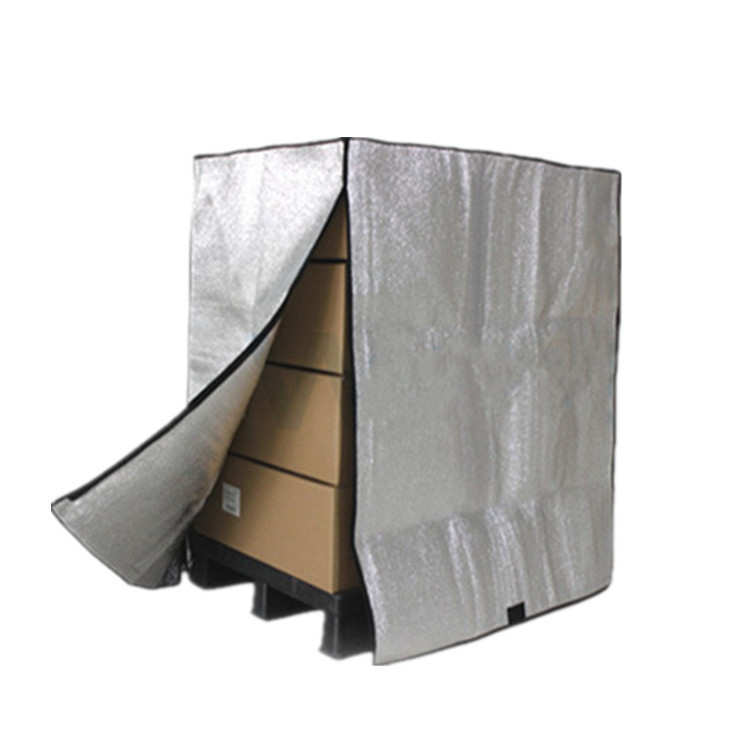
Selecting Temperature Control Pallet Covers For Chocolate by Cargo, Lane, and Evidence
The right temperature control pallet covers for chocolate are specified from the shipment backward. Begin with the condition that finished chocolate bars, molded products, pralines, coated snacks, seasonal gift assortments, and ingredients sensitive to heat, cold, moisture, and odor must maintain, identify the uncontrolled segment that threatens it, and decide whether a passive cover can reduce that risk without interfering with active equipment, handling, safety, or compliance. A pallet cover can slow warming or cooling, but it cannot actively chill a warm pallet, prevent every form of bloom, or compensate for a route that keeps chocolate in damaging conditions for too long. A sound purchasing process therefore combines route mapping, pallet fit, material and closure review, representative evidence, and a clear operating procedure.
The cover’s most defensible place in the lane
The strongest use case is a defined exposure between controlled steps. In chocolate and confectionery logistics, that exposure may involve melting or softening, fat or sugar bloom, condensation, packaging scuffing, odor pickup, and seasonal heat exposure during docks, parcel injection, or mixed-temperature transport. A cover can slow the pallet’s response while the team completes loading, transfer, inspection, or receiving. It is less convincing when the route lacks suitable temperature control for a long period or when the product starts outside its required condition.
This distinction supports a simple decision. Use passive insulation to manage a bounded thermal challenge that remains after good process controls are in place. Use active refrigeration, heating, conditioned storage, or a different service when the environment must be controlled rather than merely buffered. Use monitoring when evidence of exposure is needed. These tools can complement one another, but they do not perform the same function.
The cargo requirement must be specific. Chocolate contains a structured fat phase and is also sensitive to moisture. Heat can soften or destabilize the product; temperature cycling and condensation can affect appearance and texture. Formulation, inclusions, package design, and product geometry change the response. The shipper should define the acceptable starting condition, excursion policy, quality or safety concern, and receiving decision. Without that information, the supplier can offer only a generic cover, and the buyer cannot determine whether the result is suitable.
The route profile comes before material selection
Draw the route as a sequence of environments rather than a line between cities. Mark product conditioning, pallet build, controlled storage, dock staging, loading, terminal dwell, customs or security inspection, line haul, transfer, destination staging, and receiving. For each step, record the likely ambient challenge, normal duration, credible delay, custody, and whether the cover is closed, opened, or removed.
The critical exposure may be short and intense or long and moderate. Direct sun on the top of a pallet can create a different design problem from a cold floor, wind at an airport, humidity inside a container, or a weekend delay at an LTL terminal. A single average ambient temperature hides these differences. Specification should focus on the worst plausible segment that the cover is intended to address.
Also identify the next environment. If the pallet enters active refrigeration, the cover may need to open or come off to allow airflow. If a cold pallet enters warm humid air, removal may need to be delayed or managed to limit condensation. If inspectors require access, the cover needs a repeatable opening and reclosure method. The downstream process is part of the cover design.
Measure the finished pallet and inspect every opening
Measure the finished loaded pallet. Standard base dimensions do not capture load overhang, uneven stacking, corner boards, top caps, or height changes. The cover needs enough overlap to close consistently without dragging excessively or blocking forklift access. If multiple pallet builds are expected, decide whether one adjustable design or several dedicated sizes produces better control.
Examine the cover as a finished article. Look at seams, corners, windows, handles, flaps, zipper ends, hook-and-loop areas, and the bottom perimeter. These locations concentrate mechanical stress and can become heat-flow paths. Apply the cover with the planned straps, stretch wrap, nets, or container securing so that compression and snagging are visible before approval.
Access is another trade-off. A window can preserve barcode scanning, but it may need reinforcement and can differ thermally from the surrounding panel. A flap can support inspection, but only if handlers know how to close it. A sealed one-way cover may be simpler, while a reusable design may justify repairable closures. Select features that solve known tasks rather than adding complexity for hypothetical convenience.
Avoid choosing by shine, thickness, or weight alone
A reflective surface, foam layer, bubble structure, or heavy textile does not independently establish shipment performance. Reflective layers mainly address radiant heat under appropriate orientation and condition. Insulating layers reduce conductive heat flow but may lose effectiveness when compressed or wet. Reinforcement improves durability but can add stiffness, seams, and weight. The finished cover must balance thermal resistance with application, access, cleaning, and route safety.
Request a clear layer description and ask what may change between sample and production. Adhesives, films, foams, coatings, thread, closures, and panel dimensions can affect behavior. A change-control agreement is especially important for repeat orders or qualified applications. Incoming inspection can include dimensions, seam condition, closure function, cleanliness, odor, visible defects, and any critical material declarations.
Food hygiene, allergen and lot traceability, product-specific storage instructions, sanitary transport, and receiving inspection remain essential. Chocolate quality limits may be tighter than basic food-safety requirements and should come from the manufacturer’s specification. Product-specific limits and current transport requirements should be verified by the responsible quality, regulatory, food-safety, EHS, or dangerous-goods team. The safest supplier language describes the cover’s construction and test conditions without implying universal approval.
Turn cargo and lane facts into a controlled specification
| Specification area | Information to provide | Evidence or decision needed |
|---|---|---|
| Cargo requirement | Product, package, starting condition, acceptable exposure, and consequence of deviation | Owner-approved shipping and receiving criteria |
| Loaded pallet | Finished footprint, height range, overhang, weight distribution, corners, wrap, and restraint | Physical fit check on a representative pallet |
| Route exposure | Ambient profile, solar or wind exposure, dwell, delay, floor contact, and mode changes | Normal and worst-plausible lane map |
| Cover design | Layers, finished dimensions, closure, overlap, access, windows, base and top protection | Approved sample and production tolerances |
| Performance evidence | Payload, start condition, ambient test, sensors, openings, and acceptance rule | Representative comparison, chamber study, or pilot |
| Operation and reuse | Application, removal, inspection, cleaning, drying, repair, storage, return, and retirement | SOP, training, and ownership |
This framework helps prevent purchasing by a single number. Thermal conductivity, thickness, or a stated duration can inform the decision, but none is sufficient without the test and assembly context. Procurement should be able to trace each important claim to a product drawing, material declaration, test condition, or operating rule.
Testing, monitoring, and protection answer different questions
Use testing that matches the decision. A side-by-side screening study can show which cover slows temperature change more effectively under one controlled exposure. A chamber study can reproduce a defined ambient profile and delay. A monitored pilot can show whether employees apply the cover correctly and whether the route includes unplanned openings. High-risk shipments may require a more formal, documented qualification under the owner’s quality system.
Any test should document the payload, starting condition, pallet dimensions, cover sample, ambient challenge, floor contact, sensor locations, opening events, and acceptance criteria. Temperature curves without this context are hard to interpret. A stated protection time should never be separated from the conditions that produced it.
Monitoring is not a substitute for protection, and protection is not evidence of condition. Decide what the sensors are intended to show. An ambient sensor supports route analysis; a surface sensor shows the exposed edge; a center sensor may respond slowly; a product simulator can approximate thermal behavior. The disposition process should state who reviews the data and how it relates to product acceptance.
Origin, transit, and receiving need one connected procedure
At origin, verify the product and pallet are ready for closure. Check cover identity and condition, apply it in the defined orientation, close all overlaps, keep labels and required marks visible, place monitoring devices as approved, and inspect the base and corners. Record the application when traceability or quality procedures require it.
During transport, specify whether handlers may open the cover and what they must do afterward. Provide an escalation rule for tears, wetting, contamination, leaks, missed connections, extended dwell, active-equipment failure, or a load found outside the planned environment. The instruction should direct the shipment to suitable control rather than relying on the cover beyond its evaluated use.
At destination, inspect before opening, follow any acclimation or airflow procedure, evaluate temperature or condition records, and segregate damaged or contaminated reusable covers. Clean and dry covers under an approved method, inspect closures and insulation, record repairs if needed, and retire units that cannot provide consistent fit or hygiene.
Common mistakes to remove from the purchase order
- Asking for a fixed number of protection hours without defining the payload and ambient profile.
- Specifying only the pallet base while ignoring loaded height, overhang, closure overlap, and access.
- Treating reflective appearance, thickness, or “reusable” language as proof of finished performance.
- Leaving labels, restraint, airflow, inspection, sanitation, or dangerous-goods interaction for operations to discover later.
- Approving a sample without controlling production materials, dimensions, seams, and closures.
- Running a temperature test but not recording handling events or visible condition.
- Using the cover to justify longer exposure instead of escalating the shipment when conditions exceed the plan.
A realistic application
A confectionery company ships premium gift boxes during a warm season. Pallets are held in a conditioned room, covered immediately before loading, and transferred to suitable transport. The cover reduces short outdoor and dock exposure, while the shipping calendar and delay plan limit the risk of extended heat.
This application succeeds only if the cover remains one defined control within the broader lane. The starting condition, active transport, handover timing, inspection, and escalation process continue to carry responsibility for product protection.
Buyer questions before approval
- What temperature, humidity, and appearance criteria apply to the exact chocolate product?
- Is the pallet fully conditioned before the cover is closed?
- Where can solar exposure or warm terminal dwell occur?
- How will the receiver avoid condensation when opening a cold shipment?
- Are cover materials low odor, clean, and compatible with food-packaging operations?
Frequently asked questions
Can a thermal pallet cover prevent chocolate bloom?
It may reduce rapid temperature change, but bloom has multiple causes, including heat history, temperature cycling, moisture, and formulation. The cover is one part of a broader storage and transport plan.
Should ice packs be added under a chocolate pallet cover?
Not without a designed and tested packout. Localized overcooling and condensation can create new problems, and loose refrigerants may not be acceptable in the handling system. Use an engineered solution when active cooling is needed.
Is reflective film enough for summer shipping?
Reflective surfaces can reduce radiant heat gain in suitable conditions, but overall performance also depends on insulation layers, seams, fit, airflow, exposure, and pallet mass. A shiny surface alone is not a performance guarantee.
How should chocolate be received after cold transport?
Follow the manufacturer’s acclimation and inspection procedure. Opening a cold load immediately in warm humid air can encourage condensation, so the timing and environment of cover removal matter.
Conclusion
Choose temperature control pallet covers for chocolate by connecting five things: the cargo requirement, the exposed route segment, the finished pallet geometry, the operating process, and evidence that represents the intended use. A cover is most defensible when it has a narrow, explicit role and when its limitations are written into the shipment plan.
The next step is not a bulk order. It is a representative sample on the actual pallet, followed by fit and handling review and an appropriate thermal comparison or pilot. Once the team understands how the cover performs and how employees use it, procurement can scale a controlled specification rather than a marketing claim.
About Tempk
Tempk supplies cold-chain packaging and thermal pallet cover options for B2B shipping applications. For chocolate pallets that need protection from seasonal heat, rapid transitions, condensation, and handling damage, we can help organize a discussion around pallet size, material construction, closures, access, one-way or reusable use, and sample evaluation. We do not treat a passive cover as a replacement for the customer’s required transport controls or product-specific qualification.
Share your pallet build, cargo requirement, route exposure, and handling process with Tempk to compare a practical sample and define the checks needed before production.
Pallet Thermal Covers For Dairy: Selection Framework
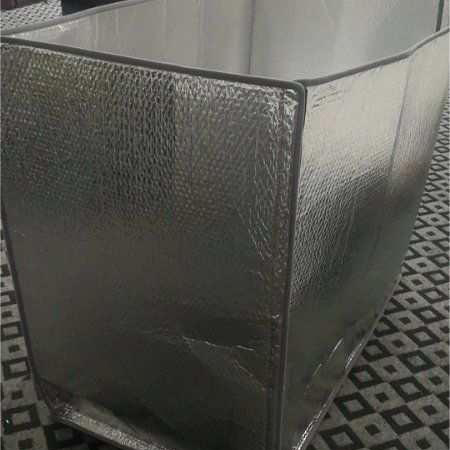
Selecting Pallet Thermal Covers For Dairy by Cargo, Lane, and Evidence
The right pallet thermal covers for dairy are specified from the shipment backward. Begin with the condition that milk products, cultured products, cheese, butter, cream, dairy ingredients, and other palletized goods with product-specific temperature and hygiene requirements must maintain, identify the uncontrolled segment that threatens it, and decide whether a passive cover can reduce that risk without interfering with active equipment, handling, safety, or compliance. A thermal cover can buffer a precooled pallet during short transitions. It does not pasteurize, refrigerate, freeze, or make an unsuitable vehicle capable of transporting perishable dairy safely. A sound purchasing process therefore combines route mapping, pallet fit, material and closure review, representative evidence, and a clear operating procedure.
Use passive insulation only where it solves a bounded problem
The strongest use case is a defined exposure between controlled steps. In dairy cold-chain distribution, that exposure may involve dock exposure, warm loading areas, delayed retail receiving, temperature stratification across cases, condensation, and confusion between chilled, frozen, and shelf-stable dairy categories. A cover can slow the pallet’s response while the team completes loading, transfer, inspection, or receiving. It is less convincing when the route lacks suitable temperature control for a long period or when the product starts outside its required condition.
This distinction supports a simple decision. Use passive insulation to manage a bounded thermal challenge that remains after good process controls are in place. Use active refrigeration, heating, conditioned storage, or a different service when the environment must be controlled rather than merely buffered. Use monitoring when evidence of exposure is needed. These tools can complement one another, but they do not perform the same function.
The cargo requirement must be specific. Dairy pallets combine food safety, quality, packaging, and condensation concerns. Product heat capacity can slow internal temperature change, but exposed cases and air spaces respond faster. Moisture on cases or the cover can weaken cartons and complicate reuse. The shipper should define the acceptable starting condition, excursion policy, quality or safety concern, and receiving decision. Without that information, the supplier can offer only a generic cover, and the buyer cannot determine whether the result is suitable.
Map environments, custody, and the next controlled step
Draw the route as a sequence of environments rather than a line between cities. Mark product conditioning, pallet build, controlled storage, dock staging, loading, terminal dwell, customs or security inspection, line haul, transfer, destination staging, and receiving. For each step, record the likely ambient challenge, normal duration, credible delay, custody, and whether the cover is closed, opened, or removed.
The critical exposure may be short and intense or long and moderate. Direct sun on the top of a pallet can create a different design problem from a cold floor, wind at an airport, humidity inside a container, or a weekend delay at an LTL terminal. A single average ambient temperature hides these differences. Specification should focus on the worst plausible segment that the cover is intended to address.
Also identify the next environment. If the pallet enters active refrigeration, the cover may need to open or come off to allow airflow. If a cold pallet enters warm humid air, removal may need to be delayed or managed to limit condensation. If inspectors require access, the cover needs a repeatable opening and reclosure method. The downstream process is part of the cover design.
A purchase framework built around verifiable information
| Specification area | Information to provide | Evidence or decision needed |
|---|---|---|
| Cargo requirement | Product, package, starting condition, acceptable exposure, and consequence of deviation | Owner-approved shipping and receiving criteria |
| Loaded pallet | Finished footprint, height range, overhang, weight distribution, corners, wrap, and restraint | Physical fit check on a representative pallet |
| Route exposure | Ambient profile, solar or wind exposure, dwell, delay, floor contact, and mode changes | Normal and worst-plausible lane map |
| Cover design | Layers, finished dimensions, closure, overlap, access, windows, base and top protection | Approved sample and production tolerances |
| Performance evidence | Payload, start condition, ambient test, sensors, openings, and acceptance rule | Representative comparison, chamber study, or pilot |
| Operation and reuse | Application, removal, inspection, cleaning, drying, repair, storage, return, and retirement | SOP, training, and ownership |
This framework helps prevent purchasing by a single number. Thermal conductivity, thickness, or a stated duration can inform the decision, but none is sufficient without the test and assembly context. Procurement should be able to trace each important claim to a product drawing, material declaration, test condition, or operating rule.
Most field failures begin at fit, access, or closure
Measure the finished loaded pallet. Standard base dimensions do not capture load overhang, uneven stacking, corner boards, top caps, or height changes. The cover needs enough overlap to close consistently without dragging excessively or blocking forklift access. If multiple pallet builds are expected, decide whether one adjustable design or several dedicated sizes produces better control.
Examine the cover as a finished article. Look at seams, corners, windows, handles, flaps, zipper ends, hook-and-loop areas, and the bottom perimeter. These locations concentrate mechanical stress and can become heat-flow paths. Apply the cover with the planned straps, stretch wrap, nets, or container securing so that compression and snagging are visible before approval.
Access is another trade-off. A window can preserve barcode scanning, but it may need reinforcement and can differ thermally from the surrounding panel. A flap can support inspection, but only if handlers know how to close it. A sealed one-way cover may be simpler, while a reusable design may justify repairable closures. Select features that solve known tasks rather than adding complexity for hypothetical convenience.
Translate material claims into finished-cover behavior
A reflective surface, foam layer, bubble structure, or heavy textile does not independently establish shipment performance. Reflective layers mainly address radiant heat under appropriate orientation and condition. Insulating layers reduce conductive heat flow but may lose effectiveness when compressed or wet. Reinforcement improves durability but can add stiffness, seams, and weight. The finished cover must balance thermal resistance with application, access, cleaning, and route safety.
Request a clear layer description and ask what may change between sample and production. Adhesives, films, foams, coatings, thread, closures, and panel dimensions can affect behavior. A change-control agreement is especially important for repeat orders or qualified applications. Incoming inspection can include dimensions, seam condition, closure function, cleanliness, odor, visible defects, and any critical material declarations.
Dairy shippers should follow the product specification, applicable food-safety rules, sanitary transport procedures, vehicle hygiene, temperature-control agreement, and receiving criteria. Requirements differ among fluid milk, cheese, butter, cultured products, powders, and other formats. Product-specific limits and current transport requirements should be verified by the responsible quality, regulatory, food-safety, EHS, or dangerous-goods team. The safest supplier language describes the cover’s construction and test conditions without implying universal approval.
Use evidence that matches the decision and risk
Use testing that matches the decision. A side-by-side screening study can show which cover slows temperature change more effectively under one controlled exposure. A chamber study can reproduce a defined ambient profile and delay. A monitored pilot can show whether employees apply the cover correctly and whether the route includes unplanned openings. High-risk shipments may require a more formal, documented qualification under the owner’s quality system.
Any test should document the payload, starting condition, pallet dimensions, cover sample, ambient challenge, floor contact, sensor locations, opening events, and acceptance criteria. Temperature curves without this context are hard to interpret. A stated protection time should never be separated from the conditions that produced it.
Monitoring is not a substitute for protection, and protection is not evidence of condition. Decide what the sensors are intended to show. An ambient sensor supports route analysis; a surface sensor shows the exposed edge; a center sensor may respond slowly; a product simulator can approximate thermal behavior. The disposition process should state who reviews the data and how it relates to product acceptance.
Make the approved design repeatable in daily handling
At origin, verify the product and pallet are ready for closure. Check cover identity and condition, apply it in the defined orientation, close all overlaps, keep labels and required marks visible, place monitoring devices as approved, and inspect the base and corners. Record the application when traceability or quality procedures require it.
During transport, specify whether handlers may open the cover and what they must do afterward. Provide an escalation rule for tears, wetting, contamination, leaks, missed connections, extended dwell, active-equipment failure, or a load found outside the planned environment. The instruction should direct the shipment to suitable control rather than relying on the cover beyond its evaluated use.
At destination, inspect before opening, follow any acclimation or airflow procedure, evaluate temperature or condition records, and segregate damaged or contaminated reusable covers. Clean and dry covers under an approved method, inspect closures and insulation, record repairs if needed, and retire units that cannot provide consistent fit or hygiene.
Common mistakes to remove from the purchase order
- Asking for a fixed number of protection hours without defining the payload and ambient profile.
- Specifying only the pallet base while ignoring loaded height, overhang, closure overlap, and access.
- Treating reflective appearance, thickness, or “reusable” language as proof of finished performance.
- Leaving labels, restraint, airflow, inspection, sanitation, or dangerous-goods interaction for operations to discover later.
- Approving a sample without controlling production materials, dimensions, seams, and closures.
- Running a temperature test but not recording handling events or visible condition.
- Using the cover to justify longer exposure instead of escalating the shipment when conditions exceed the plan.
A realistic application
A dairy processor transfers chilled cultured products from a cold room to a regional trailer during a busy afternoon. The pallet waits near the dock door while paperwork is resolved. A clean, well-fitted cover may reduce that transition risk, provided the load enters suitable refrigerated transport promptly.
This application succeeds only if the cover remains one defined control within the broader lane. The starting condition, active transport, handover timing, inspection, and escalation process continue to carry responsibility for product protection.
Buyer questions before approval
- Which dairy product and package format is being shipped?
- What temperature and excursion criteria does the product owner require?
- Is the cover for staging only, or will it remain on in refrigerated transport?
- How will condensation, carton integrity, and cover hygiene be managed?
- What receiving checks and temperature records are needed for release?
Frequently asked questions
Can a thermal cover replace a refrigerated dairy truck?
No. Perishable dairy that requires refrigeration should move in equipment capable of maintaining the required conditions. A cover is a supplementary buffer for exposed transitions or identified lane risks.
Do all dairy products need the same temperature control?
No. Fluid milk, cultured products, cheese, butter, frozen desserts, powders, and shelf-stable formats have different requirements. Use the product owner’s specification and applicable rules.
How can condensation be reduced?
Start with stable product and room conditions, minimize unnecessary warm-cold cycling, choose materials that can be dried, and define when the cover is applied or removed. Condensation behavior should be assessed on the real lane.
What makes a reusable cover suitable for dairy?
It should fit the pallet, tolerate routine handling, support the site’s cleaning method, dry completely, resist odor retention, and have a clear inspection and retirement process. Food-contact status should not be assumed unless specifically established.
Conclusion
Choose pallet thermal covers for dairy by connecting five things: the cargo requirement, the exposed route segment, the finished pallet geometry, the operating process, and evidence that represents the intended use. A cover is most defensible when it has a narrow, explicit role and when its limitations are written into the shipment plan.
The next step is not a bulk order. It is a representative sample on the actual pallet, followed by fit and handling review and an appropriate thermal comparison or pilot. Once the team understands how the cover performs and how employees use it, procurement can scale a controlled specification rather than a marketing claim.
About Tempk
Tempk supplies cold-chain packaging and thermal pallet cover options for B2B shipping applications. For clean, practical pallet-level buffering for dairy staging, distribution, and receiving operations, we can help organize a discussion around pallet size, material construction, closures, access, one-way or reusable use, and sample evaluation. We do not treat a passive cover as a replacement for the customer’s required transport controls or product-specific qualification.
Share your pallet build, cargo requirement, route exposure, and handling process with Tempk to compare a practical sample and define the checks needed before production.