


Price Dry Ice Packs in 2025: What Should You Pay?
Price Dry Ice Packs in 2025: What Should You Pay?
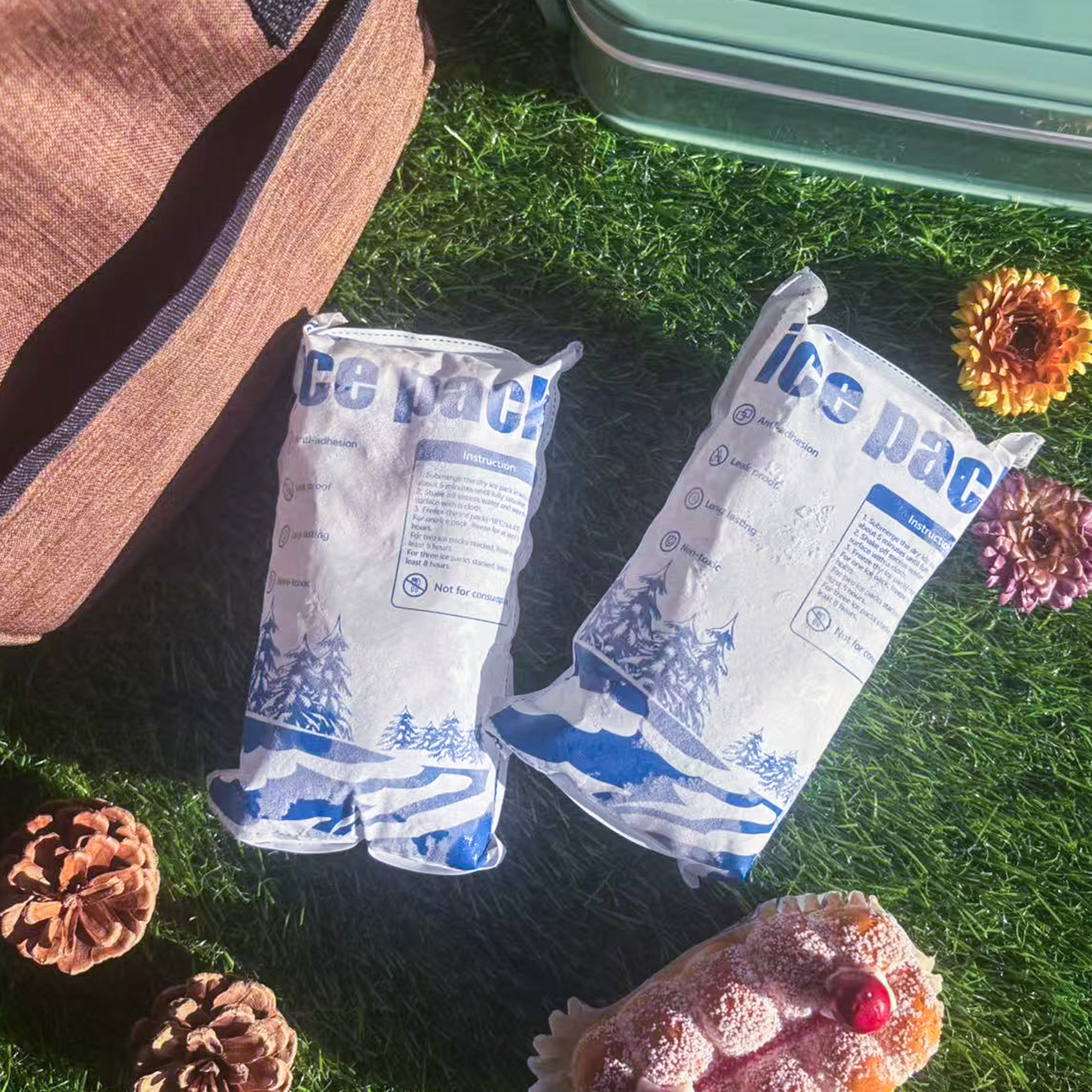
Price Dry Ice Packs—How Much Should You Pay in 2025?
If you’re researching price dry ice packs, you want a clear range and a plan to pay less without risking temperature excursions. Below you’ll find realistic 2025 prices, cost drivers, and a simple way to size coolant so you don’t over-pack. You’ll also see how channels, materials, and regulations quietly shift your true cost per shipment.
Retail vs. supplier: What do price dry ice packs look like across channels, and which fits your volume best?
Right amount, right cost: How to calculate price dry ice packs per shipment using a two-step estimator.
Form & material: Do pellets, blocks, or Mylar/Kraft change the price dry ice packs outcome?
Compliance costs: Which rules affect fees and handling for price dry ice packs?
What does “price dry ice packs” mean across channels?
Short answer: Retail sits near $1.99–$2.99/lb, while institutional and contracted buys often land around $0.84–$1.18/lb. Local specialty suppliers use tiered pricing that drops per-pound rates as your order grows. Choose the channel that matches your volume and lead time.
Why this matters to you: For same-day, small amounts, retail is convenient but expensive. For planned runs, tiered suppliers win. A few cents per pound adds up quickly on multi-day frozen lanes, so align your buying pattern with your forecast, not with last-minute scrambles.
Retail vs. supplier price dry ice packs ranges
Details you can use: Typical U.S. grocers list around $1.99–$2.99/lb. Specialty suppliers may start near $6/lb at tiny orders but drop toward $1.60/lb at ≥150 lb, while campus or institutional programs often show ≈$0.84–$1.18/lb under contract.
| Channel | Typical Range | Lead Time | What it means for you |
|---|---|---|---|
| Retail grocery | $1.99–$2.99/lb | Same day | Fast but pricey; good for small gaps. |
| Local supplier (tiered) | ~$6 → ~$1.60/lb | 0–2 days | Big drops at 50–150 lb; plan buys. |
| Institutional/contract | ~$0.84–$1.18/lb | Scheduled | Lowest cost; needs consistent volume. |
Practical tips for price dry ice packs
Plan weekly drops: Lock tiers with 1–3 scheduled deliveries so you stop paying retail gaps.
Segment lanes: Put long lanes on blocks; short lanes on pellets; hybrids when uncertain.
Shrink headspace: Less void means less coolant and a lower price dry ice packs per order.
Real case: A regional meal-kit brand cut annual spend 18% by moving from low-grade Kraft to mid-range Mylar sheets; spoilage fell from 3.4% to 0.8%, improving the true price dry ice packs outcome.
How do you calculate price dry ice packs per shipment?
Bottom line: Don’t chase the cheapest sticker. Calculate true cost as pack price plus the cost of failures you prevent. Use performance data to right-size your coolant.
Two-step approach (simple and reliable):
Weight estimator: Start with 5–10 lb per 24 h per parcel shipper. Dry ice provides ~245 BTU/lb as it sublimes—your cooling “fuel.” Multiply by transit days, then adjust for insulation and voids.
True-cost check:
If a higher-grade pack cuts spoilage, a small price increase often lowers your price dry ice packs per order.
Back-of-napkin estimator for price dry ice packs
Example: 3-day lane, good insulation, low voids → ~18 lb total. At $2.49/lb retail it’s ≈$44.82; at $1.80/lb tier it’s ≈$32.40. Plan your buys to live at the tiered number, not the retail one.
| Lane | Start Weight | Retail at $2.49/lb | Tier at $1.80/lb | What to change |
|---|---|---|---|---|
| 24 h | 5–10 lb | $12.45–$24.90 | $9.00–$18.00 | Tighten voids; pellets OK. |
| 48 h | 12–18 lb | $29.88–$44.82 | $21.60–$32.40 | Mix block + pellets. |
| 72 h | 20–28 lb | $49.80–$69.72 | $36.00–$50.40 | Prefer blocks for duration. |
Hands-on tool (copy/paste)
Use this to sanity-check your price dry ice packs plan before you buy.
Pellets or blocks—do they change price dry ice packs value?
Short answer: Blocks last longer; pellets cool faster and fill voids. Many shippers run hybrids: block base for duration, pellet topper for pull-down. This mix improves the price dry ice packs result by cutting waste.
Material also matters: Mylar resists moisture and often extends hold time; Kraft is cheaper but soaks water; PE hybrids sit in the middle. Use the material that matches your lane’s humidity and duration so your price dry ice packs doesn’t get inflated by failures.
Materials that influence price dry ice packs
| Material | Typical Cost (USD/pack) | Duration (hrs) | Moisture Resistance | Reuse Cycles | What it means |
|---|---|---|---|---|---|
| Kraft | 0.30–0.80 | 12–24 | Low | 1 | Cheapest; best for short last-mile. |
| PE film | 0.70–1.20 | 24–36 | Medium | 2–3 | Balanced choice for many parcels. |
| Mylar | 1.00–2.50 | 36–72 | High | 5–8 | Higher price, longer hold; fewer failures. |
Field-tested tips
Use Mylar for 36–72 h or humid routes; premium price, fewer excursions.
Use PE hybrids for balanced cost/performance in mixed climates.
Keep pellets bagged to tame mess and fill irregular voids.
Case snapshot: A seafood exporter extended cold retention from 28 to 52 h with a Mylar upgrade and only ≈12% cost increase—net savings by preventing loss.
Which regulations change price dry ice packs in practice?
Know the essentials: Dry ice is UN1845, Class 9. Packages must vent CO₂ and be marked and labeled correctly. For air, follow IATA PI 954; for U.S. ground/sea, follow 49 CFR 173.217; for mail, see USPS Publication 52 9A. Passenger baggage typically limits dry ice to 2.5 kg (5.5 lb) per person with airline approval. These details prevent carrier exceptions that burn time—and dry ice.
Compliance checklist you can paste into your SOP
Mark “Dry ice”/“Carbon dioxide, solid”, UN1845, and net weight (kg) on the carton.
Apply Class 9 label; ensure a deliberate vent path (no airtight inner bags).
Use the IATA PI 954 acceptance items for air; follow carrier job aids.
Respect USPS 9A limits; surface vs. air differ.
When do bulk tiers drop price dry ice packs sharply?
Often at 500, 1,000, and 5,000+ units. As you cross those breaks, your price dry ice packs falls 20–50% from retail levels. Negotiate partial-bulk to lock rates without storage pain.
| Quantity | Approx. Unit Price | Typical Buyer | Why it matters |
|---|---|---|---|
| 100 | $1.80 | Small business | Starter tier; test and learn. |
| 500 | $1.40 | Regional shipper | ~22% savings; steady lanes. |
| 1,000 | $1.10 | E-commerce ops | ~38% savings; schedule drops. |
| 5,000+ | $0.85 | Industrial | ~52% savings; formal forecasts. |
2025 latest price dry ice packs developments and trends
What’s new in 2025: CO₂ recovery costs push modest 5–10% pressures on dry ice in some markets, while film supply and automation offset spikes. Reusable solutions keep growing, but for −78.5 °C lanes, dry ice remains the simplest path. Use data loggers and ISTA thermal profiles to right-size coolant and hold your price dry ice packs flat year-round.
At-a-glance updates
Automation in kitting trims labor per pack, softening price moves.
Sustainability incentives favor recyclable components in some regions.
Hybrid pack-outs (block + pellet) are now common baselines for 48–72 h lanes.
Market insight: Cold-chain e-commerce growth keeps tiered supplier deals attractive. Align purchase cadence with lane plans; make urgent retail buys the rare exception.
FAQ
Is $1.99–$2.99/lb a fair 2025 retail range for price dry ice packs?
Yes, many U.S. grocers sit there; contracts and tiers can be far lower.
How much dry ice do I need per day?
Start with 5–10 lb per 24 h, then tune with data based on insulation and voids.
Do pellets or blocks change my total cost?
Yes. Blocks last longer; pellets pull down faster. Hybrids improve your price dry ice packs across mixed routes.
Are reusable packs worth it?
Often yes. Even with higher unit price, extra cycles and fewer failures lower lifecycle cost.
Which labels matter most?
UN1845, Class 9, net dry ice weight (kg), and IATA PI 954 rules for air.
Summary & recommendations
Key takeaways: Size coolant from a 5–10 lb/day baseline, then buy on tiers to control your price dry ice packs. Match form to lane, pick materials for your humidity and duration, and use simple true-cost math to justify upgrades that cut spoilage.
Next steps (CTA):
Audit current lanes and log temps for two cycles.
Use the estimator above to set targets for price dry ice packs by lane.
Get quotes at 500/1,000/5,000 tiers and trial block/pellet hybrids.
Standardize your SOP and reorder cadence with your chosen supplier.
About Tempk
We design cold-chain packaging that blends lab-tested performance with practical kitting. Our dry ice and PCM systems are validated across food, biotech, and ecommerce to balance duration, weight, and cost. Customers use our data-driven tooling to reduce failures and stabilize their price dry ice packs spend over peak seasons.
Talk to us: Get a tailored pricing & weight calculator for your lanes and a quick SOP template for labels and venting.
Best Dry Ice Ice Pack Guide 2025 for Safe Shipping

Best Dry Ice Ice Pack: How to Choose in 2025
Updated: October 13, 2025
Finding the best dry ice ice pack starts with safety and ends with predictability. In the first box you pack, ensure venting, correct UN1845 labeling for air, and a fit that keeps goods frozen without ruptures or rework. You’ll lower losses, pass acceptance checks, and ship with confidence, lane after lane.
How does the best dry ice ice pack prevent bursts and pass checks?
How much dry ice or gel do you need for 24–72 hours?
Which materials, thicknesses, and vent paths work best on real lanes?
When is gel/PCM the better choice than dry ice for chilled targets?
What 2025 innovations matter: smart vents, mono-materials, and digital validation?
What makes the best dry ice ice pack safer and compliant?
Short answer: Venting, fit, and durability. The best dry ice ice pack always includes a controlled vent path, uses a bag that fits the block or pellets without over-sealing, and survives drops and vibration in automation. Packages must not be airtight, and inner bags are folded, not sealed—a pass/fail detail on acceptance checklists.
Why this matters to you: Dry ice sublimes and produces gas. A sealed bag traps pressure and can rupture, damage the shipper, or fail acceptance. The safest standard pack uses vent-friendly inner bags and a vented outer shipper, marked UN1845 with net weight for air. That one change reduces rework and claims dramatically on frozen lanes.
Material choices for the best dry ice ice pack
| Material | Barrier | Vent behavior | Durability | What it means for you |
|---|---|---|---|---|
| HDPE 5–6 mil | Medium | Balanced | High | Robust in automation, good all-rounder. |
| LDPE 4–5 mil | Med-low | Good | Flexible | Easier handling; still needs fold-vent. |
| Metallized/mylar | High | Low without vents | Very high | Use only with micro-vents or fold gaps. |
| Kraft + PE laminate | Medium | Naturally vented | Moderate | Eco-led choice; great for pellets/blocks. |
Practical tips you can apply today
Fold, don’t seal any inner bag holding dry ice.
Keep a clear headspace channel from inner bags to the shipper’s vent/plug.
Mark air shipments “Carbon dioxide, solid (UN1845)” with net kg.
Train teams with the phrase “package is vented.”
Real-world case: A national food brand switched from sealed film sleeves to folded HDPE bags plus a vented cooler. They cut ruptures and rework while improving on-time delivery by double digits on summer lanes.
How much of the best dry ice ice pack do you need?
Short answer: Start with a lane-based rule of thumb and then validate. For frozen lanes, plan roughly 5–10 lb per 24 hours per shipper, depending on insulation and ambient. For chilled (0–8 °C), use gel/PCM sized by hours and heat load; you don’t need UN1845 for gel-only shippers.
Expand: Blocks outlast pellets because of lower surface area, so choose blocks for long holds and pellets for fast pull-down plus top-off. Always split the total mass into six positions (bottom/sides/top) to stabilize temperatures and preserve vent paths. Log and tune by season.
Sizing rules for 24–72 hours (start here)
| Target | Typical packout | Planning mass | What to adjust |
|---|---|---|---|
| 24 h frozen | 2 bottom, 2 sides, 2 top | ~5–10 lb total | Add foam cap; ensure vent path. |
| 48 h frozen | Six-point with blocks | ~10–20 lb | Prefer blocks over pellets. |
| 72 h frozen | Six-point + liner | ~20–30 lb | Upgrade insulation before mass. |
| 24–48 h chilled | 6 gel bricks (600–900 g) | 4–6 units | Step up to higher-latent PCMs for heat. |
Hands-on estimator (optional embed)
Best dry ice ice pack vs gel pack—when should you choose each?
Direct answer: Use the best dry ice ice pack (real dry ice in vented packaging) for frozen targets. Use gel/PCM packs for 0–8 °C. Many online “dry ice ice pack” listings mean gel/PCM and are not regulated like CO₂. Pick by temperature first, then fit and compliance.
Context: Dry ice demands vented bags and a vented outer shipper with UN1845 marks for air. Gel/PCM requires none of that, but it cannot keep goods frozen. Avoid mixing unless you flip to the dry-ice SOP.
Comparison at a glance
| Goal | “Best” choice | Why | Watch-outs | For you |
|---|---|---|---|---|
| Keep goods frozen | Best dry ice ice pack (vented inner + vented shipper) | Strongest frozen hold | Never seal plastic bags; leave vents open | Fewer failures on long lanes. |
| Keep goods 0–8 °C | Gel/PCM bricks | Simple training; no UN1845 | Won’t hold frozen | Lower ops burden; faster packing. |
Best dry ice ice pack packouts that pass checks (24–72 h)
Short answer: The most forgiving pattern is the six-point packout—two bottom, two sides, two top—plus a clear headspace channel to the shipper’s vent or drain. Inner bags are folded, not sealed. Label UN1845 with net kg for air shipments.
How to build it
Weigh & split the total CO₂ (rule of thumb above).
Bag correctly: kraft sacks or folded film; don’t heat-seal.
Place 2 bottom, 2 sides, 2 top around the payload (no direct contact with primaries).
Add foam cap and maintain a vent channel to the cooler’s plug/vent.
Check labels and acceptance items (e.g., “package is vented”).
Durability tests that save claims
| Test | Target | Your benefit |
|---|---|---|
| Drop (1.2 m) | No rupture | No contamination, fewer re-packs. |
| Pressure rise | ≤0.2 bar | Confirms safe CO₂ escape. |
| 100+ picks | No tearing | Automation-ready. |
| Humidity/low-temp | No cracking | Holds up at −78 °C. |
2025 trends for the best dry ice ice pack
What’s new: Smart vent films, recyclable mono-materials, carbon-tracked batches, and AI-assisted sublimation modeling help you ship safer and greener without adding labor. These innovations redefine what “best” means this year.
Latest at a glance
Smart vents: Pores that open under pressure cut burst risk on air lanes.
Mono-material packs: Easier recycling and cleaner ESG reporting.
Digital CO₂ tracing: QR batches feed Scope-3 audits.
Market insight: Shippers standardize around vented configurations and checklist language (“package is vented”) to speed acceptance and training—a small documentation change that yields outsized compliance wins.
Frequently Asked Questions
Q1: What’s the single most important feature of the best dry ice ice pack?
A controlled vent path—folded inner bag plus a vented outer shipper. That’s the core of safety and acceptance.
Q2: Can I heat-seal a film bag to contain chips?
No. Do not place dry ice in sealed plastic bags. Fold the mouth or use kraft sacks so CO₂ can escape.
Q3: Gel packs vs the best dry ice ice pack—how do I choose?
Pick by target temperature: gel/PCM for 0–8 °C; dry ice for frozen. Then size mass and choose materials for your lane.
Q4: How much dry ice for 48 hours?
Start around 10–20 lb, prefer blocks, then test with data loggers and adjust by season.
Q5: What labels are required for air?
Mark “Carbon dioxide, solid (UN1845)” with the net weight and ensure the package is vented.
Summary & Recommendations
Recap: The best dry ice ice pack is a vented configuration that keeps goods frozen without sealing CO₂, uses materials that survive handling, and follows UN1845 and acceptance language. Right-size dosing with six-point layouts, then validate and document.
Next steps:
Map lane time and ambient; 2) Choose pack type (dry ice vs gel); 3) Set venting and labels; 4) Pilot and log; 5) Standardize SOPs; 6) Review ESG and recyclability. Need a one-page SOP or lane sizing? Contact our team.
About Tempk
We design and validate cold-chain packaging for performance and sustainability. Our portfolio spans HDPE, metallized, and kraft-laminate options with engineered vents, plus gel/PCM solutions for chilled lanes—all validated for real-world logistics. We help 3PLs and shippers reduce waste, prevent ruptures, and meet ESG targets. Talk to our engineers for a lane-specific spec.
Pack of 24 Dry Ice Pack Sheet: 2025 Sizing Guide
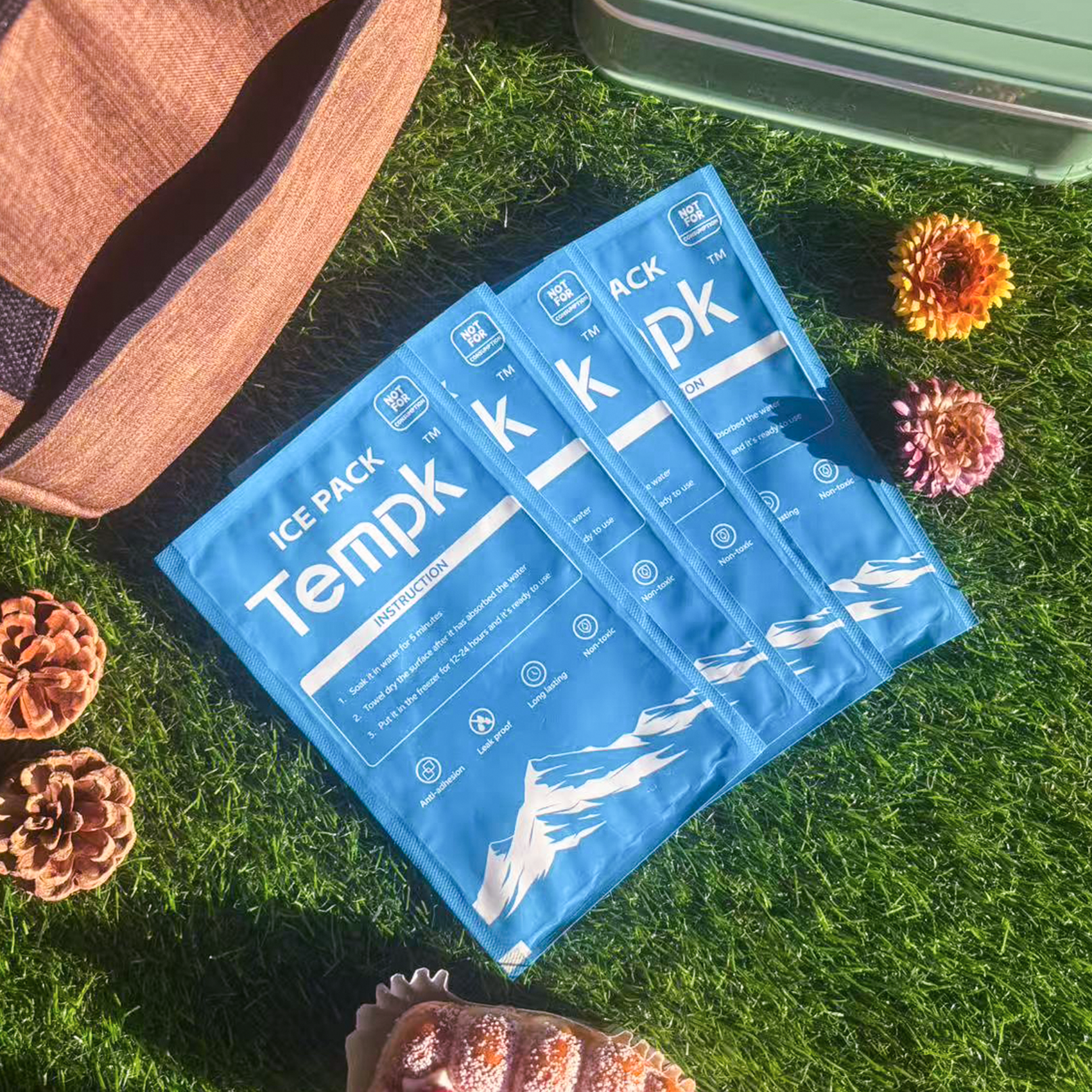
How to Size a Pack of 24 Dry Ice Pack Sheet in 2025
You need frozen deliveries that arrive intact without costly re-shipments. A pack of 24 dry ice pack sheet gives you repeatable placement, faster bench work, and cleaner handling—when it is sized and vented correctly. This guide shows you how to translate heat load into sheet counts, choose films that flex at −78.5 °C, and standardize layouts for 24–120 hours.
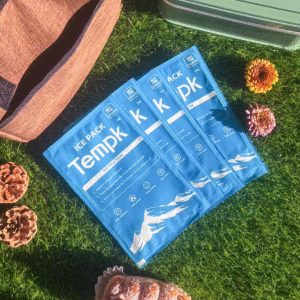
Which specifications define a reliable pack of 24 dry ice pack sheet for food, pharma, and labs
How to size your dry-ice mass with quick math for 24–120 hours
Which film thickness and venting prevent cracks and bursts at −78.5 °C
What layouts reduce hot spots and cut total ice spend
What 2025 innovations help you ship longer with less ice
What is a pack of 24 dry ice pack sheet—and when should you use it?
Short answer: a pack of 24 dry ice pack sheet is a flexible sheet with twenty-four equal cells prefilled with pellets or nuggets that you fold or layer around the payload. Use it when you want uniform cold, tidy dosing, and easy counting across repetitive pack-outs.
The geometry spreads cold surface area and speeds packing. In e-commerce frozen food, diagnostics, and seafood export, crews pack faster and with fewer overfills because the cells serve as a built-in measuring cup. The pack of 24 dry ice pack sheet also reduces dust and cleanup, boosting bench safety and consistency.
Pellet size and cell volume—what should you target?
For tight cavities, ~3 mm “rice” pellets flow evenly into small cells. For slower loss, ~16 mm pellets hold mass longer. Specify grams per cell with a ±5–7% tolerance so receiving teams can audit quickly.
| Cell spec | Typical value | Pass/Fail check | What it means for you |
|---|---|---|---|
| Cells per sheet | 24 | Count and seam integrity | Repeatable dosing & coverage |
| Grams per cell | 15–25 g | Weigh 10 cells; ±5–7% | Predictable total mass per sheet |
| Venting | Micro-perfs or laser pinholes | Fog test for gas escape | Lower burst risk and steadier loss |
| Film thickness | 110–150 μm (≈3–4 mil) | Cold-flex bend test | Fewer cracks at −78.5 °C |
Practical tips for your bench team
Use standoffs or trays so film never rubs on sharp corners during transit.
Split mass top/bottom on tall cartons to flatten gradients.
Leave 10–15 mm headspace under the lid so CO₂ can vent safely.
Real-world case: A diagnostics shipper switched from loose pellets to a pack of 24 dry ice pack sheet. Packing time dropped by about one quarter, while arrival-temperature variation narrowed, reducing frozen claims across a 72-hour lane.
How do you size a pack of 24 dry ice pack sheet for 24–120 hours?
Use a fast formula, then convert mass to sheet counts and place by zones.
Insulation Factor: VIP 0.7, PUR 0.8, EPS 1.0, Corrugated 1.5. Add +10% for warm (20–30 °C) and +20% for hot (>30 °C) lanes. Convert to sheets by dividing by the mass of one pack of 24 dry ice pack sheet (cells × grams per cell). Place 40–50% bottom, 35–40% sides, and 10–20% top.
Example: 20 L EPS, 72 h → 0.10 × 20 × 3 × 1.0 = 6.0 kg. If one pack of 24 dry ice pack sheet weighs 0.48 kg, you need 13 sheets (round up). Split: 6 bottom, 5 sides, 2 top.
Quick reference table—target mass and per-cell loading
| Hours | EPS target (lb) | VIP target (lb) | Per-cell if 24 filled | Why it helps |
|---|---|---|---|---|
| 24 | 5–10 | 3–8 | 0.21–0.42 lb | Add a 24-hour buffer in hot season |
| 48 | 10–20 | 6–14 | 0.42–0.83 lb | Balance top/bottom to flatten gradient |
| 72 | 15–30 | 9–20 | 0.63–1.25 lb | Consider a block underlay |
| 96 | 20–40 | 12–26 | 0.83–1.67 lb | Plan re-icing or higher-R insulation |
Bench-ready “Lane Calculator” (engagement booster)
Which films and vents keep a pack of 24 dry ice pack sheet from cracking or bursting?
Choose LLDPE/EVA at 3–4 mil or nylon/PE co-ex where abuse is high, and always provide a leak path for CO₂. Thicker film improves durability but not hold time. Hold time comes from insulation quality and total mass.
At −78.5 °C, commodity LDPE becomes notch-sensitive. Rounded seams ≥6 mm with anti-burst patterns survive hub handling. A pack of 24 dry ice pack sheet should include documented venting area so gas escapes; airtight packaging is the real risk because 1 kg of dry ice makes roughly 541 L of CO₂ gas.
Self-check: spec & safety
Film: LLDPE/EVA 3–4 mil, or nylon/PE where puncture risk is high.
Vented inner and outer: micro-perfs or fold-and-clamp; never airtight.
Labels: UN 1845, proper shipping name, and net dry-ice mass (kg).
Layout: 40–50% bottom, 35–40% sides, 10–20% top; headspace 10–15 mm.
Monitor CO₂ on docks; train to the 5,000 ppm workplace limit.
Good-Better-Best film picks
| Use case | Good | Better | Best | What it changes for you |
|---|---|---|---|---|
| Pellets, parcel | 3 mil LLDPE | 3 mil LLDPE/EVA | 3 mil nylon/PE | Better cold-flex and puncture resistance |
| Blocks/rough hubs | 4 mil LLDPE/EVA | 4 mil nylon/PE | 4 mil nylon/PE + inner liner | Fewer tears around shards |
| Protected liner | 2 mil LLDPE | 2 mil EVA | 3 mil LLDPE/EVA | Only if fully tray-protected |
How do you place a pack of 24 dry ice pack sheet for even results?
Standardize three patterns and train to them.
| Pattern | When to use | Steps | What it does for you |
|---|---|---|---|
| Top + Bottom sheets | 24–72 h | 12 cells top, 12 bottom; standoffs | Flattens vertical gradients |
| Block + Sheet | 72–120 h | Block base + 24-cell sheet on top | Stabilizes hold; smooths cold |
| Sheet wrap | Odd shapes | Pre-fold around trays | Conformal cooling and tidy bench work |
Actionable tips for specific scenarios
Peak-season air lanes: Add a full-day buffer for delay protection.
High-abuse hubs: Use nylon/PE co-ex and wider seams (≥6 mm).
Tight regulatory checks: Mark UN 1845, proper shipping name, and net mass.
Field example: A seafood exporter added a block plus a pack of 24 dry ice pack sheet on top. Long-haul hold extended by about a day with similar total mass due to better surface contact.
2025 trends for the pack of 24 dry ice pack sheet
The 2025 playbook favors right-sizing and vented design. A pack of 24 dry ice pack sheet paired with VIP walls often cuts mass by roughly one quarter while keeping hold. Converters now provide documented micro-perf areas and pocket tolerances, making audits faster and pack-outs more consistent.
What’s new this year
Vented outers by default – reduces burst risk
Documented cell tolerances – faster QA
Pre-folded kits – lower training time
Market signals show shippers shifting long lanes to VIP or PUR to reduce dry-ice mass and claims. Teams also deploy CO₂ monitors set below 8-hour limits to improve safety on docks.
FAQ
What is a pack of 24 dry ice pack sheet?
A flexible, vented sheet with twenty-four cells prefilled with pellets or nuggets for uniform coverage and easy dosing.
How much dry ice should I load per day?
Plan 5–10 lb per 24 h for EPS (less for VIP), then add one extra day as a buffer.
Does thicker film extend hold time?
No. Thicker film reduces cracks; hold time depends on insulation and total dry-ice mass.
Can I seal the package airtight?
No. Dry ice creates CO₂ gas; airtight packages can bulge or fail inspection.
Which pellet size works best?
3 mm pellets flow into small cells; 16 mm pellets sublimate slower and are easier to handle.
Summary and next steps
A pack of 24 dry ice pack sheet makes frozen shipping faster, cleaner, and more repeatable when you size correctly, use tough vented film, and standardize placement.
Next steps:
Run the sizing calculator.
Pick film gauge and venting.
Train one standard layout per lane.
Validate with a data logger.
About Tempk
We design and supply cold-chain solutions for frozen, refrigerated, and controlled-room-temperature shipments, centered on the pack of 24 dry ice pack sheet. Our testing labs and field pilots help clients cut re-ships and dry-ice spend while maintaining compliance and quality.
Talk to an expert: Get a lane review, a mass recommendation, and a pack-out template for your next frozen route.
Discount Dry Ice Packs: 2025 Buyer’s Playbook

Discount Dry Ice Packs: 2025 Buyer’s Playbook
If you’re chasing discount dry ice packs, you need lower cost and zero risk. This guide shows how to size correctly, choose formats that last longer per dollar, and meet 2025 acceptance rules without rework. You’ll leave with ready-to-use checklists, a quick estimator, and a negotiation script you can run today.
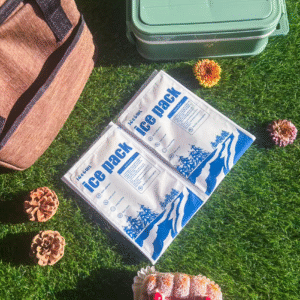
Where do discounts come from today? Timing, channel mix, and wholesale dry ice tactics
How much do you actually need? Fast math to right-size bulk dry ice packs by lane hours
Which formats are smartest? Pellets, nuggets, slices, and pre-bagged units compared
How do you stay compliant? Plain-English steps for UN1845 dry ice label and venting
How do you negotiate better? A script and vendor scorecard that win sustainable pricing
Source note: This playbook merges and upgrades Tempk’s 2025 internal guides on discount dry ice packs, quality, compliance, and sourcing.
Where do discount dry ice packs actually save money without risk?
Short answer: Discount dry ice packs save money when you buy closer to pack-out, size to your lane hours, and choose formats that reduce handling loss. They don’t save when weak films crack at −78.5 °C, labels are wrong, or vents are blocked—because refusals erase all “discounts.”
What this means for you: Price per on-spec hour beats price per pound. A nugget + slice layout can hold longer than small pellets alone, cutting units and labor. Buy from a primary industrial gas depot with program rates and keep a secondary local source for peaks.
Which “cheap” formats reduce total cost on your lane?
Details you can use: Cheap dry ice packs are the ones that meet spec with fewer touches. Pre-bagged 1–2 lb units reduce open-air loss and speed picks. Slices create a steady “cold lid”; nuggets fill side voids; 3 mm pellets help wrap odd gaps but can sublime faster on long lanes. Test hybrid layouts before locking pricing.
| Format Strategy | Best For | Watch Outs | What it means for you |
|---|---|---|---|
| Pellets (3 mm) | Fast pull-down, tight voids | Higher loss on long lanes | Use sparingly for micro-gaps |
| Nuggets (~16 mm) | Longer hold, stable sides | Less flexible in tiny spaces | Default side-fill workhorse |
| Slices/Blocks | Cold lid & wall stability | Needs gap-fill support | Fewer units over 48–72 h |
| Pre-bagged 1–2 lb | Labor + dosing accuracy | Small packaging premium | Faster picks, cleaner audits |
Practical tips & quick wins
Shift some mass to nugget + slice for 48–72 h lanes; add a corrugate spacer to protect surfaces
Pre-bagged units vs. bulk scooping: expect less open-bin loss and smoother counts
Buy closer to use: schedule will-call to your pack-out window to cut silent sublimation
Two-supplier matrix: qualify a backup and keep specs identical across vendors
Real case: A regional dessert brand swapped part of its pellets for a slice lid, cut unit count 12% on 60-hour lanes, and held acceptance photos to one shot per carton—no counter delays.
How should you size discount dry ice packs for each lane?
Direct answer: Start with a conservative first-pass estimate, then trim mass with logger data. Discount dry ice packs only save when they hit your lane hours with margin.
More context: For frozen targets (≤ −18 °C), ambient and duration drive mass. After your first run, cut 10–20% using evidence, not guesses. If your spec is 2–8 °C, switch to gel/PCM; dry ice is too cold and wastes budget.
Quick estimator you can run today
Tip: A thin corrugate spacer prevents surface freeze damage and may let you reduce total mass after validation.
| Sizing Input | Typical Range | What to log | Why it matters to you |
|---|---|---|---|
| Lane duration | 24–72 h | In-box temp every 5–10 min | Tells you how much buffer you need |
| Ambient swing | 15–38 °C | Max/min by handoff | Drives mass more than payload weight |
| Shipper R-value | R-10–R-20 | Insulation spec | Higher R = fewer units |
| Format mix | Pellets/Nuggets/Slice | Layout photo + count | Repeats success at scale |
Hands-on tips
Pre-chill shippers to reduce sublimation 10–15% before pack-out
Use data loggers in 1 of every 10 boxes during optimization
Standardize photo SOPs so acceptance and audits are copy-paste simple
Where can you buy discount dry ice packs near you?
Direct answer: Use a two-layer plan: a nearby industrial gas depot on program rates for core volume, plus a regional ice/gas company or retail banner as your same-day backup. Ask for weekend coverage and off-peak pickup windows aligned to your dock.
Channel tips:
Industrial will-call: predictable formats (pellets, nuggets, slices) and best consistency
Regional independents: local advantage on lead times and weekend hours
Retail banners: useful bridge for small, same-day gaps—don’t build your plan on them
Negotiation script for discounted program rates
Why it works: You lower their uncertainty and show compliance literacy—hallmarks of low-risk customers who deserve better pricing.
How do you stay compliant while using discount dry ice packs?
Direct answer: Mark UN1845, show net dry ice in kilograms, and ensure vented packaging. Passenger baggage has tight limits; cargo follows IATA PI 954 and operator variations. Discount dry ice packs don’t help if your carton gets refused.
What to do now: Print net-kg panels, train staff on venting, and add label photos to your SOP. Keep a CO₂ monitor in staging rooms; 1 kg of dry ice expands into hundreds of liters of gas in enclosed spaces—ventilation matters.
Fast compliance checklist
Proper shipping name “Dry Ice/Carbon dioxide, solid” + UN1845 visible
Net weight (kg) marked per package and overpack where applicable
Vented outer; never air-tight closure
Photo SOP for labels before hand-off; retain with shipment ID
2025 trends in discount dry ice packs and CO₂ supply
Trend overview: Expect continued use of updated IATA 2025 acceptance checklists and carrier job aids, while biogenic CO₂ and CCS projects add regional capacity. For buyers of discount dry ice packs, this means better odds of multi-supplier programs and steadier pricing, especially heading into peak seasons.
Latest developments at a glance
Public acceptance checklists updated for 2025 improve counter consistency for UN1845 and net-kg marks
New biogenic CO₂ plants are slated to come online, easing supply gaps in North America
CCS projects in Europe signal a longer-term boost to captured CO₂ availability for industry
Market insight: Analysts and trade coverage point to mid-single-digit to high-single-digit CAGR for dry ice and related equipment through 2032. Operationally, that means competition among suppliers—and more room to negotiate program rates if you commit volume and forecasts.
Frequently Asked Questions
Q1: Can I fly with discount dry ice packs?
Yes—passenger baggage allows small quantities with airline approval, vented packaging, and clear marks; cargo follows PI 954 and operator rules. Keep it simple: mark UN1845 and net-kg, and never seal air-tight.
Q2: How long will discount packs last in transit?
Typical starting point is 24–48 h depending on ambient and insulation; size to lane hours and then trim with logger data.
Q3: Are “cheap dry ice packs” safe for food and pharma?
Yes—if the CO₂ is food/pharma grade, packaging is durable at −78.5 °C, and the shipper is validated for your lane. Ask for film/seal data and run a small validation.
Q4: When should I use gel/PCM instead of dry ice?
If your target is 2–8 °C, gel/PCM is the right tool. Save discount dry ice packs for ≤ −18 °C frozen lanes.
Summary & next steps
What matters most: Pair discount dry ice packs with right-sized mass, hybrid formats that reduce units, and clean labeling to avoid refusals. Use on-spec hour pricing, not $/lb, and maintain a two-supplier matrix with off-peak will-call. Validate, then trim 10–20% safely.
Your move:
Run the estimator on your top lanes
Pilot a nugget + slice layout with spacers
Send the negotiation script to two suppliers
Add photo SOPs and net-kg panels to every carton
CTA: Request a 10-minute lane review from Tempk to get a unit-by-unit plan.
About Tempk
We engineer practical cold-chain systems across dry ice, PCM, and hybrid solutions. Our teams combine packaging science, operations, and regulatory know-how to cut cost without risk and help you scale with confidence. We back claims with data and simple tools you can run in-house.
Pack of 6 Dry Ice Pack: 2025 Shipping Guide
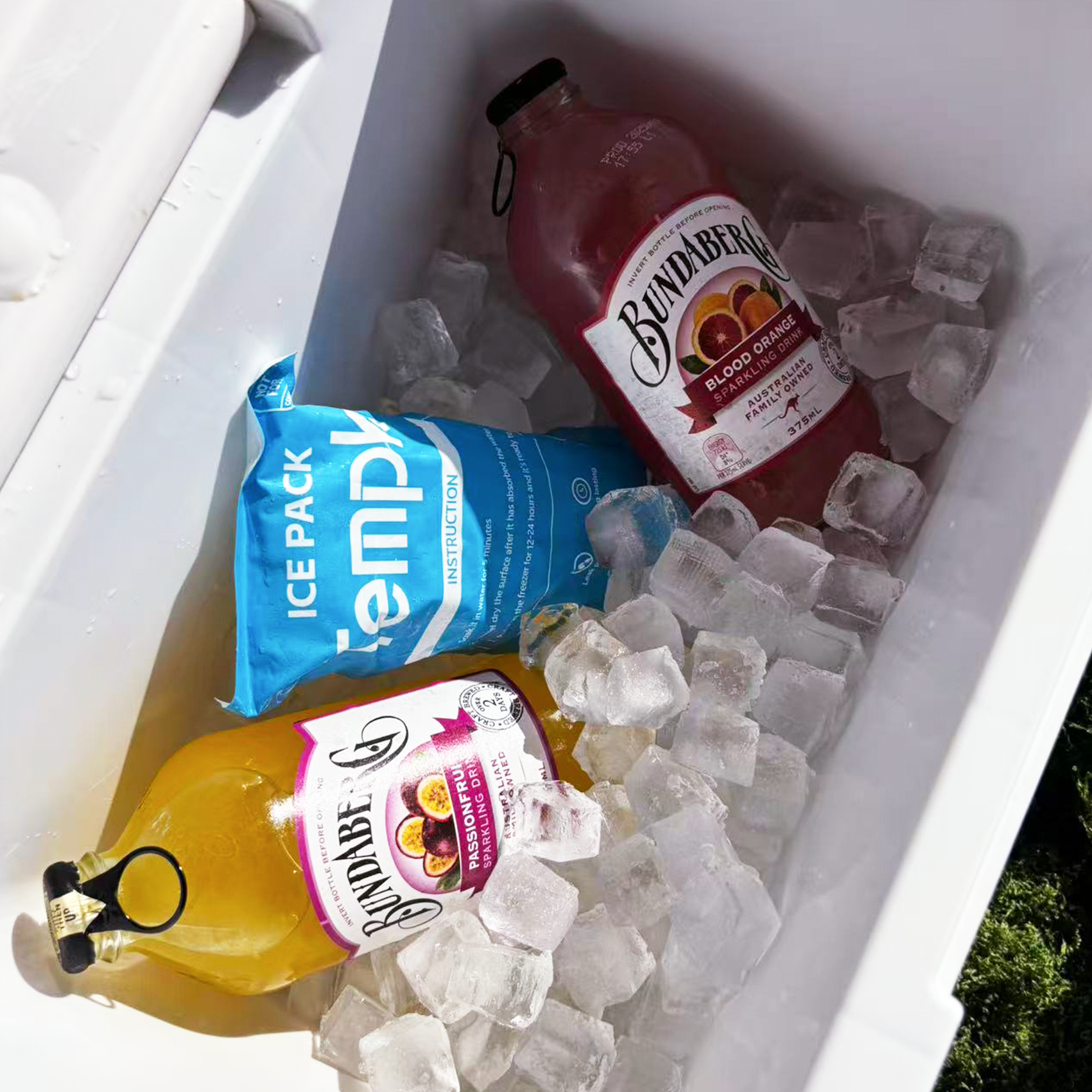
Pack of 6 Dry Ice Pack: 2025 Practical Guide
If you ship frozen goods, a pack of 6 dry ice pack gives you modular, ultra‑cold power with less waste and tighter control. Dry ice holds about –78 °C and leaves no meltwater, which protects quality and packaging. This guide shows you how to size, pack, and label a pack of 6 dry ice pack—and what’s new in 2025—so your products arrive solid, safe, and compliant.
Choose when a pack of 6 dry ice pack beats gel or PCM for deep‑freeze lanes
Calculate fast, field‑ready quantities with simple rules and a mini‑calculator
Pack, label, and vent correctly to pass checks the first time
Apply 2025 trends (thin packs, hybrid packouts, smart logging) to save cost
Why does a pack of 6 dry ice pack deliver more even cooling?
Direct answer:
Six smaller units surround your payload, cut hot spots, and stretch hold time. You can place packs above, around, and below the goods, creating 360° cold. This even spread outperforms one large block, especially in parcel shippers with corners that warm first. Be sure you’re buying real dry ice, not hydratable “ice sheets” mislabeled as “dry ice packs.”
Deeper explanation:
Many listings say “dry ice pack” but actually sell water‑activated sheets or gel packs near 0 °C—great for chilled lanes, not for deep freeze. Real dry ice is solid CO₂ (UN1845), vents as gas, and requires hazard markings. With a pack of 6 dry ice pack, you tailor placement to your load and route, reserving one or two units for delays. That flexibility improves uniformity and reduces over‑cooling risk at edges.
Which long‑lasting setup should you start with?
Details:
Begin with a “sandwich” layout: two under, two around, two on top. Pair with high‑R insulation (EPS or VIP) to slow heat gain and use less dry ice overall. VIP upgrades can cut dry ice needs by roughly a quarter in many lanes, then you tune down after a lane test with a data logger.
| Refrigerant option | Temp band | Typical duration (parcel) | What it means for you |
|---|---|---|---|
| Pack of 6 dry ice pack (real CO₂) | ~–78 °C | 24–72 h | Ultra‑cold, hazmat rules, best for frozen & biologics |
| Pack of 6 hydratable “ice sheets” | 0–8 °C | 24–48 h | Chilled only; not true dry ice; no hazmat pack-of-6-dry-ice-pack-2025 |
| PCM panels (–10 °C/–21 °C) | Frozen | 24–96 h | Stable temps, reusable; pair with dry ice for long hauls |
Practical tips you can use today
Small parcels: surround payload; keep voids under 15% to curb convection.
Upgrade insulation: VIP or thicker EPS lowers dry ice mass 20–30% in many routes.
Confirm the product: “UN1845” → real dry ice; “soak in water/24‑cell” → hydratable sheet.
pack-of-6-dry-ice-pack-2025
Field case: A microcreamery placed four packs around pints and two on top inside an EPS shipper; pints arrived rock‑solid after 48 hours with less weight than prior blocks.
How do you size a pack of 6 dry ice pack for 24–72 hours?
Direct answer:
Use 5–10 lb of dry ice per 24 h for frozen parcels as a conservative start; scale by payload, insulation, ambient heat, and duration. If each pack is ~1 lb, 48 h often needs 4–6 packs in EPS; hot lanes may add 20%. Always verify with a lane test.
Deeper explanation:
Mass matters more than “how many.” Confirm unit weight, then estimate by day and lane stress, not just by count. Pre‑freeze the payload to reduce the cooling load. Better insulation cuts mass, and hybrid layouts (some dry ice + some PCM) extend time without over‑freezing sensitive SKUs.
Fast calculator for a pack of 6 dry ice pack
Use this starter formula, then validate in a pilot:
Tip: If each unit is 1 lb, eighteen pounds means three full 6‑packs—or upgrade insulation to reduce mass.
| Estimator | 24 h | 48 h | What it means for you |
|---|---|---|---|
| 5 lb rule (mild) | 5 lb | 10 lb | Light loads, good EPS, short lanes |
| 7.5 lb mid | 7.5 lb | 15 lb | Typical starting point |
| 10 lb hot | 10 lb | 20 lb | Hot lanes or long dwell time |
| Tighten after three monitored shipments. |
How to pack, label, and ship a pack of 6 dry ice pack safely?
Direct answer:
Pre‑freeze goods, use high‑R insulation, distribute packs 360°, leave a vent path, and mark UN1845 with net weight. Add a temperature logger and follow operator variations for air cargo.
Deeper explanation:
Dry ice off‑gasses CO₂, so airtight boxes are unsafe. Vent through designed paths. For air, follow IATA PI 954 markings; passenger baggage typically limits dry ice to 2.5 kg per person. USPS domestic air mail has strict limits; international mail prohibits dry ice. Label “Carbon dioxide, solid (Dry Ice), UN1845” and include net weight.
Compliance snapshot for 2025
IATA PI 954: vented package, proper marking, operator caps may apply.
Passenger flights: ~2.5 kg per person when approved and vented.
USPS (air): domestic allowed under limits; international prohibited.
User‑ready packing checklist
Freeze to the core: pre‑condition products; “cold starts” eat dry ice.
Fill voids: dunnage reduces warm pockets and sublimation.
Top + sides: place some mass above goods; cold sinks uniformly.
Weigh & record: put net dry ice on the label for acceptance.
Real‑world: A gene‑therapy shipment using a VIP shipper plus a pack of 6 dry ice pack and a logger held ~–65 °C for ~60 h while using ~25% less dry ice than before.
Who should use a pack of 6 dry ice pack—and when not?
Direct answer:
Food brands, meal kits, biotech labs, and clinics benefit most when parcel sizes vary and delays happen. A pack of 6 dry ice pack lets you dial cooling up or down per order. If you only ship chilled (2–8 °C), hydratable sheets or PCM may be simpler.
Deeper explanation:
Six units scale with order volume and protect edges in mixed‑SKU boxes. For long hauls, consider hybrid packouts (some dry ice + PCM) to steady temps and cut total CO₂. Upgrade liners or VIP when lanes run hot or long.
2025 cold‑chain developments that affect a pack of 6 dry ice pack
Trend overview:
Thin dry ice packs increase space for payload while maintaining ultra‑cold performance for longer windows. IoT temperature/CO₂ loggers and smarter SOPs are now standard. The dry ice market continues to expand with more captured‑CO₂ feedstock and sustainability targets.
Latest progress at a glance
Thin packs: slimmer form factors free space and can extend useful hold time.
Smart monitoring: Bluetooth/IoT loggers flag temp or gas spikes in real time.
Hybrid packouts: mixing PCM and dry ice reduces CO₂ mass while extending holds.
Market insight:
Expect tighter carrier acceptance checks and supply swings in CO₂; diversify suppliers and reduce consumption via better insulation and pack planning. Asia‑Pacific demand rises with exports and healthcare growth; VIP reuse programs support cost control.
FAQ
How long can a pack of 6 dry ice pack last?
24–72 h in well‑insulated parcels, lane‑dependent; thin packs and hybrid layouts can add time.
Is a pack of 6 dry ice pack the same as “ice sheets”?
No. Many “ice sheets” are hydratable near 0 °C; real dry ice is solid CO₂ at ~–78 °C and is regulated.
pack-of-6-dry-ice-pack-2025
What’s a quick sizing rule?
Start with 5–10 lb per 24 h for frozen lanes, then tune by logger data and insulation.
Can I fly with a pack of 6 dry ice pack?
Yes with limits: passenger baggage is typically 2.5 kg per person if vented and labeled. Check operator variations.
Do I need to vent the box?
Yes. CO₂ must escape. Never use an airtight container with dry ice.
Summary & recommendations
Key points:
A pack of 6 dry ice pack gives modular, even cooling for frozen shipments. Size by mass per day, upgrade insulation to cut usage, and pack 360° with vents open. Add a logger, label UN1845 with net weight, and run a three‑shipment pilot to tune down cost.
Next steps (CTA):
Define temp band and hours.
Start with the 5–10 lb/day rule.
Upgrade insulation or try hybrid layouts if mass is high.
Talk to Tempk for a sizing plan and sample kit.
About Tempk
We design practical cold‑chain systems—dry ice packs, PCM, EPS/VIP shippers—that balance performance, cost, and sustainability. Our thin‑pack research, captured‑CO₂ sourcing, and easy SOPs help you hit temperature with less mass and fewer claims.
Contact us to plan your next lane test.
Costco Dry Ice Packs – 2025 Price, Sizing & Rules

Costco Dry Ice Packs 2025: Price, Sizing, Safety
If you need frozen‑solid performance without overspending, Costco dry ice packs can work—when available and labeled right. Expect $1.00–$2.75 per lb in warehouses (when stocked) and roughly $8 per package in carrier dry‑ice handling fees if you ship by air. You’ll find quick formulas below to size dry ice for 24–120‑hour lanes, plus safer alternatives when you must hold 0–8 °C.
Availability realities: why not every warehouse stocks Costco dry ice packs and how to confirm same‑day inventory.
costco_dry_ice_packs
Price clarity: per‑pound vs per‑pack pricing in 2025 and what drives the total you pay.
costco_dry_ice_packs
Costco_Dry_Ice_Packs_2025_Tempk
Right‑sizing methods: fast day‑by‑day estimates and product‑weight formulas to avoid spoilage or waste.
costco_dry_ice_packs
costco-dry-ice-packs_Tempk_2025…
Rules and fees: UN1845 labels, venting, and typical carrier surcharges in 2025.
costco-dry-ice-packs_Tempk_2025…
Alternatives: when PCMs beat Costco dry ice packs for do‑not‑freeze shipments.
costco-dry-ice-packs_Tempk_2025…
Do all warehouses sell Costco dry ice packs?
Short answer: No—availability varies by location, so call ahead before you drive. Only select warehouses stock dry ice at any given time, and some sell it seasonally. If your store is out, check a nearby Costco Business Center or use a grocery/gas‑supplier fallback.
costco_dry_ice_packs
costco-dry-ice-packs_Tempk_2025…
Calling ahead matters because dry ice is hazardous (it vents CO₂ gas and can cause frostbite). Warehouses must follow storage and ventilation rules, which limits supply. You’ll often be directed to ask a manager or the front desk; stock can change by the day. Have a second source ready (Walmart/Kroger or a local gas supplier) to avoid delays.
costco_dry_ice_packs
Costco dry ice price per pound vs per pack—what should you expect?
In‑warehouse: $1.00–$2.75 per lb, depending on vendor, region, and season. Online: sometimes around $1 per lb in 10–25 lb increments, but shipping may erase savings. Retail “packs”: many consumer packs run $2.00–$4.50 per pack (≈500 g–2 kg) with material and size driving price.
costco_dry_ice_packs
Costco_Dry_Ice_Packs_2025_Tempk
| Where to buy in 2025 | Typical price | Availability | What it means for you |
|---|---|---|---|
| Costco warehouse | $1.00–$2.75 per lb | Only some locations; call first | Great value when stocked; membership may apply |
| Costco online | ~ $1 per lb (10–25 lb) | Not always in stock; shipping applies | Useful for small bulk near a fulfillment node |
| Walmart/Kroger | $1.00–$1.50 per lb | Often stocked in freezer aisles | Reliable, sometimes cheaper locally |
| Local gas/ice supplier | $1–$3 per lb | Usually with minimums | Best for bulk or recurring lanes |
Data synthesized from the three uploaded guides.
costco_dry_ice_packs
Costco_Dry_Ice_Packs_2025_Tempk
costco-dry-ice-packs_Tempk_2025…
Practical tips that save you a trip
Call your warehouse and any nearby Business Center the same day you plan to buy.
If availability is shaky, line up a grocery or gas‑supplier backup.
For longer holds, match insulation to lane length—better insulation reduces ice mass and risk.
costco-dry-ice-packs_Tempk_2025…
Real‑world note: Many teams buy at Costco when convenient but switch to a gas supplier during Halloween and heat waves to avoid stockouts.
costco-dry-ice-packs_Tempk_2025…
How do you size Costco dry ice packs for 24–120‑hour shipping?
Start simple: plan 5–10 lb per 24 h depending on your box. Tight EPS/XPS coolers cluster near 5 lb/day; thin corrugate needs 8–10 lb/day. Validate with a data logger on your lanes.
costco-dry-ice-packs_Tempk_2025…
For payload‑driven sizing, use the fast 0.6× method: multiply frozen product weight by 0.6, then by transit days. Example: 5 lb of frozen food × 0.6 × 2 days ≈ 6 lb of dry ice. UPS also advises budgeting ~5–10 lb of sublimation per 24 h.
costco_dry_ice_packs
Quick packout estimator (copy‑ready)
| Packout lever | What you change | Expected effect | What you do |
|---|---|---|---|
| Cooler type | EPS/XPS vs corrugate | Better insulation → less ice | Pay for insulation or pay for ice |
| Payload prep | Pre‑freeze vs not | Colder start → longer hold | Stage product ≤ spec before sealing |
| Ice form | Pellets vs blocks | Pellets fill voids; blocks last | Mix per lane length |
| Buffer | Add 20–30% in heat | Covers hot weeks | Plan extra mass in July/Aug/Oct |
Field‑tested placement with Costco dry ice packs
Split ice into multiple bags near the walls and lid for even cooling, leave 10–15% headspace so CO₂ can vent, and avoid hermetic seals. These small tactics extend hold time and prevent ruptures.
costco-dry-ice-packs_Tempk_2025…
Case: A dessert brand swapped gel for 6 lb of Costco dry ice packs in a tight EPS cooler for 2‑day air and cut temperature claims by ~30% without raising total landed cost.
costco-dry-ice-packs_Tempk_2025…
What rules and fees apply when you ship with Costco dry ice packs?
Bottom line: mark “Dry Ice (Carbon Dioxide, solid)”, add UN1845 and net dry‑ice weight (kg), apply a Class 9 label, and keep packaging vented. On many U.S. services, expect a ~$8 dry‑ice handling surcharge per package in 2025.
costco-dry-ice-packs_Tempk_2025…
Safety basics: wear insulated gloves, use vented lids, and avoid airtight containers. Store or stage in ventilated spaces; OSHA/NIOSH limits are 5,000 ppm (8‑h TWA) and 30,000 ppm (short‑term) for CO₂.
costco_dry_ice_packs
costco-dry-ice-packs_Tempk_2025…
| Rule or fee | Minimum target | Why it matters | Your move |
|---|---|---|---|
| UN1845 + Class 9 | Visible on a vertical side | Operator acceptance | Print a one‑page SOP |
| Net kg stated | Match the ice you packed | Aircraft/operator limits | Weigh and record |
| Vented packaging | No hermetic seals | Prevent burst/fog claims | Leave 10–15% headspace |
| Dry‑ice fee | ≈ $8/package (air) | Impacts landed cost | Consolidate or choose ground |
When do PCMs beat Costco dry ice packs for 0–8 °C?
Use dry ice when you must hold ≤ −18 °C for ≥ 2 days or need ultra‑frozen lanes. Use PCMs/gel for 0–8 °C “do not freeze” products to avoid surcharges and freeze risk—often cheaper door‑to‑door for 1–2‑day lanes.
costco-dry-ice-packs_Tempk_2025…
| Condition | Dry ice wins when… | PCM/gel wins when… | What to validate |
|---|---|---|---|
| Temp band | ≤ −18 °C or lower | 0–8 °C required | Payload core temps |
| Lane length | ≥ 48–96 h | ≤ 24–48 h | Two‑run trial per lane |
| Total cost | Surcharge small vs risk | Fee pushes TCO up | Cost per box comparison |
2025 cold‑chain trends that affect Costco dry ice packs
Market growth stays strong. Analysts expect the dry‑ice market to grow from $1.67 B (2025) to $2.79 B (2032) (≈ 7.6% CAGR). Asia‑Pacific leads share, with North America still a major buyer. Innovations include on‑site portable generators and higher‑yield liquid CO₂ production. Supply can be volatile due to CO₂ disruptions, nudging retail prices higher.
costco_dry_ice_packs
What’s new at a glance
Portable generators reduce transport cost and keep ice “fresh.”
costco_dry_ice_packs
Recyclable liners & VIPs cut the mass of ice required per lane.
costco_dry_ice_packs
Hybrid PCM‑dry ice packs are being piloted for up to ~96 h holds.
Costco_Dry_Ice_Packs_2025_Tempk
Market insight: Keep two validated packouts (dry ice and PCM) per lane so you can pivot when prices spike or weather shifts.
costco-dry-ice-packs_Tempk_2025…
FAQs
Does every Costco sell dry ice packs?
No. Only some warehouses carry dry ice, and stock changes. Always call before visiting; Business Centers are worth a second call.
costco_dry_ice_packs
How much are Costco dry ice packs?
Plan $1.00–$2.75 per lb in‑warehouse; online can be near $1 per lb for 10–25 lb orders. Some consumer “packs” price $2.00–$4.50 depending on size and material.
costco_dry_ice_packs
Costco_Dry_Ice_Packs_2025_Tempk
What’s the fast way to size dry ice?
Start at 5–10 lb per 24 h based on insulation, or use 0.6 × product weight × days as a quick estimate. Validate with a logger.
costco_dry_ice_packs
costco-dry-ice-packs_Tempk_2025…
What labels do I need for air shipments?
“Dry Ice/Carbon Dioxide, solid,” UN1845, net kg, and a Class 9 label—plus vented packaging.
costco-dry-ice-packs_Tempk_2025…
Are there safety gotchas in staging areas?
Yes—CO₂ displaces oxygen. Follow OSHA/NIOSH limits (5,000 ppm TWA; 30,000 ppm short‑term) and keep areas ventilated.
costco-dry-ice-packs_Tempk_2025…
Summary & next steps
Key points: Costco dry ice packs are cost‑effective when stocked; plan $1.00–$2.75 per lb, size with simple formulas, and label UN1845 with vented packaging. Use PCMs for 0–8 °C lanes and keep backups to avoid stockouts.
costco_dry_ice_packs
costco-dry-ice-packs_Tempk_2025…
Do this now:
Call your warehouse and the nearest Business Center to confirm stock today.
Run the estimator on your top lanes; A/B test insulation vs ice mass.
Refresh your labeling SOP and train staff on venting and gloves.
Model PCM vs dry ice for 0–8 °C to cut fees and claims.
costco-dry-ice-packs_Tempk_2025…
About Tempk
We design dry‑ice and PCM packouts, insulated shippers, and validation programs for frozen and chilled freight. Clients routinely cut claims 20–40% and trim landed cost 10–25% after right‑sizing coolant and improving insulation. Our engineers test and update methods to match 2025 logistics realities.
CTA: Ready to optimize your cold‑chain? Contact Tempk for a lane‑by‑lane plan that balances cost, compliance, and hold time.
Pack of 24 Dry Ice Ice Pack: How Many Do You Need?

Pack of 24 Dry Ice Ice Pack: How Many Do You Need?
You want a clear, practical answer. A pack of 24 dry ice ice pack can hold small‑to‑medium payloads frozen for 24–48 hours in a properly insulated shipper. Start with a tested sizing rule, validate with a short route trial, and adjust for ambient heat and void space. This guide blends calculation shortcuts with hands‑on pack‑out tips so you reduce complaints and shipping cost.
Pick the right quantity using simple rules and a quick estimator (24‑cell dry ice sheet long‑tail).
Lay out packs for uniformity with top/bottom or ring‑around methods (frozen shipping 48 hours long‑tail).
Meet 2025 safety and labels without over‑packing (UN1845 dry ice label long‑tail).
Tune for seasonality with insulation tweaks and hybrid cooling (EPS vs VIP insulation long‑tail).
pack-of-24-dry-ice-ice-pack-2025
How should you size a pack of 24 dry ice ice pack for 24–72‑hour lanes?
Short answer: Use one of two starting points—either a volume rule for 24‑cell sheets or a coolant‑to‑payload ratio for mixed forms—then validate with a logger. For 24‑cell sheets, begin at ~1 sheet per 5–8 L for ~24 h. For ratio‑based kitting, target 25–50% coolant vs payload mass for 24–48 h.
pack_of_24_dry_ice_ice_pack_art…
Pack_of_24_Dry_Ice_Ice_Pack_Tem…
Why it works: Heat leaks into your box over time. Better insulation and smaller voids slow that leak, so the same pack of 24 dry ice ice pack lasts longer. In summer or for 48‑hour routes, add packs or thicken insulation by 10 mm; in winter, you may safely reduce coolant after a monitored trial.
Pack_of_24_Dry_Ice_Ice_Pack_Tem…
Which estimator should you use for first‑run planning?
Rule of thumb (24‑cell sheets): Sheets ≈ (Volume_L ÷ 7) + transit/day factor ± adjustments for heat and insulation.
This keeps the math simple and gets you close on most parcel lanes. Start here for seafood, meal kits, or clinical samples in foam‑lined cartons.
pack_of_24_dry_ice_ice_pack_art…
| Estimator | Input | Output | What it means for you |
|---|---|---|---|
| Volume rule | Internal liters & hours | Sheets needed | Fast planning for 24‑cell formats; add 1 sheet per extra day. pack_of_24_dry_ice_ice_pack_art… |
| Ratio rule | Payload mass & lane | Coolant % of payload | 0.25–0.50 : 1 covers 24–48 h in EPS/VIP shippers. Pack_of_24_Dry_Ice_Ice_Pack_Tem… |
| Safety buffer | Season & openings | +10–25% packs | Cover hot docks, mid‑day pickups, or extra scans. Pack_of_24_Dry_Ice_Ice_Pack_Tem… |
Field‑ready tips and choices
Maximize contact: Panel the payload on two faces (top + bottom) for flatter temperature curves.
Control voids: Keep headspace under 10%; air accelerates warming.
Pre‑condition: Chill the shipper and product before loading to avoid burning coolant on warm walls.
Vent safely: Never seal dry ice; provide a gas‑escape path to prevent pressure build‑up.
pack_of_24_dry_ice_ice_pack_art…
Real case: A dessert brand used one pack of 24 dry ice ice pack with a reflective liner for a 36‑hour lane at ~30 °C ambient. Center mass stayed between −9 and −6 °C, and melt complaints dropped by 70% within a month.
Pack_of_24_Dry_Ice_Ice_Pack_Tem…
What layout makes a pack of 24 dry ice ice pack perform best?
Direct answer: Sandwich the payload with packs on opposing faces—top + bottom for compact boxes or top + sides for flat trays. The “ring‑around” method gives the most uniformity for sensitive items but uses more coolant.
Pack_of_24_Dry_Ice_Ice_Pack_Tem…
Details that matter: Door‑open events at hot docks cause warm air gulps and can shave 10–15% off hold time if the box is under‑insulated. Use thicker EPS on hot faces or add a radiant liner to reduce spikes. For long lanes, consider blocks on the bottom for longevity with pellet toppers for quick pull‑down.
Pack_of_24_Dry_Ice_Ice_Pack_Tem…
pack-of-24-dry-ice-ice-pack-2025
Placement patterns that consistently work
| Layout | Best for | Why it works | Meaning for you |
|---|---|---|---|
| Top only | Last‑mile, small boxes | Simplicity; CO₂ sinks through payload | Easiest SOP; monitor hot weather |
| Top + bottom | 24–36 h frozen | Flattens gradients in compact loads | Reliable first choice |
| Top + sides | Flat trays, large faces | More surface contact across layers | Better for wide cartons |
| Ring‑around | High‑value shipments | Most uniform profile | Higher mass; premium lanes |
Practical user tips
Dense payloads: Pre‑freeze deeper; they warm slower but need more initial energy.
Small orders: Cut 24‑cell sheets to fit; sealing seams prevents leaks.
pack_of_24_dry_ice_ice_pack_art…
Training win: Add a one‑page pack‑out card at each station with photos of correct layouts.
Actual example: In a 30 L EPS shipper for 48 h summer lanes, top + bottom layout with 6–7 sheets held center mass sub‑zero with <2 °C variance.
pack_of_24_dry_ice_ice_pack_art…
How much energy is inside a pack of 24 dry ice ice pack?
Short answer: Plan around ~245 BTU per lb of dry ice (≈571 kJ/kg) during sublimation. This is the “fuel” that offsets your box’s heat load. Blocks last longer; pellets pull down temperature faster. Use blocks for long routes, pellets to fill gaps and speed the start.
pack-of-24-dry-ice-ice-pack-2025
Applying it without equations: Start with 5–10 lb per 24 h in an EPS/VIP parcel shipper at ~20–30 °C ambient. Multiply by days, then add 10–20% for hot seasons or frequent handling. Validate with two loggers (center + near wall) and tune ±10–20% for your SOP.
pack-of-24-dry-ice-ice-pack-2025
Quick planning table (copy for your SOP)
| Lane target | Ambient | Insulation | Starting weight | Why |
|---|---|---|---|---|
| 24 h frozen | 25–30 °C | 25–30 mm EPS | 5–10 lb | Fast pull‑down with pellets |
| 48 h frozen | 25–35 °C | 30–40 mm EPS/VIP | 12–18 lb | Mixed: block + pellet topper |
| 72 h frozen | 20–30 °C | 40 mm EPS/VIP | 20–28 lb | Blocks for slower loss |
Lightweight ROI tips
Add +10 mm EPS on hot faces before adding another 24‑pack.
Use a reflective liner to reduce radiant gains in summer.
Tighten void control to <10% to slow convective warming.
pack-of-24-dry-ice-ice-pack-2025
Safety and compliance: what must a 2025 pack‑out include?
Direct answer: Mark “Dry ice/Carbon dioxide, solid”, UN1845, and net kg on the outer box. Apply the Class 9 label and make sure the package vents CO₂—never airtight. For air carriage, follow IATA PI 954 and mode‑specific limits; many postal and parcel channels cap per‑piece dry ice.
pack-of-24-dry-ice-ice-pack-2025
Plain‑language checklist: Wear gloves and eye protection, work in ventilated areas, and never transport in sealed passenger compartments. Leave a small headspace under the lid so gas can escape without bulging the box. Train teams on acceptance checks and station‑ready portions with printed net weight per bag.
pack_of_24_dry_ice_ice_pack_art…
pack-of-24-dry-ice-ice-pack-2025
One‑page SOP you can paste
Pre‑chill shipper and payload.
Void ≤10% using dunnage.
Place packs above payload; CO₂ sinks through product.
Provide a vent path; never heat‑seal dry ice in a bag.
Mark/label: “Dry ice/Carbon dioxide, solid”, UN1845, net kg, Class 9.
Instrument first runs; adjust mass ±10–20%.
pack-of-24-dry-ice-ice-pack-2025
2025 updates and trends for pack of 24 dry ice ice pack
What’s new this year: Shippers are pairing ultra‑thin VIP panels with 24‑cell sheets to extend hold time without bulk. Smart temperature loggers with Bluetooth/cellular are becoming the default evidence for claims. Hybrid systems (small dry ice boosters + −20 °C or 2–8 °C PCMs) cut total coolant mass while riding out hot hand‑offs.
pack_of_24_dry_ice_ice_pack_art…
pack-of-24-dry-ice-ice-pack-2025
What changed that you can use now
Hybrid gels & PCMs: Smoothen temperature dips during sortation.
VIP on hot faces: Target heat ingress where it matters most.
AI lane modeling: Predicts seasonal hot spots and suggests pack layouts.
Market insight: Reusable cold‑chain systems keep growing, driven by pharma and e‑grocery. Standardizing around a pack of 24 dry ice ice pack improves kitting speed, reduces over‑packing, and simplifies inventory control across stations.
pack-of-24-dry-ice-ice-pack-2025
Frequently asked questions
Q1: Can one pack of 24 dry ice ice pack cover 72 hours?
Usually not without thicker insulation and mild ambient. Add a second pack or upgrade the box for national lanes.
pack-of-24-dry-ice-ice-pack-2025
Q2: Do I need a vented lid and CO₂ label?
Yes. Venting prevents pressure build‑up, and UN1845 + Class 9 + net kg markings are required for many modes.
pack-of-24-dry-ice-ice-pack-2025
Q3: Is many small cells better than one large block?
For uniformity and contact, many small cells win; use blocks to extend duration on long lanes.
Pack_of_24_Dry_Ice_Ice_Pack_Tem…
Q4: Can I mix dry ice with PCM packs?
Yes. Use dry ice for deep‑frozen stability and PCM to hold −20 °C or 2–8 °C zones.
pack-of-24-dry-ice-ice-pack-2025
Q5: How do I know I’m over‑packing?
If loggers stay below target the whole time and you have >20% coolant left on arrival, reduce 10–20%.
Pack_of_24_Dry_Ice_Ice_Pack_Tem…
Summary and recommendations
A pack of 24 dry ice ice pack is a reliable baseline for 24–48 h frozen lanes. Size with the volume rule (for 24‑cell sheets) or coolant‑to‑payload ratio (25–50%) and validate with loggers. Improve insulation and layout before adding mass, and label/vent every parcel for safety and compliance.
Next steps: Run a monitored test on your hottest route, apply top + bottom layout, add a reflective liner, and tune cell count with data. Ready to standardize? Contact Tempk for a route‑specific pack‑out card and SOP.
About Tempk
We design, test, and validate frozen and chilled shipping systems. Our configurable pack of 24 dry ice ice pack kits, liners, and pack‑out templates help you deploy faster with fewer temperature excursions. We back every rollout with training materials and data‑driven tuning for your lanes.
Pack of 6 Dry Ice Packs: When Should You Use Them?

Pack of 6 Dry Ice Packs: When Should You Use Them?
If you’re weighing a pack of 6 dry ice packs against a bulk dry ice pack sheet, start with your target temperature and route time. For frozen lanes, six smaller CO₂ positions improve control—if the package is vented and labeled. For 0–8 °C, a bulk gel sheet you hydrate, freeze, and cut often wins on cost and safety.
When does a pack of 6 dry ice packs outperform larger cases for frozen routes?
pack-of-6-dry-ice-packs-article
When is a bulk dry ice pack sheet better for 0–8 °C lanes with fewer hazards?
bulk_dry_ice_pack_sheet
How do you size, vent, and label six‑pack shipments for 24–72 h?
pack-of-6-dry-ice-packs-2025-gu…
How do 2025 cold‑chain trends affect your coolant choice and SOPs?
bulk_dry_ice_pack_sheet
What is a pack of 6 dry ice packs—and how is it different from a bulk gel sheet?
Direct answer: A pack of 6 dry ice packs is a sleeve or small case of six CO₂ units (blocks/sheets) you stage around the payload for frozen lanes; the outer must vent and be marked UN1845. A bulk dry ice pack sheet is a water‑based gel blanket you hydrate, freeze flat, and cut for chilled 0–8 °C lanes—no hazmat marking.
pack-of-6-dry-ice-packs-2025-gu…
bulk_dry_ice_pack_sheet
Why it matters: Six smaller CO₂ points stabilize frozen hold and simplify training; gel sheets conform to products, reduce hot spots, and can be reused when cells stay intact. Choose the one that matches your temperature target and lane duration.
pack-of-6-dry-ice-packs-article
bulk_dry_ice_pack_sheet
Hydrate–Freeze–Pack: how gel sheets hit 0–8 °C reliably
Details: Hydrate the gel sheet 3–5 minutes, pat dry, and freeze it flat 8–12 hours. Cut along cell seams and wrap for 360° coverage. Typical profiles hold 0–8 °C for 24–48 hours, especially when you pre‑chill product and insulate well. This “cold blanket” design reduces warm corners and ships/stores flat to save space.
bulk_dry_ice_pack_sheet
| Gel vs CO₂ | What it is | What it does | Why it matters to you |
|---|---|---|---|
| Bulk gel sheet | Water‑based, multi‑cell blanket | Holds 0–8 °C 24–48 h | Chilled goods without hazmat; reusable bulk_dry_ice_pack_sheet |
| Dry ice six‑pack | Six CO₂ units, vented | Keeps product frozen | Strong frozen hold with labeling/venting pack-of-6-dry-ice-packs-2025-gu… |
Practical tips you can use today
Chilled foods: Line sides/top/bottom with the gel sheet; add a spacer for freeze‑sensitive goods.
bulk_dry_ice_pack_sheet
Frozen lanes: Split CO₂ into six vent‑friendly positions; keep direct contact off primaries.
pack-of-6-dry-ice-packs-2025-gu…
Always pre‑condition: Cold product + cold shipper extends hold time.
bulk_dry_ice_pack_sheet
Real‑world case: A butcher lined sides with two medium gel sheets and capped the top for a summer 30 °C lane; meat delivered at 3–5 °C and wet‑box complaints dropped.
bulk_dry_ice_pack_sheet
How do you size a pack of 6 dry ice packs for 24–72 hours?
Direct answer: For frozen shipments, start with ~5–10 lb of dry ice per 24 h per shipper, then divide that mass across your pack of 6 dry ice packs positions. For chilled 0–8 °C, size gel sheets at ~0.5–0.7 kg per 5 L payload; consider 1.0–1.5 kg per 5 L if targeting sub‑zero with hybrid CO₂. Validate with data loggers.
pack-of-6-dry-ice-packs-2025-gu…
bulk_dry_ice_pack_sheet
Expanded guidance: Add a 20–30% buffer for hot lanes or porch dwell. As a quick check for chilled shipments, coolant mass near one‑third of payload weight often covers 24–48 h when insulation is decent. Always adjust for starting temperature, insulation R‑value, and route variability.
bulk_dry_ice_pack_sheet
Sizing rules and quick math (frozen & chilled)
| Scenario | Container | Starting point | What to tweak |
|---|---|---|---|
| 24 h frozen | EPS | 5–10 lb CO₂ → split into a pack of 6 dry ice packs | Upgrade foam or add block slices for uniformity pack-of-6-dry-ice-packs-2025-gu… |
| 48 h frozen | PU/VIP | 10–20 lb CO₂ across six positions | Improve vent path; keep lid vents untaped pack-of-6-dry-ice-packs-2025-gu… |
| 24–48 h 0–8 °C | EPS | 0.5–0.7 kg gel/5 L payload | Pre‑chill product; line all sides bulk_dry_ice_pack_sheet |
| Sub‑zero, long lanes | VIP + hybrid | 1.0–1.5 kg gel/5 L + small CO₂ slab | Use vented outer; isolate primaries bulk_dry_ice_pack_sheet |
How do you keep a pack of 6 dry ice packs compliant and safe?
Direct answer: Vent every package, avoid sealing CO₂ in plastic bags, and mark the outer “Dry Ice / Carbon dioxide, solid (UN1845)” with net weight for air. Use gloves/tongs and ventilated areas; train teams on acceptance checkpoints.
pack-of-6-dry-ice-packs-2025-gu…
Why this matters: Dry ice sits at –78.5 °C and sublimates to large CO₂ volumes; trapped gas can lift lids or rupture bags. Vented packaging, folded (not sealed) inner bags, and clear headspace prevent pressure build‑up during transit.
bulk_dry_ice_pack_sheet
Six‑point packout (text diagram) for your pack of 6 dry ice packs
Two small CO₂ bags on the bottom, separated with foam.
Two side sleeves along the long walls.
Two top bags over a foam cap, with a headspace channel to lid vents.
No direct contact with the primary; use spacers.
Do not tape over vents or drain plugs.
pack-of-6-dry-ice-packs-2025-gu…
| Compliance checkpoint | What to verify | Why it matters | Pass cue |
|---|---|---|---|
| Inner bags folded, not sealed | Folds visible | CO₂ can escape | “Folds visible” pack-of-6-dry-ice-packs-2025-gu… |
| Outer vent path open | No tape over notches/vents | Prevents over‑pressure | “Vent tab open” pack-of-6-dry-ice-packs-2025-gu… |
| UN1845 label + kg | Words + net mass | Required for air | “Label square‑on” pack-of-6-dry-ice-packs-2025-gu… |
When should you choose a bulk dry ice pack sheet instead of a six‑pack?
Direct answer: Choose a bulk dry ice pack sheet for 0–8 °C products that shouldn’t freeze—like produce, chocolate, and 2–8 °C medicines. It hydrates, freezes flat in 8–12 h, wraps irregular shapes, and often holds 24–48 h without hazmat handling.
bulk_dry_ice_pack_sheet
Extra context: You can pair gel sheets with phase‑change materials (PCM) for tighter 2–8 °C control or longer routes, and reuse them if cells remain intact—reducing cost per trip and storage space.
bulk_dry_ice_pack_sheet
2025 cold‑chain trends and what they mean for your pack of 6 dry ice packs
Trend overview: PCM gel sheets, biodegradable coatings, and recyclable films are expanding chilled options, while intelligent packaging adds sensors for temperature and CO₂. Dry‑ice compliance remains strict; venting and labeling continue as non‑negotiables. These shifts let you replace dry ice on many lanes and reserve your pack of 6 dry ice packs for true frozen needs.
bulk_dry_ice_pack_sheet
Latest progress at a glance
Reusable programs make refreezing and returns simpler.
bulk_dry_ice_pack_sheet
Thinner, higher‑R liners extend gel‑sheet performance beyond 24 h.
bulk_dry_ice_pack_sheet
DG checklists (2025) streamline dry‑ice acceptance steps.
bulk_dry_ice_pack_sheet
Market insight: The cold‑chain market continues to grow in 2025; teams that adopt sustainable gel‑sheet programs and hybrid gel‑PCM systems often lower hazmat fees and training overhead while maintaining compliance.
bulk_dry_ice_pack_sheet
FAQs
Will a pack of 6 dry ice packs keep goods chilled without freezing?
Yes—if those “packs” are gel/PCM units. For real CO₂, expect frozen hold; choose gel sheets for 0–8 °C.
pack-of-6-dry-ice-packs-2025-gu…
bulk_dry_ice_pack_sheet
How much dry ice do I need for 48 h in a six‑pack layout?
Start with 10–20 lb total, split across six positions; validate with data loggers and upgrade insulation if needed.
pack-of-6-dry-ice-packs-2025-gu…
Can I seal dry ice in a plastic bag to prevent pellet loss?
No. Do not place CO₂ in sealed plastic bags; fold bags or use paper sacks so gas can escape.
pack-of-6-dry-ice-packs-2025-gu…
Is a bulk dry ice pack sheet actual dry ice?
No. It’s a water‑based gel that you hydrate and freeze; it does not sublimate like CO₂.
bulk_dry_ice_pack_sheet
Summary & recommendations
Focus on the goal temperature first. Use a pack of 6 dry ice packs for frozen lanes—vented, labeled, and split into six positions. Choose a bulk dry ice pack sheet for 0–8 °C and consider PCM for precision. Size by route hours and insulation, then validate with data loggers before scaling SOPs site‑wide.
pack-of-6-dry-ice-packs-2025-gu…
bulk_dry_ice_pack_sheet
Next steps (CTA): Share your shipper size, route time, and target temperature. We’ll build a lane‑specific six‑pack or gel‑sheet recipe, plus label/vent checks and a one‑page work instruction your team can train in 10 minutes.
pack-of-6-dry-ice-packs-article
About Tempk
We design cold‑chain packaging for safety, performance, and sustainability—from gel packs and PCM to vented dry‑ice solutions and insulated shippers. Clients use our playbooks to cut over‑icing, pass audits, and deliver consistent product quality across food, pharma, and logistics.
Price Dry Ice Pack: 2025 Cost & Savings Guide

Price Dry Ice Ice Pack: What’s the Real Cost in 2025?
If you’re comparing cooling options, the price dry ice pack you choose should reflect total landed cost, not sticker price. Within the first week of planning, you can benchmark $1–3 per lb retail, secure pallet tiers near $1.20–$1.60 per lb, and size mass with a simple formula to avoid over‑loading. You’ll cut claims, reduce waste, and keep your cargo safe end‑to‑end.
Understand what drives the price dry ice ice pack in real operations, from film to freight.
Convert unit price into door‑to‑door cost with surcharges and labor—so your price dry ice ice pack budget is accurate.
Size packs for 24–120 hours using practical rules and a quick calculator that keeps your price dry ice ice pack stable year‑round.
Decide when to mix gel packs with dry ice to lower weight and risk, reducing your price dry ice ice pack on long lanes.
What drives the price dry ice ice pack in 2025?
Short answer: the unit price matters, but total cost hinges on form, film, insulation, and quantity tiers for your price dry ice ice pack. Retail dry ice often lands around $1–$3 per lb, while volume tiers can drop to ~$1.60 per lb; reusable gel packs commonly run about $1–$2 each. Use tiers, better insulation, and precise sizing to reduce the price dry ice ice pack at the shipment level.
article_price_dry_ice_ice_pack
Why it works: Unit price ranges are wide because CO₂ supply, energy, and order size shift daily. In 2025 examples, tiered quotes fall rapidly as orders cross 100–150 lb, with public posts like Ben’s Dry Ice listing $6 → $1.60/lb across small to 150+ lb tiers. Gel packs look pricier per unit, yet re‑use and fewer fees often produce a lower cost‑per‑safe‑delivery and a more predictable price dry ice ice pack. Upgrade film thickness to prevent cracks, then trim mass 10–20% without risking temperature.
article_price_dry_ice_ice_pack
price-dry-ice-ice-pack-2025
How does insulation change the price dry ice ice pack per box?
High‑R shippers leak less heat, so you buy fewer kilograms. In EPS you may need 2.0–2.5 kg per 20 L per 24 h. PUR can cut that to ~1.6–2.0 kg; VIP can reach ~1.2–1.6 kg. When you multiply by days, the price dry ice ice pack falls because you load fewer packs and pay less freight. Pilot with data loggers before locking the spec.
price-dry-ice-ice-pack
| Insulation | Typical wall | kg/24 h @ 20 L | What this means for you |
|---|---|---|---|
| Corrugated | 5–7 mm | 4.0–5.0 | Only for cool weather or short holds |
| EPS | 25–30 mm | 2.0–2.5 | E‑commerce standard; solid balance |
| PUR | 25–40 mm | 1.6–2.0 | Fewer packs; lower freight weight |
| VIP | 10–20 mm | 1.2–1.6 | Best for 72–120 h; smallest cube |
Practical tips that immediately lower your price dry ice ice pack
Pre‑condition everything: Chill product and shipper to target temperature first.
article_price_dry_ice_ice_pack
Mix formats: Base with bricks, wrap sides with sheets, top off lightly.
article_price_dry_ice_ice_pack
Vent correctly: Small vents stop bursts without hurting hold time.
price-dry-ice-ice-pack
Right‑size the box: Tight cubes cut convective losses and pack count.
article_price_dry_ice_ice_pack
Case study: A meal‑kit lane cut film failures by upgrading to 130–150 μm laminate and adding vents. Dry ice mass dropped ~10%, failures fell 80%, and total landed cost per box decreased by ~$3 compared with the previous build.
price-dry-ice-ice-pack
How much should you load—and how does it affect the price dry ice ice pack?
Use a simple sizing method, then tune by season. Start with:Dry Ice (kg) ≈ 0.10 × Box Volume (L) × Days × IF where IF is 1.0 (EPS), 0.8 (PUR), 0.7 (VIP). Add 10% for warm routes and 20% for hot routes. Convert to 0.5 kg sheets and 1.0 kg bricks to balance surface contact and time. This keeps the price dry ice ice pack predictable across lanes.
price-dry-ice-ice-pack
Example: 48 h, 20 L EPS → 0.10 × 20 × 2 × 1.0 = 4.0 kg. Mix 2 × 1 kg bricks and 4 × 0.5 kg sheets. With bricks at $2.90 and sheets at $1.85, unit spend is $15.50 before freight and labor. Trim 10–15% in summer by moving to PUR liners or by improving load layout.
price-dry-ice-ice-pack
Format choice: which mix lowers your price dry ice ice pack?
| Format | Best use | Watch‑outs | Cost angle |
|---|---|---|---|
| Sheets (0.5 kg) | Side/top contact; fast pull‑down | Higher surface area → faster loss | Lowest $/kg; ideal for shaping |
| Bricks (1 kg) | Stable base; long hold | Less conformal | Slightly higher $/kg; “time insurance” |
| Pouches (0.5–1 kg) | Clean handling, low dust | Typically pricier | Saves labor in pharma/e‑com |
Tip: Treat sheets as “surface control” and bricks as “time insurance.” Size for days, then fill voids with pellets only when needed to optimize price dry ice ice pack.
price-dry-ice-ice-pack
Quick calculator (copy into your SOP)
price-dry-ice-ice-pack
From unit price to door‑to‑door price dry ice ice pack: what fees matter?
Door‑to‑door cost = unit price + surcharges + packaging + labor + failures—the real price dry ice ice pack that finance sees. Retail sits near $1–$3 per lb; pallet tiers can be ~$1.20–$1.60 per lb. Many carriers add a modest dry‑ice surcharge per package. Hazard labels and paperwork apply above certain thresholds; gel packs are non‑hazardous. Control each lever to reduce the price dry ice ice pack that finance actually sees.
price-dry-ice-ice-pack-2025
article_price_dry_ice_ice_pack
What changes the invoice most: Good insulation shrinks mass. Local suppliers reduce sublimation and inbound freight. Reusable gel packs spread cost across dozens of turns. Hybrid builds (gel + dry ice) often cut 20–30% of dry ice mass while holding temperature through delays.
article_price_dry_ice_ice_pack
Cost elements at a glance
| Element | What to watch | How to cut cost |
|---|---|---|
| Unit price | Volume tiers, seasonality | Lock annual tiers; dual‑source |
| Inbound freight | Distance, heat exposure | Regional suppliers; palletize |
| Packaging | R‑value, voids | Upgrade insulation; pack tight |
| Labor | Counting, dust | Pre‑counted cases; dispensers |
| Failures | Cracks, leaks, thaw | Thicker film; correct vents |
Dry ice vs gel packs: which lowers your price dry ice ice pack long‑term?
Both have a place; choose by temperature and time. Dry ice is cheaper per kg but you often need more mass for long holds; it’s single‑use and regulated above certain weights. Gel packs cost more per unit but are reusable and non‑hazardous, which simplifies shipping and reduces recurring spend. Many teams run hybrid builds to get the best of both.
article_price_dry_ice_ice_pack
Rules of thumb: For 48 h holds, plan ~1 kg dry ice per kg of payload in classic parcel shippers, versus ~0.35 kg of gel packs per kg for refrigerated ranges. Keep dry ice above the product and gel packs beside it to buffer extremes and slow sublimation.
article_price_dry_ice_ice_pack
Practical scenarios
Frozen desserts, 72 h summer lane: VIP shipper + bricks base + thin sheet top; trim mass 20%.
Meal kits, 48 h spring lane: EPS shipper + gel packs only; re‑use packs weekly.
Biologics, 96 h air lane: PUR or VIP + hybrid (gel next to vials, dry ice above) to protect labels and reduce CO₂ handling.
article_price_dry_ice_ice_pack
Field result: Switching to reusable gel for one‑day zones reduced weekly purchases by half, while maintaining product temperatures with fewer claims and lowering price dry ice ice pack exposure.
article_price_dry_ice_ice_pack
2025 trends shaping the price dry ice ice pack
What’s new in 2025: Suppliers are posting more transparent tiers, CO₂ capture is improving availability, and bio‑based gels extend 2–8 °C hold time. Smart sensors inside packs track temperature and sublimation, letting you right‑size loads seasonally. The net effect: you can hit targets with fewer kilograms and lower risk when you standardize builds and verify with data.
article_price_dry_ice_ice_pack
Trends at a glance
Smarter mass planning: Logger data tunes kg by season instead of guesswork.
Hybrid coolant kits: Gel + dry ice bundles grow as lanes diversify.
Sustainable materials: Vegetable‑based gels and recycled films cut waste.
article_price_dry_ice_ice_pack
Market view: Expect moderate price pressure on dry ice from energy and CO₂ feedstock dynamics, while better insulation and re‑use of gel packs counterbalance spend in your price dry ice ice pack model. Teams that standardize one film spec and one pack mix per lane family typically see double‑digit reductions in price dry ice ice pack year‑over‑year.
article_price_dry_ice_ice_pack
FAQs
How do I choose between dry ice and gel packs?
Pick by temperature and time. Use dry ice for frozen targets and multi‑day holds; use gel for refrigerated ranges and short hauls. Hybrid builds cover tricky lanes.
article_price_dry_ice_ice_pack
What’s a realistic 2025 price dry ice ice pack budget per lb?
Plan around $1–$3 retail and ~$1.20–$1.60 at pallet tiers. Confirm locally and lock tiers before peak season.
price-dry-ice-ice-pack-2025
How many kilograms should I load?
Use the formula in this guide. Validate with a data logger and add 10–20% in heat waves.
price-dry-ice-ice-pack
Do I need special labels or vents?
Yes. Dry ice packages must be vented and labeled when above certain weights; gel packs are non‑hazardous. Follow your carrier’s rules.
article_price_dry_ice_ice_pack
Can I reduce cost without switching suppliers?
Yes. Upgrade insulation, right‑size the box, improve film spec, and tune mass with data. These changes often beat unit‑price haggling.
article_price_dry_ice_ice_pack
Summary & next steps
Key points: Size for the route, not the shelf, and keep your price dry ice ice pack aligned to time‑temperature needs. Upgrade insulation before cutting mass. Use bricks for time, sheets for surface. Mix gel and dry ice to balance cost and compliance. Track cost‑per‑safe‑delivery, not just unit price.
Action plan: Pilot two builds with loggers for 72–96 h, pick the best spec, and train teams on a simple SOP. Add an internal calculator to your pack‑out station and review results monthly. Talk to Tempk to benchmark your current price dry ice ice pack and roll out a lane‑specific plan.
About Tempk
We engineer cold‑chain packaging that hits time‑temperature targets with less spend, so your price dry ice ice pack stays low without risk. Our 2025 portfolio includes reusable gel packs, dry‑ice pack formats, and high‑R shippers. We standardize film and venting, then tune mass by lane so you get reliable control with lower cost and waste. Let’s design your next pack‑out together.
Manufacturer Dry Ice Pack Sheet: 2025 Buyer’s Guide

How to Choose a Manufacturer Dry Ice Pack Sheet in 2025
You want a manufacturer dry ice pack sheet that passes airline checks, protects your product, and stays cold for days. This guide shows how to spec, size, and ship a manufacturer dry ice pack sheet with 2025 rules and materials—without guesswork. You’ll also see how to avoid gel‑sheet confusion and validate performance with simple tests. We summarize UN1845 labeling, the 2.5 kg passenger limit, and pellet choices for 24–72‑hour lanes.
What a manufacturer dry ice pack sheet is and how it differs from gel “ice sheets” (keyword clarity).
How to size a manufacturer dry ice pack sheet for 24–72‑hour lanes (practical formulas).
Which films, seals, and tests matter for a manufacturer dry ice pack sheet (ASTM at cold).
How to ship a manufacturer dry ice pack sheet safely under IATA PI 954 (UN1845, venting).
Which 2025 trends affect your manufacturer dry ice pack sheet sourcing (materials and data).
What is a manufacturer dry ice pack sheet, and which type fits your lane?
Short answer: A manufacturer dry ice pack sheet is a flexible, multi‑cell sheet engineered to hold CO₂ pellets and vent gas safely while delivering −78.5 °C cooling. Some retail “dry ice sheets” are actually water‑hydrated gel sheets that freeze near 0 °C; they are not dry ice. Match the sheet to your temperature target first.
manufacturer-dry-ice-pack-sheet…
manufacturer-dry-ice-pack-sheet…
Why the confusion matters: Hydrated polymer “ice sheets” can be great for chilled lanes and even deep‑frozen with blast freezers, but they contain water, not CO₂. They hydrate in warm water, swell into cells, and then freeze; many last far longer than loose ice and can be reused repeatedly. They are safer to handle and avoid hazmat labels when shipped without dry ice.
manufacturer_dry_ice_pack_sheet…
Avoiding gel‑sheet confusion in procurement
Demand clear specs: does the sheet contain CO₂ pellets, or does it hydrate with water? If it hydrates, you are buying a gel ice sheet, not a manufacturer dry ice pack sheet. Ask for activation steps, venting design, and target temperature range before you commit.
manufacturer_dry_ice_pack_sheet…
manufacturer-dry-ice-pack-sheet…
| Sheet type | Core content | Typical range | What it means for you |
|---|---|---|---|
| CO₂ dry ice pack sheet | Dry ice pellets in sealed, vent‑able cells | −78.5 °C | Deep‑frozen lanes; requires venting and UN1845 labeling. manufacturer-dry-ice-pack-sheet… |
| Hydrated polymer “ice sheet” | Water in super‑absorbent polymer cells | 0 °C to sub‑zero (with strong pre‑freeze) | Safer handling, reusable; no CO₂ hazard when shipped alone. manufacturer_dry_ice_pack_sheet… |
Practical tips you can use today
Set your temperature goal first: ≤ −18 °C for frozen, 2–8 °C for chilled. Use a manufacturer dry ice pack sheet for the former; use gel/PCM for the latter.
manufacturer-dry-ice-pack-sheet…
Look for vent paths: Airtight packs are unsafe with CO₂. Micro‑perfs or non‑hermetic closures are required.
manufacturer-dry-ice-pack-sheet…
Validate with a logger: Run one lane with a data logger before rolling out.
manufacturer-dry-ice-pack-sheet…
Real‑world case: A biotech shipper combined eight hydrated polymer sheets, a thin layer of dry ice pellets, and a PCM buffer. The lane held −70 °C for 72 hours with minor fluctuation and met audit criteria.
manufacturer_dry_ice_pack_sheet…
How do you size a manufacturer dry ice pack sheet for 24–72‑hour lanes?
Short answer: Start with ambient band and lane hours, pick a pellet size, then convert required CO₂ mass into the number of sheets. Add 15–30% buffer, and distribute sheets around all sides to avoid cold‑spot bruising. Document net‑kg for your label.
manufacturer-dry-ice-pack-sheet…
Rules of thumb: Cool 15–25 °C lanes: 2.5–3.0 kg per 10 L per 24 h. Warm 20–30 °C: 3.0–4.0 kg. Hot 30–38 °C: 3.5–5.0 kg. Choose 3 mm “rice” pellets for fast pull‑down or ~16 mm nuggets for longer hold.
manufacturer-dry-ice-pack-sheet…
Copy‑paste sizing mini‑tool
manufacturer-dry-ice-pack-sheet…
How are manufacturer dry ice pack sheet designs built and tested?
Short answer: Leading designs use multi‑cell webs, cold‑tough laminates, rounded seal corners, and validated vent paths. Ask for ASTM F88 (seals), D1709 (impact), and D882 (tensile) on finished sheets conditioned cold.
manufacturer-dry-ice-pack-sheet…
Manufacturing overview: CO₂ is liquefied, expanded into snow, and pelletized. Pellets are dosed into a cell grid and sealed. Films and seams are stress‑tested at −78.5 °C. Hydrated polymer ice sheets, by contrast, hydrate in warm water (~10–15 minutes), swell into cells, and then freeze solid for reuse.
manufacturer-dry-ice-pack-sheet…
manufacturer_dry_ice_pack_sheet…
Materials that survive real‑world abuse
Laminates: Nylon/PE or met‑PET/PE for balance of toughness and sealability.
manufacturer-dry-ice-pack-sheet…
Venting: Micro‑perfs or engineered leak paths to release CO₂ safely.
manufacturer-dry-ice-pack-sheet…
Hydrated polymer option: Four‑ply build with non‑woven textiles and super‑absorbent polymer; hydrates fast and lasts longer than loose ice.
manufacturer_dry_ice_pack_sheet…
How do you ship a manufacturer dry ice pack sheet safely in 2025?
Short answer: Use vented packaging, mark UN1845 with net dry ice weight, and follow IATA PI 954. Passenger baggage is capped at 2.5 kg per package. Never seal CO₂ in an airtight container.
manufacturer-dry-ice-pack-sheet…
What handlers check: Vent path present; correct UN1845 text; net‑kg; waybill notation. Remember, 1 kg of dry ice becomes ~541 L of CO₂ gas as it warms—plan ventilation in vans, rooms, and small aircraft holds.
manufacturer-dry-ice-pack-sheet…
Quick compliance table
| Topic | Requirement | Why it matters |
|---|---|---|
| Venting | Packaging must permit gas release | Prevents pressure build‑up and rejections. manufacturer-dry-ice-pack-sheet… |
| Marking | UN1845 + net kg on package | Enables fast acceptance checks. manufacturer-dry-ice-pack-sheet… |
| Baggage | ≤ 2.5 kg per passenger/package | Avoids fines and flight delays. manufacturer-dry-ice-pack-sheet… |
2025 trends: how will manufacturer dry ice pack sheet design evolve?
Trend snapshot: Expect more sustainable films, reclaimed CO₂, embedded loggers, and digital acceptance checklists. Hybrids that pair dry ice sheets with PCMs or vacuum panels extend duration while easing hazmat exposure. Near‑shoring and in‑house pelletizers reduce risk and lead time in tight markets.
manufacturer-dry-ice-pack-sheet…
manufacturer-dry-ice-pack-sheet…
What’s new and why it helps you
Smart packaging: RFID/IoT sensors feed live lane data and reduce spoilage.
manufacturer-dry-ice-pack-sheet…
Eco‑materials: Bio‑based films and reclaimed CO₂ lower footprint without losing performance.
manufacturer-dry-ice-pack-sheet…
Hybrid layouts: Nuggets on the sides plus a thin “cold‑lid” slice on top balance pull‑down and hold time.
manufacturer-dry-ice-pack-sheet…
Market insight: Suppliers report tighter QA around seal maps and cold‑impact testing, together with standardized 3 mm and ~16 mm pellet menus to tune performance by season.
manufacturer-dry-ice-pack-sheet…
FAQs
Q1: Are manufacturer dry ice pack sheets reusable?
Yes for hydrated polymer sheets; CO₂ pellet sheets are single‑use in terms of dry ice mass but the carrier web can sometimes be reused as a spacer. Always validate reuse in SOPs.
manufacturer_dry_ice_pack_sheet…
Q2: Can a manufacturer dry ice pack sheet keep 2–8 °C?
Use gel or PCM packs for 2–8 °C. Dry ice risks freezing the payload; it targets frozen and ultra‑cold ranges.
manufacturer-dry-ice-pack-sheet…
Q3: How long will a manufacturer dry ice pack sheet last?
With proper sizing and insulation, 24–72 hours is typical; loggers confirm the real result on your lane.
manufacturer-dry-ice-pack-sheet…
Q4: What proof should I request from a manufacturer dry ice pack sheet supplier?
Ask for ASTM F88/D1709/D882 reports on finished sheets at cold, PI 954 label sets, and CO₂ food‑gas documentation where applicable.
manufacturer-dry-ice-pack-sheet…
Q5: How do I avoid acceptance delays?
Pre‑print a label panel with UN1845 + net‑kg, train teams on a photo SOP, and keep a “golden box” example at the bench.
manufacturer-dry-ice-pack-sheet…
Summary and next steps
Key points: A manufacturer dry ice pack sheet must vent CO₂, survive −78.5 °C without cracking, and be sized to lane hours. Gel sheets are different; they hydrate with water and suit chilled or some frozen use. Validate with data loggers before scale‑up.
Action plan: 1) Lock your target range and lane hours. 2) Use the mini‑tool to estimate sheet count. 3) Get cold‑condition ASTM data and PI 954 labels from suppliers. 4) Pilot one box per lane with a logger, then standardize. CTA: Request a free lane‑sizing session with Tempk’s engineers.
About Tempk
We design cold chain systems that balance performance, compliance, and sustainability. Our portfolio covers dry ice sheets, PCM panels, and validated shippers. We operate under ISO‑aligned quality systems and support customers with lane modeling and data‑driven pack‑outs. Talk to us for a tailored design that meets your audit bar.