


Pack of 48 Dry Ice Pack Buyer’s Guide 2025
Pack of 48 Dry Ice Pack Buyer’s Guide 2025

Pack of 48 Dry Ice Ice Pack: How to Choose in 2025
If you’re deciding whether a pack of 48 dry ice ice pack fits your shipping mix, start with two facts: dry ice typically burns 5–10 lb per 24 hours, and gel/PCM packs hold tight 2–8 °C bands when you can’t risk freezing. This guide shows how to size, vent, label, forecast, and train so you hit temperature targets with less waste—based on a consolidation of your three draft articles.
This guide will help you solve:
What’s inside a pack of 48 dry ice ice pack? Clarify bag types, gel packs, and use-cases.
How many shipments can one case support? Use simple formulas and lane recipes.
How do you stay compliant? Get venting, UN1845 marking, and SOP checklists.
What about 2025 trends? See films, sensors, and predictive pack-outs that lower cost.
What does a pack of 48 dry ice ice pack actually include?
Short answer: A pack of 48 dry ice ice pack can mean two legitimate things. (1) Dry ice liners/bags—open‑mouth multi‑wall kraft or micro‑perforated film that must vent CO₂. (2) Gel/PCM ice packs—48 reusable refrigerant bricks or sheets for 2–8 °C lanes. Choose the version that matches your product’s required temperature band, hold time, and compliance profile.
Expanded: If your target is frozen (≤–20 °C), use vent-capable dry ice bags inside an insulated shipper and keep the outer container’s vent/drain unobstructed. If your target is chilled (2–8 °C), a 48‑count gel or PCM pack case offers flexible placement, stable temps, and easy reuse. In both cases, standardize pack-out recipes and label the outer shipper correctly (e.g., “Dry Ice / Carbon dioxide, solid (UN1845)” with net weight for air).
pack of 48 dry ice ice pack
Vented dry ice bags vs. gel packs for 48‑count programs
The details: Use open‑mouth kraft for blocks/slices (rugged, inherently not airtight). Use micro‑perforated film for pellets/chips (debris control while venting CO₂). For gel, 6–12 oz units are common; distribute around the load to avoid hot spots. When lanes vary, combine a small dry‑ice slab with gel to extend hold without cold shocking sensitive goods.
pack of 48 dry ice ice pack
| Choice you face | Dry ice liner (vented) | Gel/PCM pack (48‑count) | What it means for you |
|---|---|---|---|
| Temperature band | Deep‑frozen (≈ –78.5 °C airspace) | Chilled 2–8 °C | Match band to product risk |
| Compliance | UN1845 label, Class 9 (air), vent required | Non‑DG (typical), simpler | Lower paperwork with gel |
| Handling | Gloves/PPE; never airtight | Easy handling; reusable | Faster kitting for teams |
| Duration lever | Add pounds per day (5–10 lb/24 h) | Add units & insulation | Predictable cost control |
Practical tips and quick wins
Frozen desserts LTL (48–72 h): Dry ice blocks in open‑mouth kraft, lid notch/vent open; log net kg on label.
2–8 °C pharma parcels (48 h): Six 6 oz gel packs, top/bottom/sides; no dry ice (avoid freezing risk).
Mixed lanes: Keep a pack of 48 dry ice ice pack for the dominant modality + a secondary 24‑count SKU for spikes.
pack of 48 dry ice ice pack
Real case: A meal‑kit line moved to 48‑count standardized recipes and cut over‑icing by ~18% while maintaining targets across four hubs.
pack of 48 dry ice ice pack
How many shipments will a pack of 48 dry ice ice pack support?
Direct answer: Estimate units with one‑line math, then round up to full cases to avoid open‑case drift.
Formula (dry ice or gel units):
Dry ice planning: Start at 5–10 lb per 24 h depending on insulation and ambient. Blocks burn slower than pellets due to lower surface area. One 48‑bag case often supports ~48 one‑day frozen shippers or ~24 two‑day shippers (one liner each).
pack of 48 dry ice ice pack
Lane recipes for small parcels (apply, then validate)
24–36 h food, –18 to –10 °C: 3 units (or 1 dry‑ice block), top/bottom/side; maintain a lid vent gap.
36–48 h frozen, ≤–20 °C: 4–6 units (or 2 blocks), split above/below the tray; mark UN1845 net kg.
2–8 °C pharma (48 h): 6 gel packs (≈ 6 oz each), surround payload; add datalogger.
pack of 48 dry ice ice pack
| What changes | Lower bound | Upper bound | Your takeaway |
|---|---|---|---|
| Ambient heat | Mild spring | Peak summer | Add 20–30% refrigerant in heat |
| Insulation | VIP panels | Basic EPS | Better R‑value = fewer units |
| Format | Blocks | Pellets | Pellets sublimate faster |
| Staffing | Trained team | New crew | Carded recipes beat “feel” |
Pack‑out calculator (drop into your intranet):
pack of 48 dry ice ice pack
Gel packs vs. dry ice: how do you choose with a pack of 48 dry ice ice pack?
Core guidance: Use gel/PCM when goods must not freeze (vaccines, produce, chocolate) and lanes are ≤48 h. Use dry ice when goods must stay frozen and you can maintain vented packaging and labels. For long frozen lanes, combine a small dry‑ice slab with gel to slow burn and cushion temps.
pack of 48 dry ice ice pack
Rule of thumb (gel): Start at ≈ one‑third of payload weight in gel for ~48 h, then adjust for ambient and R‑value. Rule of thumb (dry ice): 5–10 lb/24 h; confirm with lane tests and dataloggers.
pack of 48 dry ice ice pack
Avoid common failure modes (long‑tail: “vented dry ice shipping”)
Airtight inner bags: Never heat‑seal dry ice bags; fold‑close kraft or use micro‑perfed film.
Blocked cooler vents: Leave drain/vent paths open; don’t tape over the relief path.
“Use what’s open” over‑icing: Stage full‑case multiples; issue only today’s allocation.
pack of 48 dry ice ice pack
Actual outcome: A dessert brand swapped thin film sleeves for kraft open‑mouth liners; acceptance improved and training time fell because the vent path was visible in QA.
pack of 48 dry ice ice pack
Safety, venting & 2025 compliance for a pack of 48 dry ice ice pack
Non‑negotiables: Vent every inner bag. Vent every outer shipper. Label every frozen air shipment. IATA acceptance checklists still include “package is vented.” Mark “Dry Ice / Carbon dioxide, solid (UN1845)” and the net weight (kg); Class 9 mark applies for air. Use gloves and eye protection; never store dry ice in sealed containers.
pack of 48 dry ice ice pack
SOP you can print (long‑tail: “UN1845 labeling checklist”)
Choose bag: kraft open‑mouth for blocks; micro‑perfed film for pellets.
Load and fold, do not heat‑seal; keep a visible gap.
Verify cooler vent/drain is open; avoid blocking with dunnage.
Apply UN1845 + net kg; add datalogger when validating.
Audit 5 boxes/line/day; reconcile open cases at shift end.
pack of 48 dry ice ice pack
2025 trends shaping the pack of 48 dry ice ice pack decision
What’s new: Pressure‑responsive films that micro‑vent at low PSI, predictive pack‑out planners that factor hour‑by‑hour ambient, mono‑material or kraft‑hybrid liners for ESG goals, and low‑cost sensors logging temperature and CO₂. Teams adopting these see double‑digit unit savings without missed holds when paired with 48‑count discipline.
pack of 48 dry ice ice pack
Latest advances at a glance
Smart‑vent liners: Lower rupture risk; consistent gas escape.
Predictive recipes: Right‑size refrigerant by lane, not by gut feel.
Recyclable films & kraft: Easier downstream handling and ESG reporting.
Market insight: Standardizing on a pack of 48 dry ice ice pack plus predictive recipes reduces over‑icing by 10–15% in year one for steady‑cadence operations.
pack of 48 dry ice ice pack
Frequently Asked Questions
Q1: How do I know if a pack of 48 dry ice ice pack fits my weekly demand?
If your weekly usage lands near 0.8–1.2 cases per SKU, you’ll minimize open‑case drift and shrink. Pilot on one line for 2–4 weeks and audit.
pack of 48 dry ice ice pack
Q2: Can I heat‑seal dry ice inside plastic bags?
No. Packaging must vent CO₂. Use open‑mouth kraft or micro‑perforated film; keep cooler vents open.
pack of 48 dry ice ice pack
Q3: How much dry ice should I plan for a 48‑hour frozen lane?
Start at 10–20 lb (5–10 lb per 24 h), then refine with lane tests and sensors. Blocks generally last longer than pellets.
pack of 48 dry ice ice pack
Q4: How many gel packs should I use for 2–8 °C for 48 h?
Roughly one‑third of payload weight in gel, adjusted +20–30% for peak heat or poor insulation.
pack of 48 dry ice ice pack
Q5: Do I need to label gel‑only shipments as hazardous?
Typically no; gel packs are non‑DG. Dry‑ice shipments require UN1845 wording and (for air) Class 9.
About Tempk
We help logistics teams ship colder, safer, and smarter with engineered dry‑ice liners, gel/PCM systems, and validated shippers. Our programs deliver two quantifiable wins: 15–25% lower over‑icing and fewer handling defects during peaks, backed by training, SOPs, and digital QA. Let us translate your lanes into one‑page recipes your crews can trust.
Bulk Dry Ice Packs: 2025 Sizing & Safety Guide

Bulk Dry Ice Packs: How Do You Size and Ship in 2025?
If you ship frozen goods, bulk dry ice packs are the most reliable way to hold −78.5 °C performance for 24–120 hours. Below you’ll get a fast sizing formula, proven pack‑outs, film and vent specs, and 2025 compliance pointers to pass acceptance checks and reduce waste. This guide blends your three source drafts into one practitioner playbook with action steps you can ship today.
How many bulk dry ice packs you need per lane using quick sizing math and long‑haul adjustments
Which films and venting prevent bursts while minimizing dust and cracks at −78.5 °C
Pack‑out layouts that actually hold across 24–120 hours with EPS, PUR, and VIP shippers
Regulatory and safety checkpoints to clear IATA/UN 1845, OSHA CO₂, and labeling rules
2025 trends and procurement levers to cut cost and footprint without risking temperature
How many bulk dry ice packs do you need for 24–120 hours?
Short answer: Use a simple heat‑load proxy and convert to dry ice mass; then split by bricks (hold) and sheets (surface). Bulk dry ice packs should appear in the first 50 words, and they do here by design.
Practical formula (works in pilots):Dry Ice (kg) ≈ 0.10 × Box Volume (L) × Transit Days × Insulation Factor
Insulation Factor (IF) guide: VIP 0.6–0.7 · PUR 0.8 · EPS 1.0 · Corrugated 1.4–1.6
Example: 20 L EPS, 2.5 days → 0.10×20×2.5×1.0 ≈ 5.0 kg → ten 0.5 kg packs
Why it works: The coefficient folds typical parcel heat gain and sublimation behavior into a single step, so your team can size in seconds and tune with data loggers rather than guess.
Make it lane‑smart: Add +10% (warm, 20–30 °C) or +20% (hot, >30 °C), and increase side/top coverage for summer air moves. Convert mass to counts by your standard pack sizes.
What if you can’t run a pilot right now?
Use the 5–10 lb per 24 h heuristic for EPS shippers, then add 20–40% buffer in summer or for air. Blocks reduce surface area (longer life); sheets improve contact (tighter gradients). Start with bottom 50% / sides 35% / top 15% and adjust after the first logger run.
| Lane Type (20 L) | Start Mass per 24 h | Typical Mix | What it means for you |
|---|---|---|---|
| EPS e‑commerce (24–48 h) | 2.0–2.5 kg | Bricks + sheets | Easy to stage; predictable cost |
| PUR upgrade (48–72 h) | 1.6–2.0 kg | More bricks | Lower total ice; better stability |
| VIP export (72–96 h) | 1.2–1.6 kg | Laminated packs | Thinner walls; premium hold |
Field tips to avoid over‑ or under‑packing
Pre‑condition product and shipper; dry ice maintains temperature, it doesn’t freeze warm goods fast.
Leave headspace (10–15 mm under the lid) so CO₂ can escape; never tape airtight.
Count, don’t scoop: Standardized pack sizes reduce variance and re‑ice events.
Real‑world case: A frozen dessert brand moved from EPS to PUR and standardized PET/PE 130 µm vented packs. Failures fell 72% and dry ice use dropped 18% while staying below −18 °C at delivery.
Which films, thicknesses, and vents keep bulk dry ice packs from cracking or bursting?
Core guidance: HDPE 110–120 µm works for most lanes <72 h; PET/PE 130–150 µm suits 72–96 h or rough handling. Micro‑venting is mandatory so CO₂ can bleed off without ballooning.
Design choices explained in plain language: At −78.5 °C many plastics get brittle. Thicker, tougher films resist puncture, but too thick can crease‑crack. Solve it with rounded folds, ≥6 mm seams, and small vents that let gas out while keeping pellet dust in.
Film & vent selector for bulk dry ice packs
| Film Type | Typical Gauge | Low‑Temp Toughness | Venting Cue | For you |
|---|---|---|---|---|
| LDPE 70–90 µm | Thin | Fair | Risky without vents | Only for short, gentle lanes |
| HDPE 110–120 µm | Standard | Good | Micro‑vents, 2 points | Default for frozen e‑com |
| PET/PE 130–150 µm | Robust | Very good | Laser pinholes | Pharma/long haul abuse |
| Metallized PET/PE 140–160 µm | Stiff | Good | Requires vents | Adds radiant shielding |
Vent area and placement that ops can repeat
Total vent area: ~0.5–1.5 mm² per 5 kg of dry ice (split across top seam + side panel).
Seams: ≥6 mm weld with rounded ends to avoid tear starts.
Geometry: Anti‑burst patterns and sleeves pay for themselves in reduced damage.
How should you pack bulk dry ice packs around food, pharma, or lab cargo?
Principle: Surround the payload, avoid direct contact, and preserve headspace for gas. Bulk dry ice packs go under / along sides / on top with a thin liner to prevent cold burn.
Three pack‑outs you can paste into your SOP:
24–48 h (EPS 10–20 L): 2–4 packs bottom · 2–4 long sides · 1–2 top · corrugated liner
48–72 h (EPS 20–40 L): Bricks bottom (40–60%) · sheets sides (30–40%) · top‑off (10–20%)
72–96 h (VIP/PUR): Laminated packs in sleeves · corner guards · logger near warm point · vents clear
Quick comparison: dry ice vs gel vs PCM
| Refrigerant | Temperature Band | Typical Duration | Moisture | Use Case |
|---|---|---|---|---|
| Bulk dry ice packs | −78.5 °C to ~−60 °C (effective) | 24–120 h | Dry | Keep products frozen solid |
| Gel packs (water‑based) | 0 °C to −2 °C | 6–36 h | Wet | Produce, beverages |
| PCM bricks (various) | −20 °C / −10 °C / +2–8 °C | 24–96 h | Dry | Pharma ranges, mixed loads |
Practical tips you can act on today
Use bricks for base load and sheets for contact to flatten gradients.
Add 10–20% mass for last‑mile variability; reduce after you log two clean runs.
Protect film from sharp corners with sleeves or pads; damage spikes sublimation.
What safety and compliance rules matter in 2025 for bulk dry ice packs?
Non‑negotiables: Packaging must be vented, marked “Dry Ice” / UN 1845, and show net mass for air. Passenger baggage limits often use the 2.5 kg per‑package exception (with airline approval and non‑airtight packaging). OSHA places CO₂ PEL at 5,000 ppm (8‑hr TWA); plan ventilation where pallets stage. Dry ice releases about 541 L of CO₂ per kg over its life—size vents and air exchange with that in mind.
Ground truth for your SOP: Vent both inner packs and outer shipper, keep labels clear of vent paths, and never store in sealed rooms or vehicles. Train teams on PPE (insulated gloves, eye protection) and handling at arm’s length.
“Pass acceptance” checklist (copy to your QA sheet)
Vented packs and vented outer shipper confirmed
UN 1845 + net mass in kg applied; hazard diamond visible
Net mass aligns with airway bill; passenger exception not misused
Logger placed at warm point; buffer mass documented in summer
2025 developments shaping bulk dry ice packs
What’s new this year: Expect tighter airline acceptance checks, broader use of dock CO₂ monitoring, and film innovations (bio‑laminated PET/PE, nano‑barriers, smart over‑pressure indicators). Procurement teams are baking surge clauses into RFQs due to CO₂ feedstock swings. The net effect: bulk dry ice packs programs that pair better insulation with engineered venting cut dry ice use 10–25% while improving arrival stability.
What changed and why it matters
Acceptance discipline: Counters are enforcing venting and net‑mass fields more consistently.
Smarter staging: Affordable CO₂ monitors make dock alarms standard practice.
Sustainable films: Recycled‑content laminates improve low‑temp impact without brittleness.
Market view: Price bands still vary by region, form, and lead time. Blocks often deliver longer life per pound; pellets save labor during pack‑out. Quote both and pilot labor vs. waste.
FAQ
How long do bulk dry ice packs last in real shipments?
Plan 2.0–2.5 kg per 24 h per 20 L for EPS. PUR/VIP shippers reduce that by 20–40%. Always verify with data loggers before standardizing.
Can I seal a bulk dry ice pack to slow loss?
No. Airtight bags or boxes can burst. Use micro‑vents or laser pinholes and keep lid vents clear.
What’s the safest way to avoid freeze‑burn on food?
Add a thin corrugated or foam separator so product never touches the pack; load packs under, around, and above.
Which is better for 72–96 h lanes: pellets or blocks?
Blocks anchor hold time (lower surface), sheets/pellets fill voids for uniformity. Mix them for best results.
How much CO₂ gas should I plan for on a pallet?
About 0.541 m³ per kg of dry ice. Vent vehicles and docks; never store in enclosed spaces.
About Tempk
We engineer evidence‑based cold‑chain packaging—from bulk dry ice packs (HDPE and PET/PE films) to VIP/PUR shippers—combining geometry, venting, and insulation to hit time‑temperature targets with less refrigerant. Our pilots, data logging, and SOP training reduce spoilage, claims, and re‑ice events—and we back it with measurable KPIs. Ready for a lane‑specific plan? Request a free pack‑out spec and we’ll size mass, film, and vents for your routes.
Will Dry Ice Packs Burst in Transit? Pressure Guide

Dry ice packs can swell or burst during transport if CO₂ gas is trapped—pressure changes alone are not the cause. Your goal is simple: let the gas out while keeping the cold in. With vented liners, planned headspace, and compliant labeling, you prevent swelling, protect handlers, and keep payloads within spec across road and air routes.
Why do dry ice packs swell or burst?
Do altitude and pressure changes matter?
How much headspace is “enough”?
What design stops swelling?
What should your SOP say in 2025?
Why do dry ice packs swell or burst during transport?
Dry ice packs swell or burst when CO₂ gas is trapped inside a sealed liner or airtight box. Dry ice sublimates (solid → gas) as it warms, and that gas expands hundreds of times in volume. If it cannot escape, the film balloons and seams fail.
Think of a shaken soda bottle — the fizz wants out; the cap decides whether it swells or sprays. A micro-perforated or valve bag “cracks the cap” so CO₂ bleeds out safely. Add modest headspace so pellets don’t choke the vent. This approach works in hot last-mile vans and at cruising altitude alike.
How much gas do dry ice packs actually make?
| Dry Ice Mass | Approx. CO₂ Volume (L) | Approx. CO₂ Volume (m³) | What it means for you |
|---|---|---|---|
| 0.25 kg | ~130 L | 0.13 m³ | Needs visible vent path in small coolers |
| 0.5 kg | ~260 L | 0.26 m³ | Leave slack in the liner |
| 1.0 kg | ~520 L | 0.52 m³ | Headspace + micro-vents prevent ballooning |
| 2.5 kg | ~1,300 L | 1.30 m³ | Split into multiple vented bags |
| 5.0 kg | ~2,600 L | 2.60 m³ | Use engineered vents and strong insulation |
Do “pressure changes” in airplanes or mountains burst dry ice packs?
Not if dry ice packs are vented. Pressurized cargo holds and cabins reduce ambient pressure but do not cause failures by themselves. What matters is venting and headspace.
Air cargo compartments target cabin altitudes around 6,000–8,000 ft. Road lanes see temperature swings and elevation changes. In both, the same principle applies — vented dry ice packs, visible vent paths, modest headspace, and no sealed seams at the lid.
Headspace: how much do dry ice packs need?
Aim for 15–25% internal headspace. That protects vents, absorbs early-hour gas, and avoids lid pressure on the film.
| Shipment Type | Headspace Target | Why it works | For you |
|---|---|---|---|
| Pharma/biotech air | 20–25% | Accounts for altitude and tarmac heat | Lower swelling + compliant venting |
| Frozen food ground | 15–20% | Balances cold life and gas release | Fewer bulging boxes |
| Long-haul air | 18–25% | Extra buffer for spikes | Smooth airline acceptance |
What pack design keeps dry ice packs from bursting?
Choose a vented liner, keep the vent path open, and separate the pack from the payload. Never heat-seal around dry ice. Maintain a “lid zone” so CO₂ rises and exits.
Step-by-step packout
Pre-chill the shipper; load the payload first.
Weigh dry ice; split into multiple vented dry ice packs.
Close with a fold-and-clamp or valve/perf liner — no heat seals.
Shim for 15–25% headspace; keep vents exposed.
Label with UN 1845 and weight; do not block vent paths.
What should your 2025 SOP include?
Vented liner required.
Headspace maintained at 15–25%.
First-hour gas check in PQ logs.
Labels: UN 1845 + net weight.
Training: staff recognize swelling early.
Are you mixing up dry ice packs and gel packs?
Gel packs don’t create gas. Dry ice packs are solid CO₂ and must vent. If both are used, place gel near product and dry ice above, with a pad separating vents.
2025 trends in pressure-safe dry ice packs
Smart vent membranes, CO₂ dots, and hybrid refrigerant designs now dominate cold chain packaging. These improve safety, compliance, and sustainability while cutting rework.
Latest progress at a glance
Clamp-closure vented bags: consistent venting geometry
Headspace shims: maintain clearance automatically
CO₂ sensors: low-cost indicators for training and QA
FAQ
Do dry ice packs swell or burst during transport due to pressure changes?
Only if CO₂ is trapped. With vented liners and headspace, routine pressure changes don’t cause bursts.
How much headspace should I leave above dry ice packs?
Keep 15–25% internal volume free for venting and expansion.
What reduces swelling fastest?
Switch to valve or perforated liners, expose the vent, and split large bags into smaller vented ones.
Do I need special rules for airplanes?
Same as ground: vented liners, headspace, and proper labels.
Summary & Recommendations
Dry ice packs burst only when CO₂ is trapped. Use vented liners, 15–25% headspace, and exposed valve paths. Add a first-hour gas check, and split large loads into multiple vented packs.
Next steps:
Run a CO₂ volume check.
Replace heat-sealed bags with vented ones.
Add shims for headspace.
Validate with trial shipments.
About Tempk
Tempk provides pressure-safe cold chain solutions balancing temperature, safety, and acceptance speed. Our vented dry ice packs and hybrid PCM designs reduce swelling and extend cold life.
Ready to ship safer? Contact our team for tailored recommendations.
Will Dry Ice Burst a Sealed Bag? 2025 Safety Guide

Yes—will dry ice burst a sealed bag if gas cannot escape. Dry ice turns straight into CO₂ gas; about 1 lb produces roughly 250 liters. If you trap that gas in a sealed film, pressure climbs until the bag swells or fails. In the next 7 minutes, you’ll learn how to vent, size, and label packaging so you stay safe, compliant, and cold.
The physics behind pressure: why will dry ice burst a sealed bag in common lanes
Venting that actually works: simple, validated ways to stop bursts in transit
Container choices that matter: which box designs raise or lower CO₂ risk
Right‑sizing dry ice: practical rules so you don’t over‑gas your shipper
2025 updates: trends and SOP upgrades that improve safety and compliance
Why will dry ice burst a sealed bag in shipping?
Because sublimation creates far more gas than a sealed film can hold, will dry ice burst a sealed bag without a vent path. Dry ice sits at −78.5 °C and skips the liquid phase, so gas volume skyrockets. Warmer segments speed this up. A sealed zipper, heat seal, or metallized pouch traps CO₂ and turns your bag into a pressurized vessel.
From your perspective: you don’t need equations to see the risk. Picture two bathtubs of gas from just 1 kg. Put that behind a perfect seal inside a tight cooler and the weak point—usually the seam—gives way. The fix is humble: don’t seal it; guide the gas out. Use micro‑vents, a fold‑and‑tuck mouth, or an engineered slit. Add a vent path in the outer shipper, too.
How much CO₂ is enough to make a sealed bag fail?
Rule of thumb: 1 lb ≈ 250 L of CO₂ at room conditions. Surface area matters; pellets sublimate faster than blocks, so pressure ramps earlier. To keep control, design a predictable vent so the “failure mode” is intentional venting, not a random seam blowout.
| What to size | Typical figure | Why it matters | What it means for you |
|---|---|---|---|
| Gas per 1 lb | ~250 L CO₂ | Far exceeds bag volume | Vent the inner wrap—always |
| Pellets vs. block | Pellets gas faster | More surface area | Prefer vented film for pellets |
| Warm segment | >20 °C for 6+ h | Accelerates sublimation | Add vents and split mass |
| VIP shipper | Very low heat gain | Gas still accumulates | Vent inner + outer by design |
Practical tips that stop ruptures
Small packs (≤5 lb): fold‑and‑tuck with a 3–4 mm gap or 1–2 micro‑vents near the top.
Medium packs (5–15 lb): two micro‑vents on opposite sides, or a narrow unsealed strip.
Large packs (>15 lb): split into two smaller vented bags; add an outer relief vent.
Barrier films (e.g., Mylar): only use with engineered vents; never fully seal.
Validation: test at warm ambient for full lane duration +20% buffer; log temperature and CO₂.
Real‑world snapshot: A pharma lane cut bag blowouts by more than half after switching from one sealed barrier pouch to two smaller, vented bags inside a lid‑notched EPS shipper. Temperature performance stayed inside band across six months of runs.
How should you package so it won’t make dry ice burst a sealed bag?
Start simple: fold, don’t seal. Then make sure gas can also escape the outer shipper.
Step‑by‑step (operator‑ready):
Choose the inner: open‑mouth multi‑ply kraft for blocks; vented/micro‑perforated film for pellets.
Close the mouth: fold‑and‑tuck; if taping, leave a clear escape path at the fold.
Vent the outer: notch the foam lid, open a cooler drain, or use a filtered vent plug.
Right‑size ice: avoid habitual over‑icing; split mass across bags for smoother CO₂ release.
Mark the shipper: “Dry Ice – UN1845” and net dry‑ice weight (kg). Train teams on safe opening.
Which materials reduce the chance that dry ice will burst a sealed bag?
Vented LDPE/HDPE works when you need durability and pellet control. Kraft + light PE is forgiving and naturally breathes when folded. Metallized PET (Mylar) offers great barrier but must include vents.
| Material | CO₂ behavior | When to use | For you |
|---|---|---|---|
| Vented LDPE/HDPE | Controlled release | Pellets, general lanes | Fewer seam failures |
| Kraft + PE liner | Breathable fold | Blocks, retail hand‑offs | Simple, ESG‑friendly |
| Mylar (metallized) | Traps gas | Only with engineered vents | Barrier + safety, if vented |
Will dry ice burst a sealed bag inside common containers?
It can—so assume yes. Better insulation slows heat but doesn’t eliminate gas. VIPs can increase over‑pressure risk if you forget vents because gas accumulates quietly.
EPS foam: notch a lid corner to keep a clean escape path.
PUR / rigid totes: use a vent plug or lid spacer.
VIP cartons: combine inner micro‑vents with an outer filtered vent; add a CO₂ warning label.
How much venting is “enough” so dry ice won’t burst a sealed bag?
Design for the worst segment. More mass, higher temps, tighter boxes, and high‑barrier films all call for more venting. Use this quick self‑check to decide before pack‑out.
Burst Risk Self‑Check (1‑minute)
Answer Yes/No to each—two “Yes” answers means add venting or split mass.
Is the inner bag fully sealed with no escape path?
Is the film high‑barrier (e.g., metallized PET)?
Is the load ≥5 lb (2.3 kg) per bag?
Is the outer shipper airtight or gasketed?
Will it cross warm segments (>20 °C) for 6+ hours?
What documentation prevents “will dry ice burst a sealed bag” incidents?
Compliance is simple if you standardize.
Labels: “Dry Ice – UN1845,” net weight (kg), Class 9 mark for air.
SOPs: spell out vent methods by weight tier; include photos of acceptable folds/vents.
Logs: datalogger traces for temp; note any box deformation; record pack weights on each order.
Training: gloves and eye protection; “vent before opening” placards on totes and coolers.
2025 developments and trends in dry‑ice packaging
What’s new in 2025? Three fronts: smarter films, smarter boxes, and smarter planning. Will dry ice burst a sealed bag less often when you use pressure‑responsive micro‑vents that open at low PSI and re‑close at rest. Outer shippers now ship with integrated vent plugs and gas‑diffusion channels. Teams are adopting digital lane modeling to match ice mass and venting to the hour, cutting failures and material waste.
The latest at a glance
Smart vents: films that open under low pressure to avoid seam pops.
Vented lids: molded channels and filtered plugs keep insulation but let CO₂ out.
Lane modeling: quick tools that right‑size ice and venting by route time and ambient map.
Market insight: Growth in biologics, meal kits, and cross‑border frozen foods favors designs that balance performance and safety. Vent‑aware SOPs reduce rejections, improve audit scores, and lower damage credits.
FAQs
Q1: Will dry ice burst a sealed bag?
Yes. Gas expansion in an airtight film drives pressure up until the bag swells or fails. Use a fold‑and‑tuck closure or engineered micro‑vents.
Q2: Do coolers prevent failures?
No. A sealed inner bag can still burst inside a cooler. Vent both the inner wrap and the outer shipper.
Q3: Can I just poke one hole?
Often for ≤5 lb, one 2–3 mm hole near the fold works—but validate at warm ambient. Larger loads need distributed venting or an unsealed strip.
Q4: Are Mylar pouches safe?
Only if vented. Metallized films are excellent barriers and must not be fully sealed around dry ice.
Q5: How much dry ice per 24 hours?
Depends on shipper and route. Many lanes land near 5–10 lb per 24 h—model your lane and avoid habitual over‑icing.
Summary & recommendations
Key points: Will dry ice burst a sealed bag if you trap CO₂. Prevent that with a vented inner wrap, a relief path in the outer shipper, and right‑sized ice. Split large masses across smaller vented bags. Validate at warm ambient with a small time buffer and document your SOPs.
What to do next: Standardize two venting patterns by weight tier; add a lid notch or vent plug to your shipper; and add a simple “package vented?” check to your pack‑line QA. CTA: Need a lane‑specific SOP with photos and acceptance wording? Talk to our packaging engineers.
About Tempk
We design cold‑chain packaging that balances safety, performance, and sustainability. Our portfolio includes vented dry‑ice bags, hybrid Mylar‑Kraft solutions, and CO₂‑relief shippers validated for pharma, biotech, and frozen food logistics. With lane modeling and QA playbooks, we help you ship colder, safer, and smarter.
Next step: Request a free “vented pack‑out” template tailored to your shipper size, route time, and dry‑ice format.
Will a Dry Ice Bag Crack at −78°C? Proven 2025 Guide

Will a Dry Ice Bag Crack at −78°C in 2025?
Will a dry ice bag crack at −78°C? Not if you choose the right film, gauge, venting, and handling. Dry ice sits near −78.5°C, generates ~0.54 m³ CO₂ per kg, and can stiffen plastics. Pair tough films (LLDPE/EVA, HDPE, PET/PE, or nylon/PE), 3–4 mil (≈ 75–100 µm) gauges, and controlled vents to prevent brittle failures and keep shipments safe.
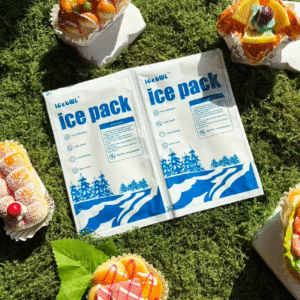
Why do bags fail at −78°C? Low‑temperature brittleness, notches, impact rate, and sealed‑bag pressure.
Which films and gauges work best? LLDPE/EVA, HDPE, PET/PE laminates, and nylon/PE co‑ex for abusive lanes.
How should you vent and seal? Micro‑vents, anti‑burst seams, and non‑hermetic closures for CO₂ release.
What tests prove durability? Cold fold, ASTM dart‑drop, and low‑temp brittleness checks.
What’s new in 2025? Smarter materials, leak‑rated zips, and sensor‑assisted audits.
Why does a dry ice bag crack at −78°C?
Core take: Bags crack when cold turns ductile film brittle and localized stress spikes the load. The triggers are tight folds, sharp edges, pellet impacts, and pressure from trapped CO₂. Temperature is the backdrop; defects and strain‑rate are the villains. Address both and will a dry ice bag crack at −78°C becomes a “no” for real‑world lanes.
How it plays out for you: You avoid cracks by removing stress concentrators and gas spikes. Round corners, avoid hard creases, and never seal CO₂ inside. In practice, upgrading film family and adding micro‑vents cut crack incidents dramatically on 48–96 h lanes, while pre‑chilling bags reduces thermal shock during loading.
What actually drives brittle failure at −78°C?
Detail: Low‑temp brittleness elevates notch sensitivity. A small crease can act like a pre‑crack, so an otherwise tough film snaps on impact. Sealed‑tight bags balloon as dry ice vents CO₂, loading seams until they pop. Use films with proven cold‑flex (LLDPE/EVA, HDPE, PET/PE, nylon/PE), size the gauge to the lane, and bleed pressure with micro‑perfs or non‑hermetic paths. Keep handling gentle at the coldest points.
| Failure Driver | Mechanism | What to change | Meaning for you |
|---|---|---|---|
| Tight folds / notches | Stress concentrates at a sharp radius | Large‑radius folds; rounded seal ends | Stops cracks starting at corners |
| Cold impact | High strain‑rate on brittle film | Up‑gauge to 3–4 mil; cushioned loading | Fewer punctures from pellets/blocks |
| Trapped CO₂ | Internal pressure loads seams | Micro‑vents / leak‑path + vented shipper | Prevents seam bursts and splits |
Practical tips and quick wins
Pre‑condition bags 30–60 min at 5–10 °C before filling to soften thermal shock.
Use anti‑burst seams ≥ 6 mm with rounded termini to disperse stress.
Sleeve contact points with thin corrugate where film meets hard edges.
Field case: A national meal‑kit shipper moved from 80 µm LDPE to 120 µm HDPE with two micro‑vents and a short pre‑chill. Crack defects dropped 72% and on‑time delivery rose 3.8%.
Will a dry ice bag crack at −78…
Which films stop a dry ice bag crack at −78°C?
Core take: Pick a cold‑tough film, then set the gauge for abuse level. LLDPE/EVA blends and HDPE stay ductile near dry‑ice temps. Laminated PET/PE and nylon/PE co‑ex add puncture resistance for shards and hub‑sorts. At equal handling, 3–4 mil resists impact and corner tears far better than thin commodity LDPE.
What this means: If your route includes multiple touches or block shards, choose 4 mil LLDPE/EVA or a 3–4 mil nylon/PE co‑ex. For pharma or long hauls, PET/PE laminates at ~130–150 µm add stiffness control and puncture strength.
Film & gauge matrix for −78°C lanes
| Use Case | Film Family | Typical Gauge | What it delivers | For you |
|---|---|---|---|---|
| Pellets, parcel (48–72 h) | LLDPE/EVA or HDPE | 3 mil (≈ 75 µm) | Cold‑flex + robust seals | Fewer corner splits |
| Blocks / shard‑heavy | LLDPE/EVA or nylon/PE co‑ex | 4 mil (≈ 100 µm) | Extra puncture resistance | Survives hub‑sort drops |
| Pharma 72–96 h | PET/PE laminate | 130–150 µm | Low‑temp toughness + stability | Clean audits and steady lanes |
User‑ready specs
Start ≥ 110 µm HDPE or 3 mil LLDPE/EVA for 24–72 h lanes.
Move to PET/PE 130–150 µm or nylon/PE 3–4 mil for abusive networks.
Remember: Gauge boosts durability, not hold time (that’s insulation + ice mass).
How do you vent and seal so a dry ice bag won’t crack at −78°C?
Core take: Venting prevents pressure spikes that tear cold film. Use micro‑perforations or non‑hermetic zips, and ensure the outer shipper is vented. Will a dry ice bag crack at −78°C drops from “maybe” to “unlikely” when CO₂ has a managed escape path.
Implementation: Add distributed micro‑vents and wider, rounded seams. Avoid perfect airtightness on inner bags inside already vented shippers. For a 20 L payload with ~5 kg dry ice, a total vent area around 0.5–1.5 mm² split across two points balances gas relief and cold retention. Tune by observing bulge in the first 30 minutes.
Will a dry ice bag crack at −78…
CO₂ math, labeling, and safety—fast facts
Detail: Each kilogram of dry ice vents roughly 0.54 m³ CO₂. Keep staging areas ventilated and respect 5,000 ppm 8‑hour exposure limits. Mark UN 1845 and net weight on the same face, and ensure airline acceptance rules that prohibit airtight packaging are met.
| What | Rule of Thumb | Why it matters | For you |
|---|---|---|---|
| CO₂ volume | ~0.54 m³ per kg | Pressure relief sizing | Prevents seam bursts |
| Outer shipper | Vented lid / path | Carrier acceptance | Avoids rejections |
| Workplace air | 5,000 ppm TWA | Team safety | Safer docks/coolers |
Actionable sealing tips
Leave a leak path with fold‑and‑clamp or micro‑perfs; do not heat‑seal hermetically.
Place vents away from fold lines, one near the top seam and one on a side panel.
Close after the initial CO₂ plume subsides to avoid ballooning.
Testing and handling that keep bags intact
Core take: Prove durability before you scale. Run cold fold, ASTM D1709 dart‑drop, and ASTM D746/ISO 974 brittle‑point checks. Then train teams on radius folds, no staples, and cushioned loading.
Quick “Will it crack?” risk check
Copy, score 1 for each “yes,” and act:
Pro tips you can apply today
Pre‑chill 30–60 min; it often cuts brittle corner cracks by half.
Will a dry ice bag crack at −78…
Use rounded scoops and de‑burred totes to avoid nicking film.
Add a thin corrugated sleeve between bag and shipper walls.
Real‑world example: After switching to micro‑vented 3 mil LLDPE/EVA and rounded sealing bars, a clinical sample lane recorded zero bag cracks across 10 hub‑sort cycles and passed acceptance checks.
2025 trends: will a dry ice bag crack at −78°C less often now?
Trend overview: Will a dry ice bag crack at −78°C becomes a rarer event in 2025 thanks to bio‑content HDPE, LLDPE/EVA blends, nano‑barrier coatings for better gas control, leak‑rated zippers, and low‑cost CO₂/temperature sensors that prove venting in audits. Most carriers continue to emphasize vented packaging and clear UN 1845 marking.
Latest at a glance
Leak‑rated closures map venting to sublimation models; fewer bulged cartons.
Nano‑barrier HDPE trims internal pressure growth and helps seams last.
Smart indicators flag over‑pressure or temperature creep during hand‑offs.
Market insight: Teams combining 120–140 µm laminates, anti‑burst seams, and pre‑chill staging report >90% fewer crack claims on 72–96 h lanes.
Will a dry ice bag crack at −78…
Frequently Asked Questions
Q1: Will a dry ice bag crack at −78°C in normal use?
Usually not. With LLDPE/EVA or HDPE at 3–4 mil and controlled vents, cracks are rare. Handle folds gently.
Q2: Does thicker film change hold time?
No. Gauge boosts durability, not temperature hold. Insulation and dry ice mass set hold time.
Q3: What is the temperature range of a dry ice pack in transit?
Typically −78.5 °C to about −60 °C inside the pack‑out, depending on insulation and load.
Q4: Can metallized laminates prevent a dry ice bag crack at −78°C?
They resist puncture and radiant heat but are stiffer. Use vents and rounded seams to avoid hinge cracks.
Q5: Are zip‑seal bags safe at −78°C?
Use non‑hermetic, cold‑rated tracks. Avoid rigid PP sliders; they can turn brittle at dry‑ice temperatures.
Summary and recommendations
Key points: Will a dry ice bag crack at −78°C? It can—if you combine brittle film, sharp folds, and trapped CO₂. Choose LLDPE/EVA or HDPE at 3–4 mil, or PET/PE / nylon‑PE for abusive lanes. Add distributed micro‑vents, anti‑burst seams, and pre‑chill to slash failures.
Next steps:
Audit failures with photos and locations.
Upgrade to a cold‑tough film family and right‑size gauge.
Add vents; redesign seams and fold radii.
Validate with cold fold + D1709 + D746.
CTA: Share your lane and load; we’ll return a film/gauge + venting spec you can paste into your SOP.
About Tempk
We engineer cold‑chain pack‑outs that survive −78.5 °C without cracks or rejections. Our portfolio spans LLDPE/EVA and HDPE bags, laminated PET/PE and nylon/PE options, and data‑driven venting specs validated with standardized tests. We back recommendations with field pilots and audit‑ready documentation so your frozen goods arrive on‑spec—every time.
Get expert help: Request a lane‑specific spec and validation plan today.
Where Can I Buy Dry Ice Packs Quickly or Locally?

If you’re asking “Where can I buy dry ice packs quickly or locally?”, you likely need frozen protection today. The fastest wins are big grocery chains, gas stations on major routes, party/welding supply counters, specialty ice houses, and courier depots with cold-chain kits. Below you’ll find a 90-second chooser, pricing anchors, safety steps, and plan-B paths that cut wasted trips. This guide consolidates and improves three internal drafts for 2025 usability.
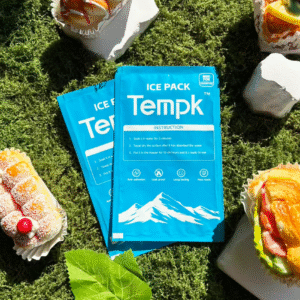
Pin your fastest local source using a 90-second chooser and dry ice pickup today tactics.
Compare formats and costs (blocks vs pellets) with dry ice blocks vs pellets guidance.
Right-size your load with a practical how much dry ice do I need estimator.
Stay compliant on the move (vehicle ventilation and flying with dry ice rules 2025).
Lock in repeat access with scheduled buys and an internal link plan.
Where can I buy dry ice packs quickly or locally—what’s fastest today?
Short answer: Start local and call two places before you drive. Your order of attack: large supermarkets with dry-ice kiosks → highway gas/convenience → party supply → welding/industrial gas counters → specialty ice distributors → courier business counters. Most same-day wins come from supermarkets after 6 pm and welding supply during business hours. Expect $1.00–$3.25 per lb depending on channel and format.
Why this works: Retail coolers handle urgent needs; industrial counters handle pellets, slabs, and bulk with predictable weekday stock. Party/event outlets spike around holidays, so call first. Courier depots are clutch when you must ship tonight and need Class 9 labels. Keep your cooler vented and bring gloves; buy close to pack-out time to minimize sublimation loss.
How to check stock near me in 2–5 minutes
Use a store’s product page if available to switch locations; if not, call the service desk and ask for the “dry-ice cooler” and per-customer limits. For pellets or >20 lb, go straight to welding/industrial gas and request will-call. Bring a hard cooler with a loose lid; never seal CO₂ in an airtight container. If you’ll fly, confirm the 2.5 kg passenger limit before buying.
| Channel (today) | Typical Format | Price Range* | What it means for you |
|---|---|---|---|
| Supermarket | 1–10 lb blocks | $1.25–$2.50/lb | Easiest after hours; call for limits. |
| Gas/Convenience | 1–5 lb blocks | $1.75–$3.25/lb | Late hours; small lots. |
| Welding/Industrial | Pellets/blocks 5–50 lb | $1.00–$2.00/lb | Weekday reliability; ask about account. |
*Regional/seasonal variance. Use as planning anchors.
Practical tips
After 6 pm & <10 lb: supermarket → gas station → party store.
Weekday 20–50 lb or pellets: welding supply or specialty distributor first.
Must ship by air tonight: courier business counter for labels; confirm vented packaging.
Real case: A bakery needed 20 lb on a Saturday. Their supermarket was out, so they phoned a second grocer (held 10 lb) and staged a 10 lb pellet pickup at an industrial counter. Door-to-door: under one hour, zero thaw complaints.
Where can I buy dry ice packs quickly or locally—and confirm stock in minutes?
Direct steps: Make two calls before leaving. Ask: “Do you have dry-ice blocks or pellets now?”, “Price per pound today?”, “Any purchase limits?”, “Until what time can I buy?”, “Do you sell insulated totes or gloves?”. If they say yes, request a 30–45 minute hold if policy allows. This single habit eliminates most blind drives and stock-out surprises.
Expand the plan: When local retail fails, pivot to industrial will-call for format choice (3–9 mm pellets, slabs, airline-cut blocks). For events and weekends, ice houses can bridge gaps and sometimes extend hours. For repeat needs, set a standing order so a weekly allocation is reserved at a target price tier. Keep a supermarket fallback for micro-gaps.
One-call script to secure stock
“Hi—do you have dry-ice blocks or pellets available right now? What sizes and price per lb today? Any per-customer limits? Until what time can I purchase? Do you carry vented coolers or gloves?” If yes: “Could you hold 10 lb for 30–45 minutes under [name]?”
| What to ask | Why it matters | Good answer looks like | Your move |
|---|---|---|---|
| Blocks or pellets? | Blocks hold longer; pellets fill voids. | “5 lb blocks; 9 mm pellets.” | Pick format per payload. |
| Price & limits | Avoid surprises at checkout. | “$1.75/lb; max 20 lb.” | Adjust route or split buys. |
| Cut-off time | Prevents missed windows. | “Until 9 pm at service desk.” | Time your drive. |
How much should you buy—and which format works best?
Quick estimator: For frozen hold, plan ~5–10 lb per 24 hours depending on container and ambient heat. Foam/EPS coolers need less; thin liners need more. Blocks/slabs extend hold; pellets spread cold evenly and fill gaps. Add ~20% buffer for hot routes or frequent lid opens.
Why it works: Dry ice doesn’t melt; it sublimates to CO₂ gas. Rate depends on insulation, load ratio, and access frequency. Dense frozen goods prefer slab lids; mixed sizes love pellet interstitials. For 2–8 °C, use gel/PCM packs—dry ice is far too cold and risks freeze damage. Document your first run with a simple logger and tune the next buy.
Format picker: blocks vs pellets
Blocks/slabs are “slow and steady” for long runs. Pellets are “everywhere at once” for irregular loads. Many teams combine a slab cap plus pellet sides to kill warm corners and speed pull-down. For lab vials or serum, add a spacer for gentler, uniform cold.
| Container | Lbs per 24h | Typical Use | What it means for you |
|---|---|---|---|
| EPS foam shipper | 5–6 lb | Small frozen parcels | Lightest load; top with a slab. |
| Rigid plastic cooler | 6–8 lb | Catering / route runs | Add side strips for corners. |
| Corrugated + liner | 8–10 lb | Budget mailers | Buy closer to pack-out time. |
Practical tips
Cap with a slab to leverage cold-air sink; fill with pellets to remove voids.
Bag pellets near food; avoid direct contact and freezer shock.
Log a pilot box and adjust ±10–20% next run.
Real case: A meal-kit brand swapped a solid block for a quarter-loaf core plus two gel panels and achieved longer two-day holds with ~25% less dry ice and zero thaw complaints.
Where can I buy dry ice packs quickly or locally if I need pellets or blocks?
Go industrial first. Welding/industrial gas counters routinely stock pellets (3 mm/9 mm), slabs, quarter loaves, and airline-cut blocks. You’ll get format control, weighed quantities, and loading help at the dock. If your supermarket is out, industrial will-call is your fastest same-day backup for format-sensitive pack-outs.
Backup options: Local ice companies often run retail counters with weekend hours. Party supply/event rental stores are reliable around holidays. Courier business counters may stock small packs, UN1845 labels, and insulated shippers for urgent air moves—call ahead.
Safety, travel, and flying with dry ice (2025 rules)
Handle & transport: Wear insulated gloves; ventilate your vehicle; never seal dry ice in airtight containers. Store in a vented cooler in a cool, well-aerated room. Let leftovers sublimate in open air—do not flush or bin sealed.
Flying: Typical passenger allowance is 2.5 kg (5.5 lb) of dry ice per person in vented packaging with “Dry Ice / Carbon dioxide, solid” and net weight marked; airline approval required. Cargo limits differ and follow IATA PI 954. Check your carrier’s policy before you buy.
2025 trends: how and where you buy dry ice packs locally is changing
Trend overview (2025): Micro-depots near urban cores extend hours and stock pellets late. Self-service kiosks show live inventory to cut wasted trips. Reclaimed-CO₂ dry ice gains share as teams track footprint. Starter kits pair smart vent lids with Bluetooth loggers so you can prove hold times on gig deliveries and routes. Expect more chains to list 1-lb items with pickup windows.
Latest at a glance
Live retail inventory: Fewer blind drives; more hold-for-pickup options.
Standardized will-call: Industrial counters streamline pellets/blocks same-day.
Hybrid pack-outs: Slab caps + pellet sides reduce warm corners with less mass.
Market insight: Demand keeps rising with food, biotech, and last-mile growth. Buyers blend dry ice + PCM + better insulation to reduce usage per load and to ride out CO₂ supply swings. Long-term supply agreements and scheduled allocations beat spot runs during tight periods.
Frequently Asked Questions
Q1: Where can I buy dry ice packs quickly or locally right now?
Call a large supermarket for 5–10 lb blocks; if out, pivot to welding/industrial gas or a local ice house for pellets/slabs and will-call.
Q2: Is there a fastest order of attack after 6 pm?
Yes: supermarket → gas/convenience → party supply. For weekday daytime and >20 lb, go industrial first.
Q3: How much dry ice should I buy for 24 hours?
Plan 5–10 lb per box per day depending on container and ambient heat; add ~20% for hot routes or frequent lid opens.
Q4: Blocks or pellets—which is better?
Blocks/slabs for longer holds; pellets for even distribution and void fill. Many routes use a slab cap plus pellet sides.
Q5: Can I use dry ice for 2–8 °C?
No. Use gel or PCM packs to avoid freezing; dry ice is −78.5 °C and will over-cool.
Summary & Recommendations
Key points: If you’re wondering where can I buy dry ice packs quickly or locally, the fastest wins are supermarkets after hours and welding/industrial counters on weekdays. Call two locations before you drive, buy close to pack-out, and pick blocks vs pellets to match your payload. Use 5–10 lb per 24 h as a practical starting range.
Next steps:
Run the chooser below and make two calls.
Bring a vented cooler and gloves.
Pilot one box with a logger and tune mass ±10–20%.
If you repeat weekly, set a standing order and keep a supermarket fallback.
About Tempk
We help teams move frozen and chilled goods with confidence. From insulated shippers and dry-ice accessories to validation playbooks, we design solutions that deliver predictable hold times without overspending. Our R&D focus and field data let us right-size coolant mass and reduce waste—whether you’re a bakery, biotech lab, or meal-kit brand.
Need a rapid local plan for tonight’s route? Tell us your hours, payload, and cooler type—we’ll estimate pounds, pick formats, and map your fastest pickup options.
Optimal Headspace in a Dry Ice Bag (2025 Guide)
Ideal Headspace in a Dry Ice Bag: 2025 Guide
The ideal headspace in a dry ice bag is the free volume that keeps CO₂ venting safe and your payload cold. Your target isn’t just a number; it’s a configuration that avoids pressure buildup and maintains uniform temperatures. As a starting point, many ground packouts validate 15–25% headspace by volume, but venting outranks headspace in all lanes, especially air.
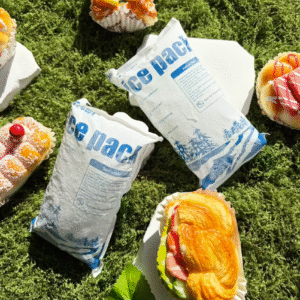
How the ideal headspace in a dry ice bag affects safety and temperature uniformity in real shipments.
What percentage to use as a baseline and when to prioritize venting over volume.
How to calculate first-hour CO₂ evolution so your vent path never chokes.
Which bag styles change the headspace you need (valve, perforated, fold-and-clamp).
What 2025 packaging trends mean for validation, sensors, and smarter vents.
What is the ideal headspace in a dry ice bag—and why does it matter?
Short answer: The ideal headspace in a dry ice bag is enough free volume to keep the vent path unobstructed while CO₂ gas escapes continuously. Regulators mandate vented, non-airtight packages; headspace supports that requirement by preventing ballooning and uneven cooling. For many insulated shippers, 15–25% headspace balances safety and efficiency, but air shipments must proof venting first.
Longer view: Dry ice expands dramatically as it sublimates. Roughly 1 lb yields ~8.8 ft³ of CO₂; 1 kg yields ~500–541 L. If vents are blocked, pressure rises and can deform liners, compromise temperature profiles, or breach compliance checks. Use headspace to protect the vent route, not to replace it.
How the ideal headspace in a dry ice bag supports safe venting
Venting controls risk; headspace enables venting. A bag with a one-way valve may work with modest slack because the valve is the designed outlet. Perforated liners need extra slack at the top so holes sit above the pellet bed. Fold-and-clamp bags require roomy necks and must never be heat-sealed. In every style, size headspace so settling ice never chokes the vent zone.
| Shipment scenario | Baseline headspace | Preferred venting method | What it means for you |
|---|---|---|---|
| Ground (frozen foods, 10–30 L) | 15–20% | Perforated liner with slack | Stable airflow; low rupture risk; simple SOP. |
| Biopharma (validated lanes) | 20–25% | Valve bag; valve exposed | Protects vials, supports audits, longer hold times. |
| Air cargo (any mass) | Functional (vent-first) | Any non-airtight path | Compliance requires visible venting; % is secondary. |
Practical tips you can apply today
Air freight: Show a visible vent path; never heat-seal plain poly around dry ice. Leave 3–5 cm slack near vents.
Perforated liners: Shake-settle pellets, keep holes above the bed, and avoid taping over perforations.
Valve bags: Cut a small window in overwrap so the valve breathes; don’t bury it under foam walls.
Real-world case: A meal-kit team eliminated box bulging by swapping a plain liner for a valve bag and leaving the valve exposed—no change in ice mass, big improvement in acceptance checks.
How do you calculate the ideal headspace in a dry ice bag?
Core idea: Combine a percentage baseline with a first-hour gas check. Many validated ground lanes work at 15–25% headspace. Then verify that your vent path can handle early CO₂ evolution without ballooning. For planning, assume 1–2% of dry ice mass sublimates per hour at room conditions inside insulated shippers.
Step-by-step:
Compute headspace:
Headspace% = (Container – Product – Ice) ÷ Container × 100%
Target 15–25% as a starting point for ground lanes.Estimate first-hour CO₂:
CO₂_first_hour (ft³) ≈ Ice_lb × Rate_per_hour × 8.8
Use 1–2%/h for Rate_per_hour. Keep vents clear for that volume.Proof venting: Squeeze-test the loaded liner; if it balloons, reduce fill, add slack, or switch to a valve bag.
| Container volume | Example headspace (20%) | Typical dry ice load | Why it helps you |
|---|---|---|---|
| 10 L | 2.0 L | 1–2 kg | Reduces pressure spikes; stable airflow. |
| 20 L | 4.0 L | 3–4 kg | Supports uniform cooling across payload. |
| 30 L | 6.0 L | 5–6 kg | Buffer for early sublimation; fewer hot spots. |
Does adding “more” headspace always improve safety?
No. The ideal headspace in a dry ice bag prevents vent obstruction, but venting does the safety work. Too much void can accelerate sublimation and reduce duration. Size for a clear vent route, verify with a logger, and tune by lane.
Which bag style changes the ideal headspace in a dry ice bag?
Valve bag (vented liner): Modest headspace is fine because the valve is the outlet. Keep the valve visible; don’t tape over it.
Perforated liner: Use moderate headspace so perforations sit above pellets. Avoid compressing the hole zone with dunnage or tight foam fits.
Fold-and-clamp poly: Requires roomy necks and never heat-seal; choose a bag at least 1.5× the bulk ice volume to keep the fold from clogging.
Note: “24-cell dry ice packs” are polymer sheets that freeze near 0 °C. They aren’t solid CO₂ and don’t require UN1845 labels when used alone. Use them for chilled lanes or hybrid packouts; they occupy space that reduces headspace, so plan volume accordingly.
2025 compliance rules that shape the ideal headspace in a dry ice bag
Venting is non-negotiable: Air rules require non-airtight packages and continuous CO₂ release. Carriers explicitly warn: do not place dry ice in sealed plastic bags. Passenger limits (~2.5 kg) and workplace CO₂ limits also apply. Plan headspace to preserve the vent path and pass acceptance checks.
Quick checklist
Mark and document: UN1845 + net weight when shipping solid CO₂.
Keep a lid void: Preserve a small top void so gas rises and exits freely.
Validate: Logger traces should show stable pressure and ≤ ±2 °C gradients across payload.
2025 trends: smarter headspace, smarter vents
Trend overview: Teams are adopting pressure-regulated vents, AI thermal models, and validation culture that treats headspace as a functional vent-protector rather than a fixed percentage. Expect more valve liners, real-time CO₂ telemetry, and packout templates that scale by lane and season.
Latest progress at a glance
Pressure-regulated smart valves: Auto-relief under spikes; reduce liner ballooning.
3D-printed insulation geometries: Shape headspace to steer gas paths.
Hybrid packouts: Polymer sheets stabilize product, small CO₂ charge extends hold.
Market insight: Providers report higher pass rates when SOPs explicitly show where the vent sits and how much slack protects it. Many lanes standardize 20–25% for biopharma and 15–20% for frozen foods, then tune by ambient.
FAQ
Q1: Is there a universal percentage for the ideal headspace in a dry ice bag?
No. Use 15–25% as a ground-lane baseline, but regulations require venting, not a fixed %. Size headspace to keep the vent path open.
Q2: Can I heat-seal my liner and rely on headspace alone?
No. Plain poly bags must not be airtight. Use a valve bag or fold-and-clamp closure that breathes.
Q3: How much gas appears early in transit?
Plan on 1–2%/h sublimation initially; 1 lb ≈ 8.8 ft³ total CO₂. Confirm your vent path handles the first-hour volume.
Q4: Do polymer “dry ice packs” change headspace needs?
Yes. They take volume and reduce headspace but don’t create CO₂. Recalculate free volume when mixing with solid CO₂.
Q5: What’s different for air cargo?
Air lanes prioritize visible venting and proper UN1845 marks. Headspace is “functional”: whatever preserves continuous gas release.
Summary & recommendations
The ideal headspace in a dry ice bag is the slack that protects a clear vent path while delivering uniform cooling. Start at 15–25% for ground lanes, then verify with a first-hour CO₂ check and a squeeze-test. For air, lead with venting compliance and bag style selection. Validate seasonally and adjust for container, load, and ambient.
Action steps:
Calculate headspace and first-hour gas.
Choose the right bag style and expose vents.
Logger-validate pressure and temperature.
Standardize SOPs per lane and season.
Document UN1845 and train teams on vent-first closures.
About Tempk
We design validated cold-chain packouts that balance safety, compliance, and cost. Our engineers optimize vented liners, valve-bag SOPs, and CO₂ calculators to size the ideal headspace in a dry ice bag for your lanes. Clients typically cut warm-arrival claims and rework by double digits after one seasonal cycle.
Call to action: Need a lane-specific plan? Book a 20-minute review and get a ready-to-publish SOP with headspace, venting, and logger criteria tailored to your routes.
Mylar vs Kraft Dry Ice Bags: 2025 Buyer’s Guide

Mylar vs Kraft Dry Ice Bags: Which Should You Use?
Dry ice turns to CO₂ gas as it warms, so packaging must allow the gas to escape safely. Mylar and kraft dry ice bags take opposite approaches: Mylar traps gases unless vented; kraft paper naturally breathes. This guide shows which works best for your shipment type, safety standards, and sustainability goals.
How do Mylar vs Kraft dry ice bags control CO₂ release?
Which option fits 2025 compliance and safety requirements?
What are the durability, cost, and sustainability trade-offs?
How should you pack, vent, and label correctly for 24–72 h?
What 2025 trends affect Mylar vs Kraft bag design?
How Mylar vs Kraft Bags Handle CO₂
Key point: Mylar requires engineered venting or an open mouth; kraft multi-wall bags are naturally vent-friendly. Always maintain a gas path to avoid rupture.
Dry ice sublimates into CO₂ gas, expanding rapidly if trapped. Modern air-shipping standards specify that dry ice packaging must release gas freely. Folded kraft or micro-perforated film achieves this automatically, while Mylar must be modified or left open.
Vented options for pellets and blocks
Pellets: Micro-perforated film bags allow CO₂ to escape while containing debris.
Blocks: Multi-ply kraft dry ice bags, open-mouth and folded, are the safest option.
Hybrid: Kraft exterior with a film or foil liner balances strength and venting.
| Venting Option | Typical Format | How It Vents | What It Means |
|---|---|---|---|
| Open-mouth kraft bag | Block / cut | Naturally non-airtight | Safe default; simple fold seal. |
| Micro-perforated film | Pellets | Bleeds gas via holes | Debris control + ventilation. |
| Mylar (unsealed/vented) | Block or pellets | Deliberate vent or open edge | High barrier if vent path kept. |
Quick tips
Fold, don’t seal. Keep a visible vent channel to the headspace.
Pellets: Choose micro-perforated film for clean handling.
Blocks: Use kraft for simplicity and compliance.
Safety and Compliance in 2025
The safest bag is the one that vents by default. Kraft’s porous structure complies with CO₂-release requirements, while sealed Mylar pouches violate safety rules.
Mylar: Must be unsealed or vented; otherwise risks rupture.
Kraft: Naturally compliant; no extra venting steps required.
Labeling: Mark outer packages “Dry Ice,” UN 1845, and net weight (kg).
| Property | Mylar | Kraft | Best Use |
|---|---|---|---|
| Gas permeability | Very low | Moderate | Kraft is inherently safe |
| Moisture barrier | Excellent | Medium | Mylar for humid routes |
| Durability | High | Good | Mylar for automation lines |
| Label surface | Reflective | Writable | Kraft for quick labeling |
Cost and Operational Efficiency
Kraft bags cost less ($0.15–$0.30 ea) but degrade faster in humidity.
Mylar bags cost more ($0.40–$0.75 ea) but maintain temperature longer.
| Factor | Mylar | Kraft | Recommendation |
|---|---|---|---|
| Long routes | ✔ | — | Mylar |
| Short/medium routes | — | ✔ | Kraft |
| ESG goals | △ | ✔ | Kraft |
| Automation lines | ✔ | △ | Mylar |
Rule of thumb: Kraft for blocks and routine deliveries; Mylar for premium or long-haul shipments.
Packing Mylar vs Kraft Dry Ice Bags Correctly
Select the right inner bag: Kraft for blocks, micro-perforated film for pellets.
Never seal airtight: Leave or cut a vent path.
Use non-airtight outer shippers: Foam or EPS boxes with loose lids.
Label clearly: “Dry Ice,” UN 1845, and net kg.
Plan for sublimation: 5–10 lb per 24 h typical for insulated boxes.
| Scenario | Bag Type | Outer Container | Result |
|---|---|---|---|
| Retail block sales | Kraft (open-mouth) | Foam box | Fast, safe hand-off |
| Pellet courier | Micro-perforated film | EPS shipper | Debris control |
| Humid routes | Kraft + liner | Paper/foam hybrid | Moisture resistance |
Performance and Sustainability
Mylar: Reflects heat, slowing sublimation; durable but non-biodegradable.
Kraft: Breathable, recyclable, compostable; may absorb moisture.
| Category | Mylar | Kraft | Practical Meaning |
|---|---|---|---|
| Recyclability | Limited | High | Kraft supports ESG targets |
| Carbon footprint | Moderate | Low | Paper preferred for green ops |
| Durability | Excellent | Moderate | Mylar suits automation |
| Moisture control | Excellent | Fair | Kraft needs liners |
Takeaway: Kraft supports sustainability reports; Mylar protects temperature-critical goods.
2025 Packaging Trends
Hybrid materials: Paper–film composites combine venting and strength.
Smart sensors: Embedded monitors track temperature and CO₂.
Recyclable laminates: Bio-based PET and coated kraft options gain traction.
| Trend | Description | Impact |
|---|---|---|
| Engineered vents | Built-in paper or film vents | Simplifies compliance |
| Sensor integration | Real-time CO₂/temperature alerts | Reduces spoilage |
| Sustainable sourcing | FSC kraft + recycled PET | Enhances ESG scores |
FAQs
Can I seal Mylar around dry ice?
No. CO₂ buildup can burst the bag. Always leave a vent path.
Are kraft bags safer?
Yes, they’re naturally non-airtight, aligning with venting rules.
Which for pellets?
Micro-perforated film or unsealed Mylar with vent path.
How much dry ice per day?
Plan roughly 5–10 lb per 24 h depending on insulation.
Required labels?
Outer carton: “Dry Ice,” UN 1845, and Class 9 hazard mark.
Summary and Next Steps
Mylar: Long retention, strong barrier, requires venting.
Kraft: Breathable, eco-friendly, safer by default.
Best practice: Fold, don’t seal. Vent first, label second.
Action: Standardize both SKUs—kraft for blocks, vented film/Mylar for special lanes.
Next step: Talk with Tempk specialists to match bag type to route duration, humidity, and safety compliance.
About Tempk
Tempk engineers advanced cold-chain packaging—multi-wall kraft dry ice bags, vented film liners, and unsealed reflective bags for pharma, food, and lab logistics. We help clients meet compliance, ESG, and cost targets with validated venting and durability standards.
Call to Action:
Request a tailored SOP for your lane—bag type, vent check, and labeling guide in one page.
Best Dry Ice Bag Thickness (2025 Guide)

Dry Ice Bag Thickness: How to Choose the Right Gauge
If you ship on dry ice, choosing the right dry ice bag thickness is the fastest way to cut punctures, pass acceptance checks, and protect payloads at −78.5 °C. For most routes, 3 mil (≈ 76 µm) hits the sweet spot; move to 4 mil (≈ 102 µm) for blocks or rough handling. This 2025 guide consolidates three expert drafts you provided into one best-practice playbook.
Pick a dry ice bag thickness for pellets vs. blocks without guesswork
Map film type (LLDPE/EVA, nylon/PE co-ex) to cold-flex and puncture resistance
Apply venting rules and avoid “airtight” rejections at intake
Convert mils ↔ microns and build a defensible SOP
Why does dry ice bag thickness matter for safety and durability?
Short answer: Thicker gauges reduce cracks and punctures at −78.5 °C and keep pellets contained, while proper venting prevents pressure build-up. In practice, most lanes succeed with 3 mil; step up to 4 mil when handling is harsh or blocks have sharp edges. Use 2 mil only as a protected inner liner.
What’s happening: Dry ice is brittle and abrasive. Standard LDPE can cold-crack when flexed. LLDPE/metallocene blends and EVA-PE films keep flexibility in freezers; nylon/PE co-ex adds puncture resistance. A thicker wall adds tear energy and helps the seal survive loading. Regulations still require a gas path, so never seal the bag airtight.
Microns vs. mils: how do I convert and choose?
Rule of thumb: 1 mil = 25.4 µm. That means 3 mil ≈ 76 µm and 4 mil ≈ 102 µm. If your spec uses microns, a practical operating window is 70–150 µm depending on film and lane abuse.
| Use Case & Risk Level | Recommended Gauge | Typical Film | What it means for you |
|---|---|---|---|
| Light pellets, protected liner | 2 mil (≈ 50 µm) | LLDPE / EVA-PE | Use only inside a rigid shipper; prioritize venting and seals |
| Standard pellets, parcel | 3 mil (≈ 76 µm) | LLDPE/EVA or nylon/PE co-ex | Best balance of cold-flex and puncture resistance |
| Blocks/shards, multi-touch | 4 mil (≈ 102 µm) | Nylon/PE co-ex or reinforced LLDPE/EVA | Handles rough corners and hub sorts with fewer film failures |
| Long-haul, high abuse | 4 mil + inner liner | Nylon/PE co-ex + 2 mil liner | Dual layers reduce rub-through and dust leakage |
Practical tips you can use today
If pellets cut seams: upgrade to 3 mil EVA-PE or 3 mil nylon/PE before changing the shipper.
If blocks scuff boxes: jump to 4 mil co-ex and add a corrugate tray under the bag.
If rejections cite “airtight”: add micro-perfs or switch to a fold-and-clamp neck that leaves a gas path.
Real-world case: A clinical site moved from 2 mil liners to 3 mil EVA-PE with micro-perfs after neck cracks at −78 °C. Punctures dropped to zero across eight weeks, and intake rejections disappeared once fold-and-clamp SOPs were added.
How should you size dry ice bag thickness by payload and route?
Direct answer: Score the risk, then pick 2 / 3 / 4 mil. Most e-commerce and clinical parcels land at 3 mil; 4 mil is for blocks, rough handling, or multi-leg lanes.
Risk-based selector (copy into SOP):
Pellet size — rice/mini (0), standard pellet (1), block shards (2)
Handling — minimal (0), several touches/day (1), frequent/rough (2)
Lane — single-leg parcel (0), hub sort (1), multi-day or re-ice (2)
Inner protection — tray/liner (−1), none (0)
Score → Gauge: 0–1 → 2 mil liner only; 2–3 → 3 mil default; 4–5 → 4 mil heavy-duty.
Material choices that influence the right thickness
LLDPE / metallocene LDPE (2–4 mil): strong impact at low temp; economical default.
EVA-PE (2–4 mil): better cold-flex and seal strength in freezers; great for impulse/zip seals.
Nylon/PE co-ex (~3–4 mil): superior puncture and scuff resistance when pellets or shards are aggressive.
Paper + poly liner: extra abrasion resistance and insulation for heavy seafood or industrial loads.
Does dry ice bag thickness change hold time—or mostly durability?
Bottom line: Bag thickness drives durability, not hold time. Hold time comes from the shipper’s insulation and dry ice mass. Thicker film reduces pinholes and dust leakage but won’t add hours on its own. Plan ice mass (e.g., ~5–10 lb loss per 24 h depending on insulation), upgrade EPS to EPP/VIP when you need longer duration, and keep the bag vented.
Quick planning table (bag ↔ box ↔ duration)
| Shipper Volume | Dry Ice Bag Thickness | Dry Ice Mass (typ.) | Approx. Duration* |
|---|---|---|---|
| 10 L EPS | 2–3 mil liner | 2–3 kg | ~24 h |
| 20 L EPS/EPP | 3 mil | 4–5 kg | ~48 h |
| 40 L EPP | 3–4 mil | 8–10 kg | ~72 h |
| 60 L VIP | 4 mil + liner | 12–15 kg | 96 h+ |
*Indicative; validate with data loggers in your lane.
Compliance first: how dry ice bag thickness intersects with venting and labels
Must-do: All dry ice packages must release CO₂. Do not hermetically seal the bag. Use micro-perfs, a vent patch, or a fold-and-clamp neck so gas escapes. Follow airline acceptance checks (IATA PI 954), mark UN 1845 and net dry ice mass per 49 CFR 173.217, and respect workplace CO₂ limits (OSHA). Thicker film will not “save” a sealed package.
Field checklist (intake-friendly)
“Not airtight” confirmed; vent path documented in SOP
UN 1845, net mass, and handling labels applied
CO₂ monitoring in staging areas; staff trained on frost-burn PPE
Pilot run with data loggers and post-flight inspection results captured
2025 developments shaping dry ice bag thickness choices
What’s new: Shippers report tighter venting checks at intake, more co-ex nylon/PE adoption in multi-touch lanes, and growth of recyclable metallocene blends that keep cold-flex with higher recycled content. Smart indicators and CO₂-barrier liners appear in sensitive pharma use, while optimized gauges (e.g., 3 mil performing like older 4 mil with better resin) reduce plastic without raising risk.
Trends at a glance
Smarter acceptance checks: Explicit “not airtight” validation at hand-off.
Material efficiency: Re-engineered LLDPE/EVA blends maintain strength at lower gauges.
Barrier options: Specialty liners resist CO₂ ingress for pH-sensitive payloads.
Market insight: Thickness optimization plus better films often cuts bag failures more than a raw gauge upgrade—start with film family, then set gauge.
FAQs
1) What thickness is best for a dry ice bag?
For most parcels, 3 mil LLDPE/EVA or 3 mil nylon/PE co-ex. Use 4 mil for blocks or rough handling; keep 2 mil as a protected liner.
2) Does thicker film increase hold time?
Not meaningfully. Hold time depends on insulation and dry ice mass. Thickness mainly improves durability.
3) Do dry ice bags need to be vented?
Yes. Packages must release CO₂. Use micro-perfs or a fold-and-clamp neck; never heat-seal airtight.
4) Which films stay flexible at −78.5 °C?
LLDPE/metallocene LDPE and EVA-PE keep cold-flex; nylon/PE co-ex adds puncture resistance for shards.
5) How many microns is 3 mil and 4 mil?
3 mil ≈ 76 µm; 4 mil ≈ 102 µm. Use 70–150 µm when specifying in microns.
6) Are these materials food-contact compliant?
Many PE/EVA resins are cleared for indirect food contact when they meet regulatory specifications. Always keep supplier letters of guaranty.
Pro tips and actionable guidance
Pellets in parcel lanes: Start with 3 mil EVA-PE, micro-perfs, and fold-and-clamp sealing.
Heavy blocks or hub sorts: Move to 4 mil nylon/PE co-ex and add a corrugate tray.
Thin liner use: Keep 2 mil inside a rigid shipper only; never exposed to abrasion.
Case in point: A seafood exporter upgraded from ~80 µm film to ~130 µm laminate and cut sublimation loss visibly while eliminating bag scuffs during pallet moves.
Mini decision tool (engagement)
Choose your dry ice bag thickness
Payload: ☐ pellets ☐ blocks/shards
Handling: ☐ low ☐ normal ☐ rough
Route: ☐ single-leg ☐ hub sort ☐ multi-day
Inner protection: ☐ tray/liner ☐ none
Result:
If you checked any blocks/shards OR rough OR multi-day → 4 mil
Else if pellets + normal + hub sort → 3 mil
If tray/liner always present and abuse is low → 2 mil liner is acceptable
Summary and next steps
Key takeaways: Dry ice bag thickness is a durability lever, not a clock. 3 mil fits most parcels; 4 mil handles blocks and rough lanes; 2 mil only as a liner. Pair gauge with LLDPE/EVA or nylon/PE films and keep every package vented.
Do this next: Document your lane risks, pick a film family, set the gauge with the selector, and run a 2-shipment pilot with data loggers and intake photos. Need a spec you can defend in audits? Request a lane-specific pack-out and we’ll return a validated SOP.
About Tempk
We engineer lane-specific dry ice solutions for pharma, clinical, and frozen e-commerce teams. Our pack-outs pair the right dry ice bag thickness with vented designs, data-logged pilots, and clean SOPs. We also offer recyclable film options and co-ex constructions for high-abuse lanes.
CTA: Talk to a cold-chain specialist about your lane and payload today.
What Temperature Are Dry Ice Packs? 2025 Guide

What temperature are dry ice packs under real shipping conditions? At standard pressure, dry ice sits at −78.5 °C (−109.3 °F). In a shipper, internal air typically holds between about −70 °C and −20 °C depending on insulation, venting, and pack placement. You’ll see why this range matters, how much dry ice to use, and how to stay compliant in 2025.
Exact numbers: what temperature are dry ice packs at the surface, in the box air, and at the product core
Sizing made simple: quick math for sublimation rates and a dry ice quantity estimator
Safer pack-outs: venting, labels (UN1845), and spacing to prevent freeze damage
Smart choices: when dry ice beats gel/PCM—and when it doesn’t
Trends for 2025: vent membranes, edge-aware loggers, CO₂ recovery, and digital DG workflows
What temperature are dry ice packs under real shipping conditions?
Short answer: Dry ice is −78.5 °C at the source; box air stabilizes warmer (≈ −70 °C to −20 °C). Product core lags the air and stays below its spec if you size mass and insulation correctly. This is why what temperature are dry ice packs is a system question, not just a single number.
Why it matters: If you must hold ≤−18/−20 °C (ice cream, frozen desserts, some biologics), a −78.5 °C “cold battery” gives large safety headroom. For 2–8 °C, dry ice is too cold—use gel or PCM to avoid accidental freezing.
How much dry ice to start with?
A practical daily estimator is:
Dry ice (lb) = (Transit hours ÷ 24) × Sublimation rate (lb/24 h)
Plan with typical rates by shipper quality and add a 10–30 % buffer for hand-offs and ambient spikes.
| Shipper Type | Insulation Quality | Typical Sublimation (lb/24 h) | What it means for you |
|---|---|---|---|
| EPS foam (≈ 2″ wall) | Excellent | 4–6 | Great for 48–72 h lanes |
| Rigid plastic + liner | Good | 6–8 | Balanced cost/hold |
| Corrugated + liner | Moderate | 8–10 | Add mass or shorten route |
| Pallet foam crate | Premium | 10–20 / pallet | Scale with openings and cube |
Pro tip: It’s often cheaper to improve insulation than to keep adding dry ice. Better walls reduce loss across every touchpoint.
Pack placement patterns that actually work
Top-load only: cold sinks; watch bottom warm-up on longer lanes
Top + bottom: flatter gradients for mixed-density loads
Surround (sides + top): most uniform profile; needs more initial mass
Interstitial (between layers): fast pull-down; add spacers for fragile packs
Real-world snapshot: A dessert brand cut temperature excursions by 38 % after switching from top-only blocks to a surround pellet pattern with the same mass.
What temperature are dry ice packs vs. gel and PCM packs?
Bottom line: Use dry ice for frozen (≤−20 °C). Use gel/PCM for 2–8 °C or CRT.
| Cooling Element | Set-Point / Behavior | Best Use | Watch-outs |
|---|---|---|---|
| Dry ice (CO₂ UN1845) | −78.5 °C sublimes | Deep-frozen lanes | Venting required |
| Gel pack (0 °C) | 0 °C melts | Chilled food | Short hold |
| PCM −21 °C | Phase at −21 °C | Frozen foods | Pre-condition |
| PCM +5 °C | Phase ≈ +5 °C | Vaccines | Avoid freezing |
| PCM +22 °C | Phase ≈ +22 °C | CRT lanes | Needs insulation |
What temperature are dry ice packs at the product interface—and is it safe?
Contact risk: A −78.5 °C surface can freeze sensitive items on contact. Add a spacer (corrugate, foam tray) and distribute packs evenly.
Compliance checklist
Proper name “Carbon dioxide, solid (Dry ice), UN1845”
Net weight of dry ice on package
Vented (never airtight) container
Class 9 hazard label
Clear shipper / consignee info
| Topic | Essential Practice | What to Avoid | Why it matters |
|---|---|---|---|
| Venting | Use vent gaps | Airtight lids | Prevents pressure buildup |
| Labeling | UN1845 + weight + Class 9 | Missing weights | Faster acceptance |
| Handling | Insulated gloves | Bare-hand contact | Avoids frost injury |
Practical tips
Door cycles: minimize openings
Logger location: near payload core
Lane design: prefer predictable curves, not perfect symmetry
How much dry ice do you need for 24–96 h lanes?
Example: 48 h lane, EPS shipper, ≈ 5 lb / 24 h →
(48 / 24) × 5 = 10 lb + 10–20 % buffer → 11–12 lb total.
Validation beats theory—tune to your kit and lanes.
2025 trends in dry ice temperature control
Fresh in 2025: Smarter vent membranes, edge-aware loggers, CO₂ recapture, and digital DG workflows cut cost and emissions.
Highlights
Microporous vent lids stabilize internal air
Edge-aware loggers catch corner leaks early
Lower-carbon dry ice from CO₂ capture
Digital declarations reduce errors
Market insight: Frozen DTC and biologics growth favors lighter, surround pack-outs with better insulation for cost control.
FAQs
Q1: What temperature are dry ice packs at the start of a trip?
About −78.5 °C at surface/core; internal air warms to −70 °C to −20 °C depending on design.
Q2: Can I use dry ice for 2–8 °C?
No. It’s too cold—use +5 °C PCM or gel packs.
Q3: Pellets or slabs?
Pellets distribute evenly; slabs last longer. Hybrid works best.
Q4: How close can dry ice be to my product?
Avoid direct contact; use a spacer and rely on box air temp.
Q5: How long does dry ice last?
Typically 18–96 h depending on insulation, mass, and ambient.
Summary & recommendations
Key points: What temperature are dry ice packs = −78.5 °C source; box air warmer.
Use dry ice for frozen lanes, PCM/gel for 2–8 °C. Always vent, label, and log.
Next steps:
Define target temp & lane time.
Choose correct coolant.
Estimate mass + 10–30 % buffer.
Use Top+Bottom or Surround layout.
Validate with loggers.
CTA: Ready to validate a −20 °C or −70 °C lane? Book a 10-minute pack-out review with Tempk.
About Tempk
We design validated frozen, refrigerated, and CRT pack-outs with proven insulation and accessories that hit −20 °C and −70 °C profiles reliably. Every design is backed by pilot data and SOPs that teams can follow easily.