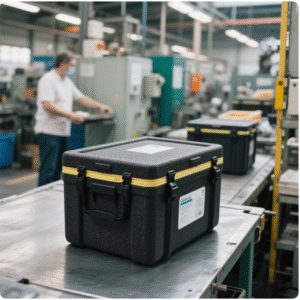
The Cold Chain Logistics Industrial Park of Agricultural Products in Laian County is being constructed at an accelerated pace.
The roar of machinery and the forest of tower cranes fill the air, as material trucks and watering trucks shuttle back and forth. With the morning sun rising, workers are busily engaged at their posts, racing against time. Right after the Double Festivals, the construction site of the Lai’an Agricultural Products Cold Chain Logistics Industrial Park is bustling with activity, all working to meet the deadline.

“The cold chain logistics industrial park project comprises several functional areas including logistics dispatch center, cold chain logistics, logistics warehousing, R&D workshops, administrative offices, and e-commerce. Since the project started in November last year, we have maintained an ‘every moment counts’ mindset, insisting on simultaneous construction in multiple areas, seizing the golden period of project construction to accelerate progress,” said Xuan Shangguang, deputy general manager of Lai’an Culture and Tourism Investment. As of now, the main structures of the R&D workshops, logistics warehouses, and cold chain logistics warehouses are basically completed. By the end of October this year, the plot initially used for earthwork storage will also begin construction.
“The project is scheduled to be completed by April next year, with tight schedules and heavy tasks,” Xuan Shangguang added. To ensure the timely delivery of the industrial park, 90% of the workers gave up their holidays during the Mid-Autumn Festival and National Day, staying on the front line of the project, continuously advancing the construction progress. “I come from a rural background and understand the hardships of farmers. We are putting in extra effort to complete the industrial park sooner, which will better help our farmer brothers turn their agricultural products into real profits,” said Li, a construction worker at the industrial park.

Lai’an, located at the junction of Jiangsu and Anhui provinces, is a traditional agricultural county. In recent years, leveraging the large market of the Yangtze River Delta and rich natural resources, the county has encouraged and guided towns and villages to develop industries such as vegetables, aquaculture, poultry, and livestock. The county boasts six national-level vegetable standard parks, two provincial-level green agricultural product production and processing supply bases for the Yangtze River Delta, and one municipal-level specialty agricultural product advantage zone. In 2022, the county’s total aquatic product output reached 31,000 tons, with a total fishery economic output value of 228 million yuan. To expand the domestic market for agricultural products, the county has established various unique business models like “e-commerce enterprises + bases + farmers” and “e-commerce service stations + farmers.” This year alone, the county has sold approximately 337 million yuan worth of agricultural products through various e-commerce platforms.
“Lai’an has abundant high-quality fresh agricultural products, unique geographical advantages, and a solid foundation in trade and logistics. Developing cold chain logistics in Lai’an’s logistics area, which is a key development zone led by the Chuzhou city government, is an inevitable trend,” said Zhang Jiabing, deputy director of the Key Project Construction Management Service Center of Lai’an County. The Lai’an Agricultural Products Cold Chain Logistics Industrial Park project is a key project managed by the Provincial Development and Reform Commission, with a total investment of 640 million yuan. It is based in Lai’an, serving the Chuzhou region and radiating to the Yangtze River Delta. The project covers an area of 131,821.2 square meters, with a planned total building area of 142,160 square meters. The construction tasks of the project are more than halfway completed, and it is expected to be fully completed by April 2024.

“With cold storage facilities, we can extend the freshness period of agricultural products, reduce transportation loss rates, and significantly lower the transportation costs of agricultural products through centralized distribution,” Zhang Jiabing explained. Once completed, the project will provide crucial infrastructure support for upgrading Lai’an’s agricultural products cold chain logistics industry. It will also open up channels for urban and rural distribution, e-commerce integration, trade circulation, and cold chain logistics distribution, achieving the integrated development of smart logistics and trade services, and promoting the modernization of agricultural product circulation and high-quality agricultural development.
Upon completion, the industrial park will cover the major production and sales areas of Chuzhou, serving the upstream and downstream enterprises of the agricultural product supply chain. It will facilitate the aggregation, distribution, and delivery of agricultural products, promoting better “inbound and outbound” flow of agricultural products. The project is expected to achieve an annual transaction volume of over 1 billion yuan and provide over 1,000 jobs.
FUZHOU-SPECIFIC PRE-MADE DISHES INDUSTRY STANDARDS
Recently, the Fuzhou Municipal Government issued an “Opinion” on fully implementing the standardization strategy, proposing that by 2025, Fuzhou will lead and participate in the formulation and revision of 150 international, national, industry, and local standards. Additionally, it aims to develop 50 group standards and increase the number of self-declared corporate standards to 10,000.

Development of Fuzhou-specific Pre-made Dishes Industry Standards
The “Opinion” outlines 20 specific construction tasks and a series of innovative measures. It emphasizes leveraging the advantages of Fuzhou’s concentrated scientific city and universities to innovate new models of industry-university-research collaboration using standardization methods, promoting the integration of standard chains with innovation and industrial chains. The plan includes establishing a standardization expert database to accelerate cross-departmental, cross-industry, and cross-regional standardization information exchange and resource sharing. It encourages leading enterprises in Fuzhou to actively participate in standardization activities, undertake secretariat roles in provincial and national standardization technical organizations, and enhance their influence in standard setting.
The plan calls for the development of replicable and scalable industrial park construction standards to gradually build a Fuzhou-specific industrial park standard system. It focuses on leading industries such as new displays, high-end chemical fibers, and new energy, supporting leading enterprises to lead the formulation and revision of technical standards.
It also includes building a comprehensive standard system for the entire pre-made dishes industry chain, developing Fuzhou-specific pre-made dishes industry standards, and establishing a national innovation hub for pre-made dishes industry standards.

In strategic emerging industries such as new materials, optoelectronics, integrated circuits, new energy storage, and intelligent vehicles, the plan promotes cutting-edge standardization research to empower high-tech industry innovation with advanced standards. This aims to accelerate the industrialization of new technologies and help create a high-tech industrial ecosystem with Fuzhou characteristics, leading to high-quality industrial development.
Promotion of Min Cuisine (Fuzhou Cuisine) Standard System
The plan supports the rapid development of related standards in marine fishing, smart oceans, marine resource development and protection, and promotes the standardization of marine carbon sinks to serve the green and healthy development of the marine economy.
It also involves the standardization of the protection and inheritance of Fuzhou’s traditional culture, with an emphasis on developing standards for the protection of intangible cultural heritage such as Shoushan stone carving techniques, and promoting the standardization of Min Cuisine (Fuzhou cuisine) to enhance the culture of Fujian.
The plan includes a pilot project for service standardization in Fuzhou’s central urban area of Gulou District, aiming to create replicable and promotable advanced experiences.

Special actions are planned for the standardization of elderly and domestic services, focusing on the needs of the elderly and children. This includes developing standards for senior dining facilities and building a new standard system for elderly care services that integrates home care, community care, institutional care, medical care, and health care. It also promotes the standardization of childcare and health services.
Additionally, the plan involves piloting cross-strait standardization in rural construction, community governance, and flower culture, exploring a mechanism for cross-strait standardization that involves “four commons and three adoptions” to promote integration between the two sides of the Taiwan Strait. It seeks to accelerate the integration of standards with intellectual property, develop a batch of internationally advanced technical standards that lead domestic and international industry development, and promote “Fuzhou standards” to the international stage.
COURIER COMPANIES “NEGLECTING THEIR MAIN BUSINESS,” RUSHING INTO LIVESTREAM E-COMMERCE
Courier companies are now venturing into livestream e-commerce.
Livestream e-commerce has reached a fever pitch, with platforms like JD.com and Taobao, as well as short video platforms like Douyin and Kuaishou, dominating the market. Unexpectedly, courier companies are also jumping into the fray.
Recently, SF Express has been the most active in exploring livestream e-commerce. In August, SF Express quietly launched a livestream e-commerce feature on its WeChat mini-program, covering everything from adding items to the cart, placing orders, shipping, tracking logistics, and receiving goods, all within the SF Express mini-program without the need to switch to third-party platforms. The products mainly include fresh fruits and other agricultural products.

Previously, SF Express helped farmers in fresh produce areas find e-commerce influencers to promote their products and collaborated with companies like Oriental Selection for livestream e-commerce. Additionally, SF Express proposed the “Livestream E-commerce Solution+” to explore ways to upgrade agricultural e-commerce.
In fact, a few years ago, some courier companies had already started livestream e-commerce. This is not SF Express’s first foray into the field. In May 2020, ZTO Express held its first livestream, with ZTO Group Chairman Lai Meisong personally appearing in the livestream room to support the event. On the first night of the livestream, the total sales (GMV) exceeded 15 million yuan, generating over 1.1 million orders.
At the end of September this year, CCTV Finance reported on ZTO’s warehouse livestream e-commerce activities. ZTO set up the livestream room in its ZTO Cloud Warehouse, where goods are stored, allowing sold items to be shipped within 24 hours. Consumers can see the shelves of displayed products and the entire process of their purchased items being packed and shipped through the livestream.
Meanwhile, other courier companies such as Deppon, JD Logistics, China Post, and Yunda have also ventured into livestream e-commerce.
Although many companies are experimenting with livestream e-commerce, only China Post has managed to stand out. Since last year, various branches of China Post have intensively engaged in livestream e-commerce on the Douyin platform, selling products including beauty and skincare items, agricultural products, and cultural and creative stamps.
According to Chan Mama’s data at that time, Jinjiang Post was the best-performing among all Post livestream rooms, with nearly 25 million yuan in sales within 30 days. Currently, Jinjiang Post has 1.073 million followers.
Compared to other courier companies, China Post’s livestream e-commerce efforts have been relatively successful. However, within the overall livestream e-commerce ecosystem, China Post’s influence remains small, with each branch’s follower count ranging from tens of thousands to just over a million.
It is clear that livestream e-commerce, which many courier companies are investing in, is not easy to master.
Despite the challenges, livestream e-commerce offers a new growth opportunity, as the traditional courier logistics market has entered a fiercely competitive phase, with price wars continuing. Especially since the beginning of this year, the per-package revenue for courier companies has been continuously declining, limiting their growth potential.
This has compelled courier companies to look to livestream e-commerce to boost profits and find new growth avenues.

Opportunities and Challenges
So, why are courier companies choosing livestream e-commerce as a new business increment?
The “2022 China E-commerce Market Data Report” shows that the livestream e-commerce market reached 3.5 trillion yuan in 2022, a year-on-year increase of 48.21%.
According to Dian Shubao’s data, the livestream e-commerce market size in the first half of 2023 was about 1.9916 trillion yuan. The total market size for livestream e-commerce in 2023 is expected to reach 4.5657 trillion yuan, a year-on-year increase of 30.44%.
This indicates that, at least in terms of market size and development trends, livestream e-commerce continues to grow and is worth exploring by courier companies looking to capture a share of the market.
However, livestream e-commerce has become a highly competitive “red ocean,” posing challenges for courier companies entering the field. To compete with top livestreaming organizations and influencers, they need to invest significantly.
Firstly, compared to popular influencers, courier companies lack consumer recognition. Courier companies, which “do not understand the internet,” struggle to build brand awareness and consumer trust, necessitating greater investment in traffic and exposure.
Influencers with high traffic and visibility can quickly establish their brand image. For example, since joining Douyin last year, Yu Minhong and Oriental Selection quickly amassed a large following. Now, Oriental Selection’s Douyin account has 30.883 million followers, and since joining Taobao in August this year, it has already gained 2.752 million followers.
Secondly, courier companies are weak in areas like livestream operations, product selection, quality control, and influencer resources. For example, although China Post has managed to stand out, it has faced quality control issues. In December last year, a customer complained that the KN95 masks purchased from China Post’s livestream room were not as advertised.
These issues can hinder the sales conversion of courier companies’ livestream e-commerce businesses.
On a positive note, courier companies’ advantages in logistics can be a strong selling point.
Courier companies often have extensive networks and strong logistics capabilities. For instance, China Post has nearly 9,000 collection and delivery departments, 54,000 business offices, 43,000 delivery service points, and 420,000 well-equipped cooperative Youle Station resources, with 100% rural coverage.
Furthermore, livestreams hosted by couriers can offer comprehensive services, helping merchants sell products without charging high fees or commissions, attracting more merchant clients. Merchants are willing to let courier companies clear remaining stock at low prices, providing couriers with an advantage in low-cost sales.
In summary, courier companies venturing into livestream e-commerce face both opportunities and challenges. Whether courier livestreams can achieve larger scale remains to be seen.
Focus on Fresh and Agricultural Products
Looking at the products featured in courier companies’ livestreams, fresh and agricultural products are their main focus.
SF Express, for instance, primarily sells seasonal fresh products in its livestreams. During a livestream session on July 28 this year, SF Express sold products like Sunshine Rose Grapes from Sichuan, fresh walnuts from Daliangshan, Red Heart Kiwi from Pujiang, and peach blossom plums from Hanyuan.
In August, ZTO Cloud partnered with several companies to form strategic alliances. ZTO Cloud Warehouse Technology aims to optimize the logistics supply chain in Yunnan, focusing on agricultural product display and trading, deep processing, smart warehousing, and cold chain logistics, continuously promoting the upward mobility of local agricultural products like avocados.
During this year’s “919 E-commerce Festival,” China Post’s livestream hosts across the country actively promoted agricultural products. Additionally, China Post launched the “Postal Aid for Farmers – Ten Thousand Livestreams” campaign, forming a livestream product pool primarily based on agricultural products from local bases.
Meanwhile, JD Group partnered with Dengzhou to offer e-commerce operation services and livestream events. Merchants without a JD store could use JD Farm’s e-commerce team services to sell products in the “JD Farm Flagship Store,” managed by JD Farm’s store operations team.
According to JD Logistics data, the number of express orders for agricultural products processed by JD Express in the first half of this year increased by about 80% year-on-year.
In a highly competitive livestream e-commerce market, courier companies focusing on agricultural products can leverage their advantages and resources in the fresh and agricultural product fields to create a differentiated competitive edge.
Moreover, fresh and agricultural products have high logistics and transportation loss rates. By selling products directly through their own livestreams, courier companies can shorten the sales chain, reduce loss rates, and better utilize their strengths in logistics. This also helps farmers expand their sales channels, contributing to rural revitalization.
E-commerce and courier services are closely intertwined. As courier companies continue to improve the infrastructure and services of their livestream e-commerce businesses, both industries are likely to develop synergistically.
MIXUE ICE CREAM & TEA ENSURES EFFICIENT SUPPLY CHAIN OPERATIONS
Mixue Ice Cream & Tea’s Cold Chain Network: One Network, One Cup of Freshness, Surprises Await You!

Building a nationwide cold chain network, Mixue Ice Cream & Tea provides stable support for the efficient operation of its supply chain. Through the use of cold chain storage and transportation systems, it ensures that products are always maintained in top quality, offering consumers fresh, high-quality, and delicious products.
Currently, Mixue Ice Cream & Tea has 26 primary warehouses across the country, with a total area of 298,000 square meters and a daily processing capacity of 7,800 tons, which can reach up to 11,700 tons during peak times. These warehouses cover all 31 provinces (municipalities and autonomous regions) in China and have achieved 100% cold chain coverage in 28 provinces (municipalities and autonomous regions), providing stable supply support to stores. At present, Mixue Ice Cream & Tea has achieved delivery targets of 12 hours for 32% of regions, 24 hours for 48% of regions, and 36 hours for 20% of regions. This not only reduces inventory pressure on stores but also ensures that consumers can enjoy fresh, high-quality, and delicious products.

Mixue Ice Cream & Tea began its nationwide cold chain network layout in 2020. At that time, the company only had 5 primary warehouses, with limited cold chain distribution range and efficiency needing improvement. Recognizing that a complete warehouse and distribution system is an advantage for the supply chain, and responding to market demand and product innovation, cold chain construction became an inevitable choice. Facing challenges such as a large number of stores, fast growth, high demand, and extensive geographical coverage, Mixue Ice Cream & Tea took a series of measures to promote cold chain construction. They conducted in-depth assessments of the current state of distribution in various regions and rigorously selected high-quality carriers to reduce operating costs. Meanwhile, the introduction of digital logistics technology improved warehouse and distribution efficiency and quality, making logistics management more efficient, accurate, and traceable.
By continuously expanding the cold chain network and optimizing warehouse and distribution management capabilities, Mixue Ice Cream & Tea not only serves its own stores but also begins to provide cold chain distribution services for other brands. They established Hainan Song Bingbing Supply Chain Co., Ltd. to expand their influence in the logistics and transportation field. In the future, they will continue to strive to provide more genuine, fresher, and purer flavors, allowing more people to enjoy the delicious products of Mixue Ice Cream & Tea.
EXCLUSIVE REVEAL: PANGDONGLAI INDUSTRIAL LOGISTICS PARK AND CENTRAL KITCHEN
On October 16, the first session of the Lianshang Donglai President Class officially commenced in Xuchang. CEOs and general managers from 100 retail enterprises across the country and overseas gathered in Xuchang to deeply study Pangdonglai’s business philosophy and management philosophy. Led by Donglai Ge, they aim to promote benevolence in business and pursue a better path.
On the afternoon of the 16th, the President Class participants visited Pangdonglai’s headquarters, Employee Home, Angel City, and the Industrial Logistics Park. Donglai Ge led the team and provided comprehensive explanations throughout the visit, ensuring that participants could thoroughly understand and learn. Notably, this was the first time the Pangdonglai Industrial Logistics Park and its Central Kitchen, which began operations in June, were open for public tours.

The Pangdonglai Industrial Logistics Park is located at the south section of Xuzhou Road and the intersection of Xuyou East Road in Xuchang, covering an area of 150 acres with a total construction area of approximately 160,000 square meters. With a planned total investment of about 1.5 billion yuan, it officially began operations in October 2022.
The project integrates a logistics center, central kitchen, comprehensive office, product research and development, talent cultivation, employee entertainment and leisure, and the processing and distribution of retail end products. It aims to create an intelligent park of international first-class standards and quality. Currently, the logistics center and central kitchen are operational, while the employee leisure center building is still under construction.
The logistics center’s ambient temperature warehouse is an impressive steel jungle. It handles the receipt, storage, distribution, and delivery of daily necessities, beauty and personal care products, clothing, footwear, home appliances, and groceries. Supported by an intelligent management system and specialized handling equipment, the operations are orderly, smart, and efficient.

In the cold chain warehouse, all refrigeration equipment comes from top domestic and international brands, providing a safer storage environment for fresh and cold chain products. The freezing, refrigerated, and dry cold storage areas are set to different temperatures to protect various products such as vegetables, fruits, dried fruits, and wine. From the receiving dock to the shipping dock, cold chain products are kept at a constant temperature, ensuring reliable safety for customers.
The entire logistics center floor is made of highly dense diamond sand, providing excellent strength and stability. Additionally, the conspicuous yellow Konecranes elastic collision protection columns can absorb 80% of impact force, carefully protecting every corner of the warehouse.
In June 2023, the Central Kitchen of Pangdonglai Industrial Logistics Park officially began operations. The Central Kitchen has a total construction area of 34,000 square meters, divided into three floors, including a raw material receiving platform, finished product temporary storage, freezing and refrigeration storage, cold chain shipping platform, cooked food workshop, tofu workshop, bread workshop, cake workshop, frying workshop, Chinese pastry workshop, cold food workshop, food testing center, R&D center, and a comprehensive office area. It is equipped with leading international and domestic equipment and processes, creating a modern central kitchen focused on safety, health, quality, and professionalism.

Detailed information about the functions and features of various equipment, as well as the detailed process flows of various products, are posted along the corridors of each workshop, making everything clear and easy to understand.
The comprehensive office area includes a food testing center, product R&D center, talent training center, employee activity center, scenario display area, and DIY experience area. With top-notch hardware facilities, spacious and bright spaces, clean and tidy environments, orderly layouts, and attention to detail reflecting respect and care for employees, even the parking lot entrance for the logistics park features showers for truck drivers, embodying Pangdonglai’s “great love” cultural philosophy.
Donglai Ge stated, “We strive to make the Industrial Logistics Park a high-quality, high-tech, intelligent, and systematic model retail enterprise and commercial benchmark for everyone to learn from and reference. This will promote the development of the retail industry and other industries towards a better direction, making cities, society, and the world a better place!”
PAGODA AND HONGJIU FRUITS TACKLE THE “IMPOSSIBLE TRIANGLE”
On October 16, the first session of the Lianshang Donglai President Class officially commenced in Xuchang. CEOs and general managers from 100 retail enterprises across the country and overseas gathered in Xuchang to deeply study Pangdonglai’s business philosophy and management philosophy. Led by Donglai Ge, they aim to promote benevolence in business and pursue a better path.

On the afternoon of the 16th, the President Class participants visited Pangdonglai’s headquarters, Employee Home, Angel City, and the Industrial Logistics Park. Donglai Ge led the team and provided comprehensive explanations throughout the visit, ensuring that participants could thoroughly understand and learn. Notably, this was the first time the Pangdonglai Industrial Logistics Park and its Central Kitchen, which began operations in June, were open for public tours.
The Pangdonglai Industrial Logistics Park is located at the south section of Xuzhou Road and the intersection of Xuyou East Road in Xuchang, covering an area of 150 acres with a total construction area of approximately 160,000 square meters. With a planned total investment of about 1.5 billion yuan, it officially began operations in October 2022.
The project integrates a logistics center, central kitchen, comprehensive office, product research and development, talent cultivation, employee entertainment and leisure, and the processing and distribution of retail end products. It aims to create an intelligent park of international first-class standards and quality. Currently, the logistics center and central kitchen are operational, while the employee leisure center building is still under construction.
The logistics center’s ambient temperature warehouse is an impressive steel jungle. It handles the receipt, storage, distribution, and delivery of daily necessities, beauty and personal care products, clothing, footwear, home appliances, and groceries. Supported by an intelligent management system and specialized handling equipment, the operations are orderly, smart, and efficient.

In the cold chain warehouse, all refrigeration equipment comes from top domestic and international brands, providing a safer storage environment for fresh and cold chain products. The freezing, refrigerated, and dry cold storage areas are set to different temperatures to protect various products such as vegetables, fruits, dried fruits, and wine. From the receiving dock to the shipping dock, cold chain products are kept at a constant temperature, ensuring reliable safety for customers.
The entire logistics center floor is made of highly dense diamond sand, providing excellent strength and stability. Additionally, the conspicuous yellow Konecranes elastic collision protection columns can absorb 80% of impact force, carefully protecting every corner of the warehouse.
In June 2023, the Central Kitchen of Pangdonglai Industrial Logistics Park officially began operations. The Central Kitchen has a total construction area of 34,000 square meters, divided into three floors, including a raw material receiving platform, finished product temporary storage, freezing and refrigeration storage, cold chain shipping platform, cooked food workshop, tofu workshop, bread workshop, cake workshop, frying workshop, Chinese pastry workshop, cold food workshop, food testing center, R&D center, and a comprehensive office area. It is equipped with leading international and domestic equipment and processes, creating a modern central kitchen focused on safety, health, quality, and professionalism.
Detailed information about the functions and features of various equipment, as well as the detailed process flows of various products, are posted along the corridors of each workshop, making everything clear and easy to understand.
The comprehensive office area includes a food testing center, product R&D center, talent training center, employee activity center, scenario display area, and DIY experience area. With top-notch hardware facilities, spacious and bright spaces, clean and tidy environments, orderly layouts, and attention to detail reflecting respect and care for employees, even the parking lot entrance for the logistics park features showers for truck drivers, embodying Pangdonglai’s “great love” cultural philosophy.
Donglai Ge stated, “We strive to make the Industrial Logistics Park a high-quality, high-tech, intelligent, and systematic model retail enterprise and commercial benchmark for everyone to learn from and reference. This will promote the development of the retail industry and other industries towards a better direction, making cities, society, and the world a better place!”
Freedom of Durian, Freedom of Cherries, Freedom of Mangosteen…
Every season, the wish for fruits floods social media. From another perspective, people are becoming more meticulous about fruit consumption.
According to the “China Agricultural Outlook Report (2020-2029),” China is the world’s largest fruit producer and consumer market, accounting for about one-third of the global fruit production. Frost & Sullivan predicts that the market will exceed 1.7 trillion yuan by 2026.
The market is vast, but the fruit business remains challenging. The highly fragmented market, regional and seasonal product differences, and varying consumer habits hinder large-scale expansion of fruit chain enterprises. High transportation and storage difficulties, short selling periods, and challenging cold chain logistics drive up costs. Additionally, the small-scale farming typical of the fruit industry makes standardization difficult, complicating supply chain quality improvements. Experience, cost, and scale form the “impossible triangle.”
The fresh fruit market has a saying: “Southern Pagoda, Northern Xianfeng, and Western Hongjiu.” As industry leaders listed on the stock market, examining the cold stock prices and profitability bottlenecks of Pagoda and Hongjiu Fruits reveals their pain points.
01
Net Profit Soars, Stock Price Stagnates
High Sales Costs, “Inflated” Skepticism
As of October 17, Pagoda’s closing price was 6.04 HKD, nearly 10% up from 5.56 HKD on September 29 before the holiday, but it remains stagnant compared to the IPO price of 5.6 HKD at the beginning of the year. Does it match the halo of being the “first fruit retail stock”? What is the market waiting for?
The mid-2023 report shows Pagoda’s revenue at 6.294 billion yuan, up 6.4% year-on-year, with net profit attributable to the parent company increasing by 34.1% to 260 million yuan.
While both revenue and profit increased, the gross profit margin decreased. The gross profit margin and net profit margin were 11.32% and 3.98%, respectively, a decrease of 0.3 percentage points and an increase of 0.77 percentage points from the previous year.
Why did the gross profit margin decrease while the net profit margin increased?
A closer look at the financial report shows cost-cutting measures. In the first half of 2023, sales expenses decreased by about 1.7% to 242 million yuan, management expenses decreased by about 6.6% to 147 million yuan, and R&D expenses decreased by 14.1% to 74.1 million yuan.
It is worth noting that the reduction in these expenses was partly due to a decrease in staff in the respective departments. It raises the question of how much of the net profit and net profit margin growth came from internal cost-cutting. How much has core profitability improved?
In terms of overall size, even with a 34.1% increase in net profit far exceeding the revenue growth rate, the 260 million yuan profit still seems weak compared to the 6.2 billion yuan revenue.

In fact, during the IPO, the issue of high revenue and low profit was a focus of public opinion. According to data from East Money, from 2019 to 2022, the company’s gross profit margins were 9.76%, 9.12%, 11.24%, and 11.62%, while net profit margins were 2.77%, 0.52%, 2.19%, and 2.71%, respectively.
The contrast lies in the fact that Pagoda is also known for high-end, high-priced fruits. Since opening its first store in 2002, Pagoda has been perceived as “tasty but expensive.” Social media is filled with complaints about the high prices, like “23.5 yuan for an apple” and “90 yuan for a watermelon.”
So why is it not making more money?
The industry’s objective factors mentioned at the beginning of the article exist. According to a research report by Anxin Securities, the gross profit margin ceiling for the fresh e-commerce industry is 30%, with the industry average at around 15%. Under low-profit conditions, many companies struggle to break even.
The prospectus admits that high procurement costs directly impact Pagoda’s profit margins. From 2020 to 2022, Pagoda’s sales costs accounted for 90.9%, 88.8%, and 88.4% of total revenue.
Even so, Pagoda’s gross profit margin performance still lags behind industry levels. Why doesn’t it show the scale effect and profitability expected of a leading company?
Pagoda’s business model isn’t selling fruits but franchising. Yuhui Yong, a Jiangxi Agricultural University alumnus, founded Pagoda by pioneering the introduction of the “chain” concept into the low-standardized fruit industry.
From 2001 to 2008, Pagoda expanded through franchising but suffered continuous losses. From 2008 to 2015, Pagoda repurchased franchise stores and converted them to self-operated stores. From 2018, it adopted a franchise business model again.
As of June 30, 2023, Pagoda had 5,958 offline stores, a net increase of 507 from the same period in 2022. Among them, 5,945 were franchise stores, and 13 were self-operated stores, with self-operated stores accounting for only 0.2%.
This franchise ratio is reminiscent of Mixue Ice Cream & Tea. Both rely on franchising for scale expansion but do not profit from franchise fees. Instead, they earn revenue by selling fruits and other products to franchise stores.
In the first half of 2023, Pagoda’s fruit and other food sales revenue was 6.117 billion yuan, up 6.7% year-on-year, accounting for 97.2% of the group’s total revenue. Revenue from franchise fees, membership income, and other sources accounted for less than 3%.
However, unlike Mixue Ice Cream & Tea, which sells raw materials to franchisees with ease, Pagoda’s fruit business must overcome various industry characteristics, leading to a high-price but low-profit predicament.

02
Billion-Dollar Dreams and Quality Control Headaches
It is worth mentioning that Pagoda pioneered the “refund policy for unsatisfactory fruits.” In other words, the high product prices include the cost of the company’s selection process.
However, in practice, Pagoda’s quality experience still needs improvement. Past quality control issues have repeatedly put the company in the spotlight.
In June 2023, a user posted a video on Douyin complaining about being treated differently when using a group purchase coupon at Pagoda. After buying an unsweet watermelon and providing feedback to the store clerk, the response was, “Because you got it cheap, the watermelon is not sweet.”
This incident quickly trended on social media, leading to numerous complaints such as “Pagoda is expensive, paying a lot to be mistreated” and “Asking a few more questions at Pagoda gets no answers, the staff just walks away arrogantly.”
In response, Pagoda apologized, citing a misunderstanding, and stated they would further strengthen employee management training.
In May 2022, a well-known blogger exposed that Pagoda was making fruit cuts from spoiled fruits, ignoring moldy apples, and continuing to sell them, despite company policies prohibiting the sale of overnight fruits.
At that time, Pagoda was in the sensitive IPO period, and the news quickly sparked public outcry. It was even criticized by the Shanghai Consumer Protection Committee, which stated that brands cannot blindly pursue expansion speed at the expense of franchise store management and supervision.
Pagoda quickly apologized and implemented the following corrective measures: re-inspection of all stores’ operations and quality management, requiring the involved stores to suspend operations for rectification, disciplinary action against regional managers, strengthening SOP training for stores, and increasing supervision, inspection, and mystery shopper visits to ensure fresh fruit quality.
While the attitude and actions are commendable, browsing Black Cat Complaints raises questions about the effectiveness. As of October 17, 2023, Pagoda had 2,300 accumulated complaints. Reviewing recent complaints, there are still issues with “spoiled fruit gift boxes,” “unfresh fruit,” “bad fruit,” and “moldy fruit.”
This raises the question: how much has Pagoda’s quality control improved since going public? How well have high standards been met?
There may be urgency and helplessness. Public information shows that Pagoda’s store count exceeded 2,800 in 2017 and over 5,600 by the end of 2022, doubling in five years.
However, this speed still falls short of founder Yuhui Yong’s vision. In 2016, he proposed the goal of “10,000 stores and 40 billion yuan in annual sales by 2020.” By the end of 2020, only 4,757 stores had been achieved, less than half of the target.
At the earnings release on August 22, 2023, Yuhui Yong reiterated the 10,000-store plan, aiming for 10,000 stores by 2027 and 30,000 by 2042.
Is this ambition too aggressive? China Food Industry Analyst Zhu Danpeng stated, “Frequent food safety and service issues in franchise stores highlight deficiencies in Pagoda’s management system, corporate culture, and store supervision.”
This hits the mark. Looking at the above performance and user complaints, being large does not mean strong, and fast does not mean excellent. Besides scale effects, there is a need to beware of scale traps. Store expansion requires robust supply chain management, professional team capability, and comprehensive management skills. If the operating radius is exceeded, chaos can arise, posing risks. Especially post-IPO, external expectations for quality control are more stringent. Balancing growth and stability is a pressing question for Pagoda.
Warning signs have already appeared: In the first half of 2022, Pagoda’s single-store product sales revenue for franchise stores was 846,900 yuan, dropping to 796,000 yuan in the first half of 2023.
Industry analyst Sun Yewen pointed out that experience, cost, and scale are the “impossible triangle” in the fruit retail industry. They complement each other, and experience is the foundation of scale. Without a solid foundation, sustainable growth is unattainable. This is the primary challenge Pagoda and Yuhui Yong must overcome before chasing their trillion-dollar dreams.
03
Accounts Receivable Exceed 10 Billion, Stock Price Slumps
Reflecting on the fruit market, the contradictions become apparent. Despite the trillion-dollar track, gold mining is not easy.
If C-end retail is tough, what about B-end wholesale and distribution?
Looking at Hongjiu Fruits, its revenue growth rates from 2020 to 2022 and the first half of 2023 were 177.78%, 78.12%, 46.70%, and 19.37%, respectively.
The slowdown is related to cost pressures. Despite being a fruit distributor with relatively simple operations, Hongjiu Fruits faces high sales costs, similar to Pagoda. In 2021 and 2022, sales costs accounted for over 80% of revenue.
On September 5, 2022, Hongjiu Fruits listed on the Hong Kong stock market before Pagoda. However, the title of “first fruit stock” did not prove lucrative. On the first day of trading, the transaction volume was only 50 million HKD, and the following two months’ trading volume was similarly bleak, leading investors to mock it as a “liquidity assassin.” Fortunately, it later experienced an upward trend, peaking at 41.8 HKD in January 2023, before declining again to a record low closing price of 4.66 HKD on September 14, with a market value of less than 6.7 billion HKD. As of October 17, the stock price was 4.90 HKD, with a market value of less than 7 billion HKD, shrinking by over 80% from the year’s high of 32 HKD.
On October 11, Hongjiu Fruits responded to media inquiries, stating, “There have been no major adverse changes in the company (Hongjiu Fruits).”
According to Chen Song, CEO of Xiangsong Capital, Hongjiu Fruits’ stock price decline is mainly due to the low profitability of the fruit trading business, limited growth potential, and significant operational risks and pressures, leading to low investor expectations and interest in the business model.
This is not an exaggeration. Delving into the fundamentals, some risks cannot be ignored.
For example, accounts receivable exceeding 10 billion. In the first half of 2023, Hongjiu Fruits’ trade and other receivables reached 10.151 billion yuan, an increase of about 12.84% from the end of last year. The turnover days of accounts receivable increased from 144.8 days at the end of 2022 to 188.5 days.
Hongjiu Fruits’ financial report explains that the payment cycle of some downstream customers, especially regional terminal wholesalers and small supermarkets, has been extended due to the impact of the pandemic and macroeconomic environment over the past three years.
Ultimately, it is still the tug-of-war between experience, cost, and scale.
Industry analyst Guo Xing stated that the fresh fruit industry can be broadly divided into upstream growers, midstream distributors, and downstream retailers. Both upstream and downstream are relatively fragmented, while the midstream involves multiple processes such as harvesting, sorting, packaging, preservation, storage, transportation, and distribution, forming a lengthy and complex value chain in the fresh fruit distribution market.
The wastage is significant. Chen Cunkun, a researcher at the National Agricultural Product Preservation Engineering Technology Research Center, stated that China’s fruit and vegetable wastage rate is still between 25% and 35%, meaning nearly one-third of the fruits are lost in the post-harvest distribution process.
Admittedly, similar to Pagoda’s downstream chain, Hongjiu Fruits’ standardized processes achieve “end-to-end” supply, integrating the lengthy midstream distribution chain, reducing wastage, and expanding profit margins.
Despite this, Hongjiu Fruits’ influence over upstream and downstream remains limited. The high accounts receivable reflect the company’s limited control over downstream product listing, circulation volume, and price changes.
The resulting derivative risks have appeared in the financial report. In the first half of 2023, Hongjiu Fruits’ provision for trade receivables credit impairment losses increased by 48.38% year-on-year to 184 million yuan. As of June 30, 2023, the company’s cash and cash equivalents at the end of the period were only 557 million yuan.
04
Revenue Growth Without Profit Growth, High-End Dilemma
In the first half of 2023, Hongjiu Fruits experienced revenue growth without profit growth: revenue increased by 19.37% year-on-year to 8.537 billion yuan, but net profit decreased by 6.51% to 803 million yuan.
Persistently high costs are partly to blame. In the first half of 2023, sales costs increased by 24.59%, higher than the 19.37% revenue growth, causing the gross profit margin to decline by 3.55 percentage points to 15.37%.
Digging into product business, high-end fruits are Hongjiu Fruits’ winning armor. Half of the revenue comes from six fruits: durian, mangosteen, longan, dragon fruit, cherries, and grapes. Durian alone generated 4 billion yuan in 2022.
As of June 30, 2023, sales of the six core fruits contributed 4.266 billion yuan, increasing the share from 49.18% to 49.97%.
However, entering 2023, weak consumer willingness to spend has shifted focus to cost-effectiveness and value-for-money. High-priced fruits have faced consumer backlash, with topics like “Earning 10,000 yuan a month but can’t afford imported fruits” trending on social media.
In this context, the pressure on Hongjiu’s high-end business is evident. How long can it last?
At critical moments, the actions of the leaders impact both internal and external confidence.
From September 11 to 13, 2023, Hongjiu Fruits’ controlling shareholders Deng Hongjiu and Jiang Zongying reduced their holdings from 27.1% to 26.12%, cashing out about 100 million yuan.
It’s worth noting that on August 20, Deng Hongjiu and Jiang Zongying had just promised not to reduce their holdings.
Hongjiu Fruits explained that the “reduction” was due to changes in the holdings of two employee incentive platforms they control, not direct sales by the controlling shareholders.
05
Blue Ocean Transformation, Tackling the Impossible Triangle
Embracing the capital market is a crucial path for companies to grow stronger, especially for Pagoda and Hongjiu Fruits, which focus on industrial chain transformation.
However, capital is not a cure-all, and investors base their decisions on expectations. To tell a compelling value story and secure a good valuation, a solid core capability is essential.
How can they break free from high revenue and low profit? Pagoda is actively seeking solutions.
The semi-annual report shows that the company has established a four-level fruit quality classification system based on taste, rating fruits into four categories (Signature, Grade A, Grade B, and Grade C) to cater to different consumers at varying prices.
In the first half of the year, Pagoda launched four new product brands, including “Sweet Moon” and “Fresh Purple.” As of June 30, 2023, it had introduced 35 proprietary product brands to the market, accounting for 14% of the total store retail sales in the first half of the year.
Looking ahead to the second half of the year, Pagoda plans to continue penetrating lower-tier cities, further expand into existing cities and nationwide, strengthen its B2B business, and expand its export business.
Running the scale story remains the main narrative. Yuhui Yong emphasized that the long-term store expansion plan is based on the population and store density distribution in the cities they have entered: “We are confident in achieving the goal of 30,000 stores in China.”
Turning to Hongjiu Fruits, they are actively seeking change to expand their market radius towards the C-end. In March 2023, Deng Hongjiu publicly disclosed that they were negotiating cooperation with platforms such as Douyin and Kuaishou to conduct offline brand exposure activities.
The goal is to slowly form a one-stop solution for the live e-commerce fruit supply chain, establishing a strong association between “Hongjiu Fruits” and high-quality fresh fruits.
In September, Hongjiu Fruits signed a tripartite strategic cooperation memorandum with ID Capital and Frontier Digital Global Trade, opening new fields for digital innovation and cooperation in the Cambodian agricultural supply chain.
Looking at the industry track, overall consumption is recovering, and the future remains promising. According to CBNData, the domestic fresh fruit retail market reached 1.07 trillion yuan in 2021 and is expected to grow to 1.67 trillion yuan by 2026, with a compound annual growth rate of 9.2%. Future demands for quality, personalized, fresh, and nutritious consumption are still on the verge of explosion.
This means that the development dividends for Pagoda and Hongjiu Fruits remain, but the growth threshold is also rising.
How quickly can they conquer the “impossible triangle”? Time is both limited and precious for Yuhui Yong and Deng Hongjiu.
Yili Wins IDF Dairy Innovation Award Again, Maintains Global Lead as Only Chinese Firm
From October 16 to 19, the International Dairy Federation (IDF) 2023 World Dairy Summit was held in Chicago, USA. During the event, the winners of the prestigious “IDF Dairy Innovation Award” were announced. Yili, leveraging its exceptional product quality and c

omprehensive, balanced innovation capabilities, won two awards: “Sustainable Packaging Innovation” and “New Product Innovation in Food Safety and Consumer Nutrition.” This makes Yili the only Chinese dairy company to win, and it received the highest number of awards globally. This follows Yili’s achievement in 2022, when it topped the “IDF Dairy Innovation Award” list, once again shining on the global dairy stage.
At the award ceremony, IDF President Piercristiano Brazzale presented the trophies and certificates to Yili in the presence of global industry leaders.
The World Dairy Summit, hosted by the International Dairy Federation, is the highest specification and largest scale event in the global dairy industry, regarded as a barometer for global dairy development. The presentation of the “IDF Dairy Innovation Award” is a crucial part of the summit, aimed at encouraging innovation in the dairy industry and promoting the achievement of sustainable development goals. It is the most influential and authoritative award in the global dairy industry, representing the highest annual honor.
Building Comprehensive Balanced Innovation to Lead Industry Development
This year’s “IDF Dairy Innovation Award” aims to showcase the innovative vitality of the global dairy industry, set global industry innovation examples, and promote the achievement of United Nations sustainable development goals. Adhering to the goal of “comprehensive value leadership,” Yili continues to increase investment in innovation and R&D, focusing on consumers and striving to provide nutritional support throughout the life cycle. Through innovative R&D, Yili drives the sustainable development of the company.
During the nomination phase, Yili led globally with four nominations and ultimately won two “IDF Dairy Innovation Awards.” The “Act with Love for the Earth – Satine’s Non-printed, Non-ink Eco-friendly Packaging” won the “Sustainable Packaging Innovation” award. The product features a pure white bottle, eliminating traditional ink printing and using laser printing only for necessary production date information. The bottle cap is made from sugarcane, and the outer box is made from recycled milk cartons, reducing the use of about 260 kilograms of plastic per 100,000 boxes and significantly cutting down raw material consumption. At the award ceremony, Richard Walton, a judge for the “IDF Dairy Innovation Award,” said, “Yili’s performance in innovation and sustainability is impressive! The Satine eco-friendly packaging design is ingenious, with no ink used and the ability to be recycled, balancing aesthetics and environmental protection. During the selection process, Satine stood out among many products.”

Yili’s “Ambient Cheese Stick” won the “New Product Innovation in Food Safety and Consumer Nutrition” award. The product breaks the constraints of traditional cold chain distribution and low-temperature storage, creating a new category of ambient cheese sticks for children, enriched with Lactobacillus rhamnosus BL-99, allowing more children to enjoy the nutrition and taste of cheese. Richard Walton commented, “The cheese stick enriched with Lactobacillus rhamnosus BL-99 is an astounding industry first, achieving a perfect blend of dairy and probiotics. This innovation breaks the consumption scene limitations of the cheese category, allowing it to be enjoyed anytime, anywhere, and aligns with Yili’s innovative practices in sustainability.”
Yili’s “Empowering Female Quality Managers, Showcasing Women’s Leadership in the Dairy Industry” project was nominated for the “Dairy Industry Innovation Practice for Women’s Empowerment” award. By taking multiple measures to empower female quality managers, Yili has opened career development channels for professional and managerial talents, encouraged women to participate in key technological projects and join social organizations, enhancing their professional skills and management levels, and establishing fair career advancement paths to help them showcase more in the workplace.
Yili’s “High-Calcium Cheese Ball” was nominated for the “New Product Innovation in Food Safety and Consumer Nutrition” award. This product meets children’s nutritional needs for growth and development, concentrating 2.5 times the milk protein and 5 times the calcium of milk, combining “delicious nutrition” with “innocent fun” through Disney princess and cute dinosaur designs.
Creating a Global Smart Chain to Uncover Industry Potential
In recent years, Yili has frequently won global innovation awards, with continuous innovation achievements supported by Yili’s global innovation system and ecosystem. With the goal of “consumer value leadership,” Yili gathers cutting-edge global innovation resources, constantly pushing the boundaries of industry development, strengthening independent innovation capabilities, and continuously creating healthy products for all demographics, all consumption scenarios, and all life cycles.
Facing new industry development trends, Yili integrates R&D resources at home and abroad, building an innovation network that includes leading global R&D institutions, creating a “global smart chain” covering Asia, Europe, Oceania, and the Americas, gathering global dairy innovation wisdom and activating collaborative innovation in the industry chain.
Currently, Yili has established 15 innovation centers worldwide and collaborates with innovation ecosystem partners to conduct R&D in the health food field. It has established innovation partnerships with international institutions like the International Life Sciences Institute, Wageningen University in the Netherlands, Lincoln University in New Zealand, the Technical University of Munich in Germany, and the Institute for Manufacturing at the University of Cambridge in the UK, as well as domestic universities like Peking University, China Agricultural University, Jiangnan University, and Sichuan University, continuously expanding its innovation ecosystem.

Innovation is key to achieving high-quality development in the dairy industry. As the leader in China’s dairy industry and the number one dairy company in Asia, Yili’s recognition on the global stage demonstrates the unique resilience and innovation vitality of China’s dairy industry. In the future, Yili will continue to focus on consumers, adhere to innovation leadership, increase investment in innovation and R&D, create more opportunities for global dairy development, unlock unlimited potential, and contribute to building a healthy world for everyone.
Kuaishou, JD Supermarket Team Up for Agro-Support with Livestream Traceability, Cold Chain Direct
In today’s world where “everything can be e-commerce,” fresh produce e-commerce stands out as a love-hate “paradox.” Fresh produce, as a daily necessity for three meals a day, inherently has the advantages of being a rigid demand, high frequency, and high repeat purchase. The market is also continuously growing, with NetEase’s data showing that the market size of fresh produce e-commerce in 2022 grew by 20.25% year-on-year to 560.14 billion yuan, indicating numerous opportunities in a large market.
However, successfully operating a fresh produce e-commerce business is not easy. Giants occasionally face layoffs, shutdowns, and crises. With the rise of live-streaming e-commerce, fresh fruits and seafood have become major focus areas for influencers. The core issue is that fresh produce is a “fresh” business requiring freshness at every supply chain stage. Due to immature quality control at the front end and transportation issues at the back end, product damage occurs, leading to consumer skepticism towards fresh produce e-commerce.

Recently, “Deep Echo” observed the “Happy Countryside Harvest Season” event jointly launched by Kuaishou and JD Supermarket. Themed “Fresh Competition, Real Jing ‘Selection,’ Local Delicacies ‘Fresh’ to Your Home,” the JD Fresh Produce Competition live-streaming event combined the advantages of Kuaishou influencers and content with JD Logistics’ supply chain advantages, cleverly avoiding the pain points of fresh produce e-commerce. Consumers enjoyed a pleasant shopping experience, and farmers, agricultural products, and production areas gained real exposure and revenue.
According to data, the event achieved a total exposure of 8.8 billion times, with the dual topics #HappyCountrysideHarvestSeason# and #JDFreshProduceCompetition# accumulating 7.93 billion views. The live streams garnered 390 million exposures, achieving a total GMV of 7.13 million yuan. With the peak of traffic dividends and the increasing competition in live-streaming e-commerce, how did Kuaishou achieve this? What new insights can this event bring to fresh produce e-commerce and future agricultural support methods?
Front-End Live Streaming Traceability + Back-End Cold Chain Assurance: Creating a New Paradigm for Agricultural Support
“To eat crabs, you have to find the source, it’s incredibly delicious.” During the JD Fresh Produce Competition’s “Hairy Crab” live-streaming event on September 8, Wang Xiaoli, who played Liu Neng in the Northeastern comedy series “Country Love,” and Kuaishou influencer Xiao Shenlong made such remarks repeatedly.
Unlike previous live streams, this event brought the live broadcast directly to the source of the crabs – Suqian. Wang Xiaoli and Xiao Shenlong were at a crab farm in Suqian, catching and eating crabs live, showcasing the advantages of Suqian hairy crabs, such as their firm flesh and rich roe. Additionally, the duo added fun to the live stream with challenges like “Crab Eight Pieces” and “Opening Blind Boxes” with local crab farmers. From eating to playing, they presented a crab feast.
Viewers persuaded by the “eating broadcast” could click on the yellow cart to purchase freshly caught Suqian hairy crabs. Relying on the supply chain assurance from JD Supermarket and Kuaishou, the products were shipped directly from the source and transported via cold chain to ensure freshness from the origin to the table.
The hairy crab live stream was just one of many live-streaming events. For the sixth Farmer’s Harvest Festival, Kuaishou and JD Supermarket held the “Happy Countryside Harvest Season” event, featuring premium agricultural products directly from the source. Other live streams included matsutake mushrooms, autumn pears, beef, and sea cucumbers, all with Kuaishou influencers visiting the source, shipping directly from the origin, and using cold chain transportation to ensure freshness and safety.
From the source to the consumer’s table, the freshness and quality were guaranteed by the combined advantages of Kuaishou and JD’s platforms – Kuaishou influencers ensured quality at the front end, while JD Logistics’ supply chain minimized product loss at the back end. This collaboration showcased a new model for the industry.
Fresh produce is unique compared to categories like beauty and apparel because consumers have a direct perception of its quality and value. It is challenging for influencers to spark consumer interest by merely promoting products in live streams. Past mishaps in fresh produce live-streaming have eroded consumer trust.
In this event, Kuaishou connected influencers to consumers, with influencers participating directly in the production and farming processes and conveying their experiences through short videos or live streams to increase consumer trust.
For example, in the beef live stream, Kuaishou agricultural influencer @Da Peipei visited Yangxin, the largest cattle breeding and processing hub in North China. In the autumn pear live stream, influencer @Beijing Fat Sister explored the “transparent central pear house” at JD Green Pastures Orchard Factory to witness the entire process from picking to processing. In the sea cucumber live stream, influencer @Hu Tongtong Loves Eating boarded a sea fishing boat in Weihai, Shandong, to participate in sea cucumber harvesting.
Influencers not only promoted products but also added fun through various challenges and events, making the fresh produce live streams more engaging and immersive for consumers. For example, Wang Xiaoli and Xiao Shenlong enjoyed an “all-crab feast” at a restaurant named “Ou Xiang Xie,” reminiscent of a scene from “Dream of the Red Chamber” where characters enjoyed crabs and flowers. Influencer @Hu Tongtong Loves Eating explored the coastal environment in Weihai while listening to stories from local crab farmers, adding unique selling points and highlights to the live streams.
Ensuring quality at the source is just the beginning; the most challenging part is transportation. Fresh produce is highly perishable and must go through various transfers before reaching consumers. Any mishandling in transportation or storage can lead to spoilage, increasing product loss rates. JD’s logistics and transportation advantages addressed these concerns. JD also released the “JD Fresh Produce Industry Standards” during the live stream, standardizing the origin, packaging, transportation, and storage of fresh produce to ensure safer and more reliable online purchases for consumers.
By linking the source to the live-streaming room and integrating front-end quality control with back-end transportation, Kuaishou and JD Supermarket jointly addressed the major challenges of fresh produce live-streaming e-commerce, providing local farmers and production areas with increased revenue and growth opportunities.

From Selling Products to Deepening Industry Engagement for Sustainable Harvests
The five traceability live streams of the JD Fresh Produce Competition are just one example of Kuaishou’s agricultural support efforts. Farmers rely on the weather for their livelihoods, with seasonal cycles of spring planting, autumn harvest, summer heat, and winter storage. The cultivation and harvesting of agricultural products have specific seasonal windows. Missing these windows can impact the final yield. Around these critical periods, short videos, e-commerce, and other internet platforms use various methods to expand the market for agricultural products and increase farmers’ incomes.
In the past, selling agricultural products was challenging due to time and location constraints. Agricultural production areas are often in remote, inaccessible places, making it difficult to promote products despite their quality. Fresh produce and agricultural products have strong seasonal attributes and need quick exposure and concentrated sales.
The advent of internet platforms is solving these problems. In the internet era, the costs of producing, storing, and disseminating content/products have significantly decreased. Short video and e-commerce platforms connect more people transparently and efficiently. Even from remote towns, as long as there is a phone and internet access, information can be spread, and goods can be sold. Influencers on these platforms gather like-minded users and quickly share fresh stories, making quality products visible and accessible to those who need them.
As early as 2020, Kuaishou began focusing on the ecological development of agriculture, leveraging its platform traffic and influencer resources to continuously promote the production and dissemination of quality agricultural content. Currently, Kuaishou’s agricultural coverage spans the entire agricultural production chain, with diverse content types meeting various user needs, leading to sustained user growth. Over the past year, Kuaishou’s agricultural interest users reached 300 million, with daily likes on agricultural content exceeding 38 million, a 30% year-on-year increase. The huge consumer demand has broadened the market for agricultural products, with over 870 million agricultural product orders shipped nationwide through Kuaishou in 2022, a 55% year-on-year increase from 2021.
In 2023, JD Supermarket expanded its tier-three categories (including fresh produce, grains, oils, snacks, and beverages) by recruiting professional buyers to source high-quality goods from the origin, reducing procurement costs through multi-channel integration. Professional quality controllers are hired to be on-site, ensuring standardized sorting and grading, maintaining stable product quality at optimal procurement costs. In logistics, JD collaborates with retail and regional logistics for price negotiations and consolidated orders to further reduce logistics costs. Overall, JD controls procurement, quality, and fulfillment to ensure user experience and boost sales.
Selling agricultural products is just the first step in “supporting agriculture.” Beyond simple “selling,” Kuaishou is delving deeper into the entire agricultural industry chain, enabling long-term and diverse monetization for farmers, rural areas, and agriculture.
On one hand, covering the entire industry chain from planting to processing to sales can further enhance local employment and income. For example, the JD Fresh Produce Competition invited influencers to the source, authentically showcasing local customs, which can indirectly boost local tourism revenue.
On the other hand, supporting content creation from the source, Kuaishou launched the Village Broadcast Plan to support local new farmers, providing diverse opportunities and monetization channels. The plan aims to invest funds and traffic resources over the next three years to cultivate village broadcasters and rural entrepreneurs, promoting employment, entrepreneurship, and rural economic development.
With the support of internet platforms, the model of agricultural support has entered the 2.0 era. For farmers, the platform’s full industry chain support expands income channels and avoids the risk of agricultural product backlogs, better ensuring their interests. For consumers, direct delivery from the origin to the table allows for safer purchases and a more satisfying shopping experience. For the industry and society, strong quality control and traceability capabilities facilitate the scaling and standardization of agricultural products, bringing new prospects to agriculture and rural areas.
Food is the most fundamental need of people. However, in the past, agricultural products and fresh seafood faced challenges when entering live-streaming e-commerce, leading to discouraged practitioners, mistrustful consumers, and unguaranteed farmer incomes. Through various live-streaming activities during the Farmer’s Harvest Festival, the collaboration between Kuaishou and JD Supermarket provides a new model for agricultural support. Good content combined with direct supply chains not only achieves harvests and boosts sales but also ensures sustainable and long-term prosperity.
WHY, DESPITE TURNING A PROFIT, IS MEITUAN FACING A “VOTE WITH THEIR FEET” SITUATION?
In the first half of this year, Meituan achieved significant performance growth, with operating revenue increasing by over 30% year-on-year, and net profit turning from a loss to a gain. However, the company expects the growth rate of its food delivery business to slow down in Q3, with specific details yet to be disclosed.
Despite the performance growth, Meituan did not disclose key operational data such as the number of transaction users and active merchants. Will these be disclosed in the future? Additionally, the company’s new businesses are still incurring losses.
In the secondary market, Meituan’s stock price peaked at the beginning of the year and has since embarked on a prolonged decline, currently down over 40% from its high. Why does the stock price diverge from the performance, and when will it stop falling?

Behind the Impressive Revenue, Q3 Food Delivery Growth Is Expected to Slow
In the first half of the year, Meituan achieved operating revenue of 126.582 billion yuan, a year-on-year increase of 30.2%. Q1 and Q2 revenues increased by 26.7% and 33.4% year-on-year to 58.617 billion yuan and 67.965 billion yuan, respectively, with Q2 showing a more remarkable performance.
Looking at the longer timeline from 2018 to 2022, Meituan’s operating revenue grew rapidly, reaching 65.227 billion yuan, 97.529 billion yuan, 114.795 billion yuan, 179.128 billion yuan, and 219.955 billion yuan, respectively, with a compound annual growth rate of 35.51%. In 2022, the year-on-year increase was 22.79%.
From this perspective, the revenue growth rate in the first half of this year shows some improvement compared to last year but still falls short of the compound annual growth rate.
Meituan’s core local commerce is the main contributor to its revenue, including well-known services such as food delivery and Meituan Flash Purchase, as well as in-store services, hotel and homestay bookings, ticketing, and transportation. The revenue comes from delivery services for merchants and consumers, commissions for technical services provided to merchants and third-party agents, and various forms of online marketing services.
In the first half of the year, Meituan’s core local commerce achieved operating revenue of 94.085 billion yuan, a year-on-year increase of 32.6%. This includes delivery services, commissions, and online marketing services, which grew by 23.5%, 40.1%, and 25.8% year-on-year to 37.28 billion yuan, 34.217 billion yuan, and 17.99 billion yuan, respectively.

It is evident that the core of Meituan’s local commerce lies in merchants, consumers, and delivery riders.
From 2018 to 2022, the number of Meituan’s transaction users rose from 400.4 million to 677.9 million, with a 1.8% decline in 2022. During the same period, the number of active merchants increased from 5.8 million to 9.3 million, with a 5.1% year-on-year increase in 2022, marking the lowest growth rate.
Meituan did not disclose specific transaction user numbers or active merchant counts in Q1 and Q2 of this year. Will these be disclosed in subsequent quarters?
For riders, Meituan disclosed that there were approximately 6.24 million riders in 2022. This number is likely to set a new record in 2023, pending official disclosure.
With continuous consumption recovery, the food delivery industry has seen growth, and Meituan has implemented a series of measures.
For merchants, Meituan assists new merchants in opening stores and helps improve online operations for all merchants. The company launched initiatives such as the “Sharpshooter” campaign, upgraded the “God Coupons Festival,” and released the “Must-Have List” to help merchants attract customers and create hit products.
For users, Meituan strengthens supply and optimizes subsidy strategies to meet the increasingly diverse needs of consumers, especially in high-order and high-quality categories. The company also continues to explore new traffic growth points, encouraging consumers to stockpile coupons through live events and stimulate non-real-time demand.
These marketing strategies have contributed to the good development of Meituan’s food delivery business. However, participating in various discount activities increases operating costs for merchants, who must decide whether to participate and control the intensity of promotions based on their circumstances.
Thanks to the expanded revenue scale, Meituan’s profitability has also significantly improved. In the first half of the year, it achieved a net profit attributable to shareholders of 8.046 billion yuan, turning from a loss to a gain. The core local commerce’s operating profit grew by 58.7% to 20.584 billion yuan.
The profit growth in Meituan’s core local commerce is also related to the reduced proportion of sales costs. The company mentioned that sufficient capacity supply for food delivery and Meituan Flash Purchase businesses led to a decrease in per-order delivery costs.
It is clear that as the number of riders increases, the average delivery fee decreases further.
Looking ahead to the third quarter, Meituan expects the growth rate of food delivery revenue to slow. In the financial report conference call, Meituan stated that the third quarter would face some short-term business obstacles due to the macroeconomic environment and extreme weather conditions.
New Business Continues to Incur Losses
In the first half of the year, Meituan’s new business achieved operating revenue of 32.497 billion yuan, a year-on-year increase of 23.8%. Q1 and Q2 revenues grew by 30.1% and 18.4% year-on-year to 15.732 billion yuan and 16.765 billion yuan, respectively, with a slowdown in Q2 growth.
In 2022, the company’s new business achieved revenue of 59.196 billion yuan, a year-on-year increase of 39.3%. It is evident that the revenue growth rate of new business in the first half of this year has significantly slowed down.
According to brief insights, new businesses include Meituan Select, Meituan Grocery, Kuailu, and others. Revenue mainly comes from the sale of goods (Meituan Grocery and Kuailu) and various services provided by different businesses (Meituan Select, ride-hailing, shared bicycles, charging treasures, small loans).
Meituan stated that Q2 transaction volume and revenue for Meituan Select continued to grow year-on-year, but the overall market growth rate was lower than expected, leading to a slowdown. Meituan Select’s revenue recognized on a net basis declined sequentially, mainly due to increased subsidies and lower unit prices.
However, Meituan Grocery still achieved steady year-on-year growth, gaining higher market share, with increased average transaction value and transaction frequency.
In comparison, Meituan Grocery’s interface is highly consistent with the community e-commerce platform Pupu Supermarket, with similar product prices and discounts, such as buy-one-get-one-free and genuine 50% off deals. It’s unclear who is “copying homework.” The future competition will surely be about financial strength.
Currently, Meituan’s new business continues to incur significant losses and is a “money-burning” project for the company. In 2022, the new business lost 28.379 billion yuan, with a net loss of 10.222 billion yuan in the first half of the year, although the loss narrowed. Meituan Select’s Q2 loss expanded sequentially.
Meituan explained that the expansion of business scale, increased subsidies to drive growth, spending on cold chain and logistics to cope with the upcoming hot weather, and seasonal product mix changes contributed to the losses.

As of the end of June, the cumulative transaction user count for Meituan Select had reached 470 million.
Comparing Meituan Grocery and Meituan Select, the former is a community e-commerce platform that delivers to homes, while the latter is similar to next-day delivery supermarkets, requiring self-pickup at designated locations.
The author has experienced both shopping modes. Although Meituan Select is cheaper, product quality, especially meat products, needs further improvement, while Meituan Grocery has relatively good quality control.
As of October 18, Meituan Select had 11,657 complaints on the Black Cat Complaint platform, with 7,993 resolved, a resolution rate of 68.57%. After-sales service still needs further improvement, with product quality issues being particularly prominent and requiring attention.
Although Meituan turned a profit in the first half of the year, it faced investor “voting with their feet” in the secondary market. After reaching a high of 195.6 HKD per share in January, the stock price began a continuous decline, reaching a low of 105.5 HKD per share, nearly halving.
As of the close on October 18, Meituan’s stock price was 113.7 HKD per share, down more than 40% from its high, with a market capitalization of 710 billion yuan and a TTM P/E ratio of 77.83.
Additionally, Meituan’s shareholders have been consistently reducing their holdings in recent years. For example, Shen Nanpeng of Sequoia Capital had 387.6686 million shares, or 6.59%, at the end of 2020, which decreased to 138.9025 million shares, or 2.23%, by the end of the first half of the year, with his personal holdings at 9.4764 million shares, or 0.15%.
HOW JAPAN DEVELOPS ITS PREPARED MEAL INDUSTRY
In 1968, Japan’s Otsuka Foods Industrial Company launched a ready-to-eat beef and vegetable curry packaged in sealed soft bags with the advertisement, “Single serving, just immerse in hot water, anyone can do it without fail,” advancing the commercialization of prepared meals.
The market trial is the first major hurdle for prepared meals. To develop this new product that does not require preservatives, can be stored at room temperature, and maintains the shape of beef and vegetables after being pressurized and heated for sterilization, Otsuka Foods spent a full four years on research and development.
Subsequently, due to its convenience, such soft-packaged prepared meals quickly became popular in Japan. Currently, about 100 companies in Japan provide over 500 similar products to the market. Industry surveys show that the utilization rate of various prepared soft-packaged foods in Japanese households is 47.7%, making them an integral part of Japanese dietary life.

Prepared meals in Japan come in a wide variety and are widely used; it can be said that Japanese people rely on prepared meals throughout the day.
In the field of ready-to-eat prepared meals, supermarkets and malls offer various canned and soft-canned packaged foods, vacuum-packed foods, frozen foods, and convenience foods. Some of these foods can be eaten straight from the package, while others require minimal preparation such as steaming, boiling, microwave heating, or hot water soaking. These options significantly reduce household cooking burdens, making them popular among housewives and singles.
Thanks to the development of low-temperature sterilization technology and the materials industry, in addition to previously popular items like frozen dumplings, frozen shumai, and aluminum foil vacuum-packed ready-to-eat products, Japanese manufacturers have recently developed more microwaveable transparent bagged prepared foods, which are especially popular among young people. Currently, the traditional aluminum foil packaged prepared food market is showing signs of stagnation and facing challenges.
As for semi-prepared products like ready-to-cook items, supermarkets sell pre-washed, pre-cut vegetable packs, fruit boxes, seasoned meat products, and various flavored convenience foods. Many Japanese restaurants have fixed material suppliers, and most of these materials are pre-processed. It can be said that Japan’s food industry has achieved deep division of labor and socialization from the industrial chain perspective.

A friend of the author once worked part-time at a yakitori izakaya near the bustling Shibuya Station in Tokyo. Although the small shop, spanning four floors, could accommodate over 100 guests when fully seated, the kitchen in the basement was quite small, with only two chefs who could handle dozens of orders simultaneously. The secret lay in the fact that most of the materials were pre-processed, requiring only simple final preparation on site.
Overall, Japanese society is accustomed to and trusts prepared foods. People seldom worry when using prepared foods. The reliance on prepared meals is partly due to their efficiency and partly because Japan’s strict hygiene requirements in the prepared meal industry chain ensure few food safety incidents.
Strict regulation is the second major hurdle for Japan’s prepared meal industry. As early as 1948, Japan implemented the “Food Sanitation Law” and its enforcement regulations, stipulating the hygiene of food and food additives used for sale, covering material selection, production, processing, use, cooking, storage, transportation, display, and delivery. The law also regulates the equipment used in the production process, packaging materials, the use of additives, how to advertise and promote sales, and the need to clearly inform consumers about food hygiene information.

Additionally, to address the issue of school meals in compulsory education, Japan enacted the “School Lunch Act” in 1956, specifying meal goals, school food education responsibilities, nutritionist qualifications, meal implementation standards, and hygiene management standards.
In fact, many school, company, hospital, and welfare facility cafeterias in Japan are outsourced. Catering companies use central kitchens to process food efficiently and hygienically, delivering it to the site for simple preparation or heating and portioning. As long as production and delivery comply with legal regulations, central kitchen catering is seen as more manageable at the source, more hygienic, and more economical and efficient in Japan.
The key is to strengthen management according to the law. Japan focuses on enhancing food hygiene management from the manufacturing end. For detailed management, the Japanese government subdivides industries from the production end, with different types of manufacturers subject to different licensing reviews, industry standards, and regulatory measures. According to the latest revision of Japan’s “Food Sanitation Law” in 2021, the sealed packaging food manufacturing industry is strictly defined and categorized as a separate industry type for licensing and regulation.