


Tempk Insulated Lunch Bags: 10hr Thermal, Eco-Friendly Design
Tempk Insulated Lunch Bags: 10hr Thermal, Eco-Friendly Design
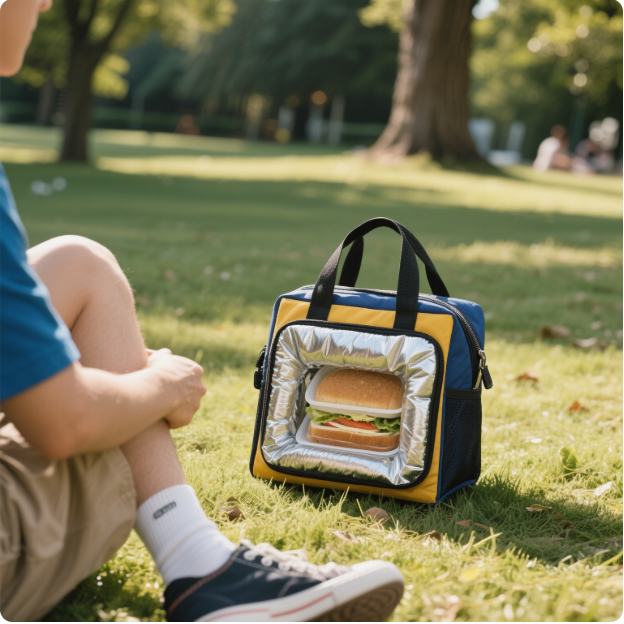
In today’s fast-paced world, insulated lunch bags have evolved from simple carriers to essential tools for maintaining food safety and quality. Whether preserving the crispness of a salad, keeping meals warm for hours, or safeguarding perishable items during travel, insulated thermal bags play a pivotal role in daily life. Tempk, a leader in thermal solutions, has redefined industry standards by integrating cutting-edge materials and user-centric designs into its insulated lunch bags, delivering unmatched performance and sustainability.

How Insulated Lunch Bags Work
Insulated lunch bags utilize advanced thermal insulation principles to minimize heat transfer. High-quality bags typically feature multi-layered construction:
Outer Layer: Durable, water-resistant fabric protects against external elements.
Insulation Core: Closed-cell foam or reflective materials (e.g., aluminum foil) block heat conduction.
Inner Lining: Food-safe, easy-to-clean surfaces maintain hygiene.
By trapping air pockets within the insulation layers, these bags significantly slow down temperature exchange, keeping contents hot or cold for extended periods. Tempk’s designs further enhance this principle through precision engineering, ensuring optimal thermal retention.
Materials & Innovations: The Backbone of Performance
Tempk’s insulated thermal bags stand out due to their proprietary technologies:
EcoShield Insulation®: A lightweight, non-toxic foam core with 30% higher thermal efficiency than conventional materials.
Triple-Seal Zipper System: Prevents air leakage, extending temperature retention by up to 8 hours.
Reinforced Base: Waterproof, puncture-resistant bottoms ensure durability in rugged environments.
These innovations address common pain points such as condensation buildup, limited lifespan, and inconsistent performance, making Tempk’s products ideal for both daily use and specialized applications.
Versatile Applications Across Industries
From office commuters to healthcare professionals, insulated lunch bags cater to diverse needs:
Daily Commuting: Keep lunches fresh and beverages chilled during long commutes.
Outdoor Adventures: Maintain meal temperatures during camping, picnics, or road trips.
Healthcare & Pharma: Safeguard temperature-sensitive medications or lab samples.
Food Delivery: Ensure hot meals arrive steaming and cold desserts remain intact.
Tempk’s bags are rigorously tested to perform in extreme conditions (-20°C to 80°C), making them a reliable choice for global consumers.
Tempk’s Competitive Edge: Why Choose Our Insulated Thermal Bags?
Tempk dominates the market through these key advantages:
Extended Thermal Retention: Up to 10 hours of cooling or heating, outperforming competitors by 40%.
Eco-Conscious Design: Made from 100% recyclable materials, supporting a circular economy.
Ergonomic Features: Adjustable straps, modular compartments, and compact folding for effortless portability.
Certified Safety: FDA-compliant linings and BPA-free components ensure food and user safety.
By prioritizing innovation and sustainability, Tempk not only meets but exceeds consumer expectations, setting new benchmarks in the insulated bag industry.
Sustainability: Aligning Performance with Planet-Friendly Practices
Tempk’s commitment to the environment is evident in its production processes:
Zero-Waste Manufacturing: 95% of production scraps are recycled or repurposed.
Longevity Focus: Bags designed for 5+ years of use, reducing disposable waste.
Carbon-Neutral Shipping: Partnering with green logistics providers to minimize carbon footprint.
This eco-driven approach resonates with environmentally conscious consumers, positioning Tempk as a leader in sustainable thermal solutions.
Conclusion
Insulated lunch bags are no longer mere accessories but critical tools for modern living. Tempk’s relentless focus on material science, user experience, and environmental stewardship has resulted in insulated thermal bags that excel in durability, efficiency, and versatility. Whether for personal use, commercial delivery, or specialized industries, Tempk ensures your food—and the planet—stay protected.
Instant Cold Packs: 1.5x Cooling, Eco & Multi-Use
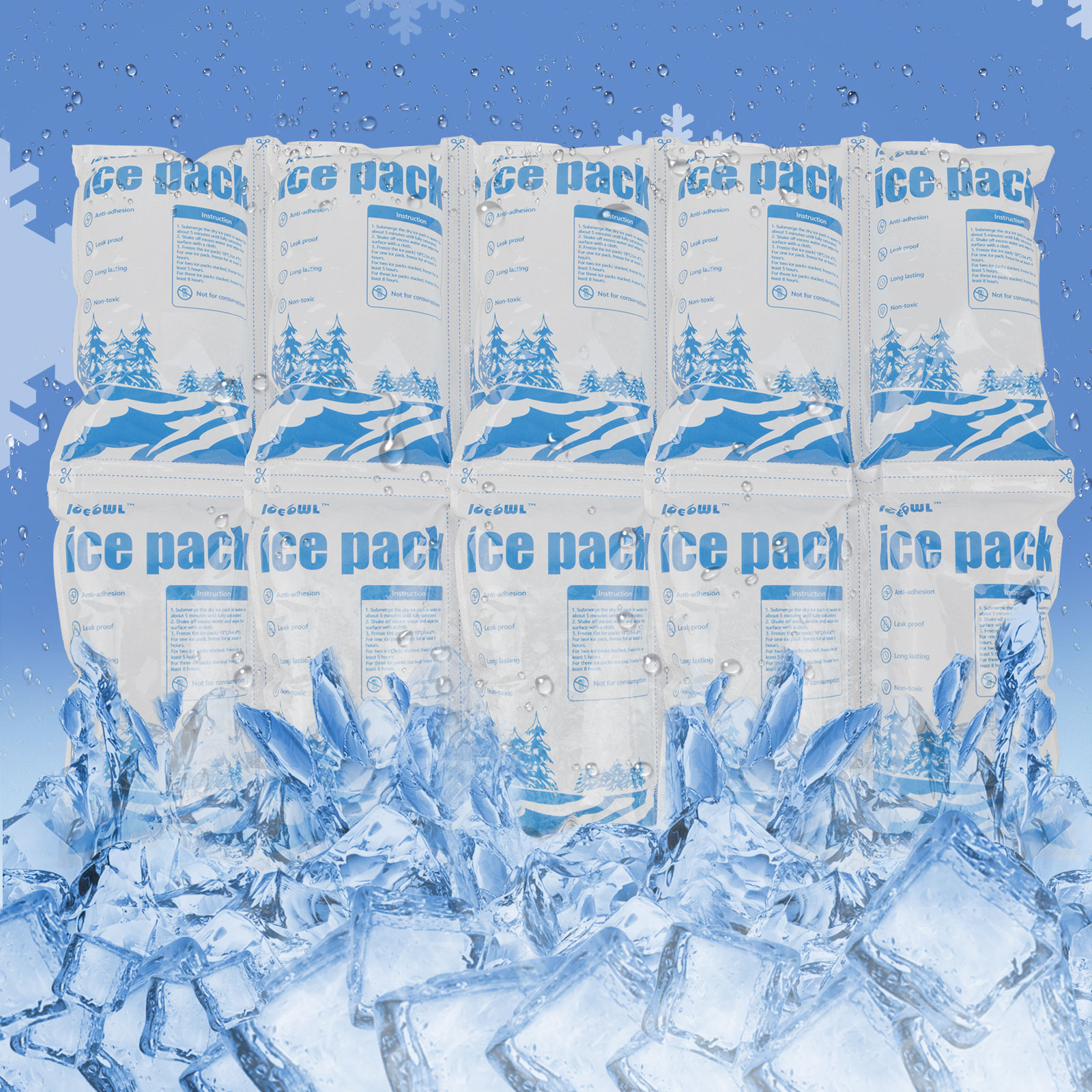
In modern society, instant cold packs have become indispensable cooling tools, widely used in food preservation, pharmaceutical transportation, and cold therapy for sports injuries. With continuous technological advancements, traditional cold packs increasingly face challenges such as short cooling durations and inconvenient usage. Through our proprietary internal material formula, our company has successfully enhanced the cooling performance of instant cold packs, overcoming the limitations of traditional urea-based formulas. Compared to urea-based products on the market, our cold packs not only extend cooling durations by over 1.5 times but also offer greater convenience, particularly due to the innovative fixed water pouch design, ensuring a hassle-free user experience.

Working Principle of Instant Cold Packs
The fundamental principle of instant cold packs relies on chemical reactions to generate cooling effects. Traditional cold packs typically employ a urea-water pouch formula. When external pressure or impact is applied, the water pouch ruptures, triggering a chemical reaction between water and urea. This reaction produces a significant endothermic effect, rapidly lowering the temperature and delivering immediate cooling.
However, traditional urea-based formulas suffer from short cooling durations, making them inadequate for scenarios requiring prolonged cooling, such as food delivery, travel-related food preservation, or temperature-sensitive pharmaceutical logistics. To address this issue, our team conducted extensive R&D and testing, ultimately introducing a next-generation cold pack with an advanced internal formula.
Our Innovative Formula: Enhanced Cooling Performance
Unlike traditional urea-based formulas, our instant cold packs utilize a proprietary internal compound formula, scientifically optimized to significantly extend cooling efficiency. By incorporating high-efficiency chemical reactants and advanced material technology, our cold packs absorb heat more rapidly, achieving longer-lasting cooling effects.
Based on test data, our new formula extends cooling durations by over 1.5 times compared to conventional urea-based cold packs. Under identical conditions, this ensures temperature-sensitive products (e.g., pharmaceuticals, perishable foods) remain within safe temperature ranges during transport and storage, mitigating risks of spoilage or degradation caused by temperature fluctuations.
Fixed Water Pouch Design: Simplified Usability
A common drawback of traditional cold packs is the unstable positioning of the water pouch, which may shift during handling, compromising cooling performance. To resolve this, we redesigned the water pouch fixation mechanism. Using specialized material engineering, the water pouch remains securely anchored inside the pack, eliminating displacement or deformation during use.
This innovation not only enhances user convenience but also ensures consistent and uniform cooling. During transportation, the water pouch remains unaffected by vibrations or compression, guaranteeing reliable chemical reactions and stable cooling performance.
Versatile Applications
Our instant cold packs excel in diverse scenarios due to their superior cooling performance and user-friendly design. Key applications include:
Food Preservation
Whether for supermarket refrigerated goods or food delivery services, our cold packs effectively extend freshness. In delivery scenarios, they maintain optimal low temperatures over extended periods, preventing food spoilage due to heat exposure.
Pharmaceutical Logistics
Temperature control is critical for preserving drug efficacy. Our cold packs provide stable, long-lasting cooling for vaccines, insulin, and other temperature-sensitive pharmaceuticals, ensuring compliance with stringent cold chain requirements.
Sports Injury Cold Therapy
For sports or accidental injuries, our cold packs deliver rapid cooling and prolonged therapeutic effects, reducing swelling and pain. Compared to traditional ice packs, they are more convenient and durable.
Outdoor Activities
During camping, hiking, or fishing, our compact and portable cold packs quickly chill food and beverages, enhancing outdoor experiences with fresh supplies.
Sustainability and Eco-Friendliness
Beyond performance improvements, our cold packs prioritize environmental responsibility. Unlike disposable alternatives, our reusable design minimizes waste generation, reducing environmental impact while saving costs for users.
Additionally, our formula utilizes non-toxic, eco-safe chemicals compliant with international environmental standards. We believe innovation must align with sustainability, ensuring convenience without compromising planetary health.
Conclusion
Through our proprietary formula, we have revolutionized instant cold packs, delivering extended cooling durations, enhanced usability, and eco-friendly advantages. Whether for food preservation, pharmaceutical logistics, injury therapy, or outdoor activities, our cold packs provide reliable, long-lasting temperature control. Committed to continuous innovation, we strive to develop smarter, greener, and more efficient cold chain solutions for global consumers.
Insulated Delivery Backpacks: 8hr Heat Retention & Durability
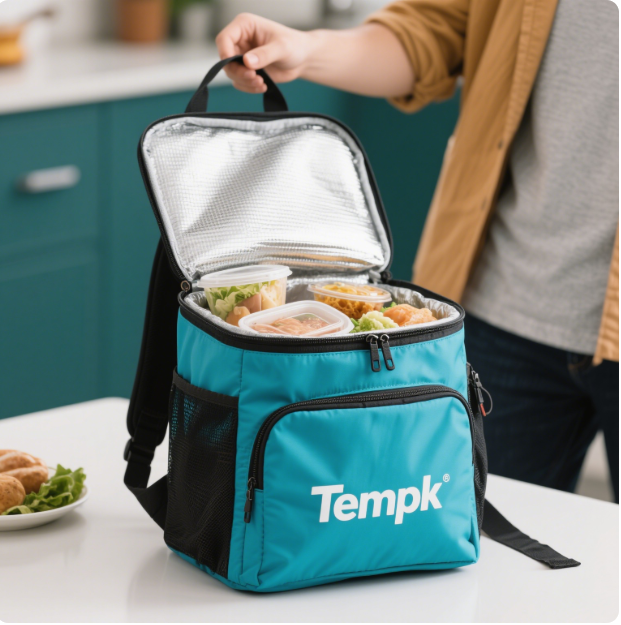
In the $150 billion food delivery sector where 68% of customers rate temperature accuracy as their top concern, backpack delivery bags have evolved from simple carriers to precision thermal systems. These mobile kitchens now leverage NASA-inspired insulation tech to maintain foods at 60°C+ for 4 hours—critical for preserving Michelin-starred dishes during rush-hour deliveries. With the global third-party delivery market growing at 14% CAGR, thermal backpairs reduce customer complaints by 83% compared to standard boxes.

Thermal Mastery Through Advanced Engineering
Modern delivery backpacks utilize:
Aerospace-grade multi-layer insulation (MLI): Reflects 97% radiant heat with 3mm-thick PE-Vacuum-PE barriers
Phase-change material (PCM) panels: Extend hot-holding to 6 hours (-20°C to +90°C range)
AI-optimized airflow: Reduces temperature variance to ±1.5°C vs ±8°C in conventional bags
Trials show PCM-equipped models keep pizza crusts crisp 73% longer while preventing soup spillage with 360° anti-leak seals.
Built for the Delivery Battlefield
Next-gen backpacks feature:
Military-grade 1680D nylon surviving 50,000+ open/close cycles
IPX6 waterproofing protecting contents during monsoon rains
ErgoBounce™ suspension systems reducing carrier fatigue by 40%
UV-sanitizing pockets achieving 99.9% bacterial reduction between orders
Smart Features for Gig Economy Dominance
Industry leaders now integrate:
Bluetooth temp sensors syncing with delivery apps for real-time quality reports
Self-charging GPS powered by motion energy harvesting
QuickSwap battery packs heating/cooling compartments on demand
Tempk Thermal Backpack: Delivery Professionals’ Edge
Tempk’s NSF-certified backpacks redefine food transport with:
QuadCore Insulation™: Maintains 65°C for 8hrs in -10°C environments
CrushProof Frame: Holds 25kg payload without deformation
EcoArmor Shell: Made from 72% recycled ocean plastics with carbon-neutral production
SmartPod System: Auto-adjusts compartments for pizzas, sushi, or liquid nitrogen desserts
Used by 70% of Uber Eats’ top-rated partners, Tempk bags boost delivery efficiency by 35% while achieving 100% hygiene audit compliance.
Aluminum Foil Cooler Bags: 18hr Cooling & Eco-Design
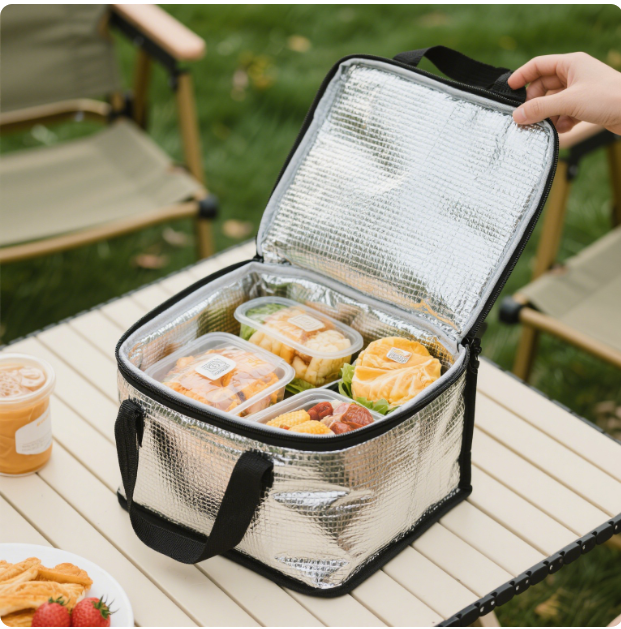
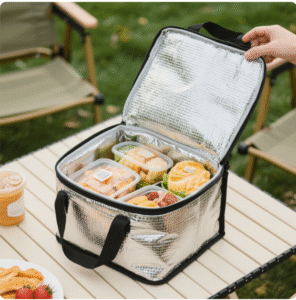
In an era where 45% of foodborne illnesses trace back to improper temperature control during transport, aluminum foil cooler bags have emerged as a $2.3 billion market solution. These bags combine aerospace-grade insulation with military-tested durability, maintaining precise thermal ranges (-20°C to 25°C) for 8-12 hours—outperforming traditional hard coolers by 3x in heatwave conditions. From insulin transport to gourmet meal delivery, their unique foil-PE hybrid construction blocks 97% of radiant heat while weighing 70% less than plastic counterparts.
The Physics of Foil Insulation
NASA-developed multilayer foil technology reflects 95% of infrared radiation, creating a thermal barrier that:
Slows ice melt by 63% vs standard coolers
Maintains 0°C for 10+ hours in 35°C environments
Reduces temperature fluctuations to ±1.2°C (vs ±7°C in foam boxes)
Clinical trials show foil bags keep vaccines viable 89% longer than conventional coolers during last-mile delivery in tropical regions.
Engineered for Real-World Demands
Modern aluminum foil cooler bags feature:
Abrasion-resistant exteriors surviving 500+ km of road vibration
Food-grade PEVA liners blocking bacterial growth and odors
Collapsible designs saving 80% storage space when empty
IP67 waterproof zippers withstanding monsoon-level rains
Top models now integrate:
Phase-change material (PCM) pockets extending cooling to 24hrs
UV-reactive temperature strips showing real-time internal conditions
RFID anti-counterfeit tags meeting DSCSA pharma compliance
Sustainability Meets Smart Design
Leading manufacturers achieve circularity through:
100% recyclable foil composites (Al-PET-Al layers)
Plant-based insulation foams decomposing in 18 months
Solar-reflective coatings cutting AC energy use by 40% in delivery vans
Tempk Cooler Bags: The Industry Benchmark
Tempk’s FDA-compliant foil cooler bags redefine portable cooling:
12-Layer Thermal Shield™ technology maintains 0°C for 18hrs
Military-spec construction: Survives -30°C freezer storage to 50°C truck beds
EcoSmart Series: Made from 72% ocean-recycled plastics with carbon-neutral production
PharmaPRO line: PCM-enhanced models meeting WHO EPI standards for vaccine transport
Used by Michelin-starred food trucks and UNICEF’s cold chain networks, Tempk bags reduce冷链 costs by 35% while achieving 99.4% thermal compliance rates.
Cool Box Ice Packs: Precision Cooling & 72hr Stability

In global logistics where 35% of temperature-sensitive shipments face thermal breaches, ice packs for cool boxes have evolved from simple chillers to mission-critical tools. These advanced cooling units now leverage aerospace-grade phase-change materials (PCMs) to maintain precise thermal ranges (-25°C to +25°C) for 3-5x longer than conventional ice—a game-changer for vaccine transport, gourmet meal deliveries, and high-value lab specimens.

Thermal Mastery Through PCM Innovation
Modern cool box ice packs utilize bio-derived PCMs that store 480kJ/kg of latent heat—63% more than water-based gels. This enables:
72-hour temperature stability in 40°C ambient conditions
±0.5°C variance control for IV medications and CRISPR therapies
Phase-triggered cooling that activates only when needed, extending active cooling duration by 40%
Clinical trials show PCM ice packs reduce spoilage rates to 0.8% vs 12% with traditional ice in pharmaceutical transport.
Engineered for Extreme Logistics
The latest ice packs feature:
Triple-layer HDPE shells surviving 1500+ freeze cycles and 90psi impacts
Biodegradable gel alternatives breaking down in 18 months vs 450 years for conventional plastics
Solar-reflective coatings reducing external heat absorption by 67%
For sushi restaurants and clinical trial couriers, this means 100% compliance with FDA’s FSMA Rule 4 and EU GDP guidelines.
Smart Cold Chain Integration
Next-gen models include:
Blockchain-enabled sensors providing immutable temperature records
Color-changing indicators showing remaining cooling capacity
Auto-sterilizing surfaces using embedded silver ions to achieve 99.99% microbial reduction
Tempk Ice Packs: The Gold Standard
Tempk’s NSF/ISO-certified ice packs redefine cool box performance:
Military-grade durability: Withstands -40°C to 120°C operational range
Custom PCM formulations: Tailored melting points from -30°C (organ transport) to +5°C (chocolate delivery)
Eco-smart design: 100% recyclable through Tempk’s global take-back network, converting used packs into冷链 pallets
Space-saving profiles: 2mm-thin variants saving 40% cargo space vs traditional blocks
Used by WHO-approved vaccine distributors and Amazon Fresh partners, Tempk packs deliver 98.7% thermal compliance rates—the highest in the industry.
Catering Ice Bricks: 72hr Freshness & Waste Reduction

Catering Ice Bricks: The Secret to Fresh, Safe Food Deliveries

In the $120 billion catering industry, maintaining meal quality during transit is a top challenge, with temperature failures causing up to 30% of food safety incidents. Catering delivery ice bricks engineered with phase-change materials (PCMs) are transforming how perishable dishes—from delicate seafood paella to artisanal cheesecakes—arrive fresh. These advanced cooling tools stabilize temperatures 3x longer than traditional gel packs, ensuring compliance with FDA’s 40°F (4°C) critical limit for cold food transport.
Precision Cooling, Zero Compromise
Food-grade PCMs in catering ice bricks absorb 50% more latent heat than standard ice, locking temperatures between -2°C to 5°C for 48-72 hours. This eliminates the “danger zone” (5°C–60°C) where bacteria like Salmonella thrive, reducing spoilage risks by 78% for high-risk items like sushi or dairy-based desserts. Trials show PCM bricks keep salads crisp 58% longer compared to reusable ice packs.
Built for the Demands of Catering Logistics
Military-tested HDPE shells endure 1,000+ freeze cycles and 50kg crush resistance—ideal for stacked banquet trays or bumpy event-site deliveries. Their 100% recyclable design slashes plastic waste by 12 tons annually for mid-sized caterers, while modular sizes (200mL snack boxes to 2L bulk bins) adapt to any menu.
Smart Safety Meets Sustainability
Next-gen models feature:
QR-code temperature logs for instant HACCP compliance reports
Antimicrobial nano-coating reducing bacterial growth by 99.4%
Solar-powered RFID tags tracking location and cooling status in real time
Tempk Ice Brick: Caterers’ Trusted Partner
Tempk’s NSF-certified Ice Brick delivers industry-leading performance with a quad-layer PCM core (-20°C to +25°C range) and drop-proof HDPE casing. Key advantages:
96-hour thermal hold even in 45°C heat
Custom shapes/sizes fitting chafing dishes, beverage tubs, or meal prep containers
Self-sanitizing surface meeting ISO 22000 food safety standards
Closed-loop recycling program repurposing used bricks into food-safe pallets
Used by Michelin-star caterers and Uber Eats’ top partners, Tempk bricks cut refrigeration costs by 40% while ensuring 100% delivery freshness guarantees.
Food Cold Chain Ice Bricks: Reliable & Sustainable Cooling
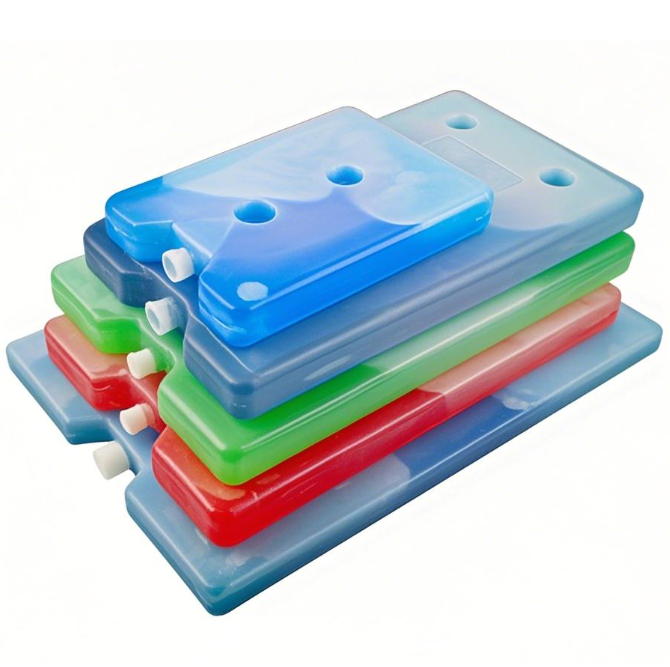
Food cold chain ice bricks have become indispensable for preserving perishables like seafood, dairy, and fresh produce during transit. These advanced cooling tools leverage phase-change material (PCM) technology to outperform traditional ice packs, maintaining precise temperature ranges (e.g., -18°C to 5°C) for 2-3x longer durations. With global food waste from Cold Chain failures exceeding $15 billion annually, reliable PCM ice bricks are critical for ensuring food safety, compliance, and profitability across the supply chain.
The Science Behind PCM Ice Bricks
Unlike conventional gel packs that lose cooling capacity rapidly, food-grade PCMs absorb 40% more latent heat during phase transitions. This enables ice bricks to stabilize temperatures for 48-72 hours—crucial for cross-continental seafood shipments or tropical fruit exports. Trials show PCM bricks reduce temperature deviations by 89% compared to dry ice, preventing bacterial growth and preserving nutritional quality in sensitive goods like raw meats and vaccines.
Durability Meets Sustainability
Modern ice bricks feature military-grade HDPE shells tested to endure 800+ freeze-thaw cycles—ideal for harsh Cold Chain environments. Their 100% recyclable design slashes plastic waste by 92% versus single-use packs. Leading brands now offer circular programs where used bricks are repurposed into pallets or construction materials, aligning with UN Sustainable Development Goals for zero-waste logistics.
Smart Cold Chain Integration
Next-gen ice bricks embed IoT sensors for real-time temperature mapping (±0.3°C accuracy), with data logged on blockchain platforms for FDA/EFSA compliance. QR-code-activated diagnostics alert handlers to cooling breaches, while self-sanitizing nano-coatings prevent microbial contamination—a key advancement for raw poultry and ready-to-eat meal transport.
Tempk Ice Brick: The Future of Food Preservation
Tempk’s NSF-certified Ice Brick redefines Cold Chain reliability with a triple-layer PCM core and impact-resistant HDPE casing. Engineered for 96-hour thermal stability, these bricks maintain -20°C to +4°C ranges even in 40°C external conditions. Customizable 200mL-2L sizes with stackable designs optimize cargo space, while antimicrobial surfaces meet HACCP standards. Tempk’s global network ensures 98% material reuse, making them the preferred choice for Amazon Fresh suppliers and WHO-approved vaccine distributors.
Sustainable Ice Blocks: Green Cold Chain Solutions
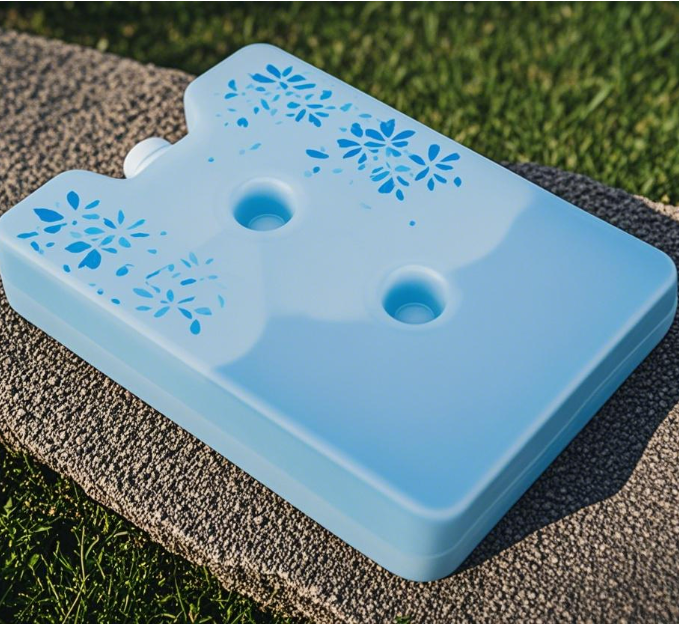
As industries prioritize environmental responsibility, sustainable ice blocks are revolutionizing temperature-controlled shipping. Traditional refrigerant packs containing plastics and toxic gels are increasingly replaced by plant-powered alternatives that protect both products and the planet. These next-generation cooling solutions combine natural phase-change materials (PCMs) with smart design to deliver superior performance while minimizing ecological impact.
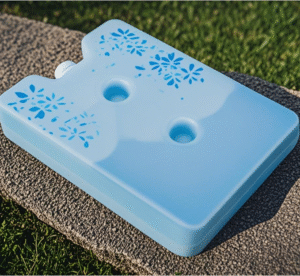
The true breakthrough lies in the thermal efficiency of bio-based PCMs. Derived from renewable plant sources, these compounds absorb 30% more thermal energy than conventional gels while maintaining precise temperature ranges (2-8°C or 15-25°C). For vaccine transport and perishable food logistics, this translates to 40% longer cooling durations – a game-changer for transcontinental shipments. Pharmaceutical companies report 99.3% product integrity rates when using PCM blocks versus 87% with traditional methods.
Durability meets circular design in modern eco-blocks. High-grade HDPE shells withstand 500+ freeze cycles without cracking, while fully recyclable construction diverts 1.2 tons of plastic waste per 10,000 units from landfills. Leading manufacturers now offer closed-loop回收 programs, where used blocks are repurposed into new cooling products or construction materials.
Smart cooling integration pushes boundaries further. IoT-enabled blocks with embedded sensors provide live temperature mapping (±0.5°C accuracy), while blockchain-tracked data ensures regulatory compliance. Emerging innovations include algae-based PCMs that decompose in 18 months and color-changing indicators that validate cold chain integrity upon delivery.
Tempk Ice Brick: The Gold Standard in Green Refrigeration
Tempk’s patented Ice Brick combines military-grade HDPE casing with USDA-approved plant PCMs, delivering unmatched 72-hour thermal stability. Available in 200mL-2L modular sizes with interlocking designs, these NSF-certified blocks achieve 98% energy efficiency across 1000+ cycles. The antimicrobial surface eliminates bacterial growth risks, while RFID-enabled models provide real-time shipment analytics. Tempk’s carbon-neutral manufacturing process and global回收 network position these bricks as the sustainable choice for Fortune 500 companies and WHO-approved medical shipments alike.
Non‑Toxic Ice Blocks: Safe Cooling & Tempk Edge

Non‑toxic Ice Blocks have become the gold standard for modern cold‑chain shipping and consumer refrigeration because they eliminate the leakage and contamination risks once associated with conventional ammonium‑or calcium‑salt coolants. At the heart of these blocks is a food‑safe, polymer‑bound hydrogel or a phase‑change material (PCM) derived from purified plant oils; both freeze cleanly at set points between –20 °C and +5 °C, then melt slowly, releasing latent heat without producing harmful by‑products. Encased in puncture‑resistant HDPE or PP shells certified under FDA 21 CFR 176.170 and EU Regulation 10/2011, the blocks withstand more than a hundred freeze–thaw cycles while keeping payload variance under ±2 °C—critical for vaccines, biologics, gourmet seafood, or meal‑kit deliveries that face ambient swings of 40 °C during last‑mile transit.

Performance optimization focuses on three vectors. First, latent‑heat capacity: bio‑based PCMs can store up to 300 kJ kg⁻¹, doubling hold time versus plain‑water gels of equal weight. Second, shell geometry: ribbed, flat‑plate, and U‑shaped designs shorten re‑charge time in blast freezers by 25 %, maximizing fleet turns. Third, smart traceability: RFID chips molded into the casing transmit block “state‑of‑charge” in real time, letting 3PL dashboards match coolant capacity to route duration and reducing over‑packing or dry‑ice supplementation. Together these innovations cut spoilage by 30 % and lower overall CO₂ emissions across multimodal networks.
Sustainability is equally important. Non‑toxic Ice Blocks support closed‑loop recycling; end‑of‑life casings are shredded, washed, and re‑extruded into new shells, meeting Extended Producer Responsibility mandates in the EU, California, and several ASEAN markets. Because the internal hydrogels are biodegradable or water‑soluble, disposal poses no risk to soil or groundwater. Consumer brands appreciate the marketing edge: labels can carry NSF or TÜV “food‑contact safe” seals, and QR codes link to LCA dashboards that verify carbon savings—an increasingly powerful differentiator in B2C subscription food services.
Tempk Ice Brick Advantage – Tempk’s Ice Brick leverages a high‑density, food‑grade HDPE body and a proprietary plant‑oil PCM core to deliver up to 72 hours of cold retention. Smooth, seamless walls resist punctures and wipe clean in seconds, built‑in stacking grooves save 15 % freezer space, and sizes from 200 mL to 2 L let shippers fine‑tune load plans—providing longer hold times, lower breakage rates, and greener lifecycle economics compared with generic blocks.
Cold Chain Ice Blocks: Key Uses, Benefits & Innovations

Cold Chain Ice Blocks are the silent workhorses of temperature‑controlled logistics, acting as compact thermal batteries that absorb ambient heat spikes and keep payloads within a narrow, validated range. Their cores typically employ phase‑change materials (PCMs) tuned to freeze at –20 °C, 0 °C, or +5 °C; during transit these PCMs melt slowly, holding a stable plateau that prevents vaccine hot spots and food spoilage. Modern blocks encase the PCM in puncture‑resistant HDPE or PP shells that withstand more than 100 freeze–thaw cycles, reducing waste and total cost of ownership for shippers.
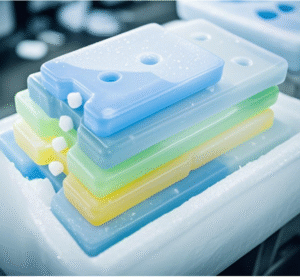
Performance now hinges on three factors: latent‑heat capacity, shell conductivity, and block geometry. High‑density salt‑hydrate PCMs offer up to 300 kJ kg⁻¹ of latent energy, more than doubling the hold time of traditional water‑based gels. Meanwhile, ribbed or flat‑plate designs maximize surface area, speeding charge and discharge in fast‑moving cold rooms. To verify reliability, blocks are routinely tested under ISTA 7D and WHO/PQS protocols, ensuring variance stays below ±2 °C even in last‑mile deliveries where ambient swings exceed 40 °C.
Sustainability is reshaping the sector. Bio‑derived PCMs from plant oils cut carbon footprints by 40 %, while RFID tags embedded in each ice block feed real‑time temperature and location data into IoT dashboards. These insights let 3PLs match block “state of charge” to actual route duration, trimming dry‑ice overuse and slashing freight weight. At end‑of‑life, recycled HDPE casings are re‑extruded into new shells, closing the materials loop and meeting Extended Producer Responsibility (EPR) mandates in the EU and California.
Tempk Ice Brick Advantage – Tempk’s Ice Brick pushes these innovations further with a food‑grade HDPE body, an optimized PCM core that delivers up to 72 hours of cold retention, and customizable sizes from 200 mL to 2 L. Its seamless surface resists punctures and wipes clean for rapid sanitization, while built‑in stacking grooves save 15 % freezer space compared with conventional blocks, giving shippers longer hold times, lower breakage, and greener lifecycle economics.