


Cool Brick Vaccine Pack-Out: A Five-Gate Release Plan
Cool Brick Vaccine Pack-Out: A Five-Gate Release Plan

Cool Brick Vaccine Pack-Outs Need Five Release Gates
A shipment should not be released because the bricks are frozen, the lid closes, and the display shows a good starting temperature. A cool brick vaccine pack-out is ready only when five connected decisions have been cleared: product requirements, container compatibility, coolant preparation and placement, performance evidence, and operational control. This gate-based approach keeps a small reusable component from being mistaken for the whole cold chain. It also gives procurement, quality, and field teams one shared question at dispatch: are we using the exact system that was reviewed for this vaccine and this route?
The five-gate release model
The gates are intentionally sequential. A team that starts with a coolant quotation may spend time testing a configuration that the vaccine instructions or carrier design would never support. Begin with the payload, then work outward.
Gate 1: The vaccine requirement is explicit
Record the exact product, presentation, and current handling instructions. Many vaccines stored in refrigerators use a 2°C to 8°C range, but not all vaccines share that range. Frozen and ultra-cold products exist, and individual products can have special transport, light-protection, thawing, dilution, or beyond-use conditions. The manufacturer’s current information and applicable immunization-program rules decide the requirement.
Avoid writing “vaccines” as a single line item in the route specification. List each product that may enter the carrier. Confirm whether diluents travel with it and whether their preparation creates a freezing concern. If a frozen product is permitted to spend limited time under refrigerated conditions, transport may count within that allowance. The release record must therefore connect time out of storage to product-specific limits.
Gate 1 also defines the payload envelope. State minimum and maximum load, secondary packaging, usable dimensions, starting condition, and expected dose quantity. A pack-out qualified with a dense full load should not be assumed to protect a small partial load. Empty spaces alter heat flow and may allow cartons or spacers to shift.
Gate 1 fails when: the product is identified only by disease, all vaccines are assigned a generic refrigerated range, a diluent is overlooked, or the approved load configuration is unknown.
Gate 2: The container and coolant belong to one configuration
A cool brick is a thermal-storage component. It needs an insulated carrier, cold box, medical box, or qualified shipper around it. It does not provide insulation, monitoring, route control, or proof of compliance by itself.
WHO PQS category E004 covers cold boxes, vaccine carriers, and other passive insulated containers for vaccine transport or temporary use. E005 addresses coolant packs used with those products. The catalog relationship matters: compatible packs, quantity, position, and instructions contribute to the listed container’s performance. WHO recognizes standard 0.3, 0.4, and 0.6 litre coolant-pack sizes for E005-listed transport products, but matching one of those volumes does not grant another brick WHO status or make it suitable for any carrier.
For an existing WHO-listed carrier, use the specified packs and instructions unless an authorized, supported change process establishes otherwise. For a commercial qualified shipper or a locally developed pack-out, maintain a configuration record that identifies the exact container, insulation, brick or PCM plate, barriers, payload arrangement, closure, and monitor. Similar appearance is not equivalence.
Fit needs a physical check. Measure internal space with the intended payload and barriers in place. Make sure the lid closes without compressing vials, stressing caps, or displacing spacers. Confirm that rigid bricks cannot migrate into direct contact during vibration or carrying. If the component geometry changes, treat the change as a potential impact to performance.
Gate 2 fails when: a loose brick is called a vaccine carrier, a general cooler replaces qualified equipment, a standard volume is used as evidence of WHO listing, or the coolant model cannot be traced to the released layout.
Gate 3: Thermal state and placement are reproducible
“Cold” is not a preparation instruction. Water packs may be used fully frozen, conditioned after freezing, cooled without freezing, or warmed for a cold-climate operation. Engineered PCM plates follow their own formula-specific phase preparation. These states impose different thermal boundaries on the payload.
A conditioned frozen water pack is not the same as a cool water pack. Conditioning begins with frozen water and uses a defined warming process before loading. A cool pack begins in a refrigerated region. A warm pack serves a different protective function in cold conditions. Staff need the carrier-specific method, observable readiness criteria, allowable staging time, and status segregation.
Freeze-preventive vaccine carriers solve a particular operating problem through their design. WHO guidance describes a barrier between fully frozen water packs and the vaccine compartment, allowing the instructed use of frozen packs without ordinary initial conditioning. The carrier’s barrier and loading method are essential. An improvised liner in an ordinary box is not evidence of freeze prevention.
PCM is also not a shortcut around process control. Identify the formula or controlled range, shell and fill configuration, preparation equipment, staging duration or release condition, and transfer time to loading. A plate may be solid at the surface and not fully prepared at its center. Separate ready units from returns and in-process units so operators cannot select by touch or color alone.
Placement controls conduction. Tested spacers or barriers limit direct cold contact, while a stable layout preserves intended heat paths. Record the orientation of every brick and the position of the payload. Photographs or diagrams are valuable because phrases such as “place around the vaccine” leave too much room for shift-to-shift variation.
Gate 3 fails when: the SOP gives only a waiting time with no readiness criterion, frozen gel packs replace specified PCM, a barrier is missing, or the operator cannot distinguish ready and unprepared components.
Gate 4: Performance and monitoring evidence fit the route
Qualification asks whether the assembled system maintains the required conditions under defined challenges. It should identify the container, coolant count and state, payload, barriers, sensors, ambient profile, duration, access events, and acceptance criteria. The report supports that configuration and those conditions, not every route that uses the same brick.
ISTA Standard 7E offers heat and cold profiles for thermal transport packaging in parcel delivery systems. It can support evaluation when that distribution mode is relevant. It does not qualify a coolant component in isolation, and a lane with long airside exposure, refrigerated vehicles, walking segments, or repeated outreach access may need other or additional evidence.
Development testing should map likely hot and cold locations with calibrated sensors. That is how a team discovers a cold boundary near a brick, a warm point under the lid, or a shift caused by partial loads. The operational temperature monitoring device can then be placed in a location justified by the mapped design.
CDC’s July 2026 toolkit favors continuous temperature monitoring for vaccine transport, preferably a digital data logger (DDL) capable of showing minimum and maximum readings. A buffered probe placed with the vaccine better reflects the payload than a display left outside the box. Device selection should cover the needed measurement range, calibration status, logging interval, memory, clock, battery, and data retrieval.
Monitoring does not rescue a weak pack-out. It records what happened. Define who starts the logger, checks its identity, records dispatch readings, reviews alarms, downloads data, and decides whether the record is complete. If an excursion is suspected, keep the vaccine under correct conditions, mark it against use, document magnitude and duration, and follow the appropriate assessment process rather than discarding it immediately.
Gate 4 fails when: a component datasheet is treated as route qualification, a duration claim lacks test conditions, the logger sits against the brick without justification, or nobody owns data review.
Gate 5: People can execute, receive, and repeat the system
Even a well-tested pack-out can fail through staging, handover, or receiving. The SOP should be short enough to use and detailed enough to reproduce. Assign trained staff and backups for preparation, packing, driving, receipt, and excursion response. Record container and logger identities, vaccine inventory, load revision, dispatch time, handovers, arrival time, and storage transfer.
Routine transport, professional-carrier shipping, and emergency relocation require separate decisions. Current CDC guidance prefers powered portable vaccine units or qualified containers and pack-outs for provider transport. Its provisional conditioned-water-bottle method belongs to specified emergency use, not routine outreach. Manufacturer shipping materials are a last-resort emergency option in that framework, and household food coolers are not a substitute.
Receiving is part of thermal control. The destination must have trained staff and appropriate storage ready. On arrival, inspect physical condition, security, monitor status, product identity, quantity, and dates. Review the temperature record promptly and transfer vaccines to the product’s required storage. Do not place an unopened shipper in a refrigerator; coolant in the box may drive local product temperature too low.
For reusable bricks, add a reverse process: recovery, cleaning, drying, inspection, quarantine, re-preparation, and end-of-life removal. Reject leaking, cracked, swollen, distorted, contaminated, or unidentifiable units. Track formula, mold, cap, label, and batch or revision at a level appropriate to the risk. A color code can help operators, but it should support rather than replace traceable identification.
Change control closes the gate. A new brick volume, PCM formula, shell geometry, cap, carrier, payload, spacer, logger location, route, or conditioning method can invalidate assumptions. Review every change and decide whether documentation, targeted testing, or full requalification is needed.
Gate 5 fails when: the receiving site is unprepared, the emergency method becomes routine, returned bricks bypass inspection, or a supplier substitution enters use without review.
One release table for quality and operations
| Release gate | Evidence available before dispatch | Hold the shipment if |
|---|---|---|
| Product | Current product instructions, product list, load and time limits | Any vaccine or diluent requirement is unresolved |
| System | Approved carrier, exact coolant identity, layout diagram, barriers | A component is substituted, damaged, or does not fit the released configuration |
| Preparation | Recorded coolant state, readiness check, staging status | Packs are mixed, incompletely prepared, or cannot be identified |
| Proof | Applicable qualification, calibrated DDL, correct probe position | Test scope does not cover the configuration or monitoring is unavailable |
| Execution | Trained sender and receiver, route and contingency, SOP, traceable records | Receiving, emergency response, or data-review ownership is missing |
This is a release tool, not a replacement for the full SOP. It gives the dispatcher a defensible stop point when a critical fact is missing. It also makes deviation records more useful because the failed gate identifies which part of the system needs investigation.
Make the configuration record survive a shift change
The best configuration record can be understood by someone who did not design the pack-out. Give the configuration a revision code. Include a bill of materials, photographs from more than one angle, coolant preparation instructions, minimum and maximum loads, barrier placement, probe position, closure method, label positions, and accepted carrier condition.
Keep training practical. Ask operators to demonstrate preparation and loading rather than only signing that they read a document. Use deliberately incorrect examples in training: a PCM plate from the wrong status area, a shifted spacer, a low-battery logger, an unreadable brick label, or a carrier with a damaged barrier. Staff should be able to stop the process and state why.
At dispatch, record only information that supports control or investigation. At receipt, make the record easy to reconcile with the shipment and logger file. If electronic data are used, define file naming, access, review, retention, and correction practices. A DDL file separated from the container and route identity loses much of its value.
Trending can identify a slow loss of margin. Review alarms, near-limit readings, delay time, brick rejection, loss rate, carrier damage, and repeat deviations by route or season. Trends do not alter product limits. They indicate when the route risk or pack-out assumptions deserve review.
Hypothetical decision: adding one vaccine to a stable route
Consider a program with an established weekly refrigerated route using a tested medical box, reusable rigid bricks, barriers, and a DDL. A new vaccine is added to the formulary. Because the current route has performed reliably, operations proposes placing the new cartons into the next shipment.
The five gates stop the shortcut. At Gate 1, the team checks the new product instructions and discovers that its presentation and time accounting differ from the existing load. Gate 2 shows that adding cartons changes the minimum spacing and pushes one brick toward the payload. Gate 3 identifies that the current conditioning method may still be usable, but this is not assumed. Gate 4 requires a risk-based test with the new minimum and maximum loads and mapped cold points. Gate 5 updates inventory, receiving, excursion, and training records.
The result could be acceptance, a revised pack-out, a separate carrier, or rejection of the shared route. This hypothetical example offers no performance result. Its value is the decision sequence: stable history for one configuration is evidence about that configuration, not automatic authorization for a new vaccine.
Two final questions
Can one qualified pack-out cover several vaccines?
Potentially, but only when each product’s current requirements are compatible with the tested temperature conditions, payload configurations, time limits, and operating process. Document the products included in the qualification scope. Adding a vaccine later requires change assessment rather than relying on the general phrase “refrigerated vaccine.”
What information should accompany a custom brick sample?
Request controlled dimensions, shell material, nominal volume or fill, coolant or PCM identity, cap and seal design, preparation instructions, label revision, and carton identification. Use the sample in complete-system testing. If the production unit changes in a way that may affect fit, thermal behavior, leakage, or traceability, evaluate the change before release.
Release the system, not the component
The five gates turn a vague coolant request into a controlled vaccine-transport decision. Product instructions define the goal. The carrier and coolant define the physical system. Preparation and placement create the starting boundary. Qualification and DDL monitoring provide evidence. SOPs, receiving, traceability, and reuse controls keep the design intact in daily work.
No brick can clear those gates alone. That is precisely why a reusable coolant can be selected responsibly: its role is narrow, measurable, and connected to the rest of the pack-out.
About Tempk
Within a controlled vaccine pack-out, Tempk can supply the rigid coolant component selected for evaluation. Available product categories include reusable HDPE ice bricks and PCM ice plates used with cooler bags, medical boxes, and insulated cartons. Where a project needs a defined fit or identity, customization may address volume, mold, cap, shell color, PCM formula, label, and carton packing. Component selection is only one release gate: Tempk products do not themselves establish WHO PQS status, vaccine suitability, carrier qualification, or route performance. The full system still needs product-specific review, monitoring, SOPs, and pack-out qualification.
Send Tempk the released design inputs—not only a requested brick size—to discuss samples for fit and full-system evaluation.
Cool Brick Transport: Control Every Route Handover

Cool Brick Transport: A Control File From Dispatch to Return
When a delayed box reaches receiving, the team needs more than a cold-feeling pack. It needs to know which configuration was used, how long the journey took, what the monitor recorded, and who can decide the payload's disposition. Reliable cool brick transport is built around that evidence chain. A rigid reusable coolant can make placement and return counting more consistent, but it is only one item in the control file. Product limits, insulation, conditioning, payload, ambient exposure, handovers, qualification, monitoring, and exception procedures determine whether the journey is suitable.
Page One: Define the Transport Mission
Begin with a one-page mission that a packaging engineer, buyer, warehouse supervisor, carrier manager, quality reviewer, and receiver can interpret the same way. It should describe the payload and lane without hiding uncertainty.
State the product-specific temperature requirement and source of internal approval. Add sensitivity to freezing, overcooling, condensation, orientation, light, or shock where relevant. Define minimum and maximum load cases and the starting condition of the payload. Include usable volume after coolant and dividers, not merely the box's advertised capacity.
Next, draw the route by custody rather than distance:
Product leaves controlled storage.
Packing and coolant staging begin.
Carrier accepts the closed shipper.
Each depot, cross-dock, airport, or vehicle transfer occurs.
Delivery reaches a named receiving role.
Payload moves to appropriate storage.
Reusable assets enter the return path.
For every custody step, record normal duration, credible delay, likely environment, opening permission, tracking availability, and escalation owner. A thirty-kilometer multi-drop route can be more demanding than a longer direct drive because the box is opened or rehandled repeatedly.
Finish the mission with the receipt decision. Define the checks, data, and records needed before acceptance. This requirement drives monitor selection, labels, seals, data access, and document flow. If the receiver cannot obtain evidence, the transport design is incomplete.
Page Two: Design the Thermal and Mechanical Assembly
The shipper must manage energy while remaining physically intact. Treat insulation, cool bricks, payload, separators, dunnage, logger, and closure as one packaged product.
Insulation slows heat flow. Coolant absorbs energy as its temperature changes and, when applicable, as its contents change phase. The payload adds thermal mass. Dividers control contact and can alter convection. Seams and the lid may form faster heat paths. Movement can shift any component that is not restrained.
Match thermal storage to the requirement
Sensible heat capacity depends on mass, material heat capacity, and temperature change. Latent heat capacity depends on mass and phase-change behavior. These principles help compare candidate water, gel, or PCM fills. They do not yield a universal hold time because real performance also depends on heat-transfer rate, geometry, insulation, payload, ambient history, and starting state.
Ask the supplier to define the brick, not merely name it. Confirm external dimensions, filled mass or volume definition, shell material, cap design, fill or PCM formula, label, color, conditioning, storage, and cleaning instructions. If a thermal property is stated, request method and units. If duration is stated, request the full system context.
Design for both warm and cold locations
Placing more frozen mass close to a payload may delay warming while increasing local cold risk. A pack-out can have a cold edge early and a warm lid later. Direct contact should be used only when the product and evaluated design allow it. Spacers and dividers are functional thermal components, not optional packing material.
Use exploratory mapping to identify relevant sensor positions. Consider minimum and maximum loads, because payload mass and free air change response. Check closure, restraint, compression, and orientation with the actual components. A brick that shifts after inversion can invalidate the carefully planned layout.
Keep the component claim narrow
A rigid cool brick can provide stable geometry, containment, and reusable thermal mass. It does not make an uninsulated carton temperature controlled. It is not an active container, logger, or qualified shipping system. That boundary should appear in purchasing documents and training so staff do not substitute a component for the complete design.
Page Three: Convert the Design Into Dispatch Controls
Dispatch is where test assumptions become human actions. Build observable gates instead of relying on memory.
| Dispatch gate | Required check | Evidence that can support it | Stop condition |
|---|---|---|---|
| Payload release | Correct product, load case, and starting condition | Pick record or approved release step | Product outside approved preparation process |
| Brick identity | Approved model and formula selected | Product code, label, color plus inventory control | Similar-looking or unverified brick |
| Conditioning | Required starting state achieved | Defined equipment process and release check | Equipment alarm, mixed stock, incomplete preparation |
| Pack-out | Count, orientation, dividers, logger, and closure match instruction | Visual standard, scan, checklist, or photograph as appropriate | Missing component or forced lid closure |
| Carrier handoff | Service, timing, label, seal, and escalation route are correct | Dispatch record and tracking event | Missed cutoff or unavailable receiver |
| Data start | Monitor is active and configured when required | Device status and ID record | Error, expired calibration, wrong program |
Each gate addresses a distinct failure. A scan may prove brick identity but cannot prove it was conditioned. A photograph may show placement but not payload starting temperature. Select a small combination of controls that covers the important risks without creating paperwork no one reviews.
Conditioning deserves particular discipline. A freezer or controlled chamber display reflects its control sensor, not the core of every packed brick. Airflow, shelf position, stack density, incoming temperature, and door opening affect preparation. Establish the method using the actual brick, equipment, and loading pattern. Separate returned, cleaning, preparing, ready, and rejected stock.
Staging limits should be realistic. If prepared bricks wait on an open bench while paperwork is completed, they have already begun absorbing energy. Coordinate payload and coolant preparation so neither side of the assembly spends unnecessary time outside its intended condition.
Use a three-dimensional pack-out image. Show the bottom layer, sidewalls, payload, spacers, monitor, top layer, lid, and seal. Define approved load variants. If operators encounter a payload that does not fit, they should stop and escalate rather than remove a brick or divider.
Page Four: Manage the Carrier and Every Handover
The carrier needs requirements linked to its role. Avoid asking a parcel network to control conditions it cannot observe or a driver to interpret a medicinal-product excursion. Instead, specify service level, closure, orientation, handling, environmental restrictions where applicable, tracking, delivery window, and exception contact.
Road movement
For a dedicated courier, vehicle location and direct custody may be visible, but parking, traffic, and failed delivery need controls. In a multi-drop route, repeated access and load rearrangement can dominate. A refrigerated vehicle may reduce ambient challenge, but door openings, loading docks, temperature distribution, and last-meter transfer remain relevant. The vehicle set point is not proof of every payload temperature.
Parcel movement
Parcel networks introduce sort centers, orientation changes, and variable dwell. ISTA Standard 7E is intended to evaluate external temperature exposure for individual packaged products in parcel delivery and can support insulated shipper testing. Use the standard within its scope and combine it with lane review. It does not certify a stand-alone brick or predict every delivery attempt.
Air-connected movement
Air cargo includes road feeder service, terminal acceptance, security, ramp, flight, destination handling, and final delivery. Product category and refrigerant type may introduce specific transport or documentation requirements. A reusable gel or PCM brick should not be confused with dry ice. Verify applicable airline, carrier, dangerous-goods, product, and local rules with qualified personnel.
At each handover, preserve identity and time. A seal, tracking scan, chain-of-custody entry, or physical transfer record may be appropriate depending on risk. Define whether anyone may open the shipper and what happens if a handler believes it is damaged. Unplanned opening changes the thermal system and should trigger documentation and review.
Exception planning should cover missed cutoffs, depot holds, route diversion, vehicle failure, logger alarm, damaged shipper, unavailable receiver, and return-to-origin. Do not write “contact shipper” without an owner and response window. Establish where the package can be held and who can authorize the next action.
Page Five: Make Receipt an Evidence Review
The receiving team completes the controlled route. It should know where to place the shipment, how to inspect it, whether to open it, how to handle the monitor, and who decides exceptions.
Start with identity, seal, damage, arrival time, and applicable shipping records. Transfer the payload promptly according to the approved procedure. If a logger is present, stop or read it correctly and preserve the data. A device can fail, and missing data should have a predetermined pathway rather than an improvised assumption.
Temperature interpretation needs context. A sensor records its location at its configured interval with a stated accuracy and calibration status. It may not represent every payload point. Qualification or mapping helps establish why a routine placement is meaningful. Alarms should be connected to product-specific decision rules and authorized quality review.
Do not use coolant appearance as a disposition tool. A brick can remain partly solid while one payload location warmed beyond an allowed limit. It can also be melted even though the payload stayed within its range through arrival. The system's evidence and approved criteria govern.
Record pack-out anomalies that can improve the design: misplaced bricks, missing dividers, damaged caps, water or residue, box deformation, unreadable labels, or monitor movement. Feed those observations back to origin and procurement. Receipt is a source of process data, not only a destination.
Qualification, Route Trials, and Routine Monitoring Have Different Jobs
Development work explores options and explains behavior. Qualification, where required, documents that a specified configuration meets predefined criteria under defined conditions. Route trials examine execution in the intended transport network. Routine monitoring records selected shipments or every shipment according to a justified strategy.
Keep the terms separate. An informal freezer trial is not a qualification. A route logger trace is not proof that every seasonal condition was challenged. A chamber test does not show whether couriers follow instructions. Together, appropriately designed activities build evidence.
A protocol should identify the shipper, bricks, formula, count, conditioning, payload, load case, dividers, closure, ambient profile, sensors, acceptance criteria, replicates or variability rationale, and deviation handling. For medicinal products, quality oversight and applicable good distribution practice expectations may influence scope. WHO guidance also supports a system view of conditioning, loading, handling, monitoring, and shipping-container qualification for time- and temperature-sensitive products.
Routine monitoring strategy should answer a business or quality question. If every shipment is monitored, ensure devices can be started correctly, data retrieved, alarms reviewed, and records retained. If sampling is used, document the rationale and triggers for increased monitoring, such as a route or pack-out change.
Reuse Adds a Second Transport Network
The outbound payload travels under one set of controls; empty bricks travel back under another. That return network determines fleet size, condition, and the credibility of sustainability claims.
Define who removes the bricks, whether they remain inside the shipper, how dirty and clean items are separated, where units are inspected, what cleaning method applies, and how they re-enter conditioning. If customers hold assets, set a collection schedule and count process. If returns are consolidated, account for the effect on ready inventory.
Track the fleet by state rather than only by total purchases. Ready, outbound, at consignee, returning, awaiting wash, conditioning, quarantined, and retired units have different availability. Peak demand can expose a shortage even when the total looks adequate.
Environmental evaluation should compare the same successful delivery service. Reuse can support source reduction, but actual impact includes manufacture, outbound weight, backhaul, washing, conditioning energy, loss, and end-of-life. Use measured return and retirement data. Do not multiply by a theoretical cycle count unsupported by field practice.
Customization can assist the loop. Shell color may identify a fleet or formula; labels can support ownership and handling; mold shape can locate the brick; carton packing can simplify inbound storage. Each custom feature should solve a named operational problem and be controlled through the approved specification.
Practical Example: The Transfer Hub That Was Missing From the File
Consider a food-ingredient distributor using insulated cartons and reusable rigid bricks for overnight road deliveries. The original route description says “direct overnight,” but tracking data shows that some shipments move through a regional hub and wait for a connecting vehicle.
The team rebuilds the transport mission. It identifies origin staging, first vehicle, hub unload, dock dwell, second vehicle, destination security, and receiving storage. Product specialists confirm the ingredient's required condition. Operations define minimum and maximum loads and the late-receipt process.
Candidate bricks are evaluated for carton fit, restraint, payload space, conditioning, and cleaning. Development testing maps boundary locations. The selected configuration is tested under an appropriate ambient sequence with stated criteria, followed by monitored route trials through the hub.
The trials reveal that packaging is only part of the control. A late first vehicle misses the protected indoor transfer area and leaves the carton near an open bay. The carrier agreement is revised, the handover scan triggers an escalation after a defined wait, and receiving staff are trained to review shipment evidence promptly.
The return flow is piloted at the same time. Retail sites consolidate empty bricks and cartons on existing backhauls. The distributor tracks turnaround, losses, cleaning exceptions, and conditioning availability. It makes no fixed performance or sustainability claim until the evidence supports one.
This is what a useful transport control file does: it makes an invisible handover visible and connects the brick specification to operational responsibility.
Decisions That Do Not Have Universal Answers
How many bricks should be packed?
The count depends on formula, mass, conditioning, payload, insulation, geometry, total duration, ambient profile, and acceptance criteria. More bricks can add capacity while reducing payload space or increasing cold risk. Determine the count through thermal design and appropriate evaluation of the complete pack-out.
Is one configuration enough for every season?
Possibly, if evidence supports it across relevant conditions and operations can execute it. Some programs use controlled seasonal configurations. Each additional version introduces selection risk, inventory complexity, and change control, so use the fewest justified variants and make them easy to distinguish.
When can a supplier's report be used?
First compare its container, coolant, conditioning, payload, ambient profile, sensors, duration, and criteria with your application. Confirm the report scope and approval. It may support selection or part of a broader data package, but important differences may require additional evaluation. Do not transfer a system result to the brick alone.
What proves a brick is ready after conditioning?
Use a release method justified for the coolant, equipment, and pack-out. Time and air set point may be part of the process, but they do not automatically prove core state under every load. Loading pattern, airflow, incoming condition, and equipment recovery should be controlled. The supplier's instructions and development evidence can inform the procedure.
Who owns an excursion decision?
Name an authorized role before shipment. The receiver should preserve the payload under appropriate conditions, collect temperature and route evidence, document the event, and escalate. Drivers and packers should not make product-quality decisions unless that responsibility is explicitly part of an approved procedure.
Closing the File
Cool brick transport becomes defensible when the record follows the journey. Page one defines product and route. Page two controls the thermal and mechanical assembly. Page three makes dispatch observable. Page four assigns carriers and handovers. Page five turns receipt into an evidence review. Qualification, monitoring, exceptions, and reuse connect those pages.
Choose a rigid brick for a reason that can be stated clearly: fit, stable placement, formula, identification, handling, or return. Then keep the reason attached to the complete shipper and route. The outcome is a controlled transport process, not a promise attached to a cold object.
About Tempk
Tempk supplies reusable ice bricks and PCM ice plates for cooler bags, medical boxes, insulated cartons, and repeatable transport pack-outs. The public range includes HDPE ice bricks. Customization may cover volume, mold shape, cap design, shell color, PCM formula, labeling, and carton packing. These options can support component fit, identification, pack-out consistency, and fleet handling. Tempk's products remain components within a larger transport system that must be matched to the payload, insulation, conditioning, lane, evidence plan, and applicable requirements.
Building or revising a transport control file? Share the route events, payload cases, container geometry, required temperature condition, dispatch process, and return method with Tempk to plan a focused sample review.
Cool Brick Pharmaceutical Control, From Pack to Receipt
Cool Brick Pharmaceutical Control Is Proven at Receipt, Not in the Freezer
A receiver looking at an alarmed logger does not need to know that the bricks felt cold at dispatch. The receiver needs a traceable answer: Was the approved cool brick pharmaceutical configuration packed and conditioned correctly, did the shipment face the challenge it was designed for, and who can assess the medicine now? That perspective changes the project. A rigid coolant brick is not purchased as independent protection; it is selected as one controlled component in an insulated, monitored, qualified system. Many refrigerated medicine flows use 2°C to 8°C, but the required limits are always product-specific. Some medicines have different conditions, and some can be damaged by freezing even during a nominally refrigerated shipment.
Write the Receipt Decision Before Designing the Box
Start with the decision that must be made after delivery. Define the product’s authorized transport conditions, what data must be available, who reviews those data, and which evidence supports release, quarantine, escalation, or rejection. This prevents packaging development from becoming a contest to produce a long, flat temperature graph without a meaningful operating context.
A useful receiving requirement answers five questions:
What identifies the shipment, product, pack-out revision, and monitor?
Which temperature limits and time rules apply to this product?
What physical checks are required before unpacking or release?
Who has authority to assess a possible excursion?
What happens when data, seals, components, or paperwork are missing?
Temperature-monitor readings are evidence, not protection and not an automatic disposition decision. The assessment may need product stability information, magnitude and duration of exposure, sensor context, and quality authorization. USP material concerning storage, shipping, and mean kinetic temperature can inform a procedure, but a summary metric should not be used to dismiss a freeze exposure or replace product-specific evaluation.
Once the end decision is explicit, work backward. The monitor must be retrievable and correctly placed. The pack-out must be linked to a controlled instruction. The brick identity and conditioning state must be verifiable. Qualification must cover the intended load and thermal challenge. Procurement must preserve the component specification that the evidence depends on.
Convert the Medicine and Lane Into User Requirements
The pack-out’s user requirements should be short enough to use and detailed enough to test. Begin with the labeled or otherwise approved product conditions. Avoid treating 2°C to 8°C as a category default. Record sensitivity to freezing, heat, light, vibration, orientation, or other relevant factors without assuming a coolant component addresses them all.
Describe payload boundaries using actual shipping configurations. Minimum load may be thermally vulnerable because it contains less product mass and more void space. Maximum load may restrict circulation or place cartons closer to a brick. If intermediate kits vary, define permitted arrangements or a qualified configuration matrix.
Then document the lane as a sequence of exposures and custody changes. Nominal transit time is only one input. Include pickup windows, staging, hubs, customs or security holds, weekends, last-mile scheduling, receiver hours, and credible delays. Review summer and winter risks independently. WHO technical guidance separates but connects shipping-container qualification, route profiling, and transport monitoring; that is a helpful model for keeping laboratory evidence tied to field use.
Finally, establish operational constraints. What conditioning equipment is available? How many bricks can be spaced correctly in it? How long may a conditioned component sit before packing? Can staff distinguish similar shells containing different PCM formulas? Can a recipient return reusable components? A design that only works under ideal engineering supervision is not ready for routine distribution.
Use Evidence Gates Instead of Product Superlatives
A controlled project passes through evidence gates. Each gate removes a different uncertainty, and none can be replaced by claims such as “long lasting,” “medical grade,” or “GDP compliant.”
| Gate | Decision to make | Minimum useful evidence |
|---|---|---|
| Product | What must be protected? | Approved conditions, sensitivities, payload range |
| Component | What exactly is the brick? | Drawing, shell and fill identification, tolerances, inspection criteria |
| Design | How will parts interact? | Pack-out concept, spacing, conditioning, thermal rationale |
| Qualification | Does the system meet requirements? | Protocol and report for defined loads, profiles, sensors, and limits |
| Lane | Does intended use match the challenge? | Route risk review, measured data where needed, delay rationale |
| Operation | Can sites reproduce and evaluate it? | Controlled instructions, training, monitoring, receiving, deviations |
| Lifecycle | Will evidence survive change and reuse? | Supplier notification, inspection, records, review or requalification rules |
This sequence exposes gaps early. A qualified shipper report cannot establish the identity of a proposed substitute brick. Detailed material data cannot prove the finished shipper. Excellent lane data cannot rescue an assembly that staff cannot reproduce. The purchasing dossier should preserve all seven links.
Balance Coolant, Insulation, Payload, and Air
Passive thermal performance comes from heat transfer. Energy moves through the container by conduction, convection, and radiation. Insulation slows that movement. The brick absorbs or releases energy as its temperature changes and, for a PCM, as material changes phase. The payload and internal air respond according to their mass, arrangement, packaging, and contact with surrounding surfaces.
This is why “more coolant” is not an engineering rule. A larger or colder brick might extend warm-side protection, yet increase cold-contact risk, consume payload volume, obstruct circulation, or exceed conditioning capacity. Similarly, a material’s thermal-conductivity value does not prove the performance of a box with corners, seams, a lid, and manufacturing variation.
Freeze-sensitive medicines require deliberate separation from very cold surfaces. A frozen water-based brick placed against a product carton can cause a local excursion even when a central air sensor remains acceptable. A spacer, conditioned buffer, revised geometry, or suitable PCM may be considered, but each becomes part of the controlled configuration. The PCM label alone proves nothing about phase behavior or suitability; formula-specific information and system testing are needed.
Conditioning establishes the starting boundary. Define equipment set point, loading pattern, spacing, dwell, component status check, removal sequence, and allowed transfer time. A freezer crowded with stacked plates may condition them differently from the setup used during qualification. Document the practical process and test with components prepared that way.
Challenge the System, Then Read the Scope Carefully
Qualification should identify the exact insulation, brick revision, coolant quantity and location, conditioning procedure, payload simulant or product load, sensor positions, ambient challenge, duration, and acceptance criteria. ISTA 7E profiles can challenge thermal transport packaging used in parcel networks. ISTA Standard 20 provides a broader design and qualification process for insulated shipping containers. Neither means that an individual brick is approved for every medicine, shipper, or lane.
Use a generic profile when it is justified, lane data when route-specific behavior matters, or a documented combination. A chamber test often provides repeatable stress; field verification tests assumptions under actual handling. The organization’s risk assessment should define the relationship. Do not market laboratory hold time without explaining the system, profile, payload, sensor logic, and limits that produced it.
Read failures as information. A corner cold spot may reveal conductive contact, a minimum-load issue, or a conditioning inconsistency. A late warm rise may point to a lid joint, insufficient thermal reserve, or a delay beyond design duration. Investigate calibration, assembly, chamber execution, and data integrity before redesign. Then change one or more controlled variables with a clear hypothesis and retest as appropriate.
EU GDP expects medicinal-product transport to preserve acceptable conditions within a quality-managed, risk-based approach. WHO good storage and distribution practices address documented responsibilities, monitoring, qualification, and controls across the distribution chain. These principles define how evidence is governed. They do not confer compliance on an HDPE shell, PCM fill, or finished pack-out merely because a standard name appears in a report.
Hypothetical Pilot: Make Uncertainty Visible
Suppose a quality team is introducing a reusable rigid plate on a refrigerated medicine lane. This hypothetical example assumes an approved 2°C to 8°C requirement and known freeze sensitivity; it supplies no claim about a particular product, duration, or Tempk configuration.
The project team first freezes the requirements, not the bricks: product limits, two payload extremes, credible route delay, summer and winter challenges, receiving hours, and monitoring responsibilities. A proposed PCM plate is dimensioned to fit a defined insulated carton with a separator preventing direct payload contact. The supplier provides component drawings and formula-specific information, while packaging engineering owns the system design.
Development work identifies the most challenging sensor positions. Formal testing uses the operating conditioning process and approved acceptance criteria. A limited lane pilot then checks packer execution, handoff timing, monitor retrieval, and receiver response. Reusable units are uniquely identified for the pilot and move through inspection, cleaning, status segregation, and reconditioning.
The rollout decision is not just pass or fail. The team lists residual risks, approved configurations, training needs, recovery performance, open deviations, and triggers for review. If a route lacks reliable receiving or brick return, it can remain on another qualified configuration. A controlled partial rollout is stronger than an unsupported claim of universal fit.
Operate the Evidence Chain Every Day
At packing, verify the current work instruction, shipper and component identity, brick condition and status, correct load configuration, separators, monitor activation, closure, and labels. Record enough information to reconstruct the shipment without creating paperwork nobody uses. Photographs or scans can support controls when governed appropriately, but they do not replace training and accountability.
Before the first commercial shipment, conduct a line-readiness review with the actual people, equipment, and storage locations. Confirm that incoming bricks can be matched to the approved specification and segregated by fill and status. Load conditioning equipment at the expected operating density, confirm recovery after door openings, and make contingency space visible. Have more than one trained operator assemble each permitted load case from the instruction without coaching. Challenge the error controls by presenting a damaged plate, a similar-looking unapproved item, an overdue conditioned batch, and an unavailable monitor. The desired result is not speed; it is correct recognition and escalation. Finally, ask the receiving site to rehearse an alarm and a missing-data event. Close every readiness gap before release, or document a controlled temporary measure with quality approval. This commissioning work tests process capability around the qualified pack-out without claiming new thermal performance.
At receipt, inspect for damage, leakage, seal issues, unexpected layout, and data availability. Move suspect payload to the defined holding condition while authorized staff assess it. Do not use brick thaw state as a pass/fail shortcut. Close the record with disposition, rationale, and any corrective action.
For reuse, treat every return as an incoming component. Inspect seams, caps, shape, surface, label, and contamination against written criteria. Clean and dry with a compatible method. Keep dirty, clean, damaged, conditioned, and ready units separated. There is no defensible universal reuse-cycle count; retirement should follow component evidence, observed condition, and approved procedure.
Periodically trend alarms, route duration, packaging deviations, brick rejects, return loss, conditioning capacity, receiver delay, and supplier changes. Those data reveal drift before it becomes routine. Change control should assess alterations to mold, resin, cap, fill, label, carton packing, shipper, payload, separator, conditioning equipment, carrier, route, or monitoring plan. The outcome may be documented rationale, targeted verification, or requalification.
Two Final Questions Before Approval
What is the most important supplier question?
Ask which evidence applies to the exact component and configuration you plan to buy. That opens the necessary follow-ups: material and fill identity, drawing revision, tolerances, conditioning, inspection, tested shipper and payload, change notification, and production consistency. A claim without its conditions cannot support approval.
When is a reusable brick the wrong choice?
It may be a poor fit when the route cannot recover components, cleaning or status control is impractical, conditioning capacity is inadequate, geometry sacrifices essential payload space, or qualification shows unacceptable hot or cold risk. A flexible coolant, another PCM format, a different passive system, or an active solution may fit better. Decide from requirements and evidence, not a reuse preference.
Conclusion: Control the Decision, Not Just the Temperature
The strongest pharmaceutical pack-out begins with the release decision at receipt and traces backward through monitoring, lane risk, qualification, system design, and component evidence. Coolant, insulation, payload, and air must be evaluated together. Product-specific limits, especially freeze sensitivity, govern the result; 2°C to 8°C is common but never universal. Routine instructions, reuse controls, data review, and change management preserve what testing established. A rigid cool brick is valuable when it makes that evidence chain more repeatable, not when it is treated as the chain itself.
About Tempk
Component choices matter most when they map directly to an approved pack-out concept. Tempk provides reusable ice bricks and PCM ice plates for insulated cartons, medical boxes, cooler bags, and repeatable assemblies; public products include HDPE ice bricks. We can discuss volume, mold shape, cap, shell color, PCM formula, label, and carton packing for a defined project. Those options can align the brick with a shipper and operating plan, while the buyer’s quality and packaging teams retain responsibility for qualifying the complete configuration and its intended use.
Before sample approval, compare the proposed brick drawing and conditioning assumptions with your user requirement; Tempk can help define the available component options.
Cool Brick Medical Control From Buyer Request to Reuse

Cool Brick Medical Control Starts With a Better Request
“We need a medical cold box” is not a usable packaging requirement. It does not identify the payload, its temperature limits, the route, or the decision a receiver must make. A cool brick medical project becomes defensible only after that vague request is converted into a controlled use case. The rigid brick is then one coolant component beside insulation, payload, separators, air space, monitoring, and procedures. It cannot independently qualify a shipper, protect every healthcare item, or confer GDP, USP, WHO, or other compliance. Medicines, diagnostics, laboratory samples, devices, and biological materials must remain distinct because they do not share one temperature class, one integrity test, or one receiving rule.
Open a Use-Case Record Before Opening the Freezer
Create one record for each materially different payload and route. Give it an owner and a clear intended-use statement. For a medicine, cite the approved storage or transport conditions and known sensitivities. For a diagnostic kit, identify the manufacturer’s instructions for every relevant component. For a laboratory sample, use the validated collection and analysis procedure. For a device, review labeled environmental and handling limits. For biological material, apply its specific institutional and regulatory framework.
Do not fill a missing field with 2°C to 8°C merely because the request says “medical.” That range is common for many refrigerated medicinal products and vaccines, but other conditions apply across healthcare. Missing product information is a design stop, not permission to choose a familiar coolant.
The record should also state what the thermal pack-out does not control. Mechanical shock, sterile-barrier integrity, light, humidity, orientation, identity, tamper evidence, containment, and time to analysis may need separate solutions. This article makes no infectious-substance transport claim. Classification, packaging, marking, labeling, documentation, and training for regulated materials require current, specialist review; a coolant plate cannot supply those functions.
Add the intended decision at destination. Who checks the package and data? What constitutes missing evidence? Where is a questionable payload held? Who can release a medicine, accept a diagnostic kit, process a sample, or clear a device? Starting with receipt exposes requirements that a supplier quotation rarely captures.
Allocate Every Risk to an Owner and Evidence Source
Thermal packaging projects cross departments, so gaps often hide between roles. A compact responsibility map keeps a component claim from being used as a system decision.
| Control question | Primary owner | Evidence that closes the question |
|---|---|---|
| What conditions apply? | Product, laboratory, or device owner | Approved label, manufacturer instruction, validated procedure |
| What lane challenge is credible? | Logistics with quality oversight | Route map, seasonal exposure, dwell and delay rationale |
| How will the system be assembled? | Packaging engineering | Controlled pack-out drawing and bill of materials |
| Does it meet requirements? | Quality and packaging engineering | Approved qualification protocol, report, deviations |
| Was this shipment executed correctly? | Dispatch operations | Conditioning, assembly, monitor, and shipment records |
| Can the payload be accepted? | Authorized receiving or quality role | Physical inspection, exposure data, product-specific assessment |
| Can the brick return to service? | Reuse-process owner | Identity, custody, cleaning, inspection, status, conditioning |
Supplier evidence supports several rows but owns none of the buyer’s internal decisions. A drawing can establish component dimensions. Formula-specific data can describe a PCM. A thermal report can demonstrate a named configuration under stated conditions. None can approve a different payload, route, or procedure without an assessment.
Design the Thermal Stack as an Interaction
Heat moves through a passive shipper by conduction, convection, and radiation. Insulation reduces the rate of exchange with the environment. A brick stores and transfers energy as its fill changes temperature and, for PCM, phase. The payload contributes thermal mass and changes internal airflow. Separators and geometry determine which surfaces interact.
A rigid plate’s fixed shape can make assembly more repeatable, especially on recurring routes. It can also create a large contact area and occupy valuable payload volume. A deeply frozen water brick can help absorb incoming heat but may overcool a nearby freeze-sensitive medicine or reagent. A PCM chosen for a different transition region may be considered, provided its actual formula, phase behavior, quantity, conditioning, and compatibility are documented. Neither solution is inherently “medical grade.”
Insulation data require similar care. A material conductivity value supports modeling, but finished performance depends on thickness, density, seams, corners, lid, compression, aging, and manufacture. Test the assembled shipper. Include minimum and maximum payloads or other justified load cases because thermal mass, void space, circulation, and coolant distance change with load.
Sensor placement should be driven by risk. Central air can respond differently from a small vial near a plate or a simulated product core. Development mapping can identify likely warm and cold positions. Record what each sensor represents; otherwise, a precise reading may answer the wrong question.
Condition the material state, not just the clock
An approved conditioning method defines the brick’s starting state. Specify equipment set point, loading, spacing, orientation, dwell, verification, and maximum transfer time to packing. PCM may need deliberate phase conditioning. Water-based bricks stacked tightly in a crowded freezer may not match evenly spaced components used during testing.
Capacity planning belongs in the design. Count how many bricks the site can condition while maintaining airflow during peak demand. Separate components by item and status so a visually similar plate with another fill is not substituted. Define what happens after a power interruption, door left open, or overdue transfer. A process that cannot recognize an uncertain state should quarantine it.
Qualify Against a Route, Not a Marketing Duration
The use-case record becomes the input to qualification. It defines payload limits, load cases, nominal and credible maximum duration, seasonal risk, shipper, brick arrangement, conditioning, monitor strategy, and acceptance criteria. Development tests refine the design. Formal testing challenges the selected configuration. Field verification can examine real handling and lane assumptions.
ISTA 7E provides standardized thermal profiles for parcel-delivery testing, and ISTA Standard 20 offers a process for designing and qualifying insulated shipping containers. These can be useful references, but they do not certify a brick for every hospital, laboratory, medicine, or device route. Compare the profile with actual pickup, staging, hubs, vehicles, weekend risk, customs or security delays, and receiver hours. Use measured lane data where the risk assessment calls for it.
Review the test report as a chain of conditions. It should identify shipper construction and revision, exact brick and fill, conditioning, quantity and location, separation, payload or simulant, initial conditions, sensors, calibration, chamber profile, duration, limits, deviations, raw data, and conclusion scope. A hold-time headline stripped of those facts is not transferable evidence.
Both hot and cold challenges matter. Adding coolant to extend a hot-season margin may increase freeze risk in winter. Increasing separation may solve a local cold spot while shortening protection against external heat. Iterate against the full requirement rather than tuning one curve.
Hypothetical Approval Board Review
Imagine an internal board reviewing a proposed rigid PCM plate for two use cases: a refrigerated injectable medicine and a diagnostic instrument cartridge. In this hypothetical example, the medicine has approved 2°C to 8°C transport conditions and freeze sensitivity. The cartridge follows different manufacturer instructions. No real product, duration, test result, or Tempk capability is implied.
The original request proposes one shipper to simplify purchasing. The board’s use-case records reveal different minimum loads, receiving owners, and excursion decisions. Packaging engineering creates two pack-out concepts using the same brick form only as a design hypothesis. The medicine concept includes a defined separator and sensors near credible cold and warm positions. The cartridge concept accounts for its packaging geometry and condensation risk.
Testing shows whether either configuration meets its own criteria; the shared hardware goal is not an acceptance criterion. A limited route pilot then checks conditioning, packer selection, handoffs, data retrieval, and receiver action. The board approves only the configurations supported by evidence and records exclusions. If the common plate works for one use but not the other, procurement keeps two systems rather than weakening requirements.
This review model prevents a successful component from being overextended. It also creates a reusable decision record for future payloads: a new use can compare its requirements with the approved design space instead of starting from a marketing description.
Turn Qualification Into a Dispatch-and-Receipt Routine
At dispatch, the operator should confirm the current use-case and work-instruction revision, brick identity, physical condition, conditioning status, payload configuration, separators, monitor, closure, and labels. Capture identifiers that allow reconstruction. Visual instructions should show layers and orientation, while training should include common errors and the response to an uncertain component.
The monitor’s accuracy, interval, alarm setup, calibration, activation, placement, and download method must support the receiving decision. It records exposure; it does not cool the payload or qualify the box. Secure it so it cannot migrate against the coolant.
At destination, inspect damage, seals, leakage, component displacement, primary packaging where authorized, and data availability. Follow the applicable procedure for quarantine and assessment. A brick that feels cold is not evidence that every payload point stayed within limits. A fully thawed brick is not automatic proof that the payload failed. Use recorded exposure and product- or method-specific evidence.
For medicine distribution, EU GDP principles and USP considerations may inform the quality system. WHO good storage and distribution guidance broadly emphasizes responsibilities, documentation, monitoring, qualification, and controlled transport of medical products. Diagnostics, samples, devices, and biological materials may follow other rules. Cite the correct framework in internal procedures rather than applying pharmaceutical language to the entire medical sector.
Give Reuse Its Own Release Decision
A returned brick should not move directly from the delivery tote to conditioning. Treat it as incoming material with uncertain status. Confirm identity and custody, then inspect cap, seams, leakage, deformation, swelling, surface damage, label, and contamination against approved criteria. Quarantine anything doubtful.
Cleaning must suit the actual soil risk and component materials. Confirm compatibility of agents and methods with shell, closure, label, and fill containment. Dry the brick and segregate clean-unconditioned, conditioned-ready, dirty, damaged, and retired stock. Do not claim sterility, disinfection, or a fixed reuse cycle without supporting evidence.
Return logistics determine whether reuse is practical. Track issue, recovery, loss, rejection reasons, turnaround, cleaning effort, conditioning capacity, and retirement. These data also support a fair sustainability analysis. Compare complete systems delivering equivalent protection, with boundaries that include production, transport, returns, washing, conditioning, replacements, and end of life. HDPE shell identification alone does not prove local recyclability of a filled component.
Control Change Before It Breaks the Evidence Link
The use-case record should list review triggers. Supplier changes can include resin, colorant, mold, dimensions, cap, seal, fill formula, fill amount, label, and carton packing. Internal changes include payload, labeled conditions, kit contents, laboratory method, device configuration, shipper, separator, brick count, conditioner, monitor, carrier, hub, receiving schedule, cleaning process, and reuse route.
Change control decides whether existing rationale remains valid, targeted verification is enough, or requalification is needed. Periodic review adds operational evidence: temperature trends, near-limit events, pack deviations, missing data, route delays, receiver response, component rejects, and return loss. Review hot and cold behavior separately. Stable average data should not hide a recurring local risk.
Practical Approval FAQs
Can one qualified configuration cover several medical payloads?
Only when the approved design space and evidence support them. Compare temperature limits, sensitivities, load, geometry, starting condition, route, and receiving criteria. A bracketing or configuration-family strategy may be justified, but “medical use” is not a technical bracket. Document inclusions and exclusions explicitly.
When should a cool brick be excluded from a design?
Exclude or reconsider it when cooling is not required, direct cold or condensation creates risk, usable space becomes inadequate, conditioning cannot be controlled, recovery is impractical, or qualification does not meet the payload criteria. Another passive coolant, a different shipper, or an active system may be more appropriate.
What is the shortest useful supplier request?
Provide payload category and limits, load cases, shipper dimensions, route and delay, conditioning resources, monitoring plan, and intended reuse. Ask for the exact brick drawing, shell and fill information, tolerances, conditioning guidance, inspection criteria, system-relevant evidence, and change-notification terms. Avoid asking for universal “medical compliance.”
Conclusion: Preserve the Link From Requirement to Release
A strong medical thermal program begins with a precise use-case record and ends with two controlled decisions: whether the payload can be accepted and whether a returned brick can be reused. Between them sit heat-transfer design, component evidence, conditioning, qualification, route fit, monitoring, packing, and receipt. Keeping medicines, diagnostics, samples, devices, and biological materials distinct prevents false standardization. A rigid coolant plate is worth adopting when it makes a supported configuration easier to reproduce, identify, inspect, and govern.
About Tempk
Tempk provides reusable ice bricks and PCM ice plates for cooler bags, medical boxes, insulated cartons, and repeatable pack-outs. Its public offering includes HDPE ice bricks. For a defined project, we can discuss customization of volume, mold shape, cap, shell color, PCM formula, label, and carton packing. That flexibility can help align component geometry and identity with a controlled use case. It does not replace payload-specific requirements, qualification of the complete thermal system, route review, monitoring, receiving authority, or reuse controls.
Use one approved use-case record as your next-step brief, then invite Tempk to discuss a brick configuration for engineering and quality review.
Cool Brick Logistics: Design the Whole Shipment System
Cool Brick Logistics Works Best When You Design From Receipt Backward
A shipment is not successful when the lid closes. It is successful when the receiver can accept the payload with evidence that the defined process was followed. That makes receipt the best starting point for cool brick logistics. Decide what condition, records, and inspections the consignee needs; then work backward through handovers, ambient exposures, packing, conditioning, and product selection. A reusable rigid coolant brick can support that chain by adding thermal capacity in a stable shape. It cannot qualify the shipper, set the payload range, or prove what happened in transit.
Begin With the Acceptance Decision
Ask the receiving team what would cause it to accept, quarantine, or reject the shipment. The answer may involve a temperature record, a time-temperature indicator, an intact seal, a correct label, a pack-out record, coolant condition, arrival time, or visual evidence of damage. For some food routes, the process may be relatively simple. For medicinal products, vaccines, diagnostics, or high-value materials, quality review may be more formal.
This backward view prevents the packaging team from optimizing the wrong outcome. A pack-out can look tidy at dispatch but leave the receiver unable to retrieve data. A logger may record the route but sit in a location that does not support the intended decision. A brick can remain partly frozen at delivery while the payload experienced an unacceptable local exposure. None of those observations can be reduced to “the coolant was still cold.”
Define the acceptance logic in plain language:
The product-specific temperature condition that must be maintained.
The time window covered, including staging and post-delivery handling.
The evidence and inspection available at receipt.
The person authorized to interpret an alarm or deviation.
The disposition process when evidence is incomplete.
Only then should you convert the journey into a thermal and operational design brief.
Build a Chain of Evidence, Not a List of Products
Every stage should preserve an assumption made by the stage before it. The following table links decisions to proof.
| Stage | Decision that must be controlled | Useful evidence or operating control | Failure signal |
|---|---|---|---|
| Product definition | Required range and sensitivity are correct | Approved product information and quality review | Staff use a generic chilled category |
| Route definition | Duration and ambient risks are realistic | Lane map including dwell, delays, and handovers | Transit estimate excludes staging or weekends |
| Thermal design | Insulation, coolant, payload, and dividers work together | Defined configuration and development data | A component claim substitutes for system evidence |
| Conditioning | Bricks start in the approved state | Equipment instruction, stock separation, release check | Frost or elapsed freezer time is the only check |
| Pack-out | Quantity, placement, separation, and closure are repeatable | Visual work instruction and completion record | Packers improvise when payload changes |
| Transport | Shipment follows the controlled route and handling plan | Carrier instruction, seals, tracking, monitoring as justified | Unowned dwell or unexpected rehandling |
| Receipt and return | Acceptance and asset recovery are completed | Inspection, data review, quarantine path, return scan | Payload is accepted before evidence is reviewed |
The table is useful because it exposes unsupported leaps. If route time is undefined, a hold-time claim has no operational meaning. If brick conditioning is uncontrolled, thermal test results may not represent daily work. If the consignee cannot act on logger data, monitoring becomes a record without a decision.
Convert the Route Into a Thermal Envelope
The thermal envelope describes the heat challenge the pack-out must manage. It includes the required product range, starting temperatures, total time, ambient conditions, heat-transfer paths, and margin for credible variation. It should capture more than the scheduled transport leg.
Separate the clocks
At least four clocks may run during one shipment:
Payload time outside controlled storage during picking and packing.
Coolant staging time after conditioning.
Closed-shipper transport and dwell time.
Arrival-to-storage time at the destination.
Combining these into a single optimistic “delivery time” hides risk. A local route may have little driving but long dock waits. A parcel may arrive on schedule and still sit in receiving. The design should use a justified total exposure period and clearly assigned limits.
Treat hot and cold risk separately
Insulation slows heat movement; it does not decide which direction is safe. Frozen coolant near a sensitive product can create cold spots even while external heat enters through the walls. A pack-out needs appropriate coolant conditioning, spacing, dividers, and payload placement. WHO vaccine guidance, for example, warns that freeze-sensitive vaccines can be damaged by contact with frozen packs. The general lesson is to follow product-specific instructions rather than treating colder as safer.
Use physics without pretending the model is the route
Coolant absorbs sensible heat as its temperature rises. If it changes phase, it can absorb latent heat during that transition. Mass, heat capacity, phase behavior, and starting state all contribute to the energy budget. Geometry controls how quickly heat reaches the coolant and where local gradients form.
These concepts help screen designs. They do not prove duration. Seams, air channels, payload density, opening events, manufacturing variation, and real handling complicate the model. Use calculation to ask better questions, testing to evaluate the assembly, and monitoring to learn whether operations match the design.
Specify the Brick as an Engineered Part
A purchasing description such as “blue reusable ice brick” is not enough for a controlled pack-out. The specification should identify the features that matter to fit, thermal behavior, containment, handling, and version control.
Confirm external dimensions rather than nominal volume alone. Include filled mass or an agreed tolerance where it matters. Identify shell material, cap or closure design, fill or PCM formula, label, color, and carton packing. State conditioning, storage, cleaning, and inspection expectations. If the brick locates in a molded recess, define the geometry tightly enough to preserve fit.
Nominal volume can be ambiguous. It may describe internal fill, advertised capacity, or a product family. Usable payload loss depends on the brick's outer displacement and required spacing. Measure it in the intended container.
Formula control matters because two identical shells can contain coolants with different behavior. Use labeling or shell color to reduce mix-ups, but support the visual cue with purchasing and lot controls. Ask how the supplier manages a formula, cap, resin, mold, label, or packing change. A change that appears minor commercially can affect conditioning, fit, leakage risk, or thermal performance.
Rigid cool bricks are often selected for their repeatable geometry. Protect that advantage by controlling substitutions. A flexible gel pack of similar mass is not automatically equivalent. A thicker brick with the same nominal volume can change surface area and airflow. A different PCM phase specification can change the temperature region where latent heat is absorbed.
Make Conditioning and Pack-Out Observable
An operator should be able to tell what state a brick is in, where it belongs, and what to do when something is wrong. If those decisions live only in a technical report, the warehouse process will drift.
Conditioning instructions should cover equipment, loading arrangement, preparation method, release criterion, staging, and stock segregation. Do not assume the freezer display equals brick core temperature. Airflow, recovery, brick stacking, and incoming state all influence readiness. When multiple PCM formulas are present, give them separate storage locations and unambiguous identification.
The pack-out instruction should show the complete three-dimensional assembly. Identify bottom, side, and top bricks; orientation; payload; dividers; logger; fill material; lid; seal; and labels. Include an approved response for undersized or oversized payloads. Otherwise, packers will solve fit problems by removing a component or compressing the container.
Use controls that match the failure mode. A count sheet catches missing bricks but not wrong placement. A photograph can confirm placement but may not prove formula. A scan can confirm identity but not conditioning. Combining a few simple controls is often stronger than adding one complicated technology.
The first five shipments are a training test
Early production shipments reveal whether the design is practical. Observe how long packing takes, which instructions cause hesitation, whether bricks become mixed, how the lid closes, where condensation appears, and how receipt and return work. These observations do not replace qualification, but they can expose human and material issues before volume increases.
Match Qualification and Monitoring to the Risk
Qualification is a documented demonstration that a defined system performs as intended under specified conditions. The scope can differ by organization, product, and market. For a passive shipper, the controlled system may include container, coolant model and quantity, conditioning, payload, spacers, closure, ambient profile, sensor locations, and acceptance criteria.
ISTA 7E is relevant to thermal exposure testing of individual packaged products in parcel delivery networks and can support insulated shipper testing. It should be applied within its intended scope. A test profile does not guarantee every route, and an ISTA reference should not be attached casually to a single cool brick.
Good distribution practice expectations for medicinal products direct attention to maintaining required storage conditions in transportation and using risk-based controls. WHO technical guidance similarly addresses conditioning, loading, handling, monitoring, and shipping-container qualification. The responsible statement is therefore specific: a named pack-out was evaluated for a defined application. “Globally compliant coolant” is not a useful technical conclusion.
Monitoring strategy should answer a decision. Define whether data is needed for qualification, route characterization, routine release, exception investigation, or continuous improvement. Confirm logger accuracy, calibration, recording interval, alarm thresholds, start delay, placement, battery suitability, time synchronization, and data retrieval. Do not invent or copy a logger specification from another application.
At receipt, a written decision tree should address alarms, missing data, damaged sensors, late arrival, broken seals, and pack-out deviations. Temperature data needs product and quality context; an alarm is a signal for review, not always an automatic conclusion about product disposition.
Engineer the Reuse Loop With the Outbound Loop
A reusable brick has environmental and economic potential only when it returns and remains serviceable. Before scale-up, determine the number of units needed across five states: ready, in transit, awaiting return, awaiting cleaning, and conditioning. Add a justified buffer for demand variation and retirement rather than assuming every purchased brick is dispatch-ready.
Inspection criteria should be objective enough for different staff to apply consistently. Cracks, bulging, leakage, closure damage, unreadable identification, abnormal residue, or unexplained mass change may require segregation. Cleaning must be compatible with the shell, cap, label, and fill containment. Define drying and storage so clean units do not become mixed with returns.
For sustainability decisions, compare services rather than objects. The service is a successful temperature-controlled delivery, not ownership of a reusable item. Consider material production, inbound packing, conditioning energy, outbound transport, return movement, washing, loss, damage, and end-of-life. Reuse often aligns with source-reduction priorities when loops work well, but the route-specific result depends on actual circulation.
Track data that can improve both cost and environmental performance: return rate, turnaround time, damage source, cleaning exceptions, emergency replacement purchases, and completed uses before retirement. Avoid promising a fixed reuse count unless it is supported for the product and use conditions.
A Pilot Designed From Receipt Backward
Imagine a healthcare distributor sending a temperature-sensitive product to several clinics. The clinics need a clear acceptance process, and the distributor wants a reusable rigid-brick pack-out. No route performance number is assumed.
The project begins at the clinic. The receiver must inspect the seal, retrieve the temperature record, confirm shipment identity, and move the product into appropriate storage. An exception path identifies who to contact and where to hold the product while data is reviewed.
Working backward, the team maps a direct route and a transfer route. It includes pharmacy staging, courier collection, depot dwell, clinic arrival, and after-hours delivery. The thermal group selects candidate brick shapes based on actual container geometry and payload patterns. Quality reviews product limits and cold-exposure risk.
Development trials compare configurations with representative payloads. The team evaluates both warm and cold locations, closure, conditioning feasibility, and operator handling. A protocol then defines the chosen assembly, profile, sensors, acceptance criteria, and approved operating method. Route trials use monitoring to examine execution at handovers.
The return pilot runs simultaneously. Clinics scan or record empty-box return, the depot inspects and cleans bricks, and conditioned stock is segregated from returns. Data shows where assets wait and why units are rejected. Only after both outbound and reverse processes are workable does procurement scale the program.
The pilot succeeds because “fit” includes the receiving decision, thermal evidence, daily work, and asset recovery. Selecting the brick is one important step inside that design.
Questions That Settle Difficult Decisions
Should a buyer ask for the coldest PCM formula?
No. Ask for a formula and conditioning approach suited to the payload's permitted range and the pack-out design. A colder surface can increase freeze or overcooling risk. The useful evidence concerns the actual formula, mass, placement, insulation, payload, ambient profile, and acceptance criteria, not a claim that lower is always stronger.
How should a supplier's hold-time statement be assessed?
Request the complete context: container, brick type and count, conditioning, payload, starting conditions, ambient profile, sensor positions, test method, and pass criteria. Compare those conditions with your lane. If important details differ, treat the statement as background information and evaluate the intended configuration rather than transferring the duration.
What makes a pack-out repeatable?
Repeatability comes from controlled components and observable work. Use identified brick models, clear conditioning, fixed positions, defined payload patterns, necessary dividers, visual instructions, inspection, and exception rules. Training and periodic observation matter. A rigid brick supports repeatability through stable geometry, but process control creates it.
When does a change need review?
Review changes that could affect thermal behavior, fit, containment, identification, handling, or evidence. Examples include a new fill formula, shell resin, cap, mold, brick count, conditioning process, insulation, divider, payload, route, or ambient profile. The depth of assessment should be risk-based and governed by your quality process.
Can monitoring replace package qualification?
No. Qualification evaluates whether a defined system is capable under specified conditions. Routine monitoring records a shipment at selected locations. Monitoring can verify execution and reveal exceptions, but it does not redesign an inadequate pack-out. The two activities answer complementary questions.
Final Decision: Control the Whole Journey
The strongest cool brick logistics program begins with the receiver's acceptance decision and works backward. It defines the product limits, route, thermal envelope, brick specification, conditioning, pack-out, qualification, monitoring, exception response, and return loop as one connected process.
That approach also creates a clearer buying standard. Choose a brick whose geometry, material, fill, identification, and packing can be controlled inside the intended system. Require evidence with stated conditions. Then observe daily work and manage change. The result is not a magical coolant; it is a shipment process that can be explained, repeated, and improved.
About Tempk
Tempk supplies reusable ice bricks and PCM ice plates for cooler bags, medical boxes, insulated cartons, and repeated pack-out layouts. Its public product range includes HDPE ice bricks. Projects may be customized by volume, mold shape, cap design, shell color, PCM formula, labeling, and carton packing. Those choices can support physical fit, formula identification, and warehouse standardization. Tempk can help frame a suitable component discussion, while the buyer retains responsibility for matching the complete system to payload limits, route conditions, qualification, monitoring, and applicable requirements.
Ready to specify the component inside a controlled system? Share your payload, insulation, temperature range, route, conditioning process, pack-out drawing, and return plan with Tempk for a focused sample discussion.
Cool Brick Wholesale Sourcing: How to Buy With Confidence

Cool Brick Wholesale: How to Buy With Confidence
A cool brick wholesale purchase is sound only when the item being priced is the item your operation can use repeatedly. The rigid pack stores cooling energy, but it is not a complete temperature-controlled shipper. Payload condition depends on the insulated container, brick type and arrangement, preparation, product load, ambient exposure, route, and handling. Wholesale buyers therefore need to approve two things separately: a consistent coolant component and a complete packout suitable for a defined use. That distinction turns a quotation exercise into a defensible sourcing decision.
Give every supplier the same reference job
Quotations become misleading when suppliers are asked for a “standard” size or a brick that will “keep products cold.” Those phrases leave the important decisions unstated. One bidder may propose a thick water-based block, another a slim phase-change panel, and a third a similar-looking item designed for a consumer cooler. Their prices do not describe comparable products.
Create a reference job before requesting samples. It should identify the payload category and the condition specified by the product owner, including sensitivity to freezing or direct contact. Record the internal dimensions of the insulated container, the space reserved for the product, the minimum and maximum load, and the intended brick positions. Describe the full journey from pack completion to receiver unpacking, including routine dwell and a credible delay. Add the preparation equipment, available rack space, staging process, expected order pattern, destination markets, and whether the bricks will return.
Do not ask the coolant seller to set product requirements. A medicine, diagnostic item, food, or biological material may have its own approved limits and excursion process. Those inputs should come from the responsible product, quality, or food-safety function. The supplier can then explain which component characteristics and packout concepts may fit.
The starting state of the coolant deserves explicit attention. “Frozen” is not precise enough for every application. A product that can be damaged by cold may need a separation barrier, a controlled conditioning step, another thermal medium, or a different package design. WHO vaccine guidance distinguishes several water-pack preparation states because both warming and freezing can harm vaccines. That guidance has a specific public-health scope, but the decision principle is broadly useful: coolant preparation must match the product and tested packout.
Once every bidder has the same reference job, unanswered questions become visible. That is preferable to a confident offer built on assumptions.
Separate four kinds of evidence
Wholesale files often contain many documents but still fail to answer the buyer’s question. Sort evidence by what it can legitimately support.
| Evidence layer | Useful examples | Decision it can support | What remains unproven |
|---|---|---|---|
| Product identity | Controlled drawing, dimensions, total or fill mass definition, shell, closure, coolant description | Whether the quoted brick matches the required component | Payload temperature in an insulated box |
| Manufacturing control | Lot code, inspection plan, traceability, nonconformance and change procedures | Whether repeat supply can stay aligned with the approved sample | Suitability for a particular route |
| Packout performance | Report naming the container, payload, brick count, conditioning, layout, ambient profile, sensors, and criteria | How the tested configuration performed | Untested loads, lanes, seasons, or altered components |
| Operating evidence | Freezer-load study, packing trial, staging limits, receiving and reuse records | Whether people and equipment can reproduce the configuration | Performance after uncontrolled deviation |
The table is an evidence map, not a request for the largest possible document pack. A drawing cannot establish shipping duration, and a favorable chamber report cannot prove that later lots match the tested component. Approval becomes stronger when each document answers one defined question and the gaps are handled deliberately.
References to standards also need scope. ISTA Standard 20 provides a design and qualification process for insulated shipping containers, while ISTA 7E addresses thermal transport packaging in parcel delivery using defined profiles. These are complete-package frameworks. A loose coolant brick does not become universally qualified because an ISTA profile appeared in a supplier report. Review the report configuration and whether the claimed certification, if any, applies to the shipper rather than the component.
Certificates should receive the same treatment. A quality-management certificate can be relevant to the named organization, site, and activities, but it does not certify a thermal result. Confirm the issuing body, dates, scope, and exact entity, then continue with product-specific controls.
Move from candidate sample to released wholesale stock
An attractive sample is the start of evaluation, not the end. First, tie each sample to a product code, revision, production lot, and the documents supplied with it. Samples made by hand, from temporary tools, or at a development site should be identified as such. Final approval should use production-intent units or include a documented assessment of any differences.
Screen physical fit before investing in thermal work. Assemble the real container with the payload, spacers, monitor, and closure. Evaluate conditioned bricks as well as room-temperature samples because surface condition or geometry can change. Check that packers can place the component without forcing insulation, reducing required payload clearance, or creating an unintended cold-contact point.
Component checks should follow risk. They may address identity, critical dimensions, mass, deformation, cap or weld condition, visible contamination, label durability, and a defined integrity method. “Leakproof” is not a useful purchase criterion until the test or inspection and acceptance rule are understood. Repeated-use claims likewise need an applicable method; the ability to refreeze a brick does not establish unlimited service life.
Next, evaluate the full packaging system. Use the intended insulated shipper, defined coolant preparation and arrangement, representative product load or a justified simulator, relevant ambient challenge, and measurement locations chosen for likely warm and cold risks. Results must stay attached to the tested bill of materials and operating instructions. A different payload, box revision, brick formula, quantity, or arrangement may require further assessment.
Finally, pilot the workflow. Follow stock from receipt through conditioning, staging, packing, dispatch, return where applicable, cleaning, and retirement. A technically capable design can still fail if similar parts are mixed, conditioning racks are overloaded, or operators cannot distinguish ready units from returned ones. Wholesale release should occur only after the component and the operation can be controlled at realistic volume.
Write repeatability into the commercial agreement
A wholesale contract should identify more than a product name. Reference the accepted drawing and specification revision, packing configuration, labeling, lot-code format, applicable documents, delivery basis, and inspection window. State which party owns dedicated tooling or artwork and how revisions are approved. If the order is private label, ensure local marks do not hide traceability or broaden the supported claim.
Change notification is essential because small changes can reach the packout. A different coolant formulation, polymer, colorant, closure, mold, production site, or secondary pack may affect fit, preparation, integrity, documentation, or thermal behavior. The agreement should require relevant changes to reach the buyer before affected goods are used. The buyer can then decide whether document review, samples, component verification, bridging work, or full system retesting is appropriate.
Lot control should survive the master carton. Decide whether the program requires unit, bundle, carton, or location-based traceability. The appropriate level depends on product risk and the reuse model, but loose anonymous stock makes a targeted investigation difficult. Receiving should be able to identify the order, product revision, lot, and release status before bricks enter general inventory.
Prepare the complaint pathway in advance. Define what the buyer records, which samples or photographs should be retained, how suspect inventory is contained, who investigates manufacturing and transit causes, and how disposition is communicated. Replacement stock can address an immediate shortage; it does not explain why a closure leaked or why dimensions drifted.
Continuity terms deserve equal attention. Forecasts, reserved inventory, minimum releases, cancellation exposure, alternate sites, and material constraints should be stated rather than assumed. An alternate brick is not a continuity plan unless its equivalence has been assessed for the approved packout.
Work out the cost of controlled use
The invoice price is only the acquisition line. Add development samples, testing, artwork or tooling, cartons, pallets, inbound freight, duty and brokerage where relevant, local delivery, receiving inspection, storage, freezer racks, conditioning energy, pack-line labor, returns, cleaning, loss, rejection, and end-of-life handling. Use the same cost boundary for every bidder.
Geometry affects this calculation in several directions. A larger brick may provide more thermal mass, yet it can displace saleable payload and add outbound freight. A thin panel may use space well but demand a new mold or tighter flatness control. Dense supplier cartons may reduce inbound cube while making individual closures more vulnerable to compression. Trial the proposed export or domestic shipping pack instead of assuming that a pristine sample predicts pallet performance.
Reuse needs an operating case, not a label. A closed route may recover, inspect, and redeploy units efficiently. A wholesale channel selling to dispersed customers may rarely receive them back. Track actual recovery, cleaning effort, damage, loss, and retirement reasons before claiming financial or environmental benefit. Local disposal and recycling options depend on the shell, coolant, separation requirements, and available infrastructure.
Avoid excess purchases made solely to reach a price break. Unused stock consumes space and cash and may become obsolete after an artwork, packout, or product change. Scheduled releases or other supply arrangements can sometimes preserve price efficiency without transferring all inventory risk to the buyer, but ownership and cancellation terms must be clear.
Practical decision: one brick for several customer groups
Imagine a wholesaler planning one rigid brick for food-delivery companies, laboratory couriers, and medicine distributors. Consolidating stock looks efficient, and the component physically fits the most common box. The applications, however, do not share one set of instructions.
Food-delivery customers may emphasize clean handling, rapid packing, consumer loss, and an appropriate food-safety process. A laboratory return loop may need segregation after possible contamination and explicit cleaning or retirement decisions. A medicine distributor may require strict component revision control, a defined separation from frozen surfaces, temperature monitoring, and quality approval of the complete packout.
The wholesaler does not need to assume that three molds are necessary. It can create separate application records around one controlled component, provided each record names its container, load, preparation, arrangement, limits, and supporting evidence. Sales claims are approved for each use rather than copied from a general duration statement. If the evidence does not support one application, that channel is not launched until the gap is closed.
This approach keeps the product range manageable without pretending that physical interchangeability equals application equivalence.
Buyer questions that expose weak offers
Before awarding a wholesale program, ask questions that require traceable answers:
Which exact model, manufacturing site, and revision will be supplied after sample approval?
What characteristics are checked during production and at lot release, and by which methods?
How is the coolant identity controlled when more than one formulation is produced?
What happens to a lot after one unit fails the agreed integrity or dimensional check?
Which configuration supports every stated temperature or duration claim?
How are changes to materials, tooling, fill, closure, site, label, and carton communicated?
Can the proposed pallet and carton withstand the intended distribution path?
Who owns stock, documentation, complaint investigation, and disposal at each handoff?
The quality of the response matters more than immediate completeness. A careful supplier will identify unknowns and propose how to resolve them. A promise made before the payload, box, and route are defined is a reason to slow the decision.
Frequently Asked Questions
Is there a standard minimum order for wholesale cool bricks?
No universal minimum applies. It can vary by existing mold, coolant formulation, color, artwork, carton, production schedule, and whether several models may be combined. Ask the supplier to state the minimum for the exact revision and separate standard-product requirements from custom work. Confirm whether the quantity applies per model, color, delivery, or total contract.
How should I compare a water-based brick with another PCM option?
Compare them within the intended shipping system. Review the product requirement, phase behavior, starting condition, mass, geometry, freeze risk, conditioning equipment, safety information, availability, and cost. A transition temperature or material name alone does not predict payload conditions. Test the proposed container, load, layout, and ambient challenge before choosing.
Can supplier thermal data replace my own qualification?
Supplier data may provide useful development or comparability evidence. Its relevance depends on the exact brick, box, payload, conditioning, arrangement, sensors, ambient profile, and criteria. When those elements differ, additional work may be necessary. The product owner or responsible quality function should determine whether the evidence is sufficient for the intended use.
What should incoming inspection cover?
Use a risk-based plan that confirms identity and looks for meaningful drift or damage. Depending on the application, this may include documents, lot code, carton condition, quantity, dimensions, mass, deformation, closure, leakage, contamination, and labeling. Define sampling, method, acceptance, and response before the first production lot arrives.
Make the award traceable
A good cool brick wholesale decision connects the reference job, approved component, complete-packout evidence, repeatable preparation, commercial controls, and downstream instructions. Price still matters, but it is compared only after offers describe equivalent responsibilities and evidence. Approve the production revision you evaluated, preserve lot identity, and place changes under review. Those steps give procurement a fair comparison and give users a packout they can execute without relying on a broad sales claim.
About Tempk
At Tempk, we provide ice bricks alongside insulated temperature-control packaging and can discuss project-specific geometry, coolant, labeling, and packing requirements. For wholesale work, our most useful starting point is a defined application rather than a requested duration alone. We can review your container dimensions, payload constraints, route, preparation process, order structure, and document needs to identify candidate components for evaluation. Final suitability remains tied to the complete packout and its supporting evidence.
Share your reference packout and expected release pattern with Tempk to request a technically comparable wholesale proposal.
Cool Brick Shipping Controls From Packing to Receipt

Cool Brick Shipping Controls From Packing to Receipt
Cool brick shipping can be compromised before the carrier scans the carton. A partly prepared brick, warm payload, missing separator, wrong box revision, or long dock wait consumes the margin that the route needs. The brick itself is one coolant component, not a qualified shipping system and not a universal promise of hours or temperature.
Reliable execution preserves a known configuration from preparation through receiver disposition. That means the payload, insulation, brick model and state, placement, monitor, closure, route, and operating records must agree with the evidence used to release the packout.
Before the Packing Line Opens
Start with a shipment specification, not a packing photograph. The specification defines which product and lane the configuration covers. It should identify the payload’s authorized transport conditions, sensitivity to heat and freezing, starting state, permitted load cases, direct-contact restrictions, and excursion process. Those requirements belong to the product owner or responsible food-safety or quality function.
Describe the lane as a sequence of events. Include product staging, packout, pickup window, road legs, hubs, airside handling, customs, delivery attempts, receiver hours, and movement into controlled storage. Scheduled transit is only one part of exposure. A parcel advertised for next-day delivery can still wait over a weekend or at an unattended destination.
Connect that route to the approved packout. Name the outer carton, insulated container or panels, liner, cool brick model and quantity, preparation state, payload arrangement, spacers, void fill, monitor, seals, and labels by controlled identifier and revision. If a part is unavailable, a visually similar substitute should enter the change or deviation process rather than the box.
Conditioning needs its own release. Define the freezer or other equipment, operating condition, rack and load pattern, airflow, orientation, time basis or endpoint, status identification, and allowed exposure after removal. Test the method under a representative load. The air display does not by itself prove that bricks in the center of a dense stack have reached the intended state.
Keep item identity separate from thermal status. The same product can be unconditioned, in process, ready, returned, quarantined, or rejected. Different formulations can look alike. Use part codes, controlled locations, and status labels; do not rely on frost, touch, or shell color.
Prepare the payload independently. A passive packout should not be expected to cool a warm product while providing the same route protection unless that starting condition was part of development and qualification. Control where payloads wait, how their state is confirmed, and how long they remain at the bench.
World Health Organization vaccine guidance distinguishes frozen, conditioned, cool, and warm water-packs for particular immunization uses. A commercial shipment may follow a different approved method, but the operational lesson is the same: “frozen” is not a complete release criterion, and colder can increase freeze risk for sensitive products.
At the Pack Bench: Release the Configuration, Not Just the Carton
The line instruction should be visual, short, and linked to the current specification. Train workers on the error each step prevents. If staff must bend the liner, omit a spacer, or force the lid, stop the release; the routine packout has already departed from its tested geometry.
| Release point | What the operator verifies | Record or evidence | Stop condition |
|---|---|---|---|
| Payload | Correct product, load case, quantity and approved starting condition | Order and payload-release information | Identity, quantity or starting state is uncertain |
| Insulated shipper | Correct model and revision, intact liner, usable closure | Part code and visual inspection | Damage, contamination or unapproved substitute |
| Cool bricks | Exact model, count, revision, condition and preparation status | Conditioning release and component identity | Leak, crack, swelling, severe distortion or unknown state |
| Arrangement | Payload, coolant, separators and void fill match the diagram | Packer check or controlled scan where used | Part omitted, reversed, shifted or forced |
| Monitor | Correct device, setup, identity, activation and position | Device status and shipment association | Not ready, inaccessible to receiver or wrongly placed |
| Closure and marks | Lid fully seated, carton sealed, required marks unobstructed | Close time and final inspection | Gap, damaged closure or conflicting label |
| Handoff | Protected staging and carrier pickup remain within the plan | Pack-close and custody times | Pickup delay exceeds the approved response limit |
This is a release table, not a longer version of the work instruction. It identifies the few decisions that should stop dispatch. The detailed diagram can show exact orientation and sequence, while the record preserves who packed what and when.
Monitor placement should come from thermal mapping and the monitoring objective. A device pressed against a frozen brick may measure a cold surface rather than representative product exposure. A logger floating in headspace can miss a warm product position. Qualification may use several sensors to locate extremes even when routine shipments use a different risk-based plan.
Confirm monitor operation before the program launches, including configuration, time, status indication, identifier, retrieval, file handling, and receiver access. Use calibration or verification controls appropriate to the product and quality system. A logger records conditions at its sensor; it adds no thermal capacity.
Record packing and closure time according to the qualification definition. Do not assume the thermal clock starts at pickup. Prepared bricks exchange heat during assembly and staging. If packing is interrupted, the instruction should say when components can return to controlled storage, when a deviation is opened, and when the system must be rebuilt.
Inspect reusable bricks each time they return to the pack line. A unit may refreeze and still be unfit because its closure moved, its shell warped, its identity disappeared, or contamination remains. Segregate doubtful units so schedule pressure cannot return them to released stock.
From Package Closure to Carrier and Border Handoffs
Passive packaging provides finite protection; it does not control the carrier’s buildings or vehicles. Align pack completion with the pickup window, provide a protected staging location, and name an escalation contact for late collection. A handling label communicates an instruction but does not create refrigerated service unless that service is actually arranged.
Carrier selection should reflect the real network. Ask about cutoff times, hubs, weekend routing, address correction, unattended delivery, recovery after a missed connection, proof of handover, and support for temperature-sensitive goods. A service name is a commercial description, not an ambient profile. Use route information and credible delay conditions when deciding whether the qualified package is suitable.
For healthcare cargo booked as time and temperature sensitive, IATA’s Temperature Control Regulations require the Time and Temperature Sensitive label and place responsibility for proper application on the shipper or designated agent. The indicated range is the external transportation temperature instruction, not proof of the internal payload temperature or package capability. Confirm the current IATA edition, airline procedures, and destination requirements for the shipment.
Air acceptance may also depend on the coolant composition, payload classification, batteries, or radio-enabled monitoring and tracking devices. A filled rigid brick is not the same as dry ice. If solid carbon dioxide is used elsewhere in the shipment, its packaging, ventilation, quantity, marking, labeling, and documentation require a separate current dangerous-goods review. Never copy an approval from another device, airline, or lane.
International routes add broker and customs interfaces. Ensure descriptions, consignee contacts, invoice and packing information, import documents, and handling instructions agree before dispatch. Decide what happens if an authority opens the box. Resealing, replenishing, moving sensors, or changing coolant can alter the qualified configuration and chain of custody; only an approved procedure should permit it.
For foods transported in the United States, FDA sanitary transportation rules assign requirements according to the roles and operation. They address equipment suitability and sanitation, adequate temperature control when required for safety, communication of conditions, training in applicable circumstances, and action after a possible material temperature-control failure. A cool brick may support the shipper’s plan, but it does not replace written responsibilities or product-specific food-safety decisions.
Tracking and temperature data answer different questions. Tracking identifies location and timing. A logger reports conditions at its sensor. A parcel can be late and still meet product criteria, or arrive on time after unacceptable exposure. Preserve both data streams, along with the pack record, when reviewing route performance.
Put the exception path into the carrier arrangement before the first dispatch. Name who watches a missed scan, how quickly the shipper is notified, which locations can provide a controlled hold, and who may authorize redirection. If the carrier cannot offer a requested condition or intervention, the packaging and schedule must account for that limitation rather than relying on a label.
Also decide which events require proactive contact with the receiver. A delay that remains within the qualified envelope may still push delivery outside staffed hours. Advance notice can prevent an acceptable parcel from waiting unattended after arrival. The shipping team should preserve the difference between a logistics alert and a product decision: carriers report events, while authorized product owners assess quality or food safety.
Close the Loop at Receipt and During a Disruption
Receiving is part of shipping qualification. Before launch, confirm the delivery address, operating hours, trained contact, appropriate storage, logger retrieval capability, quarantine space, and authority for product disposition. An intact package can lose control while waiting in a mailroom for someone who knows how to open it.
At receipt, record delivery time and external condition before disturbing the evidence. Note crushing, wetness, puncture, orientation, seal condition, or signs of opening. Follow the approved unpacking order, transfer the payload promptly as required, stop and retrieve the logger correctly, and preserve the original data. If information is missing or an alarm appears, use the defined hold or quarantine process.
Product disposition should not be based on touch, remaining ice, or a generic time limit. Authorized personnel assess the actual payload using approved product or food-safety information, logger location and uncertainty, exposure history, package condition, and relevant records. A return to the stated range does not necessarily undo an earlier excursion.
Practical scenario: a missed pickup before a holiday
Imagine a seafood shipper completes several chilled parcel packouts, then learns that the carrier truck will not arrive before the holiday cutoff. The boxes are sealed, loggers are running, and the next pickup is uncertain. Without a plan, staff might leave them on the dock, add extra frozen bricks, or reopen them the next morning.
A controlled response records the pack-close and missed-pickup times, alerts the logistics and food-safety owners, and follows a preapproved decision path. If the qualified procedure permits controlled holding, the boxes move to the designated location without changing their configuration. If repacking is required, the original shipment record remains preserved and the rebuild uses released components and a new controlled record. Product suitability is assessed rather than assumed.
The corrective action then looks beyond the coolant. The site reviews order cutoff, carrier confirmation, holiday calendar, staging capacity, escalation contacts, and whether the selected service can support that dispatch pattern. Adding another brick without assessment could reduce payload space, prevent proper closure, or create a colder product position while leaving the missed pickup unchanged.
When any excursion occurs, preserve the package, brick identities or lots where required, preparation evidence, logger and raw file, photographs, tracking history, handover times, carrier notes, and receiver observations. Investigate plausible causes across the timeline: wrong starting state, omitted component, damaged insulation, delayed custody, incorrect monitor placement, or slow receipt. Corrective action should address the demonstrated failure mechanism.
Trend events by configuration and lane. Repeated warming at one hub suggests a route issue; cold readings next to one wall point toward arrangement or preparation; leakage tied to one lot points toward the component. Trending keeps the response proportionate and helps determine when carrier changes, training, packaging modification, or requalification are justified.
Shipping cost and environmental decisions should use the same system view. Include product and packing cost, payload displacement, inbound and outbound freight, preparation energy, line labor, failed delivery, monitoring, return transport, washing, damage, loss, and end of life. A reusable brick can be effective in a closed local pool and fail to achieve reuse in a one-way consumer route. Product protection also matters because losing a temperature-sensitive payload carries consequences beyond the packaging.
The practical objective is simple to state: preserve identity, configuration, thermal state, custody, and evidence until an authorized receiver completes the decision. When each handoff has an owner and a stop rule, a cool brick becomes a reliable part of shipping execution rather than a guess placed in a box.
Frequently Asked Questions
How long can a cool brick keep a shipping box cold?
The brick alone has no defensible duration. Results depend on coolant and starting state, mass and shape, insulation, payload, arrangement, initial temperatures, external profile, openings, and acceptance criteria. Ask for a report on a defined complete packout and compare every configuration detail with the shipment you intend to release.
Can one large brick be replaced with smaller bricks of equal total volume?
Not by arithmetic alone. Smaller units can have different surface area, shell resistance, phase behavior, placement, airflow, preparation, and contact with the payload. Treat the alternate as a configuration change. Review component information and determine what fit checks, thermal comparison, or complete-packout testing the risk requires.
What should happen when a brick leaks during shipping?
Hold affected product and packaging according to the applicable safety and quality procedure. Preserve the leaking unit and shipment evidence, prevent further contact, and use information for the actual coolant when cleaning or disposing of it. Investigate the component lot, adjacent units, package temperature, and payload exposure. Do not reuse or patch the damaged brick.
About Tempk
At Tempk, we offer rigid ice-brick formats and insulated-packaging options for temperature-sensitive shipping projects. We can review your box dimensions, payload and starting condition, route timeline, delay points, preparation equipment, packout drawing, monitor plan, and receiving workflow to discuss candidate components. We keep the recommendation focused on the specific shipment rather than a generic duration claim. Send us the current configuration and the handoff problem you need to solve; your shipping and quality teams should qualify the production-representative packout and verify current carrier requirements before routine dispatch.
Cool Brick OEM Control From Brand Brief to Production
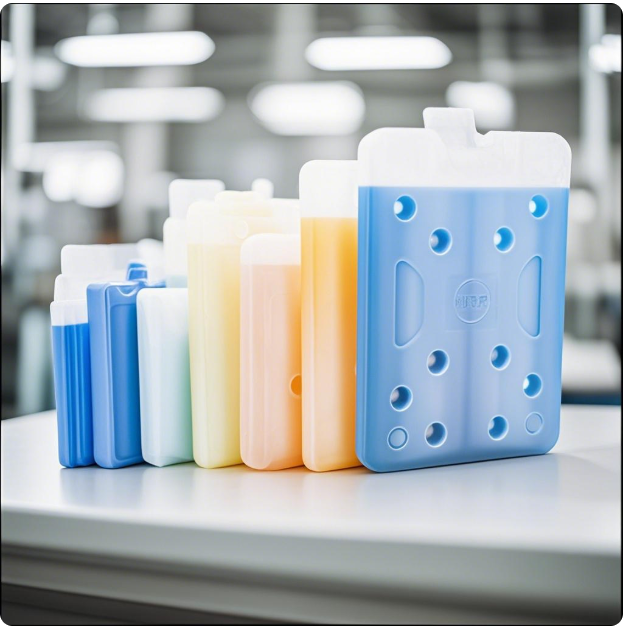
Cool Brick OEM Control From Brand Brief to Production
An embossed logo can be approved in minutes; an OEM coolant component may need years of controlled supply. That mismatch explains many failed launches. In a cool brick OEM project, branding, geometry, coolant, closure, manufacturing controls, and package claims must resolve into one released product definition. Otherwise, an attractive sample becomes the only reference while production changes remain invisible. The buyer should own or approve the requirements that matter, the factory should demonstrate repeatability, and the complete insulated packout should be qualified for its intended use. The brick alone cannot promise a payload range or shipping duration.
Begin With a Design-Authority Map
OEM has no single commercial scope in this market. It may mean a standard brick with a customer label, an existing shell filled to a buyer requirement, a dedicated color and carton, or manufacture to a buyer-owned drawing and material specification. Price comparisons are unreliable until each supplier states what stays standard and what changes.
Break the product into technical assets and assign an owner or approver for each:
application requirements and approved payload conditions;
external geometry, interfaces, tolerances, and dimensional datums;
shell, additives or colorants where relevant, closure, and coolant controls;
tooling, cavities, gauges, maintenance records, and modification rights;
label wording, artwork, unit codes, carton marks, and brand claims;
component methods, acceptance limits, and lot-release records;
complete-packout protocol, raw data, report, and operating instruction; and
future improvements, cost changes, alternate materials, and transfer rights.
Ownership can be mixed. The buyer may own the artwork and mold while the supplier retains proprietary coolant knowledge. That arrangement can work if the supplier commits to a controlled identity and functional specification, supplies the safety and classification information needed for the intended markets, and notifies the buyer before changes. Confidentiality should protect legitimate know-how without making the buyer unable to assess risk.
Tooling terms require more precision than “customer mold.” Define legal title, physical identification, storage, maintenance, insurance, access, repair approval, permitted products, exclusivity if any, transfer, and end-of-program disposition. Paying a tooling charge may not confer rights to the underlying platform or formulation. Commercial and legal advisers should resolve those rights before detailed work creates dependence.
Create a document hierarchy at the same time. A master product specification can reference the approved drawing, materials, coolant requirements, closure, label, unit packing, test methods, and change list. State which document governs if the catalog, quotation, drawing, sample, and report conflict. A web description or sales sample should never outrank a released specification.
Turn the Brand Requirement Into Factory-Measurable Controls
A useful specification converts the intended function into characteristics that production and inspection can observe. The most important attributes are not universal; they follow the box interface, coolant, payload sensitivity, handling, cleaning, and identification risks.
| Intended result | Controlled characteristic | Evidence before release | Boundary buyers should keep |
|---|---|---|---|
| Consistent fit in a fixed cavity | Dimensions, tolerances, flatness, cap projection, prepared-state geometry | Defined method, production samples, fit trial | A room-temperature showroom unit may not represent frozen fit |
| Repeatable thermal mass | Coolant identity plus fill or mass controls | Batch traceability, suitable measurement, actual variation | Filled mass does not prove formulation or package duration |
| Reliable containment | Shell condition, closure process, integrity criterion | Process parameters, challenge checks, leak-test records | One passed sample does not control every lot |
| Correct use at the pack line | Model, revision, orientation, preparation and lot marks | Artwork approval, legibility trial, line-clearance check | Brand color alone is weak variant control |
| Safe handling and cleaning | Inspectable surfaces, edges, compatible cleaning instructions | Use-specific handling and cleaning review | “Reusable” does not establish unlimited service life |
| Defensible market statements | Traceable material, test, and regulatory support | Claim review tied to jurisdiction and configuration | A material declaration does not qualify a shipping system |
| Stable freight presentation | Unit protection, carton count, orientation and pallet pattern | Pilot shipment and arrival examination | Cosmetic carton approval does not establish transit strength |
The table should become a control plan, not remain a design discussion. For each important characteristic, name the method, equipment, sample or frequency, acceptance limit, record, and reaction to failure. Separate critical leakage, wrong-material, or wrong-identity defects from minor appearance issues; one pooled defect rule may conceal very different consequences.
Measurement deserves design attention. A flexible curved shell can yield different thickness results when operators choose different locations or apply different pressure. Total mass may hide a heavy shell and low coolant fill. A leak test changes with pressure, dwell, temperature, orientation, and the definition of failure. Confirm that methods are repeatable, equipment is suitable, and challenge pieces or references show that the test can detect the defects it is meant to find.
Specify the state in which a characteristic is checked. Coolant expansion and freezing can change shape, so a warm dimensional inspection may not protect a tight frozen interface. Conversely, a frozen unit may carry temporary frost or condensation that affects a superficial reading. Use conditioning, datums, and timing that represent the requirement.
Avoid writing arbitrary tolerances. Tight limits increase measurement and scrap costs without adding value when the interface does not need them. Loose limits can change fill, contact, airflow, or closure. Establish limits from fit analysis, thermal design, prototype observations, production capability, and the accuracy of the measurement system.
Retire the One-Sample Approval Mindset
An OEM sample is evidence only for the way it was made. A machined shell, hand-filled prototype, or hand-applied label can answer useful questions, but it may not represent production materials, air content, closure, tolerances, or appearance. Identify every sample by configuration, manufacturing method, lot where available, and approved purpose.
Concept samples should resolve basic geometry, payload interference, orientation, grip, and branding location. Engineering samples should approach the intended materials, fill, closure, and conditioning behavior. Tool samples reveal cavity variation, flash, warpage, cap fit, and actual surface quality. Production-intent samples use the proposed site, tool, materials, line, operators, inspection, label, and secondary packing. A pilot lot tests the whole supply process at a meaningful scale.
A controlled visual reference can still help with color, surface, logo position, and obvious defects. It should not substitute for invisible requirements or statistical variation. Link it to the drawing and revision, store it appropriately, and define when it is replaced. The written specification remains the authority.
Thermal development should use production-representative bricks before final conclusions. The study identifies the insulated container, payload or justified simulant, load condition, brick model and count, preparation, arrangement, separators, sensors, ambient profile, duration, acceptance criteria, deviations, and raw-data records. Component integrity results support the brick; thermal results support only the tested complete configuration.
ISTA thermal procedures can provide a structured framework when the parcel-distribution scope matches the project. Standard 7E addresses thermal transport packaging used in parcel delivery, while Standard 20 is a design and qualification process for insulated shipping containers. An OEM should not describe a loose component as certified merely because it appeared in a chamber run. Verify the exact report, configuration, laboratory status, and permission behind any mark.
Robustness work can explore credible variation rather than only a nominal assembly. Depending on risk, that may include allowed brick variation, staging delay, payload quantity, seasonal challenge, pack orientation, or box reuse condition. The team should justify which condition is challenging. A hot profile may threaten the upper limit, while deeply conditioned coolant against a sensitive payload may create the more severe cold risk.
Factory Readiness Lives in Methods and Reaction Plans
Production readiness is not a capacity slide. Follow a pilot lot through incoming material approval, molding, filling, closure, inspection, coding, packing, and release. Ask where wrong inputs, mix-ups, underfill, deformation, leakage, or label errors can enter and how each is prevented or detected.
Raw-material control should identify approved resin, additives or pigment where relevant, coolant ingredients or prepared batches, closures, and labels. Similar generic names do not demonstrate equivalence. If a supplier, grade, or formulation changes, the buyer needs enough comparison evidence to decide whether documents, component checks, or packout work must be repeated.
At molding, review tool and cavity identity, first-piece approval, critical settings, alarms, preventive maintenance, and post-repair checks. At filling, examine line clearance, tank and hose identification, reconciliation, fill measurement, and rejected-unit control. At closure, verify the parameter and integrity strategy. Destructive sampling may be appropriate for some methods, but it should be supported by validated process controls and a defined containment response.
Reaction plans reveal whether the control system is real. If fill results drift, how far back is production contained? If a known-defect challenge is not detected, does the line stop? If one cavity produces warped parts, can the site isolate affected units? Who authorizes restart and lot release? A record of passing results is weak if no one knows what to do after a failure.
The buyer’s receiving plan should complement factory controls. Verify product identity, revision, lot, documents, carton condition, quantity, visible leakage or deformation, and selected measurable attributes based on risk. Periodic or change-triggered verification can address characteristics not repeated on every receipt. Supplier history may justify a documented adjustment in sampling, but not abandonment of traceability or critical-response rules.
An ISO 9001 certificate may support review of a named site’s quality management system within its scope. It is not product certification and does not prove thermal performance, contact suitability, process capability, or an effective leak test. Check certificate identity and scope, then examine the OEM’s product-specific evidence.
Put Claims and Changes Under the Same Quality Agreement
The quality agreement should reference the approved technical file and assign document control, lot definition, release, records, nonconformance, deviations, complaints, audit access where appropriate, retained evidence, corrective action, and change notification. “Shared responsibility” needs named functions and decision authority.
Claims deserve controlled versions just like drawings. A branded brick may be sold for consumer coolers, meal delivery, or professional transport, but evidence from one packout must not become a universal duration statement. Material status, component durability, system qualification, and regulatory-process claims should remain distinct. The brand owner approves public wording and prevents distributors from expanding it.
Where a Branded Sample-Collection Kit Can Drift
Imagine a diagnostics business wants a slim brick with a molded logo for a reusable sample case. The first hand-filled sample fits and looks ready for launch. During the technical review, staff discover that the embossed area changes frozen flatness, the intended production line uses a different closure process, and the logo makes the revision code difficult to read.
The team preserves the branding goal but separates approvals. It moves the permanent identity mark away from the decorative feature, defines frozen-state interface limits, and requests tool-made samples from the actual filling and closure line. Packing staff test identification under condensation and with gloves. The complete case is evaluated with representative sample loads, a controlled separator, mapped sensor locations, and relevant route challenges.
When a coolant sub-supplier later proposes a lower-cost input described as equivalent, the OEM provides formulation-control and comparative evidence before any substitution. Quality reviews safety information, component verification, and packout impact. Cost work proceeds only after written disposition. The logo remains constant because the technical baseline underneath it is controlled.
List change categories in advance. Coolant ingredients or source, resin and colorants, closure, dimensions, tooling or cavity, manufacturing or filling site, fill target, critical process, test method, label, carton, and pallet configuration may affect approved use. Define which require prior approval, which data accompany notice, and how affected inventory is identified. Urgency or a supplier’s use of the word “improvement” does not establish equivalence.
FAQ
Is private labeling the same as a cool brick OEM project?
Not necessarily. Private labeling can mean applying customer artwork to a standard product. OEM may involve buyer-controlled geometry, material, coolant, tooling, process, or performance requirements. The terms are used inconsistently, so define the exact product scope, design authority, evidence, and change rights in the contract. Technical control should follow what changes, not the acronym.
Who should own the coolant formulation?
Either party can own it, and a supplier may retain confidential know-how. The buyer still needs controlled identity, key functional requirements, current safety and market information, manufacturing consistency, and advance change notification. A confidential review by qualified personnel or an agreed third party may protect both interests. The arrangement must allow meaningful change and risk assessment.
Does a molded logo require complete packout retesting?
Assess how the feature affects geometry, wall distribution, material, frozen fit, contact, airflow, cleaning, and identification. A shallow decorative change may need limited verification; a feature that changes a critical interface may justify system work. The product owner’s technical and quality functions should document the decision. Appearance alone cannot establish low risk.
What must be approved before mass production?
Approve the released technical file, design ownership, production-intent samples, component results, complete-packout evidence, factory control plan, measurement methods, artwork, lot coding, packing, receiving plan, quality agreement, change list, and claims. Any remaining difference between the approved sample and routine process should be documented and assessed before commercial release.
The Commercial Release Is a Technical Decision
A strong cool brick OEM launch replaces sample-based confidence with a controlled spine: design authority, measurable characteristics, representative prototypes, capable production, qualified packout, disciplined claims, and advance change review. Each piece answers a different question, and none should be stretched beyond its evidence.
Release volume only when marketing, engineering, quality, operations, and the manufacturer identify the same revision and know how to respond when it fails. That discipline protects both the branded promise and the temperature-sensitive product behind it.
About Tempk
At Tempk, we can discuss rigid ice-brick OEM options involving an existing format or project-specific dimensions, coolant requirements, shell presentation, labels, and packing. We start by separating branding preferences from the component characteristics that affect fit, conditioning, integrity, and system evidence. Buyers retain approval of claims and the complete packout.
Share your container interface, payload, route, intended customization, and quality-document needs to request a production-focused OEM feasibility review before tooling or volume release.
Cool Brick ODM Design Control From Brief to Launch
Cool Brick ODM Design Control From Brief to Launch
ODM is useful when the buyer can define the cold-chain problem but wants the supplier to design more of the component solution. It becomes risky when a platform, formulation, and test graph arrive as a finished answer before the application is understood. A cool brick ODM partner may contribute geometry, materials, coolant, closure, tooling, and manufacturing knowledge; the buyer still owns the payload requirement and the decision to use the final packout. The project should reduce uncertainty in stages, record what remains unproven, and avoid treating a supplier-designed brick as a qualified shipping system by itself.
Prove That ODM Fits the Problem
Choose ODM when there is a meaningful component-design gap. Examples include a box interface that standard bricks cannot occupy efficiently, recurring orientation errors, a closure vulnerable to the return loop, or a need to integrate the coolant with an existing tray or barrier. A supplier platform can also be valuable when its manufacturing limits are already understood and only focused adaptation is needed.
Do not start ODM because the application is undefined. If the buyer cannot state the payload’s authorized condition, heat and freezing sensitivities, representative load, container, route, delays, opening events, preparation equipment, and receiver process, the supplier must invent assumptions. Those assumptions may produce an elegant brick for the wrong system.
Compare the alternatives before authorizing development. A standard component may meet the need with a better holder, separator, label, or work instruction. An OEM route is more appropriate when the buyer already owns the complete design and wants build-to-spec production. ODM earns its added tooling, evidence, intellectual-property, and continuity work only when supplier design input resolves a measured constraint.
Define the design scope explicitly. Is the ODM responsible only for the brick, or also for a holder, insulated container, packout proposal, test coordination, or operating instructions? Who chooses test conditions? Who approves deviations? Who controls public claims? A commercial label such as “complete solution” should not leave those decisions unnamed.
Create an exit criterion as well as a launch goal. The buyer should know what technical file, tooling access, data, alternate supply options, and rights remain if the project stops after feasibility or the supply relationship ends. Dependency may be acceptable, but it should be understood before the design becomes embedded in a commercial kit.
Own the Outcome Brief and Its Assumptions
An ODM brief should define outcomes tightly while leaving room for engineering. Begin with controlled product information: required transport conditions, unacceptable exposures, payload geometry and mass, product starting state, contact limitations, and the function authorized to assess an excursion. Do not ask the coolant designer to infer product stability from a common industry range.
Describe the full container interface. Provide internal dimensions and tolerances, insulation and lid construction, trays, pockets, closures, payload envelope, and the controlled revision. State whether the container is fixed or co-developed. If multiple box versions exist, identify which one governs rather than allowing an average geometry.
Map the lane by time and handover. Origin staging, pickup, vehicles, hubs, customs, last-mile stops, receiver hours, seasonal exposure, delay, and box opening can matter more than distance. Historical lane data can inform the challenge, while a documented risk assessment selects test conditions. “International air” or “summer route” is not an adequate thermal profile.
Operations contributes another set of design inputs: freezer or conditioning equipment, rack clearance, airflow, shift pattern, maximum practical staging, glove use, pack-line sequence, cleaning agents, return segregation, available storage, and traceability. A concept that requires a preparation state the site cannot reproduce is not feasible, regardless of its material properties.
Separate requirements, preferences, and unknowns. Fit, payload protection, identifiable orientation, and evidence for a named packout may be requirements. Brand color or a recessed handle may be preferences. The effect of minimum payload, cleaning on a label, or densely stacked conditioning may be unresolved questions. This separation gives the ODM permission to trade preferences without weakening requirements.
Maintain an assumption ledger. Every proposal should state the coolant starting state, payload, box, ambient exposure, arrangement, duration, use pattern, and reuse assumptions behind it. Assign an owner and closure evidence. An assumption that remains open at design freeze becomes an explicit limitation, not a silent foundation for a claim.
Compare Concepts as Testable Decisions
ODM proposals should be compared by the knowledge they create, not by rendered appearance or a single property value.
| Design uncertainty | Supplier option or experiment | Decision evidence | What still requires system proof |
|---|---|---|---|
| Standard platform may not fit after preparation | Prepared-state dimensional samples and interface study | Geometry, tolerance, cap and closure clearance | Thermal gradients and route performance |
| Coolant behavior may create local cold risk | Controlled material options plus comparative mapped packouts | Relative response under the same configuration | Product acceptance in the released commercial system |
| Broad thin face may condition unevenly in dense racks | Instrumented conditioning trial at representative freezer loading | Time and position effects on starting state | Performance after operational staging and packing |
| Orientation errors may defeat the layout | Keyed feature, contrasting identity, or holder prototype | Unfamiliar packers complete a usability trial | Thermal effect of the final geometry and barrier |
| Closure may not tolerate reuse handling | Production-representative integrity and handling challenges | Failure modes and retirement criteria | Actual field life in the buyer’s return loop |
| Existing report may not cover a branded variant | Configuration gap assessment | Differences in material, geometry, fill, label, and process | Retesting required by the documented risk decision |
This matrix forces each concept to disclose a question, an experiment, and the remaining boundary. It also helps procurement compare development proposals fairly. A lower tooling price is not necessarily better if the supplier has excluded representative samples, raw data, pilot work, or change control.
Thermodynamic choices require context. Coolant stores sensible heat as its temperature changes and may store substantial latent heat during a phase transition. A nominal transition value does not make the brick a thermostat. Shell resistance, surface area, thickness, payload heat capacity, contact, airflow, insulation, and external conditions produce temperatures that vary by location and time.
Geometry creates operational tradeoffs. A wide thin panel can use a wall efficiently and provide broad heat exchange, but it may reduce payload width or overcool an adjacent surface. A compact thick body carries mass in less face area but can take longer to reach a uniform initial state. Ribs improve stiffness or stacking while changing airflow and cleaning. A protected cap can resist impact but become difficult to inspect. Ask the designer to connect every feature to a requirement and a verification method.
Simulation can narrow options when its inputs and boundary conditions are visible. It should guide physical experiments and sensor placement, then be checked against measured results before extrapolation. A colorful model is not qualification. Likewise, laboratory analysis of a coolant sample can control formulation characteristics but cannot reproduce a filled component inside an insulated shipper.
Include misuse and lifecycle in concept review. Can similar variants be mixed? Can a brick be installed backward? Will frozen units stick together? Can residue collect in a recess? Does a damaged closure remain visible? Does the proposed shell permit practical inspection before reuse? Risk controls built into the shape are usually stronger than a warning that packers routinely overlook.
Environmental language should remain evidence-based. Lower material mass can conflict with durability; reuse introduces return transport, washing, conditioning energy, loss, and retirement; recyclability depends on local systems and preparation. An ODM should provide material and disassembly information that supports a buyer assessment, not a universal “sustainable” badge.
Use Gates That Retire Specific Uncertainty
A development gate is useful only when it closes named questions and authorizes a defined next expense. The record can be proportionate to risk, but every gate needs evidence, unresolved issues, approvers, and a continue, revise, pause, or stop decision.
Problem gate. Approve the outcome brief, responsibility map, container revision, assumptions, priority conflicts, intellectual-property framework, and evidence plan. No shape should be treated as preferred before this gate.
Concept gate. Compare standard platforms, adaptations, and new designs. Review geometry, coolant approach, closure, manufacturability, conditioning, usability, safety information, cost structure, and key risks. Select a direction because it best addresses the controlled problem, not because it carries the most coolant.
Engineering gate. Release a preliminary drawing and functional specification, then verify fit, dimensions, fill-related controls, closure, identity, handling, and cleaning using identified samples. Early machined or hand-filled prototypes are marked as nonproduction and limited to the questions they can answer.
Production-intent gate. Use the proposed tool, materials, filling and closure process, site, normal inspection, label, and master packing. Compare cavities and production positions where relevant. Demonstrate measurement methods, reaction plans, lot coding, and the ability to contain a failure.
System gate. Evaluate the complete insulated package with the intended brick revision, preparation, count, arrangement, payload or justified simulant, starting conditions, sensors, external profile, duration, acceptance criteria, and deviations. ISTA Standard 7E and Standard 20 can provide structured parcel thermal testing and qualification when their scope fits. They do not certify the loose ODM component or an untested branded variation.
Operational gate. Representative staff receive, condition, stage, pack, monitor, dispatch, recover, clean, inspect, and retire units using the draft instructions. This trial reveals workarounds and status errors that careful laboratory assembly may conceal. The receiver’s data and deviation process should be included.
A Development Decision in Practice
Imagine a laboratory supplier uses a compact insulated case with a central reagent rack. Standard bricks occupy too much rack space and can be inserted in two orientations. The buyer asks an ODM for a U-shaped coolant body that appears to solve both problems.
The outcome brief reveals additional constraints: one rack position is sensitive to direct frozen contact, the freezer shelves limit overall height, and returned cases are cleaned at a different site. The first concept fits the warm case but bows after preparation and leaves a hard-to-clean inner corner. A second design uses two keyed side components and a controlled separator instead of one complex U shape.
Comparative trials map cold and warm locations with representative rack loads. Tool-made pilot units expose one cavity with greater cap projection, so the factory corrects the process and repeats prepared-state fit. Operations then finds that the two components can be mixed with an older program; permanent identifiers and separate status locations are added before system release.
The selected design is not the most novel. It advances because its geometry, preparation, factory controls, packout result, cleaning, and identification are all supportable. The abandoned U-shaped concept remains documented as knowledge rather than resurfacing later as an unexplained cost-saving idea.
Keep a Buyer-Usable Technical File and Exit Path
The ODM may own the base platform, but the buyer needs enough controlled information to operate, investigate, and assess changes. The file should identify the product and revision, site and platform or tool, drawing, tolerances, materials and coolant at the agreed disclosure level, closure, unit code, label, master packing, preparation, component criteria, packout reports, deviations, approved claims, and change history.
If the formulation is proprietary, agree on a protected route for qualified review. The buyer still needs safety and transport information, functional attributes and ranges, batch controls, traceability, and advance notice before substitution. A confidential formula is compatible with control; a black box that can change without assessment is not.
Define rights to drawings, molds, modifications, data, models, methods, reports, brand elements, improvements, and post-termination supply. Tool ownership, design ownership, and permission to reproduce are separate legal questions. Raw test data and metadata should remain accessible under agreed conditions so a later deviation or change comparison can be defended.
Continuity plans must distinguish availability from equivalence. Another shell with the same nominal volume can differ in surface area, fit, coolant, preparation, closure, and system performance. Potential alternates can be identified early, but they remain unapproved until the documented verification and qualification pathway is complete. A backup site using the same drawing may still require assessment of materials, equipment, operators, methods, and records.
Post-launch review connects field evidence to design control. Trend leakage, warpage, misidentification, conditioning failures, packout deviations, temperature events, cleaning difficulty, and losses by lot and configuration. Preserve returned samples, logger files, packing records, and route facts during investigations. Do not blame the brick automatically, but do not exclude it simply because incoming inspection passed.
FAQ
How is cool brick ODM different from OEM?
In common practice, an ODM contributes more of the product design or adapts a supplier-owned platform, while an OEM more often manufactures to a buyer-controlled definition. Contracts vary, so allocate design authority, tooling, formulation control, data, qualification, claims, and changes item by item. The acronym does not determine accountability for the payload or final packout.
When is an existing ODM platform preferable to a new mold?
Use an existing platform when production-representative samples meet the interface, preparation, identification, integrity, and system-evidence needs with limited adaptation. A new tool is justified when it solves a documented requirement that standard options cannot. Include development, qualification, inventory, intellectual-property, and continuity costs in the decision rather than comparing unit prices only.
Can the buyer rely on the ODM’s thermal report?
Only after reviewing the exact brick, coolant state, box, payload, arrangement, sensor locations, ambient profile, duration, acceptance criteria, and branded changes. A relevant report can reduce development work; a mismatched one cannot qualify the buyer’s package. Document the gap assessment and authorize any additional testing through the product owner’s quality process.
How should a proprietary coolant change be handled?
Require advance notice, the reason for change, controlled functional comparison, safety and transport information, production impact, affected lots, and evidence sufficient for confidential technical review. Assess preparation, physical fit, component controls, packout performance, labels, and market documents. Do not approve solely because the nominal transition description appears unchanged.
Release a Defensible Design, Not an ODM Story
A disciplined cool brick ODM project begins with a buyer-owned outcome and ends with a supplier-designed component whose assumptions, tradeoffs, evidence, production, and changes remain visible. Development gates spend money only after the preceding uncertainty has been reduced, while the technical file preserves knowledge beyond the current project team.
The final commercial asset is not the shape. It is a design that can be made, identified, conditioned, packed, monitored, investigated, and changed without disconnecting claims from proof.
About Tempk
We can use Tempk’s rigid ice-brick platforms as a starting point or discuss a new ODM direction when a defined packout constraint remains unresolved. Our review can cover geometry, coolant requirements, shell presentation, labeling, packing, sample stages, and the assumptions behind a proposal. The buyer controls the payload requirement and final system approval.
Share the container interface, route, preparation equipment, reuse process, and nonnegotiable outcomes to request an ODM feasibility path with explicit evidence gates.
How to Evaluate a Cool Brick Factory Before Scaling

Evaluating a Cool Brick Factory Before You Scale Supply
A cool brick factory should be judged by what it can reproduce, trace, and release—not by its best sample. The buyer needs evidence that shell dimensions, coolant identity, fill, closure, labeling, and packing remain controlled across routine production. That evidence still stops at the component. A consistently manufactured brick does not make an untested insulated package temperature controlled; the container, payload, coolant preparation, arrangement, route profile, and operating procedure determine the complete result.
The strongest assessment therefore connects two questions: can this site make the approved brick repeatedly, and can your organization keep that exact brick inside the configuration it qualified?
Define the Evidence You Need Before the Factory Tour
Factory reviews become generic when the buyer arrives with a universal checklist. Start instead with the ways a brick could disrupt your own operation. A dimensional shift may block a narrow container slot. Inconsistent coolant fill may change available thermal mass. A weak closure can leak into a food parcel or reusable tote. An unreadable lot code can prevent containment when a complaint appears.
Translate those risks into a short list of critical attributes. Depending on the application, this may include the controlled model and revision, shell material, prepared-state dimensions, fill basis, coolant identity, closure integrity, permanent or applied markings, exterior cleanliness, and export-carton arrangement. Do not automatically make every cosmetic feature critical. A small surface variation may be harmless, while a subtle change around a cap or seam may be functional.
For each attribute, identify four elements before the visit:
The approved requirement and its source, such as a drawing, specification, artwork, or packing standard.
The manufacturing step that creates the characteristic.
The factory control or test intended to keep it within requirement.
The buyer control that confirms identity or condition after transport.
This preparation prevents an impressive certificate folder from distracting the team. It also lets procurement, quality, packaging engineering, and operations agree on what approval means. Procurement can assess commercial continuity; quality can evaluate evidence and deviations; engineering can identify attributes that affect packout behavior; operations can determine whether the part is usable at scale.
Ask the factory for documents in advance, but reserve the right to select records during the assessment. Useful pre-read items may include the proposed product specification, process flow, quality plan, lot-code logic, example release record, current certificate details, change-notification procedure, and master packing specification. Their purpose is to sharpen questions, not complete the audit from a desk.
Trace One Lot From Raw Material to Released Cartons
The most revealing audit route follows a real production lot. Choose a recent or representative order and work backward from finished cartons to shell inputs, coolant batch, closures, labels, production equipment, checks, deviations, and release. Then choose one important input lot and trace it forward to the finished goods that consumed it. This tests whether traceability works in both directions.
| Point in the lot history | Evidence to sample | Decision the evidence should support | Concern to investigate |
|---|---|---|---|
| Material receipt | Item identity, supplier status, lot, inspection or release status | Only approved inputs entered production | Generic material name or an unapproved substitution |
| Shell manufacture | Tool and cavity where relevant, setup, first-piece and in-process results | Critical geometry stayed under control | Pooled averages hide one source of variation |
| Coolant preparation | Authorized formula or controlled input, batch record, equipment and reconciliation | The intended coolant reached the intended line | Similar formulations can be mixed or misidentified |
| Filling and closing | Fill-control data, closure settings, integrity checks and reactions | Units contain and retain the specified amount | A pass mark has no method or failure response |
| Finished release | Product revision, lot, results, deviations, quantity and approver | The lot met agreed requirements before shipment | Records were completed after release |
| Carton and pallet build | Packing revision, count, orientation, lot label and transport condition | The right units will arrive identifiable and protected | Mixed lots or exposed closures undermine receiving |
This table is useful only if the auditor asks for actual examples. A procedure explains the intended system; a completed record shows how the site used it. Look for actual observations, defined acceptance limits, attributable corrections, and a clear decision when something fell outside control.
Status identification should be visible on the floor and in the inventory system. Incoming, quarantined, released, rejected, rework, and finished material should not depend on an operator remembering which pallet is which. If rework is allowed, examine the approved route, technical limits, traceability, and repeat inspection. Reusing coolant or plastic within production may alter an approved product unless the specification and process explicitly account for it.
Record timing matters. Measurements entered while the work occurs are more credible than a packet recreated before shipment. For electronic records, ask how access, master data, changes, and backups are controlled. For paper, corrections should remain legible and attributable. The necessary formality depends on the application and agreement, but the record must support an investigation months later.
Examine the Process at Its Natural Failure Points
A hard-shell coolant brick may involve molding or sourcing the shell, preparing or receiving coolant, filling, closing, cleaning, inspecting, coding, and packing. Construction differs among products, so ask the site to explain its actual flow. Do not impose a test method merely because it is familiar; connect controls to the design’s credible failure modes.
Shell geometry and low-temperature fit
Molding variation can appear as warpage, flash, uneven surfaces, weak corners, closure-interface defects, or dimensional drift. Review tool identity, cavity differences where relevant, startup approval, process limits, maintenance, and reaction to alarms. Measurement also needs definition. Curved plastic parts can yield different readings depending on datum, fixture, pressure, location, and temperature.
Room-temperature dimensions may not answer the operating question. Coolant can change volume as it changes state, and a broad plate may alter profile after preparation. If the brick must enter a molded recess, include a prepared-state fit or gauge in design verification and, where risk supports it, routine or periodic control. Do not invent a universal expansion allowance; require a rationale for the specific shell, fill, and preparation.
Coolant identity and fill control
At the mixing or connection point, examine formula authorization, input identification, tank and hose status, line clearance, batch coding, equipment cleanliness, and reconciliation. When multiple coolant types share a facility, the site needs more than color recognition to prevent a wrong-medium event.
Ask what the filling measurement proves. Gross unit mass can be useful, but it combines shell, closure, label, and coolant. If shell mass varies materially, stable gross mass can conceal lower or higher fill. The appropriate control may involve shell mass, net fill, gross mass, volume, or a validated relationship among them. The factory should define tolerances, equipment suitability, sampling, and the action after a failed result.
Closure and integrity
Caps, plugs, welds, or other closures fail in different ways. The control strategy may combine process parameters with non-destructive or destructive integrity checks. Review method sensitivity, challenge checks, sampling rationale, dwell or conditioning where relevant, acceptance criteria, and containment after a failure. “Operators look for leaks” is not enough when leakage is a critical defect.
Exterior residue can be mistaken for leakage and may contaminate packing areas, so cleaning and final inspection have practical importance. Inspectors need written examples that distinguish functional defects from acceptable appearance. Rejected units should not return to the line through an informal repair.
The audit should also challenge peak conditions. Extra shifts, temporary labor, hurried changeovers, delayed maintenance, or an alternate filling line can change the process. Ask which controls are never bypassed to recover schedule and how competence is confirmed when staff or equipment changes.
Test Commercial Capability With a Change and a Disruption
Production capacity is not a headline number. It is the output that the complete process can deliver after other commitments, maintenance, changeovers, inspection, yield, and packing are considered. A molding machine may produce shells faster than the filling, closure, or release steps can handle. Ask for a project-specific capacity model and evidence of comparable demonstrated output, then identify the limiting step.
Next, run two tabletop exercises with the supplier.
In the change exercise, assume the approved pigment is unavailable or the coolant input source changes. Who opens the assessment? Which technical information is compared? When is the buyer notified? How are old and new lots separated? Who decides whether fit checks, component testing, or complete-packout reassessment is required? A supplier’s internal label of “minor” does not decide customer impact.
In the disruption exercise, assume a mold is damaged or the approved filling site cannot operate. A second site, alternate tool, or substitute product is not automatically equivalent. Equipment, utilities, personnel, process limits, sub-suppliers, and packing can differ. Continuity options should be reviewed in advance and released through change control rather than introduced during an emergency.
A pilot-lot scenario
Imagine a buyer approving a flat brick for a reusable diagnostic shipper. Pilot cartons arrive intact and room-temperature checks meet the drawing, but some prepared units rock against the insert and prevent consistent lid closure. The factory’s records pool measurements across several mold cavities, so the source is initially unclear.
A useful response is not simply to sort the buyer’s inventory. The parties identify prepared-state flatness as a functional attribute, link output to the relevant tooling source, examine process and packing influences, and define a reproducible measurement or fit check. Corrected production-intent units then return to component review and the finished packout assessment. This response demonstrates capability because it contains, investigates, corrects, and verifies the problem.
Export readiness should face the same scrutiny. Review the actual master carton, cap and edge protection, pallet build, lot visibility, language control, and document responsibility. A pilot shipment through the intended freight mode can reveal compression, moisture, abrasion, or mixed-carton problems that departure photographs cannot.
Make Supplier Approval Conditional and Maintainable
Factory approval should identify the exact legal or operating site, product, revision, material or formula controls, process scope, open actions, incoming-inspection plan, change-notification expectations, and re-evaluation triggers. A trading company can remain part of the relationship, but the underlying manufacturing route and escalation path should be visible.
Buyer receiving checks should complement factory controls. Confirm product and revision, lot, carton condition, quantity, documents, visible integrity, and selected critical attributes according to risk. Define defect classes and response before receipt. Wrong coolant or leakage should not be pooled with minor marks under one generic acceptance rule. The procedure should state quarantine scope, evidence retention, supplier notification, permitted resampling, and disposition authority.
Supplier performance needs more than on-time delivery. Trend document errors, identity mistakes, dimensions, mass indicators, leaks, transport damage, complaints, investigation quality, corrective-action effectiveness, and unauthorized changes. Low complaint counts can be misleading if users discard failed bricks without reporting them, so make evidence capture easy.
Keep claim boundaries clear. A quality-management certificate supports only its stated organization and scope; it does not certify the brick’s thermal outcome. WHO’s E005 category covers defined coolant packs for immunization equipment and has product-specific specifications and verification routes. That framework should not be generalized to every prefilled commercial brick. ISTA Standard 20 and Standard 7E address insulated shipping container design and thermal transport packaging under defined processes and profiles. They do not turn an entire factory catalog into certified packouts.
The final shipping system still needs evidence for its insulated container, payload, coolant model and count, starting state, arrangement, separators, ambient challenge, sensor locations, closure, duration, and acceptance criteria. When the factory changes a relevant input or site, the product owner determines what prior evidence remains applicable.
Environmental review also spans more than the factory. Material and fill, production waste, packing, freight, useful durability, return logistics, washing, preparation energy, loss, local recycling or disposal, and payload protection all affect the outcome. Reusable is a design intention until the network achieves and records reuse. For European Union programs, Regulation (EU) 2025/40 entered into force in 2025 and states a general application date of August 12, 2026, while individual duties and later measures require current classification and legal review.
A defensible factory decision is therefore conditional: approve the demonstrated process for the named component and site, verify incoming identity and condition, control changes, and qualify the component inside its real packout. That is stronger than approving a building, a certificate, or a sample in isolation.
Frequently Asked Questions
Should every cool brick receive a leak test?
Not necessarily. The appropriate strategy depends on closure design, process controls, test sensitivity, whether the method is destructive, and the consequence of failure. A buyer should require evidence that the chosen approach detects relevant defects and expands containment when results fail. A universal inspection frequency without design context can create cost without improving assurance.
How should a buyer challenge a factory’s capacity claim?
Ask for the calculation by product, tool, process step, shift pattern, normal downtime, changeover, inspection, yield, other commitments, and packing. Compare the model with recent demonstrated production for a similar configuration. Identify the bottleneck and confirm what changes during peak demand. The meaningful number is controlled finished output available to your forecast.
Does a factory certificate qualify a pharmaceutical packout?
No. Verify the certificate’s standard, issuing body, site, validity, and scope, but assess the product and package separately. Pharmaceutical use may require product-specific quality review, controlled component evidence, and qualification of the complete insulated system. A factory or material certificate is not a universal performance or regulatory approval.
When should an approved factory be reassessed?
Use risk and evidence rather than one fixed interval. Significant material or coolant changes, tool transfer, another production site, new critical equipment, recurring functional defects, weak investigation, poor change notification, or a new high-risk use can trigger review. Routine performance trends help determine whether the next assessment can be focused or must be broader.
About Tempk
At Tempk, we offer rigid ice-brick formats and project discussions covering component dimensions, shell details, coolant options, labels, and shipment packing. A factory review is most useful when you share the intended container, preparation method, payload, route, target market, expected demand pattern, and the attributes your quality team considers critical. We can then organize product information and samples around those questions. Before scaling, ask us to align the offered revision, manufacturing evidence, lot identification, change expectations, and pilot requirements with your supplier-approval process; the finished packout should still be qualified for its intended use.