


Perishable Food Shipping Packaging: Practical Packaging Guide for Buyers
Perishable Food Shipping Packaging: Practical Packaging Guide for Buyers
Perishable Food Shipping Packaging: How to Choose a Reliable Cold-Chain Packout
Perishable food shipping packaging should be chosen from the route backward, not from a catalog page forward. Start with the product condition required at receipt, the shipment duration, the handover points, and the receiving process. Then decide what insulation, coolant, carton, and instructions can realistically support that profile. For meat, seafood, dairy, meal kits, prepared foods, fresh produce, chocolate, bakery items, and frozen desserts, this is the difference between a cold-looking parcel and a controlled, repeatable packout.
This article focuses on practical buying decisions. It separates packaging components from qualified performance, shows what to ask suppliers, and explains where food safety, dry ice handling, moisture control, and sustainability affect the final choice.
Define Acceptable Arrival for Each Food Category
The most useful first step is to describe what acceptable arrival means. For meat, seafood, dairy, meal kits, prepared foods, fresh produce, chocolate, bakery items, and frozen desserts, acceptance may involve temperature, appearance, moisture, product texture, carton integrity, safety instructions, or documented receiving checks. If the team cannot define acceptance, it will be tempted to buy packaging by material name or supplier claim. That usually creates either under-protection or unnecessary cost.
Perishable foods do not share one temperature rule; chilled, frozen, and heat-sensitive products each need a confirmed target condition and a packout that supports it. This sentence should be turned into a practical operating requirement for each SKU group. A frozen item, a chilled item, and a heat-sensitive item may travel in similar cartons, but they do not share the same failure mode. Define the failure first: thawing, softening, condensation, bruising, leaking, temperature excursion, crushed retail pack, or missing dry ice information.
Once the acceptance condition is clear, compare materials against that condition. The question is no longer whether one liner is generally better than another. The question becomes whether the selected combination of insulation, coolant, product placement, carton strength, and receiving instruction supports the exact shipment profile.
Map the Route Before Building the Checklist
A route profile is a short operational description of how the shipment moves. It should include product starting condition, packing location, staging time, carrier service, expected dwell points, season, receiver type, and what happens if delivery is delayed. This profile does not need to be complicated, but it should be honest. A package that performs in a controlled test can fail if the real route includes a warm dock or long porch exposure.
The component list should then be built outward from the food. Typical elements include primary food packaging, secondary leak or moisture control, insulation, coolant or refrigerant, outer carton, labeling and handling instructions, receiving checklist. Each element should have a reason. The inner wrap protects the product. Moisture control protects the carton and presentation. Insulation slows heat gain. Coolant manages thermal load. The outer carton handles compression, labeling, and carrier sorting. If an element has no clear function, it may be adding cost without reducing risk.
Route matching also prevents overconfident substitutions. A thermal bag used for driver delivery may not work as an insulated parcel shipper. A box liner that works for chilled food may not protect a frozen dessert. A dry ice packout may not be suitable for a product that can be damaged by extreme cold or for a lane where the shipper is not prepared for dry ice markings.
| Packaging question | What a strong answer includes | What to avoid |
|---|---|---|
| What condition must arrive? | Clear product state, visual requirement, and receiving action | Vague language such as keep it cold. |
| Which route is being protected? | Carrier, duration, handoffs, season, and receiver type | Using one packout for every lane without review. |
| How is coolant managed? | Conditioning, placement, separation, and dry ice rules if used | Adding more coolant without checking product damage or labels. |
| Is the packout repeatable? | Simple pack order and production-like trial | A sample assembled differently from warehouse reality. |
| What evidence supports it? | Test context, supplier specification, and receiving checks | Unqualified hold-time claims or broad compliance promises. |
Control Leaks, Moisture, Movement, and Instructions
Temperature is only one way a food shipment can fail. Moisture can soften cartons, stain labels, damage gift packaging, and make a parcel feel unsafe. Movement can crush retail boxes or shift coolant away from the area it was meant to protect. Communication failures can cause receivers to touch dry ice, leave products out, or misjudge what condition is acceptable. Good perishable food shipping packaging addresses these non-temperature risks deliberately.
Moisture control may involve sealed primary packaging, absorbent layers, leak-resistant bags, or materials that tolerate condensation. Movement control may involve right-sized cartons, dividers, firm void fill, or a liner that fits without collapsing. Communication may include plain handling language, dry ice caution where applicable, and receiving instructions that match the food category. These details are small compared with the insulation choice, but they often decide whether the shipment feels professionally handled.
The buyer should also consider carton strength under real conditions. A carton that is strong when dry may weaken if exposed to condensation or product leakage. A liner that looks neat when empty may deform under product weight. A coolant pack that sits securely in a sample may slide during parcel sorting. Production trials should look for these practical failure points.
Use Supplier Claims Carefully
Supplier data is valuable when it is specific. Ask what was tested, how it was packed, what ambient profile was used, where probes were placed, and what counted as a pass. A claim that a package supports a certain duration may be useful for comparison, but it should not be treated as a universal route guarantee. Payload, coolant, season, and carrier exposure can change the result.
Compliance language needs the same caution. Packaging can support food safety or carrier acceptance, but it does not automatically make a shipment compliant in every market. Dry ice may require package marks and safe venting. Some foods may require specific temperature control or documentation. Export shipments may require additional review. The safest approach is to confirm requirements with the quality team, carrier, and applicable local rules before launch.
A mature supplier discussion includes limits. Ask where the proposed packout should not be used. Ask what change would trigger retesting or review. Ask whether the sample and production materials are identical. Ask how material changes are communicated. These questions protect buyers from relying on attractive but incomplete claims.
A Multi-Product Warehouse Scenario
A food brand ships meal kits, cheese, and dessert samples from the same warehouse. The team cannot safely use one standard box for every SKU because moisture, temperature range, coolant contact, and receiving expectations change by product. A route-based review would not start with a catalog. It would start with the product group, desired arrival condition, expected dwell time, carton presentation, and receiver action. From there, the buyer can decide whether to test an insulated box liner, a rigid insulated shipper, a thermal bag for local delivery, or a seasonal coolant layout.
The first sample should be packed like production. If warehouse staff will pack quickly, the trial should not rely on a careful one-off arrangement. If coolant will be conditioned in an existing freezer, the trial should use that same process. If consumer shipments include an instruction card, the trial should include it. The goal is not to create a perfect demonstration; it is to discover whether the packout works under the operating conditions the business will actually use.
After the trial, review the failure points in specific terms. Did the product condition change? Was the carton wet? Did the coolant move? Did the receiver understand the instructions? Did the packout fit the packing bench? This type of review produces better improvements than simply ordering a thicker liner or more coolant.
Cost and Sustainability for Perishable Routes
Cost and sustainability are often discussed separately, but they share the same root: fit. A right-sized package reduces freight waste, storage space, coolant demand, and material disposal. A failed shipment wastes everything in the box. A reusable component can be a strong option on a controlled return route, while a recyclable or easily disposable liner may fit one-way consumer shipping better.
right-sized packaging, recyclable liners where suitable, reusable refrigerants on controlled lanes, and reduced product waste from better route planning are practical options only when they match the route. Do not force reuse where return logistics are weak. Do not choose a light material if it increases product loss. Do not choose a high-performance system for a low-risk local lane without checking total cost. The best decision balances product protection, labor, storage, freight, waste, and customer acceptance.
Procurement teams should compare total operating impact rather than unit price alone. Review material cost, packing time, freezer or storage needs, carton cube, damage or rejection rate, customer service burden, and disposal or return instructions. This gives buyers a better view of value than simply selecting the lowest-cost insulated component.
Final Buying Checklist for Perishable Food Shipping
Before approving perishable food shipping packaging, confirm five things. First, the product condition required at arrival is written clearly. Second, the route profile is realistic, including dwell and receiver behavior. Third, the coolant choice is compatible with the product and carrier rules. Fourth, the package has been trialed with production-like packing. Fifth, the supplier has provided specifications and any available test context without broad promises.
Also confirm what will be reviewed after launch. Cold-chain packaging should not be a one-time decision. Season, carrier service, product mix, order size, and customer expectations can change. A packout that works in spring may need adjustment in summer. A small SKU change may require a different void fill or coolant layout. A new carrier may introduce different dwell points.
When the checklist is treated as part of operations, packaging becomes easier to manage. Teams can explain why a component is used, what risk it controls, and when it should be reviewed. That clarity is more useful than relying on a generic claim that a box is insulated or a coolant is long-lasting.
FAQ
How do I know which perishable food shipping packaging option is right for my product?
Start with the product condition required at arrival, not with the material name. Confirm whether the product must remain frozen, chilled, protected from heat, protected from moisture, or protected for presentation. Then match the insulation, coolant, carton, and packing instructions to the route. If the supplier cannot explain how the packout fits your payload and lane, ask for more context before ordering.
Should I use dry ice, gel packs, or PCM packs?
The answer depends on product sensitivity, required condition, route, carrier acceptance, and handling capability. Dry ice can be useful for some frozen shipments but may require vented packaging, markings, and carrier review. Gel packs and PCM packs can be easier for refrigerated or heat-sensitive goods, but they still need correct conditioning and placement. Do not swap coolants without reviewing the full packout.
Is an insulated box enough for perishable food shipping?
Insulation alone slows heat transfer; it does not create a controlled shipment. A workable packout also needs the right product starting condition, coolant or refrigerant when required, leak or moisture control, carton strength, closure, and receiving instructions. Perishable shipping supplies are components; they become a workable cold-chain packout only when assembled and tested for the actual shipment profile. Treat the box as one component of a system.
What should I ask a supplier before buying in bulk?
Ask for internal and usable dimensions, material specifications, coolant compatibility, sample-to-production consistency, and any test context behind performance claims. Also ask what conditions the package is not designed for. A supplier that can describe limits is often more useful than one that gives a broad claim without explaining payload, ambient profile, or route assumptions.
When should a packout be reviewed again?
Review the packout whenever the product, season, route, carrier service, order size, coolant type, or packaging supplier changes. Also review it after complaints, rejected deliveries, wet cartons, late arrivals, or unusual temperature records. Cold-chain packaging should be maintained like an operating process, not approved once and forgotten.
Conclusion
The strongest perishable food shipping packaging decision is route-based and evidence-aware. Define acceptable arrival, build the packout outward from the product, control moisture and movement, and verify supplier claims in context. A bag, liner, coolant, or carton is only one part of the answer. The final system must match the food category, route duration, handover points, receiver expectations, and warehouse workflow. When those factors are written down, packaging becomes easier to test, improve, and scale.
About Tempk
At Tempk, we support perishable food shippers with practical cold-chain packaging components such as insulated bags, insulated box liners, ice packs, hydrate dry ice packs, ice bricks, and insulation carton boxes. We help buyers organize choices around the food category, route, coolant, and packing operation instead of treating supplies as isolated items.
CTA
Send Tempk your product category, shipment route, payload, and temperature requirement to discuss a practical packaging recommendation.
Meat Shipping Packaging: Practical Packaging Guide for Buyers
Meat Shipping Packaging: How to Choose a Reliable Cold-Chain Packout
Meat shipping packaging should be chosen from the route backward, not from a catalog page forward. Start with the product condition required at receipt, the shipment duration, the handover points, and the receiving process. Then decide what insulation, coolant, carton, and instructions can realistically support that profile. For frozen meat, chilled meat, vacuum-packed steaks, ground meat, sausages, and prepared meat portions, this is the difference between a cold-looking parcel and a controlled, repeatable packout.
This article focuses on practical buying decisions. It separates packaging components from qualified performance, shows what to ask suppliers, and explains where food safety, dry ice handling, moisture control, and sustainability affect the final choice.
Define the Meat Arrival Standard First
The most useful first step is to describe what acceptable arrival means. For frozen meat, chilled meat, vacuum-packed steaks, ground meat, sausages, and prepared meat portions, acceptance may involve temperature, appearance, moisture, product texture, carton integrity, safety instructions, or documented receiving checks. If the team cannot define acceptance, it will be tempted to buy packaging by material name or supplier claim. That usually creates either under-protection or unnecessary cost.
Frozen meat should remain frozen or partly frozen at receipt, while chilled meat must be controlled to the required cold-holding range for that product and market. This sentence should be turned into a practical operating requirement for each SKU group. A frozen item, a chilled item, and a heat-sensitive item may travel in similar cartons, but they do not share the same failure mode. Define the failure first: thawing, softening, condensation, bruising, leaking, temperature excursion, crushed retail pack, or missing dry ice information.
Once the acceptance condition is clear, compare materials against that condition. The question is no longer whether one liner is generally better than another. The question becomes whether the selected combination of insulation, coolant, product placement, carton strength, and receiving instruction supports the exact shipment profile.
Map the Route Before Choosing Frozen Meat Shipping Boxes
A route profile is a short operational description of how the shipment moves. It should include product starting condition, packing location, staging time, carrier service, expected dwell points, season, receiver type, and what happens if delivery is delayed. This profile does not need to be complicated, but it should be honest. A package that performs in a controlled test can fail if the real route includes a warm dock or long porch exposure.
The component list should then be built outward from the food. Typical elements include inner product wrap, leak-resistant bag or liner, absorbent pad when appropriate, insulated shipper or box liner, cold source, corrugated outer carton, clear handling marks. Each element should have a reason. The inner wrap protects the product. Moisture control protects the carton and presentation. Insulation slows heat gain. Coolant manages thermal load. The outer carton handles compression, labeling, and carrier sorting. If an element has no clear function, it may be adding cost without reducing risk.
Route matching also prevents overconfident substitutions. A thermal bag used for driver delivery may not work as an insulated parcel shipper. A box liner that works for chilled food may not protect a frozen dessert. A dry ice packout may not be suitable for a product that can be damaged by extreme cold or for a lane where the shipper is not prepared for dry ice markings.
| Packaging question | What a strong answer includes | What to avoid |
|---|---|---|
| What condition must arrive? | Clear product state, visual requirement, and receiving action | Vague language such as keep it cold. |
| Which route is being protected? | Carrier, duration, handoffs, season, and receiver type | Using one packout for every lane without review. |
| How is coolant managed? | Conditioning, placement, separation, and dry ice rules if used | Adding more coolant without checking product damage or labels. |
| Is the packout repeatable? | Simple pack order and production-like trial | A sample assembled differently from warehouse reality. |
| What evidence supports it? | Test context, supplier specification, and receiving checks | Unqualified hold-time claims or broad compliance promises. |
Control Leakage, Movement, and Dry Ice Communication
Temperature is only one way a food shipment can fail. Moisture can soften cartons, stain labels, damage gift packaging, and make a parcel feel unsafe. Movement can crush retail boxes or shift coolant away from the area it was meant to protect. Communication failures can cause receivers to touch dry ice, leave products out, or misjudge what condition is acceptable. Good meat shipping packaging addresses these non-temperature risks deliberately.
Moisture control may involve sealed primary packaging, absorbent layers, leak-resistant bags, or materials that tolerate condensation. Movement control may involve right-sized cartons, dividers, firm void fill, or a liner that fits without collapsing. Communication may include plain handling language, dry ice caution where applicable, and receiving instructions that match the food category. These details are small compared with the insulation choice, but they often decide whether the shipment feels professionally handled.
The buyer should also consider carton strength under real conditions. A carton that is strong when dry may weaken if exposed to condensation or product leakage. A liner that looks neat when empty may deform under product weight. A coolant pack that sits securely in a sample may slide during parcel sorting. Production trials should look for these practical failure points.
Read Supplier Claims in Context
Supplier data is valuable when it is specific. Ask what was tested, how it was packed, what ambient profile was used, where probes were placed, and what counted as a pass. A claim that a package supports a certain duration may be useful for comparison, but it should not be treated as a universal route guarantee. Payload, coolant, season, and carrier exposure can change the result.
Compliance language needs the same caution. Packaging can support food safety or carrier acceptance, but it does not automatically make a shipment compliant in every market. Dry ice may require package marks and safe venting. Some foods may require specific temperature control or documentation. Export shipments may require additional review. The safest approach is to confirm requirements with the quality team, carrier, and applicable local rules before launch.
A mature supplier discussion includes limits. Ask where the proposed packout should not be used. Ask what change would trigger retesting or review. Ask whether the sample and production materials are identical. Ask how material changes are communicated. These questions protect buyers from relying on attractive but incomplete claims.
A Steak Shipping Packaging Scenario
A steak subscription brand ships mixed cuts from a regional freezer to residential addresses. Some parcels arrive at a sunny porch before the customer opens the box. The team needs a packout that can tolerate handoff delays without crushing the product or soaking the carton. A route-based review would not start with a catalog. It would start with the product group, desired arrival condition, expected dwell time, carton presentation, and receiver action. From there, the buyer can decide whether to test an insulated box liner, a rigid insulated shipper, a thermal bag for local delivery, or a seasonal coolant layout.
The first sample should be packed like production. If warehouse staff will pack quickly, the trial should not rely on a careful one-off arrangement. If coolant will be conditioned in an existing freezer, the trial should use that same process. If consumer shipments include an instruction card, the trial should include it. The goal is not to create a perfect demonstration; it is to discover whether the packout works under the operating conditions the business will actually use.
After the trial, review the failure points in specific terms. Did the product condition change? Was the carton wet? Did the coolant move? Did the receiver understand the instructions? Did the packout fit the packing bench? This type of review produces better improvements than simply ordering a thicker liner or more coolant.
Cost and Sustainability for Repeated Meat Routes
Cost and sustainability are often discussed separately, but they share the same root: fit. A right-sized package reduces freight waste, storage space, coolant demand, and material disposal. A failed shipment wastes everything in the box. A reusable component can be a strong option on a controlled return route, while a recyclable or easily disposable liner may fit one-way consumer shipping better.
recyclable insulation, right-sized cartons, reusable gel packs on controlled routes, and fewer failed deliveries are practical options only when they match the route. Do not force reuse where return logistics are weak. Do not choose a light material if it increases product loss. Do not choose a high-performance system for a low-risk local lane without checking total cost. The best decision balances product protection, labor, storage, freight, waste, and customer acceptance.
Procurement teams should compare total operating impact rather than unit price alone. Review material cost, packing time, freezer or storage needs, carton cube, damage or rejection rate, customer service burden, and disposal or return instructions. This gives buyers a better view of value than simply selecting the lowest-cost insulated component.
Final Buying Checklist for Meat Packaging
Before approving meat shipping packaging, confirm five things. First, the product condition required at arrival is written clearly. Second, the route profile is realistic, including dwell and receiver behavior. Third, the coolant choice is compatible with the product and carrier rules. Fourth, the package has been trialed with production-like packing. Fifth, the supplier has provided specifications and any available test context without broad promises.
Also confirm what will be reviewed after launch. Cold-chain packaging should not be a one-time decision. Season, carrier service, product mix, order size, and customer expectations can change. A packout that works in spring may need adjustment in summer. A small SKU change may require a different void fill or coolant layout. A new carrier may introduce different dwell points.
When the checklist is treated as part of operations, packaging becomes easier to manage. Teams can explain why a component is used, what risk it controls, and when it should be reviewed. That clarity is more useful than relying on a generic claim that a box is insulated or a coolant is long-lasting.
FAQ
How do I know which meat shipping packaging option is right for my product?
Start with the product condition required at arrival, not with the material name. Confirm whether the product must remain frozen, chilled, protected from heat, protected from moisture, or protected for presentation. Then match the insulation, coolant, carton, and packing instructions to the route. If the supplier cannot explain how the packout fits your payload and lane, ask for more context before ordering.
Should I use dry ice, gel packs, or PCM packs?
The answer depends on product sensitivity, required condition, route, carrier acceptance, and handling capability. Dry ice can be useful for some frozen shipments but may require vented packaging, markings, and carrier review. Gel packs and PCM packs can be easier for refrigerated or heat-sensitive goods, but they still need correct conditioning and placement. Do not swap coolants without reviewing the full packout.
Is an insulated box enough for perishable food shipping?
Insulation alone slows heat transfer; it does not create a controlled shipment. A workable packout also needs the right product starting condition, coolant or refrigerant when required, leak or moisture control, carton strength, closure, and receiving instructions. A normal corrugated carton with a few loose ice packs is not a cold-chain system; it is only an outer box with cold objects inside. Treat the box as one component of a system.
What should I ask a supplier before buying in bulk?
Ask for internal and usable dimensions, material specifications, coolant compatibility, sample-to-production consistency, and any test context behind performance claims. Also ask what conditions the package is not designed for. A supplier that can describe limits is often more useful than one that gives a broad claim without explaining payload, ambient profile, or route assumptions.
When should a packout be reviewed again?
Review the packout whenever the product, season, route, carrier service, order size, coolant type, or packaging supplier changes. Also review it after complaints, rejected deliveries, wet cartons, late arrivals, or unusual temperature records. Cold-chain packaging should be maintained like an operating process, not approved once and forgotten.
Conclusion
The strongest meat shipping packaging decision is route-based and evidence-aware. Define acceptable arrival, build the packout outward from the product, control moisture and movement, and verify supplier claims in context. A bag, liner, coolant, or carton is only one part of the answer. The final system must match the food category, route duration, handover points, receiver expectations, and warehouse workflow. When those factors are written down, packaging becomes easier to test, improve, and scale.
About Tempk
At Tempk, we help food shippers compare practical cold-chain packaging components such as insulated bags, insulated box liners, ice packs, hydrate dry ice packs, ice bricks, and insulation carton boxes. For meat shipments, our role is to help buyers think through the product state, route, coolant choice, and packing workflow before they scale from samples to regular fulfillment.
CTA
Send Tempk your product category, shipment route, payload, and temperature requirement to discuss a practical packaging recommendation.
Meal Kit Insulated Packaging: Pro Buyer Optimization Guide

Meal Kit Insulated Packaging: A Better Way to Choose the Pack-Out
meal kit insulated packaging should be selected as a route-specific cold-chain system, not as a single material purchase. Start with the product temperature requirement, then match insulation, refrigerant, carton size, documentation, and receiving instructions to the real shipment. This optimized guide focuses on the decisions that help meal-kit brands, prepared meal operators, grocery delivery teams, and packaging procurement teams reduce soft arrivals, avoid overclaiming performance, and compare suppliers with more useful questions.
Define the Temperature Promise First
The best option is the one that matches product sensitivity, route duration, ambient exposure, and the receiver's ability to act after delivery. meal kit packaging cold chain, meal delivery insulated packaging are useful search terms, but the buying decision should be made from evidence: sample tests, supplier documentation, pack-out photos, and clear acceptance criteria.
For meal kits, pre-portioned ingredients, sauces, proteins, chilled items, frozen components, and consumer delivery boxes, the right packaging question is not 'Which material is best?' It is 'What condition must the product be in when the receiver opens the package?' The answer may involve a numeric temperature limit, a quality requirement, a customer receiving rule, or a simple physical condition such as still being hard frozen. The more valuable or sensitive the product is, the more precise this promise should be.
Meal kit programs should separate chilled, frozen, and ambient ingredients in planning. A single coolant plan can over-chill delicate produce while under-protecting proteins if the pack-out is not designed carefully. This statement belongs in the buying brief. It tells the supplier whether the route needs a chilled, frozen, deep frozen, or mixed-temperature approach. It also prevents the common mistake of buying insulation before defining what the insulation must achieve.
Build the System Around Route Risk
A useful meal kit insulated packaging decision includes the whole route: freezer staging, packing time, carrier pickup, sorting hubs, vehicle dwell, delivery point, and receiving inspection. The box is only one part of that route. A shipment can fail before it leaves the warehouse if the payload is not fully conditioned or if packed cartons wait too long outside cold storage.
Route risk is also seasonal. A pack-out that works in mild weather may not work during a heat wave or holiday delay. Buyers should define approved lanes, approved service levels, maximum dwell assumptions, and what to do when a shipment misses the expected delivery window. This is especially important when mixed loads with incompatible temperature needs, long unattended doorstep exposure, routes without dispatch cutoffs, and boxes that cannot be opened by the consumer soon after delivery.
The strongest programs use evidence in layers. A supplier data sheet gives a starting point. A sample test shows whether the configuration is plausible. A route trial shows how the package behaves in the real logistics path. Arrival checks show whether daily operations are staying close to the approved recipe.
Match Components to the Job They Actually Do
| Component | What it does well | Limit that should not be ignored |
|---|---|---|
| Outer carton or shipper | Provides structure, handling protection, and label surface | Does not control temperature unless paired with insulation and refrigerant |
| Insulated liner or box | Slows heat gain and protects against ambient exposure | Does not create cold and may lose value if seams or lids are poorly closed |
| Gel pack or freezer brick | Adds cooling reserve and simplifies many non-hazardous pack-outs | May not be enough for long or hot frozen routes without testing |
| Dry ice | Provides very strong low-temperature cooling for suitable frozen shipments | Sublimates into gas and may require venting, marking, and special handling |
| Temperature logger or indicator | Creates evidence for lane review and receiving decisions | Records temperature but does not protect the product |
This comparison keeps the decision practical. Components are not interchangeable just because they are used in cold-chain packaging. A liner, a refrigerant, and a logger solve different problems. The buyer's role is to combine them only where the route, product, and operating process support the choice.
What to Verify Before Ordering in Bulk
Bulk purchasing should begin after the sample has proven more than appearance. The buyer should verify usable internal dimensions, payload fit, material consistency, coolant compatibility, closure method, pack-out labor, and any available test evidence. If the quote is based on meal kit packaging cold chain, meal delivery insulated packaging, make sure those terms refer to the actual materials and performance boundaries being proposed, not generic category names.
- Ask whether stated hold time was measured with the same payload and ambient profile you expect.
- Confirm whether dimensions are gross, internal, or usable after insulation and refrigerants.
- Check whether the sample material is the same material that will ship in production.
- Ask how the supplier handles material substitutions, design changes, and repeat orders.
- Request a pack-out diagram or photos that can be used by warehouse staff.
- Define the receiving inspection steps before the first scaled shipment leaves your facility.
These questions do not slow procurement; they prevent avoidable rework. If a supplier cannot explain the operating boundary of the pack-out, the buyer may be taking on hidden risk. If the supplier can discuss limitations clearly, the buyer has a better basis for testing and scaling.
Operational Controls After the Box Leaves the Packing Bench
A pack-out is only reliable when the operation repeats it. Define the freezer conditioning time for refrigerants, the maximum time product can remain outside cold storage, the pack order, the carton close method, and the release check. For dry ice shipments, include venting and label review. For gel pack or freezer-brick shipments, include conditioning verification. For liners, include flap closure and seam checks.
The receiver should have instructions that match the product. They should know whether to open immediately, what arrival condition is acceptable, where to place the goods, what evidence to capture if there is a problem, and who should review exceptions. A good receiving instruction is not a marketing insert. It is a risk-control step that closes the cold-chain loop.
When a shipment fails, review the chain before blaming a single material. Was the product fully frozen? Were refrigerants conditioned? Was the carton size changed? Did a carrier delay occur? Did the box sit unopened? Was the receiving freezer available? These questions lead to useful fixes instead of guesswork.
Risk Prevention by Use Case
subscription meal kits, prepared-meal deliveries, grocery boxes, trial meal programs, and regional deliveries where passive insulation can protect ingredients through the expected route window are often good candidates for passive packaging when the system is designed carefully. The buyer still needs to separate low-risk and high-risk routes. Low-risk routes may allow a simpler liner and gel pack format. Higher-risk routes may need a rigid insulated shipper, more refrigerant reserve, dry ice, or a different service level.
mixed loads with incompatible temperature needs, long unattended doorstep exposure, routes without dispatch cutoffs, and boxes that cannot be opened by the consumer soon after delivery should trigger a different discussion. In these cases, a buyer may need active refrigeration, a qualified thermal shipping system, route-specific testing, or a product-level decision about whether the shipment should be offered at all. Saying no to an unsuitable route is sometimes the most responsible packaging decision.
A meal-kit operator packs chilled proteins, sauces, vegetables, and a frozen add-on in one consumer carton. The problem is not only keeping the box cold; it is avoiding freezing damage, leaks, and a messy unboxing. In this situation, the team should avoid jumping directly to a full bulk order. A better path is to test a small number of pack-outs, record arrival condition, review receiver feedback, and then standardize the recipe that provides the best balance of protection, labor, cost, and customer experience.
Common Mistakes to Remove From the Process
The same preventable mistakes appear across many frozen and cold-chain programs. Teams buy by outside dimensions instead of usable volume. They test in mild weather and launch in summer. They condition refrigerants inconsistently. They leave packages on a dock while paperwork is completed. They copy a pack-out from a different product because the carton looks similar.
- Do not normalize putting frozen gel packs directly against freeze-sensitive vegetables.
- Do not normalize using the same pack-out for all regions and seasons.
- Do not normalize ignoring liquid leakage from thawing items.
- Do not normalize overlooking doorstep dwell time.
- Do not normalize making the box so full that the liner cannot close properly.
A good SOP should remove those mistakes from daily work. It should be short enough for packers to use and specific enough for quality teams to audit. Photos, component counts, and simple acceptance checks are often more effective than long instructions that no one reads during a busy shipping window.
FAQ
How do I choose meal kit insulated packaging for a new route?
Start with the product's required arrival condition, then map route duration, handover points, season, payload, and receiving process. Choose insulation and refrigerant together, not separately. Run a sample test that matches the real carton size and payload before scaling.
What proof should a supplier provide?
Useful proof includes material details, usable dimensions, pack-out diagrams, test conditions where available, and clear operating limits. A broad hold-time number without payload, ambient profile, refrigerant amount, or pass/fail criteria should be treated as a starting claim, not a final decision.
Can I use one pack-out for every season?
Sometimes, but it should be proven. Many programs need seasonal adjustments because ambient exposure, carrier dwell, and destination conditions change. A seasonal plan can be simple: an approved coolant change, a shipping cutoff, an upgraded service level, or an alternate package for high-risk lanes.
Is the most sustainable option always the lightest option?
No. The more sustainable choice must also protect the product. A lighter material that increases product loss, claims, or reshipments may create a worse total outcome. Evaluate thermal evidence, disposal route, return feasibility, labor, and damage rate together.
Conclusion
Additional Procurement Notes
When the buying team compares quotes for meal kit insulated packaging, it should separate material price from total operating cost. Storage space, packing time, damage rate, training, dry ice handling, receiving disputes, and replacement shipments can all change the real cost of a pack-out. A slightly higher unit cost may be justified if the packaging is easier to assemble, easier to audit, and less likely to create temperature or leakage complaints.
Procurement should also confirm the sample-to-production path. Ask whether the same film, liner fold, box structure, refrigerant fill, and closure design will be used in production. If the supplier may change materials, the buyer should define when notification and retesting are needed. This is especially important for meal kits, pre-portioned ingredients, sauces, proteins, chilled items, frozen components, and consumer delivery boxes, where small changes can affect temperature stability and customer experience.
Finally, decide who owns the go or no-go decision when a route exception occurs. A packaging supplier can recommend components, but the shipper should define shipment cutoffs, late-delivery review, receiver instructions, and quality escalation. That division of responsibility keeps meal kit insulated packaging from becoming a vague promise and turns it into a controllable operating procedure.
Choosing meal kit insulated packaging well means making the cold-chain promise visible. Define the required product condition, choose components for their actual roles, verify the pack-out under realistic conditions, and write operating controls that people can repeat. The lowest-risk option is not always the most expensive one, and the cheapest option is not always economical. The best choice is the one that protects product quality within a clear, tested, and repeatable boundary.
About Tempk
Tempk supports meal delivery and food cold-chain projects with gel packs, insulated box liners, cold shipping boxes, freezer ice bricks, EPP boxes, pallet covers, and related packaging materials. We work with buyers who need practical packaging recommendations for real routes, including sample reviews, carton fit discussions, and refrigerant comparisons. Our role is to help connect materials with product needs and packing workflow, while leaving route qualification, market rules, and customer acceptance criteria to the buyer's quality and logistics process.
Share your product type, route time, payload, carton size, and target arrival condition with Tempk to compare meal kit insulated packaging options before scaling up.
Insulated Box Liners For Frozen Food: Pro Buyer Optimization Guide

Insulated Box Liners For Frozen Food: A Better Way to Choose the Pack-Out
insulated box liners for frozen food should be selected as a route-specific cold-chain system, not as a single material purchase. Start with the product temperature requirement, then match insulation, refrigerant, carton size, documentation, and receiving instructions to the real shipment. This optimized guide focuses on the decisions that help packaging buyers, frozen food operations teams, cold-chain startups, and distributors that already use corrugated cartons reduce soft arrivals, avoid overclaiming performance, and compare suppliers with more useful questions.
Define the Temperature Promise First
The best option is the one that matches product sensitivity, route duration, ambient exposure, and the receiver's ability to act after delivery. thermal box liners, insulated carton liners, foil box liners are useful search terms, but the buying decision should be made from evidence: sample tests, supplier documentation, pack-out photos, and clear acceptance criteria.
For frozen meals, frozen ingredients, subscription boxes, seafood portions, desserts, and samples packed inside standard cartons, the right packaging question is not 'Which material is best?' It is 'What condition must the product be in when the receiver opens the package?' The answer may involve a numeric temperature limit, a quality requirement, a customer receiving rule, or a simple physical condition such as still being hard frozen. The more valuable or sensitive the product is, the more precise this promise should be.
The liner slows heat transfer, but it does not create cold. The payload and refrigerant must be conditioned to the required temperature before packing. This statement belongs in the buying brief. It tells the supplier whether the route needs a chilled, frozen, deep frozen, or mixed-temperature approach. It also prevents the common mistake of buying insulation before defining what the insulation must achieve.
Build the System Around Route Risk
A useful insulated box liners for frozen food decision includes the whole route: freezer staging, packing time, carrier pickup, sorting hubs, vehicle dwell, delivery point, and receiving inspection. The box is only one part of that route. A shipment can fail before it leaves the warehouse if the payload is not fully conditioned or if packed cartons wait too long outside cold storage.
Route risk is also seasonal. A pack-out that works in mild weather may not work during a heat wave or holiday delay. Buyers should define approved lanes, approved service levels, maximum dwell assumptions, and what to do when a shipment misses the expected delivery window. This is especially important when routes that need validated long-duration protection without testing, shipments with sharp products that can puncture the liner, or heavy loads that require a more rigid insulated box.
The strongest programs use evidence in layers. A supplier data sheet gives a starting point. A sample test shows whether the configuration is plausible. A route trial shows how the package behaves in the real logistics path. Arrival checks show whether daily operations are staying close to the approved recipe.
Match Components to the Job They Actually Do
| Component | What it does well | Limit that should not be ignored |
|---|---|---|
| Outer carton or shipper | Provides structure, handling protection, and label surface | Does not control temperature unless paired with insulation and refrigerant |
| Insulated liner or box | Slows heat gain and protects against ambient exposure | Does not create cold and may lose value if seams or lids are poorly closed |
| Gel pack or freezer brick | Adds cooling reserve and simplifies many non-hazardous pack-outs | May not be enough for long or hot frozen routes without testing |
| Dry ice | Provides very strong low-temperature cooling for suitable frozen shipments | Sublimates into gas and may require venting, marking, and special handling |
| Temperature logger or indicator | Creates evidence for lane review and receiving decisions | Records temperature but does not protect the product |
This comparison keeps the decision practical. Components are not interchangeable just because they are used in cold-chain packaging. A liner, a refrigerant, and a logger solve different problems. The buyer's role is to combine them only where the route, product, and operating process support the choice.
What to Verify Before Ordering in Bulk
Bulk purchasing should begin after the sample has proven more than appearance. The buyer should verify usable internal dimensions, payload fit, material consistency, coolant compatibility, closure method, pack-out labor, and any available test evidence. If the quote is based on thermal box liners, insulated carton liners, foil box liners, make sure those terms refer to the actual materials and performance boundaries being proposed, not generic category names.
- Ask whether stated hold time was measured with the same payload and ambient profile you expect.
- Confirm whether dimensions are gross, internal, or usable after insulation and refrigerants.
- Check whether the sample material is the same material that will ship in production.
- Ask how the supplier handles material substitutions, design changes, and repeat orders.
- Request a pack-out diagram or photos that can be used by warehouse staff.
- Define the receiving inspection steps before the first scaled shipment leaves your facility.
These questions do not slow procurement; they prevent avoidable rework. If a supplier cannot explain the operating boundary of the pack-out, the buyer may be taking on hidden risk. If the supplier can discuss limitations clearly, the buyer has a better basis for testing and scaling.
Operational Controls After the Box Leaves the Packing Bench
A pack-out is only reliable when the operation repeats it. Define the freezer conditioning time for refrigerants, the maximum time product can remain outside cold storage, the pack order, the carton close method, and the release check. For dry ice shipments, include venting and label review. For gel pack or freezer-brick shipments, include conditioning verification. For liners, include flap closure and seam checks.
The receiver should have instructions that match the product. They should know whether to open immediately, what arrival condition is acceptable, where to place the goods, what evidence to capture if there is a problem, and who should review exceptions. A good receiving instruction is not a marketing insert. It is a risk-control step that closes the cold-chain loop.
When a shipment fails, review the chain before blaming a single material. Was the product fully frozen? Were refrigerants conditioned? Was the carton size changed? Did a carrier delay occur? Did the box sit unopened? Was the receiving freezer available? These questions lead to useful fixes instead of guesswork.
Risk Prevention by Use Case
sampling programs, frozen food parcel boxes, meal-kit cartons, wholesale cartons, and seasonal promotions where a foldable liner helps reduce storage and assembly complexity are often good candidates for passive packaging when the system is designed carefully. The buyer still needs to separate low-risk and high-risk routes. Low-risk routes may allow a simpler liner and gel pack format. Higher-risk routes may need a rigid insulated shipper, more refrigerant reserve, dry ice, or a different service level.
routes that need validated long-duration protection without testing, shipments with sharp products that can puncture the liner, or heavy loads that require a more rigid insulated box should trigger a different discussion. In these cases, a buyer may need active refrigeration, a qualified thermal shipping system, route-specific testing, or a product-level decision about whether the shipment should be offered at all. Saying no to an unsuitable route is sometimes the most responsible packaging decision.
A frozen food distributor wants to keep using its branded corrugated carton but needs better thermal protection for regional shipments. A liner looks simple, but the buyer must still review carton fit, coolant placement, and packing speed. In this situation, the team should avoid jumping directly to a full bulk order. A better path is to test a small number of pack-outs, record arrival condition, review receiver feedback, and then standardize the recipe that provides the best balance of protection, labor, cost, and customer experience.
Common Mistakes to Remove From the Process
The same preventable mistakes appear across many frozen and cold-chain programs. Teams buy by outside dimensions instead of usable volume. They test in mild weather and launch in summer. They condition refrigerants inconsistently. They leave packages on a dock while paperwork is completed. They copy a pack-out from a different product because the carton looks similar.
- Do not normalize choosing liner size from external carton dimensions.
- Do not normalize ignoring usable volume after the liner is folded.
- Do not normalize leaving exposed seams or lid gaps.
- Do not normalize placing wet or sharp items against film layers.
- Do not normalize assuming foil appearance equals tested performance.
A good SOP should remove those mistakes from daily work. It should be short enough for packers to use and specific enough for quality teams to audit. Photos, component counts, and simple acceptance checks are often more effective than long instructions that no one reads during a busy shipping window.
FAQ
How do I choose insulated box liners for frozen food for a new route?
Start with the product's required arrival condition, then map route duration, handover points, season, payload, and receiving process. Choose insulation and refrigerant together, not separately. Run a sample test that matches the real carton size and payload before scaling.
What proof should a supplier provide?
Useful proof includes material details, usable dimensions, pack-out diagrams, test conditions where available, and clear operating limits. A broad hold-time number without payload, ambient profile, refrigerant amount, or pass/fail criteria should be treated as a starting claim, not a final decision.
Can I use one pack-out for every season?
Sometimes, but it should be proven. Many programs need seasonal adjustments because ambient exposure, carrier dwell, and destination conditions change. A seasonal plan can be simple: an approved coolant change, a shipping cutoff, an upgraded service level, or an alternate package for high-risk lanes.
Is the most sustainable option always the lightest option?
No. The more sustainable choice must also protect the product. A lighter material that increases product loss, claims, or reshipments may create a worse total outcome. Evaluate thermal evidence, disposal route, return feasibility, labor, and damage rate together.
Conclusion
Additional Procurement Notes
When the buying team compares quotes for insulated box liners for frozen food, it should separate material price from total operating cost. Storage space, packing time, damage rate, training, dry ice handling, receiving disputes, and replacement shipments can all change the real cost of a pack-out. A slightly higher unit cost may be justified if the packaging is easier to assemble, easier to audit, and less likely to create temperature or leakage complaints.
Procurement should also confirm the sample-to-production path. Ask whether the same film, liner fold, box structure, refrigerant fill, and closure design will be used in production. If the supplier may change materials, the buyer should define when notification and retesting are needed. This is especially important for frozen meals, frozen ingredients, subscription boxes, seafood portions, desserts, and samples packed inside standard cartons, where small changes can affect temperature stability and customer experience.
Finally, decide who owns the go or no-go decision when a route exception occurs. A packaging supplier can recommend components, but the shipper should define shipment cutoffs, late-delivery review, receiver instructions, and quality escalation. That division of responsibility keeps insulated box liners for frozen food from becoming a vague promise and turns it into a controllable operating procedure.
Choosing insulated box liners for frozen food well means making the cold-chain promise visible. Define the required product condition, choose components for their actual roles, verify the pack-out under realistic conditions, and write operating controls that people can repeat. The lowest-risk option is not always the most expensive one, and the cheapest option is not always economical. The best choice is the one that protects product quality within a clear, tested, and repeatable boundary.
About Tempk
Tempk offers insulated box liners together with gel packs, dry ice packs, freezer ice bricks, cold shipping boxes, EPP insulated boxes, and related packaging materials for food and cold-chain shipments. We work with buyers who need practical packaging recommendations for real routes, including sample reviews, carton fit discussions, and refrigerant comparisons. Our role is to help connect materials with product needs and packing workflow, while leaving route qualification, market rules, and customer acceptance criteria to the buyer's quality and logistics process.
Share your product type, route time, payload, carton size, and target arrival condition with Tempk to compare insulated box liners for frozen food options before scaling up.
Ice Cream Shipping Packaging: Practical Packaging Guide for Buyers

Ice Cream Shipping Packaging: How to Choose a Reliable Cold-Chain Packout
Ice cream shipping packaging should be chosen from the route backward, not from a catalog page forward. Start with the product condition required at receipt, the shipment duration, the handover points, and the receiving process. Then decide what insulation, coolant, carton, and instructions can realistically support that profile. For ice cream pints, gelato, frozen desserts, frozen novelties, and premium dessert sample kits, this is the difference between a cold-looking parcel and a controlled, repeatable packout.
This article focuses on practical buying decisions. It separates packaging components from qualified performance, shows what to ask suppliers, and explains where food safety, dry ice handling, moisture control, and sustainability affect the final choice.
Define Frozen Arrival Before Buying Materials
The most useful first step is to describe what acceptable arrival means. For ice cream pints, gelato, frozen desserts, frozen novelties, and premium dessert sample kits, acceptance may involve temperature, appearance, moisture, product texture, carton integrity, safety instructions, or documented receiving checks. If the team cannot define acceptance, it will be tempted to buy packaging by material name or supplier claim. That usually creates either under-protection or unnecessary cost.
Ice cream needs frozen-state protection; the required internal condition should be defined by the brand before selecting the shipper and refrigerant. This sentence should be turned into a practical operating requirement for each SKU group. A frozen item, a chilled item, and a heat-sensitive item may travel in similar cartons, but they do not share the same failure mode. Define the failure first: thawing, softening, condensation, bruising, leaking, temperature excursion, crushed retail pack, or missing dry ice information.
Once the acceptance condition is clear, compare materials against that condition. The question is no longer whether one liner is generally better than another. The question becomes whether the selected combination of insulation, coolant, product placement, carton strength, and receiving instruction supports the exact shipment profile.
Build the Packout Around the Ice Cream Route
A route profile is a short operational description of how the shipment moves. It should include product starting condition, packing location, staging time, carrier service, expected dwell points, season, receiver type, and what happens if delivery is delayed. This profile does not need to be complicated, but it should be honest. A package that performs in a controlled test can fail if the real route includes a warm dock or long porch exposure.
The component list should then be built outward from the food. Typical elements include frozen product packed tightly, inner bags or sleeves if needed, insulated shipper, dry ice or approved refrigerant, void control, vented outer carton when dry ice is used, recipient handling note. Each element should have a reason. The inner wrap protects the product. Moisture control protects the carton and presentation. Insulation slows heat gain. Coolant manages thermal load. The outer carton handles compression, labeling, and carrier sorting. If an element has no clear function, it may be adding cost without reducing risk.
Route matching also prevents overconfident substitutions. A thermal bag used for driver delivery may not work as an insulated parcel shipper. A box liner that works for chilled food may not protect a frozen dessert. A dry ice packout may not be suitable for a product that can be damaged by extreme cold or for a lane where the shipper is not prepared for dry ice markings.
| Packaging question | What a strong answer includes | What to avoid |
|---|---|---|
| What condition must arrive? | Clear product state, visual requirement, and receiving action | Vague language such as keep it cold. |
| Which route is being protected? | Carrier, duration, handoffs, season, and receiver type | Using one packout for every lane without review. |
| How is coolant managed? | Conditioning, placement, separation, and dry ice rules if used | Adding more coolant without checking product damage or labels. |
| Is the packout repeatable? | Simple pack order and production-like trial | A sample assembled differently from warehouse reality. |
| What evidence supports it? | Test context, supplier specification, and receiving checks | Unqualified hold-time claims or broad compliance promises. |
Control Sublimation, Moisture, and Instructions
Temperature is only one way a food shipment can fail. Moisture can soften cartons, stain labels, damage gift packaging, and make a parcel feel unsafe. Movement can crush retail boxes or shift coolant away from the area it was meant to protect. Communication failures can cause receivers to touch dry ice, leave products out, or misjudge what condition is acceptable. Good ice cream shipping packaging addresses these non-temperature risks deliberately.
Moisture control may involve sealed primary packaging, absorbent layers, leak-resistant bags, or materials that tolerate condensation. Movement control may involve right-sized cartons, dividers, firm void fill, or a liner that fits without collapsing. Communication may include plain handling language, dry ice caution where applicable, and receiving instructions that match the food category. These details are small compared with the insulation choice, but they often decide whether the shipment feels professionally handled.
The buyer should also consider carton strength under real conditions. A carton that is strong when dry may weaken if exposed to condensation or product leakage. A liner that looks neat when empty may deform under product weight. A coolant pack that sits securely in a sample may slide during parcel sorting. Production trials should look for these practical failure points.
Use Supplier Hold-Time Claims Carefully
Supplier data is valuable when it is specific. Ask what was tested, how it was packed, what ambient profile was used, where probes were placed, and what counted as a pass. A claim that a package supports a certain duration may be useful for comparison, but it should not be treated as a universal route guarantee. Payload, coolant, season, and carrier exposure can change the result.
Compliance language needs the same caution. Packaging can support food safety or carrier acceptance, but it does not automatically make a shipment compliant in every market. Dry ice may require package marks and safe venting. Some foods may require specific temperature control or documentation. Export shipments may require additional review. The safest approach is to confirm requirements with the quality team, carrier, and applicable local rules before launch.
A mature supplier discussion includes limits. Ask where the proposed packout should not be used. Ask what change would trigger retesting or review. Ask whether the sample and production materials are identical. Ask how material changes are communicated. These questions protect buyers from relying on attractive but incomplete claims.
A Six-Pint Shipping Scenario
A small ice cream company wants to send six pints across a two-day parcel lane during a warm week. The box may sit in a hub, then on a porch, and the receiver may not open it immediately. The packaging decision must control heat gain, sublimation, and customer safety instructions together. A route-based review would not start with a catalog. It would start with the product group, desired arrival condition, expected dwell time, carton presentation, and receiver action. From there, the buyer can decide whether to test an insulated box liner, a rigid insulated shipper, a thermal bag for local delivery, or a seasonal coolant layout.
The first sample should be packed like production. If warehouse staff will pack quickly, the trial should not rely on a careful one-off arrangement. If coolant will be conditioned in an existing freezer, the trial should use that same process. If consumer shipments include an instruction card, the trial should include it. The goal is not to create a perfect demonstration; it is to discover whether the packout works under the operating conditions the business will actually use.
After the trial, review the failure points in specific terms. Did the product condition change? Was the carton wet? Did the coolant move? Did the receiver understand the instructions? Did the packout fit the packing bench? This type of review produces better improvements than simply ordering a thicker liner or more coolant.
Cost and Sustainability for Frozen Dessert Routes
Cost and sustainability are often discussed separately, but they share the same root: fit. A right-sized package reduces freight waste, storage space, coolant demand, and material disposal. A failed shipment wastes everything in the box. A reusable component can be a strong option on a controlled return route, while a recyclable or easily disposable liner may fit one-way consumer shipping better.
right-sized insulated boxes, reusable refrigerants on returnable routes, recyclable liners where practical, and fewer failed frozen deliveries are practical options only when they match the route. Do not force reuse where return logistics are weak. Do not choose a light material if it increases product loss. Do not choose a high-performance system for a low-risk local lane without checking total cost. The best decision balances product protection, labor, storage, freight, waste, and customer acceptance.
Procurement teams should compare total operating impact rather than unit price alone. Review material cost, packing time, freezer or storage needs, carton cube, damage or rejection rate, customer service burden, and disposal or return instructions. This gives buyers a better view of value than simply selecting the lowest-cost insulated component.
Final Buying Checklist for Ice Cream Packaging
Before approving ice cream shipping packaging, confirm five things. First, the product condition required at arrival is written clearly. Second, the route profile is realistic, including dwell and receiver behavior. Third, the coolant choice is compatible with the product and carrier rules. Fourth, the package has been trialed with production-like packing. Fifth, the supplier has provided specifications and any available test context without broad promises.
Also confirm what will be reviewed after launch. Cold-chain packaging should not be a one-time decision. Season, carrier service, product mix, order size, and customer expectations can change. A packout that works in spring may need adjustment in summer. A small SKU change may require a different void fill or coolant layout. A new carrier may introduce different dwell points.
When the checklist is treated as part of operations, packaging becomes easier to manage. Teams can explain why a component is used, what risk it controls, and when it should be reviewed. That clarity is more useful than relying on a generic claim that a box is insulated or a coolant is long-lasting.
FAQ
How do I know which ice cream shipping packaging option is right for my product?
Start with the product condition required at arrival, not with the material name. Confirm whether the product must remain frozen, chilled, protected from heat, protected from moisture, or protected for presentation. Then match the insulation, coolant, carton, and packing instructions to the route. If the supplier cannot explain how the packout fits your payload and lane, ask for more context before ordering.
Should I use dry ice, gel packs, or PCM packs?
The answer depends on product sensitivity, required condition, route, carrier acceptance, and handling capability. Dry ice can be useful for some frozen shipments but may require vented packaging, markings, and carrier review. Gel packs and PCM packs can be easier for refrigerated or heat-sensitive goods, but they still need correct conditioning and placement. Do not swap coolants without reviewing the full packout.
Is an insulated box enough for perishable food shipping?
Insulation alone slows heat transfer; it does not create a controlled shipment. A workable packout also needs the right product starting condition, coolant or refrigerant when required, leak or moisture control, carton strength, closure, and receiving instructions. A cooler bag that works for local hand delivery is usually not enough for parcel ice cream shipping without a qualified packout and refrigerant plan. Treat the box as one component of a system.
What should I ask a supplier before buying in bulk?
Ask for internal and usable dimensions, material specifications, coolant compatibility, sample-to-production consistency, and any test context behind performance claims. Also ask what conditions the package is not designed for. A supplier that can describe limits is often more useful than one that gives a broad claim without explaining payload, ambient profile, or route assumptions.
When should a packout be reviewed again?
Review the packout whenever the product, season, route, carrier service, order size, coolant type, or packaging supplier changes. Also review it after complaints, rejected deliveries, wet cartons, late arrivals, or unusual temperature records. Cold-chain packaging should be maintained like an operating process, not approved once and forgotten.
Conclusion
The strongest ice cream shipping packaging decision is route-based and evidence-aware. Define acceptable arrival, build the packout outward from the product, control moisture and movement, and verify supplier claims in context. A bag, liner, coolant, or carton is only one part of the answer. The final system must match the food category, route duration, handover points, receiver expectations, and warehouse workflow. When those factors are written down, packaging becomes easier to test, improve, and scale.
About Tempk
At Tempk, we support frozen-food shippers with cold-chain packaging components including insulated bags, insulated box liners, ice packs, hydrate dry ice packs, ice bricks, and insulation carton options. For ice cream, we focus on helping buyers match the package, refrigerant, and fulfillment process to the product condition they need at arrival.
CTA
Send Tempk your product category, shipment route, payload, and temperature requirement to discuss a practical packaging recommendation.
How To Ship Frozen Food Without Dry Ice: Pro Buyer Optimization Guide
How To Ship Frozen Food Without Dry Ice: A Better Way to Choose the Pack-Out
how to ship frozen food without dry ice should be selected as a route-specific cold-chain system, not as a single material purchase. Start with the product temperature requirement, then match insulation, refrigerant, carton size, documentation, and receiving instructions to the real shipment. This optimized guide focuses on the decisions that help food brands, meal producers, online sellers, and logistics teams that want to avoid dry ice handling reduce soft arrivals, avoid overclaiming performance, and compare suppliers with more useful questions.
Define the Temperature Promise First
The best option is the one that matches product sensitivity, route duration, ambient exposure, and the receiver's ability to act after delivery. dry ice alternative for frozen food shipping, gel packs for frozen food are useful search terms, but the buying decision should be made from evidence: sample tests, supplier documentation, pack-out photos, and clear acceptance criteria.
For frozen entrees, bakery items, meat packs, seafood portions, ice packs for consumer boxes, and samples that can travel on short controlled routes, the right packaging question is not 'Which material is best?' It is 'What condition must the product be in when the receiver opens the package?' The answer may involve a numeric temperature limit, a quality requirement, a customer receiving rule, or a simple physical condition such as still being hard frozen. The more valuable or sensitive the product is, the more precise this promise should be.
A no-dry-ice plan should begin with the product acceptance limit. Some shipments only need to arrive firm and safe for immediate freezer placement, while others need a stricter frozen-state target. This statement belongs in the buying brief. It tells the supplier whether the route needs a chilled, frozen, deep frozen, or mixed-temperature approach. It also prevents the common mistake of buying insulation before defining what the insulation must achieve.
Build the System Around Route Risk
A useful how to ship frozen food without dry ice decision includes the whole route: freezer staging, packing time, carrier pickup, sorting hubs, vehicle dwell, delivery point, and receiving inspection. The box is only one part of that route. A shipment can fail before it leaves the warehouse if the payload is not fully conditioned or if packed cartons wait too long outside cold storage.
Route risk is also seasonal. A pack-out that works in mild weather may not work during a heat wave or holiday delay. Buyers should define approved lanes, approved service levels, maximum dwell assumptions, and what to do when a shipment misses the expected delivery window. This is especially important when long uncontrolled routes, hot-season multi-day parcel lanes, lightweight payloads with low thermal mass, and ice cream or other products that show quality loss after brief softening.
The strongest programs use evidence in layers. A supplier data sheet gives a starting point. A sample test shows whether the configuration is plausible. A route trial shows how the package behaves in the real logistics path. Arrival checks show whether daily operations are staying close to the approved recipe.
Match Components to the Job They Actually Do
| Component | What it does well | Limit that should not be ignored |
|---|---|---|
| Outer carton or shipper | Provides structure, handling protection, and label surface | Does not control temperature unless paired with insulation and refrigerant |
| Insulated liner or box | Slows heat gain and protects against ambient exposure | Does not create cold and may lose value if seams or lids are poorly closed |
| Gel pack or freezer brick | Adds cooling reserve and simplifies many non-hazardous pack-outs | May not be enough for long or hot frozen routes without testing |
| Dry ice | Provides very strong low-temperature cooling for suitable frozen shipments | Sublimates into gas and may require venting, marking, and special handling |
| Temperature logger or indicator | Creates evidence for lane review and receiving decisions | Records temperature but does not protect the product |
This comparison keeps the decision practical. Components are not interchangeable just because they are used in cold-chain packaging. A liner, a refrigerant, and a logger solve different problems. The buyer's role is to combine them only where the route, product, and operating process support the choice.
What to Verify Before Ordering in Bulk
Bulk purchasing should begin after the sample has proven more than appearance. The buyer should verify usable internal dimensions, payload fit, material consistency, coolant compatibility, closure method, pack-out labor, and any available test evidence. If the quote is based on dry ice alternative for frozen food shipping, gel packs for frozen food, make sure those terms refer to the actual materials and performance boundaries being proposed, not generic category names.
- Ask whether stated hold time was measured with the same payload and ambient profile you expect.
- Confirm whether dimensions are gross, internal, or usable after insulation and refrigerants.
- Check whether the sample material is the same material that will ship in production.
- Ask how the supplier handles material substitutions, design changes, and repeat orders.
- Request a pack-out diagram or photos that can be used by warehouse staff.
- Define the receiving inspection steps before the first scaled shipment leaves your facility.
These questions do not slow procurement; they prevent avoidable rework. If a supplier cannot explain the operating boundary of the pack-out, the buyer may be taking on hidden risk. If the supplier can discuss limitations clearly, the buyer has a better basis for testing and scaling.
Operational Controls After the Box Leaves the Packing Bench
A pack-out is only reliable when the operation repeats it. Define the freezer conditioning time for refrigerants, the maximum time product can remain outside cold storage, the pack order, the carton close method, and the release check. For dry ice shipments, include venting and label review. For gel pack or freezer-brick shipments, include conditioning verification. For liners, include flap closure and seam checks.
The receiver should have instructions that match the product. They should know whether to open immediately, what arrival condition is acceptable, where to place the goods, what evidence to capture if there is a problem, and who should review exceptions. A good receiving instruction is not a marketing insert. It is a risk-control step that closes the cold-chain loop.
When a shipment fails, review the chain before blaming a single material. Was the product fully frozen? Were refrigerants conditioned? Was the carton size changed? Did a carrier delay occur? Did the box sit unopened? Was the receiving freezer available? These questions lead to useful fixes instead of guesswork.
Risk Prevention by Use Case
overnight lanes, local delivery, dense frozen payloads, small cartons, receiver-controlled unpacking, and programs that want to avoid hazardous-material handling for air shipments are often good candidates for passive packaging when the system is designed carefully. The buyer still needs to separate low-risk and high-risk routes. Low-risk routes may allow a simpler liner and gel pack format. Higher-risk routes may need a rigid insulated shipper, more refrigerant reserve, dry ice, or a different service level.
long uncontrolled routes, hot-season multi-day parcel lanes, lightweight payloads with low thermal mass, and ice cream or other products that show quality loss after brief softening should trigger a different discussion. In these cases, a buyer may need active refrigeration, a qualified thermal shipping system, route-specific testing, or a product-level decision about whether the shipment should be offered at all. Saying no to an unsuitable route is sometimes the most responsible packaging decision.
A frozen bakery seller wants to ship samples to retailers without using dry ice. The samples are dense, the lane is overnight, and the receiver can place the box into a freezer immediately after arrival. In this situation, the team should avoid jumping directly to a full bulk order. A better path is to test a small number of pack-outs, record arrival condition, review receiver feedback, and then standardize the recipe that provides the best balance of protection, labor, cost, and customer experience.
Common Mistakes to Remove From the Process
The same preventable mistakes appear across many frozen and cold-chain programs. Teams buy by outside dimensions instead of usable volume. They test in mild weather and launch in summer. They condition refrigerants inconsistently. They leave packages on a dock while paperwork is completed. They copy a pack-out from a different product because the carton looks similar.
- Do not normalize treating frozen gel packs as dry ice equivalents.
- Do not normalize using too little insulation because the route is short.
- Do not normalize failing to pre-freeze the payload deeply enough.
- Do not normalize allowing weekend holdovers.
- Do not normalize not testing the same carton size used in production.
A good SOP should remove those mistakes from daily work. It should be short enough for packers to use and specific enough for quality teams to audit. Photos, component counts, and simple acceptance checks are often more effective than long instructions that no one reads during a busy shipping window.
FAQ
How do I choose how to ship frozen food without dry ice for a new route?
Start with the product's required arrival condition, then map route duration, handover points, season, payload, and receiving process. Choose insulation and refrigerant together, not separately. Run a sample test that matches the real carton size and payload before scaling.
What proof should a supplier provide?
Useful proof includes material details, usable dimensions, pack-out diagrams, test conditions where available, and clear operating limits. A broad hold-time number without payload, ambient profile, refrigerant amount, or pass/fail criteria should be treated as a starting claim, not a final decision.
Can I use one pack-out for every season?
Sometimes, but it should be proven. Many programs need seasonal adjustments because ambient exposure, carrier dwell, and destination conditions change. A seasonal plan can be simple: an approved coolant change, a shipping cutoff, an upgraded service level, or an alternate package for high-risk lanes.
Is the most sustainable option always the lightest option?
No. The more sustainable choice must also protect the product. A lighter material that increases product loss, claims, or reshipments may create a worse total outcome. Evaluate thermal evidence, disposal route, return feasibility, labor, and damage rate together.
Conclusion
Additional Procurement Notes
When the buying team compares quotes for how to ship frozen food without dry ice, it should separate material price from total operating cost. Storage space, packing time, damage rate, training, dry ice handling, receiving disputes, and replacement shipments can all change the real cost of a pack-out. A slightly higher unit cost may be justified if the packaging is easier to assemble, easier to audit, and less likely to create temperature or leakage complaints.
Procurement should also confirm the sample-to-production path. Ask whether the same film, liner fold, box structure, refrigerant fill, and closure design will be used in production. If the supplier may change materials, the buyer should define when notification and retesting are needed. This is especially important for frozen entrees, bakery items, meat packs, seafood portions, ice packs for consumer boxes, and samples that can travel on short controlled routes, where small changes can affect temperature stability and customer experience.
Finally, decide who owns the go or no-go decision when a route exception occurs. A packaging supplier can recommend components, but the shipper should define shipment cutoffs, late-delivery review, receiver instructions, and quality escalation. That division of responsibility keeps how to ship frozen food without dry ice from becoming a vague promise and turns it into a controllable operating procedure.
Choosing how to ship frozen food without dry ice well means making the cold-chain promise visible. Define the required product condition, choose components for their actual roles, verify the pack-out under realistic conditions, and write operating controls that people can repeat. The lowest-risk option is not always the most expensive one, and the cheapest option is not always economical. The best choice is the one that protects product quality within a clear, tested, and repeatable boundary.
About Tempk
Tempk provides gel packs, freezer ice bricks, insulated liners, cold shipping boxes, EPP insulated boxes, dry ice packs, and related materials so buyers can compare dry-ice and non-dry-ice pack-outs. We work with buyers who need practical packaging recommendations for real routes, including sample reviews, carton fit discussions, and refrigerant comparisons. Our role is to help connect materials with product needs and packing workflow, while leaving route qualification, market rules, and customer acceptance criteria to the buyer's quality and logistics process.
Share your product type, route time, payload, carton size, and target arrival condition with Tempk to compare how to ship frozen food without dry ice options before scaling up.
Gel Packs Vs Dry Ice For Frozen Food Shipping: Pro Buyer Optimization Guide
Gel Packs Vs Dry Ice For Frozen Food Shipping: A Better Way to Choose the Pack-Out
gel packs vs dry ice for frozen food shipping should be selected as a route-specific cold-chain system, not as a single material purchase. Start with the product temperature requirement, then match insulation, refrigerant, carton size, documentation, and receiving instructions to the real shipment. This optimized guide focuses on the decisions that help frozen food shippers, ecommerce teams, packaging engineers, quality teams, and procurement buyers comparing refrigerants reduce soft arrivals, avoid overclaiming performance, and compare suppliers with more useful questions.
Define the Temperature Promise First
The best option is the one that matches product sensitivity, route duration, ambient exposure, and the receiver's ability to act after delivery. frozen food refrigerants, dry ice vs gel packs food shipping are useful search terms, but the buying decision should be made from evidence: sample tests, supplier documentation, pack-out photos, and clear acceptance criteria.
For frozen meals, ice cream, seafood, frozen bakery items, meat portions, and temperature-sensitive food samples, the right packaging question is not 'Which material is best?' It is 'What condition must the product be in when the receiver opens the package?' The answer may involve a numeric temperature limit, a quality requirement, a customer receiving rule, or a simple physical condition such as still being hard frozen. The more valuable or sensitive the product is, the more precise this promise should be.
Dry ice is much colder than a frozen gel pack and can support deep frozen conditions, but it can also over-freeze sensitive products and requires safe venting and labeling for many shipments. This statement belongs in the buying brief. It tells the supplier whether the route needs a chilled, frozen, deep frozen, or mixed-temperature approach. It also prevents the common mistake of buying insulation before defining what the insulation must achieve.
Build the System Around Route Risk
A useful gel packs vs dry ice for frozen food shipping decision includes the whole route: freezer staging, packing time, carrier pickup, sorting hubs, vehicle dwell, delivery point, and receiving inspection. The box is only one part of that route. A shipment can fail before it leaves the warehouse if the payload is not fully conditioned or if packed cartons wait too long outside cold storage.
Route risk is also seasonal. A pack-out that works in mild weather may not work during a heat wave or holiday delay. Buyers should define approved lanes, approved service levels, maximum dwell assumptions, and what to do when a shipment misses the expected delivery window. This is especially important when situations where the product requirement is unknown, the receiver cannot handle dry ice, the route is unmapped, or the packaging has not been tested with the planned refrigerant mass.
The strongest programs use evidence in layers. A supplier data sheet gives a starting point. A sample test shows whether the configuration is plausible. A route trial shows how the package behaves in the real logistics path. Arrival checks show whether daily operations are staying close to the approved recipe.
Match Components to the Job They Actually Do
| Component | What it does well | Limit that should not be ignored |
|---|---|---|
| Outer carton or shipper | Provides structure, handling protection, and label surface | Does not control temperature unless paired with insulation and refrigerant |
| Insulated liner or box | Slows heat gain and protects against ambient exposure | Does not create cold and may lose value if seams or lids are poorly closed |
| Gel pack or freezer brick | Adds cooling reserve and simplifies many non-hazardous pack-outs | May not be enough for long or hot frozen routes without testing |
| Dry ice | Provides very strong low-temperature cooling for suitable frozen shipments | Sublimates into gas and may require venting, marking, and special handling |
| Temperature logger or indicator | Creates evidence for lane review and receiving decisions | Records temperature but does not protect the product |
This comparison keeps the decision practical. Components are not interchangeable just because they are used in cold-chain packaging. A liner, a refrigerant, and a logger solve different problems. The buyer's role is to combine them only where the route, product, and operating process support the choice.
What to Verify Before Ordering in Bulk
Bulk purchasing should begin after the sample has proven more than appearance. The buyer should verify usable internal dimensions, payload fit, material consistency, coolant compatibility, closure method, pack-out labor, and any available test evidence. If the quote is based on frozen food refrigerants, dry ice vs gel packs food shipping, make sure those terms refer to the actual materials and performance boundaries being proposed, not generic category names.
- Ask whether stated hold time was measured with the same payload and ambient profile you expect.
- Confirm whether dimensions are gross, internal, or usable after insulation and refrigerants.
- Check whether the sample material is the same material that will ship in production.
- Ask how the supplier handles material substitutions, design changes, and repeat orders.
- Request a pack-out diagram or photos that can be used by warehouse staff.
- Define the receiving inspection steps before the first scaled shipment leaves your facility.
These questions do not slow procurement; they prevent avoidable rework. If a supplier cannot explain the operating boundary of the pack-out, the buyer may be taking on hidden risk. If the supplier can discuss limitations clearly, the buyer has a better basis for testing and scaling.
Operational Controls After the Box Leaves the Packing Bench
A pack-out is only reliable when the operation repeats it. Define the freezer conditioning time for refrigerants, the maximum time product can remain outside cold storage, the pack order, the carton close method, and the release check. For dry ice shipments, include venting and label review. For gel pack or freezer-brick shipments, include conditioning verification. For liners, include flap closure and seam checks.
The receiver should have instructions that match the product. They should know whether to open immediately, what arrival condition is acceptable, where to place the goods, what evidence to capture if there is a problem, and who should review exceptions. A good receiving instruction is not a marketing insert. It is a risk-control step that closes the cold-chain loop.
When a shipment fails, review the chain before blaming a single material. Was the product fully frozen? Were refrigerants conditioned? Was the carton size changed? Did a carrier delay occur? Did the box sit unopened? Was the receiving freezer available? These questions lead to useful fixes instead of guesswork.
Risk Prevention by Use Case
comparison projects, new product launches, cost reviews, hazardous-handling avoidance, lane upgrades, and seasonal pack-out planning are often good candidates for passive packaging when the system is designed carefully. The buyer still needs to separate low-risk and high-risk routes. Low-risk routes may allow a simpler liner and gel pack format. Higher-risk routes may need a rigid insulated shipper, more refrigerant reserve, dry ice, or a different service level.
situations where the product requirement is unknown, the receiver cannot handle dry ice, the route is unmapped, or the packaging has not been tested with the planned refrigerant mass should trigger a different discussion. In these cases, a buyer may need active refrigeration, a qualified thermal shipping system, route-specific testing, or a product-level decision about whether the shipment should be offered at all. Saying no to an unsuitable route is sometimes the most responsible packaging decision.
A frozen food brand is choosing between gel packs and dry ice for a regional parcel program. Gel packs simplify handling but may not protect a hot two-day lane; dry ice offers stronger freezing power but adds safety and carrier requirements. In this situation, the team should avoid jumping directly to a full bulk order. A better path is to test a small number of pack-outs, record arrival condition, review receiver feedback, and then standardize the recipe that provides the best balance of protection, labor, cost, and customer experience.
Common Mistakes to Remove From the Process
The same preventable mistakes appear across many frozen and cold-chain programs. Teams buy by outside dimensions instead of usable volume. They test in mild weather and launch in summer. They condition refrigerants inconsistently. They leave packages on a dock while paperwork is completed. They copy a pack-out from a different product because the carton looks similar.
- Do not normalize selecting by coolant price only.
- Do not normalize forgetting that dry ice disappears by sublimation.
- Do not normalize using gel packs for deep frozen routes without testing.
- Do not normalize sealing dry ice in airtight packaging.
- Do not normalize ignoring customer unboxing safety.
A good SOP should remove those mistakes from daily work. It should be short enough for packers to use and specific enough for quality teams to audit. Photos, component counts, and simple acceptance checks are often more effective than long instructions that no one reads during a busy shipping window.
FAQ
How do I choose gel packs vs dry ice for frozen food shipping for a new route?
Start with the product's required arrival condition, then map route duration, handover points, season, payload, and receiving process. Choose insulation and refrigerant together, not separately. Run a sample test that matches the real carton size and payload before scaling.
What proof should a supplier provide?
Useful proof includes material details, usable dimensions, pack-out diagrams, test conditions where available, and clear operating limits. A broad hold-time number without payload, ambient profile, refrigerant amount, or pass/fail criteria should be treated as a starting claim, not a final decision.
Can I use one pack-out for every season?
Sometimes, but it should be proven. Many programs need seasonal adjustments because ambient exposure, carrier dwell, and destination conditions change. A seasonal plan can be simple: an approved coolant change, a shipping cutoff, an upgraded service level, or an alternate package for high-risk lanes.
Is the most sustainable option always the lightest option?
No. The more sustainable choice must also protect the product. A lighter material that increases product loss, claims, or reshipments may create a worse total outcome. Evaluate thermal evidence, disposal route, return feasibility, labor, and damage rate together.
Conclusion
Additional Procurement Notes
When the buying team compares quotes for gel packs vs dry ice for frozen food shipping, it should separate material price from total operating cost. Storage space, packing time, damage rate, training, dry ice handling, receiving disputes, and replacement shipments can all change the real cost of a pack-out. A slightly higher unit cost may be justified if the packaging is easier to assemble, easier to audit, and less likely to create temperature or leakage complaints.
Procurement should also confirm the sample-to-production path. Ask whether the same film, liner fold, box structure, refrigerant fill, and closure design will be used in production. If the supplier may change materials, the buyer should define when notification and retesting are needed. This is especially important for frozen meals, ice cream, seafood, frozen bakery items, meat portions, and temperature-sensitive food samples, where small changes can affect temperature stability and customer experience.
Finally, decide who owns the go or no-go decision when a route exception occurs. A packaging supplier can recommend components, but the shipper should define shipment cutoffs, late-delivery review, receiver instructions, and quality escalation. That division of responsibility keeps gel packs vs dry ice for frozen food shipping from becoming a vague promise and turns it into a controllable operating procedure.
Choosing gel packs vs dry ice for frozen food shipping well means making the cold-chain promise visible. Define the required product condition, choose components for their actual roles, verify the pack-out under realistic conditions, and write operating controls that people can repeat. The lowest-risk option is not always the most expensive one, and the cheapest option is not always economical. The best choice is the one that protects product quality within a clear, tested, and repeatable boundary.
About Tempk
Tempk offers gel packs, dry ice packs, freezer ice bricks, insulated box liners, cold shipping boxes, EPP insulated boxes, pallet covers, and related materials for frozen food pack-out comparisons. We work with buyers who need practical packaging recommendations for real routes, including sample reviews, carton fit discussions, and refrigerant comparisons. Our role is to help connect materials with product needs and packing workflow, while leaving route qualification, market rules, and customer acceptance criteria to the buyer's quality and logistics process.
Share your product type, route time, payload, carton size, and target arrival condition with Tempk to compare gel packs vs dry ice for frozen food shipping options before scaling up.
Frozen Food Shipping Packaging: Pro Buyer Optimization Guide
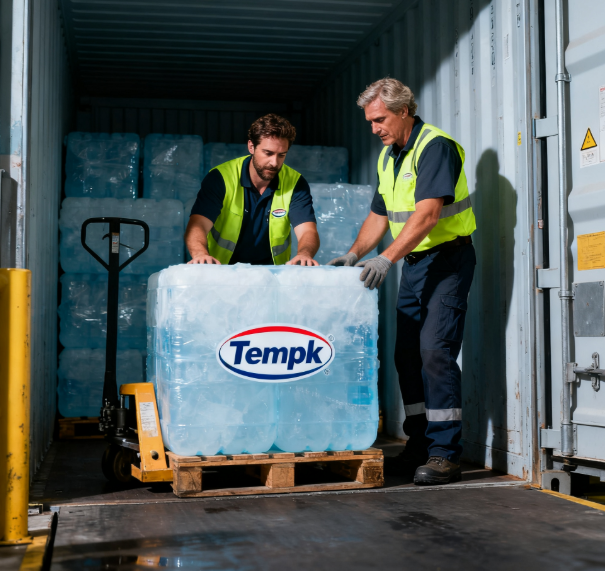
Frozen Food Shipping Packaging: A Better Way to Choose the Pack-Out
frozen food shipping packaging should be selected as a route-specific cold-chain system, not as a single material purchase. Start with the product temperature requirement, then match insulation, refrigerant, carton size, documentation, and receiving instructions to the real shipment. This optimized guide focuses on the decisions that help frozen food brands, distributors, D2C teams, and procurement managers reduce soft arrivals, avoid overclaiming performance, and compare suppliers with more useful questions.
Define the Temperature Promise First
The best option is the one that matches product sensitivity, route duration, ambient exposure, and the receiver's ability to act after delivery. frozen food packaging for shipping, insulated shipping boxes for frozen food are useful search terms, but the buying decision should be made from evidence: sample tests, supplier documentation, pack-out photos, and clear acceptance criteria.
For frozen meals, ice cream, prepared foods, frozen ingredients, and specialty food products, the right packaging question is not 'Which material is best?' It is 'What condition must the product be in when the receiver opens the package?' The answer may involve a numeric temperature limit, a quality requirement, a customer receiving rule, or a simple physical condition such as still being hard frozen. The more valuable or sensitive the product is, the more precise this promise should be.
For frozen food, many buyers use 0 deg F (-18 deg C) as a practical freezer reference, but the exact acceptance limit should come from the product specification, customer requirement, or applicable market rule. This statement belongs in the buying brief. It tells the supplier whether the route needs a chilled, frozen, deep frozen, or mixed-temperature approach. It also prevents the common mistake of buying insulation before defining what the insulation must achieve.
Build the System Around Route Risk
A useful frozen food shipping packaging decision includes the whole route: freezer staging, packing time, carrier pickup, sorting hubs, vehicle dwell, delivery point, and receiving inspection. The box is only one part of that route. A shipment can fail before it leaves the warehouse if the payload is not fully conditioned or if packed cartons wait too long outside cold storage.
Route risk is also seasonal. A pack-out that works in mild weather may not work during a heat wave or holiday delay. Buyers should define approved lanes, approved service levels, maximum dwell assumptions, and what to do when a shipment misses the expected delivery window. This is especially important when unmapped multi-day routes, mixed-temperature loads, products that cannot tolerate partial thaw, or lanes where the receiver cannot inspect and freeze promptly.
The strongest programs use evidence in layers. A supplier data sheet gives a starting point. A sample test shows whether the configuration is plausible. A route trial shows how the package behaves in the real logistics path. Arrival checks show whether daily operations are staying close to the approved recipe.
Match Components to the Job They Actually Do
| Component | What it does well | Limit that should not be ignored |
|---|---|---|
| Outer carton or shipper | Provides structure, handling protection, and label surface | Does not control temperature unless paired with insulation and refrigerant |
| Insulated liner or box | Slows heat gain and protects against ambient exposure | Does not create cold and may lose value if seams or lids are poorly closed |
| Gel pack or freezer brick | Adds cooling reserve and simplifies many non-hazardous pack-outs | May not be enough for long or hot frozen routes without testing |
| Dry ice | Provides very strong low-temperature cooling for suitable frozen shipments | Sublimates into gas and may require venting, marking, and special handling |
| Temperature logger or indicator | Creates evidence for lane review and receiving decisions | Records temperature but does not protect the product |
This comparison keeps the decision practical. Components are not interchangeable just because they are used in cold-chain packaging. A liner, a refrigerant, and a logger solve different problems. The buyer's role is to combine them only where the route, product, and operating process support the choice.
What to Verify Before Ordering in Bulk
Bulk purchasing should begin after the sample has proven more than appearance. The buyer should verify usable internal dimensions, payload fit, material consistency, coolant compatibility, closure method, pack-out labor, and any available test evidence. If the quote is based on frozen food packaging for shipping, insulated shipping boxes for frozen food, make sure those terms refer to the actual materials and performance boundaries being proposed, not generic category names.
- Ask whether stated hold time was measured with the same payload and ambient profile you expect.
- Confirm whether dimensions are gross, internal, or usable after insulation and refrigerants.
- Check whether the sample material is the same material that will ship in production.
- Ask how the supplier handles material substitutions, design changes, and repeat orders.
- Request a pack-out diagram or photos that can be used by warehouse staff.
- Define the receiving inspection steps before the first scaled shipment leaves your facility.
These questions do not slow procurement; they prevent avoidable rework. If a supplier cannot explain the operating boundary of the pack-out, the buyer may be taking on hidden risk. If the supplier can discuss limitations clearly, the buyer has a better basis for testing and scaling.
Operational Controls After the Box Leaves the Packing Bench
A pack-out is only reliable when the operation repeats it. Define the freezer conditioning time for refrigerants, the maximum time product can remain outside cold storage, the pack order, the carton close method, and the release check. For dry ice shipments, include venting and label review. For gel pack or freezer-brick shipments, include conditioning verification. For liners, include flap closure and seam checks.
The receiver should have instructions that match the product. They should know whether to open immediately, what arrival condition is acceptable, where to place the goods, what evidence to capture if there is a problem, and who should review exceptions. A good receiving instruction is not a marketing insert. It is a risk-control step that closes the cold-chain loop.
When a shipment fails, review the chain before blaming a single material. Was the product fully frozen? Were refrigerants conditioned? Was the carton size changed? Did a carrier delay occur? Did the box sit unopened? Was the receiving freezer available? These questions lead to useful fixes instead of guesswork.
Risk Prevention by Use Case
parcel shipments, wholesale replenishment, trial shipments, seasonal promotions, frozen samples, and small cold-chain lanes where a passive system is more practical than a refrigerated vehicle are often good candidates for passive packaging when the system is designed carefully. The buyer still needs to separate low-risk and high-risk routes. Low-risk routes may allow a simpler liner and gel pack format. Higher-risk routes may need a rigid insulated shipper, more refrigerant reserve, dry ice, or a different service level.
unmapped multi-day routes, mixed-temperature loads, products that cannot tolerate partial thaw, or lanes where the receiver cannot inspect and freeze promptly should trigger a different discussion. In these cases, a buyer may need active refrigeration, a qualified thermal shipping system, route-specific testing, or a product-level decision about whether the shipment should be offered at all. Saying no to an unsuitable route is sometimes the most responsible packaging decision.
A frozen prepared-meal brand wants to move from local delivery to regional parcel shipping. The team has already frozen the meals, but summer handovers and weekend delays create soft edges on arrival. In this situation, the team should avoid jumping directly to a full bulk order. A better path is to test a small number of pack-outs, record arrival condition, review receiver feedback, and then standardize the recipe that provides the best balance of protection, labor, cost, and customer experience.
Common Mistakes to Remove From the Process
The same preventable mistakes appear across many frozen and cold-chain programs. Teams buy by outside dimensions instead of usable volume. They test in mild weather and launch in summer. They condition refrigerants inconsistently. They leave packages on a dock while paperwork is completed. They copy a pack-out from a different product because the carton looks similar.
- Do not normalize packing product that is not fully frozen.
- Do not normalize using a box size that leaves large air gaps.
- Do not normalize copying a winter pack-out into a summer lane.
- Do not normalize placing coolant where it blocks carton closure.
- Do not normalize assuming a stated hold time applies to a different payload.
A good SOP should remove those mistakes from daily work. It should be short enough for packers to use and specific enough for quality teams to audit. Photos, component counts, and simple acceptance checks are often more effective than long instructions that no one reads during a busy shipping window.
FAQ
How do I choose frozen food shipping packaging for a new route?
Start with the product's required arrival condition, then map route duration, handover points, season, payload, and receiving process. Choose insulation and refrigerant together, not separately. Run a sample test that matches the real carton size and payload before scaling.
What proof should a supplier provide?
Useful proof includes material details, usable dimensions, pack-out diagrams, test conditions where available, and clear operating limits. A broad hold-time number without payload, ambient profile, refrigerant amount, or pass/fail criteria should be treated as a starting claim, not a final decision.
Can I use one pack-out for every season?
Sometimes, but it should be proven. Many programs need seasonal adjustments because ambient exposure, carrier dwell, and destination conditions change. A seasonal plan can be simple: an approved coolant change, a shipping cutoff, an upgraded service level, or an alternate package for high-risk lanes.
Is the most sustainable option always the lightest option?
No. The more sustainable choice must also protect the product. A lighter material that increases product loss, claims, or reshipments may create a worse total outcome. Evaluate thermal evidence, disposal route, return feasibility, labor, and damage rate together.
Conclusion
Additional Procurement Notes
When the buying team compares quotes for frozen food shipping packaging, it should separate material price from total operating cost. Storage space, packing time, damage rate, training, dry ice handling, receiving disputes, and replacement shipments can all change the real cost of a pack-out. A slightly higher unit cost may be justified if the packaging is easier to assemble, easier to audit, and less likely to create temperature or leakage complaints.
Procurement should also confirm the sample-to-production path. Ask whether the same film, liner fold, box structure, refrigerant fill, and closure design will be used in production. If the supplier may change materials, the buyer should define when notification and retesting are needed. This is especially important for frozen meals, ice cream, prepared foods, frozen ingredients, and specialty food products, where small changes can affect temperature stability and customer experience.
Finally, decide who owns the go or no-go decision when a route exception occurs. A packaging supplier can recommend components, but the shipper should define shipment cutoffs, late-delivery review, receiver instructions, and quality escalation. That division of responsibility keeps frozen food shipping packaging from becoming a vague promise and turns it into a controllable operating procedure.
Choosing frozen food shipping packaging well means making the cold-chain promise visible. Define the required product condition, choose components for their actual roles, verify the pack-out under realistic conditions, and write operating controls that people can repeat. The lowest-risk option is not always the most expensive one, and the cheapest option is not always economical. The best choice is the one that protects product quality within a clear, tested, and repeatable boundary.
About Tempk
Tempk supports food cold-chain buyers with gel packs, dry ice packs, freezer ice bricks, cold shipping boxes, EPP insulated boxes, insulated box liners, pallet covers, and related temperature-control materials. We work with buyers who need practical packaging recommendations for real routes, including sample reviews, carton fit discussions, and refrigerant comparisons. Our role is to help connect materials with product needs and packing workflow, while leaving route qualification, market rules, and customer acceptance criteria to the buyer's quality and logistics process.
Share your product type, route time, payload, carton size, and target arrival condition with Tempk to compare frozen food shipping packaging options before scaling up.
Fresh Produce Shipping Packaging: Practical Packaging Guide for Buyers
Fresh Produce Shipping Packaging: How to Choose a Reliable Cold-Chain Packout
Fresh produce shipping packaging should be chosen from the route backward, not from a catalog page forward. Start with the product condition required at receipt, the shipment duration, the handover points, and the receiving process. Then decide what insulation, coolant, carton, and instructions can realistically support that profile. For berries, cut greens, leafy vegetables, herbs, mushrooms, chilled fruit, and mixed produce boxes, this is the difference between a cold-looking parcel and a controlled, repeatable packout.
This article focuses on practical buying decisions. It separates packaging components from qualified performance, shows what to ask suppliers, and explains where food safety, dry ice handling, moisture control, and sustainability affect the final choice.
Define Freshness Before Selecting Materials
The most useful first step is to describe what acceptable arrival means. For berries, cut greens, leafy vegetables, herbs, mushrooms, chilled fruit, and mixed produce boxes, acceptance may involve temperature, appearance, moisture, product texture, carton integrity, safety instructions, or documented receiving checks. If the team cannot define acceptance, it will be tempted to buy packaging by material name or supplier claim. That usually creates either under-protection or unnecessary cost.
Produce temperature requirements vary widely; some cut or ready-to-eat items may require strict refrigerated control, while some fruits can be harmed by overcooling. This sentence should be turned into a practical operating requirement for each SKU group. A frozen item, a chilled item, and a heat-sensitive item may travel in similar cartons, but they do not share the same failure mode. Define the failure first: thawing, softening, condensation, bruising, leaking, temperature excursion, crushed retail pack, or missing dry ice information.
Once the acceptance condition is clear, compare materials against that condition. The question is no longer whether one liner is generally better than another. The question becomes whether the selected combination of insulation, coolant, product placement, carton strength, and receiving instruction supports the exact shipment profile.
Build the Packout Around Produce Sensitivity
A route profile is a short operational description of how the shipment moves. It should include product starting condition, packing location, staging time, carrier service, expected dwell points, season, receiver type, and what happens if delivery is delayed. This profile does not need to be complicated, but it should be honest. A package that performs in a controlled test can fail if the real route includes a warm dock or long porch exposure.
The component list should then be built outward from the food. Typical elements include produce-ready primary packaging, moisture control layer, cushioning or dividers, venting plan, thermal liner or insulated box, conditioned coolant, outer carton suited to humidity. Each element should have a reason. The inner wrap protects the product. Moisture control protects the carton and presentation. Insulation slows heat gain. Coolant manages thermal load. The outer carton handles compression, labeling, and carrier sorting. If an element has no clear function, it may be adding cost without reducing risk.
Route matching also prevents overconfident substitutions. A thermal bag used for driver delivery may not work as an insulated parcel shipper. A box liner that works for chilled food may not protect a frozen dessert. A dry ice packout may not be suitable for a product that can be damaged by extreme cold or for a lane where the shipper is not prepared for dry ice markings.
| Packaging question | What a strong answer includes | What to avoid |
|---|---|---|
| What condition must arrive? | Clear product state, visual requirement, and receiving action | Vague language such as keep it cold. |
| Which route is being protected? | Carrier, duration, handoffs, season, and receiver type | Using one packout for every lane without review. |
| How is coolant managed? | Conditioning, placement, separation, and dry ice rules if used | Adding more coolant without checking product damage or labels. |
| Is the packout repeatable? | Simple pack order and production-like trial | A sample assembled differently from warehouse reality. |
| What evidence supports it? | Test context, supplier specification, and receiving checks | Unqualified hold-time claims or broad compliance promises. |
Control Moisture, Airflow, and Movement
Temperature is only one way a food shipment can fail. Moisture can soften cartons, stain labels, damage gift packaging, and make a parcel feel unsafe. Movement can crush retail boxes or shift coolant away from the area it was meant to protect. Communication failures can cause receivers to touch dry ice, leave products out, or misjudge what condition is acceptable. Good fresh produce shipping packaging addresses these non-temperature risks deliberately.
Moisture control may involve sealed primary packaging, absorbent layers, leak-resistant bags, or materials that tolerate condensation. Movement control may involve right-sized cartons, dividers, firm void fill, or a liner that fits without collapsing. Communication may include plain handling language, dry ice caution where applicable, and receiving instructions that match the food category. These details are small compared with the insulation choice, but they often decide whether the shipment feels professionally handled.
The buyer should also consider carton strength under real conditions. A carton that is strong when dry may weaken if exposed to condensation or product leakage. A liner that looks neat when empty may deform under product weight. A coolant pack that sits securely in a sample may slide during parcel sorting. Production trials should look for these practical failure points.
Use Supplier Claims With Product-Specific Caution
Supplier data is valuable when it is specific. Ask what was tested, how it was packed, what ambient profile was used, where probes were placed, and what counted as a pass. A claim that a package supports a certain duration may be useful for comparison, but it should not be treated as a universal route guarantee. Payload, coolant, season, and carrier exposure can change the result.
Compliance language needs the same caution. Packaging can support food safety or carrier acceptance, but it does not automatically make a shipment compliant in every market. Dry ice may require package marks and safe venting. Some foods may require specific temperature control or documentation. Export shipments may require additional review. The safest approach is to confirm requirements with the quality team, carrier, and applicable local rules before launch.
A mature supplier discussion includes limits. Ask where the proposed packout should not be used. Ask what change would trigger retesting or review. Ask whether the sample and production materials are identical. Ask how material changes are communicated. These questions protect buyers from relying on attractive but incomplete claims.
A Mixed Berries and Greens Scenario
A produce distributor packs mixed berries and leafy greens for a next-day route. The berries need bruise protection, the greens need chilled handling, and both can suffer if water pools inside the parcel. The package must balance cooling, airflow, and moisture control. A route-based review would not start with a catalog. It would start with the product group, desired arrival condition, expected dwell time, carton presentation, and receiver action. From there, the buyer can decide whether to test an insulated box liner, a rigid insulated shipper, a thermal bag for local delivery, or a seasonal coolant layout.
The first sample should be packed like production. If warehouse staff will pack quickly, the trial should not rely on a careful one-off arrangement. If coolant will be conditioned in an existing freezer, the trial should use that same process. If consumer shipments include an instruction card, the trial should include it. The goal is not to create a perfect demonstration; it is to discover whether the packout works under the operating conditions the business will actually use.
After the trial, review the failure points in specific terms. Did the product condition change? Was the carton wet? Did the coolant move? Did the receiver understand the instructions? Did the packout fit the packing bench? This type of review produces better improvements than simply ordering a thicker liner or more coolant.
Cost and Sustainability for Produce Routes
Cost and sustainability are often discussed separately, but they share the same root: fit. A right-sized package reduces freight waste, storage space, coolant demand, and material disposal. A failed shipment wastes everything in the box. A reusable component can be a strong option on a controlled return route, while a recyclable or easily disposable liner may fit one-way consumer shipping better.
right-sized produce cartons, recyclable cushioning, reusable insulated totes on return routes, and packouts that prevent waste from rejected loads are practical options only when they match the route. Do not force reuse where return logistics are weak. Do not choose a light material if it increases product loss. Do not choose a high-performance system for a low-risk local lane without checking total cost. The best decision balances product protection, labor, storage, freight, waste, and customer acceptance.
Procurement teams should compare total operating impact rather than unit price alone. Review material cost, packing time, freezer or storage needs, carton cube, damage or rejection rate, customer service burden, and disposal or return instructions. This gives buyers a better view of value than simply selecting the lowest-cost insulated component.
Final Buying Checklist for Produce Packaging
Before approving fresh produce shipping packaging, confirm five things. First, the product condition required at arrival is written clearly. Second, the route profile is realistic, including dwell and receiver behavior. Third, the coolant choice is compatible with the product and carrier rules. Fourth, the package has been trialed with production-like packing. Fifth, the supplier has provided specifications and any available test context without broad promises.
Also confirm what will be reviewed after launch. Cold-chain packaging should not be a one-time decision. Season, carrier service, product mix, order size, and customer expectations can change. A packout that works in spring may need adjustment in summer. A small SKU change may require a different void fill or coolant layout. A new carrier may introduce different dwell points.
When the checklist is treated as part of operations, packaging becomes easier to manage. Teams can explain why a component is used, what risk it controls, and when it should be reviewed. That clarity is more useful than relying on a generic claim that a box is insulated or a coolant is long-lasting.
FAQ
How do I know which fresh produce shipping packaging option is right for my product?
Start with the product condition required at arrival, not with the material name. Confirm whether the product must remain frozen, chilled, protected from heat, protected from moisture, or protected for presentation. Then match the insulation, coolant, carton, and packing instructions to the route. If the supplier cannot explain how the packout fits your payload and lane, ask for more context before ordering.
Should I use dry ice, gel packs, or PCM packs?
The answer depends on product sensitivity, required condition, route, carrier acceptance, and handling capability. Dry ice can be useful for some frozen shipments but may require vented packaging, markings, and carrier review. Gel packs and PCM packs can be easier for refrigerated or heat-sensitive goods, but they still need correct conditioning and placement. Do not swap coolants without reviewing the full packout.
Is an insulated box enough for perishable food shipping?
Insulation alone slows heat transfer; it does not create a controlled shipment. A workable packout also needs the right product starting condition, coolant or refrigerant when required, leak or moisture control, carton strength, closure, and receiving instructions. A sealed insulated box may keep cold in, but it can also trap moisture and ethylene-sensitive problems if the produce type is not considered. Treat the box as one component of a system.
What should I ask a supplier before buying in bulk?
Ask for internal and usable dimensions, material specifications, coolant compatibility, sample-to-production consistency, and any test context behind performance claims. Also ask what conditions the package is not designed for. A supplier that can describe limits is often more useful than one that gives a broad claim without explaining payload, ambient profile, or route assumptions.
When should a packout be reviewed again?
Review the packout whenever the product, season, route, carrier service, order size, coolant type, or packaging supplier changes. Also review it after complaints, rejected deliveries, wet cartons, late arrivals, or unusual temperature records. Cold-chain packaging should be maintained like an operating process, not approved once and forgotten.
Conclusion
The strongest fresh produce shipping packaging decision is route-based and evidence-aware. Define acceptable arrival, build the packout outward from the product, control moisture and movement, and verify supplier claims in context. A bag, liner, coolant, or carton is only one part of the answer. The final system must match the food category, route duration, handover points, receiver expectations, and warehouse workflow. When those factors are written down, packaging becomes easier to test, improve, and scale.
About Tempk
At Tempk, we support food logistics teams with insulated bags, insulated liners, ice packs, hydrate dry ice packs, ice bricks, and insulation carton packaging. For fresh produce, our value is in helping buyers consider product respiration, moisture, airflow, and route handling before choosing a liner or coolant.
CTA
Send Tempk your product category, shipment route, payload, and temperature requirement to discuss a practical packaging recommendation.
Chocolate Shipping Packaging Cold Guide: Practical Packaging Guide for Buyers
Chocolate Shipping Packaging Cold Guide: How to Choose a Reliable Cold-Chain Packout
Cold chocolate shipping packaging should be chosen from the route backward, not from a catalog page forward. Start with the product condition required at receipt, the shipment duration, the handover points, and the receiving process. Then decide what insulation, coolant, carton, and instructions can realistically support that profile. For chocolate bars, truffles, molded chocolates, filled pralines, chocolate gift boxes, and heat-sensitive confectionery, this is the difference between a cold-looking parcel and a controlled, repeatable packout.
This article focuses on practical buying decisions. It separates packaging components from qualified performance, shows what to ask suppliers, and explains where food safety, dry ice handling, moisture control, and sustainability affect the final choice.
Define the Chocolate Appearance Standard
The most useful first step is to describe what acceptable arrival means. For chocolate bars, truffles, molded chocolates, filled pralines, chocolate gift boxes, and heat-sensitive confectionery, acceptance may involve temperature, appearance, moisture, product texture, carton integrity, safety instructions, or documented receiving checks. If the team cannot define acceptance, it will be tempted to buy packaging by material name or supplier claim. That usually creates either under-protection or unnecessary cost.
The safe range depends on chocolate formulation, filling, packaging style, and brand quality standard; buyers should confirm the product-specific target before ordering materials. This sentence should be turned into a practical operating requirement for each SKU group. A frozen item, a chilled item, and a heat-sensitive item may travel in similar cartons, but they do not share the same failure mode. Define the failure first: thawing, softening, condensation, bruising, leaking, temperature excursion, crushed retail pack, or missing dry ice information.
Once the acceptance condition is clear, compare materials against that condition. The question is no longer whether one liner is generally better than another. The question becomes whether the selected combination of insulation, coolant, product placement, carton strength, and receiving instruction supports the exact shipment profile.
Map Summer Exposure Before Choosing a Liner
A route profile is a short operational description of how the shipment moves. It should include product starting condition, packing location, staging time, carrier service, expected dwell points, season, receiver type, and what happens if delivery is delayed. This profile does not need to be complicated, but it should be honest. A package that performs in a controlled test can fail if the real route includes a warm dock or long porch exposure.
The component list should then be built outward from the food. Typical elements include primary chocolate box, moisture-aware separation layer, conditioned coolant if needed, thermal liner, rigid outer carton, void fill that does not crush gift packaging, warm-weather handling note. Each element should have a reason. The inner wrap protects the product. Moisture control protects the carton and presentation. Insulation slows heat gain. Coolant manages thermal load. The outer carton handles compression, labeling, and carrier sorting. If an element has no clear function, it may be adding cost without reducing risk.
Route matching also prevents overconfident substitutions. A thermal bag used for driver delivery may not work as an insulated parcel shipper. A box liner that works for chilled food may not protect a frozen dessert. A dry ice packout may not be suitable for a product that can be damaged by extreme cold or for a lane where the shipper is not prepared for dry ice markings.
| Packaging question | What a strong answer includes | What to avoid |
|---|---|---|
| What condition must arrive? | Clear product state, visual requirement, and receiving action | Vague language such as keep it cold. |
| Which route is being protected? | Carrier, duration, handoffs, season, and receiver type | Using one packout for every lane without review. |
| How is coolant managed? | Conditioning, placement, separation, and dry ice rules if used | Adding more coolant without checking product damage or labels. |
| Is the packout repeatable? | Simple pack order and production-like trial | A sample assembled differently from warehouse reality. |
| What evidence supports it? | Test context, supplier specification, and receiving checks | Unqualified hold-time claims or broad compliance promises. |
Control Condensation, Coolant Contact, and Movement
Temperature is only one way a food shipment can fail. Moisture can soften cartons, stain labels, damage gift packaging, and make a parcel feel unsafe. Movement can crush retail boxes or shift coolant away from the area it was meant to protect. Communication failures can cause receivers to touch dry ice, leave products out, or misjudge what condition is acceptable. Good chocolate shipping packaging cold addresses these non-temperature risks deliberately.
Moisture control may involve sealed primary packaging, absorbent layers, leak-resistant bags, or materials that tolerate condensation. Movement control may involve right-sized cartons, dividers, firm void fill, or a liner that fits without collapsing. Communication may include plain handling language, dry ice caution where applicable, and receiving instructions that match the food category. These details are small compared with the insulation choice, but they often decide whether the shipment feels professionally handled.
The buyer should also consider carton strength under real conditions. A carton that is strong when dry may weaken if exposed to condensation or product leakage. A liner that looks neat when empty may deform under product weight. A coolant pack that sits securely in a sample may slide during parcel sorting. Production trials should look for these practical failure points.
Read Seasonal Supplier Claims Carefully
Supplier data is valuable when it is specific. Ask what was tested, how it was packed, what ambient profile was used, where probes were placed, and what counted as a pass. A claim that a package supports a certain duration may be useful for comparison, but it should not be treated as a universal route guarantee. Payload, coolant, season, and carrier exposure can change the result.
Compliance language needs the same caution. Packaging can support food safety or carrier acceptance, but it does not automatically make a shipment compliant in every market. Dry ice may require package marks and safe venting. Some foods may require specific temperature control or documentation. Export shipments may require additional review. The safest approach is to confirm requirements with the quality team, carrier, and applicable local rules before launch.
A mature supplier discussion includes limits. Ask where the proposed packout should not be used. Ask what change would trigger retesting or review. Ask whether the sample and production materials are identical. Ask how material changes are communicated. These questions protect buyers from relying on attractive but incomplete claims.
A Summer Gift-Box Scenario
A confectionery seller prepares summer shipments for gift boxes that look perfect in the shop but may travel through a hot vehicle and sit at a door. Freezing the shipment could create condensation, while no cooling could soften the product. The packout has to manage both heat and appearance. A route-based review would not start with a catalog. It would start with the product group, desired arrival condition, expected dwell time, carton presentation, and receiver action. From there, the buyer can decide whether to test an insulated box liner, a rigid insulated shipper, a thermal bag for local delivery, or a seasonal coolant layout.
The first sample should be packed like production. If warehouse staff will pack quickly, the trial should not rely on a careful one-off arrangement. If coolant will be conditioned in an existing freezer, the trial should use that same process. If consumer shipments include an instruction card, the trial should include it. The goal is not to create a perfect demonstration; it is to discover whether the packout works under the operating conditions the business will actually use.
After the trial, review the failure points in specific terms. Did the product condition change? Was the carton wet? Did the coolant move? Did the receiver understand the instructions? Did the packout fit the packing bench? This type of review produces better improvements than simply ordering a thicker liner or more coolant.
Cost and Sustainability for Chocolate Routes
Cost and sustainability are often discussed separately, but they share the same root: fit. A right-sized package reduces freight waste, storage space, coolant demand, and material disposal. A failed shipment wastes everything in the box. A reusable component can be a strong option on a controlled return route, while a recyclable or easily disposable liner may fit one-way consumer shipping better.
lighter thermal liners, recyclable or reusable coolants, right-sized cartons, and seasonal packouts instead of one oversized system for every month are practical options only when they match the route. Do not force reuse where return logistics are weak. Do not choose a light material if it increases product loss. Do not choose a high-performance system for a low-risk local lane without checking total cost. The best decision balances product protection, labor, storage, freight, waste, and customer acceptance.
Procurement teams should compare total operating impact rather than unit price alone. Review material cost, packing time, freezer or storage needs, carton cube, damage or rejection rate, customer service burden, and disposal or return instructions. This gives buyers a better view of value than simply selecting the lowest-cost insulated component.
Final Buying Checklist for Cold Chocolate Shipping
Before approving chocolate shipping packaging cold, confirm five things. First, the product condition required at arrival is written clearly. Second, the route profile is realistic, including dwell and receiver behavior. Third, the coolant choice is compatible with the product and carrier rules. Fourth, the package has been trialed with production-like packing. Fifth, the supplier has provided specifications and any available test context without broad promises.
Also confirm what will be reviewed after launch. Cold-chain packaging should not be a one-time decision. Season, carrier service, product mix, order size, and customer expectations can change. A packout that works in spring may need adjustment in summer. A small SKU change may require a different void fill or coolant layout. A new carrier may introduce different dwell points.
When the checklist is treated as part of operations, packaging becomes easier to manage. Teams can explain why a component is used, what risk it controls, and when it should be reviewed. That clarity is more useful than relying on a generic claim that a box is insulated or a coolant is long-lasting.
FAQ
How do I know which chocolate shipping packaging cold option is right for my product?
Start with the product condition required at arrival, not with the material name. Confirm whether the product must remain frozen, chilled, protected from heat, protected from moisture, or protected for presentation. Then match the insulation, coolant, carton, and packing instructions to the route. If the supplier cannot explain how the packout fits your payload and lane, ask for more context before ordering.
Should I use dry ice, gel packs, or PCM packs?
The answer depends on product sensitivity, required condition, route, carrier acceptance, and handling capability. Dry ice can be useful for some frozen shipments but may require vented packaging, markings, and carrier review. Gel packs and PCM packs can be easier for refrigerated or heat-sensitive goods, but they still need correct conditioning and placement. Do not swap coolants without reviewing the full packout.
Is an insulated box enough for perishable food shipping?
Insulation alone slows heat transfer; it does not create a controlled shipment. A workable packout also needs the right product starting condition, coolant or refrigerant when required, leak or moisture control, carton strength, closure, and receiving instructions. Adding a frozen pack directly beside chocolate can create wet spots, cold shock, or condensation problems if the product and coolant are not separated properly. Treat the box as one component of a system.
What should I ask a supplier before buying in bulk?
Ask for internal and usable dimensions, material specifications, coolant compatibility, sample-to-production consistency, and any test context behind performance claims. Also ask what conditions the package is not designed for. A supplier that can describe limits is often more useful than one that gives a broad claim without explaining payload, ambient profile, or route assumptions.
When should a packout be reviewed again?
Review the packout whenever the product, season, route, carrier service, order size, coolant type, or packaging supplier changes. Also review it after complaints, rejected deliveries, wet cartons, late arrivals, or unusual temperature records. Cold-chain packaging should be maintained like an operating process, not approved once and forgotten.
Conclusion
The strongest chocolate shipping packaging cold decision is route-based and evidence-aware. Define acceptable arrival, build the packout outward from the product, control moisture and movement, and verify supplier claims in context. A bag, liner, coolant, or carton is only one part of the answer. The final system must match the food category, route duration, handover points, receiver expectations, and warehouse workflow. When those factors are written down, packaging becomes easier to test, improve, and scale.
About Tempk
At Tempk, we help heat-sensitive food brands compare insulated liners, thermal bags, ice packs, hydrate dry ice packs, ice bricks, and carton-based insulation options. For chocolate, we keep the discussion focused on the exact risk: heat, condensation, product presentation, and the seasonal route rather than simply adding more coolant.
CTA
Send Tempk your product category, shipment route, payload, and temperature requirement to discuss a practical packaging recommendation.