


Buyer Guide to a foldable plastic bin distributor for chemical production
Buyer Guide to a foldable plastic bin distributor for chemical production

Buyer Guide to a foldable plastic bin distributor for chemical production
The right foldable plastic bin distributor for chemical production is selected around the route, product risk, reuse model, and evidence required by the buyer's quality or operations team. A plastic box, crate, tote, or bin can improve handling, but it should not be treated as a universal temperature-control or compliance solution. For chemical production handling, the best choice is the one that makes daily operations simpler while keeping the limits of the packaging clear.
The most useful evaluation starts with the operation. What product goes inside? Who touches it? How is it packed, staged, transported, received, cleaned, and returned? Which risks belong to the container, and which risks belong to refrigeration, insulated packaging, coolant, monitoring, documentation, or site procedures? When these questions are answered early, supplier selection becomes more practical and less dependent on vague claims.
Define the operating problem before comparing boxes
A purchasing team may request a foldable plastic bin because cartons are collapsing, freight is messy, packaging waste is rising, or receiving teams want better standardization. Those are different problems. If the goal is better cube utilization, folding or nesting may matter most. If the goal is product protection, wall strength, inserts, and closure design matter. If the goal is hygiene, smooth surfaces and cleaning access matter. If the goal is temperature-sensitive distribution, the container must be reviewed as only one part of the thermal system.
For chemical production handling, write a one-page operating brief before asking for quotations. Include payload type, internal size requirement, expected load, number of handling points, cleaning method, return path, label or barcode method, and any temperature or documentation requirement. A supplier who responds to that brief with specific questions is often more useful than a supplier who sends a generic price list.
Separate outer handling, insulation, and temperature proof
A common buying error is mixing product categories. A general plastic bin, a waterproof tote, an insulated shipper, a passive temperature-controlled package, an active temperature-controlled container, and a qualified thermal system are not the same thing. The foldable plastic bin may protect against handling damage or help organize the load, but temperature protection depends on insulation, coolant or refrigerant, payload, ambient exposure, route time, and monitoring.
Temperature control is usually a separate facility or packaging requirement unless the bin is part of a specified insulated or conditioned system. If the cargo has a required temperature range, confirm it from the product owner, label, quality team, or applicable guidance. Many vaccine programs, for example, handle refrigerated products around 2 to 8 degrees C, but that range should not be generalized to every medicine, biologic, or sample. Food applications should also be checked against the relevant food safety plan and destination-market rules.
Shortlist suppliers by evidence, not claims
Supplier evidence table
| Evidence to request | Why it changes the buying decision | Red flag |
|---|---|---|
| Internal drawing and payload fit review | Shows whether your real product fits without crushing, wasted space, or label interference | Only external dimensions are provided |
| Material and intended-use statement | Helps quality, food safety, EHS, or engineering teams review suitability | The supplier cannot explain material family or product-contact boundary |
| Sample-to-production control | Reduces the risk that bulk units differ from approved samples | No process for approving material, color, lid, or mold changes |
| Cleaning and inspection guidance | Supports reuse without hidden residue or moisture issues | Hinges, corners, or drains cannot be visually inspected after cleaning |
| Thermal evidence where relevant | Clarifies whether temperature claims are supported by a packout, test profile, and acceptance criteria | A temperature claim is made without payload, ambient, coolant, or monitoring details |
This evidence table is a practical filter. It does not require every supplier to have the same paperwork, but it forces the discussion toward verifiable details. The more sensitive the product, the more important it becomes to distinguish a useful handling container from a product that has been proven for a specific regulated or temperature-controlled route.
Build a sample-to-production review
The sample review should use real operating conditions. Pack the real payload. Use the same labels and scanners. Move the unit through the same doors, conveyors, forklifts, cold rooms, or dock areas. Clean it using the intended procedure. Fold or stack it the way operators will handle it during a busy shift. Then inspect the base, corners, hinges, lid, label area, and any drainage points.
If the review exposes a weakness, do not immediately reject the idea. Decide whether the weakness belongs to the product, the route, or the procedure. A label problem may be solved with a better label panel. A stacking problem may need a different footprint. A condensation problem may require ventilation, absorbent material, or a different packout. A temperature problem may mean the container should be paired with a qualified insulated system rather than modified as a general plastic box.
Use a practical risk map before scaling
Before a large order, map the most likely failures: using a bin with incompatible residues, weak hinges under dense loads, poor segregation of incompatible materials, and missing hazard labels after repeated cleaning. Assign each risk to a control. The control may be a product feature, a supplier document, an operating SOP, a receiving inspection step, or a separate cold-chain packaging component. This exercise is simple, but it prevents a common problem: buying a container for one reason and then blaming it for risks it was never designed to control.
For example, a plant moving sealed raw-material bottles from incoming inspection to a controlled staging area before production may need both a reusable outer container and a separate thermal packout. The outer container improves handling and return discipline. The thermal packout manages product temperature. The temperature logger or receiving check provides evidence. If those roles are clear, the buyer can evaluate each component fairly and avoid overpaying for the wrong feature.
The purchasing team should compare total route fit rather than isolated features. A deeper box may look efficient but create ergonomic strain. A tighter lid may protect against splash but slow packing. A stronger base may add weight. A highly customized mold may improve branding but complicate replacement. Each benefit should be weighed against the operating cost it creates.
Receiving teams should have a simple exception process. If a container arrives wet, cracked, mis-labeled, unusually warm, or carrying signs of contamination, the receiver should know whether to photograph it, quarantine it, unload it under supervision, or escalate it to quality review. This keeps packaging decisions connected to real receiving behavior.
A final pre-scale review should connect purchasing, operations, quality, logistics, and finance. Procurement sees price and lead time. Operations sees handling speed. Quality sees documentation and risk. Logistics sees cube utilization and return flow. Finance sees the full lifecycle cost. The best decision is usually found where these views overlap.
The supplier relationship should include practical communication. Buyers should know who answers technical questions, who confirms production changes, who manages replacement parts, and who reviews complaints. A container program becomes easier to scale when the supplier can support the product after the first shipment, not only before the purchase order is signed.
The final specification should name the container's role in plain language. Is it an outer handling container, a returnable logistics asset, a food-contact crate, a moisture-resistant bin, or one component of a passive temperature-controlled packout? Clear naming prevents teams from expecting the foldable plastic bin to solve risks that belong to another part of the system.
Before scale-up, the buyer should decide which evidence will be kept in the project file. Useful records may include sample approval notes, photographs of the loaded packout, supplier drawings, material statements, cleaning observations, and trial feedback. This file helps future staff understand why the product was chosen and what assumptions supported the decision.
The best final article for a procurement audience should also name the trade-offs. Stronger walls may add weight. More sealing may reduce ventilation. Folding may add inspection points. More customization may create longer lead times. A practical buyer does not avoid trade-offs; the buyer makes them visible before purchase.
If the project involves a controlled temperature range, the final approval should include the thermal package, not only the plastic container. This means reviewing the insulated component, coolant or PCM, payload, ambient exposure, handling duration, monitoring method, and receiving criteria as one system. Any unsupported duration or temperature claim should be changed into a verification question.
A useful supplier will not object to practical questions. It should be able to explain product limits, recommend a suitable sample, and clarify which claims are based on design, documentation, or test evidence. When a supplier avoids basic questions about material, dimensions, cleaning, or production control, the buyer should slow down before approving the order.
The final decision should be written in a way that operators can understand. Instead of a vague statement that the container is suitable for logistics, describe where it may be used, what it may carry, how it should be cleaned, when it should be removed from service, and when a separate cold-chain packout is required. Clear instructions turn a good purchase into a repeatable process.
A supplier comparison should include the questions the supplier asks back. A thoughtful supplier may ask about payload, lane, cleaning, storage, stacking, and temperature expectations before recommending a unit. That is a positive signal. It shows the supplier understands that the right foldable plastic bin depends on use conditions, not only catalog categories.
FAQ
What is the safest way to shortlist suppliers for a foldable plastic bin distributor for chemical production?
Give each supplier the same operating brief: payload, internal size, route, handling points, cleaning method, return model, labeling need, and temperature requirement if any. Then compare how specifically they respond. The most useful supplier is often the one that explains limits clearly.
How do I separate handling protection from temperature protection?
Handling protection comes from the container's strength, geometry, closure, and organization features. Temperature protection comes from a system: insulation, coolant or refrigerant, payload, ambient exposure, time, monitoring, and receiving criteria. A plastic container can support the system without replacing it.
Who should approve the final container choice?
Procurement should not decide alone. Operations, quality, logistics, food safety, EHS, or technical staff may need to review the container depending on the product. Their review helps prevent a container that is cheap to buy but difficult to clean, document, return, or defend after a problem.
What is the most useful next step before bulk ordering?
Run a practical sample-to-production review. Confirm physical fit, label durability, cleaning, stacking, return flow, and supplier change control. If the product is sensitive, also confirm the separate packout, storage, monitoring, and receiving process that protects the product itself.
What extra caution applies to chemical production use?
Chemical production use should start with the safety data sheet, site EHS rules, and compatibility review. A foldable bin may be suitable for sealed components but unsuitable for certain residues, spills, or incompatible materials. Labeling, segregation, cleaning, and disposal procedures should be defined before the bin enters production areas. Before approval, record this limitation in the project file together with the sample test notes and receiving procedure.
Conclusion
A foldable plastic bin distributor for chemical production is a good investment only when it fits the route, payload, cleaning process, return model, and quality expectations. Use supplier evidence, sample testing, and clear category boundaries to avoid confusing a plastic handling container with a complete thermal or compliance solution. The better the operating brief, the easier it is to choose a supplier that can support the project beyond the first quotation.
About Tempk
Tempk supports buyers who need to connect packaging choice with real shipment conditions. Our product range includes gel ice packs, dry ice packs, freezer ice bricks, insulated bags, EPP insulated boxes, cold shipping boxes, VPU medical refrigerators, insulated liners, pallet covers, and related temperature-control materials. We help clarify where reusable handling packaging ends and where cold-chain packaging design should begin.
CTA: Discuss your shipment route, product type, expected payload, return model, and temperature requirement with Tempk before scaling from samples to bulk procurement. We can help you identify where reusable handling packaging ends and where cold-chain packaging design should begin.
Practical Guide: VIP insulated box for clinical trials logistics

VIP insulated box for clinical trials logistics: Practical Selection Guide
The best use of a VIP insulated box for clinical trials logistics is to connect thermal protection with a clear operating plan. Start with the product requirement, then define the route, payload, coolant, monitoring evidence, and receiving decision. VIP insulation can be valuable for difficult or high-value cold-chain shipments, but it should be selected through evidence, not assumption. This publication-ready guide brings the buyer, technical, and operational questions into one practical framework.
Quick answer: use VIP insulated box for clinical trials logistics when the shipment needs stronger passive insulation, defined packout control, and practical evidence for the receiver. Do not use it as a substitute for route qualification, correct coolant conditioning, or quality review. The container should be judged as one component of a complete cold-chain system.
For most buyers, the practical question is: what evidence do we need before we trust this package at scale? That evidence may be a qualification summary, a supplier data sheet, a packout instruction, a sample review, a logger placement recommendation, or an internal quality approval. The goal is not to collect documents for their own sake. The goal is to reduce uncertainty before real product is placed at risk.
A practical decision path for the right VIP solution
The best decision path is neither purely technical nor purely commercial. A VIP insulated box for clinical trials logistics should be judged by how well it connects product requirements, lane exposure, packout repeatability, monitoring evidence, and supplier support. A premium material can still disappoint if the payload does not fit, the coolant is conditioned incorrectly, or the receiver cannot interpret the logger report. A simpler design can work well if the lane is short, stable, and documented.
VIP means vacuum insulated panel, a high-performance insulation component built around an evacuated core sealed inside a barrier envelope. In cold-chain packaging, VIP panels are usually protected by inner and outer structural layers because the panel itself is not meant to take abuse directly. The practical value is not that the panel is magical; it is that reduced heat transfer can give the packout more thermal margin or preserve more internal payload space than a thicker conventional foam wall. Buyers still need to confirm the complete packout, because insulation alone does not define the required temperature range, coolant conditioning, or receiving criteria.
Clinical trial logistics adds a layer of repeatability. The same packaging instruction may be used across depots, couriers, and sites with different levels of cold-chain experience. If the box is too complicated, site staff may make packing or reporting errors even when the insulation is good. Trial teams should think about protocol temperature limits, kit geometry, blind or labeled materials, logger retrieval, and deviation reporting before they approve a shipping box for repeated use.
Separate temperature protection, monitoring, and compliance proof
A VIP shipper is normally a passive temperature-controlled packaging component unless it is paired with powered refrigeration. Passive means the system relies on insulation, preconditioned coolant, phase change material, dry ice where appropriate, and a repeatable loading method. It does not actively cool itself after departure. This distinction matters in RFQs because some buyers use words such as refrigerated, smart, and temperature controlled in the same sentence. A supplier needs to know whether you expect passive protection, active refrigeration, temperature monitoring, or a hybrid logistics workflow.
Temperature monitoring should be treated as evidence, not as thermal protection. A logger can show whether a shipment stayed inside the required range and may help the team investigate a deviation, but it cannot correct a weak packout. Logger placement also matters. A sensor placed against a frozen coolant pack, near a warm wall, or in an air pocket may not represent the payload condition. For important shipments, the monitoring plan should be reviewed with the same care as the coolant map.
This separation prevents two common errors. The first is believing that a data logger protects the product. The second is believing that insulation alone proves a controlled shipment. Thermal protection, monitoring evidence, and compliance documentation are connected, but each has a different job. A strong packout should make these jobs visible.
For clinical trials, the receiving decision is often procedural. Site staff may need to confirm the logger status, inspect the kit, record the arrival condition, and escalate deviations according to the trial process. Packaging that is hard to open, label, repack, or document can create avoidable site burden. A VIP box should make the correct action obvious, especially when many sites are involved.
Match the container to payload, lane, and receiving decision
For investigational products, comparators, lab kits, or biological samples used in trials, the container must match the payload and the lane at the same time. Payload review includes dimensions, mass, sensitivity, secondary packaging, and whether the product is damaged by freezing, warming, vibration, or contact with coolant. Lane review includes planned duration, handovers, ambient exposure, customs or hub dwell, and receiving readiness. If either side is vague, the packaging recommendation will be vague.
Clinical trial logistics adds a layer of repeatability. The same packaging instruction may be used across depots, couriers, and sites with different levels of cold-chain experience. If the box is too complicated, site staff may make packing or reporting errors even when the insulation is good. Trial teams should think about protocol temperature limits, kit geometry, blind or labeled materials, logger retrieval, and deviation reporting before they approve a shipping box for repeated use.
RFQ evidence table
| RFQ item | Minimum useful detail | Decision value |
|---|---|---|
| Payload description | Product type, mass, dimensions, and sensitivity | Helps size the container and prevent poor fit |
| Temperature requirement | Required range and excursion handling rule | Defines the acceptance target |
| Transport lane | Origin, destination, mode, season, and handovers | Links package choice to real exposure |
| Packout design | Coolant type, conditioning, placement, dividers, and closure | Makes the result repeatable |
| Monitoring workflow | Logger position, start/stop process, report format, and review owner | Turns temperature data into usable evidence |
| Scale-up controls | Sample equivalence, production consistency, and change notification | Reduces surprises after approval |
This table is useful because it turns a general product inquiry into verifiable questions. It also keeps buyers from treating a VIP container as a single specification when the real decision depends on the full route, payload, coolant, monitoring, and documentation workflow.
Evidence to request before scaling from sample to production
Qualification is the bridge between a product claim and a real shipment decision. It asks a simple question: under a defined profile, with a defined payload and a defined packout, did the system maintain the required conditions? If one of those inputs changes, the evidence may no longer be directly transferable. That is why buyers should ask whether the stated performance reflects their payload mass, internal layout, coolant quantity, route duration, and expected ambient conditions.
Before scaling, ask for evidence that reflects the approved configuration. The sample stage should test more than visual appearance. Confirm that the construction, closure, VIP panel protection, coolant plan, internal layout, and instructions can be repeated in production. If a supplier changes a material, wall structure, or component after approval, the buyer should know how that change is communicated and evaluated.
Operating discipline after the box leaves your facility
The box leaves your facility, but the process continues. Preconditioning, product staging, label placement, logger activation, lid closure, carrier pickup, in-transit handling, and receiving inspection all affect the result. A VIP container can slow heat transfer, yet it cannot correct a warm payload loaded late, a missed pickup, or a receiver that forgets to download the logger. Operating discipline turns packaging design into shipment control.
A good instruction set should be short enough to use and specific enough to prevent improvisation. It should show the order of packing, coolant placement, logger location, closure method, label position, and receiving checks. For reusable units, it should also show inspection and cleaning steps before the next shipment.
Final buyer notes for a safer RFQ
A safer RFQ states the conditions instead of asking for a generic premium box. Include the required range, payload, dimensions, route, duration, season, transport mode, monitoring needs, reuse expectations, and documentation needs. Ask suppliers to state the assumptions behind any performance claim. If they cannot state the assumptions, treat the claim as a starting point rather than a decision basis.
Finally, decide what would make the option unacceptable. It may be too little usable volume, unclear logger placement, weak panel protection, no packout instruction, no change-control conversation, or poor fit with the return loop. Rejection criteria make the evaluation more objective and prevent teams from approving a container simply because the material sounds advanced.
From Sample Approval to Repeatable Shipping
Sample approval for VIP insulated box for clinical trials logistics should not stop at appearance. The team should confirm that the sample can be packed by normal staff, that the payload fits after coolant and logger placement, that closure is repeatable, and that the receiver can inspect and document arrival without confusion. A strong sample that cannot be repeated in production is not a stable cold-chain solution.
When moving to repeat shipments, define change-control expectations. If the supplier changes panel material, shell design, lid structure, divider, or recommended packout, the buyer should be notified before the change affects real shipments. This is especially important for pharmaceutical, clinical, biological, and high-value products where small packaging changes may change the risk profile.
Because clinical trial logistics depends on repeatability across sites, simplify every user-facing step. Site staff should know where to find the logger, what to record, what to do after an alarm, and how to dispose of or return the container. The best packaging design is one that protects the trial supply while reducing site burden.
FAQ
What matters most for clinical trial logistics?
The important points are protocol temperature limits, repeatable packout, site-friendly instructions, logger retrieval, depot handling, and deviation review. A VIP box may provide strong insulation, but trial logistics also depends on whether every site can receive, inspect, document, and escalate shipments consistently.
What evidence should a supplier provide?
Ask for evidence that matches your decision. This may include material information, packout instructions, test or qualification summaries, logger placement guidance, cleaning and reuse instructions, and sample-to-production controls. If a claim affects quality or compliance, ask what document supports it.
Is VIP packaging enough for clinical or pharmaceutical shipments?
VIP packaging may be one part of the answer, but the full system matters. Quality teams usually care about product temperature limits, qualification evidence, calibrated monitoring, route risk, SOP fit, and deviation handling. Packaging should be selected to support those controls, not replace them.
How should I compare two VIP box options?
Compare usable payload space, packout repeatability, coolant compatibility, panel protection, closure reliability, handling durability, monitoring layout, documentation support, and total operating cost. A lower unit price can be misleading if the box creates packing errors, extra freight, or weak receiving evidence.
Conclusion: Make the VIP Choice Evidence-Based
A VIP insulated box for clinical trials logistics is most valuable when the buyer links the container to product limits, route exposure, packout repeatability, monitoring evidence, and receiving decisions. VIP insulation is one strong component, but it is not the whole cold-chain process.
For a safer RFQ, ask for the evidence behind each claim and confirm how the sample will scale into repeat shipments. The final choice should be practical for the people who pack, transport, receive, inspect, and approve the product.
Additional Notes for Internal Review
Another point worth checking for VIP insulated box for clinical trials logistics is receiving behavior. A shipment is not complete when it reaches the address; it is complete when the receiver can inspect it, interpret the temperature evidence, and make the correct acceptance decision. If the package design makes logger retrieval difficult or hides the payload condition, the receiver may create a deviation even when the thermal design was adequate. Simple receiving instructions reduce this risk.
Storage before shipment is also part of the cold-chain process. Coolant conditioning, product staging, empty box storage, and packing room temperature can influence the starting condition. If one site packs in a controlled room and another packs beside a loading dock, the same box may begin the lane with different thermal conditions. Buyers should standardize the preparation steps before judging container performance.
About Tempk
Tempk offers VIP medical cooler box and removable vacuum insulation panel cooler box options for medical, pharmaceutical, food, and temperature-sensitive logistics. For biological samples, research materials, and clinical supplies, the key value is a packaging conversation that starts with the product requirement, payload layout, coolant plan, and monitoring needs. Tempk can support buyers who need a more specific cold-chain packaging recommendation before moving from sample review to repeated shipments.
Share your trial temperature range, site workflow, and kit profile with Tempk to review suitable VIP box options.
Practical Guide: VIP insulated box for carbon neutral shipping
VIP insulated box for carbon neutral shipping: Practical Selection Guide
The best use of a VIP insulated box for carbon neutral shipping is to connect thermal protection with a clear operating plan. Start with the product requirement, then define the route, payload, coolant, monitoring evidence, and receiving decision. VIP insulation can be valuable for difficult or high-value cold-chain shipments, but it should be selected through evidence, not assumption. This publication-ready guide brings the buyer, technical, and operational questions into one practical framework.
Quick answer: use VIP insulated box for carbon neutral shipping when the shipment needs stronger passive insulation, defined packout control, and practical evidence for the receiver. Do not use it as a substitute for route qualification, correct coolant conditioning, or quality review. The container should be judged as one component of a complete cold-chain system.
For most buyers, the practical question is: what evidence do we need before we trust this package at scale? That evidence may be a qualification summary, a supplier data sheet, a packout instruction, a sample review, a logger placement recommendation, or an internal quality approval. The goal is not to collect documents for their own sake. The goal is to reduce uncertainty before real product is placed at risk.
A practical decision path for the right VIP solution
The best decision path is neither purely technical nor purely commercial. A VIP insulated box for carbon neutral shipping should be judged by how well it connects product requirements, lane exposure, packout repeatability, monitoring evidence, and supplier support. A premium material can still disappoint if the payload does not fit, the coolant is conditioned incorrectly, or the receiver cannot interpret the logger report. A simpler design can work well if the lane is short, stable, and documented.
VIP means vacuum insulated panel, a high-performance insulation component built around an evacuated core sealed inside a barrier envelope. In cold-chain packaging, VIP panels are usually protected by inner and outer structural layers because the panel itself is not meant to take abuse directly. The practical value is not that the panel is magical; it is that reduced heat transfer can give the packout more thermal margin or preserve more internal payload space than a thicker conventional foam wall. Buyers still need to confirm the complete packout, because insulation alone does not define the required temperature range, coolant conditioning, or receiving criteria.
Sustainability claims need a defined boundary. A reusable VIP box may reduce single-use packaging waste on a controlled route, but the result depends on actual reuse rate, reverse logistics, cleaning, repair, asset loss, freight cube, and end-of-life handling. Carbon-neutral shipping should not be claimed only because a box is reusable or well insulated. The safer approach is to describe how the packaging supports a lower-waste program, then verify the carbon accounting with a method your organization accepts.
Separate temperature protection, monitoring, and compliance proof
A VIP shipper is normally a passive temperature-controlled packaging component unless it is paired with powered refrigeration. Passive means the system relies on insulation, preconditioned coolant, phase change material, dry ice where appropriate, and a repeatable loading method. It does not actively cool itself after departure. This distinction matters in RFQs because some buyers use words such as refrigerated, smart, and temperature controlled in the same sentence. A supplier needs to know whether you expect passive protection, active refrigeration, temperature monitoring, or a hybrid logistics workflow.
Temperature monitoring should be treated as evidence, not as thermal protection. A logger can show whether a shipment stayed inside the required range and may help the team investigate a deviation, but it cannot correct a weak packout. Logger placement also matters. A sensor placed against a frozen coolant pack, near a warm wall, or in an air pocket may not represent the payload condition. For important shipments, the monitoring plan should be reviewed with the same care as the coolant map.
This separation prevents two common errors. The first is believing that a data logger protects the product. The second is believing that insulation alone proves a controlled shipment. Thermal protection, monitoring evidence, and compliance documentation are connected, but each has a different job. A strong packout should make these jobs visible.
A lower-impact cold-chain program usually comes from several decisions working together: right-sized packaging, reduced coolant waste, repeatable reuse, fewer emergency reships, and better consolidation where product risk allows. VIP insulation may help by reducing wall thickness or improving thermal margin, but any carbon claim should be supported by the company’s own accounting boundary. The article should therefore speak about support for carbon-neutral goals, not automatic carbon neutrality.
Match the container to payload, lane, and receiving decision
For temperature-sensitive goods shipped through repeatable or returnable cold chain routes, the container must match the payload and the lane at the same time. Payload review includes dimensions, mass, sensitivity, secondary packaging, and whether the product is damaged by freezing, warming, vibration, or contact with coolant. Lane review includes planned duration, handovers, ambient exposure, customs or hub dwell, and receiving readiness. If either side is vague, the packaging recommendation will be vague.
Sustainability claims need a defined boundary. A reusable VIP box may reduce single-use packaging waste on a controlled route, but the result depends on actual reuse rate, reverse logistics, cleaning, repair, asset loss, freight cube, and end-of-life handling. Carbon-neutral shipping should not be claimed only because a box is reusable or well insulated. The safer approach is to describe how the packaging supports a lower-waste program, then verify the carbon accounting with a method your organization accepts.
RFQ evidence table
| RFQ item | Minimum useful detail | Decision value |
|---|---|---|
| Payload description | Product type, mass, dimensions, and sensitivity | Helps size the container and prevent poor fit |
| Temperature requirement | Required range and excursion handling rule | Defines the acceptance target |
| Transport lane | Origin, destination, mode, season, and handovers | Links package choice to real exposure |
| Packout design | Coolant type, conditioning, placement, dividers, and closure | Makes the result repeatable |
| Monitoring workflow | Logger position, start/stop process, report format, and review owner | Turns temperature data into usable evidence |
| Scale-up controls | Sample equivalence, production consistency, and change notification | Reduces surprises after approval |
This table is useful because it turns a general product inquiry into verifiable questions. It also keeps buyers from treating a VIP container as a single specification when the real decision depends on the full route, payload, coolant, monitoring, and documentation workflow.
Evidence to request before scaling from sample to production
Qualification is the bridge between a product claim and a real shipment decision. It asks a simple question: under a defined profile, with a defined payload and a defined packout, did the system maintain the required conditions? If one of those inputs changes, the evidence may no longer be directly transferable. That is why buyers should ask whether the stated performance reflects their payload mass, internal layout, coolant quantity, route duration, and expected ambient conditions.
Before scaling, ask for evidence that reflects the approved configuration. The sample stage should test more than visual appearance. Confirm that the construction, closure, VIP panel protection, coolant plan, internal layout, and instructions can be repeated in production. If a supplier changes a material, wall structure, or component after approval, the buyer should know how that change is communicated and evaluated.
Operating discipline after the box leaves your facility
The box leaves your facility, but the process continues. Preconditioning, product staging, label placement, logger activation, lid closure, carrier pickup, in-transit handling, and receiving inspection all affect the result. A VIP container can slow heat transfer, yet it cannot correct a warm payload loaded late, a missed pickup, or a receiver that forgets to download the logger. Operating discipline turns packaging design into shipment control.
A good instruction set should be short enough to use and specific enough to prevent improvisation. It should show the order of packing, coolant placement, logger location, closure method, label position, and receiving checks. For reusable units, it should also show inspection and cleaning steps before the next shipment.
Final buyer notes for a safer RFQ
A safer RFQ states the conditions instead of asking for a generic premium box. Include the required range, payload, dimensions, route, duration, season, transport mode, monitoring needs, reuse expectations, and documentation needs. Ask suppliers to state the assumptions behind any performance claim. If they cannot state the assumptions, treat the claim as a starting point rather than a decision basis.
Finally, decide what would make the option unacceptable. It may be too little usable volume, unclear logger placement, weak panel protection, no packout instruction, no change-control conversation, or poor fit with the return loop. Rejection criteria make the evaluation more objective and prevent teams from approving a container simply because the material sounds advanced.
From Sample Approval to Repeatable Shipping
Sample approval for VIP insulated box for carbon neutral shipping should not stop at appearance. The team should confirm that the sample can be packed by normal staff, that the payload fits after coolant and logger placement, that closure is repeatable, and that the receiver can inspect and document arrival without confusion. A strong sample that cannot be repeated in production is not a stable cold-chain solution.
When moving to repeat shipments, define change-control expectations. If the supplier changes panel material, shell design, lid structure, divider, or recommended packout, the buyer should be notified before the change affects real shipments. This is especially important for pharmaceutical, clinical, biological, and high-value products where small packaging changes may change the risk profile.
Because this topic involves carbon-neutral or lower-impact goals, buyers should separate operational facts from marketing language. Track actual reuse rate, return distance, cleaning method, damage rate, and replacement frequency before making environmental claims. Packaging can support a sustainability program, but the program must generate the proof.
FAQ
Can a VIP insulated box make shipping carbon neutral?
Not by itself. A VIP box may support lower-waste or lower-impact programs, especially when reused on controlled routes, but carbon-neutral shipping requires a defined accounting boundary and verified data. Reuse rate, return transport, cleaning, loss, replacement, and freight efficiency all influence the result.
What evidence should a supplier provide?
Ask for evidence that matches your decision. This may include material information, packout instructions, test or qualification summaries, logger placement guidance, cleaning and reuse instructions, and sample-to-production controls. If a claim affects quality or compliance, ask what document supports it.
Is VIP packaging enough for clinical or pharmaceutical shipments?
VIP packaging may be one part of the answer, but the full system matters. Quality teams usually care about product temperature limits, qualification evidence, calibrated monitoring, route risk, SOP fit, and deviation handling. Packaging should be selected to support those controls, not replace them.
How should I compare two VIP box options?
Compare usable payload space, packout repeatability, coolant compatibility, panel protection, closure reliability, handling durability, monitoring layout, documentation support, and total operating cost. A lower unit price can be misleading if the box creates packing errors, extra freight, or weak receiving evidence.
Conclusion: Make the VIP Choice Evidence-Based
A VIP insulated box for carbon neutral shipping is most valuable when the buyer links the container to product limits, route exposure, packout repeatability, monitoring evidence, and receiving decisions. VIP insulation is one strong component, but it is not the whole cold-chain process.
For a safer RFQ, ask for the evidence behind each claim and confirm how the sample will scale into repeat shipments. The final choice should be practical for the people who pack, transport, receive, inspect, and approve the product.
Additional Notes for Internal Review
Another point worth checking for VIP insulated box for carbon neutral shipping is receiving behavior. A shipment is not complete when it reaches the address; it is complete when the receiver can inspect it, interpret the temperature evidence, and make the correct acceptance decision. If the package design makes logger retrieval difficult or hides the payload condition, the receiver may create a deviation even when the thermal design was adequate. Simple receiving instructions reduce this risk.
Storage before shipment is also part of the cold-chain process. Coolant conditioning, product staging, empty box storage, and packing room temperature can influence the starting condition. If one site packs in a controlled room and another packs beside a loading dock, the same box may begin the lane with different thermal conditions. Buyers should standardize the preparation steps before judging container performance.
About Tempk
Tempk provides cold-chain packaging solutions including VIP cooler boxes and reusable insulation concepts for temperature-sensitive logistics. For buyers exploring lower-waste or reusable programs, the relevant support is practical: payload fit, return handling, cleaning expectations, panel protection, and repeatable packout. Tempk can help frame the packaging discussion around the route and reuse model instead of relying on broad environmental claims.
Discuss your route frequency, return loop, and sustainability boundary with Tempk before using carbon-neutral messaging.
Practical Guide: VIP cooler container for temperature controlled shipping
VIP cooler container for temperature controlled shipping: Practical Selection Guide
The best use of a VIP cooler container for temperature controlled shipping is to connect thermal protection with a clear operating plan. Start with the product requirement, then define the route, payload, coolant, monitoring evidence, and receiving decision. VIP insulation can be valuable for difficult or high-value cold-chain shipments, but it should be selected through evidence, not assumption. This publication-ready guide brings the buyer, technical, and operational questions into one practical framework.
Quick answer: use VIP cooler container for temperature controlled shipping when the shipment needs stronger passive insulation, defined packout control, and practical evidence for the receiver. Do not use it as a substitute for route qualification, correct coolant conditioning, or quality review. The container should be judged as one component of a complete cold-chain system.
For most buyers, the practical question is: what evidence do we need before we trust this package at scale? That evidence may be a qualification summary, a supplier data sheet, a packout instruction, a sample review, a logger placement recommendation, or an internal quality approval. The goal is not to collect documents for their own sake. The goal is to reduce uncertainty before real product is placed at risk.
A practical decision path for the right VIP solution
The best decision path is neither purely technical nor purely commercial. A VIP cooler container for temperature controlled shipping should be judged by how well it connects product requirements, lane exposure, packout repeatability, monitoring evidence, and supplier support. A premium material can still disappoint if the payload does not fit, the coolant is conditioned incorrectly, or the receiver cannot interpret the logger report. A simpler design can work well if the lane is short, stable, and documented.
VIP means vacuum insulated panel, a high-performance insulation component built around an evacuated core sealed inside a barrier envelope. In cold-chain packaging, VIP panels are usually protected by inner and outer structural layers because the panel itself is not meant to take abuse directly. The practical value is not that the panel is magical; it is that reduced heat transfer can give the packout more thermal margin or preserve more internal payload space than a thicker conventional foam wall. Buyers still need to confirm the complete packout, because insulation alone does not define the required temperature range, coolant conditioning, or receiving criteria.
The specific use case here is commercial temperature-controlled parcel or regional shipments where passive packaging must perform without power. That means the buyer should define the payload condition first, then decide how much passive insulation, coolant control, monitoring, and documentation are needed. A VIP container may be the right answer, but only after those conditions are stated clearly.
Separate temperature protection, monitoring, and compliance proof
A VIP shipper is normally a passive temperature-controlled packaging component unless it is paired with powered refrigeration. Passive means the system relies on insulation, preconditioned coolant, phase change material, dry ice where appropriate, and a repeatable loading method. It does not actively cool itself after departure. This distinction matters in RFQs because some buyers use words such as refrigerated, smart, and temperature controlled in the same sentence. A supplier needs to know whether you expect passive protection, active refrigeration, temperature monitoring, or a hybrid logistics workflow.
Temperature monitoring should be treated as evidence, not as thermal protection. A logger can show whether a shipment stayed inside the required range and may help the team investigate a deviation, but it cannot correct a weak packout. Logger placement also matters. A sensor placed against a frozen coolant pack, near a warm wall, or in an air pocket may not represent the payload condition. For important shipments, the monitoring plan should be reviewed with the same care as the coolant map.
This separation prevents two common errors. The first is believing that a data logger protects the product. The second is believing that insulation alone proves a controlled shipment. Thermal protection, monitoring evidence, and compliance documentation are connected, but each has a different job. A strong packout should make these jobs visible.
The practical value of this approach is that it keeps the buying discussion specific. Instead of comparing containers by appearance or category name, the team can compare the evidence behind each option. That evidence may include packout instructions, material descriptions, test summaries, logger guidance, and procedures for inspection or reuse.
Match the container to payload, lane, and receiving decision
For refrigerated, frozen, or controlled-temperature products that need additional protection inside the lane, the container must match the payload and the lane at the same time. Payload review includes dimensions, mass, sensitivity, secondary packaging, and whether the product is damaged by freezing, warming, vibration, or contact with coolant. Lane review includes planned duration, handovers, ambient exposure, customs or hub dwell, and receiving readiness. If either side is vague, the packaging recommendation will be vague.
The specific use case here is commercial temperature-controlled parcel or regional shipments where passive packaging must perform without power. That means the buyer should define the payload condition first, then decide how much passive insulation, coolant control, monitoring, and documentation are needed. A VIP container may be the right answer, but only after those conditions are stated clearly.
RFQ evidence table
| RFQ item | Minimum useful detail | Decision value |
|---|---|---|
| Payload description | Product type, mass, dimensions, and sensitivity | Helps size the container and prevent poor fit |
| Temperature requirement | Required range and excursion handling rule | Defines the acceptance target |
| Transport lane | Origin, destination, mode, season, and handovers | Links package choice to real exposure |
| Packout design | Coolant type, conditioning, placement, dividers, and closure | Makes the result repeatable |
| Monitoring workflow | Logger position, start/stop process, report format, and review owner | Turns temperature data into usable evidence |
| Scale-up controls | Sample equivalence, production consistency, and change notification | Reduces surprises after approval |
This table is useful because it turns a general product inquiry into verifiable questions. It also keeps buyers from treating a VIP container as a single specification when the real decision depends on the full route, payload, coolant, monitoring, and documentation workflow.
Evidence to request before scaling from sample to production
Qualification is the bridge between a product claim and a real shipment decision. It asks a simple question: under a defined profile, with a defined payload and a defined packout, did the system maintain the required conditions? If one of those inputs changes, the evidence may no longer be directly transferable. That is why buyers should ask whether the stated performance reflects their payload mass, internal layout, coolant quantity, route duration, and expected ambient conditions.
Before scaling, ask for evidence that reflects the approved configuration. The sample stage should test more than visual appearance. Confirm that the construction, closure, VIP panel protection, coolant plan, internal layout, and instructions can be repeated in production. If a supplier changes a material, wall structure, or component after approval, the buyer should know how that change is communicated and evaluated.
Operating discipline after the box leaves your facility
The box leaves your facility, but the process continues. Preconditioning, product staging, label placement, logger activation, lid closure, carrier pickup, in-transit handling, and receiving inspection all affect the result. A VIP container can slow heat transfer, yet it cannot correct a warm payload loaded late, a missed pickup, or a receiver that forgets to download the logger. Operating discipline turns packaging design into shipment control.
A good instruction set should be short enough to use and specific enough to prevent improvisation. It should show the order of packing, coolant placement, logger location, closure method, label position, and receiving checks. For reusable units, it should also show inspection and cleaning steps before the next shipment.
Final buyer notes for a safer RFQ
A safer RFQ states the conditions instead of asking for a generic premium box. Include the required range, payload, dimensions, route, duration, season, transport mode, monitoring needs, reuse expectations, and documentation needs. Ask suppliers to state the assumptions behind any performance claim. If they cannot state the assumptions, treat the claim as a starting point rather than a decision basis.
Finally, decide what would make the option unacceptable. It may be too little usable volume, unclear logger placement, weak panel protection, no packout instruction, no change-control conversation, or poor fit with the return loop. Rejection criteria make the evaluation more objective and prevent teams from approving a container simply because the material sounds advanced.
From Sample Approval to Repeatable Shipping
Sample approval for VIP cooler container for temperature controlled shipping should not stop at appearance. The team should confirm that the sample can be packed by normal staff, that the payload fits after coolant and logger placement, that closure is repeatable, and that the receiver can inspect and document arrival without confusion. A strong sample that cannot be repeated in production is not a stable cold-chain solution.
When moving to repeat shipments, define change-control expectations. If the supplier changes panel material, shell design, lid structure, divider, or recommended packout, the buyer should be notified before the change affects real shipments. This is especially important for pharmaceutical, clinical, biological, and high-value products where small packaging changes may change the risk profile.
FAQ
What is the simplest way to start selecting a VIP container?
Start with the required product temperature range and the real lane. Then define payload mass, usable volume, duration, ambient exposure, coolant strategy, monitoring needs, and receiving acceptance rules. Only after those points are clear should you compare container style, dimensions, and price.
What evidence should a supplier provide?
Ask for evidence that matches your decision. This may include material information, packout instructions, test or qualification summaries, logger placement guidance, cleaning and reuse instructions, and sample-to-production controls. If a claim affects quality or compliance, ask what document supports it.
Is VIP packaging enough for clinical or pharmaceutical shipments?
VIP packaging may be one part of the answer, but the full system matters. Quality teams usually care about product temperature limits, qualification evidence, calibrated monitoring, route risk, SOP fit, and deviation handling. Packaging should be selected to support those controls, not replace them.
How should I compare two VIP box options?
Compare usable payload space, packout repeatability, coolant compatibility, panel protection, closure reliability, handling durability, monitoring layout, documentation support, and total operating cost. A lower unit price can be misleading if the box creates packing errors, extra freight, or weak receiving evidence.
Conclusion: Make the VIP Choice Evidence-Based
A VIP cooler container for temperature controlled shipping is most valuable when the buyer links the container to product limits, route exposure, packout repeatability, monitoring evidence, and receiving decisions. VIP insulation is one strong component, but it is not the whole cold-chain process.
For a safer RFQ, ask for the evidence behind each claim and confirm how the sample will scale into repeat shipments. The final choice should be practical for the people who pack, transport, receive, inspect, and approve the product.
Additional Notes for Internal Review
Another point worth checking for VIP cooler container for temperature controlled shipping is receiving behavior. A shipment is not complete when it reaches the address; it is complete when the receiver can inspect it, interpret the temperature evidence, and make the correct acceptance decision. If the package design makes logger retrieval difficult or hides the payload condition, the receiver may create a deviation even when the thermal design was adequate. Simple receiving instructions reduce this risk.
Storage before shipment is also part of the cold-chain process. Coolant conditioning, product staging, empty box storage, and packing room temperature can influence the starting condition. If one site packs in a controlled room and another packs beside a loading dock, the same box may begin the lane with different thermal conditions. Buyers should standardize the preparation steps before judging container performance.
Finally, consider how changes will be handled after approval. Substituting a divider, changing a lid component, using a different coolant source, or altering the logger location may seem minor, but each change can affect the way heat moves through the packout or how evidence is interpreted. A clear change conversation between buyer and supplier is especially important when shipments are regulated, high value, or repeated across multiple locations.
About Tempk
Tempk offers cold-chain packaging solutions that include VIP cooler boxes and removable vacuum insulation panel cooler box options for medical, pharmaceutical, food, and other temperature-sensitive logistics needs. The relevant value for buyers is not only the insulated shell, but also the practical conversation around payload fit, coolant use, reusable handling, and documentation expectations. For VIP projects, Tempk can help buyers translate a route, product type, and temperature requirement into a packaging discussion that is more specific than a general cooler inquiry.
Ask Tempk to compare suitable cooler container options for your product, route, and handling conditions.
Practical Guide: vacuum panel box for data logger integration
vacuum panel box for data logger integration: Practical Selection Guide
The best use of a vacuum panel box for data logger integration is to connect thermal protection with a clear operating plan. Start with the product requirement, then define the route, payload, coolant, monitoring evidence, and receiving decision. VIP insulation can be valuable for difficult or high-value cold-chain shipments, but it should be selected through evidence, not assumption. This publication-ready guide brings the buyer, technical, and operational questions into one practical framework.
Quick answer: use vacuum panel box for data logger integration when the shipment needs stronger passive insulation, defined packout control, and practical evidence for the receiver. Do not use it as a substitute for route qualification, correct coolant conditioning, or quality review. The container should be judged as one component of a complete cold-chain system.
For most buyers, the practical question is: what evidence do we need before we trust this package at scale? That evidence may be a qualification summary, a supplier data sheet, a packout instruction, a sample review, a logger placement recommendation, or an internal quality approval. The goal is not to collect documents for their own sake. The goal is to reduce uncertainty before real product is placed at risk.
A practical decision path for the right VIP solution
The best decision path is neither purely technical nor purely commercial. A vacuum panel box for data logger integration should be judged by how well it connects product requirements, lane exposure, packout repeatability, monitoring evidence, and supplier support. A premium material can still disappoint if the payload does not fit, the coolant is conditioned incorrectly, or the receiver cannot interpret the logger report. A simpler design can work well if the lane is short, stable, and documented.
VIP means vacuum insulated panel, a high-performance insulation component built around an evacuated core sealed inside a barrier envelope. In cold-chain packaging, VIP panels are usually protected by inner and outer structural layers because the panel itself is not meant to take abuse directly. The practical value is not that the panel is magical; it is that reduced heat transfer can give the packout more thermal margin or preserve more internal payload space than a thicker conventional foam wall. Buyers still need to confirm the complete packout, because insulation alone does not define the required temperature range, coolant conditioning, or receiving criteria.
Temperature monitoring should be treated as evidence, not as thermal protection. A logger can show whether a shipment stayed inside the required range and may help the team investigate a deviation, but it cannot correct a weak packout. Logger placement also matters. A sensor placed against a frozen coolant pack, near a warm wall, or in an air pocket may not represent the payload condition. For important shipments, the monitoring plan should be reviewed with the same care as the coolant map.
Separate temperature protection, monitoring, and compliance proof
A VIP shipper is normally a passive temperature-controlled packaging component unless it is paired with powered refrigeration. Passive means the system relies on insulation, preconditioned coolant, phase change material, dry ice where appropriate, and a repeatable loading method. It does not actively cool itself after departure. This distinction matters in RFQs because some buyers use words such as refrigerated, smart, and temperature controlled in the same sentence. A supplier needs to know whether you expect passive protection, active refrigeration, temperature monitoring, or a hybrid logistics workflow.
Temperature monitoring should be treated as evidence, not as thermal protection. A logger can show whether a shipment stayed inside the required range and may help the team investigate a deviation, but it cannot correct a weak packout. Logger placement also matters. A sensor placed against a frozen coolant pack, near a warm wall, or in an air pocket may not represent the payload condition. For important shipments, the monitoring plan should be reviewed with the same care as the coolant map.
This separation prevents two common errors. The first is believing that a data logger protects the product. The second is believing that insulation alone proves a controlled shipment. Thermal protection, monitoring evidence, and compliance documentation are connected, but each has a different job. A strong packout should make these jobs visible.
Data logger integration should be considered during the internal layout stage. The box may need a protected logger position, a clear cable path for a probe, a visible activation label, or a retrieval instruction for the receiving team. If the logger is buried under coolant or placed after packing is finished, the temperature record may be hard to interpret. For regulated or quality-sensitive shipments, retrieval failure can be almost as damaging as a temperature failure because the receiver lacks evidence.
Match the container to payload, lane, and receiving decision
For temperature-sensitive products that need a transport record at delivery, the container must match the payload and the lane at the same time. Payload review includes dimensions, mass, sensitivity, secondary packaging, and whether the product is damaged by freezing, warming, vibration, or contact with coolant. Lane review includes planned duration, handovers, ambient exposure, customs or hub dwell, and receiving readiness. If either side is vague, the packaging recommendation will be vague.
Temperature monitoring should be treated as evidence, not as thermal protection. A logger can show whether a shipment stayed inside the required range and may help the team investigate a deviation, but it cannot correct a weak packout. Logger placement also matters. A sensor placed against a frozen coolant pack, near a warm wall, or in an air pocket may not represent the payload condition. For important shipments, the monitoring plan should be reviewed with the same care as the coolant map.
RFQ evidence table
| RFQ item | Minimum useful detail | Decision value |
|---|---|---|
| Payload description | Product type, mass, dimensions, and sensitivity | Helps size the container and prevent poor fit |
| Temperature requirement | Required range and excursion handling rule | Defines the acceptance target |
| Transport lane | Origin, destination, mode, season, and handovers | Links package choice to real exposure |
| Packout design | Coolant type, conditioning, placement, dividers, and closure | Makes the result repeatable |
| Monitoring workflow | Logger position, start/stop process, report format, and review owner | Turns temperature data into usable evidence |
| Scale-up controls | Sample equivalence, production consistency, and change notification | Reduces surprises after approval |
This table is useful because it turns a general product inquiry into verifiable questions. It also keeps buyers from treating a VIP container as a single specification when the real decision depends on the full route, payload, coolant, monitoring, and documentation workflow.
Evidence to request before scaling from sample to production
Qualification is the bridge between a product claim and a real shipment decision. It asks a simple question: under a defined profile, with a defined payload and a defined packout, did the system maintain the required conditions? If one of those inputs changes, the evidence may no longer be directly transferable. That is why buyers should ask whether the stated performance reflects their payload mass, internal layout, coolant quantity, route duration, and expected ambient conditions.
Before scaling, ask for evidence that reflects the approved configuration. The sample stage should test more than visual appearance. Confirm that the construction, closure, VIP panel protection, coolant plan, internal layout, and instructions can be repeated in production. If a supplier changes a material, wall structure, or component after approval, the buyer should know how that change is communicated and evaluated.
Operating discipline after the box leaves your facility
The box leaves your facility, but the process continues. Preconditioning, product staging, label placement, logger activation, lid closure, carrier pickup, in-transit handling, and receiving inspection all affect the result. A VIP container can slow heat transfer, yet it cannot correct a warm payload loaded late, a missed pickup, or a receiver that forgets to download the logger. Operating discipline turns packaging design into shipment control.
A good instruction set should be short enough to use and specific enough to prevent improvisation. It should show the order of packing, coolant placement, logger location, closure method, label position, and receiving checks. For reusable units, it should also show inspection and cleaning steps before the next shipment.
Final buyer notes for a safer RFQ
A safer RFQ states the conditions instead of asking for a generic premium box. Include the required range, payload, dimensions, route, duration, season, transport mode, monitoring needs, reuse expectations, and documentation needs. Ask suppliers to state the assumptions behind any performance claim. If they cannot state the assumptions, treat the claim as a starting point rather than a decision basis.
Finally, decide what would make the option unacceptable. It may be too little usable volume, unclear logger placement, weak panel protection, no packout instruction, no change-control conversation, or poor fit with the return loop. Rejection criteria make the evaluation more objective and prevent teams from approving a container simply because the material sounds advanced.
From Sample Approval to Repeatable Shipping
Sample approval for vacuum panel box for data logger integration should not stop at appearance. The team should confirm that the sample can be packed by normal staff, that the payload fits after coolant and logger placement, that closure is repeatable, and that the receiver can inspect and document arrival without confusion. A strong sample that cannot be repeated in production is not a stable cold-chain solution.
When moving to repeat shipments, define change-control expectations. If the supplier changes panel material, shell design, lid structure, divider, or recommended packout, the buyer should be notified before the change affects real shipments. This is especially important for pharmaceutical, clinical, biological, and high-value products where small packaging changes may change the risk profile.
Because this topic involves data logger integration, include the logger model or format in the RFQ if possible. State whether the sensor is internal, external, buffered, probe-based, disposable, reusable, Bluetooth, USB, or real-time. Also state who needs the report and how quickly after delivery. This prevents a design that protects the payload but hides the evidence.
FAQ
Where should a data logger be placed in a VIP box?
Placement should be defined by the monitoring objective. The sensor should not be casually placed against coolant, a warm wall, or an empty air space unless that location is intentional. Many teams want the reading to represent payload conditions, so the placement should be documented in the packout instruction and reviewed by the quality or logistics owner.
What evidence should a supplier provide?
Ask for evidence that matches your decision. This may include material information, packout instructions, test or qualification summaries, logger placement guidance, cleaning and reuse instructions, and sample-to-production controls. If a claim affects quality or compliance, ask what document supports it.
Is VIP packaging enough for clinical or pharmaceutical shipments?
VIP packaging may be one part of the answer, but the full system matters. Quality teams usually care about product temperature limits, qualification evidence, calibrated monitoring, route risk, SOP fit, and deviation handling. Packaging should be selected to support those controls, not replace them.
How should I compare two VIP box options?
Compare usable payload space, packout repeatability, coolant compatibility, panel protection, closure reliability, handling durability, monitoring layout, documentation support, and total operating cost. A lower unit price can be misleading if the box creates packing errors, extra freight, or weak receiving evidence.
Conclusion: Make the VIP Choice Evidence-Based
A vacuum panel box for data logger integration is most valuable when the buyer links the container to product limits, route exposure, packout repeatability, monitoring evidence, and receiving decisions. VIP insulation is one strong component, but it is not the whole cold-chain process.
For a safer RFQ, ask for the evidence behind each claim and confirm how the sample will scale into repeat shipments. The final choice should be practical for the people who pack, transport, receive, inspect, and approve the product.
Additional Notes for Internal Review
Another point worth checking for vacuum panel box for data logger integration is receiving behavior. A shipment is not complete when it reaches the address; it is complete when the receiver can inspect it, interpret the temperature evidence, and make the correct acceptance decision. If the package design makes logger retrieval difficult or hides the payload condition, the receiver may create a deviation even when the thermal design was adequate. Simple receiving instructions reduce this risk.
About Tempk
Tempk offers cold-chain packaging solutions that include VIP medical cooler box and removable vacuum insulation panel cooler box options for temperature-sensitive shipments. For projects involving temperature data loggers, the useful discussion is how the insulated box, coolant layout, payload position, and logger placement work together. Tempk can help buyers review container layout and packaging requirements so monitoring evidence is considered during the packaging discussion rather than added as an afterthought.
Ask Tempk to review your logger format and payload layout so the vacuum panel box supports usable temperature evidence.
Practical Guide: vacuum insulated panel container for high value shipments
vacuum insulated panel container for high value shipments: Practical Selection Guide
The best use of a vacuum insulated panel container for high value shipments is to connect thermal protection with a clear operating plan. Start with the product requirement, then define the route, payload, coolant, monitoring evidence, and receiving decision. VIP insulation can be valuable for difficult or high-value cold-chain shipments, but it should be selected through evidence, not assumption. This publication-ready guide brings the buyer, technical, and operational questions into one practical framework.
Quick answer: use vacuum insulated panel container for high value shipments when the shipment needs stronger passive insulation, defined packout control, and practical evidence for the receiver. Do not use it as a substitute for route qualification, correct coolant conditioning, or quality review. The container should be judged as one component of a complete cold-chain system.
For most buyers, the practical question is: what evidence do we need before we trust this package at scale? That evidence may be a qualification summary, a supplier data sheet, a packout instruction, a sample review, a logger placement recommendation, or an internal quality approval. The goal is not to collect documents for their own sake. The goal is to reduce uncertainty before real product is placed at risk.
A practical decision path for the right VIP solution
The best decision path is neither purely technical nor purely commercial. A vacuum insulated panel container for high value shipments should be judged by how well it connects product requirements, lane exposure, packout repeatability, monitoring evidence, and supplier support. A premium material can still disappoint if the payload does not fit, the coolant is conditioned incorrectly, or the receiver cannot interpret the logger report. A simpler design can work well if the lane is short, stable, and documented.
VIP means vacuum insulated panel, a high-performance insulation component built around an evacuated core sealed inside a barrier envelope. In cold-chain packaging, VIP panels are usually protected by inner and outer structural layers because the panel itself is not meant to take abuse directly. The practical value is not that the panel is magical; it is that reduced heat transfer can give the packout more thermal margin or preserve more internal payload space than a thicker conventional foam wall. Buyers still need to confirm the complete packout, because insulation alone does not define the required temperature range, coolant conditioning, or receiving criteria.
For high-value shipments, the packaging cost is only one line in the risk calculation. A failed shipment can mean replacement product, urgent reshipment, investigation time, lost research continuity, trial disruption, or a customer dispute. That does not mean buyers should choose the most expensive container by default. It means the packaging decision should be compared with the realistic cost of failure and the evidence needed to release or reject the shipment.
Separate temperature protection, monitoring, and compliance proof
A VIP shipper is normally a passive temperature-controlled packaging component unless it is paired with powered refrigeration. Passive means the system relies on insulation, preconditioned coolant, phase change material, dry ice where appropriate, and a repeatable loading method. It does not actively cool itself after departure. This distinction matters in RFQs because some buyers use words such as refrigerated, smart, and temperature controlled in the same sentence. A supplier needs to know whether you expect passive protection, active refrigeration, temperature monitoring, or a hybrid logistics workflow.
Temperature monitoring should be treated as evidence, not as thermal protection. A logger can show whether a shipment stayed inside the required range and may help the team investigate a deviation, but it cannot correct a weak packout. Logger placement also matters. A sensor placed against a frozen coolant pack, near a warm wall, or in an air pocket may not represent the payload condition. For important shipments, the monitoring plan should be reviewed with the same care as the coolant map.
This separation prevents two common errors. The first is believing that a data logger protects the product. The second is believing that insulation alone proves a controlled shipment. Thermal protection, monitoring evidence, and compliance documentation are connected, but each has a different job. A strong packout should make these jobs visible.
A high-value payload also changes how teams think about redundancy. They may use stronger insulation, clearer documentation, more careful lane planning, or a better monitoring workflow because the downside of failure is high. The goal is not over-engineering for its own sake. The goal is to reduce avoidable uncertainty before the shipment leaves the controlled environment.
Match the container to payload, lane, and receiving decision
For high-value pharmaceuticals, biologics, diagnostic materials, or specialty products, the container must match the payload and the lane at the same time. Payload review includes dimensions, mass, sensitivity, secondary packaging, and whether the product is damaged by freezing, warming, vibration, or contact with coolant. Lane review includes planned duration, handovers, ambient exposure, customs or hub dwell, and receiving readiness. If either side is vague, the packaging recommendation will be vague.
For high-value shipments, the packaging cost is only one line in the risk calculation. A failed shipment can mean replacement product, urgent reshipment, investigation time, lost research continuity, trial disruption, or a customer dispute. That does not mean buyers should choose the most expensive container by default. It means the packaging decision should be compared with the realistic cost of failure and the evidence needed to release or reject the shipment.
RFQ evidence table
| RFQ item | Minimum useful detail | Decision value |
|---|---|---|
| Payload description | Product type, mass, dimensions, and sensitivity | Helps size the container and prevent poor fit |
| Temperature requirement | Required range and excursion handling rule | Defines the acceptance target |
| Transport lane | Origin, destination, mode, season, and handovers | Links package choice to real exposure |
| Packout design | Coolant type, conditioning, placement, dividers, and closure | Makes the result repeatable |
| Monitoring workflow | Logger position, start/stop process, report format, and review owner | Turns temperature data into usable evidence |
| Scale-up controls | Sample equivalence, production consistency, and change notification | Reduces surprises after approval |
This table is useful because it turns a general product inquiry into verifiable questions. It also keeps buyers from treating a VIP container as a single specification when the real decision depends on the full route, payload, coolant, monitoring, and documentation workflow.
Evidence to request before scaling from sample to production
Qualification is the bridge between a product claim and a real shipment decision. It asks a simple question: under a defined profile, with a defined payload and a defined packout, did the system maintain the required conditions? If one of those inputs changes, the evidence may no longer be directly transferable. That is why buyers should ask whether the stated performance reflects their payload mass, internal layout, coolant quantity, route duration, and expected ambient conditions.
Before scaling, ask for evidence that reflects the approved configuration. The sample stage should test more than visual appearance. Confirm that the construction, closure, VIP panel protection, coolant plan, internal layout, and instructions can be repeated in production. If a supplier changes a material, wall structure, or component after approval, the buyer should know how that change is communicated and evaluated.
Operating discipline after the box leaves your facility
The box leaves your facility, but the process continues. Preconditioning, product staging, label placement, logger activation, lid closure, carrier pickup, in-transit handling, and receiving inspection all affect the result. A VIP container can slow heat transfer, yet it cannot correct a warm payload loaded late, a missed pickup, or a receiver that forgets to download the logger. Operating discipline turns packaging design into shipment control.
A good instruction set should be short enough to use and specific enough to prevent improvisation. It should show the order of packing, coolant placement, logger location, closure method, label position, and receiving checks. For reusable units, it should also show inspection and cleaning steps before the next shipment.
Final buyer notes for a safer RFQ
A safer RFQ states the conditions instead of asking for a generic premium box. Include the required range, payload, dimensions, route, duration, season, transport mode, monitoring needs, reuse expectations, and documentation needs. Ask suppliers to state the assumptions behind any performance claim. If they cannot state the assumptions, treat the claim as a starting point rather than a decision basis.
Finally, decide what would make the option unacceptable. It may be too little usable volume, unclear logger placement, weak panel protection, no packout instruction, no change-control conversation, or poor fit with the return loop. Rejection criteria make the evaluation more objective and prevent teams from approving a container simply because the material sounds advanced.
From Sample Approval to Repeatable Shipping
Sample approval for vacuum insulated panel container for high value shipments should not stop at appearance. The team should confirm that the sample can be packed by normal staff, that the payload fits after coolant and logger placement, that closure is repeatable, and that the receiver can inspect and document arrival without confusion. A strong sample that cannot be repeated in production is not a stable cold-chain solution.
When moving to repeat shipments, define change-control expectations. If the supplier changes panel material, shell design, lid structure, divider, or recommended packout, the buyer should be notified before the change affects real shipments. This is especially important for pharmaceutical, clinical, biological, and high-value products where small packaging changes may change the risk profile.
FAQ
What is the simplest way to start selecting a VIP container?
Start with the required product temperature range and the real lane. Then define payload mass, usable volume, duration, ambient exposure, coolant strategy, monitoring needs, and receiving acceptance rules. Only after those points are clear should you compare container style, dimensions, and price.
What evidence should a supplier provide?
Ask for evidence that matches your decision. This may include material information, packout instructions, test or qualification summaries, logger placement guidance, cleaning and reuse instructions, and sample-to-production controls. If a claim affects quality or compliance, ask what document supports it.
Is VIP packaging enough for clinical or pharmaceutical shipments?
VIP packaging may be one part of the answer, but the full system matters. Quality teams usually care about product temperature limits, qualification evidence, calibrated monitoring, route risk, SOP fit, and deviation handling. Packaging should be selected to support those controls, not replace them.
How should I compare two VIP box options?
Compare usable payload space, packout repeatability, coolant compatibility, panel protection, closure reliability, handling durability, monitoring layout, documentation support, and total operating cost. A lower unit price can be misleading if the box creates packing errors, extra freight, or weak receiving evidence.
Conclusion: Make the VIP Choice Evidence-Based
A vacuum insulated panel container for high value shipments is most valuable when the buyer links the container to product limits, route exposure, packout repeatability, monitoring evidence, and receiving decisions. VIP insulation is one strong component, but it is not the whole cold-chain process.
For a safer RFQ, ask for the evidence behind each claim and confirm how the sample will scale into repeat shipments. The final choice should be practical for the people who pack, transport, receive, inspect, and approve the product.
Additional Notes for Internal Review
Another point worth checking for vacuum insulated panel container for high value shipments is receiving behavior. A shipment is not complete when it reaches the address; it is complete when the receiver can inspect it, interpret the temperature evidence, and make the correct acceptance decision. If the package design makes logger retrieval difficult or hides the payload condition, the receiver may create a deviation even when the thermal design was adequate. Simple receiving instructions reduce this risk.
Storage before shipment is also part of the cold-chain process. Coolant conditioning, product staging, empty box storage, and packing room temperature can influence the starting condition. If one site packs in a controlled room and another packs beside a loading dock, the same box may begin the lane with different thermal conditions. Buyers should standardize the preparation steps before judging container performance.
Finally, consider how changes will be handled after approval. Substituting a divider, changing a lid component, using a different coolant source, or altering the logger location may seem minor, but each change can affect the way heat moves through the packout or how evidence is interpreted. A clear change conversation between buyer and supplier is especially important when shipments are regulated, high value, or repeated across multiple locations.
About Tempk
Tempk offers cold-chain packaging solutions that include VIP cooler boxes and removable vacuum insulation panel cooler box options for medical, pharmaceutical, food, and other temperature-sensitive logistics needs. The relevant value for buyers is not only the insulated shell, but also the practical conversation around payload fit, coolant use, reusable handling, and documentation expectations. For VIP projects, Tempk can help buyers translate a route, product type, and temperature requirement into a packaging discussion that is more specific than a general cooler inquiry.
Send Tempk your shipment value, route profile, and payload sensitivity to discuss a risk-focused VIP container option.
Practical Guide: VIP thermal container for research lab logistics
VIP thermal container for research lab logistics: Practical Selection Guide
The best use of a VIP thermal container for research lab logistics is to connect thermal protection with a clear operating plan. Start with the product requirement, then define the route, payload, coolant, monitoring evidence, and receiving decision. VIP insulation can be valuable for difficult or high-value cold-chain shipments, but it should be selected through evidence, not assumption. This publication-ready guide brings the buyer, technical, and operational questions into one practical framework.
Quick answer: use VIP thermal container for research lab logistics when the shipment needs stronger passive insulation, defined packout control, and practical evidence for the receiver. Do not use it as a substitute for route qualification, correct coolant conditioning, or quality review. The container should be judged as one component of a complete cold-chain system.
For most buyers, the practical question is: what evidence do we need before we trust this package at scale? That evidence may be a qualification summary, a supplier data sheet, a packout instruction, a sample review, a logger placement recommendation, or an internal quality approval. The goal is not to collect documents for their own sake. The goal is to reduce uncertainty before real product is placed at risk.
A practical decision path for the right VIP solution
The best decision path is neither purely technical nor purely commercial. A VIP thermal container for research lab logistics should be judged by how well it connects product requirements, lane exposure, packout repeatability, monitoring evidence, and supplier support. A premium material can still disappoint if the payload does not fit, the coolant is conditioned incorrectly, or the receiver cannot interpret the logger report. A simpler design can work well if the lane is short, stable, and documented.
VIP means vacuum insulated panel, a high-performance insulation component built around an evacuated core sealed inside a barrier envelope. In cold-chain packaging, VIP panels are usually protected by inner and outer structural layers because the panel itself is not meant to take abuse directly. The practical value is not that the panel is magical; it is that reduced heat transfer can give the packout more thermal margin or preserve more internal payload space than a thicker conventional foam wall. Buyers still need to confirm the complete packout, because insulation alone does not define the required temperature range, coolant conditioning, or receiving criteria.
Laboratory logistics often fails in small practical details. A container may be thermally strong but inconvenient for labeling, sample segregation, bench loading, or receiving inspection. Research teams may also handle mixed kits where some materials have different temperature limits or different damage thresholds. A VIP thermal container should fit the lab workflow, not force staff to improvise at the last minute. Clear packout instructions and a simple receiving routine are part of the protection system.
Separate temperature protection, monitoring, and compliance proof
A VIP shipper is normally a passive temperature-controlled packaging component unless it is paired with powered refrigeration. Passive means the system relies on insulation, preconditioned coolant, phase change material, dry ice where appropriate, and a repeatable loading method. It does not actively cool itself after departure. This distinction matters in RFQs because some buyers use words such as refrigerated, smart, and temperature controlled in the same sentence. A supplier needs to know whether you expect passive protection, active refrigeration, temperature monitoring, or a hybrid logistics workflow.
Temperature monitoring should be treated as evidence, not as thermal protection. A logger can show whether a shipment stayed inside the required range and may help the team investigate a deviation, but it cannot correct a weak packout. Logger placement also matters. A sensor placed against a frozen coolant pack, near a warm wall, or in an air pocket may not represent the payload condition. For important shipments, the monitoring plan should be reviewed with the same care as the coolant map.
This separation prevents two common errors. The first is believing that a data logger protects the product. The second is believing that insulation alone proves a controlled shipment. Thermal protection, monitoring evidence, and compliance documentation are connected, but each has a different job. A strong packout should make these jobs visible.
In research logistics, the value of a sample may be scientific rather than commercial. A lost or compromised sample can interrupt a study, delay analysis, or make a data set incomplete. Packaging selection should therefore include the day-to-day behavior of lab staff: how samples are staged, whether labels remain visible, how the container is cleaned, and how arrival checks are recorded.
Match the container to payload, lane, and receiving decision
For research samples, reagents, assay materials, and lab kits, the container must match the payload and the lane at the same time. Payload review includes dimensions, mass, sensitivity, secondary packaging, and whether the product is damaged by freezing, warming, vibration, or contact with coolant. Lane review includes planned duration, handovers, ambient exposure, customs or hub dwell, and receiving readiness. If either side is vague, the packaging recommendation will be vague.
Laboratory logistics often fails in small practical details. A container may be thermally strong but inconvenient for labeling, sample segregation, bench loading, or receiving inspection. Research teams may also handle mixed kits where some materials have different temperature limits or different damage thresholds. A VIP thermal container should fit the lab workflow, not force staff to improvise at the last minute. Clear packout instructions and a simple receiving routine are part of the protection system.
RFQ evidence table
| RFQ item | Minimum useful detail | Decision value |
|---|---|---|
| Payload description | Product type, mass, dimensions, and sensitivity | Helps size the container and prevent poor fit |
| Temperature requirement | Required range and excursion handling rule | Defines the acceptance target |
| Transport lane | Origin, destination, mode, season, and handovers | Links package choice to real exposure |
| Packout design | Coolant type, conditioning, placement, dividers, and closure | Makes the result repeatable |
| Monitoring workflow | Logger position, start/stop process, report format, and review owner | Turns temperature data into usable evidence |
| Scale-up controls | Sample equivalence, production consistency, and change notification | Reduces surprises after approval |
This table is useful because it turns a general product inquiry into verifiable questions. It also keeps buyers from treating a VIP container as a single specification when the real decision depends on the full route, payload, coolant, monitoring, and documentation workflow.
Evidence to request before scaling from sample to production
Qualification is the bridge between a product claim and a real shipment decision. It asks a simple question: under a defined profile, with a defined payload and a defined packout, did the system maintain the required conditions? If one of those inputs changes, the evidence may no longer be directly transferable. That is why buyers should ask whether the stated performance reflects their payload mass, internal layout, coolant quantity, route duration, and expected ambient conditions.
Before scaling, ask for evidence that reflects the approved configuration. The sample stage should test more than visual appearance. Confirm that the construction, closure, VIP panel protection, coolant plan, internal layout, and instructions can be repeated in production. If a supplier changes a material, wall structure, or component after approval, the buyer should know how that change is communicated and evaluated.
Operating discipline after the box leaves your facility
The box leaves your facility, but the process continues. Preconditioning, product staging, label placement, logger activation, lid closure, carrier pickup, in-transit handling, and receiving inspection all affect the result. A VIP container can slow heat transfer, yet it cannot correct a warm payload loaded late, a missed pickup, or a receiver that forgets to download the logger. Operating discipline turns packaging design into shipment control.
A good instruction set should be short enough to use and specific enough to prevent improvisation. It should show the order of packing, coolant placement, logger location, closure method, label position, and receiving checks. For reusable units, it should also show inspection and cleaning steps before the next shipment.
Final buyer notes for a safer RFQ
A safer RFQ states the conditions instead of asking for a generic premium box. Include the required range, payload, dimensions, route, duration, season, transport mode, monitoring needs, reuse expectations, and documentation needs. Ask suppliers to state the assumptions behind any performance claim. If they cannot state the assumptions, treat the claim as a starting point rather than a decision basis.
Finally, decide what would make the option unacceptable. It may be too little usable volume, unclear logger placement, weak panel protection, no packout instruction, no change-control conversation, or poor fit with the return loop. Rejection criteria make the evaluation more objective and prevent teams from approving a container simply because the material sounds advanced.
From Sample Approval to Repeatable Shipping
Sample approval for VIP thermal container for research lab logistics should not stop at appearance. The team should confirm that the sample can be packed by normal staff, that the payload fits after coolant and logger placement, that closure is repeatable, and that the receiver can inspect and document arrival without confusion. A strong sample that cannot be repeated in production is not a stable cold-chain solution.
When moving to repeat shipments, define change-control expectations. If the supplier changes panel material, shell design, lid structure, divider, or recommended packout, the buyer should be notified before the change affects real shipments. This is especially important for pharmaceutical, clinical, biological, and high-value products where small packaging changes may change the risk profile.
FAQ
What is the simplest way to start selecting a VIP container?
Start with the required product temperature range and the real lane. Then define payload mass, usable volume, duration, ambient exposure, coolant strategy, monitoring needs, and receiving acceptance rules. Only after those points are clear should you compare container style, dimensions, and price.
What evidence should a supplier provide?
Ask for evidence that matches your decision. This may include material information, packout instructions, test or qualification summaries, logger placement guidance, cleaning and reuse instructions, and sample-to-production controls. If a claim affects quality or compliance, ask what document supports it.
Is VIP packaging enough for clinical or pharmaceutical shipments?
VIP packaging may be one part of the answer, but the full system matters. Quality teams usually care about product temperature limits, qualification evidence, calibrated monitoring, route risk, SOP fit, and deviation handling. Packaging should be selected to support those controls, not replace them.
How should I compare two VIP box options?
Compare usable payload space, packout repeatability, coolant compatibility, panel protection, closure reliability, handling durability, monitoring layout, documentation support, and total operating cost. A lower unit price can be misleading if the box creates packing errors, extra freight, or weak receiving evidence.
Conclusion: Make the VIP Choice Evidence-Based
A VIP thermal container for research lab logistics is most valuable when the buyer links the container to product limits, route exposure, packout repeatability, monitoring evidence, and receiving decisions. VIP insulation is one strong component, but it is not the whole cold-chain process.
For a safer RFQ, ask for the evidence behind each claim and confirm how the sample will scale into repeat shipments. The final choice should be practical for the people who pack, transport, receive, inspect, and approve the product.
Additional Notes for Internal Review
Another point worth checking for VIP thermal container for research lab logistics is receiving behavior. A shipment is not complete when it reaches the address; it is complete when the receiver can inspect it, interpret the temperature evidence, and make the correct acceptance decision. If the package design makes logger retrieval difficult or hides the payload condition, the receiver may create a deviation even when the thermal design was adequate. Simple receiving instructions reduce this risk.
Storage before shipment is also part of the cold-chain process. Coolant conditioning, product staging, empty box storage, and packing room temperature can influence the starting condition. If one site packs in a controlled room and another packs beside a loading dock, the same box may begin the lane with different thermal conditions. Buyers should standardize the preparation steps before judging container performance.
Finally, consider how changes will be handled after approval. Substituting a divider, changing a lid component, using a different coolant source, or altering the logger location may seem minor, but each change can affect the way heat moves through the packout or how evidence is interpreted. A clear change conversation between buyer and supplier is especially important when shipments are regulated, high value, or repeated across multiple locations.
About Tempk
Tempk offers VIP medical cooler box and removable vacuum insulation panel cooler box options for medical, pharmaceutical, food, and temperature-sensitive logistics. For biological samples, research materials, and clinical supplies, the key value is a packaging conversation that starts with the product requirement, payload layout, coolant plan, and monitoring needs. Tempk can support buyers who need a more specific cold-chain packaging recommendation before moving from sample review to repeated shipments.
Discuss your lab workflow, sample sensitivity, and reuse expectations with Tempk before choosing a VIP thermal container.
Practical Guide: VIP refrigerated shipping container for biological samples shipping
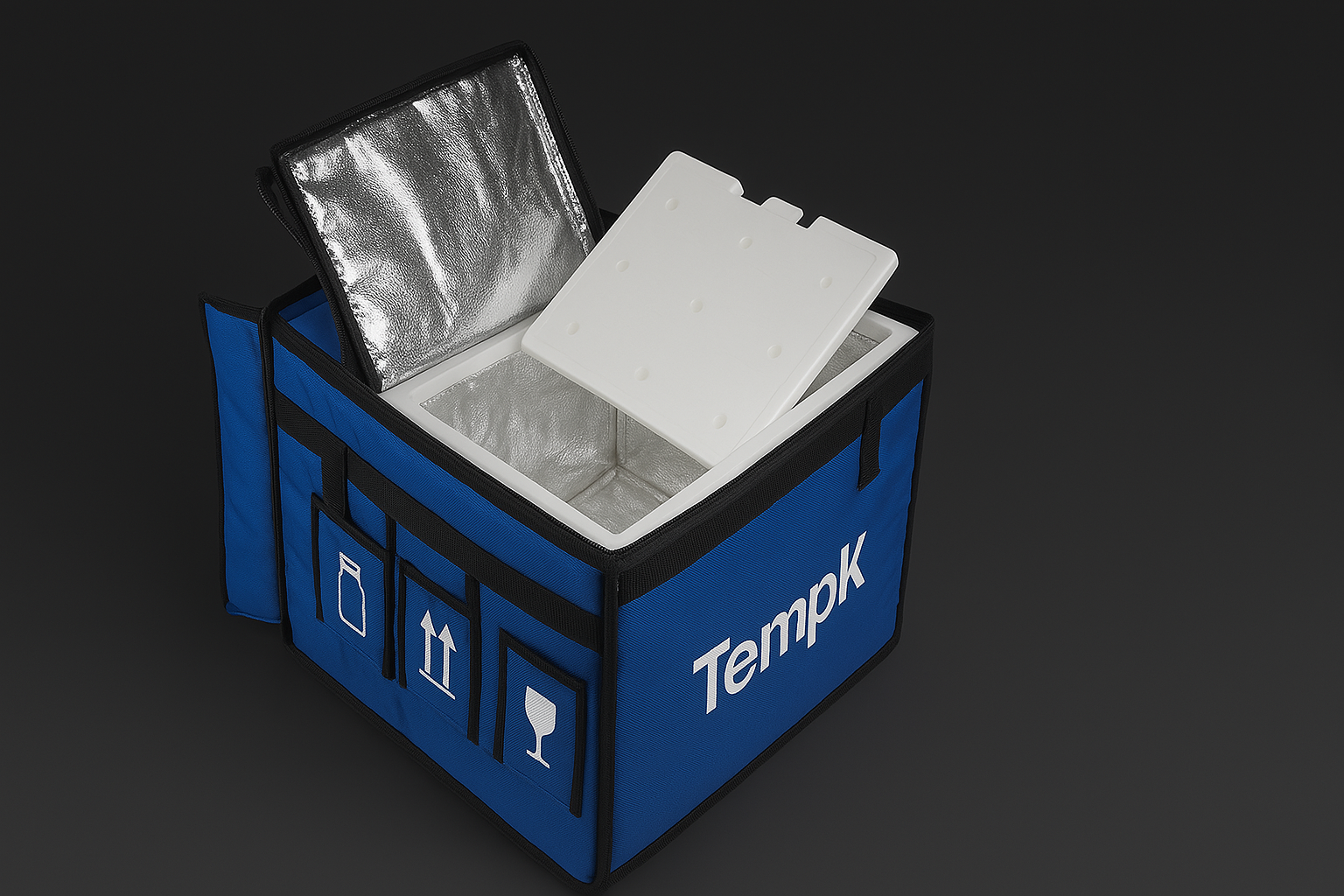
VIP refrigerated shipping container for biological samples shipping: Practical Selection Guide
The best use of a VIP refrigerated shipping container for biological samples shipping is to connect thermal protection with a clear operating plan. Start with the product requirement, then define the route, payload, coolant, monitoring evidence, and receiving decision. VIP insulation can be valuable for difficult or high-value cold-chain shipments, but it should be selected through evidence, not assumption. This publication-ready guide brings the buyer, technical, and operational questions into one practical framework.
Quick answer: use VIP refrigerated shipping container for biological samples shipping when the shipment needs stronger passive insulation, defined packout control, and practical evidence for the receiver. Do not use it as a substitute for route qualification, correct coolant conditioning, or quality review. The container should be judged as one component of a complete cold-chain system.
For most buyers, the practical question is: what evidence do we need before we trust this package at scale? That evidence may be a qualification summary, a supplier data sheet, a packout instruction, a sample review, a logger placement recommendation, or an internal quality approval. The goal is not to collect documents for their own sake. The goal is to reduce uncertainty before real product is placed at risk.
A practical decision path for the right VIP solution
The best decision path is neither purely technical nor purely commercial. A VIP refrigerated shipping container for biological samples shipping should be judged by how well it connects product requirements, lane exposure, packout repeatability, monitoring evidence, and supplier support. A premium material can still disappoint if the payload does not fit, the coolant is conditioned incorrectly, or the receiver cannot interpret the logger report. A simpler design can work well if the lane is short, stable, and documented.
VIP means vacuum insulated panel, a high-performance insulation component built around an evacuated core sealed inside a barrier envelope. In cold-chain packaging, VIP panels are usually protected by inner and outer structural layers because the panel itself is not meant to take abuse directly. The practical value is not that the panel is magical; it is that reduced heat transfer can give the packout more thermal margin or preserve more internal payload space than a thicker conventional foam wall. Buyers still need to confirm the complete packout, because insulation alone does not define the required temperature range, coolant conditioning, or receiving criteria.
Biological samples can have different temperature requirements depending on the sample type, test method, preservative, and downstream analysis. Some may need refrigerated conditions, some may be frozen, and some may tolerate a different range. The safest starting point is the sample handling instruction, not a general packaging category. A VIP refrigerated shipping container can support a defined temperature objective, but it should not be described as universally suitable for every biological sample.
Separate temperature protection, monitoring, and compliance proof
A VIP shipper is normally a passive temperature-controlled packaging component unless it is paired with powered refrigeration. Passive means the system relies on insulation, preconditioned coolant, phase change material, dry ice where appropriate, and a repeatable loading method. It does not actively cool itself after departure. This distinction matters in RFQs because some buyers use words such as refrigerated, smart, and temperature controlled in the same sentence. A supplier needs to know whether you expect passive protection, active refrigeration, temperature monitoring, or a hybrid logistics workflow.
Temperature monitoring should be treated as evidence, not as thermal protection. A logger can show whether a shipment stayed inside the required range and may help the team investigate a deviation, but it cannot correct a weak packout. Logger placement also matters. A sensor placed against a frozen coolant pack, near a warm wall, or in an air pocket may not represent the payload condition. For important shipments, the monitoring plan should be reviewed with the same care as the coolant map.
This separation prevents two common errors. The first is believing that a data logger protects the product. The second is believing that insulation alone proves a controlled shipment. Thermal protection, monitoring evidence, and compliance documentation are connected, but each has a different job. A strong packout should make these jobs visible.
Specimen logistics also depends on chain-of-custody and receiving discipline. A shipment may arrive physically intact but still create a quality question if the logger was not started, the label was unclear, or the receiver cannot confirm handover time. The container, coolant, label, and temperature record should support the laboratory decision that follows delivery.
Match the container to payload, lane, and receiving decision
For biological samples, reagents, specimen kits, or diagnostic materials, the container must match the payload and the lane at the same time. Payload review includes dimensions, mass, sensitivity, secondary packaging, and whether the product is damaged by freezing, warming, vibration, or contact with coolant. Lane review includes planned duration, handovers, ambient exposure, customs or hub dwell, and receiving readiness. If either side is vague, the packaging recommendation will be vague.
Biological samples can have different temperature requirements depending on the sample type, test method, preservative, and downstream analysis. Some may need refrigerated conditions, some may be frozen, and some may tolerate a different range. The safest starting point is the sample handling instruction, not a general packaging category. A VIP refrigerated shipping container can support a defined temperature objective, but it should not be described as universally suitable for every biological sample.
RFQ evidence table
| RFQ item | Minimum useful detail | Decision value |
|---|---|---|
| Payload description | Product type, mass, dimensions, and sensitivity | Helps size the container and prevent poor fit |
| Temperature requirement | Required range and excursion handling rule | Defines the acceptance target |
| Transport lane | Origin, destination, mode, season, and handovers | Links package choice to real exposure |
| Packout design | Coolant type, conditioning, placement, dividers, and closure | Makes the result repeatable |
| Monitoring workflow | Logger position, start/stop process, report format, and review owner | Turns temperature data into usable evidence |
| Scale-up controls | Sample equivalence, production consistency, and change notification | Reduces surprises after approval |
This table is useful because it turns a general product inquiry into verifiable questions. It also keeps buyers from treating a VIP container as a single specification when the real decision depends on the full route, payload, coolant, monitoring, and documentation workflow.
Evidence to request before scaling from sample to production
Qualification is the bridge between a product claim and a real shipment decision. It asks a simple question: under a defined profile, with a defined payload and a defined packout, did the system maintain the required conditions? If one of those inputs changes, the evidence may no longer be directly transferable. That is why buyers should ask whether the stated performance reflects their payload mass, internal layout, coolant quantity, route duration, and expected ambient conditions.
Before scaling, ask for evidence that reflects the approved configuration. The sample stage should test more than visual appearance. Confirm that the construction, closure, VIP panel protection, coolant plan, internal layout, and instructions can be repeated in production. If a supplier changes a material, wall structure, or component after approval, the buyer should know how that change is communicated and evaluated.
Operating discipline after the box leaves your facility
The box leaves your facility, but the process continues. Preconditioning, product staging, label placement, logger activation, lid closure, carrier pickup, in-transit handling, and receiving inspection all affect the result. A VIP container can slow heat transfer, yet it cannot correct a warm payload loaded late, a missed pickup, or a receiver that forgets to download the logger. Operating discipline turns packaging design into shipment control.
A good instruction set should be short enough to use and specific enough to prevent improvisation. It should show the order of packing, coolant placement, logger location, closure method, label position, and receiving checks. For reusable units, it should also show inspection and cleaning steps before the next shipment.
Final buyer notes for a safer RFQ
A safer RFQ states the conditions instead of asking for a generic premium box. Include the required range, payload, dimensions, route, duration, season, transport mode, monitoring needs, reuse expectations, and documentation needs. Ask suppliers to state the assumptions behind any performance claim. If they cannot state the assumptions, treat the claim as a starting point rather than a decision basis.
Finally, decide what would make the option unacceptable. It may be too little usable volume, unclear logger placement, weak panel protection, no packout instruction, no change-control conversation, or poor fit with the return loop. Rejection criteria make the evaluation more objective and prevent teams from approving a container simply because the material sounds advanced.
From Sample Approval to Repeatable Shipping
Sample approval for VIP refrigerated shipping container for biological samples shipping should not stop at appearance. The team should confirm that the sample can be packed by normal staff, that the payload fits after coolant and logger placement, that closure is repeatable, and that the receiver can inspect and document arrival without confusion. A strong sample that cannot be repeated in production is not a stable cold-chain solution.
When moving to repeat shipments, define change-control expectations. If the supplier changes panel material, shell design, lid structure, divider, or recommended packout, the buyer should be notified before the change affects real shipments. This is especially important for pharmaceutical, clinical, biological, and high-value products where small packaging changes may change the risk profile.
FAQ
Can one VIP refrigerated container fit all biological samples?
No. Biological samples may have different temperature ranges, preservatives, packaging rules, and analysis windows. Buyers should start with the sample handling requirement and the laboratory acceptance criteria. The container should be matched to that requirement instead of being treated as a universal biological sample shipper.
What evidence should a supplier provide?
Ask for evidence that matches your decision. This may include material information, packout instructions, test or qualification summaries, logger placement guidance, cleaning and reuse instructions, and sample-to-production controls. If a claim affects quality or compliance, ask what document supports it.
Is VIP packaging enough for clinical or pharmaceutical shipments?
VIP packaging may be one part of the answer, but the full system matters. Quality teams usually care about product temperature limits, qualification evidence, calibrated monitoring, route risk, SOP fit, and deviation handling. Packaging should be selected to support those controls, not replace them.
How should I compare two VIP box options?
Compare usable payload space, packout repeatability, coolant compatibility, panel protection, closure reliability, handling durability, monitoring layout, documentation support, and total operating cost. A lower unit price can be misleading if the box creates packing errors, extra freight, or weak receiving evidence.
Conclusion: Make the VIP Choice Evidence-Based
A VIP refrigerated shipping container for biological samples shipping is most valuable when the buyer links the container to product limits, route exposure, packout repeatability, monitoring evidence, and receiving decisions. VIP insulation is one strong component, but it is not the whole cold-chain process.
For a safer RFQ, ask for the evidence behind each claim and confirm how the sample will scale into repeat shipments. The final choice should be practical for the people who pack, transport, receive, inspect, and approve the product.
Additional Notes for Internal Review
Another point worth checking for VIP refrigerated shipping container for biological samples shipping is receiving behavior. A shipment is not complete when it reaches the address; it is complete when the receiver can inspect it, interpret the temperature evidence, and make the correct acceptance decision. If the package design makes logger retrieval difficult or hides the payload condition, the receiver may create a deviation even when the thermal design was adequate. Simple receiving instructions reduce this risk.
Storage before shipment is also part of the cold-chain process. Coolant conditioning, product staging, empty box storage, and packing room temperature can influence the starting condition. If one site packs in a controlled room and another packs beside a loading dock, the same box may begin the lane with different thermal conditions. Buyers should standardize the preparation steps before judging container performance.
Finally, consider how changes will be handled after approval. Substituting a divider, changing a lid component, using a different coolant source, or altering the logger location may seem minor, but each change can affect the way heat moves through the packout or how evidence is interpreted. A clear change conversation between buyer and supplier is especially important when shipments are regulated, high value, or repeated across multiple locations.
About Tempk
Tempk offers VIP medical cooler box and removable vacuum insulation panel cooler box options for medical, pharmaceutical, food, and temperature-sensitive logistics. For biological samples, research materials, and clinical supplies, the key value is a packaging conversation that starts with the product requirement, payload layout, coolant plan, and monitoring needs. Tempk can support buyers who need a more specific cold-chain packaging recommendation before moving from sample review to repeated shipments.
Discuss your sample type, required temperature range, and handover points with Tempk before choosing a VIP shipper.
Practical Guide: VIP refrigerated shipping box for data logger integration

VIP refrigerated shipping box for data logger integration: Practical Selection Guide
The best use of a VIP refrigerated shipping box for data logger integration is to connect thermal protection with a clear operating plan. Start with the product requirement, then define the route, payload, coolant, monitoring evidence, and receiving decision. VIP insulation can be valuable for difficult or high-value cold-chain shipments, but it should be selected through evidence, not assumption. This publication-ready guide brings the buyer, technical, and operational questions into one practical framework.
Quick answer: use VIP refrigerated shipping box for data logger integration when the shipment needs stronger passive insulation, defined packout control, and practical evidence for the receiver. Do not use it as a substitute for route qualification, correct coolant conditioning, or quality review. The container should be judged as one component of a complete cold-chain system.
For most buyers, the practical question is: what evidence do we need before we trust this package at scale? That evidence may be a qualification summary, a supplier data sheet, a packout instruction, a sample review, a logger placement recommendation, or an internal quality approval. The goal is not to collect documents for their own sake. The goal is to reduce uncertainty before real product is placed at risk.
A practical decision path for the right VIP solution
The best decision path is neither purely technical nor purely commercial. A VIP refrigerated shipping box for data logger integration should be judged by how well it connects product requirements, lane exposure, packout repeatability, monitoring evidence, and supplier support. A premium material can still disappoint if the payload does not fit, the coolant is conditioned incorrectly, or the receiver cannot interpret the logger report. A simpler design can work well if the lane is short, stable, and documented.
VIP means vacuum insulated panel, a high-performance insulation component built around an evacuated core sealed inside a barrier envelope. In cold-chain packaging, VIP panels are usually protected by inner and outer structural layers because the panel itself is not meant to take abuse directly. The practical value is not that the panel is magical; it is that reduced heat transfer can give the packout more thermal margin or preserve more internal payload space than a thicker conventional foam wall. Buyers still need to confirm the complete packout, because insulation alone does not define the required temperature range, coolant conditioning, or receiving criteria.
Temperature monitoring should be treated as evidence, not as thermal protection. A logger can show whether a shipment stayed inside the required range and may help the team investigate a deviation, but it cannot correct a weak packout. Logger placement also matters. A sensor placed against a frozen coolant pack, near a warm wall, or in an air pocket may not represent the payload condition. For important shipments, the monitoring plan should be reviewed with the same care as the coolant map.
Separate temperature protection, monitoring, and compliance proof
A VIP shipper is normally a passive temperature-controlled packaging component unless it is paired with powered refrigeration. Passive means the system relies on insulation, preconditioned coolant, phase change material, dry ice where appropriate, and a repeatable loading method. It does not actively cool itself after departure. This distinction matters in RFQs because some buyers use words such as refrigerated, smart, and temperature controlled in the same sentence. A supplier needs to know whether you expect passive protection, active refrigeration, temperature monitoring, or a hybrid logistics workflow.
Temperature monitoring should be treated as evidence, not as thermal protection. A logger can show whether a shipment stayed inside the required range and may help the team investigate a deviation, but it cannot correct a weak packout. Logger placement also matters. A sensor placed against a frozen coolant pack, near a warm wall, or in an air pocket may not represent the payload condition. For important shipments, the monitoring plan should be reviewed with the same care as the coolant map.
This separation prevents two common errors. The first is believing that a data logger protects the product. The second is believing that insulation alone proves a controlled shipment. Thermal protection, monitoring evidence, and compliance documentation are connected, but each has a different job. A strong packout should make these jobs visible.
Data logger integration should be considered during the internal layout stage. The box may need a protected logger position, a clear cable path for a probe, a visible activation label, or a retrieval instruction for the receiving team. If the logger is buried under coolant or placed after packing is finished, the temperature record may be hard to interpret. For regulated or quality-sensitive shipments, retrieval failure can be almost as damaging as a temperature failure because the receiver lacks evidence.
Match the container to payload, lane, and receiving decision
For pharmaceuticals, biologics, clinical supplies, or samples that require shipment evidence, the container must match the payload and the lane at the same time. Payload review includes dimensions, mass, sensitivity, secondary packaging, and whether the product is damaged by freezing, warming, vibration, or contact with coolant. Lane review includes planned duration, handovers, ambient exposure, customs or hub dwell, and receiving readiness. If either side is vague, the packaging recommendation will be vague.
Temperature monitoring should be treated as evidence, not as thermal protection. A logger can show whether a shipment stayed inside the required range and may help the team investigate a deviation, but it cannot correct a weak packout. Logger placement also matters. A sensor placed against a frozen coolant pack, near a warm wall, or in an air pocket may not represent the payload condition. For important shipments, the monitoring plan should be reviewed with the same care as the coolant map.
RFQ evidence table
| RFQ item | Minimum useful detail | Decision value |
|---|---|---|
| Payload description | Product type, mass, dimensions, and sensitivity | Helps size the container and prevent poor fit |
| Temperature requirement | Required range and excursion handling rule | Defines the acceptance target |
| Transport lane | Origin, destination, mode, season, and handovers | Links package choice to real exposure |
| Packout design | Coolant type, conditioning, placement, dividers, and closure | Makes the result repeatable |
| Monitoring workflow | Logger position, start/stop process, report format, and review owner | Turns temperature data into usable evidence |
| Scale-up controls | Sample equivalence, production consistency, and change notification | Reduces surprises after approval |
This table is useful because it turns a general product inquiry into verifiable questions. It also keeps buyers from treating a VIP container as a single specification when the real decision depends on the full route, payload, coolant, monitoring, and documentation workflow.
Evidence to request before scaling from sample to production
Qualification is the bridge between a product claim and a real shipment decision. It asks a simple question: under a defined profile, with a defined payload and a defined packout, did the system maintain the required conditions? If one of those inputs changes, the evidence may no longer be directly transferable. That is why buyers should ask whether the stated performance reflects their payload mass, internal layout, coolant quantity, route duration, and expected ambient conditions.
Before scaling, ask for evidence that reflects the approved configuration. The sample stage should test more than visual appearance. Confirm that the construction, closure, VIP panel protection, coolant plan, internal layout, and instructions can be repeated in production. If a supplier changes a material, wall structure, or component after approval, the buyer should know how that change is communicated and evaluated.
Operating discipline after the box leaves your facility
The box leaves your facility, but the process continues. Preconditioning, product staging, label placement, logger activation, lid closure, carrier pickup, in-transit handling, and receiving inspection all affect the result. A VIP container can slow heat transfer, yet it cannot correct a warm payload loaded late, a missed pickup, or a receiver that forgets to download the logger. Operating discipline turns packaging design into shipment control.
A good instruction set should be short enough to use and specific enough to prevent improvisation. It should show the order of packing, coolant placement, logger location, closure method, label position, and receiving checks. For reusable units, it should also show inspection and cleaning steps before the next shipment.
Final buyer notes for a safer RFQ
A safer RFQ states the conditions instead of asking for a generic premium box. Include the required range, payload, dimensions, route, duration, season, transport mode, monitoring needs, reuse expectations, and documentation needs. Ask suppliers to state the assumptions behind any performance claim. If they cannot state the assumptions, treat the claim as a starting point rather than a decision basis.
Finally, decide what would make the option unacceptable. It may be too little usable volume, unclear logger placement, weak panel protection, no packout instruction, no change-control conversation, or poor fit with the return loop. Rejection criteria make the evaluation more objective and prevent teams from approving a container simply because the material sounds advanced.
From Sample Approval to Repeatable Shipping
Sample approval for VIP refrigerated shipping box for data logger integration should not stop at appearance. The team should confirm that the sample can be packed by normal staff, that the payload fits after coolant and logger placement, that closure is repeatable, and that the receiver can inspect and document arrival without confusion. A strong sample that cannot be repeated in production is not a stable cold-chain solution.
When moving to repeat shipments, define change-control expectations. If the supplier changes panel material, shell design, lid structure, divider, or recommended packout, the buyer should be notified before the change affects real shipments. This is especially important for pharmaceutical, clinical, biological, and high-value products where small packaging changes may change the risk profile.
Because this topic involves data logger integration, include the logger model or format in the RFQ if possible. State whether the sensor is internal, external, buffered, probe-based, disposable, reusable, Bluetooth, USB, or real-time. Also state who needs the report and how quickly after delivery. This prevents a design that protects the payload but hides the evidence.
FAQ
Where should a data logger be placed in a VIP box?
Placement should be defined by the monitoring objective. The sensor should not be casually placed against coolant, a warm wall, or an empty air space unless that location is intentional. Many teams want the reading to represent payload conditions, so the placement should be documented in the packout instruction and reviewed by the quality or logistics owner.
What evidence should a supplier provide?
Ask for evidence that matches your decision. This may include material information, packout instructions, test or qualification summaries, logger placement guidance, cleaning and reuse instructions, and sample-to-production controls. If a claim affects quality or compliance, ask what document supports it.
Is VIP packaging enough for clinical or pharmaceutical shipments?
VIP packaging may be one part of the answer, but the full system matters. Quality teams usually care about product temperature limits, qualification evidence, calibrated monitoring, route risk, SOP fit, and deviation handling. Packaging should be selected to support those controls, not replace them.
How should I compare two VIP box options?
Compare usable payload space, packout repeatability, coolant compatibility, panel protection, closure reliability, handling durability, monitoring layout, documentation support, and total operating cost. A lower unit price can be misleading if the box creates packing errors, extra freight, or weak receiving evidence.
Conclusion: Make the VIP Choice Evidence-Based
A VIP refrigerated shipping box for data logger integration is most valuable when the buyer links the container to product limits, route exposure, packout repeatability, monitoring evidence, and receiving decisions. VIP insulation is one strong component, but it is not the whole cold-chain process.
For a safer RFQ, ask for the evidence behind each claim and confirm how the sample will scale into repeat shipments. The final choice should be practical for the people who pack, transport, receive, inspect, and approve the product.
Additional Notes for Internal Review
Another point worth checking for VIP refrigerated shipping box for data logger integration is receiving behavior. A shipment is not complete when it reaches the address; it is complete when the receiver can inspect it, interpret the temperature evidence, and make the correct acceptance decision. If the package design makes logger retrieval difficult or hides the payload condition, the receiver may create a deviation even when the thermal design was adequate. Simple receiving instructions reduce this risk.
About Tempk
Tempk offers cold-chain packaging solutions that include VIP medical cooler box and removable vacuum insulation panel cooler box options for temperature-sensitive shipments. For projects involving temperature data loggers, the useful discussion is how the insulated box, coolant layout, payload position, and logger placement work together. Tempk can help buyers review container layout and packaging requirements so monitoring evidence is considered during the packaging discussion rather than added as an afterthought.
Share your documentation requirements and logger workflow with Tempk so the box layout can support clean data retrieval.
Practical Guide: VIP refrigerated container for smart shipping container

VIP refrigerated container for smart shipping container: Practical Selection Guide
The best use of a VIP refrigerated container for smart shipping container is to connect thermal protection with a clear operating plan. Start with the product requirement, then define the route, payload, coolant, monitoring evidence, and receiving decision. VIP insulation can be valuable for difficult or high-value cold-chain shipments, but it should be selected through evidence, not assumption. This publication-ready guide brings the buyer, technical, and operational questions into one practical framework.
Quick answer: use VIP refrigerated container for smart shipping container when the shipment needs stronger passive insulation, defined packout control, and practical evidence for the receiver. Do not use it as a substitute for route qualification, correct coolant conditioning, or quality review. The container should be judged as one component of a complete cold-chain system.
For most buyers, the practical question is: what evidence do we need before we trust this package at scale? That evidence may be a qualification summary, a supplier data sheet, a packout instruction, a sample review, a logger placement recommendation, or an internal quality approval. The goal is not to collect documents for their own sake. The goal is to reduce uncertainty before real product is placed at risk.
A practical decision path for the right VIP solution
The best decision path is neither purely technical nor purely commercial. A VIP refrigerated container for smart shipping container should be judged by how well it connects product requirements, lane exposure, packout repeatability, monitoring evidence, and supplier support. A premium material can still disappoint if the payload does not fit, the coolant is conditioned incorrectly, or the receiver cannot interpret the logger report. A simpler design can work well if the lane is short, stable, and documented.
VIP means vacuum insulated panel, a high-performance insulation component built around an evacuated core sealed inside a barrier envelope. In cold-chain packaging, VIP panels are usually protected by inner and outer structural layers because the panel itself is not meant to take abuse directly. The practical value is not that the panel is magical; it is that reduced heat transfer can give the packout more thermal margin or preserve more internal payload space than a thicker conventional foam wall. Buyers still need to confirm the complete packout, because insulation alone does not define the required temperature range, coolant conditioning, or receiving criteria.
Smart shipping adds a useful layer of visibility. Sensors, tracking devices, and platform alerts can help teams see when a shipment is delayed or exposed to risk. The packaging still needs enough passive margin to protect the payload until somebody can act. If alerts arrive after the package has already exceeded its limit, the monitoring system becomes a record of failure rather than a prevention tool. This is why smart workflows and VIP packout design should be planned together.
Separate temperature protection, monitoring, and compliance proof
A VIP shipper is normally a passive temperature-controlled packaging component unless it is paired with powered refrigeration. Passive means the system relies on insulation, preconditioned coolant, phase change material, dry ice where appropriate, and a repeatable loading method. It does not actively cool itself after departure. This distinction matters in RFQs because some buyers use words such as refrigerated, smart, and temperature controlled in the same sentence. A supplier needs to know whether you expect passive protection, active refrigeration, temperature monitoring, or a hybrid logistics workflow.
Temperature monitoring should be treated as evidence, not as thermal protection. A logger can show whether a shipment stayed inside the required range and may help the team investigate a deviation, but it cannot correct a weak packout. Logger placement also matters. A sensor placed against a frozen coolant pack, near a warm wall, or in an air pocket may not represent the payload condition. For important shipments, the monitoring plan should be reviewed with the same care as the coolant map.
This separation prevents two common errors. The first is believing that a data logger protects the product. The second is believing that insulation alone proves a controlled shipment. Thermal protection, monitoring evidence, and compliance documentation are connected, but each has a different job. A strong packout should make these jobs visible.
For a smart container project, the most useful question is not whether the package can carry a sensor. The question is whether the data will support an action. If the alert threshold, escalation owner, and intervention window are unclear, real-time visibility may add noise rather than control. A VIP package should be designed so sensor readings are interpretable and so the physical packout can survive the time needed to intervene.
Match the container to payload, lane, and receiving decision
For temperature-sensitive cargo moving through monitored long-distance routes, the container must match the payload and the lane at the same time. Payload review includes dimensions, mass, sensitivity, secondary packaging, and whether the product is damaged by freezing, warming, vibration, or contact with coolant. Lane review includes planned duration, handovers, ambient exposure, customs or hub dwell, and receiving readiness. If either side is vague, the packaging recommendation will be vague.
Smart shipping adds a useful layer of visibility. Sensors, tracking devices, and platform alerts can help teams see when a shipment is delayed or exposed to risk. The packaging still needs enough passive margin to protect the payload until somebody can act. If alerts arrive after the package has already exceeded its limit, the monitoring system becomes a record of failure rather than a prevention tool. This is why smart workflows and VIP packout design should be planned together.
RFQ evidence table
| RFQ item | Minimum useful detail | Decision value |
|---|---|---|
| Payload description | Product type, mass, dimensions, and sensitivity | Helps size the container and prevent poor fit |
| Temperature requirement | Required range and excursion handling rule | Defines the acceptance target |
| Transport lane | Origin, destination, mode, season, and handovers | Links package choice to real exposure |
| Packout design | Coolant type, conditioning, placement, dividers, and closure | Makes the result repeatable |
| Monitoring workflow | Logger position, start/stop process, report format, and review owner | Turns temperature data into usable evidence |
| Scale-up controls | Sample equivalence, production consistency, and change notification | Reduces surprises after approval |
This table is useful because it turns a general product inquiry into verifiable questions. It also keeps buyers from treating a VIP container as a single specification when the real decision depends on the full route, payload, coolant, monitoring, and documentation workflow.
Evidence to request before scaling from sample to production
Qualification is the bridge between a product claim and a real shipment decision. It asks a simple question: under a defined profile, with a defined payload and a defined packout, did the system maintain the required conditions? If one of those inputs changes, the evidence may no longer be directly transferable. That is why buyers should ask whether the stated performance reflects their payload mass, internal layout, coolant quantity, route duration, and expected ambient conditions.
Before scaling, ask for evidence that reflects the approved configuration. The sample stage should test more than visual appearance. Confirm that the construction, closure, VIP panel protection, coolant plan, internal layout, and instructions can be repeated in production. If a supplier changes a material, wall structure, or component after approval, the buyer should know how that change is communicated and evaluated.
Operating discipline after the box leaves your facility
The box leaves your facility, but the process continues. Preconditioning, product staging, label placement, logger activation, lid closure, carrier pickup, in-transit handling, and receiving inspection all affect the result. A VIP container can slow heat transfer, yet it cannot correct a warm payload loaded late, a missed pickup, or a receiver that forgets to download the logger. Operating discipline turns packaging design into shipment control.
A good instruction set should be short enough to use and specific enough to prevent improvisation. It should show the order of packing, coolant placement, logger location, closure method, label position, and receiving checks. For reusable units, it should also show inspection and cleaning steps before the next shipment.
Final buyer notes for a safer RFQ
A safer RFQ states the conditions instead of asking for a generic premium box. Include the required range, payload, dimensions, route, duration, season, transport mode, monitoring needs, reuse expectations, and documentation needs. Ask suppliers to state the assumptions behind any performance claim. If they cannot state the assumptions, treat the claim as a starting point rather than a decision basis.
Finally, decide what would make the option unacceptable. It may be too little usable volume, unclear logger placement, weak panel protection, no packout instruction, no change-control conversation, or poor fit with the return loop. Rejection criteria make the evaluation more objective and prevent teams from approving a container simply because the material sounds advanced.
From Sample Approval to Repeatable Shipping
Sample approval for VIP refrigerated container for smart shipping container should not stop at appearance. The team should confirm that the sample can be packed by normal staff, that the payload fits after coolant and logger placement, that closure is repeatable, and that the receiver can inspect and document arrival without confusion. A strong sample that cannot be repeated in production is not a stable cold-chain solution.
When moving to repeat shipments, define change-control expectations. If the supplier changes panel material, shell design, lid structure, divider, or recommended packout, the buyer should be notified before the change affects real shipments. This is especially important for pharmaceutical, clinical, biological, and high-value products where small packaging changes may change the risk profile.
FAQ
Does smart tracking reduce the need for VIP insulation?
Not usually. Smart tracking improves visibility, but insulation provides passive thermal margin. The two roles are different. If the route has delays or limited intervention options, smart data may show risk while the VIP packout buys time. The best design aligns sensors, alerts, escalation, and thermal margin.
What evidence should a supplier provide?
Ask for evidence that matches your decision. This may include material information, packout instructions, test or qualification summaries, logger placement guidance, cleaning and reuse instructions, and sample-to-production controls. If a claim affects quality or compliance, ask what document supports it.
Is VIP packaging enough for clinical or pharmaceutical shipments?
VIP packaging may be one part of the answer, but the full system matters. Quality teams usually care about product temperature limits, qualification evidence, calibrated monitoring, route risk, SOP fit, and deviation handling. Packaging should be selected to support those controls, not replace them.
How should I compare two VIP box options?
Compare usable payload space, packout repeatability, coolant compatibility, panel protection, closure reliability, handling durability, monitoring layout, documentation support, and total operating cost. A lower unit price can be misleading if the box creates packing errors, extra freight, or weak receiving evidence.
Conclusion: Make the VIP Choice Evidence-Based
A VIP refrigerated container for smart shipping container is most valuable when the buyer links the container to product limits, route exposure, packout repeatability, monitoring evidence, and receiving decisions. VIP insulation is one strong component, but it is not the whole cold-chain process.
For a safer RFQ, ask for the evidence behind each claim and confirm how the sample will scale into repeat shipments. The final choice should be practical for the people who pack, transport, receive, inspect, and approve the product.
Additional Notes for Internal Review
Another point worth checking for VIP refrigerated container for smart shipping container is receiving behavior. A shipment is not complete when it reaches the address; it is complete when the receiver can inspect it, interpret the temperature evidence, and make the correct acceptance decision. If the package design makes logger retrieval difficult or hides the payload condition, the receiver may create a deviation even when the thermal design was adequate. Simple receiving instructions reduce this risk.
Storage before shipment is also part of the cold-chain process. Coolant conditioning, product staging, empty box storage, and packing room temperature can influence the starting condition. If one site packs in a controlled room and another packs beside a loading dock, the same box may begin the lane with different thermal conditions. Buyers should standardize the preparation steps before judging container performance.
About Tempk
Tempk offers cold-chain packaging solutions that include VIP cooler boxes and removable vacuum insulation panel cooler box options for medical, pharmaceutical, food, and other temperature-sensitive logistics needs. The relevant value for buyers is not only the insulated shell, but also the practical conversation around payload fit, coolant use, reusable handling, and documentation expectations. For VIP projects, Tempk can help buyers translate a route, product type, and temperature requirement into a packaging discussion that is more specific than a general cooler inquiry.
Share your smart container workflow with Tempk to see where VIP packaging can add passive thermal margin.