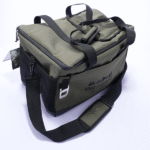
Choosing an insulated lunch bag manufacturer is no longer just a sourcing task. It is a product strategy decision. In 2026, you need a supplier that can balance thermal performance, food-safe material logic, durable construction, packaging efficiency, and documentation that fits today’s stricter buyer expectations. A good sample is not enough. You need a factory that can repeat that quality in mass production.
This article will help you answer:
- How to compare an insulated lunch bag manufacturer beyond price
- Which materials improve temperature retention and user experience
- What technical and compliance checks matter most in 2026
- How to build a better RFQ for private label and enterprise orders
- What sustainability trends are changing lunch bag sourcing
What should you define before contacting an insulated lunch bag manufacturer?
Start with the real user, not the factory catalog. A lunch bag for office meal prep, school use, retail gifting, and wellness campaigns may look similar, but each one needs a different balance of size, structure, insulation, and cost. If your spec is vague, your quotes will not be comparable.
Before you request a sample, define:
- Use scenario
- Target holding time
- Capacity and lunch box size
- Carry method
- Cleaning expectation
- Logo method
- Target price range
- Packing and delivery plan
- Fast decision table
| Sourcing factor | Entry level | Balanced choice | Premium choice | What it means for you |
|---|---|---|---|---|
| Outer material | Non-woven | Oxford | rPET Oxford | Better durability and brand value |
| Insulation | Thin EPE | Medium foam | Optimized layered build | Better thermal consistency |
| Inner liner | Basic film | PEVA | Easy-clean upgraded liner | Lower odor and complaint risk |
| Closure | Hook and loop | Standard zipper | Better sealed zipper path | Less heat leakage |
| Branding | Simple print | Heat transfer | Multi-detail finish | Better shelf appeal |
What makes one insulated lunch bag manufacturer better than another?
The better supplier is usually the one that manages variation. Anyone can send a nice first sample. The real test is whether the supplier can keep stitching, foam placement, zipper alignment, and logo quality stable across every production lot.
A strong insulated lunch bag manufacturer should be able to explain:
- how materials are checked before cutting
- how thermal layers are assembled
- where stress points are reinforced
- how in-line inspections are done
- what AQL level is used at final inspection
- how export cartons protect shape during shipment
- Signs of a mature OEM lunch bag supplier
- Clear sample approval stages
- Consistent bag dimensions
- Reinforced handles and corners
- Neat zipper and piping finish
- Carton plans matched to product structure
- Fast response to corrective actions
Practical example: One buyer reduced return complaints by switching from a floppy foldable structure to a boxy shape with stronger foam placement and reinforced handle anchoring. The bag felt more premium and protected food containers better in daily use.
Which materials matter most for lunch bag performance?
Performance comes from layers working together. The shell protects the bag, the insulation slows heat flow, and the liner shapes cleaning and food-contact confidence. If one layer is weak, the full bag feels weaker.
Common build options
- Non-woven outer shell: low-cost and lightweight, but less durable
- Oxford shell: more structured and abrasion resistant
- rPET shell: useful for sustainability-led projects
- EPE or closed-cell foam: common insulation core
- PEVA or similar liner: easy-clean interior option
- Reflective inner layer: supports heat reflection within the system
ASTM C518 is a recognized method for measuring steady-state thermal transmission in insulation materials, and EN 12546-2 covers portable insulated bags and boxes for domestic food use. These references are useful because they help buyers challenge vague catalog claims with more technical questions. (ASTM International | ASTM)
Why thermal claims often disappoint in real life
- A lunch bag may fail in use for three simple reasons:
- too much empty air inside
- poor lid or zipper sealing
- weak foam fit in corners and seams
- That is why you should judge performance by the whole bag, not only by foam thickness.
What compliance checks matter in 2026?
Compliance now starts earlier in the buying process. If your bag may contact food directly through the liner or inner surfaces, you should request supporting documentation under the EU food-contact framework. Regulation (EC) No 1935/2004 remains the central legal basis for materials intended to contact food on the EU market. (Food Safety)
Management-system signals also matter. ISO 9001 remains a useful filter for quality process control, while ISO 14001 signals that the supplier uses a formal environmental management framework. Those certifications do not replace product validation, but they reduce the odds of random bulk-order drift. (国际标准化组织)
Compliance checklist
| Check area | What to request | Why it matters |
|---|---|---|
| Food-contact support | Liner declaration and material details | Better market readiness |
| Quality system | ISO 9001 certificate | More stable mass production |
| Environmental system | ISO 14001 certificate | Better buyer confidence |
| Packaging spec | Carton details and drop review | Lower transit damage risk |
| Inspection method | AQL plan and final checklist | Fewer surprises after shipment |
How are market trends changing lunch bag sourcing?
European-facing sourcing is moving under a tougher policy backdrop. The EU Packaging and Packaging Waste Regulation entered into force on February 11, 2025 and applies generally from August 12, 2026, while the broader policy objective is that all packaging on the EU market should be recyclable in an economically viable way by 2030. That means brands are looking harder at mixed materials, overpacking, and end-of-life logic. (Environment)
Sustainability guidance is also becoming more operational. RecyClass updated its recyclability recommendations after more than 20 testing campaigns in 2025, and CEFLEX continues to promote design choices that improve collection, sorting, and recycling across Europe. In practice, this makes simple structures, better material transparency, and more durable reuse value more attractive. (RecyClass)
- What should your RFQ include now?
A better RFQ for an insulated lunch bag manufacturer should include:
- target use scenario
- dimensions and capacity
- target insulation time
- fabric preference
- liner requirement
- branding method
- packaging limit
- inspection standard
- documentation request
- shipping term
- Smart RFQ tip
If two factories quote from two different assumptions, the prices tell you very little. The more precise your brief, the more useful the comparison.
2026 development and trend snapshot
- The biggest lunch bag changes in 2026 are not dramatic visual trends. They are practical shifts:
- More recycled shells: especially for enterprise and retail projects
- Cleaner interiors: easier wipe-clean surfaces are preferred
- Less wasted packaging: slimmer carton and pack-out plans matter more
- Better file readiness: declarations and process records are requested earlier
- More durable reuse: brands want a lunch bag people keep for longer
- FAQ
What is the best insulated lunch bag manufacturer for private label?
The best partner is the one that can convert your use case into a stable production spec, not simply the one with the lowest quote.
How can you compare two lunch bag suppliers fairly?
Give both suppliers the same dimensions, insulation target, liner request, packaging limit, and inspection standard.
Is a recycled shell enough to make a lunch bag sustainable?
No. Durability, reuse value, packaging efficiency, and clear documentation matter just as much.
Should you test only materials or the final bag?
Test both. Material tests help compare insulation layers, but the final bag reveals leakage, fit, and real-use behavior.
Summary and recommendation
A strong insulated lunch bag manufacturer helps you build a bag that performs in everyday life, not only in a sales sample. Focus on user scenario, material balance, closure quality, handle strength, packaging efficiency, and compliance support. In 2026, the most competitive lunch bag is the one that is easier to specify, easier to validate, and easier for customers to keep using.
If you are preparing a new project, start by locking five things: size, thermal target, liner requirement, branding method, and inspection standard. That single step will make your quotes more accurate and your sample cycle much faster.
About Tempk
At Tempk, we develop insulated bag solutions for daily food use and professional cold-chain applications. We focus on practical structure design, stable materials, and manufacturing details that support repeat orders, clearer specifications, and fewer avoidable quality problems.
Call to action: Build your next project around a precise specification sheet, then choose the supplier that can explain how every layer and every process point supports it.