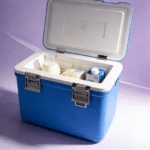
VIP Cold Chain Box for Cosmetic Cold Chain: How?
If you’re choosing a VIP cold chain box for cosmetic cold chain shipments, you’re not just “keeping it cool.” You’re protecting texture, scent, color, and that first-use experience your customer remembers. A cream can arrive looking fine and still separate later. A serum can arrive intact and still lose performance after heat spikes. This guide shows you how to pick, pack, validate, and run a VIP cold chain box for cosmetic cold chain program that stays reliable on your worst day.
This article will answer for you:
-
How a VIP insulated box for skincare shipping works in plain language
-
Which products truly need a VIP cold chain box for cosmetic cold chain shipping (and which don’t)
-
How to choose a target band: 15–25°C, 20–25°C, 2–8°C, or freeze-protect
-
Packout rules that reduce hot spots and prevent freeze damage in cosmetic shipping
-
A simple cosmetic cold chain packaging validation test plan you can repeat
-
Monitoring, documentation, and 2025 operational trends that reduce disputes
-
How to calculate cost per successful delivery (not just packaging cost)
Why does a VIP cold chain box for cosmetic cold chain matter so much?
Direct answer: A VIP cold chain box for cosmetic cold chain matters because cosmetics often fail quietly. Your product can “deliver” and still disappoint.
Cosmetics are about consistency. Heat spikes can thin emulsions and shift scent balance. Freeze contact can split creams or cloud water-based serums. The customer may not notice at the door, but they notice at first use. When that happens, you pay twice: refunds now and trust loss later.
The real cost of one temperature failure
-
Refunds and reships that eat margin
-
Negative reviews like “melted,” “separated,” or “smells different”
-
Retailer rejections or chargebacks on premium lines
-
Higher support tickets during summer and winter peaks
Practical case example: A premium skincare brand saw refund spikes every July. After switching to a lane-specific VIP cold chain box for cosmetic cold chain packout, complaints dropped and repeat orders improved.
Which cosmetics need a VIP cold chain box for cosmetic cold chain shipping?
Direct answer: Use a VIP cold chain box for cosmetic cold chain when your formula is sensitive to swings, your lane is long, or your brand promise is premium.
Not every moisturizer needs temperature-controlled shipping. Many products just need basic protection from extreme heat and long doorstep dwell time. VIP is most valuable when one failure is expensive.
Cosmetics that benefit most (simple and practical)
| Cosmetic type | Typical temperature risk | Common failure mode | Why VIP helps you |
|---|---|---|---|
| Cream emulsions | heat + freeze-thaw | separation, texture shift | reduces swing severity |
| Active serums | heat accelerates change | color/odor drift | slows temperature stress |
| “Clean beauty” formulas | warm dwell time | quality drift | buys time in delays |
| Balms/lipsticks | hot last mile | softening, deforming | holds stable band longer |
| Probiotic/fermented lines | unstable outside range | performance loss | supports tighter control |
“Needs cold” vs “needs stability”
Many cosmetics don’t need refrigerated shipping. They need stability shipping:
-
avoid high heat exposure
-
avoid repeated warm–cool cycles
-
avoid long dwell time in trucks and hubs
A VIP cold chain box for cosmetic cold chain often solves stability better than basic mailers because it reduces both the speed and size of temperature swings.
What temperature band should your VIP cold chain box for cosmetic cold chain target?
Direct answer: Your VIP cold chain box for cosmetic cold chain should target the band your product actually needs—often controlled ambient (like 15–25°C or 20–25°C), not always 2–8°C.
Choosing the wrong band can create new problems. If your product is freeze-sensitive, “extra cold packs” can be worse than heat. Your goal is no damaging swings, not “as cold as possible.”
60-second Temperature Band Chooser (interactive)
Answer in order:
-
Do you have a defined storage range from QA/R&D?
-
Yes → ship to that range (don’t improvise).
-
No → go to #2.
-
-
Does your product fail freeze-thaw (many creams/emulsions do)?
-
Yes → choose freeze-protect design (avoid sub-zero contact).
-
No → go to #3.
-
-
Is your brand promise tied to “fresh actives” or premium performance?
-
Yes → choose controlled ambient (15–25°C or 20–25°C).
-
No → go to #4.
-
-
Is your route hot, long, or unpredictable (porch drops, delays)?
-
Yes → choose VIP controlled packaging + validation.
-
No → a simpler insulated system may be enough.
-
Target band table you can adopt
| Target profile | When it fits | What you must avoid | What to document |
|---|---|---|---|
| Controlled ambient (15–25°C / 20–25°C) | most premium skincare | heat spikes + long porch holds | lane temps + dwell time |
| Chilled (2–8°C) | specialty items requiring cool storage | freezing at edges | packout + logger results |
| Freeze-protect | creams/emulsions at freeze risk | sub-zero contact | conditioning + placement proof |
Practical case example: A natural cream brand failed winter deliveries due to freeze separation. A freeze-protect VIP cold chain box for cosmetic cold chain packout fixed it without “shipping colder.”
How does a VIP cold chain box for cosmetic cold chain work (and what can go wrong)?
Direct answer: A VIP cold chain box for cosmetic cold chain slows heat transfer like a high-end thermos, but performance drops if panels are damaged or the seal is inconsistent.
VIP means vacuum insulated panel. In simple terms, removing air from the panel core blocks heat movement very well. That can deliver strong insulation with thinner walls. But VIP has a “performance cliff”: if the vacuum barrier is compromised, insulation can drop toward normal materials.
What “good VIP design” looks like (plain language)
-
Strong core insulation where heat pressure is highest
-
Protected edges and corners so handling doesn’t crush weak points
-
Reliable closure so lids seat the same way every time
-
Right-sized cavity that avoids large empty air gaps
VIP vs EPS vs EPP for cosmetic lanes
| Packaging type | Insulation strength | Durability | Typical best use | What it means for you |
|---|---|---|---|---|
| EPS shipper (one-way) | medium | low | short lanes, mild weather | low cost, higher damage risk |
| EPP shipper (reusable) | medium–high | high | repeat routes, rough handling | strong ROI if returns work |
| VIP shipper | high | medium | long lanes, tight control | fewer failures on extreme days |
Packout for a VIP cold chain box for cosmetic cold chain: what actually works?
Direct answer: The VIP cold chain box for cosmetic cold chain performs best when your packout controls air space, contact points, and closure discipline.
VIP reduces heat flow, but packout decides hot spots and freeze spots. Most failures come from two mistakes: inconsistent placement and “almost closed” lids.
The 5 packout rules (simple, repeatable)
-
Center the payload (avoid wall hot spots)
-
Balance refrigerants (not top-only)
-
Use a buffer layer (prevents direct contact + condensation issues)
-
Minimize free air space (air moves heat around)
-
Seal consistently (a small gap can erase VIP gains)
Packout patterns that are easy to train
| Packout pattern | When it works | Common failure | Practical meaning for you |
|---|---|---|---|
| Top-only coolant | very short lanes | warm corners | inconsistent arrivals |
| Side + top coverage | most lanes | lid gap | best baseline choice |
| Full surround + spacer | long/hot lanes | too complex without SOP | highest stability if trained |
Prevent freeze damage in cosmetic shipping (the 3 controls)
Freeze damage often happens at contact points, not average air temperature.
-
Barrier layer: a thin insulating sheet between product and coolant
-
Spacing: keep product away from the coldest surfaces and seams
-
Balanced placement: avoid one “overcooled corner”
Practical case example: A serum shipped “extra cold” arrived cloudy in winter. A barrier layer and spacing inside the VIP cold chain box for cosmetic cold chain removed the issue.
Packout self-check (fast, reduces errors)
Answer yes/no before sealing:
-
Is the product starting temperature within your target range?
-
Are refrigerants conditioned per SOP (not guessed)?
-
Is there a buffer layer between coolant and cosmetic packaging?
-
Is empty space minimized with safe dunnage/inserts?
-
Did you perform a closure check (see below)?
If you have 2+ “no” answers, your VIP cold chain box for cosmetic cold chain performance will feel random.
The 3-second closure check that prevents most failures
-
Alignment: corners seated and lid sits flat
-
Tension: strap/latch consistent (if used)
-
Liner edge: nothing pinched that creates a gap
| Closure step | What you check | Why it matters | What it means for you |
|---|---|---|---|
| Lid alignment | corners seated | stops air leaks | better hold time |
| Strap/latch | consistent tension | reduces variation | fewer “people mistakes” |
| Liner edge | not pinched | prevents gaps | fewer warm arrivals |
Phase change material for cosmetic cold chain: how to choose without guesswork?
Direct answer: For a VIP cold chain box for cosmetic cold chain, PCM is often safer than “deep-frozen gel packs” when you need controlled ambient or freeze protection.
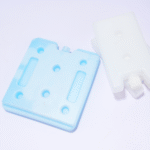
PCM (phase change material) is like an ice pack that melts at a chosen temperature. That helps you hold a target band without pushing product too cold.
PCM selection table (buyer-friendly)
| Temperature goal | Typical PCM choice | Best for | Practical meaning for you |
|---|---|---|---|
| Controlled ambient | ~18–22°C PCM | creams, lotions, makeup | avoids overheating without chilling |
| Chilled | ~5°C PCM | specialty items needing cool | stable 2–8°C with less freeze risk |
| Freeze-protect | mild PCM + spacers | emulsions and serums | reduces separation complaints |
Do-not-do rule: If you’re targeting controlled ambient, don’t place freezer-solid packs against product. You can create cold shock inside a “great” shipper.
How do you validate a VIP cold chain box for cosmetic cold chain in 2025?
Direct answer: Validate your VIP cold chain box for cosmetic cold chain by testing your real packout under hot, cold, and delay stress—then repeating until results are stable.
You don’t need a giant lab to start. You need consistent sensors, documented packout photos, and a simple repeat plan. If your parcels move through parcel-style networks, standardized thermal profiles (like ISTA-style approaches) help comparisons and audits.
Cosmetic cold chain packaging validation test: a simple 7-run plan
Run each test with the same load, same conditioning, same closure step.
| Run | Scenario | Duration | What it proves |
|---|---|---|---|
| 1–2 | Typical day | lane time | everyday stability |
| 3–4 | Hot stress + doorstep hold | lane time + buffer | summer failures |
| 5 | Cold stress | lane time | freeze risk |
| 6 | Delay scenario | lane time + 8–12h | carrier disruption |
| 7 | Handling stress | lane time | seam/lid integrity |
Sensor placement (so your data is usable)
| Sensor location | Why it matters | What you learn | Practical win |
|---|---|---|---|
| Warm corner near lid | common failure zone | seal impact | fix lid first |
| Product center | true customer condition | product safety | strongest QA evidence |
| Near coolant | cold shock risk | freeze spots | safer packouts |
Practical case example: A shipper “failed VIP” after a warehouse change. The real cause was panel damage during handling. A tougher outer shell and handling rule fixed it.
Monitoring and documentation: make VIP cosmetic shipping audit-friendly
Direct answer: In 2025, monitoring turns a VIP cold chain box for cosmetic cold chain into a quality advantage because you can prove performance, not argue about it.
You don’t need to overcomplicate monitoring. You need consistent visibility and a simple exception process.
Monitoring options (choose by maturity)
-
Level 1: Indicator (fast confidence + customer reassurance)
-
Level 2: Sampling loggers (monitor 5–10% of high-risk lanes)
-
Level 3: Always-on logging (premium/export lanes and strict partners)
The “same place every time” logger rule
If you use loggers, place them:
-
near product center
-
not touching refrigerants
-
same position every shipment
This makes results comparable and speeds root-cause analysis.
The audit-ready record set (simple, realistic)
| Record | What to capture | Frequency | Why it helps |
|---|---|---|---|
| Packout record | kit ID + coolant + conditioning | every shipment | reproducibility |
| Temperature record | indicator result / logger file | by lane risk | performance proof |
| Deviation log | what happened + what you did | as needed | corrective action |
| Weekly review | quick lane summary | weekly | shows oversight |
Cost and ROI: when is a VIP cold chain box for cosmetic cold chain the “best” choice?
Direct answer: The VIP cold chain box for cosmetic cold chain is “best” when it lowers your cost per successful delivery, not when it looks cheapest on a unit-price sheet.
VIP can reduce failures, reduce reships, and sometimes reduce weight by using smarter coolants. But it only wins if your packout is repeatable and your team can execute fast.
Cost-per-success calculator (interactive)
Fill in your numbers:
-
Average order value (AOV): $____
-
Refund/reship cost per failure: $____
-
Current failure rate: ____%
-
Expected failure rate with VIP: ____%
-
Added packaging cost per order (VIP vs current): $____
Quick logic:
-
Savings = (current failures − VIP failures) × cost per failure
-
If savings > added packaging cost, VIP pays back
-
Run two versions: summer and winter
What usually drives ROI for cosmetics
| ROI driver | What improves it | What hurts it | What it means for you |
|---|---|---|---|
| Fewer failures | validated packout | “one packout for all” | fewer refunds + better reviews |
| Lower labor | pre-kitted inserts | too many SKUs | faster, consistent packing |
| Brand protection | stable unboxing temp | porch heat exposure | higher repeat purchase rate |
2025 latest developments and trends in VIP cosmetic cold chain
In 2025, cosmetic cold chain is becoming more systems-driven. Brands are standardizing lanes, reducing SKUs, and treating packaging as part of product quality. You also see more reuse programs and more documentation discipline, especially for premium and export shipments.
Latest progress snapshot
-
Lane-based standards: 2–3 packout recipes instead of endless custom builds
-
Smarter monitoring: sampling programs before full rollout
-
Reuse as an asset fleet: IDs, cycle counts, retire rules
-
Better customer messaging: delivery alerts and “retrieve immediately” guidance
-
More validation culture: seasonal packouts (summer/winter) are becoming normal
Frequently Asked Questions
Q1: Do all cosmetics need a VIP cold chain box for cosmetic cold chain shipping?
No. Many products ship fine with basic stability protection. Use a VIP cold chain box for cosmetic cold chain when heat, freezing, or delays cause quality changes.
Q2: Is 2–8°C always safer for skincare?
Not always. Some formulas dislike cold and can change texture. Many brands succeed with controlled ambient using a VIP cold chain box for cosmetic cold chain.
Q3: How do I prevent freeze damage in cosmetic shipping with VIP?
Use a buffer layer, add spacing from coolant, and consider phase change material for cosmetic cold chain near your target band.
Q4: Do I need a logger on every shipment?
Not always. Start with sampling on high-risk lanes and premium SKUs, then expand once you see patterns.
Q5: What is the #1 reason a VIP cold chain box for cosmetic cold chain fails?
Human factors: inconsistent packout, incomplete closure, or damaged panels. A photo-based SOP fixes most issues.
Q6: Can VIP reduce shipping weight?
Often yes. Because VIP insulates strongly, you may use less coolant for the same hold time—after validation.
Q7: How long can a VIP cold chain box for cosmetic cold chain hold temperature?
It depends on lane duration, ambient extremes, payload, coolant conditioning, and closure quality. That’s why validation runs matter before scaling.
Summary and recommendations
A VIP cold chain box for cosmetic cold chain is “best” when it protects your product on the worst day, not the average day. Start by picking the correct temperature band, then standardize packout with photos and a 3-second closure check. Validate hot, cold, and delay scenarios so your results stop looking random. Add monitoring where it pays back, and measure ROI as cost per successful delivery.
Your next step (clear CTA)
Choose one high-risk lane today. Build one standard VIP cold chain box for cosmetic cold chain packout for that lane, run the 7-test validation plan, and log results for 2–4 weeks. Scale only the configuration your team can repeat on your busiest day.
About Tempk
At Tempk, we build cold chain packaging systems that are practical in real operations—fast packing, repeatable performance, and fewer customer complaints. We support beauty and skincare brands with VIP-based shippers, photo-based packout SOPs, and validation planning that helps you protect texture, stability, and brand trust across seasons.
Next step: Share your product type, target temperature band, lane duration (best/worst case), and seasonal risk. We’ll map a lane-based VIP cold chain box for cosmetic cold chain pilot plan your team can execute consistently.