


Congelamento do tubo ou exposição ao calor
Frozen gel refrigerante, paredes frias, transferência de verão, e longa permanência de recepção podem criar risco de temperatura local.
Os envios de amostras de sangue devem ser planejados a partir da exigência do teste e formato tubo. The configuração de embalagem has to protect the temperature range, tampas de tubo, rótulos, absorvente layer, e recebendo registro ao mesmo tempo.
Uma amostra de sangue pode chegar com boa temperatura média e ainda ser recusada se um tubo congelou junto ao refrigerante, vazou na bolsa ou perdeu o registro de custódia.
Frozen gel refrigerante, paredes frias, transferência de verão, e longa permanência de recepção podem criar risco de temperatura local.
Tubos soltos, refrigerante pesado, ou nenhum suporte de rack pode pressionar tampas, quebrar vidro, ou molhar a papelada.
Os laboratórios precisam de registros claros: amostra list, curva de temperatura, hora de transferência, e condição do contêiner.
| Condição da rota | Objetivo de temperatura | Configuração de embalagem | Planejamento de refrigerante ou gelo seco | Verificação no recebimento |
|---|---|---|---|---|
| Correio local no mesmo dia, 0-8 h | Siga o protocolo do laboratório. Para testes refrigerados, planeje 2-8 C sem congelar os tubos. | Pequeno EPP ou remetente de caixa isolada, rack de tubo vertical, saco secundário selado, absorvente layer, divisor de refrigerante, e um registrador perto da borda quente. | Julgamento 0.6-1.5 kg gel refrigerante condicionado ou 2-8 C PCM para um 3-8 eu expedidor. Reduza o líquido refrigerante se o risco de congelamento no inverno for alto. | Sem vazamento, aperto da tampa, suporte de tubo, sem marcas de congelamento, legibilidade do rótulo, e horário da coleta até o recebimento. |
| Correio ou encomenda regional, 8-24 h | Mantenha a temperatura necessária através da classificação, permanência do veículo, e atraso no recebimento do laboratório. | Maior isolamento, divisores de tubo mais fortes, absorvente embalagem secundária, refrigerante superior e lateral separado dos tubos, e dois cargos de registrador. | Comece por aí 1.5-3 kg condicionado 2-8 Líquido refrigerante C para pequenos transportadores; teste a borda quente e a face fria antes de usar ao vivo. | Registro de temperatura, condição do tubo do lado frio, documentos secos, recebendo notas, e transferência de cadeia. |
| Fração de sangue congelado ou teste de congelamento específico do protocolo | Use a faixa de congelamento solicitada e evite descongelar e recongelar durante a transferência. | Remetente Congelado, rack de amostras protegido, gelo seco separation layer, embalagem externa ventilada, contenção secundária absorvente, e capa de documentos longe do gelo. | Use gelo seco somente quando as regras do protocolo e da operadora permitirem. Pequenas pistas de teste geralmente começam por volta 2-6 kg gelo seco for 0-24 h, então valide. | Remaining gelo seco, nenhuma evidência de degelo, estabilidade da cremalheira, rótulos legíveis, e transferência imediata para freezer. |
Use esses valores como pontos de partida para amostragem e cotação. Líquido refrigerante final, PCM, gelo seco, isolamento, embalagem secundária, gravador, e as escolhas de manuseio devem ser validadas com a amostra real do recipiente, rota, processo de transporte, temporada, classificação, e procedimento de recebimento.
Não escolha refrigerante até que os requisitos do laboratório, tipo de tubo, tempo máximo de transporte, e a janela de recepção estão limpas.
Use racks ou mangas para que os tubos não possam colidir, tombar, ou pressione diretamente contra o líquido refrigerante.
Utilizar saco secundário lacrado e material absorvente suficiente para o volume do tubo e risco do trajeto.
Durante a validação, verifique a borda quente e a posição do lado frio perto do líquido refrigerante, não só o centro.
Estes são os problemas visíveis e operacionais que a configuração de embalagem deve reduzir antes que a remessa chegue ao destinatário.
Use a curva de teste como uma comparação funcional, então valide com o contêiner amostral real, remetente, configuração de refrigerante ou gelo seco, duração da pista, perfil ambiente, e processo de recebimento.
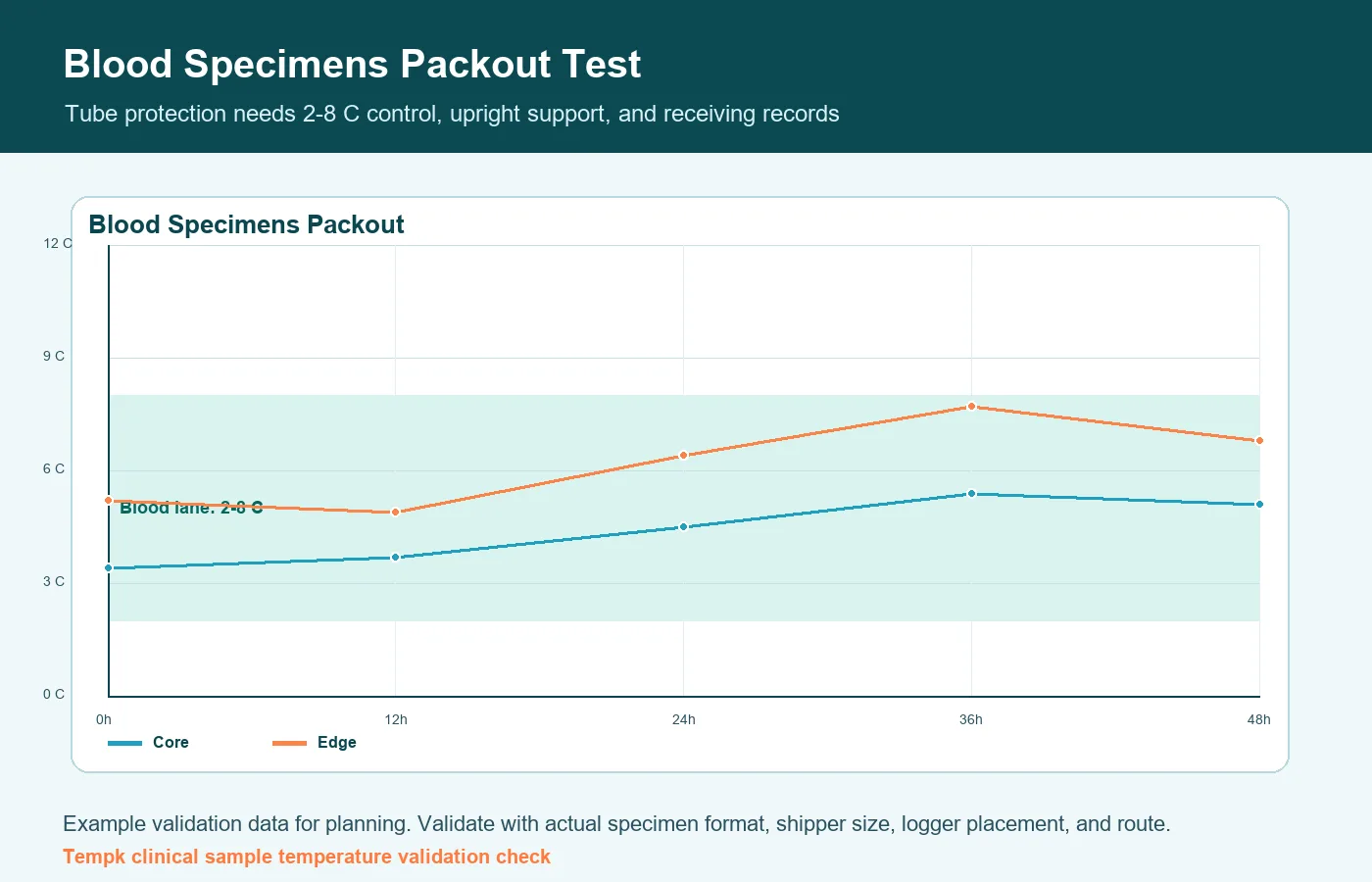
Use estas páginas para comparar rotas clínicas e médicas próximas, escolhas de refrigerante, opções de isolamento, e perguntas sobre risco de rota antes da amostragem.
As amostras de sangue precisam de controle de temperatura que corresponda ao teste, evitando quebra do tubo e hemólise. The configuração de embalagem must also keep paperwork and labels readable.
Problemas comuns são hemólise devido ao manuseio inadequado, tubos com vazamento, atraso no recebimento do laboratório, e refrigerante tocando tubos que não devem congelar.
Use suportes ou mangas para tubos, absorvente embalagem secundária, e um expedidor externo rígido. Mantenha os formulários de requisição fora da zona úmida ou fria.
Utilizar gel refrigerante resfriado somente quando o ensaio exigir 2 para 8 C. Para testes ambientais, use embalagens protetoras sem compressas frias desnecessárias.
Verifique a integridade do tubo, legibilidade do rótulo, vazamento, temperatura, e aceitação do laboratório após a rota experimental.
Custom configuração de embalagem support
Para tamanhos de caixa fixos, carga útil limits, requisitos de marca, pistas sazonais, ou alvos de validação, Tempk can adapt this solution into a custom cold-chain configuração de embalagem.
Compartilhe o tipo de tubo, amostra count, temperatura do protocolo, duração da rota, perfil ambiente, etapas do correio, classificação, and verificação no recebimentos. Tempk pode ajudar a comparar o remetente, massa de refrigerante, suporte de tubo, absorvente layer, registrador de posição, e plano de validação.
Request a configuração de embalagem review