


Modo de temperatura incorreto
Fresco, fixo, e rotas de tecido congelado podem precisar de manuseio diferente; presumir que uma rota fria pode criar problemas de recebimento.
Biópsia and tecido amostra packaging depends on whether the amostra is fresh, fixo, ou congelado. A mesma caixa não pode cobrir com segurança todas as três rotas sem verificar o protocolo de coleta, recipiente, risco de vazamento, e prazo de recebimento.
Amostras de tecido são sensíveis a erro de temperatura e manuseio. A configuração deve evitar vazamento, esmagamento, erros de congelamento-descongelamento e dano aos documentos.
Fresco, fixo, e rotas de tecido congelado podem precisar de manuseio diferente; presumir que uma rota fria pode criar problemas de recebimento.
Recipientes de líquidos precisam de suporte vertical, absorvente embalagem secundária, e documentação protegida longe de zonas úmidas.
Pequenos contêineres de tecido podem se mover dentro de um grande transportador, a menos que o amortecimento e as divisórias sejam dimensionados para a carga útil.
| Condição da rota | Objetivo de temperatura | Configuração de embalagem | Planejamento de refrigerante ou gelo seco | Verificação no recebimento |
|---|---|---|---|---|
| Fresh tecido, rota de diagnóstico curta | Siga o protocolo do laboratório. Muitas rotas de tecido fresco usam 2-8 C e janelas de transferência curtas. | Recipiente primário rígido e resistente a vazamentos, absorvente embalagem secundária, amortecimento, divisor de refrigerante, and registrador near the carga útil. | Por um 3-8 eu expedidor, julgamento 0.8-2 kg condicionado 2-8 C PCM ou gel refrigerante para rotas locais. Evite o contato direto do líquido refrigerante. | Sem vazamento, tecido container stable, sem congelamento, formulário de solicitação seco, e tempo de recebimento. |
| Rota de tecido fixo ou protocolo ambiente | Use o protocolo de coleta. Algumas amostras fixas podem não precisar de refrigerante refrigerado, mas ainda precisa de proteção contra vazamento e documentos. | Expedidor externo rígido, suporte vertical, absorvente secondary layer, amortecimento, e capa de documento separada. | O isolamento pode ser usado para amortecimento de temperatura. Evite adicionar compressas frias, a menos que o protocolo do laboratório solicite. | Recipiente intacto, tampa selada, nenhum líquido na bolsa externa, rótulos legíveis, e registro em cadeia. |
| Tecido congelado ou rota de teste molecular | Mantenha a condição congelada quando necessário e evite descongelar e recongelar durante a transferência. | Gelo seco expedidor, frozen amostra rack, barreira de gel seco, embalagem ventilada, contenção secundária absorvente, e documentos protegidos contra congelamento. | Pequenas faixas de tecido congelado podem começar 2-6 kg gelo seco for 0-24 mão 6-12 kg para rotas mais longas ou quentes, então valide. | Remaining gelo seco, nenhuma evidência de degelo, amostra rack stable, papelada seca, e transferência de freezer no recebimento. |
Use esses valores como pontos de partida para amostragem e cotação. Líquido refrigerante final, PCM, gelo seco, isolamento, embalagem secundária, gravador, e as escolhas de manuseio devem ser validadas com a amostra real do recipiente, rota, processo de transporte, temporada, classificação, e procedimento de recebimento.
Confirme a condição da amostra antes de escolher o refrigerante refrigerado, buffer ambiente, agora eu congelo com você.
Use amortecimento e suporte vertical para que contêineres pequenos não batam na parede do transportador ou no bloco de refrigeração.
Emparelhar o recipiente primário com absorçãonte embalagem secundária e manter os formulários de requisição fora de zonas úmidas ou geladas.
O teste de rota deve incluir atraso na coleta, transferência de laboratório, hora de recebimento, e inspeção de contêineres.
Estes são os problemas visíveis e operacionais que a configuração de embalagem deve reduzir antes que a remessa chegue ao destinatário.
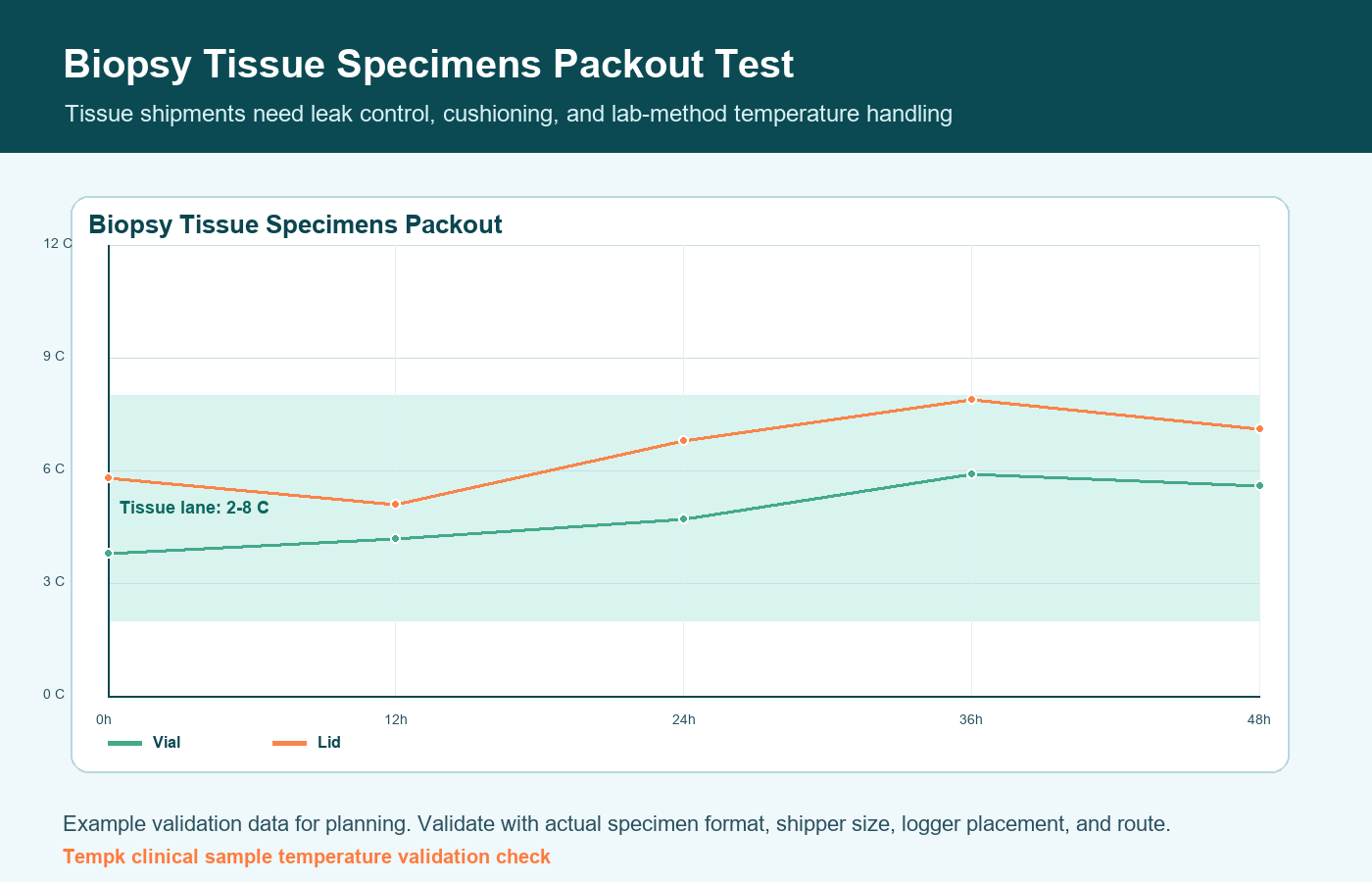
Use a curva de teste como uma comparação funcional, então valide com o contêiner amostral real, remetente, configuração de refrigerante ou gelo seco, duração da pista, perfil ambiente, e processo de recebimento.
Use estas páginas para comparar rotas clínicas e médicas próximas, escolhas de refrigerante, opções de isolamento, e perguntas sobre risco de rota antes da amostragem.
Biópsia and amostras de tecido are not a single temperature category. Fresh tecido, preserved tecido, and frozen tecido can require different configuração de embalagems for the same route.
As perdas incluem tecido congelado descongelado, dry tecido, vazamento de recipientes, dano ao recipiente de formalina, e perdi janelas de recebimento de laboratório.
Use contenção secundária rígida, absorvente material, e um bolso para documentos. Proteja os frascos de amostra do líquido refrigerante duro e do impacto contra a parede externa.
Use gel gelado, gelo seco, ou nenhum refrigerante de acordo com o método de preservação e as instruções do laboratório. O tecido congelado deve ser validado separadamente das amostras fixas.
Confirme o conservante, amostra temperature, integridade do contêiner, papelada, e critérios de aceitação do laboratório antes de liberar a pista.
Custom configuração de embalagem support
Para tamanhos de caixa fixos, carga útil limits, requisitos de marca, pistas sazonais, ou alvos de validação, Tempk can adapt this solution into a custom cold-chain configuração de embalagem.
Compartilhe se o tecido é fresco, fixo, ou congelado, mais o tamanho do contêiner, temperatura alvo, duração da rota, perfil ambiente, gelo seco allowance, e prazo de recebimento. Tempk pode ajudar a comparar o remetente, refrigerante, gelo seco, amortecimento, absorvente layer, e layout de validação.
Request a configuração de embalagem review