


Vazamento do tubo ou pressão da tampa
Tubos soltos e transportadores cheios demais podem pressionar as tampas contra divisórias ou pacotes de refrigerante.
zaragatoa PCR amostra remessas geralmente são avaliadas pela temperatura, integridade do tubo, amostra identification, e rápida transferência de diagnóstico. The configuração de embalagem should prevent leakage, pressão da tampa, mistura de tubos, e evite descongelar-recongelar se for necessário manusear congelados.
As rotas PCR de zaragatoa muitas vezes parecem simples porque a carga útil é pequena. O risco é que pequenos tubos se movam, as tampas pressionam contra o líquido refrigerante ou divisórias, registros se misturam, ou amostras quentes durante o atraso de recebimento.
Tubos soltos e transportadores cheios demais podem pressionar as tampas contra divisórias ou pacotes de refrigerante.
Alguns protocolos aceitam transporte refrigerado de curto prazo, enquanto outros exigem manuseio congelado para atrasos.
Rotas de zaragatoa de alto volume precisam de rotulagem limpa, listas de amostras, e registros de transferência para que o laboratório possa receber rapidamente.
| Condição da rota | Objetivo de temperatura | Configuração de embalagem | Planejamento de refrigerante ou gelo seco | Verificação no recebimento |
|---|---|---|---|---|
| Rota de diagnóstico refrigerada no mesmo dia, 0-12 h | Siga o protocolo de coleta. Muitas rotas curtas de zaragatoa são planejadas em torno 2-8 C. | Remetente isolado pequeno, divisor de tubo vertical, saco secundário selado, absorvente layer, barreira de refrigeração, e lista amostral simples. | Julgamento 0.5-1.5 kg de gel condicionado ou 2-8 C PCM para pequenos expedidores. Mantenha o líquido refrigerante longe do contato direto do tubo. | Sem vazamento, tampas de tubo seguras, amostra list matches, sem congelamento, e transferência rápida de laboratório. |
| Rota regional ou de risco de fim de semana, 12-48 h | Mantenha o alcance necessário durante a permanência do veículo, classificação, e atraso no recebimento do laboratório. | Maior isolamento, refrigerante superior com divisórias, bandeja de tubo mais forte, duas posições de registrador, e documentação protegida. | Comece por aí 1.5-3 kg de líquido refrigerante condicionado para expedidores de pequeno e médio porte, em seguida, ajuste por teste de rota e temporada. | Temperatura de borda quente, marcas de pressão do tubo, legibilidade do rótulo, contagem recebida, e tempo de transferência. |
| Rota zaragatoa congelada ou teste atrasado | Use o manuseio de congelados somente quando o protocolo exigir e evite o descongelamento-recongelamento. | Gelo seco shipper or frozen configuração de embalagem, suporte de rack de tubo, gelo seco separation, embalagem externa ventilada, e documentos protegidos contra congelamento. | Se o gelo seco for permitido, pequenas faixas podem começar 2-5 kg para 0-24 h e mais para rotas atrasadas. Valide com o processo real da transportadora. | Remaining gelo seco, sem sinais de degelo, tubo rack estável, papelada seca, e transferência imediata para freezer. |
Use esses valores como pontos de partida para amostragem e cotação. Líquido refrigerante final, PCM, gelo seco, isolamento, embalagem secundária, gravador, e as escolhas de manuseio devem ser validadas com a amostra real do recipiente, rota, processo de transporte, temporada, classificação, e procedimento de recebimento.
VTM, UTM, zaragatoas secas, e os kits específicos do estudo podem ter diferentes janelas de transporte.
Use divisores de tubos ou bandejas para que os tubos fiquem separados, as tampas não estão comprimidas, e IDs de amostra permanecem legíveis.
Place gel refrigerante, PCM, ou gelo seco atrás de barreiras para que os tubos não toquem em uma superfície fria.
Programas de zaragatoa de alto volume devem fazer a contagem da amostra, papelada, acesso do registrador, e transferência de laboratório fácil.
Estes são os problemas visíveis e operacionais que a configuração de embalagem deve reduzir antes que a remessa chegue ao destinatário.
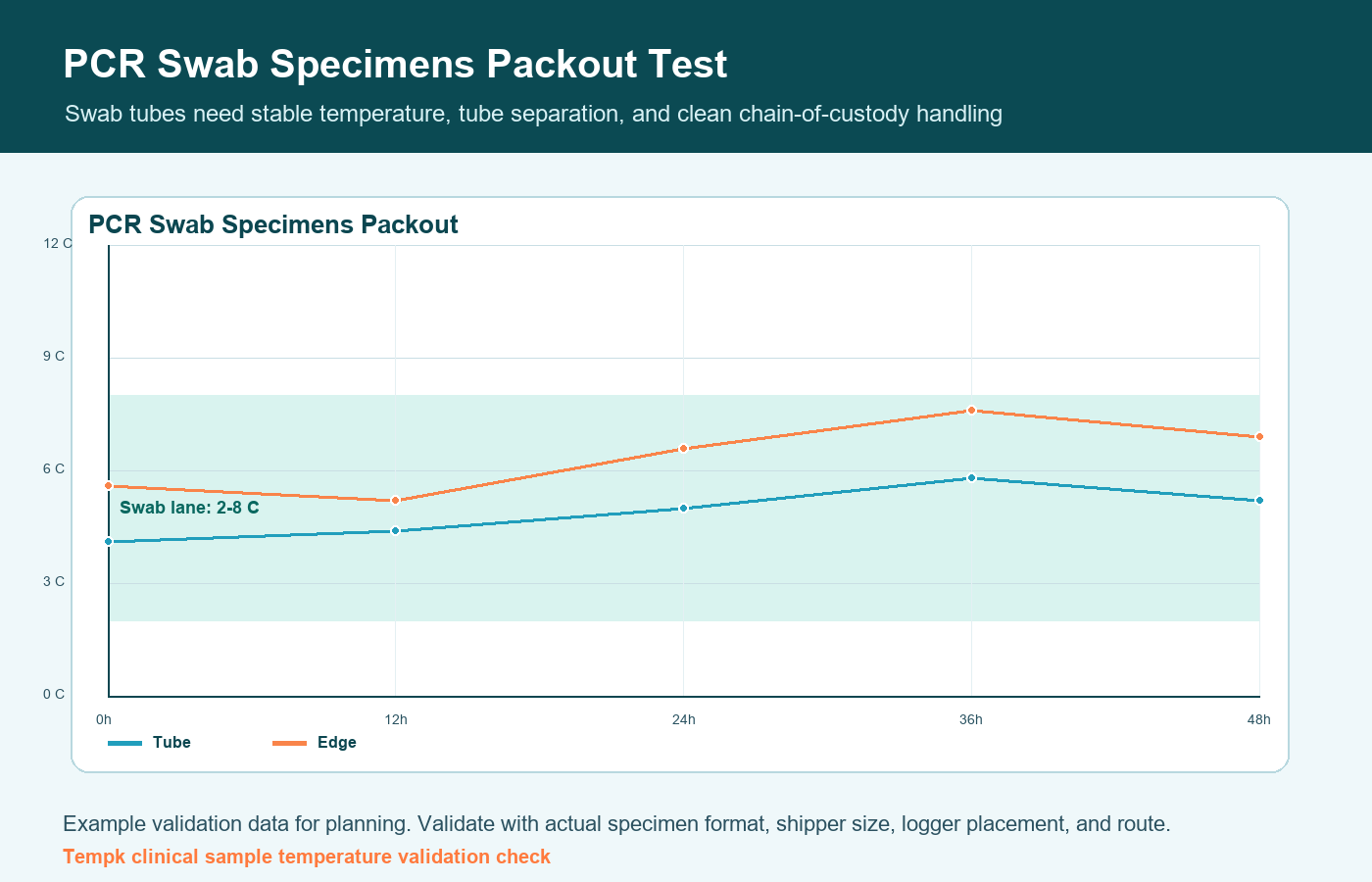
Use a curva de teste como uma comparação funcional, então valide com o contêiner amostral real, remetente, configuração de refrigerante ou gelo seco, duração da pista, perfil ambiente, e processo de recebimento.
Use estas páginas para comparar rotas clínicas e médicas próximas, escolhas de refrigerante, opções de isolamento, e perguntas sobre risco de rota antes da amostragem.
zaragatoas PCR são frequentemente sensíveis ao tempo e de alto volume. The configuração de embalagem should prevent tubo leakage, mantenha os rótulos legíveis, e atender à temperatura exigida pelo laboratório.
As falhas incluem vazamento de mídia de transporte, rótulos ilegíveis, excursões quentes, tubos congelados quando não permitido, e entrega atrasada além da janela de teste.
Use mangas tubo, absorvente embalagem secundária, e um expedidor rígido. Mantenha os sacos de amostra organizados para que o laboratório possa processá-los sem precisar procurar nas embalagens úmidas.
Use gel refrigerante resfriado para breve 2 para 8 Rotas C quando necessário. Não use gelo seco, a menos que o laboratório especifique o transporte de congelados.
Verifique a integridade da vedação do tubo, legibilidade do rótulo, registro de temperatura, e prazo de entrega para o laboratório de testes.
Custom configuração de embalagem support
Para tamanhos de caixa fixos, carga útil limits, requisitos de marca, pistas sazonais, ou alvos de validação, Tempk can adapt this solution into a custom cold-chain configuração de embalagem.
Compartilhe o meio zaragatoa, contagem de lucro, temperatura alvo, janela de transporte, perfil ambiente, etapas do correio, gelo seco allowance, e processo de recebimento. Tempk pode ajudar a comparar o remetente, layout do refrigerante, bandeja de tubo, absorvente layer, registrador de posição, e plano de validação.
Request a configuração de embalagem review