Temperature-Controlled Express Delivery for Food?
Temperature-controlled express delivery for food only works when you control temperature, time, and handoffs as one system. In the 40°F–140°F danger zone, germs can grow quickly, and some training notes that bacteria can double in as little as 20 minutes. Consumer guidance also warns against leaving perishables out over 2 hours (or 1 hour above 90°F). Build your process to stay stable, even on bad-day routes.
This article will answer for you
How temperature-controlled express delivery for food reduces spoilage and chargebacks with simple lane rules
How to set temperature targets for express food delivery (chilled, frozen, hot, and mixed)
A packaging checklist for temperature-controlled express delivery for food you can standardize
When to use gel packs vs PCM for chilled food shipping (and how to condition packs correctly)
How to prove performance with time-temperature monitoring for food delivery without slowing your team
A decision tool to scale temperature-controlled express delivery for food with fewer surprises
Why is temperature-controlled express delivery for food non-negotiable?
Direct answer: Temperature-controlled express delivery for food is non-negotiable because speed does not fix temperature abuse. Once food warms too much, taste, texture, and safety risk change fast. That “lost quality” cannot be repaired later with more ice.
Expanded explanation: Think of product temperature like a phone battery. You start full when items are properly chilled or frozen, then every warm minute drains the “quality battery.” If you run out, you can’t recharge it at the customer’s door. That is why temperature-controlled express delivery for food must be planned, not “hoped for.”
The four failure points that break temperature-controlled express delivery for food
| Failure point | What happens | Why it’s risky | What it means for you |
|---|---|---|---|
| Packing delay | Product warms before sealing | Drift starts early | Shorter safe window |
| Weak insulation | Heat enters faster | Coolant gets overwhelmed | More spoilage |
| Multi-stop routes | Repeated door opening | Temperature spikes | Inconsistent outcomes |
| Doorstep wait | Customer retrieves late | Ambient exposure | More complaints |
Practical tips you can apply today
Pack cold items last: reduce bench time before sealing.
Seal fast, label fast, load fast: protect the first hour.
Create “hot day rules”: add coolant or shorten routes instead of improvising.
Real-world example: One meal delivery brand cut weekly refunds after adopting a single rule: “Cold items are packed last, loaded first.”
What temperature targets should temperature-controlled express delivery for food use?
Direct answer: Temperature-controlled express delivery for food should use clear targets by lane: chilled, frozen, hot, and mixed. Many teams train chilled around 0–4°C (32–40°F) and frozen around -18°C (0°F) or colder. Foodservice training often uses ≤41°F for cold holding and ≥135°F for hot holding.
Expanded explanation: Your target should match the customer’s eating moment, not your warehouse preference. A salad, cheesecake, and frozen dumplings fail in different ways. Temperature-controlled express delivery for food becomes predictable when every SKU has a lane label: Chilled, Frozen, Hot, or Mixed.
A simple target guide you can train in minutes
| Lane | Practical target | Biggest risk | What it means for you |
|---|---|---|---|
| Chilled | 0–4°C / 32–40°F | Warm drift + time | Protect freshness and texture |
| Frozen | ≤ -18°C / 0°F | Partial thaw | Avoid thaw–refreeze cycles |
| Hot | ≥ 57°C / 135°F | Heat loss | Keep hot items together |
| Mixed | Two zones | Cross-freeze or cross-warm | Use dividers or split shipments |
Practical tips and recommendations
Choose one cold standard: don’t mix “40°F” and “41°F” in training.
Plan for the doorstep: chilled groceries fail at the porch, not the warehouse.
Block cross-contact: stop cold packs from touching hot meals.
Real-world example: A courier team improved temperature control by splitting hot and cold into separate bags on every run.
How do you choose chilled vs frozen lanes in temperature-controlled express delivery for food?
Direct answer: Temperature-controlled express delivery for food starts with a lane decision: chilled, frozen, hot, or mixed. Each lane needs its own packout recipe, because one recipe for everything usually fails.
Expanded explanation: Lane clarity keeps costs under control. When you skip lane decisions, you “over-pack” every order to be safe. That raises cost, increases mistakes, and still doesn’t guarantee quality.
60-second lane selector (interactive)
Answer these questions:
Is the product meant to be eaten hot, cold, or frozen?
Will the route exceed 2 hours door-to-door (include packing and waiting)?
Will the order sit outside after delivery?
Are you running multi-stop routes with frequent door opens?
If you answered “yes” to long routes or outdoor waiting, upgrade the lane. That is one of the fastest ways to improve temperature-controlled express delivery for food without buying fancy tech.
Lane rules that prevent expensive mixed-order failures
Use a summer lane and a winter lane.
Define a late pickup rule: switch lanes, add coolant, or cancel.
Treat mixed orders as two shipments when refunds cost more than separation.
What packaging stack works for temperature-controlled express delivery for food?
Direct answer: The most reliable temperature-controlled express delivery for food uses a three-layer stack: an outer shipper, an insulation layer, and a food-safe inner barrier. Then you add a refrigerant or heat source. The goal is to slow temperature change, not to “make food cold.”
Expanded explanation: Packaging is the engine of temperature-controlled express delivery for food because it controls how fast heat enters the shipment. Express transit reduces exposure time, but packaging controls exposure impact.
Packaging checklist for temperature-controlled express delivery for food
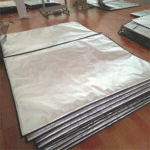
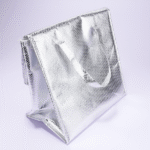
Insulation: insulated shipper, liner, or reusable box sized to the order
Containment: food-safe liner + absorbent (for meat/seafood), plus secondary bags
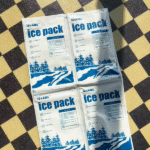
Refrigerant/heat source: gel packs or PCM (chilled), dry ice (frozen), heat packs (hot)
Layout: packs on top + sides (and bottom if needed), not random
Air-gap control: fillers or dividers to reduce empty space
Food protection: refrigerants should never touch ready-to-eat food directly
Gel packs for food shipping vs dry ice for frozen food delivery
Gel packs are popular because they are cleaner and easier to reuse. Dry ice is powerful for frozen lanes, but it creates carbon dioxide gas and must vent. Some guidance notes dry ice packages should not be air-tight, must allow venting, and often require clear marking (including net quantity).
| Refrigerant | Best for | Strength | Watch-out | What it means for you |
|---|---|---|---|---|
| Gel packs | Chilled deliveries | Clean and repeatable | Needs lane validation | Lower mess risk |
| Wet ice | Short chilled routes | Near-32°F effect | Meltwater control | Add liners + absorbent |
| Dry ice | Frozen deliveries | Strong freezing power | Venting + marking | Build a dry ice checklist |
| Heat packs | Hot holding | Adds warmth | Time-limited | Use for short windows |
A quick route difficulty score to choose packaging strength
Route difficulty score (0–8):
Route time: 0 (<4h), 1 (4–12h), 2 (12–24h)
Ambient heat: 0 (cool), 1 (mild), 2 (hot)
Handoffs: 0 (direct), 1 (one hub), 2 (multiple handoffs)
Doorstep risk: 0 (home), 1 (likely), 2 (unknown)
| Score band | Packaging strength | Monitoring level | What it means for you |
|---|---|---|---|
| 0–2 | Standard insulation | Spot checks | Low-cost stability |
| 3–5 | Better insulation + more packs | Lane tests | Fewer seasonal failures |
| 6–8 | Premium insulation + strict SOP | High priority | Protects high-value orders |
Practical tips and recommendations
Right-size first: empty air space is wasted insulation.
Pre-condition packs: half-frozen packs behave like half-charged batteries.
Contain leaks: leaks break trust faster than warmth.
Practical case: A dessert brand improved frozen performance after adding a dry ice checklist and switching to vented packaging.
Gel packs vs PCM: what should temperature-controlled express delivery for food use?
Direct answer: For many chilled categories, PCM packs can hold a steadier temperature band than generic gel packs in temperature-controlled express delivery for food. Gel packs are simpler, but results become unpredictable when conditioning is inconsistent.
Expanded explanation: PCM (phase change material) is designed to melt and “hold” around a chosen temperature. Think of PCM as a thermostat-friendly ice cube. Gel packs are like cold bricks that can be too strong or too weak depending on how you froze them.
Helpful decision tools
Check the details before you choose packaging
These quick tools can help you compare route risk, sizing needs, coolant choices, and packaging details before you request a quote.
Insulation Material Reference
Compare insulation material choices for different cold chain packaging needs.
Compare materialsRoute Risk Checker
Review lane conditions before selecting packaging for real operating requirements.
Check route riskIce Pack Calculator
Estimate gel ice pack quantity for chilled shipments and practical route planning.
Estimate ice packsRefrigerant conditioning: the step that makes or breaks results
| Conditioning issue | What you see | Simple SOP fix | Practical meaning for you |
|---|---|---|---|
| Packs too warm | Short hold time | Freeze longer, verify freezer temp | Fewer “arrived warm” tickets |
| Packs too cold | Frozen edges | Temper packs in chiller | Better texture and appearance |
| Inconsistent packs | Random results | Batch labeling + rotation | Predictable performance |
Practical tips and recommendations
Ready-to-eat meals: PCM often reduces “icy corners” in sauces.
Desserts: avoid direct contact between aggressive packs and delicate items.
Meat/seafood: separate raw items and add absorbent layers.
How do routing and handoffs break temperature-controlled express delivery for food?
Direct answer: Temperature-controlled express delivery for food is a last-mile problem more than a warehouse problem. Most failures happen at handoffs: staging, pickup queues, elevator rides, and doorsteps. That is why you need operational rules, not just better packaging.
Expanded explanation: A two-hour route with 15 door openings can be riskier than a three-hour route with five openings. Great temperature-controlled express delivery for food reduces “warm minutes” and reduces swings by controlling staging, pickup timing, and delivery windows.
The handoff control checklist (fast, scalable)
Staging area is cold or hot enough for the lane.
Orders are sealed only when the courier is close.
Drivers have separate zones for hot and cold.
Drop-off is scheduled, not random.
Customers get one instruction: “Bring inside immediately.”
Build your “warm minutes” map (interactive worksheet)
Pack-out minutes (product out of cold storage)
Staging minutes (waiting for pickup)
Transit minutes (vehicle time)
Drop-off minutes (doorstep dwell)
When you cut warm minutes, temperature-controlled express delivery for food improves without buying new packaging.
How do you monitor temperature-controlled express delivery for food without slowing your team?
Direct answer: Monitoring makes temperature-controlled express delivery for food measurable and repeatable. You don’t need to monitor every shipment. Start with lane tests, fix the biggest spike, then scale.
Expanded explanation: In many operations, the biggest spikes happen during staging, not driving. That is why lane testing is often your highest-return first step.
Validation table you can use for every lane
| Lane | What you measure | Pass rule example | What it means for you |
|---|---|---|---|
| Chilled lane | Time above target | Minimal warm time | Fewer spoilage claims |
| Frozen lane | Time above freezing | No thaw spikes | Better texture |
| Hot lane | Time below hot target | Short dips only | Better eating quality |
| Mixed lane | Cross-zone drift | Zones stay separate | Fewer “ruined” orders |
A simple monitoring plan you can start this week
Pick your highest-volume lane.
Run three deliveries: mild day, hot day, and a “delay test.”
Log pack time, pickup time, delivery time, and ambient conditions.
Lock the SOP when the lane passes, then review seasonally.
What 2025 compliance habits protect temperature-controlled express delivery for food?
Direct answer: The safest temperature-controlled express delivery for food relies on simple habits: pre-chill, pack fast, seal tight, and document exceptions. When your process is easy to follow, food safety improves on busy days.
Expanded explanation: Temperature-controlled express delivery for food is not only about taste. It is also about sanitary transport and documented control. Even if you are not a large shipper, the same discipline helps: clean equipment, control temperature, and document what you did.
FSMA sanitary transportation: what to document (simple record set)
Keep these records simple:
Lane definition (what “express” means in minutes and miles)
Packaging kit list (what goes into each lane)
Temperature targets (cold, hot, frozen)
Cleaning checklist for bins and vehicles
Corrective actions (what you do when something goes wrong)
“Time as a public health control” (TPHC): when time replaces temperature
Some Food Code training describes TPHC as an approach that allows limited time without temperature control when conditions and marking rules are met. Use it only where allowed, and document the discard rule clearly.
Practical tips and recommendations
Write targets in one place. Confusion causes excursions.
Audit on your busiest day. That is when corners get cut.
Treat couriers as part of the system. If they are untrained, you still own the risk.
2025 latest developments and trends in temperature-controlled express delivery for food
Trend overview: In 2025, temperature-controlled express delivery for food is becoming more measured and more standardized. Public agencies keep reinforcing simple time–temperature rules, and industry groups are pushing for clearer temperature monitoring expectations in frozen supply chains.
Latest progress snapshot
More reusable systems: delivery loops are expanding in dense urban zones.
More operational standardization: fewer packaging variants to reduce errors.
More transparency: temperature proof is becoming a differentiator, not a luxury.
Market insight: Many brands can deliver fast. Fewer can deliver fast and reliably cold. That gap is where you win—fewer issues, fewer refunds, stronger retention.
Quick calculator: cost-per-delivery in temperature-controlled express delivery for food
Use this mini tool to connect quality to money in temperature-controlled express delivery for food.
If better insulation reduces refunds, your total cost can drop even when packaging costs more.
Frequently asked questions
Q1: What is temperature-controlled express delivery for food?
Temperature-controlled express delivery for food means you keep food within a planned temperature range, for a planned time, and you can show evidence after delivery.
Q2: What is the “danger zone” in temperature-controlled express delivery for food?
The danger zone is commonly described as 40°F to 140°F, where germs can grow rapidly, so temperature-controlled express delivery for food should minimize time in that range.
Q3: How long can food sit out during temperature-controlled express delivery for food?
Some guidance warns not to leave perishable food out over 2 hours, or 1 hour when temperatures are above 90°F.
Q4: Can I use dry ice for frozen temperature-controlled express delivery for food?
Yes for frozen lanes, but packages must vent and may require specific marking such as “Dry ice” or “Carbon dioxide, solid” plus net quantity.
Q5: Do I need sensors for every temperature-controlled express delivery for food order?
Not at first. Start with sampling on key routes to find failure points, then expand monitoring after performance stabilizes.
Q6: What is the fastest way to improve results without new packaging?
Reduce staging time and improve handoffs. Cutting warm minutes often beats adding more refrigerant.
Summary and recommendations
Key takeaways: Great temperature-controlled express delivery for food is built on five repeatable moves: set clear targets, standardize packaging stacks, condition refrigerants consistently, reduce warm minutes in staging and delivery, and monitor lanes to learn quickly.
Action plan (next 7 days):
Pick one product lane (chilled or frozen) and one city zone.
Define one target range and one packing layout.
Run three lane tests in real conditions (include a “bad day” route).
Lock the recipe, train the team, and review seasonally.
If you want fewer surprises, treat temperature-controlled express delivery for food as a system you can measure and improve—not a promise you hope is true.
About Tempk
At Tempk, we help teams design practical systems for temperature-controlled express delivery for food. We focus on passive packaging kits, lane validation methods, and monitoring options that fit real last-mile workflows. We also help you write simple SOPs that drivers and packers can follow under pressure.
Next step (CTA): Share your lane profile (product type, hours, weather range, and delivery method). We’ll map a packout and validation plan you can run immediately.