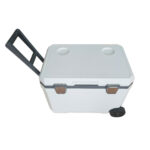
Frozen Foods Meat Cold Chain Management Guide 2026
Cold chain management for frozen foods and meat is no longer simply about keeping products cold—it’s about safeguarding quality, cutting emissions and staying competitive. Studies show that roughly 14 % of food is lost between harvest and retail due to inadequate refrigeration, and food loss and waste generate 8–10 % of global greenhouse gas emissions. Meanwhile, refrigerated warehouses consume around 25 kWh of electricity and 9,200 Btu of natural gas per square foot every year. This comprehensive 2026 guide explains how sustainable cold chain practices for frozen foods and meat can reduce waste, lower costs and align with evolving regulations.
This article will help you answer:
Why does sustainable cold chain management matter for frozen foods and meat? Understand the environmental and financial impacts of food loss, greenhouse gas emissions and high energy use.
What technologies are transforming meat cold chain logistics? Learn how IoT sensors, blockchain and AI provide realtime monitoring, traceability and predictive insights.
How can packaging innovations create a circular cold chain? Explore advanced insulation materials, reusable containers and biodegradable options that improve performance and reduce waste.
Which energysaving strategies and regulations should you prioritize? Discover upgrades, renewable integration and new standards like the Kigali Amendment that shape the 2026 landscape.
What are the latest trends for 2026? Get insights on market growth, plantbased foods, facility modernization and decarbonization initiatives.
Why Sustainable Cold Chain Management Matters for Frozen Foods and Meat
Effective cold chain management is vital for both profitability and the planet. Without proper temperature control, about 14 % of food is lost before reaching consumers. This equates to billions of dollars in wasted production and higher prices for consumers. Frozen foods and meat require strict temperature control, typically between −18 °C and −15 °C, to prevent microbial growth and preserve texture. When refrigeration fails, smallholder farmers’ incomes can drop by up to 15 % due to postharvest losses. Beyond economic impacts, food loss and waste contribute 8 % of global greenhouse gas emissions, including more than one gigaton of CO₂ in 2017. Cold chains alone are responsible for roughly 4 % of global greenhouse gases because refrigeration systems rely on electricity and hydrocarbonbased refrigerants. In the U.S., refrigeration accounts for 27 % of electricity use in food and beverage facilities, while machinedriven systems consume another 46 %. Improving efficiency therefore reduces both carbon emissions and operating bills.
Impact of food loss and emissions on your business
Food loss wastes resources such as water, land and energy. It also increases the pressure on producers and processors to compensate by producing more. Understanding the evidence behind food loss and greenhouse gas emissions allows companies to prioritize investments in sustainable cold chain practices. Table 1 summarizes key impacts and what they mean for your operations.
| Impact area | Evidence or data | What it means for you |
| Food loss | An estimated 14 % of global food is lost before reaching consumers | Preventing loss ensures your frozen meat products retain quality, reducing writeoffs and returns. |
| Greenhouse gas emissions | Cold chains account for about 4 % of global GHG emissions and food loss and waste generate 8–10 % of global GHG emissions | Cutting energy consumption lowers your carbon footprint and enhances brand image. |
| Energy costs | Refrigeration systems use around 25 kWh of electricity and 9,200 Btu of natural gas per square foot each year | Energyefficient technologies drastically reduce operating costs and increase profit margins. |
| Food industry energy use | In U.S. food and beverage facilities, 27 % of electricity is spent on cooling, 46 % on machine systems and 19 % on HVAC/lighting | Focusing on refrigeration and machinery yields the largest efficiency gains. |
Practical strategies to reduce waste and emissions
Sustainable meat cold chain management requires proactive steps to prevent spoilage and reduce emissions. Consider the following strategies:
Implement strict temperature monitoring: Use calibrated data loggers and IoT sensors to ensure frozen foods stay within −18 °C to −15 °C. Realtime alerts prevent temperature excursions.
Coordinate logistics: Schedule deliveries and crossdocking to minimize dwell time at loading bays. Quick transfers maintain temperature and reduce compressor cycles.
Invest in backup power: Generators or battery storage prevent thawing during power outages, a leading cause of product loss.
Train staff: Educate teams about proper handling, packaging and firstin, firstout (FIFO) practices to keep products moving and avoid expiry.
Partner for waste recovery: Collaborate with charities or bioenergy producers to divert unsellable products, turning potential waste into renewable energy. In 2025 several U.S. facilities integrated surplus food into anaerobic digestion systems, generating renewable electricity and reducing landfill waste.
Realworld case: U.S. cold storage facilities that redirected unsellable food to anaerobic digestion systems generated renewable energy and avoided disposal fees. This demonstrates how sustainability initiatives can improve both the environment and the bottom line.
How Advanced Technologies Drive Greener Cold Chains
Emerging technologies such as IoT sensors, blockchain and artificial intelligence (AI) provide visibility and predictive capabilities that transform meat cold chain management. According to industry analysis, IoT devices collect temperature and humidity data throughout the supply chain, while blockchain creates an immutable record of transactions. AI and predictive analytics optimize routes and inventories, helping companies anticipate disruptions and reduce waste.
IoT sensors and realtime data
IoT devices collect temperature, humidity and vibration data at each stage of the frozen food journey. This continuous stream allows you to detect anomalies and adjust cooling settings on the fly, preventing spoilage. Sensors also support smart temperature control systems that automatically adapt compressor cycles based on realtime demand. Integrated with remote monitoring, these systems reduce energy consumption and enable predictive maintenance, extending equipment life.
Blockchain for transparency
Blockchain creates a transparent ledger of every handoff in your meat cold chain. Each time frozen goods change custody, the event is recorded immutably. This ensures traceability, prevents counterfeiting and simplifies recalls. Transparent supply chains increase consumer trust and provide proof of sustainable practices. Demonstrating compliance with standards may also qualify you for sustainability certifications and attract ecoconscious customers.
AI and predictive analytics
AI engines analyse historical temperature, demand and route data to forecast potential disruptions. This enables dynamic route planning, reducing miles travelled and fuel used. AI also optimises warehouse placement, ensuring facilities are located near production areas or consumption centres, which reduces transportation distances. Combined with predictive maintenance, AI can alert you to failing compressors or insulation before they cause costly temperature deviations.
Technology integration roadmap
Table 2 outlines a roadmap for incorporating these technologies into your meat cold chain.
| Technology | Sustainable benefit | Practical action |
| IoT and sensor technology | Realtime monitoring of temperature and humidity reduces spoilage and energy waste | Deploy wireless sensors in trucks, warehouses and packaging. Use dashboards to visualise data and set alerts. |
| Blockchain | Creates an immutable record of transactions, enhancing traceability and accountability | Integrate blockchain with existing systems to document each cold chain transfer and verify sustainable sourcing. |
| AI and predictive analytics | Optimises routing, forecasts demand and prevents equipment failures | Use AI software to analyse historical data, schedule maintenance and adjust delivery routes to minimise carbon footprint. |
| Smart temperature controls | Adjust refrigeration cycles based on realtime conditions, improving energy efficiency | Install smart thermostats and connect them to sensors for automated adjustments. |
| Machine learning classification | Automates quality checks, such as classifying ripe or unripe produce with 97 % accuracy | Employ image recognition or sensorbased systems to sort products and reduce manual handling. |
Interactive check: Are your technologies up to date?
Use these questions to assess your cold chain technology maturity:
Do you have continuous temperature monitoring across storage, transport and delivery? If not, prioritise installing IoT sensors.
Are your data logs recorded on a secure platform? If not, consider blockchain for tamperproof records and improved traceability.
Do you use predictive analytics to plan routes and inventory? If not, explore AI solutions for demand forecasting and dynamic routing.
Is maintenance reactive rather than predictive? If yes, set up sensorbased predictive maintenance to detect equipment issues before they become crises.
Packaging Innovations That Support a Circular Cold Chain
Choosing the right packaging is crucial for sustainable cold chain management for frozen foods and meat. Traditional singleuse insulated containers contribute to landfill waste and high costs. Market research predicts that circular coldchain packaging systems for fresh and frozen food will grow from USD 820 million in 2026 to USD 1.959 billion by 2036 (CAGR 9.1 %). Materials like expanded polypropylene (EPP), highdensity polyethylene (HDPE) and advanced insulation foams will dominate, accounting for a 50 % share, while reusable insulated boxes and totes will lead the packaging format segment.
Reusable insulated containers
Reusable containers can be returned, cleaned and redeployed multiple times. Over the life of the container, the total cost of ownership decreases, and waste generation drops dramatically. Reusable totes and crates also offer better insulation than singleuse packaging, maintaining a more stable temperature during long journeys. When comparing options, evaluate durability, ease of cleaning and compatibility with automated handling systems.
Advanced insulation and materials
Materials such as extruded polystyrene and vacuuminsulated panels provide 5–10 times the thermal efficiency of conventional polyurethane panels. When combined with phase change materials (PCMs) embedded in foam, these solutions reduce compressor run time and lower energy consumption. Studies have shown a 29.1 % peak heat transfer reduction and 16.3 % energy savings in refrigerated trailers using PCMfilled copper pipes, and a 27 % energy reduction in refrigerated van walls. Although initial costs are higher, the payback period can be around 4.1 years due to energy savings and improved product quality.
Biodegradable and recyclable packaging
Ecofriendly packaging options—such as biodegradable liners, compostable films and recyclable plastics—reduce waste and align with consumer values. Many companies now switch from expanded polystyrene foam to EPP and HDPE, which can be recycled and reused for years. Circular packaging may also include durable pallet wraps and returnable pallet systems, integrating seamlessly into closedloop logistics networks.
Packaging decision tool
Use this selfassessment to choose the right packaging for your frozen meat products:
Is your product sensitive to temperature fluctuation? If yes, prioritise materials with high insulation value and consider PCMs for extended thermal buffering.
How many reuse cycles do you need? For longterm programs, invest in durable EPP or HDPE containers; for short shipments, recyclable corrugated and biodegradable materials might suffice.
Are you shipping internationally? Choose designs that comply with global food safety standards and local recycling regulations.
Do you need smart labels or IoT integration? Smart labels can monitor timetemperature history, while IoTenabled packaging improves traceability.
By selecting packaging that matches your operational needs and sustainability goals, you can reduce waste while ensuring product integrity. An illustration of a futuristic cold chain distribution centre shows robotic forklifts moving biodegradable insulated boxes under energyefficient lighting powered by rooftop solar panels. Such facilities embody the integration of packaging innovation, automation and renewable energy discussed in this guide.
Reducing Energy Consumption in Cold Storage and Transportation
Energy efficiency lies at the heart of sustainable cold chain management for frozen foods and meat. Cold storage facilities consume significant power, averaging 25 kWh of electricity and 9,200 Btu of natural gas per square foot per year. This leads to 2.5 % of global greenhouse gas emissions and represents a major portion of operating costs. Rising energy prices and strict environmental regulations make efficiency improvements both necessary and financially attractive.
Helpful decision tools
Check the details before you choose packaging
These quick tools can help you compare route risk, sizing needs, coolant choices, and packaging details before you request a quote.
Route Risk Checker
Review lane conditions before selecting packaging for real operating requirements.
Check route riskCoolant & PCM Reference
Compare coolant and PCM options when a route needs added temperature support.
Compare optionsIce Pack Calculator
Estimate gel ice pack quantity for chilled shipments and practical route planning.
Estimate ice packsUpgrade to energyefficient refrigeration equipment
Replace older compressors with highefficiency models that use variablespeed drives. Equip your facility with smart control systems that adjust compressor cycles based on realtime demand; for example, smart temperature control responds to changes in usage and ambient conditions, reducing wasted energy. Regularly maintain seals and gaskets to prevent cold air leaks and prolong equipment life.
Integrate renewable energy
Onsite solar or wind generation can offset electricity consumption. A study of a distributed solar photovoltaic directdrive cold storage system showed that replacing battery storage with ice thermal energy storage allows the solar array to power the refrigeration cycle directly. Although efficiency decreases slightly at higher solar radiation, the system delivered cold energy outputs of 128.83 MJ on sunny days and 122.00 MJ on partly cloudy days. Combining solar panels with battery or ice storage enables offgrid operation in regions with unreliable power, ensuring continuity and reducing emissions.
Adopt phase change materials (PCMs)
PCMs absorb excess heat during periods of high thermal load and release it slowly when loads drop, smoothing out temperature fluctuations. Embedding PCMs in truck walls, refrigerated containers and packaging reduces compressor runtime. Studies cited earlier show significant energy savings in refrigerated transport by using hydrocarbon PCMfilled copper pipes and metal panels.
Optimise temperature setpoints and improve facility design
Historically, frozen foods are stored at −18 °C. Industry leaders now advocate moving to −15 °C. According to cold chain analysts, this small change—made possible by modern insulation and monitoring—can significantly reduce energy consumption without compromising product safety. Modern cold storage facilities feature highinsulation panels, LED lighting, lowemissivity doors and automated systems to reduce energy usage. Retrofitting older warehouses with better insulation and doors can yield quick paybacks. Locating facilities closer to production zones or urban markets shortens transportation routes and lowers fuel consumption.
Energysaving checklist
Use the following checklist to identify and prioritise energy improvements:
Audit your energy use: Measure baseline consumption for refrigeration, lighting and motors to identify major users.
Upgrade insulation: Consider vacuuminsulated panels and PCMembedded materials.
Install renewable systems: Evaluate solar or wind resources and size systems based on load requirements.
Switch to LED lighting: LED fixtures reduce heat load and energy consumption compared with traditional lamps.
Use variablespeed drives: Variablespeed drives on fans and compressors optimise energy use and reduce wear.
Adjust temperature setpoints: Test lower energy settings such as −15 °C where regulatory bodies permit.
Monitor and review: Use data analytics to track improvements and adjust strategies.
Case study: A logistics company retrofitted its 40yearold cold storage facility with highinsulation panels, LED lighting and solar panels. By adjusting setpoints from −18 °C to −15 °C and implementing smart controls, the facility cut energy use by 28 % within the first year, achieving payback in just three years. This demonstrates the tangible financial benefits of energy efficiency upgrades.
Regulations and Standards Shaping Sustainable Cold Chain Practices
Regulatory compliance and industry standards drive innovation and ensure safety. Policy changes around refrigerants, energy efficiency and food safety are accelerating the shift toward sustainable cold chain management for frozen foods. Staying ahead of these regulations not only reduces environmental impact but also protects your business from future penalties and supply chain disruptions.
Phasing out synthetic refrigerants
Many cold storage facilities still use hydrochlorofluorocarbons (HCFCs) and hydrofluorocarbons (HFCs), which have high global warming potential. The Kigali Amendment to the Montreal Protocol aims to reduce HFC production and consumption by 80–85 % by 2047. Businesses are transitioning to natural refrigerants such as ammonia (NH₃), carbon dioxide (CO₂) and hydrocarbons because they have lower global warming potential and are increasingly mandated by regulations.
National cooling action plans
The Food and Agriculture Organization (FAO) and the United Nations Environment Programme (UNEP) recommend that governments develop National Cooling Action Plans to coordinate sustainable cold chain development. These plans involve financing, efficiency targets and integration with climate goals. Companies should align their strategies with national policies to access incentives and avoid future penalties.
Food safety certification
Retailers demand higher food safety standards. Certifications like BRC (British Retail Consortium) and SQF (Safe Quality Food) are replacing older programs and emphasize traceability, hazard analysis, allergen management and strict temperature control. Meeting these standards requires investment in monitoring technology, documentation systems and staff training but ultimately improves product safety and consumer confidence.
Renewable energy mandates and longterm implications
Some jurisdictions require a certain percentage of energy consumption to come from renewable sources. Aligning your facilities with these mandates can provide tax credits, rebates or preferential regulatory treatment. By switching to natural refrigerants and renewable energy early, you avoid the risk of equipment obsolescence and potential supply shortages of phasedout refrigerants.
2026 Trends and Developments in Sustainable Cold Chains
The cold chain industry is evolving quickly. According to 2025 outlooks, the global cold chain logistics market was valued at USD 293.58 billion in 2023 and is projected to grow from USD 324.85 billion in 2024 to USD 862.33 billion by 2032, representing a compound annual growth rate (CAGR) of 13 %. Growth drivers include rising demand for plantbased and organic foods, digitalisation, upgraded facilities and improved distribution strategies.
Key trends to watch
Resilience amid disruption: Geopolitical events and supply shocks have underscored the need for resilient cold chains. Strategy managers note that the market is prepared to handle disruption thanks to upgraded capacity and integrated solutions.
Enhanced visibility: Investments in software and sensors will continue in 2026, providing uninterrupted data for location tracking and temperature monitoring.
Rise of plantbased products: Plantbased and glutenfree foods are growing rapidly, with a projected value of USD 162 billion by 2030. These products require specialised cold chain services, presenting new market opportunities.
Facility modernization: Ageing cold storage infrastructure (40–50 years old) is being replaced with modern facilities featuring automation, sustainability features and improved integration. The move to −15 °C storage for frozen goods will gain momentum, lowering energy use.
Circular packaging: Circular coldchain packaging systems are becoming mainstream, with the market expected to nearly double by 2036.
Decarbonisation initiatives: Companies are adopting renewable power, carbon offsets and carbonneutral delivery options. Cold chain facilities are exploring energy storage and demand response programs to provide grid flexibility.
Market insights
Consumer preferences are shifting toward sustainability. Brands that communicate transparent supply chains and low carbon footprints gain competitive advantage. Meanwhile, regulators will continue to tighten standards, accelerating the adoption of clean technologies and circular business models. For meat producers and distributors, aligning with these trends ensures longterm viability and access to highgrowth markets.
Frequently Asked Questions
Question 1: What is the ideal temperature for storing frozen foods?
Frozen foods are typically stored at −18 °C, but industry leaders are moving toward −15 °C to reduce energy use. Always follow productspecific guidelines and local regulations.
Question 2: How can I start implementing IoT in my cold chain?
Begin with small pilots: install wireless temperature and humidity sensors on key shipments or in a storage room. Use cloudbased dashboards to monitor data and set alerts. Expand gradually to other assets once the system proves reliable.
Question 3: What are natural refrigerants?
Natural refrigerants include ammonia (NH₃), carbon dioxide (CO₂) and hydrocarbons like propane. They have much lower global warming potential than HFCs and HCFCs and are increasingly preferred due to regulatory pressures.
Question 4: Is circular packaging costeffective?
Yes. While reusable containers may cost more upfront, their long service life and reduced waste disposal fees often result in lower total cost of ownership. Market forecasts show strong growth in circular coldchain packaging.
Question 5: Can renewable energy power an entire cold storage facility?
It depends on facility size and energy demand. Distributed solar PV directdrive systems combined with ice or battery storage have demonstrated significant energy contributions. Hybrid systems that integrate grid power with onsite renewables are most practical for large facilities.
Summary and Recommendations
Key takeaways
Reducing waste and emissions: Effective temperature control preserves 14 % of food that would otherwise be lost and reduces a cold chain’s contribution to global greenhouse gases.
Leveraging technology: IoT, blockchain and AI provide realtime monitoring, transparency and predictive insights, making your logistics more efficient and sustainable.
Embracing circular packaging: Reusable insulated containers and advanced materials offer better insulation and lower waste.
Improving energy efficiency: Smart controls, PCMs and renewable integration can cut energy use by up to 27 % and reduce costs.
Staying compliant: Adopting natural refrigerants and meeting BRC/SQF standards positions your operations for future regulations and sustainability goals.
Actionable next steps
Audit and plan: Conduct a full energy and waste audit to identify where losses occur and prioritise upgrades.
Invest in technology: Start with IoT sensors and smart controls, then scale to blockchain and AI for endtoend traceability and predictive analytics.
Upgrade packaging: Transition to reusable and recyclable containers. Evaluate materials like EPP, HDPE and PCMs for your products.
Consider renewable energy: Explore solar, wind or thermal storage options. Even partial integration can yield significant savings.
Engage stakeholders: Train employees, collaborate with suppliers and involve customers to build a culture of sustainability.
By following these steps you not only safeguard product quality but also position your company as a leader in sustainable logistics.
About Tempk
Company profile: Tempk specialises in cold chain solutions for frozen and chilled foods. Our expertise spans IoTenabled temperature monitoring, sustainable packaging design and energyefficient facility retrofits. With decades of industry experience, we understand the challenges of maintaining product integrity while reducing environmental impact. Our systems have helped clients cut energy consumption by up to 27 % through smart controls and insulation upgrades.
Call to action: Interested in improving your meat cold chain? Contact our expert team for a consultation. We’ll help you implement the strategies outlined in this guide and tailor solutions to your business.