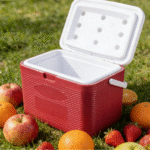
A bulk insulated box is one of the fastest ways to lower temperature risk when your cold chain gets messy. It acts like a thermal “buffer” during dock waits, flight delays, and handoffs. In 2026, many chilled lanes still target 2–8°C, and many frozen lanes target -20°C—so a smarter bulk insulated box choice can keep you in range longer with fewer surprises.
In this guide, you’ll learn:
How a bulk insulated box reduces lane risk when delays happen
How to use a bulk insulated box sizing calculator in 5 steps
How to compare bulk insulated box materials (EPS, EPP, PU, VIP) using real-world tradeoffs
How to run bulk insulated box thermal validation that holds up to audits
How to buy bulk insulated box wholesale and keep quality consistent at scale
Why Does a Bulk Insulated Box Matter More in 2026?
A bulk insulated box matters because consistency now beats “best case” performance. Real lanes include late pickups, missed connections, weekend holds, and seasonal swings from below freezing to above 40°C.
Think of a bulk insulated box as a time battery. Insulation slows heat movement, and refrigerants absorb heat to keep the payload stable. If you size only for volume, you often fail on duration.
Proof you can feel in operations: in one real case, a frozen seafood exporter switched to palletized bulk insulated boxes and spoilage dropped from 6% to under 2% in three months.
When Should You Use a Bulk Insulated Box Instead of Small Shippers?
You need a bulk insulated box when consolidation, lane risk, or handling complexity makes small parcel packaging unreliable. It reduces pack-out steps and “surface exposure,” meaning fewer sides take direct heat hits.
It’s also not just “a bigger cooler.” Workflow changes as much as physics: fewer seams, fewer labels, and fewer ways to pack wrong.
| Packaging choice | Typical workflow | What it means for you |
|---|---|---|
| Many small shippers | Many packing steps | Higher labor + higher pack-out error risk |
| One bulk insulated box | Fewer packing steps | Faster training + simpler QA checks |
| Pallet thermal cover | Forklift-based | Great for short holds, weaker for long stops |
Practical tips you can apply today
If you ship more than 3–5 parcel boxes per order: price a bulk insulated box—labor savings often covers the change.
If you ship through airports: build extra margin because tarmac time is hard to predict.
If product value is high: don’t pack for a perfect day—pack for the worst credible day.
Real example: A clinic consolidated five chilled parcels into one bulk insulated box, cutting packing time by about half after retraining.
How Do You Size a Bulk Insulated Box for Payload and Hold Time?
Sizing a bulk insulated box is a balance of payload volume, insulation thickness, and the time you need to resist heat flow. Start with payload dimensions and weight, then define the temperature band and hold time.
The biggest sizing mistakes are predictable: underestimating delays and overstuffing the cavity until airflow disappears.
A bulk insulated box sizing calculator you can do in 5 steps
Define your target band: 2–8°C, 15–25°C, or -20°C.
Define lane stress: worst-case ambient and worst-case delay.
Measure the payload block: dimensions + total mass.
Reserve refrigerant space: location, count, clearance.
Plan airflow + stability: small gaps + void fill to prevent shifting.
Self-check: are you under-sizing your bulk insulated box?
Give yourself 1 point for each “Yes”:
Delays over 6 hours happen sometimes.
Summer ambient can exceed 30–35°C.
You pack “tight” with no air gaps.
Lanes change without re-testing.
You rarely use data loggers in real shipments.
If you score 3+, your bulk insulated box likely needs a bigger cavity, thicker insulation, or a smarter refrigerant plan.
Which Bulk Insulated Box Materials Fit Your Lane?
You don’t need to memorize material science. You just need to match lane duration, handling intensity, and dimensional-weight pressure.
A practical “rule of thumb”: if dimensional weight drives cost, thinner high-performance insulation can reduce outer size. If handling is rough, durability becomes the deciding factor.
Bulk insulated box insulation cheat sheet
| Material | Strengths | Watch-outs | Best fit for you |
|---|---|---|---|
| EPS | Low cost, common | Cracks, less reusable | One-way lanes, tight budgets |
| EPP | Durable, reusable, shock resistant | Higher upfront cost | Reuse loops + rough handling |
| PU foam | Strong insulation + rigid structure | End-of-life can be harder | Mid-to-long lanes needing stiffness |
| VIP panels | Very high insulation in thin walls | Puncture risk, higher cost | Long holds with size constraints |
Reality check: in controlled trials, reusable bulk insulated boxes maintained target temperature up to 60% longer than single-use corrugated solutions under identical conditions.
How Do You Choose Refrigerants for a Bulk Insulated Box?
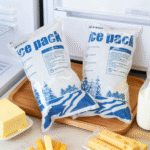
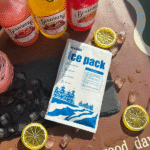
Refrigerants are the “fuel.” Insulation slows heat flow, but refrigerants absorb heat so the inside stays stable.
The #1 practical risk is being too cold at the start (edge freezing) or placing packs against the payload. Separators, conditioning, and clear placement rules prevent most issues.
Gel packs vs PCM vs dry ice (what to choose, fast)
| Refrigerant option | Common use | Main risk | How to reduce risk | Best fit for you |
|---|---|---|---|---|
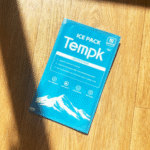
| Water-based gel packs | Chilled short lanes | Freezing at start | Condition packs, add buffers | Cost-sensitive chilled shipping |
| 5°C PCM | 2–8°C pharma | Under-cooling in extreme heat | Add mass, validate lanes | Tight 2–8°C control |
| 22°C PCM | 15–25°C CRT | Overheating in hot lanes | Use more PCM, add insulation | Room-temp biologics |
| Dry ice | Deep frozen | CO₂ handling rules | Train staff, ensure venting | Very low temperature shipping |
Practical tips you can apply today
Use separators: stop direct contact between refrigerant and product.
Standardize conditioning: one clear “conditioning time” reduces variation.
Label pack positions: photos on the lid cut training time and mistakes.
Real example: A pharmacy used frozen gel packs for 2–8°C kits and saw edge freezing. Switching to conditioned PCM plus a buffer sheet stabilized deliveries.
Helpful decision tools
Check the details before you choose packaging
These quick tools can help you compare route risk, sizing needs, coolant choices, and packaging details before you request a quote.
Coolant & PCM Reference
Compare coolant and PCM options when a route needs added temperature support.
Compare optionsIce Pack Calculator
Estimate gel ice pack quantity for chilled shipments and practical route planning.
Estimate ice packsInsulation Material Reference
Compare insulation material choices for different cold chain packaging needs.
Compare materialsHow Do You Validate a Bulk Insulated Box for Audits and Real Lanes?
A bulk insulated box is only “proven” when it passes testing that matches real lane risks. Quality teams often expect documented qualification and repeatable pack-outs.
In plain English: define the design, test it under stress, then confirm it works in the field.
Bulk insulated box thermal validation (DQ, OQ, PQ)
| Step | What you do | What you collect | What it means for you |
|---|---|---|---|
| DQ (Design) | Document specs, materials, target band | Spec sheet, drawings | Proves you planned it |
| OQ (Operational) | Lab test under worst-case conditions | Temperature logs, pass/fail | Proves it works in stress |
| PQ (Performance) | Field shipments with data loggers | Real-lane data, deviation reports | Proves it works in real life |
How Do You Buy Bulk Insulated Boxes Wholesale?
Buying bulk insulated boxes wholesale is about balancing price, quality, and lead time. Most suppliers offer tiered pricing, so volume helps—but only if your specs are locked and quality is consistent.
Self-check: are you ready to buy bulk insulated boxes wholesale?
Give yourself 1 point for each “Yes”:
We have a locked spec (dimensions, insulation, closure).
We have a validated pack-out (or we don’t need one).
We can run a simple receiving inspection for each batch.
We know our top 3 failure modes.
Score guide:
0–2: pilot one lane first.
3–4: ready for bulk orders with tighter QA.
5: ready to scale and negotiate stronger price tiers.
How Do You Validate Bulk Insulated Box Quality at Scale?
Validating a bulk insulated box at scale is about proving repeatability. The key question is: “If we buy 5,000 units, will they behave like the sample?”
A simple 3-step validation plan (easy to run)
Pre-production sample: confirm dimensions, fit, packing workflow.
Performance check: verify payload stays in range for your lane target.
Production batch check: inspect a small number from each shipment.
Two habits that prevent big failures:
Keep a “golden sample” as the reference.
Re-check before peak season so your bulk insulated box survives your worst month.
What Are the 2026 Trends for Bulk Insulated Box Systems?
In 2026, bulk insulated box design is shifting toward smarter insulation and better data integration. Lighter materials reduce transport cost, and data-ready interiors make sensors easier to use.
What to watch this year:
Smarter materials: same insulation, less weight.
Modular designs: adjustable volume for mixed loads.
Data-ready interiors: easier sensor placement.
Market pull is rising in food export and biotech logistics, driven by stricter compliance and fuel costs.
Frequently Asked Questions About a Bulk Insulated Box
Q1: How long can a bulk insulated box maintain temperature? Many bulk insulated boxes hold target temperature for 48–120 hours, depending on insulation thickness and coolant use.
Q2: Are bulk insulated boxes reusable? Yes—many designs support dozens of reuse cycles, with routine inspection and cleaning.
Q3: Do bulk insulated boxes meet food and pharma standards? Many models are designed for regulated use. You still need to verify material safety, cleanability, and documentation.
Q4: Can a bulk insulated box freeze my product? Yes, if refrigerants touch the payload or start too cold. Use separators, conditioning, and placement labels.
Q5: What’s the biggest packing mistake with a bulk insulated box? Overstuffing until airflow disappears. That creates hot spots and inconsistent results.
Summary and recommendations
A bulk insulated box works best when you treat it as a repeatable system. Start with lane stress, not materials. Size for the worst credible day, then choose insulation and refrigerants that match your temperature band.
Next, lock the pack-out with a visual SOP and validate using DQ/OQ/PQ thinking so audits and real lanes match.
Your next steps
Pick your lane target (band + duration + worst season).
Shortlist 2 bulk insulated box options (baseline vs higher performance).
Run a simple lab check, then a short field pilot with data loggers.
Freeze the pack-out into a one-page photo SOP.
Scale using receiving checks and seasonal re-validation.
About Tempk
At Tempk, we focus on practical cold chain packaging designed for real logistics conditions. We develop bulk insulated boxes that balance insulation performance, durability, and ease of use—and we design with repeatable pack-out and long-distance transport in mind.
Next step: Share your temperature band, max delay, and payload size. We’ll help you shortlist a bulk insulated box setup and outline a simple validation plan.