You hire an insulated box exporter when a temperature slip could ruin your shipment. Many healthcare products must stay at 2°C to 8°C, while dry ice cooling sits near -78°C. In 2026, you also face stricter proof requests and new EU packaging milestones that affect procurement timelines. This guide shows you how to pick, brief, and manage an insulated box exporter so results stay repeatable.
This article will answer for you
- How an insulated box exporter makes outcomes predictable (not lucky)
- How to write a one-page lane brief for international routes
- What evidence (tests + assumptions) you should demand in 2026
- How to compare quotes using cost per protected delivery
- How to reduce customs holds with better paperwork, labels, and Incoterms
What does an insulated box exporter actually do?
A strong insulated box exporter delivers a repeatable temperature result, not “foam and tape.” They supply insulated shippers and help you match the pack-out to your lane risks. That means the right insulation, the right coolant, and a packing method your team can repeat. This is the difference between predictable delivery and random temperature damage.
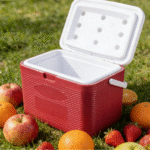
Think of it like a road-trip cooler: it works only if the lid seals and the ice is placed correctly. Your insulated box exporter should control those same basics—seal, coolant, and real-world exposure.
What an insulated box exporter should deliver in 2026
In 2026, your insulated box exporter should deliver (1) clear specifications, (2) documented performance, and (3) export readiness. If you reorder six months later, you should get the same outcome, not a “surprise version.”
| Deliverable | What it includes | What it prevents | What it means for you |
|---|---|---|---|
| Clear specs | BOM, dimensions, tolerances | Lot-to-lot drift | Fewer “it changed” arguments |
| Documented performance | Profile + payload + pass/fail band | Marketing-only claims | Fewer excursions and rejects |
| Export readiness | Labels, docs, packing SOP | Border holds | Faster clearance, less repacking |
Practical tips you can use today
- High-value cargo: Choose validated packaging, not generic cartons.
- Mixed climates: Demand hot and cold profile evidence, not one test.
- Long routes: Ask for hold-time proof that matches your real transit.
How do you brief an insulated box exporter for your shipping lane?
If you want fast, comparable quotes, you need a lane brief. A lane brief is one page that forces every insulated box exporter to design around the same facts. It reduces back-and-forth and stops vendors from guessing.
When you do this, proposals become easier to compare and easier to defend internally. A good lane brief also protects you in audits. It shows your team defined requirements before selecting packaging.
A 5-minute lane brief (copy and fill)
Use this as your “single source of truth” when talking to any insulated box exporter:
- Product: (pharma / diagnostics / seafood / specialty chemical)
- Temperature band: (e.g., 2–8°C, 15–25°C, frozen)
- Maximum duration: (door-to-door + worst-case delay buffer)
- Payload: weight, size, and starting temperature
- Lane + mode: origin → destination, parcel / air / ocean / truck
- Handoffs: how many transfers and where delays happen
- Seasonality: summer and winter risk (yes/no)
- Monitoring: data logger required (yes/no)
- Constraints: max outer dimensions, max weight, sustainability goals
- Success definition: pass/fail temperature limits + acceptance rules
Interactive tool: Insulated Box Exporter Fit Score
Score each insulated box exporter from 0 to 2 on each item. Total the score:
- Lane understanding (season, handoffs, delays)
- Evidence (shares test conditions, not slogans)
- Pack-out simplicity (fast, repeatable steps)
- Speed to iterate (samples + revisions quickly)
- Quality control (traceability + change control)
- Export support (labels + docs basics)
How to interpret your total:
- 0–5: high risk for critical shipments
- 6–9: workable for low-risk lanes with strong internal oversight
- 10–12: strong candidate for regulated or long-haul lanes
Practical move: Run a pilot of 10–20 cartons with data loggers before scaling.
How does an insulated box exporter prove hold time and temperature control?
When an insulated box exporter says “72 hours” or “96 hours,” the only useful question is: “Under what outside weather?” Your proof must include an ambient profile (outside temperature pattern), payload assumptions, and pass/fail rules. Without that, the claim is not lane-safe.
You should also request a validation summary that matches your temperature band and duration. That keeps procurement aligned with quality, not just price.
Simple validation checklist (what “good” looks like)
A credible thermal validation usually includes these steps:
Helpful decision tools
Check the details before you choose packaging
These quick tools can help you compare route risk, sizing needs, coolant choices, and packaging details before you request a quote.
Box Liner & Pallet Cover Sizing
Check box liner and pallet cover sizing logic for insulated packaging projects.
Estimate sizingDry Ice Calculator
Estimate dry ice needs for frozen or ultra-cold shipments before packing.
Estimate dry iceRoute Risk Checker
Review lane conditions before selecting packaging for real operating requirements.
Check route risk- Choose a hot, cold, or cycling profile that matches your lane
- Pack exactly like production (same coolant, placement, payload)
- Record internal temperature over time with sensors
- Repeat enough runs to trust the result
For parcel lanes, many teams reference ISTA Standard 7E, which is designed for thermal transport packaging used in parcel delivery systems.
RFQ questions to ask your insulated box exporter
| Question | Why it matters | What “good” looks like | Your practical meaning |
|---|---|---|---|
| What profile did you test? | Defines stress level | Hot/cold/cycle clearly stated | You can map it to your lane |
| What payload start temp? | Changes results fast | Written assumption + tolerance | Fewer “test was different” gaps |
| What coolant mass/type? | Controls duration | Exact grams/kg + placement | Repeatable packing |
| What acceptance band? | Defines pass/fail | 2–8°C, 15–25°C, etc. | Clear QA decision |
| Can I see raw data? | Stops cherry-picking | Graphs + file on request | Trust, not faith |
Which materials should your insulated box exporter recommend in 2026?
Your insulated box exporter should pick materials based on your lane, not a catalog page. In practice, you balance insulation strength, durability, and size. You also balance single-use cost against reuse logistics. The “best” material is the one that keeps your product safe with the lowest total delivery cost.
Materials in plain language (and when they win)
| Material | Best fit | Trade-offs | What it means for you |
|---|---|---|---|
| EPS | short to mid duration | low cost, more breakage | fast and budget-friendly |
| EPP | reuse loops, rough handling | higher unit cost | fewer damages per trip |
| PU | longer holds in compact sizes | harder to recycle | strong insulation without huge cartons |
| VIP + foam | long lanes, tight limits | premium, careful handling | long duration without big volume |
The cost levers buyers often miss
- Dimensional weight: air and parcel fees punish oversized shippers.
- Outer carton strength: weak cartons collapse and trigger claims.
- “Extra coolant” trap: more ice can raise cost without fixing design.
2026 developments and trends for insulated box exporters
In 2026, insulated box exporters face stricter sustainability expectations and tighter proof standards. The EU Packaging and Packaging Waste Regulation (PPWR) entered into force on 11 Feb 2025, with a general application date 18 months later (mid-Aug 2026). Buyers increasingly expect recyclability data, take-back options, and documented test results.
What’s changing in 2026
- EU PPWR timeline: Packaging rules tighten mid-2026, affecting material choices.
- Proof culture: “Show me the test” is now standard, not optional.
- Right-sizing: Smaller cartons reduce dimensional weight and emissions.
- Reuse loops: Return logistics are expanding where reverse flows are stable.
Common questions about insulated box exporters
Q1: How long can insulated box exporter packaging hold temperature?
Many designs hold temperature from about 24 to 120 hours, depending on insulation and packout.
Q2: What is the best insulated box exporter option for 2–8°C?
Start with a qualified shipper using conditioned gel packs or a ~5°C PCM. Choose based on lane duration and heat risk.
Q3: Do I need a data logger for insulated box exporter shipments?
If your product is sensitive or high value, yes. A basic logger helps prove conditions and reduce disputes.
Q4: What is the most overlooked step in insulated box exporter shipments?
Conditioning and staging. A warm product load can cut hold time fast.
Q5: What’s the fastest way to reduce customs holds in insulated box exporter shipments?
Use a one-page PCS and keep SKU/HS code/quantities consistent across every file.
Summary and practical recommendations
An insulated box exporter should deliver repeatable results, not just foam and tape. Start with a clear lane brief, demand documented test evidence, and compare quotes using cost per protected delivery. In 2026, expect stricter sustainability requirements and stronger proof culture. Review your packaging quarterly to stay aligned with lane and season changes.
Your next steps (simple 4-step plan)
- Write a one-page lane brief for your most critical route.
- Score 2–3 insulated box exporters using the Fit Score tool.
- Request validation summaries that match your temperature band and duration.
- Run a pilot with data loggers before scaling.
About Tempk
We focus on temperature-controlled packaging that your team can run consistently. We support insulated box exporter needs with configurable sizes, clear packout instructions, and testing support built for real export lanes. We also help you prepare the labeling and documentation inputs that customers and carriers commonly expect—so you ship with fewer surprises and less waste.
CTA: If you’re planning a new insulated box exporter lane, gather your temperature band, lane duration, and summer/winter destinations. Then contact our team for a packout recommendation and a simple qualification roadmap.