Last updated: January 19, 2026
Choosing a gel ice insert grocery manufacturer is not just buying “cold packs.” You’re trying to keep groceries cold, keep cartons dry, and keep costs predictable—at the same time.
Many food-safety materials describe a temperature “danger zone” (often cited around 41°F–135°F, with some guidance using 40°F–140°F).
Your goal is stable, repeatable cold performance that survives delays, stacking, and rough handling.
This article will help you:
- Compare any gel ice insert grocery manufacturer using a proof-based scorecard (not marketing)
- Choose custom gel ice insert sizes that reduce warm corners and packing errors
- Build a leak-proof gel ice insert system using a simple “Dry Carton” method
- Validate grocery pack-outs using carton-level testing (ISTA 3A + ASTM D4169 thinking)
- Write OEM specs that prevent “spec drift” after you scale
- Understand 2026 trends: documentation pressure, right-sizing, and traceability
What does a gel ice insert grocery manufacturer deliver?
Direct answer: A gel ice insert grocery manufacturer should deliver inserts that behave the same on every reorder—consistent fill weight, consistent sealing, consistent freezing behavior, and consistent dimensions—so your pack-out stays repeatable at scale.
You are buying predictability as much as you are buying cold.
Expanded explanation: Think of your insulated box as a raincoat and the gel insert as an umbrella. The raincoat slows heat, but the umbrella does the work of absorbing heat. If inserts vary batch to batch, your “cold time” becomes random. If seals are weak, one puncture can turn into a soggy carton and a refund.
Which gel ice insert formats should your grocery manufacturer offer?
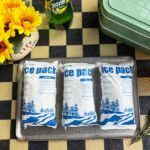
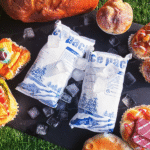
A strong gel ice insert grocery manufacturer typically supports multiple formats because grocery boxes and payloads vary.
| Insert format | Best grocery use | Strength | Watch-out | Practical meaning for you |
|---|---|---|---|---|
| Flat gel ice insert | meal kits, multi-item grocery | easy to stack | can create cold “walls” | fast packing, needs placement discipline |
| Bottle/brick insert | dairy, beverages, dense packs | stable position | less flexible layout | consistent cooling around heavy items |
| Liner-style insert | fresh food bundles | large surface contact | moisture management needed | reduces hot spots if designed well |
Practical tips and recommendations
If you ship mixed groceries: start with flat inserts and a fixed placement map to reduce packing mistakes.
If you ship heavy dairy: brick inserts often stay put and cool predictably.
If you ship high-humidity lanes: prioritize moisture control planning early.
Practical case: Many programs reduce “wet box” refunds when they treat inserts as a controlled system—design, placement, conditioning, and QC—rather than buying “more ice.”
How cold should your grocery shipments be in real life?
Direct answer: Your “cold enough” target depends on grocery category, but the practical rule is to minimize time in unsafe temperature ranges during real delivery conditions.
A reliable gel ice insert grocery manufacturer helps you design for your worst realistic day, not your average day.
Expanded explanation: Grocery delivery is not a lab. It includes loading docks, warm vans, porch waits, and route changes.
If you build for average conditions, your failure rate spikes on hot or delayed days. If you overcool, you can freeze sensitive items (leafy greens, certain dairy textures, fresh prepared foods).
Lane Profile Builder (interactive tool)
Fill this out once. Share it with every gel ice insert grocery manufacturer before you compare quotes.
- Delivery promise: same-day / 24h / 48h / 72h+
- Worst exposure: hot truck time, porch time, weekend delay risk
- Box sizes: internal dimensions + typical payload weight
- Freeze sensitivity: none / some / many items
- Failure history: warm, wet, crushed, mislabeled
| Lane factor | Low risk | Medium risk | High risk | What it changes for you |
|---|---|---|---|---|
| Transit time | same-day | 24–48h | 48h+ | longer hold time planning |
| Summer exposure | mild | mixed | hot | right-sizing matters more |
| Freeze sensitivity | none | some | many | avoid cold walls and direct contact |
Practical tips and recommendations
If you ship to apartments: plan for delayed pickup and hallway heat.
If one corner runs warm: adjust placement first, not insert chemistry.
If cartons feel soft: add a moisture barrier before adding more inserts.
Practical case: One retailer reduced wet-box incidents by standardizing a barrier liner and tighter seal checks, not by adding extra coolant.
Gel ice inserts vs PCM: what should your manufacturer recommend?
Direct answer: A gel ice insert grocery manufacturer should recommend standard gel or PCM-style inserts based on freeze risk and temperature stability. Standard gel is cost-effective but can over-freeze sensitive foods if placed incorrectly. PCM-style inserts can support a tighter “refrigerated” behavior when you must avoid freezing.
Expanded explanation: You don’t need to become a thermal engineer. You need a supplier who explains options like you’re training a new warehouse teammate.
The best recommendation is lane-based: how many inserts, where to place them, and how to condition them so results are repeatable.
Freeze-Risk Self-Test (quick decision tool)
Answer these in under a minute:
- Do any items get damaged by freezing? (yes/no)
- Is your delivery promise 24h / 48h / 72h+?
- Is summer exposure low / medium / high?
- Is the box small / medium / large?
- Do you allow returns or reuse? (yes/no)
If you answered “yes” to freezing risk, your text recommends asking about a controlled-melt option (often described as a PCM approach).
| Option | When it fits grocery | What you gain | What you trade off | Practical meaning |
|---|---|---|---|---|
| Standard gel ice insert | most chilled grocery kits | simple, low cost | freeze risk if misused | needs placement discipline |
| PCM-style insert | freeze-sensitive items | stable temperature band | higher cost | fewer “frozen salad” complaints |
Practical tips and recommendations
If you ship produce-heavy boxes: prioritize spacing so inserts don’t touch sensitive items.
If you ship high-value kits: consider stability first, then optimize unit cost later.
How do you prevent wet boxes with your gel ice insert grocery manufacturer?
Direct answer: Prevent wet boxes by demanding measurable leak resistance and building a moisture-aware pack-out. Customers don’t separate condensation from leaks—they see a wet box and blame you.
The fix is a system: stronger films, better seals, and carton-level handling tests.
Expanded explanation: Wet corrugate loses strength and corners collapse faster. The insert itself matters, but pack-out matters more: barrier, spacing, and structure.
A dependable gel ice insert grocery manufacturer will discuss seal checks, failure rates, and traceability—because silent changes can create sudden spikes.
The “Dry Carton” model (trainable in one shift)
- Barrier: keep moisture off corrugate
- Spacing: prevent rubbing punctures and direct contact
- Structure: keep corners strong under compression
| Wet-box trigger | What causes it | Fast fix | What to request from the manufacturer |
|---|---|---|---|
| Micro leaks | weak seals / pinholes | stronger film + seal checks | lot-based leak screening |
| Punctures | rubbing on corners | dividers or sleeves | corner reinforcement option |
| Carton softening | condensation soak | barrier liner | moisture barrier recommendation |
| Collapsed corners | stacking loads | stronger structure | compression-aware packaging |
Practical tips and recommendations
Heavy items (milk, drinks): prioritize puncture resistance and corner reinforcement.
High humidity: add a moisture barrier layer before you add “more ice.”
Random failures: ask for lot traceability and change control.
Practical case: Many grocery shippers reduce wet-box refunds more by improving seal quality and adding a barrier liner than by adding extra coolant.
Which tests should a gel ice insert grocery manufacturer support?
Direct answer: A qualified gel ice insert grocery manufacturer should support carton-level testing that mirrors real distribution hazards. ASTM D4169 is a structured practice for evaluating shipping units at levels representative of actual distribution, and ISTA 3A is a common parcel-system approach (150 lb / 70 kg or less).
Expanded explanation: Testing inserts alone is not enough. Failures often happen after packing—when cartons are stacked, dropped, vibrated, and compressed.
The best tests are simple pass/fail gates tied to your real risks: leaks, corner collapse, and performance drift.
Helpful decision tools
Check the details before you choose packaging
These quick tools can help you compare route risk, sizing needs, coolant choices, and packaging details before you request a quote.
Insulation Material Drop Resistance
Review drop resistance and handling factors before choosing insulation materials.
Check resistanceCompliance Checklist Generator
Build a practical checklist for packaging review, shipping, and documentation.
Build checklistRoute Risk Checker
Review lane conditions before selecting packaging for real operating requirements.
Check route riskMinimum carton-level test set (pilot-friendly)
| Test | What it catches | Simple pass rule | Why it matters |
|---|---|---|---|
| Leak screening | pinholes, weak seals | no visible leaks | prevents soggy cartons |
| Drop + vibration | handling shocks | no rupture in packed carton | matches parcel reality |
| Compression | stacked loads | no seal failure under load | prevents corner collapse |
| Weight tolerance checks | fill drift | within tolerance window | stabilizes cold hold |
| Pack-out audit | human variance | matches approved photo | reduces mispacks |
Practical tips and recommendations
Test the packed carton, not the insert alone.
Retest after any change: film, gel formula, insert size, or box size.
Keep acceptance rules simple: pass/fail beats confusing lab language.
Practical case: Grocery programs often cut incident rates after adding a compression step that reflects stacked van loads, not just drop tests.
How to right-size inserts with a gel ice insert grocery manufacturer?
Direct answer: Right-sizing with a gel ice insert grocery manufacturer means designing for coverage and consistency, not just “more gel.” Sizing based on box geometry and surface coverage is recommended, because smaller inserts can reduce hot corners while oversized inserts can create cold walls and freeze-sensitive damage.
Expanded explanation: Think of heat like sunlight. If you shade only one spot, the rest still heats up. Inserts should “shade” the payload from multiple directions.
Standardizing by box size also reduces packing mistakes and makes performance repeatable across shifts.
Placement rules that reduce grocery failures
- Avoid “all inserts on top.”
- Avoid direct contact with freeze-sensitive produce; use a spacer or divider.
- Surround the payload when possible; side placement reduces hot spots.
- Use a pack-out photo standard: one photo per box size, posted at the line.
| Box type | Insert strategy | Risk if done wrong | Practical benefit |
|---|---|---|---|
| Small grocery box | 2 side inserts | warm bottom corner | fewer warm claims |
| Medium mixed kit | 2 sides + 1 top | cold wall effect | stable temperature |
| Large box | distributed inserts | uneven corners | consistent results |
Practical tips and recommendations
Use more smaller inserts in high-risk lanes; it reduces corner hotspots.
Keep inserts off labels; condensation can ruin scanning and returns.
Standardize by box size; fewer layouts means fewer packing mistakes.
Practical case: Teams often cut warm-corner complaints after switching to distributed inserts rather than a single large insert.
How to qualify a gel ice insert grocery manufacturer in 30 minutes?
Direct answer: Qualify a gel ice insert grocery manufacturer with proof-based questions that force clarity: tolerances, QC sampling, change control, and pilot support. If answers are vague, risk is high. If answers include measurable limits and records, risk drops.
Expanded explanation: Samples can mislead because they are made under “best attention.” Your real risk starts at scale, when new film lots arrive or line speed changes.
A reliable gel ice insert grocery manufacturer expects you to ask for evidence and should be ready with simple documentation.
Supplier scorecard (interactive self-test)
Score each item: Yes = 2, Partial = 1, No = 0.
- Provides weight and dimension tolerances
- Explains seal checks (how often, how measured)
- Tracks lots and can trace defects quickly
- Has written change-control rules
- Supports a pilot batch before scaling
- Provides a placement guide per box size
- Supports carton-level handling validation
- Can scale lead times for peak demand
| Total score | Risk level | What you do next | What it protects |
|---|---|---|---|
| 13–16 | Low | pilot → lock spec → scale | stable delivery KPIs |
| 9–12 | Medium | tighter acceptance + more tests | refund control |
| 0–8 | High | avoid scaling | time and cash flow |
Practical tips and recommendations
Ask for one recent failure story; it reveals corrective action speed.
Ask who approves material changes; it reveals whether change control is real.
Ask what they measure daily; it reveals what they truly control.
Practical case: Programs stabilize faster when the supplier can show lot records and seal sampling.
How to compare total cost from a gel ice insert grocery manufacturer?
Direct answer: Compare total cost and total risk, not unit price. A cheaper insert that leaks or underperforms often costs more after refunds, reships, support time, and churn.
A strong gel ice insert grocery manufacturer helps you reduce incident rates, not just line-item pricing.
Expanded explanation: Grocery economics are simple: small failure rates become large monthly losses at scale.
Your best move is to reduce failures first (wet, warm, crushed), then optimize cost. Use a basic ROI model so decisions are defendable across procurement, ops, and customer service.
Refund ROI calculator (interactive)
Fill in your numbers:
- Monthly shipments: ___
- Failure rate (warm/wet/damaged): ___%
- Cost per failure (refund + reship + labor): ___
- Extra packaging cost per shipment for better inserts: ___
If (shipments × failure rate × cost per failure) is larger than (shipments × extra cost), the safer option usually wins.
| Quote item | What to compare | Why it matters | What it means for you |
|---|---|---|---|
| Insert sizes available | number of size options | impacts placement consistency | fewer hot corners |
| Seal/film plan | seal type + durability approach | predicts leak risk | fewer wet boxes |
| QC evidence | sampling + records | predicts repeatability | fewer disputes |
| Test support | carton-level validation willingness | predicts real-world survival | fewer surprises |
| Change control | written rules | prevents spec drift | stable KPIs |
Practical tips and recommendations
Separate complaint types (warm vs wet vs crushed).
Fix one category at a time so you know what worked.
Ask for two pack-out options: “standard” and “high-risk lane.”
Practical case: Many teams reduce incident rates after they stop mixing “warm” and “wet” complaints into one bucket.
2026 latest developments and trends for grocery gel inserts
Trend overview: 2026 is a “documentation and waste” year: more pressure to right-size packaging, reduce waste, and improve traceability.
It also highlights regulatory momentum (PPWR timing in the EU and packaging EPR growth in the U.S.) that pushes more reporting and packaging discipline.
What’s new in 2026 (and what it means for you)
- Right-sizing replaces overpacking: fewer inserts, smarter placement, same results.
- Traceability becomes standard: lot coding is no longer “nice to have.”
- Moisture control becomes normal: dry-carton systems become everyday SOP.
- Audit readiness increases: compliance summaries and GMP-style discipline are asked more often.
Market insight: “Consistent and documented” beats “maximum cold.” The best gel ice insert grocery manufacturer makes your program easier to run, not harder to manage.
Frequently Asked Questions
Question 1: What should I check first when choosing a gel ice insert grocery manufacturer?
Start with tolerances, seal checks, lot traceability, and written change control. Price comes second.
Question 2: Why do cartons arrive wet even without visible leaks?
Condensation can soak corrugate. Use a barrier layer and spacing before adding more inserts.
Question 3: Should I use one large insert or several smaller inserts?
Several smaller inserts often reduce hot corners and improve coverage in mixed grocery boxes.
Question 4: What tests best match parcel grocery delivery risks?
ISTA 3A is commonly referenced for parcel delivery thinking, and carton-level testing reveals real failure modes.
Question 5: How do I stop “random leak” incidents?
Treat leaks as friction + seal problems. Add spacing, strengthen seals, and require lot-based sampling.
Question 6: What temperature guidance should I use for grocery safety messaging?
Many references cite 41°F–135°F or 40°F–140°F. Use conservative limits and minimize time in the danger zone.
Summary and recommendations
A gel ice insert grocery manufacturer should protect your grocery deliveries with repeatability, not promises. Lock tolerances, seal integrity, traceability, and change control so performance does not drift at scale.
Build a Dry Carton system (barrier, spacing, structure) to reduce wet boxes, then validate with carton-level handling tests tied to real distribution risks.
Next step (CTA): Shortlist two suppliers, run a pilot with your real box and payload, lock your insert spec and placement guide, and scale only after results stay consistent.