Medical ice box manufacturer cost is not simply the cost of making a cold box. In 2026, it is often the cost of making a cold box that is structurally stable, thermally suitable, repeatable in production, and easier to trust in transport-sensitive environments. That is why medical-oriented factory pricing usually sits above ordinary commodity packaging logic.
A good cost decision starts by separating **build cost**, **control cost**, and **use-case cost**. Once you see those three layers clearly, manufacturer quotes become much easier to evaluate.
This article will answer:
- What the major cost layers are in medical ice box manufacturing
- How public benchmark data helps frame the market
- Why validation and transport assumptions affect factory value
- When lifecycle thinking should reshape your supplier choice
What really sits inside medical ice box manufacturer cost?
Three layers matter most.
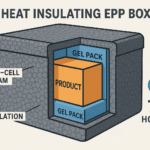
First is the **build layer**: shell, insulation, closure, accessories, packing.
Second is the **control layer**: tooling quality, process stability, QC discipline, repeatability.
Third is the **use-case layer**: what thermal and handling job the box is supposed to do.
If a factory quote is low, ask which layer has been reduced. That question is more useful than asking for an immediate discount.
Cost layer table
| Cost layer | What it covers | Why it matters |
|---|---|---|
| Build layer | Materials, structure, packaging | Shapes physical performance |
| Control layer | Tooling, QC, process discipline | Shapes repeatability |
| Use-case layer | Thermal target, route logic, risk level | Shapes real commercial value |
Practical tips for buyers
- For direct factory buying: Ask the supplier to separate one-time setup cost from repeat-order price.
- For sensitive routes: Ask what thermal assumption the design is built around.
- For long-term supply: Ask how the factory controls batch-to-batch consistency.
How do public benchmarks help you judge factory quotes?
UNICEF’s published 2026 cold-box pricing shows several common models around **$65-$128**, with larger or more specialized products above **$200**, and some B Medical Systems lines around **€279-$569** depending on model and shipping assumptions. This does not tell you factory BOM cost directly, but it does show that the finished cold-box category already spans a broad commercial range. If a factory quote sits far outside that landscape, you should ask why. ([联合国儿童基金会][6])
Public reference points are useful because they help you avoid two opposite mistakes: overpaying for commodity-level design and underbuying for a transport-sensitive application.
Why does validation affect cost so directly now?
EMA requires medicines to remain in the right conditions during transportation. CDC points to qualified containers and pack-outs in vaccine transport, and WHO procurement requirements for temperature-sensitive pharmaceuticals call for validated containers that keep products at **2-8°C for at least 96 hours**, supported by monitoring and labeling. These are strong signals that packaging value is increasingly tied to transport credibility, not just physical form. ([European Medicines Agency (EMA)][3])
For factory pricing, that means the invoice may be covering more than the box. It may be covering better design logic, more disciplined manufacturing, better validation effort, and clearer product definition. Even if your exact use case does not require the full pharmaceutical rule set, the market pressure created by these expectations still influences serious manufacturers.
Why is lifecycle thinking becoming more important?
WHO’s 2025 sustainability-related cold-chain materials highlight reusable hard-shell containers, VIPs, PCMs, shipment consolidation, and reduced reliance on single-use passive shippers. DHL’s 2026 industry material adds that reusable shippers can sometimes support **70+ uses** and longer thermal duration, although they require reverse logistics and revalidation. That means some manufacturers are now building offers around lifecycle economics rather than simple first-cost competition. ([Iris][5])
If your medical transport lanes are stable and asset recovery is realistic, a higher manufacturer cost can still create a lower total cost. If your routes are irregular or one-way, that same offer may not make sense. Context decides value.
What should you ask a factory in 2026?
- What temperature and duration assumptions sit behind this design?
- What part of the quote is material cost and what part is control or testing cost?
- What changes after MOQ is reached?
- What controls keep future production stable?
- Is there a one-way option and a repeat-use option?
These questions are simple, but they quickly reveal whether the factory is pricing a commodity or a controlled solution.
Frequently asked questions
Does a higher factory quote always mean a better medical box?
No. It only means better value if the extra cost is tied to real structure, control, or use-case fit.
Should buyers separate setup cost from production cost?
Yes. It makes factory comparison much more accurate and avoids confusion in early-stage sourcing.
Helpful decision tools
Check the details before you choose packaging
These quick tools can help you compare route risk, sizing needs, coolant choices, and packaging details before you request a quote.
Ice Pack Calculator
Estimate gel ice pack quantity for chilled shipments and practical route planning.
Estimate ice packsCoolant & PCM Reference
Compare coolant and PCM options when a route needs added temperature support.
Compare optionsRoute Risk Checker
Review lane conditions before selecting packaging for real operating requirements.
Check route riskWhen should lifecycle cost matter more than unit cost?
When you have repeat lanes, predictable demand, and the ability to recover or reuse packaging assets.
Summary and next step
Medical ice box manufacturer cost in 2026 reflects build quality, control discipline, and transport logic together. Public benchmark data gives useful context, while current transport expectations and reuse trends explain why factory pricing is becoming more performance-linked and more lifecycle-aware.
Your next step is to ask each factory for a two-part offer: initial development cost and mature repeat-order cost. Once those are separated, the best supplier usually becomes much easier to identify.
About Tempk
Tempk works on practical temperature-controlled packaging choices with a focus on route fit, sourcing clarity, and repeatable manufacturing value. We aim to help buyers compare factory offers through structure, transport logic, and lifecycle economics rather than headline price alone.
If you are evaluating direct manufacturers, start by defining the job the box must do and the consistency you need over time.
[1]: https://www.unicef.org/supply/media/24611/file/Cold-boxes-price-data-2026.pdf?utm_source=chatgpt.com “Branded-excel-sheet-2025- Cold chain.xlsx”
[2]: https://extranet.who.int/prequal/sites/default/files/media_document/e004_0.pdf “https://extranet.who.int/prequal/sites/default/files/media_document/e004_0.pdf”
[3]: https://www.ema.europa.eu/en/human-regulatory-overview/post-authorisation/compliance-post-authorisation/good-distribution-practice “https://www.ema.europa.eu/en/human-regulatory-overview/post-authorisation/compliance-post-authorisation/good-distribution-practice”
[4]: https://cdn.who.int/media/docs/default-source/procurement/who-technical-requirements-for-itbs-and-rfqs.pdf?download=true&sfvrsn=33b86832_8 “https://cdn.who.int/media/docs/default-source/procurement/who-technical-requirements-for-itbs-and-rfqs.pdf?download=true&sfvrsn=33b86832_8”
[5]: https://iris.who.int/server/api/core/bitstreams/c5053ada-0556-4531-9093-26fe492720fb/content “https://iris.who.int/server/api/core/bitstreams/c5053ada-0556-4531-9093-26fe492720fb/content”
[6]: https://www.unicef.org/supply/media/24611/file/Cold-boxes-price-data-2026.pdf “https://www.unicef.org/supply/media/24611/file/Cold-boxes-price-data-2026.pdf”
[7]: https://iris.who.int/server/api/core/bitstreams/8ba9dfd8-7dd3-407f-828a-cb5896390837/content?utm_source=chatgpt.com “Decarbonizing the healthcare supply chain strategic actions …”
[8]: https://www.dhl.com/content/dam/dhl/global/core/documents/pdf/g0-core-trend-radar-widescreen-2019.pdf “https://www.dhl.com/content/dam/dhl/global/core/documents/pdf/g0-core-trend-radar-widescreen-2019.pdf”
[9]: https://www.dhl.com/discover/en-vn/logistics-advice/sustainability-and-green-logistics/recyclable-packaging “https://www.dhl.com/discover/en-vn/logistics-advice/sustainability-and-green-logistics/recyclable-packaging”
[10]: https://www.dhl.com/sg-en/home/innovation-in-logistics/logistics-trend-radar/circularity-reverse-logistics.html “https://www.dhl.com/sg-en/home/innovation-in-logistics/logistics-trend-radar/circularity-reverse-logistics.html”