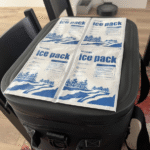
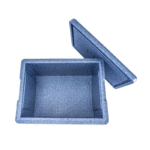
A refrigerated bag manufacturer in 2026 is no longer judged only by sample appearance or quoted price. Buyers want a partner that can understand the lane, recommend the right structure, support validation, control production drift, and fit the product into a reusable packaging strategy. The manufacturers that can do those things are the ones that reduce risk and create better long-term value.
This article will help you answer:
- What a refrigerated bag manufacturer should really offer
- How materials, coolant strategy, and structure affect performance
- Which standards and regulatory signals shape qualification
- Why documentation, pilot runs, and reusable design matter more in 2026
- How to choose between competing factories with more confidence
What should a refrigerated bag manufacturer provide beyond the bag itself?
A strong refrigerated bag manufacturer should provide route-fit engineering, production control, and practical operational support. The bag is only one part of the system. The rest includes packout method, coolant compatibility, opening behavior, cleaning logic, shipping efficiency, and how the product performs after repeated use.
That is why the best suppliers ask better questions. They want to know your product band, transit time, ambient risk, payload shape, handoff count, and expected reuse cycle. A factory that asks those questions early is more likely to deliver a stable design.
How do materials and thermal design shape supplier choice?
Material selection reveals how technically mature a refrigerated bag manufacturer really is. Foam remains the mainstream solution because it is light, cost-effective, and easy to scale. PCM is useful when you need a narrow temperature plateau. VIP-enhanced systems make sense for premium, long-duration, or space-limited applications.
Research on phase change materials shows that PCM technology offers strong latent heat potential, but it must be stabilized and engineered well to avoid leakage and reliability issues. DOE materials work similarly explains the appeal of VIP concepts: they provide much better insulation performance than conventional systems, but they also bring higher cost and more handling sensitivity. (PMC)
Simple material guide
- Practical buyer tips
- Start with a standard foam reference before jumping to premium systems
- Ask the supplier to explain closure loss and packout logic, not just insulation thickness
- Review liner cleanability if the product will be reused or cleaned often
- Check whether the manufacturer can simplify the BOM without hurting performance
Which compliance and standards signals matter now?
For U.S. food transport, FDA’s sanitary transportation rule covers equipment, operations, records, training, and waivers in motor and rail transport. That is a useful reminder that a refrigerated bag sits inside a controlled transport process. (U.S. Food and Drug Administration)
For healthcare and life-science movement, IATA’s Temperature Control Regulations set expectations around packaging, compliance, handling, and documentation, while CEIV Pharma extends those expectations into audits, mapping, monitoring, infrastructure, calibration, and supplier management. European medicinal logistics also follows GDP principles for proper distribution quality. Thermal test credibility increasingly points to ISTA 7E, not the old 7D reference. (国际航空运输协会)
WHO guidance reinforces the same direction. Its 2026 temperature mapping tool says mapping and monitoring are integral to proper pharmaceutical storage conditions, and its 2025 device guidance says cold chain monitor cards are no longer recommended for in-country use. That pushes more buyers toward logger-ready workflows and better thermal evidence. (世界卫生组织)
How should you evaluate factory quality and repeatability?
The most important supplier question is not “Can you make this?” but “Can you make this the same way every time?” Repeatability depends on incoming material control, inline checks, final inspection, retained samples, packaging methods, and change management.
ISO describes ISO 9001 as a globally recognized quality management standard, which is why buyers still use it as a baseline indicator of process maturity. On the sustainability side, ISO says ISO 14001:2026 is in final production steps and expected before the end of April 2026, which makes environmental management capability increasingly relevant to procurement teams. (国际标准化组织)
Factory scorecard
- Raw material verification
- Approved BOM control
- Inline sewing and assembly checks
- Pilot-lot support
- Retained sample storage
- Freight packaging review
- Documented change approval
Practical example: A supplier with a slightly higher price won a refrigerated bag project because it could prove how it locked BOMs, stored retained samples, and managed substitutions. That gave the buyer much more confidence in launch stability.
Helpful decision tools
Check the details before you choose packaging
These quick tools can help you compare route risk, sizing needs, coolant choices, and packaging details before you request a quote.
Packaging Selector
Compare insulated packaging options by product, route, and temperature need.
Find packagingBox Liner & Pallet Cover Sizing
Check box liner and pallet cover sizing logic for insulated packaging projects.
Estimate sizingDry Ice Calculator
Estimate dry ice needs for frozen or ultra-cold shipments before packing.
Estimate dry iceWhy is sustainability now part of refrigerated bag manufacturer selection?
In Europe, the Packaging and Packaging Waste Regulation entered into force on 11 February 2025 and applies from 12 August 2026. That regulation is pushing more companies to review packaging reduction, reusability, and material choices across their supply chain. For refrigerated bag manufacturers, that means simpler structures, reusable formats, and clearer end-of-life logic are becoming stronger commercial points. (EUR-Lex)
Academic LCA work also supports more lifecycle-based thinking. A 2023 study found reusable VIP cold chain packaging performed better than disposable EPS packaging across all evaluated environmental categories. While that does not automatically decide every bag brief, it strongly supports looking beyond one-trip price. (科学直达)
2026 market direction
- Buyers compare cost per successful trip more often
- Reuse and cleanability are now mainstream product-brief items
- Smaller buyers want more documentation and technical support
- Manufacturers that combine validation with practical design are gaining advantage
- 2026 latest refrigerated bag manufacturer developments and trends
The strongest trend in 2026 is maturity. Buyers are asking better questions, and manufacturers are being judged by more than catalog depth. CEIV access for SMEs, monitoring-focused WHO guidance, current ISTA thermal references, and EU packaging pressure all point in the same direction: the winning refrigerated bag manufacturer is the one that can support credible, reusable, and document-ready cold chain packaging. (国际航空运输协会)
Latest developments at a glance
- SME cold-chain expectations are rising through more accessible industry frameworks. (国际航空运输协会)
- Monitoring and mapping discipline is becoming more important in packaging discussions. (世界卫生组织)
- EU packaging policy is pushing reuse and simplification ahead of August 2026. (EUR-Lex)
- Testing credibility now centers on ISTA 7E rather than outdated thermal references. (国际安全运输协会)
Frequently asked questions
How do I know a refrigerated bag manufacturer really understands cold chain?
Ask how the supplier defines your lane, coolant strategy, pass criteria, and pilot method. Strong answers are specific, not generic.
Should I always ask for a pilot run?
Yes, if the project is meaningful. A pilot reveals production drift, shipping effects, and user-loading issues before they become launch problems.
What is the best cost metric?
Cost per successful trip is usually better than cost per unit, especially for reusable or operationally sensitive applications.
Summary and recommendations
The best refrigerated bag manufacturer in 2026 combines thermal understanding, process control, and practical sustainability thinking. If the supplier can define your lane, propose the right structure, support validation, and repeat the design at scale, you are far more likely to get a strong result.
Your next step should be to ask shortlisted manufacturers for the same three things: a recommended structure, a validation plan, and a reuse or lifecycle logic summary. That comparison makes supplier quality much easier to see.
About Tempk
At Tempk, we build cold chain packaging with attention to route fit, repeatability, and practical use. We focus on helping teams move from sample interest to reliable production.
A smart next move is to pilot one refrigerated bag design on one real lane before expanding into a full SKU family.