If you searched ‘thermal bag silver-coated manufacturer’, the best answer is not one more generic product description. You need a decision framework that helps you buy or develop the right silver-coated thermal bag solution with lower thermal risk, cleaner documentation, and better total cost. In 2026, winning programs combine four things: a clear operating brief, a sensible material stack, reliable qualification data, and a supplier that can repeat the same result at scale.
- How to write a high-conversion buying brief for silver-coated thermal bag products
- Which materials, tests, and compliance signals deserve the most attention
- How to compare distributor, OEM, and manufacturer-direct sourcing models
- What sustainability and 2026 policy trends should change in your next specification
- How to turn all of that into a practical approval checklist
How do you build the right buying brief for silver-coated thermal bag?
The best silver-coated thermal bag projects start with a disciplined brief, not with a random sample request. That brief should define the service window, the starting product condition, the route or handling pattern, the payload shape, the expected number of reuse cycles if any, and the documentation standard you expect from the supplier. When those items are written clearly, your quotation process gets faster because suppliers stop guessing. More importantly, the sample you approve is far more likely to survive day-to-day reality.
This matters because buyers often lose weeks by discussing color, decoration, or thickness before they define the job to be done. A stronger brief immediately reveals whether you need a fast-launch stock item, a branded OEM build, or a tighter manufacturer-direct development route. It also exposes hidden assumptions, such as whether the bag will face outdoor waiting time, repeated door opens, cleaning chemicals, or direct food-contact risk. In short, the brief is where a successful silver-coated thermal bag program is really won.
What should be written into the first version of the brief?
Write only what changes field performance and approval speed. That means route length, temperature target, opening frequency, loaded dimensions, payload mass, closure type, intended use, and any compliance or branding requirement that would affect the build. Do not bury those points inside a long wish list. If the supplier can see the critical operating facts in one minute, your first sample round becomes far more useful.
| Brief item | Weak input | Best input | What it means for you |
|---|---|---|---|
| Exposure type | General hot weather | Define radiant, ambient, and duration profile | Reflective value depends on the heat source |
| Form factor | Need silver bag | Define fold pattern, load shape, and opening style | Mechanical reality shapes thermal result |
| Claim level | High performance | Define target curve and allowed excursions | Precise claims are easier to defend and test |
- Use one written brief for every supplier so response quality can be compared fairly.
- State whether reuse is optional, preferred, or mandatory, because that changes material and handle choices.
- Include the worst realistic delay, not only the planned route time, because that is where failures usually appear.
Composite decision example: A buyer reduced three rounds of unnecessary sampling simply by rewriting the brief around actual route delay, loaded size, and closure preference. Suppliers responded with more relevant structures, and the final approval happened with much less debate.
Which material, test, and compliance choices protect performance best?
The strongest silver-coated thermal bag solution is usually not the thickest one. It is the one whose materials, closure, fit, and qualification method match the real application. Reflective layers help when radiant heat matters, trapped air or foam slows direct heat flow, and the outer layer decides much of the feel and durability. But even a promising material stack can fail if the bag is badly sized, loosely closed, or tested in a way that does not resemble real use.
The European Commission’s Packaging and Packaging Waste Regulation entered into force on February 11, 2025 and begins general application on August 12, 2026. Its direction is clear: less unnecessary packaging, more recyclability, and stronger evidence behind packaging claims. European food-contact rules also stay strict: materials must not release harmful substances or change taste, odor, or food composition under intended use. Good manufacturing practice and clear declarations are not optional. In the United States, food-contact materials still need to fit their intended use under FDA frameworks, which is why retail and foodservice buyers increasingly ask for clear liner descriptions instead of generic ‘food safe’ wording. That context matters because compliance is now part of the design conversation. If your format may touch food directly, liner suitability and documentation cannot be vague. If the program is shipping-sensitive, a realistic thermal profile matters more than a flashy headline claim. In practical sourcing, performance proof, intended use, and material clarity all have to move together.
How do you separate useful data from decorative data?
Useful data answers four questions clearly: what payload was tested, what ambient profile was used, how the bag was packed, and how much margin remained before failure. Decorative data skips those details and offers only a broad promise. For silver-coated thermal bag approval, ask for evidence that resembles the real lane or service pattern, not just a single easy test condition. That one habit will improve your buying decisions more than memorizing any technical buzzword.
| Performance checkpoint | Baseline view | Better view | What it means for you |
|---|---|---|---|
| Metallized PET plus bubble | Good reflectivity and low weight | Can crease under abuse | Best for cost-sensitive lanes with controlled handling |
| Metallized PET plus foam | Better structure and longer hold | Higher material cost | Useful when you need more safety margin |
| Flex durability | One-time sample approval | Repeated fold and rub review | Silver-coated structures live or die by flex durability |
- Review the opening and fit with the same seriousness as the wall material, because air exchange ruins many good designs.
- Prefer test summaries that show the actual profile, payload, and acceptance window in plain language.
- Request intended-use and material records early so approvals are not delayed by avoidable paperwork gaps.
Composite decision example: Two sample bags looked similar at first glance, but one supplier explained the fit tolerance, closure path, and packout assumptions clearly while the other relied on thickness claims. The first supplier turned out to be the lower-risk choice even before formal testing finished.
Which sourcing model and supplier controls reduce risk fastest?
The right sourcing channel depends on speed, customization level, and tolerance for development work. A distributor can be ideal when you need fast availability and local service support. An OEM supplier is stronger when the bag shape, decoration, or feature set is part of your market offer. A manufacturer-direct route becomes attractive when volume is high enough to justify deeper process visibility and stricter repeatability control.
Whatever model you choose, the supplier still needs to prove basic maturity. That means clear specifications, lot traceability, change-control discipline, and the ability to explain what happens if a raw material source changes or a batch drifts. For a buyer, repeatability is the real product. A great prototype with weak controls is less valuable than a slightly less dramatic sample backed by a reliable production system.
How should you compare sourcing options side by side?
Compare them against your business goal, not against a fantasy of one perfect model. If you need launch speed, local service and low-setup structures may matter most. If your silver-coated thermal bag format is part of the brand experience, OEM control deserves more weight. If quality repeatability across large volumes matters most, direct manufacturing visibility becomes more valuable.
| Sourcing path | Main strength | Main limitation | What it means for you |
|---|---|---|---|
| Converter | Good for fast material iteration | May outsource bag making | Useful when material development is the main challenge |
| Bag manufacturer | Better finished-good control | Needs stronger material understanding | Best when assembly quality matters most |
| Integrated partner | Material and converting aligned | Often higher MOQ | Strong choice for repeat programs |
- Use a scorecard that includes response quality, documentation clarity, and change-control discipline, not just price.
- Ask the supplier how future material substitutions are managed; this question reveals maturity very quickly.
- Keep an approved reference sample and a written specification so reorders are judged against a standard, not memory.
Composite decision example: A team chose a supplier that was not the lowest-cost option because the quotation package showed clearer controls, faster corrective-action thinking, and a better understanding of the real application. That early discipline later saved time during reorders and specification updates.
How do you make silver-coated thermal bag programs 2026-ready and lower waste?
A 2026-ready silver-coated thermal bag program does not chase every trend. It removes avoidable waste while keeping the service promise intact. That can mean fewer SKUs, better fit, lighter structures, a realistic reuse model, or stronger documentation that prevents rejected tenders and delayed approvals. The key is to connect sustainability to operating reality instead of treating it as a separate marketing layer.
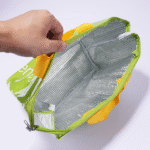
Reflective silver surfaces remain popular because they create a strong visual cue of thermal performance, but 2026 buyers also want lighter structures and clearer chemistry stories. The strongest reflective bags now compete on performance per gram, not just on shiny appearance. In practical terms, your next design review should ask whether the product is easier to understand, easier to use correctly, and easier to justify to procurement than the current version. If the answer is yes, you are probably moving in the right direction.
What quick self-assessment should a buyer run before approval?
Run a short internal check before you sign off. Can the team explain the use case in one sentence? Does the chosen structure match that use case? Are the material and intended-use records ready? And does the supplier have a believable plan for repeat production? If one of those answers is weak, the project is not ready no matter how attractive the sample looks.
| 2026 action | Practical move | Guiding principle | What it means for you |
|---|---|---|---|
| Need lighter weight | Use reflective layer wisely, not obsessively | Design with heat path logic | A shiny bag can still be inefficient if the structure is wrong |
| Need better durability | Validate fold life and adhesion early | Do not approve only fresh samples | Many failures appear after handling, not before shipment |
| Need cleaner compliance | Map where direct contact happens | Match the structure to the use case | This keeps paperwork honest and faster |
- Define the real scenario, including worst-delay exposure and handling pattern.
- Select the simplest structure that can protect that scenario with enough margin.
- Confirm material clarity, intended use, and any documentation requirements before launch.
- Choose the sourcing model that fits your speed, branding, and volume needs.
- Review reusability and waste claims only through the lens of how your operation actually works.
Composite decision example: A buyer improved both cost control and sustainability messaging by reducing the bag range, clarifying when reuse was realistic, and standardizing one documentation pack across suppliers. The result was a cleaner product story and a smoother approval cycle.
Helpful decision tools
Check the details before you choose packaging
These quick tools can help you compare route risk, sizing needs, coolant choices, and packaging details before you request a quote.
Dry Ice Calculator
Estimate dry ice needs for frozen or ultra-cold shipments before packing.
Estimate dry icePackaging Selector
Compare insulated packaging options by product, route, and temperature need.
Find packagingRoute Risk Checker
Review lane conditions before selecting packaging for real operating requirements.
Check route risk
2026 latest silver-coated thermal bag developments and trends
The latest pattern is consistent across many sectors. Buyers want simpler structures, clearer compliance language, stronger proof of fit, and suppliers who can keep performance stable as volume changes. That is why measured claims, scenario-based testing, and better change control are gaining value. The market is rewarding disciplined execution more than dramatic product storytelling.
- Thermal performance conversations are becoming more lane-specific and less generic
- Documentation quality increasingly influences both procurement speed and perceived supplier maturity
- Waste reduction is being pursued through smarter design and operational fit, not only through one material claim
A useful final insight is this: the best silver-coated thermal bag solution often looks calm rather than flashy. It is easy to specify, easy to pack, easy to explain, and easy to reorder with confidence. That simplicity is not a lack of innovation. It is the result of good engineering, good sourcing, and good operational thinking working together.
Frequently asked questions
What is the fastest way to improve a silver-coated thermal bag sourcing decision?
Rewrite the buyer brief around the real use case, the worst realistic delay, and the exact documentation you need. That one step improves every later decision.
Should you always choose the thickest or most premium-looking material?
No. The right choice is the structure that matches the actual route, handling pattern, and intended use with enough margin and manageable cost.
What documents should be ready before approval?
At minimum, a written specification, material description, intended-use statement, and any relevant compliance or test records for the application.
Is reuse the default answer for sustainability in 2026?
Only when cleaning, return flow, damage review, and storage are realistic. Otherwise, lighter and simpler formats may produce a better real-world result.
How do you judge whether a supplier can scale reliably?
Ask about change control, lot traceability, incoming material checks, and what happens when a raw material source changes. Mature suppliers answer clearly.
What makes the final optimized article’s approach better than a normal buying guide?
It combines scenario mapping, material logic, qualification thinking, supplier control, and 2026 policy direction into one silver-coated thermal bag decision framework instead of treating them as separate topics.
Summary and recommendation
The best silver-coated thermal bag decision in 2026 comes from combining product education, technical validation, market awareness, and operational realism. You need a clear brief, a material stack that matches the job, data that actually reflects the job, and a supplier that can repeat the result without surprises. When those pieces work together, you gain stronger performance, fewer approval delays, and better long-run cost control.
Your next step should be practical. Build a one-page approval brief, compare suppliers against that same brief, and remove claims or features that your operation cannot truly support. That will give you a more resilient and more convincing silver-coated thermal bag program than chasing broad promises or isolated sample impressions.
About Tempk
We work on reflective thermal structures with a practical engineering mindset: what heat source matters, what the bag sees in transit, and which layer actually earns its place. That helps buyers avoid paying for shine without getting dependable real-world protection.
If you are planning the next stage of a silver-coated thermal bag project, begin with the operating brief and the qualification plan. That is the clearest path to a product that performs well, scales cleanly, and still makes sense under 2026 procurement pressure.