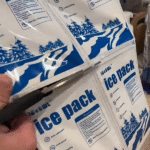
ice brick bag works best when you treat it as part of a complete packaging system instead of a stand-alone accessory. A strong cold-chain program is built around predictable thermal behavior, not around hope, guesswork, or a low unit price. Under the surface, performance depends on phase point selection, mass consistency, shell integrity, and how the brick touches the box and product. Cold-chain teams now face a harder market: higher service expectations, more route variability, and more scrutiny on waste. This optimized guide combines buyer logic, material science, compliance thinking, and 2026 market realities into one clear playbook.
This Article Will Answer
- How ice brick bag supports ice brick bag and route-specific cold-chain performance
- What box fit, conditioning, and payload placement do to ice brick bag results
- Which tests, supplier questions, and data points separate a dependable program from a risky one
- How 2026 sustainability and packaging rules affect ice brick bag selection
- How to choose a manufacturer, supplier, or wholesale strategy when ice brick bag needs to scale
What is ice brick bag and when do you need it?
Ice Brick Bag makes sense when your shipment needs compact form factor, easy handling in soft-sided packaging, and good fit for short and medium delivery windows across last-mile drop-offs, same-day routes, and urban courier networks. For grocery delivery operators, pharmacy couriers, and event and catering teams, the pack is really protecting fresh groceries, prescription deliveries, and small meal orders against both ambient heat and operational variation. A good design keeps the payload inside the intended window while still staying practical for packers to condition, place, and recover. That is why experienced packaging teams talk about the route, the payload, and the coolant at the same time.
The first buyer question is not “How cold does it get?” The better question is “Which temperature window, for how long, under which delay scenario?” Many programs built around ice brick bag target below 4°C fresh food and 2 to 8°C pharmacy deliveries, but the correct answer changes with product sensitivity, shipper insulation, and handoff risk. If the route includes late pickups, weekend dwell, or hot last-mile stops, you need more than raw coolant mass. You need a packout that stays repeatable under real handling.
Start with the shipping problem, not the catalog
Ice Brick Bag shows up across food, pharmacy, diagnostics, specialty retail, and industrial samples because it offers a controllable middle ground between no coolant and more heavily regulated refrigerants. It is especially useful when buyers need a repeatable chilled program for fresh groceries, prescription deliveries, and small meal orders but also want cleaner handling and easier warehouse routines. The exact fit changes by lane, but the common theme is predictable cold protection without unnecessary operational friction.
How do materials, size, and packout shape real ice brick bag hold time?
The thermal behavior of ice brick bag starts with heat absorption. Some formats act mainly through sensible cooling, while others behave more like targeted phase change materials that flatten the temperature curve around a chosen set point. In simple terms, you want the brick to absorb incoming heat steadily instead of releasing an early burst of cold and then fading too fast. That is why phase point, brick mass, and contact pattern matter at least as much as the product’s frozen appearance.
Material choice changes both safety and repeatability. Shell rigidity, film toughness, weld geometry, and expansion room during freezing all affect how ice brick bag behaves after multiple cycles. Vacuum-sealed or low-headspace formats can reduce liquid movement, but they still need puncture resistance and seal stability when packed next to corners, dividers, or hard payload edges. A strong material stack keeps the coolant shape stable so your thermal model still matches the real box on pack day.
What the physics means on the packing floor
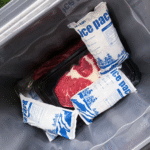
Fit changes performance more than many buyers expect. A brick that fills dead space, supports even contact, and avoids hard pressure points usually outperforms a badly placed “stronger” option. Best when you need cold retention in soft-sided or small-format delivery packaging. Bag packouts depend heavily on route discipline, bag insulation, and whether the coolant stays in place during transport.
Integrated decision tool
| Need | Prioritize this | Watch out for this | Best-fit outcome |
|---|---|---|---|
| Short chilled parcel lane | Fast prep, simple SOP, right box fit | Overbuilding the packout and adding avoidable freight | Stable cost with reliable temperature control |
| Long or variable lane | Validated hold time, logger data, and delay buffer | Assuming carrier promises equal real performance | Fewer warm arrivals when conditions change |
| Freeze-sensitive payload | Barrier layer and disciplined conditioning | Direct contact with overly cold bricks | Safer payload protection |
| Scale-up program | Supplier consistency, lot control, and SKU discipline | Buying many shapes without operational logic | Easier training, procurement, and sustainability reporting |
Practical tips and recommendations
- Define the temperature window before you compare ice brick bag options.
- Condition every brick the same way; uncontrolled preparation ruins otherwise strong packaging.
- Use photos or pack diagrams so every packer places coolant in the same position.
- Re-test when the box size, payload mass, or shipping lane changes.
- Score each option on route fit, thermal control, labor simplicity, reusability, and supplier consistency before you buy.
Case example: A growing cold-chain program combined the lessons from buyer audits, lab testing, and route reviews to rebuild its ice brick bag system. The new design improved consistency because the team stopped treating coolant, insulation, and operations as separate decisions.
How do you validate ice brick bag performance and stay compliant?
Validation turns a packaging opinion into a packaging program. In parcel qualification, teams often rely on ISTA thermal profiles such as 7E and on formal packaging qualification practices such as ISTA Standard 20 to test a packout against realistic heat and cold exposure. ASTM D3103 is commonly used when teams want a consistent way to compare the thermal insulation performance of distribution packages. Even a strong ice brick bag program should be tested with the real payload mass, real carton format, real conditioning method, and the worst lane you expect to ship.
Compliance depends on the product class, but the packaging conversation usually touches food delivery temperature practices, pharmacy chilled handling SOPs, and parcel and courier route validation. For most chilled food programs, the practical safety anchor is 40°F or 4°C and below, so coolant choice must support that boundary instead of merely feeling cold to the touch. For international or air-adjacent programs, it also helps that gel- or PCM-style bricks may avoid some dry-ice handling complexity when chilled protection is enough.
Qualification methods that hold up under audit
Good data goes beyond “hours cold.” Measure payload start temperature, brick conditioning temperature, internal logger profile, maximum excursion, recovery after box opening, and cycle-to-cycle consistency. For reusable programs, weight tolerance and visual integrity after repeated freeze-thaw use are just as important as one perfect lab run. A reliable ice brick bag program should produce similar results across lots, shifts, and seasons.
How do you cut cost and waste with ice brick bag at the same time?
Unit price matters, but it is rarely the whole cost story. A cheaper brick can become expensive if it forces bigger boxes, more labor, more replacement buying, or more warm-arrival claims. Consider bag insulation quality, route duration, handoff discipline, and whether the brick is easy to clean and redeploy. When you compare options, calculate landed cost per successful delivery rather than cost per piece.
Bag programs often gain the most from reusable bricks because last-mile loops create realistic recovery opportunities. Packaging teams are also under pressure to remove empty space, reduce one-way material, and document design choices more clearly. In Europe, the Packaging and Packaging Waste Regulation entered into force in February 2025 and its broad application begins in August 2026, increasing pressure for source reduction, reuse, and better packaging design. In practice, sustainability works best when it is tied to route success: fewer damaged orders, fewer reships, and more reuse cycles.
Lower waste comes from better system design
In 2026, buyers want fewer SKUs, clearer packout instructions, and better route data behind every ice brick bag decision. By 2026, traceability and documented packout discipline are no longer optional talking points. Buyers increasingly expect lot control, route assumptions, and a written response plan for delays or excursions. In Europe, the Packaging and Packaging Waste Regulation entered into force in February 2025 and its broad application begins in August 2026, increasing pressure for source reduction, reuse, and better packaging design. That pressure is pushing the market toward reusable formats, right-sized packaging, and suppliers that can talk about performance, waste, and operations in the same meeting.
What should you ask a manufacturer, supplier, or wholesale partner about ice brick bag?
Sourcing matters because a brick program only works when the supplier can repeat the same mass, seal quality, and lead time every month. Ask whether the partner can support validation samples, share batch-level controls, and explain how they handle raw-material changes or seasonal capacity pressure. By 2026, buyers increasingly want a supplier that can discuss performance, packaging waste, and operational SOPs together rather than sending a price list alone.
Helpful decision tools
Check the details before you choose packaging
These quick tools can help you compare route risk, sizing needs, coolant choices, and packaging details before you request a quote.
Compliance Checklist Generator
Build a practical checklist for packaging review, shipping, and documentation.
Build checklistDry Ice Calculator
Estimate dry ice needs for frozen or ultra-cold shipments before packing.
Estimate dry iceRoute Risk Checker
Review lane conditions before selecting packaging for real operating requirements.
Check route riskConstruction details decide whether ice brick bag stays dependable after the first few cycles. Look at shell or film strength, seal width, fill accuracy, corner design, and how the unit behaves after repeated freeze-thaw use. If the brick loses shape, leaks, or shifts mass from one side to another, the box may still arrive cold on easy days but fail during peak heat or longer dwell. That is why durable, validated construction often returns more value than the lowest purchase price.
Sourcing questions that prevent surprises
Most failures come from small mismatches: the brick is too cold for the product, the box has a warm top zone, the payload enters the line warmer than planned, or a packer places coolant differently from the SOP. Another common problem is assuming a larger brick automatically solves the lane. In reality, uncontrolled direct contact can freeze a sensitive product while the far corner still runs warm. Failure analysis should always review temperature data, assembly photos, and conditioning discipline before blaming the material alone.
Quick sourcing scorecard
- Confirm the target temperature window and the hardest shipping lane.
- Review thermal data from the actual box, payload, and conditioning method.
- Check batch consistency, seal integrity, and visible-damage inspection rules.
- Compare total delivered cost, not only the quoted unit price.
- Verify whether reuse, recovery, and packaging reduction goals are realistic in daily operations.
How do you turn ice brick bag into a repeatable packaging system?
The smartest way to use ice brick bag is to build around the full system: payload starting temperature, brick phase behavior, insulation level, box geometry, lane duration, and recovery plan. When even one of those pieces is missing, the program often relies on luck. When all of them are documented, the same packout becomes easier to train, scale, and audit. That full-system view is what turns a cold pack into a dependable cold-chain control tool.
Global and long-lane programs raise the stakes because customs, linehaul changes, and handoffs create more uncertainty than a standard domestic route. With ice brick bag, the answer is not simply “add more bricks.” The better answer is to map the worst-case dwell time, condition the coolant consistently, and decide how much buffer the shipper needs before clearance or local delivery. Teams that document those assumptions usually scale faster because their packaging logic survives beyond one hero shipment.
From component choice to operating discipline
In practice, the best brick is the one that stays predictable after conditioning, packing, transit stress, and real customer handling. Write the packout so a new operator can repeat it on the busiest day of the year.
Common Questions
Is ice brick bag better than dry ice?
It can be a better choice for chilled lanes when you want cleaner handling and fewer air-shipping complications. Dry ice is stronger for deep-frozen needs, but it also brings extra operating rules. The right answer depends on your temperature target and route risk.
How long can ice brick bag stay cold in transit?
There is no honest single-hour answer because hold time depends on brick mass, phase point, insulation, payload temperature, and the shipping profile. Qualify it against your hardest realistic lane rather than relying on a catalog number alone.
Can ice brick bag be reused safely?
Yes, many programs reuse it, but only if the brick keeps its mass, seal integrity, and shape after repeated cycles. A simple inspection rule for leaks, swelling, or shell damage is essential before redeployment.
How do you stop ice brick bag from freezing the product?
Use a barrier layer, avoid direct contact with freeze-sensitive payloads, and condition the brick to the tested SOP. The coldest pack is not always the safest pack, especially in a tight shipper.
How do you choose between a manufacturer, supplier, and wholesale source for ice brick bag?
Choose a manufacturer when custom development and repeatable quality are priorities, a responsive supplier when continuity and service matter most, and a wholesale model when you already know the right SKU and need scaled purchasing discipline.
Does ice brick bag help with sustainability goals?
It can, especially when the design reduces reships, avoids wet-ice mess, improves reuse, and cuts empty box space. Real sustainability comes from a system that protects product while using material efficiently.
Summary and Recommendations
Ice Brick Bag delivers the most value when it is matched to the right lane, the right payload sensitivity, and the right operating routine. The core priorities stay consistent across use cases: define the temperature window, choose a stable format, validate the full packout, and buy on total delivered cost rather than piece price alone. Good cold-chain decisions usually look simple on the floor because somebody did the technical thinking in advance.
Your next step should be practical. List your hardest route, your payload start temperature, your acceptable temperature window, and your packing workflow. Then compare ice brick bag options against those facts, not against generic marketing language. That simple process usually reveals the safest and most cost-effective answer.
About Tempk
At Tempk, we focus on cold-chain packaging design with reusable coolants, route-aware packouts, and validation-minded development. We support programs that need compact form factor, easy handling in soft-sided packaging, and good fit for short and medium delivery windows while still keeping packaging practical for daily operations. Our approach is to match the coolant, insulation, and workflow to the real shipping challenge so your team can scale with fewer surprises.
Next step: review your target temperature window, lane length, and packaging constraints with a technical team before finalizing the packout.