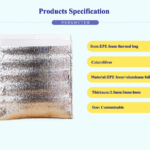
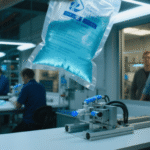
Most product damage does not start in a perfect cold room. It starts when a pallet leaves control for just long enough to drift. Temperature control pallet covers for manufacturing help you keep temperature-sensitive materials closer to their intended window between warehouse, line side, and outbound transfer. They are most useful for protecting inbound materials, work-in-process transfers, and finished goods around the plant network, especially when the load includes coatings, medical components, and electronics materials and other products that do not tolerate uncontrolled exposure. Manufacturing temperature damage often starts before production begins: on the receiving dock, in quarantine, or while material waits line-side for release. This optimized guide blends the strongest buyer, technical, and operational insights into one people-first article built for modern search behavior and real commercial decisions. You will see where the cover fits, where it does not, and how to turn it into a repeatable operating advantage instead of a one-time packaging experiment.
In This Guide, You Will Learn
- How temperature control pallet covers for manufacturing protect against long receiving queues, hot summer trailers, and cold morning unloading
- Which pallet covers for manufacturing transfers and temperature control covers for work in process fit your temperature band and route
- How to qualify performance, train operators, and scale with less waste
- When reuse, custom sizing, and return logistics improve total cost
Why Are Temperature Control Pallet Covers for Manufacturing a Practical Risk-Control Tool?
Temperature Control Pallet Covers for Manufacturing are useful because they attack the problem where it actually happens: uncontrolled exposure between protected nodes. They do not replace refrigeration, qualification, or good handling. They make those systems more resilient. When a pallet sits during receiving docks, quarantine hold zones, and line-side staging, the cover buys time by slowing heat flow and reducing direct weather impact. That extra time often decides whether you receive a normal pallet or open an exception case.
The strongest programs treat the cover as one control inside a wider system. Product thermal mass, route timing, pallet geometry, and operator behavior all change the result. That is why the same cover can work beautifully on one lane and disappoint on another. The most useful deployment points are usually the boring ones: the queue, the transfer, and the wait that nobody planned for. The practical goal is not perfection. It is predictable risk reduction at the points where your process is weakest.
How to Focus on the Exposure That Really Hurts Quality
Most teams waste money when they protect every minute of the route instead of the few steps that do the most damage. Start by asking which event creates the highest cost: hot summer staging, winter loading, airport ramp delay, repeated cross-dock handling, or slow receiving at destination. Once you know the answer, temperature control pallet covers for manufacturing become easier to specify, qualify, and justify. Precision beats blanket deployment almost every time.
| High-risk step | Typical problem | How the cover helps | What it means for you |
| Receiving Docks | long receiving queues | Slows the first wave of heat gain or heat loss | More control before the pallet enters the next protected stage |
| Quarantine Hold Zones | hot summer trailers | Reduces drift while the route waits or rebalances | Lower chance that one delay creates a full exception |
| Line-Side Staging | cold morning unloading | Cuts direct environmental impact at the most exposed node | Better consistency across imperfect operations |
Practical Tips and Recommendations
- Map exposure by event and by season before you compare covers.
- Write down the one business problem you want the cover to solve, such as spoilage, deviations, or usability loss.
- Use the cover where the route is weakest first. Expansion should follow proof, not optimism.
Practical example: A medical-device manufacturer shortened quality delays by shielding inbound adhesive and coating pallets during dock backlog periods. The improvement came from removing small but repeated temperature insults before materials ever reached the line. The biggest improvement came after the team protected the worst exposure point instead of the whole journey indiscriminately.
How Do You Match Cover Design to Product and Lane with Temperature Control Pallet Covers for Manufacturing?
The right cover is the one that matches the product, target temperature band, route duration, and handling pattern at the same time. Start with the product range: controlled room temperature materials and heat-sensitive components. Then ask how long the load is exposed, whether it is dense or light, whether the cover must be reused, and whether operators need frequent access. Reflective light covers suit short sharp exposure. Heavier multi-layer or foam-rich covers suit longer dwell or rougher handling.
Fit matters just as much as insulation. Loose corners, short skirts, and awkward closures create leakage and encourage operator shortcuts. Reusable designs add lifecycle value when the return loop is real. One-way or light-duty formats may be better on unstable lanes where cover recovery is poor. The design conversation should also include puncture resistance, cleanability, folding behavior, and how well the cover tolerates repeated field use.
How to Compare Thermal Materials Without Overbuying
Compare materials by function, not by thickness alone. Reflective layers help most when radiant heat matters. Bubble structures help where light weight and foldability matter. Foam layers increase stable insulation and structure. Optional PCM-enhanced systems can narrow control on qualified lanes, but only when the phase point, payload, and exposure are aligned. Overbuying a complex system for an easy lane wastes budget. Underbuying for a tough lane wastes product.
| Design choice | When it fits | When it misses | Why it matters to you |
| Light reflective cover | Short staging and transfer events | Long uncontrolled delays | Low-cost entry point when the lane is already disciplined |
| Multi-layer bubble and foil cover | General route buffering | Severe rough use without fit control | Strong balance of protection, cube, and cost |
| Reusable foam-rich cover | Repeat loops and longer dwell | Irregular returns or poor cleaning discipline | Higher lifecycle value if operations support it |
Practical Tips and Recommendations
- Measure the pallet exactly, including stretch wrap and overhang, before finalizing size.
- Ask how the cover should be opened and resealed during inspections or receiving.
- Reserve advanced options such as PCM only for lanes where the data shows you need them.
Practical example: A medical-device manufacturer shortened quality delays by shielding inbound adhesive and coating pallets during dock backlog periods. The improvement came from removing small but repeated temperature insults before materials ever reached the line. The best design was the one operators could fit correctly, every time, on the lane that actually failed.
How Do You Build a Qualification Plan That Holds Up for Temperature Control Pallet Covers for Manufacturing?
A reliable qualification plan combines route realism, clear acceptance rules, and usable documentation. Define the lane, payload, pallet pattern, target temperature range, logger placement, and expected delays before you start. Then test covered versus uncovered pallets or compare two candidate designs under the same conditions. The output should answer a buying question, not just create a chart.
For regulated or quality-sensitive categories, make the protocol match the control system that already governs the product. Pharmaceutical teams may align to GDP, WHO TTSPP expectations, and IATA handling rules on air lanes. Laboratory, chemical, and industrial teams may anchor decisions to labels, SDS language, and product data sheets. The principle is universal: the cover must support the documented process, and the documented process must explain the cover.
How to Turn Logger Data Into a Buying Decision
Look at peak temperature, time outside range, and rate of drift together. One short spike may matter less than a slower but longer failure. Place at least one sensor near a likely worst-case area such as the top edge, sun-facing side, or pallet corner. Record delays and openings because field notes explain logger curves. Once you choose the cover, write the SOP: fit, closure, inspection, storage, cleaning, and retirement rules. That is what turns a successful trial into a scalable program.
| Qualification element | What good looks like | Common failure | What it means for you |
| Route definition | Actual exposure steps and season documented | Testing a vague or idealized lane | The result becomes commercially relevant |
| Logger method | Worst-case placement and short interval logging | One easy logger location | You avoid false confidence |
| Field SOP | Closure, inspection, and reuse rules written clearly | Pilot success with no operating discipline | You keep performance after rollout |
Practical Tips and Recommendations
- Test during a realistic seasonal stress period, not only in comfortable weather.
- Use the same pallet build and wrap method across trials so the cover is the real variable.
- Keep the validation package simple enough that operations and procurement both understand it.
Practical example: A medical-device manufacturer shortened quality delays by shielding inbound adhesive and coating pallets during dock backlog periods. The improvement came from removing small but repeated temperature insults before materials ever reached the line. The program scaled because the team converted a trial into a controlled method, not because it bought a more impressive sample.
How Do Cost, Reuse, and Sustainability Change the Decision for Temperature Control Pallet Covers for Manufacturing?
The best business case balances protection, labor, reuse, and waste reduction. Start with the cost of failure: claims, deviations, scrap, rework, customer complaints, or emergency reships. Then compare that to cover price, deployment labor, storage footprint, cleaning, and return-loop performance. In many supply chains, avoiding one bad pallet does more financial work than shaving a small amount off packaging unit cost.
Reuse changes the math only when the loop is real. Closed-loop routes often justify stronger reusable covers because recovery and inspection are manageable. Irregular or export-heavy routes may favor lighter or one-way formats. Sustainability should be measured the same honest way. Product loss avoided, packaging waste reduced, and transport burden lowered all matter. The greener option is the one that performs in your system, not the one with the most attractive launch claim.
How to Build a Repeatable Business Case
Create a one-page scorecard for each target lane. Estimate annual pallet volume, exposure frequency, value at risk, expected reuse, labor per move, and return-loop success. Add a qualitative note for operator usability and training burden. This gives procurement, quality, and operations a shared way to decide. The strongest programs in 2026 are built on this kind of simple cross-functional logic. They are easier to defend internally and easier to improve over time.
| Decision factor | What to measure | What buyers often miss | Why it matters to you |
| Failure cost | Rejects, spoilage, deviations, complaints | Treating packaging as a stand-alone cost | Protection is easier to justify when failure cost is visible |
| Reuse reality | Average trips, damage, and return rate | Assuming perfect returns | Lifecycle economics become honest and usable |
| Sustainability effect | Waste avoided plus packaging footprint | Ignoring product loss in the equation | Real environmental value becomes clearer |
Practical Tips and Recommendations
- Track what happened after rollout, including skip rate, damage rate, and true reuse count.
- Use selective deployment on the highest-risk lanes before broad standardization.
- Refresh the business case after seasonal changes, lane changes, or product changes.
Practical example: A medical-device manufacturer shortened quality delays by shielding inbound adhesive and coating pallets during dock backlog periods. The improvement came from removing small but repeated temperature insults before materials ever reached the line. The best commercial outcome came from disciplined, selective deployment with metrics that the whole team could understand.
Helpful decision tools
Check the details before you choose packaging
These quick tools can help you compare route risk, sizing needs, coolant choices, and packaging details before you request a quote.
Insulation Material Drop Resistance
Review drop resistance and handling factors before choosing insulation materials.
Check resistanceCompliance Checklist Generator
Build a practical checklist for packaging review, shipping, and documentation.
Build checklistDry Ice Calculator
Estimate dry ice needs for frozen or ultra-cold shipments before packing.
Estimate dry ice2026 Best-Practice Trends for Smarter Deployment
In 2026, best practice for temperature control pallet covers for manufacturing is clear: map the exposure, match the cover to the lane, validate with realistic data, and keep the operating method simple enough that teams follow it every day. Buyers are rewarding suppliers who are precise about fit, limits, and documentation. When plant teams link cover selection to batch risk, hold time, and process sensitivity, pallet covers stop being a packaging afterthought and become part of process control.
What Is Changing Right Now
- Lane-Specific Fit: more factories are treating packaging as part of process control, not only outbound logistics
- Documented Methods: quality and operations teams increasingly share the same lane data
- Cross-Functional ROI: buyers want covers that fit both internal transfers and finished-goods shipping
The winning programs are selective, measurable, and easy to repeat. They also get refreshed when the weather, route, product mix, or service model changes.
Frequently Asked Questions
Are temperature control pallet covers for manufacturing enough on their own?
Usually no. Temperature Control Pallet Covers for Manufacturing work best as a buffer inside a wider control strategy that already includes the right product range, handling method, and route discipline. They can cut excursion risk, but they do not replace refrigerated equipment, qualified shippers, or product-specific instructions.
How long can temperature control pallet covers for manufacturing protect a pallet?
It depends on the product mass, pallet geometry, weather, and exposure pattern. A cover may be very effective during short staging and transfer windows, then become less effective during long uncontrolled holds. That is why lane testing with loggers matters more than a catalog claim.
When do temperature control pallet covers for manufacturing deliver the best ROI?
They usually deliver the best ROI on lanes with repeat exposure, repeat pallet formats, and measurable failure cost. If your worst problems happen on the dock, at transfer, or during receiving delays, a selective cover program often pays back faster than a blanket rollout.
Are reusable versions of temperature control pallet covers for manufacturing always the better option?
Only when the return loop, inspection process, and cleaning routine are realistic. Reuse improves economics and waste reduction when the covers actually come back in usable condition. On unstable export or one-way lanes, a simpler format may be the smarter choice.
How do you compare suppliers for temperature control pallet covers for manufacturing?
Compare route fit, material detail, ease of use, support for qualification, and realistic reuse guidance before you compare price. A supplier that explains how the cover should be deployed, inspected, and retired is usually more valuable than one that offers only a thicker sample.
What is the fastest way to improve results with temperature control pallet covers for manufacturing in 2026?
Start with the single lane that creates the most avoidable loss or deviation. Run a covered-versus-uncovered trial, write a short SOP, then scale only after you confirm that operators can deploy the cover correctly in normal work. That sequence improves both SEO relevance and real business performance.
Summary and Recommendations
Temperature Control Pallet Covers for Manufacturing work best when you treat them as a practical buffer for the weak points of the route. Match the cover to the product range, the exposure pattern, the pallet shape, and the operating method. Then qualify the result with logger data, not with assumptions. That approach usually improves protection, buying confidence, and day-to-day consistency.
Your next step should be simple. Pick one high-risk lane, define the exposure, test one or two cover options, and document the operating rules that make the best result repeatable. If you want better results, turn this article into a checklist for your next supplier review, route trial, and seasonal packaging reset.
About Tempk
At Tempk, we focus on passive cold-chain packaging that works inside real operations. Our pallet-cover options are built around custom sizing for plant pallets and totes, durable reusable covers for repeated handling, and multi-layer barriers for temporary temperature control. We support teams that need practical thermal buffering for storage, staging, and transportation rather than generic claims that are hard to execute in the field.
If you are reviewing temperature control pallet covers for manufacturing, start with your route, product sensitivity, and reuse expectations. Then choose a cover structure that your operators can fit, close, inspect, and repeat with confidence.