Suggested canonical: /resources/insulated-box-distributor-grocery-store/
Suggested internal pages:
- How to package mixed-temperature grocery orders
- Reusable tote programs for grocery routes
- Cold-holding checklist for store deliveries
- Labor-saving pack-out formats for grocery teams
The Best Insulated Box Distributor for Grocery Stores Guide for 2026
When buyers look for insulated box distributor grocery store, the smart question is not simply price. It is whether the pack-out can protect value from pack bench to final handoff. A qualified solution protects dairy, chilled produce, and ready-to-eat foods, survives store replenishment, curbside pickup staging, and local delivery routes, and gives your team a repeatable SOP instead of a fragile packing ritual. In 2026, the strongest suppliers are combining route-specific validation, better material efficiency, and more transparent documentation.
This article will answer:
- How to choose the best grocery store insulated box supplier setup for your lane, payload, and budget
- Which technical and regulatory checks belong in every purchasing decision
- How to align supplier selection, validation, and sustainability in one workflow
- What 2026 market shifts mean for your next packaging project
Why does Insulated Box Distributor for Grocery Stores matter for grocery cold chain distribution in 2026?
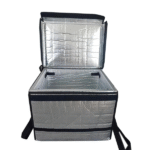
The best insulated box distributor for grocery stores choice buys reliable temperature time, cleaner handling, and lower operational friction. Too many teams compare an insulated box by wall thickness or sample price first. In real operations, what matters is whether the pack-out can protect dairy, chilled produce, and ready-to-eat foods at 0–5°C chilled and frozen across store replenishment, curbside pickup staging, and local delivery routes while still being fast to build and easy to receive. For grocery distribution managers, omnichannel fulfillment teams, and store operations leaders, the winning box is the one your team can repeat on its busiest day without improvising.
That is why strong buyers start with route profile, order profile, and handoff behavior. If your lane includes mixed-basket complexity, pick-pack speed, and short dwell times turning into long delays, average-day performance is not enough. You need a design that still works on a hot afternoon, a delayed handoff, or a crowded receiving dock. Right-sizing, disciplined coolant placement, and a simple packing sequence often matter more than adding more material. A smart supplier will talk about payload fit, pack-out SOPs, and seasonal testing before talking about catalog claims.
How grocery store insulated box supplier turns into a repeatable operating standard
Think of the box as a timer, not just a shell. The timer starts the moment the payload leaves controlled storage, and it keeps running through picking, staging, transport, and final receiving. If you leave too much empty air around the payload, use the wrong coolant mass, or let the team pack different ways on different shifts, that timer shortens fast. The best systems keep the rules simple enough that your warehouse team can execute them consistently even when volume surges.
| Route profile | Recommended box style | Why it fits | What it means for you |
| Controlled short lane | Compact passive box | Predictable route and low variance | Good for repeat orders with disciplined pack-out |
| Regional 24–48 h lane | Mid-duration insulated system | Moderate seasonal swing | Creates a practical balance of cost and protection |
| Critical long lane | High-performance qualified shipper | High value or long exposure window | Adds safety margin when failure is expensive |
Practical tips you can use
- Map your three most common lane lengths before comparing box quotes.
- Ask suppliers for a packing sequence that a new operator can follow in one training session.
- Separate short-lane and worst-case-lane pack-outs instead of forcing one design to do every job poorly.
Example: A supermarket group introduced stackable insulated totes for its shortest city routes and reserved single-use shippers for parcel exceptions. Vehicle fill improved, and store staff spent less time sorting packaging waste.
Which materials and coolant choices make the most sense for insulated box distributor for grocery stores?
Material choice is about matching thermal resistance, durability, and cost to the real lane instead of choosing the most advanced option by default. EPS remains popular because it is cost-effective and widely available. EPP adds durability and reuse potential. Polyurethane or polyisocyanurate-based designs can deliver more insulation in less thickness. VIP-based systems push performance even further, but they cost more and require careful handling. The best answer depends on how long the route lasts, how rough the handling is, and how expensive failure would be.
Coolant choice matters just as much. Gel packs are simple and flexible. Phase-change materials give tighter control when you need a narrower target. Dry ice supports frozen and deep-frozen programs but introduces labeling, safety, and depletion planning. When buyers mix material and coolant well, they reduce both risk and overpack. When they guess, they often end up paying for too much insulation on easy lanes and too little protection on hard ones.
What the materials data means in real operations
Do not compare materials by brochure claims alone. Ask how they behave after vibration, compression, moisture exposure, and repeated handling. A very efficient panel loses value if the operator can damage it easily. A reusable shell only earns its keep when the reverse-logistics loop is real. The right material is the one that still performs after your actual handling pattern, not the one with the most impressive lab story.
| Material or coolant | What it does well | What to watch | What it means for you |
| EPS + gel packs | Strong value on many routine lanes | Can become bulky on long hot routes | A practical baseline for cost-sensitive distribution |
| EPP + reusable PCM | Durable and suited to repeat use | Needs return logistics and cleaning control | Good for closed loops with consistent turns |
| PU/PIR + PCM | Higher performance in tighter space | Higher cost than basic foam | Useful when cube is expensive or hold time is tighter |
| VIP + PCM or dry ice | Long-duration performance in compact footprints | Premium cost and handling care | Best when payload value justifies the extra protection |
Practical tips you can use
- Choose the material after you define the lane and payload, not before.
- Compare materials with transit and thermal data from the same test plan whenever possible.
- Protect high-performance inserts from edge damage during handling and storage.
Example: Two boxes can look similar on a sample table yet behave very differently after vibration, corner drop, and staging delay. Material selection only becomes meaningful when it is tied to the lane and the test method.
How do you validate insulated box distributor for grocery stores before you scale volume?
If you cannot show test conditions, logger results, and pass or fail rules, you do not yet have a qualified packaging system. Validation turns a packaging concept into a controlled operating method. You define the route assumptions, condition the samples, build the pack-out exactly as written, and measure the internal temperature over time. Then you combine that with transit-style abuse testing so the box is not only thermally sound but physically durable. This is where standards such as ASTM D3103, ASTM D4169, ASTM D4332, and modern ISTA thermal profiles become valuable.
Healthcare and biotech teams often go one step further by qualifying route profiles, documenting logger placement, and locking seasonal pack-outs under change control. Food teams should do the same discipline even when the language is simpler. The goal is always the same: prove that the pack-out holds product in range for the intended route, and prove that the operation can repeat it after launch. In 2026, buyers increasingly expect this evidence before they approve a new supplier.
What a clean validation file for grocery store insulated box supplier should include
At minimum, keep the pack drawing, material specification, test protocol, conditioning details, pack-out instructions, logger map, acceptance criteria, and final report. If you change wall thickness, resin, coolant type, payload geometry, or outer carton strength, assess whether requalification is needed. This discipline protects you from quiet performance drift after cost-down changes or raw-material substitutions.
| Validation file element | What it proves | Who uses it | What it means for you |
| Pack drawing and BOM | Exactly what was tested | Procurement, quality, suppliers | Stops later confusion about what counts as approved |
| Thermal test report | Hold-time performance against the target range | Quality and operations | Shows whether the pack-out works on paper and in practice |
| Transit durability report | Resistance to drops, vibration, and compression | Operations and engineering | Prevents thermal success from being undone by handling damage |
Practical tips you can use
- Test at least one short lane and one worst-case lane instead of relying on a single average profile.
- Record logger placement in the protocol so future tests are comparable.
- Trigger a review whenever the drawing, material, coolant, or payload geometry changes.
Example: A formal validation file often speeds purchasing instead of slowing it down. Once the evidence exists, teams spend less time arguing from opinion and more time deciding how to launch.
Which standards, regulations, and handling rules shape insulated box distributor for grocery stores?
The right rule set depends on what you ship, how you ship it, and which risks the shipment creates if control fails. That is why compliance should be defined at the start of the project, not after the packaging is already selected. Food shipments need sanitary transport and temperature control logic. Biological tissues and many specimen shipments may require triple packaging, UN 3373 marking, and dry ice labeling when relevant. Medical and biotech flows need qualified systems that protect product quality and traceability through the supply chain.
Standards and regulations also influence documentation. For some routes, a transit and thermal report may be enough. For others, you may need classification records, SOPs, logger files, chain-of-custody steps, or route-qualification evidence. Good suppliers understand where packaging design, labeling, and paperwork meet. They help you build a solution that can pass operational review, not just survive a sample test.
How to match the rule set to grocery store insulated box supplier
Start with the product category, the shipping mode, the temperature target, and the destination market. Then define the minimum package construction, labels, documentation, and monitoring you need. When teams skip this step, they often discover late in the project that the chosen box lacks the right evidence or cannot support the required process.
Helpful decision tools
Check the details before you choose packaging
These quick tools can help you compare route risk, sizing needs, coolant choices, and packaging details before you request a quote.
Packaging Selector
Compare insulated packaging options by product, route, and temperature need.
Find packagingInsulation Material Reference
Compare insulation material choices for different cold chain packaging needs.
Compare materialsIce Pack Calculator
Estimate gel ice pack quantity for chilled shipments and practical route planning.
Estimate ice packs| Rule or framework | What it governs | Packaging implication | What it means for you |
| Sanitary transportation | Clean equipment and temperature control | Protects food safety before the product reaches the customer | |
| HACCP or food safety plan alignment | Hazard control logic | Packaging must support, not weaken, the safety program | |
| Transit and thermal testing | Distribution and temperature proof | Gives buyers evidence instead of promises |
Practical tips you can use
- Write the product class, shipping mode, and temperature target into the packaging brief on day one.
- Ask suppliers to state which standards and test methods their reports actually follow.
- Treat labeling, dry-ice planning, and chain-of-custody steps as part of the pack design, not as separate paperwork.
Example: Compliance mistakes are rarely dramatic at the beginning. They usually look like a missing label, an unclear SOP, or a report with the wrong test method. Catching those details early is much cheaper than fixing them after launch.
How can sustainability strengthen, not weaken, insulated box distributor for grocery stores performance?
Sustainable packaging only works when the environmental claim is backed by lane-appropriate performance. Buyers are right to ask for lower waste, less empty space, and more credible material claims. But a sustainable insulated box still has to protect product first. If a greener-looking design causes more temperature failures, more spoilage, or more emergency repacks, the total footprint usually gets worse. That is why smart teams treat sustainability as a design optimization problem, not a branding exercise.
In practice, the biggest wins often come from returnable totes for dense urban routes, right-size insulated inserts, and reduced material per order. These changes reduce material use and freight burden without asking the thermal system to do something unrealistic. Regulators and procurement teams are also paying closer attention to vague green language. In the United States, environmental marketing claims need to be truthful and well supported, and in Europe the new packaging rules are pushing designers toward clearer, more defensible material choices. In 2026, that means buyers should ask for proof, not slogans.
How to cut waste in grocery store insulated box supplier without creating new risk
Start with order-size data, lane-duration data, and return-rate data. Those three numbers tell you whether right-sizing, reuse, or material substitution has the strongest payoff. If you run a closed network with consistent returns, reusable shells can work very well. If your flow is one-way parcel, lower cube and clearer disposal instructions may matter more than reuse. The goal is to reduce waste in a way your operation can actually sustain.
| Sustainability move | Main benefit | Main watchout | What it means for you |
| Right-size the box | Less freight air and less coolant | Needs real order-size data | Usually the fastest way to lower cost and waste together |
| Use reuse only on true loops | Lower waste per trip when turns stay high | Fails if return rates are poor | Reuse works best when you can measure return, cleaning, and loss |
| Qualify eco claims | Reduces legal and reputation risk | Requires evidence and clear wording | Honest claims build trust and survive procurement review |
Practical tips you can use
- Measure empty-space ratio on your top order sizes before changing materials.
- Qualify any recyclable or recycled-content claim with the exact wording you can support.
- Use reuse only when return rates, cleaning, and asset tracking are already practical.
Example: Teams usually get more value from right-sizing and better pack-out discipline than from chasing a fashionable material change first. That order of operations protects both performance and credibility.
2026 developments and trends for insulated box distributors for grocery stores
The biggest 2026 shift in insulated box distributor for grocery stores buying is the move from generic cold packaging to lane-specific food packaging. Food safety rules still focus on preventing unsafe temperature control and poor transport practices, but buyers now also expect faster fulfillment, cleaner receiving, and lower packaging waste. That combination is pushing the market toward right-sized formats, simpler pack-outs, and stronger documentation around chilled versus frozen flows.
Latest shifts at a glance
- Mixed-basket and direct-shipping models are increasing pressure on pack-out speed and format flexibility.
- More buyers want evidence that the box supports food safety plans, not just attractive sample performance.
- Waste reduction efforts are focusing on smaller cubes, cleaner liners, and route-matched insulation levels.
In the United States, cold-holding expectations and sanitary transportation practices still set the basic safety floor. The differentiator now is operational fit. The box that wins is often the one that helps your team pack faster, receive faster, and waste less while still protecting shelf life.
Frequently asked questions
What is the main job of insulated box distributor for grocery stores in food logistics?
Its main job is to help keep food in the intended temperature range while protecting cleanliness, structure, and receiving efficiency. The best box supports your food safety plan and your labor model at the same time.
Should chilled and frozen food use the same insulated box distributor for grocery stores pack-out?
Usually not. Chilled and frozen products have different coolant strategies, risk windows, and receiving behaviors. Separate pack-outs are easier to validate and usually cheaper than forcing one design to serve both poorly.
How do you reduce leaks in insulated box distributor for grocery stores shipments?
Start with payload containment, absorbent or leak-control layers when needed, and an outer box strong enough to keep the lid seal stable in transit. Leak control is a system issue, not just a liner issue.
How do you choose the right size for insulated box distributor for grocery stores?
Base the choice on your top order sizes, payload density, lane duration, and the amount of coolant needed. A right-sized box often improves thermal performance because there is less empty air to manage.
Summary and recommendations
The strongest insulated box distributor for grocery stores strategy is simple to explain and hard to misuse. You define the route, pick the right material and coolant system, validate the pack-out, and buy from a supplier that can support controlled execution over time. When those pieces line up, you reduce damage, control cost better, and make quality reviews much easier.
Your next step should be practical. List your top lanes, top order sizes, temperature targets, and the exceptions that hurt you most today. Then compare suppliers against that real brief, not a generic catalog sheet. A short pilot with clear pass or fail rules will tell you far more than another round of sample swapping.
About Tempk
At Tempk, we focus on passive cold chain packaging that is designed around real routes, real handling patterns, and real operating constraints. We work across insulated box formats, custom inserts, and qualification support so buyers can match protection level to lane difficulty instead of overbuying or underprotecting.
Bring your lane profile, order sizes, and temperature target to the conversation. A good packaging discussion starts with your operating reality, and that is the fastest way to move from sample boxes to a repeatable shipping standard.