If you are comparing suppliers for industrial plastic boxes for seafood handling and distribution, the first job is to define what problem the container must solve in seafood processing and distribution. Most buyers are trying to protect the product, reduce handling friction, and create a packaging format that is easier to reuse and control at scale. Those goals are realistic, but only when the container is matched to the route, the payload, and the day-to-day workflow.
The most useful buying distinction is simple: a seafood plastic box may solve handling and hygiene problems, but it is not automatically an insulated or temperature-controlled shipping system unless the design specifically includes that function. A reusable plastic container may be the right outer handling format, a useful short-term temperature buffer, or part of a more complete packaging system. It becomes a poor choice only when buyers expect it to do more than the design can actually support. The rest of the decision should flow from that boundary.
What the Container Should Do in Real Operations
A good industrial plastic box should make daily handling easier before it makes a presentation slide look impressive. It should fit the actual route, support a stable load, and give operators a repeatable way to prepare, move, receive, and reuse the package. In many programs, the biggest gains come from fewer damaged loads, cleaner workflows, and better space use rather than from one dramatic specification.
That is also why buyers should compare full operating fit. Cleaning, drying, labeling, return handling, and sample-to-production consistency matter just as much as the headline material. When the package works in the whole loop, it starts to reduce cost and risk. When it works only in the catalog, it becomes a source of exceptions.
Set the Performance Boundary Before You Compare Quotes
A lot of wasted procurement time comes from asking one container to do three different jobs. Start by defining whether the package is primarily a reusable handling format, a short-term temperature buffer, or part of a fuller insulated shipping system. That single clarification removes much of the confusion from supplier comparison.
Once the boundary is clear, the rest of the evaluation becomes more practical. You can compare structure, cleanability, closure behavior, thermal support, route fit, and return logistics without mixing unlike products into the same shortlist.
How to Read the Design Instead of the Sales Sheet
Good container selection starts by reading the design honestly. Food-contact plastic boxes for seafood are commonly made in HDPE or PP. Buyers usually compare low-temperature toughness, weight, rigidity, and resistance to repeated contact with ice, salt, and wash-down chemicals. Buyers should then look at the whole system interface: lid behavior, load transfer, cleaning reality, label control, and how the package is expected to be used every day.
Depending on the flow, buyers may prefer open stack-only crates, solid-wall fish boxes with lids, or bulk bins with reinforced rims and forklift access. Smooth food-contact surfaces, rounded corners, drain management, and easy wash-down are central design questions because seafood operations expose containers to moisture, residue, and frequent cleaning. Wholesale programs often need molded identification, label panels, or color coding to separate species, grades, or customer routes in fast-moving cold rooms. In other words, the right container is rarely the one with the boldest headline claim. It is the one whose details match the actual work.
The Criteria That Usually Decide the Outcome
Most buying decisions become easier once the evaluation moves away from vague quality language and into a few practical variables.
- Solid wall versus vented wall: Vented designs improve airflow and drainage, while solid-wall boxes can retain slurry, ice, or meltwater control more effectively depending on the product.
- Drainage strategy: A seafood box should not trap dirty meltwater, but it also should not leak in a way that creates sanitation problems during transport.
- Low-temperature durability: Plastic that performs well in a dry warehouse can become brittle or harder to manage in cold, wet, impact-heavy seafood environments.
- Tare weight: The lightest box is not always the best, but unnecessarily heavy containers raise handling strain and freight cost.
- Stacking under wet load: Boxes should stay stable when stacked with ice, product weight, and uneven cold-room floors or pallet surfaces.
- Custom layout: Wholesale buyers often need dimensions, vent patterns, divider layouts, or lid options that match species, fillet packs, or export cartons.
Keep the Factual Boundary Clear
One of the best ways to avoid bad packaging decisions is to keep the factual boundary honest. A supplier may offer useful data on structure, cleaning, or thermal behavior, but the final decision still has to reflect your route, product, receiving process, and control requirements. That is why buyers should ask what the data proves, what it does not prove, and what additional trial or qualification work may still be needed.
Think in Terms of Program Cost, Not Unit Cost
An inexpensive container can still be costly if it breaks stacks, complicates cleaning, wastes cube, or creates relabeling work. A more expensive container can still be the better choice if it survives longer, supports a cleaner process, and reduces daily friction across multiple sites.
The practical comparison is therefore program cost: purchase price, service life, return efficiency, cleaning effort, replacement parts, and any effect on product loss or handling speed. That wider lens usually leads to a better supplier conversation.
A Practical Supplier Checklist
If you only keep one section from this guide, keep this one. It helps turn a vague sourcing project into a decision with visible criteria.
Helpful decision tools
Check the details before you choose packaging
These quick tools can help you compare route risk, sizing needs, coolant choices, and packaging details before you request a quote.
Route Risk Checker
Review lane conditions before selecting packaging for real operating requirements.
Check route riskDry Ice Calculator
Estimate dry ice needs for frozen or ultra-cold shipments before packing.
Estimate dry iceInsulation Material Drop Resistance
Review drop resistance and handling factors before choosing insulation materials.
Check resistance- Describe the seafood format clearly: Whole fish, fillets, shellfish, and packed trays behave differently. The right box starts with product format, not generic warehouse volume.
- Discuss ice and drainage together: Ask how much ice or slurry the box is designed to carry and how drainage works in actual handling conditions.
- Check cleaning practicality: A box can meet spec on paper but still be slow to wash or hard to inspect after a long shift.
- Compare stack and nest behavior: Some operations value straight stack strength, while others care more about empty return efficiency or nestability.
- Review customization honestly: If you need a specific vent pattern, color, logo, or lid style, ask what can be customized without compromising mold lead time or production consistency.
- Confirm food-contact suitability: Do not assume every industrial box is appropriate for direct or indirect food contact in your workflow.
- Evaluate cold-room and transport fit: Outer dimensions, pallet use, conveyor points, and hand-hold placement all affect daily efficiency.
- Ask for pilot samples in real conditions: Seafood buyers often learn more from a short operational trial than from a static catalog sheet.
Where the Right Design Creates Real Value
The best way to test whether a container choice makes sense is to place it inside a real scenario rather than discuss it as a generic packaging type.
- Dock to processor flow: Open or vented boxes may work well where rapid cooling, drainage, and quick unload matter more than long thermal retention.
- Processor to wholesaler distribution: Solid-wall lidded boxes can help control leakage and protect product appearance during palletized transport.
- Retail and foodservice delivery: Smaller insulated or well-managed reusable boxes may be preferable when route length, presentation, and receiving conditions vary widely.
Test the Whole Workflow, Not Just the Container
The strongest way to validate a supplier is to test the whole workflow. Include loading, stacking, receiving, cleaning, return handling, and any temperature or traceability steps that belong to the package. This reveals whether the product works in your operation instead of only in a catalog environment.
It also helps buyers separate a strong sample from a strong long-term supply program. A good supplier should be able to discuss pilot scope, production repeatability, change control, and how the packaging will be supported after the first order ships.
What Usually Goes Wrong
Most buying mistakes sound small at the start and become expensive only after the first rollout.
- Choosing a seafood box purely on price and then discovering sanitation, leakage, or handling problems later.
- Ignoring how ice, slurry, or meltwater changes the effective weight and stacking behavior of the load.
- Using a one-design-fits-all approach across species and pack formats.
- Assuming that any rugged plastic fish box automatically delivers real temperature control.
Sustainability Only Counts When the Program Works
Reusable packaging is attractive for good reason, but the real test is operational. Seafood operators are giving more attention to reusable packaging that reduces foam waste and performs better in standardized cold-chain handling. Automation-ready footprints, washability, and traceability are becoming more valuable as larger supply chains standardize crate flows. Sustainability arguments are strongest when reusable boxes also improve sanitation, stack quality, and transport efficiency. A container that comes back reliably, stays in specification, and prevents product loss can create meaningful value. A package that is reusable in theory but awkward to wash, return, or redeploy usually does not.
A Final Integration Check
Before placing a large order, compare the candidate container against the real workflow one more time: loading, transport, receipt, inspection, cleaning, return, and any temperature or traceability requirements. That quick integration check often catches issues that would otherwise appear only after rollout.
It also forces suppliers to show whether they understand the application beyond the sales stage. The better they can translate the design into day-to-day use, the more dependable the program is likely to be.
FAQ
Should seafood buyers choose vented or solid-wall plastic boxes? It depends on product format, drainage needs, ice use, and route conditions. Neither format is universally better.
Can a reusable seafood box replace expanded foam packaging? In many operations, yes, especially in repeat or pooled systems. The right answer depends on route length, temperature strategy, and return logistics.
Does a seafood box need insulation? Only when the shipment needs meaningful thermal retention beyond what ice and fast handling can provide. Many handling boxes are not insulated.
A Practical Bottom Line
The most useful way to buy in this category is to define the operating role, compare the few variables that really change performance, and shortlist suppliers who can answer practical questions clearly. That approach helps you choose a container that supports the whole workflow rather than creating new exceptions.
About Tempk
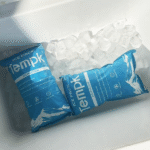
We focus on temperature-controlled packaging for pharmaceutical and food cold chains. Public information on Tempk highlights products such as insulated boxes, pallet covers, and coolant packs, together with packaging support that helps buyers match solutions to route duration and product sensitivity. For seafood and other perishable flows, Tempk’s public product range in insulated boxes, coolant packs, and cold chain packaging is relevant when buyers need more than a standard handling crate and want true temperature-buffering support. When the job requires more than a standard reusable container, that system view matters.
Next Step
If you are comparing options now, start with your real route, product, and handling method. Then ask suppliers to propose a container around those conditions rather than around a generic size or marketing claim.