A Practical B2B Guide to Sourcing Cooling Gel Packs for Clinical Trial Logistics
The right cooling gel pack can solve a real transport problem, but only when it is chosen as part of a complete shipping design. Buyers in clinical trial and investigational product logistics are usually trying to protect a product through a specific route, not simply buy something cold. That is why the strongest sourcing decisions begin with the payload, the shipping lane, and the way the pack will actually be conditioned and loaded.
A supplier can look attractive on paper and still be a poor fit if the product geometry is wrong, the film is weak, the conditioning method is vague, or the commercial process allows specification drift between the approved sample and the production lot. The better question is not “Which pack is biggest?” but “Which design can be repeated at scale without creating avoidable thermal or handling risk?”
In clinical trials, a gel pack is rarely purchased as a generic cold accessory. It is chosen because it interacts with an insulated shipper, a route profile, and a written handling process. A trial lane may include depot handling, airport dwell, customs delay, site receipt, and local storage assumptions. The gel pack must fit that real chain rather than a lab-only test.
What you should expect from this product
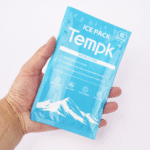
A buyer searching for a gel cooling gel clinical trial manufacturer is usually looking for a flexible refrigerant that can hold the intended temperature range without making the pack-out awkward, wet, or inconsistent. That sounds simple, but in practice the right choice depends on four linked factors: the payload’s temperature sensitivity, the route duration, the insulated packaging around the refrigerant, and the supplier’s ability to reproduce the same specification every time.
For clinical trial and investigational product logistics, that means you should judge the product as part of a working shipping system. A good gel pack or wrap should fit the payload geometry, condition predictably, survive handling, and arrive without creating avoidable mess or confusion. It should also come from a supplier that can explain how the design is meant to be used instead of leaving your team to guess.
How it fits into a real pack-out
The first selection question is not who can sell a cooling gel pack. It is where the refrigerant will sit relative to the payload. If the product is packed too close to the item, you can create localized overcooling. If it is packed too far away, you may waste cold mass and still miss the target temperature range. That is why experienced suppliers ask about internal box dimensions, payload geometry, product temperature on pack-out, insulation type, and the expected transit profile before they recommend a format.
Because your search is centered on a general pack format, the buying decision usually comes down to how easily the pack can be repeated across multiple box sizes and routes. In practice, buyers usually compare four layout approaches:
- Flexible wraps or linked cells when the goal is broad surface coverage around trays, jars, secondary bags, or compact boxes.
- Flat pillow or pouch packs when the pack-out is simple and repeatability matters more than contour fit.
- Rigid bricks when repeated-use loops, stronger structure, or longer holding profiles justify the extra space and weight.
- Dry ice or deep-frozen media only when the product truly needs frozen or ultra-cold service and the team is equipped to handle the added operational and labeling implications.
This comparison matters because many avoidable failures start with the wrong geometry rather than the wrong chemistry. A pack may have enough total cold energy on paper and still fail because it leaves warm voids, touches the payload too aggressively, or complicates fast and repeatable assembly on the line.
Why gel chemistry and film structure matter
A shipping gel pack does its work through phase change and heat transfer, not through marketing language. Standard water-based gel packs typically absorb heat as they move through the melt phase, which is why they are often used to support refrigerated distribution. Some suppliers also offer specialty formulas with lower eutectic or suppressed freezing behavior for frozen service. Public product information from large cold-chain manufacturers shows both kinds on the market, which is why a buyer should never assume that every gel pack behaves the same way just because the outside looks similar.
Film choice matters just as much. Commercial packs are commonly sold in polyethylene, nylon-laminate, poly-nylon, or other flexible films selected for durability and sealing behavior. Heavier-duty films can improve puncture resistance and help the pack survive corners, dense payloads, and repeated freezing cycles. Some suppliers market multi-layer or textile-faced exteriors that reduce surface condensation. Others offer drain-friendly concepts aimed at simpler disposal after use. Those options are valuable, but only when they fit the real needs of the lane rather than being added as decorative features.
For a technical review, ask three material questions. First, what is the internal cooling medium and what temperature behavior is it designed for? Second, what film structure, thickness range, and seal pattern are used to contain it? Third, how does the pack behave after multiple freeze-thaw cycles or after compression against the payload? Those answers will tell you far more than a generic statement that the pack is reusable or non-toxic.
Compliance and documentation: what is relevant and what is not
Procurement teams often hear the words compliant, qualified, and validated used too loosely. A gel pack by itself is usually not a compliance claim. Compliance sits at the system and process level: the labeled storage requirement of the product, the layered packaging design, the route, the work instruction, and the records that support consistent execution. That is why careful buyers ask suppliers for documentation that matches the application instead of asking for a vague promise that the pack is “pharma grade.”
For time- and temperature-sensitive pharmaceuticals, public guidance from WHO and industry practice both emphasize controlled storage and transport, with the product’s labeled conditions and local rules taking precedence. For refrigerated medicines, public CDC guidance continues to use 2-8°C as the standard refrigerator band for many vaccine and medicine workflows, while colder products may need frozen or ultra-cold solutions. A standard gel pack can support some of those lanes, but only when it is matched to the correct shipper and route.
Helpful decision tools
Check the details before you choose packaging
These quick tools can help you compare route risk, sizing needs, coolant choices, and packaging details before you request a quote.
Route Risk Checker
Review lane conditions before selecting packaging for real operating requirements.
Check route riskIce Pack Calculator
Estimate gel ice pack quantity for chilled shipments and practical route planning.
Estimate ice packsCoolant & PCM Reference
Compare coolant and PCM options when a route needs added temperature support.
Compare optionsIf biological or diagnostic samples are involved, the public IATA Packing Instruction 650 framework remains a useful reality check: the package needs a primary receptacle, a secondary packaging, and a rigid outer packaging. In other words, the refrigerant is not the primary compliance layer. It sits outside the protected sample containers and supports temperature control without replacing leakproof containment.
The most useful supplier documents are usually simple and operational: product specification, conditioning guidance, material or safety information where relevant, dimensions and fill weight tolerances, lot identification, and a clear statement of what changed if the product design is revised. Buyers who ask for those basics early tend to avoid the unpleasant surprise of re-qualifying a pack because a seemingly minor manufacturing change was never communicated.
Selection points that matter most
Start with geometry. A wrap is useful when coverage around the payload matters. A pouch is useful when clean stacking and repeat placement matter. A more rigid brick can help in returnable or longer-duration loops, but it takes more space. Once the format is right, move to the details that actually control repeat performance: fill weight tolerance, film structure, seal quality, conditioning method, and how the pack behaves at the end of transit rather than at the start.
Then ask whether the supplier understands the application. In clinical trial and investigational product logistics, the problem is rarely solved by adding the coldest possible pack. It is solved by matching the refrigerant to the product and route so that you avoid both warming and unnecessary overcooling. That is where a capable supplier becomes more valuable than a low headline price.
What buyers should ask before placing a bulk order
Most purchasing mistakes happen before the first pallet arrives. The quote may look clear, but the operational details are still fuzzy. A practical shortlist should force those details into the open. Ask questions like these:
- Internal and external dimensions, not just nominal size names
- Actual usable cooling mass or fill weight, and how tightly that is controlled
- Material and film structure, especially if puncture resistance or cleanability matters
- Seal design and whether the pack has known weak points at folds, corners, or welds
- Conditioning instructions and the freezer or chiller assumptions behind them
- Stackability, nesting, or return efficiency if you plan to reuse the packs
- Surface behavior during thawing if condensation could damage labels, cartons, or paperwork
- Evidence that sample packs and production packs are built to the same specification
- Whether the producer controls filling, sealing, and final quality checks in-house or outsources critical steps
- How sample specifications are locked before scale-up, including fill weight tolerance and material version control
- What custom options are realistic, such as size, shape, film, print, corner style, or linked-cell layout
- How changes in gel formula, film supplier, or seal configuration are communicated
- Whether the manufacturer can support pilot runs, retained samples, or route trials before full release
- Written change control
- Lot traceability and retained samples
- Engineering support during route qualification
A supplier does not need to answer every question with a polished presentation. But the conversation should reveal whether the company understands application fit, production discipline, and long-term repeatability. If the answers stay vague, the buying risk is moving back to your side of the table.
How to implement without guessing
Once you narrow the shortlist, move from brochure language to a simple implementation plan. Start with the actual payload and route you care about most. Define the target temperature band, the expected transit time, and the likely worst-case exposure. Then test the gel pack inside the real insulated configuration rather than as a stand-alone item. The fastest way to de-risk a trial pack is to lock the conditioning method, logger location, and acceptance criteria before the first large batch is released.
The goal of implementation is not to create a massive validation program for every shipment. It is to remove uncertainty from the specific lane that drives most of your volume or most of your risk. If the supplier can help with that transition from concept to repeatable pack-out, the relationship is already more valuable than a commodity buy.
FAQ
Can a cooling gel pack work without insulation?
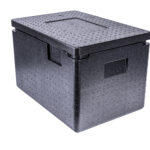
Usually not in a reliable commercial program. Gel packs perform best when they are part of an insulated shipping system designed around the route and payload.
How should bulk buyers compare suppliers?
Compare specification control, conditioning guidance, consistency from sample to production, and the supplier’s ability to discuss your actual route—not just quoted price.
Does a gel pack make a shipment compliant?
No. Compliance depends on the product requirement and the full shipping system, including insulation, packaging layers, work instructions, and any route qualification or specimen rules that apply.
Final takeaway
The right cooling gel pack is the one that fits your product, your route, and your operating model with the fewest avoidable compromises. If a supplier can explain that fit clearly, control the specification over time, and support a realistic implementation process, you are no longer buying a commodity. You are buying packaging reliability.
About Tempk
At Tempk, we focus on practical temperature-control packaging rather than generic one-size-fits-all claims. Our public product range includes gel ice packs, dry ice packs, ice bricks, insulated bags, insulated box liners, and other cold chain packaging components for food and pharmaceutical shipping. That mix matters because buyers rarely need a refrigerant alone. They need a pack-out that fits the product, the route, and the handling process, and we can discuss those pieces together in a more usable way.
Next step
If you need help comparing pack formats, insulation options, or bulk supply plans, ask us for a route-focused recommendation. We can also discuss custom sizes or application-specific pack-outs.