Article 4: Pro optimized version
Choosing the Right Gel Refrigerant Pack Supplier in Australia
A good result from a gel refrigerant pack supplier in Australia should make the operation simpler, not more fragile. Whether you are protecting temperature-sensitive products, supporting a therapy application, or improving warm-weather delivery performance, the right pack is the one that fits the real route, the real handling process, and the real purchasing constraints behind the order.
If the shipment is pharmaceutical, biologic, or diagnostic, use the supplier discussion to confirm whether you are buying a general refrigerant component or a pack that has already been incorporated into a qualified shipper configuration.
What the product should do—and what it should not be expected to do
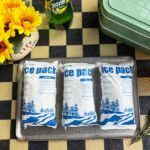
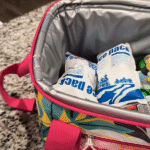
A gel refrigerant pack is a packaged cold source used inside an insulated shipper, tote, or liner-based carton to slow down temperature rise during transport. In many lanes it is a soft pouch filled with water-based or polymer gel, although reusable formats can also be made as tougher, more structured packs. Buyers choose this format because it is easier to place around the payload than rigid ice bricks and usually simpler to replenish than active refrigeration.
The point, however, is not to buy cold mass in the abstract. You are trying to protect chilled transport for medicines, diagnostics, food, and other temperature-sensitive goods. That means the correct question is not only how cold the pack gets, but how it behaves after conditioning, how quickly it absorbs heat, whether it leaks or sweats excessively, and how reliably the supplier can reproduce the same pack month after month.
A gel refrigerant pack is a cold source, not a complete temperature-controlled shipping system. In healthcare and laboratory work, performance depends on the outer box, insulation, payload mass, lane duration, ambient exposure, and temperature monitoring-not on the refrigerant pouch alone. For temperature-sensitive healthcare products, global guidance consistently points toward qualification or validation of the shipping system rather than blind reliance on a component claim. That means you should test the complete pack-out under expected hot and cold conditions, not assume that a phase temperature or a larger pack will automatically solve the route.
How the right format is chosen
Standard gel packs usually rely on a water-based or polymer gel that is frozen before use. They are versatile, cost-effective, and widely available in soft pouches or more structured formats. PCM packs are more specialized. They are designed to absorb and release heat near a chosen transition temperature, which can make them better suited to narrow windows such as 2-8°C or controlled ambient transport. In most day-to-day operations, the pack is preconditioned in a freezer or cold room, then placed around the payload to absorb incoming heat. The rate at which it warms depends on the gel formulation, the mass of refrigerant, the surface area exposed to air, the amount of insulation in the shipper, and how warm the product is when packed.
Commercial cold-chain packs commonly use non-toxic gels sealed inside polyethylene-based or poly-nylon films, while some formats add an absorbent outer layer to handle condensation. Therapy packs may add soft textile covers, shaped wraps, or straps. In every case, the visible format matters because the outer layer affects puncture resistance, cleanability, flexibility, and how the pack transfers cold to the product or the body. Buyers should also pay attention to pack geometry. A thin flexible pouch can wrap the product better and improve heat transfer, but it may be more vulnerable to handling damage if the film or seals are weak. A thicker or reusable format may last longer, yet it can waste space if it does not match the carton footprint. There is no universal best option without reference to the route and payload.
The format is commonly used in last-mile chilled distribution for pharmacies and clinics, lab shipments that need a cold source but not necessarily a full active shipper, and meal, dairy, or specialty food deliveries where leak resistance and repeat ordering matter. In those environments, operators value packs that are easy to condition in standard freezers, quick to place into a repeating pack-out, and dependable enough that staff do not improvise when one size is out of stock. Simplicity matters because packing lines succeed when the routine is clear, not when the design looks clever on paper.
Where buyers gain value and where mistakes start
The main advantages are familiar: flexible placement, relatively simple conditioning, broad size availability, and lower system complexity than active shippers. Many operations also like the fact that packs can be integrated into EPS, EPP, foil-liner, or pallet-cover solutions without changing the basic warehouse routine.
The limits are just as important. A colder pack is not automatically a better pack. Over-frozen media can damage sensitive payloads, especially when product units touch the refrigerant directly. Packs with inconsistent fill weights can create unpredictable run times. And if the supplier changes film, seal width, or gel composition without telling you, the pack-out may drift away from its original performance. packs that look acceptable on paper but cannot handle hot lanes, remote deliveries, or inconsistent replenishment.
Technical buyers should ask for more than a headline size. Fill weight tolerance, film gauge or material family, seal format, recommended conditioning time, pack dimensions after conditioning, and case-pack consistency all influence how the product behaves in use. If the supplier cannot define those basics clearly, the pack may be harder to standardize than it first appears.
Common failure modes are predictable. Packs arrive under-filled or slightly oversized and no longer fit the designed shipper. Staff freeze them harder than intended and place them directly against a sensitive payload. A substitute lot arrives with a different film feel or different thaw profile. Procurement teams often focus first on price, but day-to-day operating stability usually comes from consistency. If the fill weight drifts, the seal width changes, or the supplier substitutes a different film without notice, the package may still look the same while its thermal behavior changes enough to affect the lane.
A practical supplier shortlist
A supplier conversation becomes much more useful when you move beyond the brochure and ask how the pack will behave in your actual operation. Australian buyers often care less about catalog price and more about what happens after dispatch. Long domestic distances, summer heat, and deliveries into regional or remote areas can magnify small pack-out weaknesses. That is why a supplier with dependable local stock, clear conditioning instructions, and repeatable fill quality often beats a cheaper source that relies on long import lead times.
The right shortlist is built on repeatability, fit, and honest operating boundaries. Ask the supplier to answer the points below in writing so sample approval and bulk approval stay aligned.
Confirm internal and external dimensions, fill weight, and case quantities so the pack fits your current shipper without wasted air space.
Ask which film or outer material is used, how the seals are formed, and what controls are in place to prevent lot-to-lot drift.
Request written conditioning instructions instead of relying on informal freezer habits at the packing bench.
Check whether sample packs and production packs come from the same bill of materials, the same fill routine, and the same quality standard.
Ask how the supplier communicates any formulation, film, print, or pack-dimension change before shipment.
Helpful decision tools
Check the details before you choose packaging
These quick tools can help you compare route risk, sizing needs, coolant choices, and packaging details before you request a quote.
Insulation Material Reference
Compare insulation material choices for different cold chain packaging needs.
Compare materialsPackaging Selector
Compare insulated packaging options by product, route, and temperature need.
Find packagingCoolant & PCM Reference
Compare coolant and PCM options when a route needs added temperature support.
Compare optionsWhether the supplier keeps local Australian stock or ships every order on import lead times
Recommended conditioning time and whether the pack should be used fully frozen, partially conditioned, or paired with PCM
Evidence of seal consistency and fill-weight control across repeat production lots
Pack sizes that fit your existing EPS, EPP, or liner-based shipper without dead space
Emergency replenishment capability during summer peaks or public-health campaigns
Clarify whether the pack is intended to be one component in a qualified shipper or simply a general refrigerant for broader use.
Run a small pilot with a logger before scaling. A reliable supplier should be comfortable supporting that step.
How to validate before scaling
Before a large order, a pilot run is worth the time. Use production-intent packs in the exact insulated shipper, with real payload mass, real conditioning practice, and a logger. That small exercise often reveals whether the problem is refrigerant choice, pack placement, freezer routine, carton fit, or receiving discipline. Record not only the logger trace, but also the loading temperature of the product, the exact number and placement of packs, the time the carton sat open during packing, and the ambient conditions at dispatch.
After the pilot, review more than pass/fail. Look for cold spikes, late warming, condensation, pack breakage, and handling friction. Many teams discover that the main issue was not the gel chemistry at all; it was pack placement, box size, freezer routine, or a mismatch between the sample pack and production-intent supply.
In Australia, vaccine and medicine cold-chain work places strong attention on holding products within their labeled temperature range. Public vaccine guidance uses a +2°C to +8°C window with an operating aim near +5°C, which is one reason buyers scrutinize over-frozen gel packs and poor conditioning practices. In practical procurement terms, that means you should be wary of claims that a loose gel pack is 'compliant' by itself. What matters is whether the complete pack-out, including conditioning and receiving practice, is suitable for the route and product.
When suppliers answer these questions clearly and consistently, you get a much better sense of which partner can support real operations rather than just first-order sampling.
Where current sourcing priorities are heading
Across Australian cold chain programs, buyers increasingly ask suppliers to support lane-specific pack-outs, emergency backup stock, and clearer documentation for receiving checks. Availability and consistency are becoming part of the product specification, not just a service add-on. Buyers are also paying closer attention to total landed risk. A pack that arrives late, requires emergency substitution, or forces manual workarounds can cost far more than a slight difference in unit price. That is why supplier resilience, change control, and sample-to-production consistency increasingly belong in the sourcing scorecard.
In regions with long routes or harsh ambient swings, procurement is becoming more lane-specific. Instead of one national pack-out, many teams now use separate configurations for metro, regional, and remote deliveries. A supplier that can support that segmentation is often more valuable than a catalog with hundreds of SKUs but little application guidance.
Conclusion
The most useful way to compare suppliers is to start with the route, the product temperature range, and the packing routine you can actually execute. From there, the right gel refrigerant pack becomes much easier to define.
If you keep that sequence in place, you are less likely to buy a pack that looks impressive in a sample carton but creates avoidable risk in routine operation.
About Huizhou
At Huizhou, we focus on cold chain temperature-controlled packaging for food, medicine, and other temperature-sensitive shipments. Our publicly listed product range includes gel ice packs, freezer ice bricks, insulated box liners, EPP boxes, pallet covers, and related packaging materials. We also describe our work around cold chain solution development with in-house R&D and thermal testing support. That helps us discuss both individual refrigerants and the wider packaging system around them.
Next step
If you are reviewing suppliers or planning a new pack-out, start with the real product temperature range and route length. Then ask for a sample set that matches your intended bulk order and test it before scaling.
FAQ
These are the questions that most often remain after the initial comparison is finished.
Do Australian buyers always need PCM instead of standard frozen gel?
Not always. Standard gel works well for many chilled lanes, but PCM becomes more attractive when the product must stay in a tighter range such as 2-8°C and you need to reduce the risk of early overcooling. The better choice becomes clear when you test the pack inside your actual insulated configuration and handling routine.
Is local stock more important than the lowest ex-works unit price?
For many Australian routes, yes. Local availability can reduce replenishment delays, make seasonal planning easier, and lower the risk of emergency substitutions that force you to recheck your pack-out. Route length, ambient exposure, and receiving discipline usually matter more than a general catalog claim.
What should a supplier provide before a large order?
At minimum, ask for dimensions, fill weight, conditioning instructions, outer-film details, case quantities, lead time, and a sample batch you can run in your own insulated configuration. For bulk buying, ask the supplier to match the sample batch as closely as possible to production.