How to Source the Right Blue Gel Pack Without Guesswork
The best blue gel pack chemical supplier is the one that matches the job without creating extra risk somewhere else. In practice, buyers need to compare design, phase behavior, route fit, supplier discipline, and bulk-order consistency together. That is the only reliable way to choose a pack that works beyond the first sample lot.
Below is a practical buying guide that focuses on the questions procurement and operations teams usually need answered first: what the product really does, where it fits, what can go wrong, and how to tell a reliable supplier from a catalog-only option.
Starting with the right product definition
A blue gel pack for chemical supply is usually a refrigerant pack used around reagents, laboratory materials, technical samples, or other non-food products that benefit from passive cooling. The blue color may help identification, but it does not define the pack’s thermal performance or chemical suitability. Buyers should treat color as a visual management feature, not as a technical specification.
This category often appears in laboratory and industrial distribution because teams want a clearly distinguishable pack for certain workflows. That can be useful in warehouse segregation and kit assembly. It does not remove the need to evaluate the pack’s film, gel formula, conditioning routine, and compatibility with the rest of the shipping system.
For chemical shipments, the transported material determines the hazard and packaging rules. The blue gel pack is only one package component and does not replace secondary containment or other controls where required.
How design choices change performance
Blue gel packs commonly use water-based gel in a polyethylene or similar pouch, with color added for identification. Public market references show many such packs marketed as non-toxic and reusable, but the important point for buyers is not the dye itself. It is the pack’s physical integrity and the way it behaves after freezing and under compression.
If the pack is being used with chemicals or reagents, secondary containment and compatibility still matter. The transported product drives the hazard profile of the shipment, not the fact that the cooling pack is blue. That means buyers should review the entire package configuration and any applicable dangerous-goods or laboratory handling requirements, rather than focusing narrowly on the refrigerant.
For lab and chemical shipments, performance includes not just cooling but also how the pack behaves around labels, secondary containment, absorbent materials, and the physical integrity of the kit.
Buyers usually learn the most from a short list of hard data points: finished dimensions, net fill weight, frozen thickness, phase-change range or intended temperature band, conditioning instructions, and packaging configuration by case or pallet. Those details allow operations and quality teams to picture how the pack will behave before a trial even starts.
Choosing by application and route
Typical applications include reagent kits, chemical standards, field sampling materials, and laboratory supply parcels where a controlled cool environment helps maintain stability. The pack may sit around bottles, tubes, absorbent materials, or insulated inserts depending on the kit design and the route length.
Some buyers prefer blue packs because they reduce mix-ups with food or medical inventory. That can be useful operationally, especially where several cold packs are stored in one freezer room. The operational benefit is real, but only when the pack specification itself is correct for the lane.
For lab and chemical shipments, performance includes not just cooling but also how the pack behaves around labels, secondary containment, absorbent materials, and the physical integrity of the kit. In other words, selection starts with the operating problem, not the catalog photo. Buyers who define the temperature band, transit time, payload sensitivity, and loading method clearly tend to make faster and safer decisions.
A buyer-friendly comparison usually comes down to six checks:
Treat color as a visual-management feature and choose the pack first on thermal and physical performance.
Check compatibility with your package design, including absorbent materials, secondary containers, and labels.
Ask whether batch-to-batch color consistency matters for your picking or segregation workflow.
Verify leak resistance and compression behavior if the pack will travel next to bottles, vials, or technical samples.
Do not assume a blue pack is automatically suitable for all laboratory or chemical programs.
Review the hazard and transport requirements of the shipped product, not only the cooling pack.
The blue color may help internal identification, but it should never replace a real technical comparison.
A practical supplier checklist
When evaluating a supplier, ask about the dye system, film structure, fill composition, seal quality, and whether the color is consistent from batch to batch. Then move quickly to the more important issues: phase behavior, storage instructions, dimensional tolerance, and carton packing. The pack’s real job is thermal control, not brand color matching.
Chemical and laboratory buyers should also ask how the pack is intended to sit relative to the primary and secondary containers. If the product needs absorbent materials, rigid outers, or other protective elements, the refrigerant should be considered part of that layout rather than a separate afterthought.
Phase behavior, dimensions, and conditioning routine
Film structure, seam integrity, and behavior under compression
Color consistency and whether the dye affects your internal workflow
Fit with absorbent materials, labels, and secondary containment
Helpful decision tools
Check the details before you choose packaging
These quick tools can help you compare route risk, sizing needs, coolant choices, and packaging details before you request a quote.
Route Risk Checker
Review lane conditions before selecting packaging for real operating requirements.
Check route riskBox Liner & Pallet Cover Sizing
Check box liner and pallet cover sizing logic for insulated packaging projects.
Estimate sizingDry Ice Calculator
Estimate dry ice needs for frozen or ultra-cold shipments before packing.
Estimate dry iceTraceability, storage conditions, and document availability
MOQ, lead time, and sample-to-production consistency
Before scale-up, run a simple but disciplined trial. Use the real payload or a close thermal substitute, the actual outer package, the intended conditioning method, and the route duration you expect in the field. Include at least one tougher ambient exposure than your ideal case.
If the product is going into a more controlled environment, ask whether the supplier can keep those data points stable over time and how any change would be communicated. Technical reliability depends as much on process discipline as on the first sample.
Problems buyers can prevent early
A common mistake is to assume that a blue pack is automatically suitable for laboratory or chemical use. It may not be. Another is to ignore condensation and leak handling. Even when the gel itself is benign, surface moisture can affect labels, documentation, or outer packaging integrity.
It is also risky to treat the pack as a substitute for proper shipping controls. Hazard classification, secondary containment, and route qualification still depend on the shipped chemical or reagent and the final package design.
For many chemical and lab buyers, sustainability begins with durability and error reduction. A pack that survives reuse and is clearly identifiable can reduce replacement frequency and picking mistakes. That is a practical gain.
In lab and chemical programs, visual management and clearer kit organization are becoming more important as operations scale. Distinguishable pack formats can help, but only if the underlying thermal performance remains consistent.
Practical questions before launch
Where routes, products, or documentation demands are more sensitive, buyers should lock down the intended conditioning method, pack position, and receiving checks before the first larger order. That simple discipline prevents a lot of avoidable confusion later.
During that trial, record not only temperature. Look at surface moisture, pack integrity, loading speed, frozen fit, and the condition of the delivered product or kit. These observations often reveal more about real suitability than a headline hold-time claim.
After the trial, lock the specification. Document the approved dimensions, gel mass, film structure, conditioning method, and pack placement. That simple discipline reduces drift between sample approval and routine production.
FAQ
Does the blue color change the cooling performance?
No. Color is mainly an identification feature unless the supplier specifies a different formulation.
Can blue gel packs be used with hazardous chemicals?
They may be part of the package, but the hazard requirements depend on the shipped product and the complete package design.
What should buyers verify first?
Verify film strength, phase behavior, and how the pack fits with secondary containment and the route.
Practical points that influence rollout
Bulk sourcing changes the decision in one important way: you are not approving a single pack, you are approving a repeatable manufacturing and operating method. That means the quotation, the sample, the warehouse SOP, and the reorder specification all have to point to the same product. If one of those pieces is vague, costs usually surface later through leaks, retrials, customer complaints, or slow packing lines rather than in the first purchase order.
Another practical point is storage and handling before shipment or use. Performance starts in the freezer room, prep area, or stockroom, not at the final destination. Buyers should check how the product will be stored, how long conditioning takes, whether cartons can be rotated first-in first-out, and how the pack behaves if teams handle it during busy or partially thawed periods. Small operational details can change the delivered result more than catalog language suggests.
When comparing suppliers, ask yourself whether the vendor is helping you make a real decision or only helping you receive a quote. Useful suppliers answer directly on dimensions, conditioning, change control, documentation, and application limits. Less useful ones stay at the level of broad sector language and leave the technical interpretation to you.
A sample review should therefore include more than visual inspection. Freeze the product the way your team would actually freeze it. Load it into the real outer packaging or user format. Check how easy it is to place, how clearly it is labeled, how it behaves after partial thaw, and whether the receiving side would understand how to handle it.
It is also worth comparing total operating cost rather than item price alone. A slightly more expensive pack can still be the lower-cost option if it reduces freezer congestion, cuts leak rates, improves packing speed, or avoids reshipments. The same is true on the customer side: easier disposal, better presentation, or clearer instructions often save more than buyers expect.
Consistency from sample to production deserves explicit attention. Ask whether the supplier controls fill weight, film gauge, seal quality, outer dimensions, and carton configuration within a known tolerance band. Then ask how a change would be communicated. That question often separates a real production partner from a trader with limited process visibility.
The strongest approval path is usually simple but disciplined. Define the use case, request a controlled sample set, run a realistic route or pack-out trial, document the approved specification, and keep that document attached to every reorder. That sequence is especially important when the product sits inside a more controlled cold-chain or healthcare workflow.
Finally, remember that the right choice is rarely the most extreme one. More gel, a lower temperature, or a heavier format is not automatically safer. The better product is the one that matches the route, the payload, the handling method, and the people who will actually use it day after day.
Forecasting matters as well. If your team expects seasonal swings or promotional spikes, confirm how the supplier will support volume changes without quietly substituting materials or adjusting case counts. A technically acceptable product can still become operationally disruptive when forecast communication is weak.
Receiving-side checks are another overlooked source of learning. Ask what the recipient will see when the pack arrives: surface moisture, stiffness, labeling, and obvious signs of misuse. If the delivered condition is hard to interpret, customer-service and quality teams may spend unnecessary time deciding whether the shipment is acceptable.
Buyers should also think about training. A well-specified pack can still perform badly if warehouse or end users do not know how long to condition it, where to place it, or when to reject a damaged unit. Clear instructions from the supplier often reduce these rollout problems more effectively than adding more cooling mass.
Bottom line
A strong blue gel pack purchase is rarely about buying the coldest, cheapest, or most heavily marketed pack. It is about matching the pack format, conditioning method, and supplier discipline to the job you actually run.
If you define the use case clearly, ask sharper questions about materials and process control, and test the pack in the real route or handling workflow, you are much more likely to choose a supplier that performs well after rollout instead of only in a quotation stage.
About Tempk
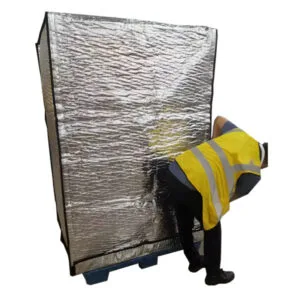
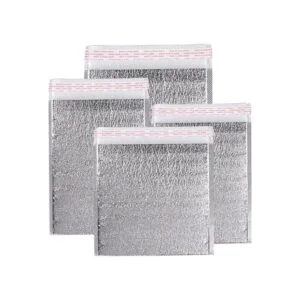
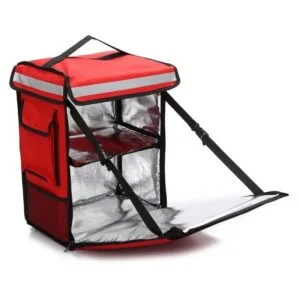
At Tempk, we focus on temperature-controlled packaging for food, pharmaceutical, and other sensitive shipments. Our public range includes gel ice packs, dry ice packs, freezer ice bricks, insulated bags, insulated box liners, EPP insulated boxes, cold shipping boxes, medical cool boxes, and thermal pallet covers. Because we work across both refrigerants and insulated formats, plus custom temp-control packaging backed by a CNAS-certified lab, we can help buyers compare a single pack option within the wider shipping system.
Next step
If you are narrowing down suppliers, request samples, review the conditioning instructions, and test the pack in your real route and carton setup before you commit to volume. That simple step usually prevents the most expensive surprises.