Selecting a Gel Ice Sheet Distributor for Tissue Sample Shipping Without Guesswork
A good gel ice sheet supplier should help you solve a route problem, not just quote a unit price. For tissue sample shipping, that means matching the pack format to temperature exposure, loading pattern, operator workflow, and the level of documentation your procurement process actually requires.
Many buyers start with the right instinct and the wrong shortcut. They focus on nominal pack size, or on whether a pouch feels soft or rigid, before they check the things that usually decide outcomes: conditioning practice, pack count, box geometry, seal integrity, change control, and fit with the actual route.
The better approach is to separate three questions. First, what job is the pack doing in the system? Second, what technical details control that job? Third, which supplier can reproduce those details consistently at commercial scale? That is the framework this article uses.
What this product solves and what it does not
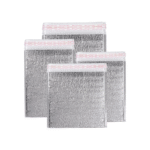
A thin flexible refrigerant sheet that can line a box, wrap a secondary pouch, or sit between small sample containers is typically chosen because buyers want coverage, flexibility, and space efficiency. In laboratory, diagnostic, and clinical sample logistics, that can make the pack easier to place, easier to count, or easier to integrate with an insulated shipper.
Sheet formats are thin and broad. They are useful when the shipment needs coverage over a larger surface area or around smaller cartons, trays, or pouches. The tradeoff is that a sheet usually gives you less thermal mass per piece than a thicker block or brick, so the route has to justify the format.
The important boundary is this: the pack is only one part of the system. It is secondary refrigerant support, not the full regulatory sample packaging system. If the route is long, hot, highly variable, or regulated, buyers still need to review insulation, product load, conditioning, handling, and receiver expectations.
- Use the pack name as a starting point, not as proof of route suitability.
- Match the format to the box layout and operator workflow, not only to the product category.
- Ask what the pack is designed to do after conditioning, partial thaw, and receipt.
Match the format to the route, product, and handling pattern
Route fit matters more than a catalog label. Start with the job the pack has to do across specimen collection points, hospital labs, research sites, and overnight diagnostic lanes: hold a target temperature band, buffer short spikes, separate product layers, or keep the load stable until receipt.
For tissue or specimen logistics, the cold pack supports the packaging system but does not replace it. Sample type, transport classification, and receiving protocol still decide what primary and secondary packaging are required. The refrigerant should help stabilize the temperature zone and protect the pack-out, while keeping vials, bags, or sample tubes from shifting or cracking. Buyers should map not only line-haul time, but also pre-pack storage, carton dwell time on the dock, carrier handoffs, delivery windows, and how quickly the receiver checks the shipment. A pack can look adequate in the freezer room and still underperform once those extra exposures are added.
The same pack may work well in one lane and poorly in another. A short urban delivery with fast handoff may reward compact pack geometry and faster packing. A longer route with hotter exposure may reward more thermal mass, more insulation, or a different refrigerant strategy altogether.
- Small diagnostic sample boxes where thicker bricks waste usable space.
- Research shipments that need broad surface contact around trays or pouches.
- Short courier lanes where a compact refrigerant layer matters more than long-duration thermal mass.
Technical details that separate one supplier from another
Cold packs that look similar at first glance can differ in ways that matter. Film thickness, seal width, fill ratio, pouch shape, corner design, and the internal gel system all influence how the pack freezes, thaws, flexes, and survives impact.
Most buyers benefit from asking simple but revealing questions. Does the pack stay dimensionally stable after conditioning? Does the surface become brittle at low temperature? Do seals stay intact after drops, compression, and routine warehouse handling? How much cold mass is actually available in the chosen format?
In this category, the most useful sample is not the prettiest sample. It is the one that behaves consistently after freeze-thaw cycles, hand packing, stacking, and receipt inspection. That is where differences in manufacturing control become visible.
- Check actual fill weight, not only nominal size.
- Review film and seal quality after low-temperature conditioning.
- Confirm how the pack is meant to be placed inside the insulated system.
- Ask whether the sample spec is locked before scale-up.
Keep compliance language precise
For diagnostic or clinical material, applicable specimen rules still depend on the product, route, and classification. A gel sheet may support temperature control, but it does not replace the required primary, secondary, and outer packaging structure. Buyers should ask the supplier to be precise about what the pack is intended to do, what supporting documents are available, and what still has to be proven in the complete shipper system. That distinction prevents an ordinary cold pack from being oversold as a fully qualified shipping solution.
This is one of the most common buying errors in cold chain packaging: a team finds a pack that seems to hold cold, and then assumes that the pack itself carries the whole compliance story. In reality, regulated or quality-sensitive shipments usually depend on the complete packaging configuration, handling instruction, and route qualification.
For procurement, the practical question is not whether the supplier can say the right words. It is whether the supplier can provide clear intended-use information, stable specifications, and the technical detail needed for your own internal review, testing, or approval workflow.
- Request intended-use language that matches the real shipment.
- Separate cold-pack capability from full shipper qualification.
- Decide in advance which declarations or technical documents are mandatory.
A practical supplier checklist
The supplier conversation should become more specific as soon as the format looks promising. A useful gel ice sheet distributor discussion moves from broad claims to measurable details, sample review, complaint handling, and scale-up control.
A useful supplier discussion should cover more than MOQ and lead time. Buyers should compare how the supplier defines the pack, how it controls production, how it handles complaints, and whether a pilot sample is likely to match the full commercial run.
Helpful decision tools
Check the details before you choose packaging
These quick tools can help you compare route risk, sizing needs, coolant choices, and packaging details before you request a quote.
Insulation Material Reference
Compare insulation material choices for different cold chain packaging needs.
Compare materialsInsulation Material Drop Resistance
Review drop resistance and handling factors before choosing insulation materials.
Check resistanceIce Pack Calculator
Estimate gel ice pack quantity for chilled shipments and practical route planning.
Estimate ice packsConsistency is especially important when pack-outs are repeated daily. Small changes in gel fill, film gauge, dimensions, or sealing can change how the pack freezes, how it fits in the box, and how the receiver experiences the shipment.
- Sheet dimensions, thickness tolerance, and cut accuracy.
- Film puncture resistance and seal consistency.
- Conditioning guidance for refrigerated versus frozen use.
- Lot traceability and change control for gel formulation or film.
- How the sheet behaves when partially thawed and re-frozen.
- Outer packaging compatibility with secondary sample containers.
How to review samples without missing hidden risk
A sample review should imitate the real operation as closely as possible. Condition the pack the way the supplier recommends, load the actual product or a realistic surrogate, and use the same insulation, carton, and packing order expected in production.
Then watch what happens at the points where failures usually appear: before pack-out, after the last pack is loaded, after a realistic dwell period, after routine transport handling, and when the receiver opens the shipment. For many buyers, those checks reveal more than any headline hold-time claim.
Sample review should also cover the commercial side. Does the supplier label lots clearly? Can operators identify the pack quickly? Does the approved sample become a locked specification? Is there a documented process if the supplier needs to change film, gel, weight, or manufacturing site?
- Freeze or chill the sample exactly as instructed.
- Use the real box, liner, and pack count whenever possible.
- Record how the pack looks and feels at receipt, not just the payload temperature.
- Ask how sample approval is translated into production control.
Operational details that decide whether the program scales
Small operational details often decide whether a bulk program feels efficient or frustrating. How are the packs cased? How much freezer space do they need? Do operators place them the same way every time? Does the receiver see a clean, organized pack-out or a messy box that triggers doubt?
Those questions sound practical rather than technical, but they influence total cost and complaint rates. In many cases, the winning pack is not the one with the boldest performance claim. It is the one that the warehouse can store, condition, place, and receive with fewer exceptions.
That is especially relevant for tissue sample shipping, where the packaging decision touches more than temperature. It affects handling quality, perception at receipt, and whether the process can be repeated smoothly at scale.
- Review freezer space, staging time, and operator workflow before buying in bulk.
- Make sure the pack count and placement can be taught consistently.
- Evaluate the arrival condition of the pack as part of the decision.
Cost, sustainability, and operational fit
Laboratories increasingly want pack formats that standardize pack-out without adding unnecessary box volume. That usually shifts the conversation from nominal pack price to total pack-out cost: labor time, carton utilization, freezer space, complaint rate, replacement shipments, and whether the chosen format simplifies receiving.
Sustainability also needs a practical lens. A lighter pack is not automatically greener if it increases spoilage or forces overpacking. A reusable pack is not automatically better if the return loop is unrealistic. The strongest sustainability decision usually comes from fitting the pack to the route well enough to avoid waste, while keeping materials and reverse logistics realistic.
For teams buying in bulk, operational fit is often where value is won or lost. A pack that stores cleanly, conditions consistently, loads quickly, and creates fewer exceptions can outperform a nominally cheaper pack that causes receiving complaints or labor drag.
- Review freezer space, storage density, and operator handling time.
- Consider the effect of pack geometry on carton fill and payload space.
- Treat waste reduction and route performance as part of the same decision.
Common errors that make a good sample fail in production
Most problems with gel ice sheet sourcing come from mismatch rather than from obvious defects. The pack may be well made, but wrong for the route, wrong for the carton layout, or wrong for the procurement assumptions behind the project.
Typical failure patterns include temperature drift during courier delays, tube breakage from loose pack movement, and documentation gaps around sample packaging. These issues usually appear when the team approves a sample too quickly, ignores conditioning detail, or assumes that a product category automatically predicts pack performance.
The simplest way to avoid these problems is to anchor decisions to the real shipment: intended temperature band, route duration, ambient profile, operator workflow, receiving condition, and the supporting documents your internal team actually needs.
- Do not assume the same pack count works in every season.
- Do not approve a sample without locking the commercial specification.
- Do not confuse a useful refrigerant component with a complete validated shipper.
- Do not ignore how the receiver will see the pack on arrival.
Final takeaway
The best gel ice sheet distributor is the one that matches the job the pack actually needs to do. For tissue sample shipping, that means connecting format, conditioning, box design, route conditions, and supplier consistency instead of treating the cold pack as a generic commodity.
Once that frame is clear, the shortlist usually becomes smaller and more useful. Suppliers who can discuss route fit, documentation, repeatability, and sample-to-production control tend to be safer partners than those who only compete on label language or price.
About Tempk
At Tempk, we focus on gel ice packs, insulated shippers, and temperature-control support for laboratory and pharmaceutical logistics. Based on our public product range, we work across temperature-controlled packaging categories that include gel packs, insulated shippers, EPP cooler solutions, pallet covers, and temperature-monitoring support. We try to keep the conversation practical: match the packaging to the route, the product, and the handling conditions, rather than treating one pack style as the answer to every cold chain problem.
Next step
If you are comparing suppliers, start with your target temperature band, route duration, and box format. Ask for a sample plan and a route-based recommendation before you place a bulk order.