What to check before buying Supplier dry ice pack for food logistics
If you are evaluating supplier dry ice pack for food logistics, the most important insight is simple: buy the shipping system for the product condition you must protect, not for the name of the pack. The phrase dry ice pack can refer to several very different refrigerant formats, and in food logistics those differences matter. Some shipments genuinely need deep-cold protection. Many others need controlled refrigeration, moisture management, structural protection, or a cleaner pack-out design more than they need maximum cold intensity.
A supplier dry ice pack for food logistics can be useful, but food logistics is too broad for one blanket answer. Frozen meals, seafood, dairy, confectionery, produce, and prepared foods do not all need the same thermal treatment. The first job is to classify the food, not to choose the coldest insert.
What buyers usually mean by this type of request
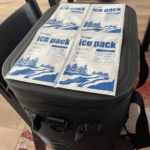
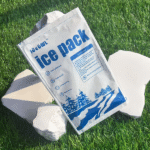
Food buyers often use dry ice pack as a catch-all term for shipping refrigerants. That shortcut hides the difference between actual dry ice, hydrated sheet packs, gel packs, and PCMs. Those materials behave differently in a shipper and are not interchangeable across all food categories.
A supplier-led search usually means you need technical capability, repeatable production, and a clear answer on how the pack fits the shipper, not just a price quote.
When a dry-ice-style pack fits and when it does not
A dry-ice-style pack fits when the product state and route actually justify it. That usually means a frozen target or an unusually severe lane that has been thought through as a full insulated system. It does not mean that deeper cold is automatically safer. In food logistics, the wrong cold source can create freeze damage, condensation, quality loss, or unnecessary handling complexity. The pack has to be evaluated as part of the total design: product starting temperature, insulation, internal spacing, duration, ambient swings, and receiving conditions.
True dry ice is a strong fit for true frozen food programs and some severe lanes. It is a weaker fit when the product is merely chilled or quality-sensitive to deep cold. Many food programs work better when the supplier offers more than one refrigerant path under one relationship.
Single deep-cold solution: Simple operating model. Main limitation: Often overspecified and may not suit chilled or quality-sensitive foods.
Segmented refrigerant strategy: Matches food classes more accurately. Main limitation: Requires better SKU logic and packing discipline.
Insulated shipper plus moderate coolant: Useful for chilled foods and moderate lanes. Main limitation: Not enough for true frozen routes.
Reusable insulated system: Potential waste reduction on stable lanes. Main limitation: Needs reverse logistics and cleaning control.
Build the package around the product, not the pack name
Mixed food logistics is a segmentation exercise. Start by grouping products into frozen, chilled, cool-but-not-frozen, and ambient-stable classes. Then think about route length, carrier exposure, leakage risk, insulation, and what arrival condition the customer expects.
Food logistics involves both safety thinking and product-quality thinking. Temperature affects shelf life, texture, thaw state, and appearance, but the relevant threshold changes across products. A refrigerant that is right for frozen entrées may be wasteful or damaging for chilled dairy or fresh produce in the same network.
Food logistics still needs leakage control, outer-package integrity, and food-safe handling. If true dry ice is used, handling and transport documentation become more important, and some product categories, such as live seafood, may rule out dry ice even if other frozen products use it effectively.
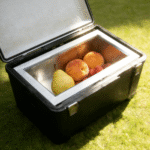
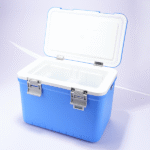
The refrigerant is only part of the answer. The package system matters just as much: insulation type, box size, internal dead space, pack placement, spacers, dividers, absorbent layers, and the starting temperature of the payload all shape the result. Two suppliers can offer similar frozen pack weights and still produce very different payload outcomes because one system manages heat flow and local cold spots better than the other. For B2B buyers, that is why a system-level conversation is usually more useful than a component-only conversation.
A practical buying framework
A practical buying framework starts with five questions. What temperature condition must the product reach at delivery? How long is the realistic door-to-door exposure? What is the hottest and coldest environment the route may see? How much packing variation can your operation tolerate? And what would failure actually look like: thawing, freezing, leakage, appearance loss, or simply excess packaging cost? When those questions are answered first, supplier recommendations become much easier to judge.
Ask for data that reflects how your operation actually works. A hold-time statement means little unless you know the payload mass, the ambient challenge, the pass-fail definition, and the conditioning method behind it. The more useful questions are how the payload behaves near the cold faces, what happens after a route delay, and whether the pack-out remains inside the intended range after repeated ambient shocks. In practice, a supplier's discipline in explaining the assumptions often tells you more than the headline performance claim.
Procurement success in cold-chain packaging often depends on consistency rather than on one impressive sample. A well-performing pilot can still fail at scale if the production film, gel fill, PCM formulation, carton dimensions, or conditioning steps drift over time. That is why supplier evaluation should cover sample-to-production consistency, change control, packing-line practicality, and storage handling in addition to pure thermal performance.
The best supplier in food logistics usually behaves like a packaging program partner, not just a pack vendor. Ask whether they can support frozen, chilled, and moderate-cooling applications under one framework and whether they help define pack-out logic by route and product class.
Which food classes can your pack range support: frozen, chilled, cool-but-not-frozen, or heat-sensitive ambient products?
Do you offer multiple refrigerant formats and insulated packaging options under one supplier program?
What payload assumptions, ambient profiles, and hold-time definitions support your recommendations?
How do you address leakage control, absorbency, and box integrity for different food categories?
Helpful decision tools
Check the details before you choose packaging
These quick tools can help you compare route risk, sizing needs, coolant choices, and packaging details before you request a quote.
Compliance Checklist Generator
Build a practical checklist for packaging review, shipping, and documentation.
Build checklistBox Liner & Pallet Cover Sizing
Check box liner and pallet cover sizing logic for insulated packaging projects.
Estimate sizingInsulation Material Reference
Compare insulation material choices for different cold chain packaging needs.
Compare materialsCan the pack-out be standardized for warehouse labor without oversimplifying product differences?
What are the MOQ, lead times, and custom options for seasonal peaks?
How do you manage specification consistency and change control across repeat orders?
Can you help right-size the package to reduce cost and waste without exposing the food to added risk?
What drives real cost
The most expensive packaging program is often not the one with the highest unit price. It is the one that looks inexpensive until you count spoilage, re-shipments, complaint handling, extra freezer space, dimensional weight, and time lost on awkward pack-outs. In cold-chain procurement, the right system often wins by reducing operational friction as much as by protecting the payload.
Sustainability also becomes clearer when the package is correctly matched to the product. Overspecification adds weight, waste, and energy use. Underspecification adds spoilage and repeat shipments. The better path is usually to right-size the shipper, choose a refrigerant that matches the target condition, and keep the packing method simple enough to repeat accurately at scale.
Food logistics continues to move toward smaller, more frequent shipments, stronger freshness expectations, and greater scrutiny of packaging waste. That pushes buyers toward more precise pack-outs rather than simply adding more refrigerant, and it increases the value of right-sizing and better SKU segmentation.
Before rolling out a full supplier program, run a pilot lane that uses the final production components, not a hand-built sample. Pack the real payload, condition the coolant the same way the warehouse will do it, and test the shipment under the most realistic route conditions you can simulate. Then review not only payload temperature, but also packing speed, storage footprint, receiving condition, and the clarity of work instructions. That pilot usually tells you more about launch success than any brochure claim.
Common failure points
Using one cold source for frozen, chilled, and heat-sensitive foods with different needs.
Buying a dry ice pack before defining the thermal class of the food.
Ignoring leakage, structural integrity, and pack-out repeatability.
Comparing suppliers on pack cost without checking spoilage, complaint handling, and labor impact.
Assuming more refrigerant automatically means a better food-logistics design.
Operational details buyers should not skip
Operational discipline matters because the best thermal design can still fail if the warehouse cannot repeat it. In food logistics, buyers should ask how the coolant is stored, how long it takes to condition, what the acceptable assembly window is once the pack leaves frozen storage, and whether the work instruction is realistic for the people actually building the shipment. A supplier-led search usually means you need technical capability, repeatable production, and a clear answer on how the pack fits the shipper, not just a price quote. A packaging choice that looks efficient on paper but is awkward on the packing line often becomes an expensive program in practice.
Receiving checks also deserve attention. The product does not stop being at risk when the box leaves the warehouse. Think about what the receiver should see, touch, and record at arrival. Should they verify package integrity, look for signs of leakage or condensation, check whether the cold source is still present, or escalate if the product feels unexpectedly hard or warm? In food logistics, a clear receiving rule can reduce preventable product loss because it turns vague observations into a defined response.
Storage footprint and staging time are part of the buying decision as well. Some cold packs need more freezer space, longer conditioning, or stricter first-in-first-out control than others. If a program ships at volume, that operational burden can matter almost as much as the thermal curve. The better solution is often the one your team can execute cleanly every day, not just the one that looks strongest in a single test.
Short FAQ
Is a supplier dry ice pack enough for all food logistics needs?
No. Food products differ too much in temperature requirement, quality risk, and route exposure.
When is true dry ice the right choice?
Usually for genuinely frozen products or highly demanding cold routes, not as a default for all foods.
What is the best first step before comparing suppliers?
Classify your products into frozen, chilled, and other thermal groups, then define the route challenge.
Why do suppliers need to know the lane?
Because the same food may need a different pack-out for overnight regional delivery than for a longer parcel route.
Final takeaway
The safest way to buy a supplier dry ice pack for food logistics is to start with the product requirement and the route, not with the pack name. Once you know the target condition, transit duration, ambient risk, and packaging constraints, the right cold source becomes easier to choose and easier to scale. Buyers who treat the pack as part of a full shipping system usually get better protection, lower waste, and fewer surprises after launch.
About Tempk
We are Tempk, a temperature-control packaging brand established in 2011. Our published product range includes ice packs, insulated bags and boxes, thermal pallet covers, insulin temperature carriers, and custom temperature-controlled packaging solutions for food and pharmaceutical applications. We focus on matching packaging formats to product sensitivity, route conditions, and practical packing needs so buyers can choose a more suitable cold-chain setup instead of relying on a generic cold source. For broad food cold-chain use, Tempk’s published product range of ice packs, insulated bags, insulated boxes, and custom temperature-controlled packaging is relevant because buyers often need a packaging family that can support more than one food temperature class rather than one fixed refrigerant format.
Next step
Map your food portfolio by temperature class and transit risk before you compare suppliers. If you are screening suppliers, start with your target temperature band, transit duration, and the risk points that matter most on the route.