Bulk Dry Ice Pack for Biologic Logistics: A Practical Guide for Safer, More Consistent Shipments
A bulk dry ice pack for biologic logistics order should be treated as a temperature-control decision, not just a purchase of cold packs. The pack has to match the product, shipment duration, insulation, ambient exposure, and handling process. For biologics, diagnostic materials, reagents, cell-culture components, and lab samples, the objective is not simply to make the carton cold. The objective is to keep the payload within its acceptable condition without creating freeze damage, condensation, leakage, pressure risk, or receiving confusion.
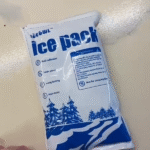
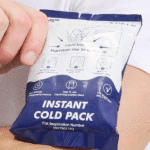
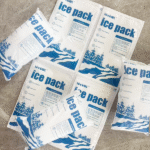
The phrase dry ice pack can describe different products. It may refer to true dry ice, which is solid carbon dioxide and extremely cold, or to a hydrate dry ice sheet, reusable cold pack, gel pack, ice brick, or dry-ice-style refrigerant that is frozen before use. These products are not interchangeable. A bulk buyer should define the refrigerant type before comparing size, price, or supplier claims.
For biologic logistics, the better starting point is the required outcome: 2 to 8 degrees C, controlled room temperature, frozen, or ultracold conditions set by the protocol. Once that is clear, the buyer can choose the cold source, insulated container, packout pattern, and receiving process. A dry ice pack may be useful, but it should be selected as one component in a complete shipping system rather than as a standalone guarantee.
What the Pack Must Do for Biologic Logistics
The first job of the pack is to absorb heat that enters the shipper through walls, lid seams, air gaps, payload mass, and handling exposure. The same pack can behave differently in a small insulated mailer, a molded EPP box, a foam shipper, or a pallet-level system. Performance depends on the full packout, not only on refrigerant weight.
Buyers should describe the temperature goal in operational terms. Does the product need to stay frozen, stay refrigerator-cold, avoid melting, avoid heat spikes, or only slow warming during a short delivery window? These are different problems. A frozen shipment may justify true dry ice, while a chilled shipment may be safer with gel packs, PCM packs, or ice bricks.
Define failure before ordering. For some shipments, failure is a temperature reading outside a limit. For others, it is softened texture, label damage, sweating, leakage, bruising, odor, or customer rejection. This definition helps the buyer evaluate sample results and supplier promises more realistically.
Dry Ice Packs, Gel Packs, PCM Packs, and Ice Bricks Are Different
True dry ice is solid carbon dioxide. It is extremely cold, leaves no liquid water as it sublimates, and can support frozen or ultracold profiles when the product and package are designed for that temperature. It also releases carbon dioxide gas, so the package must allow venting and may require specific marks, labels, and documentation for air transport.
Gel packs are commonly used for refrigerated or cool shipments. Flexible packs can conform around products, while rigid ice bricks can be easier to stack, clean, and reuse. Their performance depends on fill volume, gel formulation, outer film strength, conditioning temperature, and placement in the shipper.
PCM packs are selected around a defined phase-change temperature. They can be useful for narrower ranges such as 2 to 8 degrees C or controlled room temperature, but only when selected and conditioned correctly. The strongest coolant is not always the safest coolant; the best option is the one that matches the product range and route.
Packout Design Changes Real-World Performance
The cold source performs inside a specific configuration. For biologics, diagnostic materials, reagents, cell-culture components, and lab samples, results depend on payload load, insulation thickness, cold-pack position, headspace, and preconditioning. A partially filled carton has more air to cool. A dense payload may need more pull-down time. A thin liner may allow more heat gain than a molded insulated container.
Separators, dividers, and void fill can be more important than they look. They prevent direct contact with products that should not be frozen, reduce movement, and help operators place packs the same way every time. A simple loading diagram can reduce errors when order volume changes or temporary labor is used.
The receiving process belongs in the packout design. A shipment may be well packed but still fail if the receiver leaves it unopened, does not check temperature, or misunderstands what to do with dry ice or reusable packs. Business-to-business lanes should include receiving checks in the packaging plan.
Product-Specific Risks Buyers Should Not Overlook
The most common mistake is focusing only on hold time. Hold time matters, but it is not the same as product protection. In life science logistics, an excursion can trigger quarantine, investigation, or product disposition questions. A packout can hold a low temperature and still fail if it freezes a sensitive product, wets a label, blocks ventilation, shifts during handling, or creates a poor receiving experience.
Common use scenarios include clinical trial resupply, laboratory reagent replenishment, and frozen biological transfers. Each scenario changes the packaging decision. A short regional route may need a lightweight reusable setup, while a parcel lane may need more insulation and more thermal margin because dwell time is less predictable.
Important watchouts include lane qualification, logger placement, payload segregation, dry ice documentation, and receiving disposition. These details influence customer acceptance, complaint rates, and whether a packout can be repeated at scale. They should be part of the supplier discussion before a bulk, wholesale, distributor, or manufacturer order is placed.
Safety, Documentation, and Compliance Boundaries
Compliance depends on the product, route, carrier, and jurisdiction. For biologic logistics, buyers should not assume that a cold pack makes a shipment compliant. The packaging must support the product owner's temperature requirement and documented procedure. Regulated healthcare lanes may require additional qualification, monitoring, and quality review before approval.
When true dry ice is used for air transport, it is commonly handled as Carbon dioxide, solid, with UN1845 marking and dry ice information on the transport documents. Packages must allow gas release and should not be airtight. Requirements can include the proper shipping name, net weight of dry ice, package count, and a Class 9 label. Carrier and state variations may apply.
For this category, the documentation package may also include WHO guidance for time- and temperature-sensitive pharmaceutical products, GDP principles, USP good storage practices, product SOPs, and IATA dry ice rules when solid carbon dioxide is shipped by air. A useful boundary is simple: a cold pack is a component, an insulated box is a container, and a qualified shipping system is a defined packout with procedures and evidence.
Data, Testing, and Route Qualification
A useful test asks a specific question: can this packout maintain the required range for this payload, duration, and ambient profile? The test should include the actual insulated shipper, representative payload, exact pack quantity, loading pattern, and logger locations that reflect likely hot and cold spots.
Helpful decision tools
Check the details before you choose packaging
These quick tools can help you compare route risk, sizing needs, coolant choices, and packaging details before you request a quote.
Packaging Selector
Compare insulated packaging options by product, route, and temperature need.
Find packagingRoute Risk Checker
Review lane conditions before selecting packaging for real operating requirements.
Check route riskDry Ice Calculator
Estimate dry ice needs for frozen or ultra-cold shipments before packing.
Estimate dry iceData logger placement changes what the data appears to prove. A logger against a cold pack may show an artificially low reading, while a logger near a lid air gap may show a warmer reading than the product core. For regulated lanes, the monitoring plan should be reviewed by quality or logistics teams.
Route qualification should include real exposure points: warehouse staging, carrier pickup, airport or hub handling, customs, delivery attempts, and receiving delay. After launch, review exceptions such as excursions, melted packs, crushed cartons, wet labels, rejected shipments, and customer complaints.
What Bulk Buyers Should Ask Before Ordering
Supplier evaluation should go beyond a price list. A bulk buyer should evaluate large-order consistency, bulk storage, carton or pallet packing, repeatable conditioning, and sample-to-production control. The goal is to find a product and supplier process that can repeat the same performance after the first sample approval. This is especially important when the packout will be used in recurring food, healthcare, or wholesale cold chain programs.
Start with dimensions. External dimensions affect carton fit and freight cost, but internal dimensions and usable volume determine whether the product will fit with insulation, cold packs, separators, and documents. Ask for product thickness after hydration or freezing if the pack changes shape. Ask whether the recommended pack quantity assumes a full or partial payload.
Review construction and quality controls. Important questions include film type, seal method, puncture resistance, water absorption, closure style, leak control, food or healthcare suitability, and repeated freeze-thaw stability if reuse is expected. Ask how sample-to-production consistency is controlled and how changes are communicated before they affect your packout.
Practical Use: Conditioning, Loading, and Receiving
A dry ice pack program needs a written operating method. Operators should know when to hydrate or freeze the pack, how long it must be conditioned, how it should be staged before loading, and where it belongs in the shipper. Small variations can create large differences in final package temperature when teams prepare many orders in a short window.
For biologics, diagnostic materials, reagents, cell-culture components, and lab samples, avoid direct contact between an aggressive refrigerant and a freeze-sensitive payload unless the packout has been designed for that exposure. Use barriers, dividers, or product cartons to control contact. Keep liquid or condensation away from labels and closures. Do not block ventilation where gas release or airflow is required.
Receiving teams should open shipments promptly and follow a defined inspection procedure. Depending on the product, that may include checking product temperature, looking for ice crystals, inspecting for leakage or condensation, reading a data logger, recording arrival time, and deciding what to do if the shipment is outside expectation.
Sustainability and Total Cost Should Be Evaluated Together
Sustainability is not only about choosing a recyclable material. It is also about preventing product loss. Wasted biologics, diagnostic materials, reagents, cell-culture components, and lab samples can carry a larger environmental and financial cost than the packaging itself, especially when replacement shipment is needed. A package that reduces spoilage without excessive material is usually the more practical choice.
Reusable packs may reduce material waste, but they need recovery, cleaning, inspection, and return economics. If the return process is weak, reusable assets can disappear, become contaminated, or cost more than expected. Right-sizing is often the simplest improvement because an oversized box needs more coolant and void fill.
Dry ice also deserves a sustainability and safety review. It can be effective for frozen lanes, but it sublimates during storage and transport, requires ventilation, and may introduce additional labeling and handling steps. Buyers should use it where its performance is needed, not as a default.
When a Dry Ice Pack Is Not Enough
A dry ice pack is not enough when the product or route needs a qualified thermal system. True dry ice is usually a frozen or ultracold tool, while chilled biologics often need pcm packs, gel packs, separators, and qualification evidence. Buyers should also be cautious with mixed products that have different temperature tolerances. A single coolant strategy may protect one item while damaging another.
It is also not enough when insulation is weak, the lane is too long, the shipper is loaded inconsistently, or the receiver cannot inspect the arrival condition. More coolant will not fix poor carton construction, weekend delays, unclear labels, or missing procedures. In many failures, the issue is the uncontrolled system around the pack.
A good supplier will be willing to explain when a dry ice pack is not the right answer. That honesty may point the buyer toward a gel pack, PCM pack, ice brick, insulated box, active refrigerated vehicle, or different service level that better fits the shipment.
FAQ
Is a dry ice pack always the best option for biologics, diagnostic materials, reagents, cell-culture components, and lab samples?
No. True dry ice is very cold and may fit frozen or ultracold profiles. Chilled products often need gel packs, PCM packs, ice bricks, separators, or a different shipping system.
Can performance be judged by pack weight alone?
No. Weight matters, but performance also depends on insulation, payload mass, conditioning, placement, ambient exposure, and transit duration. Ask for a packout recommendation, not only a unit weight.
What should be tested before a large order?
Test the real packout with representative payload, actual insulation, expected transit duration, and realistic ambient conditions. Review temperature data and physical arrival condition.
What is a common supplier selection mistake?
Approving a sample without locking the specification. Confirm dimensions, materials, fill, sealing, packaging, instructions, and change-control expectations before repeat orders.
About Tempk
Tempk focuses on cold chain packaging products such as dry ice packs, gel ice packs, ice bricks, insulated bags, EPP insulated boxes, cold shipping boxes, insulated liners, pallet covers, and related temperature-control materials. We support food, pharmaceutical, and logistics applications with practical packaging options for different payload sizes and routes. For this topic, our relevant strengths are cold-source selection and matching packs with insulated packaging so buyers can build a more repeatable shipping process.
Talk with Tempk about your product, temperature range, route duration, and order volume. We can help you compare suitable pack types and discuss bulk or custom packaging options without overcomplicating the shipment.