Thermal Box Liner Import: How to Choose the Right Liner for Real Shipments
Importing thermal box liners successfully requires a liner specification that fits the shipment, ships efficiently, clears documentation checks, and remains consistent after the sample stage. It can improve protection for perishable food, seafood, grocery, meal kits, cosmetics, diagnostic samples, and other temperature-sensitive goods, but it should be selected as part of a complete pack-out rather than as a standalone guarantee.
The most useful buying decision starts with the route and payload. Cross-border buyers normally compare transit duration, port or airport dwell time, seasonal ambient exposure, and warehouse receiving conditions. Then the buyer can compare liner material, thickness, usable volume, closure style, refrigerant compatibility, and supplier controls.
For import sourcing, the best specification is practical: it fits the product, supports the required temperature range, can be packed correctly by operators, and can be supplied consistently at the required order volume.
Start With the Shipment, Not the Material Name
The first decision is the product requirement. Is the shipment ambient-protected, chilled, frozen, or controlled room temperature? How long will it be outside controlled storage? Will it travel by local courier, parcel network, refrigerated truck, air freight, or cross-border logistics? These questions determine how much insulation, refrigerant, and evidence the pack-out needs.
The second decision is operational fit. thermal box liner import should fit the carton or cooler, leave enough usable volume, close reliably, and support fast repeatable packing. A liner that performs in a sample room but slows the warehouse line may not be the best commercial choice.
The third decision is evidence. For lower-risk food or e-commerce shipments, a practical pack-out trial may be enough to narrow options. For higher-value or regulated products, buyers should require documented thermal testing, quality controls, and review by the responsible quality or logistics team.
Materials, Structure, and Pack-Out Fit
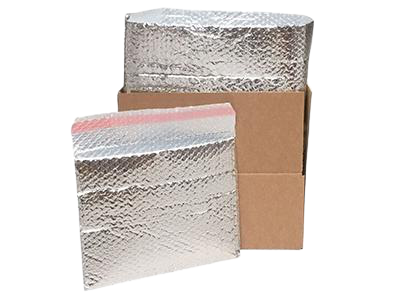
The material decision behind thermal box liner import should be connected to the shipment task. A common structure is a foldable insulated structure made from foil bubble, EPE foam, fiber, or panel materials to reduce heat transfer inside a carton. Buyers may also evaluate EPE foam, metallized film, paper insulation, fiber panels, vacuum insulation panels, or hybrid structures when the product or route requires more control.
Reflective foil surfaces help reduce radiant heat transfer when they face an air space. Bubble and foam layers add low-density insulation and cushioning. Paper and fiber formats may improve disposal options, while rigid panels can improve shape control. Each material has trade-offs in thickness, moisture behavior, compression resistance, recyclability, and cost.
The liner should be sized from usable internal dimensions, not only from the outside size of the carton.
Pack-out fit should be reviewed with real contents. The payload, refrigerant packs, dividers, absorbent pads, temperature loggers, and documents all occupy volume. When the liner is too tight, operators may force the flap closed, deform gel packs, or leave a gap. When it is too loose, extra air space can reduce the effective thermal mass of the pack-out.
Closure details are easy to underestimate. A liner with a wide flap, reliable adhesive, or pre-formed gusset can reduce packing variation. A liner that requires multiple folds or careful taping may work in a test but fail during high-volume fulfillment.
Match the Liner to the Temperature Strategy
A liner reduces heat gain or heat loss, while refrigerants provide thermal capacity. Gel packs, ice bricks, dry ice, and phase change materials should be chosen according to the product's target condition. The liner and refrigerant must be designed as one pack-out.
Chilled products may need protection from warming without direct freezing contact. Frozen products may require more insulation, different coolant placement, or dry ice controls. Controlled room temperature products may need protection from both heat and cold. A generic cold pack layout can create product damage if the temperature range is not defined.
Payload mass matters because the product itself carries thermal energy. A full box of dense seafood portions behaves differently from a small vial kit, a cosmetic bottle, or a lightweight meal component. The liner should be tested with the real payload or a representative thermal mass.
Practical Use Cases and Limits
thermal box liner import is most useful when the shipment needs a compact thermal barrier for perishable food, seafood, grocery, meal kits, cosmetics, diagnostic samples, and other temperature-sensitive goods. The liner can improve protection without replacing the outer carton or cooler, and it can simplify packing when the design is repeatable.
The liner should be selected for the product's real sensitivity, route duration, and handling conditions rather than by material name alone. A short local shipment, a weekend parcel lane, and an international lane with airport dwell time have very different risk profiles.
For import programs, inbound freight cube is a major cost driver. Folded liners, carton count per master case, palletization, and compression resistance should be reviewed before placing a large order. Importers should also confirm material declarations and any food-contact or disposal requirements relevant to the destination market.
The main limitation is that a liner slows heat movement; it does not stop heat movement. Performance depends on the outer box, pre-conditioning, payload thermal mass, refrigerant mass, headspace, closure quality, and the outside temperature profile during transport.
Temperature Control, Compliance, and Risk Boundaries
A thermal box liner should be treated as an insulation component, not as an automatic compliance solution. It can reduce heat transfer inside a carton, cooler, tote, or container, but it does not by itself prove that the shipment will stay within a required temperature range.
For medicines, vaccines, biologics, diagnostics, and samples, the packaging decision should be reviewed with quality and logistics teams. The required temperature range, shipment duration, payload volume, packing configuration, refrigerant type, route conditions, ambient exposure, receiving inspection, and documentation all affect whether a system is suitable.
The difference between a protective outer package and a qualified thermal shipper is important. A waterproof liner, reusable box, or foil surface may protect against moisture or heat gain, but those features do not automatically create a validated temperature-controlled shipping system.
Buyers that need route evidence should request test data that reflects real pack-out conditions. Useful data includes payload mass, refrigerant conditioning, sensor placement, ambient profile, pass or fail criteria, and any assumptions used during the test. A broad statement such as 'keeps cold for 24 hours' is not enough for high-risk shipments.
How It Compares With Related Packaging Options
A thermal box liner is lighter and more flexible than many rigid foam coolers, but it usually provides less structural protection. It can be a good choice when the outer carton already provides stacking strength and the route is short enough for a liner-based pack-out.
Rigid insulated boxes, EPP boxes, PU boxes, and VIP boxes may be more appropriate when the route is longer, the payload is high value, or the temperature range is narrow. These options can support more controlled pack-outs, but they also change cost, storage space, return logistics, and cleaning requirements.
Helpful decision tools
Check the details before you choose packaging
These quick tools can help you compare route risk, sizing needs, coolant choices, and packaging details before you request a quote.
Insulation Material Drop Resistance
Review drop resistance and handling factors before choosing insulation materials.
Check resistanceIce Pack Calculator
Estimate gel ice pack quantity for chilled shipments and practical route planning.
Estimate ice packsBox Liner & Pallet Cover Sizing
Check box liner and pallet cover sizing logic for insulated packaging projects.
Estimate sizingThermal pallet covers and container liners address a different scale. They help protect palletized or bulk cargo from ambient exposure, especially during loading, staging, or cross-docking. They do not replace parcel-level insulation when each inner carton needs its own thermal protection.
Refrigerants are a separate decision. Gel packs, ice bricks, phase change materials, and dry ice each work differently. The liner slows heat transfer; the refrigerant provides thermal mass or phase change capacity. The two must be designed together.
What to Check Before Placing a Bulk or Custom Order
Start with the shipment profile before comparing suppliers for thermal box liner import. Define the product temperature requirement, expected transit duration, maximum ambient exposure, payload size, and the number and type of refrigerants. A supplier cannot recommend a reliable liner from a product name alone.
Check internal and external dimensions separately. The outside size may match the carton, but the inside usable volume is what determines whether the payload, gel packs, separators, absorbent pads, and paperwork can all fit without crushing the closure.
Ask how the liner is sealed. Adhesive strips, fold-over flaps, heat-sealed edges, gussets, and pre-formed corners behave differently during packing. A weak closure can create air gaps and reduce the value of good insulation material.
Review sample-to-production consistency. A sample made with one foil thickness, bubble height, panel density, or adhesive tape should not be replaced in production without notice. For regulated or high-value shipments, material changes should be controlled and documented.
Evaluate storage and assembly. Fold-flat liners reduce inbound freight and warehouse cube, but they must be easy to open, square into the box, and close quickly during peak packing hours. The best specification is one that operators can repeat accurately.
Confirm quality checks. Buyers should ask suppliers how they inspect dimensions, edge sealing, surface damage, pinholes, contamination, printing alignment, and carton packing count. These controls are more useful than broad claims about insulation.
Import buyers should compare landed cost, carton cube, packing quantity, duties, declarations, lead time, and sample-to-production consistency. A low unit quote can become expensive if the liner ships with too much air, arrives folded incorrectly, or lacks the documentation needed by the receiving market.
Cost, Pricing, and Total Value
Unit price is only one part of the decision. The total cost of a liner includes inbound freight, storage cube, packing labor, carton size, refrigerant quantity, damage rate, disposal complaints, and the cost of rejected products. A slightly cheaper liner can be expensive if it increases spoilage or forces a larger carton.
Customization can reduce cost when it removes wasted space or speeds packing. It can increase cost when it adds printing, tooling, special sealing, or low-volume production. The buyer should compare the practical benefit of each custom feature against the additional complexity.
For importers, exporters, distributors, and wholesalers, pricing should be tied to the specification. Quotes should state size, material structure, packing count, carton dimensions, tolerance, printing requirements, and delivery terms. Without these details, two quotes may not be comparable.
A Practical Approval Process
A careful approval process starts with a sample brief. Provide the supplier with product dimensions, payload weight, target temperature range, expected duration, carton size, refrigerant plan, and whether the shipment is food, seafood, pharmaceutical, cosmetic, or another category.
Next, review a packed sample rather than a flat liner. Check flap closure, headspace, product movement, cold pack position, label placement, and whether warehouse staff can assemble the pack-out quickly. If the liner is recyclable or printed, test the unboxing and disposal instructions.
Then run a controlled trial. The trial should include realistic ambient exposure, sensor placement where useful, carrier handling assumptions, and acceptance criteria. For regulated or high-value shipments, the trial should be documented and reviewed under the buyer's quality process.
Finally, lock the specification. Record material structure, dimensions, tolerance, packaging count, artwork, closure type, and any approved substitutes. Ask the supplier to notify you before material, adhesive, foil, foam, paper, or process changes.
Operating the Liner in Daily Shipments
A good specification can still fail if daily operations are inconsistent. Operators should know which carton to use, how to open the liner, where to place the product, where to place cold packs, how to close the flap, and when to add absorbent pads or separators.
Pre-conditioning matters when refrigerants are used. Gel packs, ice bricks, dry ice, or phase change materials should be prepared according to the target temperature strategy. A warm gel pack placed in a good liner will not protect a chilled product.
The receiving process should also be defined. Staff should inspect outer carton condition, liner closure, leakage, temperature indicators or data logger results when used, and the condition of the payload. Any excursion or damaged pack-out should be handled through a documented decision process.
Seasonal changes should be reviewed. A summer route, winter route, holiday delay, or airport dwell event can change the temperature profile. Buyers should avoid approving one liner for every lane unless the risk review supports that decision.
Final Buying Guidance
The best thermal box liner is not necessarily the thickest, cheapest, or most heavily promoted option. It is the liner that fits the route, protects the payload, supports the temperature strategy, and can be supplied consistently.
Use conservative claims in your own operating procedures. A liner can support cold chain packaging, but it does not automatically make a shipment temperature-controlled. Route, duration, refrigerant conditioning, ambient exposure, payload, and receiving checks still determine the result.
When comparing suppliers, give preference to clear specifications, practical sample support, responsive quality control, and honest discussion of limits. A supplier that explains where a liner is not enough is often more useful than one that promises broad performance without pack-out data.
FAQ
Can a liner replace an insulated shipping box? Usually not. A liner can improve thermal protection inside a carton or cooler, but a qualified shipping system may still need a tested outer container, refrigerants, sensors, and route-specific documentation.
What should importers check before ordering? Importers should confirm material composition, carton count, packing method, dimensional tolerance, customs documentation, lead time, and whether the sample matches the planned production structure.
Is thicker always better? Not always. A thicker liner may add insulation, but it can reduce payload space, increase freight cube, slow packing, and change refrigerant placement. The best choice balances protection and operational fit.
About Tempk
Tempk supports cold chain packaging programs with gel ice packs, dry ice packs, ice bricks, EPP insulated boxes, cold shipping boxes, insulated box liners, thermal pallet covers, and related temperature-control materials. For thermal box liner projects, we focus on practical fit, pack-out compatibility, and custom options such as size, structure, and printing where appropriate. Our recommendations are tied to shipment temperature range, expected duration, payload, and handling conditions rather than treating any liner as a standalone guarantee.
Next Step
Share your target temperature range, route duration, payload size, carton or cooler dimensions, and order volume to discuss a liner format that fits the shipment and the purchasing plan.