Insulated Box Insert Custom: How to Choose the Right Liner for Real Shipments
Insulated Box Insert Custom should be compared through the lens of performance, fit, and total operating cost. A custom insulated box insert can be a practical way to upgrade a corrugated carton for chilled, frozen, or heat-sensitive shipments, but it only works when the liner, coolant, product, carton, route, and handling process are designed as one package.
A useful decision starts with a clear shipment brief: product type, required temperature range, shipment duration, carton size, payload volume, coolant plan, seasonal exposure, order quantity, and receiving expectations. Once those facts are defined, insulated box insert custom can be reviewed fairly across suppliers instead of judged by a single number.
Quick Answer for Buyers
Choose a custom insulated box insert only after confirming three things: it fits the carton and payload, it supports the required temperature objective for the intended route, and the supplier can repeat the specification at the required quantity. If any of those points is unclear, the price is not yet comparable.
For lower-risk shipments, a flexible insulated liner may provide enough thermal buffering when paired with the right coolant and delivery window. For high-risk food, pharmaceutical, biological, or long-route shipments, additional testing, monitoring, or a qualified shipper may be required. The liner should be treated as one component in a larger packaging system.
How the Liner Creates Value
A custom insulated box insert creates value by slowing heat transfer, improving carton interior protection, and making the pack-out easier to repeat. It can also help buyers use standard corrugated cartons rather than switching every shipment to a rigid cooler. This flexibility is one reason custom insulated box inserts are common in food e-commerce, seafood, dairy, cosmetics, lab kits, and selected healthcare shipments.
The value is not only thermal. A liner can reduce handling damage, keep gel packs in a predictable position, improve the unboxing experience, and reduce warehouse space when it ships flat. For bulk buyers, these operational benefits can matter as much as the material price.
Materials and Formats to Compare
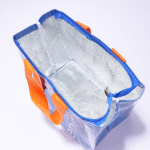
Material choice sets the baseline for Custom Insulated Box Insert performance and cost. Reflective bubble liners are light and compact. Double bubble designs can add stiffness and buffering. Foam liners can provide cushioning and stable thickness. Paper or fiber liners can support waste-reduction goals when the recycling route is realistic. Hybrid structures can combine benefits, but they can also make end-of-use separation harder.
Buyers should avoid choosing by material name alone. Ask how the liner is converted, how the edges close, whether the liner fits the intended carton, how much usable payload space remains, and how the material behaves when exposed to condensation, compression, or repeated handling.
Price Drivers That Should Be Visible in the Quote
Material type and thickness influence the price of custom insulated box inserts, but they are not the only cost drivers. The number of layers, film weight, foam density, bubble structure, paper basis weight, surface finish, adhesives, and edge sealing all affect raw material and conversion cost.
Dimensions matter because a small change in carton size can increase material usage and shipping cube. Buyers should compare external dimensions, internal dimensions, liner thickness, and usable payload volume. A liner that fits the carton too loosely can waste space and allow air movement; one that fits too tightly can crush corners or complicate packing.
Order quantity affects setup efficiency, but the lowest unit price usually appears when the specification is stable. Custom size, printed foil, special labels, new tooling, sampling, and small production lots can raise cost. In return, customization may reduce labor, improve fit, and lower product damage when done correctly.
Freight and storage costs should be included in the comparison. Foldable liners can reduce warehouse cube and inbound transport cost compared with bulky rigid insulation. However, very thick liners, complex inserts, or large order quantities may still create storage pressure. For export orders, pallet packing and carton count often matter as much as unit price.
A practical quote should separate material cost from optional cost. Ask suppliers to identify custom printing, tooling, labelling, testing support, packaging format, and freight terms. Clear quote lines make it easier to compare vendors without accidentally comparing different products.
Performance Boundaries and Misuse Risks
A liner is not the same as a fully qualified temperature-controlled shipping system. It slows heat transfer inside a carton, but the final result still depends on product pre-conditioning, coolant type, pack-out, closure quality, ambient exposure, delivery duration, and how the parcel is handled after pickup.
A custom insulated box insert may be insufficient when the route is long, the ambient exposure is severe, the product has a narrow allowable range, or the payload has high value. In those cases, buyers may need a qualified insulated shipper, a different refrigerant, more robust monitoring, active temperature-controlled transport, or a validated packaging configuration.
Water resistance should not be confused with temperature control. A liner may resist condensation or light liquid exposure, but that does not prove it can maintain a required temperature. Recyclability should not be confused with sustainability either. A recyclable liner that fails and causes product waste may create a worse outcome than a less recyclable design that protects the product reliably.
Custom inserts should be designed around the product and refrigerant together. A beautiful insert that squeezes gel packs into the wrong location or reduces payload space can weaken temperature control. CAD drawings, dielines, assembly trials, and pilot shipments help prevent this type of error.
Food, Pharma, and Route Requirements
Thermal packaging decisions should be grounded in a defined temperature requirement. Food shipments may focus on product freshness, spoilage reduction, and sanitary handling. Pharmaceutical and biological shipments may require documented storage conditions, qualified pack-outs, calibrated monitoring, deviation handling, and records. The same liner can appear in both worlds, but the evidence required is not the same.
Industry testing standards and qualification practices are useful because they force the buyer to define the expected route, time, seasonal exposure, payload, and pack-out. Parcel testing profiles, thermal chamber studies, and lane data can help compare designs, but the result applies to the tested configuration. Changing carton size, product mass, coolant amount, or closure method can change performance.
For medicines and other temperature-sensitive healthcare goods, packaging selection should consider product labeling, storage range, anticipated external temperatures, transport duration, and the space required for the shipment. Staff should also understand how to assemble insulated boxes so that coolants do not damage product directly and the intended seasonal configuration is followed.
For food transport, buyers should remember that packaging is only one control. Vehicles or equipment may need to be cleanable and capable of maintaining required temperatures. Loading, transit, receiving, and record practices may be part of the food safety system depending on jurisdiction and product category.
Helpful decision tools
Check the details before you choose packaging
These quick tools can help you compare route risk, sizing needs, coolant choices, and packaging details before you request a quote.
Coolant & PCM Reference
Compare coolant and PCM options when a route needs added temperature support.
Compare optionsBox Liner & Pallet Cover Sizing
Check box liner and pallet cover sizing logic for insulated packaging projects.
Estimate sizingCompliance Checklist Generator
Build a practical checklist for packaging review, shipping, and documentation.
Build checklistPractical Supplier Checklist for Quotes and Bulk Orders
Because custom packaging specification and supplier evaluation is a purchasing decision, the supplier conversation should go beyond a unit price. A useful supplier can explain where the liner performs well, where it does not, and what information is needed before a pilot or bulk order. The following questions help turn a quote into a controlled specification.
Confirm internal and external dimensions separately. The outside size affects carton fit and palletization, while the inside size determines usable payload after liner thickness, folds, refrigerants, and void fill are included.
Ask how the supplier controls sample-to-production consistency. A pre-production sample may perform well, but production lots must match the agreed laminate, thickness, seal width, adhesive, fold pattern, and carton fit.
Define the pack-out before quoting. State the product temperature range, payload mass, coolant type, coolant weight, shipment duration, route, seasonal exposure, and receiving inspection process. A quote without these inputs is only a material quote, not a shipping solution.
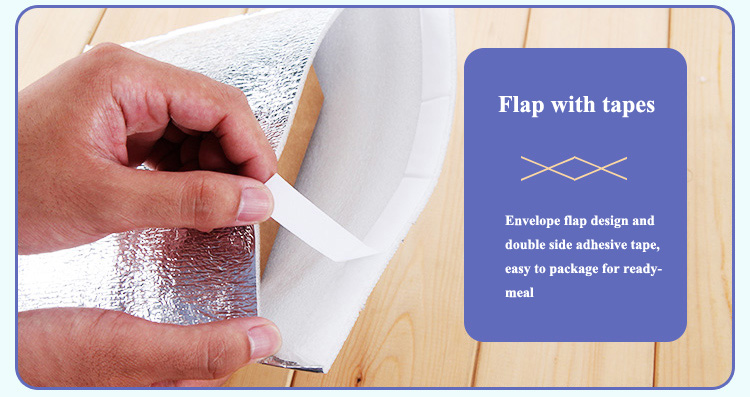
Review closure and assembly details. Flaps, tape strips, fold lines, gussets, and seams affect packing speed and heat leakage. Small changes can matter when hundreds or thousands of parcels are packed each day.
Clarify MOQ, lead time, custom printing, labeling, pallet packing, and change-control rules. These commercial points affect cost, but they also affect how quickly a buyer can switch carton size or update a material specification.
Check hygiene, odor, moisture resistance, and traceability needs. Food and healthcare buyers may require lot coding, clean packaging conditions, material statements, and procedures for handling rejected or damaged liners.
For custom inserts, request dielines, pre-production samples, assembly instructions, and a change-control process before approving a production run.
How to Run a Pilot Before Scaling
A pilot order for custom insulated box inserts should use the actual packaging configuration. Pack the product or a realistic payload, condition coolant as intended, close the carton the same way production workers will close it, and expose the parcel to the planned route or a relevant test profile. Record product temperature, ambient exposure, packing time, product condition, and receiver feedback.
The pilot should include enough samples to reveal assembly variation. One perfect pack-out by an engineer does not prove that a busy packing team can repeat the method. Include normal operators, peak packing conditions where possible, and clear instructions. If a liner is difficult to fold or close, correct it before bulk ordering.
Use pilot results to refine dimensions, fold pattern, coolant amount, carton strength, and receiving instructions. Then lock the specification with the supplier. A controlled specification protects price, quality, and performance across reorders.
Cost Control Without Losing the Cold Chain Objective
Cost control for custom insulated box inserts starts with reducing uncertainty. Buyers should test the smallest liner that protects the payload under the intended route, rather than automatically choosing the thickest or cheapest material. Right-sizing can reduce material, carton cube, coolant weight, and storage cost at the same time.
Standardizing carton sizes can also reduce cost. If several products can use the same liner size without compromising payload space, the buyer may gain better production efficiency and simpler inventory control. However, over-standardization can backfire when the same liner is forced into products with very different thermal risk.
Packing labor is another hidden cost. A liner that pops open quickly, has clear folds, closes with a reliable flap, and keeps gel packs in a repeatable position can reduce errors. A liner that needs extra tape, extra training, or rework may be more expensive than the quote suggests.
The most useful comparison is often total cost per successful shipment. That view includes liner price, coolant use, carton cost, labor, freight cube, storage, claims, disposal, and product loss. It also encourages buyers to choose a specification that can be repeated safely across seasons.
FAQ
What is the most important factor in insulated box insert custom?
The most important factor is whether the quote matches a defined shipment configuration. Material price alone is not enough.
Can one liner size cover every product?
Sometimes one size can cover a group of similar products, but forcing one liner across different payloads can waste cube or reduce protection.
How should buyers compare sustainability claims?
Ask what the material is, whether it is accepted in the intended recycling stream, whether separation is required, and whether the liner still meets the route performance target.
When should a buyer request additional qualification?
Request additional qualification when the product is high value, regulated, sensitive to narrow temperature ranges, shipped on long or harsh lanes, or changed from the tested pack-out.
About Tempk
Tempk supports cold chain and temperature-controlled packaging with products such as insulated box liners, gel ice packs, dry ice packs, insulated bags, cooler boxes, and thermal pallet covers. For custom insulated box insert projects, we focus on practical carton fit, lightweight handling, foldable storage, and customization that can match a buyer's shipment profile. Our role is to help buyers compare material choice, pack-out design, and order requirements without treating one liner as a universal answer for every product or route.
Get Packaging Guidance
Share your carton size, temperature range, route duration, payload, and target order quantity to discuss a suitable custom insulated box insert option. Ask for guidance before scaling a bulk or custom order.