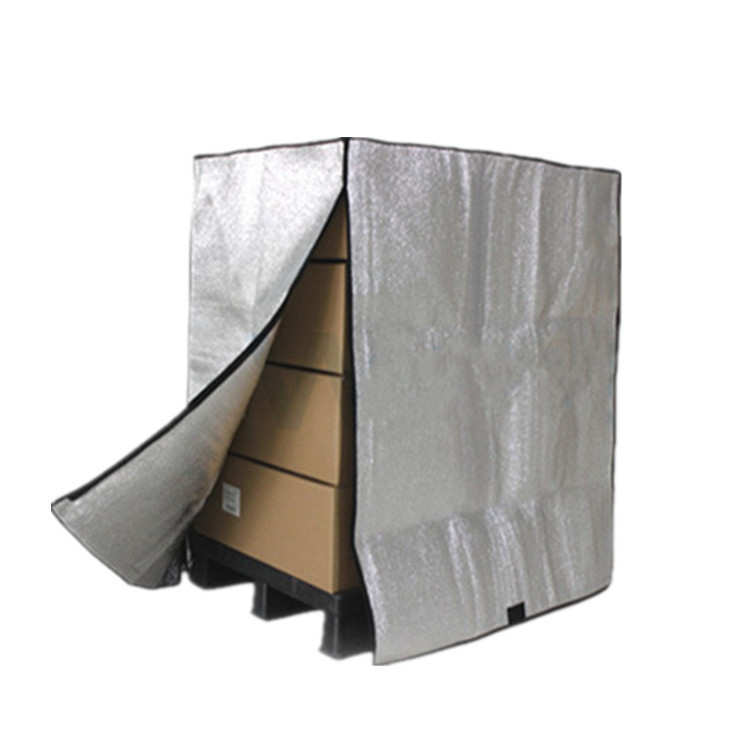
A Practical Guide to thermal shipping covers for wine
Thermal Shipping Covers For Wine are best understood as a pallet-level risk control for moments when bottled wine, boxed wine, premium beverage cartons, and winery distribution pallets leave the most protected part of the cold chain. They can slow heat transfer, reduce exposure during handovers, and support a more consistent shipping procedure. They should not be treated as a universal replacement for refrigerated equipment, qualified packaging, monitoring, or product-specific handling rules.
The right choice starts with the lane. Ask where the pallet sits, who handles it, how long it may be exposed, whether the bottom and corners are protected, and what evidence your team needs before approving repeat use. When those questions are answered, the cover becomes a practical tool rather than a decorative layer around the pallet.
Define the job before defining the product
A common buying mistake is to start with a product specification and then try to force it onto every lane. A better method is to define the job. For wine shipments, the job may be to protect a pallet during loading, reduce short dock exposure, shield cargo during an airport transfer, support warehouse staging discipline, or add a buffer during seasonal heat or cold. Each job points to a different cover design.
If the job is short staging, speed and ease of use may matter more than heavy insulation. If the job is export handling, receiver-friendly removal and clear labeling may matter more. If the job is repeated regional distribution, return and cleaning may decide whether reusable covers are economical. If the job is sensitive healthcare or high-value cargo, documentation and quality review may carry as much weight as material construction.
This approach also prevents overclaiming. A cover can slow heat transfer at the pallet surface; it does not create active cooling or heating by itself. It supports the process only when the process is defined. Before asking which cover is best, ask what problem the cover is supposed to solve and what result would count as success.
Map the pallet’s real exposure
The most useful lane map begins at the moment the pallet is complete. From there, trace every step through winery warehouse, distributor dock, truck route, port, air cargo terminal, or retail distribution center. Note when the pallet leaves a controlled area, whether it waits near a dock door, how it is loaded, whether it passes through a terminal, and what happens at receiving. Many teams discover that the main risk is not the longest travel segment but a short uncontrolled waiting period.
For bottled wine, boxed wine, premium beverage cartons, and winery distribution pallets, the map should include product state at the start of shipment. A cover is more effective when the load is already at the intended condition. If the product is still cooling, not fully conditioned, or outside specification, covering it may slow the correction. This is why use the wine owner’s quality target and route risk; do not apply pharmaceutical or frozen-food ranges to wine.
The map should also show who is responsible at each point. A cover that is applied by the origin team but removed too early by the carrier may not protect the intended exposure. A reusable cover that reaches the receiver without return instructions may disappear. Procedure ownership turns passive equipment into a managed control.
Match the cover structure to the route
Cover structure should follow route needs. Reflective surfaces are useful where radiant heat and sunlight are important. Insulating cores slow heat movement around the pallet. Reinforced seams and closures matter where pallets move through forklifts, trailers, or terminals. A bottom sheet or base strategy may matter when the pallet sits on hot pavement, cold floors, or dock plates.
For wine buyers, the fit details are often more important than the marketing name of the product. Check the wrapped pallet height, carton bulge, corner protectors, label windows, straps, and scanner access. Ask whether the cover can be secured by workers wearing gloves or working quickly. A small fit problem can create an air channel, blocked barcode, or operator shortcut.
The material decision should also consider cleaning and storage. Wine distributors with repeated lanes often care about reusable covers, folding volume, and recovery after delivery. If the route is one-way or the receiver cannot manage returns, a different format may be more realistic. If the route is closed-loop, a more durable reusable cover may be worth considering, provided inspection and cleaning are built into the process.
What to verify with suppliers
| Buyer question | Why it matters for this keyword | Risk if ignored |
|---|---|---|
| What pallet size and height does the cover actually fit after the load is wrapped? | Confirms physical fit and role in the route | The cover may leave gaps or be used for the wrong purpose |
| Is the stated performance based on a test profile that resembles the shipment route? | Connects performance to lane conditions | Claims may not apply to your pallet or exposure profile |
| How should the bottom of the pallet, corners, and label areas be protected? | Keeps operations workable at shipping and receiving | Labels, loggers, or inspection steps may be blocked |
| Can the same cover be cleaned, folded, returned, and inspected consistently? | Supports repeatability and quality review | A changed material or poor return process can create inconsistencies |
| What documentation is available for materials, dimensions, and thermal testing? | Shows whether the supplier can support purchasing review | The buyer may lack evidence for approval or scale-up |
This supplier review is not about making the purchase difficult. It is about preventing a cheap sample from becoming an expensive operating problem. If a supplier can answer these questions clearly, the buyer can compare options on route fit rather than price alone.
When pallet covers are a good fit
thermal shipping covers for wine are a good fit when the risk is temporary, visible, and repeatable. They are useful when a pallet moves through a short uncontrolled zone, waits during loading, passes through a terminal, or needs added protection while still relying on the main cold-chain process. They can also help standardize warehouse behavior by giving staff a clear action when a pallet leaves the controlled area.
Helpful decision tools
Check the details before you choose packaging
These quick tools can help you compare route risk, sizing needs, coolant choices, and packaging details before you request a quote.
Compliance Checklist Generator
Build a practical checklist for packaging review, shipping, and documentation.
Build checklistPackaging Selector
Compare insulated packaging options by product, route, and temperature need.
Find packagingInsulation Material Drop Resistance
Review drop resistance and handling factors before choosing insulation materials.
Check resistanceThey are not a good fit when the route has no temperature-control discipline, when products regularly start outside their required condition, when exposure lasts longer than the cover was designed for, or when no one owns application and removal. For wine cargo, they may also be insufficient when the product needs a qualified shipper, active container, monitored reefer, or formal lane qualification.
The best answer is sometimes a combination. A pallet cover may be paired with refrigerated transport, insulated liners, coolant packs, or a stronger staging SOP. The cover does not need to solve every problem to be valuable. It needs to solve the right part of the problem.
A realistic implementation workflow
- Identify the product requirement and confirm the acceptable condition for bottled wine, boxed wine, premium beverage cartons, and winery distribution pallets.
- Map the route and mark each uncontrolled or semi-controlled exposure point.
- Measure a fully wrapped pallet, including top height, corners, labels, and any monitoring device.
- Test a sample cover with warehouse staff during the actual loading or staging workflow.
- Review available thermal evidence and check whether the test conditions resemble the route.
- Write a simple procedure covering application, removal, inspection, storage, cleaning, and return.
- Use receiving feedback and, where appropriate, temperature monitoring to decide whether to scale the cover to repeat shipments.
This workflow keeps the decision connected to real operations. It also creates a record that procurement, logistics, and quality teams can discuss together. That shared review is especially useful when the first sample seems acceptable but the business is preparing for larger or more regular shipments.
Practical example: from sample to repeat lane
Imagine a buyer evaluating thermal shipping covers for wine after seeing exceptions on one route. The team first confirms that the main storage and transport equipment are working. Then it reviews the lane and finds that pallets wait near a door during route sequencing. A sample cover is tested on the real wrapped pallet, with staff timing application and checking label access. The receiver records whether the cover arrives correctly fitted and whether the pallet condition is acceptable.
After the trial, the buyer does not approve the cover simply because it looked strong. The buyer checks whether the cover was used at the right point, whether staff found it practical, whether documentation was sufficient, and whether the route behavior improved. If the answer is yes, the cover can be added to the SOP. If the answer is no, the team may adjust the staging process, choose another cover structure, or use a different temperature-control method.
FAQ
Are thermal shipping covers for wine enough for full temperature control?
No. thermal shipping covers for wine provide passive insulation and surface protection, but they do not actively cool or heat the load. They are most useful when they reduce exposure during predictable risk points such as staging, handover, and loading. For strict temperature requirements, you still need product-specific handling rules, suitable transport equipment, and a monitoring plan.
What should be verified before ordering pallet covers?
Start with seasonal heat, winter freeze risk, label condition, pallet appearance, and distribution timing. Then ask for the actual fitted dimensions, material construction, closure design, cleaning method, and any test documentation that matches your expected lane. A cover that looks suitable in a catalog may not work on a wrapped, uneven, or taller-than-standard pallet.
Do wine shipments need cooling covers or heat covers?
The answer depends on season, lane, and quality target. Wine often needs protection from heat spikes, but cold weather can create freeze risk. A thermal cover should be selected after reviewing where the pallet sits, how long it waits, and whether the route includes hot yards, cold docks, or mixed climate zones.
Will a cover protect bottle labels and cartons?
A cover can reduce exposure to sun, rain, and dust, but it must be easy to apply and remove without catching on cartons or damaging labels. For premium wine, presentation matters at receiving, so buyers should review cover texture, closure method, and handling training.
Conclusion
The best use of thermal shipping covers for wine is not to promise perfect temperature control, but to reduce known exposure at pallet level. Start with the product requirement, map the route, confirm how long the pallet may sit outside the intended zone, and check whether the cover fits the wrapped load in real operation. Then ask for documentation that supports the material, dimensions, and intended use. When those basics are clear, a pallet cover becomes a practical part of the cold-chain plan rather than a hopeful add-on.
About Tempk
Tempk works with B2B buyers comparing cold-chain packaging for real lanes, including pallet covers, insulated bags, liners, cooler boxes, and cooling packs. For this topic, our role is to help you ask the right fit questions: what is being shipped, where exposure occurs, how the pallet is handled, and what evidence your team needs before scaling from sample to repeat orders.
Send Tempk the product category, pallet format, and shipping lane you want to protect, and we will help you identify practical packaging options.