refrigerant gel for cold chain Spain manufacturer: practical supplier selection for cold-chain buyers
A practical decision on refrigerant gel for cold chain Spain manufacturer starts with the product and lane, not the catalog photo. Refrigerant gel packs for cold-chain programs in spain and eu-linked routes can be useful in Spain, EU distribution, and export-oriented cold-chain programs, but only when the pack size, film, fill, conditioning method, insulation, and handling plan match the shipment you actually run.
This article focuses on how to choose a supplier, what to verify before bulk ordering, and where a gel pack should be replaced or supported by a different temperature-control design. A Spain-focused buyer should link refrigerant gel selection to EU documentation and lane risk.
Fast answer for buyers
Choose refrigerant gel packs for cold-chain programs in Spain and EU-linked routes only after defining product sensitivity, route exposure, usable space, conditioning steps, and proof requirements. A dependable supplier should help you compare samples, confirm production tolerances, explain leakage control, and avoid overpromising performance that depends on your exact shipper and lane.
Set the boundary before you compare suppliers
A common sourcing mistake is to treat every cold item in the box as a temperature-control solution. Refrigerant gel packs for cold-chain programs in spain and eu-linked routes provide cooling capacity, but they do not create a qualified lane by themselves. The complete result comes from the combination of coolant, shipper insulation, product mass, void fill, loading pattern, pre-conditioning, transport time, ambient exposure, and receiving procedures.
That distinction matters for Spanish distributors, EU food and pharma logistics buyers, packaging resellers, and manufacturers sourcing cold-chain refrigerant components. If your buyer only asks for a pack size and a price, the quote may look simple, but the operating risk remains hidden. If your buyer defines the use case first, the supplier can recommend a format that supports the product instead of merely matching a dimension.
The safest brief describes the product category, target range, minimum and maximum expected transit time, handover points, carton layout, and any restriction on direct contact. It should also state whether the pack is for one-way delivery, closed-loop reuse, kit assembly, or distributor stock. Refrigerant gel is only one part of a passive system. EU medicinal-product lanes may require qualified thermal packaging, monitoring, route risk assessment, and quality review.
Spain and EU route notes for refrigerant gel buyers
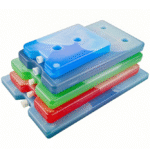
Spanish food and healthcare buyers often need a packaging discussion that can support both domestic routes and EU-linked distribution. The supplier should explain whether the refrigerant gel is intended for flexible pouch packouts, rigid bricks, reusable totes, or insulated parcel shippers. Each format changes storage, loading, and return handling.
For medicinal products, the product owner and quality team should define required storage conditions before the packaging discussion. For food and premium perishable products, appearance, odor, moisture control, and retail presentation may be just as important as the thermal curve.
Match the gel pack to the route you actually operate
A Spanish food exporter may need a refrigerant gel format that fits a branded insulated carton while a healthcare distributor needs a more controlled packout with documentation. In that situation, the supplier conversation should not stop at whether the gel pack is reusable or printable. The buyer should ask how the pack sits around the payload, whether it creates pressure points, how much usable internal space remains, and whether the preparation method can be repeated by warehouse staff during peak periods.
Route length is only part of the picture. A short route with a long loading dock wait can be riskier than a longer route that stays inside controlled vehicles. The same pack can behave differently when it is placed against a product carton, separated by a divider, packed above the payload, or distributed around all sides of the shipper.
For food exports, seafood, meal kits, pharmacy distribution support, laboratory materials, and insulated parcel shipments moving through EU transport networks, the product owner should define what is unacceptable: warming above a limit, freezing, condensation damage, label loss, pouch leakage, crushed cartons, odor transfer, or lack of proof after delivery. Once those failure modes are named, a supplier can recommend a pack style and packout with a much clearer purpose.
Buyer checklist for comparing suppliers
| What to verify | Why it matters | Buyer question |
|---|---|---|
| Required temperature range | The coolant should support the product requirement, not an assumed generic cold range. | What temperature range does the product owner specify, and what excursion limits apply? |
| Route duration and exposure | Handover delays, loading docks, courier dwell time, and hot vehicles often create the real risk. | Which part of the route is uncontrolled, and how long can the shipper wait there? |
| Payload and usable volume | A coolant that looks strong on paper may displace too much saleable or clinical payload. | Does the packout still fit the product, buffer space, and any secondary containment? |
| Conditioning instructions | Incorrect freezing or conditioning can cause undercooling, surface freezing, or poor thermal performance. | Can warehouse staff repeat the preparation process without special interpretation? |
| Documentation and lot control | Quality teams may need traceability, sample approval records, and change-control communication. | Can the supplier keep sample specs, production specs, and shipment labels aligned? |
| Leakage and hygiene checks | A small leak can damage labels, cartons, diagnostic documents, or consumer packaging. | What inspection method is used, and how are nonconforming packs handled? |
The table is not meant to replace testing or quality review. It helps Spanish distributors, EU food and pharma logistics buyers, packaging resellers, and manufacturers sourcing cold-chain refrigerant components turn a broad sourcing request into a usable supplier brief. If a supplier cannot answer these questions clearly, the buyer may still purchase a low-cost coolant, but the operational risk will remain with the shipment owner.
For bulk orders, the same checklist should be used again after sample approval. A production unit must match the approved sample in the details that affect fit, freezing, leakage, and staff handling. A small difference in pouch size or carton packing can create a real loading problem in the final operation.
The decision rule: prove the weak point, not the easy point
Many evaluations prove what is already easy to prove: the pack freezes, the pouch is printable, or the unit price meets the target. The better evaluation focuses on the weak point of the shipment. That may be a hot loading dock, a freeze-sensitive product, a small kit with no void space, a reusable route with poor return control, or a warehouse team that cannot condition packs consistently.
Once the weak point is known, the supplier conversation becomes more precise. The buyer can ask for a different pack geometry, a barrier layer, a rigid brick, a tighter sample specification, or a more cautious packout recommendation. That is how a simple gel pack purchase becomes a controlled cold-chain procurement decision.
Ask for evidence in the form your quality team can use
For healthcare, laboratory, and biotech shipments, buyers should separate a supplier claim from a documented packaging decision. The CDC warns that frozen gel packs can still create freezing risk for refrigerated vaccine transport, and it treats routine vaccine transport as a planned process with appropriate containers, coolants, monitoring, and staff procedures. That principle is useful even when the article is not about vaccines: a coolant choice must be reviewed against the product's actual sensitivity.
For EU medicinal-product distribution, GDP guidance emphasizes maintaining required storage conditions during transportation within limits described by the manufacturer or outer packaging. It also points to suitable vehicles and equipment, route risk assessment, and calibrated monitoring where temperature control is required. This does not mean every gel pack needs the same documentation; it means the buyer should know when a simple commercial coolant is insufficient.
Air cargo adds another layer when healthcare shipments are booked as time and temperature sensitive. IATA's healthcare cargo guidance identifies temperature-management requirements and the Time and Temperature Sensitive Label for applicable shipments. The packaging supplier may not control the airline process, but it should understand that packout, labeling, and documentation decisions have to fit the logistics route.
Thermal test references such as ISTA 7E can help compare insulated shipping containers under standardized profiles. They should not be described as a guarantee that one packout works on every route. Use them as part of a practical evidence package alongside product requirements, lane exposure, payload layout, and acceptance criteria.
Helpful decision tools
Check the details before you choose packaging
These quick tools can help you compare route risk, sizing needs, coolant choices, and packaging details before you request a quote.
Compliance Checklist Generator
Build a practical checklist for packaging review, shipping, and documentation.
Build checklistCoolant & PCM Reference
Compare coolant and PCM options when a route needs added temperature support.
Compare optionsIce Pack Calculator
Estimate gel ice pack quantity for chilled shipments and practical route planning.
Estimate ice packsBecause this keyword has an EU-linked market context, the buyer should be careful with broad language such as compliant refrigerant gel or approved cold-chain pack. The safer question is whether the selected packout and documentation support the product owner's requirements for the specific Spanish, German, or EU route.
What to confirm before scaling from sample to bulk order
A useful supplier discussion for refrigerant gel for cold chain Spain manufacturer begins with application notes, not only unit price. Ask whether the supplier can keep the approved dimensions, fill, film, color, printing, carton packing, and labeling consistent. Ask what happens if a material, pouch structure, or packing method changes after approval. For EU documentation expectations, food-grade review where relevant, pack dimensions, leakage inspection, pallet/carton efficiency, and validation support questions, change communication is part of product quality.
Samples should be reviewed in the final packout, not only on a desk. Freeze or condition the pack as warehouse staff would. Load it with the real payload or a representative dummy load. Check whether the carton closes correctly, whether the payload shifts, whether labels stay dry, and whether the pack creates local pressure. If a temperature logger is used during a trial, place it in a location that your quality team can explain later.
Bulk quotation should define what is included. Buyers often compare prices while missing the cost of printing, inner bags, master cartons, palletization, documentation, private-label requirements, inspection standards, or special packing. A low quote that excludes these details may be more expensive after corrections, rework, or damaged customer shipments.
For distributor programs, the best product line is usually not the one with the largest number of pack sizes. It is the one that covers most recurring customer routes with the least confusion. Standardizing sizes can improve inventory control, but only when those sizes have been checked against the common payloads, boxes, and temperature expectations of the distributor's customers.
Common mistakes to remove before purchase approval
Most failures are not caused by the word gel being wrong. They come from a mismatch between refrigerant gel packs for cold-chain programs in Spain and EU-linked routes, the package, the route, and the people who prepare the shipment. The following risks are worth reviewing before a buyer approves a new supplier or switches from one pack format to another.
| Risk | Why it happens | Prevention |
|---|---|---|
| Direct contact with freeze-sensitive payload | Frozen coolant can overcool local surfaces even when the average box temperature looks acceptable. | Use separation, fit testing, conditioning, or a more suitable PCM where needed. |
| Selecting only by pack weight | More coolant can reduce payload space and may create cold spots without solving route exposure. | Evaluate mass, geometry, insulation, and route profile together. |
| Ignoring carton and pallet packing | Bulk units that arrive compressed, wet, or difficult to freeze create warehouse problems. | Confirm master carton layout, pallet handling, and freezer airflow. |
| Assuming catalog hold time applies | Hold time depends on ambient profile, payload, shipper, pack count, and acceptance criteria. | Ask what test profile supports any duration claim. |
This risk review is especially relevant for Spain, EU distribution, and export-oriented cold-chain programs. The same product may work well in a controlled van route and fail in a courier route with long dwell time. The buyer should document what is known, what must be tested, and what should be treated as a supplier verification point.
Sustainability choices should not weaken temperature control
Reusable refrigerant gel formats can fit closed-loop EU routes, but one-way export programs may need recyclable or low-waste packaging decisions instead. The important point is that reuse is an operating model, not only a product feature. A reusable pack requires collection, inspection, cleaning where relevant, refreezing, storage, and loss management. If those steps are missing, a reusable pack may still become a one-way item with extra weight and cost.
One-way programs can still improve their environmental profile by right-sizing coolant, reducing damaged goods, avoiding unnecessary overpacking, and selecting materials that fit the local recovery or disposal route. A lighter pack is not automatically more sustainable if it causes returns, spoilage, or emergency replacements.
For Spanish distributors, EU food and pharma logistics buyers, packaging resellers, and manufacturers sourcing cold-chain refrigerant components, the best sustainability question is practical: which format protects the shipment with the least operational waste? That may be a durable brick for a closed loop, a soft pouch for premium cartons, a compact insert for kits, or a different PCM when a narrower temperature band must be protected.
FAQ
Is refrigerant gel for cold chain Spain manufacturer the same as a complete cold-chain shipper?
No. Refrigerant gel packs for cold-chain programs in spain and eu-linked routes are coolant components. They must be used with an insulated box, tote, mailer, or other packaging system that matches the product, route, and required temperature range. For regulated or quality-sensitive shipments, the packout may also need procedures, monitoring, and supporting thermal evidence.
What should I check before ordering samples?
Start with the product sensitivity, target temperature range, route duration, usable box space, and handling method. Then ask the supplier for dimensions, fill or shell details, conditioning instructions, leakage inspection practices, carton packing, and documentation. Samples should be tested in the intended packout rather than judged only by appearance.
Can frozen gel packs damage refrigerated products?
Yes, they can in some situations. Direct contact or poor separation can create cold spots, especially for freeze-sensitive medicines, vaccines, reagents, or certain foods. Buyers should review conditioning, separation, pack placement, and the product owner's temperature limits before using frozen packs in chilled shipments.
How should a distributor compare supplier quotations?
Compare more than unit price. Confirm what is included in printing, inner packaging, master cartons, palletization, documentation, sample revision, and change communication. A quotation that omits important packing or quality details may not be comparable to a more complete supplier offer.
When should I consider PCM instead of a standard gel pack?
Consider PCM when the product requires a narrower temperature band, greater freeze protection, a defined phase-change point, or more predictable thermal behavior under a validated packout. The decision should be based on product risk, route profile, and quality requirements, not on a general assumption that PCM is always necessary.
Conclusion
The strongest sourcing result for refrigerant gel for cold chain Spain manufacturer comes from defining the shipment before selecting the pack. Confirm the required temperature range, route exposure, payload fit, pack format, conditioning instructions, leakage controls, and documentation expectations. Avoid claiming that refrigerant gel alone makes a shipment GDP-compliant or validated.
A gel pack can be simple to buy, but it should not be treated casually when it protects valuable, sensitive, or regulated goods. A buyer that asks better questions before ordering usually saves time during sample testing, production approval, and customer launch.
About Tempk
Tempk works in cold-chain packaging for food, pharmaceutical, laboratory, and other temperature-sensitive shipments. When a buyer is comparing refrigerant gel for cold chain Spain manufacturer, our role is to help connect the coolant component with a realistic packout: product type, route, insulation, handling process, and quotation details. Tempk's product range includes gel packs, ice bricks, water-filled packs, insulated bags, EPP boxes, medical coolers, liners, pallet covers, and related cold-chain materials.
Ask Tempk for a practical packaging recommendation based on your lane, payload, and handling process. A clear brief will lead to a safer refrigerant gel packs for cold-chain programs in Spain and EU-linked routes selection.