bulk dry ice pack for vaccine delivery: Practical Selection, Packout, and Supplier Review
For vaccine delivery, bulk dry ice pack for vaccine delivery should be treated as a packout decision, not only a product purchase. The pack is only one part of a system that includes an insulated container, payload placement, separation material, labels, handling instructions, and temperature evidence. If those pieces do not work together, a low-cost coolant can become a high-cost problem. This article focuses on practical selection, supplier review, and scale-up checks for B2B buyers.
The practical approach is to turn the sourcing request into a route and packout review. That means defining the temperature job, confirming the coolant category, and requiring the supplier to explain how samples become repeatable production packs.
Define the temperature job before talking price
Temperature range is a product requirement, not a product marketing phrase. In vaccine delivery, the buyer should first identify whether vaccines, diluents, and immunization program supplies need refrigerated, frozen, ultra-cold, or other controlled handling. Many healthcare and food shipments have clearly defined storage or transport expectations, but the exact requirement must come from the product label, customer specification, quality agreement, or applicable local rules.
Dry ice can be useful because it is extremely cold, but that same property can create a failure if the product is freeze-sensitive. Hydrated dry-ice-style packs may provide a less hazardous and more flexible cold source, but they also may not match the lowest-temperature performance of solid carbon dioxide. The buyer should not choose between them based on product name alone.
A practical specification for bulk dry ice pack for vaccine delivery should therefore avoid vague phrases such as 'keep cold for long time.' A better specification states the payload condition, the pack preparation method, the insulated shipper, the duration to be tested, and the acceptance criteria. If those items are not yet known, ask the supplier for a starting recommendation and plan a controlled sample trial.
The pack is not the whole cold-chain system
A cold-chain packout has four jobs. It must slow outside heat, store enough cooling energy, keep the payload away from damaging local conditions, and provide evidence or instructions when the shipment arrives. The dry ice pack only contributes to the cooling job. It does not automatically solve insulation, documentation, warehouse training, or receiving inspection.
The most common packout details are easy to overlook. How long are packs outside the freezer before loading? Are packs placed on top, bottom, sides, or around the payload? Is there a spacer or divider? Does the product have headspace or fragile packaging? Is the box sealed immediately? Are labels placed where the carrier can see them? These details create repeatability.
For vaccine delivery, repeatability is more valuable than a dramatic cooling claim. A moderate packout that is easy for warehouse staff to prepare correctly may outperform a more aggressive setup that only works when one experienced operator builds it perfectly.
Fit by product, route, and receiver capability
A final sourcing decision should connect the product specification with the way the box will be packed and handled. The table below is a compact review tool for moving from quote to controlled rollout.
Supplier review matrix
| Decision point | Good evidence | Red flag |
|---|---|---|
| Decision point | Good evidence | Red flag |
| Product fit | Required temperature range and product sensitivity are stated before sampling. | Supplier suggests one pack for all products. |
| Packout fit | Photos, diagrams, or instructions show pack placement and separation. | Only unit size and price are offered. |
| Scale-up fit | Sample and production versions use the same material, sheet design, and closure quality. | Bulk order is sourced from a different construction. |
| Compliance awareness | The supplier explains when dry ice rules, markings, or carrier limits may apply. | The supplier treats every cooling pack as non-regulated. |
The red flags are not reasons to reject every supplier immediately. They are prompts for a better conversation. A serious supplier should be willing to clarify material identity, preparation steps, shipment limits, and change-control expectations instead of pushing the buyer toward a generic pack count.
For vaccine delivery, the best outcome is a repeatable kit: the pack size, pack quantity, shipper, barrier material, payload loading order, labels, and receiver instructions are all defined before the first large order is released.
Supplier questions that actually change the decision
A serious supplier conversation for bulk dry ice pack for vaccine delivery should sound specific. Ask what material is inside the pack, whether the product contains real solid carbon dioxide or a hydrated cold medium, how it should be prepared, whether it can be cut, how it should be placed, and what limitations the supplier sees for your product category.
Ask for production consistency information. The sample pack should represent the production pack. If the order is large, request clarity on lot control, acceptable dimensional tolerance, seal quality, packaging count per carton, storage before shipment, and what happens if raw materials change.
Ask about support beyond the pack. For bulk purchasing, the supplier should be able to discuss outer insulated boxes, thermal bags, liners, data loggers, labels, and simple packout drawings. The answer does not have to be a complete validation package at the quote stage, but it should show that the supplier understands cold-chain operations.
Control handovers and documentation
Many cold-chain problems happen at handover points. The package may sit on a dock, wait in a courier cage, be opened for inspection, be placed near a heat source, or be accepted by a receiver who does not know how to handle dry ice. These are operational risks, not defects in the pack alone.
For real dry ice, the receiver should understand ventilation and personal protection. For hydrated packs, the receiver should know whether the pack can be reused, disposed of, or returned. For monitored shipments, the receiver should know how to read or download the temperature record and when to quarantine the product for review.
A good vaccine delivery packout instruction should be written for warehouse staff, courier handoff, and receiver acceptance. It should be short enough to follow but specific enough to prevent improvised substitutions.
Red flags before bulk release
Red flag 1: the supplier cannot explain what the pack actually contains. The words dry ice pack, ice sheet, PCM pack, and gel pack are sometimes used loosely. Material identity affects temperature behavior, safety, and shipping rules.
Red flag 2: the quotation includes a fixed hold time without describing the shipper, payload, ambient profile, pack quantity, and acceptance range. Hold time without test context should be treated as promotional language, not proof.
Helpful decision tools
Check the details before you choose packaging
These quick tools can help you compare route risk, sizing needs, coolant choices, and packaging details before you request a quote.
Box Liner & Pallet Cover Sizing
Check box liner and pallet cover sizing logic for insulated packaging projects.
Estimate sizingCoolant & PCM Reference
Compare coolant and PCM options when a route needs added temperature support.
Compare optionsRoute Risk Checker
Review lane conditions before selecting packaging for real operating requirements.
Check route riskRed flag 3: the sample looks different from the production quote. Changes in cell layout, edge sealing, membrane, paper, or absorbent content can change performance. Ask whether the sample construction will be locked for the first production order.
Red flag 4: the supplier says the pack is suitable for all vaccine delivery shipments. A credible supplier should recognize limits and ask about the payload, route, temperature requirement, and receiver workflow.
Red flag 5: the supplier ignores documentation. Even non-regulated food shipments benefit from clear packout instructions. Medical, pharmaceutical, and vaccine shipments often need stronger internal review and temperature evidence.
Practical example: from quote to controlled rollout
For example, a procurement team may be preparing vaccines, diluents, and immunization program supplies in vaccine delivery. The team asks three suppliers for bulk dry ice packs and receives three different answers: one quotes real dry ice, one quotes a hydrated sheet pack, and one quotes a frozen gel pack with no explanation. At first the lowest price looks attractive, but the buyer realizes the products do not represent the same handling category.
The next step is to define the shipment condition. The team checks whether the payload should remain chilled, frozen, or protected from freezing. It then confirms the outer shipper, expected transit time, packing location, time outside cold storage, and receiver training. Only after those details are clear does the supplier sample become meaningful.
During the trial, the team places temperature monitors where risk is likely to appear, not only in the most protected center of the box. It records the preparation time of the packs, the loading order, the pack positions, and whether cartons are opened or left closed during transport. If the test exposes a warm corner, excessive cold near the product, or condensation at the liner, the answer is not simply to add more packs. The layout may need to change.
This example is not a real customer case, but it reflects the kind of decision process that prevents expensive scale-up errors. A pack can be technically good and still be wrong for a specific product or route.
FAQ
Is a dry ice pack the same as real dry ice for vaccine delivery?
Not always. Some suppliers use the term for solid carbon dioxide or packages used with it. Others use it for hydrated cold packs or PCM-style sheets that are frozen before shipment. Buyers should confirm material identity because real dry ice releases carbon dioxide gas and may require different handling, venting, marking, and carrier acceptance.
Can bulk dry ice packs protect every shipment of vaccines, diluents, and immunization program supplies?
No. The pack must match the product temperature requirement, outer insulation, payload mass, route duration, and receiver workflow. It may fit frozen or ultra-cold vaccine lanes when the product label, manufacturer instructions, and lane qualification require that approach, but it can be unsuitable for routine refrigerated vaccine distribution unless the packout has been engineered to prevent freezing exposure. A supplier recommendation should be tested against the actual route instead of assumed from product category alone.
What should be checked before placing a bulk or wholesale order?
Confirm product storage range, route duration, courier handover, dry ice status, logger placement, and receiving SOP. Also check sample-to-production consistency, preparation instructions, packaging drawings, and any change-control process. For regulated or sensitive cargo, ask your quality or logistics team to review the packout before scaling.
Do I need a temperature data logger with these packs?
A logger does not protect the product, but it provides evidence of what happened during storage or transport. For high-value, medical, pharmaceutical, vaccine, or sensitive food shipments, monitoring may be expected by internal quality rules or customer requirements. Logger placement should reflect likely hot and cold spots, not only the center of the box.
Should vaccine buyers choose dry ice for refrigerated vaccines?
Not by default. Many vaccine workflows are designed around refrigerated handling, and some products can lose potency if frozen. Dry ice or deep-cold packs should only be used when the specific vaccine instructions and qualified packout support that choice.
Conclusion
The best choice for bulk dry ice pack for vaccine delivery is the one that matches the product condition, the route, and the handling process. Start by identifying whether the pack is real dry ice or a hydrated cooling product. Then confirm the outer shipper, pack placement, product sensitivity, and documentation needs before ordering at scale.
For vaccine delivery, the biggest risk is often an assumption: assuming colder is better, assuming one pack fits every carton, or assuming a supplier's general claim applies to your lane. A disciplined sample review and a clear packout instruction can prevent those assumptions from turning into shipment failures.
About Tempk
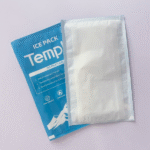
Tempk supports B2B cold-chain buyers with practical packaging options for food, pharmaceutical, medical, and temperature-sensitive shipments. For dry-ice-style projects, we help buyers think beyond the individual pack and review the full shipping setup: insulated packaging, coolant placement, payload fit, preparation steps, and temperature evidence. Our product range includes ice packs, hydrated dry ice packs, insulated bags, insulation carton boxes, medical cooler boxes, EPP and VIP-related packaging options, thermal pallet covers, and temperature monitoring support. The goal is to help your team choose a packout that is realistic for the route, not just attractive on a quotation sheet.
Use Tempk as a technical sourcing partner when you need to turn a sample pack into a repeatable cold-chain shipping configuration.
Additional buyer notes before release
Write the first purchase specification in shipment language. State that the buyer is evaluating bulk dry ice packs for vaccine delivery, then describe the product form, required condition, outer shipper, route, season, and receiver. This gives suppliers enough context to recommend either dry ice, hydrated packs, gel packs, PCM packs, or a different insulation strategy.
Keep the sample trial small but disciplined. Photograph the packout, record the pack preparation step, identify the logger positions, and document any deviations. A simple record will make the second discussion with the supplier much more useful because both sides can talk about observed behavior rather than opinions.
Before converting the trial into a recurring order, ask one final question: what would change if the payload, carton size, courier, season, or destination changed? If the supplier cannot explain the limits of the current packout, the buyer should not use it as a universal shipping rule.
This final check is especially useful for vaccine distributor, public-health logistics team, procurement manager, and quality reviewer. It protects the purchasing team from buying the wrong inventory and helps the operations team avoid reworking every box during a busy shipping window.