Gel Brick Refrigerant: Choosing the Right Packout Without Guesswork
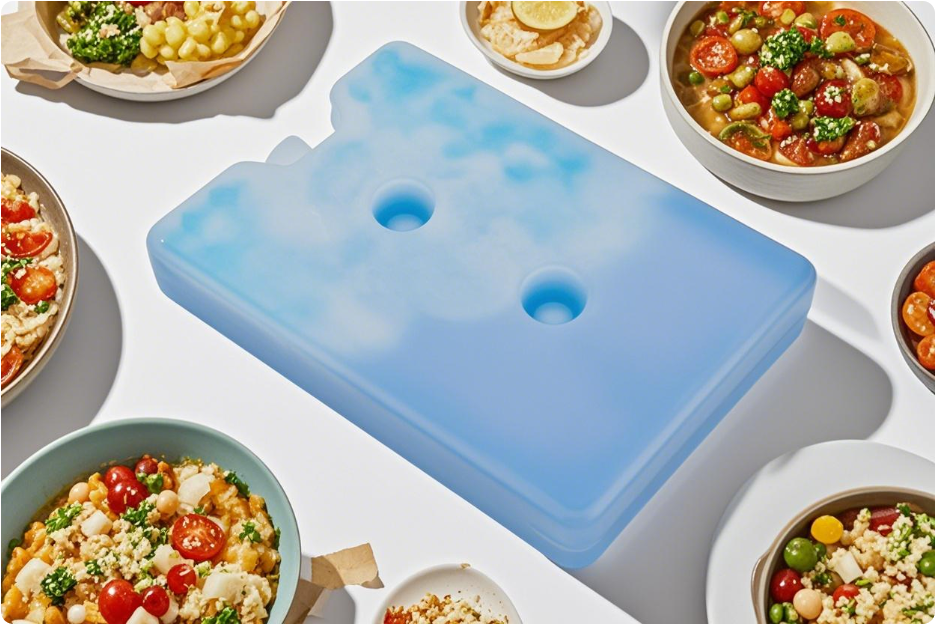
The safest way to choose gel brick refrigerant is to begin with the product limit and the route risk, then decide whether a rigid gel brick belongs in the packout. For passive refrigerant selection, the brick should be judged by how it performs with the actual payload, insulation, conditioning method, and handling process. A good decision reduces temperature risk without adding unnecessary weight, cost, or operational complexity.
The simple decision rule
Use a gel brick when it solves a defined thermal problem inside an insulated system. Do not use it as a generic symbol of cold-chain protection. A refrigerant is the cold source in a passive packout. Its usable performance depends on phase-change behavior, starting condition, mass, placement, insulation, ambient exposure, and payload. This means the first purchase requirement is a product range and an exposure profile, not a brick catalog number. Once the product range is clear, the buyer can decide whether the brick should be frozen, chilled, tempered, separated from the product, placed around the sides, or paired with a different insulation level.
The practical rule is this: a gel brick is suitable when the required range, route duration, payload mass, and packout design can be matched and repeated. It becomes risky when those inputs are unknown. The mistake is buying a brick by size alone. The same mass can create different results if the fill, shell, freezing method, and placement change. A cautious buyer treats unknowns as test questions rather than filling the gap with a bigger brick.
Build around the point where the shipment is most likely to fail
Most shipments do not fail evenly. They fail at handover points. A carton may leave a cold room and sit on a bench while labels are printed. A courier may collect later than planned. A pallet may wait in a warm area before loading. A receiver may accept delivery but not unpack immediately. These points shape the thermal challenge more than the clean carrier timetable.
For passive refrigerant selection, this is where the packout should be stress-tested. If the risk is early overcooling, add buffer or adjust conditioning. If the risk is late warming, review insulation, brick mass, route timing, and payload. If the risk is poor receiving behavior, improve labels, instructions, or monitoring. A gel brick cannot fix every weak point, but it can be chosen more intelligently when the weak point is named.
| Decision point | Good sign | Warning sign |
|---|---|---|
| Product requirement | The temperature range and freeze sensitivity are defined before sampling. | The supplier is asked only for a generic long-hold brick. |
| Route profile | Transit, staging, handover, and receiving delay are included. | Only courier transit time is considered. |
| Packout design | Brick location, buffer layer, payload space, and closure are documented. | Operators improvise placement during packing. |
| Evidence | Testing or trial data matches payload and ambient assumptions. | A hold-time claim is quoted without conditions. |
| Scale-up control | Approved samples, production units, labels, and packing work instructions stay consistent. | The brick size, fill, or box changes after approval without review. |
This decision table is intentionally operational. It does not ask whether a brick is generally good or bad. It asks whether the buyer has enough information to approve the brick for a specific packout. If a warning sign appears, the next step should be testing or redesign, not bulk purchasing.
Specifications worth confirming before purchase
The most useful specifications for gel brick refrigerant are not always the most promotional ones. Confirm external dimensions, filled weight, shell material, closure design, recommended conditioning, carton packing, and whether the brick is intended for reusable handling. Then connect those specifications to the shipper. Will the brick leave enough usable space for the product? Will it press against fragile primary packaging? Can operators place it the same way every time? Can the freezer hold enough bricks for peak orders?
For technical or regulated shipments, also ask what evidence supports the packout. The evidence may be a supplier test, an internal trial, a third-party thermal test, or a qualification protocol depending on risk. The important point is condition matching. A hold-time statement is only useful when the ambient profile, payload, brick quantity, conditioning method, and acceptance range resemble the shipment you plan to run.
When a gel brick is a better choice than alternatives
A rigid gel brick may be a better choice than loose ice when leakage, free water, carton appearance, and repeatable packing matter. It may be better than a flexible gel pack when fixed placement, stacking, return handling, and durability matter. It may be better than dry ice when the shipment only needs chilled support and the buyer wants to avoid carbon dioxide sublimation, ventilation, and dangerous goods handling. But these comparisons are conditional, not universal.
They do not provide active cooling and cannot correct a poorly insulated box or an untested lane. If the shipment needs ultra-low temperature, active control, sterile medical handling, blood component-specific conditions, transplant preservation, or strict product-specific qualification, the gel brick decision must be reviewed within that broader requirement. A buyer should never downgrade the refrigerant strategy simply because a route is expensive or paperwork is inconvenient.
Sample-to-production workflow
A disciplined workflow starts with a written shipment profile. That profile includes product type, target temperature, freeze sensitivity, payload size, shipper type, lane, duration, seasonal exposure, receiver behavior, and evidence requirements. The supplier then recommends a brick format and packout concept. The buyer tests or trials the concept with the real payload and documents the packing method. After review, the approved sample becomes the baseline for production.
For passive refrigerant selection, the baseline should identify what cannot change without review: brick size, fill, shell, quantity, conditioning, placement, shipper, liner, buffer, payload count, and packing order. This is where many programs lose control. A purchase team approves one sample, but production later receives a slightly different brick or packs it in a different position. Change control does not need to be bureaucratic; it simply keeps the operating reality connected to the approved evidence.
A practical example: fixing the wrong problem
Imagine a shipment of cooler boxes, insulated liners, EPP shippers, parcel packouts, route totes, and reusable cold-chain containers that need a passive cold source arrives with a borderline temperature record. The first reaction is to add more gel bricks. A better investigation asks where the excursion occurred. If the warm period happened after delivery, receiver behavior may be the issue. If the warm period happened near the end of transit, insulation or route exposure may need attention. If a cold alarm appeared early, the problem may be overcooling from direct contact or insufficient tempering. The brick is part of the answer only after the failure point is understood.
This example matters because overcorrection is common. Adding coolant can increase freight weight, reduce payload space, and create freeze risk. Changing insulation can improve stability but raise cost and storage volume. Changing the route may solve the problem without altering the packout. A good gel brick decision is therefore a logistics decision as much as a product decision.
Helpful decision tools
Check the details before you choose packaging
These quick tools can help you compare route risk, sizing needs, coolant choices, and packaging details before you request a quote.
Dry Ice Calculator
Estimate dry ice needs for frozen or ultra-cold shipments before packing.
Estimate dry iceInsulation Material Drop Resistance
Review drop resistance and handling factors before choosing insulation materials.
Check resistanceInsulation Material Reference
Compare insulation material choices for different cold chain packaging needs.
Compare materialsFAQ
When should I choose gel brick refrigerant?
Choose it when a rigid reusable cold source fits the required temperature range, packout geometry, route duration, and operating process. Do not choose it only because the keyword sounds relevant to passive refrigerant selection.
What information should I give a supplier first?
Start with product type, required temperature range, freeze sensitivity, payload size and weight, shipper type, transit time, ambient exposure, route risks, and whether monitoring or qualification data is required.
What is the safest way to approve a sample?
Approve the sample only after checking the actual brick, packaging fit, conditioning instructions, trial performance, labeling, packing labor, and production consistency. Keep a record of what cannot change after approval.
Can the same gel brick serve food and pharmaceutical shipments?
Sometimes the physical brick may look similar, but the evidence and procedure requirements are different. Pharmaceutical and medical shipments usually need stricter documentation, quality review, and change control than ordinary food distribution.
Additional Buyer Notes Before Approval
For passive refrigerant selection, the approval meeting should separate product risk from packaging preference. A team may like the clean shape of a rigid brick, but the decision still has to answer whether the product is protected during the worst expected segment of the route. That segment may be the warehouse bench while orders are picked, the loading dock before carrier pickup, a customs hold, a last-mile van in summer, or a receiving area where the carton is not opened immediately. A useful review names those moments instead of relying on a broad promise of cooling time.
The sample stage should also confirm the human side of the packout. Operators need to know which side of the brick faces the payload, whether a buffer sheet is required, how many bricks go above, beside, or below the product, and whether bricks can be substituted when inventory is short. If the instruction is too hard to follow during a busy shift, the field result may be worse than the lab result. A simple, repeatable method is often safer than a design that works only when one expert packs it perfectly.
Another point is change control. After a gel brick refrigerant sample is accepted, the buyer should decide which details are locked: brick size, fill type, shell design, conditioning method, box type, liner material, payload count, and packing order. Even a small change can move the coldest point or shorten the protective window. In regulated or high-value lanes, changes should be reviewed before regular production orders continue.
Receiving inspection closes the loop. If the receiver sees melted bricks, cracked shells, wet cartons, shifted payload, or a logger alarm, the finding should be recorded and linked back to route conditions. That feedback helps the buyer decide whether the issue came from packout design, insufficient conditioning, warehouse delay, carrier exposure, or receiving behavior. Without that loop, the same shipment problem can repeat under a new purchase order.
Procurement also needs to check packaging economics without turning the article into a price list. Unit cost is only one part of the decision. Freezer space, carton weight, return rate, damaged-brick replacement, packing labor, extra insulation, rejected shipments, and investigation time all belong in the practical cost picture. A cheaper brick can be expensive if it creates unpredictable placement, weak durability, or a higher complaint rate. A stronger brick can also be wasteful if the route only needs a lighter chilled support package.
For recurring passive refrigerant selection shipments, the buyer should build a small decision record. It can list the approved brick, package, payload, route family, conditioning method, packing diagram, test or trial reference, and receiving checks. This record makes reordering easier and reduces the chance that a different team member approves an apparently similar brick that changes the thermal behavior. It also helps when a distributor, quality reviewer, or operations manager asks why the selected refrigerant is appropriate.
Training should be short but specific. Packers do not need a long theory document; they need to know how cold the brick should be, when to remove it from the freezer, where it goes, which surfaces need separation, how to close the box, and what to do if the correct brick is unavailable. Receivers need to know what a normal arrival looks like and which signs require reporting. A packout that depends on tribal knowledge is fragile.
Finally, procurement should avoid forcing a gel brick into every shipment simply to simplify purchasing. Some routes need a different brick mass; some products need a different phase-change point; some lanes need more insulation rather than more coolant; and some high-risk products need active containers or specialized systems. The right supplier conversation starts with the shipment reality and then selects the brick format that fits it.
Conclusion
The right gel brick refrigerant decision is evidence-led. Define the product requirement, locate the route risk, choose the insulated system, control conditioning and placement, and verify the result before scale-up. A rigid gel brick can be a clean, reusable, and repeatable refrigerant component, but it should never be treated as the whole cold-chain solution.
About Tempk
Tempk provides cold-chain packaging components and solution support for companies that ship food, pharmaceuticals, medical products, biotech materials, and other temperature-sensitive goods. For a gel brick decision, the practical value is in matching coolant, insulation, payload, route exposure, and packing work instructions. Tempk can help buyers review these inputs before moving from sample evaluation to regular orders.
Send Tempk the route, product temperature range, payload details, and packaging constraints so the recommended gel brick configuration can be reviewed against real operating conditions.